Unknown's avatar

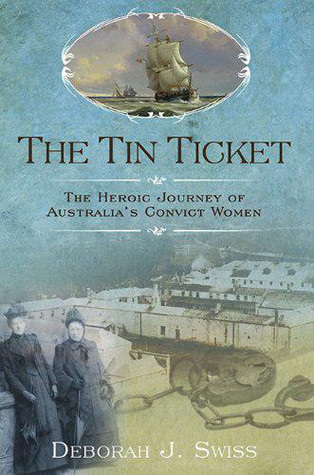
Book Review: The Tin Ticket – The Heroic Journey of Australia’s Convict Women, by Deborah J. Swiss


Chapter 1: The Grey-Eyed Girl

Well I lasted one day before reading some more of this book – but I did finish one of the other books I was reading first and posted a book review of it, so that wasn’t too bad. I’ve convinced myself anyway, so I can now continue reading this book as well.

The first chapter begins the story of Agnes McMillan Roberts, a convict sent to Van Diemen’s Land (now known as Tasmania) from Glasgow in Scotland.

This first chapter paints a terrible picture of conditions for the poorer families of Glasgow in the 1820s. The early years were tough years for Agnes and her childhood was cut short by the abandonment of her parents – first her father, then her mother (who basically stopped being one). In the place of family, Agnes aged 12 found support in a ‘street gang’ of young girls and this led ultimately to her arrest for burglary. Her partner in crime and life was 13-year-old Janet Houston, who took the younger Agnes under her wing.

Fighting to survive the elements in a filthy city, petty crime was one of very few options open to Agnes and she took it. She was to pay the penalty for being a survivor, a penalty that she was required to pay because society failed to care for the less fortunate of her day. Her small gang of young girls were arrested at the scene of their crime and quickly sentenced.

Agnes and Janet were sentenced to 18 months forced labor at a woolen mill, working 15 hour days, 7 days a week. They were basically slaves, child slaves and poorly treated ones at that. Life at the mill was 18 months of torture, a slave labor that no child should have to endure. Yet this was the life that beckoned for thousands of children across Britain during the so-called Industrial Revolution. Child exploitation and exploitation of the poor were signs of the times.

Reading this chapter you can’t but feel for Agnes and her friend Janet. Abandoned by society, with no hope for survival except by embracing a world of what you could call the underbelly of 1820s Glasgow. To survive they turned to a life of petty crime. Sure they were by definition criminals, but it is difficult to feel anything but pity and compassion toward these young girls given the circumstances in which they lived. From out of the frying pan and into the fire though was the result, in what is just a terribly sad childhood for these young girls.

This first chapter leaves you asking yourself just who were the real criminals in all of this? Are the parents the real criminals? Are the upper class to blame for this? Is it the government’s fault? Is it society as a whole? 1820s Glasgow certainly makes me glad to be living in 21st century Australia.

Buy this book at Amazon:
http://www.amazon.com/gp/product/B0043RSIWI/

Unknown's avatar

Book Review: Humble Orthodoxy – Holding the Truth High Without Putting People Down, by Joshua Harris


‘Humble Orthodoxy – Holding the Truth High Without Putting People Down’ by Joshua Harris is a relatively new release, having been published on the 2nd April 2013, by Multnomah Books. I have the Kindle edition, which is available at Amazon and is linked to at the bottom of this review – other editions are linked to from that page. It is a relatively short work at just 96 pages, so it won’t take an extended commitment to read it.

The foreword is written by J. D. Greear, a senior pastor at The Summit Church in Durham, North Carolina and author of ‘Gospel: Recovering the Power that Made Christianity Revolutionary.’ The foreword is only short, which given the overall size of the book is probably a good thing, however it is a good quick read. I quite liked his thoughts concerning the Pharisees and Pharisaism, both of which are still in existence today.

In my youth as a young Christian (which is not always the same), having come to an understanding of the doctrines of grace, I found myself being very much the opposite of what this book calls for – a humble orthodoxy. I guess it shouldn’t surprise me as I was surrounded by plenty of Reformed Christians who behaved in the same way. Thankfully, over time, the Lord has been slowly transforming me by His grace and showing me a better way. Perhaps it would have been good for me to have had this book back then at the beginning of my Reformed walk – I may have been spared acting out with such displays of arrogant Pharisaism that I thought then were the very proofs of my orthodoxy.

I don’t believe that we ever completely leave the spirit of Pharisaism behind, not entirely. I see it rising to the surface on far too many occassions to think I can be free of it entirely in this fallen world. However it is no longer displayed with pleasure, though I continue to see it so wherever I look in Reformed circles – at least that’s how it appears to me. It has been a source of much grief in my own life over the years, not only personally, but through what I have seen displayed both individually and corporately throughout my experience of the Christian life. So this book when I first happened across it was one I was very keen to grab and read. I bought it for my ebook library and immediately began to read it.

Right from the beginning of the book, with the recommendations from various Christian leaders and with the short foreword already mentioned, I knew I wasn’t going to be disappointed with the thrust of the book. Humble Orthodoxy is certainly a good way to paraphrase the right approach to holding the truth, proclaiming the truth and defending the truth. But it is not only a good way to paraphrase it, it is a good and proper way to live it also.

There is no call to hold a lesser view of the Truth or a lesser version of the Truth, but to seek it out and to hold it and defend it. It is the attitude and manner in which that is done, that is the thrust of this book. I like the picture of doing so as with a tear in the eye, as living a humble orthodoxy in all areas of the Christian life, whether among God’s people or among unbelievers. Humble orthodoxy is what we should be seeking and maintaining at all times and in all places. Humble orthodoxy begins with knowing our proper place before God, seeing ourselves as God sees us and then living accordingly. With this mindset, which comes through the experience of knowing ourselves through the eyes of our gracious Lord and Saviour, will also come the right attitude towards others and ourselves. We will acknowledge and live in such a way that shows we haven’t ‘arrived,’ but are continuing on the journey towards a more humble orthodoxy. The experience of a dependant and an experimental Christian life in this fallen world propells us forward towards a more humble orthodoxy each and every day.

This is a book, being as small as it is, that will make a very useful tool for reminding me to pull my head in and to remember my proper place before the Lord and others. It will be re-read over the years and Lord-willing become a godly corrective whenever I need such to be applied. There is also a helpful study guide at the end of the book which can be used individually or as part of a group.

Buy this book at Amazon:
http://www.amazon.com/gp/product/B009MYAX98/

Unknown's avatar

Book Review: The Tin Ticket – The Heroic Journey of Australia’s Convict Women, by Deborah J. Swiss


This is going to be a book review with a difference, though not entirely different for At the BookShelf. In times past I have passed on my thoughts concerning a book chapter by chapter, which is what I plan to do with The Tin Ticket. Why? Well I’m not going to be reading all of the book at the same time. I’ll be breaking it up by reading other books as well, so it will be difficult for me to keep my thoughts together and provide a coherent review at the end of the book, whenever it may be that I actually finish it. So I’ll be posting instalments of my varied thoughts as I go along.

I came across this book in the most unlikely of places really, for I found the book in a Killer Whale Museum in Eden, on the New South Wales south coast, in Australia. I wasn’t expecting to come across a small, but healthy Australian history bookshop there. I didn’t even intend to buy myself a copy of this book, though I did intend to buy it for my mother as a birthday gift when I spotted it. I have since found it to be far cheaper at Amazon and you will find it via the link at the bottom of the post. Anyhow, I packed the book away after the holiday to the south coast (about 4 weeks ago now) in preparation to pass it on to my mother when I saw her next.

A couple of days ago I was speaking to my mother on the phone and the subject of her birthday gift was raised, in a roundabout way. I like to make her guess what the gift might be by dropping clues that I know will result in her having no idea, but leave her intrigued at the end of the conversation. The somewhat cryptic clues all resolved around a tin ticket, so the gift being a book I’m sure was never arrived at. She is keen to know what the gift is now though. Sons that like to tease their mothers, how cruel children can be 🙂

The conversation got me to thinking though – I would like to read the book myself, but without pre-using the gift I had bought my mother. So I thought about an ebook version that I could get for my Kindle and went online to check out the Kindle bookshop at Amazon. Sure enough, there it was – so I bought myself a copy. It wasn’t just that I had purchased a traditional version for my mother and wanted to read what I was giving her. I am something of a student of history, especially Australian history, so once the book had passed my eye back in Eden it was really only a matter of time before I got myself a copy – I did almost buy two copies in Eden, but stopped myself because I prefer digital books over traditional books these days – book space is an issue at my place as I have hundreds and hundreds of them all over the place in bookcases.

Though reading a number of other books at the moment, I couldn’t resist having a look at The Tin Ticket any longer, so last night I started to read it. I did cut myself off having read just the acknowledgements and the introduction. That was quite a feat of self discipline let me tell you.

The introduction is a pretty good read and a great way for the book to open I thought. It really has me keen to find out more about these convict women who were treated so poorly by an English justice system that was so quick to have petty criminals shipped off to the colonies in Australia. So my interest has been aroused by the author’s own awakening interest in the women convicts of Australia as described in the introduction. Just enough of a glimpse is given in the introduction to whet the appetite and tease my natural curiosity.

However, I must wait to read more until I complete at least two of the other four books I’m currently reading – which shouldn’t be too much longer. Certainly no longer than a week. Surely I can last a week before reading more? I guess time will tell.

Buy this book at Amazon:
http://www.amazon.com/gp/product/B0043RSIWI/

Unknown's avatar

Book Review: Collapse, by Richard Stephenson


Collapse‘Collapse’ by Richard Stephenson is book one in the ‘New America’ series and I believe Stephenson’s first novel. The novel is set in the year 2027, with the USA falling apart. It is in the grip of the 2nd Great Depression and is at war with the Great Empire of Iran. The state of Florida has been devastated by a hurricane that has left over 1 million people dead and Texas is about to face the same fate. The government is about to fall. The people are descending into anarchy. What will become of the USA?

Though a first novel, the suspense and action of the novel is first rate. It is very easy to read and carries you along quite easily. However, there are serious issues with the grammar and spelling, as well as some fairly obvious errors in the actual text of the story. A good proof reader should have picked up on these mistakes and that would have resulted in a far more polished and professional  product.

There is also a short sex scene tacked onto the end of the story which I thought was somewhat tacky and unnecessary. It did nothing for the story as a whole and was completely out of place in the overall development of the novel.

If you can see past these obvious flaws without too much prejudice, the novel is a very good read and I do look forward to picking up the story when the next book in the series is released in 2013.

Buy this book at Amazon:
http://www.amazon.com/Collapse-Richard-Stephenson/dp/1477654631/

Unknown's avatar

Book Review: The Bourne Identity, by Robert Ludlum


I am a big fan of the Jason Bourne movies (the first three anyway). I don’t know what the fourth one (The Bourne Legacy) will be like without Matt Damon, but I’m still keen to see it. So it was having watched the movies that I decided to read the books. Wow, what a massive difference between the movie and the book. There are obvious similarities, but they are quite different from each other just the same.

The Bourne Identity‘The Bourne Identity’ is action all the way and is a great read. It is a book that is always on the go and suspense carries you foward through the book. You want to read on and see what happens to Jason Bourne next. Will
he be able to rise to the next challenge that is thrown in his way, especially given that he is trying to figure it all out as he goes along, as well as trying to figure out just who he himself is – while also seeking to protect a woman he has picked up along the way.

This is the spy book of spy books. It is an action read at the top of its game. Jason Bourne is the master spy relearning his craft as the memory of who he is and what he is returns to him with each thrilling piece of the jig saw that is ‘The Bourne Identity.’ Once you start, you want to keep on reading and as the pace quickens you find yourself seemingly reading with an increased tempo, as you’re right there with Jason Bourne every step of the way.

An excellent first read in the Jason Bourne series. I am very much looking forward to the next volume with great expectancy. I highly recommend this book.

Buy this book at Amazon:
http://www.amazon.com/The-Bourne-Identity-A-Novel/dp/0553593544/

Unknown's avatar

Book Review: Phantoms on the Bookshelves, by Jacques Bonnet


‘Phantoms on the Bookshelves,’ by Jacques Bonnet was translated from the French original by Sian Reynolds and has an introduction by James Salter. The copy I have is a Kindle edition. It was first published in Great Britain in 2010 by MacLehose Press. It is a relatively short book at 123 pages in length, so it won’t take too much to get through it.

Phantoms on the Bookshelves, by Jacques BonnetThe introduction to the book by James Salter is a good, brief read concerning the author of the book and his book collecting ways. It could easily describe me, though I have nowhere near as many books as Bonnet, even though I have thousands myself in traditional form and/or digital format. I see similarities between the description given of Bonnet by Salter and myself, with my far fewer volumes. I too struggle now to find room for them all, with my virtual bookshelves requiring expansion in the near future to accomodate my book collecting ways into the current century and digital age. Traditional books have long run out of room in this house, as I suspect they have in Bonnet’s apartment.

Bonnet is a man who loves books and his thoughts on what is normal in a home, the presence of many books, is something I can relate to. I also find myself in wonder when I see homes with no books, particularly in some of the circles in which I move or have moved. How can they get by without books? Mind you it is probably not as easy a situation to read (no pun intended – truly not) these days, with books now being able to be stored by the thousands on a home computer and/or on an external hard drive or two. Still, I have wondered this for many years and I think Bonnet would probably agree with me. Relating to others is made easier when discussing books for Bonnet and I find this an agreeable thing also. It is the way of Bibliophiles, whether we use that term or not (perhaps for some Bibliomaniac is a better term).

I did not find Bonnet’s chapter on cataloguing and organisation helpful at all, though I expect it would help some. This is probably because I have developed my own system which closely resembles that of the Dewey to almost certainly be called a Dewey system. The Bonnet decsription horrified me and I thought it would become far too confusing and disorienting for me. He is certainly right about the Internet making a major impact on libraries and the need to have as many books as he has in his collection. It is not only the storing of works on the World Wide Web, in the cloud and on other digital storage systems like computers, external drives, etc, where libraries are changing and/or have changed, but also in the cataloguing and organisation of books. I have a large number of books stored on digital devices and by digital means, but I also have access to far more over the Internet from vast libraries that I can access online. But I also have both offline and online digital methods for assisting me in cataloguing and organising my books, which I use as best I can and with great relief for being able to do so. Yet it boils down to individual choice and comfortableness, being able to manage these resources in a way that allows the individual to harness them to the greatest effect, which is indeed something of an indiviual matter and process.

The Bonnet method of reading will not be everyones cup of tea, but that’s OK too, because that is also a very individualistic thing. Bonnet likes lying down to read, I prefer sitting at a desk. Bonnet likes to underline and write in his books as he reads, I prefer to highlight and collate quotes via other media. There is no one rule for all, but many different rules for many different people. The thing is to retain what one reads in some way, that I think is the key to reading. It is certainly not a requirement to read each and every book from cover to cover, but to take a dip in each one to some extent and to achieve some purpose when doing so is required if you wish to say that you read your books and they aren’t just display items.

The manner in which Bonnet has collected his books is almost baffling to someone who has not done so in the same manner. He seems almost obsessed with completing lists and collections of books, of following every author/book line that comes up in what he reads or experiences. It seems any book mentioned must be obtained for his library. This is the way of a Bibliomaniac, that is for sure. His obsession with collecting ‘picture’ books is another seemingly crazed hobby which almost seems to be a driving force for him. I too collect books, but this insight into how another book lover and lover of reading goes about collecting his books is one that is beyond my experience. It is a fascinating world of book hunting and gathering if ever there was one. Something about one book leads to another which leads to another, or some conversation leads to a book which leads to another, etc.

Bonnet’s reflections upon his books shows someone who truly absorbs what he reads and imbibes the being of those written about. He seems to feel them, to know them, far better than any creator of them. Authors of books, whether fictional pieces or biographical/autobiographical works fade with the passing of time, if indeed a true reflection of them is left in the pages of the books they write or in the annals of history. However, those created and placed within the realms of literature remain the same and can be known almost completely. There are places to visit, whether real or ethereal, people to meet and to greet. Books bring a whole world to one’s home and experience, and even beyond that one travels into the realm of fictional lands and peoples. A plethora of experience that is only exaggerated when the library is swollen by multimedia resources. What an amazing world the library can become – is.

Buy this book at Amazon:
http://www.amazon.com/Phantoms-Bookshelves-Jacques-Bonnet/dp/1590207599/

Unknown's avatar

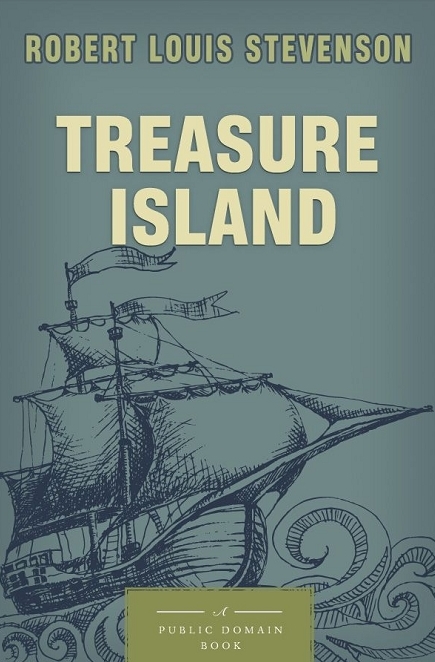
Book Review: Treasure Island, by Robert Louis Stevenson


Treasure Island was the first major novel of Robert Louis Stevenson. It was first published in 1883 and has remained a much-loved book. First penned as a story for boys, it was as a young boy that I first came across Treasure Island. It was the first real book that I ever read – certainly of my own choice. If I remember correctly, the copy I had was a small book, not much bigger than my hand and illustrated throughout. The illustrations weren’t coloured as such, but I think I may have started to ‘colour them in’ as I read the story several times. The name of the ship, ‘Hispaniola,’ came back to me in one of my first compositions at school. In that early attempt at writing I wrote a story about piracy and a ship called the Hispaniola. I believe I was written into the story, along with several of my classmates, though the original composition has long since been lost and the
plot a thing of the past.

Treasure IslandNot until the last couple of days however, did I take up the novel once again and begin to read the story of Long John Silver and Jim Hawkins, and the journey to Treasure Island. It has been a long time now, since that first book I read and my taking it up again. It must be at the very least thirty years and then some by my reckoning. Remembering this book as the first I had really read, was the reasoning behind my picking it up again for another read.It is an easy read. It is not a long read. But it is an enjoyable read. If it is that then the author has achieved his goal in fiction I believe. To be sure there are many things that can be learned in reading a novel and many lessons that can be taught through a novel, but without enjoyment all else is lost. This is a short novel that can be enjoyed greatly.

I read this book by way of a Kindle, which shows that the future of Treasure Island lies assured into the digital future and beyond. I also own Treasure Island in traditional form and as part of a set of works, being the entire works of Robert Louis Stevenson. One day I hope to read more, if not all of this man’s printed contrinution to English literature and I look forward to doing so.

Treasure Island is the classic pirate story, coming fully equiped with the pirate talk which is so popular even to this day and the vivid description of a pirate adventure. The story is a great one that may well bring younger generations to read and pull them away from the Xbox and other gaming devices. It is a short read, with short chapters, which may be a useful tool in getting a young one to start reading – but it is the adventure of a life time for Jim Hawkins that will really draw them in and the promise of buried treasure.

If you have not read Treasure Island, pick up a copy and have a read. It is free in the Kindle Shop at the time of posting this review and well worth spending a couple of hours a day reading this classic – by the end of the week the story of Treasure Island will be completed and you will be the richer for having read it.

Buy this book at Amazon:
http://www.amazon.com/Treasure-Island-ebook/dp/B0084AZXKK/

Unknown's avatar

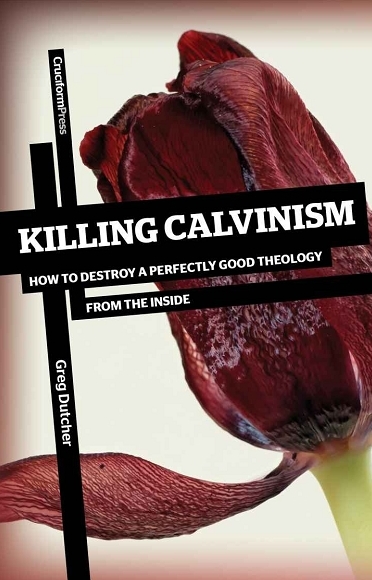
Book Review: Killing Calvinism – How to Destroy a Perfectly Good Theology from the Inside, by Greg Dutcher


Killing CalvinismI have started reading ‘Killing Calvinism – How to Destroy a Perfectly Good Theology from the Inside,’ by Greg Dutcher. This book was released by Cruciform Press in June 2012, so I have been reading a new book for a change. Generally I read books that were written many years ago, often several centuries ago, so this was a bit unusual for me. It was however the title of the book, along with a review that I had read somewhere, that drew my attention to it and so I decided to buy it at Amazon in Kindle format.

So reading the book I quickly discovered that it was a very easy book to read, even though it dealt with a subject that was indeed crucial, timely and weighty. Calvinism is the behemoth of Christian theology, being a system of truth that epitomises the teaching of Scripture. It has produced great works of theology, some very technical and verbose in nature. Yet here was a book looking at this system of truth that was easy to read and speaking straight to the heart with great warmth and even humour (yes humour).

However, it would be a mistake to think that this book dealt with Calvinism in a detached manner, somehow separated from the adherent to it. Indeed, this book seeks to penetrate the hearts of the adherents of Calvinism and to strike at the heart of the matter. This is not a book that somehow produces a barren formalism, rather it smashes through formalism and seeks the real Calvinism, one that comes from the inner person regenerated by the spirit of God and transforms the lives of those that profess it. It is a living Calvinism that this book seeks and challenges everything else that claims to be Calvinism, but yet has nothing of its soul. This book is a clarion call for a Calvinism that ignited the hearts of a Calvin, of a Spurgeon and of a Bunyan and desires a turning away from all that is not. I love Calvinism – it leads me to God and the way of life he wishes me to lead and live. This book reminds me of this and for that I am thankful to Him for allowing me to read it. It is as Dutcher describes it, the windscreen of truth that allows me to see God and how he wants me to live for Him.

Buy this book at Amazon:
http://www.amazon.com/Killing-Calvinism-Perfectly-Theology-ebook/dp/B0088PBC5G

Unknown's avatar

Reading: The Hunt for Red October and Jason Bourne


particularkev's avatarKevin's Daily Photo, Video, Quote or Link

I am a big fan of Tom Clancy novels and in particular the Jack Ryan series. A number of years ago I read all of the novels published in the series up until the time I moved house and so for the last 5 years I haven’t read any new ones. When I moved I decided I needed to clean out some of my books (and I have a huge library), so I figured the majority of my fiction books could be cleaned out. I always regretted moving the Tom Clancy novels along, though I figured that at some point I could reclaim them as ebooks, which I am now beginning to do.

A couple of weeks ago I decided to start reading the series again – right from the beginning. I hesitated as to what order I should read them, given that Patriot Games really was set before The…

View original post 248 more words

Unknown's avatar

Book Review: A God Entranced Vision of All Things – The Legacy of Jonathan Edwards


I have started reading ‘A God Entranced Vision of All Things – The Legacy of Jonathan Edwards,’ with John Piper and Justin Taylor as the general editors of the book. It was published in 2004 by Crossway Books and has 275 pages.

This book is a collection of studies on Jonathan Edwards – his life, ministry and legacy. Each chapter investigates some facet of Edwards and each chapter is penned by a different author. The authors of these studies include John Piper, J. I. Packer, Paul Helm and Sam Storms, names widely recognized in reformed circles. The studies are expansions of messages delivered at a Desiring God Ministries conference in October 2003, celebrating 300 years since the birth of Jonathan Edwards.

In my journey through this book, I have thus far reached the end of chapter 2. What I can say is that this book is very easy to read, but difficult to put down. It has the readability that many books associated with Desiring God Ministries have, yet the weightiness of the subject matter does not allow one to just move through the book without serious reflection.

The book doesn’t leave you contemplating the past and Jonathan Edwards in particular, but the God of Jonathan Edwards and leads the reader to a serious contemplation of the glorious God who is all. Edwards life was about God and his enjoyment of Him, and this is the subject of chapter 1, ‘A God-Entranced Vision of All Things: Why We Need Jonathan Edwards 300 Years Later,’ by John Piper. Chapter 2 gives an overview of the life and legacy of Jonathan Edwards in ‘Jonathan Edwards: His Life and Legacy,’ by Stephen J. Nichols. With chapter 3, ‘Sarah Edwards: Jonathan’s Home and Haven,’ by Noel Piper, the subject matters of the first section of the book is dealt with brilliantly, ‘Part 1 – The Life and Legacy of Edards.’ Certainly I can speak to the first two chapters as having achieved that and I have little doubt the third will compliment the first 2.

The treatment of the guiding principles of Edwards’ life and the brief overview of it, leads the reader to the God of Jonathan Edwards and this would surely be the legacy that Edwards would have hoped for.