Unknown's avatar

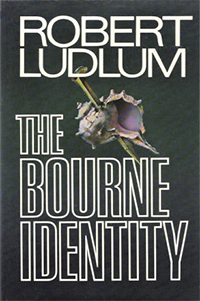
Book Review: The Bourne Identity, by Robert Ludlum


I am a big fan of the Jason Bourne movies (the first three anyway). I don’t know what the fourth one (The Bourne Legacy) will be like without Matt Damon, but I’m still keen to see it. So it was having watched the movies that I decided to read the books. Wow, what a massive difference between the movie and the book. There are obvious similarities, but they are quite different from each other just the same.

The Bourne Identity‘The Bourne Identity’ is action all the way and is a great read. It is a book that is always on the go and suspense carries you foward through the book. You want to read on and see what happens to Jason Bourne next. Will
he be able to rise to the next challenge that is thrown in his way, especially given that he is trying to figure it all out as he goes along, as well as trying to figure out just who he himself is – while also seeking to protect a woman he has picked up along the way.

This is the spy book of spy books. It is an action read at the top of its game. Jason Bourne is the master spy relearning his craft as the memory of who he is and what he is returns to him with each thrilling piece of the jig saw that is ‘The Bourne Identity.’ Once you start, you want to keep on reading and as the pace quickens you find yourself seemingly reading with an increased tempo, as you’re right there with Jason Bourne every step of the way.

An excellent first read in the Jason Bourne series. I am very much looking forward to the next volume with great expectancy. I highly recommend this book.

Buy this book at Amazon:
http://www.amazon.com/The-Bourne-Identity-A-Novel/dp/0553593544/

Unknown's avatar

Article: Online Book Reviews


The link below is to an opinion piece on why one writer doesn’t trust online book reviews.

For more visit:
http://www.huffingtonpost.com/nina-badzin/why-i-dont-trust-book-rev_b_1757048.html

Unknown's avatar

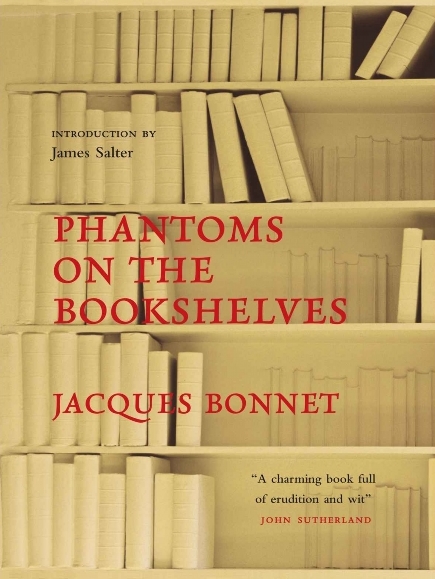
Book Review: Phantoms on the Bookshelves, by Jacques Bonnet


‘Phantoms on the Bookshelves,’ by Jacques Bonnet was translated from the French original by Sian Reynolds and has an introduction by James Salter. The copy I have is a Kindle edition. It was first published in Great Britain in 2010 by MacLehose Press. It is a relatively short book at 123 pages in length, so it won’t take too much to get through it.

Phantoms on the Bookshelves, by Jacques BonnetThe introduction to the book by James Salter is a good, brief read concerning the author of the book and his book collecting ways. It could easily describe me, though I have nowhere near as many books as Bonnet, even though I have thousands myself in traditional form and/or digital format. I see similarities between the description given of Bonnet by Salter and myself, with my far fewer volumes. I too struggle now to find room for them all, with my virtual bookshelves requiring expansion in the near future to accomodate my book collecting ways into the current century and digital age. Traditional books have long run out of room in this house, as I suspect they have in Bonnet’s apartment.

Bonnet is a man who loves books and his thoughts on what is normal in a home, the presence of many books, is something I can relate to. I also find myself in wonder when I see homes with no books, particularly in some of the circles in which I move or have moved. How can they get by without books? Mind you it is probably not as easy a situation to read (no pun intended – truly not) these days, with books now being able to be stored by the thousands on a home computer and/or on an external hard drive or two. Still, I have wondered this for many years and I think Bonnet would probably agree with me. Relating to others is made easier when discussing books for Bonnet and I find this an agreeable thing also. It is the way of Bibliophiles, whether we use that term or not (perhaps for some Bibliomaniac is a better term).

I did not find Bonnet’s chapter on cataloguing and organisation helpful at all, though I expect it would help some. This is probably because I have developed my own system which closely resembles that of the Dewey to almost certainly be called a Dewey system. The Bonnet decsription horrified me and I thought it would become far too confusing and disorienting for me. He is certainly right about the Internet making a major impact on libraries and the need to have as many books as he has in his collection. It is not only the storing of works on the World Wide Web, in the cloud and on other digital storage systems like computers, external drives, etc, where libraries are changing and/or have changed, but also in the cataloguing and organisation of books. I have a large number of books stored on digital devices and by digital means, but I also have access to far more over the Internet from vast libraries that I can access online. But I also have both offline and online digital methods for assisting me in cataloguing and organising my books, which I use as best I can and with great relief for being able to do so. Yet it boils down to individual choice and comfortableness, being able to manage these resources in a way that allows the individual to harness them to the greatest effect, which is indeed something of an indiviual matter and process.

The Bonnet method of reading will not be everyones cup of tea, but that’s OK too, because that is also a very individualistic thing. Bonnet likes lying down to read, I prefer sitting at a desk. Bonnet likes to underline and write in his books as he reads, I prefer to highlight and collate quotes via other media. There is no one rule for all, but many different rules for many different people. The thing is to retain what one reads in some way, that I think is the key to reading. It is certainly not a requirement to read each and every book from cover to cover, but to take a dip in each one to some extent and to achieve some purpose when doing so is required if you wish to say that you read your books and they aren’t just display items.

The manner in which Bonnet has collected his books is almost baffling to someone who has not done so in the same manner. He seems almost obsessed with completing lists and collections of books, of following every author/book line that comes up in what he reads or experiences. It seems any book mentioned must be obtained for his library. This is the way of a Bibliomaniac, that is for sure. His obsession with collecting ‘picture’ books is another seemingly crazed hobby which almost seems to be a driving force for him. I too collect books, but this insight into how another book lover and lover of reading goes about collecting his books is one that is beyond my experience. It is a fascinating world of book hunting and gathering if ever there was one. Something about one book leads to another which leads to another, or some conversation leads to a book which leads to another, etc.

Bonnet’s reflections upon his books shows someone who truly absorbs what he reads and imbibes the being of those written about. He seems to feel them, to know them, far better than any creator of them. Authors of books, whether fictional pieces or biographical/autobiographical works fade with the passing of time, if indeed a true reflection of them is left in the pages of the books they write or in the annals of history. However, those created and placed within the realms of literature remain the same and can be known almost completely. There are places to visit, whether real or ethereal, people to meet and to greet. Books bring a whole world to one’s home and experience, and even beyond that one travels into the realm of fictional lands and peoples. A plethora of experience that is only exaggerated when the library is swollen by multimedia resources. What an amazing world the library can become – is.

Buy this book at Amazon:
http://www.amazon.com/Phantoms-Bookshelves-Jacques-Bonnet/dp/1590207599/

Unknown's avatar

Not My Review: Phantoms on the Bookshelves, by Jacques Bonnet


The link below is to a book review on ‘Phantoms on the Bookshelves,’ by Jacques Bonnet. There is also a link to a sample from the book.

For more visit:
http://www.finebooksmagazine.com/fine_books_blog/2012/08/phantoms-on-the-bookshelves.phtml

Unknown's avatar

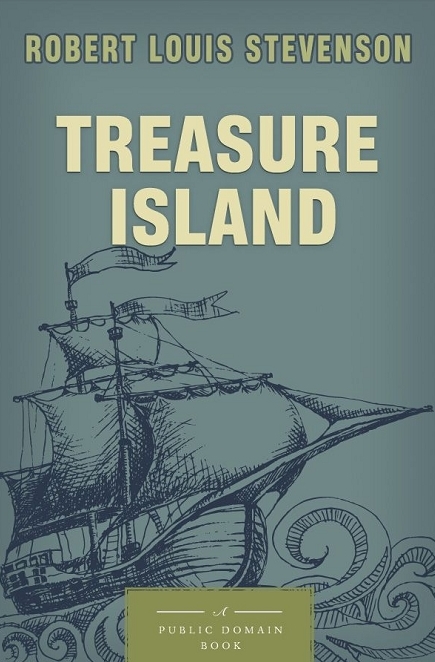
Book Review: Treasure Island, by Robert Louis Stevenson


Treasure Island was the first major novel of Robert Louis Stevenson. It was first published in 1883 and has remained a much-loved book. First penned as a story for boys, it was as a young boy that I first came across Treasure Island. It was the first real book that I ever read – certainly of my own choice. If I remember correctly, the copy I had was a small book, not much bigger than my hand and illustrated throughout. The illustrations weren’t coloured as such, but I think I may have started to ‘colour them in’ as I read the story several times. The name of the ship, ‘Hispaniola,’ came back to me in one of my first compositions at school. In that early attempt at writing I wrote a story about piracy and a ship called the Hispaniola. I believe I was written into the story, along with several of my classmates, though the original composition has long since been lost and the
plot a thing of the past.

Treasure IslandNot until the last couple of days however, did I take up the novel once again and begin to read the story of Long John Silver and Jim Hawkins, and the journey to Treasure Island. It has been a long time now, since that first book I read and my taking it up again. It must be at the very least thirty years and then some by my reckoning. Remembering this book as the first I had really read, was the reasoning behind my picking it up again for another read.It is an easy read. It is not a long read. But it is an enjoyable read. If it is that then the author has achieved his goal in fiction I believe. To be sure there are many things that can be learned in reading a novel and many lessons that can be taught through a novel, but without enjoyment all else is lost. This is a short novel that can be enjoyed greatly.

I read this book by way of a Kindle, which shows that the future of Treasure Island lies assured into the digital future and beyond. I also own Treasure Island in traditional form and as part of a set of works, being the entire works of Robert Louis Stevenson. One day I hope to read more, if not all of this man’s printed contrinution to English literature and I look forward to doing so.

Treasure Island is the classic pirate story, coming fully equiped with the pirate talk which is so popular even to this day and the vivid description of a pirate adventure. The story is a great one that may well bring younger generations to read and pull them away from the Xbox and other gaming devices. It is a short read, with short chapters, which may be a useful tool in getting a young one to start reading – but it is the adventure of a life time for Jim Hawkins that will really draw them in and the promise of buried treasure.

If you have not read Treasure Island, pick up a copy and have a read. It is free in the Kindle Shop at the time of posting this review and well worth spending a couple of hours a day reading this classic – by the end of the week the story of Treasure Island will be completed and you will be the richer for having read it.

Buy this book at Amazon:
http://www.amazon.com/Treasure-Island-ebook/dp/B0084AZXKK/

Unknown's avatar

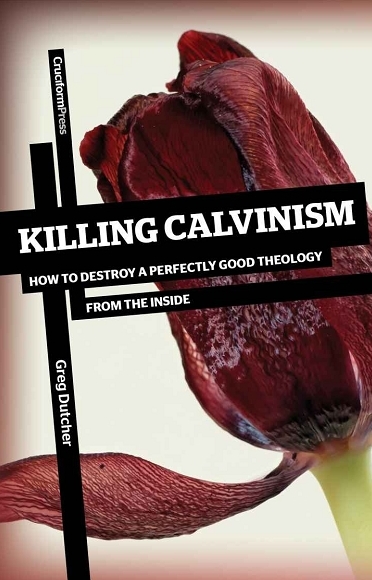
Book Review: Killing Calvinism – How to Destroy a Perfectly Good Theology from the Inside, by Greg Dutcher


Killing CalvinismI have started reading ‘Killing Calvinism – How to Destroy a Perfectly Good Theology from the Inside,’ by Greg Dutcher. This book was released by Cruciform Press in June 2012, so I have been reading a new book for a change. Generally I read books that were written many years ago, often several centuries ago, so this was a bit unusual for me. It was however the title of the book, along with a review that I had read somewhere, that drew my attention to it and so I decided to buy it at Amazon in Kindle format.

So reading the book I quickly discovered that it was a very easy book to read, even though it dealt with a subject that was indeed crucial, timely and weighty. Calvinism is the behemoth of Christian theology, being a system of truth that epitomises the teaching of Scripture. It has produced great works of theology, some very technical and verbose in nature. Yet here was a book looking at this system of truth that was easy to read and speaking straight to the heart with great warmth and even humour (yes humour).

However, it would be a mistake to think that this book dealt with Calvinism in a detached manner, somehow separated from the adherent to it. Indeed, this book seeks to penetrate the hearts of the adherents of Calvinism and to strike at the heart of the matter. This is not a book that somehow produces a barren formalism, rather it smashes through formalism and seeks the real Calvinism, one that comes from the inner person regenerated by the spirit of God and transforms the lives of those that profess it. It is a living Calvinism that this book seeks and challenges everything else that claims to be Calvinism, but yet has nothing of its soul. This book is a clarion call for a Calvinism that ignited the hearts of a Calvin, of a Spurgeon and of a Bunyan and desires a turning away from all that is not. I love Calvinism – it leads me to God and the way of life he wishes me to lead and live. This book reminds me of this and for that I am thankful to Him for allowing me to read it. It is as Dutcher describes it, the windscreen of truth that allows me to see God and how he wants me to live for Him.

Buy this book at Amazon:
http://www.amazon.com/Killing-Calvinism-Perfectly-Theology-ebook/dp/B0088PBC5G

Unknown's avatar

Article: Goodreads Bullies


The link below is to a good article on Goodreads and the bullies that operate there in the ‘book reviewing police department.’ This isn’t a ‘department’ endorsed by Goodreads, but simply a group of author vigilantes who seek to take their revenge on negative book reviewers.

For more visit:
http://www.huffingtonpost.com/ray-garton/stop-the-gr-bullies-_b_1696640.html

Unknown's avatar

Article: WWII – The Story of Billy Young


particularkev's avatarHistory for Today

The link below is to an article that tells the story of World War II survivor Billy Young. Young was a 16-year-old who survived the Japanese torture of imprisonment during World War II. This piece is an edited selection from the book ‘The Story of Billy Young,’ by Anthony Hill.

For more visit:
http://www.brisbanetimes.com.au/national/brutality-and-survival-the-horrific-tale-of-the-kid-who-refused-to-die-20120728-232ps.html

View original post

Unknown's avatar

Not My Review: The Mystery of Providence, by John Flavel


The link below is to a book review on John Flavel’s ‘The Mystery of Providence.’ This is a book I can heartily recommend.

For more visit:
http://www.banneroftruth.org/pages/articles/article_detail.php?2083

Unknown's avatar

Reading: The Hunt for Red October and Jason Bourne


particularkev's avatarKevin's Daily Photo, Video, Quote or Link

I am a big fan of Tom Clancy novels and in particular the Jack Ryan series. A number of years ago I read all of the novels published in the series up until the time I moved house and so for the last 5 years I haven’t read any new ones. When I moved I decided I needed to clean out some of my books (and I have a huge library), so I figured the majority of my fiction books could be cleaned out. I always regretted moving the Tom Clancy novels along, though I figured that at some point I could reclaim them as ebooks, which I am now beginning to do.

A couple of weeks ago I decided to start reading the series again – right from the beginning. I hesitated as to what order I should read them, given that Patriot Games really was set before The…

View original post 248 more words