Unknown's avatar

Article: E-Reading


The link below is to an article that looks at e-reading and seeks to evaluate the experience of e-reading. What do you think of the opinion expressed in the article? I’d love to hear your thoughts (or at least read them), so please leave them in the comments here.

For more read:
http://www.theatlantic.com/technology/archive/2012/07/e-reading-a-midterm-progress-report/260478/

Unknown's avatar

From My Armchair: 28 July 2012


I am doing a little experimenting here, just trying to get a good format together for a new post I’ll be doing here on a regular basis (I hope). I thought I might start to do a regular reading progress type post, or something like that. It will probably be a weekly summary of what I’m reading and other book news ‘From My Armchair.’ There you go, that can be the title of the regular post. That is, book news from my own reading experience and exposure to books on a personal level, including updates from my personal library – that sort of thing.

Now to work out just what I’ll include in the post – it could be something like a newsletter I suppose. So straight up, there can be this sort of preamble blurb thing going on. Just a bit of a ramble about book stuff from a personal perspective. Then I can put down a few sub-headings with some structured content, relevant information and comments. Sounds like a plan I think. It will probably take a couple of weeks to come together and look presentable, at least to me anyhow. So it will be a work in progress for a while.

Something else I’m going to do is clear my reading list at Goodreads and have a new start there also. That way I can tie everything together and have a continuous and consistent story as far as my experience with books is concerned. That way, when I do this weekly post, ‘From My Armchair,’ I’ll be able to pass on a summary of my reading activity as recorded at Goodreads.


Social Networks, Web Applications & Other Tools

Under this head I think I can provide a summary of what I’m involved in as far as social networks and web applications are concerned. I use quite a number of social networks, web applications and tools in the area of books and reading, with a variety of applications and functions. All useful in their own way I believe. I think they provide a good means to not only glean useful information, but to also maximise the benefits of my books and reading for a whole range of activities that I am involved in. I like to see my books not only as entertainment and an escape from the world for a while, but also as tools for accomplishing many things within the world.

I currently use Goodreads as my social network for books/ebooks. I once also used Shelfari, being torn between the two, but now that Shelfari has closed the better of the two networks has continued as far as I am concerned. I am trying to use Goodreads as my online catalogue for books, so slowly I am adding them all to it. I also use a database on my own PC, which I am trying to sync with Goodreads, though I enter the information to both manually. It will take some time to get all of that done as I do have a large number of books.


Currently Reading:

I like to read and prefer reading to television viewing. I don’t like to waste my time and prefer to use my time in worthwhile pursuits. I do watch a small amount of television, but that is usually to further my intellectual development, so I watch documentaries, news programs and the like. I do watch the occasional program to wind down from time to time, but prefer to watch a DVD for that purpose as most of the stuff on the Idiot Box is just a lot of rubbish lol.

I usually have several books on the go at one time, but have found in recent years that I tend to not finish a lot of books also. That hasn’t always been the case, but it seems increasingly so now. I’ll be cutting down on the number of books I’m reading at any one time in the future, to try and ensure I finish what I start more often than not.

Currently, I am reading two books – well one actually, but about to start another. These are listed below:

– The Bourne Identity, by Robert Ludlum
– Killing Calvinism: How to Destroy a Perfectly Good Theology from the Inside, by Greg Dutcher


Finished Reading:
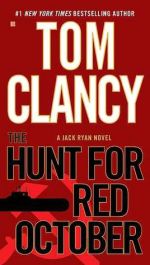
The Hunt for Red October, by Tom ClancyI did have a few books underway and these were all listed at Goodreads, but I cleared these a little while ago and gave myself a fresh start. One book I completed recently was ‘The Hunt for Red October, by Tom Clancy. I read the Jack Ryan series of books by Clancy some time ago and recently decided I’d read them again. I also watched the film again to see how close to each other they were – there was quite a difference between the book and the film. I have a post about this which I’ll link to below.

For more visit:
https://atthebookshelf.wordpress.com/2012/07/29/1614/


Purchased & Added to Library:

I have recently acquired a large number of ebooks, many for free from Amazon, including the following books:

– Killing Calvinism: How to Destroy a Perfectly Good Theology from the Inside, by Greg Dutcher
– The Discipline of Grace: God’s Role and Our Role in the Pursuit of Holiness, by Jerry Bridges
– Beyond Belief – The Real Life of Daniel Defoe, by John Martin

 

Unknown's avatar

Article: Book Art – Alexander Korzer-Robinson


The link below is to an article featuring a number of photos of book art by Alexander Korzer-Robinson. In the comments section of the article there are comments regarding the destruction of old books in book art. What do you think of destroying old books to make book art? Share your thoughts in the comments here.

For more visit:
http://www.telegraph.co.uk/culture/culturepicturegalleries/9211702/Book-sculpting-by-Alexander-Korzer-Robinson.html.

Unknown's avatar

Article: An Argument for Traditional Books


The link below is to an article about the need for traditional books, especially in the area of theology and I guess other areas of research also would be relevant. The interest in this article may well be the comments made following it.

For more, visit:
http://greenbaggins.wordpress.com/2012/05/08/a-disturbing-trend-in-publishing/

Unknown's avatar

Article: Speed Read


The link below is to an article that asks readers to respond to the question, ‘what is the fastest you’ve ever read a book.’ So it is to the comments in response to the question that may be of interest to readers.

For more visit:
http://www.mentalfloss.com/blogs/archives/124266

Unknown's avatar

Free Book: A God Entranced Vision of All Things – The Legacy of Jonathan Edwards


The link below is to a Blog where you can get a free ebook copy of this book, which is edited by John Piper and Justin Taylor. This book examines the character and teaching of Jonathan Edwards, a pastor from the era of the Great Awakening in the USA.

How do you get a copy? Simply leave a request in the comments section of the post linked to below.

If you would like other books visit the Blog, subscribe to it to keep up to date on what books are available and tell your friends about the site.

To Obtain a Copy of the Book, Visit:
http://searchandtrace.wordpress.com/2012/03/29/a-god-entranced-vision-of-all-things-the-legacy-of-jonathan-edwards/

Visit the Blog at:
http://searchandtrace.wordpress.com/


Unknown's avatar

Book Review: Currently Reading – Print is Dead, by Jeff Gomez


I have been reading ‘Print is Dead – Books in our Digital Age,’ by Jeff Gomez. I have now completed the fourth chapter ‘Generation Download.’ In this chapter, Gomez begins by comparing what has happened with the music industry with what has begun to happen with books and reading. A generation that has embraced a digital way of life, along with the gadgets that go with it, is out-growing the traditional book and craving digital technology and digital forms of entertainment. Music itself did not die with the coming of the digital world, only the form in which it was presented. The same resistance that the music industry applied to digital technology before it embraced it, is now being witnessed in the book industry – though I would argue that ebooks are taking a little longer to take off. Gomez argues that it is only a matter of time before an acceptable digital format is found that will have ebooks off and running, along with some form or forms of digital devices on which ebooks will be accessed. Perhaps the growing boom in Tablets and Ebook Readers is an indication that that time is now upon us.

Certainly I am a convert, having been previously a doubter of ebooks and the way they were accessed. More mobile forms of accessing ebooks, such as the Kindle, iPad and even Notebooks, have enabled me to transform my thinking, from one in opposition to being one who has fully embraced the technology. Being able to carry vast libraries on mobile devices is simply breathtaking to me and incredibly appealing. Not having to have huge spaces devoted to a large library and actually having the space to store a huge library is simply brilliant – I had long ago ran out of room for my books and needed to cull quite a number, which I did reluctantly. Now I am able to recall those dismissed books via the digital medium and not loose them again. Old friends are again welcome.

In the following chapter, ‘Generation Upload,’ the focus is on the savvy Internet user (which is generally most connected folk these days) who not only downloads material but also uploads modified material, uniquely created material and so on. This has been so with music and video, with the various play lists, mash ups, parodies and the like, as well as comments, contributions, etc. Will the same happen with books is the question raised by Gomez and predicted. Just how far consumer interaction will be with ebooks is yet to be seen, as also the form it will take. There are opportunities already existing for commenting and reviewing, with developments being made in the way of sharing quotes (Pinterest interaction, Quotista, etc), and likely many more ways yet to be invented or passed on convincingly to the masses.

‘On Demand Everything,’ the next chapter in the book, brings the attention of the reader to what we already know – we expect to be able to get pretty much everything whenever we want it and that better be soon. No longer do we need to wait for our media to arrive at given timeslots on the television, our CD music to arrive in the mail, etc. We now have the ability to access it all as soon as we want it and then to keep it in mobile gadgets that we can take with us and access whenever we wish. This then is surely the future of books. Gomez believes we will want to be able to divide large books into bits and pieces that we can access and use in whatever way we like – which would certainly be true of some forms of literature. However, it is unlikely that we would want to divide up novels for example, into little pieces. The ability to bookmark, highlight and clip pieces of text (among other possibilities) for various uses, is certainly increasing the appeal of ebooks and bringing them a more familiar feel, which will I think increase their usefulness considerably. Being able to find quotes, parcels of text and the like via search capabilities, cataloguing, etc, will all be very valuable tools that will bring ebooks into the realm of what is now possible with music, videos, etc.

In the next chapter, ‘Ebooks and the Revolution that Didn’t Happen,’ Gomez examines the reasons why Ebooks didn’t take off when they first appeared – which doesn’t mean they won’t take off at some point (which I do believe will happen at some point). His arguments certainly capture some of my own thoughts at the time of their first appearance, so if I was typical of people (at least of my age) at that time he may very well have hit the nail on the head. Some of the original issues still exist, such as the number of file types and matching them with the various readers and access to the files across a variety of devices. Perhaps when these issues are thought through with a bit more commonsense ebooks will become more popular sooner rather than later.

See also:
http://www.dontcallhome.com/books.html (Website of Jeff Gomez)
Podcast (Excerpts from the Book)
Google Books
Amazon

Unknown's avatar

‘Calvin for Armchair Theologians,’ by Christopher Elwood


I have now read this book and have found my earlier thoughts sadly confirmed. My first comments on this book on this Blog at:

https://atthebookshelf.wordpress.com/2009/11/27/calvin-for-armchair-theologians-by-christopher-elwood/

So I not only agree with my earlier thoughts on the book, but have even more to say about it. The illustrations (cartoons) I found to be completely inappropriate and the attempts by the author to justify them as irrelevant. There is just no place for the comical depictions of God given in the book.

The treatment of Calvin’s life is disappointing, with not enough detail given to it and some of the important events/incidents in his life are not treated or merely glossed over. It would have been better to have settled on the summary of the Institutes or do a full biography of John Calvin.

I also found the conclusions toward the end of the book disappointing and would suspect Calvin to be turning in the grave as a result of them.

The summary of the Institutes was probably not too bad, but I would have been better served to have read the Institutes rather than this book.

In summary – a very disappointing book that I would not recommend to anyone else to read.

Unknown's avatar

THE STORY OF THE ENGLISH BAPTISTS: John C. Carlile


I have recently posted on the particularbaptist.com library site ‘The Story of the English Baptists,’ by John C. Carlile. The book can be found at the following link:

http://particularbaptist.com/library/englishbaptists_john-carlile.html

I own the 1905 edition which was printed as a hardcover by James Clarke & Co. in London, England. My copy is quite aged and is in quite poor condition. The version I have placed online is of course in pristine condition and will undoubtedly stay that way.

There are a number of illustrations and photographs in the book – all of which can be found in the online version.

The book provides something of an introduction to both the General and Particular Baptists, and as such is probably a useful book in that it whets the appetite to research deeper into the history of Baptists in England – which in my case is especially true of the Particular Baptists (of whom I am one).

There are some very interesting and useful chapters in the book, though the treatments of some of the ‘big’ names in Particular Baptist history are quite brief – as I say, something of an introduction. Perhaps an overview may be a better way to describe the book.

I don’t think everyone will necessarily agree with all of the conclusions and statements made by the author of the book. For example, there is something definitely hinky about his comments regarding possible unification of General and Particular Baptists. I’m not sure that he really grasps the significance of the differences between the two camps.

Out of 5 I’d probably give the book a generous 3. I think the book has merit, but is yet disappointing.