
The link below is to an article reporting on the finalists of the National Book Critics Circle Awards For 2018.
For more visit:
http://www.bookcritics.org/blog/archive/national-book-critics-circle-announces-finalists-for-2018-award

The link below is to an article reporting on the finalists of the National Book Critics Circle Awards For 2018.
For more visit:
http://www.bookcritics.org/blog/archive/national-book-critics-circle-announces-finalists-for-2018-award
The link below is to an article that takes a look at Nicholas Blake.
For more visit:
https://crimereads.com/nicholas-blake-a-crime-readers-guide-to-the-classics/
The link below is to an article that looks at the decline in author income and its causes.
For more visit:
https://electricliterature.com/the-disastrous-decline-in-author-incomes-isnt-just-amazon-s-fault-c58468492b17
Rebecca Giblin, Monash University and Joshua Yuvaraj, Monash University
Who makes the money in publishing? Nobody. This often repeated dark joke highlights a serious issue. The most recent figures show that Australian authors earn just $12,900 a year from writing work (the median, at $2,800, was even worse). Indeed, authors can gross less than $5,000 for Miles Franklin-nominated titles that took two or more years to write.
Fixing this isn’t as simple as reaching more deeply into publisher pockets, because most of those are empty too. While the major international houses are thriving (Simon & Schuster and Penguin Random House recently reported 16% profits), publishing Australian stories can be financially perilous.
In independent publishing, 10% of the book sale goes to the author, perhaps another 10% to the printer, and up to a whopping 70% for distribution. What’s left has to pay the publisher, editor, marketers, admin staff and keep the lights on.
But we can improve our approach to author rights. Here are five lessons we can learn from elsewhere to help Australian writers earn more money.
Read more:
Scrounging for money: how the world’s great writers made a living
Traditionally, contractual “out of print” clauses have let authors reclaim their rights when a print run has sold out and the publisher doesn’t want to invest in another. But in our recent analysis of almost 150 contracts in the Australian Society of Authors archive, we found 85% of contracts with these clauses allowed authors to reclaim their rights only when the book was “not available in any edition”.
These days, books can be kept available (at least digitally or via print-on-demand) forever – but that doesn’t mean their publishers are still actively promoting them.
A better approach is to allow authors to reclaim their rights towards the end of a work’s commercial life, determined with reference to objective criteria like the number of copies sold or royalties earned in the previous year. The Australian Society of Authors recommends authors only sign contracts that have this meaningful kind of out-of-print clause – but many publishers still try to get authors to sign up to unacceptable terms.
Read more:
How to read the Australian book industry in a time of change
A growing number of countries (including France, Romania, Slovenia, Spain, Macedonia and Brazil mandate author rights based on objective criteria. The French law is an interesting model. There, authors can get their rights back if a book has been published for at least four years, and they haven’t been credited royalties for at least two. This opens up new possibilities for the author to license it to another publisher, or even sell it directly to libraries or consumers.
Publishers take very broad rights to most books: in our recent archival analysis we found 83% took worldwide rights, and 43% took rights in all languages. It’s easy to take rights – but if publishers do so, they should be obliged to either use them or give them back.
To that end we can learn from the “use it or lose it” laws that bind publishers in some parts of Europe. In Spain and Lithuania, for example, authors can get their rights back for languages that are still unexploited after five years.
Of course, it’s not always the case that there’s no money in publishing: sometimes a title that was expected to sell 5,000 copies sells 5,000,000. That changes the economics enormously: but in many cases, the contract only provides the same old 10% revenue for the author. For works that achieve unexpected success, we can learn from Germany and the Netherlands (and the proposed new EU copyright law). They have “bestseller” clauses that give authors the right to share fairly in unexpected windfalls arising from their work.
Even where there’s not much money to be made, the author should still receive a fair share. Again, Germany and the Netherlands lead the way on this. There, authors are entitled to “fair” or “equitable” payment for their work – and can enforce those rights if their pay is too low.
These laws don’t set a dollar amount, since what is “fair” depends on all the circumstances. However, such laws at least provide a minimum floor. If the contracted amount is unfair or inequitable, authors have a legal right to redress.
In Australia, copyright lasts for the life of the author, and then another 70 years after that. Publishers almost always take rights for that full term – only 3% of the contracts between publishers and authors we looked at took less. But publishers don’t need that long to recoup their investments. In the US, authors can reclaim their rights from intermediaries 35 years after they licensed or transferred them.
In Canada, copyrights transfer automatically to heirs 25 years after an author dies. We used to have the same law in Australia, but it was abolished for spurious reasons about 50 years ago. If we reintroduced a similar time limit on transfers, it would open up new opportunities for authors and their heirs (for example, to license or sell to a different publisher, libraries or direct to the public).
It’s true that there’s often not much money in publishing. But by changing our approach to author rights, we can help writers earn more and make Australian books more freely available.
Rebecca Giblin, ARC Future Fellow; Associate Professor, Monash University and Joshua Yuvaraj, PhD Candidate, Monash University
This article is republished from The Conversation under a Creative Commons license. Read the original article.
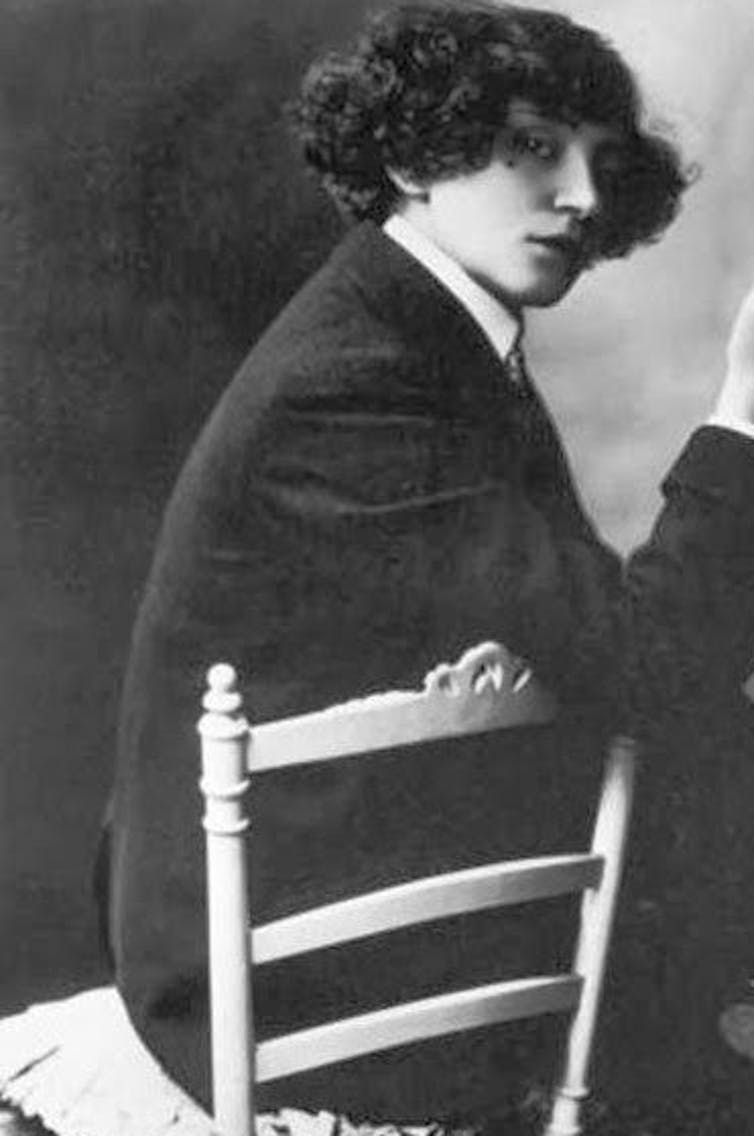
Diana Holmes, University of Leeds
The French writer Colette was indifferent and even hostile to the feminist movement in the early 1900s. But both her writing and the way she lived her life represent a vibrant and radical feminism in tune with the #MeToo spirit of today.
Born in rural Burgundy in 1873, Sidonie Gabrielle Colette (the abbreviated pen name came later) belonged to a middle class but unorthodox family. Raised by a mother who was as sceptical of religion as she was of bourgeois respectability, she was 20 when she married Henri Gauthiers-Villars (“Willy”), the 33-year-old charming but dissolute writer son of a family friend.
The marriage was both a good and a bad move for Colette. Willy introduced her to the rich Bohemian culture of the Parisian demimonde, and launched her career by insisting (despite her reluctance) that she write down memories of her schooldays.
But his serial infidelities distressed and depressed her. And as an unscrupulous literary entrepreneur, Willy cheerfully sold his wife’s semi-autobiographical “Claudine” novels under his own name.
The stories of a spirited, tomboyish heroine rapidly became a publishing sensation, with profitable sales of related merchandise including Claudine cigarette holders. But the profits were all Willy’s.
When, in her early 30s, Colette decided to leave the marriage, she had to find a way to support herself. Energetic and resourceful, she began to publish under her own name and took classes in dance and mime. She trained in the gym and went on stage, becoming the only great French author (to my knowledge) to have alternated writing with dancing semi-nude on stages all over France.
She combined her careers, writing both fiction and non-fiction set behind the scenes of the music hall, giving a voice to the underpaid women performers who featured so often from a male perspective in paintings and novels of the time. She also began a passionate affair with a cross-dressing lesbian aristocrat, Missy, and scandalised the nation by sharing a passionate kiss with her on stage.
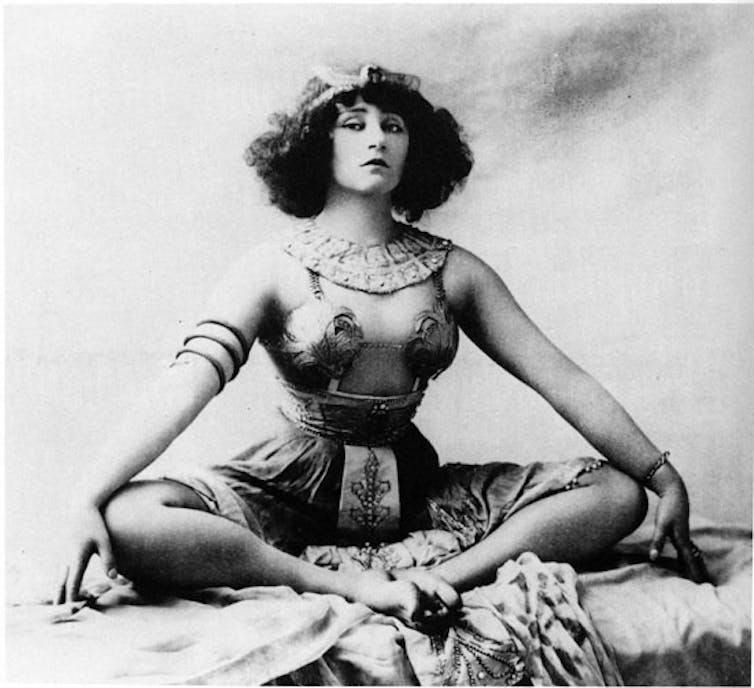
Director Wash Westmoreland’s recent film about Colette takes us to this point in her colourful career. She would go on to write prolifically as a journalist, novelist, essayist and innovator in the blended genre of “autofiction”.
She would nurse in World War I, marry twice more, bear a daughter at the age of 40, bolster her flagging finances by opening a beauty parlour – and finally become, for the French, “our great Colette”. But a whiff of scandal was still attached to her name, and acceptance of her as a great writer was slow.
The Catholic Church even refused to grant her a religious funeral (although she would have agreed with the Church, for religion formed no part of her passionate love of life.)
Westmoreland’s film, starring the British actor Keira Knightley, shines a deserved spotlight on an important feminist figure. From the Claudine series on, Colette gives us a serenely irreverent perspective on a patriarchal culture.
She reverses the gaze of heterosexual desire to provide sensual, detailed descriptions of male bodies, and writes with equal sensuality and precision of same-sex desire. She writes movingly of romantic love and motherhood but insists, in her novel Break of Day that both are also peripheral to a woman’s life:
Once we’ve left them both behind, we find that all the rest is gay and varied, and that there is plenty of it.
In life, as in writing, she places female friendship centre-stage, sometimes subverting the eternal triangle by making its primary focus the relationship between a man’s wife and his mistress. She often published in women’s magazines, right up to her death in 1954 (Elle serialised her final books), and wrote comically and caustically of trying to make her own robust, food-loving body fit into the willowy fashions of the inter-war years.
In a very public life, as in her fiction, she exemplified financial and social independence and shame-free sexuality – what we would now call “gender fluidity”. She possessed a generous optimism that went against the grain of the angst and despondency which characterised so much male literature of the 20th century.
She remained, throughout, a popular writer. An author read for pleasure, for the sensuality of her prose, the dry note of humour that peppers her eloquence, the lightness of touch that means her seriousness is never heavy or self-important.
One of France’s greatest – and certainly most unconventional – writers, she has been translated – often brilliantly – into other languages. Her appearance on cinema screens should bring her even more readers.

Middlebrow Matters: Women’s reading and the literary canon in France since the Belle Époque.
Diana Holmes, Professor of French, University of Leeds
This article is republished from The Conversation under a Creative Commons license. Read the original article.
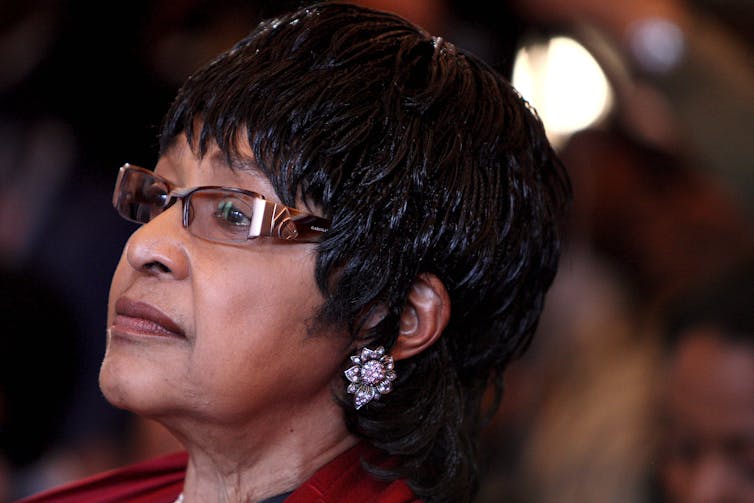
Keith Gottschalk, University of the Western Cape
Writings on South African liberation struggle icon Winnie Mandela almost all fall into one of two categories – either hagiography or demonology. These two books – Truth, Lies and Alibis. A Winnie Mandela Story, by Fred Bridgland and Sisonke Msimang’s The Resurrection of Winnie Mandela. A Biography of Survival, try to be more nuanced.
Bridgland was a correspondent for Britain’s leading right-wing newspaper, the Daily Telegraph. For years, he dispatched empathetic reports on an anti-communist hero of the cold war, Jonas Savimbi and his UNITA movement, which were at war with Angola’s ruling MPLA – an ally of the ANC.
Readers might take it for granted that anything he writes would be hostile to the ANC. So Bridgland makes a point of prefacing his book on Winnie Mandela by first placing on record that Savimbi became paranoiac, and committed massacres of entire families of his leading officials. Bridgland is currently writing up these atrocities; in effect he attempts to so show his even-handedness.
Sisonke Msimang, author of Always Another Country: A Memoir of Exile and Home, has also written articles for the New York Times, the Guardian, and Al Jazeera. She writes near the start of her biography: “I will not pretend otherwise: I am interested in redeeming Ma Winnie”.
But towards the end, she writes: “It is deeply uncomfortable to acknowledge Winnie’s involvement in Stompie’s death, and in the disappearances of Lolo Sono and Sibuniso Tshabalala, while also holding her up as a hero.
She qualifies her views further:
In a perfect world, her place is not on a pedestal… I am prepared to raise her up in the hopes that, one day, South Africans might ethically and in good conscience take her down.(p.157)
Msimang also writes in her conclusion that she’s even prepared to say give up her admiration for the complicated Winnie Madikizela-Mandela. “I cannot do so, however, without a few conditions … The past must be opened up not just to grief, but to the structural nature of racism.” She means the class exploitation coloured by colonialism and finally apartheid.
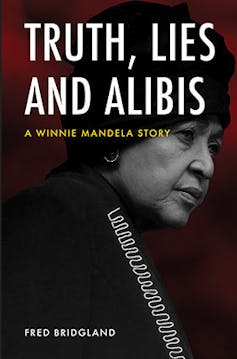
This review needs to start with three disclosures. This reviewer is a member of the African National Congress. He is also a friend of the Horst Kleinschmidt mentioned in Bridgland’s book. And he has, in the company of others, briefly met Winnie Madikizela-Mandela, Zindi Mandela, and Nelson Mandela.
The issues these two biographies raise, of liberators’ wartime actions, are not unique to South Africa. For example, post-WW2 readers, with their knowledge of the holocaust of six million Jews and three million Christian Poles, also have to debate Bomber Harris’ saturation bombing of German residential downtown areas and suburbs.
In chapter two Bridgland summarises the South African police’s Special Branch’s persecution of her. The remaining 27 chapters and epilogue summarise Madikizela-Mandela’s persecution of others. The overwhelming majority of facts in his book were published two decades ago – and never refuted.
His book also flags the issue of those who lobbied the then Chief Justice Corbett about Winnie’s pending trial. This included the then Minister of Justice, Kobie Coetsee, the then head of the National Intelligence Service Neil Barnard, and the then British ambassador Robin Renwick. He evidently didn’t rebuke any of them.
Msimang’s most persuasive arguments are when she points out the sexist double-standards in much of the condemnation of Zanyiwe Madikizela, better known as Winnie Mandela. She emphasises that it’s strange to perceive Winnie’s actions as motivated by psychiatric reasons rather than political.
She highlights that Winnie was not a radical outlier, but that during 1985-86 many ANC leaders and Radio Freedom, the then banned ANC’s underground radio station, made similar statements about insurrection, killing informers, and necklaces:
Winnie was not the only ANC leader who traded in recklessness and fiery rhetoric. But she was the only woman who was visibly doing so. (p.13)
Msimang also points out that Harry Gwala and other ANC warlords were committing in substance the same actions as Winnie Mandela, but with far less condemnation.
The same double-standards also apply to men and women political leaders having adulterous affairs:
If the roles had been reversed and you had been imprisoned, things would have been very different. Nelson would have remarried and you would have languished forgotten on the island, and it would have been no reflection on him. Men have needs. Women sacrifice.
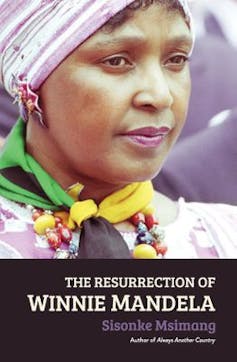
Unsurprisingly, two such contrasting biographies also differ over the facts. Bridgland writes that the two hit men who assassinated Dr. Abu-Baker Asvat – the Black consciousness exponent and doctor who tended to Stompie after his brutally assault to which Madikizela-Mandela was part – gave statements that Winnie Mandela had offered them R20 000 to kill him. Msimang writes that these were merely “rumours” and “No link has ever been established between Dr. Asvat’s death and Winnie Mandela.”
As this review goes to press, the ANC has posthumously awarded Winnie Mandela its highest honour, the Isithwalandwe.
The controversy continues in death as in life.
Keith Gottschalk, Political Scientist, University of the Western Cape
This article is republished from The Conversation under a Creative Commons license. Read the original article.

Rodrigo S Coelho/Shutterstock
Peter D. McDonald, University of Oxford
Decolonising literary studies isn’t simply a matter of relieving the symptoms, substituting this author for that or setting up a new canon in place of the old. The challenge is to address the chronic underlying condition by thinking beyond the guiding assumptions and aspirations of any colonial-era curriculum.
To start with, this means ditching the ideas of language that were central to colonial linguistics. On that logic, for instance, the curriculum was thought to affirm one supposedly unitary, national language (let’s say French). Or at best, in the case of Comparative Literature, it affirmed two supposedly unitary, national languages (for example, French and English).
The reason? Language, it was assumed, is the expression of the national “character”, “genius” or “soul” – to put it in the most idealistic terms. Or it is the bearer of “the culture”. This was usually understood as the shared, often ancestral values, practices and forms of knowledge by which a people (or national community) sees itself and understands its place in the world.
This way of thinking informed the selection of great writers that gave the colonial-era literary curriculum its content. And it defined one of its core aims: to provide the means by which the nation could come to know and affirm itself as a community rooted in one language, one history, one culture and one state.
At home this was a quasi-theological exercise in self-knowledge – the talk was all about encountering the “national soul” through literature. Abroad it was a rather more worldly instrument of self-imposition – the export version of the curriculum serving to assert the sovereignty of the colonising culture and the primacy of its language, values and ways of knowing.
To design a decolonising curriculum, then, we need to start by abandoning the dubiously assured, dubiously otherworldly assumptions underpinning this legacy.
This means conceptualising language in more secular or earthy terms. Language as a river, say, the source of which is ultimately obscure, the mouth always somewhere further on. It’s a strange kind of river too. Many other major rivers, not just minor tributaries, constantly flow in and out of it. And no state or community (national or otherwise) can claim exclusive rights over it.
Push this rather benign, naturalising analogy too far, however, and you gloss over colonisation’s destructive effects. Backed most often by the state and its allies, some languages, after all, became vast, transcontinental canals – think of English or Spanish. And constructing these often caused others to dry up altogether – think of Aushiri or |Xam.
So what would a curriculum founded on this alternative idea of language look like?
For one thing, given its central premise – no language is the product of any one history or the property of any one community – this more secular conceptualisation would put pressure on the inherited disciplinary structures of the university itself. Think of all those separate departments of English, French, Spanish, etc. Yet it need not follow that they should fall. What has to go are the canal-building assumptions on which they were often founded, and the silo mentalities they still tend to foster.
Taking the more benign river perspective first, a decolonising curriculum would begin by encouraging students to uncover the many “foreign” languages within those they have chosen to study. This would reveal how translation, far from being an anomalous or specialist activity, is integral to the ordinary life of all languages.
In a similar spirit, it would make it possible for them to follow the shifting contours of linguistic geography, which seldom coincide with state boundaries. This would leave them free to trace the complex movement of languages through multiple speech communities and across all media.
The canal perspective would require other lines of enquiry. Here the curriculum would ask students to reflect critically on the legacies of colonial linguistics, the interconnected histories of standardisation and marginalisation, and the impact they had on the way all languages were understood in the past.
The river and canal perspectives inevitably raise different questions of ownership, multilingualism and translation. Yet both open up ways of thinking beyond theologically inspired, colonial-era silos. And both make it possible for a properly decolonising linguistics to emerge in which the interdependence of self- and other-knowledge is central.
Literary writing, too, would have a transformed status. Since a decolonising curriculum would treat linguistic inventiveness as an ordinary feature of language, like translation, it would have no need of the colonial-era’s sacralised canon of great writers.
Equally, it would not assume that writers all sign up to canal-building national traditions simply by default. Many may have in the past, and some may well continue to see themselves in similar terms today, but the presumption has lost all currency. How innovative writers relate to communities, whether national, sub-national or supranational, can now seldom be known in advance of actually reading their work.
A decolonising curriculum would therefore consider the multiple ways in which writers negotiate the linguistic, literary and cultural legacies of the colonial era. Some reject them, some indigenise them, some re-foreignise them, and others refuse all clear-cut options, choosing to work between languages and traditions instead.
Does this mean a decolonising literary curriculum is simply “world literature” by another name? Possibly, but only in the sense in which the Bangla poet-philosopher and Nobel Literature Prize-winner, Rabindranath Tagore, used the phrase over a century ago when he affirmed the promise of what he called বিশ্ব সাহিত্য (Vishva Sahitya). For Tagore, this was a call to decolonise knowledge and to reinvent the university. It was also a call to learn to think (and live) creatively amid the world’s turbulence without any craving for otherworldly certainty or finality.
It is a call worth heeding again.
Peter D. McDonald, Professor of English and Related Literature, University of Oxford
This article is republished from The Conversation under a Creative Commons license. Read the original article.
Bethany Anderson, University of Virginia
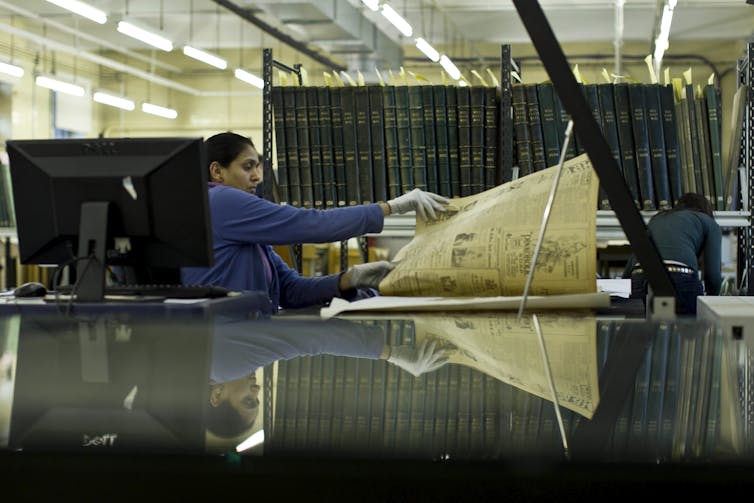
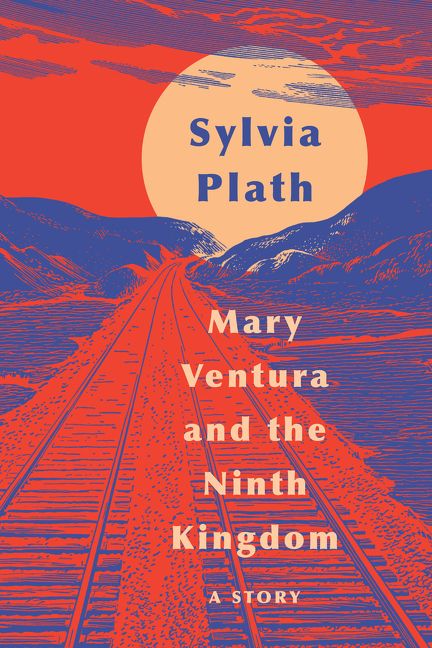
The recent publication of Sylvia Plath’s short story “Mary Ventura and the Ninth Kingdom” has been met with much fanfare, with the media eager to highlight that the story had been “lost,” only to have recently been “found.”
The Boston Globe described the work as “recently discovered” in its headline. A Vox article evoked a scene of abandonment and deterioration – the story had “languished in her archives for decades.”
And a recent New Yorker article, “A Lost Story by Sylvia Plath Contains the Seeds of the Writer She Would Become,” noted that “not even the author’s estate had known the story existed until the critic and academic Judith Galzer-Raymo stumbled over it while doing research in Plath’s archives.”
But was Plath’s story really “lost”? For years, “Mary Ventura and the Ninth Kingdom” has been preserved – and has been accessible to the public – at Indiana University’s Lilly Library, thanks to the work of archivists and other cultural stewards.
As an archivist, I bristle at this sort of misleading coverage, which is only the latest example of the media ignoring the work of archivists in order to highlight something found in archives as “newly discovered.”
What’s behind this media impulse and why do these mischaracterizations persist?
I’ve become all too accustomed to seeing headlines about “long-lost” manuscripts that have been found.
For example, in 2012 two articles in The Atlantic debated whether a medical report relating to Abraham Lincoln’s assassination amounted to a “discovery.”
As another example, The Chronicle of Higher Education reported a “long-lost letter” by René Descartes that had “lain buried in the archives [at Haverford College] for more than a century.” The public also recently learned of letters from interned Japanese-Canadians during the Second World War that had been “long-forgotten in the bowels of Library and Archives Canada.” In all these examples, the documents were already preserved and accessible in archival repositories.
And on the rare occasions that archives are featured in the press or in popular culture, they’re usually characterized as old, secluded and dusty places.
For example, in 2013 The New York Times published an article titled “Leaving Cloister of Dusty Offices, Young Archivists Meet Like Minds.”
If the headline alone didn’t convey this sentiment, the text drove it home: The archivists, it read, had “long spent their careers cloistered, like the objects they protected.”
Any archivist reading this story knows that nothing could be further from the truth. In a letter to the editor, Helen W. Samuels, a former archivist at MIT, responded, “While I was delighted that your article focused attention on the talented archivists now employed by so many institutions, I was saddened that it perpetuated the outdated image of archivists as preservers of dusty, precious artifacts maintained in a cloistered environment.”
For the record, “dusty” doesn’t characterize any of the repositories I’ve worked in or visited. For example, the Albert and Shirley Small Special Collections Library at the University of Virginia is clean with an open layout, and its spaces are filled with natural light. Similarly, the University of Michigan’s William L. Clements Library spaces do not fit the “dusty” stereotype.
Perhaps the media finds these tropes appealing because they evoke the romance and mystery of unearthing, discovering and rescuing rare books, documents or artifacts, as if they’re hidden treasures. After all, who doesn’t want to feel like Indiana Jones? And by representing archives as dusty, cloistered places, the materials appear to be on the verge of disappearing into obscurity – that is, unless a researcher comes to the rescue.
Another reason these tropes persist could have to do with the way our society privileges innovators over maintainers. Maintainers, according to scholars Andrew Russell and Lee Vinsel, are “those individuals whose work keeps ordinary existence going rather than introducing novel things.”
Archivists are maintainers: They perform the “ordinary” work of acquiring, appraising and arranging archival materials. They respond to the inquiries of students and researchers, and work to preserve materials for posterity.
As members of the archival community have pointed out, this sort of work is generally ignored and misunderstood. Instead, when it comes to stories about archival research, stories will focus on the “innovators” – the scholars who write about the rare manuscript or old letter and, in doing so, rescue these materials from obscurity.
In almost every case, these stories gloss over the fact that these items exist in publicly accessible collections and are described in finding aids and databases.
This is not to take anything away from the work of researchers. Archival research is a process that often involves an intense commitment of time and energy. A researcher can see value or significance in a letter or manuscript that might have otherwise gone unnoticed outside of the archives.
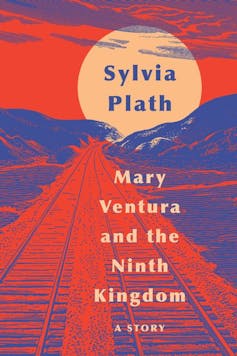
Nonetheless, while a researcher might be the first researcher to read a document, they may not be the first person to have encountered it – not when archivists, curators, librarians and other staff work with materials on a daily basis.
Interestingly, the researcher featured in The New Yorker article about the Plath short story doesn’t appear to have been the first scholar to have “discovered” that “lost” Sylvia Plath story. As Rebecca Baumann, Head of Public Services at the Lilly Library, noted, “Many people have written about [“Mary Ventura and the Ninth Kingdom”] … There’s published scholarship that discusses [it].“
But that doesn’t always make for the best story.
Bethany Anderson, University Archivist, University of Virginia
This article is republished from The Conversation under a Creative Commons license. Read the original article.
The link below is to an article that takes a look at the stolen books of Europe – stolen by Nazi Germany and sitting in libraries.
For more visit:
https://www.nytimes.com/2019/01/14/arts/nazi-loot-on-library-shelves.html
The link below is to an article that takes a look at Celeste Ng.
For more visit:
https://www.nytimes.com/2018/12/20/books/celeste-ng-everything-i-never-told-you-little-fires-everwhere.html
 At the BookShelf


You must be logged in to post a comment.