Recent global developments have sharply polarised communities in many countries around the world. A new politics of exclusion has drawn urgent attention to the ways in which structural inequality has marginalised and silenced certain sectors of society. And yet, as a recent report shows, diversity and inclusion in fact “benefit the common good”. A more diverse group is a stronger, more creative and productive group.
In the world of literary writing, we find similar gaps and exclusions. But these are counterbalanced in some respects by new positive initiatives.
In 2015, a study revealed that literature by writers of colour had been consistently under-represented by the predominantly white British book industry. Statistics in The Bookseller show that out of thousands of books published in 2016 in the UK, fewer than 100 were by British authors of a non-white background. And out of 400 authors identified by the British public in a 2017 Royal Society of Literature survey, only 7% were black, Asian or of mixed race (compared to 13% of the population).
Colourful misrepresentation
A similar marginalisation takes place in the curricula in schools and universities, mirroring exclusions in wider society. In most English literature courses of whatever period, the writers taught are white, largely English and largely male.
A fundamental inequality arises in which, though British culture at large is diverse, syllabuses are not. Indeed, many British readers and students find little to recognise or to identify with when they read and study mainstream British literature.
But it’s not just a case of under-representation. It’s also a case of misrepresentation.
Black and Asian writers who have been published within the mainstream British system describe the pressure they have felt to conform to cultural stereotypes in their work. Their books are often packaged and presented in ways that focus on their ethnicity, regularly using cliches. At the same time, more universal aspects of their writing are overlooked. For example, the covers of novels by Asian British writers usually stick to a limited colour palette of yellows, reds, and purples, accented by “exotic” images.
These writers bristle at the sense that they are read not as crafters of words and worlds, but as spokespeople for their communities or cultures. At its worst, this process turns these writers and their books into objects of anthropological curiosity rather than works inviting serious literary study or simply pleasurable reading. The message is that black and Asian literature is other than or outside mainstream British writing.
Against these exclusions, leading British authors such as Bernardine Evaristoand others have urged for a broader, more inclusive approach. They recognise that what and how we read shapes our sense of ourselves, our communities and the world.
Reframing the narrative
The Postcolonial Writers Make Worlds research project, based in the Oxford English Faculty and The Oxford Research Centre in the Humanities, set out to ask what it means to read contemporary fiction as British readers. Working with reading groups and in discussion with writers, we found that readers of all ages entered the relatively unfamiliar worlds created by BAME authors with interest.
For many, finding points of familiarity along gender, age, geographical or other lines was important for their ability to enjoy stories from communities different from their own. Identifying in this way gave some readers new perspectives on their own contexts. At the same time, unfamiliarity was not a barrier to identification. In some cases, universal human stories, like falling in love, acted as a bridge. This suggests that how literature is presented to readers, whether it is framed as other or not, can be as significant as what is represented.
Contemporary black and Asian writing from the UK is British writing. And this means that the work of writers such as Evaristo, Nadifa Mohamed and Daljit Nagra be placed on the same library shelf, reading list and section of the bookshop as work by Ian McEwan, Julian Barnes and Ali Smith – not exclusively in “world interest” or “global literature”.
Equally, much can be gained by thinking of white British writers like Alan Hollinghurst or Hilary Mantel as having as much of a cross-cultural or even postcolonial outlook as Aminatta Forna and Kamila Shamsie.
There are positive signs. A new EdExcel/Pearson A-level teaching resource on Contemporary Black British Literature has been developed. The Why is My Curriculum White? campaign continues to make inroads in university syllabuses. And the Jhalak Prize is raising the profile of BAME writing in Britain. Against this background, the Postcolonial Writers Make Worlds website offers a multimedia hub of resources on black and Asian British writing, providing points of departure for more inclusive, wide-ranging courses. Yet there is still much to be done.
All literature written in English in the British Isles is densely entangled with other histories, cultures, and pathways of experience both within the country and far beyond. Its syllabuses, publishing practices, and our conversations about books must reflect this.
An uproar ensued after it was reported that the Oregon Shakespeare Festival (OSF) – southern Oregon’s 80-year-old annual theatrical extravaganza – would be commissioning playwrights to “translate” all of Shakespeare’s plays into modern English.
The project drew jeers from Shakespearean professors, arts practitioners and others who believe passionately in the power of Shakespeare’s original texts, who abhor any attempt to “dumb down” their language.
OSF Director of Literary Development and Dramaturgy Lue Douthit and OSF Artistic Director Bill Rauch maintain that OSF is undertaking a bold, not sacrilegious, experiment. Nevertheless, howls of outrage have followed what Douhit ruefully has deemed a “career-ending” announcement for those involved.
As an educator and lover of Shakespearean drama, I remain committed to the value of presenting Shakespeare’s plays in their original language. I require my students to read Shakespeare’s plays in their original form, and through my work on the World Shakespeare Project, I’ve witnessed undergraduates in places such as Uganda, rural India and Buenos Aires enthusiastically respond to the challenge.
Yet the outrage over the OSF’s new modernization project is misguided. The organization – which is known for experimentation – is simply participating in larger, centuries-long tradition of molding, melding and adapting Shakespeare’s original texts.
Shakespeare for dummies?
Among those criticizing the new project is Columbia University Professor James Shapiro, a prominent Shakespearean scholar who maintains that “by changing the language in this modernizing way…it just doesn’t pack the punch and the excitement and the intoxicating quality of [the original] language.”
Earlier this month, before an audience at Shakespeare’s Globe, he added, “It’s a really bad idea.”
Notably, however, Shapiro (along with many others) responded quite differently to the translation of a different classic text. On Nobel Laureate Seamus Heaney’s oft-praised 1999 rewriting of Beowulf, Shapiro wrote in The New York Times:
Examples like this add up to a translation that manages to accomplish what before now had seemed impossible: a faithful rendering that is simultaneously an original and gripping poem in its own right.
In this instance, at least, Heaney’s talent apparently overcame Shapiro’s objections to the concept.
The playwrights the company has commissioned to “modernize” the language of Shakespeare’s works may or may not achieve the majesty attributed to Seamus Heaney’s Beowulf. But for whatever reason, changing the language of Shakespeare remains an anathema, while the setting, costuming and theoretical conceptualization of his plays are fair game for innovation.
The hottest theater ticket in Britain at the moment, for example, is Benedict Cumberbatch’s Hamlet, which caused similar outrage for opening with the famous “To Be or Not to Be” soliloquy, rather than the traditional “Who’s there?.” By the end of previews, the speech was moved back to (one of) the places it traditionally resides. Cumberbatch’s audiences have been comparatively silent, however, about the production’s addition of modern props, like a phonograph player.
London’s Young Vic Theatre, meanwhile, is currently presenting a strong version of Shakespeare’s Measure for Measure, with a set filled with dozens of naked, anatomically correct, inflatable dolls. Like the phonograph player on the set of Hamlet, it’s unlikely that theatergoers will object to the dolls, nor will they protest the video screens employed during the performance.
But when it comes to changing the language – well, the main objection, it appears, stems from concerns that it will encourage series such as Shakespeare for Dummies or No Fear Shakespeare, which presents original Shakespearean text adjacent to what its editors call “the kind of English people actually speak today.”
Such projects are understandable, if worrisome. Shakespeare does have a reputation for being too dense for ordinary people to easily comprehend.
At the same time, there are many remarkable projects that bring Shakespeare’s plays to even the most unconventional audiences. There’s Curt Tofteland’s Shakespeare Behind Bars, which offers prisoners the opportunities to present full-length Shakespeare plays, while former Royal Shakespeare Company artist Kelly Hunter’s project Shakespeare’s Heartbeat uses Shakespearean drama as the basis for games designed for children with autism.
Play on!
It’s worth noting the OSF is not planning to replace Shakespeare’s original texts during its current presentation of the complete Shakespearean canon, which will take place over the next decade.
While the company hopes that the newly commissioned versions of Shakespeare will be performed in Oregon and elsewhere, they also retain their commitment to presenting the conventional texts, albeit with regular tweaks and cuts.
As Shapiro and many others admit, Shakespearean drama has been altered, rewritten and reimagined repeatedly since the plays were first presented during the reigns of Elizabeth Tudor and James Stuart.
During the English Restoration, King Lear was given a happy ending. More recently, the 2001 film Scotland, Pa. offered a modern retelling of Macbeth, set at a fast food restaurant. Henry IV found itself placed among male prostitutes in Oregon in Gus Van Sant’s 1991 film My Own Private Idaho. Even Justin Kurzel’s acclaimed new film Macbeth opens with a twist: the funeral of Macbeth’s toddler.
As poet Andrew Marvell might say, there is “world enough and time” for any number of Shakespearean adaptations and iterations.
While Shakespeare’s original language is remarkably rich and compelling, like Cleopatra, “age will not wither it.” Neither will OSF’s revisionary experimentation.
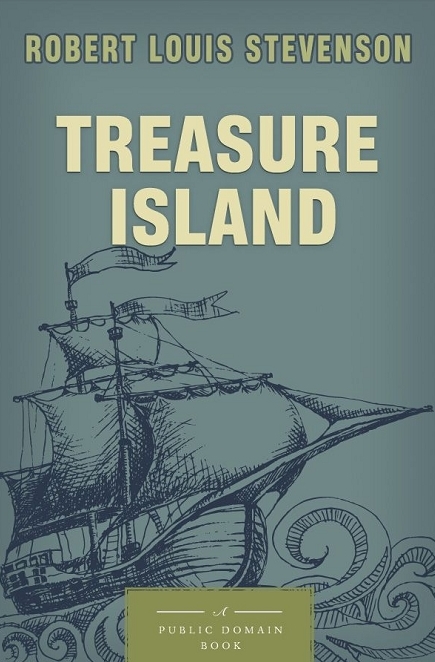
Treasure Island was the first major novel of Robert Louis Stevenson. It was first published in 1883 and has remained a much-loved book. First penned as a story for boys, it was as a young boy that I first came across Treasure Island. It was the first real book that I ever read – certainly of my own choice. If I remember correctly, the copy I had was a small book, not much bigger than my hand and illustrated throughout. The illustrations weren’t coloured as such, but I think I may have started to ‘colour them in’ as I read the story several times. The name of the ship, ‘Hispaniola,’ came back to me in one of my first compositions at school. In that early attempt at writing I wrote a story about piracy and a ship called the Hispaniola. I believe I was written into the story, along with several of my classmates, though the original composition has long since been lost and the
plot a thing of the past.
Not until the last couple of days however, did I take up the novel once again and begin to read the story of Long John Silver and Jim Hawkins, and the journey to Treasure Island. It has been a long time now, since that first book I read and my taking it up again. It must be at the very least thirty years and then some by my reckoning. Remembering this book as the first I had really read, was the reasoning behind my picking it up again for another read.It is an easy read. It is not a long read. But it is an enjoyable read. If it is that then the author has achieved his goal in fiction I believe. To be sure there are many things that can be learned in reading a novel and many lessons that can be taught through a novel, but without enjoyment all else is lost. This is a short novel that can be enjoyed greatly.
I read this book by way of a Kindle, which shows that the future of Treasure Island lies assured into the digital future and beyond. I also own Treasure Island in traditional form and as part of a set of works, being the entire works of Robert Louis Stevenson. One day I hope to read more, if not all of this man’s printed contrinution to English literature and I look forward to doing so.
Treasure Island is the classic pirate story, coming fully equiped with the pirate talk which is so popular even to this day and the vivid description of a pirate adventure. The story is a great one that may well bring younger generations to read and pull them away from the Xbox and other gaming devices. It is a short read, with short chapters, which may be a useful tool in getting a young one to start reading – but it is the adventure of a life time for Jim Hawkins that will really draw them in and the promise of buried treasure.
If you have not read Treasure Island, pick up a copy and have a read. It is free in the Kindle Shop at the time of posting this review and well worth spending a couple of hours a day reading this classic – by the end of the week the story of Treasure Island will be completed and you will be the richer for having read it.
The links below are to articles on a sculpture by Spanish artist Alicia Martin called ‘Biografias,’ which means Biographies when translated into English. Interested to hear what you think.




 All literature written in English in the British Isles is densely entangled with other histories, cultures, and pathways of experience both within the country and far beyond. Its syllabuses, publishing practices, and our conversations about books must reflect this.

 At the BookShelf
You must be logged in to post a comment.