Unknown's avatar

Book publishing sidelined in the game of university measurement and rankings


Shutterstock

Agata Mrva-Montoya, University of Sydney and Edward Luca, University of Sydney

Academic book publishing is under threat. Global university rankings and competition for funding and international student enrolments are reshaping the research landscape. Academics are under more pressure to win grant funding and publish journal articles, rather than books, and be more strategic in their publishing.

With universities losing billions in revenue due to the impacts of COVID-19, these pressures are only going to increase.

Traditionally, a monograph published with a prestigious publisher has been a key medium to create and disseminate research in the humanities and social sciences. It has also been important for building scholarly careers and reputations. However, our research shows publishing pressures, incentives and rewards are changing.

A shift from quantity to quality

The Australian government’s approach to funding research has had a strong impact on what types of publications have been encouraged.

Australian universities first began reporting details of academics’ research outputs to the government in the 1990s as part of the formula for distributing research funding. The funds allocated for publication were significant. By 2001, a peer-reviewed journal article was “worth” more than A$3,000 to the university. A book was “worth” $15,000.

These rewards applied regardless of where the research was published. “Publish or perish” had well and truly taken over. Without appropriate measures to account for quality and impact, the system had the unintended consequence of encouraging academics to publish low-quality research with low-quality journals and publishers just to meet performance targets. The use of quantitative measures alone also increases the possibility for gaming and manipulation.


Read more:
Publish or perish culture encourages scientists to cut corners


Publication data were eventually removed from the Higher Education Research Data Collection (HERDC) specifications in 2016. Since then, no government funding based on quantity (or quality) of research outputs has been distributed.

Australia’s current national research assessment exercise, Excellence in Research for Australia (ERA), began in 2010. The ERA system is designed to identify and improve quality of research through international benchmarking.

As a result, all universities expect “quality” publications from their staff. This is invariably understood as publishing with international and prestigious publishers and in high-ranking journals.

As universities compete against each other, they have a strong incentive to lift their research profile and to design internal reward schemes based on how ERA defines quality.

Academics are now fundraisers

Our research project looked at the publishing strategies and behaviours of academics in the humanities and social sciences. We found the pressures for quantity appear to have subsided (for some at least). However, there is now a greater push for quality, competitive grant funding and real-world impact.

While universities are still interested in quality publications, the changing funding rules mean universities that receive competitive funding get additional research funds through HERDC. This translates to greater pressure on academics to apply for and secure funding. Academic production appears to have shifted from publication as an outcome in itself to funding as the main measure of performance.

women weighs up books in one hand against piggybank in the other
Academics must now weigh up the expectation that they attract funding against other performance criteria.
Shutterstock

Funding bodies, in turn, are increasingly looking to researchers to show their research has quantifiable, real-world impacts. And ideally they should publish in open access publications.


Read more:
2020 locked in shift to open access publishing, but Australia is lagging


Juggling publication quality and research impact

Academics are caught in the middle between the pressure to publish in quality outlets versus the need to demonstrate impact in the broader society. This creates a conundrum for academics in the humanities and social sciences in particular.

A number of participants in our research described the ways in which their university’s performance evaluations are aligned to publishing practices in science, technology and medicine. Citation metrics are commonly used as a proxy for quality in these fields. Books are generally not available or poorly represented in citation databases.

Many respondents felt their institutions devalued book publishing in favour of journal articles and collaborative authorship.

The emphasis on international publication means some subject areas are rated higher than others. For example, academics in Australian studies told us they felt their institutions undervalued their work.

We also observed an increase in the number of journal ranking lists or recommended publisher lists, created internally by universities. These are intended to make “quality” explicit by identifying where academics are advised to publish.

However, these lists discourage academics from publishing with local, niche, emerging or open-access book publishers and journals. These outlets might actually be a better fit for their target audiences and so lead to greater impact.


Read more:
Who cares about university research? The answer depends on its impacts


Distorting the value of academic inquiry

The different expectations of various stakeholders mean academics receive conflicting advice about publishing strategically. Academics are encouraged to engage with the Australian context and communities. At the same time, they are told to produce research that prestigious international journals and publishers will accept.

These pressures lead researchers to publish in ways that reflect how they are being measured. This appears, in turn, to influence their research agendas. The current research landscape seems to be more a reflection of what is being measured, rather than what is needed by society or would advance knowledge.

Academics, especially early career researchers, have no choice but to remain open to changing priorities, be they institutional or governmental. They must balance the contradictions and tensions in academia. In spite of the rhetoric of academic freedom, university performance expectations mean academics are increasingly required to construct their research agendas and publishing strategies to be attractive to grant funders and international publishers.

Apart from affecting individual academics’ careers, these practices have broad social and intellectual costs. For the humanities and social sciences, in particular, these trends could affect the future and relevance of these disciplines in Australia.The Conversation

Agata Mrva-Montoya, Honorary Associate, Department of Media and Communication, University of Sydney and Edward Luca, Manager, Academic Services, University of Sydney

This article is republished from The Conversation under a Creative Commons license. Read the original article.


Unknown's avatar

An Older Style of Book Making


The link below is to an article and video showing an older style of book making.

For mkore visit:
https://lithub.com/here-is-a-deeply-soothing-bookmaking-video-for-your-friday-escape/

Unknown's avatar

Supply Issues in the Book Publishing Industry


The link below is to an article reporting on supply issues hitting the book publishing industry.

For more visit:
https://www.nytimes.com/2020/08/27/books/printing-companies-backlog-book-publishing.html

Unknown's avatar

What black writers think about the UK’s publishing industry – a survey


Monkeybusinessimagery/Shutterstock

Catherine Harris, Sheffield Hallam University and Bernadette Stiell, Sheffield Hallam University

As people seek to educate themselves in response to Black Lives Matter protests, sales of books by black British authors, such as Reni Eddo-Lodge and Bernadine Evaristo, have topped the UK bestseller lists. Several recent prestigious awards have also been won by black writers, including Candice Carty-Williams who won book of the year for Queenie at the British Book Awards. Although proud of her achievement, she was also “sad and confused” on discovering she was the first black author to win this award in its 25-year history.

While these firsts must be celebrated, they also shine a light on publishing’s systemic practices, which have maintained inequalities and under-representation for black, Asian and minority ethnic writers and diverse books. Despite awareness of its shortcomings and years of debates and initiatives (diversity schemes, blind recruiting practices and manuscript submission processes) the industry has generally failed to achieve lasting change. This is because they fail to address the broader systemic inequalities faced by people of colour, which contribute to ongoing under-representation in the industry.

A substantial market

Our research on diversity in children’s publishing included an online survey of 330 responses and 28 in-depth follow-up interviews with people working across the sector. We found that a key barrier has been the engrained perception among industry decision-makers that there is a limited market for diverse books. This is a belief that books written by black and diverse authors or featuring non-white characters just don’t sell.

This perception is seen across the industry, including in children’s literature. This is despite evidence of substantial markets. For instance, a third of English primary pupils are from a black, Asian or minority ethnic background. However, a report by the Centre For Literacy in Primary Education revealed that although the number of black, Asian and minority ethnic protagonists in children’s books had increased from 1% in 2017 to 4% in 2018, there is still a long way to go to achieve representation that reflects the UK population.

A third of English primary pupils come from Black, Asian or minority ethnic backgrounds, which represents a substantial market for diverse books.
Monkey Business Images/Shutterstock

Similarly, BookTrust reported that only 6% of children’s authors published in the UK in 2017 were from ethnic minority backgrounds, only a minor improvement from 4% in 2007.

What we found was that the lack of role models in the books read by children and young people of colour meant that they were less likely to aspire to careers in the sector. From those we spoke to, this was compounded by the lack of diversity, particularly in senior roles, in publishing. For those who had pursued a publishing career, experiences of everyday racism and microaggressions were widespread. This added to feelings of frustration and a sense that they were not welcome or did not belong in the industry.

Commissioning problems

This all has a knock-on effect on what gets published. Authors of colour that we spoke to expressed frustration about the commissioning process. This included quotas for books by or featuring people of colour, a perceived limited appeal for these books and a feeling that authors of colour could only write about race issues.

Reliance on “traditional routes” to publishing also disadvantages black and working-class authors. Publishers reported receiving high volumes of submissions and heavy workloads led to them relying on established writers rather than seeking out new, diverse talent. This has the impact of narrowing the pool of authors from which books are published.

Our participants – including authors, illustrators, editorial assistants and agents – widely reported that a lack of cultural understanding can also lead to the view that diverse books are a riskier investment. They explained how limited promotion and marketing budgets often resulted in lower sales, reinforcing perceptions of limited demand. From their experience, miscommunication at subsequent points along the supply chain about the demand for and availability of diverse books means that those that are published may not even reach bookshop shelves.

Those interviewed expressed frustration about miscommunication about demands for diverse books leading to many not ending bookshops.
Gary L Hider/Shutterstock

These interconnected factors (among others) create a negative cycle which perpetuates the lack of representation of minorities across all parts of the sector, including the lack of authors of colour being nominated for prizes and awards. Recommendations from our research include ensuring diversity on selection panels for events and awards and some good work is already taking place. However, more systematic collaboration and commitment from the sector will be required to produce lasting and meaningful changes and achieve equality and representation.

Our research participants pointed out that social media was allowing individuals to more effectively come together and raise their voices in support of diversity and representation. They expressed hope that this may help to drive forward meaningful and lasting change in the sector. There are signs that this may be the case with recent campaigns emerging in support of the Black Lives Matter movement.

The #publishingpaidme campaign highlighted racial disparities in publishing advances. The publisher Amistad, an imprint of Harper Collins dedicated to multicultural voices, ran the campaign #BlackoutBestsellerList and #BlackPublishingPower to draw attention to black authors and book professionals and demonstrate the market for these books. The newly formed Black Writers’ Guild, including many of Britain’s best-known authors and poets, wrote an open letter airing concerns and demanding immediate action from publishers. The hope is that these campaigns can focus the industry on bringing about meaningful change.The Conversation

Catherine Harris, Research Associate, Sheffield Hallam University and Bernadette Stiell, Senior research fellow in the Sheffield Institute of Education, Sheffield Hallam University

This article is republished from The Conversation under a Creative Commons license. Read the original article.

Unknown's avatar

New Can-Lit ‘indie’ book imprint is anything but


Despite its rhetoric of innovation and experimentation, the indie-style imprint Strange Light is brought to us by a company that is already dominating the country’s literary space.
Amine Rock Hoovr /Unsplash

Jody Mason, Carleton University

As a book buyer or reader, you may have recently encountered the new literary imprint Strange Light — a project spun off from the hugely successful digital literary magazine Hazlitt.

Although the fact of its ownership is muted, Hazlitt magazine and the new “indie” Strange Light are both owned by Penguin Random House. Penguin and Random merged in 2013 to become Canada’s largest book publisher and the world’s largest trade book publisher. Seventy-five per cent of the shares of Penguin Random House are owned by Bertelsmann, a German multinational media corporation.

Instead of its corporate identity, the magazine’s mission emphasizes its open, experimental, creator- and reader-driven environment.

“Hazlitt is a home for writers and artists to tell the best stories about the things that matter most to them … Hazlitt is … humane, diverse and committed to stories and writers not heard anywhere else.”

Random House Canada launched Hazlitt as part of its digital strategy in 2012. According to Brad Martin, then president of the company, the goal was to use websites for more than just the traditional purposes of sales and marketing.

In 2012, digital self-publishing ventures such as Amazon Kindle Direct loomed large. As Canadian journalist John Barber noted in an article on Hazlitt in 2012, Random House Canada’s forays into digital publishing constituted an effort to stay relevant — and profitable — at the edge of a “frontier pioneered by innovative outsiders.”

The publishing sector has only grown in size since then, as the previously unthinkable success of startups such as Canada’s Wattpad attests.

Strange Light

This year, Penguin Random House Canada launched the Hazlitt imprint Strange Light, a project dedicated to the work of “unpredictable, innovative authors telling personal and provocative and experimental stories, even — and especially –– those that defy easy categorization.”

Strange Light’s debut title, Sara Peters’s I Become a Delight to My Enemies, mixes poetry and prose. In a literary field utterly dominated by prose fiction — the novel — this is indeed “innovative” and “experimental.”

The embrace of generic diversification at Penguin Random House can only be a good thing. Regarding this embrace, however, we might hold our collective breath.

Strange Light plans to release two memoirs, a work of literary non-fiction, and a novel in 2020. Where is the poetry? The prose poem? The graphic novel?

Book buyers in Canada choose novels over poetry. According to Book Net Canada’s statistics, fiction represented just under 30 per cent of all unit sales of books in Canada in 2016. By contrast, poetry represented less than one percent.

Yet even if it could make Canadians read more poetry and mixed genre work, would Strange Light work to serve the diversification of Canada’s literary field, as its mission statement suggests?

Experimental stories

When thinking about how to introduce experimental stories and diverse points of view to readers in Canada, the primary issue is not one of genre or form. It is also not exclusively a question of publishing writers from a diversity of cultural backgrounds. Both of these factors matter, but they relate to a larger one.

The main issue is a question of ownership. According to the Book Net Canada statistics for 2016, 95 per cent of fiction, non-fiction (including poetry), young adult and juvenile books sold in Canada were published by foreign-owned publishers.

Penguin Random House Canada is the biggest of these, followed by HarperCollins Canada. Together, these two companies dominate literary publishing in Canada. According to investigative journalist Elaine Dewar, Penguin Random House Canada had cornered 32 per cent of the Canadian trade book market in 2016.

We do not have a diverse literary ecosystem in Canada; its diversity has shrunk rapidly in the past two decades. Two recent accounts amply demonstrate a narrowing of Canada’s publishing activity: Rowland Lorimer’s Ultra Libris analyzes the role of cultural policy in this process, while Elaine Dewar’s The Handover, reveals how “The Canadian Publisher” McClelland & Stewart was sold to Random House despite foreign investment rules that should have prevented it.

Resilience of small houses

Since at least the early 1970s and the introduction of the Canada Council’s block grants to Canadian-owned publishers who are actively producing and marketing Canadian books, a modest small-press ecology has managed to survive in this country.

Publishers such as Kentville, Nova Scotia’s Gaspereau Press; Windsor, Ontario’s Biblioasis; and Penticton, British Columbia’s Theytus Books bring Canadians books that would not otherwise see the light of day.

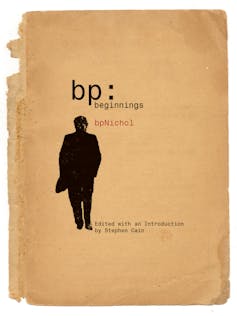
Book cover for a reissue of b.p nichols’ ‘beginnings.’
Book Hug Press

Although now fairly well known as Michael Onddatje’s first publisher, Toronto’s Coach House Books might also be remembered for its early forms of experimentation. The house made its mark in 1967 with b.p.nichol’s Journeying & the Returns, a slim volume in a blue and purple cardboard case that also contained assorted objects to be experienced alongside the poems, including a thumb-flip poem the size of a stack of sticky notes.

More recently, Québec’s Mémoire d’encrier offers us the unique poetry of Joséphine Bacon: French and Innu-aimun sit on each twinned page, giving the reader access to a language few in Canada have any opportunity to encounter.

Perhaps there is room for many different kinds of initiatives committed to boundary-pushing books in Canada’s literary field.

I hope that is the case. But do not be fooled: despite its rhetoric of innovation and experimentation, the indie-style imprint Strange Light is brought to us by a company that is already dominating the country’s literary space and that is clearly not indie.

This is one more sign of the desertification of our media ecology, not its diversification.

[ You’re smart and curious about the world. So are The Conversation’s authors and editors. You can read us daily by subscribing to our newsletter. ]The Conversation

Jody Mason, Associate Professor, Department of English, Carleton University

This article is republished from The Conversation under a Creative Commons license. Read the original article.

Unknown's avatar

How Capitalism Changed American Literature


The link below is to an article that takes a look at how capitalism has changed American literature.

For more visit:
https://www.publicbooks.org/how-capitalism-changed-american-literature/

Unknown's avatar

Australia: Editor Wages


The link below is to an article that takes a look at conditions and wages for Australian book editors.

For more visit:
https://www.theguardian.com/books/2019/mar/29/the-book-industry-isnt-dead-thats-just-an-excuse-to-keep-salaries-low

Unknown's avatar

New African literature is disrupting what Western presses prize


File 20171009 6947 1o4a3h.jpg?ixlib=rb 1.1
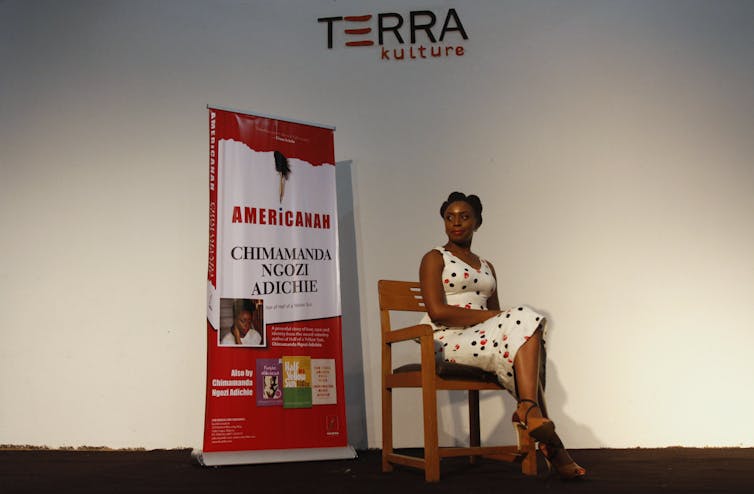
Novelist Chimamanda Ngozi Adichie after a reading of her book ‘Americanah’ in Lagos in 2013.
Akintunde Akinleye /Reuters

Jeanne-Marie Jackson, Johns Hopkins University

African literature is the object of immense international interest across both academic and popular registers. Far from the field’s earlier, post-colonial association with marginality, a handful of star “Afropolitan” names are at the forefront of global trade publishing.

Books like Chimamanda Adichie’s “Americanah” and “Half of a Yellow Sun”, Teju Cole’s “Open City”, Taiye Selasi’s “Ghana Must Go” and Yaa Gyasi’s “Homegoing” have confounded neat divisions between Western and African literary traditions. The Cameroonian novelist Imbolo Mbue captured a million-dollar contract for her first book, “Behold the Dreamers”. That’s even before it joined the Oprah’s Book Club pantheon this year.

Such commercial prominence, though, has attracted considerable and unsurprising push back from Western and Africa-based critics alike. Far from advancing narratives with deep roots in local African realities, such critics fear, many of Africa’s most “successful” writers hawk a superficial, overly diasporic, or even Western-focused vision of the continent.

Noviolet Bulawayo was shortlisted for the Man Booker prize in 2013 for her book
Olivia Harris/Reuters

The most visible of these critiques has been directed at the Zimbabwean writer NoViolet Bulawayo’s “We Need New Names” (2013). The Nigerian novelist Helon Habila worried in a review in the London Guardian that it was “poverty-porn”. The popular Nigerian critic Ikhide Ikheloa (“Pa Ikhide”) frequently makes a similar point. Fellow Nigerian writer Adaobi Nwaubani critiqued the West’s hold on Africa’s book industry in a much-circulated New York Times piece called “African Books for Western Eyes”.

Such debates about African writing could, and likely will, go on forever. Questions about Africa’s place in the current global literary marketplace broaden some of the most urgent queries of the postcolonial era. Who gets to document African realities? Who are the “gatekeepers” of African publishing traditions?

It goes on: To what sort of audience does African writing cater? What is the role – and what should it be, if any – of Western institutions in brokering cultural prestige?

All these issues merit concern.

Between the default poles

Too often, though, African writing ends up volleyed between two default poles of “corporate global” and “activist local”. Some onlookers, as in a recent essay by the Canadian scholar Sarah Brouillette, go as far as to name the biases of even Africa-based print outlets. Kenya’s Kwani Trust is exposed as “Western-facing” due to a web of donor relations. “West” here is code for neoliberal. “Western-facing” is for complicity with a market that skews toward British and American interests.

Faced with a “world system” argument like Brouillette’s, African literature would seem trapped between a rock and a hard place.

But, in fact, this tells only a small part of the story of how African writing now makes its way through the world. It is incomplete to the point of being outdated, given the boom over the past five years in new, globally conscious small US literary presses collaborating with African writers.

A “West subsuming Africa” brand of critique works fine for scholars with no real skin in the game of literary publishing. It also denies real agency to a lot of African writers and other literary professionals. On the ground the literary field is far more forward-thinking and diverse.

There is an entire new body of African writing that escapes this closed circuit of damning truisms. A wave of new or recently galvanised independent literary presses in the US and the UK are working in tandem with some of Africa’s most generative outlets. Together they are publishing and promoting work by young and adventurous African writers.

Labours of love

Books published originally by presses like Umuzi (South Africa), amaBooks (Zimbabwe) and Kwani (Kenya) find second lives with international publishers working to defy the constraints of profitability. They’re mostly labours of love with skeleton staffs that speak to a transcontinental commitment to innovative African writing.

Here are a few key examples of African texts published by independent American outlets – “independent” here refers to presses beyond the “Big Five” US trade publishers (Hachette Book Group, HarperCollins, Macmillan, Penguin Random House and Simon and Schuster.

These include Jennifer Nansubuga Makumbi’s Ugandan epic “Kintu” which was originally launched by Kwani. It was the first Anglophone novel put out by the brand-new Transit Books based in Oakland, California. The press seeks maximum visibility for translated fiction alongside texts originally written in English. They advocate for more ethical legal and financial dealings with translators, as well as international writers.

Congolese author Fiston Mwanza Mujila.
Marc de Gouvenain

A number of similarly tiny, ambitious ventures have published some of the most acclaimed recent African writing in translation. Deep Vellum Publishing was behind the English translation of Fiston Mwanza Mujila’s Etisalat Prize-winning “Tram 83”.

Also dedicated exclusively to works in translation, LA-based Phoneme Media in 2016 published the first ever Burundian novel in English, Roland Rugero’s deeply contemplative “Baho!”. Phoneme’s tagline, fittingly, is “curious books for curious people”.

In a similar vein, Brooklyn’s Restless Books was founded to combat “parochial, inward-looking, and homogenised trends in American publishing”. Among their forthcoming titles, translated from the French is Naivo’s “Beyond the Rice Fields”. It’s the first novel from Madagascar to see its way to English.

Veteran nonprofit press Archipelago Books is also in Brooklyn. In 2015, it published the translation from the Portuguese of Angolan writer Jose Eduardo Agualusa’s “A General Theory of Oblivion”.

Every one of these throws a wrench in a clear, cynical sense of what kind of novel Western presses prize. That is not to mention the many African writers, publishers, and editors working in concert to promote these same texts.

Small, focused channels

It applies to the Anglosphere too. Books that offer a decidedly more locally textured experience than those of the “Afropolitan” rock stars have made their way abroad through small, focused channels.

These works might include Tendai Huchu’s “The Maestro, the Magistrate, and the Mathematician” (published originally by amaBooks, and in the US by Ohio University Press); Imraan Coovadia’s “Tales of the Metric System” (from Umuzi, and again by Ohio University Press); and Masande Ntshanga’s “The Reactive” (also Umuzi; in the US by family-run Two Dollar Radio.

Clearly, this collection just scratches the surface. But what these works have in common is an investment in stylistic and structural experimentation that confounds rather than caters to an international taste for “digestible” fiction, or to mostly Western points of cultural and institutional reference.

This counter-current of transnational African literary life complicates the equation of culture, geopolitics and economics in more useful ways than stale materialist critiques.

As such titles and presses continue to gain acclaim and recognition by an international readership that is aware of and hostile to shallow representations of Africa – and who crave engagement with challenging fiction, regardless of its origin – critics will need to rethink some of their orthodoxies.

The ConversationThere is more to both African literature and Western publishing than meets an eye too practised in its suspicion. If literature is doomed only to echo the failings of globalisation, then why bother? On the contrary, a new generation of writers and publishers deserve our awareness of the “global literary marketplace” as a meaningfully multidimensional space.

Jeanne-Marie Jackson, Assistant Professor of World Anglophone Literature, Johns Hopkins University

This article was originally published on The Conversation. Read the original article.

Unknown's avatar

Michael Hyatt Has Something To Sell You


Unknown's avatar

Cultural appropriation and the whiteness of book publishing


File 20170608 32339 143n2pi

(Flickr/Tommy Ellis), CC BY-NC

Clayton Childress, University of Toronto

Last month, cultural appropriation became a big issue in the Canadian publishing and media world after the trade association magazine, Write published a special issue featuring work by Indigenous authors. The editor of the magazine, Hal Niedzviecki, wrote a glib editorial in defence of cultural appropriation.

Niedzviecki resigned after Canadian media executives irreverently pledged donations toward a “Cultural Appropriation Prize” on late-night Twitter in support of his editorial. The main thrust of the offending Twitter conversation seemed to be that white media elites and writers felt they were under threat of being censored.

White media elites felt they were under threat of being censored

The argument was framed in the high-minded rhetoric of freedom and creative license, but underneath that thin veneer, it relied on a belief in white victimization that you’d expect from fringe white nationalists rather than the top one per cent of Canadian mainstream media.

As a scholar of the book publishing industry, I can say with empirical authority that the notion of white people being under threat in publishing crumbles in the face of evidence. As I show in my new book, Under the Cover: The Creation, Production and Reception of a Novel, book publishing is the same as it ever was: it is white-dominated and it’s easier for white people to gain entry to it. Although my research on book publishing is based in the United States, as the sociologist Sarah M. Corse has shown, the U.S. and Canadian book publishing industries are deeply intertwined, and more often than not are actually the same industry.

If you want to throw an all-white party, invite book publishers

To understand the real barriers to book publishing, the most important places to look are the points of entry themselves. In publishing, those access points are guarded by literary agents and acquisition editors. They are the gatekeepers, and across the U.S., the gatekeepers of publishing are 95 per cent white. If those gatekeepers had their own state, it would be the whitest state in the U.S. If they had their own country, it would be the whitest country in the world. According to the U.S. Bureau of Labor Statistics, if you wanted to throw a party with only white people in attendance, you’d invite veterinarians, farmers, mining machine operators and book publishers.

While it is hypothetically possible that those white gatekeepers could privilege racialized authors over white ones, the reverse is actually true. Regardless of their race, about 38 per cent of the 1,200 literary agents in the United States I’ve studied show an equal interest in representing “general” fiction. But when that fiction covers topics of ethnic and multicultural diversity, white agents run for the hills, with only 15 per cent willing to even take a look.

Racialized authors work harder and submit more widely

Simply put, racialized authors — who are overwhelmingly the ones writing ethnic or multicultural fiction – are the authors who face longer odds of getting published. And like people of colour across different occupations, research shows these authors respond by working harder and submitting more widely, putting more effort and sweat equity into their searches than their white counterparts. This is done in an effort to balance out the discrimination they know they will face.

Yet even in my interviews with racialized authors who could secure publishing contracts, they described a process in which their novels were ping-ponged back and forth between being “too racialized” at first, and then not racialized enough.

Racialized authors are often asked to dumb down their stories

As a Black, southern literary writer explained to me, he had to “dumb down” his manuscript populated by Black southern characters because his editor didn’t believe “people talk that way” – the cultural specificity and accuracy of his novel was whitewashed out.

In the marketing and promotion stage, however, even after having their novels culturally denuded, racialized authors found themselves ghettoized and pigeon-holed again. One African-American novelist told me the painful story of her fears that her work of literary fiction would be pushed back into the “African American interests” section of bookstores rather than being shelved with the rest of the literary fiction.

A widely celebrated Chinese American literary novelist sardonically told a racially diverse room of her fans about a conversation with her publisher: “I told them: ‘Just promise me you won’t put any lanterns or fireworks on the cover because these are stories about people. Yes, they happen to be Chinese, but they’re stories about people.’ So as you’d expect, it has goldfish on it. The only thing I left them.”

Don’t forget these are the success stories. These are the racialized authors who make it.

The ConversationRegardless of the statistically and experientially indefensible claims made by Cultural Appropriation Prize supporters, the real “race problem” in book publishing is the same as it is all over the world: white people are blessed with large and small advantages that they may not even understand. Racialized people are penalized with large and small disadvantages that they have no choice but to understand. If you don’t know where to stand on the cultural appropriation debate, just look at the numbers.

Clayton Childress, Assistant Professor of Sociology, University of Toronto

This article was originally published on The Conversation. Read the original article.