I have been a little ill and under the weather of late, hence my lack of activity here. I’m hoping to restart posting to the Blog here this weekend though. Also, I have just started a new account over at Instagram. So please go and follow me there also if you like.
Like Michael Wolff’s “Fire and Fury: Inside the Trump White House,” it portrays President Donald Trump as an “emotionally overwrought, mercurial and unpredictable leader,” whose senior staff struggle to contain his most dangerous impulses.
This same view of Trump was reiterated in a Sept. 5 anonymous New York Times op-ed, which, as Nebraska Sen. Ben Sasse observed, is “just so similar to what so many of us hear from senior people around the White House, you know, three times a week.”
But whether “Fear” tells us something new matters less than the fact that the book is yet another broadside against Trump’s image. It adds more fuel to the suspicions many have about the president’s behind-the-scenes behavior.
In fact, Woodward’s “Fear” – together with Wolff’s “Fire and Fury,” Omarosa Manigault’s “Unhinged” and the anonymous op-ed – is part of a long tradition of political “secret histories,” a genre that recounts salacious and scandalous details about the dealings, relationships and temperaments of those in power. It’s a practice that goes back centuries, and it’s one that my co-editor and I explore in our book “The Secret History in Literature, 1660-1820.”
Secret histories tend to take two forms. There is the plain-spoken, just-the-facts approach, similar to Woodward’s “Fear.” Then there are novelistic accounts with major figures depicted using pseudonyms, as in “Primary Colors,” a lightly fictionalized dramatization of the Clinton White House.
But the secrets unveiled in these works usually don’t come out of nowhere. Instead, they contain anecdotes that have long been whispered or suspected. The goal of secret histories is to emphasize embarrassing stories about a ruler or government – to propel the drumbeat of negative coverage in order to strengthen the opposition and, in some instances, to even topple governments.
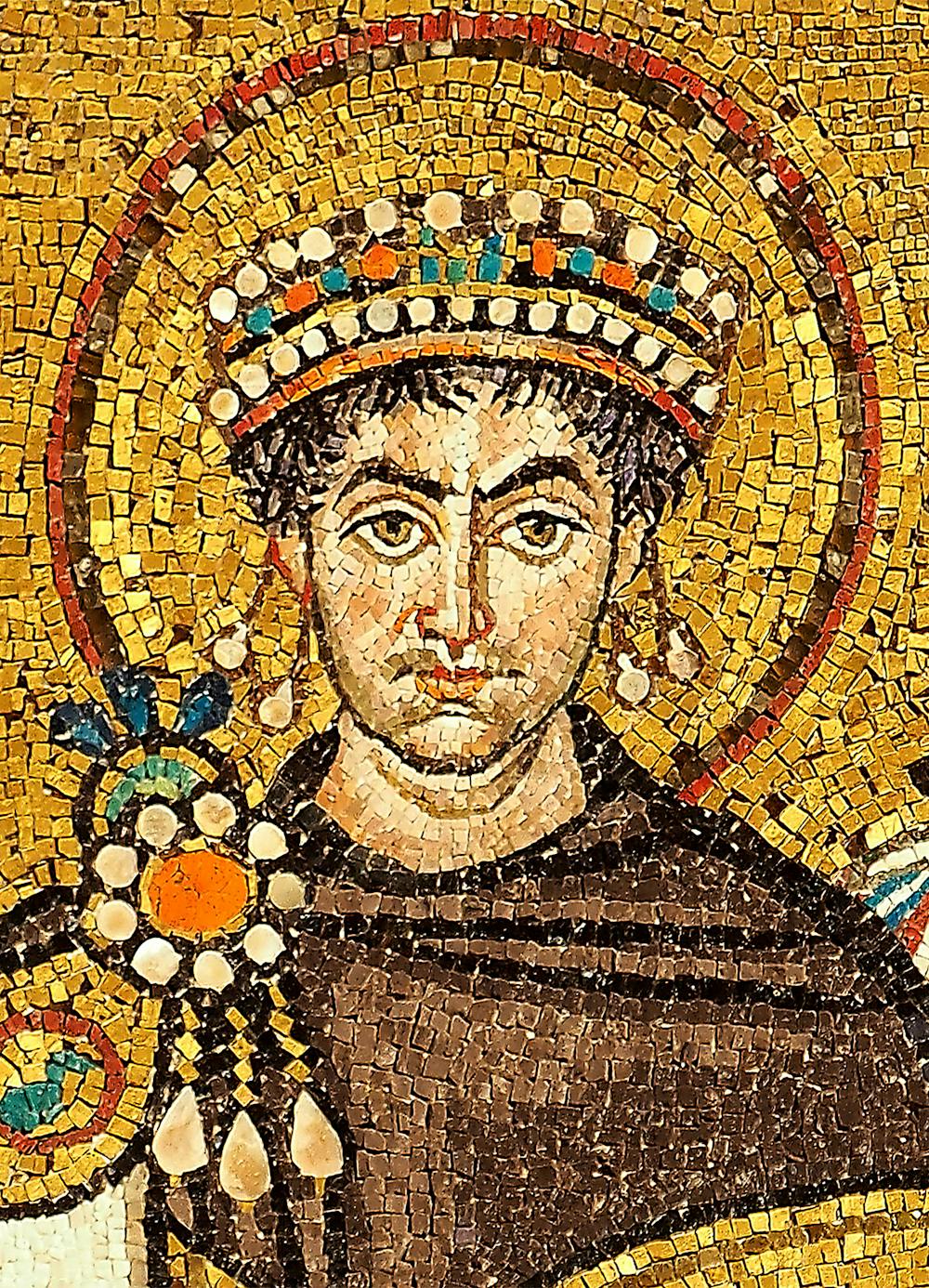
Justinian was the subject of a secret history circulated by the military historian Procopius. Petar Milošević
Secret histories date back at least to the sixth century, when the military historian Procopius wrote down sordid anecdotes about Byzantine Emperor Justinian and his wife, Theodora, in a work that became known as “Anekdota,” which translates to “unpublishable things.” Ten centuries later, it appeared in Latin as “Historia Arcana,” or “Secret History.”
As a military historian, Procopius had helped create the myth of Justinian’s greatness in his eight-book treatise “The Wars of Justinian.” But in his “Anekdota,” Procopius finally told the ugly backstory of Justinian’s reign: his lust, his seizure of others’ property, his petty vengefulness and his persecution of non-Christians. The work was almost certainly circulated in manuscript scroll among Justinian’s enemies. While it probably damaged his standing, Justinian was nonetheless able to retain his grip on power.
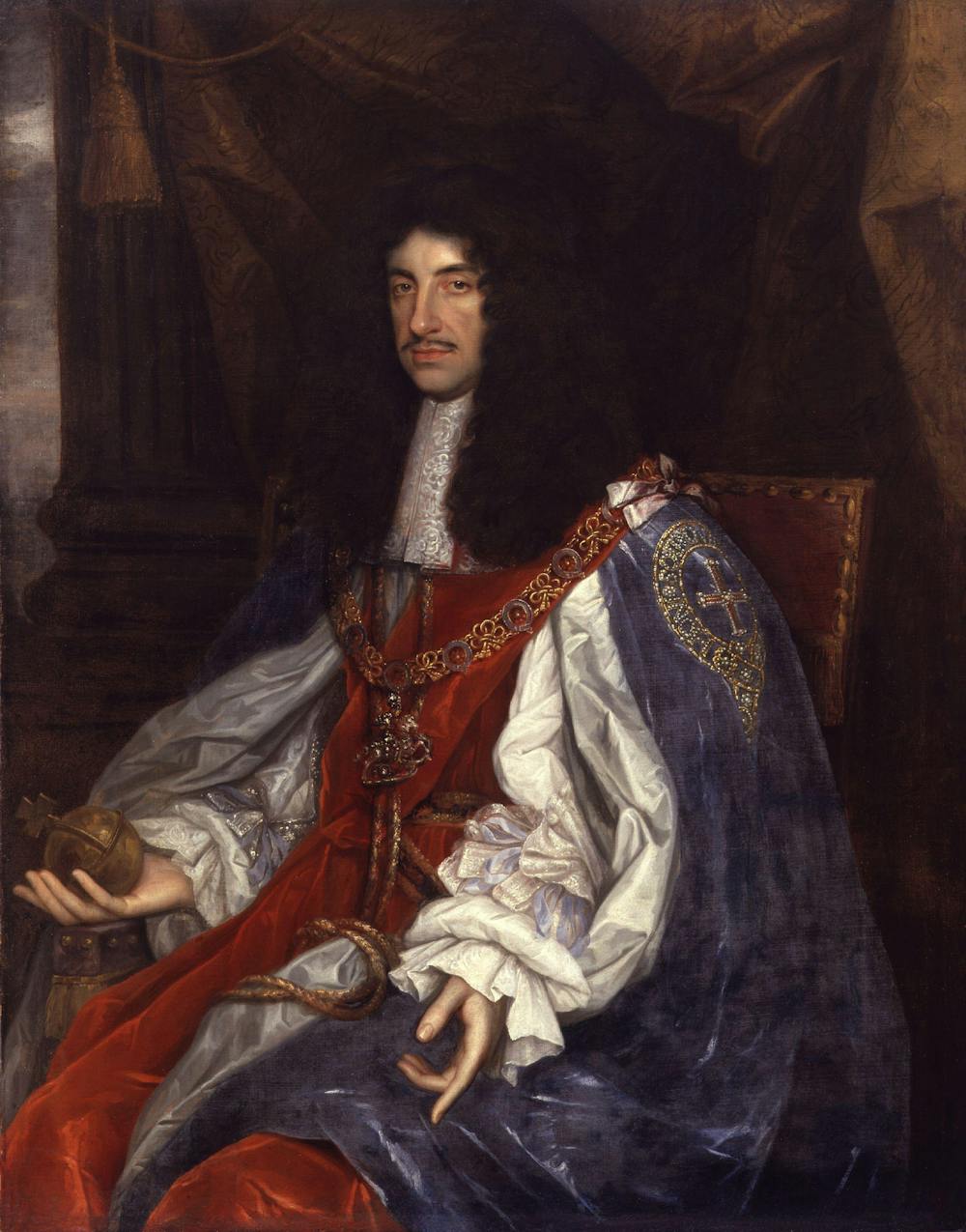
After French and English translations of Procopius’ “Anekdota” appeared in 1669 and 1674, secret histories in the same style began to appear about King Charles II of England.
These tended to focus on his mistresses – particularly the infamous Duchess of Cleveland, who manipulated Charles for over a decade, persuading him to grant her land and money and bestow titles of nobility on their illegitimate children.
Speculation over King Charles II’s relationship with the Duchess of Cleveland was rampant during his reign. National Portrait Gallery
These reports, which read like tabloid-style gossip, were never just about sex.
Readers of one account, titled “The Amours of the King of Tamaran,” likely realized that if the king could be duped and controlled by his powerful mistress, he was also susceptible to being influenced by England’s adversaries.
These publications didn’t bring down the politically skilled Charles II, who was glad to take Louis XIV’s money but savvy enough to decide against changing his country’s religion.
They did, however, sow suspicion towards Charles II and his family. After Charles II’s death, his openly Catholic younger brother, James, ascended the throne in 1685, instilling fear that England would return to Catholicism. Seven Englishmen wrote to Prince William of Orange – who was a Protestant – pleading that he invade England. In the Glorious Revolution that ensued, James II fled to France, and Parliament declared William and his wife, Mary, joint monarchs of England.
The Glorious Revolution of 1688 helped inspire American colonists to rebel against another British monarch, with the not-so-secret history of George’s III’s “repeated injuries and usurpations” enshrined in the Declaration of Independence.
Some might disparage Woodward’s book as “anonymously-sourced gossip.”
But gossip has always been important to humankind. As Israeli historian Yuval Noah Harari notes in “Sapiens,” his best-selling account of early human history:
“It is not enough for individual men and women to know the whereabouts of lions and bison. It’s much more important for them to know who in their band hates whom, who is sleeping with whom, who is honest, and who is a cheat.”
Those who dismiss Woodward’s book underestimate the power that gossip and behind-the-scenes revelations wield over politics – and the way it has shaped the course of human history.
The link below is to an article reporting on the USA DOJ’s proposed settlement for Apple in the ebook price fixing lawsuit. My view? Finally, Apple is having to put things right across the board.
This is just a short message to say that I’m closing my account at Shelfari. Why am I doing this:
I have an account at Goodreads. I have been using both Shelfari and Goodreads alongside each other and just prefer Goodreads. Goodreads looks so much better and is far easier to navigate. Shelfari looks so old, dated and is slow and difficult to navigate in contrast to Goodreads.
The reading group I had at Shelfari was terrible to use. I have started one at BookClubIt, as mentioned in an earlier post – I am very happy with it and will use that instead.
I have offered the Reformed Reading group that I operated at Shelfari (there was no life in it anyway) to other members in the group to take over, so I have no more ties there. Shoould no-one take it up I will close that down also. There were only 9 members I think.
There is too much effort involved in running two mirror sites (sort of mirror) at both Goodreads and Shelfari. I would prefer to concentrate on the one and use my time more productively on other tasks – wesbites, blogs, etc.
Did I mention I dislike the Shelfari design a lot?
Anyhow, that is basically it I think. The only think left is to mention the sites I am at:
This book by Melchior Kirchhoffer seems to be an honest dealing with the life of the sometimes volatile Reformer. William Farel was a man greatly used of God in his own right, but his greatest contribution to the Reformation within the Providence of God, was to convince John Calvin to go to Geneva and head the work of reformation in that city. Through this meeting with Calvin, Farel brought the greatest of the Reformers out of relative isolation and into far greater public usefulness.
Kirchhoffer follows Farel from his early days in the Roman communion, to his days as a faithful servant of God used tremendously in the work of reformation in and about Switzerland.
This is a very easy book to read and gives a very good account of Farel’s life and work. It does not gloss over the weaknesses of the Reformer, clearly detailing what they were and the impact they had upon his ministry. Neither does it gloss over the contribution that Farel made to the progress of the Reformation.
To follow my progress in getting this work online and to read the book itself, visit:





 At the BookShelf
.jpg)

You must be logged in to post a comment.