Unknown's avatar

Heart-warming, biting, tragic, funny: the Miles Franklin shortlist will move you


File 20170906 9835 191vmdh
Each of the five shortlisted authors for Australia’s prestigious literary prize is a first-time nominee.
Shutterstock

Jen Webb, University of Canberra

The 2017 Miles Franklin Award winner will be announced tonight, but I’m not taking bets on who it’s likely to be. Each shortlisted novel is by a first-time nominee. Each is of satisfyingly high literary quality and very different in voice, logic, focus and story.

But they do have one feature in common: each includes as a key character an author, or authors. I’m not sure I have ever read a shortlist where the protagonists of each volume shared an occupation. Of course all five include heartbreak, loss and death — that is, after all, de rigueur for literary fiction — but the focus on the lives and works of writers, and on narratives about narrative, presents as though the Australian literary community as one turned to look inward, and then wrote down what it saw.

We have a worn out, avant garde novelist (Last Days of Ava Langdon by Mark O’Flynn); an ambulance-chasing journalist (An Isolated Incident by Emily Maguire); “famous Australian writers” (Their Brilliant Careers by Ryan O’Neill); and academics in linguistics (Waiting by Philip Salom) and engineering (Extinctions by Josephine Wilson).

Art imitates life

I started with Last Days of Ava Langdon, by poet and novelist Mark O’Flynn. This book, which channels the Australian-New Zealand writer Eve Langley, opens with the rhythm and pulse of a prose poem:

Sound of the sea slapping at the green and greasy legs of pier. The crashing of dishes. A cartoon whale.
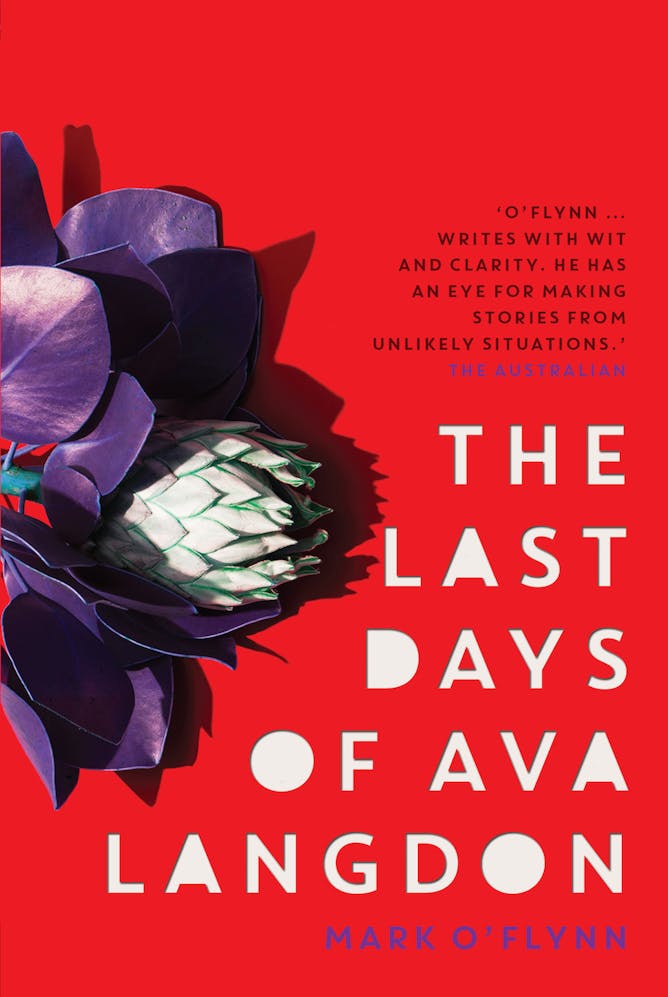
This, on the very first page, sets the tone for the rest of the novel, one that vividly renders the glorious Blue Mountains environment (and its small towns with their country values), and the portrait of a writer who might have been, should have been, no longer is.

O’Flynn presents his Langley/Langdon as immensely sympathetic, and stunningly irritating. “All her life”, says the narrator, “has been the pursuit of the perfect line”.

While any writer must surely doff the cap to that pursuit, Ava’s single-mindedness has been more destructive than productive. She valiantly channels Oscar Wilde, refuses to acknowledge that she is ancient and frail, ignores the squalor of her home, and flickers between hope and hopelessness about her writing. She is a damaged person, a dada artist. She has lost her family and friends and she dies alone.

Still, Ava’s imagination (to say nothing of her splendid dress sense) brings a degree of sentience to the world, casting it in a luminous light. O’Flynn’s novel brings to bear a cold but tender gaze on “the last days” of someone who, but for fortune, could have been an extraordinary Australian artist.

Misfits in an unforgiving world

Philip Salom, another poet, gives us Waiting. It relies on the skill of poetic diction and the narrative traction of strong characters, the “looking awry” that so often accompanies mental illness, and the urgency to connect, to find a safe haven in an unforgiving world.

He juxtaposes together two pairs of difficult people to propel the narrative. The first two are Big (a cross-dressing, over-performing “crazy professor”) and his partner Little (quiet, crushed Agnes, the troubled lamb of god). They have effectively fallen out of history and are, Agnes reflects, “two characters in a novel who have no further story”.

The second pair, by contrast, are the inheritors of a further story: designer/landscaper Angus (coincidentally Agnes’ cousin) and the linguist Jasmin. They are creeping by fits and starts toward a relationship, but unlike Big and Little, who cling together for the most part in real intimacy, Jasmin and Angus struggle to connect, given their tendency to compete with each other, and their misunderstandings of each other’s values and professions. For Angus, the physical shaping of the material world is what matters. For Jasmin, it is the socio-political positioning of work that matters.

The novel is set against the increasingly threatening qualities of bushfire in the Australian environment, and the increasingly constrained options for those who do not or cannot fit into middle class conventions. The characters’ stories play out, to an end that promises consolation, at least.

Not so isolated

With Emily Maguire’s An Isolated Incident, we leave the poets and misfits and return to the “real” world: small-town New South Wales, and the struggle to make a living, maintain an identity, and retain hope for the future.

Chris Rogers, a barmaid and some-time prostitute, is faced with the loss of her beloved younger sister Bella, whose body is found on the side of the road, raped and murdered. May Norman, an ambitious journalist, attaches herself to Chris to report on the story and the unfolding investigation. So far, so crime thriller.

But actually, this is more an analysis of mourning, woven through with a biting critique of the social and legal context in which, in Australia, one woman is murdered each week, on average, by someone close to her. At one point May reflects on yet another appalling story of such violence, and observes:

This had nothing to do with what had happened to Bella and what happened to Bella had nothing to do with Tegan Miller and none of it had to do with the rich Sydney housewife left out to rot in the street which had nothing to do with the Nigerian girls stolen as sex slaves…

The unwavering attention paid to violence against women and to the commercial exploitation of suffering renders the title bitterly ironic: all these “isolated incidents” add up to a deeply felt and troubling novel.

Extinctions of all kinds

Josephine Wilson’s Extinctions is the winner of Dorothy Hewett Unpublished Manuscript prize, so has already made a significant mark on the literary landscape. It offers a tragic portrait of the various ways in which extinction looms — environmental, personal, cultural.

We see the sorrows, indignities and regrets of old age, as viewed through the eyes of retired theoretical engineer Fred Lothian, who fills his home with designer furniture rather than with his family.

We see the heartbreak of a wasted life, in his brilliant son, Callum, who was left with acquired brain injury following a car accident. And we see the struggle for identity in his adopted daughter, Caroline, who researches species extinction and is disconnected from her own Indigenous heritage. Together, these stories present an overwhelming narrative of loss, failure and distress.

But there is the possibility of an alternative in the form of Fred’s neighbour Jan. Though like Fred and his family, she has suffered great loss, she brings a wonderful energy and resilience, and a refusal to resign herself to extinction. Instead, she presses Fred to start over, to find a more productive way to be.

Literary satire

Finally, we come to Ryan O’Neill’s Their Brilliant Careers: The Fantastic Lives of Sixteen Extraordinary Australian Writers, one of the funniest novels I’ve read in a long time. He sails close to the wind of defamation (were the original authors still alive), unmercifully lampooning the models for his “extraordinary Australian writers”.

Like a supremely confident stand-up comic, he pushes the joke from initial humour through infuriating repetition to helpless laughter. And along the way, he shows impressive knowledge of Australian literary culture, so erudite readers can play the game of “spot the reference”. We see the sexism that runs through literary culture. We revisit the poetry wars— “a knife fight in a phone booth” — in the character of Arthur rhutrA, an author of whom it was said that: “the only constraint he couldn’t overcome was his lack of talent”.

We bump into parallel-universe versions of Ern Malley, Australia’s most infamous literary hoax, and radio characters Dad and Dave. We meet the litigious Stratford, self-proclaimed original author of works plagiarised and made famous by Hemingway, Fitzgerald, Joyce.

We are confronted by the rightwing racist Edward Gayle (writer for the journal Quarter) and the communist Francis McVeigh, whose early memory of reading Marx’s Manifesto “terrified me so much I had nightmares for the next six months”. Literary giant after literary giant, publisher after publisher, is kneecapped by these excoriating and hilarious accounts of the players, their work, and the impossibly interwoven lives they lead.

Compassionate voices

There is a surprising degree of compassion in the narrative voice that relates each of these novels, even when they are also characterised by sharp-eyed and sharp-tongued commentary. The characters are damaged — as are most human beings — but (with the exception of some of O’Neill’s writers) they are rarely people of ill will.

The ConversationThe narrators, in each case, maintain the distance required of an objective observer, yet cannot help but record small acts of humanity, the struggle to manage, to be recognised and to recognise others. This makes them, as a group, the most heart-warming selection of shortlisted novels that I have read for some time.

Jen Webb, Director of the Centre for Creative and Cultural Research, University of Canberra

This article was originally published on The Conversation. Read the original article.

Unknown's avatar

2017 Miles Franklin Literary Award Shortlist


The link below is to an article taking a look at the Miles Franklin Award shortlist for 2017.

For more visit:
https://www.theguardian.com/books/2017/sep/07/miles-franklin-awards-2017-shortlist-reviews-of-the-books-youll-read-next

Unknown's avatar

Should authors’ unfinished works be completed?


File 20170904 9753 1pjhra4

Nomad_Soul/Shutterstock

Claire Squires, University of Stirling

The scene: a field in southwest England. The sun is shining for a quintessentially British event, the Great Dorset Steam Fair. A six-and-a-half tonne steamroller takes centre stage. This, the Lord Jericho, goes head-to-head with a computer hard drive, and in a battle of old and new technologies, rolls over it several times. Then, just to be on the safe side, the hard drive is placed in a steam-powered stone crusher.

A scene from a fantasy novel? No. The hard drive was from the late author Sir Terry Pratchett’s computer, and it contained the files of, it is thought, 10 unfinished novels.

//platform.twitter.com/widgets.js

Pratchett, author of the much-loved Discworld series, wrote more than 60 books in his lifetime. But it was his wish that any unfinished works remained unpublished, and so he instructed that the hard drive containing his remaining works be crushed by a steamroller.

Raising Steam

Commenting on BBC Radio Four’s Today programme, authors Patrick Ness and Samantha Norman asserted Pratchett’s absolute right to determine the future of his unfinished work. In recent years, though, both authors have completed unfinished novels by other writers. In Norman’s case, it was The Siege Winter, a book by her late mother, Ariana Franklin. For Ness, it was Siobhan Dowd’s A Monster Calls, now adapted into a hit film.

Unfinished work abounds in literary history, from Jane Austen’s Sanditon and Charles Dickens’ The Mystery of Edwin Drood to F Scott Fitzgerald’s The Love of the Last Tycoon.

For each of these canonical authors, their unfinished texts add to our accumulated knowledge of their writing, their rich imagination, and the development of their thinking. After completing Dorothy L Sayers’ last novel, Jill Paton Walsh went on to create warmly regarded new novels featuring Lord Peter Wimsey and Harriet Vane. J R R Tolkien’s son Christopher likewise has worked painstakingly on unfinished works by his father, including The Children of Hurin.

Unlike Pratchett, the strict instructions left by some authors about their legacy have been ignored, sometimes to the reader’s benefit. Max Brod’s decision to counter Franz Kafka’s wish for destruction is to literary history’s benefit, as it led to the publication of The Trial, The Castle, and Amerika. Emily Dickinson left no instructions on what to do with the approximately 1,800 unpublished poems she wrote before her death in 1886. Fortunately, her sister Lavinia took it on as her mission to see them made public.

When Swedish crime novelist Stieg Larsson died suddenly, unmarried and with no will, his estate came under the control of his father and brother. They commissioned ghostwriter David Largenrcrantz to create new works using Larsson’s characters, with the latest, The Girl Who Takes an Eye for an Eye due in September 2017. Larsson’s bereaved long-term partner is in possession of the author’s laptop which is believed to hold Larsson’s last unfinished novel, but she has refused to turn it over to his family.

Reaper Man

The biographical figure of the author has, despite Roland Barthes’ critical articulation of “The death of the Author” in 1967, never been more present. Now, readers have unprecedented access to the names on the spines of their books, thanks to festivals, talks and social media.

While some authors may not want to show the struggle of their early drafts to the world, there is both an industry (famous author’ manuscripts can sell for high figures) and scholarship attached to them. Formal archives of Pratchett’s work exist in Senate House in London, for example – including some tantalising glimpses replete with coffee stains and notes to the publisher. Salman Rushdie has even given a desktop computer and several laptops to Emory University in the US.

There is no doubt that Pratchett was within his rights to deprive readers of these last rough-hewn gems, though understandably fans may be disappointed with his choice. However, the rumours swirling around the appearance of Go Set a Watchman – the original version of Harper Lee’s To Kill a Mocking Bird – suggest that elderly and infirm authors can potentially be preyed upon. Pratchett’s wish to control his literary legacy was consonant with his advocacy for assisted dying. He, more than anyone else, understood the power of letting things come to an end.

//platform.twitter.com/widgets.js

The ConversationAs an author who had “Death” as one of his major recurring characters, Pratchett had thoroughly tested its presence in human life. But now, even knowing that Pratchett’s crushed hard drive will soon feature in an exhibition, we can’t but regret the loss of these early, unfinished drafts, which contained the very last doorway into the Discworld.

Claire Squires, Professor in Publishing Studies, University of Stirling

This article was originally published on The Conversation. Read the original article.

Unknown's avatar

Can ‘cli-fi’ actually make a difference? A climate scientist’s perspective


File 20170904 8510 16zmsdu
The Day After Tomorrow’s apocalyptic depiction of climate change is a little embellished. But such storylines can ignite conversations with people that mainstream science fails to reach.
20th Century Fox

Sarah Perkins-Kirkpatrick, UNSW

Climate change – or global warming – is a term we are all familiar with. The warming of the Earth’s atmosphere due to the consumption of fossil fuels by human activity was predicted in the 19th century. It can be seen in the increase in global temperature from the industrial revolution onwards, and has been a central political issue for decades.

Climate scientists who moonlight as communicators tend to bombard their audiences with facts and figures – to convince them how rapidly our planet is warming – and scientific evidence demonstrating why we are to blame. A classic example is Al Gore’s An Inconvenient Truth, and its sequel, which are loaded with graphs and statistics. However, it is becoming ever clearer that these methods don’t work as well as we’d like. In fact, more often than not, we are preaching to the converted, and can further polarise those who accept the science from those who don’t.

One way of potentially tapping into previously unreached audiences is via cli-fi, or climate-fiction. Cli-fi explores how the world may look in the process or aftermath of dealing with climate change, and not just that caused by burning fossil fuels.


Read more: Explainer: ‘solarpunk’, or how to be an optimistic radical


Recently, I participated as a scientist in a forum with Screen Australia, looking at how cli-fi might communicate the issues around climate change in new ways. I’m a heatwave scientist and I’d love to see a cli-fi story bringing the experience of heatwaves to light. After the forum, Screen Australia put out a call for proposals for TV series and telemovies in the cli-fi genre.

We absolutely need and should rely on peer-reviewed scientific findings for public policy, and planning to stop climate change and adapt to it. But climate scientists should not expect everyone to be as concerned as they are when they show a plot of increasing global temperatures.

Cli-fi has the potential to work in the exact opposite way, through compelling storylines, dramatic visuals, and characters. By making people care about and individually connect to climate change, it can motivate them to seek out the scientific evidence for themselves.

Imagined worlds

The term “cli-fi” was coined at the turn of the millennium, but the genre has existed for much longer. One of the earliest examples is Jules Verne’s The Purchase of the North Pole, where the tilt of the Earth’s axis is altered by human endeavours (of the astronaut, not industrial kind), bringing an end to seasonal variability.


Goodreads

More modern examples of cli-fi take their prose from real-life contemporary issues, imagining the effects of human-caused climate change. Some pieces of cli-fi are perhaps closer to the truth than others

Could the thermohaline circulation (which carries heat around our oceans) shut down, bringing a sudden global freeze, as The Day After Tomorrow suggests? There is evidence that it will, but perhaps not as quickly as the film imagines.

Is it possible that fertility rates will be affected by climate change? The television-adapted version of Margaret Atwood’s The Handmaid’s Tale blames pollution and environmental change for a world-wide plummet in fertility, thus giving a cli-fi undertone to the whole dystopian series. While there is no scientific evidence to currently back this scenario, as a new parent, it struck a chord with me personally. The thought of a world where virtually every couple is unable to experience the joys of parenthood, particularly due to climate change, is quite distressing.

Poster for The Road Warrior, the second in the first Mad Max trilogy.
Kennedy Miller Productions

Cli-fi also underpins the highly acclaimed Mad Max movie series. In a dystopian near-future, fossil fuel resources have depleted and the social and environmental impacts are vast. Australia has become a desolate wasteland and our society has all but collapsed.

Although such a scenario will be unlikely to occur in the next couple of decades, it is not completely unrealistic. We are burning fossil fuels far faster than they are forming, with some predictions that accessible sources will run out in the next century.
And some of our famous ecosystems are already very sick thanks to climate change.

And then there is Waterworld. Yet another dystopia, where there is no ice left on Earth and sea levels have risen 7.5km above current levels. Civilisations exists only in small settlements, where inhabitants dream of the mythical “dry land”. While the movie overestimates exactly how much water is locked away in ice (sea levels can only rise by up to 60-70 metres), many major global cities would be inundated and no longer exist. And while it will take thousands, not hundreds of years for complete melting to take place, sea level rise is already posing a problem for some coastal settlements and small islands. Moreover, Arctic ice is predicted to completely melt away well before the end of this century.

Sure, the scientific evidence underpinning these storylines is embellished to say the least, But they are certainly worth deliberating over if they ignite conversations with people that mainstream science fails to reach.

The power of fiction

In the long run, cli-fi might encourage audiences to modify their everyday lives (and maybe even who they vote for) to reduce their own carbon footprint.

From personal experience, some audiences tend to disengage from climate change because of how overwhelming the issue may seem. Global temperatures are rising at a rate not seen for millions of years, and we are currently not doing enough to avoid dangerous climate change. Understandably, the scale and weight of climate change likely encourages many to bury their heads firmly in the sand.

To this audience, cli-fi also has an important message to deliver – that of hope. That it is not, or will it be ever, too late to combat human-caused climate change.

The ConversationImagining a future where green energy is accessible to everyone, where global politicians work tirelessly to rapidly reduce emissions, or where new technologies are discovered that safely and permanently remove greenhouse gases from the atmosphere are absolutely worth air time. Cli-fi can act as prose for science. And on the topic of mitigating climate change, there is no such thing as too much prose.

Sarah Perkins-Kirkpatrick, Research Fellow, UNSW

This article was originally published on The Conversation. Read the original article.

Unknown's avatar

The rise in personalised story books and what it means for children’s privacy


File 20170829 5505 1g1p83c

shutterstock

Natalia Kucirkova, UCL

When was the last time you read a good book? If it was quite a while ago you might want to head to the library or the nearest bookstore, because research shows that reading makes you happier. In fact, adults who read books regularly are on average more satisfied with life, and more likely to feel that the things they do are worthwhile.

Research has also revealed that reading for pleasure can be a key factor in children’s levels of happiness. It has been shown that reading is more important for children’s cognitive development than their parents’ level of education. And is also a more powerful factor in terms of life achievements than socioeconomic background.

Yet despite all the benefits reading can bring, statistics from 2014 show that one in five children in England cannot read well by the age of 11. And with this in mind, anything that helps to encourage children to read is often seen as a good thing.

Personalised reading

Over the years, personalised children’s books have become increasingly popular. This is when children’s names, addresses, their likes and dislikes are inserted into a story book – the characters can even look like the children. These books are sold online and have become big business with many new children’s publishers popping up creating these one of a kind story books.

‘It’s all about me’.
Shutterstock

Wonderbly, one of the biggest publishers of personalised books, has sold over 2.7 million copies of their leading title “The Little Boy/Girl Who Lost His/Her Name”. Children tend to like personalised books because they are specially made for them and often feature themselves or their friends and family members as story heroes. And reading a personalised book together can be a really lovely experience for parents and children.

But personalising books in this way means that how children’s publishers work is now changing. Because as well as producing books, they are now also data managers – responsible for the privacy and confidentiality of children’s data.

Privacy fears

There are no official national guidelines regarding the amount, storage or sharing of data collected by publishers and producers of personalised books, so parents must trust the integrity of individual companies and that their family data won’t be misused or misplaced. This data often includes information such as a child’s date of birth, gender, address and photographs.

The way children are reading books is changing.
Pexels.

Though some progress is being made – from May 2018 the General Data Protection Regulation will apply throughout the EU (including the UK) – it is still the case that children’s personal data can become ensnared in a web of complex legal and technical challenges if it is ever reused, consolidated, or organised by publishing companies.

Interviews with UK children’s publishers and app designers also show that many handle large amounts of children’s personal data, but don’t necessarily know how to use it effectively.

Making data safe again

This is why the UCL Institute of Education is developing new personalised reading technologies and also working to address the challenges of personalised books.

As part of the project we are working with the HAT Community Foundation and the The Hub of All Things – a technology designed to help the internet exchange and trade personal data. HATs are “private data accounts” that let anyone store their personal data for themselves, so that they don’t have to rely on governments or corporations.

As we explain in our white paper, if publishers use HAT technology, a child’s private data account could hold their personal data in a contained, self-owned database. This means that children and their guardians would be able to own their personal database in the same way they own physical assets, and share the data within it on terms they control.

The ConversationChanging the way this data is stored and used is important because there is a big future for these types of books. And it is clear that children’s publishers need a straightforward means of effectively leveraging personalisation – both economically and educationally – to improve both the reading experiences of children, and the peace of mind of their parents.

Natalia Kucirkova, Senior research associate, UCL

This article was originally published on The Conversation. Read the original article.

Unknown's avatar

Research shows the importance of parents reading with children – even after children can read


File 20170823 6579 1raouj8
Research has typically found that shared reading experiences are highly beneficial for young people.
Shutterstock/Alfira

Margaret Kristin Merga, Murdoch University

Many of us will be able to recall the enjoyment of shared reading: being read to and sharing reading with our parents. However, my research has found that of the 997 Year 4 and Year 6 respondents at 24 schools who took part in the 2016 Western Australian Study in Children’s Book Reading, nearly three-fifths reported that they were not being read to at home.

A sample of these children also participated in interviews, where I asked them how they felt about shared reading. While a few children did not mind no longer being read to, others were disappointed when it stopped. For example, when I asked Jason about his experience of being read to by his parents, he explained:

… they kind of stopped when I knew how to read. I knew how to read, but I just still liked my mum reading it to me.

His experience is common, with other recent research suggesting that more than one-third of Australian respondents aged six to 11 whose parents had stopped reading to them wanted it to continue.

But why is it so important for us to keep reading with our children for as long as possible?

Research has typically found that shared reading experiences are highly beneficial for young people. Benefits of shared reading include facilitating enriched language exposure, fostering the development of listening skills, spelling, reading comprehension and vocabulary, and establishing essential foundational literacy skills. They are also valued as a shared social opportunity between parents and their children to foster positive attitudes toward reading.

When we read aloud to children it is also beneficial for their cognitive development, with parent-child reading activating brain areas related to narrative comprehension and mental imagery. While most of the research in this area focuses on young children, this does not mean that these benefits somehow disappear as children age.

As young people’s attitudes towards reading reflect their experiences of reading at home and at school in childhood and beyond, providing an enjoyable shared reading experience at home can help to turn our children into life-long readers.

However, not all shared reading experiences are enjoyable. Some children described having poor quality experiences of being read to, and children did not typically enjoy reading to distracted or overly critical parents. In some cases, parents attempted to outsource this responsibility to older siblings, with mixed results.

While many children really enjoyed the social aspects of reading and being read to as valuable time with their parents, they also felt that they learned from these experiences. For example, listening was felt to provide an opportunity to extend vocabulary, and improve pronunciation. Gina recalled the advantage she lost when her parents stopped reading to her, as:

… when they did read to me when I was younger, I learnt the words; I would like to learn more words in the bigger books and know what they are so I could talk more about them.

Similarly, Craig explained how being read to enabled his academic advantage in literacy, as “they were teaching me how to say more words”, and “that’s why I’m ahead of everyone in spelling and reading and English”. When this stopped “just because my mum thought I was smart enough to read on my own and started to read chapter books”, Craig was disappointed.

In addition, children were sometimes terrified of reading aloud in the classroom, and this fear could potentially be alleviated through greater opportunities to practice at home.

Hayden’s anxiety around reading aloud at school related to his lack of confidence, and his tendency to compare his skills with those of his peers. He described himself as “always standing up there shivering, my hands are shivering, I just don’t want to read, so I just start reading. And I sound pretty weird”. No-one read with him at home, so he had limited opportunity to build his confidence and skills.

This research suggests that we should not stop reading with our children just because they have learned to read independently.

The ConversationWe should continue reading with our children until they no longer wish to share reading with us, ensuring that these experiences are enjoyable, as they can influence children’s future attitudes toward reading, as well as building their confidence and competence as readers. It is worth the effort to find time to share this experience with our children in the early years and beyond.

Margaret Kristin Merga, Senior Lecturer in Education, Murdoch University

This article was originally published on The Conversation. Read the original article.

Unknown's avatar

The withdrawal of the Mandela book was nothing short of censorship


File 20170814 28430 yo087l
Posters of various newspapers paying tribute after the death of former South African President Nelson in 2013.
Siphiwe Sibeko/Reuters

Beth le Roux, University of Pretoria

“Mandela’s Last Years”, written by retired military doctor Vejay Ramlakan, has become a sought after commodity since the publisher, Penguin SA, withdrew it from the shelves in July. Ramlakan was the head of the medical team that looked after Nelson Mandela until his death in 2013.

The withdrawing and pulping of a book represents a huge expense for a publisher, as well as a source of some embarrassment. So why did the publisher do it?

Soon after the book was published, members of the Mandela family, led by his widow Graça Machel, threatened legal action. It must be admitted that the basis for any legal action wasn’t clear, although it was probably linked to defamation. The book, Machel argued, constituted “an assault on the trust and dignity” of her late husband.

Soon afterwards, the author’s employer, the South African National Defence Force, distanced itself from the book, suggesting that it may have contravened doctor-patient confidentiality.

The publisher bowed to this pressure and withdrew the book, stating that no further copies would be issued out of respect for the family. This is almost unprecedented, anywhere, and needs to be teased out more fully. After reading the book, I’ve considered how and why the publisher may have come to this decision.

Reasons for pulping a book

The decision making process for a publisher in a case like the Mandela book revolves around balancing the potential costs against reputational damage. The costs can be extensive – in publishing, all costs relating to editing, design, production, printing and distribution are made up front. It is relatively easy to make a decision to withdraw a book after publication when it may have contravened the law, mostly due to defamation of character.

Books may also be withdrawn after allegations of plagiarism, or because the accuracy of the content has been called into question. Publishers sometimes cancel contracts with their authors based on the standard waivers dealing with defamation and inaccuracies.

Publishers try to avoid these kinds of situations by performing due diligence to see if manuscripts contain anything defamatory or that breaches privacy. They employ fact checkers to avoid inaccuracy. And they require authors to warrant that their work is original and accurate.

This doesn’t mean that errors don’t sometimes slip through. But it is very unusual for a book to be withdrawn simply because it’s controversial. In fact, publishers usually support controversial titles because they create publicity, and publicity generally leads to sales.

So what happened in this particular case?

The first set of questions would relate to the credibility of the author, and the publisher’s relationship with him. Ramlakan was the head of Mandela’s medical team and had unique access to the former president over a long period of time. This means that he certainly had the access and authority to write the book, and as far as I know nobody is questioning its accuracy.

The cover of ‘Mandela’s Last Years’, which has been withdrawn.

This is important, because truthfulness is one of the main defences against defamation, as is the issue of public benefit or interest. It seems highly unlikely that a publisher would allow a nonfiction title to include material that is patently untrue or that would harm the reputation of a man like Mandela. Is there really still a need to protect the reputation of a man of such global stature?

Family permission

Linked to the question of authority is whether the work was authorised. The author has repeatedly claimed he wrote the memoir at the request of family members, and with their permission. In such a large family, it would be difficult to obtain permission from every family member, and it is quite common for family members to protest their treatment in a biography of a famous public figure.

Family members often argue that there has been a breach of privacy or that embarrassing private details have been made public. But the truth is that their authorisation is not actually necessary. Many authors write unauthorised biographies or memoirs, and while they may prove controversial, they certainly do not contravene the law. The broad variety of books already available on Mandela shows that there is ongoing public interest. It seems unlikely that each one of them was authorised by the family.

What complicates this scenario is that, as a medical doctor, Ramlakan is also expected to uphold ethical standards that an ordinary writer wouldn’t be subject to. I am not an expert in medical ethics, but there are very few medical details in the book that are not already in the public domain.

In fact, one of the purposes of the book was to counter the rumours and speculation around Mandela’s medical condition in the last years and months of his life. It does this by quietly countering inaccurate statements and setting out the bare facts. It appears that the author made a deliberate effort to avoid breaching confidentiality, and ended up writing a very respectful book.

Some have suggested that the publisher and author were simply attempting to cash in on the Mandela legacy. Whatever their motives, they shouldn’t be the basis for withdrawing a book from public circulation. Taste and motivation are not legal issues.

Censorship

Given that there is no apparent material basis for a legal attack on the book, its withdrawal reveals self-censorship on the part of the publisher. South Africa no longer has censorship laws in place, but an influential family can bring pressure to bear that amounts to the same thing. But also given that the book was already on the market, it should be asked what the effect of the withdrawal will be.

The ConversationWhile fewer copies will be sold in bookshops, and fewer people will have access to it, it’s not possible to entirely withdraw a book from the online market. The book reviews already mention all of the most controversial parts of the book, and the action of withdrawal only serves to highlight them. The best course of action would be to allow the book to circulate freely and to stand – or fall – on its own merits. Anything else is censorship.

Beth le Roux, Associate Professor, Publishing, University of Pretoria

This article was originally published on The Conversation. Read the original article.

Unknown's avatar

Love of bookshops in a time of Amazon and populism


File 20170810 27672 n64m24
Saturday is Love Your Bookshop Day –
but bookshops face many challenges.
Shutterstock

Nathan Hollier, Monash University

There was genuine positivity at this year’s Australian Booksellers’ Association Conference in Melbourne in June. The mood was one of camaraderie and optimism at the sharing of good news. And it only brightened with the news that our National Bookshop Day was to be rebranded this year as Love Your Bookshop Day. Why not?

Saturday is that day. Expect to see your local bookshop buntinged, postered, streamered and perhaps offering special bargains. Assuming, of course, you have a local bookshop.

Store numbers have steadied in recent years and, as was reported at the conference, both independent and chain or franchise booksellers are expanding. Children’s book sales in particular are performing well. (“The bookshop is dead. Long live the bookshop,” reads a plaque at Embiggen Books in Melbourne’s CBD.)

But over the past couple of decades the sector has wrestled with the challenges of superstores, GST, the GFC, one-sided international post deals, ebooks and online-only undercutters.

Now the greatest of these online stores, certainly in terms of market share, will soon be competing with Australian bookstores from a new base here. Amazon has secured a massive distribution centre site near Dandenong in outer-eastern Melbourne. Dire predictions for parts of the Australian retail sector have already been made.

Local booksellers too will need to adjust to this new environment, in which Amazon will likely reduce its delivery time and charges significantly. This will place downward pressure on book prices, and thus booksellers’ margins and capacity to survive.

Amazon has itself experimented with physical bookstores in recent times, to underwhelming reviews, but its primary focus has, of course, been on being able to offer “everything” at the “everyday low prices” of its American precursors (and sometime role models), Walmart and Costco.

Today’s booksellers must choose what to put on their shelves from around 7,000 new releases each month. As all of these will be on the “shelves” of Amazon, local booksellers will need to maintain an intimate knowledge of what will appeal to their customer base.

This curatorial role, which has always been part of what good booksellers do, takes on extra importance in the digital age. Curating, one might say, is the opposite approach to that of Amazon, which instead expertly removes barriers to purchasing, encouraging impulse buying. The extra services local booksellers provide, in addition to low prices and the range of stock, will likely need beefing up also. Community building will be the order of the day.

The current shrinkage of review pages of broadsheet newspapers will also hurt many bookshops, as they depend on a degree of consensus as to what is important and valuable to read.

Price instability may well grow in Australia with the arrival of Amazon. Publishers have argued over the decades that this instability also discourages consumer confidence.

The Productivity Commission doesn’t accept arguments in favour of maintaining price levels for some products in order to keep the costs of others down. But regulatory bodies have special challenges when confronted with large, diverse conglomerates, such as Amazon. It has the capacity to drop prices for products in one category (such as books) to maximise competitiveness, while the overall bottom line is propped up by more profitable parts of the business (such as Amazon Web Services).

In the face of aggressive price cutting from firms like … well, Amazon … regulatory bodies concerned with fair prices for consumers are yet to find an effective means of properly accounting for the fact that its success has been partly based on exploiting publicly developed (and funded) technology and infrastructure, determined strategies of tax minimisation, aggressive use of IP and patent law, and sustained intransigence towards its workforce’s self-organisation and unionisation.

Andy Griffiths: a bookshop favourite.
Carol Cho/AAP

On Tuesday morning this past week, a crowd of parents and kids waited in the cold out the front of our local suburban bookshop till, at 9 o’clock, they could rush in and buy the latest Treehouse book, by Andy Griffiths. The bookseller handed out free copies of a quality cookbook to parents. Community spirit, human connectedness and customer loyalty all bloomed nicely.

As the legendary Collins bookseller, Michael Zifcack, recalled in his memoirs,
“I realised early on that customer service was the secret of successful bookselling.”

I’ll be heading to that local shop on Saturday, but can also, of course, appreciate the access to more or less every available product that online shopping provides. No doubt there is room for both retail models within our society.

What remains most important, when thinking about the health of the book industry here, is that no matter how cheap we make these products, there won’t be effective demand for them unless people have the time and desire to read.

The ConversationThis desire, in turn, rests most powerfully on the belief that what one knows and says matters; that democracy, its public sphere, and reason, evidence and logic are the driving forces of one’s society. For all of us, that challenge is ongoing and, broadly speaking, we will get the books and bookshops we deserve.

Nathan Hollier, Director, Monash University Publishing, Monash University

This article was originally published on The Conversation. Read the original article.

Unknown's avatar

Writing is the air I breathe: Publishing as an Inuit writer


File 20170726 28585 1y3tg8v
Cover art from “Annie Muktuk and Other Stories,” Norma Dunning’s first book filled with sixteen Inuit stories which portray the unvarnished realities of northern life via strong and gritty characters.
(University of Alberta Press)

Norma Dunning, University of Alberta

I am Norma Dunning. I am a beneficiary of Nunavut; my ancestral ties lie in the village of Whale Cove. I have never been there. My folks left the North shortly before my birth. I am southern Inuk, born and raised.

I am a writer. I have always been a writer. I would dream of publishing my writing, but it was easier and safer not to. I kept all of it in a drawer. I would think about publishing, and then I would think about the process of publishing. As an Indigenous, female writer I didn’t want to take it. I didn’t want to take the criticism.

I didn’t want to take the reworking of my words into a form that is standard Western format, or into the practices that are expected and accepted within literary work. I know that I do not write in the ways that most non-Indigenous writers do. I didn’t want my work re-colonized.

I have a small reputation of being a poet, and my poetry manuscript is usually rejected twice a year. Over the last seven years, I am often invited to read my poetry at various local events. I am very honoured to have been asked, but I am the poet who shows up without her book of published poems. I am the poet with her work attached to a clipboard. I am surprised that my first published work, Annie Muktuk and Other Stories, is a book of short stories. There’s irony in that.

Inuit peoples live in two worlds

Writing for me is not a hobby. Writing is a part of my being, a part of daily living. It is for me what breathing is for others. It is physical in that if I am not creating a story or a poem, I do not feel well. I know that of myself. It is spiritual and emotional. Producing the written word is the only place where I can be who I am, without expectations, without criticism and without someone looking over my shoulder telling me that I am wrong.

Inuit peoples do not read and write and ingest culture the way non-Inuit Canadians do. I believe Inuit Canadians do not place a high value on the written word. Instead, we come from a culture with roots that lie within the passing on of stories orally; this is what lies within our blood and genetic memories. When I operate outside of my own circle of family and friends, I operate in a different fashion. It is not compromise. It is survival.

When I was studying for my BA degree, my minor was in creative writing. I have since taken many university creative writing courses and I received two prestigious awards for my efforts through the University of Alberta. Creative thinking is a requirement for my doctoral work, and taking writing courses has helped me. However, the other students in the writing classes were not always supportive. I heard their criticisms every week.

While not every class was good or productive, I was exposed to the writing of non-Inuit poets and writers from long ago. I enjoyed their old works, which were new to me. I thought about how they could spend time running up hill and down dale and always remain writing in their predictable and trained writing format. I cannot write about butterflies or bumblebees. In time, I published the odd poem here and there, but never a story. The stories were mine. It took many years to decide to share them.

Deciding to publish

Until one winter afternoon, close to Christmas. I was standing in a lineup at a post office. It was a long line, filled with people wanting their packages to exotic places to be stamped “Express!” I held my thick, brown envelope addressed to the University of Alberta Press close to my chest. I thought I could do this another day, but I knew that if I stepped out of the lineup, I would never send that envelope out anywhere. When I was asked if I wanted a rush delivery, I gasped, “No!”

The longer it took for anyone to read my work, the longer I was safe. The longer the characters that I had created could stay only mine. If no one ever read it, I didn’t have to explain who these people were. The longer the envelope took to deliver, the longer my creative world belonged to only me. I didn’t hear back from the press for over a year. I kept telling myself that was OK. Things take time. Inuit are patient.

When I was told that the press accepted my work, I was stunned. Perhaps part of being an Indigenous writer is the expectation of rejection. I did not get what I was used to. I was assigned to my editor, who is a Namibian man, born and raised. He knows colonialism very well. He lives it, like me. The path to publishing became less complicated. I knew one thing; my words were safe with him. He got it.

However, there was one long discussion over the use of a comma or a period. I had written the sounds of two Inuit women throat singing. I had written it without any grammar. I knew how the song sounded in my head, but what I had to think about was a non-Inuit readers’ understanding.

I sang it to myself for 45 minutes. Was it “Oooma” insert period or “Oooma” insert comma? There were emails and phone calls around two simple sentences. I learned to think about how grammar shapes understanding. What if I was a foreigner reading this passage; how would it sound in my head? We worked it through because my editor took the time to build a good working relationship with me. He didn’t dive in and try to make me or my words “right.” He didn’t push for the quick fix that I know all too well. When non-Inuit do that, it is a signal for me to run.

As Aboriginal artists, we inherently analyze the people around us, because we walk inside two worlds. Aboriginal artists do the hard work, the heavy lifting. We put out into the world the truth of Canada’s grand narrative. Aboriginal artists take the whispered secrets and put them onto paper. It is not easy work.

The ConversationIf my book does any one thing, I hope it brings other Inuit writers to a publisher. I hope other Inuit writers realize that they can do this too. They can put their work out there. They can publish. Be fearless. Stand by your words, and believe that no matter where you stand, you are Inuk.

Cover art from
(University of Alberta Press)

Norma Dunning, PhD candidate, Department of Educational Policy Studies, Indigenous Peoples Education, University of Alberta

This article was originally published on The Conversation. Read the original article.

Unknown's avatar

Worth reading: Future visions of women, war, time and space


File 20170727 8492 1uz4jp3
Former Globe and Mail newspaper reporter turned novelist Omar El Akkad contemplates his debut book American War in his publisher’s Toronto office in this 2017 file photo.
(THE CANADIAN PRESS/Chris Young)

Bryan Gaensler, University of Toronto

Editor’s note: The Conversation Canada asked our academic authors to share some recommended reading. In this instalment, Bryan Gaensler, an astronomer who wrote about life in 2167, highlights a few of his recent picks.

My passion is science fiction. Here are my favourite sci-fi books that I’ve read this year:
 

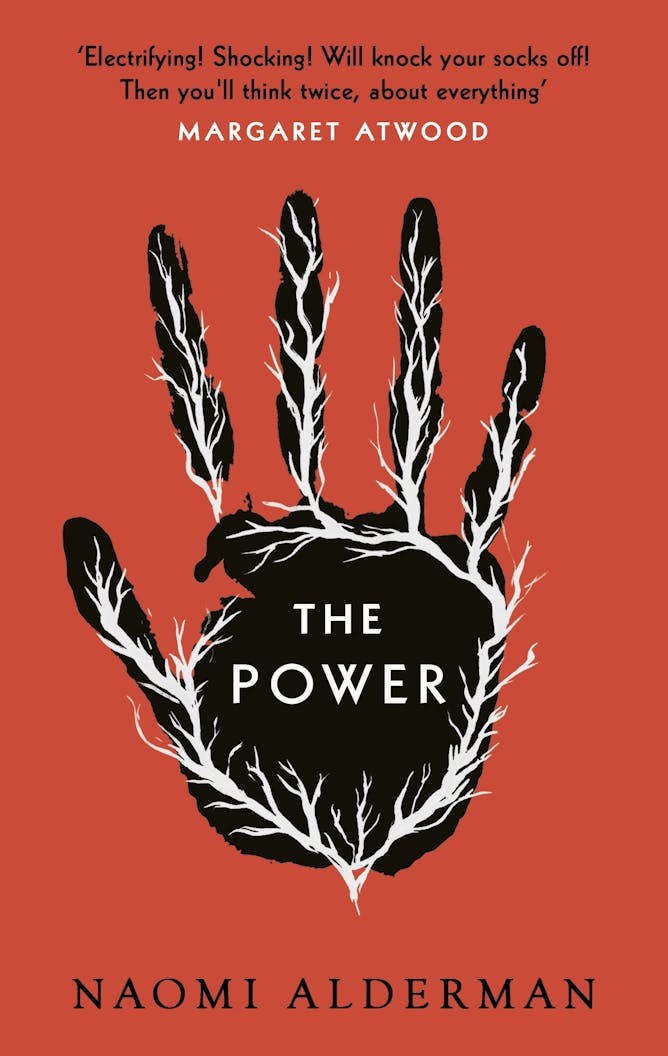
The Power by Naomi Alderman.
Handout

The Power

by Naomi Alderman (Penguin)

Women around the globe spontaneously develop the ability to deliver electric shocks through their fingertips. As they begin to use this power to intimidate, control and kill, the world order is turned upside down.

A spectacular novel, and surely the favourite to sweep all the sci-fi book awards for 2017. People can be both cruel and good-intentioned, often at the same time. Introduce a new power imbalance, and society is abruptly transformed. Wonderful writing, and a whopper of a story twist. Turns The Handmaid’s Tale on its head.

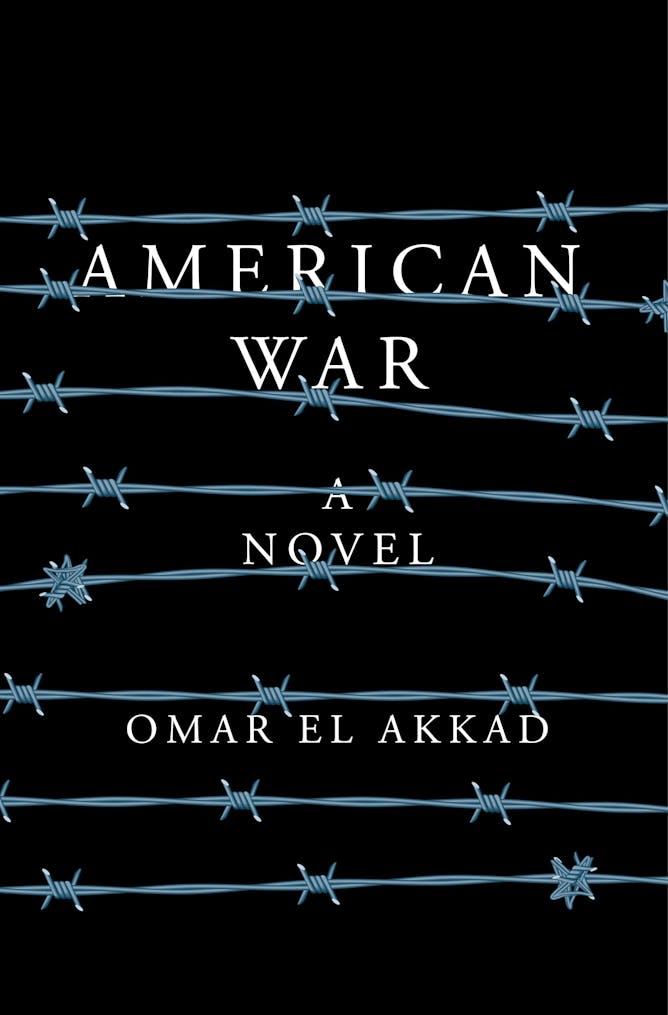
American War by Omar El Akkad.
Handout

American War

by Omar El Akkad (McClelland & Stewart)

A hundred years from now, Florida has vanished under the seas, the Bouazizi Empire is the new world superpower, and the United States has begun its second civil war. In the South, a young woman ends up in a refugee camp and is slowly radicalized into terrorism.

An intense, moving portrait of a future America that maybe isn’t the future after all. The characters are complex and the story is all too real. A spectacular debut.


All Our Wrong Todays by Elan Mastai.
Handout

All Our Wrong Todays

by Elan Mastai (Doubleday Canada)

Tom Barren travels back in time, accidentally alters the course of history, and returns to a horrifically changed, dystopian present day. The catch? Tom grew up in a utopia of flying cars and moon bases, and the dystopia that he finds himself trapped in is our timeline, warts and all.

A gem of a story that provides several new twists on time travel. If you’ve screwed up the timeline, should you fix it? What if there were two different ways to travel through time, with different rules and different consequences? And under all of this is the classic sci-fi question writ on the scale of billions of lives: Do the needs of the many outweigh the needs of a few? Hard to put down, with a lovable lead character.

4 3 2 1 by Paul Auster.
Handout

4 3 2 1

by Paul Auster (McClelland & Stewart)

The life story of Archibald Isaac Ferguson, born in 1947 in Newark, N.J. Except that this is the story of four identical Fergusons, each of whom take divergent paths as their lives play out.

A tour de force story of adolescence and the path not taken. It’s hard to believe a single author could possibly cram so many real-life details, emotions and characters into a single book. Extraordinarily memorable and engaging.


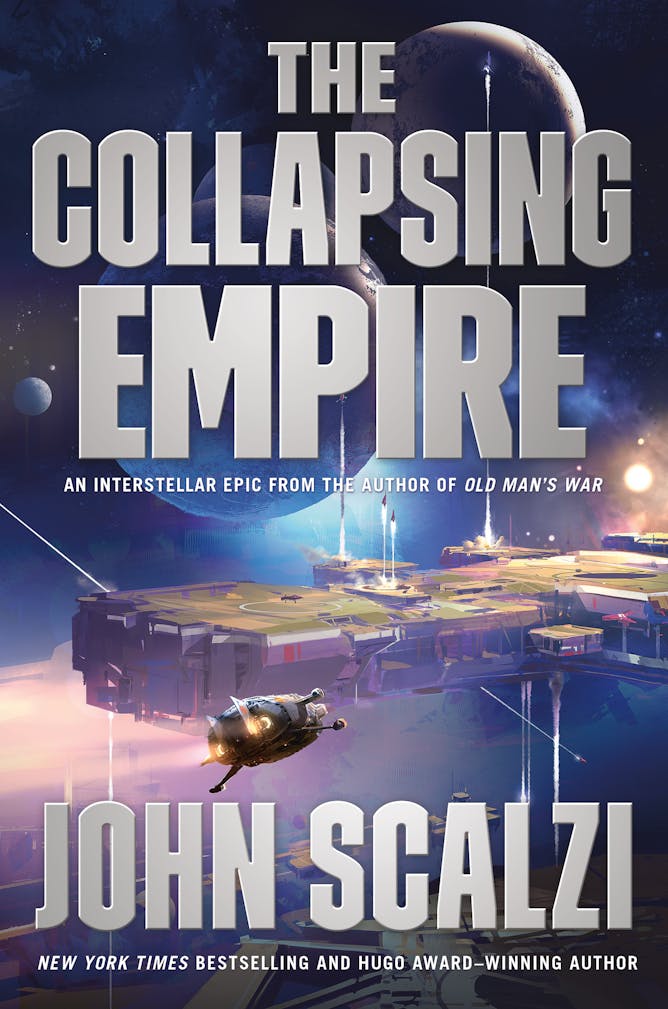
The Collapsing Empire by John Scalzi.
Handout

The Collapsing Empire

by John Scalzi (Tor)

Humans have spread throughout a galactic empire, our worlds interconnected by faster-than-light wormholes. But what happens to trade, the economy and civilisation itself when the wormholes start to break down?

The ConversationA fun and fast-spaced space opera, centred on some forthright women and some fresh ideas. In the spirit of Asimov’s Foundation, Scalzi explores the theme of the downfall of empire on a galaxy-spanning scale.

Bryan Gaensler, Director, Dunlap Institute for Astronomy and Astrophysics, University of Toronto

This article was originally published on The Conversation. Read the original article.