The link below is to an article that reports on books, women and relationships. It is one of those articles I regard as nonsense, still, make up your own mind.
Poetry has played an important role in the history of Wales. From the medieval courts, to the ongoing National Eisteddfod (the largest music and poetry festival in Europe), writers have used verse to document the land’s culture. But while male writers, such as the 12th century poets of the princes and more recently Dylan Thomas, have presented one perspective of Welsh history and culture, female poets have documented a very different take on Wales through the centuries. Here are four who bring a different perspective.
1. Gwerful Mechain (est.1462-1500)
Gwerful Mechain is one of the few Welsh medieval poets from whom a substantial body of work has survived to this day. One of the loudest voices speaking up for women of the time, Mechain was also one of the first poets in Wales to write about domestic abuse. To Her Husband for Beating Her is a poignant and powerful poem full of enraged language and energetic imagery.
Born into a noble family, Mechain was free to explore her own poetic interests without the pressure of securing patronage, unlike many of her male contemporaries. She became a prolific writer who was not restricted to one style. Her work includes religious, humorous and socially conscious poetry. One of her most well-known works, To the Vagina, chastises her male counterparts for praising a woman’s body from her hair to her feet but ignoring one hidden feature. She was bold and did not shy away from what some may consider crude imagery, as in her poem, To the Maid as she Shits.
Pob rhyw brydydd, dydd dioed,
Mul frwysg, wladiadd rwysg erioed,
Noethi moliant, nis gwarantwyf,
Anfeidrol reiol, yr wyf
Every poet, drunken fool,
Thinks he is just the king of cool,
(Everyone is such a boor,
He makes me so sick, I’m so demure)
2. Katherine Philips (c.1632 – c.1664)
Born in London, Katherine Philips – who later wrote under the moniker “The Matchless Orinda” – moved to Wales when she was around 15 years old. From her home in Cardigan she became a significant female British poet, as well as the first woman to have a commercial play staged, Pompey.
Despite the stigma against women publishing their work, Philips succeeded by circulating handwritten letters and volumes, as her male contemporaries did, while upholding supposedly feminine virtues such as humility and chastity in her works.
Sarah Jane Rees (also known by the bardic name Cranogwen) is perhaps one of the most pioneering poets in this list. Born in Llangrannog, west Wales, she spurned all attempts to enforce gender stereotypes – her family wanted her to work as a dressmaker – and instead joined her father on board his ship for two years after leaving school. She continued her education, eventually gaining her master mariner certificate. Returning home by the age of 21, Cranogwen fought against opposition to run her old school, and taught children as well as providing navigation and seamanship education to young men.
Ah! Annwyl chwaer, ‘r wyt ti i mi,
Fel lloer I’r lli, yn gyson;
Dy ddilyn heb orphwyso wna
Serchiadau pura’m calon
Oh! My dear sister, you to me
As the moon to the sea, constantly,
Following you restlessly are
My heart’s pure affections
4. Lynette Roberts (1909-1995)
Lynette Roberts was born in Buenos Aires, Argentina to parents of Welsh origin. A friend of Dylan Thomas, during World War II Roberts moved to Carmarthenshire with her then husband, journalist and poet Keidrych Rhys, and stayed in Wales for the rest of her life.
Although now her work is seeing a resurgence, for a long time Roberts has been overlooked. She was a poet ahead of her time and her use of language is refreshing. Roberts was influenced by the rich colours and landscape of her childhood, which she entwined with the rural landscape and culture of Wales during a time of upheaval – World War II.
Roberts’s poem Swansea Raid is perhaps one of her most powerful and insightful works. It depicts a snapshot of a relationship between herself and fellow villager Rosie and the tension between war and home. The changing technological world of war brought out warm, colourful language in her work, setting the colloquialisms of quiet, rural Wales against the starkness of bombing and constant threat of loss. Her most influential work has to be the heroic poem Gods with Stainless Ears, on the war’s disruption of domestic life.
Then I’ll do the lights, fill the lamp with oil,
Get coal from the shed, water from the well;
Pluck and draw pigeon, with crop of green foil
This your good supper from the lime-tree fell.
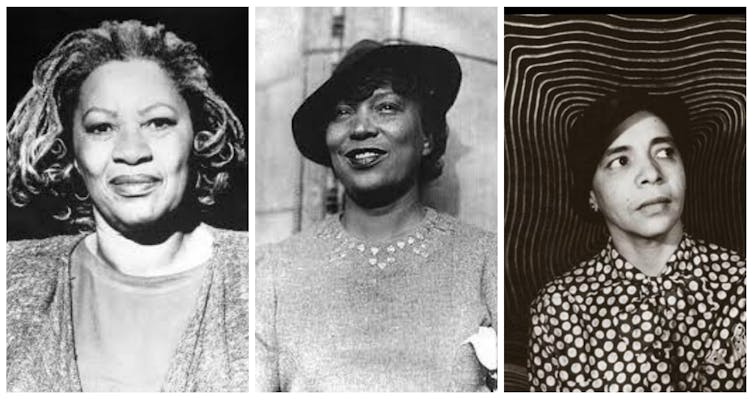
Toni Morrison, Zora Neale Hurston and Nella Larsen are on this short list of enduring must-read writers. Left to right: Nobel Prize, U.S. Library of Congress, Yale archive
In Mules and Men (1935), anthropologist, creative writer and Harlem Renaissance upstart Zora Neale Hurston relays the evocative folktale “Why the Sister in Black Works Hardest.” Fatigued after the work of Creation, God casts a massive bundle onto the earth. Intrigued by the mysterious object, a white Southern woman during the antebellum era asks her husband to retrieve it. Reluctant to tote the load himself, the master instructs a slave to fetch it.
Soon wearied of the task, the slave then commands his wife to shoulder the burden. She does so, excited at the prospect of exploring the contents. When she opens the package, however, what leaps out at her and Black women for all posterity is none other than hard work.
African American women writers have tackled the hard work of representing a diverse spectrum of lived and imagined experiences, including and especially their own. This labour occurs against the backdrop of centuries-long struggles with racist oppression and gender-based violence, including — but not limited to — slavery’s culture of endemic rape, forced or interrupted motherhood, infanticide, concubinage, fractured families and egregious physical and mental abuse.
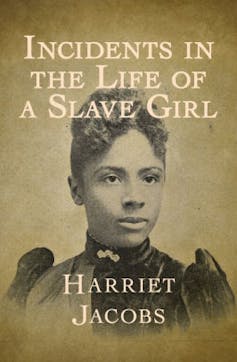
These ordeals also emerge in slave narratives by women. Harriet Jacobs’ Incidents in the Life of a Slave Girl (1861) emphasizes such travails. A target of relentless sexual harassment by her much-older master, Jacobs laments, “When they told me my new-born babe was a girl, my heart was heavier than it had ever been before. Slavery is terrible for men; but it is far more terrible for women.”
Once emancipated, African American women still faced staggering impediments when pursuing educational, entrepreneurial and employment opportunities. Political participation meant restrictions on voting rights both as women and as people of colour. Racist caricatures impugned everything from a woman’s intelligence and moral capacity to her skin color, texture of hair and body shape. Stereotypes like the docile Mammy, the Tragic Mulatta, the clownish Topsy, the oversexed Jezebel, the greedy Welfare Queen, the amoral Hoodrat and the Mad Black Woman (still prevalent today) remain testaments to a history of disrespect and erasure.
Hurston’s tale symbolizes the enduring social struggles Black women have faced living in what feminist critic bell hooks has termed white supremacist capitalist patriarchy.
In addition to influential autobiographers like Maya Angelou, dramatists like Lorraine Hansberry and poets like Gwendolyn Brooks, fiction writers have consistently demonstrated how imaginative art can simultaneously inform, persuade, entertain, catalyze social change and address individual as well as collective concerns.
Here is a short list of pivotal texts by African American women from the past century. These writers are but a small sample of the artists and intellectuals whose output resisted the force of what contemporary feminist critic Moya Bailey has termed misogynoir, or the corrosive fusion of anti-Blackness and misogyny prevalent in popular culture today. These women have completed the groundwork — and hard work — of envisioning a more just, inclusive society going forward.
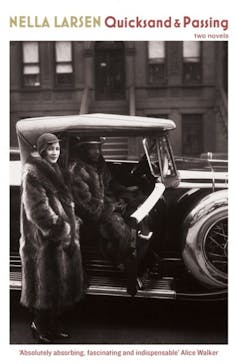
Quicksand (1928) and Passing (1929) by Nella Larsen
These novellas follow mixed-race women whose uneasy status on the colour line (including the lure of passing as white) complicates their lives in dangerous, even fatal ways. Passing is revolutionary for its depiction of homoerotic tension between two upper-middle-class Black women. Quicksand offers insight into the exoticization of African American women abroad and the contest between art and domesticity as viable avenues for a fulfilling life.
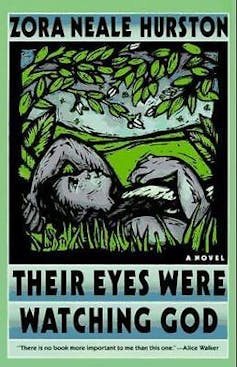
Their Eyes Were Watching God (1937) by Zora Neale Hurston
This story is the lyrical account of thrice-married Janie Crawford who finds a mature vision of love and fulfillment amid incessant gossip and a difficult family history. The all-Black township of Eatonville, Fla., and the rich “muck” of the Everglades contribute to a portrait of community health, daily striving and resolute self-awareness.
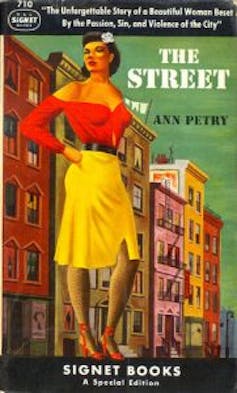
The Street (1946) by Ann Petry
This social realist novel follows single mother Lutie Johnson as she attempts to make a life for her young son in a predatory urban space. Weathering sexism, racism, classism, poverty and intense personal frustration, Lutie attempts to resist the brutality of the environment that gives the novel its loaded name.
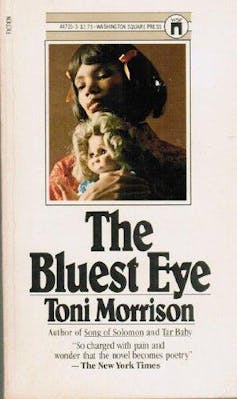
The Bluest Eye (1970) by Toni Morrison
This book is a searing portrait of a young girl’s coming-of-age and eventual undoing in the years following the Great Depression. Tumultuous family dynamics, psychological trauma and incest, the quest for compassion and self-love, and the toxic myth of Black ugliness coalesce in this first novel by the Nobel Laureate and author of neo-slave narrative Beloved (1987).
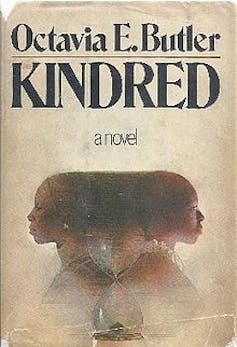
Kindred (1979) by Octavia Butler
Oscillating between the 1970s and the early 19th century, this science fiction odyssey (re)connects a contemporary Black woman writer and her white husband with her ancestors on a Maryland plantation. The novel is buoyed up by the dramatic tension of time travel and the juxtaposition of the pre-civil War Antebellum-era with Civil Rights-era racial attitudes, including those about interracial love and allyship.
The Women of Brewster Place (1982) by Gloria Naylor
Structured like a narrative quilt, these interconnected experiences of seven women span different generations, professions, class backgrounds and understandings of their place in the world. The eroded apartment complex that links them is the backdrop for unbearable pain as well as the promise of transformation and reconciliation.
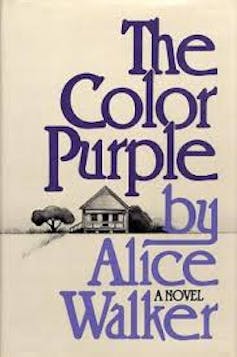
The Color Purple (1982) by Alice Walker
A tale of two sisters, Celie and Nettie, this novel constellates their love and longing via letters and imagined conversations across the Atlantic. Unsparing in its critique of domestic violence and toxic masculinity, yet tender in its treatment of various human weaknesses, the novel underscores Black women’s need for self-regard and mutual care. Not only are these acts revolutionary, but they also offer a glimpse of the divine.
Nancy Kang, Assistant Professor of Women’s and Gender Studies and Canada Research Chair in Transnational Feminisms and Gender-Based Violence, University of Manitoba
In this series, we look at under-acknowledged women through the ages.
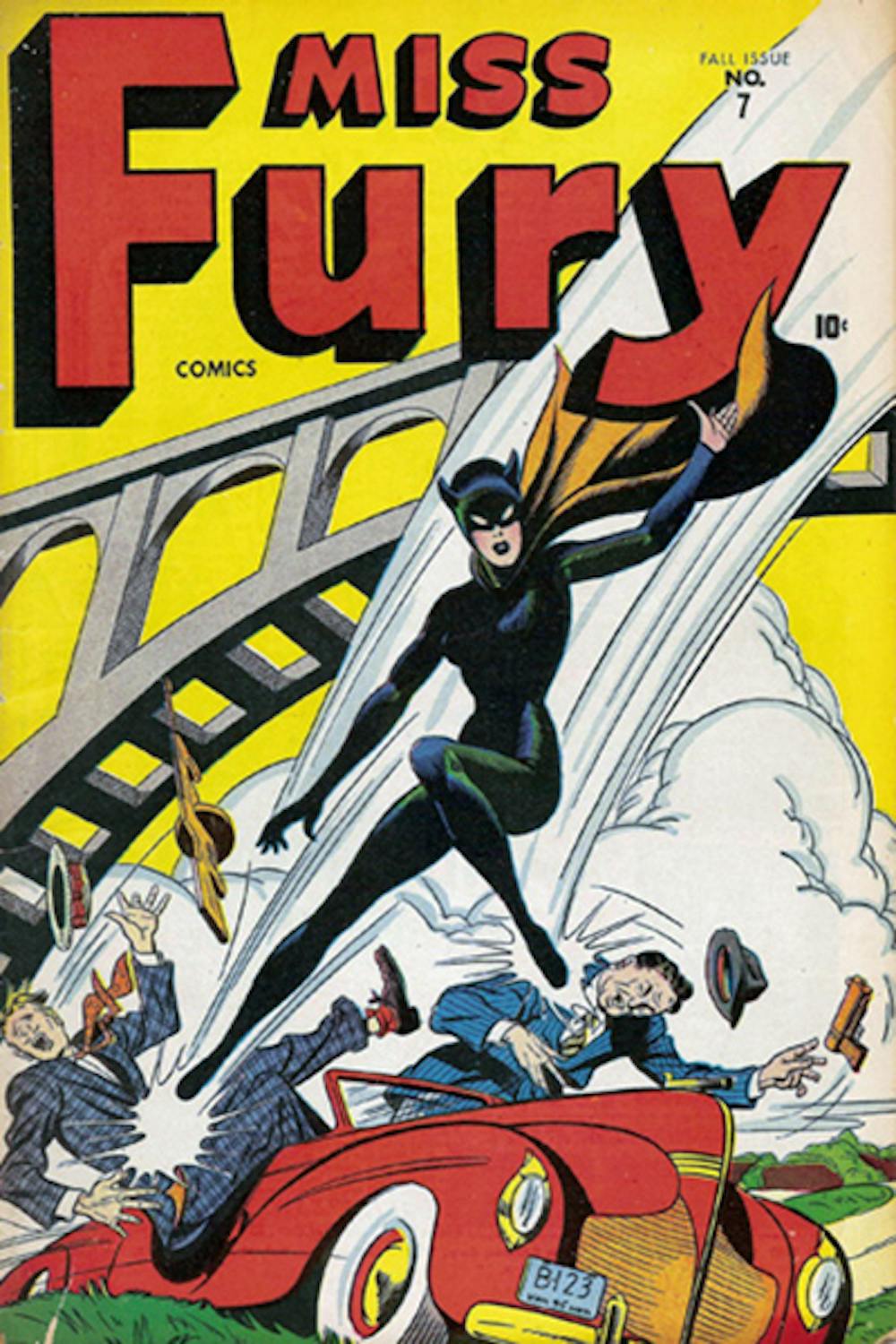
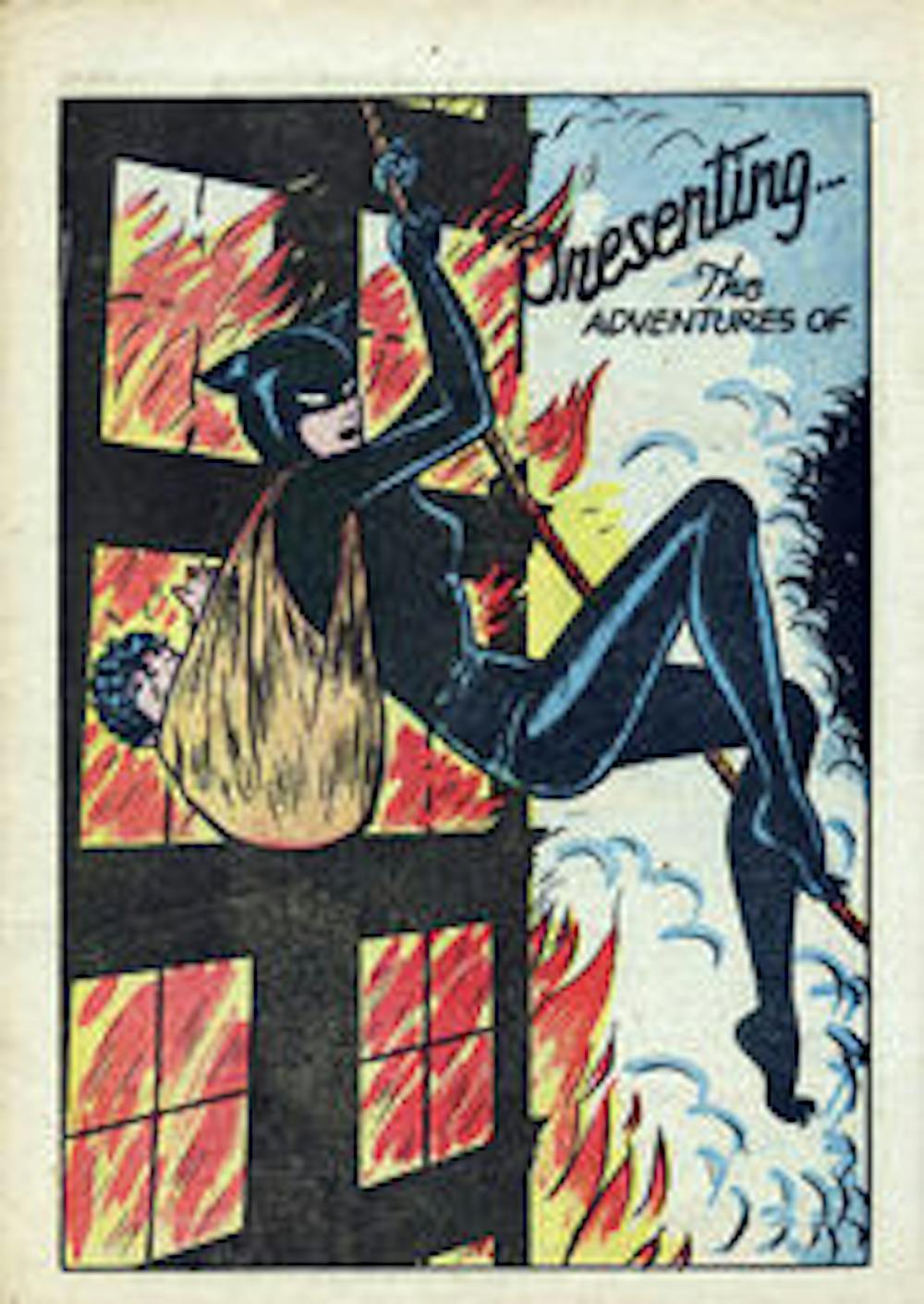
In April 1941, just a few short years after Superman came swooping out of the Manhattan skies, Miss Fury – originally known as Black Fury – became the first major female superhero to go to print. She beat Charles Moulton Marsden’s Wonder Woman to the page by more than six months. More significantly, Miss Fury was the first female superhero to be written and drawn by a woman, Tarpé Mills.
Miss Fury’s creator – whose real name was June – shared much of the gritty ingenuity of her superheroine. Like other female artists of the Golden Age, Mills was obliged to make her name in comics by disguising her gender. As she later told the New York Post, “It would have been a major let-down to the kids if they found out that the author of such virile and awesome characters was a gal.”
Yet, this trailblazing illustrator, squeezed out of the comic world amid a post-WW2 backlash against unconventional images of femininity and a 1950s climate of heightened censorship, has been largely excluded from the pantheon of comic greats – until now.
Comics then and now tend to feature weak-kneed female characters who seem to exist for the sole purpose of being saved by a male hero – or, worse still, are “fridged”, a contemporary comic book colloquialism that refers to the gruesome slaying of an undeveloped female character to deepen the hero’s motivation and propel him on his journey.
But Mills believed there was room in comics for a different kind of female character, one who was able, level-headed and capable, mingling tough-minded complexity with Mills’ own taste for risqué behaviour and haute couture gowns.
Tarpe Mills was obliged to make her name in comics during the 1940s by disguising her gender. Author provided
Where Wonder Woman’s powers are “marvellous” – that is, not real or attainable – Miss Fury and her alter ego Marla Drake use their collective brains, resourcefulness and the odd stiletto heel in the face to bring the villains to justice.
Miss Fury ran a full decade from April 1941 to December 1951, was syndicated in 100 different newspapers at the height of her wartime fame, and sold a million copies an issue in reprints released by Timely (now Marvel) comics.
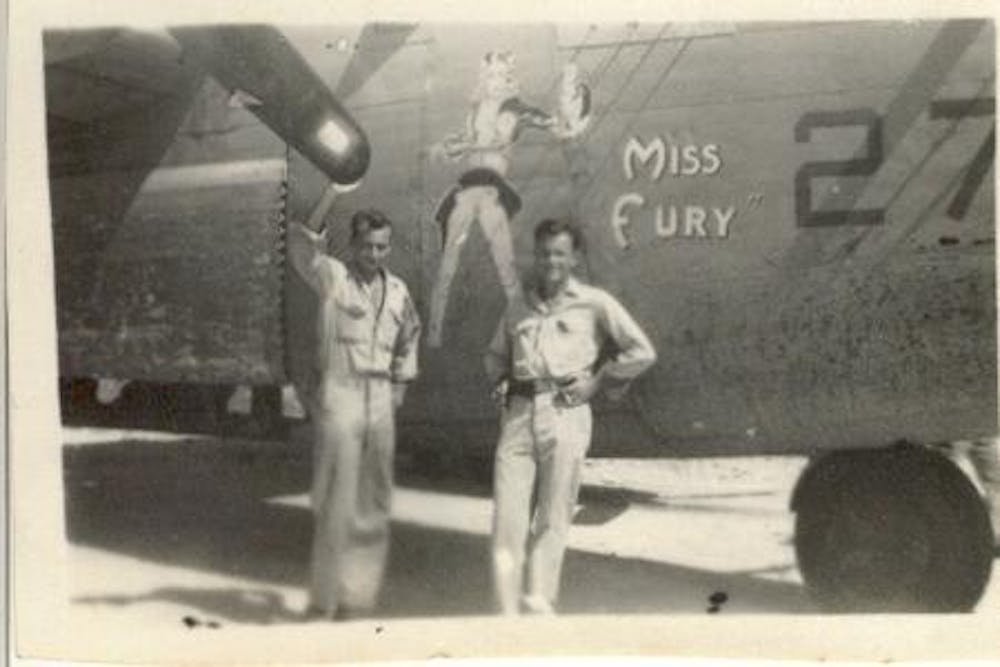
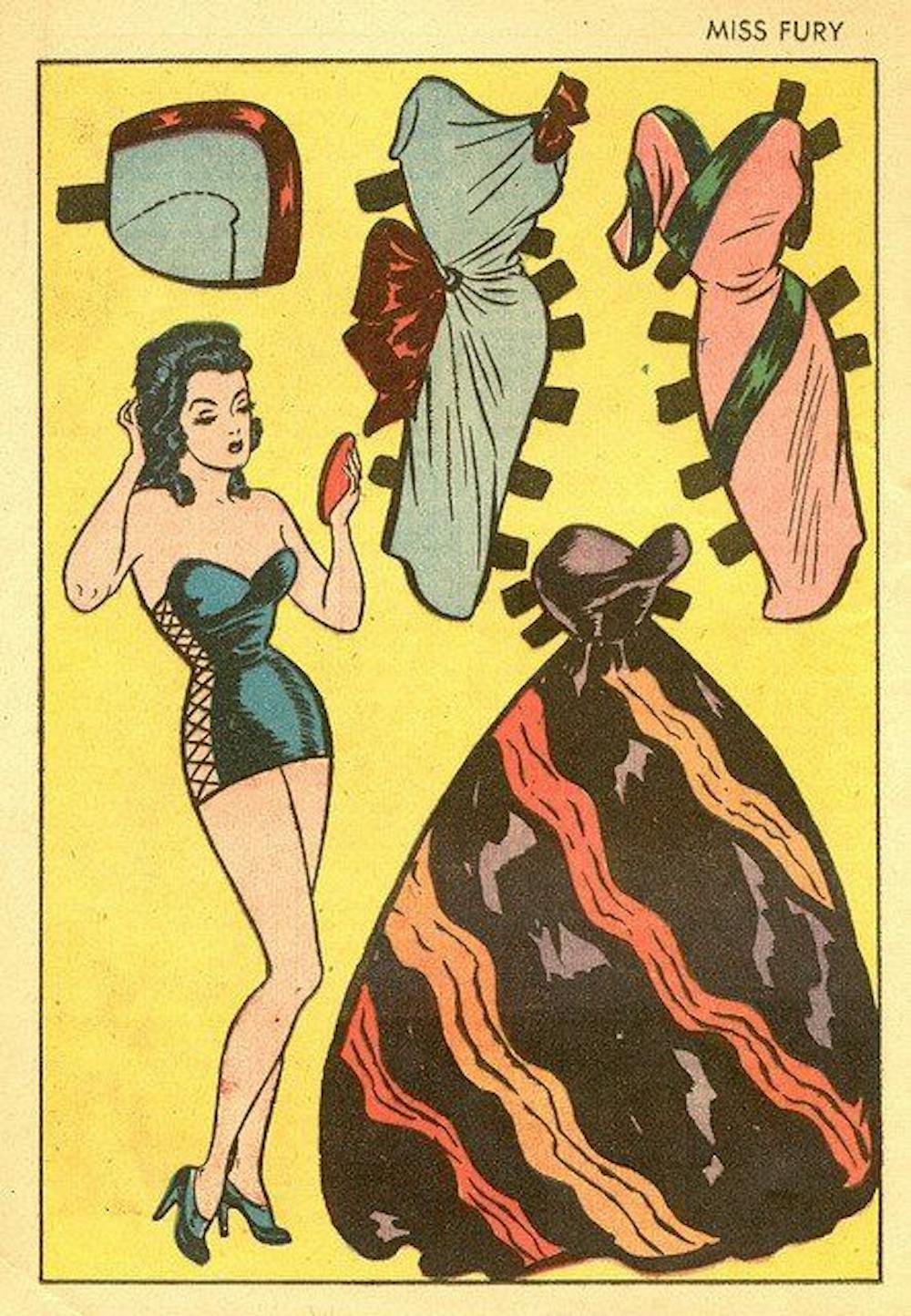
Pilots flew bomber planes with Miss Fury painted on the fuselage. Young girls played with paper doll cut outs featuring her extensive high fashion wardrobe.
An anarchic, ‘gender flipped’ universe
Miss Fury’s “origin story” offers its own coolly ironic commentary on the masculine conventions of the comic genre.
One night a girl called Marla Drake finds out that her friend Carol is wearing an identical gown to a masquerade party. So, at the behest of her maid Francine, she dons a skin tight black cat suit that – in an imperial twist, typical of the period – was once worn as a ceremonial robe by a witch doctor in Africa.
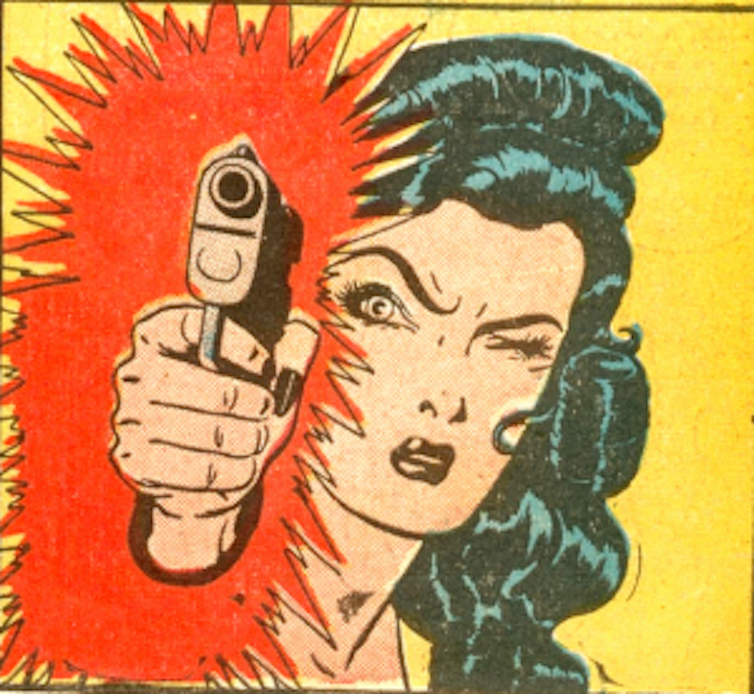
On the way to the ball, Marla takes on a gun-toting killer, using her cat claws, stiletto heels, and – hilariously – a puff of powder blown from her makeup compact to disarm the villain. She leaves him trussed up with a hapless and unconscious police detective by the side of the road.
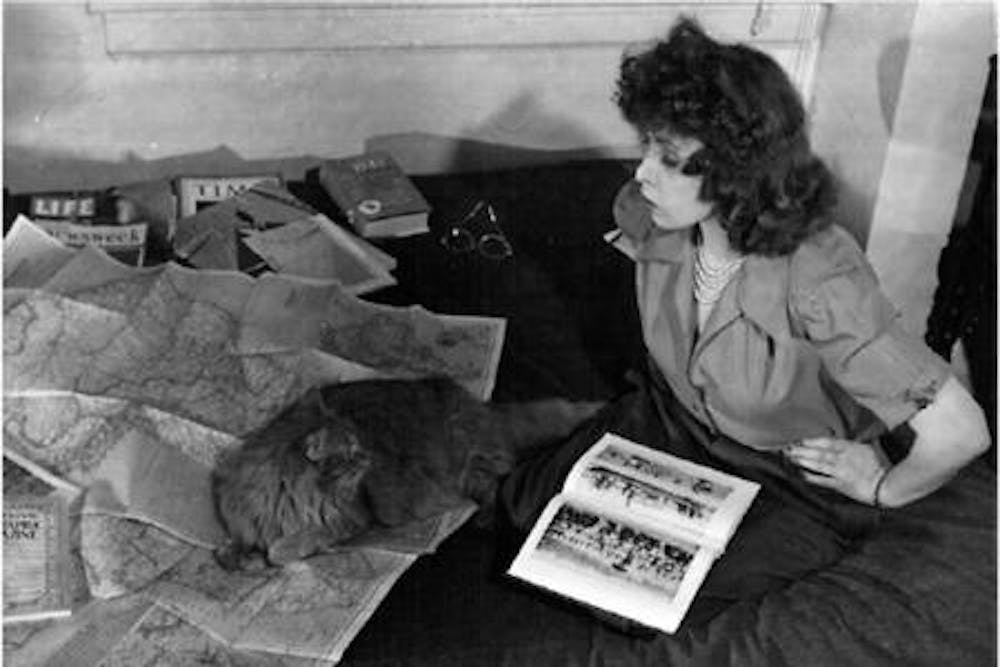
Tarpe Mills with her beloved Persian cat. Author provided
Miss Fury could fly a fighter plane when she had to, jumping out in a parachute dressed in a red satin ball gown and matching shoes. She was also a crack shot.
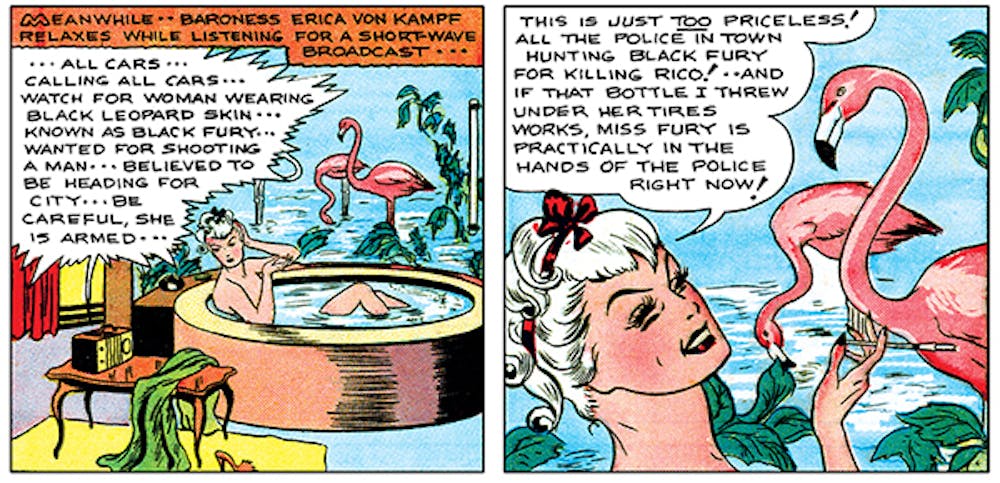
This was an anarchic, gender flipped, comic book universe in which the protagonist and principle antagonists were women, and in which the supposed tools of patriarchy – high heels, makeup and mermaid bottom ball gowns – were turned against the system. Arch nemesis Erica Von Kampf – a sultry vamp who hides a swastika-branded forehead behind a v-shaped blond fringe – also displayed amazing enterprise in her criminal antics.
Author provided
Invariably the male characters required saving from the crime gangs, the Nazis or merely from themselves. Among the most ingenious panels in the strip were the ones devoted to hapless lovelorn men, endowed with the kind of “thought bubbles” commonly found hovering above the heads of angsty heroines in romance comics.
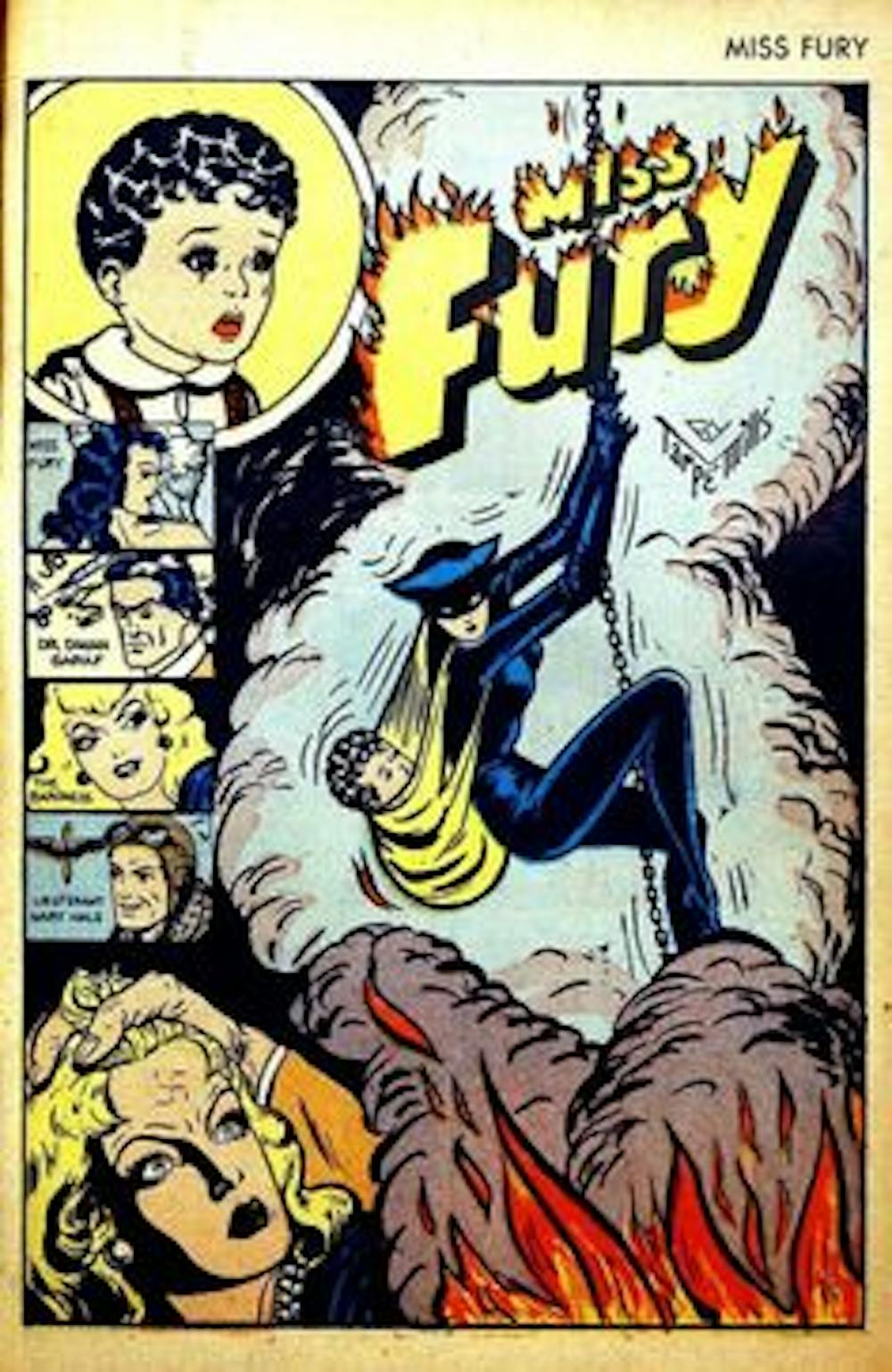
By contrast, the female characters possessed a gritty ingenuity inspired by Noir as much as by the changed reality of women’s wartime lives. Half way through the series, Marla got a job, and – astonishingly, for a Sunday comic supplement – became a single mother, adopting the son of her arch nemesis, wrestling with snarling dogs and chains to save the toddler from a deadly experiment.
Mills claims to have modelled Miss Fury on herself. She even named Marla’s cat Peri-Purr after her own beloved Persian pet. Born in Brooklyn in 1918, Mills grew up in a house headed by a single widowed mother, who supported the family by working in a beauty parlour. Mills worked her way through New York’s Pratt Institute by working as a model and fashion illustrator.
Censorship
In the end, ironically, it was Miss Fury’s high fashion wardrobe that became a major source of controversy.
In 1947, no less than 37 newspapers declined to run a panel that featured one of Mills’ tough-minded heroines, Era – a South American Nazi-Fighter who became a post-war nightclub entertainer – dressed as Eve, replete with snake and apple, in a spangled, two-piece costume.
This was not the only time the comic strip was censored. Earlier in the decade, Timely comics had refused to run a picture of the villainess Erica resplendent in her bath – surrounded by pink flamingo wallpaper.
Erica in the bath, surrounded by pink flamingo wallpaper. Author provided.
But so many frilly negligées, cat fights, and shower scenes had escaped the censor’s eye. It’s not a leap to speculate that behind the ban lay the post-war backlash against powerful and unconventional women.
In wartime, nations had relied on women to fill the production jobs that men had left behind. Just as “Rosie the Riveter” encouraged women to get to work with the slogan “We Can Do It!”, so too the comparative absence of men opened up room for less conventional images of women in the comics.
A Miss Fury paper doll cut out. Author provided
Once the war was over, women lost their jobs to returning servicemen. Comic creators were no longer encouraged to show women as independent or decisive. Politicians and psychologists attributed juvenile delinquency to the rise of unconventional comic book heroines and by 1954 the Comics Code Authority was policing the representation of women in comics, in line with increasingly conservative ideologies. In the 1950s, female action comics gave way to romance ones, featuring heroines who once again placed men at the centre of their existence.
Miss Fury was dropped from circulation in December 1951, and despite a handful of attempted comebacks, Mills and her anarchic creation slipped from public view.
Mills continued to work as a commercial illustrator on the fringes of a booming advertising industry. In 1971, she turned a hand to romance comics, penning a seven-page story that was published by Marvel, but it wasn’t her forte. In 1979, she began work on a graphic novel Albino Jo, which remains unfinished.
Despite her chronic asthma, Mills – like the reckless Noir heroine she so resembled – chain-smoked to the bitter end. She died of emphysema on December 12, 1988, and is buried in New Jersey under the simple inscription, “Creator of Miss Fury”.
This year Mills’ work will be belatedly recognised. As a recipient of the 2019 Eisner Award, she will finally take her place in the Comics Hall of Fame, alongside the male creators of the Golden Age who have too long dominated the history of the genre. Hopefully this will bring her comic creation the kind of notoriety, readership and big screen adventures she thoroughly deserves.
The season of the good old summer “fayre” is here and many UK readers will be heading off to eat tea and scones and take part in the tombola at their local village fete. There, it’s a good bet, they will hear of local people’s concerns that new housing developments foisted on them by the government will ruin the character of their idyllic rural community.
But the myth of tranquil village life was well and truly exploded in the Victorian age when many writers concluded that life in England’s small rural communities was not a simple idyll of tea, vicars and charitable works.
For many people, especially those who may not have visited the UK, the most accessible pictures of village life are those painted in novels: who can forget the timeless portrait of life in a sleepy Dorset community in PG Wodehouse’s Blandings series, or EF Benson’s Mapp and Lucia books, set in a fictional Sussex village? But fiction has also been highlighting the negatives of village living for more than a century.
The “greetings card” scenario of village life was established early. In her memoir Our Village (published in five volumes between 1824 and 1832), Mary Mitford – who lived at Three Mile Cross near Reading in Berkshire – gives us a classic rendition of peaceful village life. There are quaint depictions of servants, chaste suitors, elderly brides and grooms, blacksmiths and gypsy fortune tellers.
Our Village contains all the myths of village life. Everyone is familiar: a village is a little world “where we know everyone, are known to everyone, interested in everyone, and authorised to hope that everyone feels an interest in us”. There are no newcomers, nobody is systematically excluded and nobody is living a secret or misunderstood life. Poverty is relegated to the margins – there’s only the occasional mention of the workhouse and, Mitford assures her readers, the village is a collection of cottages, not “fine mansions finely peopled”.
But even in the 1820s, such a village felt under threat from the railways, improved roads and the increasing size of the towns of the industrialised North. And no sooner did Mitford complete Our Village than other authors began to parody or correct her vision.
Elizabeth Gaskell’s Cranford (1853) is a gentle text still very positive about life in a confined locality. Although Cranford is a town outside “Drumble” – her stand-in for Manchester – it resembles Mitford’s village in that everyone knows each other and the narrative is focused on a limited set of characters. In the case of this novel – and so many others in the tradition – the main characters are women, and it is women’s unpaid labour that makes the community run smoothly. Yet Gaskell gently mocks her characters, Matty Jenkyns, Miss Pole, and Mrs Jamieson, for their conventionality, triviality and timidity.
The women follow strict social rules – an entire chapter revolves around whether these august personages should stoop to visit a former ladies’ maid who has set up a milliner’s shop and hence was “in trade”. In another chapter, the women grow fearful of outsiders when they hear of a cluster of burglaries in the neighbourhood, which proves to be founded on rumour.
Thomas Hardy’s villages such as Weatherbury in Far from the Madding Crowd (1874) or Marlott in Tess of the D’Urbervilles (1891) are idyllic in some ways, but not in others. Shepherds are close enough to nature to saunter out of their huts at night to tell the time by stars, and the slow pace of life allows for ample opportunity for community and flirtation. Yet sexual transgressions are treated to the full judgement of an unforgiving community, and questions of money and class interrupt any readers’ expectations of rural bliss.
American moral tales
These books sold well in the US, even though villages there were subject to dramatic population shifts westward and industrial development. Writers in the US sought to reinforce or contest Mitford’s vision.
After reading Mitford and migrating to a new village in Michigan, Caroline Kirkland wrote A New Home, Who’ll Follow? (1839), which mercilessly satirised her vulgar frontier neighbours and the wealthier eastern newcomers. When her neighbours read the novel, they ostracised her – and she never wrote anything as trenchant again.
Although the American regionalism that flourished in the latter quarter of the 19th century is known for romantic visions of village life, upon closer examination, key writers such as Sarah Orne Jewett and Mary E Wilkins Freeman reveal many of village life’s negatives.
If Gaskell acknowledges in Cranford that her ladies’ kindness to the poor is “somewhat dictatorial”, Freeman’s A Mistaken Charity (1883) takes this point to its logical conclusion. Two elderly sisters living happily in their dilapidated cottage are visited by Mrs Simonds, a woman who is “a smart, energetic person, bent on doing good”. Mrs Simonds arranges to take Charlotte and Harriet to the poorhouse, where they are forced to wear lace caps and sit indoors. Charlotte and Harriet run away.
Revolt from the village
By the 1910s, there was a literary “revolt from the village”, and writers including Sherwood Anderson focused on the sexual repression of small town life. Although Sherwood Anderson’s Winesburg, Ohio, published in 1919, is set in a town, it is a town of 1,800 people, far smaller than many British villages today. Meanwhile, Stella Gibbons parodied rural melodramas in Cold Comfort Farm (1932), in which, instead of graciously fitting in like the urban narrators of Jewett’s fiction, Flora Poste, a visitor from London, forces the members of a dysfunctional family to follow their individual desires rather than their family destiny.
According to these writers, villages can be conformist, unimaginative, repressive, nepotistic. These fictions imply that villages will be harder to maintain now that women have other outlets for their energies. The negatives come from the same source as the positives in village life, and people who wish to defend villages, and the tradition of rural living, should remember this literary ambivalence and the fact that it has gone on for more than 100 years.
Women’s writing has long been a thorn in the side of the male literary establishment. From fears in the late 18th century that reading novels – particularly written by women – would be emotionally and physically dangerous for women, to the Brontë sisters publishing initially under male pseudonyms, to the dismissal of the genre of romance fiction as beyond the critical pale, there has been a dominant culture which finds the association of women and writing to be dangerous. It has long been something to be controlled, managed and dismissed.
One of the ways that publishers, booksellers and critics use to “manage” literature is through the notion of genre: labelling a book as “detective fiction” becomes an easy way to identify particular tropes in a novel. These genre designations are particularly helpful for publishers and booksellers, with the logic running something like this: a reader can walk into any bookstore, anywhere, and go to the detective fiction section and find a book to read, because s/he has read detective fiction before and enjoyed it.
What complicates this is who makes the decision of which genres are deemed to be appropriate, and which books are put into which category. Genre is also complicated by the idea of women’s writing. Can we have a genre that is designated solely by the sex of the author? What if we turned this around, and rather than a genre, women’s writing was a term we used to simply celebrate writing about women?
Here are five novels by women – and about women – from across the 20th century. These novels all grapple, in very different ways, with women and independence.
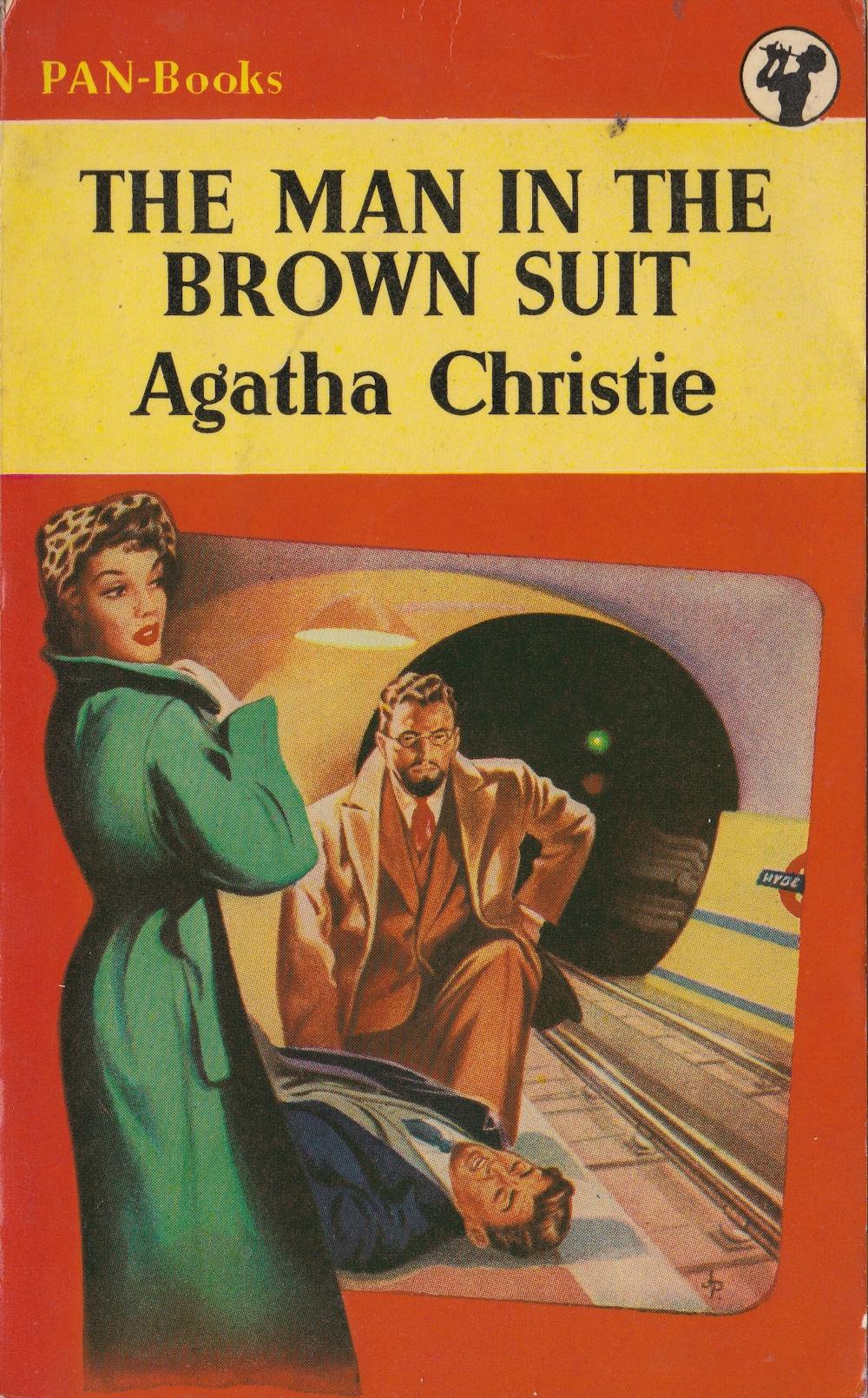
Anna Beddingfeld, a self-mocking heroine, who is very aware of the conventions of gender and genre, impulsively buys a ticket to South Africa because the boat fare is the exact amount she has left in the world. She ends up taking down an international crime syndicate with aplomb and panache.
Lucy Maud Montgomery, The Blue Castle (1926)
Doss is the expendable unmarried older woman in a Victorian novel. But in this story, she walks out on her largely uninterested family to move into a cabin on an island with a man she has met only briefly. A fantasy of the Canadian wilderness, the novel was one of Montgomery’s few novels for adults.
Mary Stewart, Nine Coaches Waiting (1958)
A rewriting of Jane Eyre, the novel contains all the tropes of the Gothic romance – a castle, a family secret, murder – but these are challenged by one of Stewart’s finest protagonists, Linda Martin. Martin is employed as a governess by an aristocratic family, but rejects the trappings of romance to protect her charge, and her own integrity.
Octavia Butler, Kindred (1979)
Edana Franklin wakes up in hospital with her arm amputated and the police questioning her husband. It is revealed that she has been travelling back to 1815, where she comes into repeated contact and conflict with Rufus, one of her slave-owning ancestors. A novel that raises important questions about masculinity, power and violence.
Shirley Jackson, Patchwork Girl (1995)
One of the earliest pieces of electronic fiction, this retelling of Shelley’s Frankenstein (1818) and Baum’s The Patchwork Girl (1913) places the narrative in the hands of the reader, who pieces together the story through illustrations of parts of a female body.
Often popular novels by women have a narrative arc that is visible from the outset: the protagonists will find a romantic partner in the end. In some of the above books, some of the women do, and some of them don’t, find a romantic partner. For those who do, the romance is secondary to the work they do, and the choices that they make about their own lives.
What unites the novels is an exploration of the choices that some women have to make as a result of their sexed and gendered embodiment, whether travelling to South Africa on a whim, being jolted unwillingly back onto a slave plantation, or making an explicit call to the (woman) reader to make choices about how the electronic story develops.
Writing about women (and often by women) gives us some examples of how to challenge the status quo, if only for a little while. Each challenge, however, provides another example of how to effect change in a patriarchal culture. Here’s to the writers about women who have done this – from Jane Austen to Shirley Jackson, from Frances Burney to Josephine Tey, and from Angela Carter to Val McDermid.
Women have always been central to true crime stories: as victims, perpetrators, readers, and (increasingly) as tellers of these tales. Indeed, these tales, often dismissed as sensationalised violence, offer important opportunities to reflect on crime and crime control.
Many true crime writers today – including numerous women, working in a once male-dominated market – have been biographers, coroners, detectives, historians, journalists, lawyers, and psychologists. These backgrounds bring a style of storytelling that educates us about, not just merely entertains us with, crime. Importantly, many privilege complex and nuanced storytelling over simplistic stereotypes of women as just “bad” or just “good”.
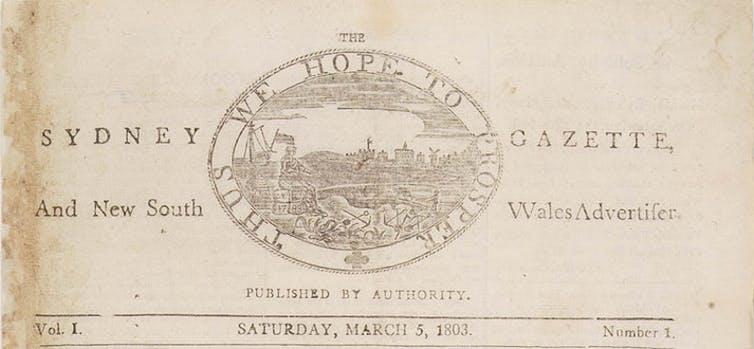
The Sydney Gazette and New South Wales Advertiser Vol. 1, No. 1, 5 March 1803 (Front Page). Call number: DL F8/50, Mitchell Library, State Library of New South Wales, CC BY
The first Australian true crime stories were transmitted orally, jotted down in journals, and entered into official records. George Howe, editor of our first newspaper, The Sydney Gazette and New South Wales Advertiser, enthusiastically embraced the topic of crime: the paper’s first issue in 1803 included stories of fraud, attempted murder, and the brutal rape of 17-year-old Rose Bean.
The first Australian publication dedicated to true crime is Michael Howe: The Last and the Worst of the Bushrangers of Van Diemen’s Land (1818), by T.E. Wells. This short work is also the story of Howe’s companion, then victim, Mary Cockerill a young Indigenous woman. Cockerill supported Howe in a landscape forbidding and wild to the European settlers. After being betrayed by Howe – he shot her as they were being pursued, facilitating his own escape – Cockerill then used her knowledge of the bush to help authorities. Howe was captured and killed in 1818, bringing his bushranging career to an end.
In the colonial era, a woman’s status as a victim was upheld, or denied, based on her character and her ability to conform to social mores of the time. Today, women are often still judged by what they say and what they wear; their education and their occupation. How many sexual partners have they had? Are they too emotional? Are they not emotional enough? Likewise, some perpetrators have been seen as more heinous because they are women.
Women as perpetrators
In Captain Thunderbolt & His Lady (2011), Carol Baxter skilfully tells the story of Frederick Ward (“Captain Thunderbolt”), a bushranger in the mid-1800s, and his Indigenous partner-in-crime Mary Ann Bugg (“Mrs Thunderbolt”). Bugg – an intelligent, gutsy, trouser-wearing woman – is brought vividly to life, as she breaks the law and defies the feminine expectations of her time.
As Baxter notes, Bugg was dissatisfied with the social status quo, and, like many bushrangers, she received support and sympathy from the wider population. She was not all “bad” but not all “good” either. Indeed, some suggested Mrs Thunderbolt was merely blamed for the deeds of her husband. Bugg outlived her outlaw partner by 35 years, dying in obscurity in Mudgee in 1905.
One of the more dramatic true crime tales of the late colonial period, is the story of Louisa Collins. Caroline Overington looks at the life, and death, of Collins in Last Woman Hanged (2014). Accused of murder, Collins famously endured four trials in 1888, which, as Overington argues, were effectively trials of all Australian women. If women wanted equal rights, including the right to vote, “then, such equality had to be universal: women, too, would hang for murder”. In the first three trials, the juries failed to deliver a verdict. In the fourth trial, the jury found her guilty and Collins was hanged in 1889.
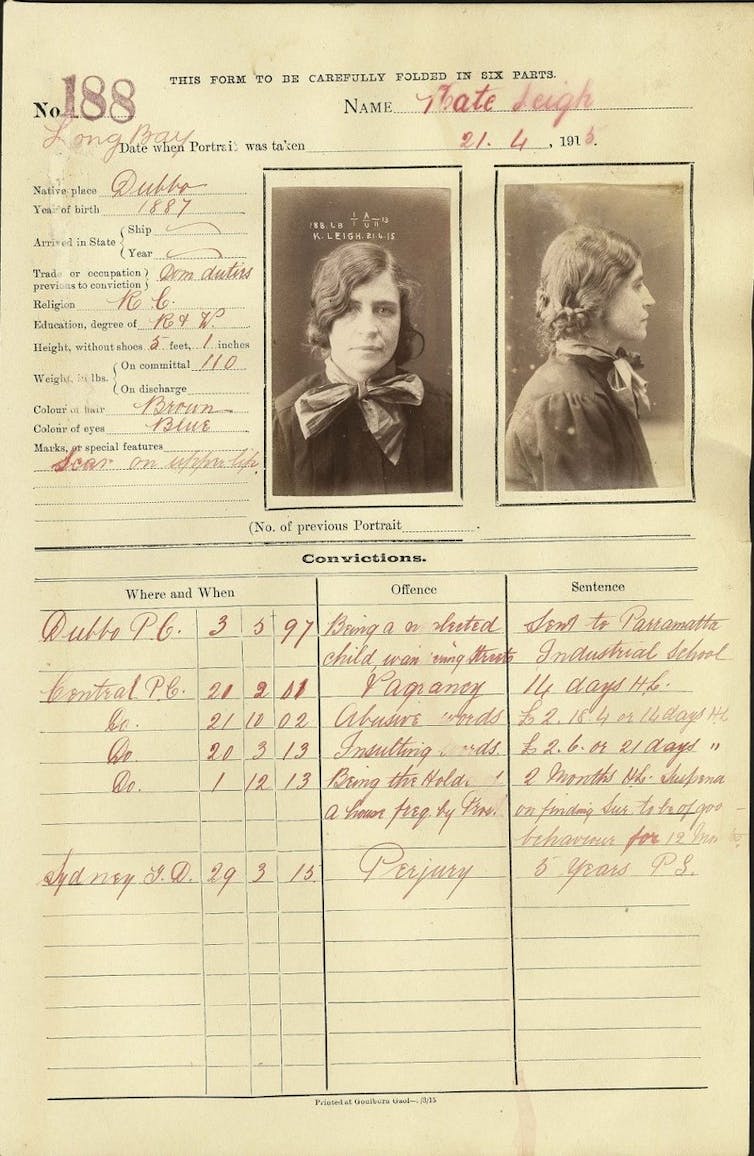
The Worst Woman in Sydney (2016) by Leigh Straw documents the life of Kate Leigh, born Kathleen Beahan, an icon of Sydney’s underworld from the 1920s through to the 1950s. A “famed brothel madam, sly-grog seller and drug dealer”, she is best known for her involvement in the “Razor Wars” when Sydney gangs used razors instead of guns. Leigh could handle a rifle (or any other weapon) and was “an intelligent criminal entrepreneur” who quickly capitalised on opportunities as they emerged. A hardened crook (who was in and out of prison), Leigh was also very generous; her Christmas parties for poor children, in Surry Hills, were legendary for the food and presents given out.
In Nice Girl (2011), Rachael Jane Chin looks at the many dreadful secrets kept by Keli Lane. Found guilty of murder and of lying under oath, Lane’s case is one that is still difficult to believe. Gender, and gendered ideals, stand out within it. Chin unpacks how Lane was a solid, middle-class young woman. She had her boyfriends but was not promiscuous. She was a teacher and had worked hard to become an elite athlete.
But underneath Lane’s “good upbringing and clean-cut appearance”, which earned her the benefit of the doubt from those around her, were five secret pregnancies during the 1990s. Two pregnancies were terminated, two infants were put up for adoption and one baby, Tegan, was murdered. Lane is serving her prison sentence, the crimes she committed as shocking now as when they were discovered. She will be eligible for parole in 2023.
Women as victims
In 1921 the body of 12-year-old schoolgirl Alma Tirtschke was found in an inner-Melbourne alleyway. Colin Campbell Ross was charged with rape and murder, as described in Kevin Morgan’s Gun Alley (2005, updated 2012). We learn the victim, just a child, was quiet but also clever and creative. As readers, we cannot help but speculate who Tirtschke could have grown up to be.
Ross was hanged in 1922: a result of false allegations, a flawed investigation, and a trial held in the press and in the courtroom. He received a posthumous pardon in 2008. This case is particularly important in the history of Australian true crime writing because, as Tom Roberts explains, it highlights the commercialisation of crime, focusing on the headline of the defenceless female, and media-driven moral panics.
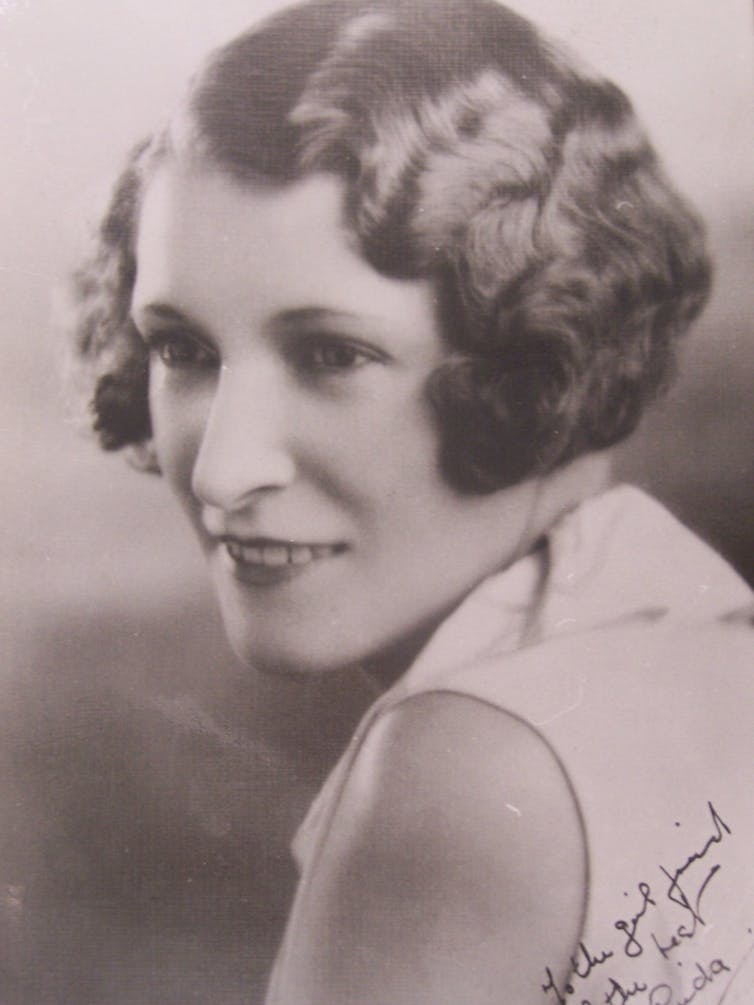
Florence Linda Agostini (née Platt; 12 September 1905 – 27 August 1934) was known posthumously as the Pyjama Girl. Wikimedia Commons, CC BY
One of Australia’s most famous crimes is the “Pyjama Girl Case”. In 1934 the remains of Linda Agostini, born Florence Platt, was found. She had been shot, beaten, and burnt. Most notably, Agostini was wearing yellow, silk pyjamas, patterned with a dragon: a flamboyant garment in Depression-era Australia. Agostini’s body was placed on public display in an attempt by the police to discover the name of the murdered woman but it took 10 years to identify the victim. In the 1940s and 1950s, Frank Johnson published his Famous Detective Stories series, which included The Pyjama Girl Mystery. Like many of Johnson’s true crime storytelling efforts, the woman at the centre of the criminal case is presented as a sexual object.
The story of Anita Cobby, born Anita Lynch, has been told many times. The first major telling of the brutal rape and murder of the 26-year-old in 1986, is Julia Sheppard’s Someone Else’s Daughter (1991). Sheppard contrasts Cobby and her numerous contributions to the community, as a charity worker as well as a nurse, with the senseless cruelty of the men who took Cobby’s life. Stories like this one, which have stayed in the public imagination over decades, highlight how the impacts of crime extend beyond the victim, family, and friends. They also show how women can be victims of completely random acts of violence.
Many women are victims of domestic violence. The murder of Lisa Harnum, by her fiancé Simon Gittany, is described by Amy Dale in The Fall (2014). Gittany threw Harnum to her death from their apartment balcony, situated on the 15th floor of an inner-Sydney building in 2011. This is a story of control, surveillance, and toxicity. Harnum was trapped in an untenable position: too frightened to leave but also too frightened to stay. When she did try to escape, the result was tragic. Gittany was sentenced to 26 years in prison, with a non-parole period of 18 years.
Changing true crime narratives
The once “either/or” binary of “bad/good” women has given way to demands from readers to see women as complex figures within these works. As a result, more and more writers are now increasingly focussed on the human cost of crime.
Women are also telling their own stories, as seen in Lindy Chamberlain’s work Through My Eyes (1990). Chamberlain was falsely imprisoned for the murder of her baby daughter, Azaria, at Uluru in 1980. This book delivers a very personal account of one of the greatest miscarriages of justice in Australian history.
Crime is never without context and is never straightforward. Many writers – women and men – know that simplifying these stories with stereotypes, female or male, is just not good enough: for the innocent, for the guilty, or for readers.








 According to these writers, villages can be conformist, unimaginative, repressive, nepotistic. These fictions imply that villages will be harder to maintain now that women have other outlets for their energies. The negatives come from the same source as the positives in village life, and people who wish to defend villages, and the tradition of rural living, should remember this literary ambivalence and the fact that it has gone on for more than 100 years.
 Writing about women (and often by women) gives us some examples of how to challenge the status quo, if only for a little while. Each challenge, however, provides another example of how to effect change in a patriarchal culture. Here’s to the writers about women who have done this – from Jane Austen to Shirley Jackson, from Frances Burney to Josephine Tey, and from Angela Carter to Val McDermid.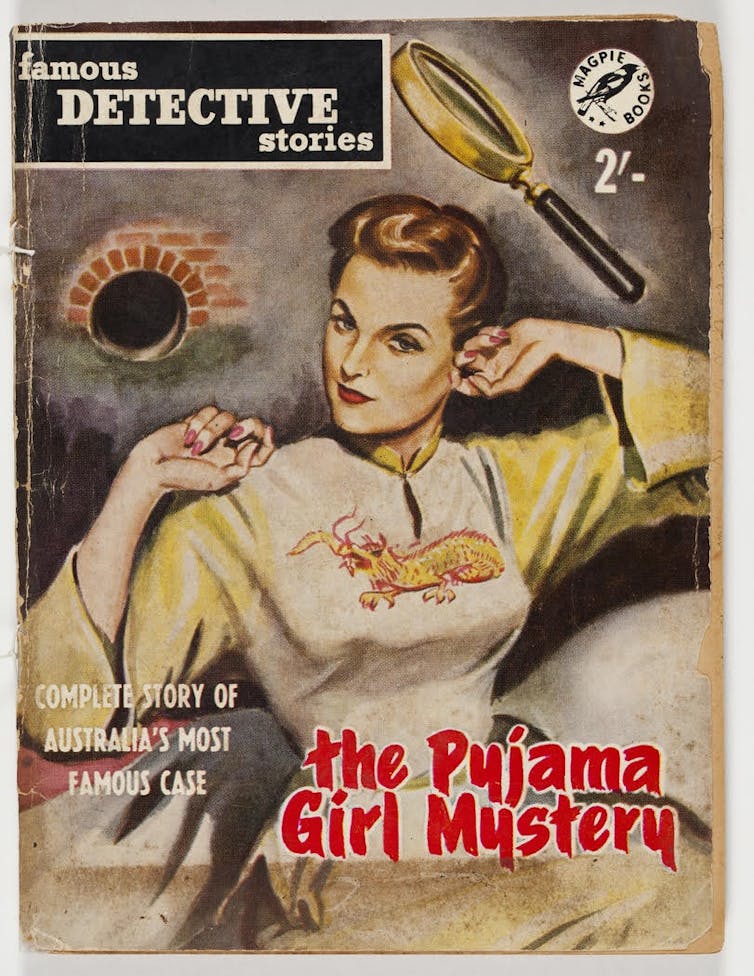
 Crime is never without context and is never straightforward. Many writers – women and men – know that simplifying these stories with stereotypes, female or male, is just not good enough: for the innocent, for the guilty, or for readers.
 At the BookShelf

You must be logged in to post a comment.