Unknown's avatar

Everything you need to know about ‘femoir’ – the bestselling books that celebrate female success


File 20180514 133577 1nwr7pi.jpg?ixlib=rb 1.1
How the female memoir helps to celebrates women’s voices.
Pexles

Anne-Marie Evans, York St John University

The reviews have not always been kind. The texts are rarely perceived as “literary” or even particularly important – so they don’t get taken seriously. But the celebrity “femoir” – a memoir authored by a well-known female actor or comedian – has become a staple of the publishing trade over the last few years.

As I explain in a recent book chapter, the femoir occupies an important place in contemporary women’s writing because they promote female empowerment. The books also embrace body positivity, and address the importance of having a supportive female community of friends.

These women writers already have hugely successful careers before they begin to write their femoirs. Lena Dunham, for example, was the creator, writer, star, and sometimes director of the hit HBO series Girls – which received a range of Emmy awards and nominations. Amy Poehler and Tina Fey are both veterans of Saturday Night Live, and Fey was the creator, writer, and star of 30 Rock, while Poehler starred in the hugely popular Parks and Recreation. Mindy Kaling, on the other hand, was the first Indian American woman to both star in and produce her own show, The Mindy Project. So why this sudden need to tell their story in print?

Brand woman

One reason might be that writing, and autobiography in particular, is a great way for women to develop their public brand. Suzanne Ferris, who has researched and published on popular women’s writing, compares the femoir to chick lit – as this new style of memoir often follow the traditional structure of a female protagonist overcoming various personal and professional obstacles.

The reader might hear about one of Kaling’s bad dates, or about Fey’s struggles to balance being a mother and being a professional working woman. But within the genre, each writer also emphasises professional advancement over personal success.

None of these books ever offer any real details about the women’s personal lives beyond a few anecdotes that could be shared on a late night talk show. But the femoir offers the reader the illusion they are being told highly privileged information, and this is hugely important part of the genre’s appeal.

Speaking out

For Dunham, Fey, Poehler and Kaling, writing has always been an important part of their career. Although they are famous for performing, most of them started out as writers. Kaling, for example, got her break as a one of the writers for the US version of The Office.

Writing for The Guardian Hadley Freeman suggests that the main difference between memoir and femoir is the construction of the narrative voice. A memoir is usually published because the story is special or unique, but the very appeal of the femoir is that its writer is – apparently – just like the imagined (female) reader.
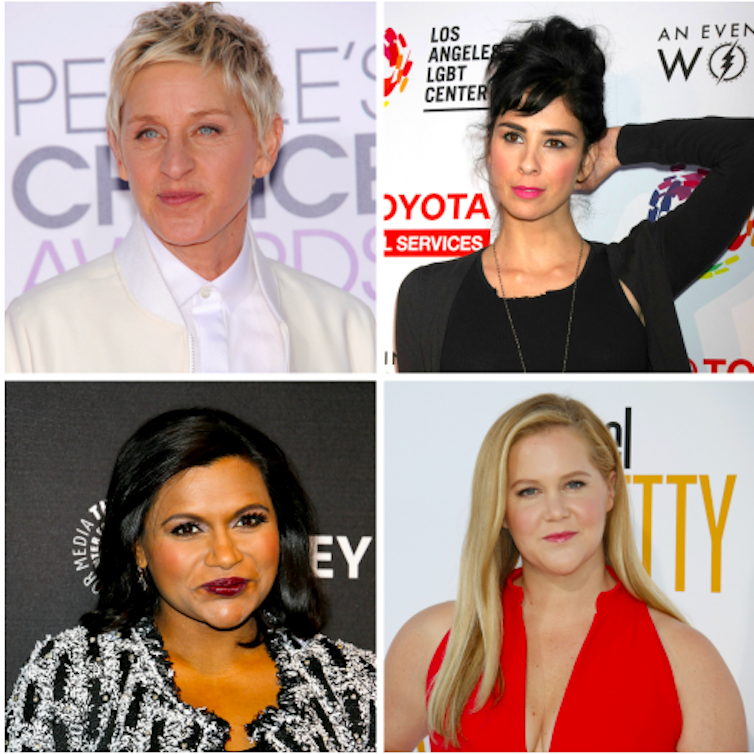
From top left, Ellen DeGeneres, Sarah SilverMan, Mindy Kaling and Amy Schumer.
Shutterstock

As a narrative voice, the author of the femoir must be funny and relatable. She must be every woman to every reader, or her book will not be successful. This is a hugely important part of the brand. A femoir is not meant to be a weighty autobiography but instead is designed to be a fun and entertaining read.

As well as a life story, a femoir nearly always features some kind of interactive element. Amy Poehler’s Yes Please is broken up with collages and photos, and there are even several sections where the reader can make her own notes, suggesting an even closer imagined affinity between celebrity narrative voice and the reader.

Female communities

Men, of course, are rarely asked to account for their professional achievement. But for these authors, telling their story becomes a useful way for female comedians to explain their brand and recount their successes.

One of the most striking features of the femoirs is how much the writers tend to reference other female writers in the genre. There is a lot of emphasis on how important it is to have the support of other women. Fey, for example, writes several “love letters” to her friend and frequent collaborator, Poehler, encouraging the idea that female community is central to individual female accomplishment.
Feminist novels don’t always have to be heavyweight.
Pexels

There are, of course, a lot of criticisms to be made of the femoir. They are highly performative types of writing, they are designed to be commercial, and some of them have clearly been helped along by ghost writers. But the genre is still hugely popular and several UK performers – Caitlin Moran, Sara Pascoe, Sarah Millican – have joined the ranks in recent years.

The ConversationAlthough femoirs are often dismissed as celebrity memoir (which is undeniably what they are) it is sometimes forgotten that many of these women all wrote their own material for the stage and screen long before they began to write a version of their autobiographies. The femoir is just their latest medium.

Anne-Marie Evans, Subject Director: English Literature, York St John University

This article was originally published on The Conversation. Read the original article.
Unknown's avatar

Thrillers


The link below is to an article that takes a look at the success of thrillers.

For more visit:
https://www.theguardian.com/books/2018/apr/14/perfect-crime-fiction-bestsellers-whodunnits-thrillers-leave-rivals-for-dead

Unknown's avatar

George Saunders Booker win: why the British shouldn’t be sore at American literary success


File 20171018 32338 qvchm1.jpg?ixlib=rb 1.1

jannoon028/Shutterstock.com

Andrew Dix, Loughborough University

“In the four quarters of the globe,” asked the British writer and cleric Sydney Smith in 1820: “Who reads an American book?” Smith was a career eccentric, known for odd sayings and doings, such as wearing a self-designed tin helmet as a defence against rheumatism. However, his scorn about the impoverished state of literature in the upstart nation across the Atlantic was no mere individual fancy, but a judgement backed by his nation’s sense of cultural superiority.

But pose the same question now, almost exactly 200 years later, and such complacency is hardly the response you’re likely to get. The most esteemed British literary prize, after all, has now been awarded to an American author two years running.

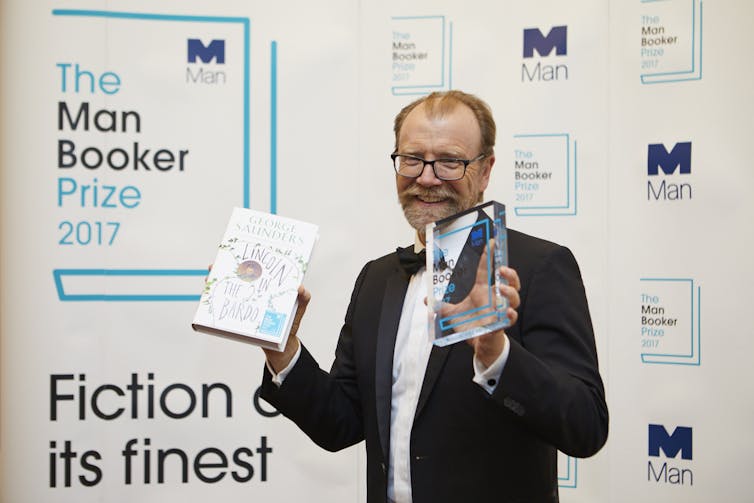
American writer George Saunders’ victory in the The Man Booker Prize for Fiction, for his debut novel Lincoln in the Bardo, follows on from US novelist Paul Beatty’s 2016 win for The Sellout. Fears of the Americanisation of this piece of British literary heritage are likely to be renewed. Saunders and Beatty face being seen as the high-cultural wing of an ongoing transatlantic takeover of national life that recently took more bone-crushing form in the series of NFL fixtures in London.

Changing the rules

Worries about precisely such literary colonisation by the United States were voiced, in fact, when the organisers of the Booker changed its eligibility rules in 2013. Formerly a prize only for novelists of the United Kingdom, Ireland and the Commonwealth, with winners including such non-UK citizens as Nadine Gordimer and John Banville, the parameters were altered so as to make the language of composition itself the key criterion. The new rules invited submissions of “any novel in print or electronic format, written originally in English and published in the UK by an imprint formally established in the UK.”

A S Byatt, a former judge as well as winner, said at the time she feared such an expansion of the field would result in “good work” going unrecognised. Her qualms were based not on nationalistic unease but in the spectre of unmanageable piles of novels to be sifted. But for literary scholar John Mullan, the risk of the rule change was indeed that the Booker would decline into a series of spectacular US/UK faceoffs. He imagined the new Booker as:

A Ryder Cup of Literature … Toni Morrison versus Hilary Mantel, or Jonathan Franzen against Ian McEwan.

Nevertheless, it is not as if the Booker’s previous criteria for eligibility were beyond criticism. How convincing a defence can be assembled for a prize whose original geographical coverage mapped exactly onto that of Britain’s recent colonial and imperial dominance? These embarrassing parallels were pointedly addressed in 1972 by John Berger, also a Booker winner. On being awarded the prize for G., he remarked that the sponsor, Booker McConnell, had derived much of its wealth from “exploitation” during “extensive trading … in the Caribbean for over 130 years”.

Novels without borders

If writers in English from Durban had always been eligible for the Booker, then why not those from Denver? If Delhi, why not Detroit? While the organisers’ announcement in 2013 triggered expressions of anxiety in the UK that the novelists of Hampstead would be ill-equipped to compete with those from Harlem, others welcomed the prize’s reimagining so as to include writers in English from beyond Britain’s recently relinquished imperial citadels. As the Scottish author A L Kennedy said: fiction is “deeply international, deeply humane. It has no borders. It’s lovely that the Booker is reaching out”.

George Saunders with his award.
Man Booker

There are striking affinities, in fact, between Kennedy’s rhetoric and that of George Saunders in his acceptance speech after winning for Lincoln in the Bardo. His novel’s subject could not be more closely affiliated with the national narratives and icons of the US: its key figure, of course, is the grieving President Lincoln. Nevertheless, Saunders’ model of literary composition and reception remains resolutely non-jingoistic:

Well this tonight is culture, it is international culture, it is compassionate culture, it is activist culture.

Two responses, perhaps, are possible in the face of nationalistic concern that the Americans are taking over British literary prizes.

The first is to recall more of Berger’s wise words in what was as much a speech of refusal as acceptance in 1972. Even at a time when coverage of the prize was modest, with the only media “platform” provided by a few broadsheet papers, Berger complained about “the deliberately publicised suspense, the speculation of the writers concerned as though they were horses, the whole emphasis on winners and losers”. The task now, perhaps, is to extricate Saunders, and Beatty before him, from conversations about their passports and instead to give their thematically challenging and formally inventive fictions the serious attention they deserve.

The ConversationBut a second possible response to Saunders’ victory may offer a better cure for the prize envy of the smaller-minded British reader, currently sore at US literary success. Yes, Saunders may have won the Booker. But in Kazuo Ishiguro, Britain currently has the holder of the biggest literary trophy of all.

Andrew Dix, Lecturer in American Studies, Loughborough University

This article was originally published on The Conversation. Read the original article.
Unknown's avatar

Worth reading: Tried and true manuals for success


File 20170907 9603 4fg5uf
Recommended books offer a path to success for everyone, writes Michael Armstrong.
Shutterstock

Michael J. Armstrong, Brock University

Editor’s note: The Conversation Canada asked our academic authors to share some recommended reading. In this instalment, Michael Armstrong, an operations research professor at Brock University who has written for The Conversation Canada on topics as diverse as student success rates in school to the mathematics of Civil War battle, shares the top three books that he recommends for guidance on making the most of your career at any age.

Here are three books that I often recommend to my students and friends. All are practical guides that have stood the test of time. The first will help you start your career, the second will help you succeed in it and the third will help you profit from it.

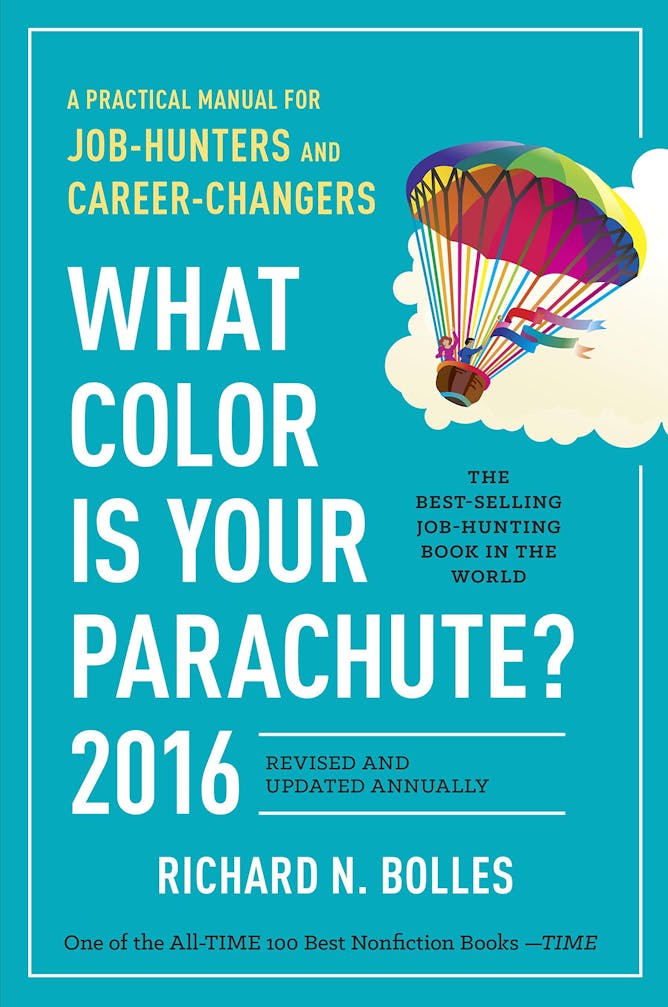
What Color is Your Parachute? by Richard N. Bolles.
(Handout)

What Color Is Your Parachute?

A Practical Manual for Job-Hunters and Career-Changers

by Richard N. Bolles (Non-fiction. Paperback, 2016 and others. Ten Speed Press.)

This is a popular guide for job seekers. Like most such books, it gives advice on the mechanical details of job hunting, such as good ways to organize a resume.

More importantly — and less commonly — it helps people figure out what they want to do with their lives. What kind of career will best fit your personality? Will you be happier working with people or with data?

The book is an obvious fit for graduates seeking their first job. But it could also help teenagers choose the best education to pursue after high school, or adults trying to make their careers more satisfying.


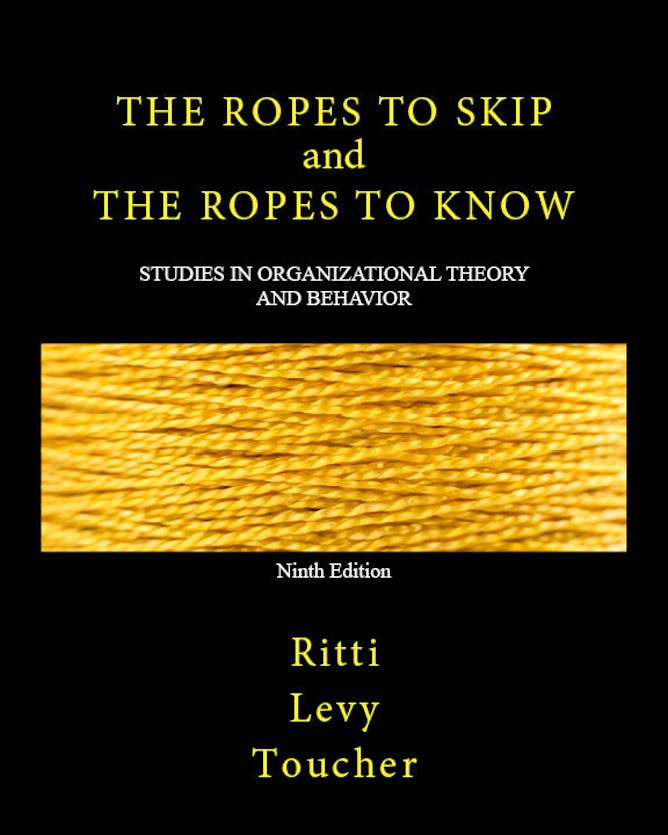
The Ropes to Skip and the Ropes to Know by Ritti, Levy, Toucher.
(Handout)

The Ropes to Skip and the Ropes to Know

Studies in Organizational Theory and Behavior

by R. Richard Ritti, Steve Levy and Neil Toucher (Non-fiction. Hardcover, 2016 and others. Chicago Business Press.)

Don’t let the academic-sounding subtitle deter you. This is a highly readable book. It consists of short stories or parables that illustrate how people behave and interact at work.

Every workplace has an official structure and formal rules. But workplaces contain people with individual personalities and relationships. This book will help you understand the unofficial structures and unwritten rules, before they get you into trouble.

I often recommend The Ropes to Skip and the Ropes to Know to people starting their first job. It would be especially good for someone promoted to their first management or supervisory role.


The Wealthy Barber by David Chilton.
(Handout)

The Wealthy Barber

The Common Sense Guide to Successful Financial Planning

by David Chilton (Non-fiction. Paperback, 2002 and others. Stoddart.)

Once you receive your first paycheque, you’ll want to read this beginner’s guide to personal finance. It covers the basics of investing: retirement savings, mutual funds, etc. It also introduces a lot of other financial topics: savings versus spending, insurance that you do or don’t need, and so on.

This probably isn’t the only financial guide you’ll ever need, but it is a good first one. I typically recommend it to recent graduates starting their careers. But it also suits mature adults dealing with money issues for the first time, perhaps after the death or divorce of their spouse.

The ConversationHave an enjoyable and productive fall!

Michael J. Armstrong, Associate professor of operations research, Brock University

This article was originally published on The Conversation. Read the original article.

Unknown's avatar

Interactive Game of Thrones Map with Spoilers Control


Interactive Game of Thrones Map

‘A Song of Ice and Fire,’ by George R. R. Martin has been a massive success, as has the television show based on the book. This link is to an interactive map for ‘A Game of Thrones’ fans.

Unknown's avatar

Amazon reports loss on revenues of $15.7B; highlights Kindle success


Laura Hazard Owen's avatarGigaom

In a quarter when Amazon’s (S AMZN) stock price hit a record high, the company delivered a loss in its earnings report Thursday afternoon even as revenues rose. Earnings were -$0.02 per share, or a loss of $7 million, on revenue of $15.7 billion, compared to earnings of $0.01 per share, or $7 million, on revenue of $12.83 billion this time last year.

Analysts had expected earnings of $0.06 per share on revenues of $15.7 billion.

Amazon’s operating income, which analysts watch closely because they worry about Amazon’s razor-thin margins, fell 26 percent to $79 million. This time last year, it was $107 million.

Amazon’s stock rose to a record $308.69 earlier this month. This wasn’t precipitated by one big event, but July was a good month for Amazon in part because a U.S. federal judge found Apple (s AAPL) guilty of conspiring with publishers to fix ebook prices at…

View original post 428 more words

Unknown's avatar

Article: The Guardian in the Digital Age


The link below is to an article concerning the success of my favourite online newspaper – The Guardian.

For more visit:
http://www.teleread.com/newspapers/uk-guardian-results-positive-for-digital-media/

Unknown's avatar

Article: ‘The Casual Vacancy’ by J.K. Rowling – Launch Not a Success


The link below is to an article that reports on two important, but inseparable issues with the launch of J.K. Rowling’s latest novel, ‘The Casual Vacancy.’ 

For more visit:
http://www.teleread.com/ebooks/the-public-outcry-over-j-k-rowlings-first-adult-novel-and-the-important-lesson-publishers-can-learn-from-it/

Unknown's avatar

Article: Books to Read for Success Online


The link below is to an article that suggests books to read in order to make it big on the Internet.

For more visit:
http://www.lifehack.org/articles/work/top-30-books-you-need-to-read-if-you-want-to-make-it-big-online.html