This week, a new Australian political biography will appear on bookshelves. This is The Accidental Prime Minister, an examination of Scott Morrison by journalist Annika Smethurst.
While a prime minister makes for an obvious – and worthy — biographical subject, it also continues Australia’s strong tradition of focusing on the stories of men in politics.
History as a discipline may have been grappling with gender issues since the 1970s, but political history has been especially resistant to questions about women and gender.
In a recent study for the Australian Journal of Biography and History, I looked at Australian political biographies over the past decade. I found female political figures are almost always ignored.
Why biographies matter
Political biographies add life, colour and depth to historical events and personalities. They can shape the legacies of politicians long after they’ve left politics. They also show us who is worthy of being written about and who is overlooked in the pages of history.
However, most Australian political biographies have been written about men, particularly male prime ministers.
This inevitably calls to mind the enduring myth of the “Great Man” as the architect of historical change. This is best described by 19th century historian Thomas Carlyle, who believed “the history of the world is but the biography of great men”.
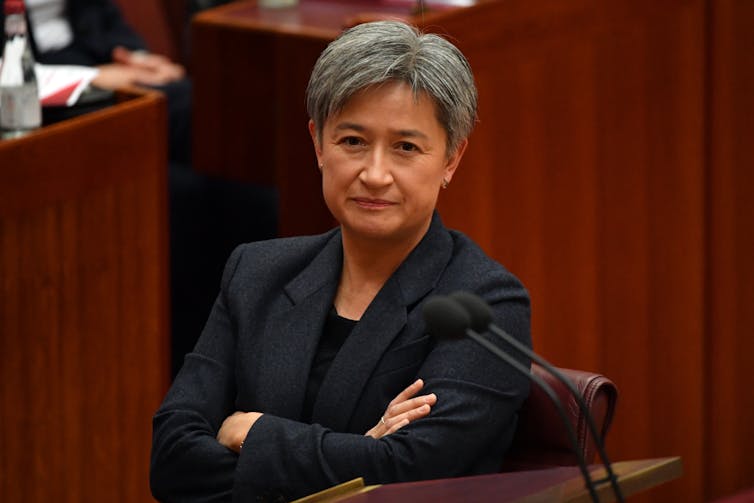
Labor senator and former finance minister Penny Wong is one of the few women MPs to be the subject of a recent biography. Mick Tsikas/AAP
As women were largely excluded from politics until the end of the 20th century, it could be argued they simply haven’t had the opportunity to be seen as “great politicians” worthy of literary examination.
Yet, as political biographies define which personal and political qualities suggest “greatness”, it could also be argued we tend to associate these qualities with men and masculinity. Male leaders’ gender is never discussed or explored in their political biographies. Masculinity is portrayed as the unseen norm while gender is an attribute only ever identified with women.
This argument gains further support from the fact there are more women in Australian politics than ever before, yet there remains a notable lack of political biographies covering their lives and stories. In my study, I examined Australian political biographies published in the past decade. Only four out of 31 were on women politicians.
This small minority includes Margaret Simons’ Penny Wong in 2019 and Anna Broinowski’s 2017 biography of Pauline Hanson, Please Explain.
Why are women ignored?
There are three key factors that can explain the lack of biographies written on Australian women politicians.
First, as previously noted, there is the lack of gender parity in Australian politics. The 1990s saw a surge of women enter politics, partly due to Labor’s gender quotas. Yet at the moment, only 31% of the House of Representatives are women and all major leadership positions are held by men.
Second, Australian political biography itself has a role to play here — the Great Man narrative is an enduring problem. It leads to an overemphasis on so-called “foundational patriarchs” and overlooks the impact of political players who don’t conform to this stereotype.
In the past decade, two biographies each were written on former Labor prime ministers Paul Keating and Bob Hawke and former Liberal prime minister Robert Menzies. Another biography on former Labor prime minister Gough Whitlam added to the ever-growing stack of tomes dedicated to these leaders.
Third, women politicians might be more hesitant to expose their private lives to the same extent as their male counterparts. Women politicians frequently experience sexist media coverage that often scrutinises their personal choices as a reflection of their professional capabilities. It is hardly shocking that they might be hesitant to cede agency over their own story and endorse an official biography.
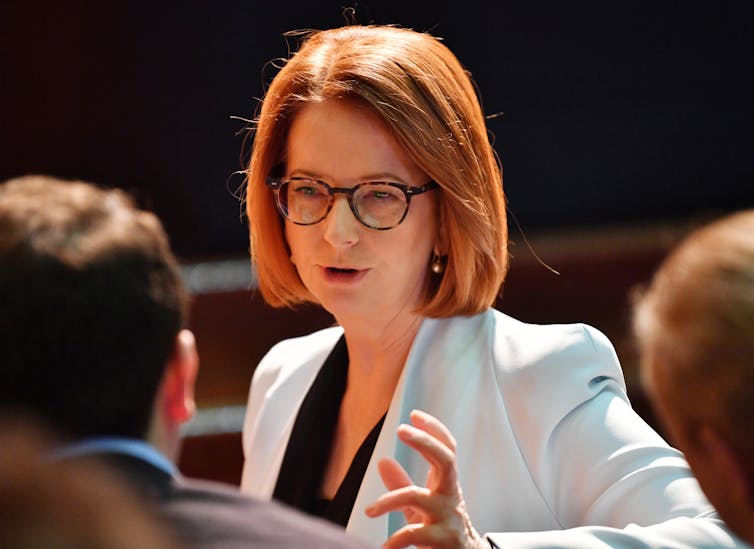
So, there are several glaring omissions in Australian political biography. Where is the biography of our first woman prime minister, Julia Gillard? Former deputy prime minister Julie Bishop is another that comes to mind.
There is also pioneering former Labor minister Susan Ryan, who was pivotal in the passing of the Sex Discrimination Act, the Equal Employment Opportunity Act and the Affirmative Action Act. And Natasha Stott Despoja, the youngest woman to sit in the Australian parliament and former leader of the Australian Democrats.
Sisters must do it for themselves
So where are all the great women political figures? Well, they’re in the memoir section.
Through my research, since 2010, I found 12 autobiographies and memoirs have been published by women premiers, party leaders, federal and state MPs and senators, lord mayors and, of course, our first and only woman prime minister (though I also counted over 30 written by male politicians).
Autobiographies can be a valuable way for women politicians to recover their voices, reassert their agency and reclaim their public identity by telling their own life story.
An ambition to take charge of their public image is a common thread running through these books, usually paired with a desire to expose sexism. Gillard’s autobiography My Story, published in 2014 (the year after she left politics), is a notable example of this, holding her opponents and the media to account for their frequently sexist behaviour.
Many women from across the political spectrum have now published comparable memoirs, including Labor MP Ann Aly, former Greens leader Christine Milne and former independent MP Cathy McGowan.
This year, former Labor cabinet minister Kate Ellis’ Sex, Lies and Question Time and former Liberal MP Julia Banks’ Power Play have provided two more examples of how women politicians — particularly those who’ve left politics — use the power of memoir to reclaim their stories and critique the sexist culture in parliament.
History/herstory
While it’s great women are using memoirs to voice their stories, we should not give up on conventional political biography.
There is no definitive political biography of Julia Gillard. David Mariuz/AAP
As this genre continues to shape our understanding of political culture and history, it is more important now than ever that women are included to dispel once and for all the myth that their stories are not worth recording.
Rather than adding to the sexist speculation that women politicians experience, political biographers should offer their support for these stories to be told in a consensual and meaningful manner.
Email newsletters might be associated with the ghost towns of old personal email addresses for many: relentlessly accumulating unopened updates from organisations, stores and services signed up to and forgotten in the distant past. But over the last few years they have experienced a revival, with an increasing number of writers supplementing their income with paid newsletter subscriptions.
Most recently, Salman Rushdie’s decision to use the newsletter subscription service Substack to circulate his latest book has sparked conversation around this platform and its impact on the world of publishing.
What is Substack?
Launched in 2017, Substack allows writers to create newsletters and set up paid subscription tiers for them, offering readers a mixture of free and paywalled content in each edition.
Substack has thus encroached on the traditional territories of newspapers, magazines, the blogosphere – and now trade publishing. Though it is worth noting that until now it has been most enthusiastically adopted by journalists rather than authors.
Rather than monetising the service via advertising, Substack’s profits come from a percentage of paid subscriptions. Substack’s founders see the platform as a way of breaking from the ‘attention economy’ promoted by social media, allowing a space for more thoughtful and substantial writing that is funded directly by readers.
Rushdie’s decision to publish via Substack signals a surprising inroad into one of the areas associated with trade publishing – literary fiction – and certainly makes for a good news story. He is the first significant literary novelist to publish a substantial work of fiction via the platform and Rushdie himself talks jokingly about helping to kill off the print book with this move.
However, the novella that Rushdie is intending to serialise will almost certainly be available in a more conventional format at some point in the future, given all Substack writers retain full rights to their intellectual property.
Other experiments with digital self-publication by prominent fiction authors, such as Stephen King’s novella Riding the Bullet (first published independently as an eBook), and the fiction first generated on Twitter by writers like David Mitchell and Neil Gaiman, have made their way to traditional publishers.
Neil Gaiman has also experimented with digitally distributed fiction. shutterstock
While this movement provides excellent publicity for Rushdie and the Substack service, it’s perhaps better understood as a limited term platform exclusivity deal than as a radical disruption of the literary publishing ecosystem.
Potentially more interesting is what the “acquisition” of Rushdie by Substack illustrates about their operation as a digital service. Throughout its history, Substack has offered advances to promising writers to support them while they cultivate a subscriber base.
This practice has now been formalised as Substack Pro, where selected writers, like Rushdie himself, are paid a substantial upfront fee to produce content, which Substack recoups by taking a higher percentage of their subscription fees for their first year of writing.
The exact sums paid vary between writers, but it is not dissimilar to a traditional advance on royalties. When coupled with some of the other services that are available to writers with paid subscriptions – like a legal fund and financial support for the editing, design, and production of newsletters – Substack can be seen as operating in a grey area between publisher and platform.
They pursue promising and high-profile writers, generate income, and provide services in ways that parallel the operations of trade publishers, but do not claim rights or responsibilities in relation to the content that is produced.
Although Substack do not see themselves as commissioning writers it could be argued they do play an editorial role in curating content on their platform through not terribly transparent Substack Pro deals and incentives.
The evolution of Substack
Recently Jude Doyle, a trans critic and novelist, has abandoned the platform. They note the irony of how profits generated by the often marginalised or subcultural writers who built paid subscriber bases in the early days of Substack are now being used to fund the much more lucrative deals offered to high-profile right-wing writers, who have in some cases exploited Substack’s weak moderation policy to spread anti-trans rhetoric and encourage harassment.
It could be argued Substack Pro is evolving into an inversion of the traditional (if somewhat idealised) publishing model, where a small number of profitable authors would subsidise the emergence of new writers. Instead, on Substack, profits generated from the work of large numbers of side-hustling writers are used to draw more established voices to the platform.
The founders of Substack have been unapologetic about their policies, considering the “unsubscribe” button to be the ultimate moderation tool for their users. They do, however, acknowledge Substack’s free-market approach may not appeal to all and anticipate competition from alternatives.
Ghost already exists as a non-profit newsletter platform with a more active approach to moderation, and Facebook’s Bulletin provides a carefully curated newsletter service from commissioned writers.
At this stage, the use of newsletters for literary fiction is an experiment, and it remains to be seen if it will be sustainable. As Rushdie puts it: “It will either turn out to be something wonderful and enjoyable, or it won’t.”
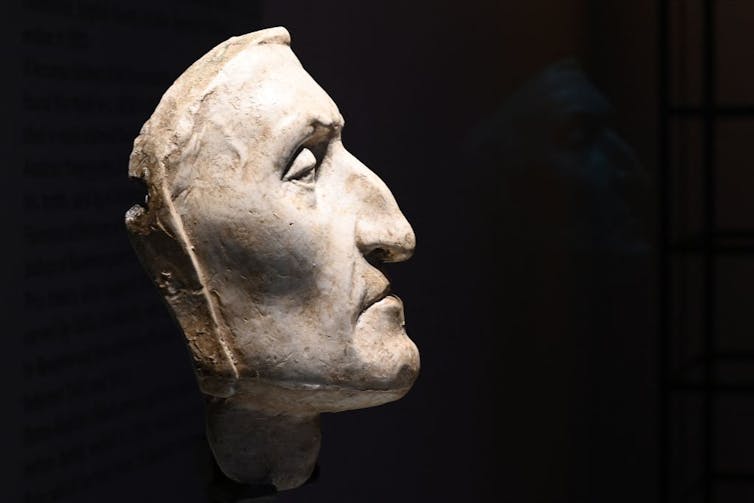
When Dante Alighieri died 700 years ago, on Sept. 14, 1321, he had just put his final flourishes on the “Divine Comedy,” a monumental poem that would inspire readers for centuries.
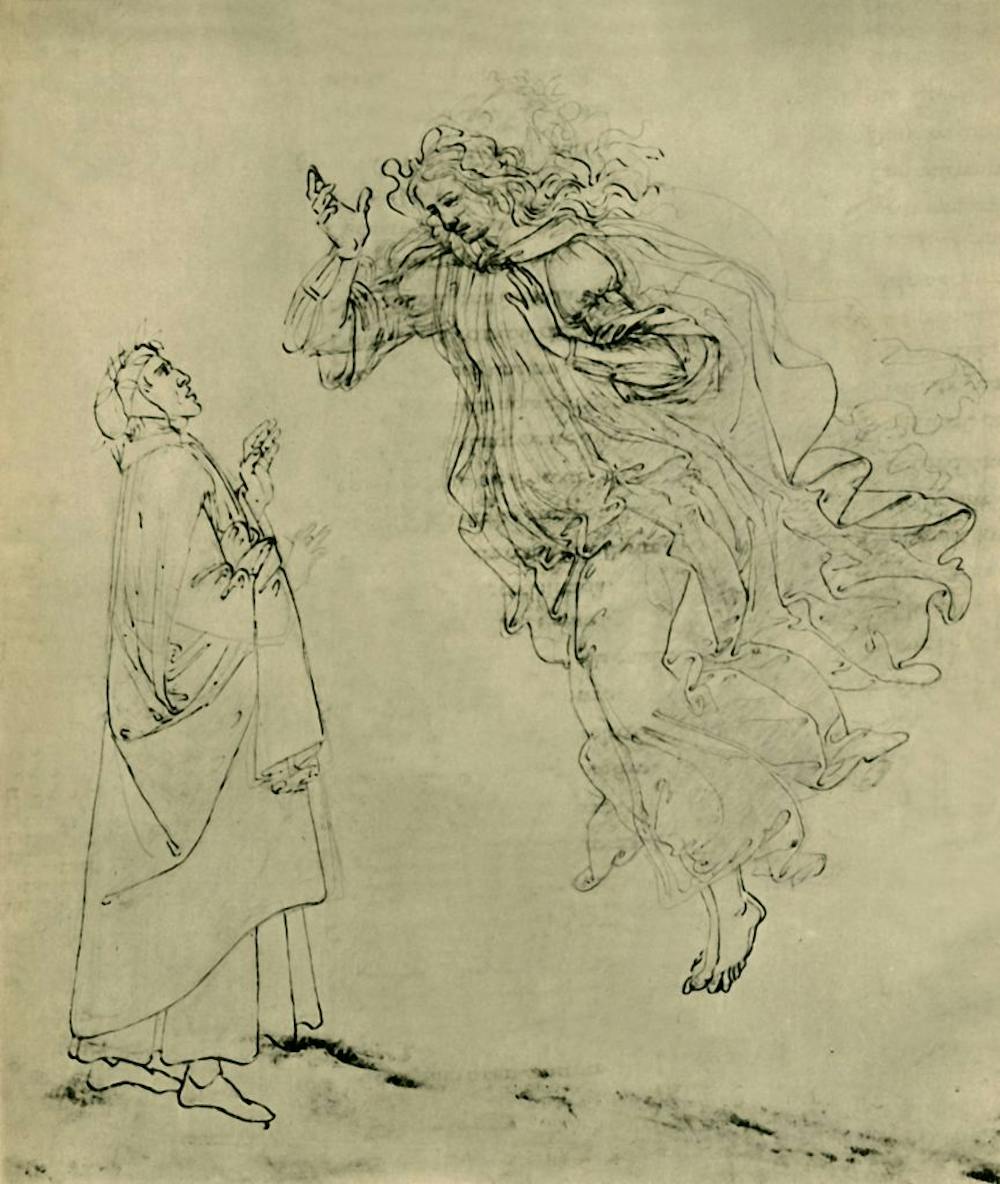
The “Divine Comedy” follows the journey of a pilgrim across the three realms of the Christian afterlife – hell, purgatory and paradise. There, he encounters a variety of characters, many of whom are based on real people Dante had met or heard of during his life.
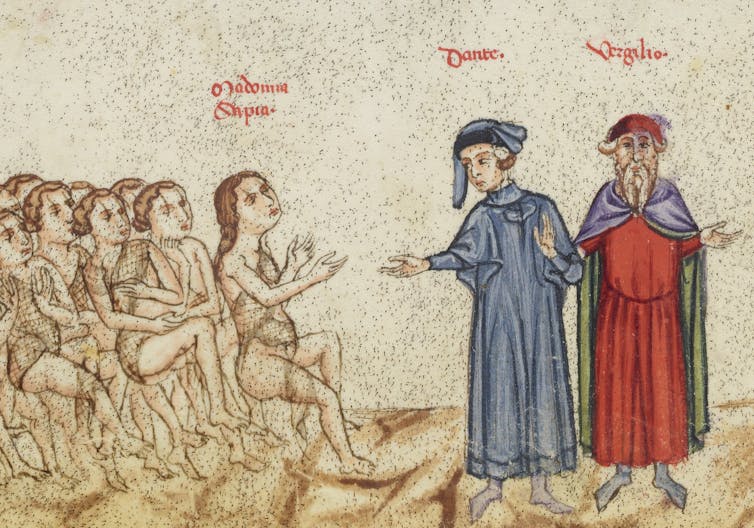
One of them is a woman named Sapia Salvani. Sapia meets Dante and his first guide, Virgil, on the second terrace of purgatory. She tells the two how her fate in the afterlife was sealed – how she stood at the window of her family’s castle and, with troops gathering in the distance, prayed for her own city, Siena, to fall. Despite their advantage, the Sienese were slaughtered – including Sapia’s nephew, whose head was paraded around Siena on a pike.
Sapia, however, felt triumphant. According to Dante and medieval theologians, she had fallen prey to one of the seven capital vices, “invidia,” or envy.
The portrayal of Sapia in the “Divine Comedy” is imbued with political implications, many of which boil down to the fact that Dante blamed the violence of his time on those who turned against their communities out of arrogance and greed.
But the real Sapia was even more interesting than Dante would have you believe. Documentary sources reveal that she was a committed philanthropist: With her husband, she founded a hospice for the poor on the Via Francigena, a pilgrimage route to Rome. Five years after witnessing the fall of Siena, she donated all her assets to this hospice.
Sapia is one among many characters from the “Divine Comedy” that deserve to be known beyond – and not just because of – what Dante decided to say about them in his poem. With my students at Wellesley College, I’m reviving the real stories behind the characters of Dante’s masterpiece and making them available to everyone on Wikipedia. And it was especially important for us to start with his female characters.
Why women?
Among the 600 characters appearing in the “Divine Comedy,” women are the least likely to appear in the historical record. Medieval authors tended to write biased accounts of women’s lives, motives and aspirations – if not ignore them altogether. As a result, the “Divine Comedy” is often the only accessible source of information on these women.
At the same time, Dante’s treatment of women isn’t free from misogyny. Scholars such as Victoria Kirkham, Marianne Shapiro and Teodolinda Barolini have shown that Dante relished turning women into metaphors, from pious maidens to villainesses capable of bringing dynasties to their knees.
For this reason, fuller pictures of Dante’s women have been elusive. As a researcher, you’re lucky if you can come across a contemporary who supported or built upon Dante’s tangled reinvention, or documents in which the woman in question is mentioned as mother, wife or daughter.
Putting together the pieces on Wikipedia
The more my students asked me about the women in the poem, the more I wondered: What if we found a way to tell everyone their stories? So I approached Wiki Education, a nonprofit that fosters the collaboration between higher education and Wikipedia, to see if they would partner with me and my students. They agreed.
The recipe behind Wikipedia’s two decades of success is its stunning simplicity: an open encyclopedia written and maintained by a worldwide community of volunteers who draft, edit and monitor its free content.
For my students, researching and composing Wikipedia entries on Dante’s characters doubled as advocacy.
Writing for Wikipedia is different from writing an essay. You must be unbiased, avoid personal flourishes and always back your statements with external references. Rather than producing an argument, you offer readers the tools to build an argument of their own.
And yet the very act of writing an entry about a person does advance a specific argument: that their life is worth being the focus of attention, rather than an easily forgettable name in the backdrop of a grand narrative. This choice is a radical one. It’s an affirmation that someone possesses historical value beyond the fact that they provided a spark of inspiration to an author.
Pursuing this goal was not without challenges; it could be difficult to maintain an unbiased tone while telling stories of violence and abuse.
That was the case with Ghisolabella Caccianemico, a young woman from Bologna sold into sexual slavery by her brother, Venèdico, who hoped to form an alliance with a neighboring marquis. Dante told his readers a “filthy tale” that would make them indignant. In it, Ghisolabella is a silent victim surrounded by men.
However, we turned Ghisolabella into the subject of her story, threading the fine line between giving a starkly objective account of the violence she suffered and preserving her dignity.
“Ghisolabella’s extramarital relation[s] with the marquis, though against her will, was ruinous to her status,” wrote my student, citing early 20th-century scholars who canvassed the archives of Bologna for evidence on Ghisolabella.
“Dante’s inclusion of Ghisolabella,” she added, “eternalizes Venèdico’s sin.”
Turning the tables on Dante
Researching these women also turned into an opportunity to upend Dante’s personal views.
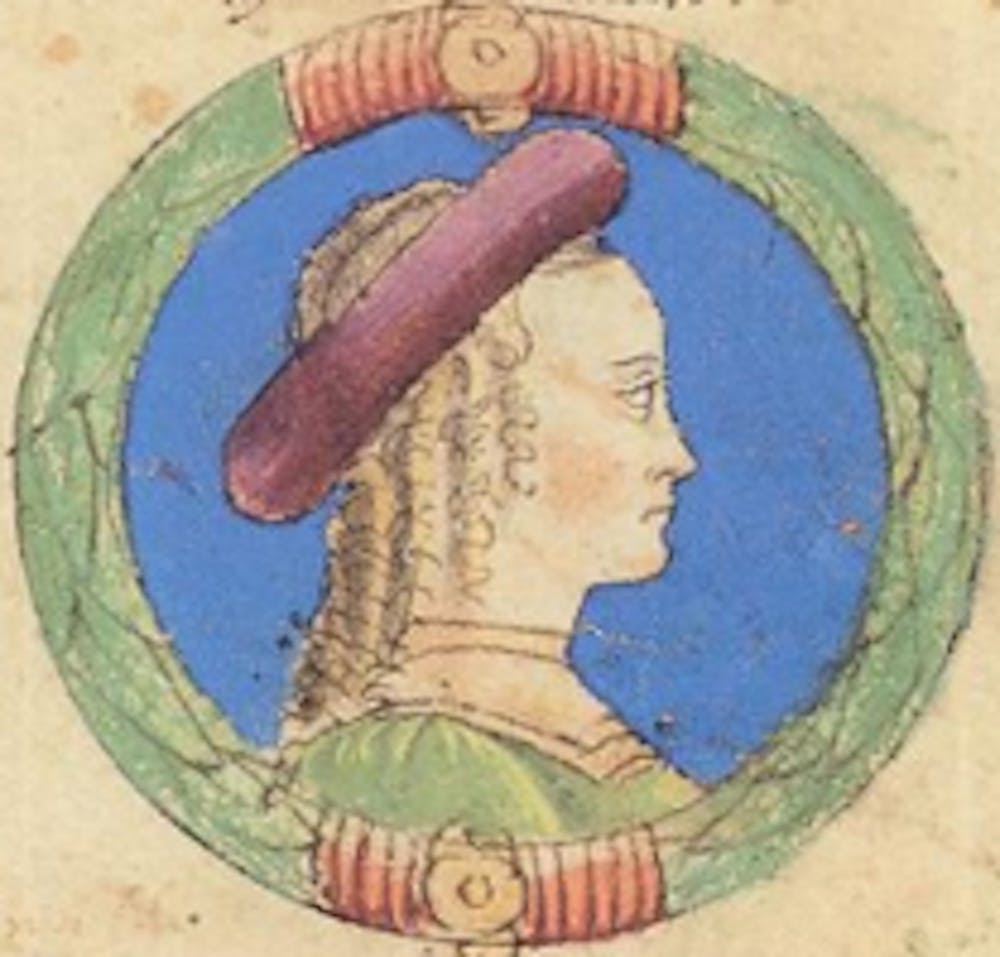
Take Beatrice d’Este, a noblewoman Dante criticizes for marrying again after her first husband died. Dante was outraged by widows who dared to remarry instead of remaining forever faithful to their late spouses. Not everyone, however, agreed with his defamation of Beatrice.
Parker explains how Beatrice was likely pressured into her second marriage and tried to negotiate her place in a world that subjected her to slander. By having the family crests of her two husbands carved side by side on her tomb, she made a pregnant statement about her identity and allegiances.
As feminist theorist Sara Ahmed writes in “Living a Feminist Life,” “citations can be feminist bricks: they are the materials through which, from which, we create our dwellings.”
One brick at a time – one page, revision or added reference at a time – Wikipedians can broaden our understanding of the past, centering women’s stories in a world that has long edited them out.








 At the BookShelf

You must be logged in to post a comment.