Unknown's avatar

Heart-warming, biting, tragic, funny: the Miles Franklin shortlist will move you


File 20170906 9835 191vmdh
Each of the five shortlisted authors for Australia’s prestigious literary prize is a first-time nominee.
Shutterstock

Jen Webb, University of Canberra

The 2017 Miles Franklin Award winner will be announced tonight, but I’m not taking bets on who it’s likely to be. Each shortlisted novel is by a first-time nominee. Each is of satisfyingly high literary quality and very different in voice, logic, focus and story.

But they do have one feature in common: each includes as a key character an author, or authors. I’m not sure I have ever read a shortlist where the protagonists of each volume shared an occupation. Of course all five include heartbreak, loss and death — that is, after all, de rigueur for literary fiction — but the focus on the lives and works of writers, and on narratives about narrative, presents as though the Australian literary community as one turned to look inward, and then wrote down what it saw.

We have a worn out, avant garde novelist (Last Days of Ava Langdon by Mark O’Flynn); an ambulance-chasing journalist (An Isolated Incident by Emily Maguire); “famous Australian writers” (Their Brilliant Careers by Ryan O’Neill); and academics in linguistics (Waiting by Philip Salom) and engineering (Extinctions by Josephine Wilson).

Art imitates life

I started with Last Days of Ava Langdon, by poet and novelist Mark O’Flynn. This book, which channels the Australian-New Zealand writer Eve Langley, opens with the rhythm and pulse of a prose poem:

Sound of the sea slapping at the green and greasy legs of pier. The crashing of dishes. A cartoon whale.
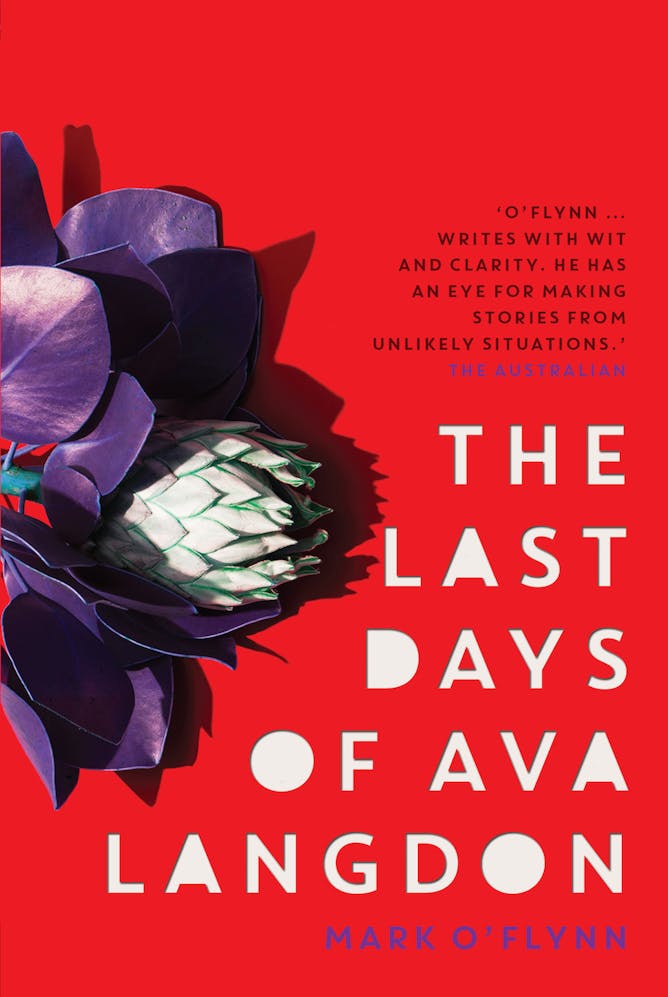
This, on the very first page, sets the tone for the rest of the novel, one that vividly renders the glorious Blue Mountains environment (and its small towns with their country values), and the portrait of a writer who might have been, should have been, no longer is.

O’Flynn presents his Langley/Langdon as immensely sympathetic, and stunningly irritating. “All her life”, says the narrator, “has been the pursuit of the perfect line”.

While any writer must surely doff the cap to that pursuit, Ava’s single-mindedness has been more destructive than productive. She valiantly channels Oscar Wilde, refuses to acknowledge that she is ancient and frail, ignores the squalor of her home, and flickers between hope and hopelessness about her writing. She is a damaged person, a dada artist. She has lost her family and friends and she dies alone.

Still, Ava’s imagination (to say nothing of her splendid dress sense) brings a degree of sentience to the world, casting it in a luminous light. O’Flynn’s novel brings to bear a cold but tender gaze on “the last days” of someone who, but for fortune, could have been an extraordinary Australian artist.

Misfits in an unforgiving world

Philip Salom, another poet, gives us Waiting. It relies on the skill of poetic diction and the narrative traction of strong characters, the “looking awry” that so often accompanies mental illness, and the urgency to connect, to find a safe haven in an unforgiving world.

He juxtaposes together two pairs of difficult people to propel the narrative. The first two are Big (a cross-dressing, over-performing “crazy professor”) and his partner Little (quiet, crushed Agnes, the troubled lamb of god). They have effectively fallen out of history and are, Agnes reflects, “two characters in a novel who have no further story”.

The second pair, by contrast, are the inheritors of a further story: designer/landscaper Angus (coincidentally Agnes’ cousin) and the linguist Jasmin. They are creeping by fits and starts toward a relationship, but unlike Big and Little, who cling together for the most part in real intimacy, Jasmin and Angus struggle to connect, given their tendency to compete with each other, and their misunderstandings of each other’s values and professions. For Angus, the physical shaping of the material world is what matters. For Jasmin, it is the socio-political positioning of work that matters.

The novel is set against the increasingly threatening qualities of bushfire in the Australian environment, and the increasingly constrained options for those who do not or cannot fit into middle class conventions. The characters’ stories play out, to an end that promises consolation, at least.

Not so isolated

With Emily Maguire’s An Isolated Incident, we leave the poets and misfits and return to the “real” world: small-town New South Wales, and the struggle to make a living, maintain an identity, and retain hope for the future.

Chris Rogers, a barmaid and some-time prostitute, is faced with the loss of her beloved younger sister Bella, whose body is found on the side of the road, raped and murdered. May Norman, an ambitious journalist, attaches herself to Chris to report on the story and the unfolding investigation. So far, so crime thriller.

But actually, this is more an analysis of mourning, woven through with a biting critique of the social and legal context in which, in Australia, one woman is murdered each week, on average, by someone close to her. At one point May reflects on yet another appalling story of such violence, and observes:

This had nothing to do with what had happened to Bella and what happened to Bella had nothing to do with Tegan Miller and none of it had to do with the rich Sydney housewife left out to rot in the street which had nothing to do with the Nigerian girls stolen as sex slaves…

The unwavering attention paid to violence against women and to the commercial exploitation of suffering renders the title bitterly ironic: all these “isolated incidents” add up to a deeply felt and troubling novel.

Extinctions of all kinds

Josephine Wilson’s Extinctions is the winner of Dorothy Hewett Unpublished Manuscript prize, so has already made a significant mark on the literary landscape. It offers a tragic portrait of the various ways in which extinction looms — environmental, personal, cultural.

We see the sorrows, indignities and regrets of old age, as viewed through the eyes of retired theoretical engineer Fred Lothian, who fills his home with designer furniture rather than with his family.

We see the heartbreak of a wasted life, in his brilliant son, Callum, who was left with acquired brain injury following a car accident. And we see the struggle for identity in his adopted daughter, Caroline, who researches species extinction and is disconnected from her own Indigenous heritage. Together, these stories present an overwhelming narrative of loss, failure and distress.

But there is the possibility of an alternative in the form of Fred’s neighbour Jan. Though like Fred and his family, she has suffered great loss, she brings a wonderful energy and resilience, and a refusal to resign herself to extinction. Instead, she presses Fred to start over, to find a more productive way to be.

Literary satire

Finally, we come to Ryan O’Neill’s Their Brilliant Careers: The Fantastic Lives of Sixteen Extraordinary Australian Writers, one of the funniest novels I’ve read in a long time. He sails close to the wind of defamation (were the original authors still alive), unmercifully lampooning the models for his “extraordinary Australian writers”.

Like a supremely confident stand-up comic, he pushes the joke from initial humour through infuriating repetition to helpless laughter. And along the way, he shows impressive knowledge of Australian literary culture, so erudite readers can play the game of “spot the reference”. We see the sexism that runs through literary culture. We revisit the poetry wars— “a knife fight in a phone booth” — in the character of Arthur rhutrA, an author of whom it was said that: “the only constraint he couldn’t overcome was his lack of talent”.

We bump into parallel-universe versions of Ern Malley, Australia’s most infamous literary hoax, and radio characters Dad and Dave. We meet the litigious Stratford, self-proclaimed original author of works plagiarised and made famous by Hemingway, Fitzgerald, Joyce.

We are confronted by the rightwing racist Edward Gayle (writer for the journal Quarter) and the communist Francis McVeigh, whose early memory of reading Marx’s Manifesto “terrified me so much I had nightmares for the next six months”. Literary giant after literary giant, publisher after publisher, is kneecapped by these excoriating and hilarious accounts of the players, their work, and the impossibly interwoven lives they lead.

Compassionate voices

There is a surprising degree of compassion in the narrative voice that relates each of these novels, even when they are also characterised by sharp-eyed and sharp-tongued commentary. The characters are damaged — as are most human beings — but (with the exception of some of O’Neill’s writers) they are rarely people of ill will.

The ConversationThe narrators, in each case, maintain the distance required of an objective observer, yet cannot help but record small acts of humanity, the struggle to manage, to be recognised and to recognise others. This makes them, as a group, the most heart-warming selection of shortlisted novels that I have read for some time.

Jen Webb, Director of the Centre for Creative and Cultural Research, University of Canberra

This article was originally published on The Conversation. Read the original article.

Unknown's avatar

2017 Miles Franklin Literary Award Shortlist


The link below is to an article taking a look at the Miles Franklin Award shortlist for 2017.

For more visit:
https://www.theguardian.com/books/2017/sep/07/miles-franklin-awards-2017-shortlist-reviews-of-the-books-youll-read-next

Unknown's avatar

Finished Reading: Aubrey/Maturin Book 07 – Post Captain, by Patrick O’Brian


The Surgeon's Mate (Aubrey/Maturin Series, Book 7) (Aubrey & Maturin series)The Surgeon’s Mate (Aubrey/Maturin Series, Book 7) by Patrick O’Brian
My rating: 4 of 5 stars

View all my reviews

Unknown's avatar

Not My Review: Six of Crows (Book 2) – Crooked Kingdom, by Leigh Bardugo


Unknown's avatar

Should authors’ unfinished works be completed?


File 20170904 9753 1pjhra4

Nomad_Soul/Shutterstock

Claire Squires, University of Stirling

The scene: a field in southwest England. The sun is shining for a quintessentially British event, the Great Dorset Steam Fair. A six-and-a-half tonne steamroller takes centre stage. This, the Lord Jericho, goes head-to-head with a computer hard drive, and in a battle of old and new technologies, rolls over it several times. Then, just to be on the safe side, the hard drive is placed in a steam-powered stone crusher.

A scene from a fantasy novel? No. The hard drive was from the late author Sir Terry Pratchett’s computer, and it contained the files of, it is thought, 10 unfinished novels.

//platform.twitter.com/widgets.js

Pratchett, author of the much-loved Discworld series, wrote more than 60 books in his lifetime. But it was his wish that any unfinished works remained unpublished, and so he instructed that the hard drive containing his remaining works be crushed by a steamroller.

Raising Steam

Commenting on BBC Radio Four’s Today programme, authors Patrick Ness and Samantha Norman asserted Pratchett’s absolute right to determine the future of his unfinished work. In recent years, though, both authors have completed unfinished novels by other writers. In Norman’s case, it was The Siege Winter, a book by her late mother, Ariana Franklin. For Ness, it was Siobhan Dowd’s A Monster Calls, now adapted into a hit film.

Unfinished work abounds in literary history, from Jane Austen’s Sanditon and Charles Dickens’ The Mystery of Edwin Drood to F Scott Fitzgerald’s The Love of the Last Tycoon.

For each of these canonical authors, their unfinished texts add to our accumulated knowledge of their writing, their rich imagination, and the development of their thinking. After completing Dorothy L Sayers’ last novel, Jill Paton Walsh went on to create warmly regarded new novels featuring Lord Peter Wimsey and Harriet Vane. J R R Tolkien’s son Christopher likewise has worked painstakingly on unfinished works by his father, including The Children of Hurin.

Unlike Pratchett, the strict instructions left by some authors about their legacy have been ignored, sometimes to the reader’s benefit. Max Brod’s decision to counter Franz Kafka’s wish for destruction is to literary history’s benefit, as it led to the publication of The Trial, The Castle, and Amerika. Emily Dickinson left no instructions on what to do with the approximately 1,800 unpublished poems she wrote before her death in 1886. Fortunately, her sister Lavinia took it on as her mission to see them made public.

When Swedish crime novelist Stieg Larsson died suddenly, unmarried and with no will, his estate came under the control of his father and brother. They commissioned ghostwriter David Largenrcrantz to create new works using Larsson’s characters, with the latest, The Girl Who Takes an Eye for an Eye due in September 2017. Larsson’s bereaved long-term partner is in possession of the author’s laptop which is believed to hold Larsson’s last unfinished novel, but she has refused to turn it over to his family.

Reaper Man

The biographical figure of the author has, despite Roland Barthes’ critical articulation of “The death of the Author” in 1967, never been more present. Now, readers have unprecedented access to the names on the spines of their books, thanks to festivals, talks and social media.

While some authors may not want to show the struggle of their early drafts to the world, there is both an industry (famous author’ manuscripts can sell for high figures) and scholarship attached to them. Formal archives of Pratchett’s work exist in Senate House in London, for example – including some tantalising glimpses replete with coffee stains and notes to the publisher. Salman Rushdie has even given a desktop computer and several laptops to Emory University in the US.

There is no doubt that Pratchett was within his rights to deprive readers of these last rough-hewn gems, though understandably fans may be disappointed with his choice. However, the rumours swirling around the appearance of Go Set a Watchman – the original version of Harper Lee’s To Kill a Mocking Bird – suggest that elderly and infirm authors can potentially be preyed upon. Pratchett’s wish to control his literary legacy was consonant with his advocacy for assisted dying. He, more than anyone else, understood the power of letting things come to an end.

//platform.twitter.com/widgets.js

The ConversationAs an author who had “Death” as one of his major recurring characters, Pratchett had thoroughly tested its presence in human life. But now, even knowing that Pratchett’s crushed hard drive will soon feature in an exhibition, we can’t but regret the loss of these early, unfinished drafts, which contained the very last doorway into the Discworld.

Claire Squires, Professor in Publishing Studies, University of Stirling

This article was originally published on The Conversation. Read the original article.

Unknown's avatar

Can ‘cli-fi’ actually make a difference? A climate scientist’s perspective


File 20170904 8510 16zmsdu
The Day After Tomorrow’s apocalyptic depiction of climate change is a little embellished. But such storylines can ignite conversations with people that mainstream science fails to reach.
20th Century Fox

Sarah Perkins-Kirkpatrick, UNSW

Climate change – or global warming – is a term we are all familiar with. The warming of the Earth’s atmosphere due to the consumption of fossil fuels by human activity was predicted in the 19th century. It can be seen in the increase in global temperature from the industrial revolution onwards, and has been a central political issue for decades.

Climate scientists who moonlight as communicators tend to bombard their audiences with facts and figures – to convince them how rapidly our planet is warming – and scientific evidence demonstrating why we are to blame. A classic example is Al Gore’s An Inconvenient Truth, and its sequel, which are loaded with graphs and statistics. However, it is becoming ever clearer that these methods don’t work as well as we’d like. In fact, more often than not, we are preaching to the converted, and can further polarise those who accept the science from those who don’t.

One way of potentially tapping into previously unreached audiences is via cli-fi, or climate-fiction. Cli-fi explores how the world may look in the process or aftermath of dealing with climate change, and not just that caused by burning fossil fuels.


Read more: Explainer: ‘solarpunk’, or how to be an optimistic radical


Recently, I participated as a scientist in a forum with Screen Australia, looking at how cli-fi might communicate the issues around climate change in new ways. I’m a heatwave scientist and I’d love to see a cli-fi story bringing the experience of heatwaves to light. After the forum, Screen Australia put out a call for proposals for TV series and telemovies in the cli-fi genre.

We absolutely need and should rely on peer-reviewed scientific findings for public policy, and planning to stop climate change and adapt to it. But climate scientists should not expect everyone to be as concerned as they are when they show a plot of increasing global temperatures.

Cli-fi has the potential to work in the exact opposite way, through compelling storylines, dramatic visuals, and characters. By making people care about and individually connect to climate change, it can motivate them to seek out the scientific evidence for themselves.

Imagined worlds

The term “cli-fi” was coined at the turn of the millennium, but the genre has existed for much longer. One of the earliest examples is Jules Verne’s The Purchase of the North Pole, where the tilt of the Earth’s axis is altered by human endeavours (of the astronaut, not industrial kind), bringing an end to seasonal variability.


Goodreads

More modern examples of cli-fi take their prose from real-life contemporary issues, imagining the effects of human-caused climate change. Some pieces of cli-fi are perhaps closer to the truth than others

Could the thermohaline circulation (which carries heat around our oceans) shut down, bringing a sudden global freeze, as The Day After Tomorrow suggests? There is evidence that it will, but perhaps not as quickly as the film imagines.

Is it possible that fertility rates will be affected by climate change? The television-adapted version of Margaret Atwood’s The Handmaid’s Tale blames pollution and environmental change for a world-wide plummet in fertility, thus giving a cli-fi undertone to the whole dystopian series. While there is no scientific evidence to currently back this scenario, as a new parent, it struck a chord with me personally. The thought of a world where virtually every couple is unable to experience the joys of parenthood, particularly due to climate change, is quite distressing.

Poster for The Road Warrior, the second in the first Mad Max trilogy.
Kennedy Miller Productions

Cli-fi also underpins the highly acclaimed Mad Max movie series. In a dystopian near-future, fossil fuel resources have depleted and the social and environmental impacts are vast. Australia has become a desolate wasteland and our society has all but collapsed.

Although such a scenario will be unlikely to occur in the next couple of decades, it is not completely unrealistic. We are burning fossil fuels far faster than they are forming, with some predictions that accessible sources will run out in the next century.
And some of our famous ecosystems are already very sick thanks to climate change.

And then there is Waterworld. Yet another dystopia, where there is no ice left on Earth and sea levels have risen 7.5km above current levels. Civilisations exists only in small settlements, where inhabitants dream of the mythical “dry land”. While the movie overestimates exactly how much water is locked away in ice (sea levels can only rise by up to 60-70 metres), many major global cities would be inundated and no longer exist. And while it will take thousands, not hundreds of years for complete melting to take place, sea level rise is already posing a problem for some coastal settlements and small islands. Moreover, Arctic ice is predicted to completely melt away well before the end of this century.

Sure, the scientific evidence underpinning these storylines is embellished to say the least, But they are certainly worth deliberating over if they ignite conversations with people that mainstream science fails to reach.

The power of fiction

In the long run, cli-fi might encourage audiences to modify their everyday lives (and maybe even who they vote for) to reduce their own carbon footprint.

From personal experience, some audiences tend to disengage from climate change because of how overwhelming the issue may seem. Global temperatures are rising at a rate not seen for millions of years, and we are currently not doing enough to avoid dangerous climate change. Understandably, the scale and weight of climate change likely encourages many to bury their heads firmly in the sand.

To this audience, cli-fi also has an important message to deliver – that of hope. That it is not, or will it be ever, too late to combat human-caused climate change.

The ConversationImagining a future where green energy is accessible to everyone, where global politicians work tirelessly to rapidly reduce emissions, or where new technologies are discovered that safely and permanently remove greenhouse gases from the atmosphere are absolutely worth air time. Cli-fi can act as prose for science. And on the topic of mitigating climate change, there is no such thing as too much prose.

Sarah Perkins-Kirkpatrick, Research Fellow, UNSW

This article was originally published on The Conversation. Read the original article.

Unknown's avatar

Guide to the Classics: Homer’s Odyssey


File 20170904 17903 1b267s2
Odysseus and his crew escape the cyclops, as painted by Arnold Böcklin in 1896.
Wikimedia

Chris Mackie, La Trobe University

The Odyssey of Homer is a Greek epic poem that tells of the return journey of Odysseus to the island of Ithaca from the war at Troy, which Homer addressed in The Iliad. In the Greek tradition, the war lasted for ten years. Odysseus then spent a further ten years getting home in the face of hostility from Poseidon, god of the earth and sea.

Odysseus’s return to his island, however, is not the end of his woes. He finds that 108 young men from the local vicinity have invaded his house to put pressure on his wife Penelope to marry one of them. A stalemate exists, and it is only resolved by a bow contest at the end of the poem, which then leads to a slaughter of all the suitors by Odysseus and his son Telemachus. Peace on the island is eventually restored through the intervention of Athena, goddess of wisdom, victory and war.

Penelope, waiting on Ithaca. Painted by Domenico Beccafumi circa 1514.
Wikimedia

The quest of Odysseus to get back to his island and eject the suitors is built on the power of his love for home and family. This notion of love conquering fear and hatred is a common theme in Greek quest mythology.

The Odyssey, like the Iliad, is divided into 24 books, corresponding to the 24 letters in the Greek alphabet. Within the middle section of the poem (Books 9-12), Odysseus describes all the challenges that he has faced trying to get home. These include monsters of various sorts, a visit to the afterlife, cannibals, drugs, alluring women, and the hostility of Poseidon himself. These challenges resemble those of earlier heroes like Heracles and Jason. In the Iliad, the hero Achilles faces no such challenges, indicating that the Odyssey has a very different idea of heroism.

Cunning and courage

The critical episode on the way home is Odysseus’s encounter with Polyphemus, a Cyclops and son of Poseidon (told in Book 9). He and his men enter into the cave of the Cyclops, get him drunk on some seriously potent wine, and then stick a large burning stake into his eye. Polyphemus is blinded but survives the attack and curses the voyage home of the Ithacans. All of Odysseus’s men are eventually killed, and he alone survives his return home, mostly because of his versatility and cleverness. There is a strong element of the trickster figure about Homer’s Odysseus.

It is very important in the Odyssey that the hero’s renown as the destroyer of Troy has quickly entered into the oral tradition of the world through which he travels. On the last leg of his return he is entertained by the Phaeacians on the island of Scheria (perhaps modern Corfu), where Odysseus, his identity unknown to his hosts, rather cheekily asks the local bard Demodocus to sing the story of the wooden horse, which Odysseus had used to hide the Greek soldiers and surprise the city of Troy.

Odysseus resists the Sirens.
Carole Raddato/Flickr, CC BY-SA

Odysseus is more than keen to hear about his own heroic exploits. And so well does Demodocus sing the story of the horse that tears run down Odysseus’s cheeks and he groans heavily. His reaction to the bard prompts his host, the king Alcinous, to ask him who he is and what is his story?

Odysseus can rightly claim to be the conqueror of Troy based on his creative thinking in dreaming up the idea of the horse in the first place, not to mention his courage in going into its belly with the other men. His role in breaking the siege at Troy is a precursor to breaking the stalemate in his own house. He is a kind of “breaker of sieges” in early Greek epic. His heroism is characterised by these two elements – his cunning intelligence, and his courage in the darkness of confined spaces.

This kind of heroism is very different from Achilles in the Iliad, whose renown is built on his use of the spear and shield in single combat in the bright light of day. Achilles never sees the fall of Troy because he dies beforehand (unless one watches the 2004 film Troy). One might say that Achilles wins his Trojan war by killing Hector, with Athena’s support, but it is Odysseus who is the real destroyer of the city by virtue of a new and different kind of heroism.

Just as Odysseus is too clever for the Trojans – and the suitors – so his wife Penelope is a model of cleverness and circumspection. She tries to avoid re-marriage and delays the event by a clever ruse: she agrees to marry a suitor only after she has finished weaving a death shroud for Odysseus’s father Laertes. The suitors agree to this, but little do they know that she weaves the shroud by day, and un-weaves it by night. She is eventually betrayed by one of the maids in the house, and forced by the suitors to complete it, although the ruse does last for three years.

Penelope keeps her suitors at bay by spinning a shroud for three years. Painted by Pinturicchio circa 1500.
Wikimedia

The Greeks had no illusion that the characteristic cleverness of Odysseus had a sinister aspect to it, not the least in the way that he deals with the Trojans after the war. Some of the atrocities at Troy, notably the killing of the young boy Astyanax (son of Hector and Andromache), are sheeted home to Odysseus by the poets. In late-5th century BC Athens (over 200 years after Homer’s Odyssey) the rise of demagogic politicians, like Cleon, seems to have affected the portrayal of Odysseus in Greek drama. In works such as Sophocles’ Philoctetes and Euripides’ Trojan Women the focus is on his appalling cruelty and duplicity. Likewise, the Roman poet Vergil in his Aeneid (Book 2) emphasises the dark trickery of Ulysses (the Roman name for Odysseus) in getting the Trojans to drag the Wooden Horse inside the city walls.

Returning from war

The Odyssey, therefore, is a maritime epic right up to the point where the focus of attention is the siege in Odysseus’s house. The return journey of the warrior from Troy was a favourite theme in Greek mythology, and we know of another early epic poem (simply called Nostoi, meaning “Returns”) which told a similar story. Even within the Odyssey there is a significant contrast between the careful and clever return of Odysseus, and that of Agamemnon, king of Mycenae, who is murdered as soon as he gets home.

There are a number of signs that the Odyssey is a later poem than the Iliad, and not necessarily by the same poet (despite the Greek tradition that they are both by “Homer”). The gods are far less prominent in the Odyssey than the Iliad, although Athena in particular has her moments. She is associated with cleverness (metis in Greek) and victory (nike), both of which are germane to the story of Odysseus’ survival, and that of his family. In many ways Odysseus and Penelope are models of the sorts of things that Athena represents.

Odysseus and his son slaughter Penelope’s suitors on Ithaca.
Wikimedia

The Odyssey also has a more elaborate structure and chronology than the Iliad. The first four books deal with the situation of the house invasion on Ithaca, and the travels of the young Telemachus to mainland Greece. Athena takes Telemachus from the female space of the house to the outside world of male politics. Thereafter, Odysseus himself is the centre of the poem’s attention as wanderer, tale teller, and siege breaker in his own home. The folktale world through which he travels (in Books 9 to 12) is told indirectly by Odysseus on his journey home to a Phaeacian audience, rather than directly by the poet. This notion of Odysseus as tale teller is central to the Odyssey.

In many ways the Odyssey is the most renowned literary work from Greek antiquity, even though some people would say it lacks the radical brilliance of the Iliad. The fact that the word “odyssey” has come into our language from Homer’s poem speaks for itself. The story of the Odyssey is a quintessential quest that relates to the passage through life and the importance of love and family and home. Many readers today find the Odyssey more accessible and more “modern” than the “archaic” Iliad.

Modern interpretations

The rich variety of mythical narratives in the Odyssey (especially his wanderings through a world of wonder and mystery in Books 9 to 12) has meant that the cultural history of the poem is astonishingly large, whether in literature or art or film. Whole monographs have been written on the reception of Odysseus in later periods. When one bears in mind that Odysseus’s name at Rome, Ulysses, is often used by artists and writers, as it was by James Joyce, then we get a sense of how dominant a figure he is in western cultural history.

Creative re-tellings of the Odyssey in a modern context include films such as 2001: A Space Odyssey, Paris, Texas, and O Brother Where Art Thou? Likewise the theme of the returning war veteran has Homeric overtones in films like The Manchurian Candidate, The Deer Hunter and In the Valley of Elah.

Odysseus, moreover, probably influenced the early comic book superhero Batman in the late 1930s and 40s, just as Greek demigods, such as Heracles and Achilles, help to inform the extra-terrestrial background of Superman. As a human bat, Batman uses disguise to good effect, as Odysseus does, and he thrives on conducting his challenges in the darkness of night.

But the last word on the subject of Odysseus and his adventures should go to Bob Dylan, who won the Nobel Prize for Literature in 2016. Dylan wrote a lecture in honour of his Nobel victory, focused on some of the literature that influenced and affected him. One such work was the Odyssey, and with echoes of Constantine Cavafy’s magnificent poem Ithaca, Dylan reflects on Odysseus’ adventures and their immediacy as a lived experience:

In a lot of ways, some of these same things have happened to you. You too have had drugs dropped into your wine. You too have shared a bed with the wrong woman. You too have been spellbound by magical voices, sweet voices with strange melodies. You too have come so far and have been so far blown back. And you’ve had close calls as well. You have angered people you should not have. And you too have rambled this country all around. And you’ve also felt that ill wind, the one that blows you no good. And that’s still not all of it.


The ConversationSuggested translation: The Odyssey of Homer, Richmond Lattimore.

Chris Mackie, Professor of Classics, La Trobe University

This article was originally published on The Conversation. Read the original article.

Unknown's avatar

Not My Review: The History of the Decline and Fall of the Roman Empire, by Edward Gibbon (1776-1788)


The link below is to a book review of ‘The History of the Decline and Fall of the Roman Empire,’ by Edward Gibbon.

For more visit:
https://www.theguardian.com/books/2017/sep/04/100-best-nonfiction-books-decline-and-fall-of-the-roman-empire-edward-gibbon

Unknown's avatar

Not My Review: Reservoir 13, by Jon McGregor


Unknown's avatar

Not My Review: The Diary of Fanny Burney (1778)


The link below is to a book review of ‘The Diary of Fanny Burney.’

For more visit:
https://www.theguardian.com/books/2017/aug/28/100-greatest-non-fiction-books-all-time-diary-of-fanny-burney-1778