Unknown's avatar

The rise in personalised story books and what it means for children’s privacy


File 20170829 5505 1g1p83c

shutterstock

Natalia Kucirkova, UCL

When was the last time you read a good book? If it was quite a while ago you might want to head to the library or the nearest bookstore, because research shows that reading makes you happier. In fact, adults who read books regularly are on average more satisfied with life, and more likely to feel that the things they do are worthwhile.

Research has also revealed that reading for pleasure can be a key factor in children’s levels of happiness. It has been shown that reading is more important for children’s cognitive development than their parents’ level of education. And is also a more powerful factor in terms of life achievements than socioeconomic background.

Yet despite all the benefits reading can bring, statistics from 2014 show that one in five children in England cannot read well by the age of 11. And with this in mind, anything that helps to encourage children to read is often seen as a good thing.

Personalised reading

Over the years, personalised children’s books have become increasingly popular. This is when children’s names, addresses, their likes and dislikes are inserted into a story book – the characters can even look like the children. These books are sold online and have become big business with many new children’s publishers popping up creating these one of a kind story books.

‘It’s all about me’.
Shutterstock

Wonderbly, one of the biggest publishers of personalised books, has sold over 2.7 million copies of their leading title “The Little Boy/Girl Who Lost His/Her Name”. Children tend to like personalised books because they are specially made for them and often feature themselves or their friends and family members as story heroes. And reading a personalised book together can be a really lovely experience for parents and children.

But personalising books in this way means that how children’s publishers work is now changing. Because as well as producing books, they are now also data managers – responsible for the privacy and confidentiality of children’s data.

Privacy fears

There are no official national guidelines regarding the amount, storage or sharing of data collected by publishers and producers of personalised books, so parents must trust the integrity of individual companies and that their family data won’t be misused or misplaced. This data often includes information such as a child’s date of birth, gender, address and photographs.

The way children are reading books is changing.
Pexels.

Though some progress is being made – from May 2018 the General Data Protection Regulation will apply throughout the EU (including the UK) – it is still the case that children’s personal data can become ensnared in a web of complex legal and technical challenges if it is ever reused, consolidated, or organised by publishing companies.

Interviews with UK children’s publishers and app designers also show that many handle large amounts of children’s personal data, but don’t necessarily know how to use it effectively.

Making data safe again

This is why the UCL Institute of Education is developing new personalised reading technologies and also working to address the challenges of personalised books.

As part of the project we are working with the HAT Community Foundation and the The Hub of All Things – a technology designed to help the internet exchange and trade personal data. HATs are “private data accounts” that let anyone store their personal data for themselves, so that they don’t have to rely on governments or corporations.

As we explain in our white paper, if publishers use HAT technology, a child’s private data account could hold their personal data in a contained, self-owned database. This means that children and their guardians would be able to own their personal database in the same way they own physical assets, and share the data within it on terms they control.

The ConversationChanging the way this data is stored and used is important because there is a big future for these types of books. And it is clear that children’s publishers need a straightforward means of effectively leveraging personalisation – both economically and educationally – to improve both the reading experiences of children, and the peace of mind of their parents.

Natalia Kucirkova, Senior research associate, UCL

This article was originally published on The Conversation. Read the original article.

Unknown's avatar

Research shows the importance of parents reading with children – even after children can read


File 20170823 6579 1raouj8
Research has typically found that shared reading experiences are highly beneficial for young people.
Shutterstock/Alfira

Margaret Kristin Merga, Murdoch University

Many of us will be able to recall the enjoyment of shared reading: being read to and sharing reading with our parents. However, my research has found that of the 997 Year 4 and Year 6 respondents at 24 schools who took part in the 2016 Western Australian Study in Children’s Book Reading, nearly three-fifths reported that they were not being read to at home.

A sample of these children also participated in interviews, where I asked them how they felt about shared reading. While a few children did not mind no longer being read to, others were disappointed when it stopped. For example, when I asked Jason about his experience of being read to by his parents, he explained:

… they kind of stopped when I knew how to read. I knew how to read, but I just still liked my mum reading it to me.

His experience is common, with other recent research suggesting that more than one-third of Australian respondents aged six to 11 whose parents had stopped reading to them wanted it to continue.

But why is it so important for us to keep reading with our children for as long as possible?

Research has typically found that shared reading experiences are highly beneficial for young people. Benefits of shared reading include facilitating enriched language exposure, fostering the development of listening skills, spelling, reading comprehension and vocabulary, and establishing essential foundational literacy skills. They are also valued as a shared social opportunity between parents and their children to foster positive attitudes toward reading.

When we read aloud to children it is also beneficial for their cognitive development, with parent-child reading activating brain areas related to narrative comprehension and mental imagery. While most of the research in this area focuses on young children, this does not mean that these benefits somehow disappear as children age.

As young people’s attitudes towards reading reflect their experiences of reading at home and at school in childhood and beyond, providing an enjoyable shared reading experience at home can help to turn our children into life-long readers.

However, not all shared reading experiences are enjoyable. Some children described having poor quality experiences of being read to, and children did not typically enjoy reading to distracted or overly critical parents. In some cases, parents attempted to outsource this responsibility to older siblings, with mixed results.

While many children really enjoyed the social aspects of reading and being read to as valuable time with their parents, they also felt that they learned from these experiences. For example, listening was felt to provide an opportunity to extend vocabulary, and improve pronunciation. Gina recalled the advantage she lost when her parents stopped reading to her, as:

… when they did read to me when I was younger, I learnt the words; I would like to learn more words in the bigger books and know what they are so I could talk more about them.

Similarly, Craig explained how being read to enabled his academic advantage in literacy, as “they were teaching me how to say more words”, and “that’s why I’m ahead of everyone in spelling and reading and English”. When this stopped “just because my mum thought I was smart enough to read on my own and started to read chapter books”, Craig was disappointed.

In addition, children were sometimes terrified of reading aloud in the classroom, and this fear could potentially be alleviated through greater opportunities to practice at home.

Hayden’s anxiety around reading aloud at school related to his lack of confidence, and his tendency to compare his skills with those of his peers. He described himself as “always standing up there shivering, my hands are shivering, I just don’t want to read, so I just start reading. And I sound pretty weird”. No-one read with him at home, so he had limited opportunity to build his confidence and skills.

This research suggests that we should not stop reading with our children just because they have learned to read independently.

The ConversationWe should continue reading with our children until they no longer wish to share reading with us, ensuring that these experiences are enjoyable, as they can influence children’s future attitudes toward reading, as well as building their confidence and competence as readers. It is worth the effort to find time to share this experience with our children in the early years and beyond.

Margaret Kristin Merga, Senior Lecturer in Education, Murdoch University

This article was originally published on The Conversation. Read the original article.

Unknown's avatar

Not My Review: Exit West, by Mohsin Hamid


Unknown's avatar

Not My Review: History of Wolves, by Emily Fridlund


Unknown's avatar

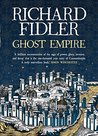
Finished Reading: Ghost Empire, by Richard Fidler


Ghost EmpireGhost Empire by Richard Fidler
My rating: 3 of 5 stars

View all my reviews

Unknown's avatar

Not My Review: The Last Magician, by Lisa Maxwell


Unknown's avatar

Not My Review: Wayward Children (Book 2) – Down Among the Sticks and Bones, by Seanan McGuire


Down Among the Sticks and Bones (Wayward Children #2)
by Seanan McGuire

Unknown's avatar

‘Dancing the Death Drill’: historical fiction that tells us about today


File 20170728 1117 152dd5p
The Mendi shown here in pre-war days in use as a mail ship.
Courtesy of the John Gribble Collection

Manosa Nthunya, University of the Witwatersrand

In his keynote speech at the recent South African Sunday Times Literary Awards the novelist, Zakes Mda, said that “we write historical fiction to take history to the level of what was it like to be in what happened”. Mda said that as a historical novelist, he writes,

historical fiction to grapple with the present. Great historical fiction is more about the present than it is about the past.

This is a truism that has always informed, I suspect, most practitioners of historical fiction. It is one not different for Fred Khumalo in his latest novel, “Dancing the Death Drill”. Although Khumalo says that he wrote the novel in order to remember black South African soldiers who played a role in World War 1, and those who perished in the SS Mendi ship, this is equally a novel about the present, and the ills that continue to bedevil the country.

While doing his early education, Khumalo’s protagonist tells his teacher, Madame Christine, that,

I want to be a voyager, I want to travel on ships, I want to discover new places, engage in long conversations with strangers, play with ideas, experiment with things.

This is obviously a mind of a precocious teenager; curious about the world and intent in finding out more about it. But this precocity is, inevitably, also naïve. The young Roelof de la Rey, who subsequently changes his name to Pitso Motaung (after he is deserted by his white Afrikaner father), is unfortunately still somewhat unaware that his desire to travel, and meet new people, can never be easily realised due to the sociopolitical landscape that he finds himself in in the early twentieth century.

As Pitso becomes an adult, he begins to realise that there are a lot of things that he has to deal with and that have to do with his identity and how people react to him because of it. He finds himself constantly having to confront the fact that contrary to his desires of only wanting to belong to the Sesotho-speaking tribe, that he is instead seen as a coloured person and consequently treated in this manner in colonial South Africa.

He in fact says to someone, as he does several times in the novel, that,

if you ever call me a coloured person or a mixed-race person, I shall make you swallow your faith, I am Pitso, the son of Motaung. The roaring cub of the Bataung people.

Dominant discourses of the day

It however becomes increasingly clear to Pitso that to be in the world is to be marked and that people’s perceptions of you are dependent on the dominant discourses of the day. Thus against his will, and his constant desire to be regarded in his singularity, or as belonging to a group of his choice, he is forced to learn to accept the impossibility of this desire.

If Pitso’s ambitions, as stated earlier, are to travel and see the world, this does in fact happen. But as with most things in life, this happens by chance. Pitso and other young men hear from the South African government that they need to go and defend the British against Germany. They’re promised that if they do this, they will be well paid and that when they return to their country, the government will offer black people more freedoms than they currently enjoy.

It’s on this journey to France, in the SS Mendi troop ship, that Pitso and his countrymen encounter a crisis; the sinking of the ship, that was carrying 802 men of the South African Native Labour Corps, and the unimaginable suffering this brings. This was after colliding with a British merchant ship on 21 February 1917 – a total of 618 men drowned in the icy Atlantic.

It’s one of the tragic histories that is rarely spoken about in South Africa and the act of writing this novel, then, should be seen as an important archival project since it brings a repressed and difficult history into the spotlight.

A time rife with complexity

One of the strengths of Khumalo’s novel is that it shows the early twentieth century, similar to other times, as a time that was rife with complexity. This means that while a reader might expect the black soldiers in the novel to be portrayed as mere victims – without any agency – this is in fact not the case.

It is clear enough in the novel that Khumalo is deeply aware of time, and of the ways in which it shapes identity and one’s experience of the world. This does not however mean that those who were dispossessed did not also work to manipulate time in order to lessen their suffering. In the novel this is most clear when the ship starts sinking.

Reverend Isaac Wauchope Dyobha starts preaching to his fellow soldiers that:

I, a Xhosa, say you are my brothers. Swazis, Pondos, Basutos, we die like brothers. We are the sons of Africa. Raise your war cries, brothers, for though they made us leave our assegais in the kraal, our voices are left with our bodies.

It’s from this that they start dancing the death drill,

Not crying, not panicking, not screaming at the approach of death. In Africa, even in the times of death, people celebrate. Death becomes a spectacular, moment of defiance, the defiance of death itself.

It’s with such understanding that the soldiers approach their unexpected catastrophe with grace. It’s reported that more than 600 black soldiers lost their lives when the ship sank. Pitso survives this tragedy and it’s his narrative that drives much of the plot after this event.

One of the obvious challenges of the times that we live in is that we are coming to the realisation that Hegel long taught us, which is that “we learn from history that we do not learn from history”.

What then, with this in mind, might be the purpose of historical fiction? Perhaps it’s not so much that there’s something to “learn” from it. Perhaps the goal is a much more humble and subtle one which is to recognise and pay tribute to lives that came before us.

The ConversationIn doing so to connect the past with the present and to allow readers to recognise how much of their lives have changed and unavoidably, to pay attention to the many things, and ills, that remain the same. “Dancing the Death Drill” is a fine glimpse into this turbulent historical period in South Africa’s calendar and what is done with this narrative, as the cliché goes, is entirely up to the living.

Manosa Nthunya, PhD Candidate, University of the Witwatersrand

This article was originally published on The Conversation. Read the original article.

Unknown's avatar

Not My Review: Conversion & Discipleship – You Can’t Have One Without the Other, by Bill Hull


The link below is to a book review of ‘Conversion & Discipleship – You Can’t Have One Without the Other,’ by Bill Hull.

For more visit:
https://www.9marks.org/review/book-review-conversion-discipleship-you-cant-have-one-without-the-other-by-bill-hull/

Unknown's avatar

Not My Review: The Federalist Papers, by ‘Publius’ (1788)


The link below is to a book review of ‘The Federalist Papers,’ by ‘Publius.’

For more visit:
https://www.theguardian.com/books/2017/aug/21/100-best-nonfiction-books-the-federalist-papers-publius-1788-robert-mccrum