Unknown's avatar

Tintin: as the eternal youth turns 90, he’s still teaching children about the world


File 20190109 32124 1orf4n0.jpg?ixlib=rb 1.1
Tintin: one of Belgium’s great gifts to the children of the world.
catwalker via Shutterstock

Paul Aleixo, Sheffield Hallam University

For such a perennially young man, always in a hurry to right the world’s wrongs, it may be strange to hear that Tintin has spent nine decades fighting bad guys around the world. From his earliest adventures in January 1929, as he journeyed into the Soviet Union to report on the excesses of Stalinism, the young journalist’s exploits with his friend Captain Haddock have been translated into more than 70 languages and, at last count sold more than 230m copies around the world..

Tintin, the creation of Belgium cartoonist Georges Remi – also known by his pseudonym Hergé (his initials R.G. in reverse) – first appeared in the youth section of the Catholic newspaper Le Vingtième Siècle. Pretty soon, the serialised adventures were published as books (or “albums”) of which Hergé completed 23 by his death in 1983 (a 24th, unfinished, adventure was posthumously published in 1986). There has also been a cartoon series and several movies – the most recent of which, The Secret of the Unicorn (2011), was directed by Steven Spielberg.
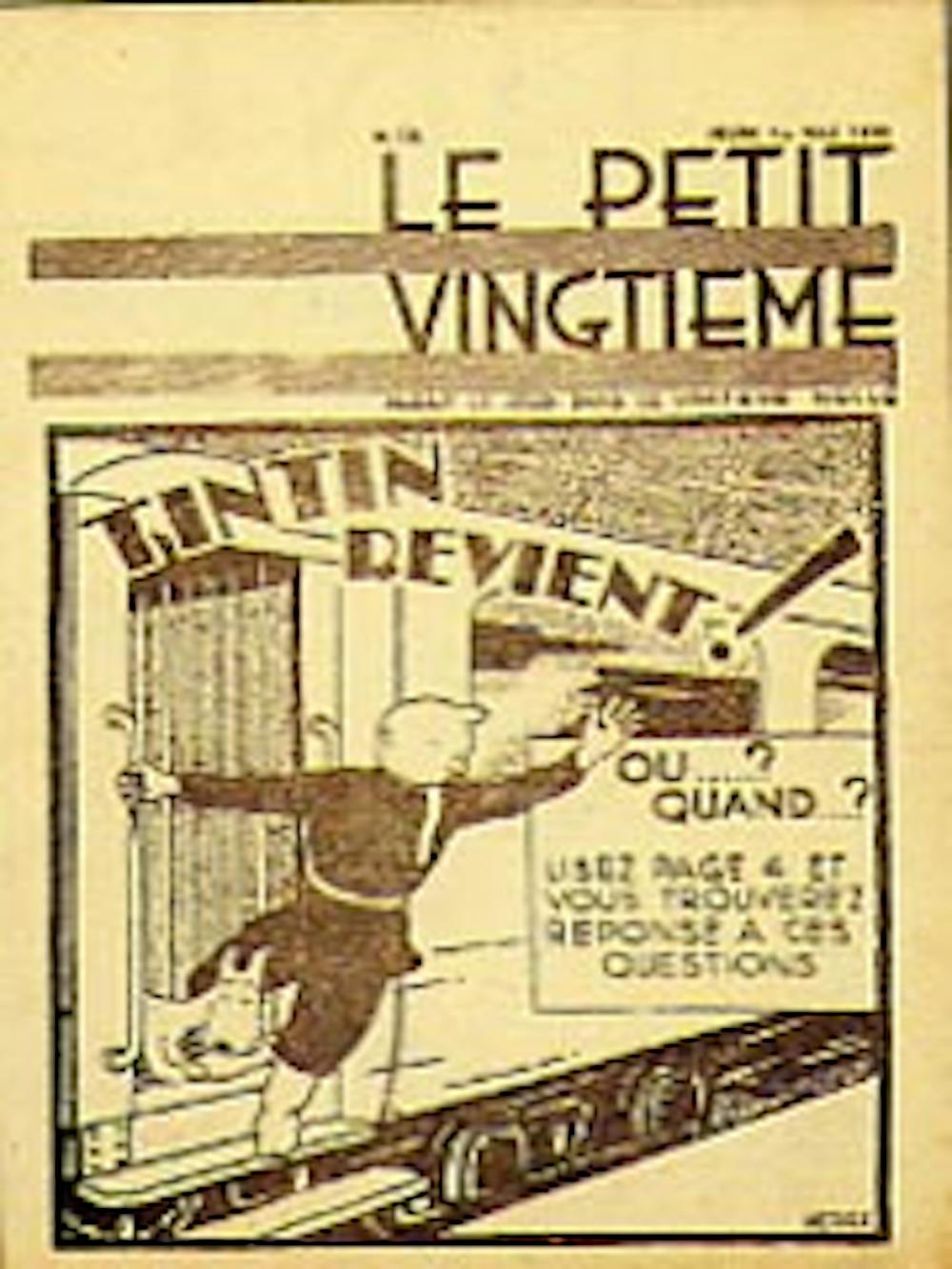
Le Petit Vingtième in May 1930, celebrating Tintin’s safe return from his first adventure in the Soviet Union.
Wikimedia Commons

There are a number of reasons we should celebrate Tintin. From a comic book perspective, Tintin had a number of important firsts: Tintin was the first successful comic book series in Belgium and led directly to the beginning of the comic book industry there. In France, meanwhile, Hergé’s style (known as the ligne claire or “clear line”: (a very clearly drawn style with little shading) was hugely influential on comic book artists. Hergé was an innovator in terms of using word and thought balloons – as far as current research has found, Hergé pioneered their use in Belgium, he also developed and expanded the use of symbols such as “speed lines” (the little lines that denote movement) in comics to give further meaning to his drawings.

However, more generally, The adventures of Tintin are important in an educational sense. I have previously suggested that comics should be encouraged as reading materials in schools because they are a way of getting children reading more generally. Reading comics also helps the development of visual literacy which is becoming increasingly important in modern society.

For these reasons I think it’s really important to encourage children to read Tintin. Tintin has the advantage of being designed for children in the first place – they’ve never been dumbed down and the stories also appeal to many adults. And the storylines themselves encourage a number of positive core values: doing good, supporting the underdog, resisting unfairness and fighting for justice.

Magic, but realistic too

More specifically, The adventures of Tintin also have the advantage of allowing the possibility of more specific learning opportunities. Many of the stories (particularly those produced after World War II) were meticulously researched and include factual knowledge that is likely to be important in the development of a child’s general understanding of the world.

More history than meets the eye.
Hergé Foundation

This includes geographical and cultural knowledge given that Tintin travels to many different parts of the world as well a some more specific historical knowledge about for example, the Japanese invasion of north-eastern China in 1931 which featured in the fifth Tintin adventure, The Blue Lotus (1936).

In terms of history many have claimed that the 24 Tintin adventures are documents of the times in which they were created, reflecting issues in history either directly or in allegorical terms.

Tintin teaches

But if you are still sceptical that anyone might learn anything from comics, let me recount an anecdote from my own personal experience. I was born in Portugal to an English mother and Portuguese father and moved to the UK for secondary school. My mother always encouraged my reading but was a little concerned to see me reading so many comics. Portugal followed the European tradition that comics were a legitimate reading source not just limited to children – and indeed adults could regularly be seen reading in public places such as the bus and the metro.

Family legend describes an interaction between my mother and me where I mentioned some factual nugget of information (alas, history no longer recalls what this fact was, only that it existed) which my mother was surprised I knew. When questioned where I had picked up said nugget, I replied: “It was in a Tintin book.” This proved to be a turning point. She claims that from then on, she had no worries about comics – clearly they were educational. Mum later read them and insists to this day they have helped her with many a pub quiz.

So, for my mother and me at least, Tintin is incredibly important and, I would argue, beneficial for children. But at their heart they are carefully crafted, beautifully illustrated rollicking adventure stories, filled with colourful characters, intrigue, suspense, humour and – above all – good cheer. If you have never read the stories, or it is a while since you have, give them a whirl, I guarantee you will be entertained – and informed.The Conversation

Paul Aleixo, Senior Lecturer in Psychology, Sheffield Hallam University

This article is republished from The Conversation under a Creative Commons license. Read the original article.

Unknown's avatar

Ten ways teacher librarians improve literacy in schools


Margaret Kristin Merga, Edith Cowan University

Australian schools constantly strive to improve the literacy outcomes of their students. Supporting literacy achievement for struggling readers is particularly important because these readers have their disadvantage compounded: capable students develop “richer” skills through continued exposure to reading, and the gap between them and struggling readers widens.

The number of Australian students deemed “low performers” in reading literacy proficiency has been rising over time. Our percentage of high performers is shrinking – nearly one in five adolescents are in the low performer category.


Read more:
Six things you should do when reading with your kids


With school about to start for the year, we should consider how we can optimise support for struggling readers. Young people’s literacy attainment significantly shapes their academic, vocational and social potential. More than seven million adult Australians have their opportunities limited by their literacy level.

Research suggests the presence of qualified library staff in school libraries is associated with better student performance in literacy. But until now, little was known about what specifically they do to achieve this. My new research gives us insight into these key practices.

What do they do?

In 2018, I visited 30 schools in urban and rural sites as part of the Teacher Librarians as Australian Literature Advocates in Schools project. I interviewed teacher librarians to explore a range of questions, including the role they play as literacy educators.

For some children, silent reading time is the only time they have to read.
from http://www.shutterstock.com

There are 40 recurring literacy support strategies used by teacher librarians. But my recent paper focuses on ten strategies that have a particularly strong link to supporting struggling readers:

1. Identification of struggling readers. Teacher librarians support the timely identification of struggling readers through the data they collect on student performance. The sooner struggling readers are identified, the sooner the school can help them.

2. Providing age and skill-appropriate materials for struggling readers. Teacher librarians match students with age-appropriate materials they can manage and topics and genres they prefer. The more a student enjoys and is interested in reading, the more likely they are to keep it up.

3. Teaching students how to choose books they like. Both children in primary and secondary schools have suggested they would read more if it were easier to choose books that appeal to them. Teacher librarians teach students how to do this.

4. Support for students with special needs and readers at risk. For example, Hannah, a teacher librarian, described working with “a young boy who is dyslexic, and I was reading to him and made a dyslexic error, and went back and explained what I’d done and he said, ‘Yeah, I do that, too.’” She then connected him with age and skill-appropriate materials, and he went on to read “an enormous amount”.

5. Matching struggling readers to appropriate books for their skill level. Research suggests when struggling readers have texts matched appropriately with their ability and personal interest, they are more persistent, invested, and use more cognitive skills. Teacher librarians show expertise in making good matches.

6. Promoting access to books. Access to books is positively related to reading motivation, reading skills, reading frequency and positive attitudes toward reading. Teacher librarians make their books accessible. Francesca described regular use of a pop-up library:

We take [it] out into the wilds. And you know, kids will come up and go, ‘oh, what have you got, what have you got.’”

7. Making books and reading socially acceptable. Where young people believe books are socially acceptable, they’re more likely to read and have a positive attitude toward reading. Reading frequency is associated with literacy benefits, so this is ideal. Teacher librarians use a variety of strategies to enhance how books are viewed socially in their schools, including facilitating peer recommendations.

8. Reading to students beyond the early years. Reading aloud offers a range of benefits in the early years and beyond, including an increased enjoyment of reading and increased motivation. Libba described reading aloud to the teenage boys in her classes as a wonderful experience that was very well received. One boy even stated: “that was beautiful”.


Read more:
Research shows the importance of parents reading with children – even after children can read


9. Facilitating silent reading time. Though opportunities for silent reading at school may be limited, for some struggling readers, it’s the only book reading they do. Teacher librarians act as keen advocates for silent reading in their library and more broadly in the school. And something is better than nothing, especially for readers who struggle.

10. Preparing students for high stakes literacy testing. Achievement on high-stakes literacy tests is essential for graduation in Western Australia, a controversial move which has seen graduation rates slide. A similar initiative has been explored but rejected in NSW.

Teacher librarians supported struggling readers to achieve this essential academic goal through a range of initiatives. For example, teacher librarian Stephanie supported students to use practice online testing programs in her library, which gave students the practice they needed to sit both NAPLAN and online literacy and numeracy assessment (OLNA) tests.

Why does this matter?

Teacher librarians in Australian schools are a valuable resource often taken for granted. They have faced significant budgetary cuts in recent times, despite a 2011 government inquiry into school libraries. Teacher librarians noted they play an important educative role in our schools.


Read more:
Six things you can do to get boys reading more


Recent findings suggest teacher librarians’ morale and related sense of job security may be low. If schools and policy-makers wish to improve students’ literacy outcomes, they should invest in school libraries and our dual-qualified teacher librarians.The Conversation

Margaret Kristin Merga, Senior Lecturer in Education, Edith Cowan University

This article is republished from The Conversation under a Creative Commons license. Read the original article.
Unknown's avatar

Not My Review: Wayward Children (Book 4) – In An Absent Dream by Seanan McGuire


Unknown's avatar

Is Jane Austen Irrelevant?


Unknown's avatar

Stolen By the Nazis


The link below is to an article that takes a look at the stolen books of Europe – stolen by Nazi Germany and sitting in libraries.

For more visit:
https://www.nytimes.com/2019/01/14/arts/nazi-loot-on-library-shelves.html

Unknown's avatar

Not My Review: The Dark Artifices (Book 3) – Queen of Air and Darkness by Cassandra Clare


Unknown's avatar

Guide to the classics: The Water Margin, China’s outlaw novel


File 20190114 43535 1qwoq1a.jpg?ixlib=rb 1.1
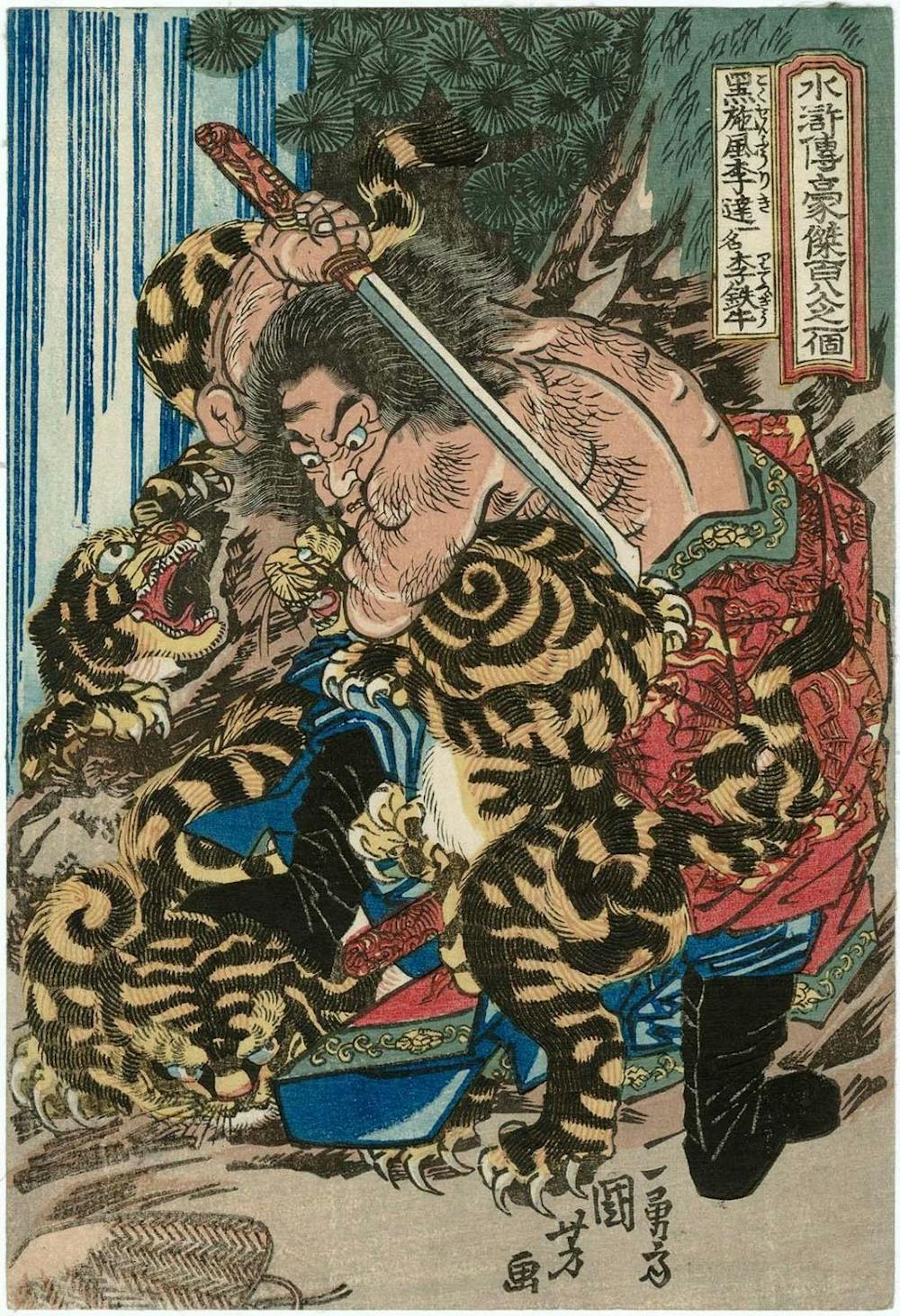
Li Kui (李逵), one of the characters in The Water Margin, battles tigers after they killed his mother. Utagawa Kuniyoshi, between between 1845 and 1850.
Wikimedia

Josh Stenberg, University of Sydney

The Water Margin, also known in English as Outlaws of the Marsh or All Men Are Brothers, is one of the most powerful narratives to emerge from China. The book, conventionally attributed to an otherwise obscure Yuan dynasty figure called Shi Nai’an, takes the form of a skein of connected tales surrounding various heroic figures who — persecuted, exploited, wronged, or trapped by venal officials — eventually band together in the fortress of Liangshan (Mount Liang), in the present-day province of Shandong.

Its influence has gone far beyond the usual genres of fiction, film, art, and theatre. The stories provide, even today, a point of reference for codes of honour, social and economic networks, secret societies and political movements.

Generations of China’s governments have sought to represent themselves as guardians of an often explicitly neo-Confucian order characterised by a fixed and morally-grounded political and social order constructed of hierarchical relationships. But The Water Margin represents another, equally real and representative, Chinese worldview. In this world, local injustice is the rule, and defence against cruel local authority is a matter of vengeance, stratagem, and violence.


Read more:
Why you should read China’s vast, 18th century novel, Dream of the Red Chamber


From this universe, itself a highly mediated depiction of the rapidly decaying Northern Song dynasty in the 12th century, derive fictional worlds of errantry, struggle and righteousness that have gone through endless narrative and cinematic iterations.

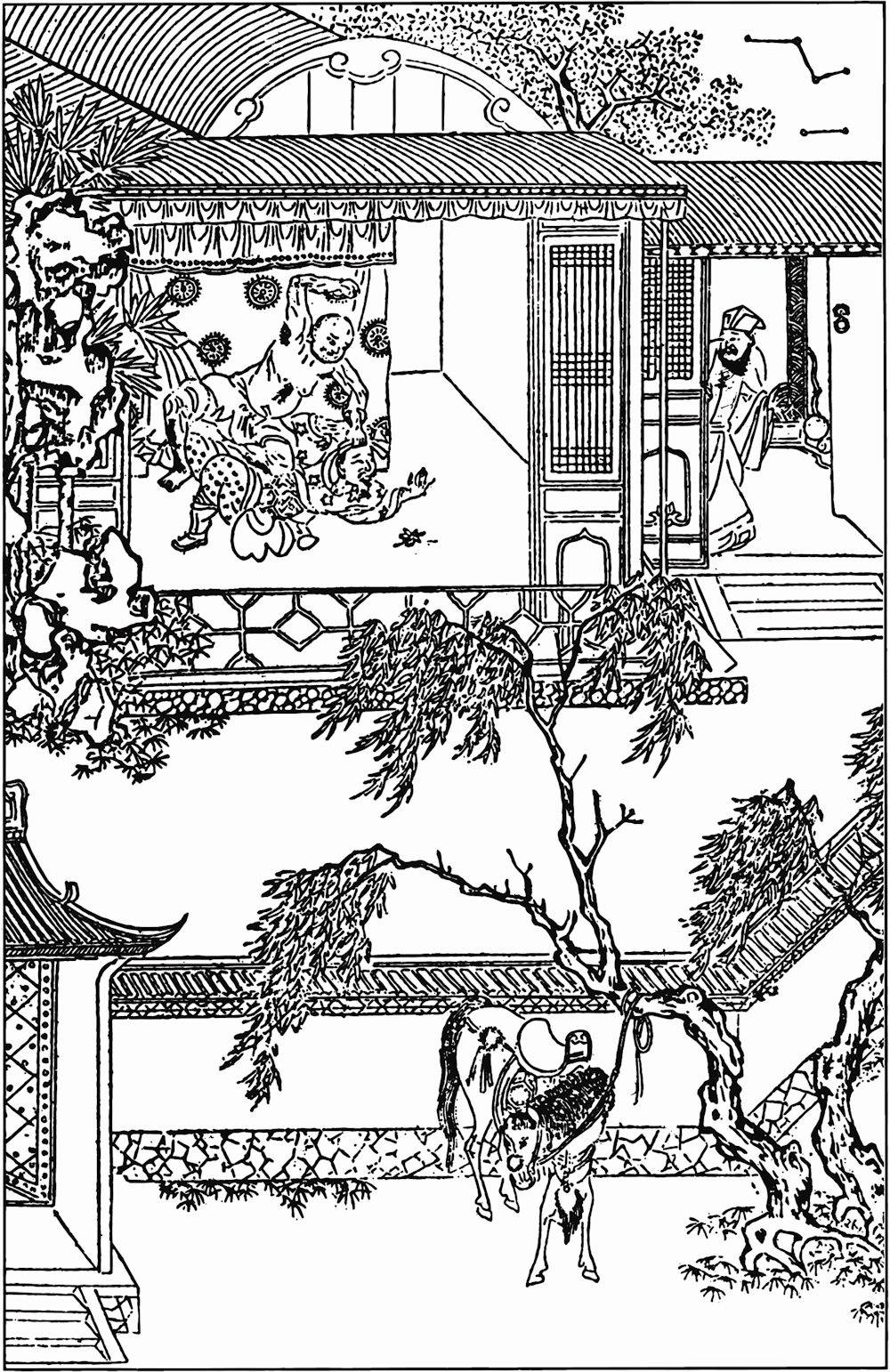
Illustration from The Water Margin. Circa 15th Century.
Wikimedia

Of these descendants, the most familiar today are the fictional worlds of Hong Kong writer Jin Yong, which remain the closest thing to a reading list for adolescents in the Chinese world, and the kung fu genre that has been the global calling card of Sinophone film since at least Bruce Lee.

Rebels with a cause

With printed versions dating back to the 14th century, The Water Margin largely follows the adventures of strongmen, innkeepers, footpads, peasants, vagabonds, fishermen, hunters, petty officials and local gentry. Surrounding these protagonists are the thousands of nameless followers and victims who are knocked off or maimed (just as they might be casually dispatched in Homer) in the novel’s thousand-odd pages.

Women, when they (not so very often) appear, are hard-nosed mistresses, pugnacious sisters, hapless wives, strategising helpmeets, or murderous innkeepers (one of whom has hit on Mrs. Lovett’s idea of baking humans into pies a full 800 hundred years before her). This also sets it apart from the mainstream of imperial fiction, which is substantially preoccupied with the passions and travails of high-born, talented women and their ambitious scholar swains, not to mention emperors and generals.

It is only a novel after a fashion: The Water Margin’s text is substantially the record of stories that had already been circulating at the time it was committed to the page. Shi Nai’an’s authorship is little more than a conventional attribution, and the text is far from stable, existing in various versions beginning from the 14th century, two hundred years after the events it depicts. It reached its usual present form in the 17th century.

Li Kui (李逵), from The Water Margin.
Wikimedia

In the Ming (14th-17th century) and Qing (17th-20th century) dynasties, the bandits of The Water Margin continued to influence all manner of groups operating far from the seat of power, despite periodic attempts to ban the book.

The fact that the villains of the novel are local officials, while the bandits remain at least notionally loyal to the imperial court, has proven an enduring inspiration. Many are the brands of rebellion that have found it practical to be on the other side of the law while retaining a claim to the values of brotherhood, honour, loyalty and patriotism.

Enduring legacy

The plot’s political relevance has never gone away. Having been adopted in the 1930s by reformers as a healthily anti-feudal narrative, it was later deployed in a major 1975 government campaign, in which the leader of the Liangshan bandits in the book, Song Jiang, was criticised for accepting the emperor’s offer of amnesty. Had he not given the game away? And was he therefore not guilty of coexistence with forces inimical to the masses, just as party members, late in the Maoist era, would be guilty of capitulationism if their fervour flagged?

This move, widely interpreted as an effort to head off the fall of the Gang of Four shows how centrally the characters have been retained even in modern and contemporary Chinese consciousness.


Read more:
How Conrad’s imperial horror story Heart of Darkness resonates with our globalised times


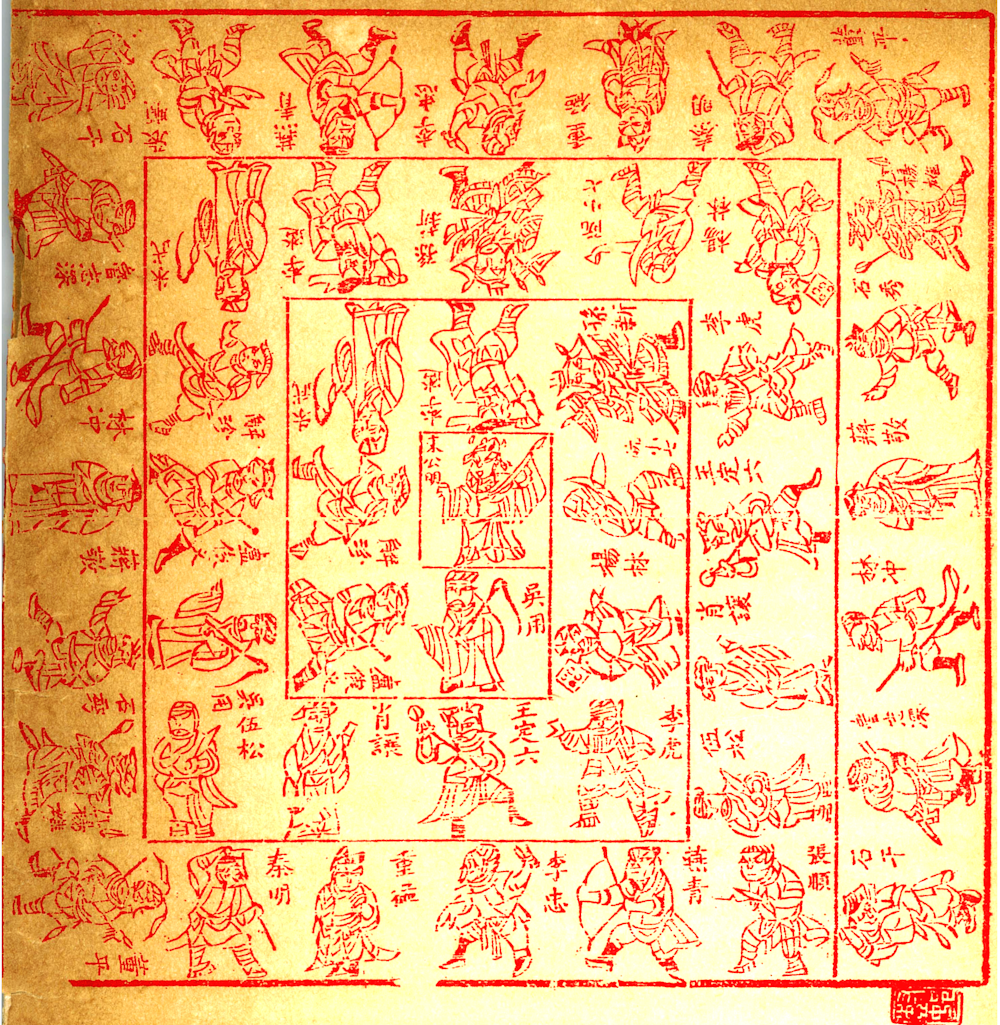
A board for a Sichuan board game, based on The Water Margin.
Wikimedia, CC BY-SA

It’s commonplace to lament human transience and contrast it with the immutability of nature. But those going in search of the dense marshlands of Shandong —- where in the novel crafty fishermen might cause unwary inconvenient minor officials to disappear —- will be disappointed. The entire geography of the novel has been altered beyond recognition by river engineering and irrigation.

This of course does not prevent local governments continuing to put up buildings tagged to certain events in the novel, hoping at the same time that the message of righteous rebellion against local authority is never taken too literally. The formidable, impregnable, fortified mountain, Liangshan, rises just short of 200 metres in reality.

The place of The Water Margin has moved almost entirely into the imaginary, and it is the situations, the events, the stratagems and above all the characters – furious and righteous, looking to set the world right – that have left their mark on posterity.The Conversation

Josh Stenberg, Lecturer in Chinese Studies, University of Sydney

This article is republished from The Conversation under a Creative Commons license. Read the original article.
Unknown's avatar

Celeste Ng


The link below is to an article that takes a look at Celeste Ng.

For more visit:
https://www.nytimes.com/2018/12/20/books/celeste-ng-everything-i-never-told-you-little-fires-everwhere.html

Unknown's avatar

Sally Rooney


The link below is to an article that takes a look at Sally Rooney.

For more visit:
https://www.newyorker.com/magazine/2019/01/07/sally-rooney-gets-in-your-head

Unknown's avatar

Not My Review: The First Conspiracy – The Secret Plot to Kill George Washington by Brad Meltzer and Josh Mensch


The link below is to a book review of ‘The First Conspiracy – The Secret Plot to Kill George Washington,’ by Brad Meltzer and Josh Mensch.

For more visit:
https://www.npr.org/2019/01/09/682924810/the-first-conspiracy-details-foiled-hickey-plot-to-assassinate-george-washington