Unknown's avatar

Decolonising literary studies requires ditching finality and certainty


File 20190115 152986 qbpls7.jpg?ixlib=rb 1.1

Rodrigo S Coelho/Shutterstock

Peter D. McDonald, University of Oxford

Decolonising literary studies isn’t simply a matter of relieving the symptoms, substituting this author for that or setting up a new canon in place of the old. The challenge is to address the chronic underlying condition by thinking beyond the guiding assumptions and aspirations of any colonial-era curriculum.

To start with, this means ditching the ideas of language that were central to colonial linguistics. On that logic, for instance, the curriculum was thought to affirm one supposedly unitary, national language (let’s say French). Or at best, in the case of Comparative Literature, it affirmed two supposedly unitary, national languages (for example, French and English).

The reason? Language, it was assumed, is the expression of the national “character”, “genius” or “soul” – to put it in the most idealistic terms. Or it is the bearer of “the culture”. This was usually understood as the shared, often ancestral values, practices and forms of knowledge by which a people (or national community) sees itself and understands its place in the world.

This way of thinking informed the selection of great writers that gave the colonial-era literary curriculum its content. And it defined one of its core aims: to provide the means by which the nation could come to know and affirm itself as a community rooted in one language, one history, one culture and one state.

At home this was a quasi-theological exercise in self-knowledge – the talk was all about encountering the “national soul” through literature. Abroad it was a rather more worldly instrument of self-imposition – the export version of the curriculum serving to assert the sovereignty of the colonising culture and the primacy of its language, values and ways of knowing.

To design a decolonising curriculum, then, we need to start by abandoning the dubiously assured, dubiously otherworldly assumptions underpinning this legacy.

More secular

This means conceptualising language in more secular or earthy terms. Language as a river, say, the source of which is ultimately obscure, the mouth always somewhere further on. It’s a strange kind of river too. Many other major rivers, not just minor tributaries, constantly flow in and out of it. And no state or community (national or otherwise) can claim exclusive rights over it.

Push this rather benign, naturalising analogy too far, however, and you gloss over colonisation’s destructive effects. Backed most often by the state and its allies, some languages, after all, became vast, transcontinental canals – think of English or Spanish. And constructing these often caused others to dry up altogether – think of Aushiri or |Xam.

So what would a curriculum founded on this alternative idea of language look like?

For one thing, given its central premise – no language is the product of any one history or the property of any one community – this more secular conceptualisation would put pressure on the inherited disciplinary structures of the university itself. Think of all those separate departments of English, French, Spanish, etc. Yet it need not follow that they should fall. What has to go are the canal-building assumptions on which they were often founded, and the silo mentalities they still tend to foster.

Taking the more benign river perspective first, a decolonising curriculum would begin by encouraging students to uncover the many “foreign” languages within those they have chosen to study. This would reveal how translation, far from being an anomalous or specialist activity, is integral to the ordinary life of all languages.

In a similar spirit, it would make it possible for them to follow the shifting contours of linguistic geography, which seldom coincide with state boundaries. This would leave them free to trace the complex movement of languages through multiple speech communities and across all media.

The canal perspective would require other lines of enquiry. Here the curriculum would ask students to reflect critically on the legacies of colonial linguistics, the interconnected histories of standardisation and marginalisation, and the impact they had on the way all languages were understood in the past.

Beyond colonial-era silos

The river and canal perspectives inevitably raise different questions of ownership, multilingualism and translation. Yet both open up ways of thinking beyond theologically inspired, colonial-era silos. And both make it possible for a properly decolonising linguistics to emerge in which the interdependence of self- and other-knowledge is central.

Literary writing, too, would have a transformed status. Since a decolonising curriculum would treat linguistic inventiveness as an ordinary feature of language, like translation, it would have no need of the colonial-era’s sacralised canon of great writers.

Equally, it would not assume that writers all sign up to canal-building national traditions simply by default. Many may have in the past, and some may well continue to see themselves in similar terms today, but the presumption has lost all currency. How innovative writers relate to communities, whether national, sub-national or supranational, can now seldom be known in advance of actually reading their work.

A decolonising curriculum would therefore consider the multiple ways in which writers negotiate the linguistic, literary and cultural legacies of the colonial era. Some reject them, some indigenise them, some re-foreignise them, and others refuse all clear-cut options, choosing to work between languages and traditions instead.

Does this mean a decolonising literary curriculum is simply “world literature” by another name? Possibly, but only in the sense in which the Bangla poet-philosopher and Nobel Literature Prize-winner, Rabindranath Tagore, used the phrase over a century ago when he affirmed the promise of what he called বিশ্ব সাহিত্য (Vishva Sahitya). For Tagore, this was a call to decolonise knowledge and to reinvent the university. It was also a call to learn to think (and live) creatively amid the world’s turbulence without any craving for otherworldly certainty or finality.

It is a call worth heeding again.The Conversation

Peter D. McDonald, Professor of English and Related Literature, University of Oxford

This article is republished from The Conversation under a Creative Commons license. Read the original article.
Unknown's avatar

Sylvia Plath’s new short story was never ‘lost’ – so why is the media saying it was ‘just discovered’?


File 20190124 196244 wsoh70.jpg?ixlib=rb 1.1
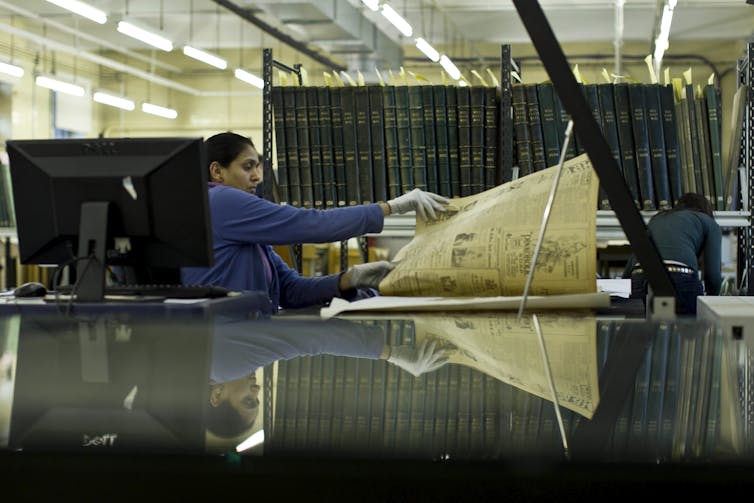
Archivists put an immense amount of work into organizing, digitizing and maintaining repositories.
AP Photo/Matt Dunham

Bethany Anderson, University of Virginia

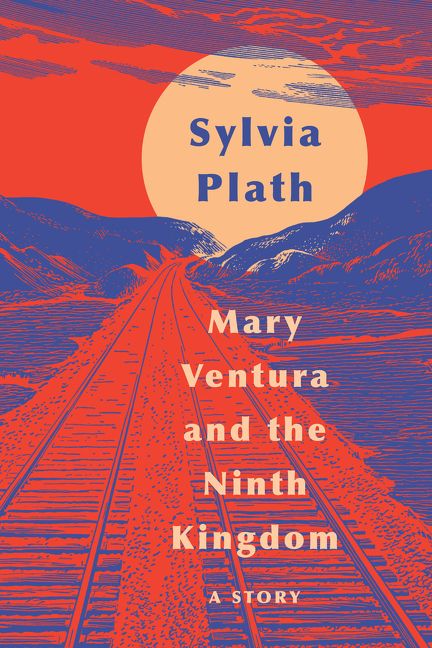
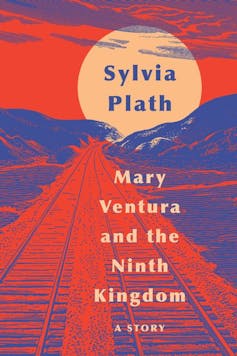
The recent publication of Sylvia Plath’s short story “Mary Ventura and the Ninth Kingdom” has been met with much fanfare, with the media eager to highlight that the story had been “lost,” only to have recently been “found.”

The Boston Globe described the work as “recently discovered” in its headline. A Vox article evoked a scene of abandonment and deterioration – the story had “languished in her archives for decades.”

And a recent New Yorker article, “A Lost Story by Sylvia Plath Contains the Seeds of the Writer She Would Become,” noted that “not even the author’s estate had known the story existed until the critic and academic Judith Galzer-Raymo stumbled over it while doing research in Plath’s archives.”

But was Plath’s story really “lost”? For years, “Mary Ventura and the Ninth Kingdom” has been preserved – and has been accessible to the public – at Indiana University’s Lilly Library, thanks to the work of archivists and other cultural stewards.

As an archivist, I bristle at this sort of misleading coverage, which is only the latest example of the media ignoring the work of archivists in order to highlight something found in archives as “newly discovered.”

What’s behind this media impulse and why do these mischaracterizations persist?

Archival tropes

I’ve become all too accustomed to seeing headlines about “long-lost” manuscripts that have been found.

For example, in 2012 two articles in The Atlantic debated whether a medical report relating to Abraham Lincoln’s assassination amounted to a “discovery.”

As another example, The Chronicle of Higher Education reported a “long-lost letter” by René Descartes that had “lain buried in the archives [at Haverford College] for more than a century.” The public also recently learned of letters from interned Japanese-Canadians during the Second World War that had been “long-forgotten in the bowels of Library and Archives Canada.” In all these examples, the documents were already preserved and accessible in archival repositories.

And on the rare occasions that archives are featured in the press or in popular culture, they’re usually characterized as old, secluded and dusty places.

For example, in 2013 The New York Times published an article titled “Leaving Cloister of Dusty Offices, Young Archivists Meet Like Minds.”

If the headline alone didn’t convey this sentiment, the text drove it home: The archivists, it read, had “long spent their careers cloistered, like the objects they protected.”

Any archivist reading this story knows that nothing could be further from the truth. In a letter to the editor, Helen W. Samuels, a former archivist at MIT, responded, “While I was delighted that your article focused attention on the talented archivists now employed by so many institutions, I was saddened that it perpetuated the outdated image of archivists as preservers of dusty, precious artifacts maintained in a cloistered environment.”

Innovators versus maintainers

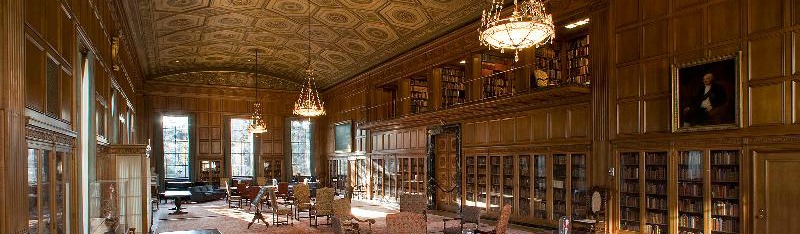
For the record, “dusty” doesn’t characterize any of the repositories I’ve worked in or visited. For example, the Albert and Shirley Small Special Collections Library at the University of Virginia is clean with an open layout, and its spaces are filled with natural light. Similarly, the University of Michigan’s William L. Clements Library spaces do not fit the “dusty” stereotype.

Perhaps the media finds these tropes appealing because they evoke the romance and mystery of unearthing, discovering and rescuing rare books, documents or artifacts, as if they’re hidden treasures. After all, who doesn’t want to feel like Indiana Jones? And by representing archives as dusty, cloistered places, the materials appear to be on the verge of disappearing into obscurity – that is, unless a researcher comes to the rescue.

Another reason these tropes persist could have to do with the way our society privileges innovators over maintainers. Maintainers, according to scholars Andrew Russell and Lee Vinsel, are “those individuals whose work keeps ordinary existence going rather than introducing novel things.”

Archivists are maintainers: They perform the “ordinary” work of acquiring, appraising and arranging archival materials. They respond to the inquiries of students and researchers, and work to preserve materials for posterity.

As members of the archival community have pointed out, this sort of work is generally ignored and misunderstood. Instead, when it comes to stories about archival research, stories will focus on the “innovators” – the scholars who write about the rare manuscript or old letter and, in doing so, rescue these materials from obscurity.

In almost every case, these stories gloss over the fact that these items exist in publicly accessible collections and are described in finding aids and databases.

Giving credit where credit’s due

This is not to take anything away from the work of researchers. Archival research is a process that often involves an intense commitment of time and energy. A researcher can see value or significance in a letter or manuscript that might have otherwise gone unnoticed outside of the archives.

Much of the media coverage of ‘Mary Ventura and the Ninth Kingdom’ describe it as a work that was ‘lost’ and then ‘found.’
Harper Collins

Nonetheless, while a researcher might be the first researcher to read a document, they may not be the first person to have encountered it – not when archivists, curators, librarians and other staff work with materials on a daily basis.

Interestingly, the researcher featured in The New Yorker article about the Plath short story doesn’t appear to have been the first scholar to have “discovered” that “lost” Sylvia Plath story. As Rebecca Baumann, Head of Public Services at the Lilly Library, noted, “Many people have written about [“Mary Ventura and the Ninth Kingdom”] … There’s published scholarship that discusses [it].“

But that doesn’t always make for the best story.The Conversation

Bethany Anderson, University Archivist, University of Virginia

This article is republished from The Conversation under a Creative Commons license. Read the original article.

Unknown's avatar

Not My Review: The Folk of the Air (Book 2) – The Wicked King by Holly Black


Unknown's avatar

Not My Review: Animal Control (Book 1) – The Hero’s Apprentice by Travis Howe


Unknown's avatar

Not My Review: An American Marriage by Tayari Jones


Unknown's avatar

Not My Review: Never Die by Rob J. Hayes


Unknown's avatar

Not My Review: Winternight Trilogy (Book 2) – The Girl in the Tower by Katherine Arden


Unknown's avatar

Guide to the classics: Wide Sargasso Sea


File 20181213 110264 yqxp2w.jpg?ixlib=rb 1.1
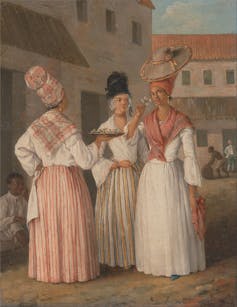
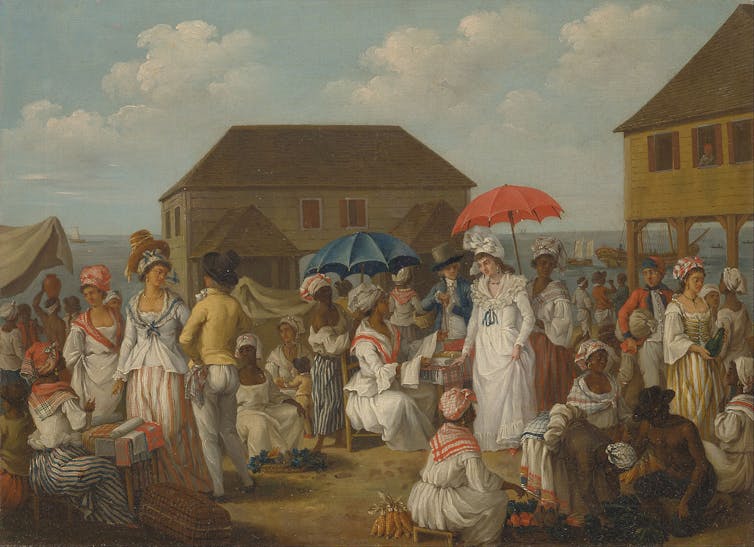
Linen Market, Dominica, oil painting by Agostino Brunias, circa 1780.
Wikimedia Commons

Sue Thomas, La Trobe University

In Charlotte Brontë’s novel Jane Eyre (1847) the marriage ceremony of Jane Eyre and Edward Fairfax Rochester is spectacularly interrupted by the solicitor Mr Briggs declaring an impediment to the union: the prior marriage of Rochester to Bertha Antoinetta Mason in Spanish-town, Jamaica. Taken then, with others, to see the wife secreted in a third-story windowless room at Thornfield Hall, Jane remembers,

What it was, whether beast or human being, one could not, at first sight tell: it grovelled, seemingly, on all fours; it snatched and growled like some strange wild animal: but it was covered with clothing; and a quantity of dark, grizzled hair, wild as a mane, hid its head and face.

Rochester later explains to Jane that Bertha is “bad, mad, and embruted”, of “pigmy intellect” and “giant propensities” toward the “intemperate and unchaste” which “prematurely developed the germs of insanity” passed on in the maternal line.

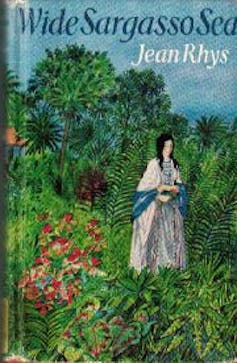
Wide Sargasso Sea was first published in 1966.
Wikimedia

Bertha’s mother is a Creole. In the British Caribbean, Creole meant born in the region. Creole was not of itself a racial descriptor. Distinctions were made between white, coloured and black Creoles.

Author Jean Rhys, a white Creole, took umbrage with Brontë’s stereotypical depiction of Bertha. She was “vexed” by Brontë’s “portrait of the ‘paper tiger’ lunatic, the all wrong creole scenes, and above all by the real cruelty of Mr Rochester”.

In writing what she initially thought of as the story of the first Mrs Rochester, published in 1966 as Wide Sargasso Sea, Rhys insists that her character Antoinette Cosway Mason Rochester “must be at least plausible with a past” and that she needs to establish:

the reason why Rochester treats her so abominably and feels justified, the reason why he thinks she is mad and why of course she goes mad, even the reason why she tries to set everything on fire, and eventually succeeds.

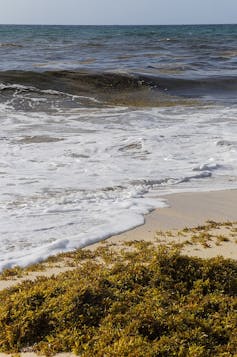
The Sargasso Sea is part of the Atlantic Ocean north-east of the Caribbean. Cut off from ocean currents, it is relatively becalmed and harbours drifts of sargassum seaweed.

Sargasso seaweed with waves and sandy beach.
Wikimedia Commons

In Rhys’s novel, the Sargasso Sea is a symbol of what separates Antoinette Cosway Mason Rochester and Edward Fairfax Rochester: disparate colonial and imperial histories and experiences; Rochester’s visceral racism and disdain for the mixing of cultures; his abhorrence and fear of the tropical landscape; and dispossession of Antoinette.

Rhys was born Ella Gwendolen Rees Williams in Roseau, Dominica in 1890, and lived as an expatriate in England and Europe from 1907 until her death in 1979. Wide Sargasso Sea was her fifth novel.

Her Welsh father William Rees Williams was a government medical officer who had settled in Dominica in the 1880s; her mother Minna was a white Creole whose family had lived for several generations in Dominica. Rhys’s great-grandfather James Potter Lockhart (1774-1837) had owned enslaved people and plantations. Rhys writes in her autobiography Smile Please that as he “was a slave-owner the Lockharts, even in my day, were never very popular. That’s putting it mildly”.

A prequel to Jane Eyre

Told in three voices — those of white Creole, Antoinette Cosway Mason Rochester, the young Englishman she marries, who implicitly reveals his own name to be Edward Fairfax Rochester when he renames her Bertha, and Grace Poole, Bertha’s keeper at Thornfield Hall — Wide Sargasso Sea is a prequel to Jane Eyre.


Alexis Orloff/flickr

Internal evidence in Jane Eyre establishes that Brontë’s Rochester and Bertha marry in 1819 and that Jane Eyre returns to the ruins of Thornfield Hall and Rochester in June 1834. Wide Sargasso Sea, though, is set in the late 1830s and the 1840s.

Rhys’s choice of historical setting enables her to draw on and try to work her way through planter class and Lockhart family mythology about the economic and social impact of the abolition of slavery.

Historian and poet Kamau Brathwaite has described plantation slavery cultures as “race-founded & race-foundered”. Rhys’s ancestors, the Lockharts, kept family secrets about the massive debts owed by James Potter Lockhart. The British government paid financial compensation to slaveowners for the freeing of enslaved people. The monies James Potter Lockhart anticipated receiving were paid to his chief creditor in part payment of debt.

In Jane Eyre, Brontë uses Bertha’s monstrosity to question the morality of British divorce law, which keeps Rochester in a marriage in which coverture treats husband and wife legally as one person.

Rhys, rather, exposes the absence of a Married Women’s Property Act in Britain at the time the novel is set, the vitiating reach of the system of primogeniture by which property was inherited by eldest sons, and too convenient use of the criminalisation of obeah. Obeah comprises healing and spiritual practices which draw on African-Caribbean religiosity.

In Wide Sargasso Sea, the Rochester family and Antoinette’s stepfamily organise an arranged marriage between Edward and Antoinette. The Rochesters do this for a £30,000 dowry that will secure the prosperity of a second son and the Masons for kinship links to a landed English family. The Masons do not make a separate financial settlement on Antoinette, leaving her no means if she abandons the marriage. Rhys’s Rochester finds the arranged marriage unmanning.

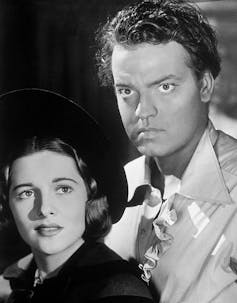
Jane Eyre and Edward Rochester in the 1943 film adaptation of Jane Eyre.
Wikimedia Commons

Christophine, rumoured to be an obeah woman, has been both a slave and servant of the Cosway and Mason families and is hired when Antoinette and Rochester honeymoon at Granbois, an estate in Dominica. When Christophine confronts Rochester over his ill-treatment of Antoinette, Rochester threatens to report her to the local police if she does not leave immediately.

The Rochester figure thinks of Antoinette, “Creole of pure English descent she may be, but they are not English or European either”. He is tapping into common British ideas at the time of the degeneration of white people in the tropics, ideas still current into the 20th century.

Brontë’s Rochester’s use of the word “intemperate” to describe Bertha marks her Creoleness as a tropical identity. White Creole degeneracy was seen to be an effect of the tropical climate, the physical and social environment, living in close, domestic proximity to non-white people, and the corrupting influence of slave ownership.

Rhys likens phases of her work on Wide Sargasso Sea to making a “complicated” patchwork quilt: unpicking, cutting, repurposing, and stitching of material as part of a new narrative design.

Part of her countering of Brontë’s characterisation of Bertha is the setting up of similarities between Jane and Antoinette: social dislocation after the deaths of fathers; complex patterns of having surrogate mother figures; education at a girls’ school, Lowood in Jane’s case and a convent in Antoinette’s case after her mother Annette, grieving over the death of a son, is institutionalised as insane; and experiencing prophetic dreams, for example.

A West Indian Flower Girl and Two other Free Women of Color. Oil painting by Agostino Brunias.
Wikimedia Commons

Rhys draws out the limits of the reliability of Antoinette’s and Rochester’s points of view. In Part One, Antoinette’s memories of childhood, the narrative highlights the narrow reach of her social experience and the ways her colonial values and language are shaped by reliance on the outlooks of her mother and her circle. Rochester finds the tropics and the fragility of European imperial enterprise disorienting and threatening. He fears being engulfed by them, by desire for Antoinette’s exoticism, and by the proximities of cultural and racial difference.

In developing the character of Rochester, Rhys draws not only on Jane Eyre, but also on William Shakespeare’s Othello and Macbeth, and Charles Baudelaire’s Le Revenant.

At 76 and in poor health, Rhys won the W.H. Smith Award for Writers and the W.H. Heinemann Award of the Royal Society of Literature for Wide Sargasso Sea. She accepted a CBE in 1978. Rhys insisted that fame and greater financial security from prizes, royalties and writing grants came “too late” in life for her to enjoy fully. At her death Rhys was working on autobiographical vignettes which, edited by Diana Athill, were published in 1979 as Smile Please: An Unfinished Autobiography.

Adaptations of the novel

Scenes from Wide Sargasso Sea were filmed for Sargasso! A Caribbean Love Story (1990), a University of the West Indies initiative. The 1993 Australian film of Wide Sargasso Sea was directed by John Duigan and produced by Jan Sharp. In 2006 Brendan Maher directed a telemovie of Wide Sargasso Sea for BBC Wales.

BBC 2006, Wide Sargasso Sea telemovie.

Rhys’s re-visioning of a classic has inspired writers from around the world to do the same and literary critics to theorise the dynamic of authors from colonial and ex-colonial cultures writing back to European texts and to examine the intersections of the treatment of ideas of racial, gender, sexual and class identities in women’s writing.

Wide Sargasso Sea has been seen, with John Fowles’s The French Lieutenant’s Woman (1969), as originating neo-Victorian literature. Research on Rhys’s larger body of writing has been reshaping the field of New Modernist Studies.

Since the 1980s, Charlotte Brontë and Jean Rhys have often been made and remade, indeed celebrated in each other’s images. “Wide Sargasso Sea has literally wound its way into … subsequent rewritings of Jane Eyre”, comments critic Armelle Parey.

As examples, artist Paula Rego’s early 21st-century lithograph series Jane Eyre was shaped by her reading of Wide Sargasso Sea and Bertha figures are given humanity and a human voice in David Malouf’s libretto for Michael Berkeley’s chamber opera Jane Eyre (2000) and in Coral Lansbury’s Ringarra (1985), a reworking of Jane Eyre in a contemporary Australian setting.

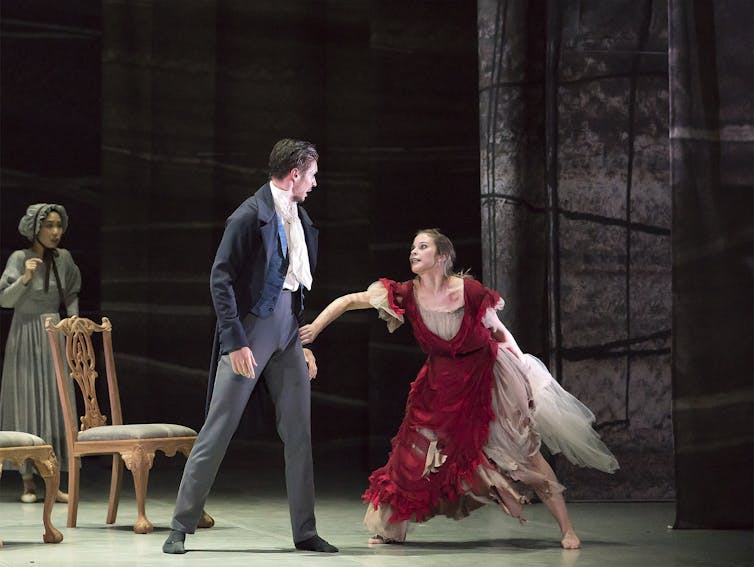
Confined at Thornfield Hall, Rhys’s Antoinette longs for a favorite red dress which powerfully reminds her of her Caribbean home. Bertha Mason now often appears in red dress on stage, as in Polly Teale’s Jane Eyre (1997), which rapidly became the most performed adaptation of Brontë’s novel around the world and the 2015 National Theatre Live production of Jane Eyre broadcast by satellite to cinemas.

Joseph Taylor as Mr Rochester and Mariana Rodrigues as Bertha Mason in Jane Eyre.
The Lowry/flickr

As my account of Rhys’s influence suggests, Wide Sargasso Sea has particularly engaged Australian writers, playwrights, filmmakers, sound artists and composers. Barbara Hanrahan’s narrative about Stella Edenbrough and Moak in The Albatross Muff (1977), for instance, is an allusive reworking of aspects of Antoinette’s relationship with Christophine and features colonial fortune-hunting.

Woman in the Attic (1987), by Gabby Brennan and Polly Croke, directed by Peter Freund, and performed by Whistling in the Theatre at the Anthill Theatre in Melbourne, blends adaptations of both Jane Eyre and Wide Sargasso Sea. Paul Monaghan directed and devised Obeah Night, performed at La Mama, Melbourne, in 1993. A combination of physical theatre, opera and spoken text, it is based on Part Two of Wide Sargasso Sea.

Brian Howard’s opera Wide Sargasso Sea was performed by Chamber Made Opera in Melbourne in 1997, directed by Douglas Horton. Jennifer Livett’s Wild Island (2016) reworks both Jane Eyre and Wide Sargasso Sea in one of its plotlines.

Most recently Willoh S. Weiland and Halcyon Macleod’s Crawl Me Blood, a sound and video installation, with a music track devised by Felix Cross, was staged in Hobart and Melbourne in 2018. Set in the Caribbean in 2018, the narrative develops motifs from Rhys’s novel to provoke audiences to think about the racialised legacies of colonialism there and in contemporary Australia.The Conversation

Sue Thomas, Emeritus Professor of English, La Trobe University

This article is republished from The Conversation under a Creative Commons license. Read the original article.
Unknown's avatar

Not My Review: Here And Now And Then by Mike Chen


Unknown's avatar

Finished Reading: Survival EMP (Book 1) – Solar Storm by Rob Lopez


Solar Storm (Survival EMP Book 1)Solar Storm by Rob Lopez
My rating: 3 of 5 stars

View all my reviews