
The link below is to an article that takes a look at the winners of the 2018 Costa Book Awards.
For more visit:
https://themillions.com/2019/01/2018-costa-book-award-winners-announced.html

The link below is to an article that takes a look at the winners of the 2018 Costa Book Awards.
For more visit:
https://themillions.com/2019/01/2018-costa-book-award-winners-announced.html
The link below is to an article that takes a look at coming changes to the ‘Man’ Booker Prize.
For more visit:
https://www.theguardian.com/books/2019/jan/27/booker-prize-trustees-search-for-new-sponsor-after-funding-dropped
The link below is to an article that takes a look at the 2019 PEN America Literary Awards Finalists.
For more visit:
https://pen.org/2019finalists/
The link below is to an article reporting on the longlist for the 2019 Dylan Thomas Literary Prize.
For more visit:
https://www.bbc.com/news/uk-wales-47073843
The link below is to an article reporting on the finalists of the National Book Critics Circle Awards For 2018.
For more visit:
http://www.bookcritics.org/blog/archive/national-book-critics-circle-announces-finalists-for-2018-award
Keyvan Allahyari, University of Melbourne and Paul Rae, University of Melbourne
When the author Richard Flanagan described Behrouz Boochani, a Kurdish-Iranian asylum seeker currently held on Manus Island, as “a great Australian writer”, he turned tired cliché into a pointed question: what makes an “Australian” writer?
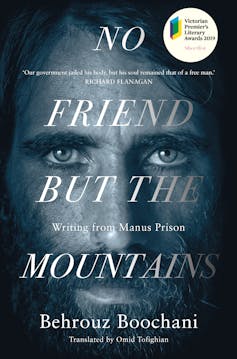
Flanagan was writing in the foreword to Boochani’s startling book No Friend But the Mountains (Picador), which last night won the $100,000 Victorian Prize for Literature, the richest of its kind in Australia. Boochani also claimed the award for non-fiction, worth another $25,000.
This triumph cements Boochani’s status as an Australian writer.
Boochani was arguably the most important literary phenomenon in Australian literature in 2018. In part, this is because of the distinctive qualities of No Friend But the Mountains, an epic work that moves between verse and prose, reportage and fantasy, the mundane and the historical. The fact that Boochani’s political memoir of what he calls Manus Prison was ever published in book form defies the odds.
A journalist and experimental documentary maker, Boochani wrote the book as text messages on his mobile phone, sending them, sometimes through several intermediaries, to the academic Omid Tofighian for translation into English.
Read more:
Truth to power: my time translating Behrouz Boochani’s masterpiece
Indeed, beyond the recognition of Boochani’s book as a singular achievement in its own right, its success this week highlights recent intersections of human rights activism and the vocal political position-taking of the Australian literary community.
The publication of No Friend But the Mountains was accompanied by numerous public events, such as one at the Greek Centre in Melbourne in October 2018, where the conditions detailed in the book were discussed and protested, and Boochani participated via Skype. The same month, A “National Day of Action” organised by Academics for Refugees featured public “read-ins” of the book on university campuses nationwide.
Other Australian authors have also used their voices to bring attention to the plight of asylum seekers. During her acceptance speech for her second Miles Franklin Award in August 2018, Michelle de Kretser chastised politicians for their treatment of refugees on Nauru and Manus Island. To illustrate her point, she read a list of names of asylum seekers who have died there in the past five years.
It is tempting to dismiss such actions as gesture politics by an urban elite. But each individual action has served to raise awareness of the Australian government’s policy of “offshore processing” for asylum seekers, and to fuse artistic expression with political activism in a particularly forceful manner.
At the same time, and perhaps uniquely in the history of Australian literature, No Friend has seen the translation of human rights awards into convertible cultural capital in the literary field. The author has been awarded the Anna Politkovskaya Award, the Amnesty International Award and Liberty Victoria’s Empty Chair Award. These humanitarian awards have confirmed Boochani’s rapidly acquired high profile in the literary field.
Last night’s news topped all of that to make Boochani the first “non-Australian” author to win the Victorian Premier’s Literary Awards. The Victorian government established these awards in 1985 to honour Australian writing. The specific challenge this poses to the definition of “Australian writing” can be seen as an intervention by the literary community into the field of politics. If a non-citizen who has never set foot on mainland Australia can win, who counts as an Australian author?
Read more:
Book Review: Behrouz Boochani’s unsparing look at the brutality of Manus Island
Ironically, perhaps, Boochani’s success simply mirrors some of the prevailing trends in Australian authorship in an age of global literary circulation, which allow writers to transcend national borders. An example of this phenomenon is Nam Le who rose to fame with the publication of his very successful The Boat. This collection of short stories, informed by the author’s diasporic identity and upbringing in Australia, soon earned him over a dozen major literary awards in Australia, the United States and Europe.
Conversely, Boochani’s status on Manus Island has been defined by deterrence, indefinite detention and the spectre of refoulement. The narrative of this experience is one that he seeks to address directly to the Australian people from beyond Australia’s borders.
With no clear solution to the indefinite detention of asylum seekers on Manus and Nauru in sight, the paradox of Boochani’s award success can only contribute further to public debate over the tangled logic of indefinite detention. It shows how cultural practices and political activism can be reconfigured to correspond with the newly created literary currency associated with refugee writing. For now, at least, Boochani is an “Australian writer” because Australia is morally implicated in what he wrote and how he wrote it.
Keyvan Allahyari, PhD candidate in English, University of Melbourne and Paul Rae, Associate Professor, English and Theatre Studies, University of Melbourne
This article is republished from The Conversation under a Creative Commons license. Read the original article.
The link below is to an article reporting on the longlists for the 2019 PEN America Literary Awards.
For more visit:
https://pen.org/2019longlists/
The link below is to an article that reports on the finalists of the 2018 Story Prize.
For more visit:
https://lithub.com/announcing-the-2018-story-prize-finalists/
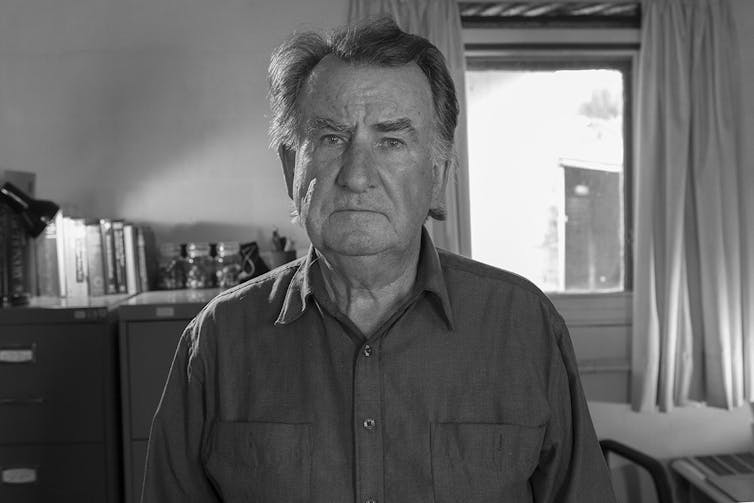
Anthony Uhlmann, Western Sydney University
I first came to Border Districts through a brief description of it given to me by Gerald Murnane when I first met him three years ago. I thought he had told me that he did not think it was as complex as another work he wrote around the same time, A Million Windows.
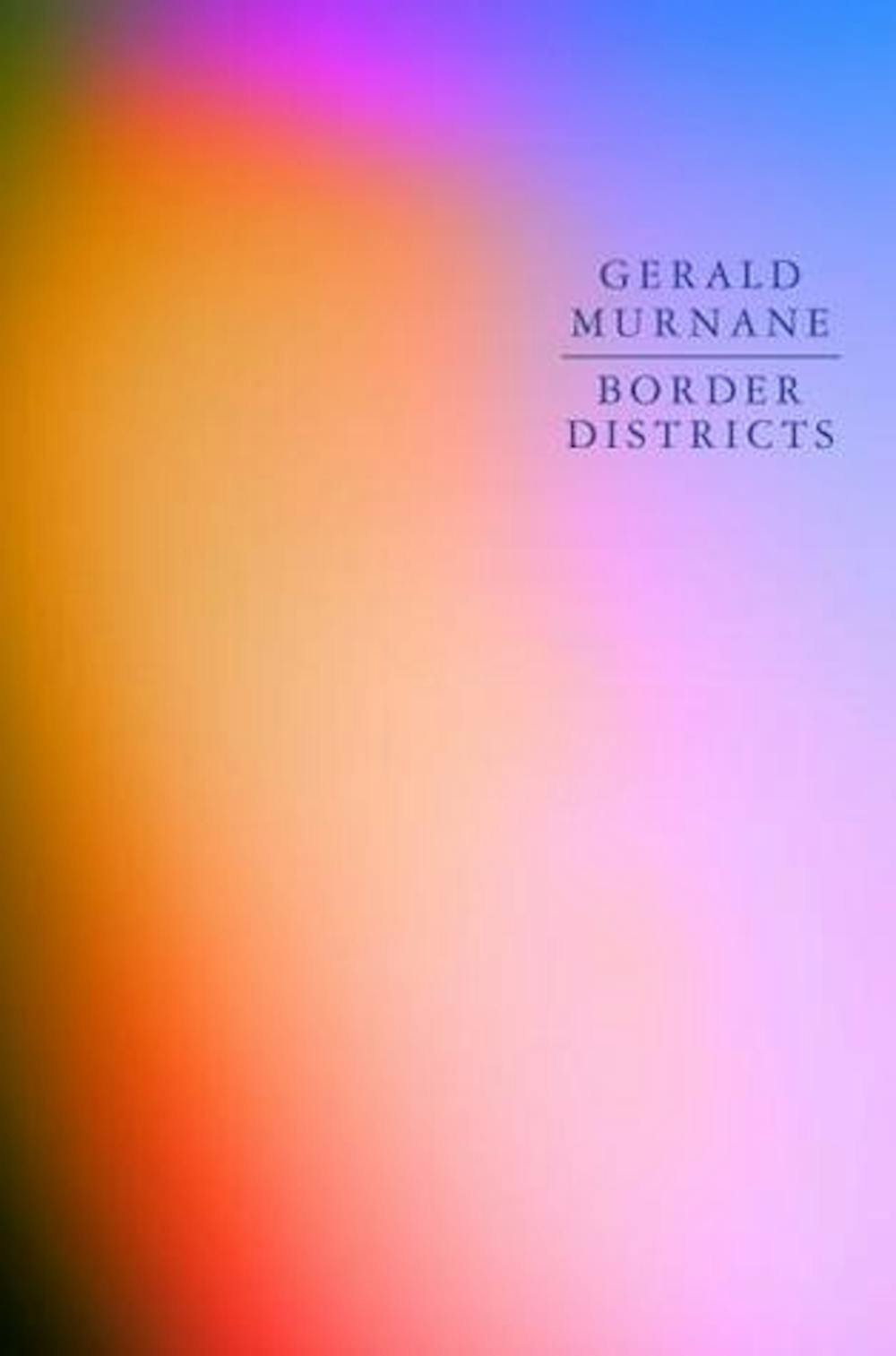
I clearly misunderstood the insight Murnane was offering into this book, which he also claimed would be his last. The more I read and reflect on Border Districts, the more profound and difficult it becomes.
Murnane, who has long been recognised as one of Australia’s finest writers, has also long been neglected. The Prime Minister’s Literary Award is the first major award a book of his has received. The recognition is long overdue and just in time. It shows that there is still a place in Australian life for works of art that challenge us to think; that unapologetically ask us to think about what things, the things we live among and perceive, mean.
The novel is situated within a framing setting much like present day Goroke in the border districts of Victoria and South Australia where Murnane now lives. Within this frame, the narrator moves between scenes of a remembered life, using motifs and images to draw these fragments together.
In Border Districts, the narrator claims that the work he is writing is not a work of fiction; rather it is “a report of actual events and no sort of work of fiction”.
He continues:
As I understand the matter, a writer of fiction reports events that he or she considers imaginary. The reader of fiction considers, or pretends to consider, the events actual. This piece of writing is a report of actual events only, even though many of the reported events may seem to an undiscerning reader fictional.
What comprise actual events, however, are the images that occur within the mind of the writer. In the passage just cited the narrator is imagining what it might be like to be within the mind of a long dead maiden “aunt” or cousin of a friend at whose house he stays when visiting the capital city of his state.
He imagines he might be sleeping in the room she slept in. He knows certain things about her, most tellingly, that she was being courted by a young man who went to fight in world war one and never returned. He pictures her associating images that concern a narrative of a possible life she might have led if her suitor had not died, if she had instead married him and moved with him to a farming district to work for a landowner.
The story he imagines would, in anyone else’s terminology, be called a fictional story, and yet the narrator insists that all of these image-events are actual. The heart of the matter is the feeling of understanding, or meaning, that is given to the reader. The narrator questions whether “feeling” is adequate to this process, and so uses the word “essence”.
The narrator of Border Districts speaks of the images with which meaning is created as fragments that are drawn together as a kaleidoscope draws together its fragments of colour.
The narrator sees his mind as drawing together these fragments into patterns, which then become meaningful to him, and this includes beliefs that once gave his life meaning, which he no longer believes in:
He might have begun to understand that even the images that he claimed no longer to believe in — even these were necessary for his salvation, even if they were not more than evidence of his need for saving imagery.
“Saving imagery” might mean “imagery that relates to salvation” or it might mean “imagery that is preserved”.
While unfashionable to do so, then, Murnane charges fiction with a heavy responsibility and claims immense value for it. Fiction needs to preserve or guard images that give our lives a sense of meaning.
Anthony Uhlmann, Director, Writing and Society Research Centre, Western Sydney University
This article is republished from The Conversation under a Creative Commons license. Read the original article.
The links below are to articles reporting on the 2018 Goldsmiths Prize for Fiction, including the shortlist and winner. The chronology of articles runs from top to bottom.
For more visit:
– https://www.theguardian.com/books/booksblog/2018/sep/26/novel-senses-of-new-the-2018-goldsmiths-prize-for-fiction-shortlist
– https://www.theguardian.com/books/2018/nov/14/robin-robertson-wins-goldsmiths-prize-innovative-fiction-long-take
– https://www.gold.ac.uk/goldsmiths-prize/
 At the BookShelf
You must be logged in to post a comment.