Keorapetse Kgositsile, the South African-born poet who passed away in 2018, lived in exile in the US from 1962 to 1975 and was at the centre of the country’s 1960s and ’70s Black Arts Movement. Informed by his South African and Tswana background, the poet makes a case for multiple inflections of voices, geographies, and histories in the making of transnational black modernity.
Analysing his work offers ways in which African poetry can disrupt dominant thinking on Black Atlantic studies, particularly Paul Gilroy’s
1993 text The Black Atlantic: Modernity and Double Consciousness. The Atlantic world referred to by Gilroy tells the histories of Europe, Africa and the Americas, two hemispheres joined by the Atlantic ocean and exchanging influence. Kgositsile’s poetry can be read as challenging the direction of influence from north to south.
Uhuru Phalafala considers the rich oral traditions passed on from Kgositsile’s grandmother and mother as a key system of knowledge that informed and shaped his black radical imagination. Aretha Phiri interviewed her.
Aretha Phiri: Your colloquium paper situates the celebrated poet-in-exile at the centre of and as uniquely influential to the Black Arts Movement?
Uhuru Phalafala: It was a time when African Americans were seeking to define their identities, with Africa as key metaphor. Kgositsile happened to not only come from that continent, but also used his mother tongue, Setswana, spiritual practices, and music from southern Africa in his work. By interweaving Tswana vernacular with the black diaspora parlance, he affirmed African America’s legitimate affiliation to the continent, as seen in the example of his influence on “the grandfather of rap music”, The Last Poets.
He also came from a mass liberation movement that was experienced in politics of armed confrontation, generated solidarities with other liberation organisations, and adept in decolonial politics. His work became a resource for his contemporaries. Today, when we look at, for example, Kendrick Lamar’s influential album, To Pimp A Butterfly, and the number of references to South Africa in it, we must understand it as grounding itself in the foundation that people such as Kgositsile laid in the sixties and seventies. South Africa will always have an enduring place in the African American imagination.
This is diaspora consciousness. He also admired Nina Simone’s sound, which he called “future memory” to signal that it is not new or emergent, but reminiscent of the protest tradition of South Africa.
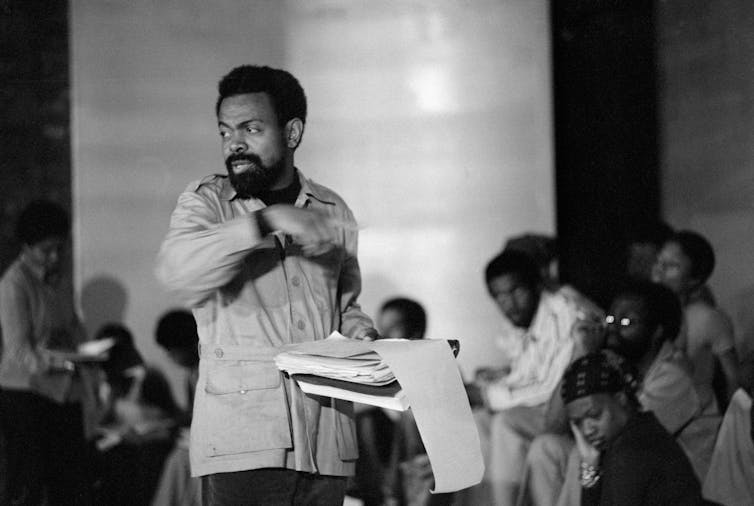
Amiri Baraka (Leroi Jones), 1975, best known member of the Black Arts Movement that embraced Kgositsile. Bettmann/Getty Images
Aretha Phiri: In focusing on the oral traditions inherited from his female lineage, you make a case for the specific use in his poetry of a “matriarchal archive”?
Uhuru Phalafala: The colonised come from different conceptions of time (temporalities). Colonial temporality is not only racialised but also gendered. The arrogant coloniser inaugurated the beginning of history in his assumption that we did not have a history before he arrived. “History” began with the arrival of the coloniser, and marched forward in a linear fashion. With time, black men accessed modernity’s time – through missionary education and working in the mines – at a different period than women.
We now know that when anti-colonial wars were fought they were primarily and solely about the emergence of the black race from subjugation. When women and queer people attempted to bring the particularities of their oppression to the agenda they were told to wait. When independence was achieved those doubly and triply marginalised did not attain their independence at the same time with their countries because they continued to fight against black patriarchy.
If we backtrack we can then make certain observations. A type of double location of time was constructed when the colonisers’ history was instituted: theirs and ours. Because of lack of contact with missionary education and industrialisation, loosely speaking – of course there were women who accessed modernity – women occupied a different temporality. One of continuity from precolonial to colonial time, with its attendant way of life, philosophies, worldview, oratory practices, etcetera.
Aretha Phiri: In describing this archive, how do you guard against potential accusations of advancing a gendered essentialist claim?
Uhuru Phalafala I do not wish to rehash gendered essentialist claims. This is just historical process. My grandmother never set foot in a classroom but has a world of knowledge, so to say. Men who were later ferried to missionary schools, or those who went to work in the mines en masse, existed in a double location of time. The flow from precolonial to colonial time was interrupted by modernity’s time, fashioning a coexistence of the two.
These men came face to face with the colonial alienation and “first exile” from their home cultures which were denigrated by colonial assumptions of superior culture. This is how temporality is also gendered. The women who suffered the blows of this history, mostly in the rural countryside, continued to live life on their own terms, without their men. They continued to practise their indigenous ways of knowing – which are not an event but an ongoing process.
These knowledges evolved with time and did not freeze in some dark past. They progress, transform, and evolve as humans do. Today when we call for decolonisation we are actually wanting to retrieve this knowledge that was silenced and erased by the multiheaded hydra of colonialism. Where can we find it if not from those who had little contact with this hydra? In my view black women, in the context of southern Africa, are that “matriarchive”.
The book Black Radical Traditions From The South: Keorapetse Kgositsile and the Black Arts Movement by Uhuru Phalafala will be published shortly.
Crime and detective fiction continues to top bestseller lists across the world, spawning TV series and films. In the hands of African writers, though, the genre offers a particularly textured world view.
That Ever-blurry Line Between Us and the Criminals: Re-Visioning Justice in African Noir is a colloquium paper by Sam Naidu. It focuses on African crime and detective fiction as a complex and disruptive variety of classic, Western crime and detective fiction.
Aretha Phiri: Your paper addresses classic noir and African noir, sub-genres of crime and detective fiction?
Sam Naidu: African crime fiction builds on and extends classic crime fiction to explore philosophical questions about identity, knowledge and power. Referencing the same dark aesthetic of classic noir – characterised by themes of alienation, pessimism, moral ambivalence and disorientation – African crime fiction amplifies political awareness. And, occasionally, it destabilises the conventions of classic crime fiction, which arose during the aftermath of the two world wars when the world was in the grip of the Cold War.
Aretha Phiri: What is the ‘political’ relationship between classic and African crime fiction?
Sam Naidu: African crime fiction builds on and extends classic crime fiction’s exploration of philosophical questions about identity, knowledge and power in the modern world.
Politically, there is a deliberate shift to consider fundamental questions about Africa and its specific requirements. The novels I have read demonstrate a preoccupation with the ambiguity of justice. They express a poignant, Afro-pessimistic lament for a continent and its injustices.
They provide this focus in terms of colonialism and the power differentials of neo-colonialism in Africa. So, you find that economic exploitation and inequalities, race, war, genocide, corruption and state capture are common subject matter.
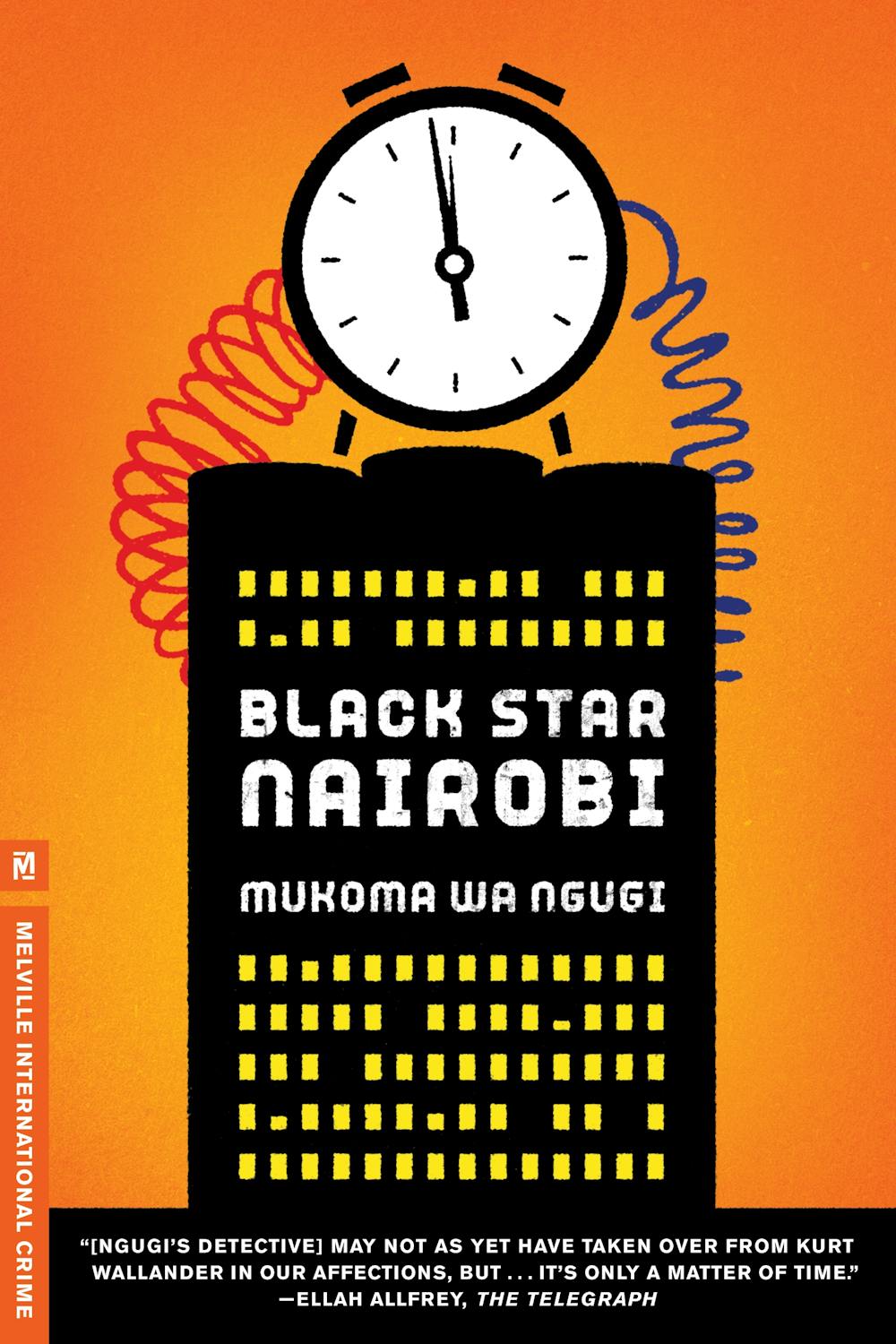
Aretha Phiri: You read Mũkoma wa Ngũgĩ’s novel Black Star Nairobi (2013) as a valuable way of demonstrating the disruption of the classical by the African? What’s it about?
Sam Naidu: It’s set mainly in Nairobi, Kenya, in 2007. It’s the eve of Barack Obama’s election as the first black US president and presidential elections in Kenya. O (short for Odihambo), a Kenyan former policeman who still works part-time for the police, has teamed up with Ishmael from the US, a former cop. Together they’ve formed a detective agency, Black Star, which is given a lucky break when O’s former boss hires them to investigate the murder of an unidentified person whose corpse is found gruesomely disfigured in the Ngong Forest outside Nairobi.
Melville House International, 2013
Aretha Phiri: You conclude in your paper that the predominant effect of African crime fiction is not so much a ‘dark’ sensibility as it is one of obscurity and poignant Afro-pessimism?
Sam Naidu: I reach this conclusion based on the literary texts. This is not my opinion of the state of the continent. The novels are very dark. They overwhelm the reader, with the mess, tragedy, garbage, cruelty, indignity and inhumanity that Africans face in reality. Due, of course, to historical and ongoing systemic oppression and corruption. For characters – and for readers – this can lead to muddledness and despair.
But the novels also offer a counterpoint – in the form of fearless detectives on the quest for justice. In the midst of the disquiet there is a faint flicker … It is this murkiness, taken to new depths, which makes African crime fiction particularly effective and significant. For example, the novel closes with a highly lyrical and metaphorical scene of African musicians in a market. Ishmael describes the competing rhythms of African music – a metaphor for the strife and power struggles of the continent. Despite the discord he detects a harmony –- “a tense harmony”.
Aretha Phiri: How does Black Star Nairobi manage to disrupt classic crime fiction?
Sam Naidu: For example, through its innovative use of setting, characterisation, pace and conclusion to comment on ontological, existential and ethical themes to do with justice, it’s an exemplary African noir text. It explicitly extends classic noir into the realms of neo-noir.
Its blend of previous influences, use of setting, and its specific thematic concern with Afro-pessimism prompt the observation that African crime fiction extends classic noir into new literary, geo-political, and moral territories.
Murkiness, so characteristic of classic noir sensibility, mutates, at times, in African crime texts such as Black Star Nairobi and Leye Adenle’s When Trouble Sleeps, to a deliberate generic nebulousness. And thematically, to a moral blurriness so obscure as to disorient the reader and dismantle the basic binaries on which classic detective and crime fiction were predicated.
In classic noir or classic crime fiction there are clear detective heroes set up against indisputable villains (think of Sherlock Holmes) but in African crime fiction the heroes and villains often exchange roles or are complicit in some way.
Aretha Phiri: You describe this evolving genre as occupying a kind of borderland. How does this connect to your research in migration and diaspora?
Sam Naidu: In my work on literature of migration and diaspora I am mainly concerned with the experience of migrants. I am, however, also interested in how literary genres migrate. What processes of cross-pollination occur as a result of diaspora?
Aretha Phiri: What do you see African crime fiction contributing to Black Atlantic scholarship?
Sam Naidu: As a form of postcolonial, transnational writing, African crime fiction points to the relations between Africa and America. Gilroy’s Black Atlantic puts forward that race is fluid and ever-changing, rather than static. That it is transnational and intercultural, rather than national. I am arguing that African crime fiction represents race as a transnational or diasporic phenomenon while at the same time engaging with the notion that race is closely bound up with both nationality and ethnicity.
So, look at the detective hero figure Ishmael. He is an African-American who returns to Africa, gesturing, of course, to transatlantic slavery and colonialism. He’s neither African nor American – he is both. The novel explores his hybridity. At the same time, the novel presents Kenya as nation marred by ethnic clashes and wide-scale civil unrest.
African crime fiction, being the second most popular literary genre on the continent after romance, is worthy of study because of its accessibility, wide-spread, diverse readership and also its capacity for socio-political analysis. It is the ideal vehicle for such pertinent ‘detection’.
For those looking from the global North, African literature is often marketed in a narrow way, comprising worthy stories of resistance, written in an uplifting and sober realist mode. Seen from the continent itself, this view has long been brushed aside by the effervescence and animation of ongoing literary experimentation and creativity. I approached literary academic colleagues from South Africa, Kenya and Uganda to choose – and share their thoughts on – one of their favourite books of African fiction. The resulting finger-on-the-pulse list offers a bookshelf that speaks to the vibrancy of both contemporary and older African literature. – Isabel Hofmeyr
Waiting by Goretti Kyomuhendo
Susan Kiguli, Makerere University
The 2007 novel is set in the time of the war to get rid of the dictator Idi Amin. The main character, the adolescent Alinda, and her family have to hide from fleeing soldiers. It is an atmosphere of great angst and fear tinged with hope for the arrival of the liberators, who are a merged force of Ugandan exiles and Tanzanian soldiers. This short novel ingeniously handles the matter of the Lendu woman, the Indians and the Tanzanian soldiers with a blend of suspicion and optimism for the unknown and mystique suggested by foreigners.
The Feminist Press at CUNY
The narrative thinks through the gaps and anxiety created by war, where ordinary citizens do not know what to expect. It describes the violence, victims and loss that come with lying in the path of fleeing soldiers and pursuing liberators. The setting is a village near Lake Albert at the border of the Democratic Republic of Congo.
This is a novel depicting a situation of post-independence internal and cross-border conflict. It is a worthy read particularly because it resonates with this time when the world is tense under the weight of a marauding pandemic.
I used to think war meant violent clashes between human beings, but since the arrival of the coronavirus I think it includes human beings confronting disease.
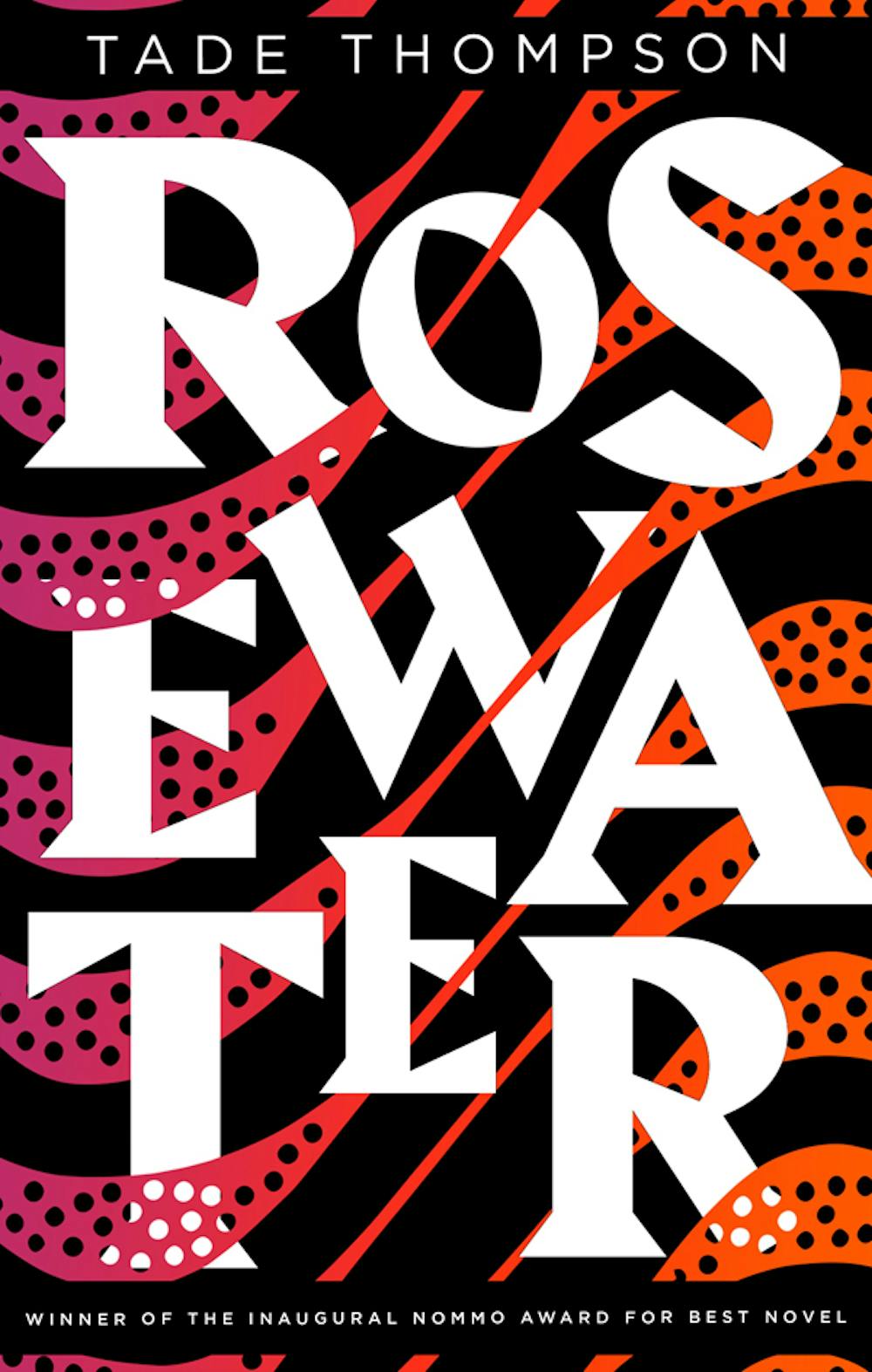
The Wormwood Trilogy by Tade Thompson
Nedine Moonsamy, University of Pretoria
Tade Thompson’s The Wormwood Trilogy (Rosewater, The Rosewater Insurrection, The Rosewater Redemption) has been widely acclaimed. It was recently nominated for the 2020 Hugo Award for Best Series. For African readers, it is a watershed moment, marking the arrival of an African science fiction trilogy that we so needed and deserve. Set in the near future, these novels capture the interaction between an invading alien population, the Homians, and the citizens of Nigeria.
All three books hit the sweet spot between exploring what science fiction means to us – who, as the characters often point out, have been historically subjected to alien invasions – and the pleasure of simply imbibing well-written and pacy genre fiction.
Orbit
Teeming with alien life, Wormwood is an extra-terrestrial biodome that embeds itself in Nigerian soil. Its sprawling tentacles provide organic power and, contrary to what one might imagine, people flock to the surrounding community of Rosewood because Wormwood also performs ritualistic acts of healing on sick human bodies.
In contrast to greater Nigeria, where power outages are still frequent and homosexuality illegal, Rosewood has all the makings of an African techno-utopia. Yet at the heart of the trilogy is the niggling question about whether it is ever possible for humans and aliens to co-exist with symbiotic ease.
The novels make use of sharp-witted, hard-boiled detectives to probe further into alien motives; Thompson’s female characters, in particular, are a testament to his talent as they bristle with an unsentimental brand of Nigerian humour. Getting to know these characters makes reading the trilogy rewarding in itself, but Thompson’s world building is a force to be reckoned with. The interweaving of chaotic Nigerian streets, alongside organic extra-terrestrialism and imagined human technologies, is handled skilfully, allowing readers to delve into a seamless African biopunk universe that makes us marvel at the potential of what is to come.
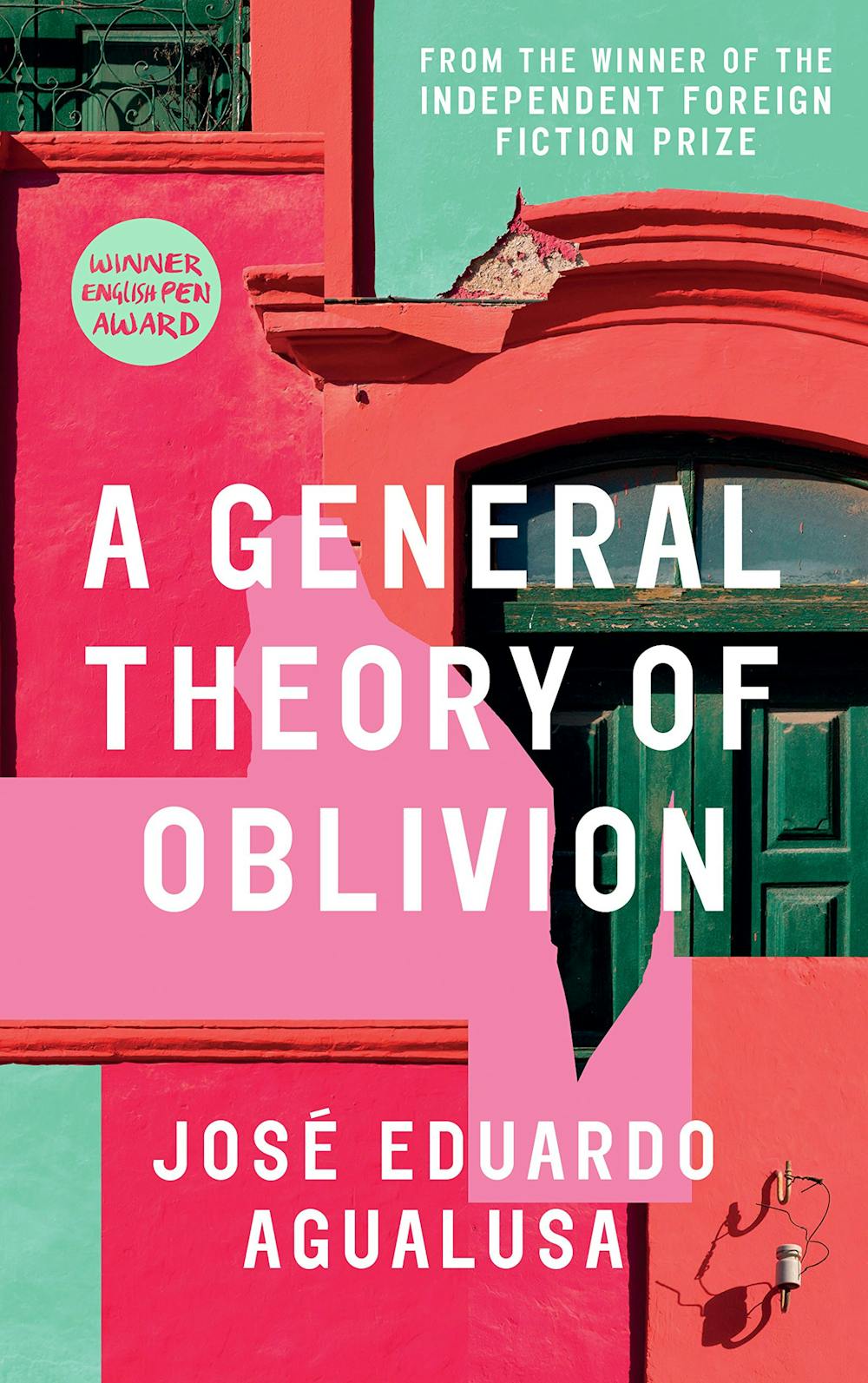
A General Theory of Oblivion by Jose Eduardo Agualusa
Grace A Musila, University of the Witwatersrand
On the eve of Angola’s independence in 1975, Portuguese expatriate Ludovica Fernandes Mano goes into isolation in her penthouse apartment in the city of Luanda, out of fear of the post-independence future. She seals off her apartment with bricks, withdrawing into a new life with her dog and her garden on the terrace, which keeps her fed. Her only connection to the outside world – which soon descends to a 27-year civil war – is her radio.
Angolan novelist Jose Eduardo Agualusa’s A General Theory of Oblivion is a riveting tapestry of history, detective fiction and poetic interludes, interwoven with poignant turns of phrase and absurdities delivered with a straight-faced candour. It is a perfect lockdown read, not because it is about isolation, but because Ludo’s self-isolation is filled with hilariously narrated encounters and adventures, including a trained messenger pigeon that keeps two young lovers in contact. Ludo uses small pieces of diamond to trap pigeons for food; but when her trap delivers a messenger pigeon with a note attached to its leg, Ludo decides to set it free so the lovers might receive their message – and with it, her swallowed diamonds.
Ludo spends her time writing out her reflections initially in notebooks, and later the walls of her apartment, using charcoal. We get to read excerpts of her poetic reflections; from whose philosophical musings the novel draws its title.
Harvill Secker
Her encounter with the messenger pigeon draws an intricate network of the world she has withdrawn from, into her sanctuary, eventually ending her 30-year isolation when a young burglar accidentally discovers her and forms a bond with the now elderly lady.
The novel is a patchwork of short, interconnected stories. They weave a web of connected lives which lend it an expansive and colourful range, through short, pacy, thriller-style chapters, interspersed with Ludo’s poetic reflections. This is a book you read when you want to be surprised, and to have your imagination stretched by startling turns of phrase, odd logic and lyrical philosophical observations about life.
Warm, occasionally absurd, humour renders the inevitable tropes of war-time – torture, executions and profiteering – bearable. Part of the novel’s charm lies in its eccentric characters, like the self-fashioned “collector of disappearances” who tracks disappearances of planes off air spaces, as well as more ordinary disappearances, such as the journalist who apparently vanished right before people’s eyes.
This 2015 novel is a stunning canvas of the historical devastation of the Angolan civil war and richly imagined textures of ordinary people’s everyday worlds told with great warmth and inventiveness.
Freshwater by Akwaeke Emezi
Sam Naidu, Rhodes University
At a time when the world is experiencing unprecedented restrictions to mobility, Freshwater offers a searing and illuminating narrative about various kinds of border-crossing and about being multiply-located. In this unusual, at times shocking, bildungsroman, Emezi’s protagonist, Ada, is the child of a Nigerian father and a Malaysian mother. From early childhood, and then increasingly as she approaches adulthood, it is clear that Ada exists in a liminal zone: between spirit and human worlds; between cultures and nations; and between sexualities and genders. In retrospect, the novel’s dedication, to
… those of us with one foot on the other side,
that is, to those who do not claim one single affiliation, but both or many, is economically apposite. This liminality is portrayed with astonishing vividness and through varying perspectives, often drawing on traditional Igbo mythology and cosmology to create imagery which is unsettling and challenging.
Faber and Faber
As an “African” novel, 2018’s Freshwater is innovative and irreverent in the way it marries African religious and cultural beliefs with “Western” geography, religious iconography and cultural symbols, ultimately defying literary categorisation, just as its protagonist repudiates predetermined categories of identity. (The novel is set in Nigeria and the US, and it deliberately presents Ada as a hybrid, transnational character.)
It also contains a rare combination of sensuous, brute physicality with the spiritual. By the end, it is clear that Ada cannot be claimed by her homeland or her diasporic home as she transcends even the human-spirit border to become something which is indefinable, “as liminal as is possible – spirit and human, both and neither”. This bold, contemporary novel captures the porousness of borders, which may prove disquieting for the reader, but also very liberating. In these times of lockdown, Freshwater transports the reader boldly to unexplored, uncanny territory.
The Old Drift by Namwali Serpell
Sarah Nuttall, University of the Witwatersrand
I recommend Namwali Serpell’s 2019 Zambian tour de force The Old Drift. This is a long book – all 563 pages of it – by a writer whose prose and outsize imagination will hold you spellbound throughout. It’s a postcolonial family saga across three families and three generations. It is also the story of the great Zambezi river, and its capaciousness, capriciousness and capacity for revenge in the face of human-centred attempts to control it.
Penguin Books
Serpell unfolds her canvas along two trace-lines of Zambian modernity: the building of the Kariba Dam, the biggest man-made dam in the world at the time of its construction; and Edward Nkoloso’s Zambian National Academy of Science, Space Research and Philosophy and his attempts to send the first Afronauts to the moon. The novel is grounded in precisely rendered historical events but also has a partially speculative sweep. Its final scenes take place in 2023, with a smart techno-twist. The story is narrated not just from a human perspective but from that of a mosquito swarm, a “bare ruinous choir, a chorus of gossipy mites”.
This is a book that asks for your time – and now you’ve got it. Read. And be riotously rewarded.
Hunger Eats a Man by Nkosinathi Sithole
Manosa Nthunya, University of Pretoria
It may as well be the case that at this very trying historical time, it may be difficult to appreciate the offerings of fiction. After all, on a daily basis, we are being asked to read and reread the world, asking ourselves if the catastrophe that has befallen us will pass. What comfort, then, can fiction offer when the very future is at stake? But read on we must – and we do – because it remains an activity that allows us to see how large the world is, despite seeming very small at the moment.
Penguin Random House
A book that could be worthy of consideration is Nkosinathi Sithole’s Hunger Eats a Man (2014), a novel that examines the devastating effects of poverty in the rural areas of South Africa.
Much of the literature that is being produced in contemporary South Africa has a bias towards the city, with often very little reflection on the experiences of people who live in rural communities.
In this award-winning novel, Sithole opens a world that is marked by deep adversities, exploitation and an increasing disillusionment with a nation still learning how to crawl. It is a book worth reading, and reflecting upon, as we start counting down the inevitable costs of this catastrophic moment.
Broken Glass, by Alain Mabanckou
Tom Odhiambo, University of Nairobi
Alain Mabanckou’s fiction may not be known in much of Anglophone Africa but translation is making it easily available. Mabanckou’s 2005 Broken Glass, set in a bar, Credit Gone West, is a good read for times likes these – easy enough for someone interested in light reading; deep enough for someone looking for a nuanced depiction of African modernity. For those who can no longer access their beloved pub, it will remind you of the sounds, smells, sights, that only a bar can produce, from the beginning to the end.
Serpent’s Tail
The tragic life of Broken Glass, the narrator, who appears “self-quarantined” in the bar, mirrors those of the different characters in the society, whose stories we hear in the many anecdotes he tells. The dark humour, satirical tone, endless allusions, and lack of conventional punctuation (sometimes making it tedious to follow the tale), all build up to a dystopic story. But, in the end, the bizarre story in Broken Glass should surely lead you to search for more of Mabanckou’s novels.
Life and Times of Michael K by JM Coetzee
Aretha Phiri, Rhodes University
The oldie on the list, from 1983. An award-winning novel by JM Coetzee, Life and Times of Michael K evokes a desperately depressing sense of subjective fragility and existential nothingness – concerns for which the author is well known.
Ravan Press
Set during a period analogous to civil war, it’s a story about a seemingly insipid and largely enigmatic character whose journeys across and encounters with inhospitable landscapes and unwelcoming communities from the Western Cape province to the Karoo see him, at the novel’s end, gathering water from a well with “a teaspoon and a long roll of string”.
And yet Michael K’s vacuous itinerancy also suggests something pathetically hopeful about the existential journey and signals something ironically prescient about the will to endure. Michael K is a sobering read for these testing times.
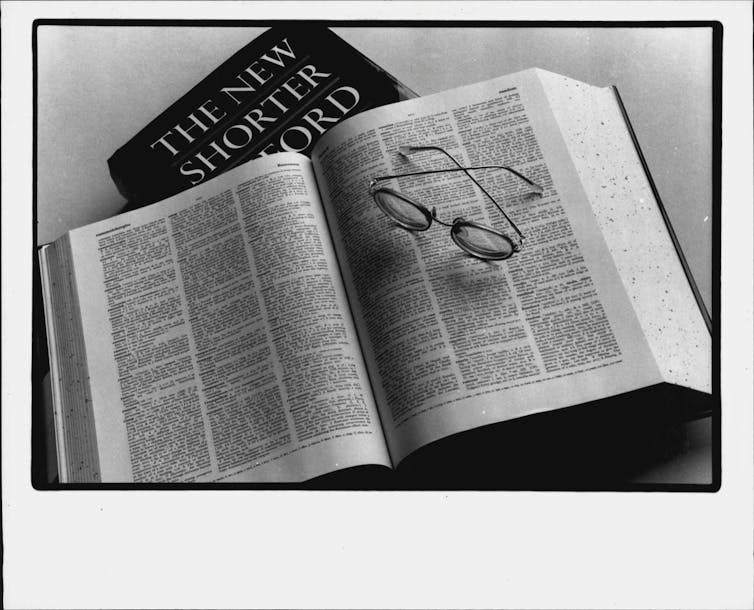
Nigeria was recently in the spotlight when the Oxford English Dictionary announced that its January 2020 update included 29 Nigerian English words.
The reception, in both the traditional and new media, was nothing short of sensational. Most Nigerians expressed a great sense of pride in the fact that the unique ways in which they use English were being acknowledged internationally.
The Oxford English Dictionary said in the release note:
By taking ownership of English and using it as their own medium of expression, Nigerians have made, and are continuing to make, a unique and distinctive contribution to English as a global language.
Interestingly, the idea of Nigerians owning English is the fulcrum of my doctoral research. In it, I found that increasingly Nigerians are demonstrating a strong sense of ownership of the English language, and in particular their use of it.
The inclusion of Nigerian English words in the Oxford English Dictionary is, in a sense, a recognition of the tremendous efforts by scholars of Nigerian English many of whom have produced discipline-shaping research. This has included four published dictionaries of Nigerian English.
These developments indicate that Nigerian English has indeed come of age. They also validate the concentric circle model developed by Professor Braj Kachru, the father of world Englishes research. This avers that the ‘outer-circle’ varieties of English (where Nigerian English belongs) is ‘norm-developing’. In other words, that Nigerian English is adding to the norms of English.
I think the English, indeed the English-speaking world, should be thankful to Nigeria for this historic gift.
So how were the words chosen?
As the Nigerian consultant to the project which saw the inclusion of the words, I have insights into the process the team underwent in adding them. These include the rationale for adding them, and the enormous significance the inclusion holds for the English language.
How, and why, new words are added
The Oxford English Dictionary has a wide variety of resources to track the emergence of new words and new senses of already existing words.
The Oxford English Corpus is one. This is an electronic database of different types of written and spoken texts specifically designed for linguistic research. In the case of Nigerian English and other World English varieties, for instance, suggestions of new words and senses come from the corpus, reading books and magazines written in the English varieties in question as well as looking at previous studies, and the review of existing dictionaries, if any.
Once there is a list of candidates, a team of expert editors at the Oxford English Dictionary looks closely at the databases to ensure that there are several independent instances of the words being used. And how they are being used.
Other factors that are considered include the time period over which words have been used, as well as their frequency and distribution. But there’s no exact time-span and frequency threshold. Some words – such as Brexit – are relatively young but were included quickly because of the huge social impact they had in a short space of time. Others are not used frequently but are included because they are of specific cultural, historical, or linguistic significance to the community of their users. An example is ‘Kannywood’, the word describing the Nigerian Hausa-language film industry, based in the city of Kano.
It’s clear therefore that the editors don’t simply select the words or senses that appeal to them. Instead, they are guided by use, which links in with the prevailing thought in lexicography and linguistics more generally: that the remit of dictionaries and linguistic research is not to prescribe how languages should be used but to describe how languages are being used.
Words are added because the Oxford English Dictionary recognises that English is a universal language. It believes that including words from varieties of English all over the world enables it to tell a more complete story of the language.
These varieties also reflect the unique culture, history, and identity of the various communities that use English across the world. Nigerian English is a good example. Like other English varieties, it is a living ‘being’ with its own unique vocabulary, encompassing all sorts of lexical innovations. These include borrowings from local languages, new abbreviations, blends and compounds.
Failure to capture such words would deny English an opportunity to grow. It would also deny the flavour of what the speakers of these varieties contribute to the development of English.
What does it mean for English?
One of the reasons previous world languages such as Egyptian and Ancient Greek ceased to exert dominance internationally was their inability to keep pace with developments around the world.
Perhaps this is one factor that clearly distinguishes English. It has demonstrated a capacity for growth by keeping its borders open, helping it to develop from a West Germanic dialect spoken in a small island into a world language. English is now spoken by about 1.75 billion people – a quarter of the
world’s population. This includes first and second language speakers.
One way English grows is by admitting new words and senses not just from other English varieties but from virtually all languages of the world. For instance, English has had the word ‘postpone’ since the late 15th century, but it was through India that its opposite ‘prepone’ entered English in current use during the 20th century.
Similarly, Nigerian English is reintroducing the verb meaning of ‘barb’, which existed in 16th century British English.
This is how English maintains its dominance. In addition, the Internet has given today’s Oxford English Dictionary editors wider access to non-traditional sources of linguistic evidence. This has enabled them to widen and improve the dictionary’s coverage of world varieties of English, affirming Oxford English Dictionary’s claim as “the definitive record of the English language”.
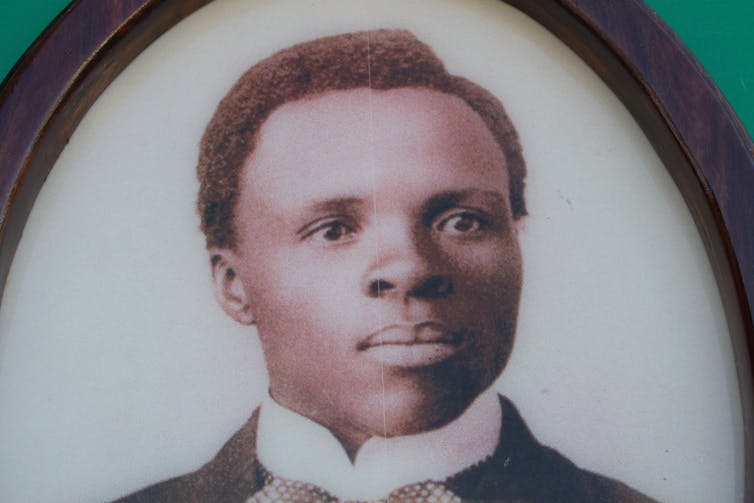
Over the last decade, inquiry into the life and work of South African writer, intellectual and politician Solomon T. Plaatje has been spurred by a series of hundred-year anniversaries.
In 2010 it was the centenary of the formation of that dubious political and geographical structure, the Union of South Africa, which would shape the focus of Plaatje’s many projects until his death in 1932. It was also in 1910 that he founded his second Setswana-language newspaper, Tsala ea Becoana.
Two years later, Plaatje was one of the eminent group who formed the South African Native National Congress, which would later become the African National Congress (ANC). In 2012, when the ANC celebrated its centenary, Plaatje’s name was often cited, although he has been more readily associated with a cosmopolitan, erudite – “elitist”? – strand in the ANC that did not fit with the populist brand emphasised by the party in the shift from Thabo Mbeki’s presidency to Jacob Zuma’s.
There was another hundred-year anniversary in 2016, this time of the publication of Native Life in South Africa. The book was Plaatje’s seminal response to the passage of the Natives Land Act of 1913. This notorious piece of legislation set a traumatic tone for the dispossession, segregation and violent oppression that would characterise late-colonial and apartheid South Africa as the 20th century wore on.
Here was Plaatje in strident “Give back the land!” mode, an appealing figure to those advocating for more radical approaches to redressing the disenfranchisement of black South Africans.
The South African Native National Congress delegation to England, June 1914. Left to right: Thomas Mapike, Rev Walter Rubusana, Rev John Dube, Saul Msane, Sol Plaatjie. Unknown photographer/Wikimedia Commons
The year 1916 is also significant in the field of Plaatje studies because it was when he contributed his short bilingual English-Setswana essay “A South African’s Homage” to the Book of Homage to Shakespeare.
Here again, we have the paradox of Plaatje writ large. The “Homage” signals his future undertaking as a translator of Shakespeare’s plays into Setswana. He saw this as complementary work to his wider promotion of the language. Yet his affinity for Shakespeare cannot be disconnected from his attachment to Britain and to its empire, his role indeed as an imperial apologist, which can seem difficult to reconcile with some of his other political and literary credentials.
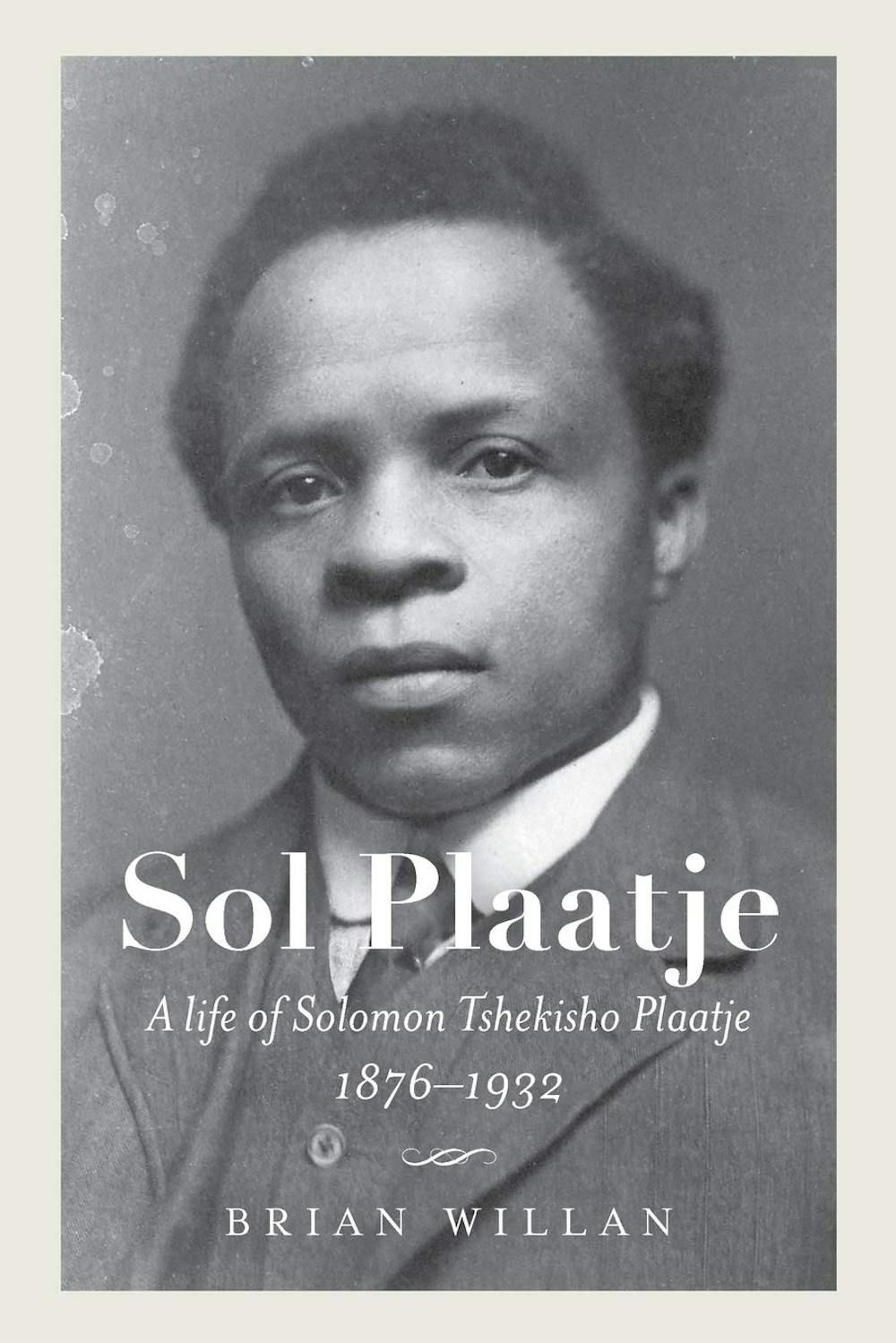
To make sense of this requires a deeper understanding of Plaatje’s historical context as well as his life’s trajectory, and the people, convictions, accidents and circumstances that shaped it. Happily, this is made possible by historian Brian Willan, who has chosen Plaatje as the main focus of his own life’s work and who knows his subject better than anyone else. Willan wrote a biography of Plaatje in 1984. The book seemed definitive until, in 2018, Jacana Media published his Sol Plaatje: A Life of Solomon Tshekisho Plaatje, 1876-1932.
Jacana Media
A magisterial biography
“Magisterial” is a word too often applied to biographies that don’t quite merit the moniker. But in the case of Willan’s book it is entirely apt. This may not be the final word on Plaatje. Nevertheless, it is a text to which all future scholars and researchers working on Plaatje will have to refer.
At almost 600 pages it is an encyclopaedic tome, documenting Plaatje’s life and times in rich detail. The true achievement of the book, however, is that it manages to do this in an engaging manner and with a prose style that – while never “chatty” – imagines a kind of conversation with the reader.
One can follow the chronological narrative, through 18 chapters marking out distinct periods in Plaatje’s astonishingly productive life. Alternatively one can dip into and out of its pages, navigating its riches via the index, or even flipping idly between phases and themes.
Fortunately, Willan is neither zealous nor jealous when it comes to his subject. His collaborations with other scholars have yielded fruit in various other Plaatje-oriented publications. In 2016, Wits Press published a collection of essays on Native Life co-edited by Willan, Bhekizizwe Peterson and Janet Remmington.
Mhudi gets a new collection
Later this year, Jacana will publish a similar collection, co-edited by Willan and fellow Plaatje biographer Sabata-mpho Mokae, focusing on Plaatje’s novel Mhudi. I am fortunate to be one of the contributors to this volume.
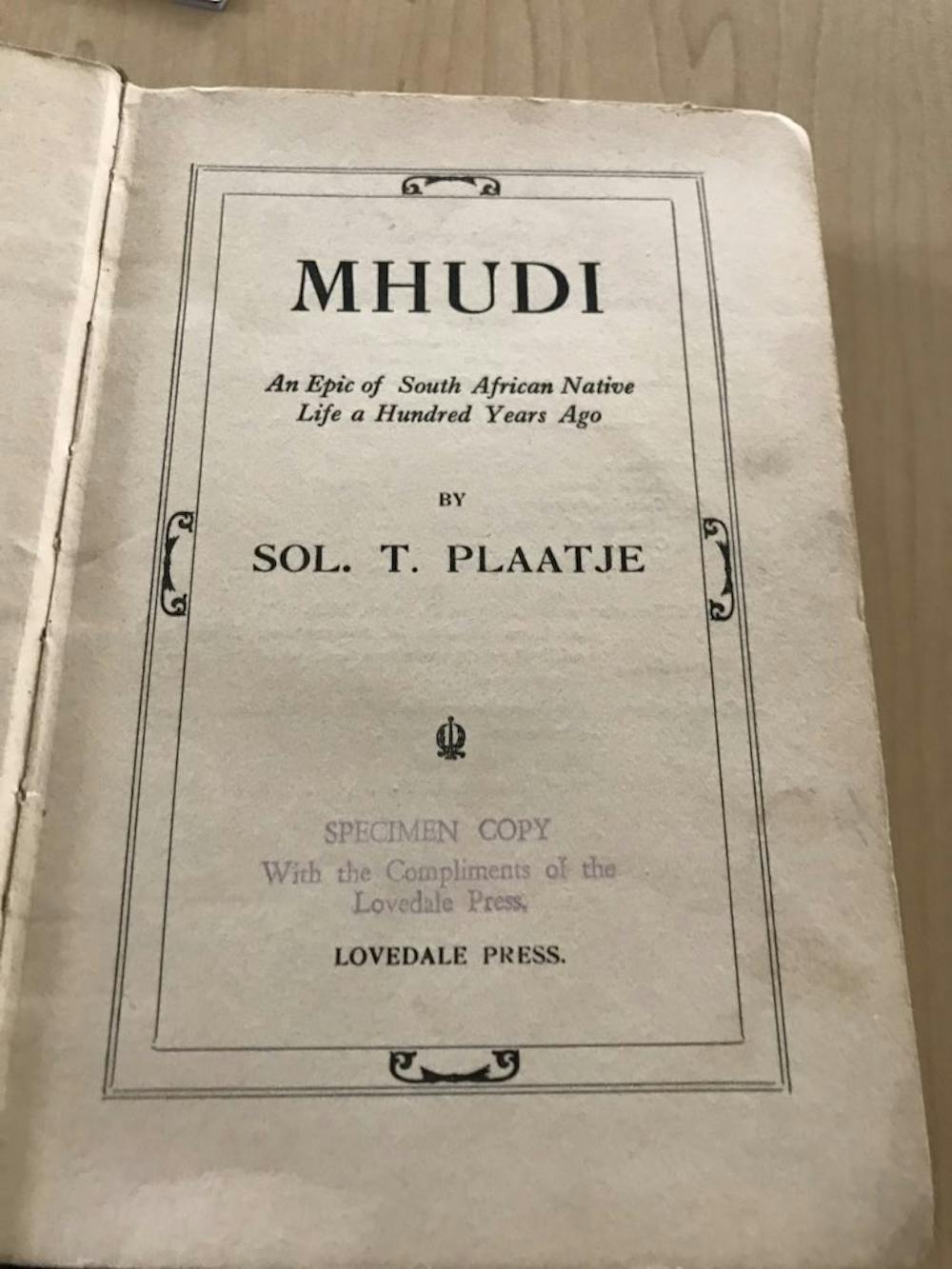
Mhudi appeared in 1930 after an exhausting 10-year battle to get it into print. So 2020 marks another centenary of sorts.
First edition of Mhudi, Lovedale Press. Blessing Kgasa/Kanye Records Centre/Twitter
What are we to make of this novel, with its eponymous heroine and her husband Ra-Thaga, whose lives coincide with major colonial-era clashes in the first half of the 1800s?
It seems, by turns, to be an imperial romance and an allegory that is critical of empire; a naïve vision of interracial cooperation and a reminder that history is relentless in its cycles of violence.
Is it an affirmation of tribal tradition, or a feminist riposte to patriarchal culture? Is it a patchy experiment in need of an editor, or a genre-busting proto-postmodern pastiche influenced as much by oral narrative traditions as by the polyvocality of Shakespearean drama?
What is beyond question is the significance of Mhudi as the first novel in English by a black South African writer.
The next wave
Strandwolf’s new edition of Mhudi.
The novel’s original publisher, Lovedale Press, sadly faces the prospect of closure. But it is encouraging to note that other independent publishers have committed their resources to keeping Mhudi current. Blackman Roussouw’s Strandwolf imprint has brought out a new edition. Jacana also has plans to publish another edition alongside Willan and Mokae’s critical volume on the novel.
It is to be hoped that, by the time we reach the centennial celebration of Mhudi being published by Lovedale (1930) and the centennial commemoration of the author’s death in 2032, the new wave of scholarship on Plaatje will have challenged readers to grapple with this enigmatic, protean polymath anew.
Literary prizes do more than offer recognition and cash to writers and help readers decide what book to choose. They shape the literary canon, a country’s body of highly regarded writing. They help shape what the future classics might be.
But what if Africa’s biggest prizes are awarded by foreign territories; former colonial masters? Or what if African-born writers in the diaspora are routinely chosen as winners over writers living and working in Africa?
Debates have been raging over these issues in recent years, especially relating to the lucrative Caine Prize for African Writing.
The words ‘award’ or ‘prize’ imply that there was a selection process and the best emerged as winner. The awarding of value to a text through the literary prize industry involves selection and exclusion in which some texts and authors are foregrounded, becoming the canon.
The scholar John Guillory argues, in addition, for the need to
reconstruct a historical picture of how literary works are produced, disseminated, reproduced, reread, and retaught over successive generations and eras.
The issues are complex and the landscape is changing. My research covers how prizes create taste and canon – but also the increasing role played by literary organisations to shape those prizes and hence the canon.
Writers’ organisations mainly provide a social space for writers. There are dozens across the continent. Sometimes they include a publishing avenue, workshops, fellowships and competitions. In general, they have aimed to fill gaps left by mainstream literary bodies such as publishers, universities and schools, and book marketers.
To understand the process of creative writing on the African continent it’s useful to focus on the interrelationship between prize bodies and writers’ organisations in contemporary literary production.
The Caine, the Commonwealth and writers’ organisations
The Commonwealth, an initiative of the Commonwealth’s agency for civil society, awards unpublished fiction. The Caine, a charity set up in the name of the late literary organiser Sir Michael Caine, only accepts already published work. The cash reward that comes with winning these prizes is a major factor in their popularity on the continent.
But they are also significant in the growth of the short story genre. This is why I am interested in the partnerships that have emerged between prize bodies and writers’ organisations. Together they are influencing literary production structures from creative writing training to publishing and marketing texts.
Both the Caine and the Commonwealth prizes have partnered with African based writing organisations – like Uganda’s FEMRITE and Kenya’s Kwani? – to organise joint creative writing workshops.
The Caine holds annual workshops for its longlisted writers. These mostly take place in Africa, working with local writers’ organisations. Sometimes the resulting writing is entered into competitions and in this way, the prize body both produces and awards literary value.
Many of these writers’ organisations are headed by people who were canonised through the international prize, and sometimes the writing trainers and competition judges are also previous winners.
With such links it then becomes important to analyse the literary texts produced within these networks with the awareness of the importance of a text’s social, cultural and political context. The literary product becomes a reflection of the different systems of power at play.
Power at play
A good illustration of this power play can be found in best-selling Nigerian novelist Chimamanda Ngozi Adichie’s short story Jumping Monkey Hill. It tells of a fictional creative writing programme for African writers run by the British Council. The story, set in South Africa, narrates the experiences of the writers, who are all expected to write about African realities in order to have their stories published internationally. The writers come to the workshop ready to learn how to improve their skills but encounter setbacks mainly because the trainer has a preconceived idea of what ‘plausible’ African stories should be. These writers have to understand the power play in place and then make a choice.
Jumping Monkey Hill acknowledges the role played by the creative writing institution in the production of literature as a commodity that must fit market demands. For this reason, the increasing investment of African based writers’ organisations in the literary production scene can also be understood as a political move. It is also an effort to influence the literature coming out of the continent and shape the canon.
An advert for a workshop run by writers’ organisation Short Story Day Africa. SSDA
Why writers’ organisations matter
Contemporary African writers’ organisations are deliberately involved in canon formation by taking an active role in the production and distribution of literature. They understand that the uneven distribution of economic and cultural capital results in misrepresentations, or lack of representation, within the canon.
Writers’ organisations such as FEMRITE, Kwani?, Farafina, Writivism, Storymoja and Short Story Day Africa, among others, are active in the literary industry through publishing, creative writing programmes and providing access to major award organisations and international publishers.
They are, in the process, contributing to canon formation.
Short Story Day Africa, for instance, pegs its yearly competitions on the promise that the winning stories will be automatically submitted for the Caine Prize. In fact, the 2014 Caine winning story and one other shortlisted story were initially published in its anthology Feast, Famine and Potluck (2013).
In the African academy, creative writing is usually offered as a single course within a larger programme or is available only at selected universities. This has resulted in a market gap that has been quickly filled by writers’ organisations. They fill this gap by offering short term courses on various aspects of creative writing. This is in part because the local literary organisation possesses the cultural capital necessary to link writers to prize organisations and publishers, and therefore to global visibility.
To fulfil their mission in the 21st century, libraries, archives, museums and galleries must engage in a wide variety of new activities.
Libraries, for example, house collections of printed works but must now also provide access to online journals, e-books, multimedia, Africana and archival treasures, images, government publications and legal material, posters and artworks. Collection, development, cataloguing, lending, preservation and replacement must take place online as well as in hard copy.
Academic libraries – and even some school ones – are now embedded in core teaching programmes. They support education and innovation and provide services for people with disabilities. Library services include teaching, literacy programmes, research support, data management, and copyright and plagiarism awareness training.
As knowledge hubs, libraries must meet the various information needs of a country’s citizens. In addition, they promote authors and publishers by purchasing, collecting and preserving their works for perpetuity.
Without access to library and archival collections, creativity and innovation would be almost impossible.
But South Africa’s current copyright law dates back to 1978, and is completely inadequate, outdated and irrelevant in a digital world. It has been a barrier to access to information for far too long.
There is merit in all these arguments. But my view is that there is positive news in the Bill’s provisions for libraries, archives, museums and galleries. For example, it will ensure that valuable documentary records and cultural heritage can be preserved for future generations.
What has been missing
The current Copyright Act has no provisions for libraries, archives, galleries and museums. As an afterthought, limited provisions were included in Section 13 regulations for libraries and archives.
Digitisation is the main form of preserving material in the 21st century. Yet the country’s copyright law doesn’t permit it. This causes serious problems for libraries, archives, museums and galleries. They are currently unable to digitise any of their works without first having to get copyright permission, and to pay high copyright fees.
Such entities have large collections of fragile material which can no longer be handled. The only way to preserve this material – and to make it accessible – is to digitise the content. For example, there are media libraries full of Beta and VHS video tapes, film reels and other material that can no longer be accessed as the technologies are obsolete.
To convert these works to current technologies, libraries and related entities must first get copyright permission. In many instances, rights-holders ignore the requests, or are impossible to trace (making them orphan works). In some cases permission is denied. Collections end up with gaps in them.
These issues affect access to archives, which are used for research, teaching and learning, creating and innovating and sharing information. They get in the way of the civic right to access information provided in the South African Constitution.
Lack of adequate and appropriate copyright limitations and exceptions for libraries, archives, museums and galleries have inhibited or prevented them from carrying out their statutory mandates. They have large collections of valuable documents, posters, artworks, artefacts, newspapers, recordings, and images that cannot be reproduced or even accessed. Often this is because the rights-holders cannot be traced, and there are no provisions for orphan works in the current law.
On top of this, restrictive licences and contracts often prevent libraries and similar entities from carrying out their duties. Cross-border exchanges aren’t permitted. Interlibrary loans are permitted in the current law, but this does not extend to digital sharing.
Positive news
The new Copyright Amendment Bill takes cognisance of existing international conventions and treaties, treaty proposals and foreign laws. It also draws on the country’s Constitution and the excellent EIFL Model Copyright law, drafted by information specialists in various countries, including South Africa. This document is a practical guide to assist librarians, as well as their legal advisors and policy-makers, when national laws are being updated. It is designed to support access to knowledge and the public interest mission of libraries.
The Bill also implements the principles of the 2015 Cape Town Declaration, signed by South Africa and 12 other African countries. This includes the commitment
to encourage the implementation of fair and balanced copyright laws to facilitate access to information for all.
The Bill doesn’t use the word “digitisation” specifically. But it will allow libraries, archives, museums and galleries to engage in preservation, digital curation and format-shifting. This will ensure their collections are preserved and made accessible for future generations.
They will be able to share information and replace lost or stolen works. They will also be able to provide information, images, recordings or other media for historical events, exhibitions and educational purposes.
Legal deposit libraries will also finally be able to carry out their statutory mandates. These include that they collect, preserve and make accessible the country’s cultural heritage and historical documentary records in the digital space.
The Bill has been given the thumbs up by the International Federation of Library and Institutions – the leading international body representing the interests of library and information services and their users. It represents over 2.3 million libraries worldwide, serving over a billion users. It has labelled the Bill both progressive and practical. The International Council of Archives, the umbrella organisation that promotes international cooperation for archives and archivists, has also formally supported the Bill.
This suggests that South Africa is about to have a copyright law that could serve as a precedent for other countries.
Ghana has a rich folkloric tradition that includes Adinkra symbols, Kente cloth, traditional festivals, music and storytelling. Perhaps one of Ghana’s best known folk characters is Ananse, the spider god and trickster, after whom the Ghanaian storytelling tradition Anansesem is named.
Ghana also has some of the world’s most restrictive laws on the use of its folklore. The country’s 2005 Copyright Act defines folklore as “the literary, artistic and scientific expressions belonging to the cultural heritage of Ghana which are created, preserved and developed by ethnic communities of Ghana or by an unidentified Ghanaian author”.
This suggests that the legislation, which is an update of a 1985 law, applies equally to traditional works where the author is unknown and new works derived from folklore where the author is known.
The rights in these works are “vested in the President on behalf of and in trust for the people of the republic”. These rights are also deemed to exist in perpetuity. This means that works which qualify as folkloric will never fall into the public domain – and will never be free to use.
The 1985 Act only restricted use of Ghana’s folklore by foreigners. The 2005 Act extended this to Ghanaian nationals. In principle, this means that a Ghanaian artist wishing to use Ananse stories, or a musician who wants to rework old folk songs or musical rhythms must first seek approval from the National Folklore Board and pay an undisclosed fee.
This is deeply problematic. Following independence in 1957, many artists have explicitly and habitually drawn on Ghana’s folk traditions to develop today’s creative industries. The 2005 Act means that the current generation of cultural practitioners must either seek permission to use and rework their cultural heritage, or look elsewhere for inspiration.
There is clearly a balance to be struck between safeguarding and access when it comes to the protection of a state’s cultural heritage. However, it is important to acknowledge that while Ghana’s legislation appears to tip towards protection at the expense of access, it restricts growth in the creative industries by discouraging artists from engaging with their national cultural heritage.
History of protection
Ethnomusicologist and musician John Collins has noted that the development of the 2005 Act was partly in response to US singer Paul Simon’s use of a melody taken from the song ‘Yaa Amponsah’ for his 1990 album ‘The Rhythm of the Saints’.
Simon attributed this melody to the Ghanaian musician Jacob Sam and his band the Kumasi Trio. But on further investigation the Ghanaian government asserted that the melody was a work of folklore and so, belonged to the state.
From this, two things are clear. Firstly, in Ghana folklore belongs to the state and not the originating communities that predate the modern state. Secondly, Jacob Sam received no recompense for Simon’s use of the work, with all royalties owed on the work flowing back the government.
There are a number of issues here that set Ghana apart from other African states.
Many states allow for the use of folklore by nationals and if a fee is applicable then it is paid as a royalty based on revenue raised. This is the case in all three states bordering Ghana: Togo, Burkina Faso and Cote d’Ivoire. Consequently, if an artist in one of these countries reworks folklore but makes no money, then no money is paid for that use. If the work becomes successful then the artist and the rights holder benefit.
However, in Ghana, the law states that payment is paid prior to use and so prior to any profits made. This potentially adds to the cost of production and so discourages use of folklore.
The other issue here is who owns the rights in national heritage. In many countries, such as Kenya, the originating communities retain the rights to their expressions of cultural heritage.
However, in Ghana the rights are vested in the office of the president. This means that any moral or financial benefit that results from uses of folklore flow to the office of the president, rather than being used to support continued safeguarding and growth of cultural heritage within communities.
Guarding against exploitation
Though Ghana’s present regime may appear draconian, there are compelling reasons why such protective measures are required.
Firstly, Ghana’s cultural heritage – its traditional knowledge and traditional cultural expressions – have been and continue to be exploited by non-Ghanaians in international markets with no beneficial interest flowing either to the state or to the originating community.
To give this some context, Simon’s use of Yaa Amponsah was only one use of Ghana’s cultural heritage in the developing of a new, and commercially successful, work. More recently, there were a number of press reports in Ghana that the Ghana Folklore Board intended to sue the producers of Marvel’s Black Panther for the unauthorised use of kente cloth in some of the characters’ costumes.
The Folklore Board clarified these reports in a press release, saying it did not intend to sue – but rather, wished to discuss attribution. Kente is specifically named as an object of protection under the 2005 Act and the current proliferation of unauthorised cheap kente designs entering global markets from China presents a significant challenge. Attribution, in this case, would ensure that cinema goers across the world would associate kente with Ghana, bringing a traditional craft to a global audience.
The board faces a particularly complex challenge. It must balance safeguarding traditional heritage with allowing creative artists room to reuse and rework elements of that heritage in a way that does not add to the cost or complexity of production.
Though the threat of unfair exploitation is real, equally real is the potential threat to the creative industries and the future development of Ghana’s living heritage if the country’s artists move away from their cultural heritage.
In 2007 the then President of China, Hu Jintao, delivered a speech to South Africans acknowledging the benefits of a strategic partnership. He also stressed that the connection is not merely pragmatic. It must, he argued, serve to honour and deepen the countries’ long abiding friendship in the future.
The idea of friendship has undoubtedly informed the nature of Sino-African engagement. But if we use contemporary science fiction as a barometer, African sentiment towards China appears more inclined towards dystopian forecasts.
Science fiction writing often serves as a thought experiment that explores shared and hidden beliefs whose material and political reverberations lie further in the future. Various short stories portray how China’s economic ascension, operating under the guise of African development, uses technology as a means to invade and control Africa.
Narratives of this kind surface neo-colonial fears that a “new scramble for Africa” seems imminent. But they also provide a speculative arena to interrogate how we ultimately perceive the value, use and future of Sino-African political friendship.
As I’ve explored in my research, this means that science fiction can serve as an imaginative production of political theory. It intercedes in ways that international relations cannot because of the confines of diplomacy.
Three stories
My research focused on three short science fiction stories from Africa.
In the first, Tendai Huchu’s “The Sale”, China has taken control of Zimbabwe through the production of a corporatised state called CorpGov. It’s a surveillance state that leaves no room for political dissension. Zimbabwe has been purchased by China in a piecemeal fashion. It is now set to lose its last free portion of land in a final sale. When a young Zimbabwean man fails to prevent the sale of this remaining plot of land, he succumbs to despair and puts himself in the path of a Chinese bulldozer.
His suicide evokes a sense of profound helplessness and warns that China will need to be vehemently counteracted in the near future to protect Zimbabwe’s already breached borders. Huchu’s narrative provides a sharp sense of clarity that makes the story incredibly impactful.
The pathos of “The Sale” holds a mirror up to China. It communicates an earnest appeal for more humane engagement. Yet the heaviness of its dystopian narrative also breeds a spirit of nihilism or Afropessimism. This overrides any sense of African accountability in the degenerative state of future Sino-Zimbabwean relations.
Abigail Godsell’s “Taal” (an Afrikaans word meaning “language”) is self-conscious in this regard. It’s set in the year 2050, after a nuclear war between China and America has left the entire globe in a state of desolation. As a result, the South African government willingly signed over ownership of the country to China in exchange for protection.
The central protagonist, an especially resentful young woman named Callie, has joined a militant rebel group in a covert attempt to overthrow the Chinese. But after injuring a soldier, she pulls off his helmet and is surprised that he converses in Afrikaans because, to all other appearances, he is Chinese. The fact that he speaks Afrikaans implies he is a South African. She is stupefied by the exchange: it highlights her simplistic understanding of what the enemy should look like.
This uncanny revelation undoubtedly draws attention to the spectral presence of Chinese-South Africans who have not received due recognition as bona fide citizens.
Callie, who is initially critical of Chinese propaganda, begins to read her positionality as a South African freedom fighter on equally problematic terms. Her defensiveness drops and she confesses that South Africa was caught off-guard amid a global crisis. The country did not have a sufficient national security plan; China has offered significantly more protection than the South African government was capable of at the time.
Godsell’s introspective narrative shift focus away from Chinese agitation. It allows the reader to consider the nature of South African apathy by conveying that the country may not lack a fighting spirit but, unlike China, lacks the necessary foresight and organisation to bolster the nation.
Negative representations of China in the African imaginary gesture at the idea that a certain amount of envy informs the continent’s responses to China. They also suggest that African countries can benefit from emulating China’s uncompromising nationalistic and commercial drive. This possibility is more fully explored in Mandisi Nkomo’s “Heresy”.
Nkomo’s narrative is set in the year 2040. South-South interactions challenge the global status quo. China has risen in global economic rankings. But South Africa has not fallen under its sway: the nations are caught up in a highly competitive space race. South Africa is determined to not be outdone by the Chinese and channels its resources in meeting this goal.
“Heresy” conveys how Africans can construct an invisible enemy out of China by exponentially accelerating South African development. This light-hearted narrative assumes the challenge of imagining the current tension of Sino-African relations otherwise. It shows how friendly rivalry can inadvertently lead to African progress.
Rethinking friendship
In their book Friendship and International Relations, academics Andrea Oelsner and Simon Koschut write that it is:
necessary to think of international friendship not as something that is merely being performed at the intergovernmental level but as something that is being enacted in the day-to-day activities and imaginations at all levels of society.
This certainly includes science fiction narratives that present us with a “succession of literary experiments, each one examining a small part of a much larger image and each equally necessary to the greater vision”.
Through these short stories, it immediately becomes possible to consider how China-Africa relations need not result in Chinese neocolonialism and African exploitation. They offer us more creative approaches to political friendship by reinventing and reinterpreting the roles of both parties in their narratives.
Similarly, pursued in this way, the future of China-Africa relations need not be seen as a singular act of solidarity that demands repeating. Instead it could be viewed as a more fluid encounter that allows for mutual investment in world-building projects while also providing enough objective distance to nurture difference and autonomy.
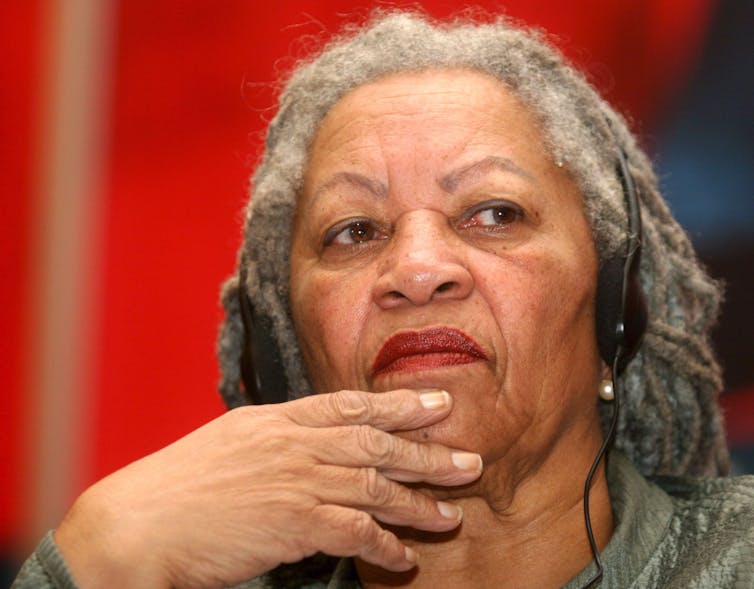
I first encountered Toni Morrison during my undergraduate years at Rhodes University in South Africa where her Pulitzer Prize-winning novel, Beloved (1987), was taught as part of an American Literature course.
It moved me in ways that no other academic account of transatlantic, African American slavery had. Beloved is set in the 19th century. It tells the story of a runaway slave who commits infanticide rather than seeing her child returned to slavery. As with Morrison’s entire fictional oeuvre, the novel profoundly embodies and humanises black life.
Part of what motivated Morrison – who has died at the age of 88 – was impatience at how black literature was typically taught as sociology but was considered intellectually and artistically bereft.
In her Tanner lecture series delivered at the University of Michigan in 1988, she defiantly stated, in defence of a generically marginalised African American presence:
We have always been imagining ourselves … subjects of our own narrative, witnesses to and participants in our own experience … We are not, in fact, ‘other’. We are choices.
The inspiration provided by her fictional writing and critical scholarship around the ideological, artistic and scholarly place of black literature helped carve out an imaginative and actual space for the likes of me – a black African female – within a predominantly white and male, largely Eurocentric literary and intellectual establishment.
Today, I teach at the same university where I first read Beloved and discovered this remarkably talented, intellectually formidable African-American woman novelist. And her work continues to echo. Not just for me, but for the new generation of literature students who cross my path each year.
A complicated place in the canon
In some ways, perhaps Morrison is even more relevant in South African universities today than she’s ever been. Race is a topic that’s simultaneously sanitised and amplified in the country’s everyday discourse. Morrison’s determined refusal to shy away from race reverberates across the Atlantic, resonating with students who still live the enduring political and economic legacies of racial colonialism and apartheid.
On the face of it, the country’s demands for social redress would seem to align with Morrison’s thinking. But a closer reading shows how her fiction strains against the confines of parochial societal interpretations and exercises. It makes the demand for more than superficial change implemented along purely racial lines. It insists on an interrogation and re-imagining of the entire architecture and workings of race.
This reveals how Morrison’s place in both the African-American and global literary canon is quite complicated. It also makes clear why it is that she appeals to so many of my students, across the (proverbial) divide. Each year I watch students from varied racial, social, cultural, economic and gender (or gendered) backgrounds engage with her novels in my classroom. Their readings are intuitive and discerning. This yields often interesting and vigorous discussions, and even heated debates, that reflect the complexity and applicability of her experiences and intellect – and theirs.
Take her debut novel, The Bluest Eye (1970). It provides a delineation of racial self-hatred, incest and familial violence that critiques the deleterious effects of white hegemony. But it also controversially explores and confronts the internalised delimiting contours of black counter-narratives.
The book’s feminist focus on the sexual abuse of women speaks to the damaging effects of patriarchal ideologies and practices within black communities. It resonates with all people in South Africa – a country with incredibly high rates of gender violence.
Jazz (1992) is another Morrison novel whose complex existential narratives require equally complex interpretations. Structurally, it mimics the musical genre’s polyvocal, sometimes cacophonous, intonations to trace the lives of African Americans across time and space. It’s a tough read for two reasons.
First, it requires that students have an appreciation of the technical workings of the artistic cultural form that is jazz. Second, the novel demands from them a critical inquiry into and participatory reading of the experiences of “a people”; of histories that are both outside of and intersect with their own.
This is particularly important at a time when calls are rampant in South African higher education circles for the “Africanisation” of curricula. These calls appeal to contemporary nationalist demands and are in direct contrast to Morrison’s stated intolerance of “lazy, easy, brand-name applications”. Instead, she and her work insisted on the painstakingly “hard work” of non-prescriptive and interrogative, “border-crossing” analysis.
We die. That may be the meaning of life. But we do language. That may be the measure of our lives.
And that is the measure of Toni Morrison’s life. Her dense, demanding prose reflects our continued need – in post-apartheid South Africa’s university classrooms, and elsewhere – to meditate critically and consciously upon our own fragile and imperfect existences. Her narratives put forward morally responsive and socially transformative ways of being in the world. Morrison’s legacy, then, is not just to literature: it is to the imperatives of social justice and to the ideals of humanity not yet realised.
























 At the BookShelf
You must be logged in to post a comment.