The link below is to an article that looks at buying a Kindle (with a gripe or two thrown in). I’m not sure it is as confusing as it is made out here – I researched my latest Paperwhite just over 6 months ago and found the details easy to follow.
Review: Richard Flanagan, The Living Sea of Waking Dreams (Penguin Random House, 2020)
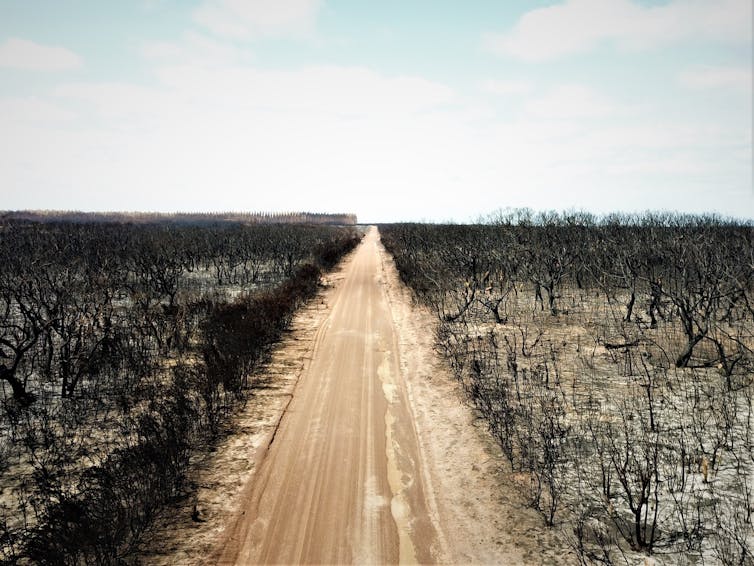
The Living Sea of Waking Dreams, Richard Flanagan’s eighth novel, is one of a slew of novels one expects to emerge from the shadow of the 2019–2020 bushfire season that darkened the skies of eastern Australia for weeks on end, scorching forests from Byron Bay to Kangaroo Island.
A rolling incineration of large swathes of the continent, the sky itself seemed to have been on fire, from the uncanny pink-disk sun of smoke-choked Sydney in November and December to the apocalyptic scenes at Mallacoota on New Year’s Eve.
In Flanagan’s novel the collapse of the planet’s ecosystems happens in the background. The story itself is mainly occupied with something which must be trivial by comparison: the dying of 87-year-old Francie in a Hobart hospital.
Francie’s three children have come together to deal with the demands of the situation. While Anna and Terzo have long left Tasmania behind them (or so they thought) for high-flying careers on the mainland, Tommy has remained. Tommy is a failed artist and speaks with a stutter that appeared when a fourth child, Ronnie, died by suicide following abuse suffered at a Marist boys’ school.
The novel mainly follows Anna. A successful architect living in Sydney, she reluctantly answers Tommy’s call to return to Tasmania when their mother’s health turns for the worse. The novel traces the breaking down of all the things Anna has put up to convince herself she was no longer in that place.
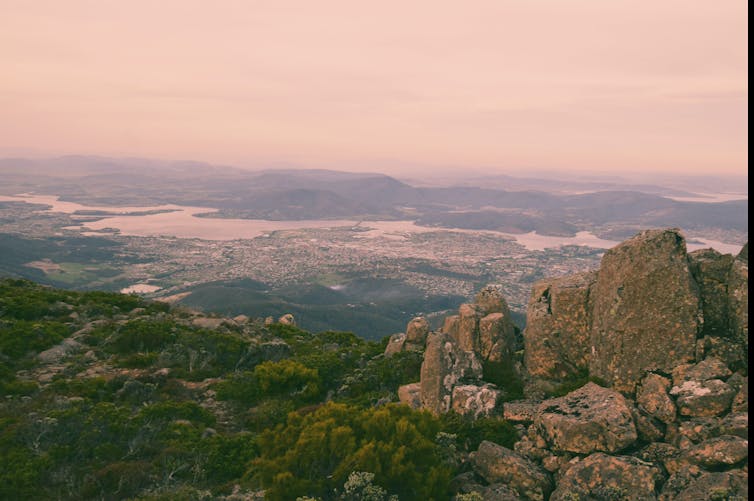
In the face of a scarred country, Anna must return home and face the scars of her family. Photoholgic/Unsplash
What place? Not Tasmania, but the invisible, traumatic centre of family life — all the failures, evasions, dirty compromises swept under the carpet only to reappear with surprising exactitude each Christmas.
While Succession, with its ageing mogul patriarch Logan Roy, is loosely based on the Murdoch dynasty, it does not really depend on a media empire at stake. Its heart is the tawdry machinations of the infantilised children as they jockey for advantage, trying to win the game of imaginary approval driving sibling rivalry.
In The Living Sea of Waking Dreams it is a matriarch rather than a patriarch slowly, messily and unevenly passing out of the world. Yet, while Logan Roy is a monster and Francie a saint, the effect in the adult children is exactly the same.
The brilliance of Flanagan’s story and the deep power of this novel is in our witnessing of the end of the world. The death of Francie opens up a black hole in the family drawing Anna, Terzo and Tommy into its implacable singularity.
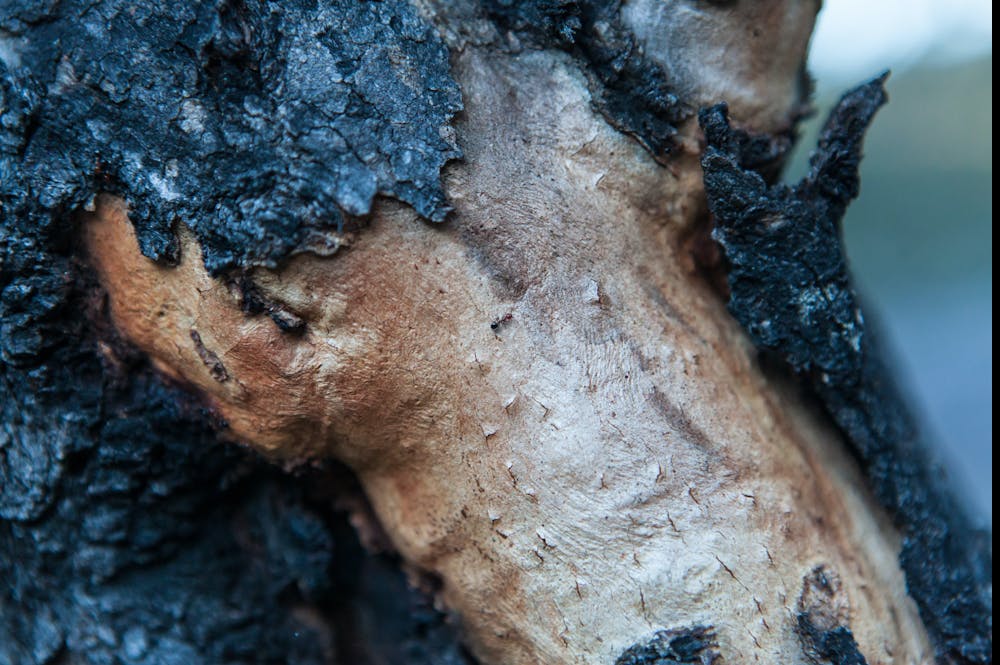
What does it mean to face personal grief when the world is ending? Charles G/Unsplash
At the same time as this family’s little world is collapsing, the world itself is in its own end times. Ash rains down from the sky and one ecological catastrophe after another interrupts Anna’s social media feed. This conjunction presents a new form of what is called the pathetic fallacy, in which we project the world of our inner emotions and moods onto the natural world.
A sullen sky, a bright morning, a funereal forest — some basic animism in us takes the world to be the sounding board of our affects. It is a symptom of the Anthropocene these affinities have become planetary.
Is Flanagan’s novel an ecological novel? The luxury of choosing has now all but gone.
We no longer have to turn our minds to an ecology forcing itself into our lungs and washing up on our every shore. The novel has a dimension of allegory, but it is no longer clear which direction it is flowing.
Our missing parts
The pathetic fallacy was thought to serve the psychic needs of people by offering them a consoling mirror in the natural world, but what if its true point was to turn our subjective misery into ethical environmental action?
Certainly, the moribund Francie seems an emblem of a dying maternal nature. The ever greater efforts her children expend on keeping her alive evoke the desperate rear-guard actions to prevent this or that catastrophe.
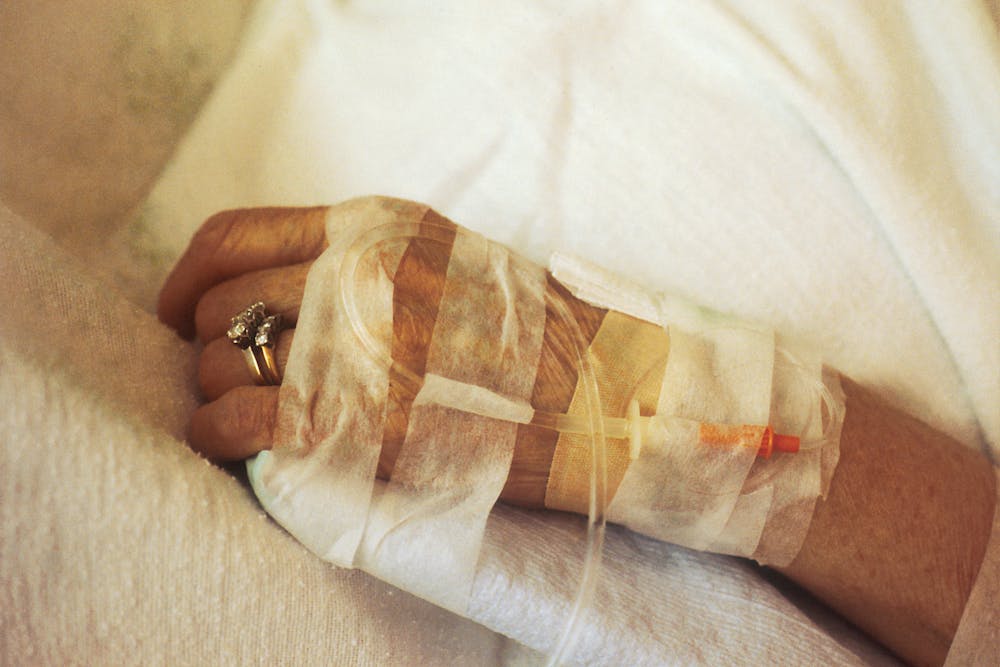
The children attempt ever greater efforts to keep their mother with them. National Cancer Institute/Unsplash
But the novel’s most persuasive ploy is not based on the redeployment of sympathy. At regular intervals, Anna realises she is missing a body part. It begins with a missing finger. Later her knee, then a breast, an eye. Others, too, start to lose body parts.
These “vanishings”, as they come to be known, are entirely painless and seem to go almost unnoticed. It is as if, we are told, they have simply been photoshopped away.
The uncanny part is not the loss of the limb, but the fact the phenomenon is going unremarked. This is what extinction feels like. Something is gone that was once there. We are briefly confused, but then we reassemble the picture and push on.
During times of crisis, people find themselves faced with lifestyle changes. One of the earliest and most noticeable changes seen during the COVID-19 lockdown was how we consume media — and especially how we read.
People tend to find comfort in certain books, and reading habits and genre preferences can change during periods of stress. This helps to explain why much genre fiction has roots in times of significant social, political or economic upheaval. Gothic literature is, in part, a British Protestant response to the French Revolution (1789-99).
Science fiction, which emerged as a genre around the fin de siècle, was galvanised by both the industrial revolution and the theories of Charles Darwin. The hard-boiled detective story, which appeared in the 1930s, takes its cues from the privations of the great depression.
While it’s still relatively early to see the influence of the coronavirus and the lockdown on creative industries, there were some striking patterns in media consumption in the early part of the pandemic. Books about (literal and metaphorical) isolation, like Sylvia Plath’s The Bell Jar and Gabriel García Marquez’s novels One Hundred Years of Solitude and Love in the Time of Cholera were among those that saw a big rise in sales. (Beyond books, horror flourished; in particular, films about global pandemics such as 28 Days Later, Contagion, and Outbreak were among the highest rentals on streaming services.)
In view of these patterns of changing reading habits during times of upheaval and signs that such changes were happening during COVID-19, our team decided to research reading habits among the UK public. We were particularly interested in the following questions about the effects of the pandemic:
How much people have been reading;
What type and genre of texts people have been reading;
To what extent people have been returning to previously read books.
As many as 860 participants took part in our online survey, which was advertised through social media. Our findings show that the COVID-19 lockdown changed not only how people read during times of stress, but also what people turn to for comfort or distraction.
Reading frequency
Respondents generally reported that they were reading more than usual. This was largely due to having more free time (due to being furloughed, or not having a commute, or the usual social obligations or leisure activities).
Those who were caring for children reported they spent more time reading with children. rSnapshotPhotos/Shutterstock
This increased reading volume was complicated for those with caring responsibilities. Many people with children reported that their reading time had increased generally because of their shared reading with children, but had less time than normal for personal reading.
Reading frequency was further complicated by a quality vs quantity snag. People spent more time reading and seeking escape, but an inability to concentrate meant they made less progress than usual. In short, people spent more time reading but the volume they read was less.
Genre choice
Despite the early figures showing spikes in interest for content about pandemics and isolation, it appears that people quickly tired of these topics. Many respondents sought out subject matter that was at least predictable, if not necessarily comforting. Many found solace in the “security” of more formulaic genres (whodunnits and other types of thrillers were often cited). Others found themselves significantly less picky about genre than they were before the lockdown: they read more, and more widely.
Many found the lockdown to be a great opportunity to explore things they didn’t normally have the time or desire to read (like hefty classics that seemed too dull or heavy to bring on a commute) or to fill other gaps in knowledge (the protests over police brutality and racism were cited frequently as the catalyst for many readers seeking out more texts by non-white authors).
Re-reading
Much as with the choice of genre, readers generally fell into two camps: those that read for exploration and those that re-read for safety. The re-readers found solace in previously read books: familiar plots and known emotional registers helped stressed-out readers avoid suspense and surprises.
Unsurprisingly, lockdown also made re-reading a physical necessity for some. Some respondents noted how they were unable to visit the library or browse at the bookshop for new books. Others reported that they simply wished to save money. On the other hand, the participants who reported re-reading less than normal during the lockdown period wanted to use their newfound time to seek out new topics and genres.
The two groups also drew on different metaphors to describe their experiences: some of the non-re-readers talked about time as a commodity (for example, valuing reading something new), while the re-readers discussed the ability to travel easily, and with little effort to familiar places, characters and experiences.
Our research shows that the lockdown really did affect the reading habits of those who took part in our survey. But what might be the longer term implications of the lockdown on how and why we read? And what might happen given the possibility of a second lockdown? It remains to be seen if and how the pandemic might be responsible for continuing changes in our relationship with books.






 At the BookShelf
You must be logged in to post a comment.