
The link below is to an article that lists a bunch of free or cheap resources for writers.
For more visit:
https://electricliterature.com/free-or-cheap-resources-for-emerging-writers/

The link below is to an article that lists a bunch of free or cheap resources for writers.
For more visit:
https://electricliterature.com/free-or-cheap-resources-for-emerging-writers/
The link below is to an article that takes a look at the Baen Free Library, which has loads of free ebooks to download in a number of formats.
For more visit:
https://www.getfreeebooks.com/baen-free-library-hundreds-of-free-ebooks/
The link below is to an article that looks at the history of the ISBN – the number used internationally to identify individual book editions.
For more visit:
https://blog.bookstellyouwhy.com/what-is-the-history-of-the-isbn
The links below are to articles reporting on the shortlist for the 2020 International Booker Prize.
For more visit:
– https://www.theguardian.com/books/2020/apr/02/international-booker-prize-shortlist-led-by-28-year-olds-debut
– https://bookriot.com/2020/04/02/2020-international-booker-prize-shortlist-announced/
– https://publishingperspectives.com/2020/04/international-booker-prize-shortlist-digitally-announced-from-london-covid19/
– https://lithub.com/the-2020-international-booker-prize-shortlist-is-mostly-women-again/
The link below is to an article that looks at reading free ebooks with Wattpad.
For more visit:
https://www.makeuseof.com/tag/read-free-ebook-wattpad-android/

Andrew McMillan, Manchester Metropolitan University
One of the things you get asked most when people find out that you’re a poet is whether you can recommend something that could be read at an upcoming wedding, or if you know something that might be suitable for a funeral. For most people, these occasions – as well as their schooldays – are the only times they encounter poetry.
That feeds into this sense that poetry is something formal, something which might stand to attention in the corner of the room, that it’s something to be studied or something to “solve” rather than something to be lounged with on the sofa. Of course, this needn’t be true.
We’ve seen over the past couple of months how important poetry can be to people. It’s forming a response in advertisements and marketing campaigns, it’s becoming a regular part of the public’s honouring of frontline heroes and, for people who write poetry more often, it’s becoming a way to create a living historical document of these unprecedented times – this latter point was the aim of the new Write where we are Now project, spearheaded by poet Carol Ann Duffy and Manchester Metropolitan University.
In years to come, alongside medical records and political reporting, historians and classes of schoolchildren will look to art and poetry to find out what life was like on a day-to-day basis – what things seemed important, what things worried people, how the world looked and felt and was experienced. Write where we are Now will, hopefully, be one such resource, with poets from all over the world contributing new work directly about the Coronavirus pandemic or about the personal situations they find themselves in right now.
So the crisis has perhaps brought poetry – with its ability to make the abstract more concrete, its ability to distil and clarify, its ability to reflect the surreal and strange world we now find ourselves in – back to the fore.
Many of you might be thinking now is the time to try and get to grips with poetry, maybe for the first time. A novel might feel too taxing, watching another film just involves staring at another screen for longer, but a poem can offer a brief window into a different world, or simply help to sustain you in this one.
If you’re nervous around poetry or are scared it might not be for you, I wanted to offer up some tips.
1. You don’t have to like it
Poetry is often taught in very strange ways: you’re given a poem and told that it’s good – and that if you don’t think it’s good then you haven’t understood it, and you should read it again until you have, and then you’ll like it. This is nonsense. There are poets and poems for every taste. If you don’t like something, fine. Move on. Find another poet. Anthologies are great for this, and a good place to start with your poetry journey.
2. Read it aloud
Poetry lives on the air and not on the page, read it aloud to yourself as you walk around the house, you’ll get a better understanding of it, you’ll feel the rhythms of the language move you in different ways – even if you’re not quite sure what’s going on.
3. Don’t try and solve it
This is something else that goes back to our educational encounters with poetry – poems are not riddles that need solving. Some poems will speak to you very plainly. Some poems will simply move you through their language. Some poems will baffle you but, like an intriguing stranger, you’ll want to step closer to them. Poems aren’t a problem to be wrestled with – mostly poems are showing you one small thing as a way of talking about something bigger. Poems aren’t a broken pane of glass that you need to painstakingly reassemble. They’re a window, asking you to look out, trying to show you something.
4. Write your own
The best way to understand poetry is to write your own. The way you speak, the street you live on, the life you’ve lived, is as worthy of poetry as anything else. Once you begin to explore your own writing, you’ll be able to read and understand other people’s poems much better.
Read more:
Eavan Boland: the great Dublin poet and powerful feminist voice
I would say this as a poet, but poetry is going to be even more central to how we rebuild after this current crisis. Poetry, especially the teaching of how we might write it, has this wonderful ability to create a new language, to imagine new ways of seeing things, to help people to articulate what it is that they’ve just been through. The way we move forward, as a community, as a society and, in fact, as a civilisation, is to push language to new frontiers, to use language to memorialise, reimagine and rebuild, but also to remember that poetry can be an escape, something to be enjoyed, something to cherish.
With that in mind here is a poem I wrote for Write where we are Now.
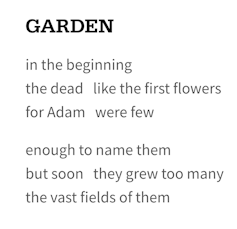
Andrew McMillan, Senior Lecturer, Department of English, Manchester Metropolitan University
This article is republished from The Conversation under a Creative Commons license. Read the original article.
Adam Piette, University of Sheffield
The death of poet Eavan Boland comes as a soft shock to my sense of the world. The creative connections she forged between her richly various poetry, Irish culture and the fierce determinations of feminism were mesmerising. Just as important was her faith in poems as places to think and feel in, where those connections could be offered as intricate gifts to all readers.
She is rightly celebrated for her breakthrough collection, the 1980 In Her Own Image, which pitted itself against the lazy assumptions of a male-dominated poetry world and voiced the bitter extremes of female experience, like the anorexic’s fanaticism (“Flesh is heretic./ My body is a witch. / I am burning it”), the beaten wife’s survivalist plural selving (“I was not myself, myself”), the menstrual visionary (“I leash to her {the moon}, / a sea, / a washy heave, / a tide”), the crazy poetics of the kitchen (“the tropic of the dryer tumbling clothes. / The round lunar window of the washer”).
Such poems gave centre stage to female experiences and had a huge impact on the Irish poetry scene in particular, which had taken its time responding to the feminist revolution of the 1960s and 1970s.
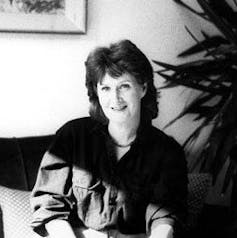
Their accurate representation of the marginalisation of women in history and by history (“still no page / scores the low music / of our outrage” It’s a Woman’s World, 1982) was belied by the poems as public and historical voices. A feminist collection, In Her Own Image showed the world that Boland’s was a powerful voice above all and a real challenge to the Yeatsian tradition of male poetics in Ireland.
The wonderful Mise Eire (1987), meaning “I am Ireland”, for instance, takes on the identity of the many emigrant women travelling from Ireland to the New World, and opens:
I won’t go back to it
my nation displaced
into old dactyls
and the poem is colourfully detailed about the historical record, as routines being played by Boland:
I am the woman –
a sloven’s mix
of silk at the wrists,
a sort of dove-strut
in the precincts of the garrison
The ancestral women whose being she inherits through her matriarchal line and her Irish identity, women under the control of the old dispensation, the women of Irish patriarchal history, molls to the men of power – that is what she won’t go back to. So what reads as a rich imagining of the emigrant glad to be leaving is also Boland’s coded challenge to the Irish lyric tradition with its old dactyls and assumptions about women poets as strutting doves; as well as a specific historical voicing of second-wave feminism – we are not going back to that old world.
On the back of the extraordinarily febrile mind at work on her own culture and in concert with the feminism of her times, she built up a repertoire of voices that constitute some of the finest poetry in English.
Navigating between work in America and a full life in Ireland, she lived out that emigrant dream and made it real, made it her world. Her poems are intimately connected to the dailiness of her own life, to a sense of significances and exfoliations in the ordinary events in her patch of space and time. Equally, she writes poems of extraordinary power and complexity about the history of Ireland, about the Famine, the Troubles (the three-decade conflict between nationalists and unionists), about the acts of violence suffered by her people over time.
She was unafraid to make poetry do the work that once was most resolutely its task: the work of elegy, epic (her lyrics attend to history with the eye of an epic poet), lyric most of all and testimonial witnessing of experience with heart and mind.
For me, one of her tasks was to be the poet of Dublin, the Dublin she loved and cherished, and fought for and against too. Many of her very best poems bring that fabled city to new light. Her poem Anna Liffey (1997), which tussles with James Joyce’s representation of the female principle Anna Livia Plurabelle in Finnegans Wake, is also a hymn of praise to Dublin’s river Liffey:
It rises in rush and ling heather and
Black peat and bracken and strengthens
To claim the city it narrated.
Again, subtly, it is a woman’s story-telling (Anna Liffey narrating) that lays claim to this new post-feminist Dublin. Born abroad, she adopted Dublin as an émigré Irish returnee – but that journey home was also this complex act of kinship and claim:
It has taken me
All my strength to do this.
Becoming a figure in a poem.
Usurping a name and a theme.
Thank goodness for her usurpation! Such a harvest of gifts, as well.
In the incomparably beautiful And Soul (2007), Dublin’s rain is praised at the same time as Boland is battling the cloudburst of her grief for her dying mother. In The Lost Land (1998), her daughters growing up and living faraway reprise her whole life story (“memory itself / has become an emigrant”). Nobody has written so fully and well about the intimate relationship between Ireland and the United States. Ireland has lost its most exquisite chronicler:
In the end
everything that burdened and distinguished me
will be lost in this:
I was a voice.
Adam Piette, Professor of Modern Literature, University of Sheffield
This article is republished from The Conversation under a Creative Commons license. Read the original article.
Kelly Beestone, University of Nottingham
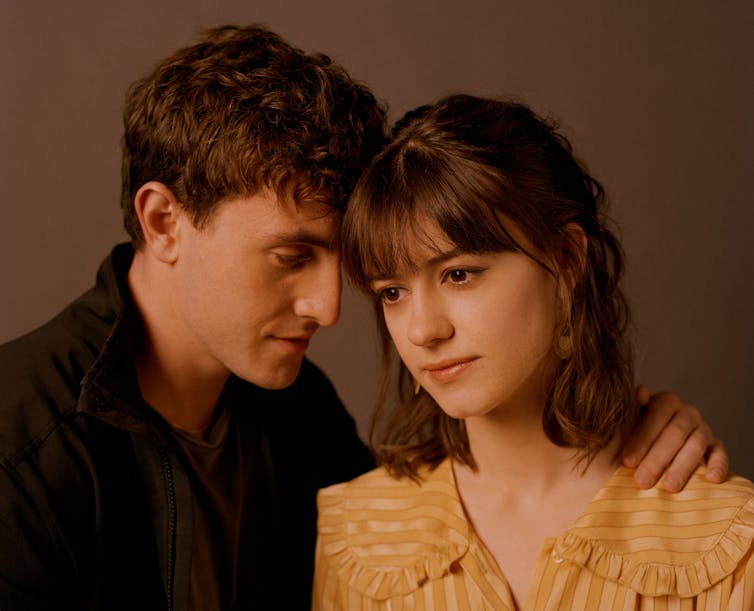
Young Adult Fiction (YA) picks apart first experiences, good and bad. They are often stories about the psychological and moral growth of a protagonist, which balance romance with social issues such as gender, race and class. Although marketed to an older audience, Sally Rooney’s 2018 novel Normal People shares many of the tropes of great YA fiction. A coming-of-age story, its lead characters, Marianne and Connell, navigate love and class while developing a better understanding of who they are and want to be.
The fact that such a popular book targeted at an adult audience shares many similarities with YA is not surprising. For over a decade now, YA fiction has enjoyed a growing readership. Although it is aimed at teens, the books have proven popular with adults too. According to a survey by Bowker Market Research in 2012, 55% of YA book purchases were made by adults, and 78% of those adults said the books were for themselves.
With Normal People having just been adapted for television, people have once again been won over by Rooney’s quiet but powerful story of love and pain. Search for the book and you are sure to be presented with the question “What should I read after Normal People?”. So for those lusting for more, here are five YA books to fill the hole left by Connell and Marianne.
One of the most famous books on this list, The Hate U Give was lauded for its no-holds-barred approach to some of America’s most contentious issues, including the weaponising of racial stereotypes and the killing of unarmed Black people by police. The book’s protagonist Starr is from the poor black neighbourhood of Garden Heights. She’s forced to witness the police shooting of her childhood friend, Khalil. While demanding justice, Starr attends a mainly white private school where to fit in and avoid stereotypes, she changes almost everything about herself – her style of clothing, her language, and her connection to Khalil. She also dates a white boy who doesn’t understand why Starr feels alienated at the school. Thomas explores their relationship with an expert touch, examining the nature of poverty and class privilege that is often intertwined with race.
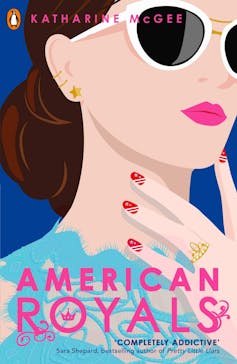
A funny “what if” novel where George Washington became the first King of America after the Revolution. It follows three royal children: Bea, Jefferson, and Samantha, as they navigate romance in the public eye and their feelings for partners who are considered unworthy because of their working-class backgrounds. McGee states that her fiction is heavily inspired by British royalty. The book does an excellent job of analysing the pressures of fame and the responsibility of monarchy through the lenses of class and gender. American Royals examines the detrimental effect of social scrutiny of the rich and famous and in many ways echoes the criticism levelled at the British paparazzi in the wake of Princess Diana’s death.
It may seem odd to refer to Pride and Prejudice as YA but, like Normal People, it does share many of the same tropes of the coming-of-age story. It is about a young woman navigating the path between girlhood in the family home to adulthood through marriage.
Austen’s prose is witty and tongue in cheek, offering glimpses into the aristocratic society of Regency England. A book ahead of its time, Pride and Prejudice is outrageously funny in its critique of gender and class. Elizabeth breaks the mould of feminine conformity as an intelligent woman who is unafraid to speak her mind. Austen is careful and meticulous in her attempts to distinguish the term “gentleman” from the term “aristocrat”. In doing so she reveals that the two are not indistinguishable – the men in her fiction are often aristocratic, but their class status does not excuse their problematic actions.
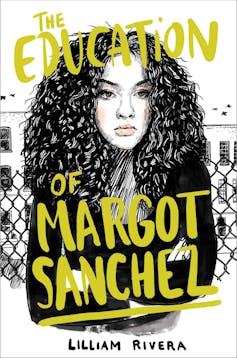
Like The Hate U Give, Rivera’s coming-of-age novel puts the relationship between race and class under a microscope. Margot struggles with reconciling her conservative Puerto Rican upbringing with the lives of excess and indulgence of her friends from her mostly white prep school. After she’s caught stealing her father’s credit card to impress her friends, Margot is forced to serve time in the family’s grocery store in the Bronx. There, she meets Moises, an ex-drug dealer fighting against gentrification and the eviction of local Latinx citizens to make way for luxury apartment blocks. It’s an engaging story that does not hold back on its criticisms of stereotypes and depictions of poverty caused by societal racism.
For something different but in the same spirit, this is a fantasy tale of unlikely lovers – sensible Blue who comes from relative poverty and Gansey, the king of the local elite boy’s school, Aglionby Academy. While Blue holds down an after-school job and makes her own clothes, Gansey is rich and well connected.
Gansey blunders his way through talks about money and privilege, and regularly upsets his friends with his ignorance and his belief he can buy his way through life. He throws money at situations and people expecting it to solve problems, including bribing the school to not expel a troubled friend. Through Blue and Gansey, Stiefvater utilises the popular YA trope of star-crossed love. A trope that is based on class divides and magic that can be traced back to canonical texts such as Dante’s The Divine Comedy and Shakespeare’s Romeo and Juliet.
Kelly Beestone, Assistant Researcher, University of Nottingham
This article is republished from The Conversation under a Creative Commons license. Read the original article.
Shutterstock
Joshua Gans, University of Toronto
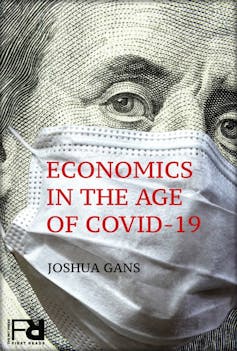
I just published a book, Economics in the Age of COVID-19.
It was written over the last month or so, peer-reviewed, edited and released by MIT Press.
This is the thoroughly-2020 story of how it happened.
Like many academics who entered our present period of isolation in mid-March, I was not at all concerned about my job and how to continue doing it.
To be sure, I would have to deal with purely online interactions with some 300 plus students but fortunately I twigged to the value of virtual lectures a few years ago.
Of course I would have to cancel all travel and conferences for the foreseeable future, but in some ways that thought was liberating.
And I would have to deal with motivating a teenager to learn at home, and with two annoyed college students who had been forced to return home.
For the first week I got nothing done, despite being free to do anything.
I couldn’t help but obsess over what was happening in the world.
At first it was frustration at the slow pace of government action as I constantly refreshed scant data on rising infections.
Then it was panic that those actions wouldn’t be enough.
The economic changes were unprecedented. The stock market gyrated and convulsed in tune with fear and other motives that none of us could understand.
Read more:
This coronavirus share market crash is unlike those that have gone before it
What was clear was that if I was home, then so were most other people.
That would leave stores empty, factories shut, and services unnecessary. The vast majority of businesses rely on cash flow to keep things operating, and the cash was most definitely going to stop flowing.
While there were public health pandemic playbooks that were being followed with varying degrees of adherence, there was no economic playbook for this.
No one had, to my knowledge, written a paper on how to shut down an economy and then simply restart it again at some unspecified time.
In my mind, the analogy was that we would have to pause things.
We happily shut down most economies each Christmas and no one screams “depression.” The easiest way to do this was to just delay bill payments without consequence.
I could think of ways to do it: loan guarantees, wage subsidies, straight out cash, moratoriums on evictions and foreclosures.
I started to write up my thoughts as if that were original and insightful. And then I saw all of my economics colleagues doing the same thing.
Read more:
How economies can survive a period of ‘suspended animation’ to deal with coronavirus
Everyone had simultaneously come to the same conclusion. A new playbook was being invented at the same time, all over the world.
Trillions of dollars were being spent, but it was clear to me that non-economists were somewhat dumbfounded.
Hadn’t economists warned for years against the perils of deficits? Would our children be paying for this? And what was the plan? How long was this going to last and how sure were we that we could just get things back to normal?
We economists had some answers to these questions, but not all of them.
Like public health officials who needed to explain in far more detail what was going on with COVID-19, economists needed to explain what they were thinking when they were taking such unusual and exceptional steps.
A week into my isolation, I decided I would write a book.
It would cover all of the economic issues, conundrums and controversies that were emerging. It would put what we knew together with what we did not know and try to help people process what was happening.
It would help me get a handle it as well.
I have written popular economics books before, but never as quickly.
My plan was to write 10 chapters – one a day – and then publish. In terms of that last step, I could self-publish, but, given the speed at which I was working, I couldn’t be confident I wouldn’t miss things. It had to be peer-reviewed.
Read more:
Open letter from 265 Australian economists: don’t sacrifice health for ‘the economy’
Most academic publishers work slowly but I contacted MIT Press and asked if they could do things differently. They came through in ways that I did not anticipate.
As it turns out MIT Press had recently collaborated with the MIT Media Lab on a platform called PubPub. It is built to allow public comment and review. The plan was for me to write the book and after an editorial review, post the entire thing to PubPub for open review by members of the public.
It was posted on April 7, just 19 days after I first had the idea to write a book.
There were only 8 chapters, but they were longer than I had anticipated – 30,000 words in all. You can see that version here.
Then MIT Press sent it out to peer reviewers whom they pushed to return comments within a week.
In the meantime, I kept writing. Things were evolving quickly. More critically, economic research was flooding in as economists from all over the world diverted their energies from what they had been doing to researching different aspects of the crisis.
In the end, my guess is that 80% of the citations in the book were from two months in one year – March and April, 2020!
Finally, I had to incorporate a wealth of comments from open and peer review. The former (public comments) were actually more detailed and useful than the latter (peer comments), which raises issues for the future.
In the end, on April 22 (one week ahead of schedule), the electronic version of my book was published globally.
It was 40,000 words long and hopefully would remain relevant for a few months. It’s for sale here.
Do I recommend undertaking this type of challenge?
Overall, I am pleased there is something out there for people to read and digest.
But personally, it was more gruelling than I had anticipated. That wasn’t because of the intensity of the work, but because of its subject matter.
My other books were positive and optimistic. This one was, for the most part, depressing. The first words were “everything is awful”, and it didn’t get better.
My editor called the first version of the ending bleak. There were days in which I was overwhelmed by my own words and had to retire to a couch until I could pick myself up again.
Thankfully, despite my own feelings, most of those who have read the book have come away concerned and informed, rather than lost and hopeless. That’s something.
Read more:
Is your mental health deteriorating during the coronavirus pandemic? Here’s what to look out for
The journey isn’t over. MIT Press will publish the usual version of the book in November. I will update it continually for a month or so before then.
There is still so much we do not know. We are learning more about COVID-19 and producing lots of studies, but I think the actual flow of knowledge has been disappointingly slow.
That’ll be the theme of the followup.
Joshua Gans, Professor of Strategic Management, University of Toronto
This article is republished from The Conversation under a Creative Commons license. Read the original article.


 At the BookShelf