
Unknown's avatar

A criminal record: women and Australian true crime stories


File 20170822 13685 w0sgkd.jpg?ixlib=rb 1.1
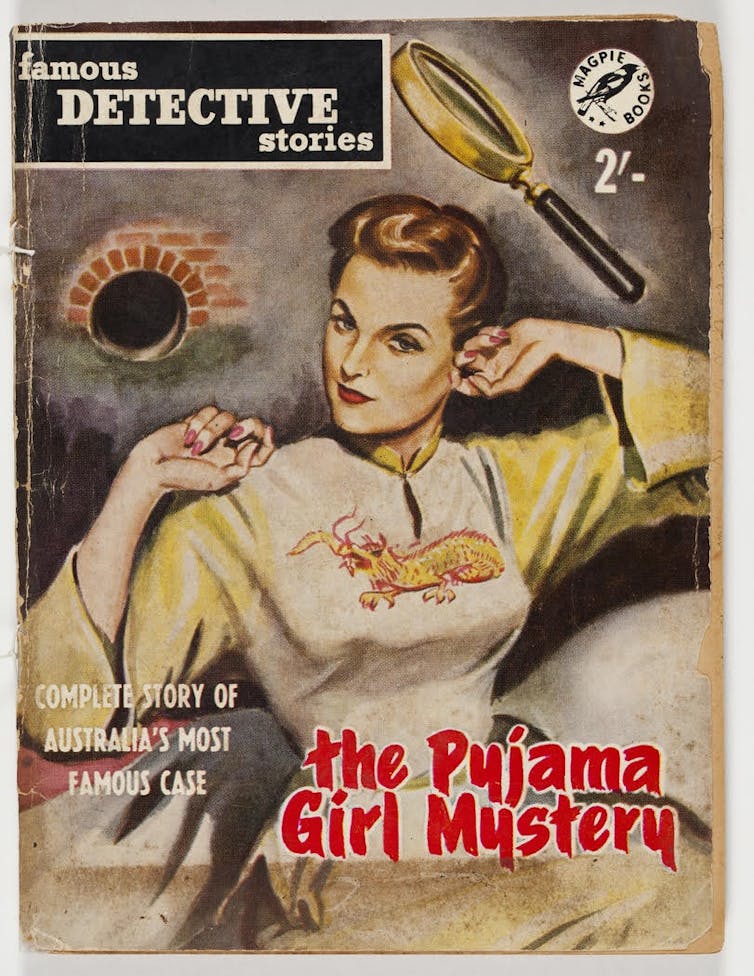
The pyjama girl mystery, as featured in Famous Detective Stories no. 6.
State Library of New South Whales, CC BY-ND

Rachel Franks, University of Newcastle

Women have always been central to true crime stories: as victims, perpetrators, readers, and (increasingly) as tellers of these tales. Indeed, these tales, often dismissed as sensationalised violence, offer important opportunities to reflect on crime and crime control.

Many true crime writers today – including numerous women, working in a once male-dominated market – have been biographers, coroners, detectives, historians, journalists, lawyers, and psychologists. These backgrounds bring a style of storytelling that educates us about, not just merely entertains us with, crime. Importantly, many privilege complex and nuanced storytelling over simplistic stereotypes of women as just “bad” or just “good”.
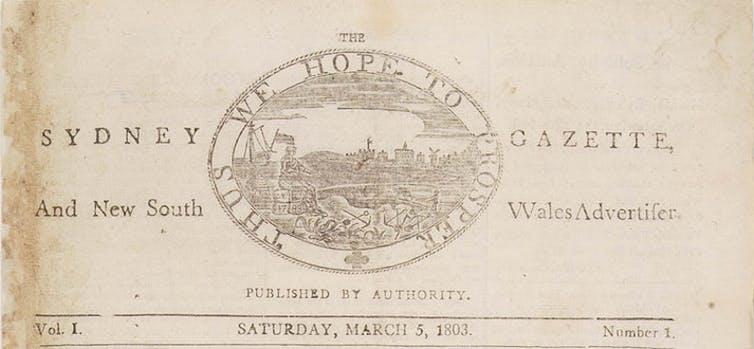
The Sydney Gazette and New South Wales Advertiser Vol. 1, No. 1, 5 March 1803 (Front Page).
Call number: DL F8/50, Mitchell Library, State Library of New South Wales, CC BY

The first Australian true crime stories were transmitted orally, jotted down in journals, and entered into official records. George Howe, editor of our first newspaper, The Sydney Gazette and New South Wales Advertiser, enthusiastically embraced the topic of crime: the paper’s first issue in 1803 included stories of fraud, attempted murder, and the brutal rape of 17-year-old Rose Bean.

The first Australian publication dedicated to true crime is Michael Howe: The Last and the Worst of the Bushrangers of Van Diemen’s Land (1818), by T.E. Wells. This short work is also the story of Howe’s companion, then victim, Mary Cockerill a young Indigenous woman. Cockerill supported Howe in a landscape forbidding and wild to the European settlers. After being betrayed by Howe – he shot her as they were being pursued, facilitating his own escape – Cockerill then used her knowledge of the bush to help authorities. Howe was captured and killed in 1818, bringing his bushranging career to an end.

In the colonial era, a woman’s status as a victim was upheld, or denied, based on her character and her ability to conform to social mores of the time. Today, women are often still judged by what they say and what they wear; their education and their occupation. How many sexual partners have they had? Are they too emotional? Are they not emotional enough? Likewise, some perpetrators have been seen as more heinous because they are women.

Women as perpetrators

In Captain Thunderbolt & His Lady (2011), Carol Baxter skilfully tells the story of Frederick Ward (“Captain Thunderbolt”), a bushranger in the mid-1800s, and his Indigenous partner-in-crime Mary Ann Bugg (“Mrs Thunderbolt”). Bugg – an intelligent, gutsy, trouser-wearing woman – is brought vividly to life, as she breaks the law and defies the feminine expectations of her time.

As Baxter notes, Bugg was dissatisfied with the social status quo, and, like many bushrangers, she received support and sympathy from the wider population. She was not all “bad” but not all “good” either. Indeed, some suggested Mrs Thunderbolt was merely blamed for the deeds of her husband. Bugg outlived her outlaw partner by 35 years, dying in obscurity in Mudgee in 1905.

One of the more dramatic true crime tales of the late colonial period, is the story of Louisa Collins. Caroline Overington looks at the life, and death, of Collins in Last Woman Hanged (2014). Accused of murder, Collins famously endured four trials in 1888, which, as Overington argues, were effectively trials of all Australian women. If women wanted equal rights, including the right to vote, “then, such equality had to be universal: women, too, would hang for murder”. In the first three trials, the juries failed to deliver a verdict. In the fourth trial, the jury found her guilty and Collins was hanged in 1889.
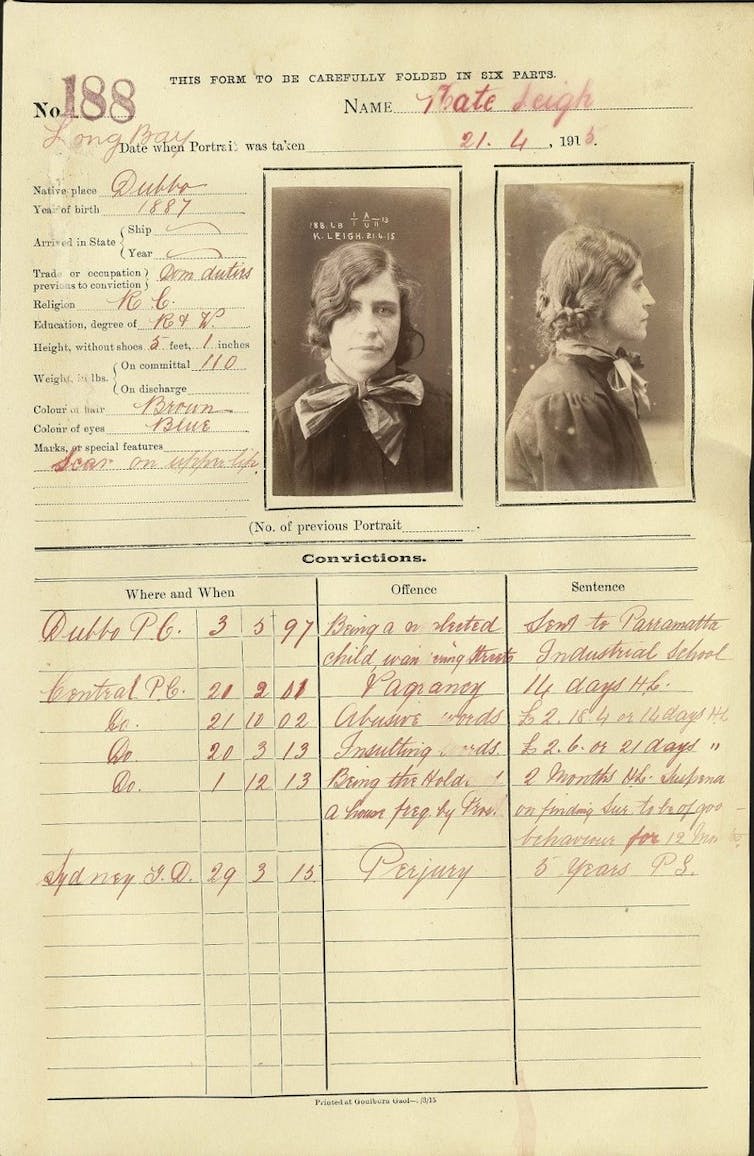
Kate Leigh’s mugshots and prison form.
State Archives of New South Wales, CC BY

The Worst Woman in Sydney (2016) by Leigh Straw documents the life of Kate Leigh, born Kathleen Beahan, an icon of Sydney’s underworld from the 1920s through to the 1950s. A “famed brothel madam, sly-grog seller and drug dealer”, she is best known for her involvement in the “Razor Wars” when Sydney gangs used razors instead of guns. Leigh could handle a rifle (or any other weapon) and was “an intelligent criminal entrepreneur” who quickly capitalised on opportunities as they emerged. A hardened crook (who was in and out of prison), Leigh was also very generous; her Christmas parties for poor children, in Surry Hills, were legendary for the food and presents given out.

In Nice Girl (2011), Rachael Jane Chin looks at the many dreadful secrets kept by Keli Lane. Found guilty of murder and of lying under oath, Lane’s case is one that is still difficult to believe. Gender, and gendered ideals, stand out within it. Chin unpacks how Lane was a solid, middle-class young woman. She had her boyfriends but was not promiscuous. She was a teacher and had worked hard to become an elite athlete.

But underneath Lane’s “good upbringing and clean-cut appearance”, which earned her the benefit of the doubt from those around her, were five secret pregnancies during the 1990s. Two pregnancies were terminated, two infants were put up for adoption and one baby, Tegan, was murdered. Lane is serving her prison sentence, the crimes she committed as shocking now as when they were discovered. She will be eligible for parole in 2023.

Women as victims

In 1921 the body of 12-year-old schoolgirl Alma Tirtschke was found in an inner-Melbourne alleyway. Colin Campbell Ross was charged with rape and murder, as described in Kevin Morgan’s Gun Alley (2005, updated 2012). We learn the victim, just a child, was quiet but also clever and creative. As readers, we cannot help but speculate who Tirtschke could have grown up to be.

Ross was hanged in 1922: a result of false allegations, a flawed investigation, and a trial held in the press and in the courtroom. He received a posthumous pardon in 2008. This case is particularly important in the history of Australian true crime writing because, as Tom Roberts explains, it highlights the commercialisation of crime, focusing on the headline of the defenceless female, and media-driven moral panics.
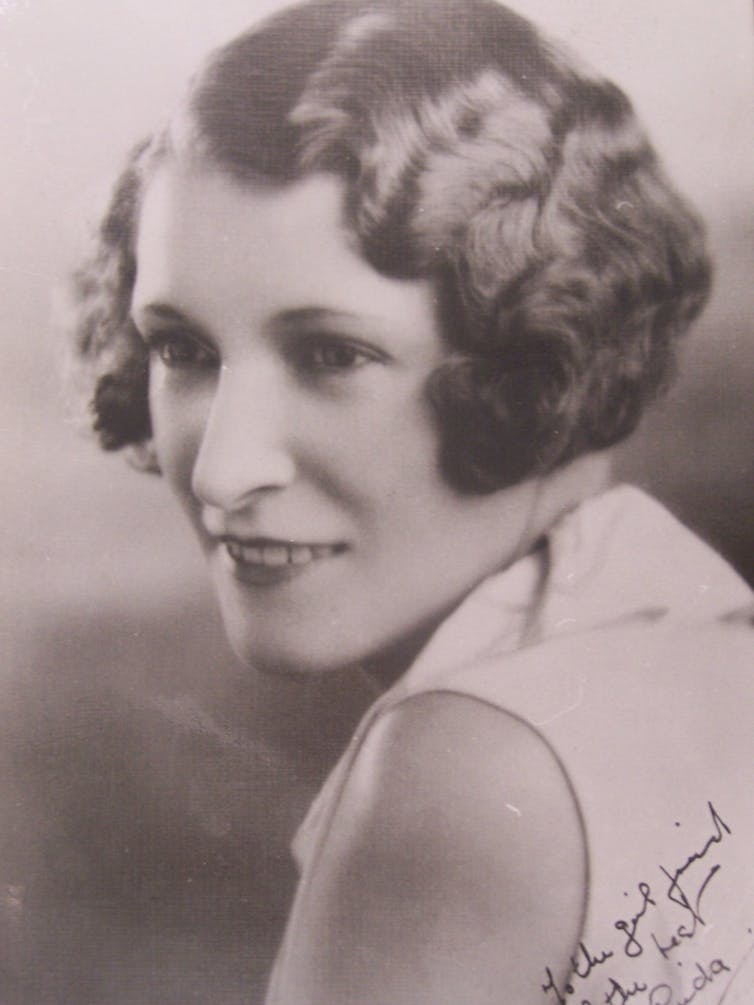
Florence Linda Agostini (née Platt; 12 September 1905 – 27 August 1934) was known posthumously as the Pyjama Girl.
Wikimedia Commons, CC BY

One of Australia’s most famous crimes is the “Pyjama Girl Case”. In 1934 the remains of Linda Agostini, born Florence Platt, was found. She had been shot, beaten, and burnt. Most notably, Agostini was wearing yellow, silk pyjamas, patterned with a dragon: a flamboyant garment in Depression-era Australia. Agostini’s body was placed on public display in an attempt by the police to discover the name of the murdered woman but it took 10 years to identify the victim. In the 1940s and 1950s, Frank Johnson published his Famous Detective Stories series, which included The Pyjama Girl Mystery. Like many of Johnson’s true crime storytelling efforts, the woman at the centre of the criminal case is presented as a sexual object.

The story of Anita Cobby, born Anita Lynch, has been told many times. The first major telling of the brutal rape and murder of the 26-year-old in 1986, is Julia Sheppard’s Someone Else’s Daughter (1991). Sheppard contrasts Cobby and her numerous contributions to the community, as a charity worker as well as a nurse, with the senseless cruelty of the men who took Cobby’s life. Stories like this one, which have stayed in the public imagination over decades, highlight how the impacts of crime extend beyond the victim, family, and friends. They also show how women can be victims of completely random acts of violence.

Many women are victims of domestic violence. The murder of Lisa Harnum, by her fiancé Simon Gittany, is described by Amy Dale in The Fall (2014). Gittany threw Harnum to her death from their apartment balcony, situated on the 15th floor of an inner-Sydney building in 2011. This is a story of control, surveillance, and toxicity. Harnum was trapped in an untenable position: too frightened to leave but also too frightened to stay. When she did try to escape, the result was tragic. Gittany was sentenced to 26 years in prison, with a non-parole period of 18 years.

Changing true crime narratives

The once “either/or” binary of “bad/good” women has given way to demands from readers to see women as complex figures within these works. As a result, more and more writers are now increasingly focussed on the human cost of crime.

Kerry Greenwood, known for crime fiction and true crime, has curated two important volumes On Murder (2000) and On Murder II (2002). Rachael Weaver, in The Criminal of the Century (2006), offers a rigorous exploration of colonial serial killer Frederick Deeming. More recently Alecia Simmonds has written on the terrible consequences seen when drug use, violence, masculinity, and psychosis collide in Wildman: The True Story of a Police Killing, Mental Illness and the Law (2015). A dominant force on the landscape of true crime writing is Helen Garner with several compelling works including Joe Cinque’s Consolation (2004) and This House of Grief: The Story of a Murder Trial (2014).

Women are also telling their own stories, as seen in Lindy Chamberlain’s work Through My Eyes (1990). Chamberlain was falsely imprisoned for the murder of her baby daughter, Azaria, at Uluru in 1980. This book delivers a very personal account of one of the greatest miscarriages of justice in Australian history.

The ConversationCrime is never without context and is never straightforward. Many writers – women and men – know that simplifying these stories with stereotypes, female or male, is just not good enough: for the innocent, for the guilty, or for readers.

Rachel Franks, Conjoint Fellow, School of Humanities and Social Science, University of Newcastle

This article was originally published on The Conversation. Read the original article.

Unknown's avatar

Whose line is it anyway? The murderer, his mother, and the ghost writers


Christopher Kremmer, UNSW Australia

This is a story about stories. Who writes them. Who owns them and what happens when the two things get muddled. It’s a story about true stories, life stories, stories written by amateurs and professionals. It sounds a warning to the growing number of readers who aspire to publish their own memoirs, and those who write the lives of others.

“Who owns the story?” is the question that lies at the heart of Sonya Voumard’s new book The Media and the Massacre, published this month to coincide with the 20th anniversary of Martin Bryant’s murderous rampage at Port Arthur in Tasmania.

In it, Voumard ponders the case of Bryant’s mother, Carleen, a woman widely reviled by genetic association for the sins of her son, but driven as a mother to tell her side of the story.

It goes like this. After two suicide attempts triggered by the reporting of the 10th anniversary of the massacre, Carleen Bryant writes a 15,000 word memoir of her life before and since that terrible Sunday, April 28th 1996, when Martin Bryant slaughtered 35 men, women and children.

She is not a fluent writer, so friends suggest she seek help from professionals. A literary agent is found, and a journalist, Robert Wainwright of The Sydney Morning Herald is recommended. A $200,000 book deal with a major publisher is mentioned.

Ms Bryant forwards a copy of her memoir to Wainwright, but there are hiccups early on when he passes it on – allegedly without her knowledge – to her daughter, seeking the daughter’s involvement in the project.

A June 2007 meeting in Hobart, at which Wainwright’s wife – another Herald journalist Paola Totaro – joins the writing team, smooths over the trouble. However, when the journalists’ nine-page draft outline of their proposed book – entitled Martin My Son – arrives, relations deteriorate rapidly.

In Voumard’s words, Carleen Bryant became “convinced that the story they (the journalists) wanted to tell was not hers but theirs”. In October 2007, Bryant withdrew from the project, and requested that Wainwright and Totaro return her personal documents and other materials. They did so some months later, by which time all contact between the parties had ceased.

There was, therefore, as Voumard tells it, considerable surprise on the part of Bryant and her friends when, in May 2009, Wainwright and Totaro published Born or Bred? Martin Bryant: the making of a mass murderer. In it, they included at least 29 extracts from her as yet unpublished memoir, allegedly without her permission.

The ins and outs of the legal proceedings that followed cannot be briefly summarised. They are, in any case, subject to the confidentiality clause of an out of court settlement. Bryant also complained to the Australian Press Council, the Media Entertainment and Arts Alliance (MEAA), the Sydney Morning Herald and Fairfax Books claiming breach of copyright. But the publication and sale of Born or Bred? was not impeded.

Voumard, a Sydney-based former journalist and now a writer and academic, and some of the people she quotes in her book, including the criminal lawyer Greg Barns and Ms Bryant’s lawyer Steven Lewis of Slater and Gordon, feel that an injustice was done. Wainwright and Totaro reportedly claimed they were given the memoir “freely and without caveat”, but in Voumard’s view, Bryant had simply agreed to the preparation of a draft outline.

The literary intersections of journalism, creative non-fiction, book publishing and “ghost-writing” are crowded, with a variety of conflicting interests but no single code of ethics.

Is a journalist bound by copyright laws when someone eager to tell own their story hands them their unpublished account of a highly newsworthy subject without conditions attached? Are they bound by their various journalism codes of ethics when writing books, rather than news stories?

As Wainwright and Totaro wrote in the preface to their book, it was Carleen Bryant who withdrew from “their” project, not the other way around. “When she withdrew, the project turned instead into a hunt for the truth and answers.”

This statement, however, sits awkwardly with what appears to have been a lack of any attempt at fact-checking with their albeit uncooperative star source in the months immediately prior to publication.

Voumard’s book, though far from perfect – neither Bryant nor the journalists could be persuaded to talk to her – it is a useful contribution to our understanding of these important issues and the questions they raise.

Although primarily focused on the Bryant-Wainwright-Totaro conflict, she engages with a range of other journalistic and literary approaches to reporting on violent crime, including Carol Altmann’s After Port Arthur (2006).

Voumard talks to a number of senior Australian journalists who reflect on the fact that Port Arthur inspired a new and more mindful approach to the impact of their craft when interviewing traumatised people – a theme later expanded on by Columbia Journalism School’s Dart Center Asia-Pacific.

As a journalist herself, Voumard knows where to look for the Fourth Estate’s ethical weaknesses, and is critical of her own.

“Not all journalists are the same …,” she writes. “At our best, we do good work – bear witness, seek truth, give voice, explain. At our worst we exploit our subjects.”

For Carleen Bryant, having her say via the agency of professional writers was a once in a lifetime chance to achieve a longed for public understanding of the cross she has had to bear.

As one of her close friends tells Voumard, Bryant

wanted to establish herself in the minds of the people of Hobart as she was, rather than as others believed. She wanted them to know that she wasn’t a terrible mother, or the mother of a monster, that she did her best in every way for her son, that she had a loving husband.

But when a story involves hot button issues like mass-murder, journalists’ ethical compasses veer toward the perceived “public interest”, an approach that is not known for its sensitivity to the feelings or views of anyone associated with the killer.

Journalists remain publishers’ first pick for ghost-writing assignments because they write quickly and colourfully, are not afraid of imposing a given meaning on a set of available facts, know what makes headlines and meet their deadlines. But for some stories, that is not the ideal approach.

As Voumard writes,

Carleen Bryant lost the ability to say to others who she was. Her life story and that of her family had been appropriated, attacked, raked over and profited from by so many media organisations for so many years that her identity effectively disintegrated.

Ms Bryant, whose only son was sentenced to 1,035 years prison without parole, has spent most of the past 20 years living alone in a caravan park an hour’s drive north of Hobart. She eventually published her own book, My Story (2010), with a small, but empathetic Hobart-based publishing house

The publisher, Michael Ludeke, took the unusual step of inviting his new author to collect her book from the printers, telling her,

You should come and see this too. This is your book. The people at the printers would like to meet you.

A happy, if not perfect ending to an amateur life writer’s long struggle to be heard.

The Conversation

Christopher Kremmer, Senior Lecturer in Journalism, School of the Arts & Media, UNSW Australia

This article was originally published on The Conversation. Read the original article.

Unknown's avatar

Bringing maths into bedtime stories can help children learn – and make the subject less scary for parents too


Kylie Robson, University of Canberra

As parents, we know how important it is to read to our children. Many families include this as a regular part of the bedtime routine.

While we feel confident this is contributing to our child’s literacy development,
new research shows that this nightly routine could also be used to help improve maths skills.

How reading can help your child learn maths

The study by researchers in the US gave 587 students in year 1 (between 6 and 7 years old) tablets featuring an app with short passages to read with their parents.

Parents would read these passages with their child and then answer questions based on the text. Families used the app on average 4 times a week between the Autumn and Spring of 2013-14.

One group read stories which contained a mathematical focus, which allowed children and their parents to discuss maths in a natural way and complete simple problems together.

Each passage came with five questions ranging in difficulty from preschool to fifth-grade level and covered topics including counting and arithmetic, fractions, geometry and probability.

There was also an additional bank of questions for families who wished to explore the passage further. Families could complete as many questions as they were comfortable with after reading the story.

A second, comparison group read the same passage with the specific maths content removed and answered questions which focused on recalling facts, inferring information and spelling.

The results were overwhelming.

The students were tested before and at the end of the study and those who read the maths stories, adapted from the Bedtime Math app, showed significant improvement in their overall mathematics learning during the year.

When comparing the children in each group who used the app most frequently, the study saw a three month advancement in maths achievement for those who read the maths-focused stories.

Helping parents boost their confidence in maths

Research shows that parents tend to place more importance on language learning than on mathematical development when their children are young. A reason for this could be that parents don’t feel as comfortable with teaching maths, compared to literacy.

But research shows that when parents are stressed about maths, their children learn less mathematics over the school year and can also develop the same negative feelings towards the subject.

Children who feel anxious about maths are also less likely to engage in the classroom and will avoid mathematical tasks.

This avoidance leads to missed learning opportunities and a greater sense of potential failure.

Once the cycle has begun, it can be hard to redirect this momentum.

While the research focused on stories designed for an electronic device, the findings highlight some key points for parents.

Sharing stories with a mathematical focus, and the discussions which are then created, can contribute to an increase in achievement at school.

For parents who are struggling with their own mathematical anxieties, this comes as welcome news. The study goes on to suggest that this sharing of stories and discussing maths with our children, can help parents become less anxious in this space.

The federal Government recently committed $6.4m to support the development of maths resources for students. This forms a part of the government’s agenda to improve the teaching of science, technology, engineering and maths subjects in our schools.

So how can parents use books to help improve their child’s maths skills? Here are some suggestions:

Reading tips for parents

Read books with mathematical concepts to your children.

In some books the content is obvious – we are all familiar with Eric Carle’s The Very Hungry Caterpillar.

Try reading these as well:

  • 365 Penguins by Jean-Luc Fromental
  • Leaping lizards by Stuart Murphy
  • Math for all seasons: Mind-stretching Maths Riddles by Greg Tang
  • My Grandmother’s Clock by Geraldine McCaughrean

Consider asking your local librarian for some other ideas. Look for books with amusing pictures and colourful illustrations – we know how this attracts children to read.

Talk about the book with your child, as you would with any other story.

The mathematical elements will naturally come into the conversation and should be encouraged – this will help children to see maths as part of everyday life.

By simply including books which include mathematical concepts in nighttime routines, parents can feel more confident that they are contributing to the mathematical development of their child outside the classroom at the same time as creating a less stressful environment for discussing mathematics.


Kylie will be taking part in an Ask An Expert Q&A on Twitter from noon to 1pm on Thursday, November. Head over to Twitter and post your questions about learning and teaching maths using #AskAnExpert.

The Conversation

Kylie Robson, Clinical Teaching Specialist – Mathematics and Literacy Education, Faculty of ESTeM, University of Canberra, University of Canberra

This article was originally published on The Conversation. Read the original article.

Unknown's avatar

Books by women are not enough: we need better women’s stories


Natalie Kon-yu, Victoria University

It was interesting to see the novelist Kamila Shamsie’s provocation in The Guardian last week for publishers to only publish books by women in the year 2018 – a provocation which has already been taken up by at least one publisher. Shamsie wrote that:

The knock-on effect of a Year of Publishing Women would be evident in review pages and blogs, in bookshop windows and front-of-store displays, in literature festival lineups, in prize submissions.

It’s a topic that has had some press of late.

Author Nicola Griffith made headlines in late May when she revealed that “when women win literary awards for fiction it’s usually for writing from a male perspective and/or about men”.

Griffith’s findings, which are based on the last 15 years of Pulitzer Prize, Man Booker Prize, National Book Award, National Book Critics’ Circle Award, Hugo Award, and Newbery Medal, are congruent with my own research into which kinds of books tend to win literary prizes.

It is, sadly, unsurprising that male writers win more prestigious literary awards than female writers, but what is interesting is that when women do win these awards, it is typically because they write about male characters, or “masculine” topics.

Focusing on recent examples we can see this pattern quite clearly. Donna Tartt’s The Goldfinch (2013) follows a young boy and most reviews of the book describe Tartt’s style as “Dickensian”; Jennifer Egan’s A Visit from the Goon Squad (2010) features both male and female protagonists as do Elizabeth Strout’s Olive Kitteridge (2008) and Jhumpa Lahiri’s Interpreter of Maladies (1999).

Alexis Wright.
AAP Image/Dean Lewins

Geraldine Brooks and Marilynne Robinson have won prizes for March (2005) and Gilead (2004) respectively, both of which focus on the novels’ male characters. The Australian women who have won the Miles Franklin for the last 20 years focus almost exclusively on capital-H “History”; Anna Funder’s All that I Am (2012); Alexis Wright’s Carpentaria (2006), Shirley Hazzard’s The Great Fire (2003) and Helen Demidenko’s infamous The Hand that Signed the Paper (1995).

Other female winners have had stories set in the rugged landscape of the Australian bush: Evie Wyld’s All the Birds, Singing (2014) and Thea Astley’s Drylands (2000); a setting which has almost become synonymous with Australian Literature, and is notorious for omitting the experiences of women.

Hilary Mantel has won the Booker twice for her novels which focus on Thomas Cromwell, and Eleanor Catton’s award winning The Luminaries (2013) also centres its story on men.

It seems that, as a culture, we are still predominantly concerned with the lives of men or in themes that we view as “masculine” or “wordly”. We still relegate women’s work to the domestic, the interior, the personal.

Author Pankaj Mishra argued in the New York Times in May that:

Novels about suburban families are more likely to be greeted as microcosmic explorations of the human condition if they are by male writers; their female counterparts are rarely allowed to transcend the category of domestic fiction.

But in looking at the data of the history of these awards, I noticed a sharp spike in women winning these awards between 1970 and 1980, inclusive.

In this decade, the Man/Booker was awarded to five women and seven men; the Miles Franklin went to six novels by men and four by women, while in the US the Pulitzer went to six male authors and two female ones, but the period between 1970 and 1980 saw three years, 1971, 1974 and 1977 where the Pulitzer was not awarded to any book, which, according to the Pulitzer Prize committee, means that no one book was able to “gain a majority vote of the Pulitzer Prize Board”.

Interestingly many of the prize-winning books by women authors at this time featured female characters. This surge of respect for female authors happened at the same time as the formal criticism of the literary canon became widely published and new publishers such as Virago and The Women’s Press began prioritising women’s writing.

As Pam Morris wrote in Literature and Feminism (1993):

Feminist literary criticism as a recognisable practice begins at the end of the 1960s with the project of rereading the traditional canon of “great” literary texts, challenging their claims to disinterestedness and questioning their authority as always the best of human thought and expression.

We see this in the ideological shift in the award-giving culture at this time, and it is positive proof that sustained investigation into an industry works. But it also reminds us that without this examination things quickly revert to type.

Shamsie’s provocation about publishing only female writers for a year has generated much reflection already but – over and above this – what happens if women writers produce an over-abundance of books about men? We stay mired in the same kind of ideological swamp in which we find ourselves now.

It’s not enough to publish books by women, we need to focus more on telling women’s stories. Researchers from the New York New School for Social Research have shown that reading literary fiction (over popular fiction):

enhances the ability to detect and understand other people’s emotions, a crucial skill in navigating complex social relationships.

One of the study’s investigators, David Comer Kidd, argued that:

the same psychological processes are used to navigate fiction and real relationships. Fiction is not just a simulator of a social experience, it is a social experience.

While these studies have not looked at gender and empathy, I would hazard a guess that a reader’s ability to view female characters as complex, layered, intellectual beings would have a profound effect on how they view actual women.

In a culture that still fetishes women’s appearance, in which women are under-represented on boards, in government and are over-represented as victims of sexual crime, knowing what women think, valuing it, is, I think, one of the most important things we can do.

The Conversation

Natalie Kon-yu is Lecturer in Creative Writing, Literature and Gender Studies at Victoria University.

This article was originally published on The Conversation.
Read the original article.

Unknown's avatar

Historical fiction, fictional history: stories we tell about the past


Camilla Nelson, University of Notre Dame Australia and Christine de Matos, University of Notre Dame Australia

This introductory article is the first in a new series examining the links, problems and dynamics of writing, recording and recreating history, whether in fiction or non-fiction. Keep an eye out for more in the coming days.

In the opening to his 1820 novel Ivanhoe: A Romance, Laurence Templeton, also known as the historical novelist Walter Scott, writes a letter of dedication, apology and explanation to a fictional recipient bearing the name Rev Dr Jonas Dryasdust.

Dr Dryasdust is an antiquarian, a fellow-traveller of the historian, who spends time in the archives in “toilsome and minute research”, collecting artefacts and facts and figures “from musty records and chronicles”, and writing texts “trammelled by the repulsive dryness of mere antiquity”.

Templeton apologises for what his novel may lack in historical accuracy – language, costumes, manners – and worries that by “intermingling fiction with truth, I am polluting the well of history with modern inventions, and impressing upon the rising generation false ideas of the age which I describe”.

Sir Henry Raeburn Portrait of Sir Walter Scott, 1822.
Wikimedia Commons

Yet he defends his “experiment” as one that can better translate the past to a contemporary audience, a role comparable to that of the artist or architect, and can relate that past in more sublime and emotional ways.

Nearly 200 years later, it seems we are still having the same conversation.

Who should interpret and write about the past and how that past should be written (or taught) remain contested territories. This was palpable when historians and writers took each other to task in the wake of the publication Kate Grenville’s evocative fictionalised account of the early colony in New South Wales, The Secret River (2005).

The defence most commonly given for fictionalising the past today is not dissimilar to that given by Sir Walter Scott. Rather than marking a distinct boundary between past and present, novelists more often declare their aim is to engage with the “extensive neutral ground” in between.

The neutral ground, in the words of Scott, are the “manners and sentiments which are common to us and to our ancestors,” through which the empathy and engagement of the reader can be summoned. To date, less attention has been paid to novelists such as Kim Scott who seek to confront and destabilise such cosy and empathetic fictional memories.

But the debate extends beyond fiction versus non-fiction and even rages between historians within the discipline of history itself. A recent attack by popular historian Paul Ham charged academic historians with too much focus on theory and analysis, which is “often encumbered by a partisan political outlook”, leading them to produce histories that were “almost universally unread”.

Academic historians have also expressed some disquiet about history writing, as in Ann Curthoys and Ann McGrath’s How to Write History that People Want to Read (2011). Once again these echo Scott’s concerns about historians producing narratives devoid of “interesting details” and “encrusted with the rust of antiquity”.

Of course, the stereotype of the unreadable academic historian is far from correct.

Historians such as Mark McKenna, Tom Griffiths and Clare Wright have recently carried off the nation’s top literary awards.

Many more, including Henry Reynolds, Grace Karskens and Ian McCalman, have authored works that have had significant popular impact, while others have contributed to public debate through television, radio and in digital formats.

The Castle of Otranto ignited debate about ‘respectable’ literature.
Wikimedia Commons

Moreover, the issue of accessibility and lucidity of writing is one that affects all academics, not only historians. Even Scott acknowledged exemptions, his “respectable precedents” for Ivanhoe including the art historian Horace Walpole who “wrote a goblin tale which has thrilled through many a bosom” (a reference to Walpole’s popular 1764 Gothic novel, The Castle of Otranto, 1764).

A notable feature of contemporary debates is the politicisation of the past, and in particular the teaching of that past.

Whether it is a Christopher Pyne lamenting the ostensible disappearance of western civilisation from the curriculum, or a John Howard critiquing a black-armband view of history, few other academic disciplines receive the same kind of political – as opposed to pedagogical – interrogation.

Indeed, debates over the “readability” of the past can be considered to be at least partly political – in the sense that historical knowledge is knowledge of shared social experience, open to debate and scrutiny, with an eye to the social and cultural functions that history serves.

In recent times, history and memory appear to have become central to wider debates over democracy, identity and social justice – indeed, history is often the actual ground on which such issues are popularly contested.

All history, in this sense, is public history.

It is with these ideas in mind that we co-edited Fictional Histories and Historical Fictions, a special issue of the open-access academic journal TEXT, that attempts to get beyond the well rehearsed and often acrimonious exchanges between writers and historians that have been such a characteristic of the History Wars of the last ten years, with its boundary-riding rhetoric.

The special issue is a genuinely trans-disciplinary project. It includes the work of both writers and historians, has been co-edited by a writer and a historian, and peer-reviewed by both writers and historians.

It features the work of Tom Griffiths, Anne Curthoys, Clare Wright, Hsu Ming Teo, Anna Haebich, Stephen Muecke, Christopher Kremmer, Andrew Cowan, Donna Lee Brien, Camilla Nelson and Christine de Matos.

Over the coming days on The Conversation you will have the opportunity to read short essays by contributors that pick up on the key themes of their academic articles.

We hope you enjoy them.

The Conversation

Camilla Nelson is Senior Lecturer in Media and Communications at University of Notre Dame Australia.
Christine de Matos is Lecturer in History at University of Notre Dame Australia.

This article was originally published on The Conversation.
Read the original article.

Unknown's avatar

Audiobooks and Stories


The link below is to an article that considers audiobooks and the difference between books and stories.

For more visit:
http://dearauthor.com/features/letters-of-opinion/audiobooks-difference-books-stories/

Unknown's avatar

Amazon Publishing launches Kindle Love Stories podcast, focused on romance books


Unknown's avatar

Article: Book Burning Stories From History


The link below is to an article that looks at 11 book burning stories from history.

For more visit:
http://mentalfloss.com/article/50038/11-book-burning-stories-will-break-your-heart