Having survived starvation and been spared execution, my father arrived in this new country, vassal-eyed and sunken-cheeked. I was born less than a month later and he named me Alice because he thought Australia was a Wonderland. Maybe he had vague literary aspirations for me, like most parents have vague infinite dreams for their babies, so small, so bewildered, so egoless. I arrived safe after so many babies had died under the regime created by a man who named himself deliberately after ruthless ambition — Political Potential, or Pol Pot for short.
“There was a tree,” my father told me when I was a teenager, “and this tree was where Pol Pot’s army, the Khmer Rouge, killed babies and toddlers. They would grab the infant by their ankles and swing them against the trunk and smash them again and again until they were dead.”
When I was an adult, I found out that there was not just the one tree. There were many such trees from which no cradle hung.
Alice Pung. Author provided
But as a child, growing up in Australia, the oldest of four, I knew the words to comfort crying babies. They’d been taught to me by my schoolteachers, with rhyme but without reason: when the bough breaks the cradle will fall and down will come baby, cradle and all. A gentle song to rock my sisters to sleep. If my mother understood the words I was singing, she’d yell at me.
My mother was always hollering at me about one thing or another. After the age of eight, I was never left in peace. She repeatedly told me that babies had really soft skulls, that there was even a hole in their heads that hadn’t yet closed. When I looked at my baby sister, I could see something pulsing on the top of her scalp, beneath the skin. Never drop a baby, they warned me, or your life will be over.
They spoke in warnings and commands, like Old Testament sages. They’d seen babies dropped dead. Their language was literal, not literary, but it did the trick.
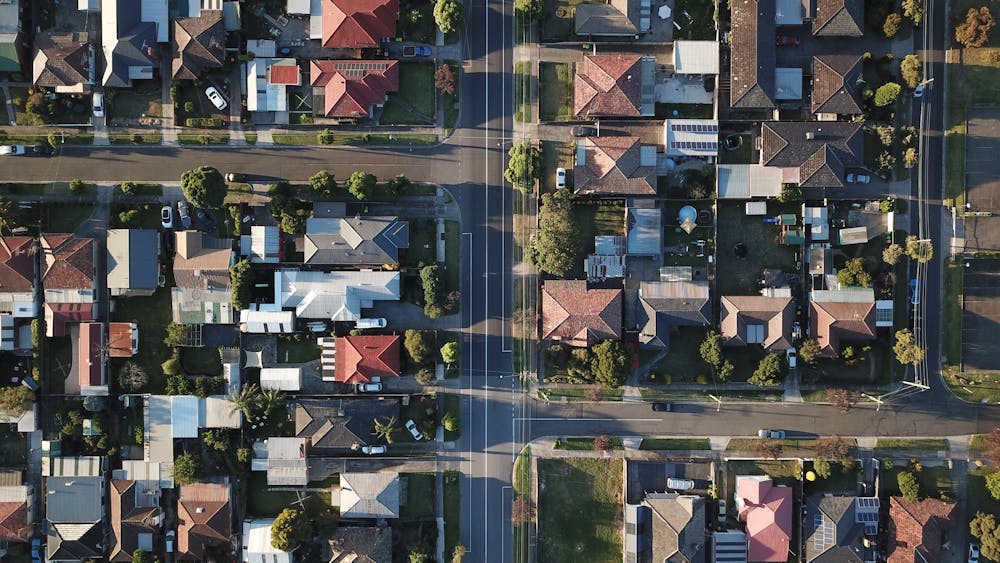
We could not complain that we were dying of boredom because they’d seen death close-up, and it was definitely not caused by a lack of Lego. We could not say that we were starving because at one malarial point in his life, my father thought that if he breathed inwards he could feel his backbone through his stomach. We could never be hungry or bored in our concrete house in Braybrook, behind a carpet factory that spewed out noxious methane smells that sent us to school reeking like whoopee-cushions.
‘We could never be hungry or bored in our concrete house in Braybrook.’ Tom Rumble/Unsplash
But in this scatological suburb, I was indeed often bored shitless. Imagine this — you go outside and hoons in cobbled-together Holdens wind down their windows and tell you to Go Back Home, Chinks. So you walk home and inside, it’s supposed to be like home. But it’s not a home you know.
It’s a home your parents know, where the older siblings look after the younger ones and your mum works in an airless dark shed at the back making jewellery, and you think it’s called outworking because although she’s at home she’s always out working. Just like her mum in Phnom Penh and her mum’s mum in Phnom Penh and every other poor mum in the history of your family lineage.
“What are you doing here? Stop bothering me,” your mum would tell you. Or when she was desperate, she’d be cajoling: “Take your siblings out. Go for a walk. If you give me just one more hour, I’ll be done.” Her face would be blackened, her fingers cut. She’d have her helmet on, with the visor. She looked like a coal miner.
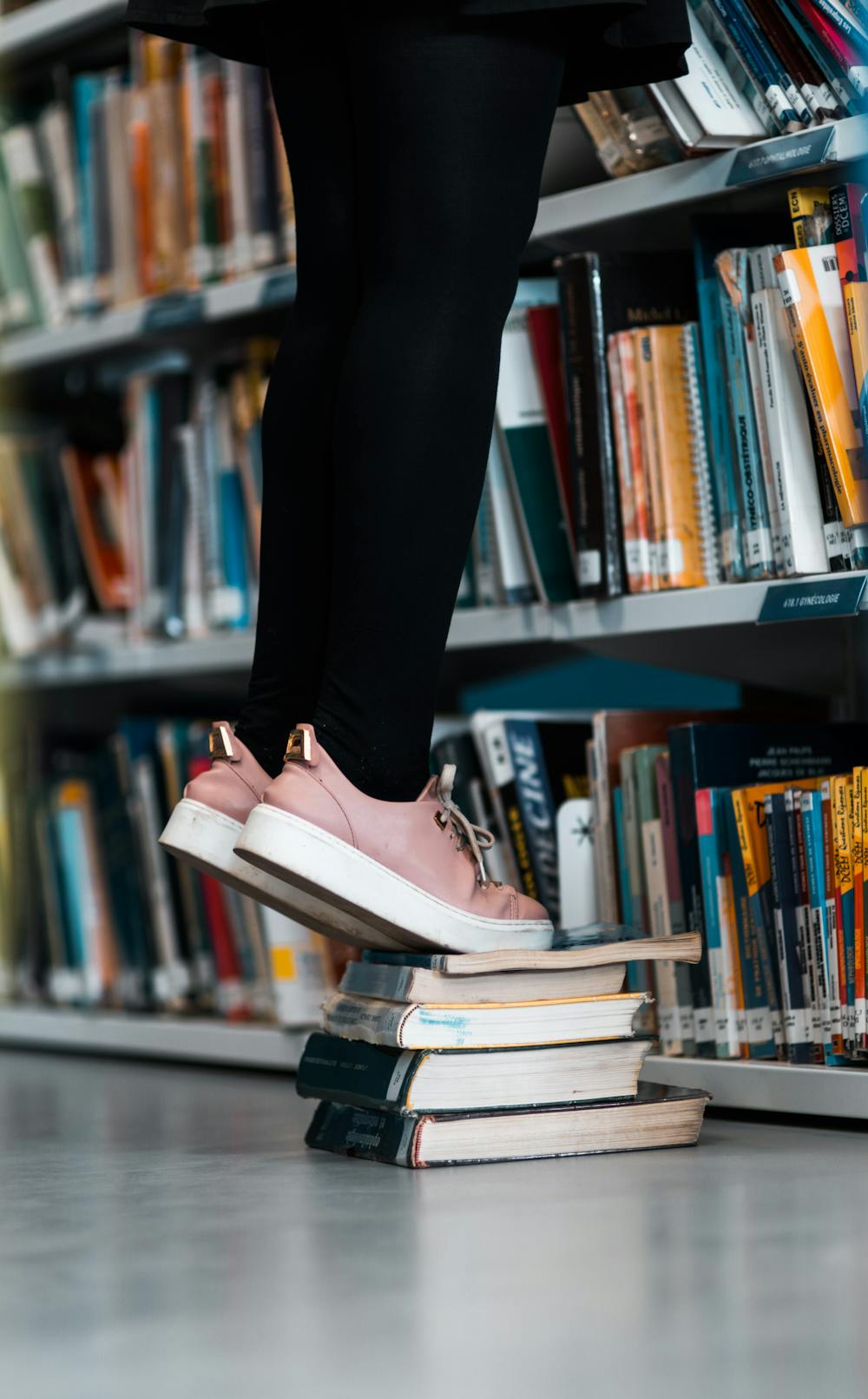
Back in Cambodia, the eldest siblings looked after the bevy of little ones, all the children roaming around the Central Market, en masse. Here, in these Melbourne suburbs they’d call it a marauding Asian gang, I bet. I preferred to stay at home. I had plenty to keep me occupied there. Our school library let me borrow books, but I can’t even remember the names of the librarians now. They didn’t like some of the kids because sometimes we stole books.
The school librarians ‘didn’t like some of the kids because sometimes we stole books.’ Rabie Madaci/Unsplash
My best friend Lydia read a book about Helen Keller that so moved her, so expanded her 10-year-old sense of the world that she nicked it and stroked the one-line sample of Braille print on the last page until all the raised dots were flat. I nicked books too, books on needlecraft and making soft toys. Sometimes one of my aunts would come by and give us a garbage bag filled with fleecy fabric offcuts from her job sewing tracksuits in her own back shed.
Being a practical kid who bugged her parents at every opportunity possible for new toys, I wanted to have reference manuals on how to make them. I didn’t nick story books or novels because to me, those were like films I often only wanted to experience once.
One day, my baby sister rolled herself off the bed when I was supposed to be watching her. She was three months old. I had just turned nine. My mother ran into the house and railed at me like a dybbuk, “You’re dead! You’re dead!” She scooped my sister out of my hands. “What were you doing? You were meant to watch her!”
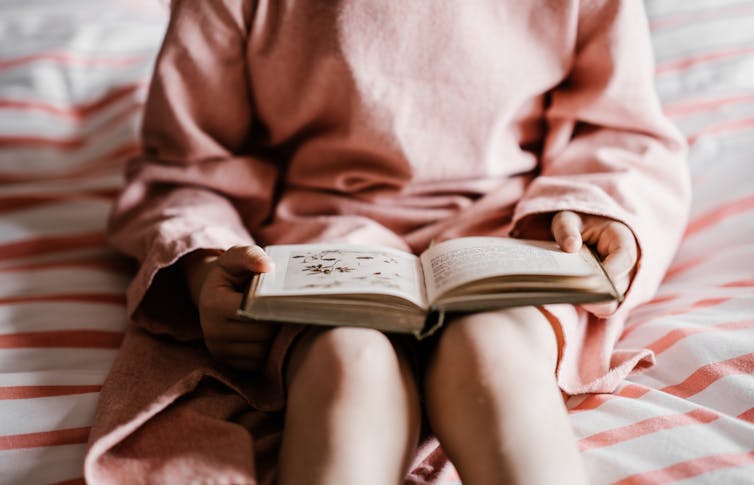
“She was asleep,” I sobbed, “I was reading a book.”
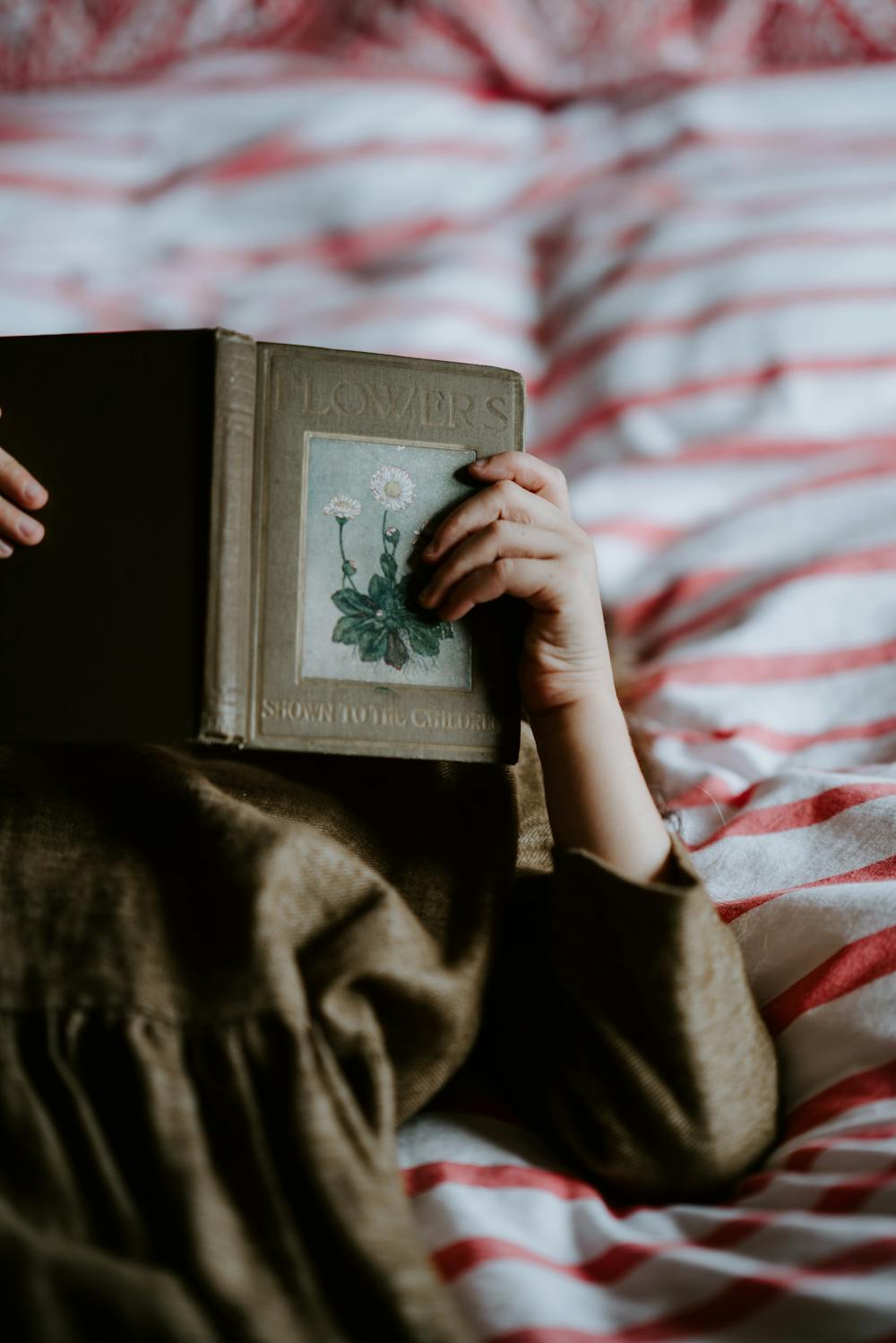
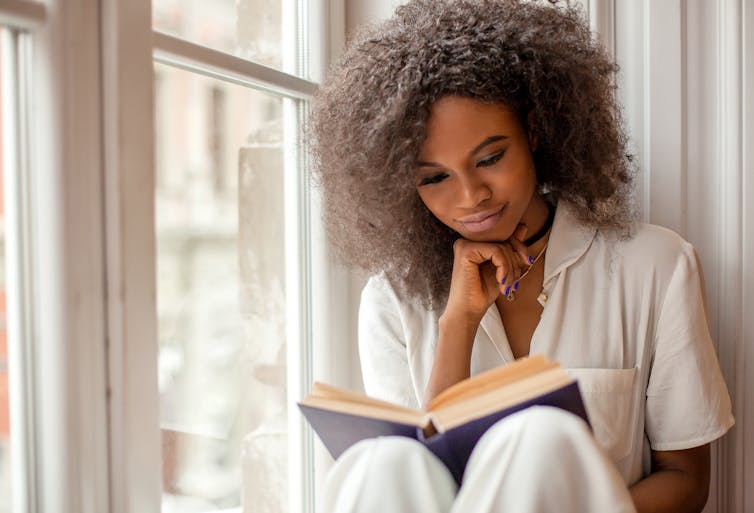
‘If this wasn’t the high life, then what was?’ Annie Spratt/Unsplash
While my mother was working to support us in the dark back shed, I had been in the sunlit bedroom, staring for hours and hours on end at little rectangles, only stopping occasionally to make myself some Nescafé coffee with sweetened condensed milk. If this wasn’t the high life, then what was? Those books were not making me any smarter, she might have thought. Or even said, because it was something she was always telling me, because she couldn’t read or write herself. The government had closed down her Chinese school when she was in grade one, as the very first step of ethnic cleansing in Cambodia.
My mother called up my father and roared over the phone for him to come home immediately because I’d let my sister roll off the bed and she might be brain-damaged. “If she’s brain-damaged, you’re going to be dead,” my father said to me, before they both left for the hospital with my sister.
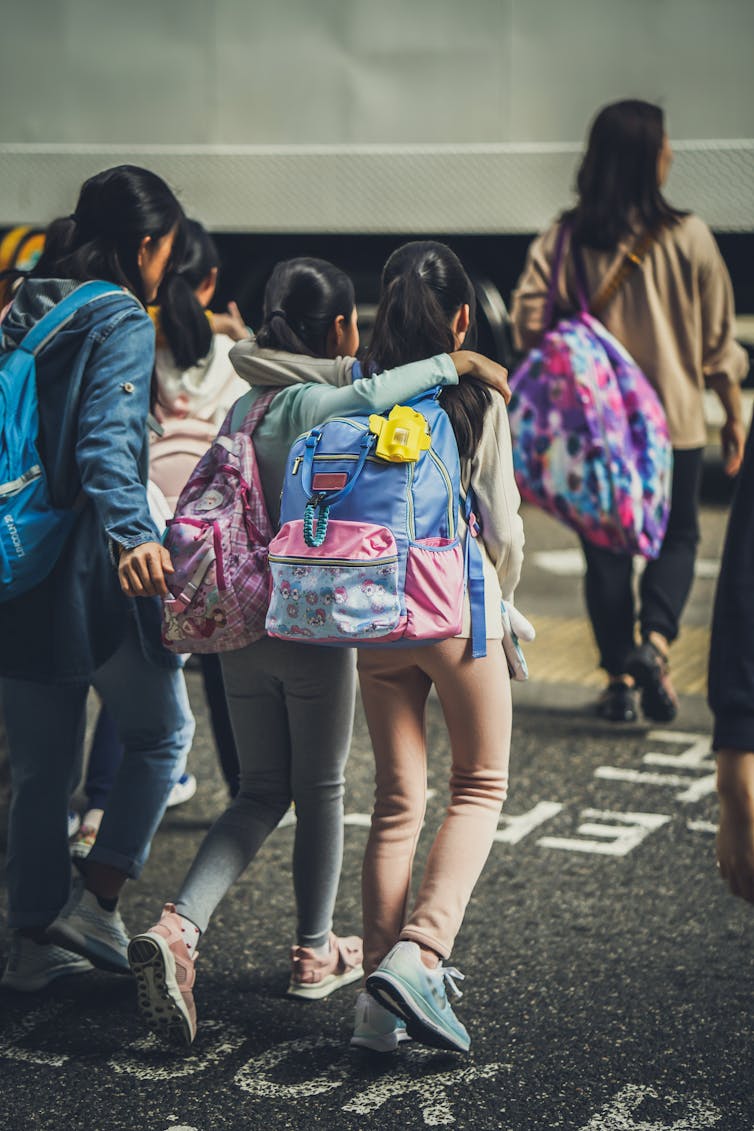
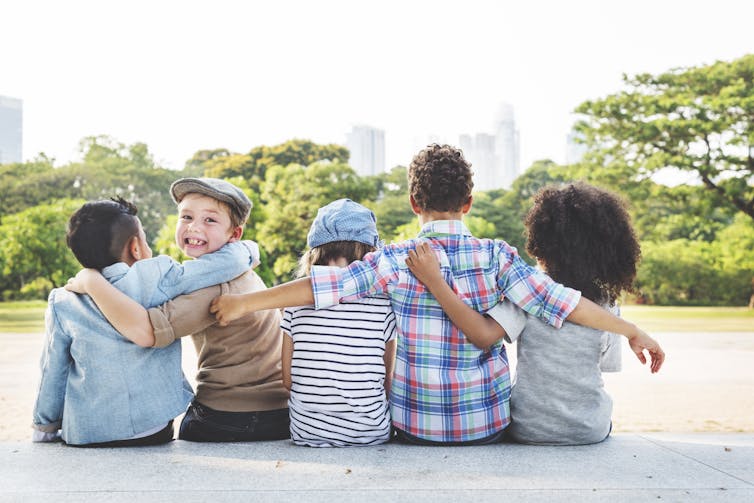
I hated my parents at that moment, but I hated myself more. I also hated the Baby-Sitters Club, all of those 12-year-old girls for whom looking after small children was just an endless series of sleepovers and car-washes and ice-cream parties and they even always got praised and paid for it. The only people I did not hate were my siblings. They were blameless.
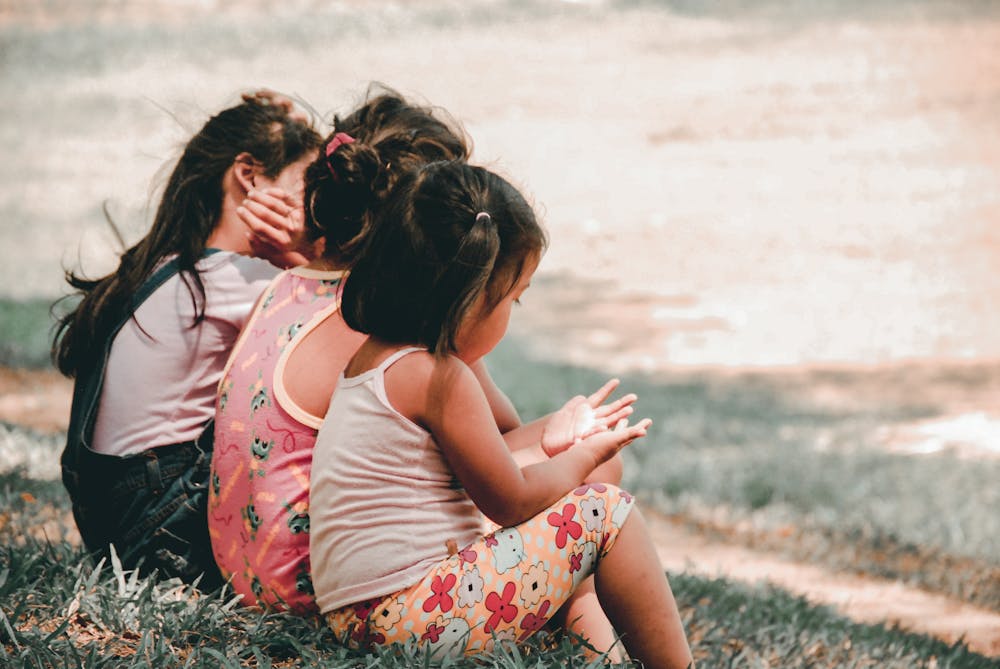
‘The only people I did not hate were my siblings. They were blameless.’ Charlein Gracia/Unsplash
This fucking reading, I thought, because this is how I thought back then, punctuated by profanity, because this is how I wrote back then in diaries I made at school of folded paper stapled together with colourful cardboard covers that I’d then take home and fill in with pages and pages of familial injustice. Sometimes the pen dug in so aggressively underlining a word of rage that I’d make a cut through the paper five pages deep. And this is how the kids talked at school, and also some of their parents who picked them up from school. But then I also realised, reading’s the only fucking good thing I have going for me.
It showed me parents who were not only reasonable, but indulgent. They were meant to be friends with their kids. They were meant to foster their creativity and enterprise. They hosted parties and baked cupcakes and laughed when their children messed up the house, and sat them down and explained things to them carefully with great verbal displays of affection. But only if the kids were like Kristy or Stacey or Dawn in the Baby-Sitters Club.
If they were anything like me, then they didn’t talk very much. We were refugees in school textbooks, there for edification, to induce guilt and gratitude. The presence of third-world people like us in a book immediately stripped that book of any reading-for-pleasure aspirations. We were hard work. We were Objects not Subjects. Or if subjects, subjects of charity and not agents of charity. Always takers, never givers. No wonder people resented us.
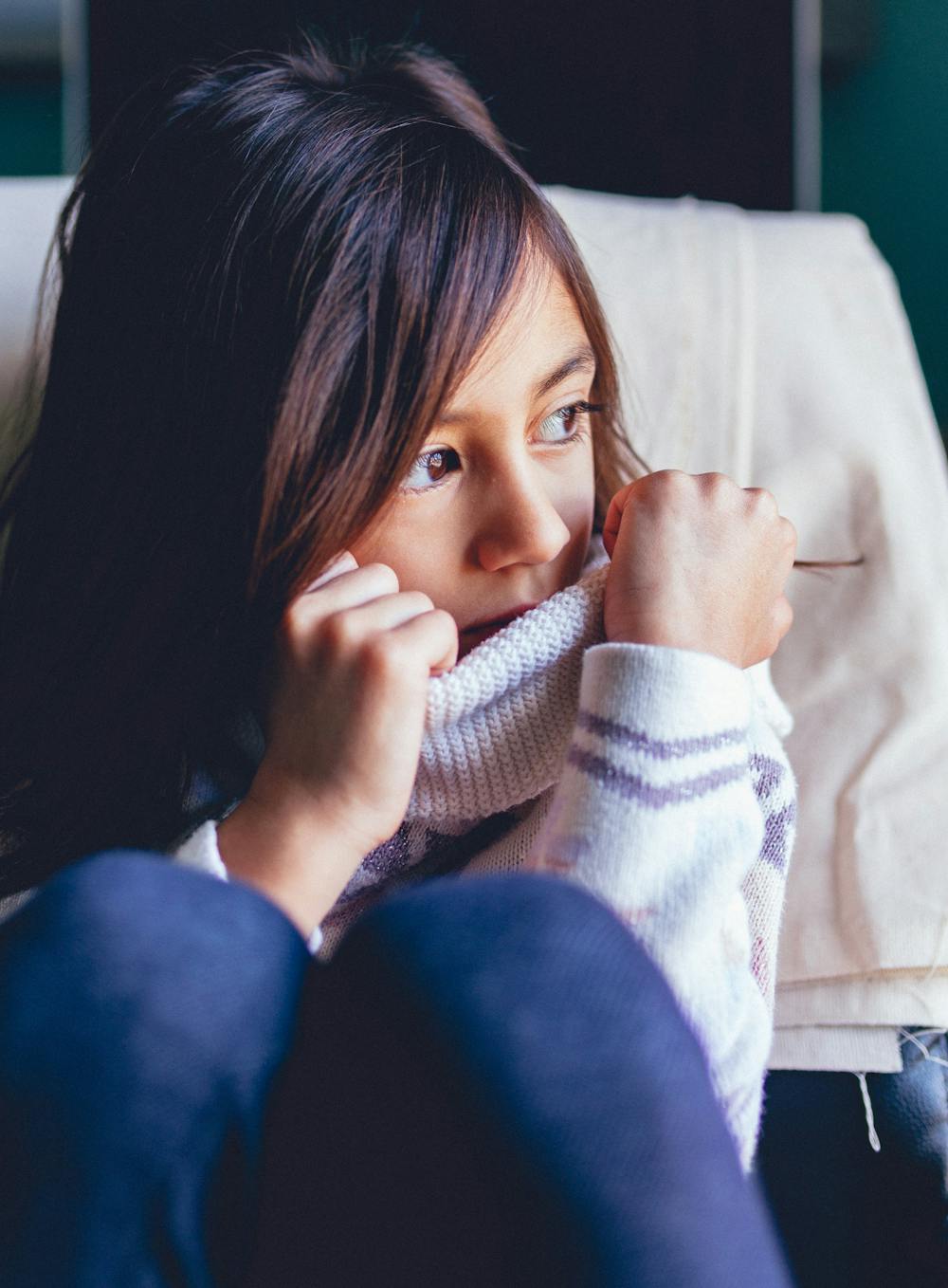
‘The presence of third-world people like us in a book immediately stripped that book of any reading-for-pleasure aspirations.’ Joseph Gonzalez/Unsplash
Hell, even I resented us! “Girls are more responsible,” my mother always told me. When my aunties dumped their children, my little cousins, with me, they’d always say, “Alice is so good. We trust her.” What’s one or two or three more when you already have so many in the house? they reasoned.
I imagined if some prying interloper had called the cops on my parents when I was young, seeing our makeshift crèche with no adult supervision around. “If you tell the government what I do,” my mother always warned me when I was a child, “they’ll take me away and lock me up and your brother and sisters will be distributed to your aunts and uncles or be put in foster homes.”
What she did — her 14-hour days in the back shed, working with potassium cyanide and other noxious chemicals to produce the jewellery for stores that would then pay her only a couple of dollars per ring or pendant — she thought was a crime. She got paid cash in hand, so she never paid any taxes. She just didn’t understand that she wasn’t the criminal; she was the one being exploited.
My mother began work at 13 in a plastic-bag factory, after her school was closed down. When all the men were at war, the factories were filled with women and children. One afternoon, she told me, she accidentally sliced open a chunk of her leg with the plastic-bag-cutting machine. She had to stay home for the next two weeks. She spent those two weeks worrying whether she’d be replaced by another little girl. In her whole working life, spanning over half a century, my mother has never signed an employment contract because she can’t write or read.
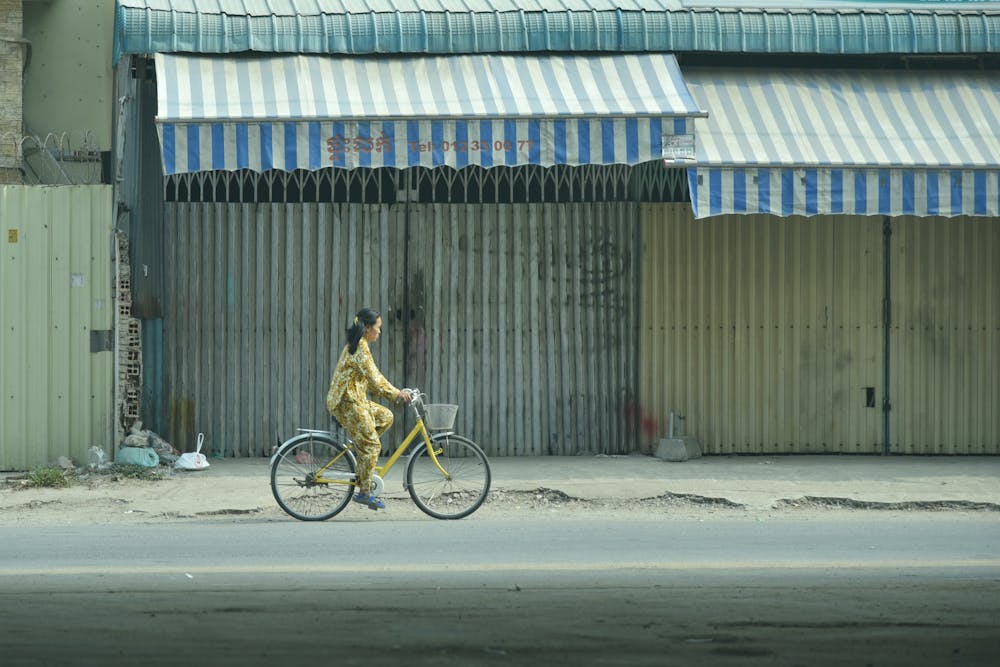
‘My mother began work at 13 in a plastic-bag factory, after her school was closed down.’ Arisa Chattasa/Unsplash
“People can rip me off so easily,” she would often lament, “that’s why I have to have my wits about me at all times.” She’d always count out the exact change when she went grocery shopping even though it mortified me as a kid, and drove those behind her in line nuts. “If they overcharge me and you’re not here, how can I explain anything to them?” she’d ask, “I don’t speak English.”
She’d memorise landmarks when driving, because she couldn’t read street signs. During elections, she would put a “1” next to the candidate who looked the most attractive in their photo. And she’d ask me to read the label on her prescription medicines.
“Tell me carefully,” she’d instruct, “too much or too little and you could kill me.” The power over life and death, I thought, not really a responsibility I wanted at eight. But power over life and death is supposed to be what great works of art are about. Sometimes, there’s not a huge chasm between being literate and being literary. They are not opposite ends of a continuum.
Sure, I enjoyed the classics, especially that line in Great Expectations when Pip determines that he will return a gentleman and deliver “gallons of condescension”. But the depictions of working children, children treated as economic units of labour, as instruments for ulterior adult ends – this was nothing new to me.
‘Looking after children is hard work.’ Free To Use Sounds/Unsplash
Looking after children is hard work. No one cares when things go right, it is the natural course of the universe. But everyone swarms in when things go wrong. A whole swat team, sometimes consisting of your own extended family members, ready to whack at you like a revolting bug if harm should befall your minor charges. The sad reality is that when you slap a monetary value onto these services, people sit up.
They pay attention. They first splutter about how outrageous it is. Then slowly they accept it. You hope that one day no children will be left at home, minding other children while their parents work, because all working parents will be able to access good, affordable childcare.
Often when people rail, think of the children! they are not really thinking of the children. Otherwise, they would listen to the children, not condemn the parents for situations beyond their control — illiteracy, minimum wages, poverty.
Jeanette Winterson wrote about art’s ability to coax us away from the mechanical and towards the miraculous. It involves just seeing the extraordinary in the ordinary. To understand that an eight-year-old can and will take responsibility and care of themselves when left to their own devices requires imaginative empathy, not judgement.
Reading showed me what the world could be. My life told me what the world was. It was not Jane Eyre or Lizzie Bennet or even Nancy Drew that opened my life to the possibility of a better existence. It was Ann M. Martin and her Baby-Sitters Club. That children should get paid was a crazy idea, that they should get paid for babysitting even more audacious.
That a handful of pre-teen girls could start a small business from Claudia’s home — beautiful artistic Asian Claudia Kishi with her own fixed phone line — and that they could muster all the neighbourhood children under their care and largesse was revolutionary to me.
In my life, the miraculous does not involve magic. There is nothing that makes the state of childhood particularly magical. There is a lot that is frightening, brutal and cruel about every stage of life. After all, I know that a single tree can harbour a cradle or a grave. But to be able to do what my hardworking, wonderful mother never could — time-travel, mind-read, even never to mistake dish detergent for shampoo because the pictures of fruit on the bottle are similar — this is a gift I will never take for granted.
Children from disadvantaged backgrounds, very remote areas, and Indigenous Australians are up to two times more likely to start school developmentally vulnerable than the national average.
In 2018, 21.7% of Australian five year olds (70,308 children) were not developmentally ready when they started school. And in Year 7, nearly 25% of students (72,419) didn’t have the required numeracy and literacy skills.
The statement aims for a quality education system for all young people, that supports them to be creative and confident individuals, successful learners and active and informed members of the community.
But our report finds students’ location and family circumstances continue to play a strong role in determining outcomes from school entry to adulthood.
While this crisis in educational inequality isn’t new, it’s likely to get a lot worse, as COVID-19 increases levels of student vulnerability and remote learning widens gaps in achievement.
Disadvantaged children missing out as school progresses
The Alice Springs declaration sets two ambitious goals:
the Australian education system promotes excellence and equity. In part, this is about ensuring all young Australians have access to high-quality education, inclusive and free from any form of discrimination
all young Australians become confident and creative individuals, successful lifelong learners, and active and informed members of the community. This includes all children having a sense of self-worth, self-awareness and personal identity that enables them to manage their emotional, mental, cultural, spiritual and physical well-being.
The declaration was signed last year, and builds on previous ones signed in Hobart, Adelaide and Melbourne over three decades. It recognises the role education plays in preparing young people to contribute meaningfully to social, economic and cultural life.
Our report uses the best available data to paint a comprehensive picture of Australia’s performance against the above important goals.
It shows the gap in academic learning as well as other key areas, such as creativity and confidence, is clear from school entry and usually grows over time.
Analysis in our report tracked students’ learning from when they started school in 2009 to when they were in Year 5 in 2014. It showed that in literacy and numeracy for instance, the gap between the proportion of children from the most disadvantaged and advantaged families meeting relevant standards grew from 20.6 percentage points at school entry to 27.2 percentage points in Year 5.
The report also shows too many students in the senior years of school are not developing key skills. In 2018, 27.8% of 15 year olds (88,314) didn’t meet or exceed the international benchmark standards in maths, reading and science.
While some students receive the support they need to catch up to their peers, many don’t.
A lot of young people are also not developing the qualities needed to confidently adapt to challenges in adulthood and contribute to their communities.
The report shows that in 2017, 28.1% (110,410) of 23 year olds were not confident in themselves or the future and 29.9% were not adaptable to change and open to new ideas. It shows 38.1% (145,056) of 23 year olds were not actively engaged in their community and 33.2% were not keeping informed about current affairs.
Additionally, many young Australians are not being well prepared and supported to find and secure meaningful employment. Overall, according to the 2016 census, nearly 30% of 24 year olds (112,695) weren’t in full-time education, training or work.
Around half of all 24 year old Indigenous Australians, and one in three of the most disadvantaged Australians, were not engaged in any work or education, compared to 15% nationally.
This failure to address educational inequality reproduces and amplifies existing poverty across generations. It saps productivity, undermines social cohesion and costs governments and communities billions of dollars.
There are no quick ways to fix educational inequality, but there are several key improvements that will make a difference.
Closing gaps in participation and lifting the quality of early childhood education services — particularly in disadvantaged communities where services tend to be lower quality — should be one of our highest priorities. Early childhood education is critical to giving every child the best possible start. Evidence shows preschool raises children’s chances of being developmentally ready for school in key areas by around 12 percentage points.
Despite efforts through the Gonski reforms, there is still significant room to improve how Australia targets funding and support to schools with the highest level of need. We need to address the imbalance in resources between advantaged and disadvantaged Australian schools, which is the worst in the OECD.
This is not just about money, but building strong leadership and teaching capability in every school. High quality teaching is proven to be critical to improving student outcomes. We also need to support high quality use of data and assessment to tailor teaching to students’ needs, provide feedback and measure progress.
Government projections show 90% of employment growth in the next four years will require education beyond school. This means we must prepare young people for an economy requiring higher levels of skill than ever. We need to rethink existing models of tertiary education to make it accessible to all students.
Addressing educational inequality is as much about what happens outside the classroom as inside. Nurturing every child’s development and well-being is best achieved through a partnership between schools, families, communities and other support services.
Australia cannot afford education systems that fail so many students. That’s not just in economic terms – because the cost of lost opportunity is even greater down the track – but also in human terms. We know the social and health costs of disengaging in education are significant.
During times of crisis, people find themselves faced with lifestyle changes. One of the earliest and most noticeable changes seen during the COVID-19 lockdown was how we consume media — and especially how we read.
People tend to find comfort in certain books, and reading habits and genre preferences can change during periods of stress. This helps to explain why much genre fiction has roots in times of significant social, political or economic upheaval. Gothic literature is, in part, a British Protestant response to the French Revolution (1789-99).
Science fiction, which emerged as a genre around the fin de siècle, was galvanised by both the industrial revolution and the theories of Charles Darwin. The hard-boiled detective story, which appeared in the 1930s, takes its cues from the privations of the great depression.
While it’s still relatively early to see the influence of the coronavirus and the lockdown on creative industries, there were some striking patterns in media consumption in the early part of the pandemic. Books about (literal and metaphorical) isolation, like Sylvia Plath’s The Bell Jar and Gabriel García Marquez’s novels One Hundred Years of Solitude and Love in the Time of Cholera were among those that saw a big rise in sales. (Beyond books, horror flourished; in particular, films about global pandemics such as 28 Days Later, Contagion, and Outbreak were among the highest rentals on streaming services.)
In view of these patterns of changing reading habits during times of upheaval and signs that such changes were happening during COVID-19, our team decided to research reading habits among the UK public. We were particularly interested in the following questions about the effects of the pandemic:
How much people have been reading;
What type and genre of texts people have been reading;
To what extent people have been returning to previously read books.
As many as 860 participants took part in our online survey, which was advertised through social media. Our findings show that the COVID-19 lockdown changed not only how people read during times of stress, but also what people turn to for comfort or distraction.
Reading frequency
Respondents generally reported that they were reading more than usual. This was largely due to having more free time (due to being furloughed, or not having a commute, or the usual social obligations or leisure activities).
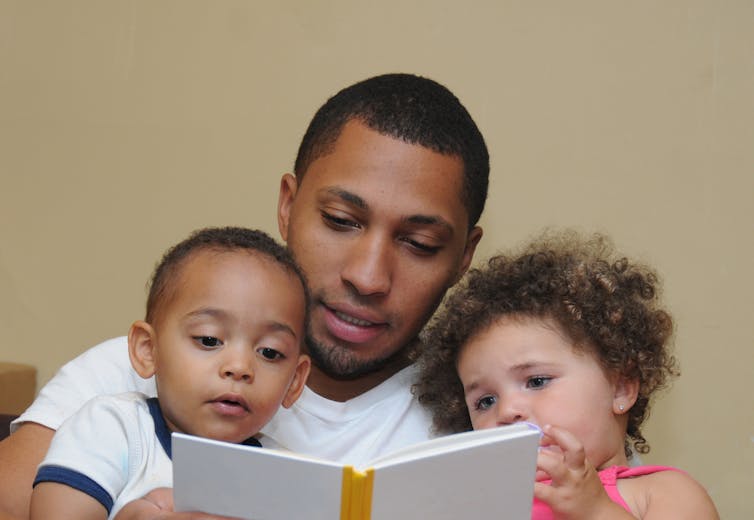
Those who were caring for children reported they spent more time reading with children. rSnapshotPhotos/Shutterstock
This increased reading volume was complicated for those with caring responsibilities. Many people with children reported that their reading time had increased generally because of their shared reading with children, but had less time than normal for personal reading.
Reading frequency was further complicated by a quality vs quantity snag. People spent more time reading and seeking escape, but an inability to concentrate meant they made less progress than usual. In short, people spent more time reading but the volume they read was less.
Genre choice
Despite the early figures showing spikes in interest for content about pandemics and isolation, it appears that people quickly tired of these topics. Many respondents sought out subject matter that was at least predictable, if not necessarily comforting. Many found solace in the “security” of more formulaic genres (whodunnits and other types of thrillers were often cited). Others found themselves significantly less picky about genre than they were before the lockdown: they read more, and more widely.
Many found the lockdown to be a great opportunity to explore things they didn’t normally have the time or desire to read (like hefty classics that seemed too dull or heavy to bring on a commute) or to fill other gaps in knowledge (the protests over police brutality and racism were cited frequently as the catalyst for many readers seeking out more texts by non-white authors).
Re-reading
Much as with the choice of genre, readers generally fell into two camps: those that read for exploration and those that re-read for safety. The re-readers found solace in previously read books: familiar plots and known emotional registers helped stressed-out readers avoid suspense and surprises.
Unsurprisingly, lockdown also made re-reading a physical necessity for some. Some respondents noted how they were unable to visit the library or browse at the bookshop for new books. Others reported that they simply wished to save money. On the other hand, the participants who reported re-reading less than normal during the lockdown period wanted to use their newfound time to seek out new topics and genres.
The two groups also drew on different metaphors to describe their experiences: some of the non-re-readers talked about time as a commodity (for example, valuing reading something new), while the re-readers discussed the ability to travel easily, and with little effort to familiar places, characters and experiences.
Our research shows that the lockdown really did affect the reading habits of those who took part in our survey. But what might be the longer term implications of the lockdown on how and why we read? And what might happen given the possibility of a second lockdown? It remains to be seen if and how the pandemic might be responsible for continuing changes in our relationship with books.






 At the BookShelf
You must be logged in to post a comment.