Unknown's avatar

Dylan Thomas: ‘lost’ fifth notebook reveals how great Welsh poet changed his style


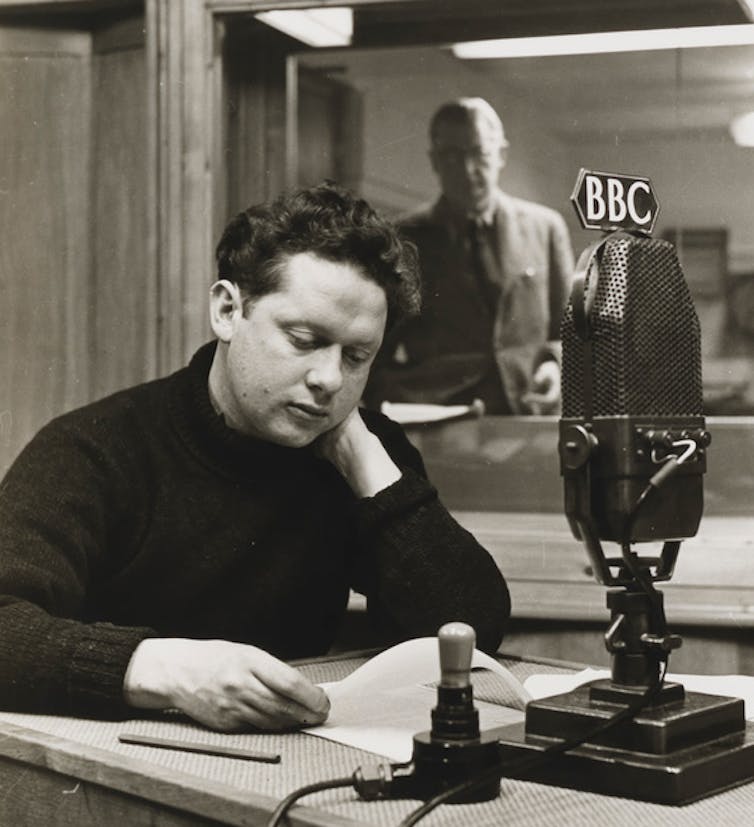
New insights: Dylan Thomas’s fifth notebook shows how the poet’s creative process developed.
Photo by John Gay © National Portrait Gallery, London

John Goodby, Sheffield Hallam University

It’s the dream of every researcher to get their hands on a hitherto-unknown manuscript by the author in whose work they specialise. As you’d imagine, most never realise that dream. But on December 9 2014 at Sotheby’s auction house in London, I was lucky enough for it to happen to me. A school exercise book that had once belonged to Dylan Thomas, filled with 16 of his poems in his handwriting, was bought by my then-employers, Swansea University, for £85,000 and given to me to edit.

A PhD student, Adrian Osbourne, was funded to help me in my labours. A greater honour, and a more daunting, more thrilling task, would have been hard for either of us to imagine.

To begin at the beginning, however, some context. From April 1930, aged 15, Thomas began copying his completed poems into a series of school exercise books. In his short story, The Fight, the “D. Thomas” character notes how: “In the evening, before calling on my new friend, I sat in my bedroom by the boiler and read through my exercise-books full of poems. There were Danger Don’ts on the backs.”
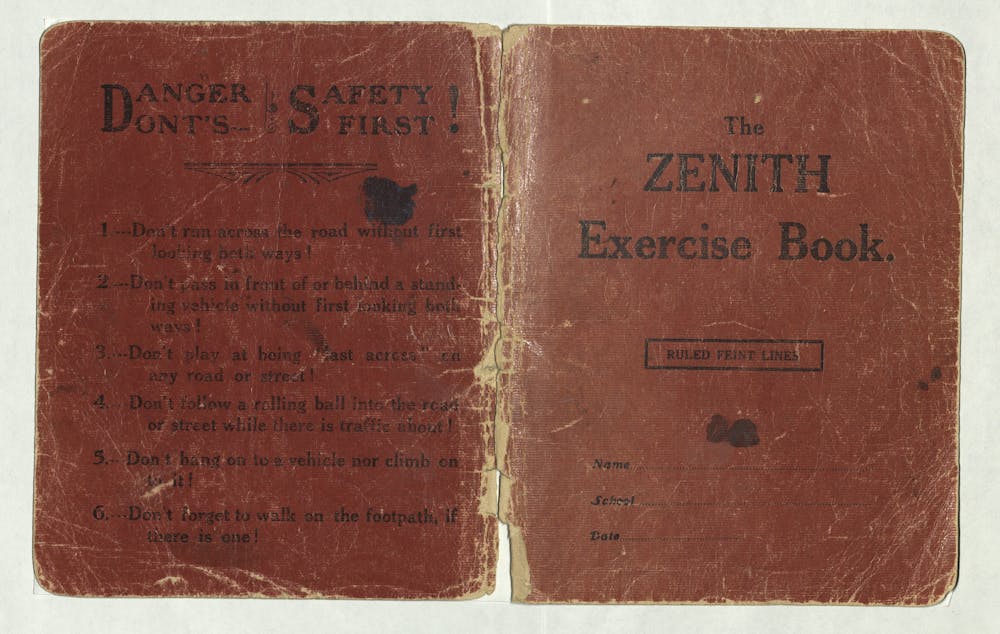
A red school exercise book belonging to Welsh poet Dylan Thomas.
Lost until 2014: Dylan Thomas’s fifth notebook.
Swansea University, Author provided

In a letter of 1933, Thomas referred to an “innumerable” number of such notebooks. And, unlike most poets, he hung onto his juvenilia, carrying them around with him and raiding them for material until 1941. At that point, in the darkest days of the second world war, hard up and with a family to support, he sold the first four, which run from April 1930 to April 1934, to the library of the State University of New York at Buffalo. Scholars were given access to them and they were published in 1967 as Poet in the Making: The Notebooks of Dylan Thomas.

No more notebooks emerged during Thomas’s lifetime, nor – despite much speculation – did any appear after his death in 1953. Thus, the Sotheby’s notebook is the only one to have appeared, and it covers the period summer 1934 to August 1935 – making it a direct continuation of the first four.

Scrap paper?

The fifth notebook’s extraordinary nature as an object is matched by the story of its survival. Two notes contained in the Tesco’s bag in which the notebook was found allowed us to establish this. The first, a brief description by Thomas himself, shows that the last time he was in possession of it was early 1938.

After marrying in summer 1937, he and Caitlin Macnamara lived with Caitlin’s mother at her home in Hampshire until early 1938. The second note – by Mrs Macnamara’s maid, Louie King – revealed that after Dylan and Caitlin’s departure she was given the notebook, with other “scrap paper” they left behind, to burn in the kitchen boiler. King, however, withheld the notebook from its fiery fate – out of curiosity, sentiment, or for some other reason we know nothing about. When she died in 1984 the notebook passed to her family, who kept it, still a secret to the outside world, until 2014.

We now had three tasks – to transcribe the notebook poems, deciphering, if possible, Thomas’s many corrections and deletions. We then set out to compare them with the published versions and to work out what light – if any – they shed on Thomas’s poetic development.

It should be said that the fifth notebook poems are all published ones. Unlike its predecessors it contains no unpublished items (this may be why Thomas does not seem to have minded losing it). Where it differed was in the number of corrections it contained. The poems in the first four notebooks are almost always clean copies. In the fifth, many poems undergo radical revision, allowing us to trace Thomas’s creative processes at first hand.
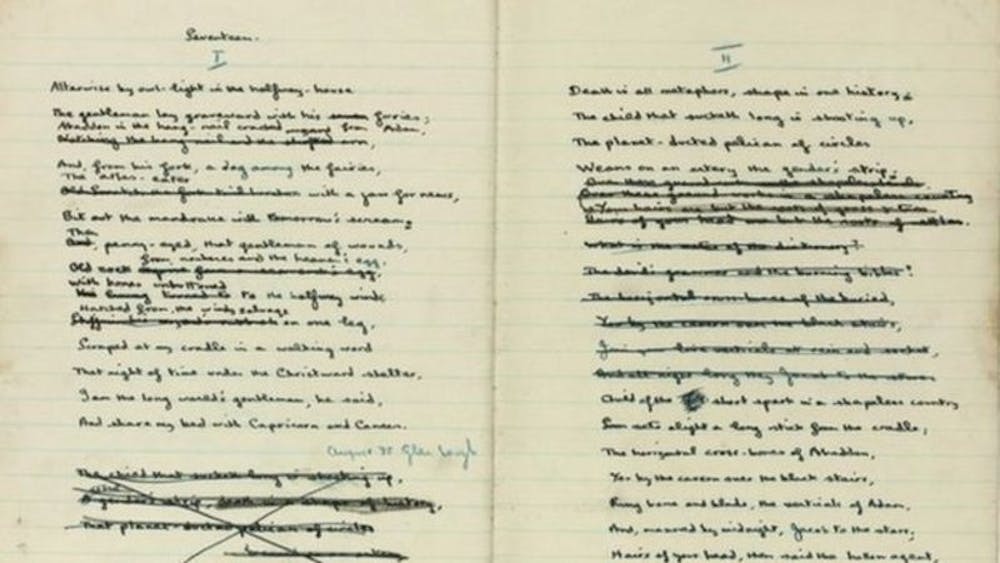
Two pages from a handwritten notebook of poetry containing revisions.
Unlike the four that preceded it, the fifth notebook contains many of Thomas’s revisions.
Swansea University, Author provided

Luckily, we were able to realise most of our aims. Thomas’s handwriting is clear, so most poems and corrections were easy to read. Some problems arose as the notebook progressed, and the poems grew more complex and worked-over. Usually, educated guesswork (not to mention my colleague’s keen eyesight) carried us through – although in a handful of cases we called in a technician armed with a super-photocopier. In the end only five words were unresolved.

Changing style

Among the deleted passages were many of great beauty and originality, some of which Thomas reworked elsewhere. There were also three stanzas, in two of the poems, which had never been seen before.

Everywhere his incredibly rapid development as a poet was evident. Sometimes, even the tiniest item could alter our understanding of a poem; in I Dreamed My Genesis, the notebook confirmed that a comma should replace a full stop found in three print editions, making better sense of eight lines of the poem.

At the other end of the scale of significance, after poem eight, When, Like a Running Grave, we noted that Thomas had, unusually, written out the date in full: “26th October 1934” – the eve of his 20th birthday – with an emphatic line in the centre of the page. We know from the number of poems he wrote about birthdays (they include Poem on His Birthday and Poem in October) that they held great significance for Thomas. So we feel it is no coincidence that the poems that follow this point, beginning with Now and culminating in Altarwise By Owl-Light, the final poem, differ from these before it, and are the most experimental he ever wrote. Agonisingly aware of human mortality, of the end of youth, this emphatic dating marks the exact moment of Thomas’s momentous decision to adopt a more daring style.

The notebook, then, represents a kind of hinge in his early career, and this is something we could only have learned from the notebook itself, since the stylistic shift is completely obscured by the non-chronological order in which When, Like a Running Grave and Now were published. It grants us the privilege of witnessing, for the first time, the young Dylan Thomas at the height of his powers, seizing and reshaping his poetic destiny.The Conversation

John Goodby, Professor of Arts and Culture, Sheffield Hallam University

This article is republished from The Conversation under a Creative Commons license. Read the original article.

Unknown's avatar

2020 ACU Prize for Poetry Winner


The link below is to an article reporting on the winner of the 2020 ACU Prize for poetry, Geoff Page, for ‘Jericho.’

For more visit:
https://www.booksandpublishing.com.au/articles/2020/09/22/156923/page-wins-2020-acu-prize-for-poetry/

Unknown's avatar

2020 Blake Poetry Prize Winner


The link below is to an article reporting on the winner of the 2020 Blake Poetry Prize, Judith Nangala Crispin, for the poem ‘On Finding Charlotte in the Anthropological Record.’

For more visit:
https://www.booksandpublishing.com.au/articles/2020/09/22/156917/crispin-awarded-2020-blake-poetry-prize/

Unknown's avatar

Louise Glück: literature Nobel for American lyric poet a healing choice after years of controversy


Nikolai Duffy, Manchester Metropolitan University

Louise Glück is the first poet to win the Nobel Prize in Literature since Tomas Tranströmer in 2011 and the first American to win since Toni Morrison in 1993.

In their preference for the muddiness of everyday life over explicit engagement with their political and social issues, you can see a broad link between Glück and Tranströmer. On the surface, though, Morrison and Glück couldn’t appear to be more different. Morrison’s work lays bare both the lasting scars and the perennial nature of American trauma, whereas Glück’s work is altogether quieter, more local and apparently lacking that broad, socially and politically engaged canvas.

But look past the surface and there are affinities between the two writers. Since her early poems, Glück has been concerned with charting what it means to live as an individual in America. It is a nuanced, controlled form of lyric poetry that is as interested in what it has not been possible to say as what has been said – and the ways the latter haunts and shapes the former.

I dislike being herded into certainty”, Glück has written. We live in an age in which certainty is valued above almost anything else. We appear to want, for instance, the certainty of a vaccine against COVID-19, the certainty that the pandemic will be brought to heel, and the certainty that we will not die, at least not yet and not like this.

But there is something greatly important in remembering that life, in all its forms – social, political, personal – remains incomplete, uncertain, and endlessly revised.

In Parable of the Swans from the 1996 collection, Meadowlands, two swans live: “On a small lake off / the map of the world”. The two swans spend much of their time studying themselves, some of their time studying each other. Ten years later “they hit / slimy water”.

She continues:

Sooner or later in a long
life together, every couple encounters
some emergency like this, some
drama which results
in harm.

It is a parable of domestic life, devastating in its directness, even more so in the way such dramas are repeated interminably behind closed doors only to be shoved aside when the door opens, replaced by a public face that projects only possession and assurance.

Individual becomes universal

The Nobel committee has heralded Glück “for her unmistakable poetic voice that with austere beauty makes individual existence universal”. It is a blanket phrase that might be applied to much lyric poetry.

But what has made Glück’s concern with individual experience resonate over the years is its quiet insistence that that even in the private sphere, everything is touched – and shaped – by the public sphere. No matter what we each might claim to the contrary, we are all the products of the world around us.

And it’s upon these affects and consequences that Glück shines such a clarifying light. It has done so, not by telling us this, but by showing us the ways it can be done.

It is a humble corrective to the discourses of power and authority – so often male – that colour and corrupt great swaths of what we are encouraged to view as important. We are each answerable to how we choose to live, or as the poet puts it in Parable of the Swans: “love was what one did.”

Sidestepping controversy

There is an argument that, after two years of self-inflicted controversies and incomprehensible decisions, the Nobel committee has elected to play it safe this year. Glück is not a polarising poet. In any case, there was an expectation that the prize would be awarded to a non-European female writer.

There is also an argument that in awarding the prize to a white American writer whose work is often characterised by critics as not having an explicit political dimension, the committee has deliberately chosen to sidestep what could have been an important and timely intervention into the necessary debates about diversity and inclusivity – debates which run the risk of being rendered invisible by politicians’ more explicit desire to be seen to be waging war against the pandemic.

No doubt there is something to these arguments. But to criticise the award on both of these fronts is also to neglect the very particular qualities and resonances of Glück’s work. Her preference for the discretion of lyric poetry has something very specific to say about the lives we choose to lead.

As the poet writes in the final lines of the 2008 poem Dawn:

You get home, that’s when you notice the mold.
Too late, in other words.

As though the sun blinded you for a moment.

By drawing back a veil, Glück lets us see what is often overlooked, and the consequences that arise from the recklessness of not paying attention to ourselves and the way we live in the world.The Conversation

Nikolai Duffy, Senior Lecturer, Department of English, Manchester Metropolitan University

This article is republished from The Conversation under a Creative Commons license. Read the original article.
Unknown's avatar

2020 Nobel Prize for Literature Winner


The links below are to articles reporting on the 2020 winner of the Nobel prize for Literature, Louise Gluck.

For more visit:
https://www.theguardian.com/books/live/2020/oct/08/nobel-prize-in-literature-2020-follow-the-announcement-live
https://lithub.com/i-feel-like-a-tracker-in-the-forest-following-a-scent-louise-gluck-on-how-she-writes/
https://www.theguardian.com/books/2020/oct/08/louise-gluck-where-to-start-with-an-extraordinary-nobel-winner
https://bookriot.com/2020-nobel-prize-in-literature/
https://www.theguardian.com/books/2020/oct/09/louise-gluck-colm-toibin-on-a-brave-and-truthful-nobel-winner
https://lithub.com/louise-gluck-has-won-the-nobel-prize-for-literature/

Unknown's avatar

2020 Nobel Prize for Literature


Unknown's avatar

2020 Blake Poetry Prize Shortlist


The link below is to an article reporting on the shortlist for the 2020 Blake Poetry Prize.

For more visit:
https://www.booksandpublishing.com.au/articles/2020/09/04/156202/blake-poetry-prize-2020-shortlist-announced/

Unknown's avatar

Seamus Heaney


The link below is to an article that takes a look at the poet Seamus Heaney.

For more visit:
https://lithub.com/the-humble-confidence-of-seamus-heaney/

Unknown's avatar

Poets and novelists have been writing about life under COVID-19 for more than a century


Literature from long ago speaks to the human experience of plague.
Marco Rosario Venturini Autieri/Getty

Rachel Hadas, Rutgers University Newark

Pondering the now no-longer Dixie Chicks – renamed “The Chicks” – Amanda Petrusich wrote in a recent issue of the New Yorker, “Lately, I’ve caught myself referring to a lot of new releases as prescient – work that was written and recorded months or even years ago but feels designed to address the present moment. But good art is always prescient, because good artists are tuned into the currency and the momentum of their time.”

That last phrase, “currency and momentum,” recalls Hamlet’s advice to the actors visiting the court of Elsinore to show “the very age and body of the time his form and pressure.” The shared idea here is that good art gives a clear picture of what is happening – even, as Petrusich suggests, if it hadn’t happened yet when that art was created.

Good artists seem, in our alarming and prolonged time (I was going to write moment, but it has come to feel like a lot more than that), to be leaping over months, decades and centuries, to speak directly to us now.

‘Riding into the bottomless abyss’

Some excellent COVID-19-inflected or anticipatory work I’ve been noticing dates from the mid-20th century. Of course, one could go a lot further back, for example to the lines from the closing speech in “King Lear”: “The weight of this sad time we must obey.” Here, though, are a few more recent examples.

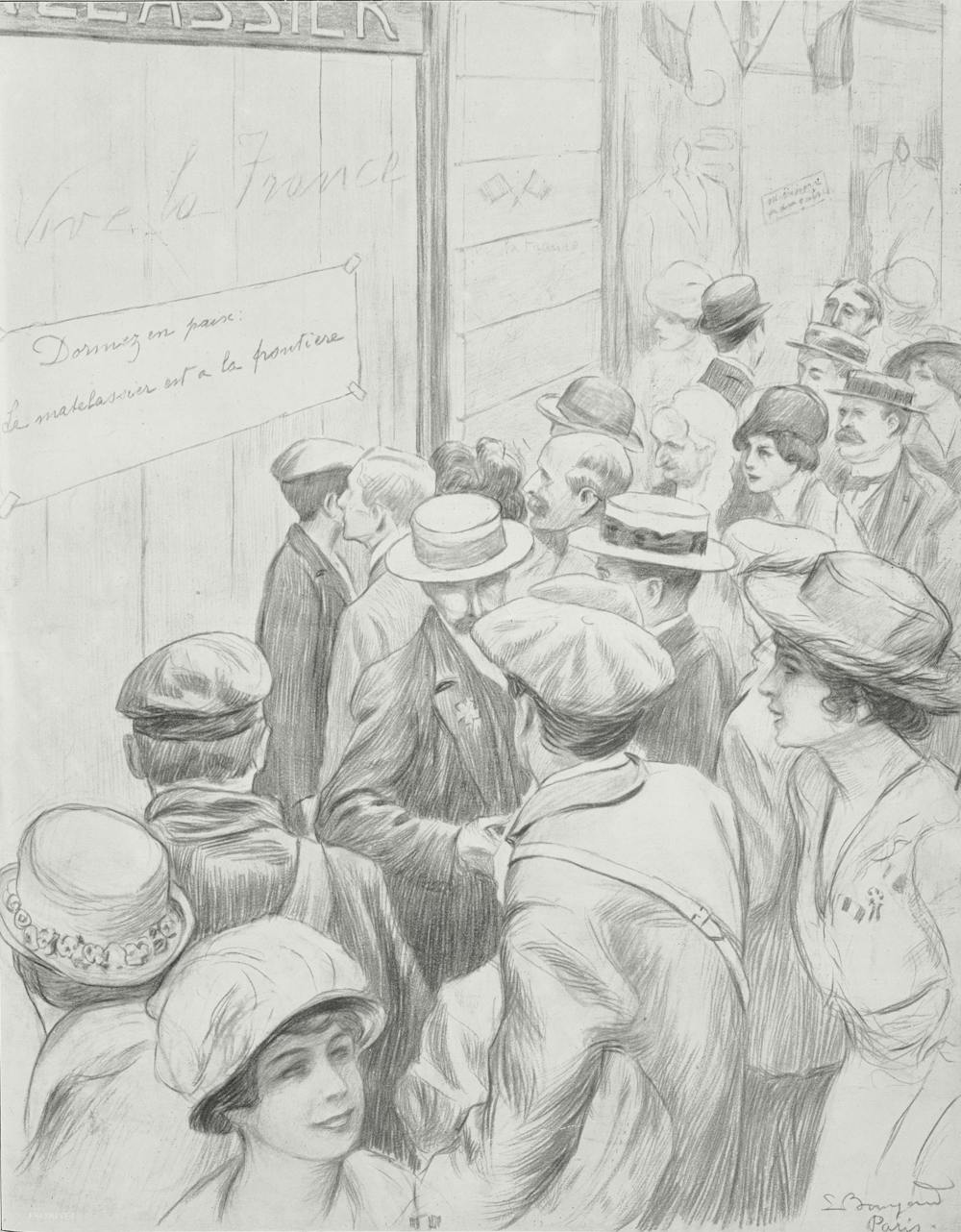
Drawing of Parisians in front of closed store in 1914
Marcel Proust wrote that in wartime Paris, ‘all the hotels … had closed. The same was true of almost all the shops, the shop-keepers … having fled to the country, and left the usual handwritten notes announcing that they would reopen.’
L. Bombard, from L’Illustrazione Italiana/Getty

Marcel Proust’s “Finding Time Again,” an evocation of wartime Paris from 1916, strongly suggests New York City in March 2020: “Out on the street where I found myself, some distance from the centre of the city, all the hotels … had closed. The same was true of almost all the shops, the shop-keepers, either because of a lack of staff or because they themselves had taken fright, having fled to the country, and left the usual handwritten notes announcing that they would reopen, although even that seemed problematic, at some date far in the future. The few establishments which had managed to survive similarly announced that they would open only twice a week.”

I recently stumbled on finds from the 1958 edition of Oscar Williams’ “The Pocket Book of Modern Verse” – both, strikingly, from poems by writers not now principally remembered as poets. Whereas a fair number of the poets anthologized by Williams have slipped into oblivion, Arthur Waley and Julian Symons speak to us now, to our sad time, loud and clear.

From Waley’s “Censorship” (1940):

It is not difficult to censor foreign news.
What is hard to-say is to censor one’s own thoughts,-
To sit by and see the blind man
On the sightless horse, riding into the bottomless abyss.

And from Symons’ “Pub,” which Williams doesn’t date but which I am assuming also comes from the war years:

The houses are shut and the people go home, we are left in
Our island of pain, the clocks start to move and the powerful
To act, there is nothing now, nothing at all
To be done: for the trouble is real: and the verdict is final
Against us.

‘Return to what remains’

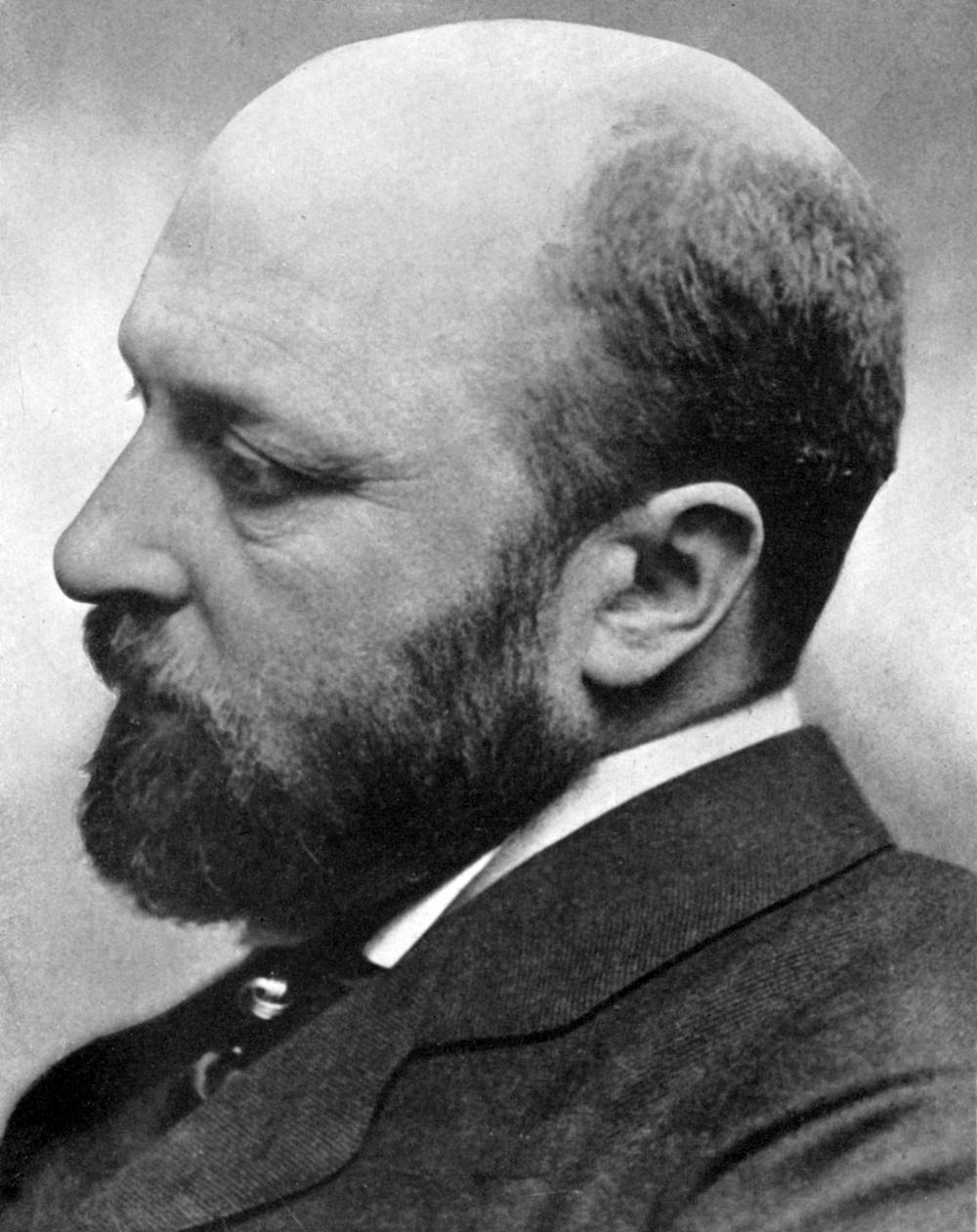
Photo of novelist Henry James
In an 1897 novel, Henry James wrote ‘She couldn’t leave her own house without peril of exposure.’
Hulton Archive/Getty

Dipping a bit further back, into Henry James’ “The Spoils of Poynton” from 1897, I was struck by a sentence I hadn’t remembered, or had failed to notice, when I first read that novella decades ago: “She couldn’t leave her own house without peril of exposure.” James uses infection as a metaphor; but what happens to a metaphor when we’re living in a world where we literally can’t leave our houses without peril of exposure?

[Deep knowledge, daily. Sign up for The Conversation’s newsletter.]

In Anthony Powell’s novel “Temporary Kings,” set in the 1950s, the narrator muses about what it is that attracts people to reunions with old comrades-in-arms from the war. But the idea behind the question “How was your war?” extends beyond shared military experience: “When something momentous like a war has taken place, all existence turned upside down, personal life discarded, every relationship reorganized, there is a temptation, after all is over, to return to what remains … pick about among the bent and rusting composite parts, assess merits and defects.”

The pandemic is still taking place. It’s too early to “return to what remains.” But we can’t help wanting to think about exactly that. Literature helps us to look – as Hamlet said – before and after.The Conversation

Rachel Hadas, Professor of English, Rutgers University Newark

This article is republished from The Conversation under a Creative Commons license. Read the original article.
Unknown's avatar

‘A doubtful gleam of solace’: reading Tennyson’s In Memoriam AHH in difficult times


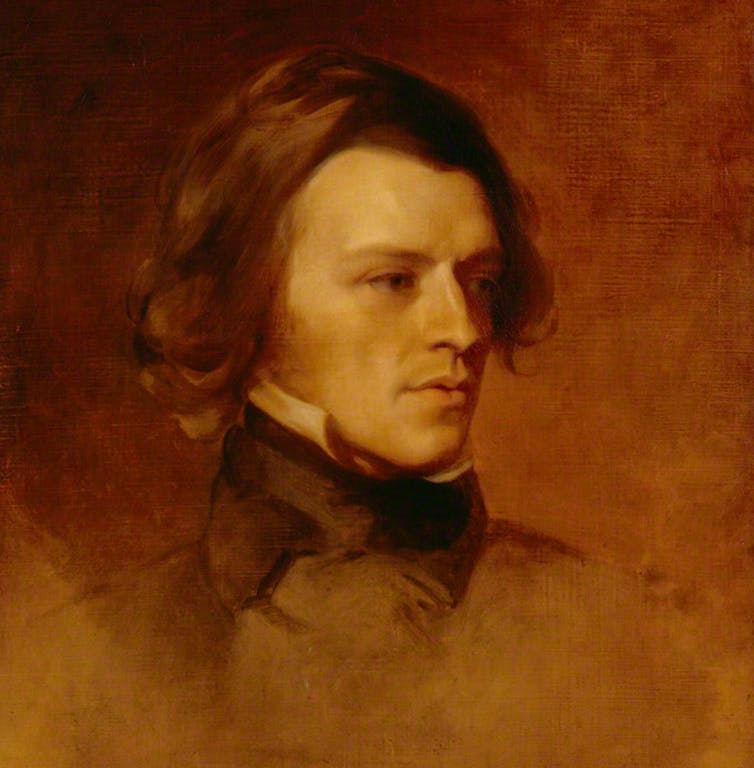
A portrait of Alfred, Lord Tennyson,
by Samuel Laurence and Sir Edward Burne-Jones, circa 1840.
Wikimedia Commons

Darius Sepehri, University of Sydney

In our series Art for Trying Times, authors nominate a work they turn to for solace or perspective during this pandemic.

In Memoriam AHH, cantos 27 & 28, read by Darius Sepehri.

Alfred Tennyson’s 1833 poem “Ulysses”, was, he tells us, written under a sense of loss — “that all had gone by but that still life must be fought out to the end.”

Dealing with the inertia created by grief, and the will needed to resist and move ahead, the poem perfectly expresses what St Paul called the “hope against hope”. Despite the heroism of the famous last line, (“To strive, to seek, to find, and not to yield”), the poem’s defiance only makes sense in the light of the anguish animating it.

Tennyson’s book-length elegy In Memoriam AHH, published in 1850, once among the most popular poems in English, came out of the same sense that the whole world was over — not a world but the world — and yet life must be lived, somehow.

I experience In Memoriam as a soulful and provocative artwork, not a “relevant” one or one merely to be mined for therapeutic consolations.

Despite its formal control and elegance, and what we may hear as dated language, Tennyson’s long poem is tumultuous, chaotic, and not only personal but social, deeply connected with upheavals in Victorian society.

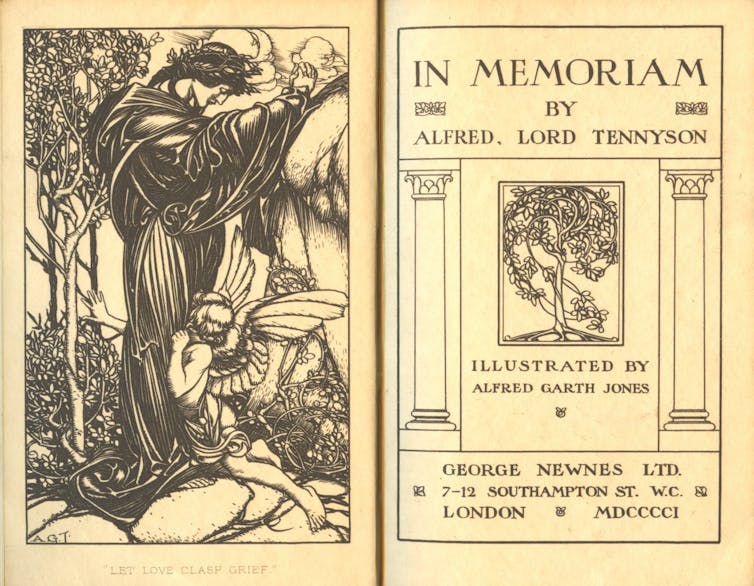
An 1851 edition of In Memoriam.
Wikimedia


Read more:
Ode to the poem: why memorising poetry still matters for human connection


Passion

Both Victorian and modern in style and composition, In Memoriam uses extraordinarily passionate language, tightly compressed. Its passion is directed by Tennyson at another man, his friend Arthur Hallam, a brilliant philosopher. Tennyson and Hallam met at university. We know their first encounters were magnetic and catalysing.

When Hallam died suddenly of a brain aneurysm in Italy in 1833, aged 22, it violently changed Tennyson’s life.

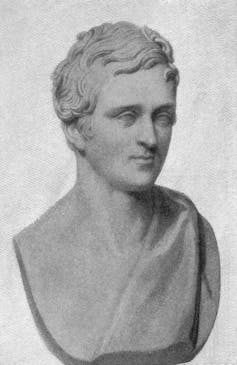
Bust of Arthur Hallam by Francis Leggatt Chantrey.
Wikimedia

Tennyson took 18 years to write In Memoriam. The prologue and epilogue attest to unshakeable faith in Christianity and in life’s continuity. The prologue’s first line addressed to “Strong Son of God, immortal Love”, and the last lines professing the eschatological completion of the world in “one far-off divine event/To which the whole creation moves”, could hardly seem more assured.

And yet. The 131 cantos in between these bookends trace an agonising journey into suffering, doubt, helplessness and the possibility of unredeemed pain that has no meaning or purpose. The rhetorical strength of some of these cantos is such that it puts the orthodox Christian position the poem professes elsewhere in serious question.

The way the poem tries to think through the many grand subjects it raises, such as if God cares for each individual being, creates a meandering journey, now confused, now suddenly clear. This feels right for grief.

Cantos 34 & 38 recited by Darius Sepehri.

The poem spirals around its ideas, rejecting clean linear progression, organised
around three Christmas sections (cantos 28, 78, and 104) of heightened feeling. Coming back and back to things, seemingly obsessed, Tennyson speaks of “a loss for ever new”. There is no “closure” of the wound. Can Christ really fill it? The world and its goods cannot.

I’ve committed many parts of In Memoriam to memory, made easier by the poem’s exceptionally memorable language (immortal, melodious phrases like “I loved the weight I had to bear/because it needed help of love”).

The poem’s form, entirely in quatrains of iambic tetrameter rhyming abba, composed in a long, ledger-like diary now kept at the British Museum, aids in memorisation.


Read more:
Explainer: poetic metre


I recite a selection of cantos here, and the famous “Ring Out Wild Bells” sequence, which charts a move from devastation to rebirth.

In Memoriam has an almost relentlessly regular meter, meant to recall biological processes such as the beat of the heart and breathing, organic processes that sustain life even as the poet’s being cries that life has ended.

All creation mourns

After Tennyson received a letter telling him Hallam’s remains were coming back by sea to Hallam’s family in England, he wrote the very first part of In Memoriam, calling the ship home: “Sphere all your lights around, above/Sleep, gentle heavens, before the prow/ Sleep, gentle winds, as he sleeps now.”

A hypnotic enchantment is created with the ship phosphorescent as it sails at night.

The poem connects something cosmic and transcendent with Tennyson’s own very private, enclosed grief. Terrence Malick’s Tree of Life, a film where the death of a young son is juxtaposed with grand existential and metaphysical questions that interrogate God, also aimed for such territory.

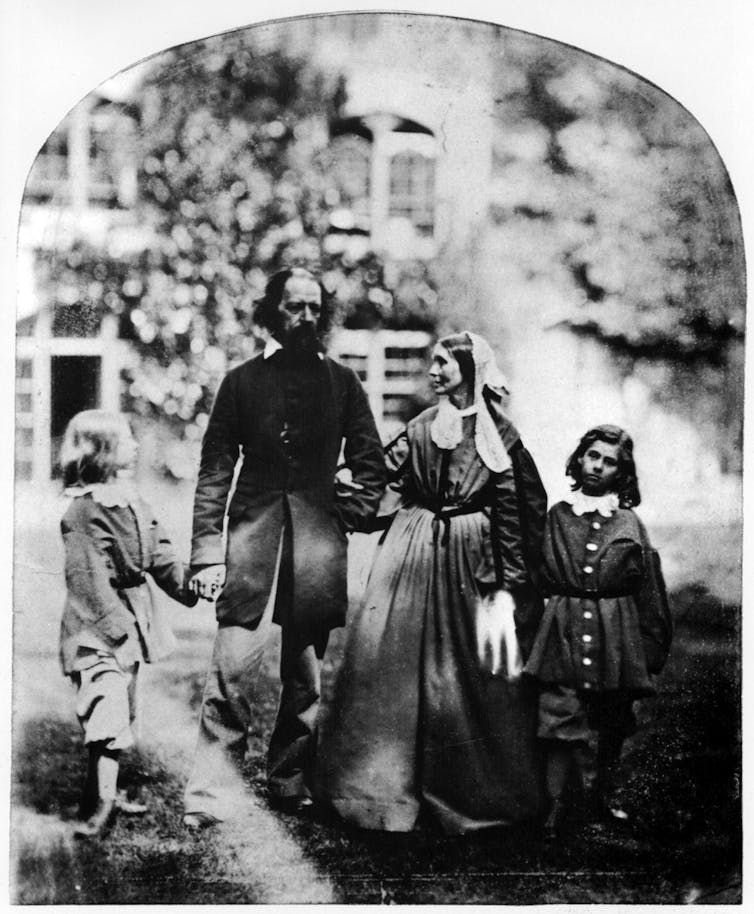
Tennyson with his wife Emily and sons, circa 1862. He named one of his sons Hallam.
Public Domain

Soulful ambiguity

“Dear friend, far off, my lost desire”, cries Tennyson. Today if a man speaks such excessive language of love to another man, we are likely to apply a defined identity or classification.


Read more:
Guide to the classics: Walt Whitman’s Leaves of Grass and the complex life of the ‘poet of America’


Although modern readers may read Tennyson’s excessive professions of love for Hallam as homosexual, the nature of their relationship was unclear to Tennyson himself, and its expressions in keeping with Victorian sentimentality. He would have baulked at our collapsing of an entire world of feelings so complex.

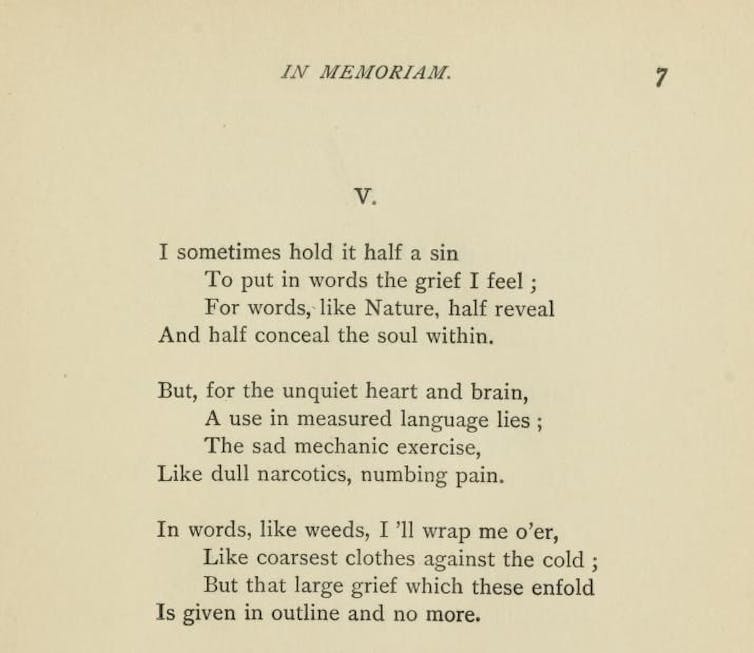
In Memoriam testifies to the ineffability of human experience. Language is inadequate to capture its density and intensity.

Canto 5.
Wikimedia

Tennyson was protective of the intensity of his feelings: hence the time he took to publish. He avoided the imperative to immediately display. Today we feel immense pressure to respond at once, in public, with clear stances, to make things transparent. Such transparency destroys soulfulness.

What makes our times so hard to bear are not just external circumstances themselves but the common ejection of mystery and suffering from art, and transcendence from consciousness.

In Memoriam dwells with the mysteries of being and death, mounts an impassioned defence of love and friendship, and — perhaps rarest of all — reminds us of something noble in the capacity to suffer for an ideal.

Tennyson’s lavish, excessive passion, his “tarrying with the negative” as Hegel put it, shows us how soulful art stirs us to life and staves off banality — but the cost must be paid.

Tennyson had a deep interest in Persian poetry through his friend Edward Fitzgerald (translator of the Rubaiyat of Omar Khayyam).

He surely found something in Persian poetry’s insistence that grief and joy are inseparable and that death is not total loss, because nothing we feel passionately and soulfully is truly lost to us.The Conversation

Darius Sepehri, Doctoral Candidate, Comparative Literature, Religion and History of Philosophy, University of Sydney

This article is republished from The Conversation under a Creative Commons license. Read the original article.