
The link below is to an article that takes a look at the poet Seamus Heaney.
For more visit:
https://lithub.com/the-humble-confidence-of-seamus-heaney/

The link below is to an article that takes a look at the poet Seamus Heaney.
For more visit:
https://lithub.com/the-humble-confidence-of-seamus-heaney/
The link below is to an article on the poet William McGonagall.
For more visit:
https://www.laphamsquarterly.org/roundtable/disaster-poet
Camilla Nelson, University of Notre Dame Australia
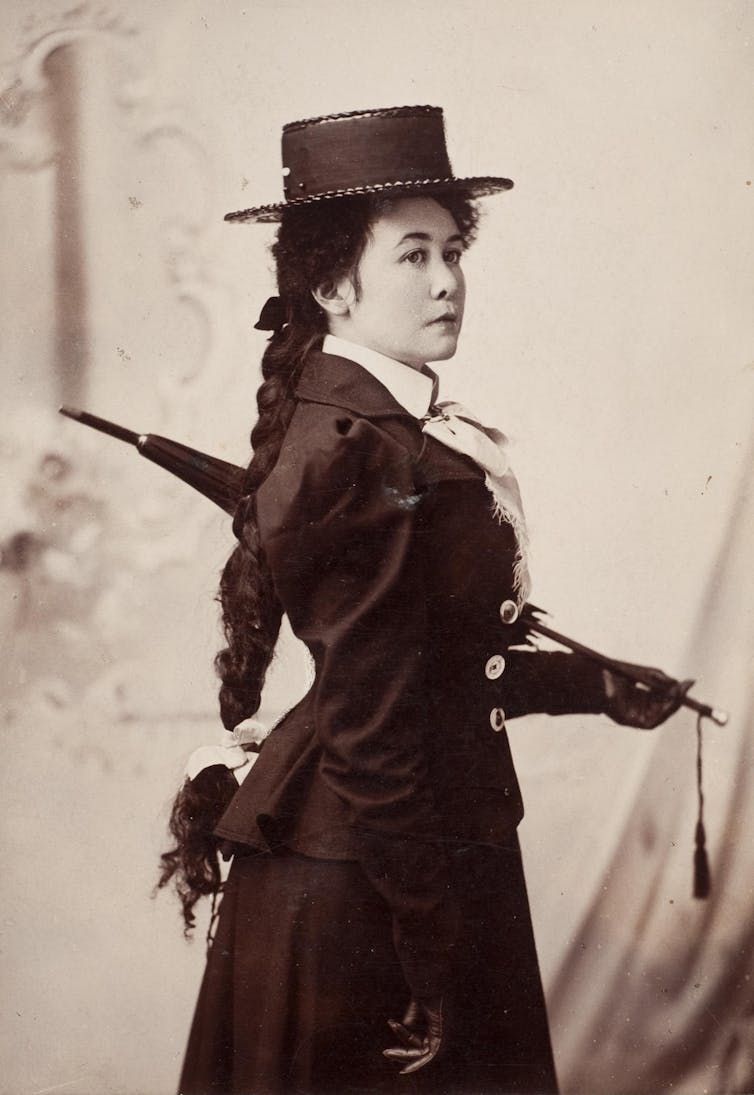
The Australian poet Gwen Harwood used to submit poems to literary journals under both her own name and a male pseudonym, Walter Lehmann. Furious that the latter poems were more favourably received, in 1961, she sent two new sonnets to The Bulletin, penned by Lehmann, containing coded messages of abuse.
Her elaborate literary hoax became front-page news. But Donald Horne, the magazine’s editor, poured scorn on the female poet. “A genuine literary hoax would have some point to it,” he said.
In 2020, just in case this “point” is still not sufficiently clear, the Women’s Prize for Fiction has just marked its 25th anniversary by publishing 25 literary works by female authors with their real names on the cover for the first time.
Some of the books, like Middlemarch, written by Mary Ann Evans under the pen name George Eliot, are well-known, ranking among the greatest novels in English. Others have been dragged off dusty book shelves and placed in the spotlight once again.
Mary Bright, writing as George Egerton, openly talks about women’s sexuality in Keynotes, published in 1893. Ann Petry, best known as the author of The Street, the first book by an African American woman to sell more than one million copies, appears as the author of Marie of the Cabin Club, her first published short story penned under the pseudonym Arnold Petri in 1939.
Also included is Violet Paget, whose ghost story A Phantom Lover, was published under her pen name Vernon Lee. And Amantine Aurore Dupin, whose Indiana is better known for being written under the pseudonym George Sand.
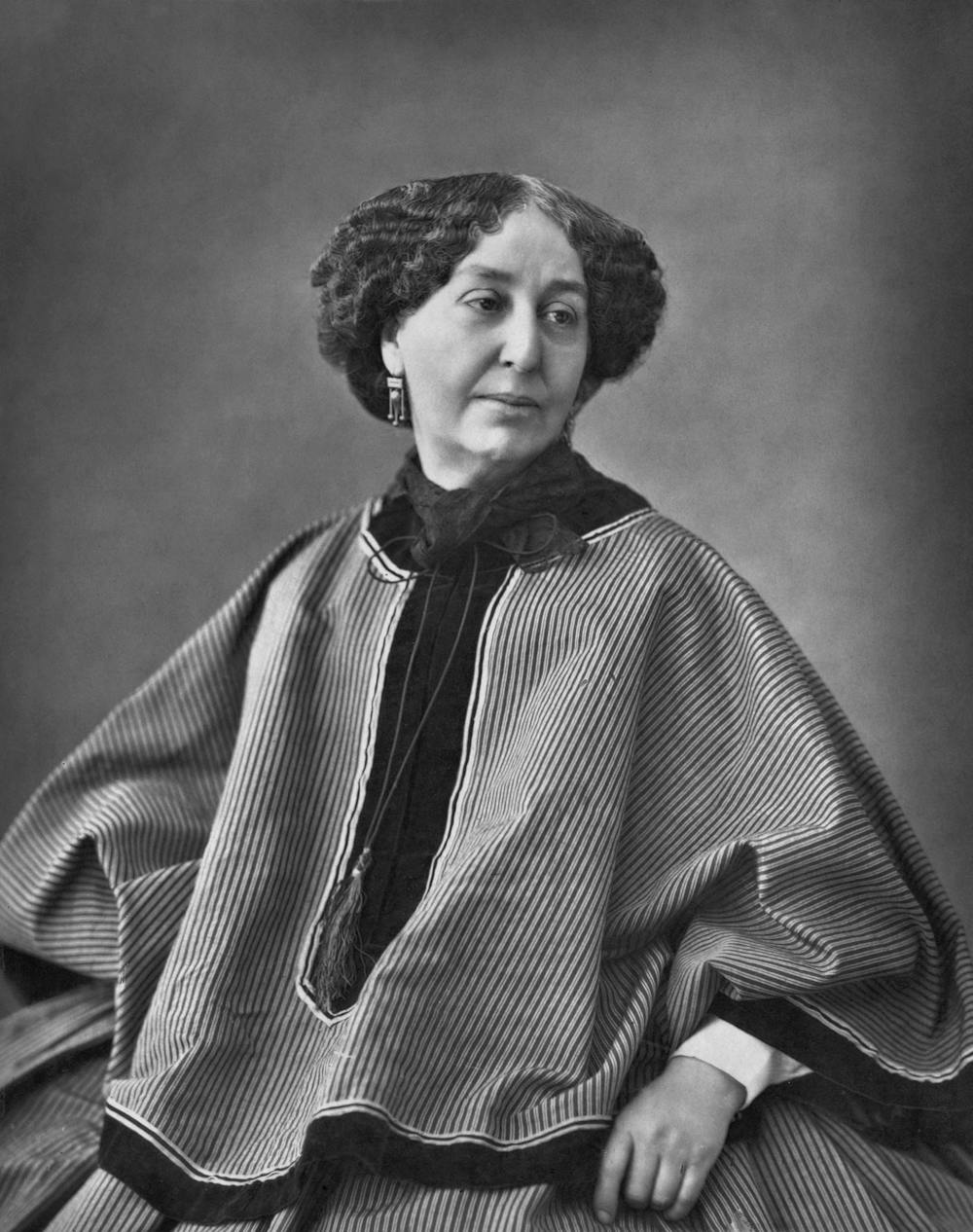
For these authors, using a pseudonym was not just about slipping their work past male publishers who did not think publishing was a place for a woman. It was also about more diffuse forms of gender prejudice.
Women writers – witheringly dubbed “lady novelists” in the 19th century – also worried that their work would be marginalised as “women’s writing”; as domestic, interior, “feminine” and personal, as opposed to “masculine” themes such as history, society and politics that are, according to social norms, deemed to be more serious and culturally significant.
As George Lewes, Mary Ann Evans’ friend and life partner, put it, “the object of anonymity was to get the book judged on its own merits, and not prejudged as the work of a woman”.
In Australia, the Harwood hoax has often been relegated to the status of a literary curiosity, or mildly amusing cultural footnote. But Harwood was far from alone in feeling a sense of frustration with the male-dominated literary world.
In choosing a male pseudonym, Harwood joined the ranks of other bold and adventurous Australian women, such as Stella Maria Sarah Miles Franklin (1879–1954). Franklin’s male pseudonym has been given to Australia’s most illustrious literary award, but her work – including My Brilliant Career (1901) – has not been published under her real name. The Stella Prize, established in 2013, marked this omission.
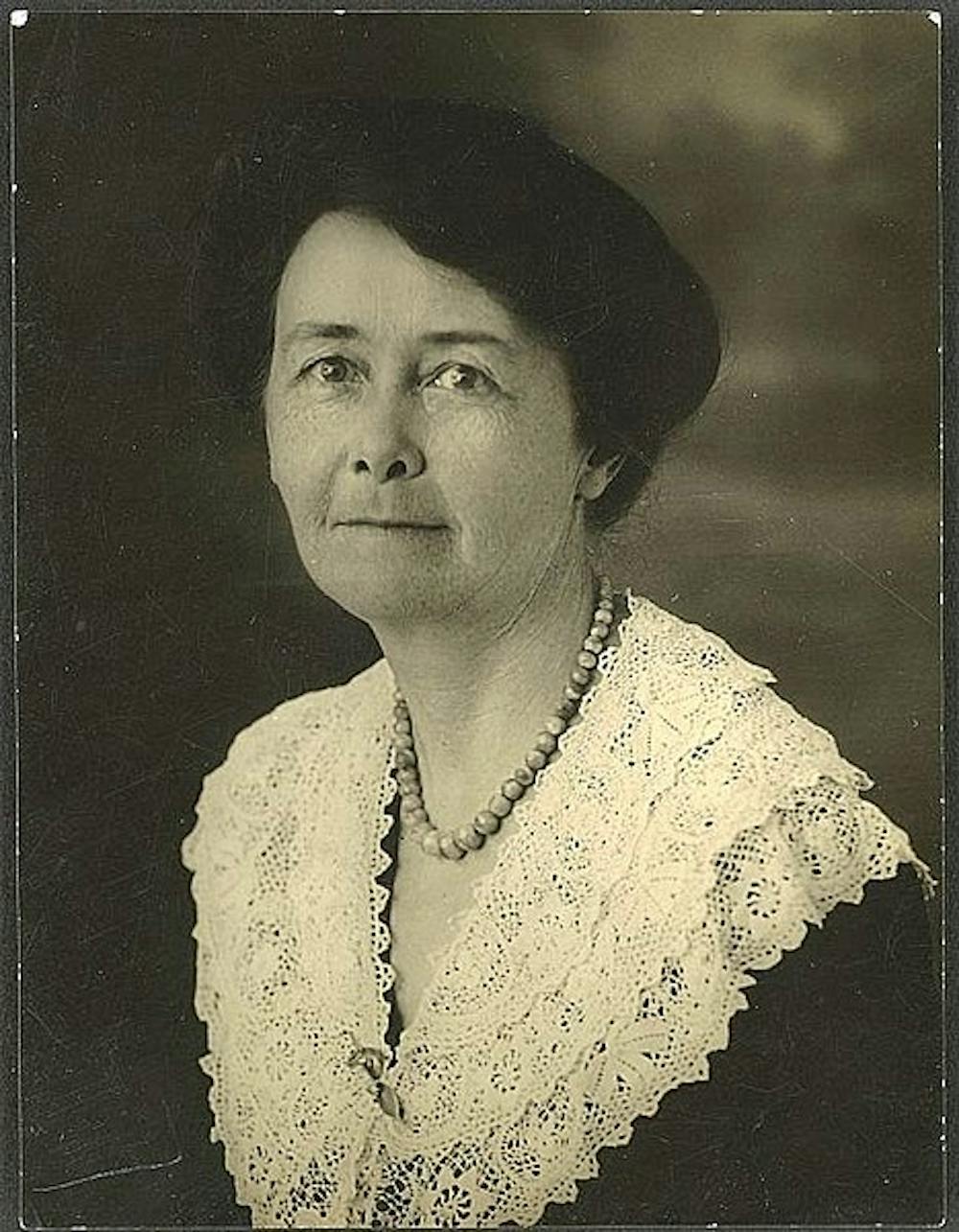
Indeed, Stella explicitly asked her publisher to delete the word “Miss” and use the name “Miles” in the hope that her work would be better received as the work of a man. “I do not wish it to be known that I’m a young girl but desire to pose as a bald-headed seer of the sterner sex,” she said.
So too, Ethel Florence Lindesay Richardson (1870–1946), also known as Mrs Robertson, is only recognisable to Australian readers under the pen name Henry Handel Richardson.
Ethel used the male pseudonym to publish her literary works – including the classic women’s coming of age story, The Getting of Wisdom (1910) – because she wanted to be taken seriously as a writer.
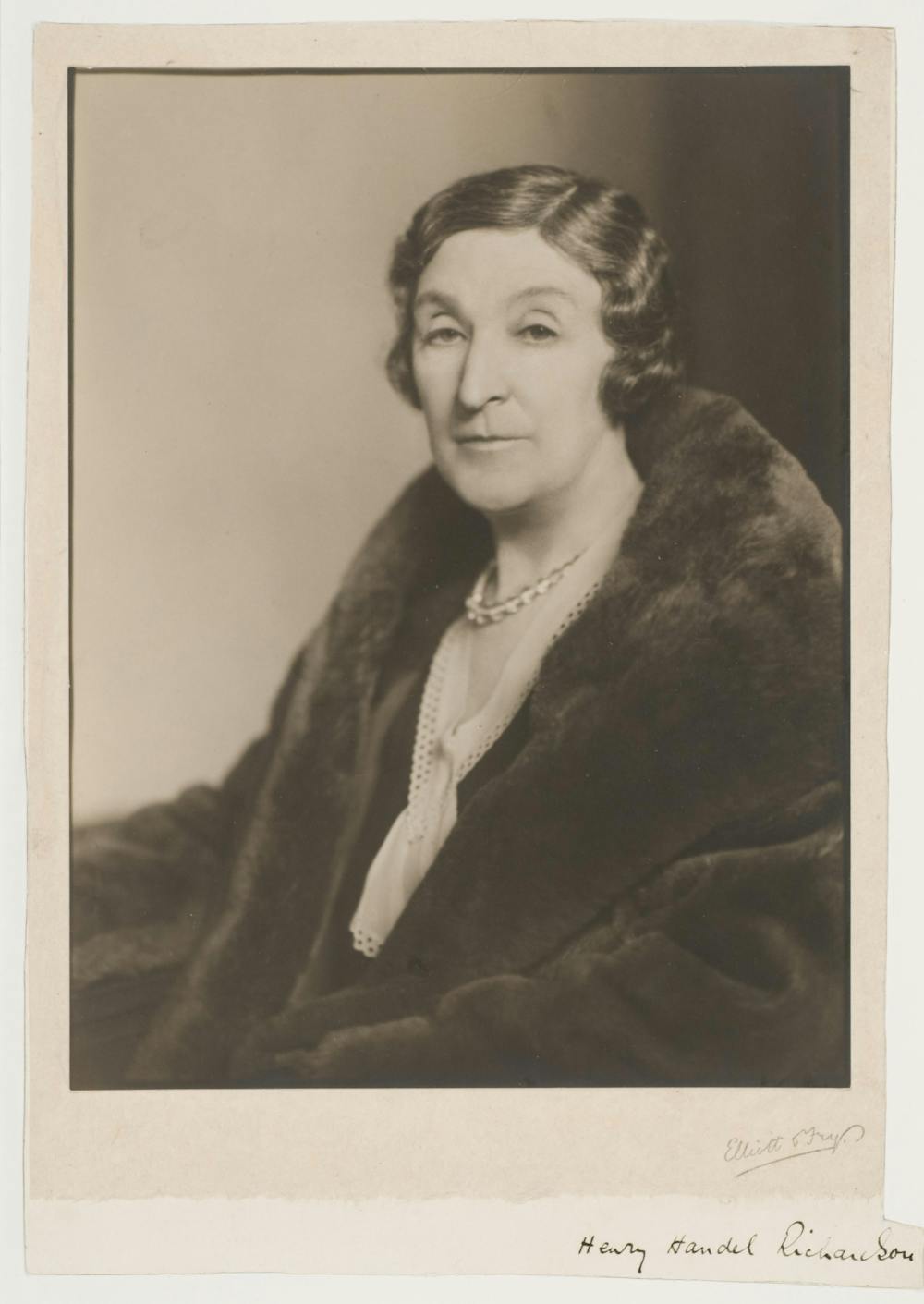
Ethel’s gender identity was kept a secret for many years. As late as 1940 she wrote that she had chosen a man’s name because,
There had been much talk in the press of that day about the ease with which a woman’s work could be distinguished from a man’s; and I wanted to try out the truth of the assertion.
The sexually ambiguous pen name M. Barnard Eldershaw was also used by 20th century Australian writers Marjorie Barnard and Flora Eldershaw who, working in the 1920s to 1950s, penned five novels together, including Tomorrow and tomorrow and tomorrow, as well as short stories, critical essays and a radio play.
There were, of course, Australian women in the late 19th century who published under their own names, and paid the penalty.
They included Rosa Praed, Ada Cambridge, and Tasma, the pen name of Jessie Couvreur. Many were denigrated as “lady novelists” whose “romances” were witheringly labelled derivative, commercial or frivolous. And it’s likely their names are no longer recognised, except by experts.
Rosa and Ada, Stella and Ethel, for some reason, do not sound as weighty or serious as Henry and Miles, or George and Vernon. But this will not change until Australian publishers take note. It’s time to republish these Australian women under their own names.
Camilla Nelson, Associate Professor in Media, University of Notre Dame Australia
This article is republished from The Conversation under a Creative Commons license. Read the original article.
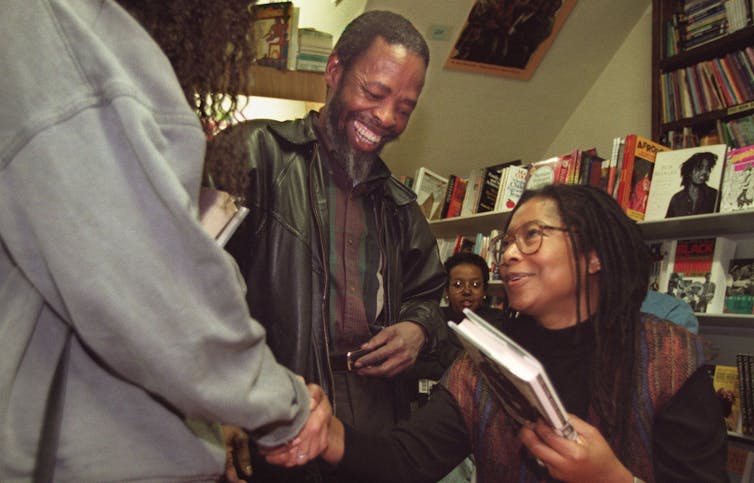
Aretha Phiri, Rhodes University and Uhuru Portia Phalafala, Stellenbosch University
Keorapetse Kgositsile, the South African-born poet who passed away in 2018, lived in exile in the US from 1962 to 1975 and was at the centre of the country’s 1960s and ’70s Black Arts Movement. Informed by his South African and Tswana background, the poet makes a case for multiple inflections of voices, geographies, and histories in the making of transnational black modernity.
Analysing his work offers ways in which African poetry can disrupt dominant thinking on Black Atlantic studies, particularly Paul Gilroy’s
1993 text The Black Atlantic: Modernity and Double Consciousness. The Atlantic world referred to by Gilroy tells the histories of Europe, Africa and the Americas, two hemispheres joined by the Atlantic ocean and exchanging influence. Kgositsile’s poetry can be read as challenging the direction of influence from north to south.
Uhuru Phalafala considers the rich oral traditions passed on from Kgositsile’s grandmother and mother as a key system of knowledge that informed and shaped his black radical imagination. Aretha Phiri interviewed her.
Aretha Phiri: Your colloquium paper situates the celebrated poet-in-exile at the centre of and as uniquely influential to the Black Arts Movement?
Uhuru Phalafala: It was a time when African Americans were seeking to define their identities, with Africa as key metaphor. Kgositsile happened to not only come from that continent, but also used his mother tongue, Setswana, spiritual practices, and music from southern Africa in his work. By interweaving Tswana vernacular with the black diaspora parlance, he affirmed African America’s legitimate affiliation to the continent, as seen in the example of his influence on “the grandfather of rap music”, The Last Poets.
He also came from a mass liberation movement that was experienced in politics of armed confrontation, generated solidarities with other liberation organisations, and adept in decolonial politics. His work became a resource for his contemporaries. Today, when we look at, for example, Kendrick Lamar’s influential album, To Pimp A Butterfly, and the number of references to South Africa in it, we must understand it as grounding itself in the foundation that people such as Kgositsile laid in the sixties and seventies. South Africa will always have an enduring place in the African American imagination.
This is diaspora consciousness. He also admired Nina Simone’s sound, which he called “future memory” to signal that it is not new or emergent, but reminiscent of the protest tradition of South Africa.
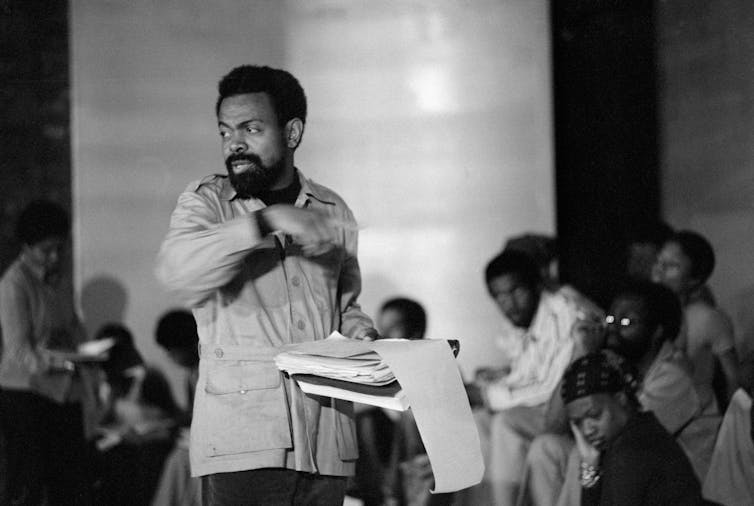
Aretha Phiri: In focusing on the oral traditions inherited from his female lineage, you make a case for the specific use in his poetry of a “matriarchal archive”?
Uhuru Phalafala: The colonised come from different conceptions of time (temporalities). Colonial temporality is not only racialised but also gendered. The arrogant coloniser inaugurated the beginning of history in his assumption that we did not have a history before he arrived. “History” began with the arrival of the coloniser, and marched forward in a linear fashion. With time, black men accessed modernity’s time – through missionary education and working in the mines – at a different period than women.
We now know that when anti-colonial wars were fought they were primarily and solely about the emergence of the black race from subjugation. When women and queer people attempted to bring the particularities of their oppression to the agenda they were told to wait. When independence was achieved those doubly and triply marginalised did not attain their independence at the same time with their countries because they continued to fight against black patriarchy.
If we backtrack we can then make certain observations. A type of double location of time was constructed when the colonisers’ history was instituted: theirs and ours. Because of lack of contact with missionary education and industrialisation, loosely speaking – of course there were women who accessed modernity – women occupied a different temporality. One of continuity from precolonial to colonial time, with its attendant way of life, philosophies, worldview, oratory practices, etcetera.
Aretha Phiri: In describing this archive, how do you guard against potential accusations of advancing a gendered essentialist claim?
Uhuru Phalafala I do not wish to rehash gendered essentialist claims. This is just historical process. My grandmother never set foot in a classroom but has a world of knowledge, so to say. Men who were later ferried to missionary schools, or those who went to work in the mines en masse, existed in a double location of time. The flow from precolonial to colonial time was interrupted by modernity’s time, fashioning a coexistence of the two.
Read more:
Black and queer women invite the Black Atlantic into the 21st century
These men came face to face with the colonial alienation and “first exile” from their home cultures which were denigrated by colonial assumptions of superior culture. This is how temporality is also gendered. The women who suffered the blows of this history, mostly in the rural countryside, continued to live life on their own terms, without their men. They continued to practise their indigenous ways of knowing – which are not an event but an ongoing process.
These knowledges evolved with time and did not freeze in some dark past. They progress, transform, and evolve as humans do. Today when we call for decolonisation we are actually wanting to retrieve this knowledge that was silenced and erased by the multiheaded hydra of colonialism. Where can we find it if not from those who had little contact with this hydra? In my view black women, in the context of southern Africa, are that “matriarchive”.
The book Black Radical Traditions From The South: Keorapetse Kgositsile and the Black Arts Movement by Uhuru Phalafala will be published shortly.
This article is part of a series called Decolonising the Black Atlantic in which black and queer women literary academics rethink and disrupt traditional Black Atlantic studies. The series is based on papers delivered at the Revising the Black Atlantic: African Diaspora Perspectives colloquium at the Stellenbosch Institute for Advanced Study.
Aretha Phiri, Senior lecturer, Department of Literary Studies in English, Rhodes University and Uhuru Portia Phalafala, Lecturer, Stellenbosch University
This article is republished from The Conversation under a Creative Commons license. Read the original article.
The link below is to an article that reflects on the life and work of poet Michael McClure, who died in May 4, 2020.
For more visit:
https://lithub.com/remembering-michael-mcclure-poet-teacher-friend/
Adam Piette, University of Sheffield
The death of poet Eavan Boland comes as a soft shock to my sense of the world. The creative connections she forged between her richly various poetry, Irish culture and the fierce determinations of feminism were mesmerising. Just as important was her faith in poems as places to think and feel in, where those connections could be offered as intricate gifts to all readers.
She is rightly celebrated for her breakthrough collection, the 1980 In Her Own Image, which pitted itself against the lazy assumptions of a male-dominated poetry world and voiced the bitter extremes of female experience, like the anorexic’s fanaticism (“Flesh is heretic./ My body is a witch. / I am burning it”), the beaten wife’s survivalist plural selving (“I was not myself, myself”), the menstrual visionary (“I leash to her {the moon}, / a sea, / a washy heave, / a tide”), the crazy poetics of the kitchen (“the tropic of the dryer tumbling clothes. / The round lunar window of the washer”).
Such poems gave centre stage to female experiences and had a huge impact on the Irish poetry scene in particular, which had taken its time responding to the feminist revolution of the 1960s and 1970s.
Their accurate representation of the marginalisation of women in history and by history (“still no page / scores the low music / of our outrage” It’s a Woman’s World, 1982) was belied by the poems as public and historical voices. A feminist collection, In Her Own Image showed the world that Boland’s was a powerful voice above all and a real challenge to the Yeatsian tradition of male poetics in Ireland.
The wonderful Mise Eire (1987), meaning “I am Ireland”, for instance, takes on the identity of the many emigrant women travelling from Ireland to the New World, and opens:
I won’t go back to it
my nation displaced
into old dactyls
and the poem is colourfully detailed about the historical record, as routines being played by Boland:
I am the woman –
a sloven’s mix
of silk at the wrists,
a sort of dove-strut
in the precincts of the garrison
The ancestral women whose being she inherits through her matriarchal line and her Irish identity, women under the control of the old dispensation, the women of Irish patriarchal history, molls to the men of power – that is what she won’t go back to. So what reads as a rich imagining of the emigrant glad to be leaving is also Boland’s coded challenge to the Irish lyric tradition with its old dactyls and assumptions about women poets as strutting doves; as well as a specific historical voicing of second-wave feminism – we are not going back to that old world.
On the back of the extraordinarily febrile mind at work on her own culture and in concert with the feminism of her times, she built up a repertoire of voices that constitute some of the finest poetry in English.
Navigating between work in America and a full life in Ireland, she lived out that emigrant dream and made it real, made it her world. Her poems are intimately connected to the dailiness of her own life, to a sense of significances and exfoliations in the ordinary events in her patch of space and time. Equally, she writes poems of extraordinary power and complexity about the history of Ireland, about the Famine, the Troubles (the three-decade conflict between nationalists and unionists), about the acts of violence suffered by her people over time.
She was unafraid to make poetry do the work that once was most resolutely its task: the work of elegy, epic (her lyrics attend to history with the eye of an epic poet), lyric most of all and testimonial witnessing of experience with heart and mind.
For me, one of her tasks was to be the poet of Dublin, the Dublin she loved and cherished, and fought for and against too. Many of her very best poems bring that fabled city to new light. Her poem Anna Liffey (1997), which tussles with James Joyce’s representation of the female principle Anna Livia Plurabelle in Finnegans Wake, is also a hymn of praise to Dublin’s river Liffey:
It rises in rush and ling heather and
Black peat and bracken and strengthens
To claim the city it narrated.
Again, subtly, it is a woman’s story-telling (Anna Liffey narrating) that lays claim to this new post-feminist Dublin. Born abroad, she adopted Dublin as an émigré Irish returnee – but that journey home was also this complex act of kinship and claim:
It has taken me
All my strength to do this.
Becoming a figure in a poem.
Usurping a name and a theme.
Thank goodness for her usurpation! Such a harvest of gifts, as well.
In the incomparably beautiful And Soul (2007), Dublin’s rain is praised at the same time as Boland is battling the cloudburst of her grief for her dying mother. In The Lost Land (1998), her daughters growing up and living faraway reprise her whole life story (“memory itself / has become an emigrant”). Nobody has written so fully and well about the intimate relationship between Ireland and the United States. Ireland has lost its most exquisite chronicler:
In the end
everything that burdened and distinguished me
will be lost in this:
I was a voice.
Adam Piette, Professor of Modern Literature, University of Sheffield
This article is republished from The Conversation under a Creative Commons license. Read the original article.
James McGonigal, University of Glasgow
Grey over Riddrie the clouds piled up,
dragged their rain through the cemetery trees.
The gates shone cold. Wind rose
flaring the hissing leaves, the branches
swung, heavy, across the lamps.
From King Billy (1963)
Why do we remember particular poems and poets – and happily forget others? The Scottish poet Edwin Morgan was born 100 years ago, and this week marks the the start of a year of celebration of the man and his work. It goes ahead in a virtual way, with public events cancelled in days of lockdown or deferred to 2021 – an advantage of a year-long celebration.
Born in Glasgow on April 27, 1920, Edwin George Morgan led a remarkable and wide-ranging creative life. He published 25 collections of his own poetry and translated hundreds of Russian, Hungarian, Italian, Spanish, Portuguese, French and German poems too. He also wrote plays, opera libretti, radio broadcasts, journalism, book and drama reviews and literary criticism.
His work continues to be published, produced, taught and celebrated. His poetry is memorable not only for Glasgow, his native city, and for Scotland – but for a wider audience thanks to Morgan’s lifelong concern with universal and cosmic matters.
Morgan loved the city of his birth for its energy, industrial inventiveness, humour and crowded streets. He warmed to its humanity, shared its sorrows, wrote against scarring deprivation, recovered its history (real and imagined), and projected several Glasgows into the future.
He celebrated its changing cityscape in The Starlings in George Square, and its interactive street culture in Trio, where we encounter three Glaswegians bearing Christmas gifts of a guitar festooned with mistletoe, a new baby and a chihuahua, cosy in a tartan coat. He recorded the darker elements of Glasgow too, such as the city’s sectarian violence and notorious tribal gang culture in King Billy.
The directness of these interactions is carried in authentic urban speech rhythms new to Scottish poetry at the time. In the Snack-bar and Death in Duke Street vividly describe the long deprivation and the sudden death that are also part of the scene:
Only the hungry ambulance
howls for him through the staring squares.
Morgan taught English at Glasgow University all his working life, and became the city’s first poet laureate in 1999. He became Scotland’s laureate too, in 2004 – its first “makar” or national poet. He celebrated Scotland’s varied landscapes, people and places, whether humorously in Canedolia, or reflectively in Sonnets from Scotland.
For Morgan, part of a poet’s job was to remind Scots that if they want to achieve something in the world and to really be taken seriously, then they need to find words to show the world what they stand for. Poets and other writers can help them to do this. When Scotland’s ambitious new parliament building opened at Holyrood at the foot of the Royal Mile in Edinburgh, he wrote:
What do the people want of the place? They want it to be filled with thinking
persons as open and adventurous as its architecture.
A nest of fearties is what they do not want.
A symposium of procrastinators is what they do not want.
A phalanx of forelock-tuggers is what they do not want.
And perhaps above all the droopy mantra of “it wizny me” is what they do not want.
Lines from For the Opening of the Scottish Parliament, October 9 2004
Morgan travelled widely – to Africa and the Middle East during the second world war, to Russia and Eastern Europe during the Cold War, to the US, New Zealand and the North Pole. These are the places he writes of in his poetry. The New Divan is his mysterious war poem in which he records in 100 sharp filmic stanzas, memories from the second world war desert campaign that shift like characters in an Arabian Nights tale – and yet are modern soldiers and lovers too.
Space and time travel fascinated him. A supersonic flight by Concorde to Lapland was the nearest he could actually get to outer space, where he had often journeyed in his imagination. The First Men on Mercury dramatises a linguistic encounter between Western astronauts and Mercurian beings that ends in a complete and hilarious transposition of language and power. Morgan believed that humanity would ultimately endeavour to create “A Home in Space”, which is the title of another poem that follows “a band of tranquil defiers” who decide to cut off all connection with the Earth.
This was a poet who could speak as a space module or a Mercurian, and also as an apple, a computer, an Egyptian mummy. He was an acrobat of words and identities. Perhaps his own identity as a gay man, risking censure or imprisonment through most of his life, encouraged that ability to shape-shift. His love poems are haunting. Some deal with loss or transience, as in One Cigarette, or Absence, or Dear man, my love goes out in waves, or with the physical risks of a forbidden lifestyle, as in Glasgow Green or Christmas Eve, which tells of a fleeting encounter with another man on a bus.
But his poems also celebrate ways in which all lovers share the tender details of everyday life together, as in Strawberries. His writing of gay and queer experience had a significant impact on social attitudes and political change in Scotland. His voice spoke for many young or isolated gay people, with an advocacy that was subtle but powerful in effect.
Morgan was an individualist, in some senses a loner. And yet he was also an inspirer of creative partnerships – in art, photography, opera, music and drama, cultural journalism and poetry in performance. His early support was invaluable to an array of groundbreaking poets and artists such as Ian Hamilton Finlay, Alasdair Gray, Tom Leonard, Liz Lochhead and Jackie Kay, and he enjoyed collaborations with Scots musicians such as jazz saxophonist Tommy Smith and indie band Idlewild.
Such lists could be extended. They continue to grow through the Edwin Morgan Trust, set up to administer his cultural legacy by supporting new poets and poetry in Scotland and Europe as well as wider artistic responses to Morgan’s work. There are centenary publications too with new collections of selected poems and prose. For those who loved this quiet man of Scottish poetry it promises to be a memorable year.
James McGonigal, Emeritus Professor of English in Education, University of Glasgow
This article is republished from The Conversation under a Creative Commons license. Read the original article.
Kevin John Brophy, University of Melbourne
“Katrina, I had in mind a prayer, but only this came,” Bruce Dawe wrote to his infant daughter, new-born, in intensive care, her life in the balance, declaring as poets must that their poems are the best and only real gift they can give.
I did not know Dawe, who died aged 90 on Wednesday, but I knew his poetry from my first years of reading poems. For decades, the first contemporary poems many Australians read were his.
Born in 1930 in Fitzroy, a failed student after attending seven schools, he worked as a labourer like his father, a farmhand, a postman, and spent a year on the University of Melbourne campus where he became a poet and a Catholic. He joined the RAAF in 1959.
As well as publishing a growing list of books, he studied part time until he achieved a PhD. His teaching life at the Darling Downs Institute of Advanced Education and the University of Southern Queensland lasted from 1969 until 1993. By then he was easily Australia’s most well-read and well-loved poet. His death this week is a significant moment for poets and readers of poetry.
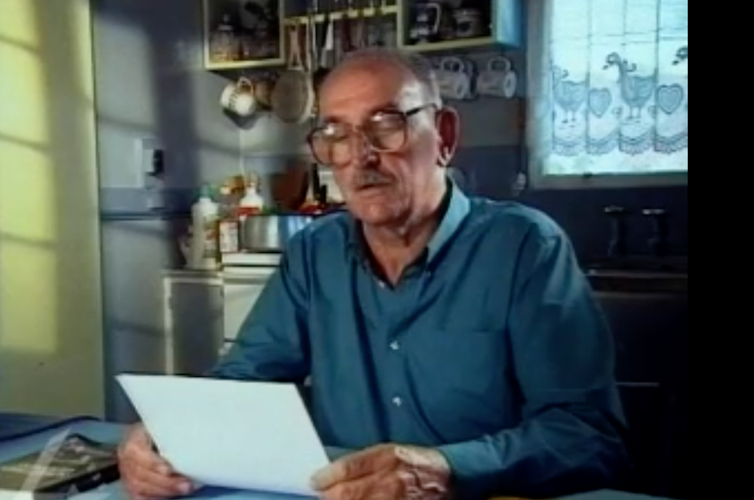
We know that poetry is somehow central to our nation’s soul, but mostly we like to keep its presence at the margins. In living memory, Les Murray and Dorothy Porter managed to bring poetry to wide audiences, but neither of them so broadly, neither of them prompting the passion of Dawe’s many readers.
When it comes to poetry, readers know pretty quickly what is authentic. Dawe’s poems are real enough to talk to you with one arm over your shoulder, or sit beside you, inviting you to look with them at what this whole damned creation is doing now.
But he couldn’t have survived as a poet by simply being genial. His poetry always held a deep steadiness of purpose in its gaze. This was his special skill. He was able to bring us in to seeing for instance how “the spider grief swings in his bitter geometry” (from Homecoming) when dead soldiers are freighted home.
He was uncannily capable of making poetry that talked plainly but still mysteriously about the most extreme of our experiences: funerals and suicides, drowned children, a mother-in-law’s glorious death falling out of her chair at a barbecue, the last nail being driven into the body of Christ (“the iron shocking the dumb wood”), the 1995 massacre at Srebrenica, or the hanging of Ronald Ryan.
You cannot read his poems without finding some personal connection to them too; my grandmother who once held a telegram announcing her son’s wartime death, and whose home was opposite Ronald Ryan’s bloody shootout on Sydney Road, had seemed to me to have had her life marked by images in Dawe’s poems.
In Australia, we know there’s another job requirement for any poet worth their salt, and that is a dry and thoroughly demotic wit. Dawe’s hilarious At Shagger’s Funeral is just one gem that Lawson would have been proud to have chiselled out.
New themes of gender, ethnicity, identity politics, the explosion of poetry since the avant-garde experiments of Fluxus might seem to leave Dawe’s poetry suspended in a historical moment, but this is to say no more than what happens to every strong and distinctive poet.
No one wrote poetry quite like Dawe. Lots of poets took inspiration from him too, many without realising it – the vibrant “street poetry” movement in Melbourne through the 1970s and 80s, morphing into performance poetry and spoken word – each take their impulse from Dawe’s confidence in poetry’s place as a voice for, about, and from life as it’s lived by the most desperate and the most ordinary of us.
The bravery of his poetry, its wit and sensitivity to the world are there in one of the most stark and touching love poems you could imagine reading:
Hearing the sound of your breathing as you sleep,
with the dog at your feet, his head resting
on a shoe, and the clock’s ticking
Like water dripping in a sink
– I know that, even if reincarnation were a fact,
given the inherent cruelty of the world
where beautiful things and people
are blasted apart all the day long,
I would never want to come back, knowing
I could never be this lucky twice …
(from You and Sarajevo: for Gloria)
He has been praised for the technical achievement of blending the colloquial with the lyrical, something he often got “right”. But beyond this deftness, his poems always reach towards our most humane responses to the world.
We know from our present troubles as a nation, as a planet, and as a species, that we need poets as right and true as Bruce Dawe to continue this sometimes visionary and sometimes laughably inadequate work. 
Kevin John Brophy, Emeritus Professor of Creative writing, University of Melbourne
This article is republished from The Conversation under a Creative Commons license. Read the original article.
Nick Freeman, Loughborough University
Goths are typically regarded as being on the fringes of society – members of a subculture which finds beauty in the darker elements of human experience. And while their dress code is much imitated – and celebrated – over Halloween, they have a proud history that stretches far beyond a seasonal horror festival.
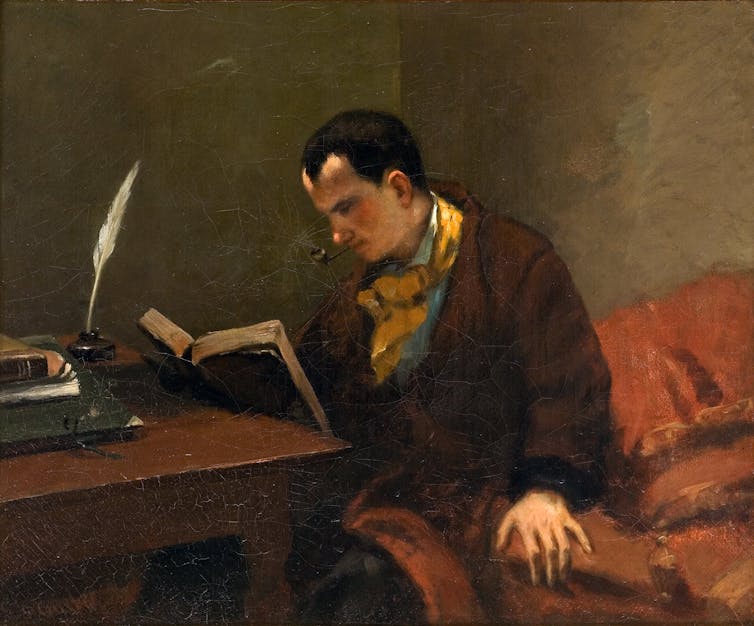
In fact, the French poet Charles Baudelaire (1821-67) could easily qualify as the template goths (and other bohemians) aspire to. He often dressed in black, dyed his hair green, and rebelled against the conformist, bourgeois world of mid-19th century Paris in both his personal life and his art.
His first collections of poems, Les Fleurs du Mal (The Flowers of Evil, 1857), was prosecuted for offending public morals, challenging its audiences with its startling treatments of sex, Satanism, vampirism and decay. No wonder his words would one day be set to music by The Cure.
Aside from his writing, Baudlaire’s dissolute life was a checklist of boho credentials. He fell out with his family. He went bankrupt. He pursued reckless sexual experiments and contracted syphilis. He developed a drug habit. He associated with artists, musicians, writers and petty criminals rather than “respectable” people.
He outraged his family by having a mistress who was mixed race and probably illiterate. He refused conventional employment and made a precarious living as a writer, critic and occasional art dealer.
He wrote poetry which was prosecuted for obscenity and was adored by like-minded souls throughout Europe while being hated, even feared, by “straight” society. And then he died young, after years of serious illness and addiction, at the age of 46.
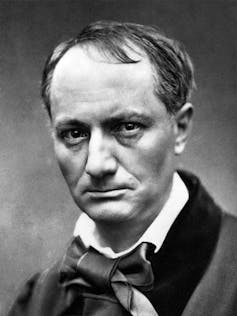
Baudelaire was also a dandy, clean-shaven in an age of whiskers and dressed immaculately despite squalid domestic circumstances. Never ostentatious, he wore sombre black in mourning for his times.
Considering nature to be tyrannical, he championed everything which fought or transcended it, while being, like many of his contemporaries, overtly misogynistic. “Woman is natural. That is to say, abominable,” he wrote.
Nevertheless, he recognised how both genders were trapped within their fleshly prisons and urged resistance to such incarceration through costume and cosmetics, recreational sex, drugs and alcohol.
Baudelaire sounds like many later writers, actors and rock stars, but it is unfair to suggest his cultural importance resides only in his delinquent mannerisms. What makes Baudelaire so significant, and so relevant today, is his recognition in Les Fleurs du Mal, his prose poetry, and essays, that the urbanised, industrial and increasingly godless modern world is radically different from any earlier epoch.
Artists responding to these new conditions of existence cannot cling to outworn traditions. They need instead to cast off convention and rethink their relationship to their culture and surroundings.
Baudelaire’s translations of Edgar Allan Poe brought the American writer to a new audience – and the morbidity of many Baudelaire poems suggests the two men were kindred spirits. In Une Charogne (A Carcass, 1857) for example, he recounts finding a woman’s maggot-infested body, cataloguing her obscene decay in hideous detail before telling his lover that one day, she too will be rotten and worm-eaten.
Like his contemporary, Gustave Flaubert, Baudelaire felt stifled and alienated by the bombastic hypocrisy of Napoleon III’s Second Empire. He despaired at the gulf between public morality and private vice, and was sickened by the rise of bourgeois respectability, the protestant work ethic, and the sweeping modernisation of Paris itself.
Disdaining realism’s preoccupation with appearances, his writing examined the mental states his surroundings produced: boredom, an aggressive self-lacerating melancholy, and ennui – the listlessness and depression which left sufferers joyless and blasé.
He depicted himself as being like the king of a rainy country gripped by an unending despair, prematurely aged, impotent and sorrowful with no clear cause. “Life is a hospital,” he wrote, “in which all the patients are obsessed with changing their beds. One would prefer to suffer beside the fire, another thinks he’d recover sooner if placed by the window.”
More than 150 years after his death, Baudelaire remains a challenging figure – not least for his sexual attitudes. Nevertheless, his influence is undeniable. T.S. Eliot hailed him in The Waste Land (1922), borrowing his line: “Hypocrite lecteur – mon semblable – mon frère!” (Hypocrite reader, my likeness, my brother), for his dissection of the post-1918 world.
More recently, English author Angela Carter’s Black Venus (1985) gave a voice to Baudelaire’s mistress, Jeanne Duval, who rages at how “his eloquence denied her language”. And How Beautiful You Are, by Gothic rockers The Cure (1987) adapted his prose-poem Les Yeux des Pauvres (The Eyes of the Poor).
Baudelaire’s rich musical heritage is being currently documented by the Baudelaire Song Project. His notion of the “flaneur”, the aimless urban idler, influenced the German philosopher Walter Benjamin and the explorations of modern psychogeographers. His presence even lurks in the young adult fiction of Lemony Snicket, where the Baudelaire children suffer a series of unfortunate events.
Meanwhile, black remains one of the uniforms of teenage disaffection from London to Tokyo, shaping the subcultures of the past four decades. Baudelaire’s existential anxieties and refusal to capitulate to the forces of conformity make him a continued inspiration.
Nick Freeman, Reader in Late Victorian Literature, Loughborough University
This article is republished from The Conversation under a Creative Commons license. Read the original article.
The link below is to an article reporting on the first poet to win the Rathbones Folio Prize.
For more visit:
https://www.theguardian.com/books/2019/may/20/raymond-antrobus-becomes-first-poet-to-win-folio-prize

 At the BookShelf
You must be logged in to post a comment.