
Unknown's avatar

Poets and novelists have been writing about life under COVID-19 for more than a century


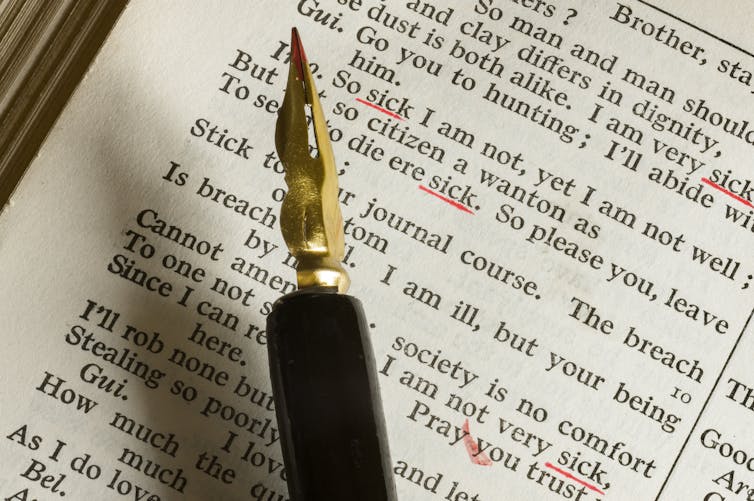
Literature from long ago speaks to the human experience of plague.
Marco Rosario Venturini Autieri/Getty

Rachel Hadas, Rutgers University Newark

Pondering the now no-longer Dixie Chicks – renamed “The Chicks” – Amanda Petrusich wrote in a recent issue of the New Yorker, “Lately, I’ve caught myself referring to a lot of new releases as prescient – work that was written and recorded months or even years ago but feels designed to address the present moment. But good art is always prescient, because good artists are tuned into the currency and the momentum of their time.”

That last phrase, “currency and momentum,” recalls Hamlet’s advice to the actors visiting the court of Elsinore to show “the very age and body of the time his form and pressure.” The shared idea here is that good art gives a clear picture of what is happening – even, as Petrusich suggests, if it hadn’t happened yet when that art was created.

Good artists seem, in our alarming and prolonged time (I was going to write moment, but it has come to feel like a lot more than that), to be leaping over months, decades and centuries, to speak directly to us now.

‘Riding into the bottomless abyss’

Some excellent COVID-19-inflected or anticipatory work I’ve been noticing dates from the mid-20th century. Of course, one could go a lot further back, for example to the lines from the closing speech in “King Lear”: “The weight of this sad time we must obey.” Here, though, are a few more recent examples.
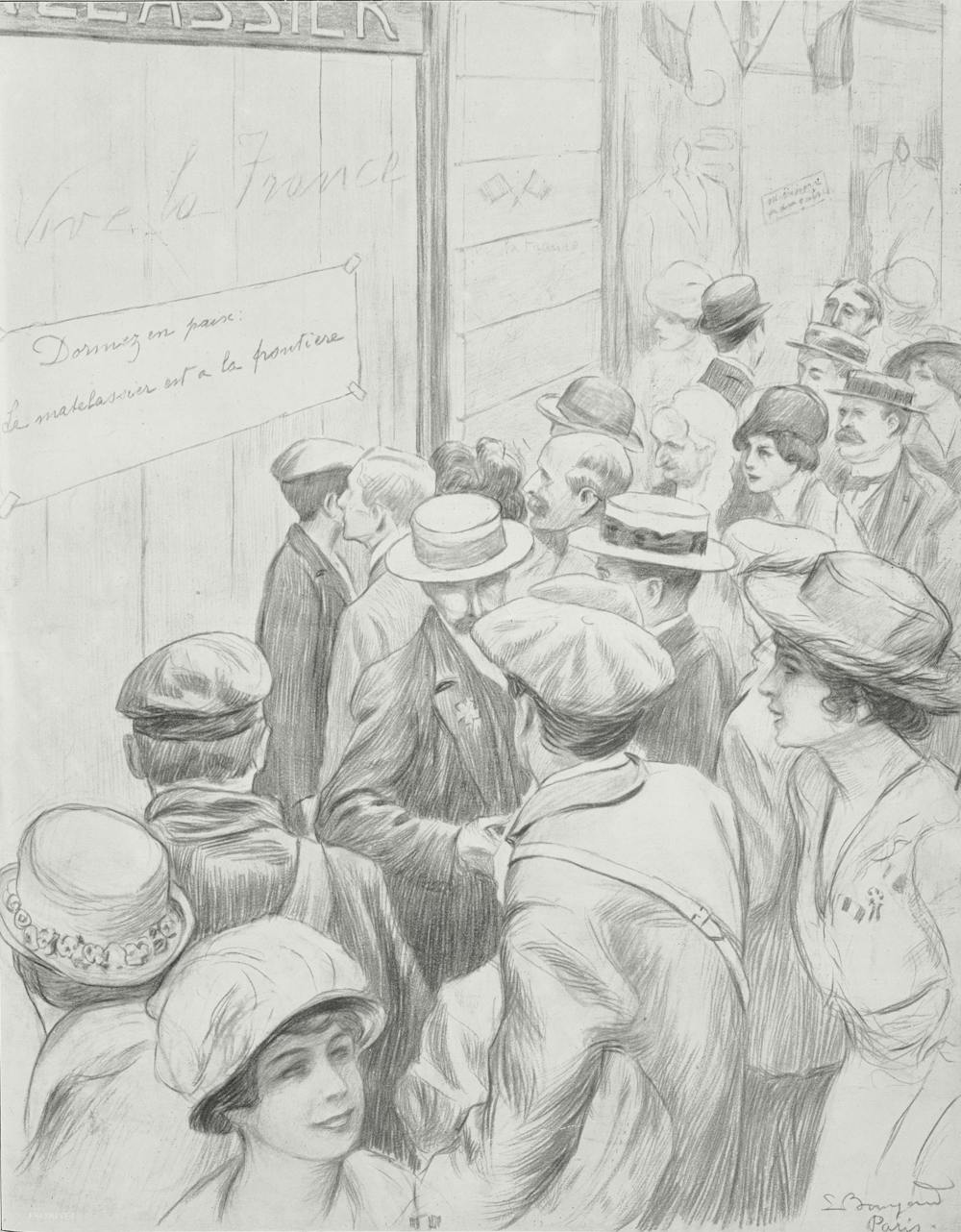
Drawing of Parisians in front of closed store in 1914
Marcel Proust wrote that in wartime Paris, ‘all the hotels … had closed. The same was true of almost all the shops, the shop-keepers … having fled to the country, and left the usual handwritten notes announcing that they would reopen.’
L. Bombard, from L’Illustrazione Italiana/Getty

Marcel Proust’s “Finding Time Again,” an evocation of wartime Paris from 1916, strongly suggests New York City in March 2020: “Out on the street where I found myself, some distance from the centre of the city, all the hotels … had closed. The same was true of almost all the shops, the shop-keepers, either because of a lack of staff or because they themselves had taken fright, having fled to the country, and left the usual handwritten notes announcing that they would reopen, although even that seemed problematic, at some date far in the future. The few establishments which had managed to survive similarly announced that they would open only twice a week.”

I recently stumbled on finds from the 1958 edition of Oscar Williams’ “The Pocket Book of Modern Verse” – both, strikingly, from poems by writers not now principally remembered as poets. Whereas a fair number of the poets anthologized by Williams have slipped into oblivion, Arthur Waley and Julian Symons speak to us now, to our sad time, loud and clear.

From Waley’s “Censorship” (1940):

It is not difficult to censor foreign news.
What is hard to-say is to censor one’s own thoughts,-
To sit by and see the blind man
On the sightless horse, riding into the bottomless abyss.

And from Symons’ “Pub,” which Williams doesn’t date but which I am assuming also comes from the war years:

The houses are shut and the people go home, we are left in
Our island of pain, the clocks start to move and the powerful
To act, there is nothing now, nothing at all
To be done: for the trouble is real: and the verdict is final
Against us.

‘Return to what remains’
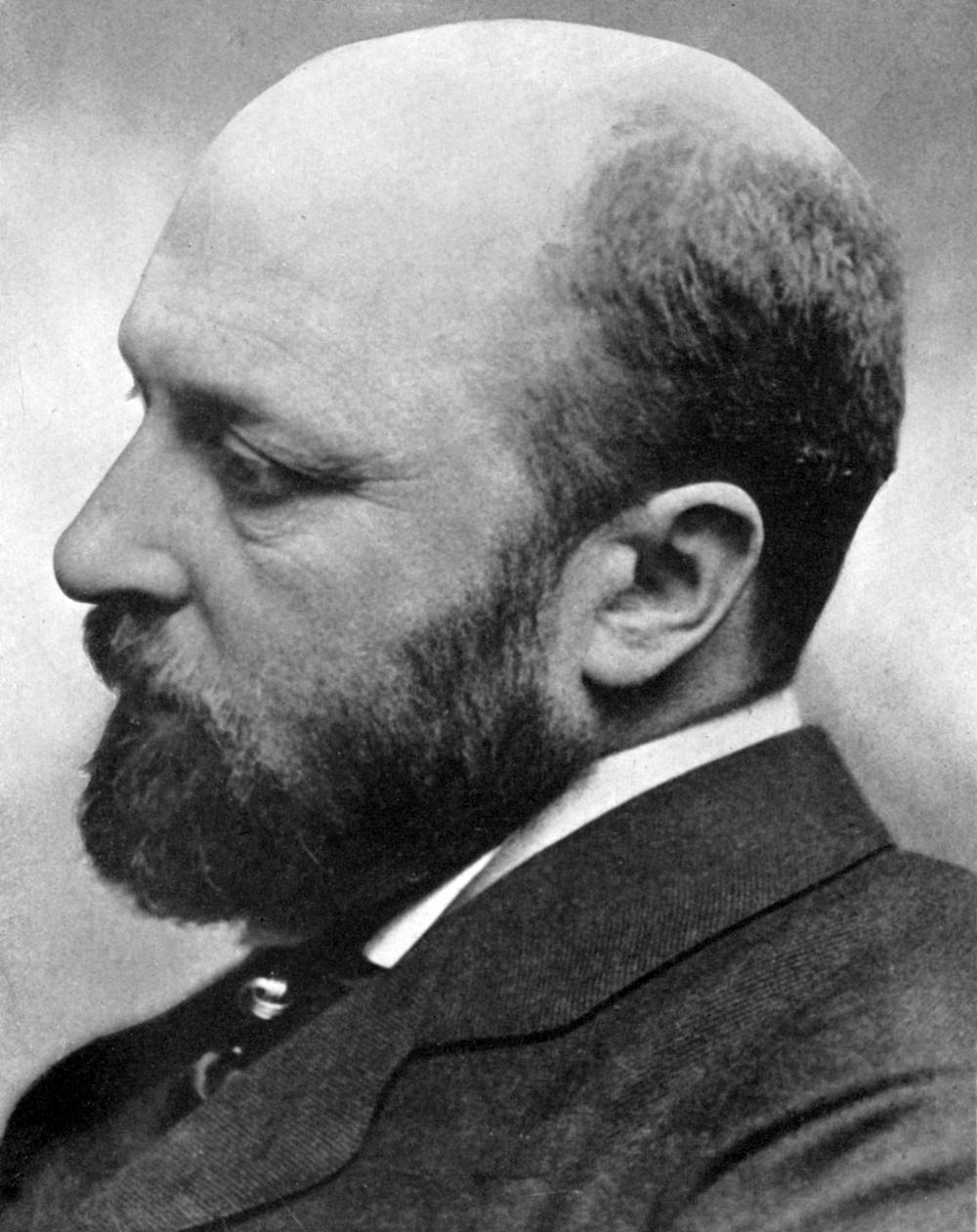
Photo of novelist Henry James
In an 1897 novel, Henry James wrote ‘She couldn’t leave her own house without peril of exposure.’
Hulton Archive/Getty

Dipping a bit further back, into Henry James’ “The Spoils of Poynton” from 1897, I was struck by a sentence I hadn’t remembered, or had failed to notice, when I first read that novella decades ago: “She couldn’t leave her own house without peril of exposure.” James uses infection as a metaphor; but what happens to a metaphor when we’re living in a world where we literally can’t leave our houses without peril of exposure?

[Deep knowledge, daily. Sign up for The Conversation’s newsletter.]

In Anthony Powell’s novel “Temporary Kings,” set in the 1950s, the narrator muses about what it is that attracts people to reunions with old comrades-in-arms from the war. But the idea behind the question “How was your war?” extends beyond shared military experience: “When something momentous like a war has taken place, all existence turned upside down, personal life discarded, every relationship reorganized, there is a temptation, after all is over, to return to what remains … pick about among the bent and rusting composite parts, assess merits and defects.”

The pandemic is still taking place. It’s too early to “return to what remains.” But we can’t help wanting to think about exactly that. Literature helps us to look – as Hamlet said – before and after.The Conversation

Rachel Hadas, Professor of English, Rutgers University Newark

This article is republished from The Conversation under a Creative Commons license. Read the original article.

Unknown's avatar

Rules for Novelists


The link below is to a list of 10 rules for novelists – which should provoke ‘some thoughts.’

For more visit:
https://lithub.com/jonathan-franzens-10-rules-for-novelists/

Unknown's avatar

Women novelists warned early on that village life wasn’t all it’s cracked up to be


File 20180713 27042 1q8d32n.jpg?ixlib=rb 1.1

publicdomainpictures

Stephanie Palmer, Nottingham Trent University

The season of the good old summer “fayre” is here and many UK readers will be heading off to eat tea and scones and take part in the tombola at their local village fete. There, it’s a good bet, they will hear of local people’s concerns that new housing developments foisted on them by the government will ruin the character of their idyllic rural community.

But the myth of tranquil village life was well and truly exploded in the Victorian age when many writers concluded that life in England’s small rural communities was not a simple idyll of tea, vicars and charitable works.

For many people, especially those who may not have visited the UK, the most accessible pictures of village life are those painted in novels: who can forget the timeless portrait of life in a sleepy Dorset community in PG Wodehouse’s Blandings series, or EF Benson’s Mapp and Lucia books, set in a fictional Sussex village? But fiction has also been highlighting the negatives of village living for more than a century.

The “greetings card” scenario of village life was established early. In her memoir Our Village (published in five volumes between 1824 and 1832), Mary Mitford – who lived at Three Mile Cross near Reading in Berkshire – gives us a classic rendition of peaceful village life. There are quaint depictions of servants, chaste suitors, elderly brides and grooms, blacksmiths and gypsy fortune tellers.

Our Village contains all the myths of village life. Everyone is familiar: a village is a little world “where we know everyone, are known to everyone, interested in everyone, and authorised to hope that everyone feels an interest in us”. There are no newcomers, nobody is systematically excluded and nobody is living a secret or misunderstood life. Poverty is relegated to the margins – there’s only the occasional mention of the workhouse and, Mitford assures her readers, the village is a collection of cottages, not “fine mansions finely peopled”.

But even in the 1820s, such a village felt under threat from the railways, improved roads and the increasing size of the towns of the industrialised North. And no sooner did Mitford complete Our Village than other authors began to parody or correct her vision.

Elizabeth Gaskell’s Cranford (1853) is a gentle text still very positive about life in a confined locality. Although Cranford is a town outside “Drumble” – her stand-in for Manchester – it resembles Mitford’s village in that everyone knows each other and the narrative is focused on a limited set of characters. In the case of this novel – and so many others in the tradition – the main characters are women, and it is women’s unpaid labour that makes the community run smoothly. Yet Gaskell gently mocks her characters, Matty Jenkyns, Miss Pole, and Mrs Jamieson, for their conventionality, triviality and timidity.

The women follow strict social rules – an entire chapter revolves around whether these august personages should stoop to visit a former ladies’ maid who has set up a milliner’s shop and hence was “in trade”. In another chapter, the women grow fearful of outsiders when they hear of a cluster of burglaries in the neighbourhood, which proves to be founded on rumour.

Thomas Hardy’s villages such as Weatherbury in Far from the Madding Crowd (1874) or Marlott in Tess of the D’Urbervilles (1891) are idyllic in some ways, but not in others. Shepherds are close enough to nature to saunter out of their huts at night to tell the time by stars, and the slow pace of life allows for ample opportunity for community and flirtation. Yet sexual transgressions are treated to the full judgement of an unforgiving community, and questions of money and class interrupt any readers’ expectations of rural bliss.

American moral tales

These books sold well in the US, even though villages there were subject to dramatic population shifts westward and industrial development. Writers in the US sought to reinforce or contest Mitford’s vision.

After reading Mitford and migrating to a new village in Michigan, Caroline Kirkland wrote A New Home, Who’ll Follow? (1839), which mercilessly satirised her vulgar frontier neighbours and the wealthier eastern newcomers. When her neighbours read the novel, they ostracised her – and she never wrote anything as trenchant again.

Although the American regionalism that flourished in the latter quarter of the 19th century is known for romantic visions of village life, upon closer examination, key writers such as Sarah Orne Jewett and Mary E Wilkins Freeman reveal many of village life’s negatives.

If Gaskell acknowledges in Cranford that her ladies’ kindness to the poor is “somewhat dictatorial”, Freeman’s A Mistaken Charity (1883) takes this point to its logical conclusion. Two elderly sisters living happily in their dilapidated cottage are visited by Mrs Simonds, a woman who is “a smart, energetic person, bent on doing good”. Mrs Simonds arranges to take Charlotte and Harriet to the poorhouse, where they are forced to wear lace caps and sit indoors. Charlotte and Harriet run away.

Revolt from the village

By the 1910s, there was a literary “revolt from the village”, and writers including Sherwood Anderson focused on the sexual repression of small town life. Although Sherwood Anderson’s Winesburg, Ohio, published in 1919, is set in a town, it is a town of 1,800 people, far smaller than many British villages today. Meanwhile, Stella Gibbons parodied rural melodramas in Cold Comfort Farm (1932), in which, instead of graciously fitting in like the urban narrators of Jewett’s fiction, Flora Poste, a visitor from London, forces the members of a dysfunctional family to follow their individual desires rather than their family destiny.

The ConversationAccording to these writers, villages can be conformist, unimaginative, repressive, nepotistic. These fictions imply that villages will be harder to maintain now that women have other outlets for their energies. The negatives come from the same source as the positives in village life, and people who wish to defend villages, and the tradition of rural living, should remember this literary ambivalence and the fact that it has gone on for more than 100 years.

Stephanie Palmer, Senior Lecturer, School of Arts & Humanities, Nottingham Trent University

This article was originally published on The Conversation. Read the original article.

Unknown's avatar

Article: Famous Novelists on Symbolism in Their Work


The link below is to an article that investigates symbolism in the work of famous novelists and whether it was intentional.

For more visit:
http://www.mentalfloss.com/blogs/archives/130315