
Unknown's avatar

I wrote a book about email – and found myself pining for the days of letter-writing


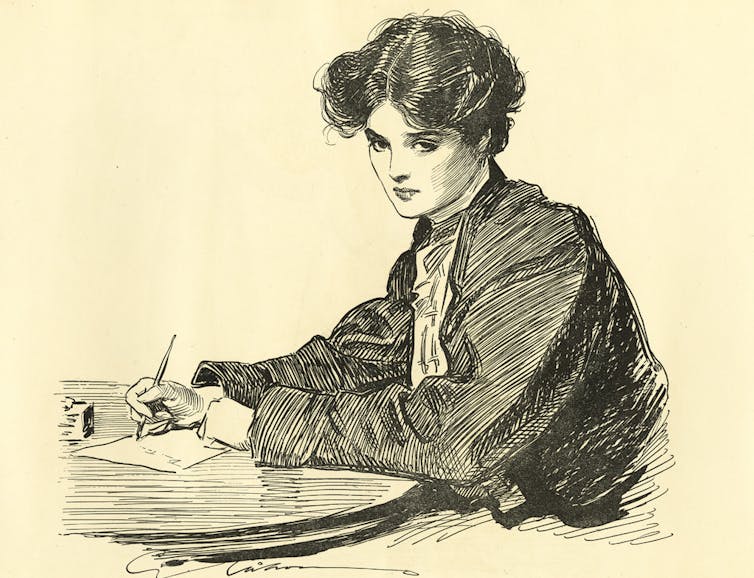
On paper, lives were lived, trysts arranged, manifestos mailed and wars waged.
MCAD Library/flickr, CC BY

Randy Malamud, Georgia State University

Email has become so prevalent in our lives that I felt compelled to write about it for a Bloomsbury series called “Object Lessons” that examines “the hidden lives of ordinary things.”

Perhaps I chose this topic because I wanted to be surprised by what I would learn. Email had always evoked the image of my energy, attention and intelligence being sucked away, byte by byte, in a deadening tsunami of ill-composed blather, bland formalities and corporate groupthink. But I hoped my literary training could help me unearth some diamonds in the rough, some redeeming rhetorical force.

It turns out my chief discovery was how much richer old-fashioned letters are. An email is like a letter shorn of almost everything people liked about letters: the feel and smell of stationery, the confident authority of letterhead, the art of penmanship, the closing signature in the writer’s hand.

On paper, lives were lived, trysts arranged, manifestos mailed and wars waged; the shift from “communication” to “.com” has stripped away all of this historical and social value.

The satisfaction of a letter ‘done and signed’

Literacy rates jumped globally in tandem with the invention and expansion of mail service. People composed their letters with effort and pride, perhaps understanding that well-written correspondence wouldn’t be thrown in the trash.

The song “Letters,” from Dave Malloy’s 2012 musical “Natasha, Pierre & The Great Comet of 1812,” extols the joy and satisfaction of letter-writing: “We put down in writing what is happening in our minds.” Once it’s on the paper “we feel better – it’s like some kind of clarity when the letter’s done and signed.”

Email is certainly convenient. But will there ever be an electronic equivalent of Martin Luther King Jr.’s “Letter from Birmingham Jail,” the literary correspondence of Elizabeth Bishop and Robert Lowell or the epistolary passion between Eleanor Roosevelt and Lorena Hickok?
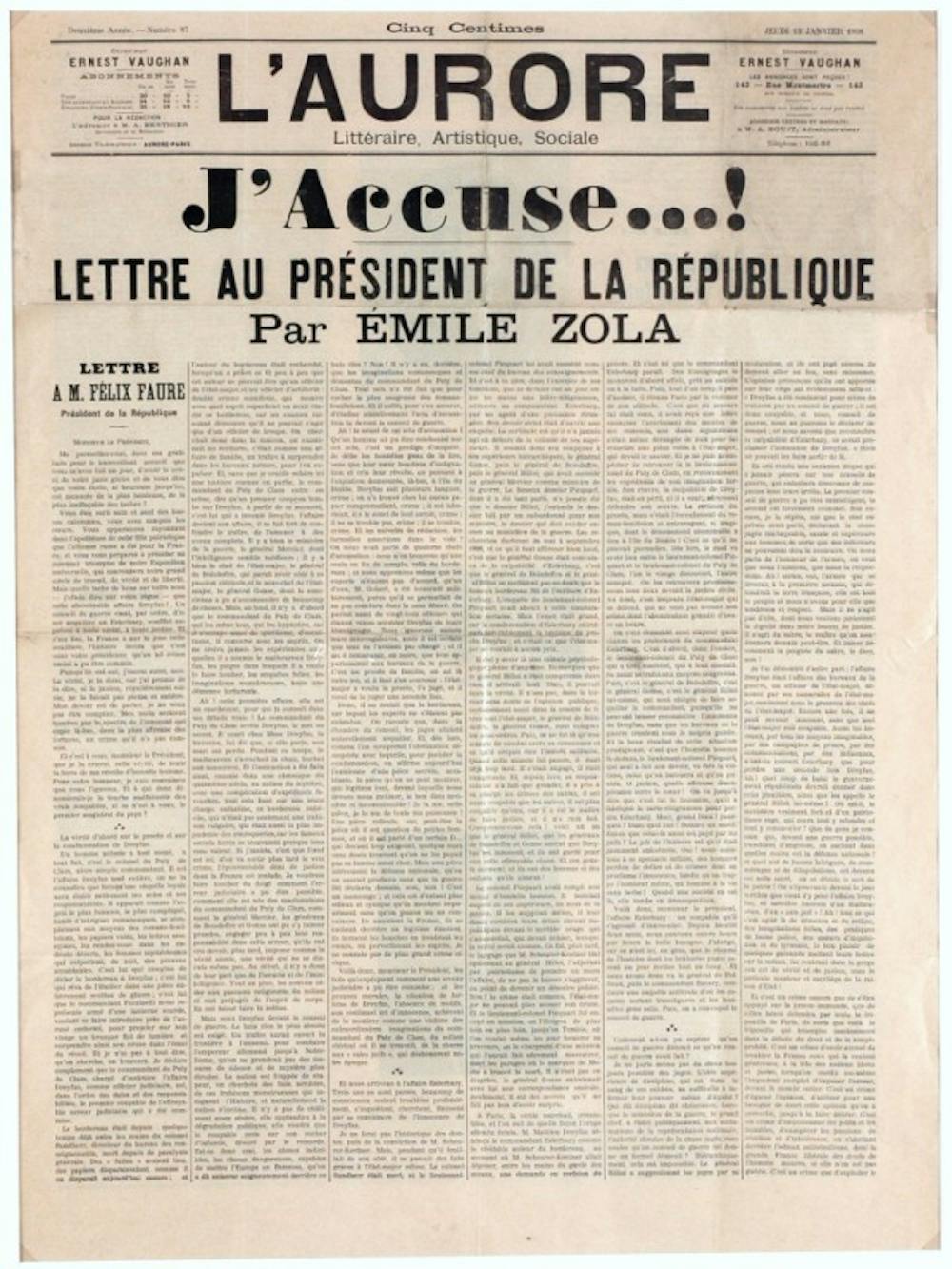
‘J’Accuse!’ was a siren that reverberated around the world.
Musée d’Art et d’Histoire du Judaïsme

Émile Zola’s “J’Accuse!” was a letter – an open letter – to the French president, castigating the army for unlawfully jailing a Jewish officer. The letter traveled the world, inspiring others who sought to challenge those in power.

Is there such a genre as an “open email”? The only thing that comes to mind is accidentally hitting reply-all.

Letters changed storytelling: In Samuel Richardson’s 1740 epistolary adventure, “Pamela; or, Virture Rewarded,” a 16-year-old servant named Pamela Andrews details her boss’s sexual harassment in letters to her parents. Today it’s considered the first novel.

Letters spread the Gospel, with St. Paul’s Epistles disseminating early Christian teachings to the Corinthians, Romans and Thessalonians; in letters to Penthouse, they channeled erotic desire.

The value letters possess is perhaps reflected in their price.

“This boat is giant in size and fitted up like a palatial hotel,” a man named Alexander Holverson wrote from the Titanic the day before it sank. “If all goes well we will arrive in New York Wednesday AM.” His letter sold for six figures in 2017.

And after President Abraham Lincoln received a petition from children asking him to free the slaves, he responded with a letter: “Please tell these little people I am very glad their young hearts are so full of just and generous sympathy.” It brought in US$3.4 million at a 2008 auction.

Empty, ephemeral email

“There is no standard nowadays of elegant letter writing, as there used to be in our time,” grumbled a woman at the turn of the 20th century. “It is a sort of go-as-you-please development, and the result is atrocious.”

This complaint was prompted not by email but by the growing fad of sending postcards, which were popularized at Chicago’s 1893 Columbian Exposition.

Short, informal and comprised of dubiously grammatical prose, postcards, some feared, imperiled epistolary eloquence.

Sound familiar?

Still, email seems particularly reductive. Nearly 300 billion are sent each day, but I wonder if there will ever be a truly valuable email, a famous email or a celebrated email.

Even when a presidential election turned on a collection of home-brew email – tens of thousands from Hillary Clinton’s ignominious private server and another leaked batch from her campaign chair John Podesta – what information did they contain?

In one, senior Clinton Foundation official Peter Huffman writes:

“Question: why do I use a ¼ or ½ cup of stock at a time? Why can’t you just add 1 or 2 cups of stock at a time b/c the arborio rice will eventually absorb it anyway, right?”

Podesta responds (with no time to edit, possibly because he is so busy losing an election):

“Yes it with absorb the liquid, but no that’s not what you want to do. The slower add process and stirring causes the rice to give up it’s starch which gives the risotto it’s creamy consistency.”

Email is ultimately a paltry and often disappointing piece of text – grammatically challenged, disheveled and ephemeral. Often ignored or deleted, it ricochets through cyberspace in search of validation. Dealing with a cluttered inbox is a chore; emails that require a response loom.

It’s surprising how banal email is, given how intricately interwoven it is with our existence. Or maybe it’s not surprising at all. Maybe it’s just the mirror held up to life, and we are precisely as trite as our email suggests.The Conversation

Randy Malamud, Regents’ Professor of English, Georgia State University

This article is republished from The Conversation under a Creative Commons license. Read the original article.

Unknown's avatar

Letters reveal Africanist hero Robert Sobukwe’s moral courage, and pain


File 20190227 150721 1mf7a8r.jpg?ixlib=rb 1.1
Between 1963 and 1969 Robert Sobukwe spent six years of near-complete solitary confinement on Robben Island.
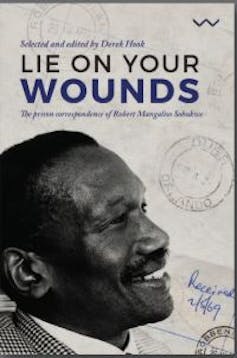
Book cover

Derek Hook, Duquesne University

This year marks the 59th anniversary of the Sharpeville massacre in South Africa. On 21 March 1960 the apartheid police opened fire on unarmed marchers protesting against a law that forced black people to carry identity documents. Over 200 were injured and 69 killed. The following edited excerpt is from a new book featuring the prison letters of Robert Sobukwe, who organised and led the march.

In a letter of condolence written on 5 August 1974 to Nell Marquard, a friend who he had been corresponding since his time on Robben Island, South African pan-Africanist leader Robert Mangaliso Sobukwe made a telling observation:

I learnt some time ago that one cannot put oneself in another’s position. We may express sympathy, feel it and even imagine the pain. But we cannot feel it as the one who suffers it. They have a saying in Xhosa that the toothache is felt by the one whose tooth is aching.

Sobukwe, who clearly knew about suffering, loneliness and the impossibility of ever fully communicating one’s pain to another, was writing just after the death of Nell’s husband, the noted Cape liberal, author and historian, Leo Marquard. Given that Leo was a prominent liberal, and that white liberals had not always been friendly to the aims and agendas of the Pan Africanist Congress (PAC) – the organisation that Sobukwe led from 1959 until his arrest in 1960 – one might have expected coolness from Sobukwe. Not at all. Sobukwe, as always, was gracious:

I am thankful that I was able to talk to you two years before Leo’s death and more thankful that he died knowing how much his contribution had been appreciated.

Touching as this acknowledgement of his contribution would have been for Marquard, the real poignancy of Sobukwe’s letter comes a little further on, when he starts speaking of the myriad difficulties he has faced since leaving Robben Island, where most of South Africa’s liberation struggle leaders were jailed.

It has not been a good year for me. I had planned to leave [from Kimberley] … by car on the 31st May and make straight for Cape Town. But these boys [apartheid security police] beat me to it. They came on the 30th May, 1974 to serve the fresh lot of bureaucratic output. Well it’s good to know that our security is entrusted to such alert people.

Despite the fact that he makes light of it, one senses in Sobukwe’s letter that the constant surveillance and harassment of the security police was taking its toll. Behind the ironic salute to the astuteness of the police, there is also a disturbing foreshadowing. Steve Biko, in many respects Sobukwe’s most direct political heir, would be stopped and arrested on a not dissimilar road trip from Cape Town four years later, an event which would lead directly to his death at the hands of the Security Police. Sobukwe continues:

Veronica (Sobukwe’s wife) has had a major operation as you probably read in the papers. She should have had this operation last year, but did not and the condition got worse. She has made a remarkable recovery, thanks to my very efficient and tender nursing, and has now gone back to Joh’burg for a check up. From there she will be in Durban to spend a week or so with her sister before proceeding to Swaziland to see the children.

Between May 1963 and May 1969 was to spend six years of near-complete solitary confinement on Robben Island.

These circumstances had their origins in a momentous historical event organised by Sobukwe himself. On 21 March 1960, Sobukwe had led the Pan Africanist Congress in what he called a “positive action” campaign, protesting against the oppressive pass laws that governed the movements – and indeed the lives – of black South Africans.

This mass action resulted in the Sharpeville massacre later that same day, in which at least 69 people were killed when the South African police opened fire on a crowd of protesters. This event, which drew international attention to the injustices and brutality of apartheid, was a watershed moment in the history of South Africa. It led to a three-year jail sentence for Sobukwe for inciting people to protest against the laws of the country.

Not content that by 3 May 1963 Sobukwe would have served his sentence, the apartheid government passed an amendment to the General Law Amendment Act, the notorious “Sobukwe Clause”, which enabled the Minister of Justice to prolong the detention of any political prisoner year after year.

He was then relocated to Robben Island, and kept apart from other prisoners, where he remained for six years. The clause – never used to detain anyone else – was renewed annually by the Minister of Justice.

Sobukwe, in a very significant sense, was never a free man again after his 1960 imprisonment. The apartheid government unleashed a series of bureaucratic cruelties upon him after his May 1969 release from Robben Island. They forced him to live in the geographically remote town of Kimberley – far removed from any friends, family or associates.

The house where Sobukwe was held on Robben Island .
Flcker/Daniel Mouton

They insisted he take on a low-ranking job that would have made him complicit in the apartheid policies that he went to jail protesting. He refused. They repeatedly refused to allow him to leave the country to take up job offers he had received from the United States; and they obstructed his attempts to get the medical treatments that he needed, and that would have extended his life (he died of lung cancer on 27 February 1978).

This then is the background to the consolations that Sobukwe sought to offer Nell Marquard in his 1974 letter. It’s only on the last page of that letter that he seemed to finally find the words that suited both his emotions and the note of commiseration that he wished to convey to Nell:

The Xhosa have standard words of condolence. They say
Akuhlanga lungehlanga lala ngenxeba (There has not occurred what has not occurred before … lie on your wound).
God bless you. Affectionately, Robert.

This resonant phrase – which also appears in Sobukwe’s letters to his friend Benjamin Pogrund – applies equally, if not more so, to Sobukwe himself. “Lie on your wound(s)” is a call to bide one’s time, to heal, and to reconstitute one’s self despite evident suffering. It is a call to have courage, to bear the moral burden of pain, and it provides an apt title for what was the most difficult period of Sobukwe’s life, namely his time on Robben Island, which the selection of letters collected in this book, published by Wits University Press, represents.The Conversation

Derek Hook, Associate professor of Psychology, Duquesne University

This article is republished from The Conversation under a Creative Commons license. Read the original article.

Unknown's avatar

Letters Missing From the English Alphabet


Unknown's avatar

12 Must-Read Collections of Famous Authors’ Letters