
Unknown's avatar

How George Orwell justified killing German civilians in the second world war


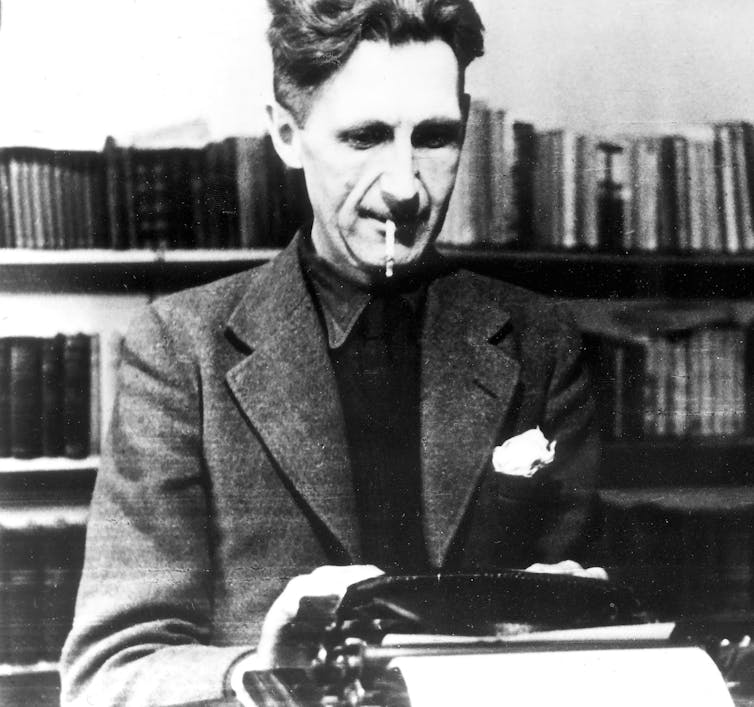
Eric Blair (better known as George Orwell) in characteristic pose.

Tim Luckhurst, Durham University

During the second world war, Britain’s national daily newspapers usually supported the government’s portrayal of the national war effort as flawlessly heroic. This was a just war – and supported as such even by many Britons who, until 1940, had supported pacifist organisations such as the Peace Pledge Union.

But Tribune, the weekly newspaper founded by wealthy Labour MPs Sir Stafford Cripps and George Strauss and edited by Aneurin Bevan, was bolder. Promoting itself as “Fresh and Fearless” Tribune relished controversy. In September 1943, it celebrated the recruitment of an expert controversialist as its literary editor: George Orwell.

Orwell soon seized upon a topic the wartime coalition had worked assiduously to conceal: the deliberate killing of German civilians in colossal RAF raids on German cities. His pretext was the publication by Vera Brittain, the feminist and pre-war pacifist, of Seed of Chaos, her pungent denunciation of obliteration bombing. Supporting her case with eyewitness accounts by neutral Swiss and Swedish newspaper correspondents, Brittain recounted tales of corpses “all over streets and even in the tree-tops” and women “demented after the raids, crying continuously for their lost children”.
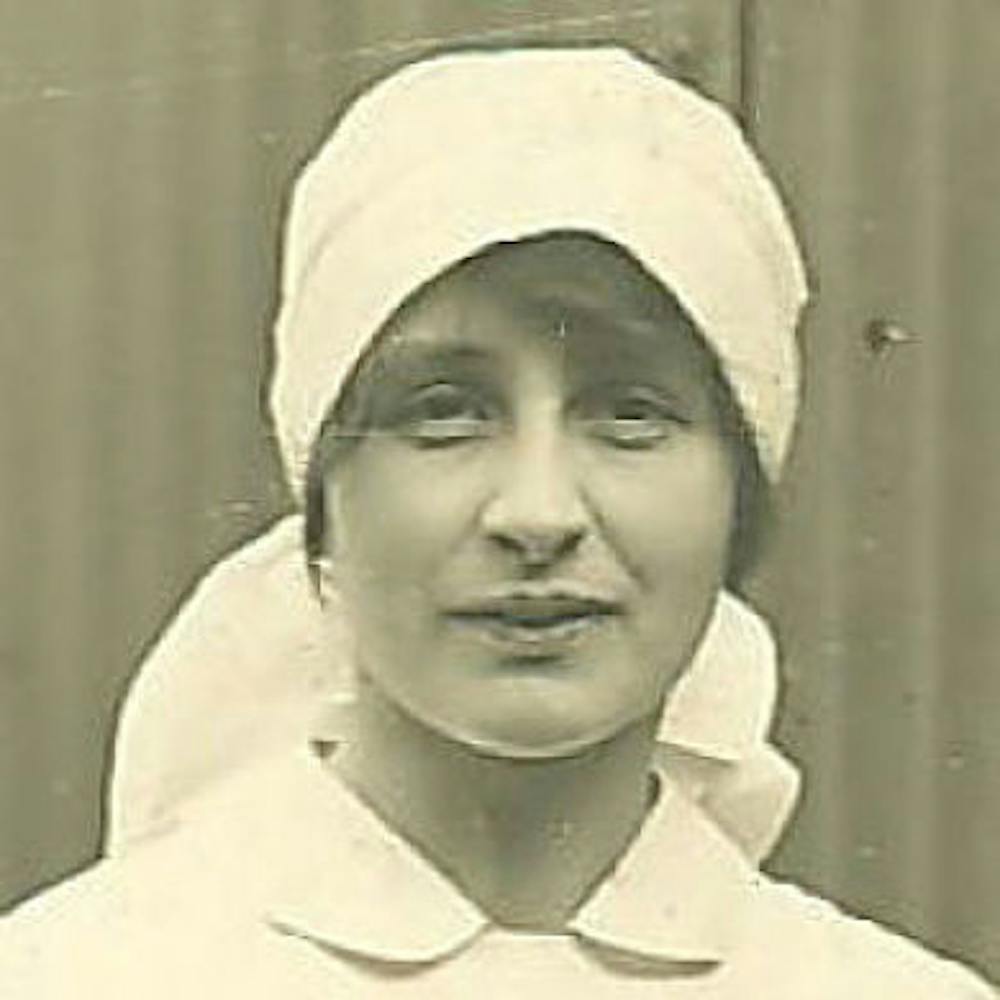
Influential voice for Pacifism: Vera Brittain.

Detecting sanctimony, Orwell attacked head on with a piece entitled “As I Please”. There was, he wrote, “something very distasteful in accepting war as an instrument and at the same time wanting to dodge responsibility for its more obviously barbarous features”.

Talk of “limiting or humanising” total war was “sheer humbug”, Orwell insisted. Warming to his theme, he condemned Brittain’s “parrot cry” against “killing women and children” and insisted: “It is probably better to kill a cross section of the population than to kill only the young men.” If allied raids had killed 1.2 million German civilians, “that loss of life has probably harmed the German race somewhat less than a corresponding loss on the Russian front”.

Tribune’s readers were not unanimous in their support for Orwell. A flow of critical letters arrived but the literary editor did not budge. He “did not feel that mere killing is all important”. There was, he suggested, a moral case for killing German civilians. It brought home the nature of modern war and might make such conflict less likely.

Hard truths

Orwell’s stance was in stark opposition to government policy. This was to pretend that civilian deaths were rare collateral damage in raids meticulously targeted at German industrial and military infrastructure. In fact, Orwell’s defence challenged the Air Ministry as directly as Brittain’s moral outrage. Orwell recognised that area bombing was intended to cause mass civilian casualties and routinely did so.

Military historian and author Martin Middlebrook describes the British government’s statements about area bombing between 1942 and 1945 as “a three-year period of deceit on the British public and world opinion”. The areas attacked were “nearly always city centres or densely populated residential areas”. Britain had invested vast resources to build a fleet of heavy, four-engine bombers among which the Avro Lancaster was king. Mass raids against cities including Cologne, Essen and Hamburg soon demonstrated that the Lancaster’s brave, vulnerable crews could not hit targets with any precision.

Air Marshall Sir Arthur Harris pleaded with the prime minister to admit that raids involved the deliberate murder of civilians. In October 1943, he wrote to Churchill’s friend, the air minister Archibald Sinclair, demanding bombing tactics be “unambiguously and publicly stated”, writing:

That aim is the destruction of German cities, the killing of German workers and the disruption of civilised community life throughout Germany.

Harris wanted ministers to tell the public that the deaths of women and children were not a “byproduct of attempts to hit factories”. Such slaughter was one of the “accepted and intended aims of our bombing policy”.

Even when the Associated Press described Allied raids on Dresden as deliberate “terror bombing”, the government continued to deploy bland euphemisms. By recognising that RAF Bomber Command killed civilians as a conscious act of policy, Orwell and Tribune were playing with fire. They were not censored or condemned because it suited ministers to tolerate dissent in small circulation weekly titles. Such robust debate burnished Britain’s democratic credentials and reassured her American allies.

The last word

Brittain was not reassured. Writer Richard Westwood has shown that she resented Orwell’s attacks so intensely that she would revisit their dispute years after his death in order to “win her argument with Orwell in retrospect and when he could not respond”. This she attempted in Testament of Experience by quoting selectively from a report Orwell sent from Germany for The Observer in April 1945.

Brittain suggests he retracted his support for obliteration bombing. In fact, Orwell described damage done by allied bombs and argued that the Allies should not impose harsh reparations. A punitive approach would leave Germans dependent on international aid. He did not apologise for the RAF’s work. Instead, he repeated his defence that “a bomb kills a cross-section of the population whereas the men killed in battle are exactly the ones the community can least afford to lose”.

Orwell’s candour about area bombing was a robust example of dissenting wartime journalism. It demonstrated Tribune’s editorial courage and that the wartime coalition understood it could not reconcile defence of democracy with suppression of free speech.

Brittain was wrong to misrepresent him. His work illustrates how intelligent publications with thoughtful readers upheld Britain’s democratic tradition in wartime. Such journalism was not restricted to the left. The Spectator and The Economist played comparable roles on this and other subjects.


Tim Luckhurst will deliver his online lecture to the Centre for Modern Conflicts and Cultures via Zoom between 4pm and 5 pm on Tuesday, June 2, 2020. To attend please register here.The Conversation

Tim Luckhurst, Principal of South College, Durham University. He is a newspaper historian and an academic member of the University’s Centre for Modern Conflicts and Cultures., Durham University

This article is republished from The Conversation under a Creative Commons license. Read the original article.
Unknown's avatar

Why are Australian authors obsessed with killing off kangaroos?


File 20190228 106350 pht809.jpg?ixlib=rb 1.1
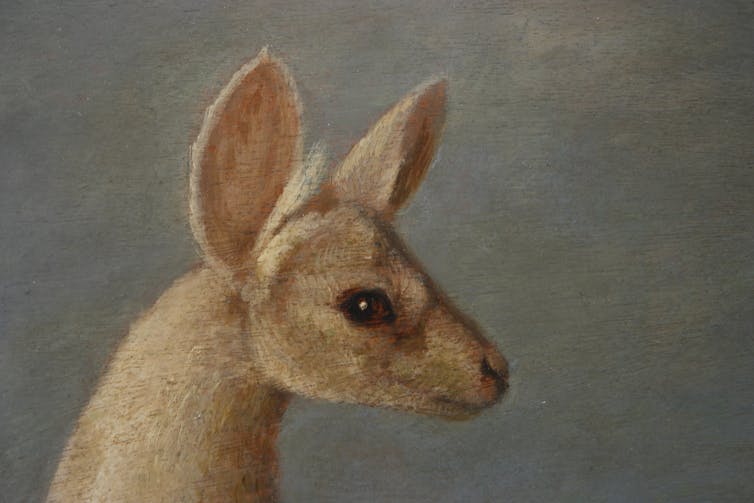
George Stubbs, ‘The Kongouro from New Holland’ (1772), oil painting, detail of head.
Ashley Van Haeften/Wikimedia Commons, CC BY

Donna Mazza, Edith Cowan University

Kangaroos are the most visible of Australia’s unique animals, but despite their charm and national icon status, Australian writers perpetually kill them off.

A kangaroo appears struggling in a rabbit trap, doomed and dying in Charlotte Wood’s The Natural Way of Things, while Tim Winton has one killed on the road, dissected and fed to dogs in Breath. These are just two of many Australian authors who have represented the kangaroo as a victim.

Kangaroos were a creature of wonder for early European explorers such as Dampier and Banks, but it didn’t take long for their public image to descend to that of a pest. Early settlers considered them competition, nibbling all the best pasture quicker than their sheep and cows, and they soon took up arms against the bounding menace.

The wild kangaroo population of Australia is still commercially slaughtered for dog food. In New South Wales, landholders and volunteers can be simply licensed to kill them for reasons of damage control, and some parts of Western Australia have an open permit system for non-commercial shooting. On any given day, there are usually several being mashed into the blue metal of highways, surrounded by crows and in various states of decomposition.

The expendable nature of the kangaroo may be a widely held view in Australia, but it’s a bitter irony that the creature which defines us to the rest of the world is perpetually under siege, in life and in literature.

Fiction’s dead roos

Coming Rain by Stephen Daisley (2015).
Goodreads

In Stephen Daisley’s 2016 novel Coming Rain, the author kills off a kangaroo with “a great thump” against the side of a truck, giving a gruesome description of the sweetening of the tail for stew.

The live joey almost has its head smashed against a tree but, owing to its “cuteness” it becomes a pet, wearing a straw hat. The stereotype of the cute joey is alive and well in children’s fiction too, but in adult fiction the kangaroo is dead.

In Tim Winton’s Breath, narrator Pikelet comes across surf guru, Sando, who has hit a kangaroo with his Kombi ute. Sando finishes it off with the jack handle from the car, pounded a couple of times into its head. His response to this act is very matter-of-fact: “This is what happens. And it isn’t lovely.”

Sando drags the “roadkill” into the tray of his ute and takes it home to butcher it. He is prepared for this, with a meat hook hanging from a tree, and he skins and guts the kangaroo. Pikelet observes this with some emotional discomfort, “shrinking from him a little” but accepts the flourbag of meat to take home to his parents who “wouldn’t eat roo meat in a million years”. He “hoiks” the meat into the bushes on the ride home.

Charlotte Wood considers the horror of roadkill in The Children, where Australian animals are killed by passing traffic and compared to contaminated “cushions”. Wood also kills a kangaroo (and a lot of rabbits) in The Natural Way of Things. Central character Yolanda snares a “large grey kangaroo” in a rabbit trap and finds it still alive:

Vainly, the kangaroo shifts and scuffles again. Then it lowers its head and lengthens its mighty neck, black eyes fixed on them, and lets out three long, hoarse snarls. Its snout fattens, nostrils flared.

Fearful of the sharp claws on its “delicate forefeet” they sit beside it, wondering how to set it free and instead bring it water and leave it to die slowly.

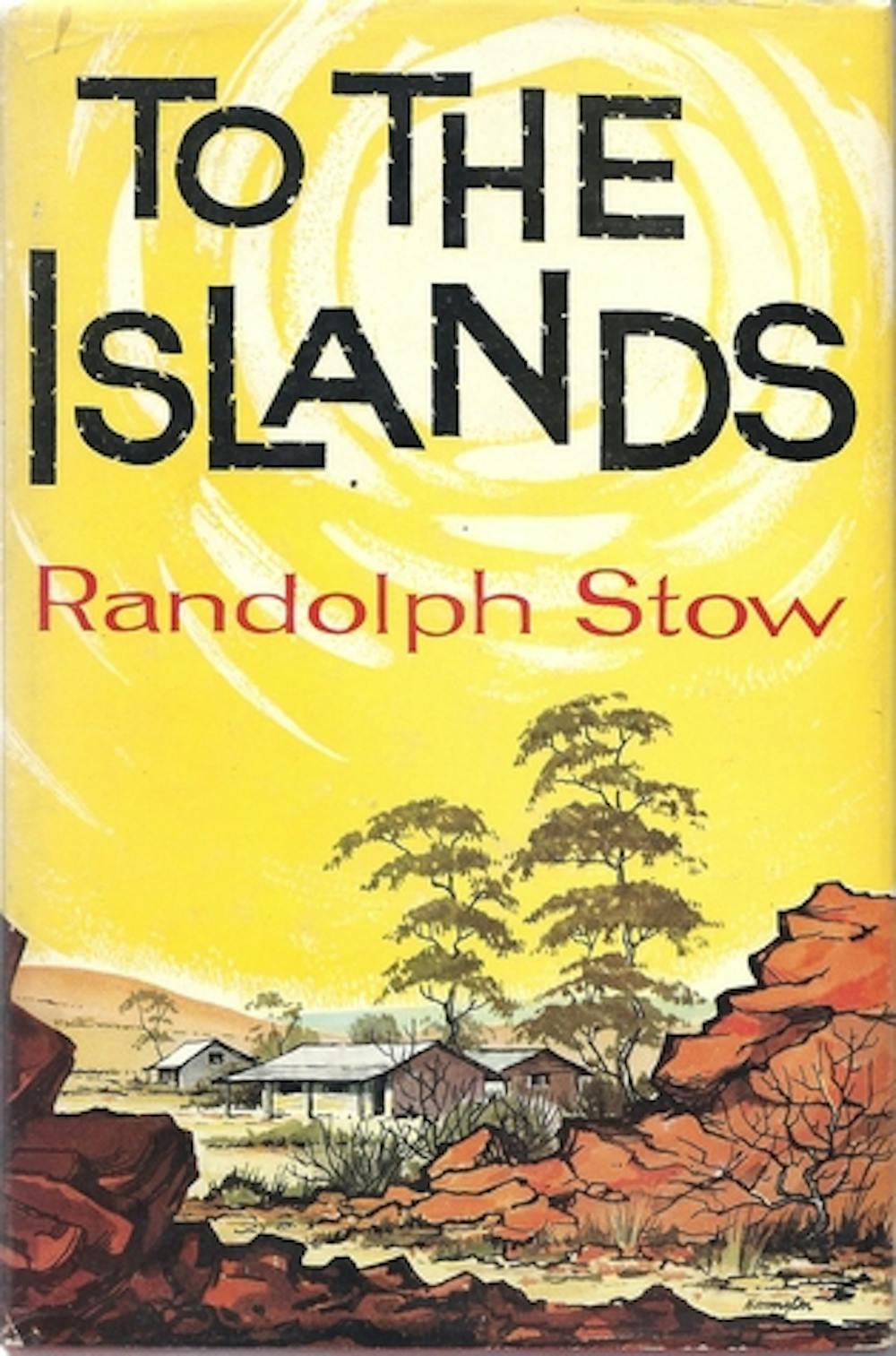
To the Islands by Randolph Stow (1958).
Goodreads

The image of the kangaroo is linked to death through earlier works from Australian authors too. The iconic 1940 poem, Native-Born by Eve Langley presents a detailed account of a dead kangaroo, while Randolph Stow’s 1958 novel To the Islands features kangaroos and wallabies being shot and eaten.

Australian fiction is, so often, deeply entangled with nature. Anxiety around the bush, as described in D.H. Lawrence’s novel Kangaroo back in the 1920s, is a feature of settler Australian fiction, tied together with violence, trauma and a sense of the uncanny.

Docile and violent all at once, the watchful gaze and twitching ears of kangaroos are, perhaps, reminders of that uneasiness the settlers felt.

The fact that Australian literature seems intent on killing off this national icon is deeply disturbing – but it is also deeply ingrained.

In contrast with kangaroos, thylacines are well and truly alive in Australian literature despite being extinct since 1936. They appear in over 250 works listed in the AustLit database of Australian literature, including 18 novels since 1988.

Among these are Julia Leigh’s The Hunter, Sonya Hartnett’s Stripes of the Sidestep Wolf and Louis Nowra’s Into That Forest, as well as children’s fiction, drama, film, short fiction and poetry. These thylacines often meet with violent ends, but their aliveness in fiction is astounding compared to the kangaroo.

Contemporary Australia is sentimental about the thylacine as a strange creature lost because of “ignorance”. They are now a thing of wonder, destroyed by misguided colonial settlers who are long gone. But if they weren’t extinct, would we treat them any better? Would we protect them? Often that is the point writers are trying to make by invoking the extinct “tiger” in the first place.

Our relationship with kangaroos (and thylacines), both in fiction and in reality, is symptomatic of what Stow called our “bitter heritage”. So perhaps it is unsurprising, given the violence of colonisation, that it has had (and is still having) an impact on the way writers represent the Australian landscape and all who inhabit it.

This article is based on research published in a forthcoming article for Antipodes.The Conversation

Donna Mazza, Senior Lecturer in Creative Arts, Edith Cowan University

This article is republished from The Conversation under a Creative Commons license. Read the original article.
Unknown's avatar

Amazon Isn’t Killing Writing, The Market Is


Unknown's avatar

Article: A Problem with Free Ebooks???


The link below is to an article that asks the question ‘are free ebooks killing the market?’ For me, this seems to be drawing a long bow, but I suppose it is worth considering – then dismissing. What do you think?

For more visit:
http://americaneditor.wordpress.com/2012/09/10/are-free-ebooks-killing-the-market/