Spying is a risky profession. For the 14th-century English undercover agent-turned-poet Geoffrey Chaucer, the dangers – at least to his reputation – continue to surface centuries after his death.
In his July 2021 essay for the Times Literary Supplement, A.S.G. Edwards, professor of medieval manuscripts at the University of Kent in Canterbury, England, laments the removal of Geoffrey Chaucer from university curricula. Edwards says he believes this disappearance may be propelled by a vocal cohort of scholars who see the “father of English poetry” as a rapist, racist and antisemite.
The predicament would have amused Chaucer himself. Jewish and feminist scholars, among others, are shooting down one of their earliest and wisest allies. This is happening when new research reveals a Chaucer altogether different from what many current readers have come to accept. My decades of research show he was no raunchy proponent of bro culture but a daring and ingenious defender of women and the innocent.
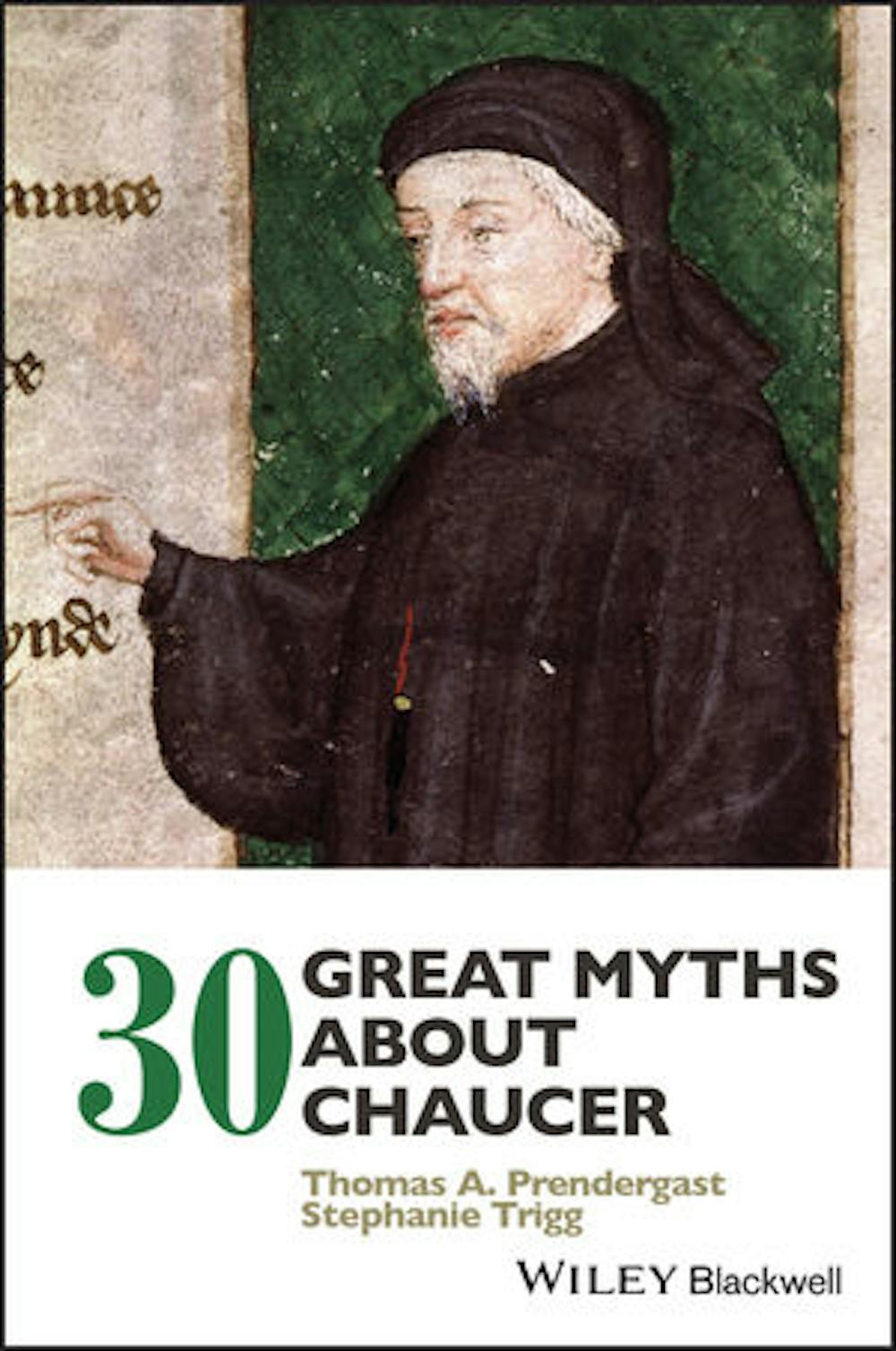
As a medievalist who teaches Chaucer, I believe the movement to cancel Chaucer has been bamboozled by his tradecraft – his consummate skill as a master of disguise.
Outfoxing the professors
It’s true that Chaucer’s work contains toxic material. His “Wife of Bath’s Prologue” in “The Canterbury Tales,” his celebrated collection of stories, quotes at length from the long tradition of classical and medieval works on the evils of women, as mansplained by the Wife’s elderly husbands: “You say, just as worms destroy a tree, so a wife destroys her husband.”
These poems in particular generate accusations that Chaucer propagated sexist and antisemitic material because he agreed with or enjoyed it.
Severalprominentscholars seem convinced that Chaucer’s personal views are the same as those of his characters and that Chaucer is promoting these opinions. And they believe he abducted or raped a young woman named Cecily Chaumpaigne, although the legal records are enigmatic. It looks as though Cecily accused Chaucer of some such crime and he paid her to clear his name. It’s unclear what actually happened between them.
Critics cherry-pick quotations to support their claims about Chaucer. But if you examine his writings in detail, as I have, you’ll see themes of concern for women and human rights, the oppressed and the persecuted, reappear time and time again.
Chaucer the spy
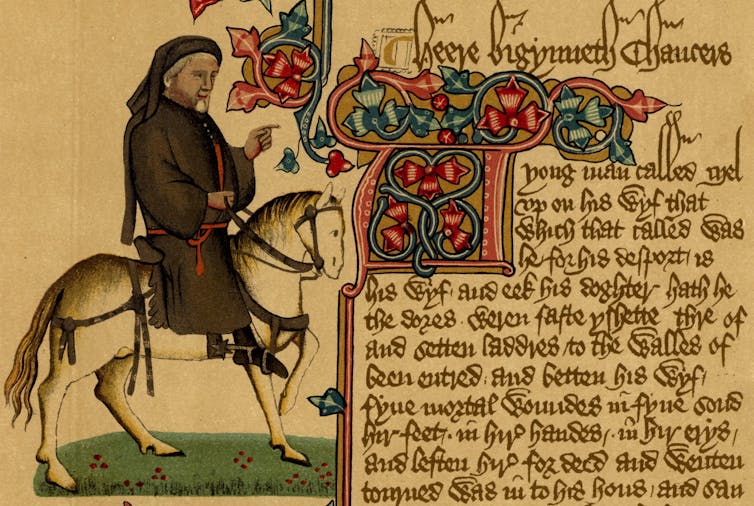
Readers often assume Chaucer’s characters were a reflection of the writer’s own attitude because he is such a convincing role player. Chaucer’s career in the English secret service trained him as an observer, analyst, diplomat and master at concealing his own views.
In his teens, Chaucer became a confidential envoy for England. From 1359 to 1378, he graced English diplomatic delegations and carried out missions described in expense records only as “the king’s secret business.”
Documents show him scouting paths through the Pyrenees for English forces poised to invade Spain. He lobbied Italy for money and troops, while also perhaps investigating the suspicious death of Lionel of Antwerp, an English prince who was probably poisoned soon after his wedding.
Chaucer’s job brought him face to face with the darkest figures of his day — the treacherous Charles the Bad, King of Navarre, a notorious traitor and assassin, and Bernabò Visconti, lord of Milan, who helped devise a 40-day torture protocol.
Chaucer’s poetry reflects his experience as an English agent. He enjoyed role-playing and assuming many identities in his writing. And like the couriers he dispatched from Italy in 1378, he brings his readers covert messages split between multiple speakers. Each teller holds just a piece of the puzzle. The whole story can only be understood when all the messages arrive.
He also uses the skills of a secret agent to express dangerous truths not accepted in his own day, when misogyny and antisemitism were both entrenched, especially among the clergy.
Chaucer does not preach or explain. Instead, he lets the formidable Wife of Bath, the character he most enjoyed, tell us about the misogyny of her five husbands and fantasize about how ladies of King Arthur’s court might take revenge on a rapist. Or he makes his deserted Queen Dido cry: “Given their bad behavior, it’s a shame any woman ever took pity on any man.”
My own research shows that in the course of his career he supported women’s right to choose their own mates and the human desire for freedom from enslavement, coercion, verbal abuse, political tyranny, judicial corruption and sexual trafficking. In “The Canterbury Tales” and “The Legend of Good Women,” he tells many stories on such themes. There he opposed assassination, infanticide and femicide, the mistreatment of prisoners, sexual harassment and domestic abuse. He valued self-control in action and in speech. He spoke out for women, enslaved people and Jews.
As for Jews, Chaucer salutes their ancient heroism in his early poem “The House of Fame.” He depicts them as a people who have done great good in the world, only to be rewarded with slander. In “The Prioress’s Tale” he shows them being libeled by a desperate character to cover up a crime of which they were manifestly innocent, a century after all Jews had been brutally expelled from England.
Chaucer’s own words demonstrate beyond the shadow of a doubt that when his much underestimated Prioress tells her antisemitic blood libel tale, Chaucer is not endorsing it. Through her own words and actions, and a cascade of reactions from those who hear her, he is exposing such guilty and dangerous actors as they deploy such lies.
It is bizarre that one of the strongest and earliest writers in English literature to speak out against rape and support women and the downtrodden should be pilloried and threatened with cancellation.
But Chaucer knew the complexity of his art put him at risk. As his character the Squire dryly observed, people all too often “demen gladly to the badder ende” – “They are happy to assume the worst.”
Every day, the Trojans ride out to do battle with Agamemnon, Odysseus, Ajax and the aggrieved husband Menelaus, whose wife Helen has been abducted by the Trojan prince Paris. But despite this crisis, the Trojan leisured classes carry on with their lives.
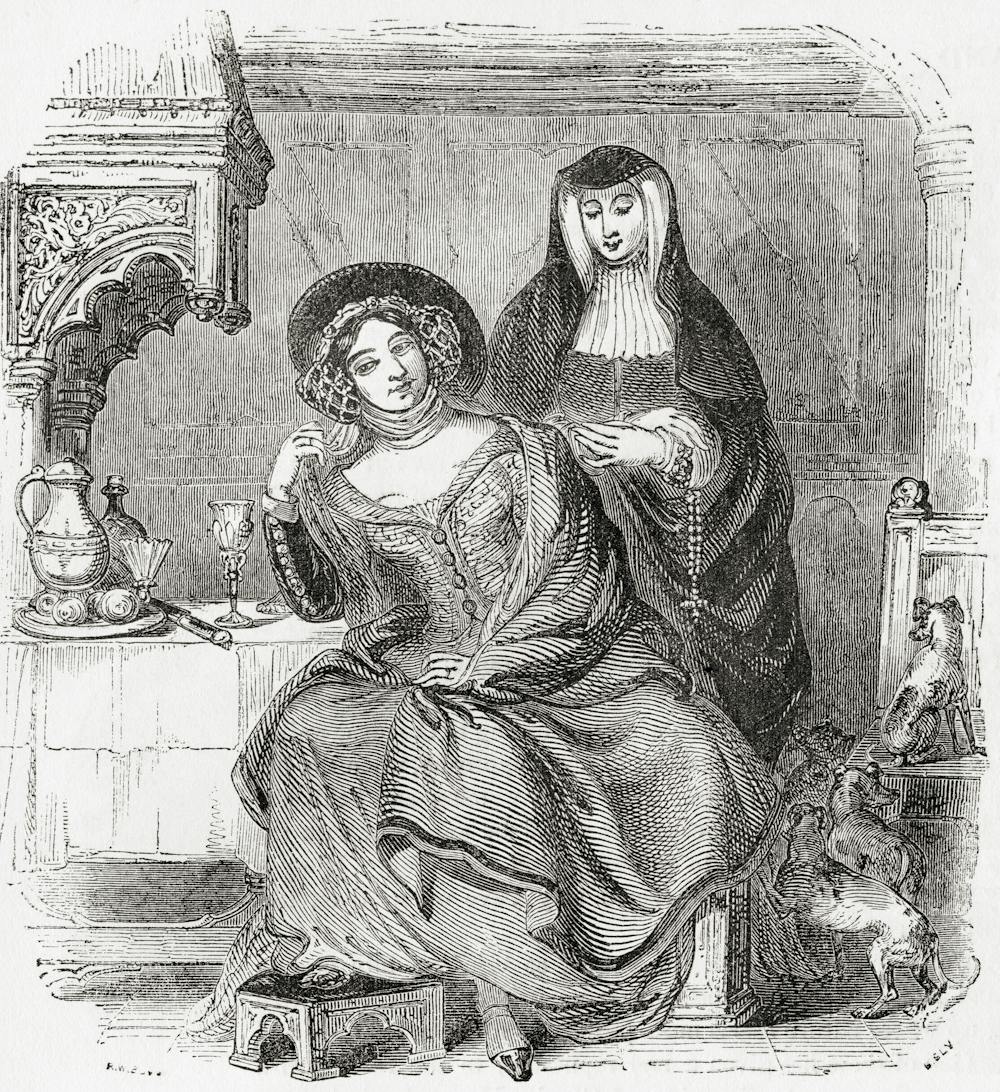
One joyful spring morning, when the sun is shining and the meadows are filled with flowers, a beautiful young widow, Criseyde, sits in her palace, in a paved parlour with two other ladies, while a young maiden reads to them the story of another siege, that of the Greek city of Thebes.
This pleasant scene is interrupted by Criseyde’s uncle Pandarus, who is bringing the astonishing news that Paris’s younger brother Troilus has fallen in love with her.
Geoffrey Chaucer wrote his great romance Troilus and Criseyde around 1386. I teach this text every year in my honours class. It is long and difficult, and we normally spend half the semester working through the poem. Even then we don’t read it all in detail.
This year, the global pandemic brings a new context for reading this poem about a passionate but doomed love affair between two Trojans, conducted under siege conditions, in addition to all the constraints Chaucer’s very medieval lovers place around themselves.
A secret affair
Chaucer’s language in this text is rich and ornate, and the poem is written in a rhyming stanza whose syntax ranges from elegant to knotty. The narrative is both leisurely and intense.
It offers philosophical digressions about the nature of free will and predestination; but it is also full of intricate private meditations, and absorbing, intense conversations between the three main characters.
Nothing in the brutal rough and tumble of Shakespeare’s later play Troilus and Cressida can prepare you for the lyric drama of this poem.
Criseyde’s father has abandoned Troy and gone over to the Greek camp. She has been allowed to remain in Troy, but she is very vulnerable and fearful. The love affair must remain secret to protect her honour; Troilus and Criseyde cannot marry because he is a prince and she is the daughter of a traitor; and nor can they leave Troy and abandon their city.
They are also both overcome by shyness, dread, and reluctance to speak to each other. Indeed, the lovers do not exchange a single word until the beginning of the third book, and by the beginning of the fifth and final book they have parted, never to meet again.
Every year my students bring fresh insights to this poem’s emotional and cultural drama. Although I am on long service leave this semester, I am still conducting my annual reading of the poem on Zoom with a group of friends and colleagues.
Our Middle English Reading Group is made up of staff, present and former students, and members of a thriving community of scholars and lovers of medieval and early modern culture.
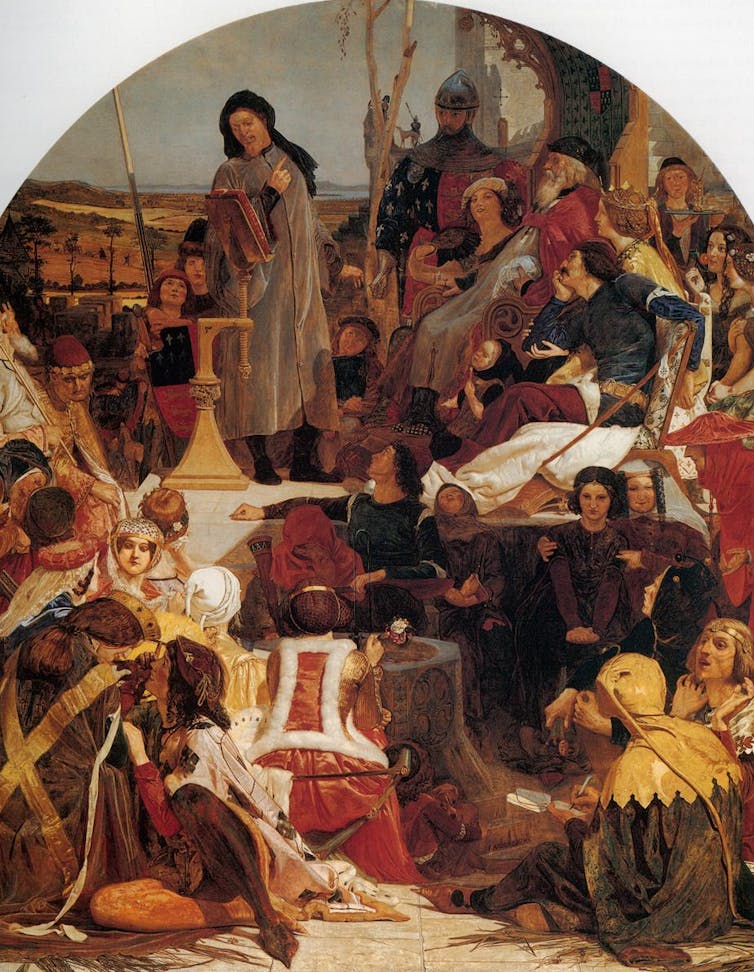
This year, reading together through Zoom offers a powerful contrast with Chaucer’s scene of medieval women’s communal reading.
Leisurely yet intense language fills rhyming stanza – all seven hours of them.
When Pandarus enters Criseyde’s paved parlour, where the maiden is reading from the book about the siege of Thebes, she greets him warmly and brings him to sit next to her. Hoping to turn her mood to thoughts of love, he asks what they are reading: is it a book about love? Is there anything he can learn?
Criseyde teases her uncle and when they have finished laughing she tells him where they are up to. She points to “thise lettres rede,” the rubricated or decoratively coloured chapter heading that introduces the next section.
Pandarus replies that he knows all about that sorrowful story but insists they should turn their thoughts to spring, as a prelude to introducing his news about Troilus. He invites her to dance but Criseyde recoils in horror. As a widow, she says, it would be better for her to live in a cave, to pray, and read the lives of the saints.
In typical Chaucerian fashion, this passage shows a female character’s awareness of what she might do, and perhaps should do, but does not.
The domestic charms of this safe interior space, Pandarus’ fearful invitation, and the pleasures of reading and talking about familiar books distract us from the dreadful history lesson in the book they are reading. For just as Thebes was destroyed under siege, so too will Troy be.
Chaucer’s readers knew this; we know it; and even Criseyde’s father, a soothsayer, knows it: he has already abandoned Troy and gone over to the Greek camp, leaving her unprotected except for her uncle who is about to embroil her in the complexities of Trojan court politics.
We know that this love story will turn out badly. In the very first stanza, Chaucer has told us the ending of the story: that Troilus will win Criseyde, but that she will forsake him.
Knowing the ending doesn’t affect our pleasure in this text. And so we read on, absorbed by Chaucer’s capacity to conjure the lives of others as they balance distress with hope, and external disaster with private joy.
Like the Trojans, we may not be able to learn from the past so as to avoid disaster. But Chaucer is forgiving, and offers us the seductive pleasures of reading and rereading, and the comfort of repetition.





 At the BookShelf