
Unknown's avatar

‘I want to stare death in the eye’: why dying inspires so many writers and artists


from www.shutterstock.com

Claire Hooker, University of Sydney and Ian Kerridge, University of Sydney

This is one of our occasional Essays on Health. It’s a long read.


It may seem paradoxical, but dying can be a deeply creative process.

Public figures, authors, artists and journalists have long written about their experience of dying. But why do they do it and what do we gain?


Read more:
On poetry and pain


Many stories of dying are written to bring an issue or disease to public attention.

For instance, English editor and journalist Ruth Picardie’s description of terminal breast cancer, so poignantly described in Before I say Goodbye, drew attention to the impact of medical negligence, and particularly misdiagnosis, on patients and their families.
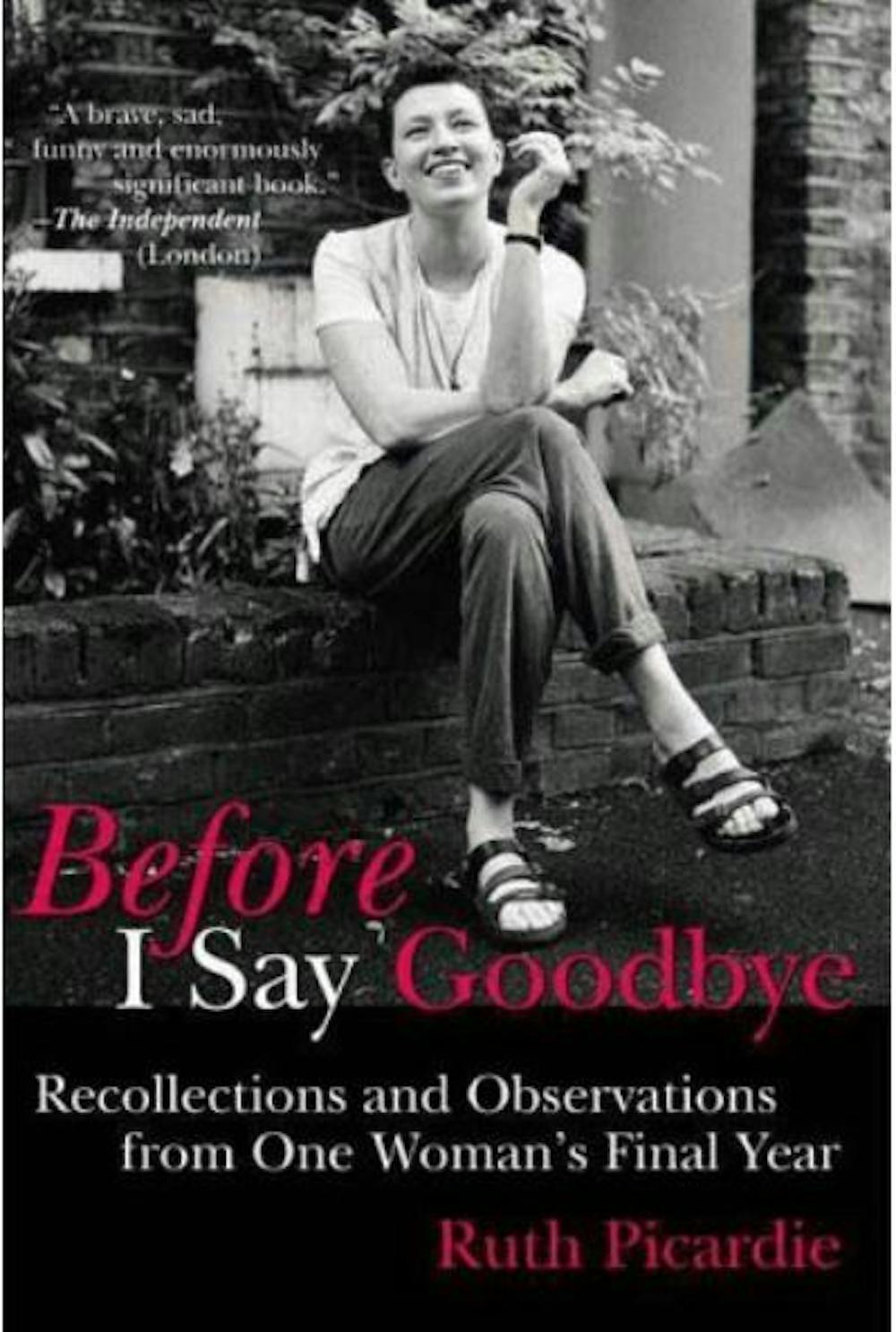
English editor and journalist Ruth Picardie’s description of terminal breast cancer drew attention to the impact of medical negligence and misdiagnosis.
Penguin Books

American tennis player and social activist Arthur Ashe wrote about his heart disease and subsequent diagnosis and death from AIDS in Days of Grace: A Memoir.

His autobiographical account brought public and political attention to the risks of blood transfusion (he acquired HIV from an infected blood transfusion following heart bypass surgery).

Other accounts of terminal illness lay bare how people navigate uncertainty and healthcare systems, as surgeon Paul Kalanithi did so beautifully in When Breath Becomes Air, his account of dying from lung cancer.

But, perhaps most commonly, for artists, poets, writers, musicians and journalists, dying can provide one last opportunity for creativity.

American writer and illustrator Maurice Sendak drew people he loved as they were dying; founder of psychoanalysis Sigmund Freud, while in great pain, refused pain medication so he could be lucid enough to think clearly about his dying; and author Christopher Hitchens wrote about dying from oesophageal cancer despite increasing symptoms:

I want to stare death in the eye.

Faced with terminal cancer, renowned neurologist Oliver Sacks wrote, if possible, more prolifically than before.

And Australian author Clive James found dying a mine of new material:

Few people read

Poetry any more but I still wish

To write its seedlings down, if only for the lull

Of gathering: no less a harvest season

For being the last time.


Read more:
Vale Clive James – a marvellous low voice whose gracious good humour let others shine


Research shows what dying artists have told us for centuries – creative self-expression is core to their sense of self. So, creativity has therapeutic and existential benefits for the dying and their grieving families.

Creativity provides a buffer against anxiety and negative emotions about death.
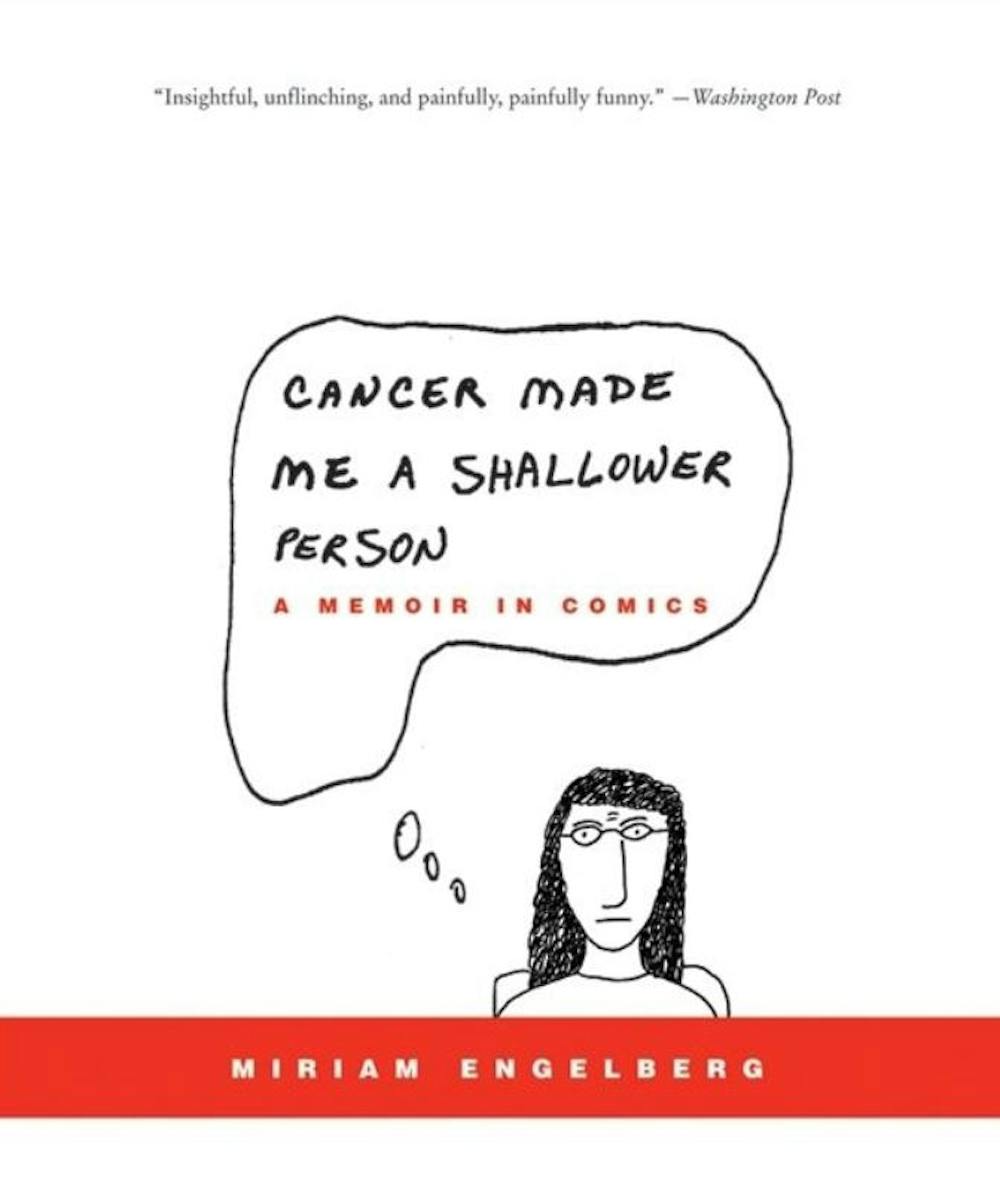
Cartoonist Miriam Engelberg chose a graphic novel to communicate her experience of cancer.
Harper Perennial

It may help us make sense of events and experiences, tragedy and misfortune, as a graphic novel did for cartoonist Miriam Engelberg in Cancer Made Me A Shallower Person, and as blogging and online writing does for so many.

Creativity may give voice to our experiences and provide some resilience as we face disintegration. It may also provide agency (an ability to act independently and make our own choices), and a sense of normality.

French doctor Benoit Burucoa wrote art in palliative care allows people to feel physical and emotional relief from dying, and:

[…] to be looked at again and again like someone alive (without which one feels dead before having disappeared).

A way of communicating to loved ones and the public
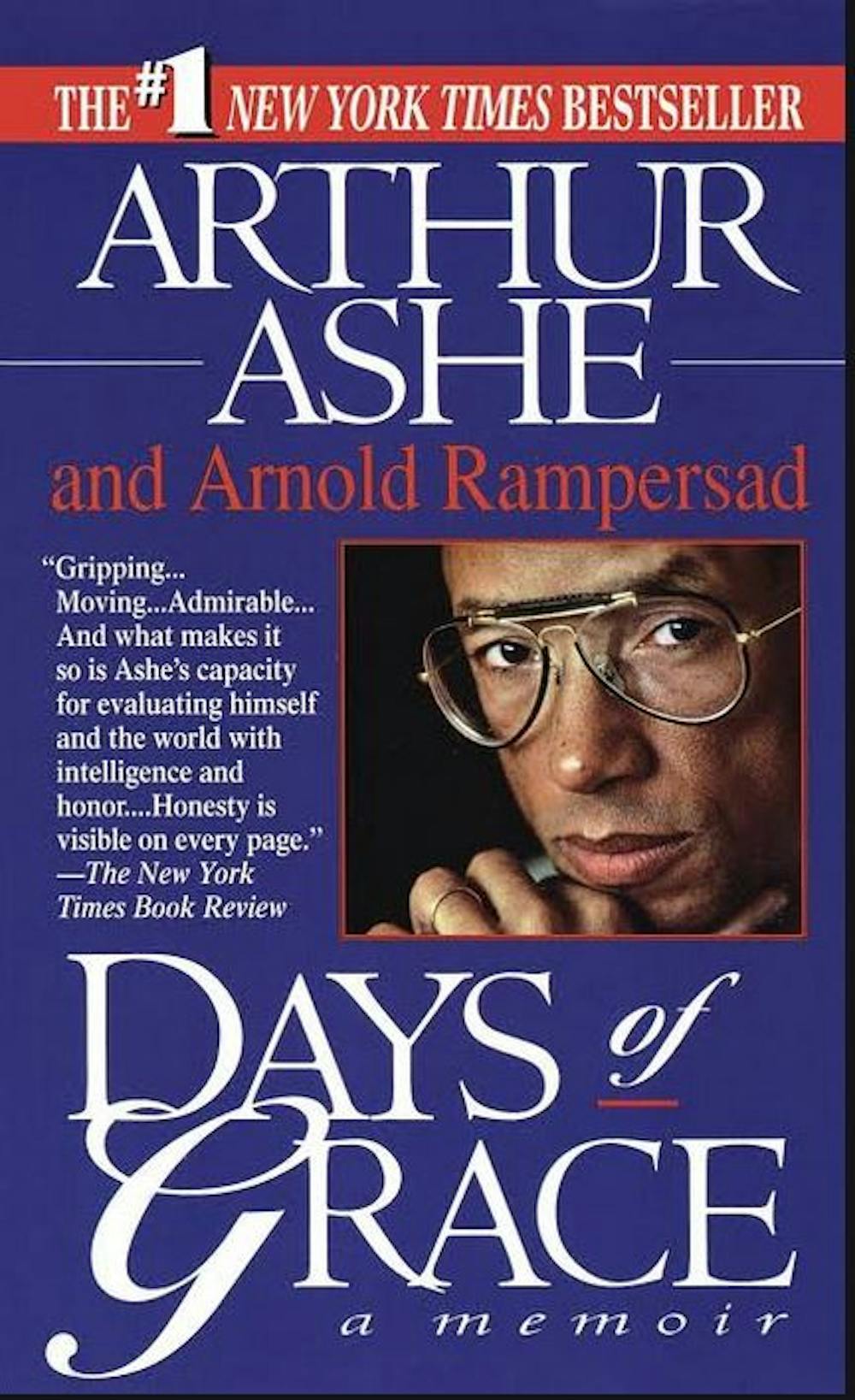
American tennis player and social activist Arthur Ashe wrote about his heart disease and subsequent diagnosis and death from AIDS.
Ballantine Books

When someone who is dying creates a work of art or writes a story, this can open up otherwise difficult conversations with people close to them.

But where these works become public, this conversation is also with those they do not know, whose only contact is through that person’s writing, poetry or art.

This public discourse is a means of living while dying, making connections with others, and ultimately, increasing the public’s “death literacy”.

In this way, our conversations about death become more normal, more accessible and much richer.

There is no evidence reading literary works about death and dying fosters rumination (an unhelpful way of dwelling on distressing thoughts) or other forms of psychological harm.

In fact, the evidence we have suggests the opposite is true. There is plenty of evidence for the positive impacts of both making and consuming art (of all kinds) at the end of life, and specifically surrounding palliative care.

Why do we buy these books?

Some people read narratives of dying to gain insight into this mysterious experience, and empathy for those amidst it. Some read it to rehearse their own journeys to come.

But these purpose-oriented explanations miss what is perhaps the most important and unique feature of literature – its delicate, multifaceted capacity to help us become what philosopher Martha Nussbaum described as:

[…] finely aware and richly responsible.

Literature can capture the tragedy in ordinary lives; its depictions of grief, anger and fear help us fine-tune what’s important to us; and it can show the value of a unique person across their whole life’s trajectory.

Not everyone can be creative towards the end

Not everyone, however, has the opportunity for creative self-expression at the end of life. In part, this is because increasingly we die in hospices, hospitals or nursing homes. These are often far removed from the resources, people and spaces that may inspire creative expression.

And in part it is because many people cannot communicate after a stroke or dementia diagnosis, or are delirious, so are incapable of “last wordswhen they die.


Read more:
What is palliative care? A patient’s journey through the system


Perhaps most obviously, it is also because most of us are not artists, musicians, writers, poets or philosophers. We will not come up with elegant prose in our final days and weeks, and lack the skill to paint inspiring or intensely beautiful pictures.

But this does not mean we cannot tell a story, using whatever genre we wish, that captures or at least provides a glimpse of our experience of dying – our fears, goals, hopes and preferences.

Clive James reminded us:

[…] there will still be epic poems, because every human life contains one. It comes out of nowhere and goes somewhere on its way to everywhere – which is nowhere all over again, but leaves a trail of memories. There won’t be many future poets who don’t dip their spoons into all that, even if nobody buys the book.The Conversation

Claire Hooker, Senior Lecturer and Coordinator, Health and Medical Humanities, University of Sydney and Ian Kerridge, Professor of Bioethics & Medicine, Sydney Health Ethics, University of Sydney

This article is republished from The Conversation under a Creative Commons license. Read the original article.
Unknown's avatar

The Death of Books


The link below is to an article that takes a look at the history of the ‘death of books.’

For more visit:
<a href="https://www.theparisreview.org/blog/2019/09/17/books-wont-die/"https://www.theparisreview.org/blog/2019/09/17/books-wont-die/

Unknown's avatar

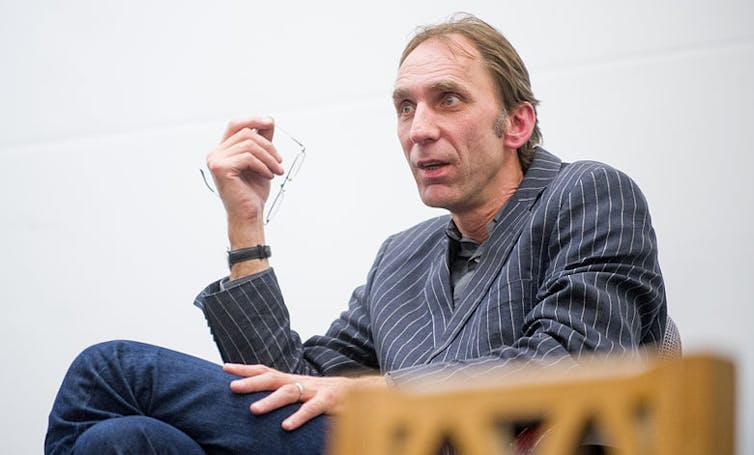
Will Self: why his report on the death of the novel is (still) premature


File 20180327 109172 tp3izl.jpg?ixlib=rb 1.1

Texas A&M University, CC BY-SA

Katy Shaw, Northumbria University, Newcastle

Will Self has declared the novel is “absolutely doomed” – ironically, in an interview to promote Phone, his latest outing in the very medium he is condemning to death. Even casual readers will note that this isn’t the first time that the reigning Eeyore of British literature has announced the imminent passing of our most popular literary form.

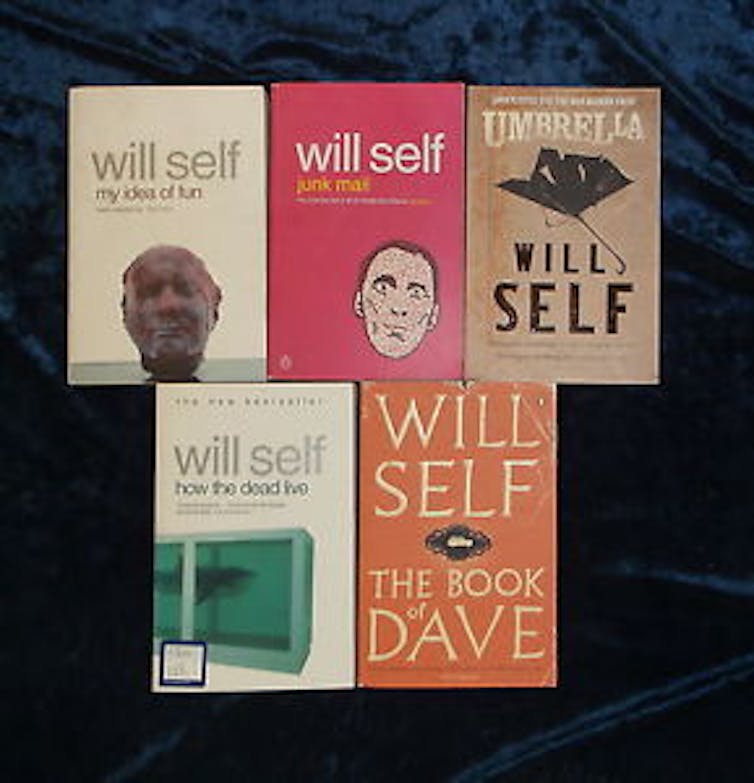
Since 2000, Self has used the occasion of the release of his own books to repeatedly argue that the novel is destined to “become a marginal cultural form, along with easel painting and the classical symphony”. During his promotional duties for Umbrella, Self asked whether we are evolving beyond the need to tell stories, while in 2014 he announced the declining cultural centrality of the novel due to the digitisation of print culture in an article to promote Shark.

Self’s obsession with killing off the novel might be more about ego than revenge, but his repeated attempts to plot its downfall form part of a much wider lament. For centuries, writers have been proclaiming the imminent passing of the novel form. More than 60 years ago, JB Priestley called it “a decaying literary form” which “no longer absorbs some of the mightiest energies of our time”. More recently, Zadie Smith complained of novel-nausea, while David Peace has asked how it is still possible to “believe in the novel form” because “storytelling is already quite ruined by the individualism of Western society”.

Difficult reading

Reading beyond the exhausted sentiments and sensationalist headlines provided by self-harming novelists, what these sentiments collectively highlight is not the death of the novel at all, but the decline of “literary fiction”. Self’s explicit cultural fear is that a serious kind of novel – novels such as his own – that confront us with “difficult reading” are destined for relegation to the realms of classical music and fine art. What Self’s repeated attempts on the life of the novel actually articulate is a deep-seated fear of the devaluation of literary fiction and its dethroning from a position of economic, popular and critical dominance as a result of the new contexts provided by a social media age.

//platform.twitter.com/widgets.js

Prophesying the imminent demise of the novel at the hands of digital technology has become popular in contemporary critical discourse, especially as the form entered the new millennium. Self is one of many authors who have publicly debated the challenges of writing novels in a digital era.

Andrew O’Hagan recently argued that the intense personal perspective offered by platforms such as Twitter and Facebook means that the novel has nowhere left to go in offering an inside account of the lives of others. The crux of both O’Hagan and Self’s sandwich-board arguments ultimately lie in a belief that future readers will be unwilling to disable connectivity and engage only with a physical form of text in relative isolation from the hyper-networked society around them.

But the “death” of literary fiction does not have to come at the expense of the rise of the popular – or of the digital. Smartphones and streaming can sit alongside literary awards and “difficult” novels and offer us vital insights into, and ways of representing, contemporary experience. The novel is perhaps the most hospitable of all forms and opens itself willingly to new voices, languages and technologies. And not all writers are hostile to the impact of the digital on literary form – in their use of social media to tell stories in new ways, both David Mitchell and Jennifer Egan have proved that the novel has an innate ability to ingest and adapt to a rapidly changing world.

The novels of a Self-publicist.
Ebay

Importantly, the novel also presents us with perspectives and experiences different from our own. In its contemporary concern with the trope of an “other” who transgresses the boundary of the domestic home, the 21st-century novel offers a vital consideration of the implications of a post-Brexit Britain. The novel disrupts and challenges, and in turn elicits responses from readers to, the contemporary concerns it presents.

Understanding the world

The etymology of the word “novel” lies in the “new” – and all evidence suggests that the form will continue to evolve – and ingest, rather than ignore, the new languages of the contemporary. The novel – whether in the form of literary or “popular” fiction – helps us to understand the world in which we now live and informs our attempts to navigate both the past and the future. As well as its long-argued innate value, this capacity of the novel to help us negotiate the changes of the present is also key to its survival – and evolution – in the coming century.

As a case for its vitality, Self’s pervasive campaign against the novel couldn’t be more helpful. In repeatedly citing the death of the novel, Self and his band of merry naysaying novelists whip up resolve and resurrection of the form in a context of challenge and change. In doing so, their comments remind us to value this familiar, yet continually innovative form that continues to adapt, ingest and shape-shift, remaining relevant to each generation of readers – and writers.

Literary snobbery and Modernist nostalgia aside, Self’s headline-grabbing soundbites encourage new understandings of wider shifts in novel writing and reading in the 21st century. With writers continually sticking more nails in its half-open coffin, the novel seems destined to remain stuck in critical debates that remain wilfully oblivious to its sustained success in the new millennium.

The ConversationEmerging from a long winter of discontent, perhaps it is the strange fate of the novel to exist in a permanent state of imminent demise and doom, with an innate awareness of itself as the one genre that literature simply cannot do without.
Katy Shaw, Professor of Contemporary Writings, Northumbria University, Newcastle

This article was originally published on The Conversation. Read the original article.

Unknown's avatar

From The Secret Garden to Thirteen Reasons Why, death is getting darker in children’s books


File 20170613 23620 1wy8o53
Young adult literature is starting to explore death in depth.
Lionsgate

Erin Farrow, Victoria University

The inevitable and universal nature of death has made it a popular topic of children’s literature. While death has appeared in these stories for centuries, death in young adult novels has become much darker and more complex.

The recent controversy over Netflix’s adaptation of the novel Thirteen Reasons Why, which depicts the aftermath of teen suicide, shows that dealing with death in kids’ fiction can be fraught. While some defended the show’s graphic depiction of suicide, others argued it was gratuitous and dangerous.

This raises the question of whether children’s literature and young adult fiction is still a safe place to discuss death. At the recent Emerging Writer’s Festival panel, Sex, Death and YA, young adult literature was celebrated for exploring such complex themes. While there may be a trend toward darker themes in literature written for a young adult audience, there is still room for hope.

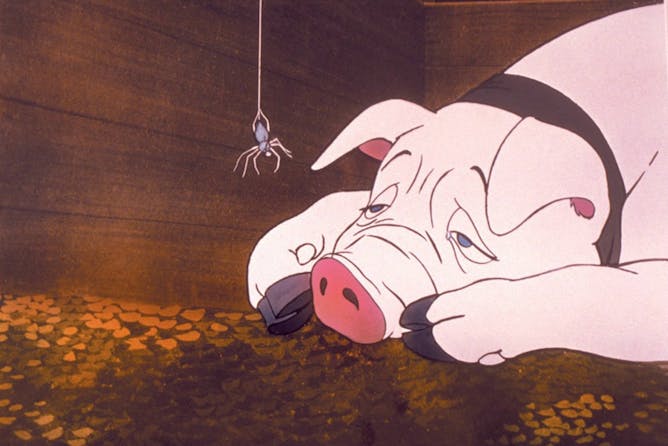
Charlottes’ Web (1973) manages to deal with death by making the subject a spider instead of a person.
Hanna-Barbera Productions

Putting death on the page

When early works of children’s literature broached the topic of death, it was usually to show how the protagonist copes in the aftermath of the death of a family member or friend. In many of these early works, depictions of death were softened for the reader, occurring outside the text. For instance, Mary’s parents in The Secret Garden (1911) die “off page”, which acts as a plot device to facilitate Mary’s arrival at Mistlethwaite Manor, where she discovers the secret garden. Charlotte’s Web (1952) softens the blow by making the characters non-human – in this case a spider.

Modern young adult novels are different. These texts not only depict young adult protagonists dealing with the aftermath of a loved one’s death, but also the trauma of witnessing it. Such as in the case of The Outsiders (1967), when the 14-year-old protagonist Ponyboy is present when his best friend Johnny dies in hospital and when Dally, a member of Ponyboy’s gang, is killed by the police.

In recent years, young adult novels have featured their protagonists doing the killing. The characters in books such as Harry Potter (1997), The Hunger Games (2008) and Tomorrow When the War Began (1993), struggle not only with the inevitability of death and the pain of losing loved ones, but also with the guilt and ethical dilemma of having to kill to survive.

The Fault in our Stars, both novel and film, deals with a terminally-ill character.
Fox 2000 studios

Life after death

There has recently been an influx of novels that present death from the perspective of the protagonist. These novels show characters who are terminally ill, presenting a rarely explored viewpoint in young adult novels – the perspective of dying. In books such as Sonya Hartnett’s Surrender (2005), Jenny Downham’s Before I Die (2007) and John Green’s The Fault in Our Stars (2012) the protagonist portrays the fear and pain of dying, the challenge of accepting one’s own mortality and the guilt of leaving their loved ones to cope after their death.

Other recent novels come from the perspective of someone who is already dead. They speak to the reader, and sometimes even their own friends and family, from beyond the grave, such as in Lauren Oliver’s Before I Fall (2010) and, although technically not a young adult novel, in Alice Sebold’s The Lovely Bones, which has been widely read by young people.

In the beginning of Jay Asher’s 2007 novel Thirteen Reasons Why it is made clear that the protagonist, Hannah Baker, has taken her own life. As the novel continues, Hannah’s story and the reasons for her actions are disclosed through a series of tapes, 13 in total, all recorded before her death.

The Netflix series also demonstrates the shift of how death is portrayed to an adolescent audience. While Asher’s novel leaves the method of Hannah’s suicide largely undisclosed, the series, released ten years after the book, portrays the suicide in excruciating detail.

Talking about death

There are many children’s picture books, such as The Heart and the Bottle by Oliver Jeffers, and Harry & Hopper written by Margaret Wild and illustrated by Freya Blackwood, that talk about death to help parents discuss the concept with young children, possibly for the first time. When talking to kids about loss and grief the Victorian government’s Better Health Channel recommends the use of “storybooks” to explain death, stating that, “It is important to recognise children’s feelings and speak with them honestly and directly about death and grief”.

John Marsden’s Tomorrow series graphically depicts the effect of war on adolescents.
Goodreads

Why is the honest and direct depiction of death in young adult novels often so controversial? Perhaps it comes from a desire to shelter young readers from topics such as war, terrorism, and human mortality – topics that young adult readers not only read about in the news and on social media, but experience. Or perhaps it is because depicting death is seen to be void of hope. But possibly the idea of hope has also shifted, away from a fairytale notion of happily ever after and towards a reality that acknowledges the existence of darkness and light.

The ConversationThere is little research on the possible benefits of discussing death with young people. For those who are yet to be affected by the death of a loved one, reading about it from the perspective of another young adult can offer a way of building resilience. For those readers who have experienced the death of a family member or friend, being able to read about the experiences of others can offer consolation. Death is an indisputable part of adolescent lives, and books can provide a place for them to reflect on its influence on life.

Erin Farrow, PhD Candidate and Academic Sessional, Victoria University

This article was originally published on The Conversation. Read the original article.

Unknown's avatar

More on the Death of Harper Lee


Unknown's avatar

The death of newspapers – have we reached the tipping point?


Brian McNair, Queensland University of Technology

In a 2013 Monthly essay Eric Beecher warned of a looming “civic catastrophe” for Australia if the decline of newspapers continued as it had been in the preceding years. The Australian’s report on a Fairfax plan to dump print and go digital-only, as yet unimplemented but convincingly detailed in the leaked 2013 document prepared by management consultancy firm Bain & Co, suggest that such a move is, if not a certainty, highly probable in the foreseeable future.

News Corp’s only substantial competitor in the print journalism sector may be on the brink of giving up the ghost, as has long been speculated even by its natural supporters such as Beecher. If it does, hundreds more jobs will go, along with the many hundreds of experienced, skilled journalists and editors already shown the door by the company.

All of this comes in the wake of the UK Independent’s announcement last week of a move to exclusively digital publication. As with Fairfax, calamitous declines in print circulation at the Indy – a poster title for innovation and editorial independence in days long gone – have made such a move entirely rational from the financial perspective of its Russian proprietor.

Many newspapers in the US have made the transition from print to digital, in the hope of fixing the broken business models of the analogue age.

Many of us have already given up on newspapers, and won’t miss print if indeed it dies out as a mass media platform. We access our news on iPads, or mobile phones, or laptops, and find ourselves turning actual, real pages to read our journalism only in those rare – and becoming rarer all the time – situations where there is no internet access.

And by those digital means of communication and sharing we have access to more news and journalism than any previous generation ever did. I read more news, not less, because of the online revolution.

Also, I read the news from the UK, the US, indeed from wherever in the world I choose, just as easily as I could once buy the print edition of The Guardian in my old home town of Glasgow. More easily, since I don’t even have to leave the house to enter the globalised public sphere of fact-based content available to me and every other human being on the planet with access to an internet connection and a networked device.

My problem now is not that of accessing quality journalism – as many pessimists predicted it would become as a result of news industry turmoil – but how to filter and sift the vast quantity of journalism which is available to me from around the globe on an hourly and daily basis, so that I can manage the flow of useful information and make some sense of the world.

Fairfax’s newspapers may be dying, then, like those of The Independent and other companies which through bad management and poor decision-making blew the digital challenge. But news and journalism thrive as never before.

Returning to Beecher’s dire warnings of “civic catastrophe”, will we miss newspapers when they finally disappear?

Someone once cheekily speculated that, on current circulation trends, the death of newspapers would come sometime in the first quarter of 2034. Personally, I believe that print will survive as a niche medium, like vinyl records, for as long as there is a demand for the tactility of words stamped on dead trees. And for a long time yet there will be those who refuse to join the online era, or who cannot for various reasons.

And there will be content for which, for one reason or another, online dissemination is not optimal, or which does not need the internet to circulate. Print continues to expand in media markets such as India and many African countries, where digital infrastructure and online culture remain underdeveloped. Paper has its place, and will keep it for a while yet.

And as long as the resources and professional values required for what we think of as “quality” journalism make the transition to digital platforms, then we have little to fear from the death of newspapers in themselves.

It was Rupert Murdoch who declared something to the effect that “we are not in the business of printing words on dead trees”. Content is king, and newsprint is just a carrier medium, now passing into history like hot metal presses and lithographs before it. Journalistic content can be produced to just as high an editorial standard online as off, and the fetishisation of print misses the point.

The real concern about the future of Fairfax and other dysfunctional former print behemoths – as articulated by Beecher in his 2013 essay – is that in their rush to maximise profits they abandon this thing we call “quality” journalism, and the journalists required to produce it, to the detriment of the diversity and independence of Australia’s political culture.

New digital entrants such as the Guardian Australia, Daily Mail Australia and The Conversation, or local editions of Gawker and Buzzfeed, are picking up some of the slack created by an already hollowed-out Fairfax. But the domination of News Corp’s titles in the Australian news media environment can only become more pronounced if Fairfax’s decline continues to the point where its print titles disappear entirely.

The Murdoch empire has invested more, and adapted better to the digital challenge than its main competitor. It deserves credit for that. But it cannot be in the interests of Australian democracy that any private proprietor – left, right or neutral – should be so editorially dominant as News will become if Fairfax disappears as a significant news producer.

The death of Fairfax as a serious producer of journalism, should that outcome transpire, will undoubtedly leave a gap in the Australian public sphere; what we might call a “diversity deficit”. A major question for Australian civil society in the coming years will be how to fill that gap and ensure the survival of healthy media pluralism.

The Conversation

Brian McNair, Professor of Journalism, Media and Communication, Queensland University of Technology

This article was originally published on The Conversation. Read the original article.

Unknown's avatar

Article: Tom Clancy Has Died


By now most people familiar with books and authors will know that Tom Clancy has died. Tom Clancy wrote the Jack Ryan series of novels, including ‘The Hunt for Red October,’ ‘Patriot Games’ and ‘Clear and Present Danger.’ He was perhaps the author I favoured most and he will be sadly missed.

The links below are to articles that report on the life and death of Tom Clancy.

For more visit:
http://www.npr.org/2013/10/02/228485169/tom-clancy-dies-left-indelible- mark-on-thriller-genre
http://www.npr.org/blogs/thetwo-way/2013/10/02/228457438/tom-clancy-master-of-military- techno-thrillers-dies
http://www.npr.org/2013/10/03/228815430/remembering-tom-clancy-faulkner-in-a-flak-jacket
http://www.npr.org/blogs/thetwo-way/2013/10/03/228758394/book-news-tom-clancy-remembered-as-the-father-of-a-genre
http://www.theguardian.com/books/2013/oct/03/tom-clancy-top-five-novels
http://www.theguardian.com/technology/gamesblog/2013/oct/03/tom-clancy-video-games
http://www.theguardian.com/commentisfree/2013/oct/03/tom-clancy-novelist-business-franchise
http://www.theguardian.com/books/2013/oct/02/tom-clancy-dies-aged-66

Unknown's avatar

Article: Seamus Heaney Dies


The link below is to an article reporting on the death of Seamus Heaney.

For more visit:
http://www.teleread.com/poetry/r-i-p-seamus-heaney-the-passing-of-a-giant/

Unknown's avatar

Article: Digital Content and Death


The link below is to an article that reports on what happens to digital content purchased from Apple, Amazon, etc, upon a customer’s death.

For more visit:
http://www.informationweek.com/byte/news/personal-tech/consumer-services/240006412

Unknown's avatar

Article: Gore Vidal


The link below is to an article concerning the death of Gore Vidal.

For more visit:
http://www.finebooksmagazine.com/fine_books_blog/2012/08/gore-vidal-remembered.phtml