

Matthew Reynolds, University of Oxford
Translators are the unsung heroes of literature. Or, to be fair, largely unsung – they have a share in the International Booker Prize which recognises author and translator, who divide the £50,000 prize money and there is International Translation Day on September 30. It’s a chance to celebrate the small presses which publish translated novels and poems, as well as the amazing advances in online translation and, above all, the human translators whose skills matter now more than ever.
But let’s also remember that translation has always been an engine of culture. Literary classics – as well as modern bestsellers – reach more readers through translation than the language they were written in. Take Charlotte Brontë’s Jane Eyre: it has been translated into at least 57 languages, at least 593 times.
This changes how we think about Jane Eyre. What was a thoroughly English book – anchored to Yorkshire and published in 1847 – becomes a multilingual, ever-changing global text, continually putting down roots in different cultures. In Iran there have been 29 translations of Jane Eyre since 1980. When Korean is taught in a school in Vietnam, a translation of Jane Eyre is on the syllabus, as an example of Korean literature.
It also changes how we have to study the novel. I couldn’t hope to grasp Jane Eyre as a global phenomenon by myself, so everything I have found out has been thanks to a group of 43 co-researchers in many different countries, as part of the Prismatic Translation project
Translation is creative
People often think that translations are meant to reproduce their source texts, like a photocopier. But this is a long way wide of the mark, because of course every language is different. In fact, the process is much more complicated – and interesting. Because you can never say exactly the same thing in another language, translators use their imaginations to write the book again, only with different materials, for readers with different expectations. It is more like making a sculpture than taking a photo.
Amazon
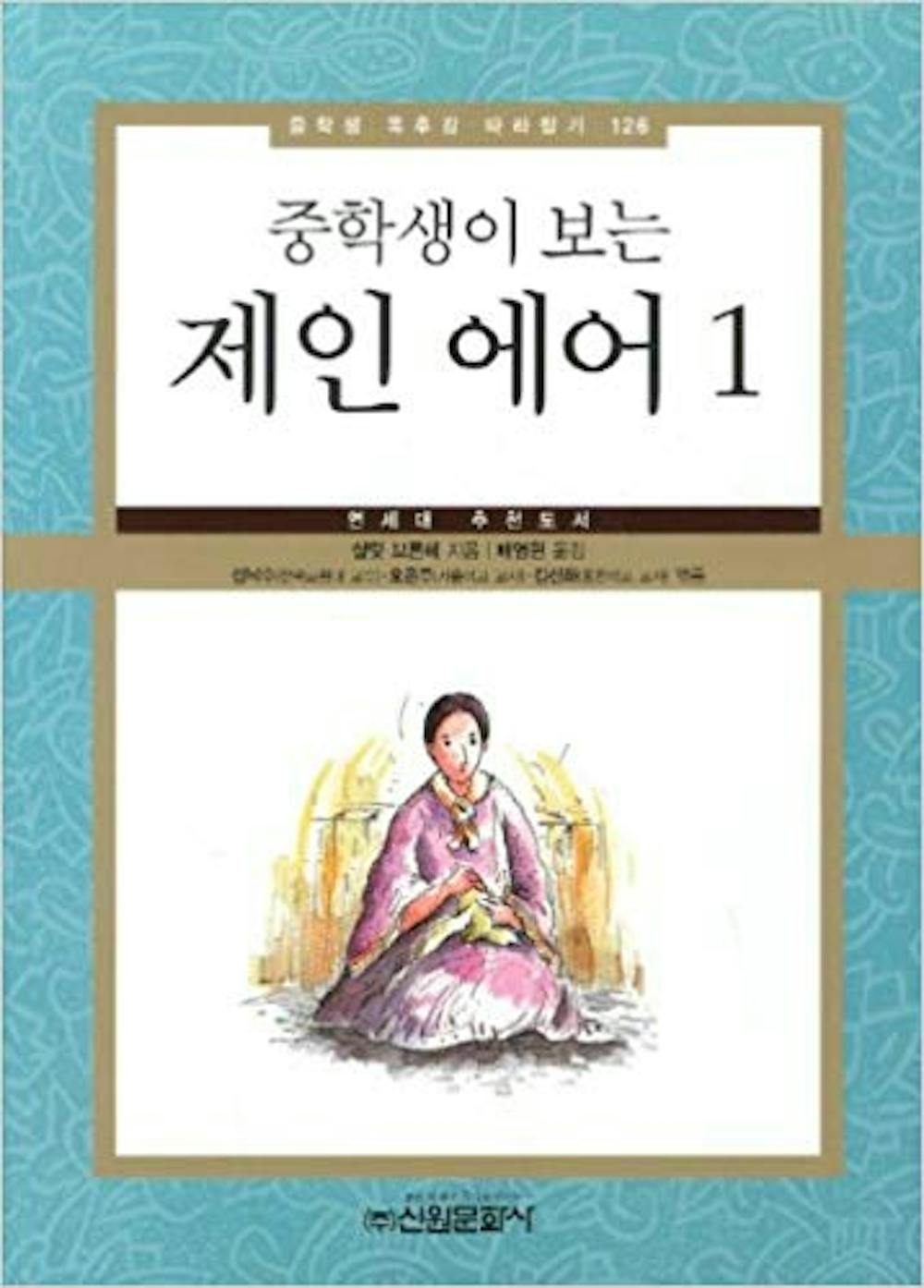
You can see this right away from how the title gets re-moulded into different shapes. In Japanese in 1896 it became Riso Kaijin (An Ideal Lady – translated by Futo Mizutani), in Portuguese in 1941 it was A Paixão de Jane Eyre (The Passion of Jane Eyre – translated by “Mécia”). In Italian in 1958 it became La porta chiusa (The Shut Door – translator unknown) and in Turkish in 2010 it was rendered as Yıllar Sonra Gelen Mutluluk (Happiness Comes After Many Years – translated by Ceren Taştan).
My favourite of these metamorphic titles is the Chinese one invented by Fang Li in 1954 and copied by almost every Chinese translator since: two of the characters that can make a sound like “Jane Eyre” can also mean “simple love” – so the title says both those things together: Jianai.
Even small linguistic details can go through fascinating transformations. Take pronouns. In English, we only have one way of saying “you” in the singular. But even languages that are very close to English, such as French, German or Italian, do something different. They have a distinction between a formal “you” (vous in French) and a more intimate kind of “you” (tu). So in those languages there is the potential for a really important moment in the novel which simply can’t happen in English. Do Jane and Rochester ever call each other “tu”?
As it turns out, in French they don’t (or at least not in any of the translations we have studied). But in German they do. One of my co-researchers, Mary Frank, has looked at translations from 1887 by Marie von Borch and 1979 by Helmut Kossodo. She has found that, in both, Rochester only switches into the intimate form of you, “du”, when he first proposes. But Jane does not reciprocate. It is only in the amazing telepathic moment near the end of the book, when she hears Rochester’s voice calling to her across the moors, that she uses the “du” form of the verb to cry out the equivalent of “Wait for me!” Rochester’s tenderness is answered at last.
Should we think of this as a nuance added by the translators? Or as something that was all along somehow present in the English text, though invisible? What would Charlotte Brontë have done if she had been using German – or French (in which she did write essays and letters) with its different resources? These questions are probably impossible to answer – and if you turn to Korean, for example, which has many pronouns for different levels of formalityas I have learned from Sowon Park, the picture gets even more complicated.
Feminist passion
Jane is “passionate” in all sorts of ways. When she is a child she resists bullying by her cousins and stands up for her rights at school; as an adult she feels passionate love for Rochester. “Passion” in the novel can suggest anger, stubbornness, suffering, generosity, desire and love.
By using the word in all these ways, Charlotte Brontë was making a feminist argument. She was saying that, for a woman in the early Victorian period, love did not have to be something passive, a matter of being admired. Instead, it was connected to anger and justice. It could be a means of self-assertion.
Amazon
This feminist charge in the novel is part of what has made it so popular across the globe. Throughout Europe in the mid-to-late 19th century, and throughout East Asia in the mid-to-late 20th, some translators and readers have been thrilled – others shocked. And of course, because the cultures and languages are different, the novel’s energies have had to be channelled in different ways.
Most languages have no single word that can cover the same range as Brontë’s “passion”, so they slice up its meanings differently. Interestingly, this often divides the angry (passionate) young Jane from her mature self, and connects her to Bertha Mason, Rochester’s brutalised first wife who is locked up in the attic of his mansion.
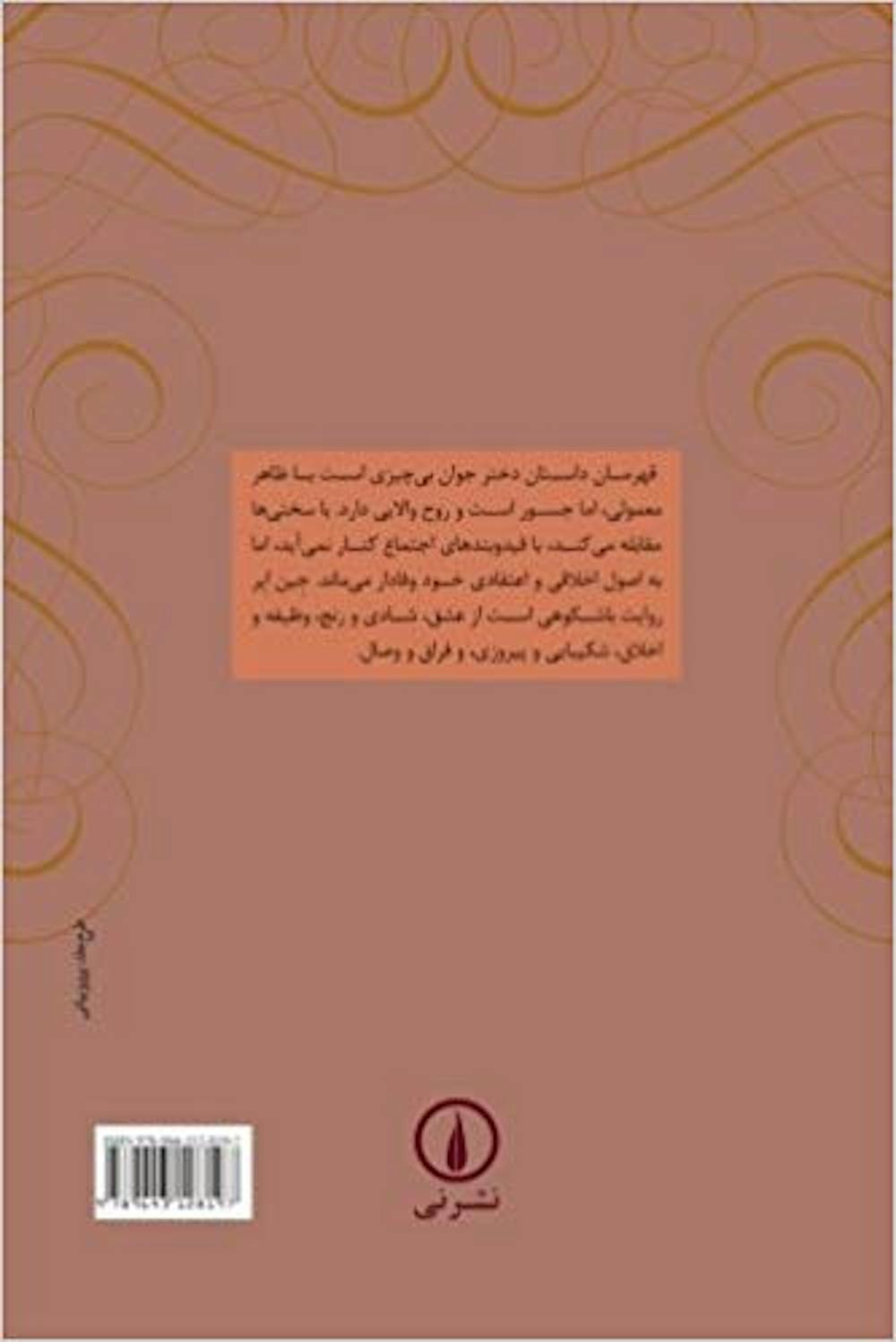
In Persian – as Kayvan Tahmasebian has found out – “passion” is translated by a wide range of words that separate the elements of love, desire, anger and excitement. You might view this as loss (the range of “passion” has disappeared!) but it is also a kind of gain (look at all these different nuances!)
The most famous sentence in the novel: “Reader, I married him”, is also one of the most provocative, as translations can help us see. In Slovenian – as researcher Jernej Habjan tells me – it becomes the equivalent of “Reader, we got married”. Meanwhile, all the Persian translations we have seen so far have squashed Jane’s self-assertion – they give the equivalent of: “Reader, he married me”. Even today, Jane Eyre has a radical power. It will generate ever more translations.
Matthew Reynolds, Professor of English and Comparative Criticism; Tutorial Fellow, St Anne’s College, University of Oxford
This article is republished from The Conversation under a Creative Commons license. Read the original article.
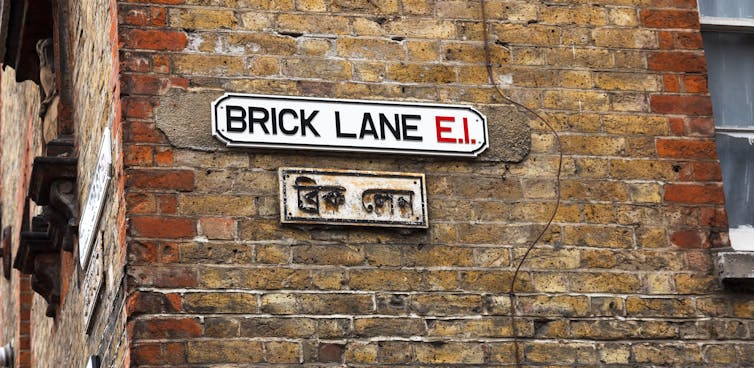

 All literature written in English in the British Isles is densely entangled with other histories, cultures, and pathways of experience both within the country and far beyond. Its syllabuses, publishing practices, and our conversations about books must reflect this.
 At the BookShelf