
The link below is to an article that takes a look at some names (and the story behind the names) that writers have given to their pets.
For more visit:
https://lithub.com/the-stories-behind-15-of-the-best-names-famous-writers-gave-to-their-pets/

The link below is to an article that takes a look at some names (and the story behind the names) that writers have given to their pets.
For more visit:
https://lithub.com/the-stories-behind-15-of-the-best-names-famous-writers-gave-to-their-pets/
Elisabeth Gruner, University of Richmond

Curious Kids is a series for children of all ages. If you have a question you’d like an expert to answer, send it to CuriousKidsUS@theconversation.com.
Do authors really put deeper meaning into poems and stories – or do readers make it up? Jordan, 14, Indianapolis, Indiana
One of my favorite novels is “Charlotte’s Web,” the famous story of a friendship between a pig and a spider.
I often talk about this novel with my students studying children’s literature. At some point, someone always asks about “deeper meaning.” Is it really a story of, say, the cycle of death and rebirth? Or the importance of friendship? Or the significance of writing?
Or is it just a story of life in the barn, with talking animals?
In a way, it doesn’t matter. Because every writer is also a reader, and that means that whatever a writer puts into a story probably came from somewhere else, whether it’s another story, or a poem, or their own life experience.
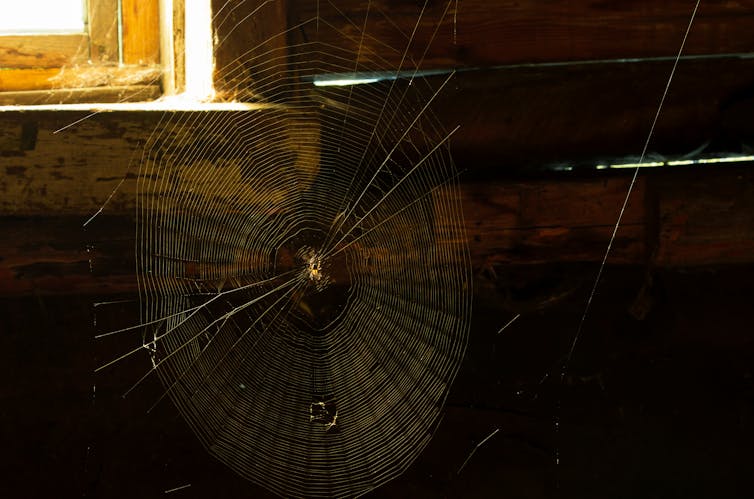
And readers, too, will bring their own experience – of other stories, other poems and life – and that will direct their interpretation of what they absorb. We can see one example of this if we look at the spider in “Charlotte’s Web.”
That spider, Charlotte, is based on a real spider. We know this because E.B. White drew pictures of spiders, studied them and made sure to be as accurate as he could when he wrote about them.
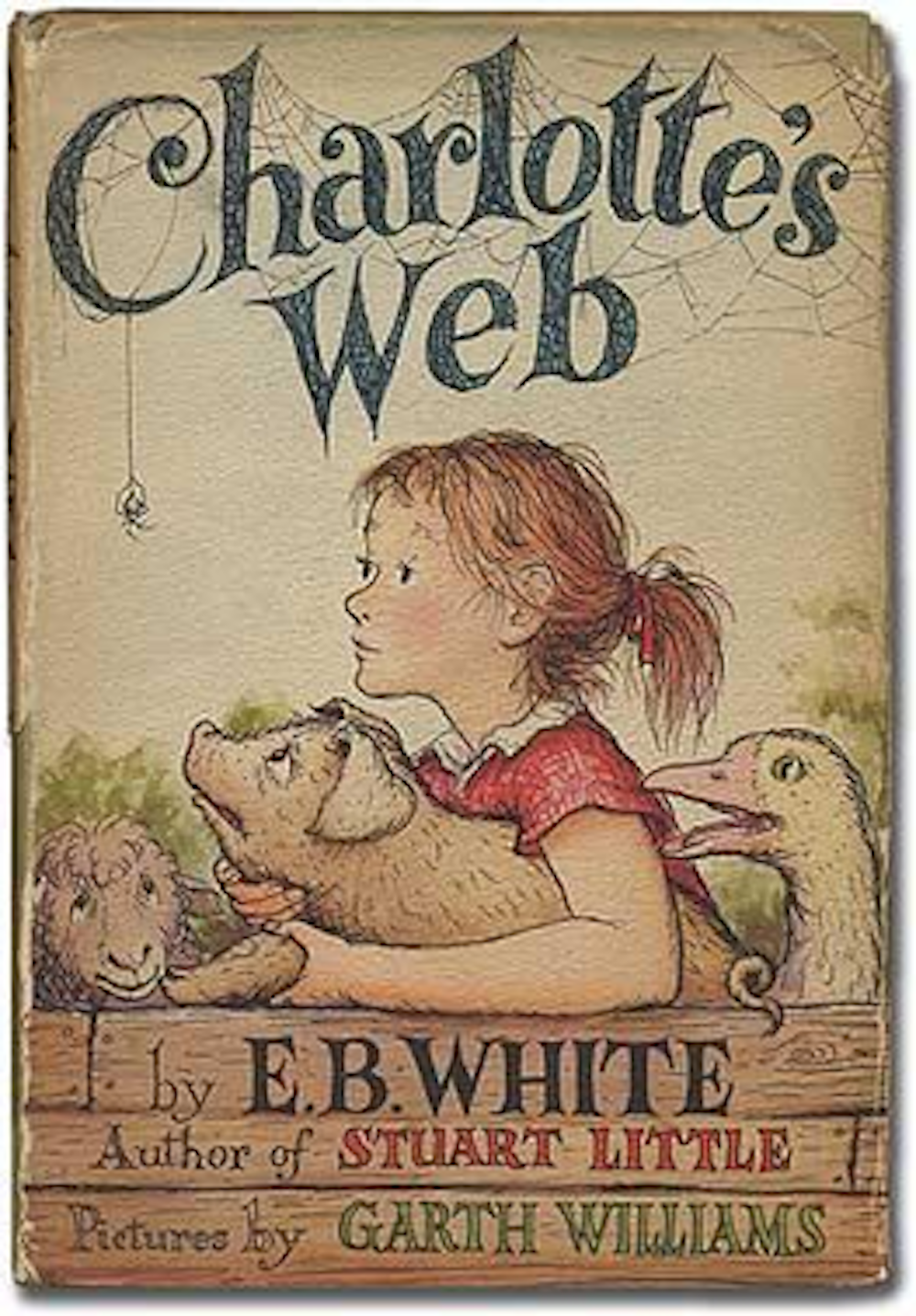
But, to a reader she may also represent Arachne, the talented weaver who challenged the goddess Athena and was changed into a spider for her pride. Or she may be the “noiseless patient spider” of Walt Whitman’s poem, who flings out thread-like filaments as the poet flings out words.
She may also be the spider who weaves “the silken tent” of Robert Frost’s poem. Maybe we’ll think about how the spider, like a human storyteller, generates something seemingly out of nothing, which makes her web miraculous.
Each of these spiders symbolizes different things. When we read about her, then, we may think of all those other spiders. Or we may just think about the spider we saw on our own front porch that morning, weaving her own web.
As the writer Philip Pullman said, “The meaning of a story emerges in the meeting between the words on the page and the thoughts in the reader’s mind.”
What Pullman is suggesting, then, is that it’s up to readers to make the meaning they want out of the stories they hear and the books they read.
It’s a powerful statement: We are in charge.
This doesn’t mean that anything goes. Meanings come from context, from convention, from older stories and from previous usage. But it’s up to us to interpret what we read and to make the case for how we’re doing it.
Or, as the novelist John Green writes of his books, “They belong to their readers now, which is a great thing – because the books are more powerful in the hands of my readers than they could ever be in my hands.”
What we do with the books we read matters, Green tells us. It’s up to us to make the meaning and up to us to decide what to do with that meaning once we’ve made it.
Hello, curious kids! Do you have a question you’d like an expert to answer? Ask an adult to send your question to CuriousKidsUS@theconversation.com. Please tell us your name, age and the city where you live.
And since curiosity has no age limit – adults, let us know what you’re wondering, too. We won’t be able to answer every question, but we will do our best.
Elisabeth Gruner, Associate Professor of English, University of Richmond
This article is republished from The Conversation under a Creative Commons license. Read the original article.
Lili Pâquet, University of New England
In Dervla McTiernan’s book, The Scholar, published earlier this year, women are consistently used as the “fall guys” for men with high aspirations. Two young women are killed when they uncover fraud. Another female colleague is then framed for the murders.
Before writing crime fiction, McTiernan worked as a lawyer for 12 years, for international companies like the one in The Scholar. Her background lends her book authority, even though it’s fiction.
McTiernan joins a batch of crime writing women bringing professional clout to their books. Others are Kathy Reichs, Patricia Cornwell, Marcia Clark, Alafair Burke, Anne Holt, and Lisa Scottoline. This list is a tiny fraction of the trailblazing authors.
Last week, Elizabeth Farrelly wrote that “crime fiction is the morality drama of our time” that can “heighten and dissect the battle of good against evil enacted daily in our living rooms, cities and streets”. She compared crime books about violence against women with Australia’s deplorable record on domestic violence and rape.
In books written by ex-justice professionals, we are asked to examine our cultural and moral compasses. These authors don’t just write about serial killers – who are thankfully more common in the pages of crime books than in real life – they more often focus on murders by spouses, family members or colleagues of the victim. Some push for changes to how rape trials are prosecuted. They focus on the justice system problems that women face, as victims and as professionals.
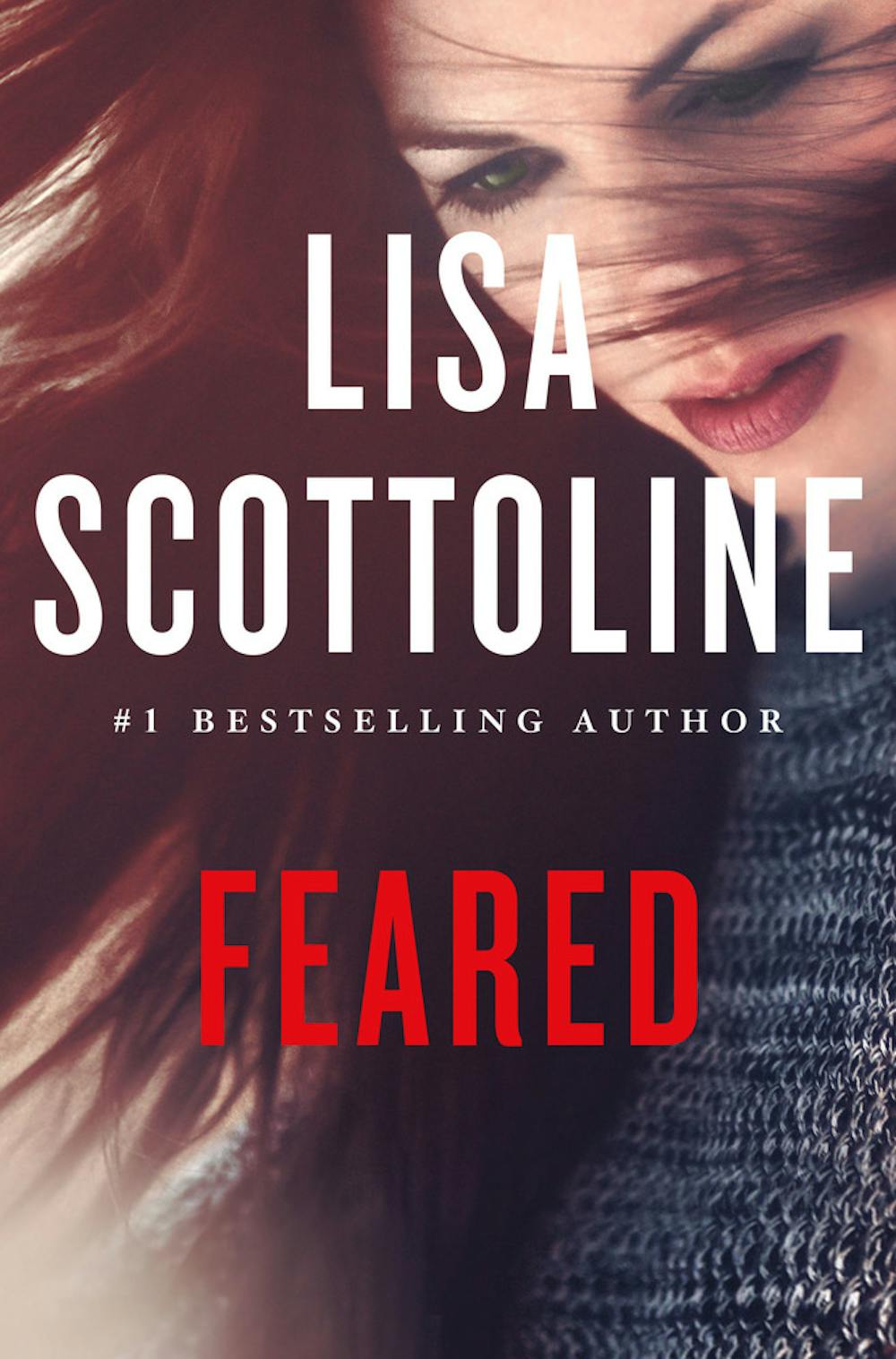
The stories also ask us to question how we perceive professional women. These authors’ characters, who often have much in common with their creators, face a barrage of harassment on the job. Lisa Scottoline’s fictional all-women law firm is consistently targeted by abusive prank callers. In her latest book, Feared, the firm is sued for “reverse” sexual discrimination.
Australians are avid readers of crime fiction. In a 2017 study, 48.5% of respondents read crime fiction, making it the most popular genre for enjoyment.
While researching my book on the topic, I had the opportunity to read Dorothy Uhnak’s fan letters, held at the Howard Gotlieb Archival Research Center at Boston University. Readers (many of whom were prison inmates) repeatedly told Uhnak that her books touched on inequalities in the justice system that rang true for them, and reading her work was therapeutic.
Female crime writers have historically been pigeonholed as writing “cosy crime” novels as opposed to more graphic masculine representations of “hardboiled” detectives.
We are used to reading about women as amateurs, from Agatha Christie’s spinster sleuth, Miss Marple, to Janet Evanovich’s bumbling and untrained bounty hunter, Stephanie Plum. Since the 1970s, more authors have written about women as hardboiled private detectives.
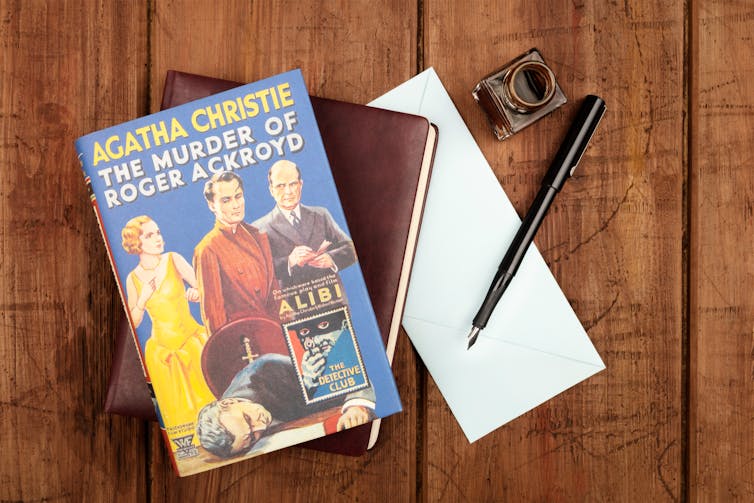
Now, we are increasingly seeing women characters in professional roles. When the author is also a professional, she has even more authority. She has “insider knowledge.” Priscilla Walton and Manina Jones surveyed women who read feminist crime series and found that readers identify with the struggles of characters who are realistic professional women. Often, the fictional investigations have similarities to real ones the author has worked on. Central Park 5 prosecutor turned crime author Linda Fairstein received pointed criticism about these similarities.

In Australia, ex-police officer Y.A. Erskine’s debut The Brotherhood tells the story of rookie cop Lucy Howard who is blamed when a senior sergeant is killed on a routine call-out. She can’t join the brotherhood of the Tasmanian police force, because, in her words, she doesn’t have the “standard-issue penis”. She is an outsider inside the system.
In Erskine’s follow-up, The Betrayal, Lucy is raped by a colleague. When she makes a complaint, she is vilified and blamed for tarnishing the reputation of the police. The complaint is briefly investigated before being dropped.
Another Australian ex-cop writing crime is P.M. Newton. Her debut, The Old School (notice the theme in the titles?), follows Australian-Vietnamese officer, Nhu “Ned” Kelly. She deals with the racism and corruption of her male colleagues before being shot by one of them.
Newton’s following book, Beams Falling (a reference to Dashiell Hammett’s Flitcraft parable within The Maltese Falcon), tracks Ned’s struggle with post traumatic stress disorder. While fictional detectives usually bounce back quickly after violence, Ned never fully gets over the trauma, and her work offers little support.
Ex-cop Karen M. Davis, has also created a character damaged by her policing experience. Davis’ Lexie Rogers has been stabbed in the neck, and fears facing her attacker in court – a fear exacerbated by her insider knowledge of the justice system. Davis has spoken about how she retired from the police because of trauma, and began writing as a kind of catharsis. Erskine has spoken out about how the rape of Lucy in her books is based on her own unreported rape by a colleague.
These authors have seen the inside of the criminal justice system, its flaws and the experience of women within it. They bring this cachet of lived experiences to their crime fiction. Bestsellers by Marcia Clark or Anne Holt could spark moral reflection, validate women’s experiences, and be part of the cultural shift needed to end violence against women.
Lili Pâquet, Lecturer in Writing, University of New England
This article is republished from The Conversation under a Creative Commons license. Read the original article.
The link below is to an article that takes a look at Chinese advances in Artificial Intelligence, with the use of Author Avatars in audiobooks.
For more visit:
https://lithub.com/today-in-ai-will-replace-us-all-author-avatars-can-now-read-their-books-to-you/
The link below is to an article that looks at why self-publishing authors should consider their own imprint.
For more visit:
https://www.janefriedman.com/why-self-publishing-authors-should-consider-establishing-their-own-imprint/
The link below is to an article that takes a look at 10 Irish authors.
For more visit:
https://blog.bookstellyouwhy.com/bid/241140/ten-favorite-irish-authors
The link below is to an article that takes a look at 9 reasons why authors need newsletters.
For more visit:
https://www.thebookdesigner.com/2019/05/9-reasons-authors-need-newsletters/
The link below is to an article that takes a look at the relationships between book authors and their translators.
For more visit:
https://www.theguardian.com/books/2019/apr/06/its-a-silent-conversation-authors-and-translators-on-their-unique-relationship
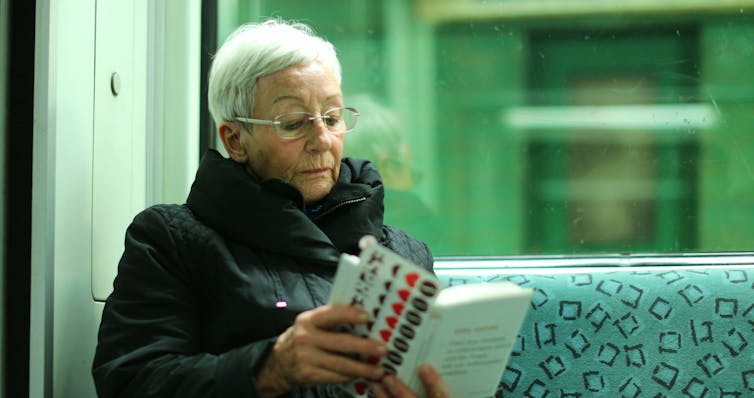
shutterstock
Amy Wigelsworth, Sheffield Hallam University
An emerging genre of fiction in France is providing an unlikely brand of escapism. Growing numbers of French writers are choosing work as their subject matter – and it seems that readers can’t get enough of their novels.
The prix du roman d’entreprise et du travail, the French prize for the best business or work-related novel, is testament to the sustained popularity of workplace fiction across the Channel. The prize has been awarded annually since 2009, and this year’s winner will be announced at the Ministry of Employment in Paris on March 14.
Place de la Médiation, the body which set up the prize, is a training organisation specialising in mediation, the prevention of psychosocial risks, and quality of life at work. Co-organiser Technologia is a work-related risk prevention consultancy, which helps companies to evaluate health, safety and organisational issues.
The novels shortlisted for the prize in the past ten years reflect a broad range of jobs and sectors and a whole gamut of experiences. The texts clearly strike a chord with French readers, but English translations of these novels suggest many of the themes broached resonate in Anglo-Saxon culture too.
The prize certainly seeks to acknowledge a pre-existing literary interest in the theme of work. This is unsurprising in the wake of the global financial crisis and the changes and challenges this has brought. But the organisers also express a desire to actively mobilise fiction in a bid to help chart the often choppy waters of the modern workplace:
Through the power of fiction, [we] want to put the human back at the heart of business, to show the possibilities of a good quality professional life, and to relaunch social dialogue by bringing together in the [prize] jury all the social actors and specialists of the business world.
What better way to delve into this unusual genre than by reading some of the previous prize winners. Below are five books to get you started.
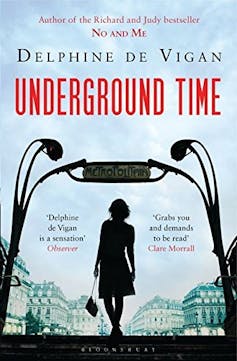
The first prize was awarded to Delphine de Vignan for Les heures souterraines. In this novel, the paths of a bullied marketing executive and a beleaguered on-call doctor converge and intersect as they traverse Paris over the course of a working day. A television adaptation followed, and an English translation was published by Bloomsbury in 2011. Work-related journeys and the underground as a symbol for the hidden or unseen side of working life have proved enduring themes, picked up by several subsequent winners.
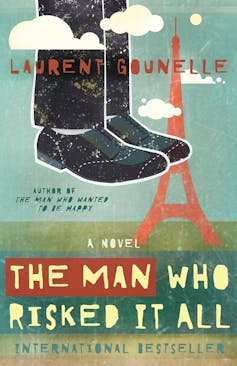
Laurent Gounelle’s Dieu voyage toujours incognito, winner of the 2011 prize, takes us from the depths of the underground to the top of the Eiffel Tour, where Alan Greenmor’s suicide attempt is interrupted by a mysterious stranger. Yves promises to teach him the secrets to happiness and success if Alan agrees to do whatever he asks. This intriguing premise caught the attention of self-help, inspirational and transformational book publisher Hay House, whose translation appeared in 2014.
Read more:
Five books by women, about women, for everyone
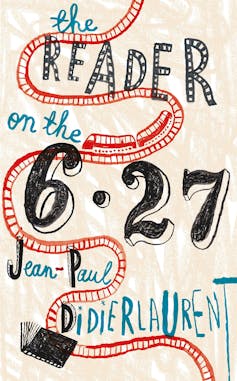
Le liseur du 6h27 by Jean-Paul Didierlaurent, the 2015 winner, tells the story of a reluctant book-pulping machine operative. Each day, Ghislain Vignolles rescues a few random pages from destruction, to read aloud to his fellow-commuters in the morning train. The novel crystallises the fraught relationship between intellectual life and manual work.
It also illustrates the tension between culture and commerce, arguably at its most pronounced in France, where cultural policy has traditionally insisted on the distinction between cultural artefacts and commercial products. The Independent review of the English translation describes the book as “a delightful tale about the kinship of reading”.
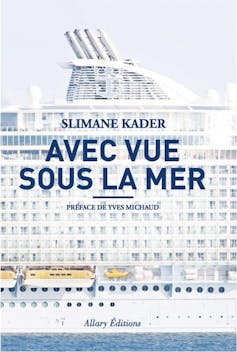
Slimane Kader took to the belly of a Caribbean cruise ship to research Avec vue sous la mer, which claimed the 2016 prize. His hilarious account of life as “joker”, or general dogsbody, is characterised by an amusing mishmash of cultural references: “I’m dreaming of The Love Boat, but getting a remake of Les Misérables” the narrator quips. The use of “verlan” – a suburban dialect in which syllables are reversed to create new words – underlines the topsy-turvy feel.
Unfortunately, there’s no English version as yet – I imagine the quickfire language play would challenge even the most adept of translators. But translation would help confirm the compelling literary voice Kader has given to an otherwise invisible group.
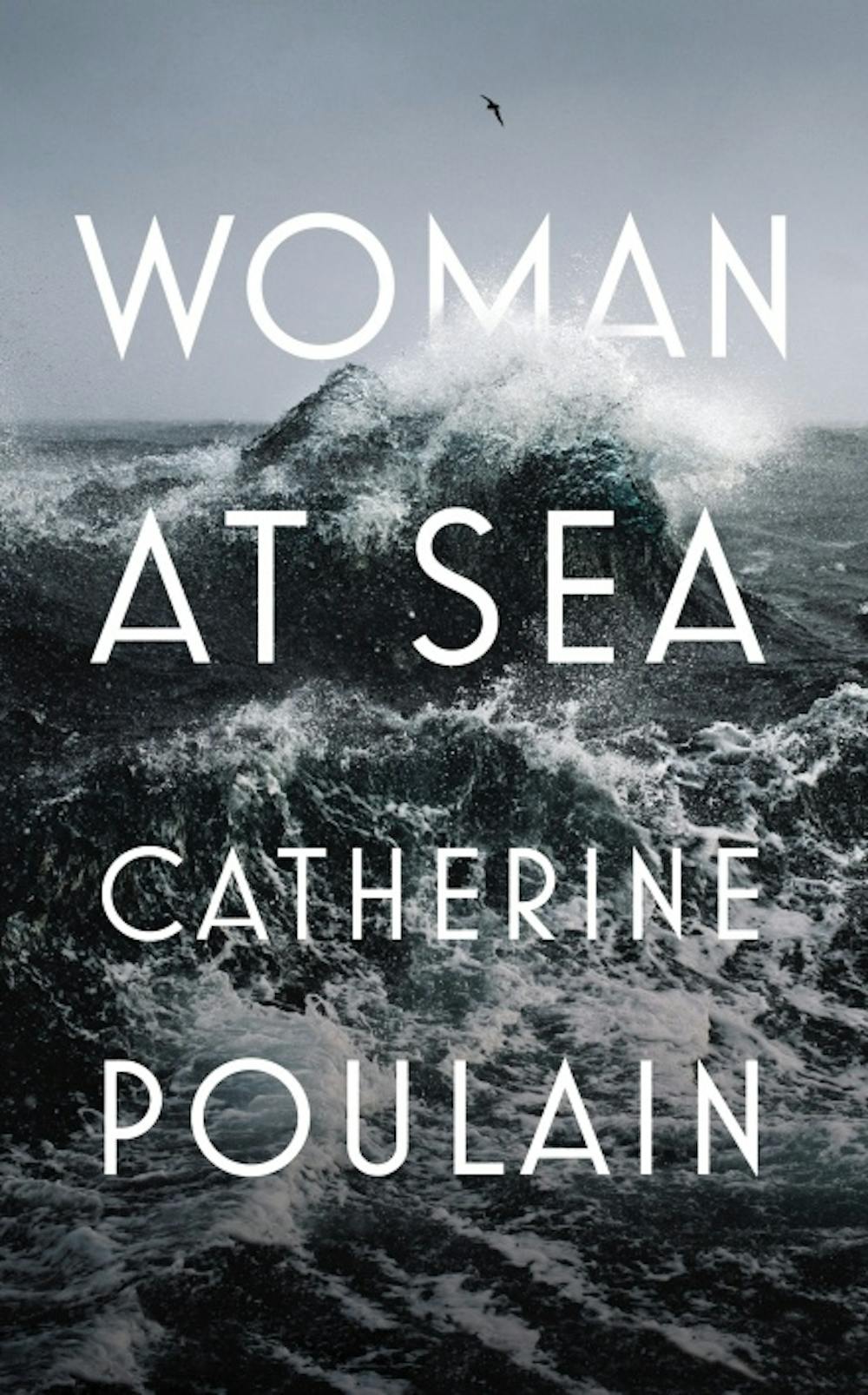
Catherine Poulain’s Le grand marin, the 2017 winner, is a rather more earnest account of work at sea. The author draws on her own experiences to recount narrator Lili’s travails in the male-dominated world of Alaskan fishing.
Le grand marin (the great sailor) is ostensibly the nickname Lili gives to her seafaring lover. The relationship is something of a red herring though, as the overriding passion in this novel is work. But the English title perhaps does Lili a disservice – she is less a floundering Woman at Sea, and more the true grand marin of the original.
This year’s shortlist includes the story of a forgotten employee left to his own devices when his company is restructured, a professional fall from grace in the wake of the Bataclan terrorist attack, and a second novel from Poulain, with seasonal work in Provence the backdrop this time.
The common draw, as in previous years –- and somewhat ironically, given the subject matter –- is escapism. We are afforded either a tantalising glimpse into the working lives of others, or else a fresh perspective on our own. English readers will be equally fascinated by French details and universal themes – and translators’ pens are sure to be poised.
Amy Wigelsworth, Senior Lecturer in French, Sheffield Hallam University
This article is republished from The Conversation under a Creative Commons license. Read the original article.
Donna Mazza, Edith Cowan University
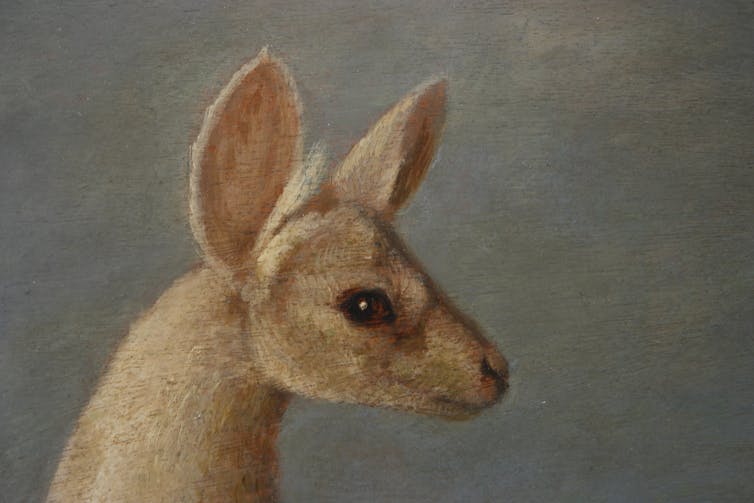
Kangaroos are the most visible of Australia’s unique animals, but despite their charm and national icon status, Australian writers perpetually kill them off.
A kangaroo appears struggling in a rabbit trap, doomed and dying in Charlotte Wood’s The Natural Way of Things, while Tim Winton has one killed on the road, dissected and fed to dogs in Breath. These are just two of many Australian authors who have represented the kangaroo as a victim.
Kangaroos were a creature of wonder for early European explorers such as Dampier and Banks, but it didn’t take long for their public image to descend to that of a pest. Early settlers considered them competition, nibbling all the best pasture quicker than their sheep and cows, and they soon took up arms against the bounding menace.
The wild kangaroo population of Australia is still commercially slaughtered for dog food. In New South Wales, landholders and volunteers can be simply licensed to kill them for reasons of damage control, and some parts of Western Australia have an open permit system for non-commercial shooting. On any given day, there are usually several being mashed into the blue metal of highways, surrounded by crows and in various states of decomposition.
The expendable nature of the kangaroo may be a widely held view in Australia, but it’s a bitter irony that the creature which defines us to the rest of the world is perpetually under siege, in life and in literature.

In Stephen Daisley’s 2016 novel Coming Rain, the author kills off a kangaroo with “a great thump” against the side of a truck, giving a gruesome description of the sweetening of the tail for stew.
The live joey almost has its head smashed against a tree but, owing to its “cuteness” it becomes a pet, wearing a straw hat. The stereotype of the cute joey is alive and well in children’s fiction too, but in adult fiction the kangaroo is dead.
In Tim Winton’s Breath, narrator Pikelet comes across surf guru, Sando, who has hit a kangaroo with his Kombi ute. Sando finishes it off with the jack handle from the car, pounded a couple of times into its head. His response to this act is very matter-of-fact: “This is what happens. And it isn’t lovely.”
Sando drags the “roadkill” into the tray of his ute and takes it home to butcher it. He is prepared for this, with a meat hook hanging from a tree, and he skins and guts the kangaroo. Pikelet observes this with some emotional discomfort, “shrinking from him a little” but accepts the flourbag of meat to take home to his parents who “wouldn’t eat roo meat in a million years”. He “hoiks” the meat into the bushes on the ride home.
Charlotte Wood considers the horror of roadkill in The Children, where Australian animals are killed by passing traffic and compared to contaminated “cushions”. Wood also kills a kangaroo (and a lot of rabbits) in The Natural Way of Things. Central character Yolanda snares a “large grey kangaroo” in a rabbit trap and finds it still alive:
Vainly, the kangaroo shifts and scuffles again. Then it lowers its head and lengthens its mighty neck, black eyes fixed on them, and lets out three long, hoarse snarls. Its snout fattens, nostrils flared.
Fearful of the sharp claws on its “delicate forefeet” they sit beside it, wondering how to set it free and instead bring it water and leave it to die slowly.
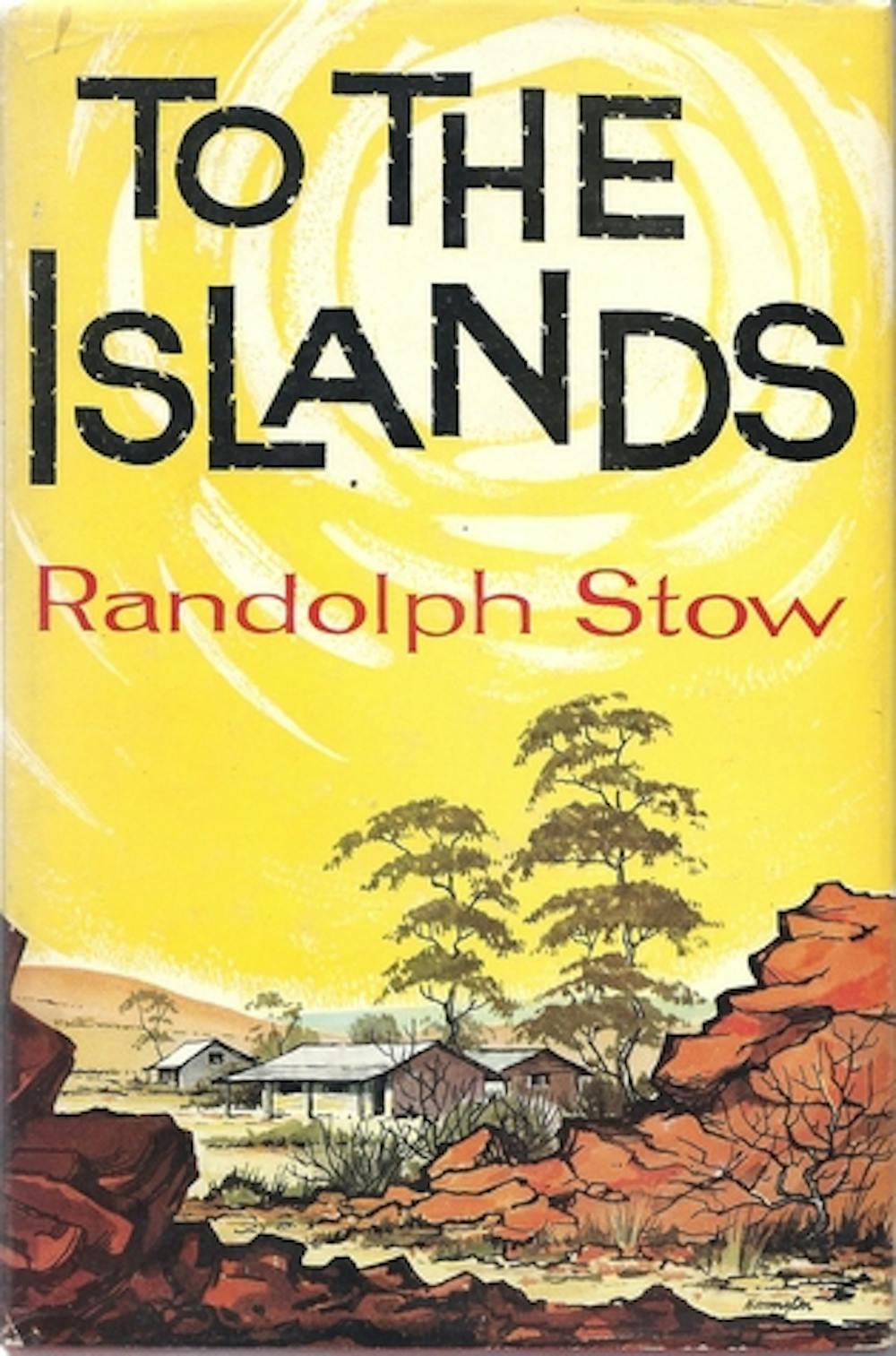
The image of the kangaroo is linked to death through earlier works from Australian authors too. The iconic 1940 poem, Native-Born by Eve Langley presents a detailed account of a dead kangaroo, while Randolph Stow’s 1958 novel To the Islands features kangaroos and wallabies being shot and eaten.
Australian fiction is, so often, deeply entangled with nature. Anxiety around the bush, as described in D.H. Lawrence’s novel Kangaroo back in the 1920s, is a feature of settler Australian fiction, tied together with violence, trauma and a sense of the uncanny.
Docile and violent all at once, the watchful gaze and twitching ears of kangaroos are, perhaps, reminders of that uneasiness the settlers felt.
The fact that Australian literature seems intent on killing off this national icon is deeply disturbing – but it is also deeply ingrained.
In contrast with kangaroos, thylacines are well and truly alive in Australian literature despite being extinct since 1936. They appear in over 250 works listed in the AustLit database of Australian literature, including 18 novels since 1988.
Among these are Julia Leigh’s The Hunter, Sonya Hartnett’s Stripes of the Sidestep Wolf and Louis Nowra’s Into That Forest, as well as children’s fiction, drama, film, short fiction and poetry. These thylacines often meet with violent ends, but their aliveness in fiction is astounding compared to the kangaroo.
Contemporary Australia is sentimental about the thylacine as a strange creature lost because of “ignorance”. They are now a thing of wonder, destroyed by misguided colonial settlers who are long gone. But if they weren’t extinct, would we treat them any better? Would we protect them? Often that is the point writers are trying to make by invoking the extinct “tiger” in the first place.
Our relationship with kangaroos (and thylacines), both in fiction and in reality, is symptomatic of what Stow called our “bitter heritage”. So perhaps it is unsurprising, given the violence of colonisation, that it has had (and is still having) an impact on the way writers represent the Australian landscape and all who inhabit it.
This article is based on research published in a forthcoming article for Antipodes.
Donna Mazza, Senior Lecturer in Creative Arts, Edith Cowan University
This article is republished from The Conversation under a Creative Commons license. Read the original article.
 At the BookShelf

.jpg)
You must be logged in to post a comment.