
Unknown's avatar

A criminal record: women and Australian true crime stories


File 20170822 13685 w0sgkd.jpg?ixlib=rb 1.1
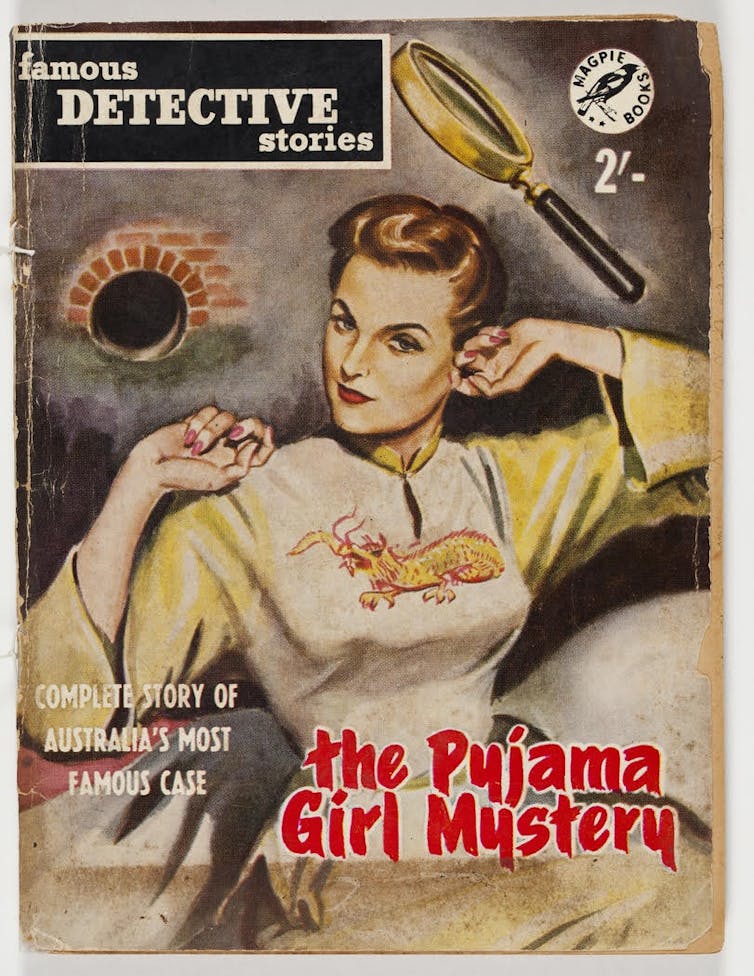
The pyjama girl mystery, as featured in Famous Detective Stories no. 6.
State Library of New South Whales, CC BY-ND

Rachel Franks, University of Newcastle

Women have always been central to true crime stories: as victims, perpetrators, readers, and (increasingly) as tellers of these tales. Indeed, these tales, often dismissed as sensationalised violence, offer important opportunities to reflect on crime and crime control.

Many true crime writers today – including numerous women, working in a once male-dominated market – have been biographers, coroners, detectives, historians, journalists, lawyers, and psychologists. These backgrounds bring a style of storytelling that educates us about, not just merely entertains us with, crime. Importantly, many privilege complex and nuanced storytelling over simplistic stereotypes of women as just “bad” or just “good”.
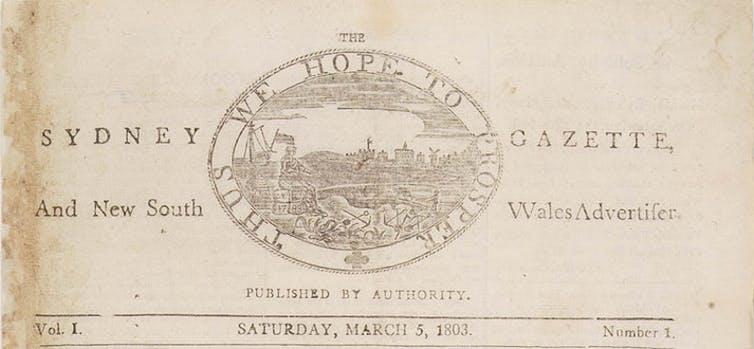
The Sydney Gazette and New South Wales Advertiser Vol. 1, No. 1, 5 March 1803 (Front Page).
Call number: DL F8/50, Mitchell Library, State Library of New South Wales, CC BY

The first Australian true crime stories were transmitted orally, jotted down in journals, and entered into official records. George Howe, editor of our first newspaper, The Sydney Gazette and New South Wales Advertiser, enthusiastically embraced the topic of crime: the paper’s first issue in 1803 included stories of fraud, attempted murder, and the brutal rape of 17-year-old Rose Bean.

The first Australian publication dedicated to true crime is Michael Howe: The Last and the Worst of the Bushrangers of Van Diemen’s Land (1818), by T.E. Wells. This short work is also the story of Howe’s companion, then victim, Mary Cockerill a young Indigenous woman. Cockerill supported Howe in a landscape forbidding and wild to the European settlers. After being betrayed by Howe – he shot her as they were being pursued, facilitating his own escape – Cockerill then used her knowledge of the bush to help authorities. Howe was captured and killed in 1818, bringing his bushranging career to an end.

In the colonial era, a woman’s status as a victim was upheld, or denied, based on her character and her ability to conform to social mores of the time. Today, women are often still judged by what they say and what they wear; their education and their occupation. How many sexual partners have they had? Are they too emotional? Are they not emotional enough? Likewise, some perpetrators have been seen as more heinous because they are women.

Women as perpetrators

In Captain Thunderbolt & His Lady (2011), Carol Baxter skilfully tells the story of Frederick Ward (“Captain Thunderbolt”), a bushranger in the mid-1800s, and his Indigenous partner-in-crime Mary Ann Bugg (“Mrs Thunderbolt”). Bugg – an intelligent, gutsy, trouser-wearing woman – is brought vividly to life, as she breaks the law and defies the feminine expectations of her time.

As Baxter notes, Bugg was dissatisfied with the social status quo, and, like many bushrangers, she received support and sympathy from the wider population. She was not all “bad” but not all “good” either. Indeed, some suggested Mrs Thunderbolt was merely blamed for the deeds of her husband. Bugg outlived her outlaw partner by 35 years, dying in obscurity in Mudgee in 1905.

One of the more dramatic true crime tales of the late colonial period, is the story of Louisa Collins. Caroline Overington looks at the life, and death, of Collins in Last Woman Hanged (2014). Accused of murder, Collins famously endured four trials in 1888, which, as Overington argues, were effectively trials of all Australian women. If women wanted equal rights, including the right to vote, “then, such equality had to be universal: women, too, would hang for murder”. In the first three trials, the juries failed to deliver a verdict. In the fourth trial, the jury found her guilty and Collins was hanged in 1889.
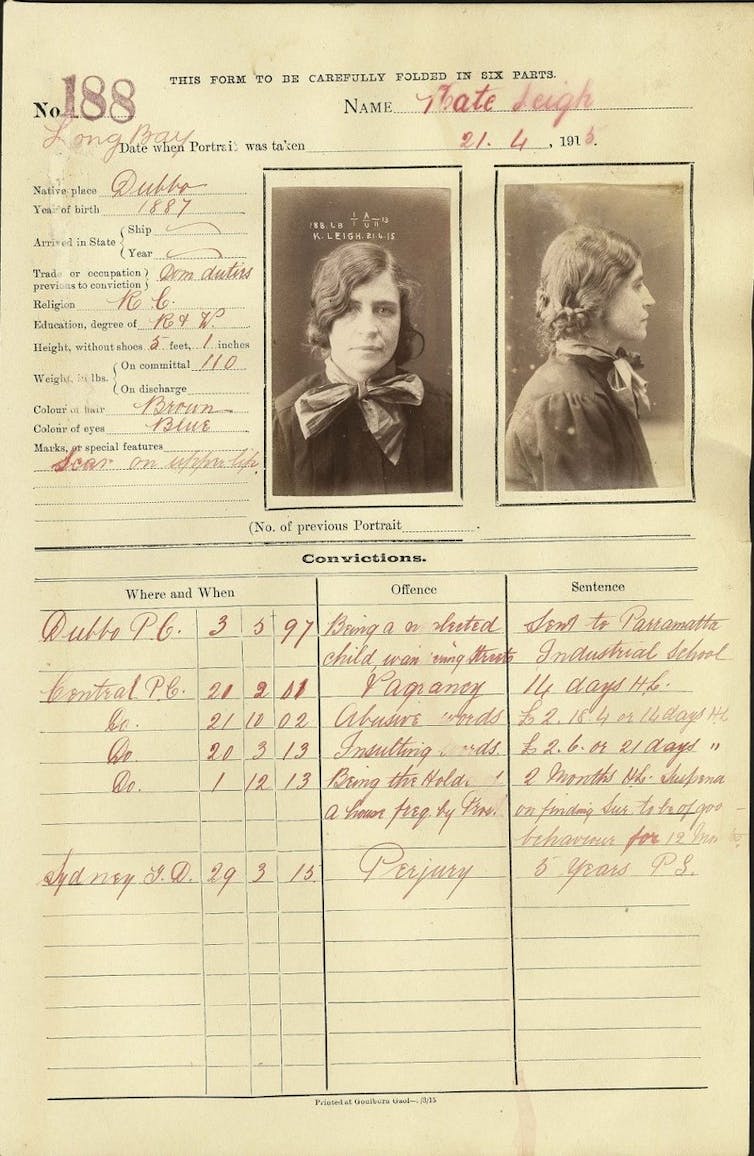
Kate Leigh’s mugshots and prison form.
State Archives of New South Wales, CC BY

The Worst Woman in Sydney (2016) by Leigh Straw documents the life of Kate Leigh, born Kathleen Beahan, an icon of Sydney’s underworld from the 1920s through to the 1950s. A “famed brothel madam, sly-grog seller and drug dealer”, she is best known for her involvement in the “Razor Wars” when Sydney gangs used razors instead of guns. Leigh could handle a rifle (or any other weapon) and was “an intelligent criminal entrepreneur” who quickly capitalised on opportunities as they emerged. A hardened crook (who was in and out of prison), Leigh was also very generous; her Christmas parties for poor children, in Surry Hills, were legendary for the food and presents given out.

In Nice Girl (2011), Rachael Jane Chin looks at the many dreadful secrets kept by Keli Lane. Found guilty of murder and of lying under oath, Lane’s case is one that is still difficult to believe. Gender, and gendered ideals, stand out within it. Chin unpacks how Lane was a solid, middle-class young woman. She had her boyfriends but was not promiscuous. She was a teacher and had worked hard to become an elite athlete.

But underneath Lane’s “good upbringing and clean-cut appearance”, which earned her the benefit of the doubt from those around her, were five secret pregnancies during the 1990s. Two pregnancies were terminated, two infants were put up for adoption and one baby, Tegan, was murdered. Lane is serving her prison sentence, the crimes she committed as shocking now as when they were discovered. She will be eligible for parole in 2023.

Women as victims

In 1921 the body of 12-year-old schoolgirl Alma Tirtschke was found in an inner-Melbourne alleyway. Colin Campbell Ross was charged with rape and murder, as described in Kevin Morgan’s Gun Alley (2005, updated 2012). We learn the victim, just a child, was quiet but also clever and creative. As readers, we cannot help but speculate who Tirtschke could have grown up to be.

Ross was hanged in 1922: a result of false allegations, a flawed investigation, and a trial held in the press and in the courtroom. He received a posthumous pardon in 2008. This case is particularly important in the history of Australian true crime writing because, as Tom Roberts explains, it highlights the commercialisation of crime, focusing on the headline of the defenceless female, and media-driven moral panics.
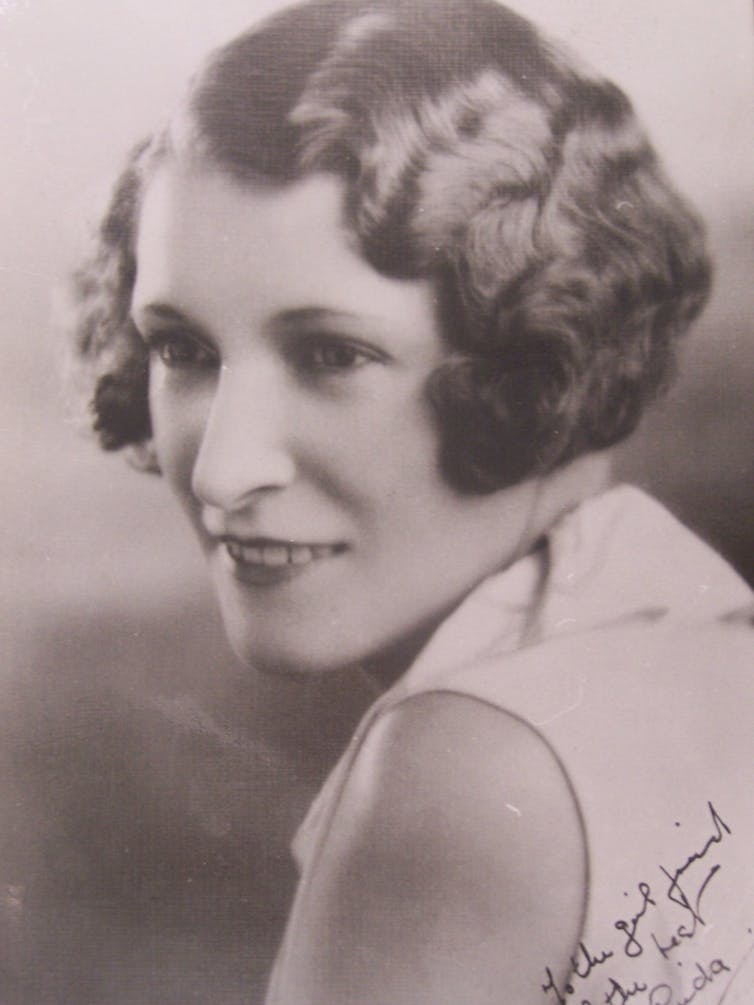
Florence Linda Agostini (née Platt; 12 September 1905 – 27 August 1934) was known posthumously as the Pyjama Girl.
Wikimedia Commons, CC BY

One of Australia’s most famous crimes is the “Pyjama Girl Case”. In 1934 the remains of Linda Agostini, born Florence Platt, was found. She had been shot, beaten, and burnt. Most notably, Agostini was wearing yellow, silk pyjamas, patterned with a dragon: a flamboyant garment in Depression-era Australia. Agostini’s body was placed on public display in an attempt by the police to discover the name of the murdered woman but it took 10 years to identify the victim. In the 1940s and 1950s, Frank Johnson published his Famous Detective Stories series, which included The Pyjama Girl Mystery. Like many of Johnson’s true crime storytelling efforts, the woman at the centre of the criminal case is presented as a sexual object.

The story of Anita Cobby, born Anita Lynch, has been told many times. The first major telling of the brutal rape and murder of the 26-year-old in 1986, is Julia Sheppard’s Someone Else’s Daughter (1991). Sheppard contrasts Cobby and her numerous contributions to the community, as a charity worker as well as a nurse, with the senseless cruelty of the men who took Cobby’s life. Stories like this one, which have stayed in the public imagination over decades, highlight how the impacts of crime extend beyond the victim, family, and friends. They also show how women can be victims of completely random acts of violence.

Many women are victims of domestic violence. The murder of Lisa Harnum, by her fiancé Simon Gittany, is described by Amy Dale in The Fall (2014). Gittany threw Harnum to her death from their apartment balcony, situated on the 15th floor of an inner-Sydney building in 2011. This is a story of control, surveillance, and toxicity. Harnum was trapped in an untenable position: too frightened to leave but also too frightened to stay. When she did try to escape, the result was tragic. Gittany was sentenced to 26 years in prison, with a non-parole period of 18 years.

Changing true crime narratives

The once “either/or” binary of “bad/good” women has given way to demands from readers to see women as complex figures within these works. As a result, more and more writers are now increasingly focussed on the human cost of crime.

Kerry Greenwood, known for crime fiction and true crime, has curated two important volumes On Murder (2000) and On Murder II (2002). Rachael Weaver, in The Criminal of the Century (2006), offers a rigorous exploration of colonial serial killer Frederick Deeming. More recently Alecia Simmonds has written on the terrible consequences seen when drug use, violence, masculinity, and psychosis collide in Wildman: The True Story of a Police Killing, Mental Illness and the Law (2015). A dominant force on the landscape of true crime writing is Helen Garner with several compelling works including Joe Cinque’s Consolation (2004) and This House of Grief: The Story of a Murder Trial (2014).

Women are also telling their own stories, as seen in Lindy Chamberlain’s work Through My Eyes (1990). Chamberlain was falsely imprisoned for the murder of her baby daughter, Azaria, at Uluru in 1980. This book delivers a very personal account of one of the greatest miscarriages of justice in Australian history.

The ConversationCrime is never without context and is never straightforward. Many writers – women and men – know that simplifying these stories with stereotypes, female or male, is just not good enough: for the innocent, for the guilty, or for readers.

Rachel Franks, Conjoint Fellow, School of Humanities and Social Science, University of Newcastle

This article was originally published on The Conversation. Read the original article.

Unknown's avatar

Refuge in a harsh landscape – Australian novels and our changing relationship to the bush


File 20170503 4135 gufh31
Summer afternoon, Templestowe by Louis Buvelot, 1866. The bush was commonly seen by 19th-century writers as a place of despair.
Wikimedia Commons

Margaret Hickey, La Trobe University

In 1790, Watkin Tench, the first officer with the First Fleet and a member of the fledgling British colony, stood on what we now know to be “The Heads” of Sydney, hungry and pining for news of England:

Here on the summit of the hill, every morning from daylight until sun sunk, did we sweep the horizon in hope of seeing a sail. At every fleeting speck which arose from the bosom of the sea, the heart pounded and a telescope lifted to the eye…

Tench’s palpable yearning for the mother country is an early account of British despair upon first settlement in Australia. One hundred years later, the sentiment remained. Many settlers were still unhappy with their surrounds, as evidenced in Edward Dyson’s musings in his 1898 short story The Conquering Bush:

The bush is sad, heavy, desparing; delightful for a month, perhaps, but terrible for a year.

In Barbara Baynton’s works, meanwhile, tales of harsh female experiences were set against even harsher Australian landscapes, devoid of respite or pleasure. In her 1896 short story The Chosen Vessel, a young wife and mother left alone in her bush home is stalked, raped and murdered by a swagman:

More than once she thought of taking her baby and going to her husband.
But in the past, when she had dared to speak of the dangers to which
her loneliness exposed her, he had taunted and sneered at her.

For over 200 years, the white sentiment of desolation and anxiety about this “untamed” land has pervaded much of Australian literature. Children went missing, men went mad, and women suffered what writer Henry Lawson called the “maddening sameness” in The Drover’s Wife and Others Stories. “Oh, if only I could go away from the bush!” wails Lawson’s central character in The Selector’s Daughter.

Desolate refuge

The works of these early writers did much to reveal the challenging realities of the bush. Those eking out an existence in a land where soil and weather disagreed with European sensibilities and practices were met with hard work. And what a place to work! There was little room for bucolic tranquillity in a land of drought, flood and searing heat.

Tim Winton’s Dirt Music.
Picador

But, in the 21st century, there has been a change in how Australians read and write about the bush. Author and ecologist Tim Flannery, for one, urged his fellow country men and women to “develop deep, sustaining roots in the land” in his address as Australian of the Year in 2002 – which is what many of our contemporary writers seek to do. Unlike their predecessors, they’re increasingly likely to write about the bush as a destination for escape, rather than a place from which to flee.

Author Tim Winton’s Dirt Music does exactly that, as told through the tribulations of protagonist Luther Fox. After being forced out of his small south-west Australian town White Point for the crime of theft, he does not flee to the city; instead he journeys to a more remote region: the Kimberley.

Lost, injured and starving, Fox does not curse the land for his fate. Rather, he accepts his minor place in the universe and begins to come to terms with his family history through listening to and appreciating the powerful land:

He knows he lives and that the world lives in him. And for him and because of him. Because and despite and regardless of him.

Others, like Peter Temple in the The Broken Shore, highlight the beauteous potential of working with the land, as opposed to fighting it.

When the novel’s protagonist, Joe Cashin, leaves the city to return to his home town on the cold, south-west coast of Victoria, he does so a shattered man. With only the battering winds, shrieking cold and his dogs as company, Joe attempts to rebuild the home of his ancestors. He does not curse the sea for the death of his father or bemoan the land or its conditions. Rather, he finds a way to live in it alongside the people he grew up with:

Cashin walked around the hill, into the wind from the sea. It was cold, late autumn, last glowing leaves clinging to the liquid ambers and maples his great-grandfather’s brother had planted, their surrender close. He loved this time, the morning stillness…

Other authors such as Robert Drewe, Kate Grenville, Cate Kennedy, Murray Bail and Jenny Spence also create plots that entail leaving the city and finding refuge and peace in the Australian bush. This is a markedly different trajectory from that of Lawson’s The Drover’s Wife or even the doomed schoolgirls in Joan Lindsay’s Picnic at Hanging Rock, who journey through the scrub and rock to never return.

For the love of farmland

This sentiment toward the land does not aim to romanticise one’s “return” to nature. Rather, it’s as much concerned with exploring the cultural practices intrinsic to Australian land.

This is most apparent in literary interpretations of farming, or “pastoral” literature (writing that idealises country life). UK scholar Terry Gifford has coined a key term to consider here: “post-pastoral”, which is a “discourse that can both celebrate and take responsibility for nature without false consciousness”.

Gifford’s view is that post-pastoral is provisional and can be adapted to different regions. It does not idealise rural life. Nor does it exist only to highlight the harsh realities of life on the land. Rather, it seeks new ways of looking at the pastoral in all its forms.

In Australian writing, we appear to have an emerging “co-pastoral” discourse – a place where humans and the land co-exist. Humans do not, after all, always have to be the agents of disaster, and the land does not always have to be mundane and unforgiving.

Christie Nieman’s 2014 novel As Stars Fall.
Pan Macmillan Australia

This is the case for Winton’s follow-up play to Dirt Music, Signs of Life, where we learn that Luther Fox and his partner Georgie return from the Kimberley to live and work on the Fox family farm. At the end of the play, Georgie resolves to harvest olives on the land.

Christie Nieman’s 2014 novel, As Stars Fall, follows the story of a family stricken with grief after the death of a mother in a bushfire. The children and their new friend, a daughter of farmers, begin to heal by uniting to save an endangered bush stone-curlew – an injured bird whose chicks also perished in the flames. The farming father is an avid birdwatcher who, in the end, suggests building a native refuge for the stone-curlew on his property.

“Farmers aren’t what a lot of people think they are,” writes the mother who dies in the fire.

They care a lot about their land and the wild animals that live there. They really do want to know the best things to do, and how to help the natural environment in a way that doesn’t hurt their own livelihoods.

Here, Nieman attempts to cast new light on farm culture, as one deserved of respect rather than contempt.

Another key figure is Australian bush romance writer Rachael Treasure, whose work fits firmly in the co-pastoral lens. The bestselling author of five books and self-confessed “bushland babe” supports sustainable farming and partly uses her work for advocacy. Treasure says she “consciously writes for a wide audience, because storytelling is the most powerful vehicle to convey your message”.

The Farmer’s Wife by Rachael Treasure.
HarperCollins

Her message is that regenerative agricultural practices, such as pasture cropping, are the only way forward – not only to feed the country, but to heal a damaged land. If this needs to be told with a healthy mix of humour, tragedy and passion under the gum trees, then so be it.

“For the first time in her life, she saw the land with clear vision,” Treasure writes of her main character, Bec Saunders, in The Farmer’s Wife – who against the wishes of her husband and father, begins to farm without fertiliser, pasture crop, and build ground cover. Bec hopes that her children will “never see a sod turned again in their lifetime” and vows to “celebrate the seasons, not fight them”.

In this sense, Treasure’s work in The Farmer’s Wife is not environmentalist “green” literature. Farms mean clearing, crops, machinery, pesticides and animals whose hooves destroy the fragile landscape and whose methane contributes to greenhouse gases.

Co-pastoral literature does not dismiss the manufactured gardens, the introduced plants or the people who admit to wanting to work the land for profit. Nor does it forget the original Aboriginal landowners whose agricultural practices we now value. It does, however, seek to establish harmony between humans and the land.

Australian literature has long straddled this line between interpretations of bush life as harsh and incompatible, or of mutual benefit and interconnectedness.

The ConversationBut in fleeing to it, seeking refuge from it and working with it, our authors allow us, unlike the homesick Tench, to turn the telescope inward, toward the land and to ourselves.

Margaret Hickey, Lecturer in Academic Communication, La Trobe University

This article was originally published on The Conversation. Read the original article.

Unknown's avatar

Australian Reading Survey


The link below is to an article that takes a look at a survey conducted by the Australia Council and Macquarie University on Australian reading habits.

For more visit:
http://www.australiacouncil.gov.au/research/reading-the-reader/

Unknown's avatar

Let’s allow parallel book imports, and subsidise Australian publishing


Jeff Borland, University of Melbourne

It’s hard to imagine that too many economists in Australia will receive Christmas cards from book publishers this year. A long campaign of lobbying, culminating with the recent Harper review into competition policy, has resulted in the Commonwealth government deciding to remove restrictions on the parallel importation of books.

To most economists this is a long-overdue reform that will increase efficiency. A group of ten prominent Australian economists today signed an open letter calling on the federal parliament to follow through on lifting the restrictions.

To Australian book publishers, and some noteworthy authors, it is an act of public vandalism, threatening the future viability of their industry.

As an economist who loves reading books, I’ve always taken a keen interest in the debate over parallel import restrictions. And I’ve always thought that there was a fairly straightforward solution – which I am going to describe and argue for in this article.

Why Australian book publishing needs support

It is easy to make the argument that books by Australian authors make a big contribution to our lives. By having an Australian outlook or content, they don’t just provide entertainment or learning, they do it in a way that has a particular interest and relevance to us.

But just because something is good doesn’t mean it needs government support. An economist starts from the position that if a product is good, plenty of people will buy it, which gives an appropriate return to its supplier. Only if the market is failing to deliver a return to the supplier that reflects the full benefit to society from the product, do economists believe that the government might need to intervene.

In the case of Australian books, I believe that such an argument does exist. Here I give two reasons why the market may not get it right – and why government support may therefore be needed.

First, the knowledge about Australian public affairs that is contained in books, and the expertise that authors develop by writing those books, allows for a more informed and productive public discourse on government policy making. This is not a benefit that anyone pays for when they buy a book – but it is a benefit to Australian society all the same.

In my own area of economics, recent books by Ross Garnaut and John Edwards on the coming decade in the Australian economy, and historical perspectives by Ian McLean and George Megalogenis, have all been important source materials for debate on what policy makers should be doing.

Second, much of our thinking about Australian identity and values is formed through the perspectives and stories that are expressed in books – whether it be novels or history or biography.

There is no single book that does this. Rather, it is the putting together of the whole of what is being written about and by Australians that enables us to do this thinking. This is a collective benefit from having an Australian book industry – and as such will always be undervalued in the market.

Why parallel import restrictions should be removed

Parallel import restrictions provide the original publisher of a book with the exclusive right to bring that book into Australia for commercial purposes. This allows publishers to treat Australia as a separate market from the rest of the world, and increases their market power compared to book buyers in this country.

The result is that (due to the smaller scale of market and our high average income level) publishers charge higher prices for books in Australia than in most other countries. This addition to book prices in Australia is a cost borne by book buyers. Publishers argue it is a necessary cost to ensure there is a strong local publishing industry.

But there is a problem with this argument. The parallel import restrictions mean that we pay more for every book we buy, not just Australian titles. Suppose that 20% of the volume of book sales in Australia is by Australian authors.

This implies that (roughly speaking) for every A$200 extra we pay in prices for books that goes to Australian authors and their publishers, we are also providing A$800 extra to international authors.

In other words, parallel import restrictions are poorly targeted, and hence an expensive way for Australian consumers to support the local publishing industry.

A better policy

If our objective is to give extra funding to Australian authors and their publishers, why not do this via subsidies or direct payments to them? With such a policy it would be possible to provide the same level of support to the Australian book industry as it receives from parallel import restrictions, but without supporting international authors and their publishers.

Of course, subsidies and payments to the book industry already happen through bodies such as the Australian Council. What I am suggesting is that there should be an increase in the extent of this funding of the book industry to compensate for the removal of parallel import restrictions.

It should be possible to work out the current value that the Australian book industry derives from the import restrictions, and when the restrictions are removed, to increase the amount of funding to the industry by that amount.

That would leave the Australian book industry just as well off as before the removal of parallel import restrictions, and Australian book buyers would be better off as a result of lower prices.

Heading in the wrong direction

The Commonwealth government has announced that it will implement the Harper committee recommendation to remove parallel import restrictions for books. Unfortunately, at the same time, it is removing funding to the Australian book industry.

Instead of increasing funding to compensate for the removal of parallel import restrictions, this week another round of cuts (including the abolition of the Book Council of Australia) was announced.

There can be no doubt of the outcome from this policy mix. Removing import restrictions together with decreasing government funding will unambiguously reduce the size of the Australian book industry; and with that we will lose the many associated benefits to Australian society.

The Conversation

Jeff Borland, Professor of Economics, University of Melbourne

This article was originally published on The Conversation. Read the original article.

Unknown's avatar

How to read the Australian book industry in a time of change


Jan Zwar; David Throsby, and Thomas Longden

In 2014, the Department of Economics at Macquarie University began a three-year study to examine the responses of Australian authors, publishers and readers to global changes in the current publishing environment.

Last week we released the first stage of the study, based on a survey of more than 1,000 Australian book authors. Our findings show that while book authors are innovators in their professional practices, the financial rewards for initiative and experimentation are unevenly distributed.

Authors’ income

The average income of Australian authors is A$12,900. Although a fifth of authors write as their full-time occupation, only 5% earn the average annual income from their creative practice (which we calculate using ABS data as A$61,485 for the 2013-14 financial year). Most authors rely on other paid work and their partner’s income to make ends meet.

Justin Heazlewood’s Funemployed (2014) explores what it’s really like to be a working artist in Australia.

Compounding this is the recent fall in the average selling price of trade books. According to Beth Drumm, Sales and Marketing Manager in the Asia/Pacific division of Phoenix International Publications, the standard price of small-format publications has fallen from A$24.99 – A$29.99 to A$19.99 within the last five years. Highly discounted books sold by discount department stores (such as Kmart, Target and Big W) also impact on an author’s income.

Nearly a fifth of all authors earned over A$101,000 in the period of the survey, and a small proportion of authors (nearly 3%) earned more than A$101,000 from their creative practice alone.

An author’s capacity to earn income from other paid work is boosted by high levels of education. They also possess technical skills (the ability to compose, write and edit) that lead to work that does not produce creative output.

One of the greatest limiting factors for authors is finding time to write. Table 1 (below) shows the proportion of authors for whom insufficient income prevents them from writing further. Domestic responsibilities and the need to earn income from other sources affect more than half of authors.

//datawrapper.dwcdn.net/8R1HT/3/

Another pressure on trade authors’ time is their increased role in promoting their books. With the rise of social and online media as important channels for promotion, more than half of all trade authors spend more time promoting their work than they did five years ago – and the rise of social media hasn’t negated the importance of in-person bookstore appearances.

Although we examine how changes are affecting all types of authors, in the remainder of this article we focus on the challenges facing literary fiction authors and poets in particular (while we use “literary” fiction, we are aware of the debates around the use of the term).

Literary fiction authors

Changes in the industry are increasing opportunities for authors to publish their work using cost-effective digital technologies and small print runs. Even so, nearly a third of these authors report being worse off financially compared to five years ago.

One factor for this may be the shift of a considerable amount of literary publishing in Australia from larger publishers to small, independent presses – very small presses may have more constraints on the size of advances, if any, they can offer authors, for example.

The top-earning quarter of literary authors earn on average A$9,000 a year from their writing. Literary fiction authors are the most likely to report that insufficient income from their writing prevents them from spending more time on writing (70%). Although the top-earning quarter of literary authors earn on average A$85,000, the majority of their income comes from other types of paid work.

Poets

Australian poet Rachel Smith participated in the Multipoetry project by the Krakow City of Literature. The Melbourne UNESCO City of Literature Office and Australian Poetry brokered the involvement of Australian poets.

The situation for poets is even more challenging. Nearly three quarters of Australian poets have changed the way they publish, distribute or promote their work. Poets are particularly innovative in finding new avenues for paid work and are also experimenting with self-publishing – but the average income earned from their creative practice by those in Australia’s top-earning quartile of poets is only A$4,900, the lowest average across any of the different types of authors.

After his first self-publishing experiment proved a success, Steven Herrick wrote a series while continuing to publish books with traditional publishers. Not all self-publishing experiences are so positive.

Over half of poets reported no discernible change in their financial position over the past five years. Even though they are innovating and experimenting in their professional practices as well as stylistically (see, for example, the work of self-published performance and multimedia poet Candy Royalle) those changes are not leading to increased incomes.

At the launch of our research findings, Australian poet and author Steven Herrick encouraged poets to write in other genres to increase their incomes.

Herrick self-published a series of cycling memoirs set in Europe through Amazon, starting as an experiment. He quickly established a readership in the UK and he is about to release his fifth title in the series.

The market for literary fiction and poetry in Australia

At the moment, the market size for most Australian-authored literary works is modest. Most literary titles – apart from those by high-profile authors – have print runs of 2,000–4,000 copies.

Print runs for single volumes of poetry for adult readerships are even lower – often between 300 and 1,000 copies. In keeping with a centuries-old tradition, authors are creating their own publishing opportunities such as Kill Your Darlings, a literary journal founded in 2010, taking advantage of digital technology to keep costs down.

Kill Your Darlings was founded by authors Rebecca Starford and Hannah Kent.

The actual size of the market for literary works in Australia, particularly for Australian-authored work, is unclear. There are no reliable statistics about the sales of literary books as a proportion of total trade sales, but during 2015 one member of our research team estimated that literary books comprise roughly 5% of trade sales, and less than half of these comprise Australian-authored literary works (onshore trade sales are worth approximately A$900 million).

A related question then arises as to whether it is possible to grow the size of readerships for literary works, and if so, how could that be done? Literary publishers around Australia are endeavouring to increase the size of their readerships but there are no short-cuts.

That’s because the pleasures and rewards of reading literary works are an acquired taste which develops over time. Further, Jim Demetriou, Sales and Marketing Director of Allen and Unwin, commented:

With literature each one of the author’s books is a totally different “animal” to the previous book, so you have to sell the concept and the idea behind each individual title. It’s generally a slower build unless it’s a big-name author who people recognise and understand.

The way forward

Studies of the book industry often refer to the tension between creative and commercial imperatives (see Merchants of Culture,2012, Words & Money, 2010, and Reluctant Capitalists, 2006).

There are no easy answers but the survey findings – and the initial discussion around them – suggest that Australian authors are engaging with changes in the industry and exploring new opportunities.

One feature of the Australian book industry is that authors, publishers and booksellers share a collaborative commitment to its cultural and commercial success. That’s something the new Book Council can bank on, with confidence.

For further information about the research, visit here.

The Conversation

Jan Zwar, Postdoctoral Research Fellow; David Throsby, Distinguished Professor of Economics, and Thomas Longden, Postdoctoral Research Fellow

This article was originally published on The Conversation. Read the original article.

Unknown's avatar

Radical, young, Muslim: the Arab-Australian novel in the 21st century


Matt McGuire, University of Western Sydney

Earlier this year Michael Mohammed Ahmad was voted one of Australia’s Best Young Writers by the Sydney Morning Herald (SMH). The 2015 list, which included Maxine Beneba Clarke, Omar Musa, Alice Pung, and Ellen Van Neervan, was described by the SMH’s Linda Morris as a group of “outsiders writing about what it is to be an outsider”.

It is, however, Ahmad’s insider account of what it means to be Arab-Australian in the 21st century that singles out and distinguishes his work. Melbourne University professor Ghassan Hage described Ahmad’s literary debut, The Tribe (2014), as “an astonishing novel”. Angelo Loukakis, writing in the Sydney Review of Books, lauded the book’s insistence upon a community that is immanently “worthy of art”.

In an interview on The Conversation in January, Ahmad said:

For the last two decades the representation of Arab-Australian Muslims has been coloured by media reports of terrorist conspiracy, sexual assault, drug-dealing and drive-by shootings. I wrote The Tribe in an attempt to step beyond these limited and simplistic images. I wanted to offer a complex and humanising portrayal of my community and culture which, as we have all learnt in recent months, is playing an increasingly important role in contemporary Australian society.

I wrote The Tribe for Australians.

Published by Giramondo Press in 2014, the novel presents the world through the eyes of a child called Bani. Through Bani, we are introduced the House of Adam, three generations of a Muslim family that fled the civil war in Lebanon and emigrated to Australia in the 1980s.

The book certainly offers a stunning counter-punch to what Ahmad has outlined regarding the mainstream media representations of Arab-Australian experience and the current obsession with stories of radicalisation and the threat of homegrown terrorism.

But how does it achieve this? And what does it tell us about the role of fiction as a tool for thinking about the most challenging social and political questions of our time?

At a base level, the sheer time and energy required to read a novel renders it uniquely capable of the kind of sustained and complex forms of attention such issues deserve. This is especially pertinent, given the increasing pressure placed upon our attention by the over-stimulating, hyper-technologised culture of the 21st century.

Ahmad deploys the child narrator to afford readers a privileged form of access to the community he wishes to write about. Throughout the book Bani hides under beds, peeps through keyholes and eavesdrops on adult conversation. All of which make him, and the reader, party to a secret and strange universe.

The child’s gaze renders Tayta, the grandmotherly matriarch of the family, a semi-sacred presence, a tangible connection to the ancient culture left behind in Lebanon. Through the child’s eyes we see the father Jibreel as a towering character, a terrifying authority figure and the rock upon which the family is built.

Of course, such child-focalised narratives have a rich and distinguished literary history. We might think about Dickens’ Oliver Twist (1837) holding a mirror to Victorian age, or Jim Hawkins, the perilous protagonist in Robert Louis Stevenson’s Treasure Island (1883), or Scout, who provides the moral compass in Harper Lee’s landmark novel, To Kill a Mockingbird (1960).

In her review of The Tribe, Maxine Beneba Clarke criticised Ahmad’s reliance on this device, highlighting the naivety of Bani and his inability to carry a family saga like The Tribe. In my view, Clarke missed the point.

Ahmad’s narrative deliberately shifts between the child’s perspective and that of the older Bani who, from the perspective of his twenties, looks back to the world of his childhood. Such versatility allows The Tribe to expose the casual sexism, internalised racism and occasional misogyny of the community in which Bani grows up.

It also allows the book to take a more adult perspective, philosophically weighing up the sense of rootedness and deep connection that characterises so much of this world. Arab-Australian identity, we learn, is not some singular, homogeneous label. Rather it exists as a spectrum and contains more complexity and diversity than the mainstream media allow.

In this sense, we might well think of Bani and Ahmad as radical young Muslims – they defy expectations, challenge stereotypes, and disrupt clichés. The Tribe acts as both a love letter to the Australian Lebanese community and an attempt to submit it to form of critical scrutiny, one that is as honest and forthright as it is meaningful and sympathetic.

In fashioning the novel around three episodes – a birth, a marriage and a death – Ahmad implicitly questions the shallow materialism and rampant individualism of contemporary Western culture. As The Tribes’ huge cast of characters wanders in and out of its pages, we come to realise the intimacy and richness of such extended communities and think afresh about what it means to live a rich and fulsome life.

Through his unassuming narrator, Bani, Ahmad asks us to reconsider who, in fact, are the insiders and who are the outsiders within modern Australia, this most multicultural of modern nations.

The Conversation

Matt McGuire is Senior Lecturer in English Literature at University of Western Sydney

This article was originally published on The Conversation. Read the original article.

Unknown's avatar

Text Selection in Australian Schools


The link below is to an article that considers text selection in our schools (English classes).

For more visit:
http://theconversation.com/why-do-we-recycle-the-same-old-texts-in-our-english-curriculum-39633

Unknown's avatar

Australian author Richard Flanagan wins the Man Booker Prize


Unknown's avatar

The Great Australian Novel


The link below is to an article that explores ‘the great Australian novel.’

For more visit:
http://www.theguardian.com/culture/australia-culture-blog/2014/apr/26/what-defines-the-great-australian-novel-as-both-australian-and-great

Unknown's avatar

Amazon Australian Kindle Store


The link below is to an article that takes a closer look at the Australian Kindle Store.

For more visit:
http://www.lifehacker.com.au/2013/11/amazon-australian-kindle-store-everything-you-need-to-know/