Unknown's avatar

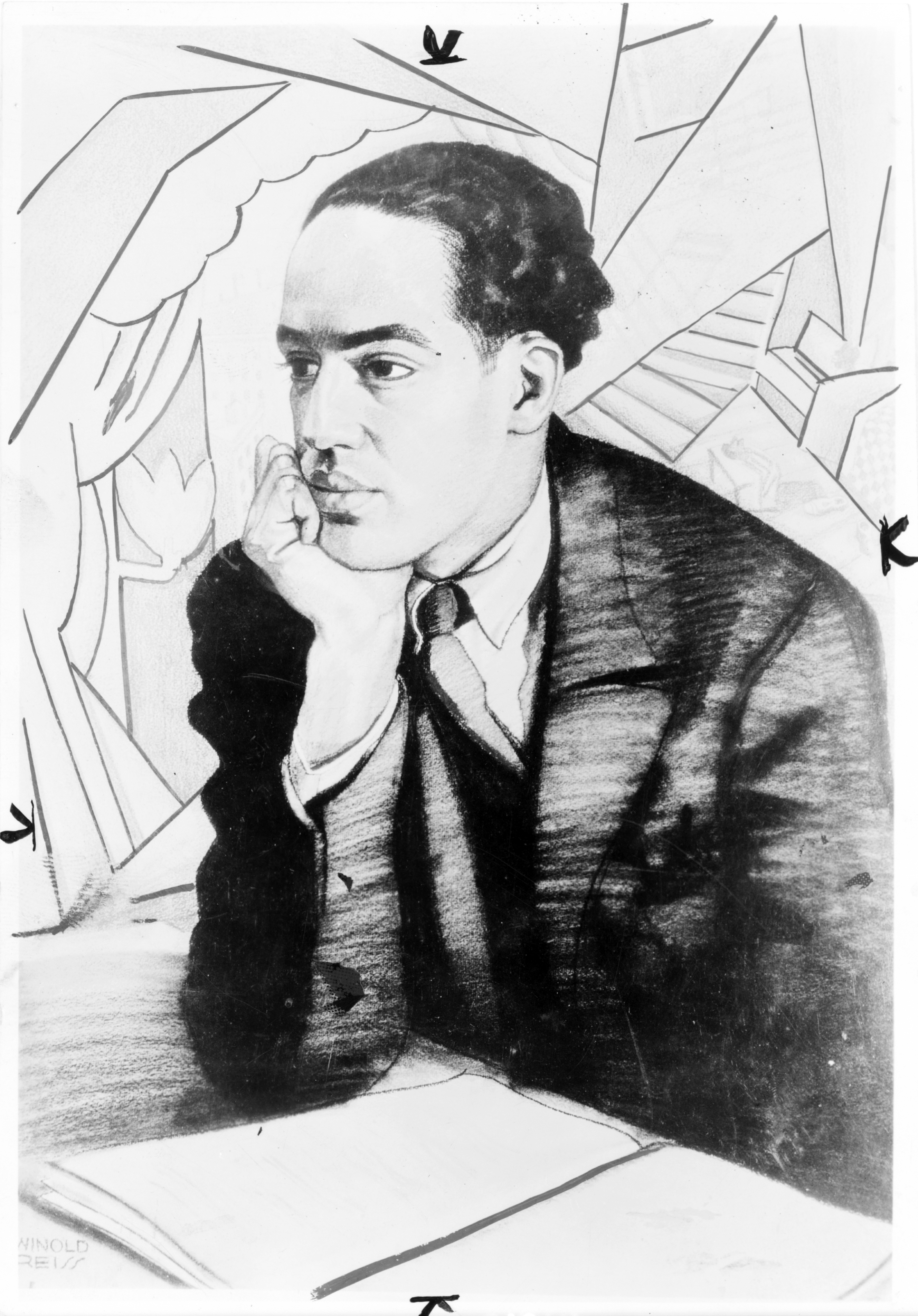
Langston Hughes – domestic pariah, international superstar


Throughout his career, Hughes was eager to mentor and promote the work of writers abroad.
Library of Congress

Jason Miller, North Carolina State University

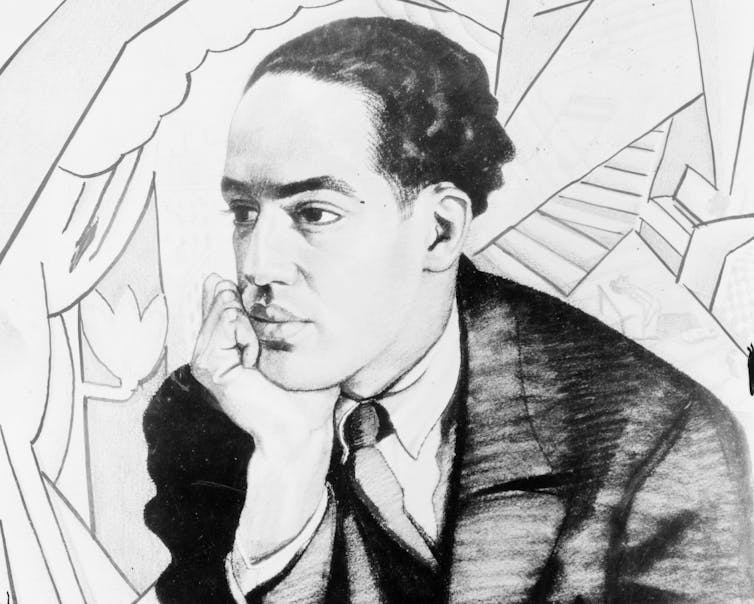
A leading figure of the Harlem Renaissance, the inspiration behind Lorraine Hansberry’s play “A Raisin in the Sun” and an uncompromising voice for social justice, Langston Hughes is heralded as one of America’s greatest poets.

It wasn’t always this way. During his career, Hughes was routinely harassed by his own government. And the nation’s literati, balking at his subversive politics, tended to overlook his work.

But the opposite was true abroad, in places like France, Nigeria and Cuba, where Hughes had legions of devoted readers who were some of the first to recognize the promise and power of the poet’s words. In my new book, “Langston Hughes: Critical Lives,” I trace Hughes’ budding international stardom, and how it clashed with the hostility he faced back home.

Building a fan base

Growing up in America, Hughes had experienced racism firsthand. As he matured as poet and writer, he started looking beyond America’s borders, curious to learn more about how racism impacted different cultures.

Between 1924 and his death in 1967, Hughes made trips to places as varied as Italy, Russia, England, Nigeria and Ghana.

During a visit to Cuba in 1930, Hughes met a young Cuban poet named Nicolás Guillén. Hughes had already successfully written dozens of poems inspired by the 12-bar structures, cadences, rhymes and subject matter of blues music. Over the course of several late-night dinners at Lolita’s restaurant in Havana, Hughes encouraged Guillén to do the same with his home country’s music.

Within days of Hughes’ departure, Guillén started writing poems making use of Cuba’s “son tradition,” a form of popular dance music. This was a key moment in the development of an artist who would go on to become Cuba’s national poet.

Hughes was also the only figure of the Harlem Renaissance who traveled to Africa. After several trips to the continent, he became determined to promote the work of his African peers – writers like Bloke Modisane and eventual Nobel Prize-winner Wole Soyinka. So in 1960, he edited his anthology “African Treasury,” which introduced many in the West to some of Africa’s greatest writers.

In countries like Nigeria, Hughes needed no introduction. In the 1940s, 1950s and 1960s, dozens of Hughes’ poems had appeared in the country’s newspapers and journals. After Nigeria elected Nnamdi Azikiwe, its first native governor-general, in 1960, Azikiwe concluded his inaugural by reciting Hughes’ poem “Youth.”

When Hughes returned to Ghana and Senegal later in the decade, he was greeted like a superstar. Scores of his admirers trailed him in the streets of Dakar, much in the way sports heroes are hounded by children for autographs.

By the 1960s, Hughes’ works were being translated into Russian, Italian, Swedish and Spanish. But the first scholarly study of his poetry appeared in France. Literary critic Jean Wagner’s 1963 book “Black Poets of the United States” highlighted the talents of Hughes as both a poet and activist. Devoting over 100 pages to Hughes, Wagner noted that African Americans would never “produce a more fiery bard” who was simultaneously “one of the community refusing to stand apart as an individual.”

As the first black writer in the United States to make his living solely by writing, Hughes ultimately galvanized scores of emerging writers and poets in Europe, Africa and South America. To them, Hughes represented a critical Western link to other people of color around the world. He was also an exemplar of the jazz and blues music they so revered. As a testament to Hughes’ popularity abroad, it was Venezuela – not the United States – that sought to nominate him for the Nobel Prize in Literature in 1960.

Making enemies at home

Back in America, Hughes certainly had his admirers, especially among the African American community. But most establishment figures – in politics, in the media and in law enforcement – viewed him as a menace.

As Hughes’ international fame grew, he was being denigrated as a subversive and a communist by his own government. Hughes had been under FBI surveillance since at least 1933, after he had traveled to Russia. Meanwhile his adamant calls for justice in the Scottsboro case of 1931 – when eight young black men were falsely accused of raping two white prostitutes – earned him the ire of FBI director J. Edgar Hoover. Hughes’ piercing critiques of capitalism didn’t help his cause, either. Hoover would go on to wage a personal vendetta against Hughes, building a 550-page file on him that highlighted poems like “Goodbye, Christ” as evidence of his communist sympathies.

Then, in 1953, Hughes was called to testify before Sen. Joseph McCarthy, who wanted to use Hughes’ previous support of communist causes and his supposedly subversive allegiances to target suspected “reds” in the State Department.

The man who was exalted by political leaders overseas, who found himself elbowing his way through throngs of adoring crowds abroad, was attacked as “un-American” by McCarthy’s Senate Subcommittee.
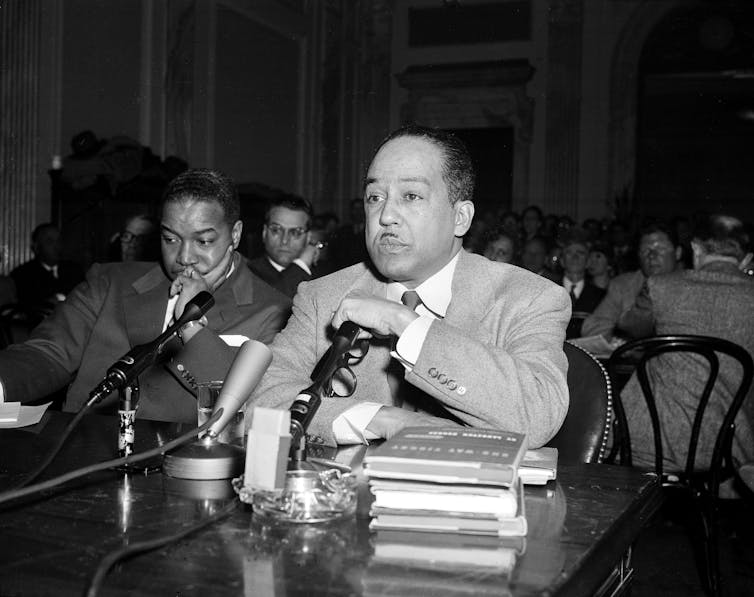
Poet and author Langston Hughes speaks before the McCarthy Committee in Washington, D.C. on March 26, 1953.
AP Photo

Hughes was understandably conflicted about his native country, and he explored this ambivalence in poems such as “Let America Be America Again”:

    Let America be America again.
    Let it be the dream it used to be.
    Let it be the pioneer on the plain
    Seeking a home where he himself is free.

    (America never was America to me.)

That last line still resonates for many Americans – for those who have never known a golden age, nor tasted the nation’s promise of dreams, justice and equality for all.

How long, Hughes wondered in “Harlem,” would we have to wait? And what was the cost of kicking the can down the road?

  What happens to a dream deferred?

  Does it dry up
  like a raisin in the sun?
  Or fester like a sore—
  And then run?
  Does it stink like rotten meat?
  Or crust and sugar over—
  like a syrupy sweet?

  Maybe it just sags
  like a heavy load.

  Or does it explode?

Interestingly, Hughes had ended the first draft of this famous poem with the lines, “or does it atom-like explode / and leave deaths in its wake? Does it disappear / as might smoke somewhere?”

Writing on Aug. 7, 1948, the poet was keenly aware of what had happened only three years prior when nuclear bombs were dropped on Nagasaki and Hiroshima.

To me, this perfectly encapsulates Hughes’ international appeal. The poet sympathized with those who had felt the harshest wrath of American power and politics. His intended audience was never just his fellow Americans who were grappling with fear and anxiety; it was anyone who had suffered great and devastating loss – an anguish that knows no language or borders.

[Deep knowledge, daily. Sign up for The Conversation’s newsletter.]The Conversation

Jason Miller, Professor of English, North Carolina State University

This article is republished from The Conversation under a Creative Commons license. Read the original article.

Unknown's avatar

Coronavirus: five books to keep young people happy during lockdown – children’s author


George Rudy via Shutterstock

Mimi Thebo, University of Bristol

Stories can be mirrors that help young people express feelings about a given situation. They give children a vocabulary for what is happening. But, because of how fiction works in the brain, stories can also be windows. When we read fiction, we inhabit other bodies and feel the concerns of other people. This helps young people to develop empathy – but has another profound effect. Reading stories makes us feel experienced and increases resilience.

I’ve chosen some wonderful books that all function both as mirrors and windows for children as the world faces the effects of Coronavirus. They are beautifully written and/or illustrated and should fire young imaginations, while comforting the whole family.

The Red Tree

This is a beautiful picture book – sparse of text – with lush landscapes in Sean Tan’s magical style. The reader loses themselves in pages that are achingly evocative of yearning, loss and wonder in a kind of heady cocktail of intense emotion, boredom and stoicism.

For a child, there is always hope.
Amazon

Dark leaves fall in our character’s bedroom, but by the end, they have coalesced into a beautiful red tree.

There is space here for even a very young reader to express what they think is happening page by page. The art could stimulate imitation. I can also imagine making a little red tree trunk and branches and adding a leaf to it, day by day.

There is very little reading to be done, so a slightly older child could also “read” it to a younger one.

The Mousehole Cat

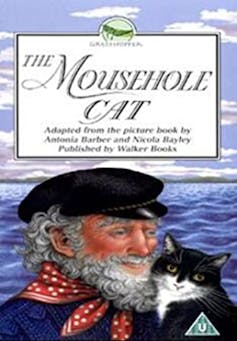
Antonia Barber sets her classic story on the Cornish coast. The narrative is about a cat who saves the day when her community is threatened. It is wordier than many picture books, but narrated by the cat in clear, beautifully written prose – it’s a pleasure to read aloud.

Moving story of bravery, sacrifice and companionship.
Amazon

Nicola Bayley’s illustrations are engaging and immersive – who wouldn’t like to go to the seaside right now? – and the characters easily inspire affection.

Touching on concepts of scarcity and sacrifice, this is a very empowering story for a young listener or reader. The smallest character in the story is the hero who saves everyone – by singing. It would be easy to live in this story for a while, going fishing from the laundry basket, practising storm singing, repeating some of the turns of phrase.

The illustrations are inspiring for young artists and could also be the basis of remembering visits to the seaside, pretend beach picnics or natural history lessons.

Comet in Moominland

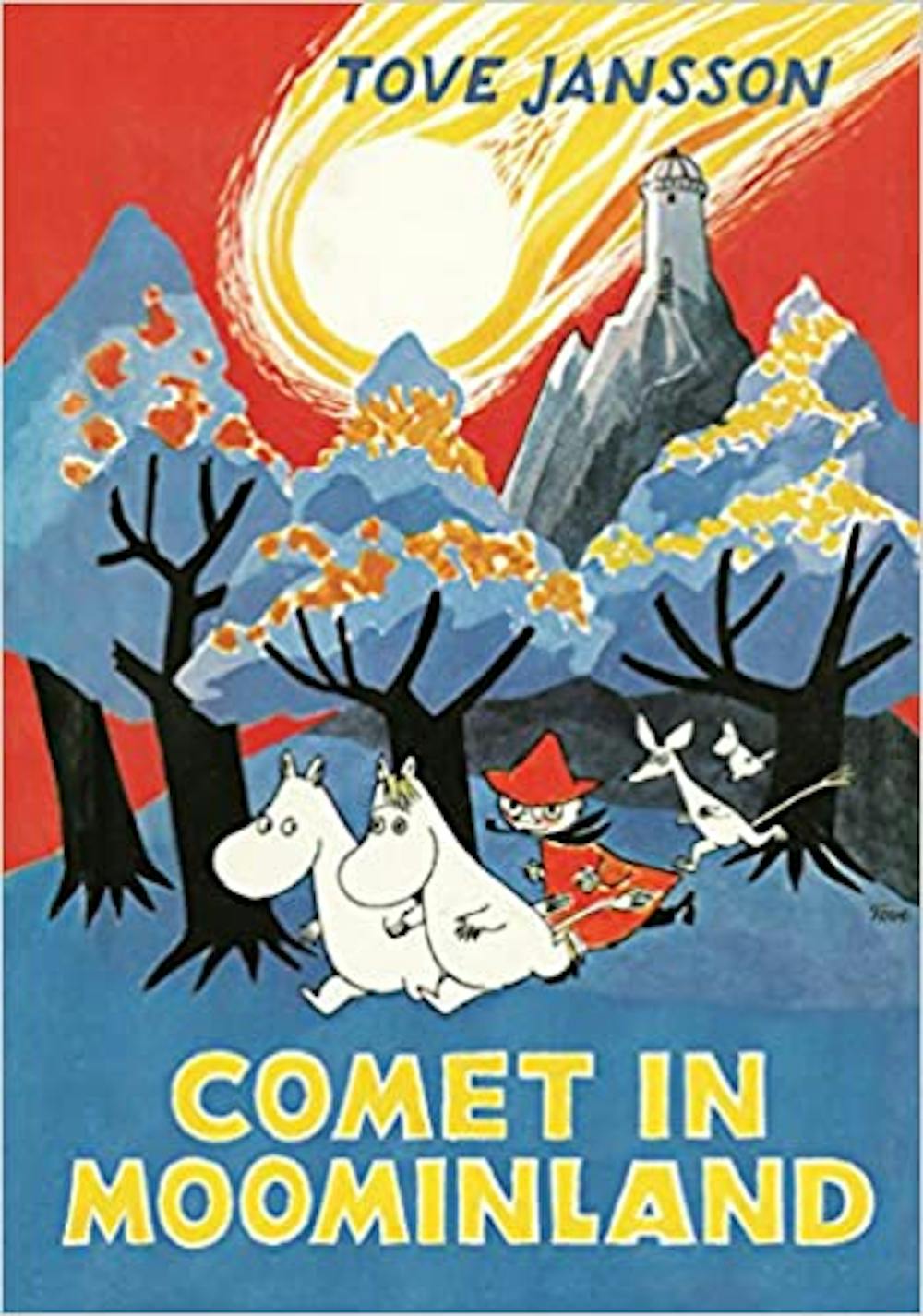
A trip to Tove Jansson’s Moominland always makes everything better. Here, the family flee from an approaching comet, meeting many favourite characters on the way.

Full of adventures and narrow escapes.
Amazon

The much-beloved Moomins are eccentric hippo-like people, very accommodating of difference and otherness. That said, many of the characters have their little ways, and being accommodating isn’t always comfortable. The realism of the relationships gives even the silliest of Jansson’s stories the texture of real life.

Quirky line drawings are immensely endearing and the story, while exciting with elements of real fear, never feels as if it will end badly. The language is fun, with word play and characters’ attitudes and, again, the child is the hero. It’s not hard to draw a Moomin, and there are endless opportunities for drama. Year twos or threes can probably read it to themselves, with someone on hand for the tricky bits, but it’s fun enough to engage older children, and silly enough for littlies.

The Wee Free Men

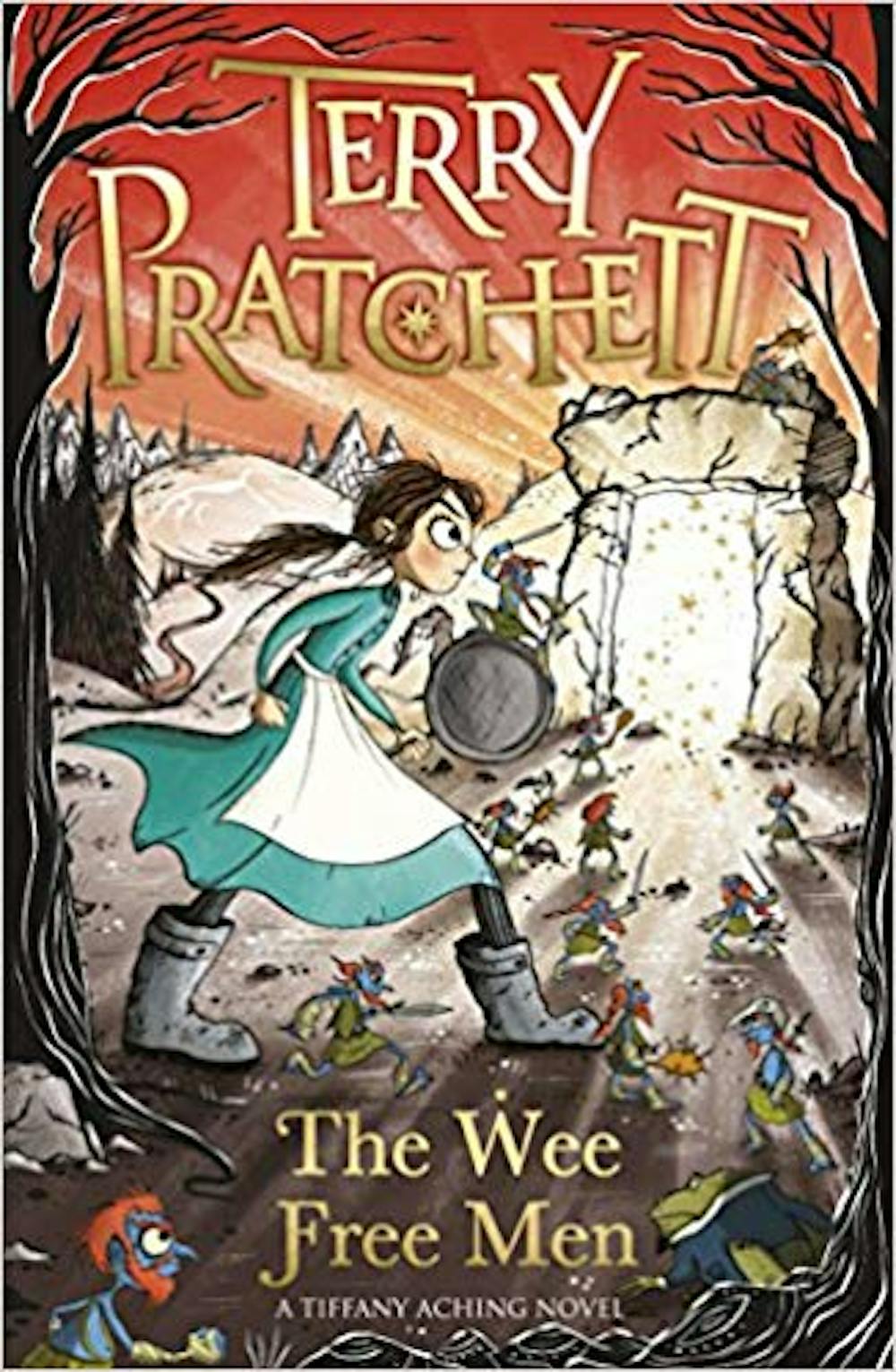
Tiffany Aching comes from chalkland, where nobody has it easy, and everyone works hard. When a rift opens on her doorstep and her despised little brother is taken, she discovers she’s not ordinary, after all. Armed with a cast-iron frying pan, she takes on the full force of Fairyland.

A riotous out-loud read.
Amazon

This is a riotous out-loud read from the late Terry Pratchett, featuring a tribe of “pictsies” who speak in a Scottish accent that sounds a lot like the stand-up comic Billy Connolly. Tiffany’s gran has recently passed away – and the danger feels quite real – but we know that Tiff will get us through. She certainly does, battling forces of depression and self-doubt to do so – another young leader in a time of community danger. Even hardened teenagers might smile at the best bits and tweens will devour it whole. Children as young as six or seven can follow along.

The narrative is a role-play bonanza and there are opportunities to investigate British folklore, identities in the United Kingdom and gender roles. Illustrations in the text might inspire art and mapping the settings would be an interesting exercise. Further adventures of some of the characters could be written, and geography lessons about chalk grassland would be easy to work in.

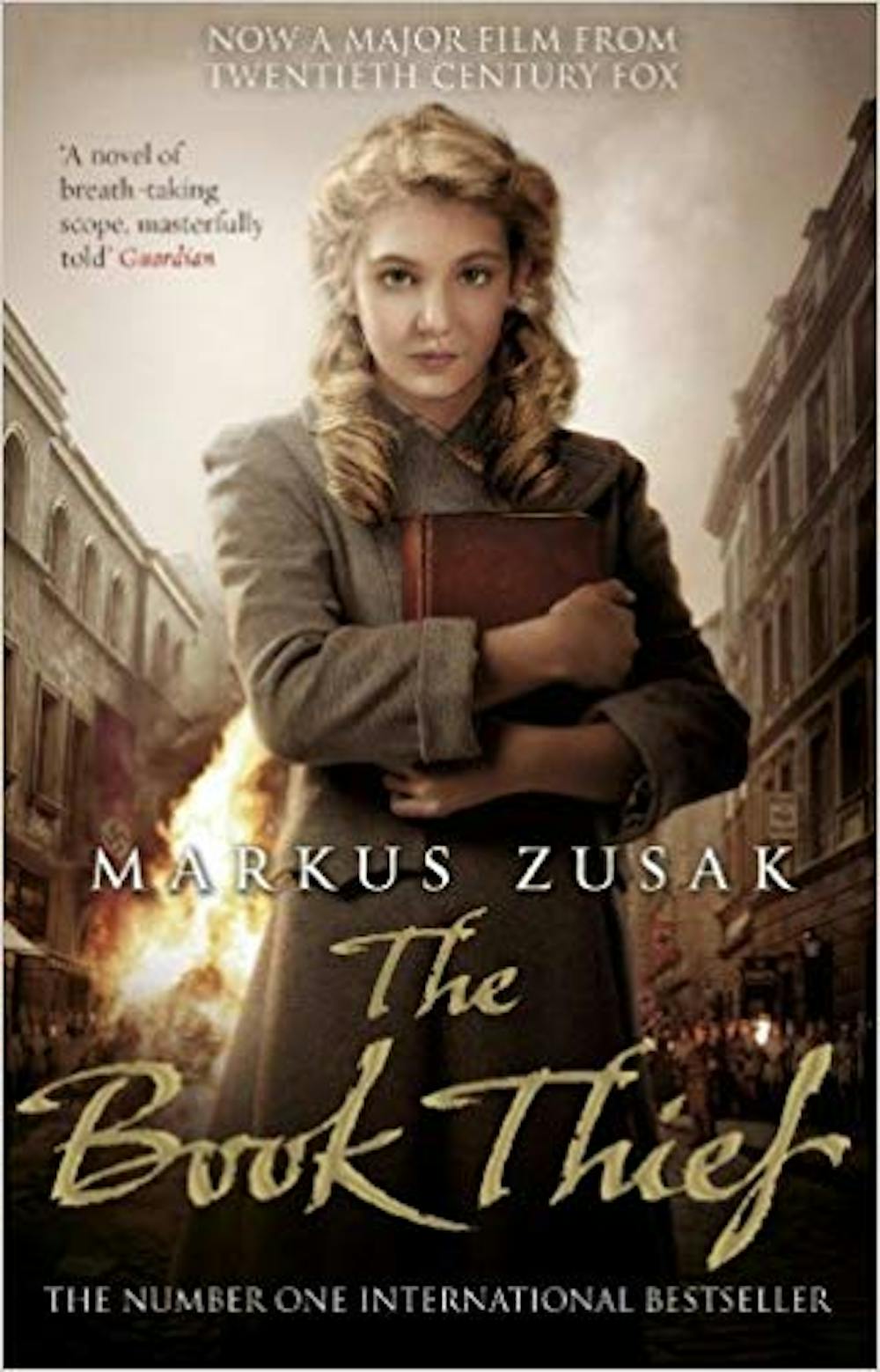
The Book Thief

For resilient older children and teens, Markus Zusac’s story is set in a time of many lives lost – Germany during the second world war – and narrated by Death. It is gorgeously written (an international bestseller, adapted for film) and, while the subject matter is difficult, the narrative pulses with life and hope.

Navigating trauma and hard times.
Amazon

For a young person engaged with current events, questioning authority and impatient of parental efforts to shield them from the grimmer elements of our current reality, this book could be a lifeline.

Liesel Meminger is illiterate when the story begins, but takes a book that has been dropped at her brother’s graveside. As she begins to read and to leave childhood behind, she steals many more books. Love, death and the importance of even futile actions inform the story of Liesel’s coming of age and provide ways of thinking about what it means to be human.

This could be read together silently, perhaps taking chapters in turn, rationed out as a treat for discussion or not. It’s a natural accompaniment to history lessons, geography, or some online German instruction and watching the film could lead to a discussion of adaptation. But perhaps you could just leave a copy of it out for anyone who needs it to find and make their own.

Many of these titles are available electronically, but local bookshops are delivering and posting orders. After all, there’s nothing more comforting than snuggling behind the protective embrace of an open book.The Conversation

Mimi Thebo, Reader in Creative Writing, University of Bristol

This article is republished from The Conversation under a Creative Commons license. Read the original article.
Unknown's avatar

Love and a happy ending: romance fiction to help you through a coronavirus lockdown


Shutterstock

Jodi McAlister, Deakin University

Romance fiction has two defining features.

First, it centres on a love story. Secondly, it always ends well.

Our protagonists end up together (if not forever, then at least for the foreseeable future) and this makes the world around them a little bit better, too.

In times of uncertainty, upheaval and chaos, readers often turn to romance fiction: during the second world war, Mills & Boon was able to maintain its paper ration by arguing its books were good for the morale of working women.

The books the company was producing in this period were not about the war. Most never even mentioned it. Instead, they provided an escape for readers to a world where they could be assured everything was going to turn out all right: love would conquer all, villains would be defeated, and lovers would always find their way back to each other.


Read more:
How to learn about love from Mills & Boon novels


Today, romance publishing is a billion-dollar industry, with thousands of novels published each year. It covers a wide range of subgenres: from historical to contemporary, paranormal to sci-fi, from novels where the only physical interaction between the protagonists is a kiss, to erotic romance where sex is fundamental to the story.

Rule 34 of the internet states if you can think of something, then there’s porn of it. The same, I would argue, is true for romance fiction.

But where to begin? As both a scholar of romance fiction and an avid reader of it, I’ve put together this list of five great reads for people who might want to start exploring the genre.

If you like Jane Austen, try…

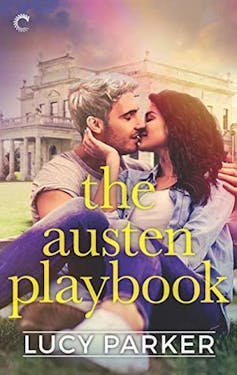
The Austen Playbook by Lucy Parker

The Austen Playbook is the fourth book in Parker’s London Celebrities series (all only loosely connected, so you can jump in anywhere).

Heroine Freddy is an actress from an esteemed West End family, trying to balance her desire to perform in musicals and crowd-pleasers over her family pushing her towards serious drama. Hero Griff is a theatre critic and his family estate is playing host to a wacky live-action Jane Austen murder mystery, in which Freddy is playing Lydia.

Parker is a gifted author, and this book is a light, bright and sparkling delight.

If you like (or hate!) dating apps, try…

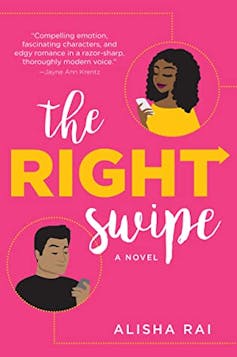
The Right Swipe by Alisha Rai

Many people now find partners on dating apps, but these apps are often not exactly friendly for women.

Rai addresses that to great effect in The Right Swipe, where heroine Rhiannon is the designer of a dating app designed specifically for women.

She meets hero Samson the first time as a result of swiping right, and then the second time, months later, when he’s teamed up with one of her primary business rivals…

If you’re fascinated by psychology, try …

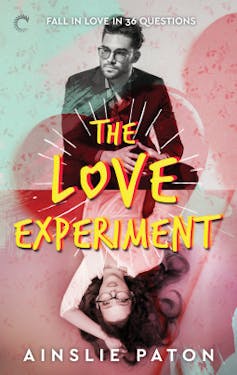
The Love Experiment by Ainslie Paton

Paton is one of Australia’s smartest and most underrated romance authors. The Love Experiment draws on the 36 questions developed by psychologist Arthur Aron to explore whether intimacy could be generated or intensified between two people if they exchanged increasingly personal information.

The 36 questions were popularised in Mandy Len Catron’s 2015 New York Times essay To Fall In Love With Anyone, Do This. Here, journalist protagonists Derelie and Jackson undertake the experiment in Paton’s book, only to find love is more complex than 36 questions.

If you think we need to save the oceans, try…

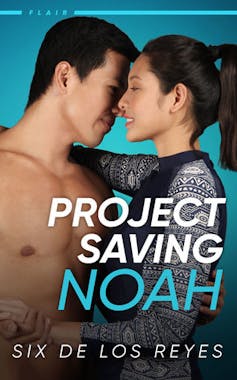
Project Saving Noah by Six de los Reyes

This book emerges from RomanceClass, a fascinating community of English-language romance writers and readers based in the Philippines. One of their distinctive features is their collaboration with local actors in Manila to perform excerpts from the books (including Project Saving Noah) at their regular gatherings. I was privileged enough to attend one of these last year.

Protagonists Noah and Lise are graduate students in oceanography competing for one spot on a research project, while simultaneously being forced to work together. Their romance is conflicted and compelling, but what stands out about this book is the vividness with which their environment – natural and academic – is constructed.

If you like your protagonists to have some maturity, try…

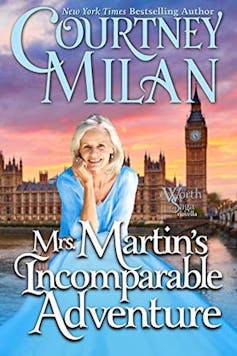
Mrs Martin’s Incomparable Adventure by Courtney Milan

If Milan’s name sounds familiar, it’s because she was at the centre of the recent scandal engulfing the Romance Writers of America, which penetrated through romance’s usual cultural invisibility.

When she’s not standing up against systemic racism, Milan writes excellent, mostly historical, romance. Mrs Martin is a delightful historical romp, as our two heroines Bertrice (aged 73) and Violetta (aged 69) team up against Violetta’s terrible nephew, and fall in love and eat cheese on toast together.The Conversation

Jodi McAlister, Lecturer in Writing, Literature and Culture, Deakin University

This article is republished from The Conversation under a Creative Commons license. Read the original article.
Unknown's avatar

Thucydides and the plague of Athens – what it can teach us now


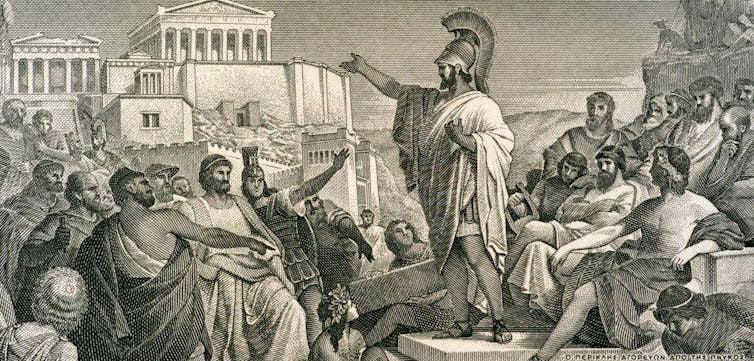
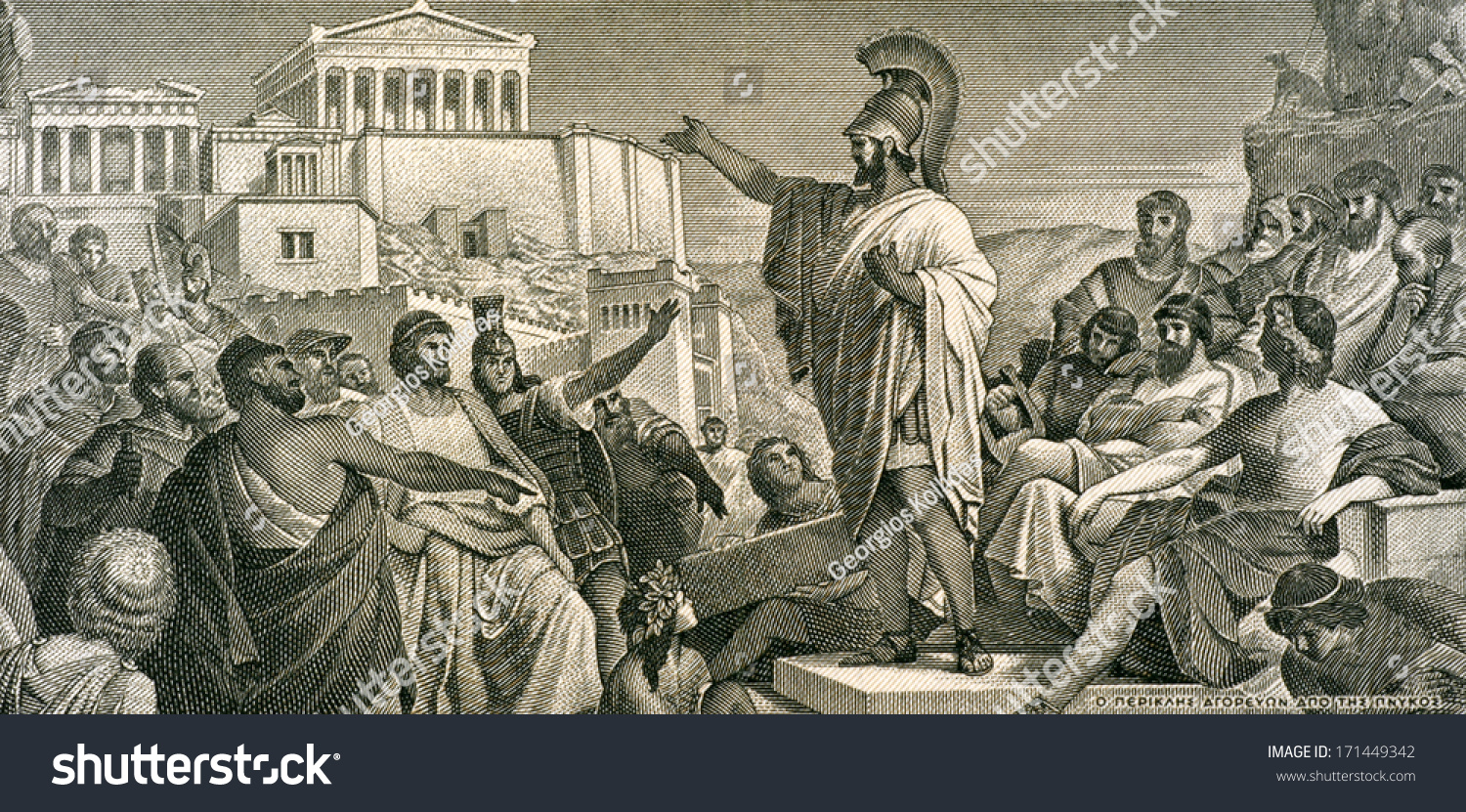
Pericles Funeral Oration on the Greek 50 Drachmai 1955 Banknote.
Shutterstock

Chris Mackie, La Trobe University

The coronavirus is concentrating our minds on the fragility of human existence in the face of a deadly disease. Words like “epidemic” and “pandemic” (and “panic”!) have become part of our daily discourse.

These words are Greek in origin, and they point to the fact that the Greeks of antiquity thought a lot about disease, both in its purely medical sense, and as a metaphor for the broader conduct of human affairs. What the Greeks called the “plague” (loimos) features in some memorable passages in Greek literature.

One such description sits at the very beginning of western literature. Homer’s Iliad, (around 700BC), commences with a description of a plague that strikes the Greek army at Troy. Agamemnon, the leading prince of the Greek army, insults a local priest of Apollo called Chryses.

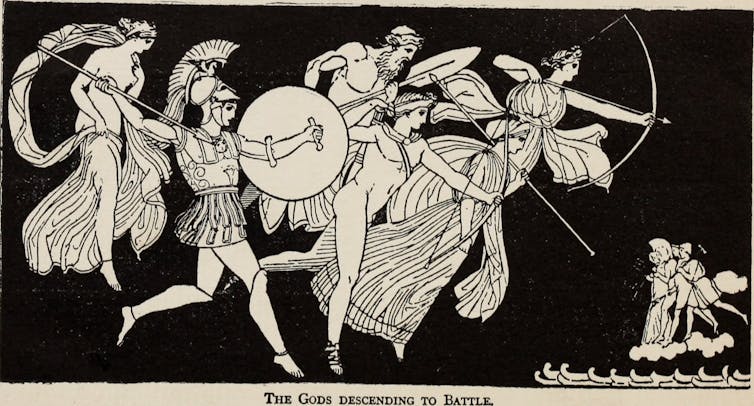
Apollo is the plague god – a destroyer and healer – and he punishes all the Greeks by sending a pestilence among them. Apollo is also the archer god, and he is depicted firing arrows into the Greek army with a terrible effect:

Apollo strode down along the pinnacles of Olympus angered

in his heart, carrying on his shoulders the bow and the hooded

quiver; and the shafts clashed on the shoulders of the god walking angrily.

Terrible was the clash that rose from the bow of silver.

First he went after the mules and the circling hounds, then let go

a tearing arrow against the men themselves and struck them.

The corpse fires burned everywhere and did not stop burning.

Plague narratives

About 270 years after the Iliad, or thereabouts, plague is the centrepiece of two great classical Athenian works – Sophocles’ Oedipus the King, and Book 2 of Thucydides’ History of the Peloponnesian War.

Thucydides (c.460-400BC) and Sophocles (490-406BC) would have known one another in Athens, although it is hard to say much more than that for a lack of evidence. The two works mentioned above were produced at about the same time. The play Oedipus was probably produced about 429 BC, and the plague of Athens occurred in 430-426 BC.

Thucydides writes prose, not verse (as Homer and Sophocles do), and he worked in the comparatively new field of “history” (meaning “enquiry” or “research” in Greek). His focus was the Peloponnesian war fought between Athens and Sparta, and their respective allies, between 431 and 404 BC.

Thucydides’ description of the plague that struck Athens in 430 BC is one of the great passages of Greek literature. One of the remarkable things about it is how focused it is on the general social response to the pestilence, both those who died from it and those who survived.

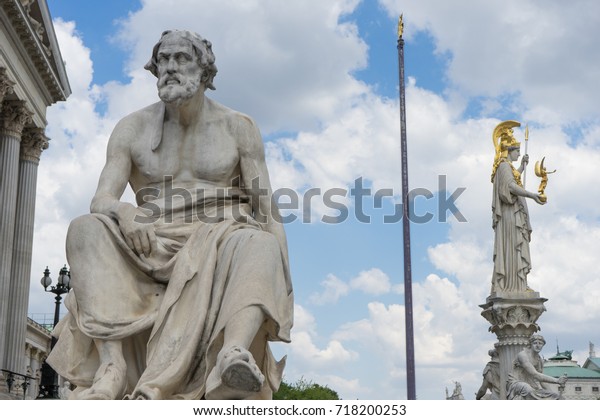
Statue portrait of historian Thucydides outside the Austrian parliament in Vienna.
Shutterstock

A health crisis

The description of the plague immediately follows on from Thucydides’ renowned account of Pericles’ Funeral Oration (it is important that Pericles died of the plague in 429 BC, whereas Thucydides caught it but survived).

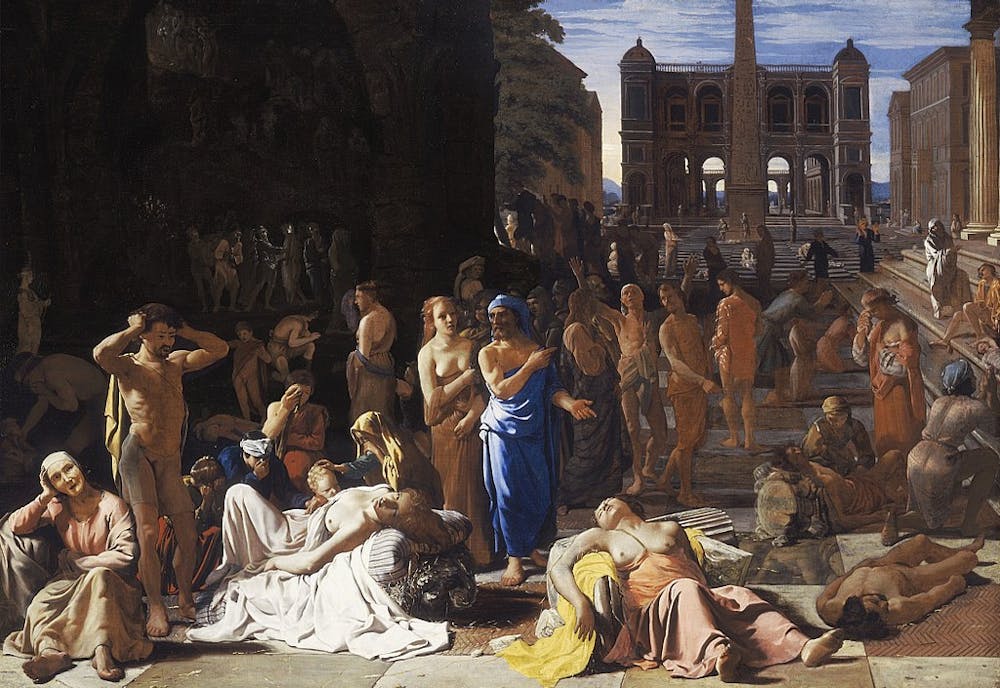
Thucydides gives a general account of the early stages of the plague – its likely origins in north Africa, its spread in the wider regions of Athens, the struggles of the doctors to deal with it, and the high mortality rate of the doctors themselves.

Nothing seemed to ameliorate the crisis – not medical knowledge or other forms of learning, nor prayers or oracles. Indeed “in the end people were so overcome by their sufferings that they paid no further attention to such things”.

He describes the symptoms in some detail – the burning feeling of sufferers, stomachaches and vomiting, the desire to be totally naked without any linen resting on the body itself, the insomnia and the restlessness.

Michiel Sweerts’ Plague in an Ancient City (circa 1652).
Wikimedia

The next stage, after seven or eight days if people survived that long, saw the pestilence descend to the bowels and other parts of the body – genitals, fingers and toes. Some people even went blind.

Words indeed fail one when one tries to give a general picture of this disease; and as for the sufferings of individuals, they seemed almost beyond the capacity of human nature to endure.

Those with strong constitutions survived no better than the weak.

The most terrible thing was the despair into which people fell when they realized that they had caught the plague; for they would immediately adopt an attitude of utter hopelessness, and by giving in in this way, would lose their powers of resistance.

Lastly, Thucydides focuses on the breakdown in traditional values where self-indulgence replaced honour, where there existed no fear of god or man.

As for offences against human law, no one expected to live long enough to be brought to trial and punished: instead everyone felt that a far heavier sentence had been passed on him.

The whole description of the plague in Book 2 lasts only for about five pages, although it seems longer.

The first outbreak of plague lasted two years, whereupon it struck a second time, although with less virulence. When Thucydides picks up very briefly the thread of the plague a little bit later (3.87) he provides numbers of the deceased: 4,400 hoplites (citizen-soldiers), 300 cavalrymen and an unknown number of ordinary people.

Nothing did the Athenians so much harm as this, or so reduced their strength for war.

A modern lens

Modern scholars argue over the science of it all, not the least because Thucydides offers a generous amount of detail of the symptoms.

Epidemic typhus and smallpox are most favoured, but about 30 different diseases have been posited.

Thucydides offers us a narrative of a pestilence that is different in all kinds of ways from what we face.

The lessons that we learn from the coronavirus crisis will come from our own experiences of it, not from reading Thucydides. But these are not mutually exclusive. Thucydides offers us a description of a city-state in crisis that is as poignant and powerful now, as it was in 430BC.The Conversation

Chris Mackie, Professor of Classics, La Trobe University

This article is republished from The Conversation under a Creative Commons license. Read the original article.
Unknown's avatar

Pandemics from Homer to Stephen King: what we can learn from literary history


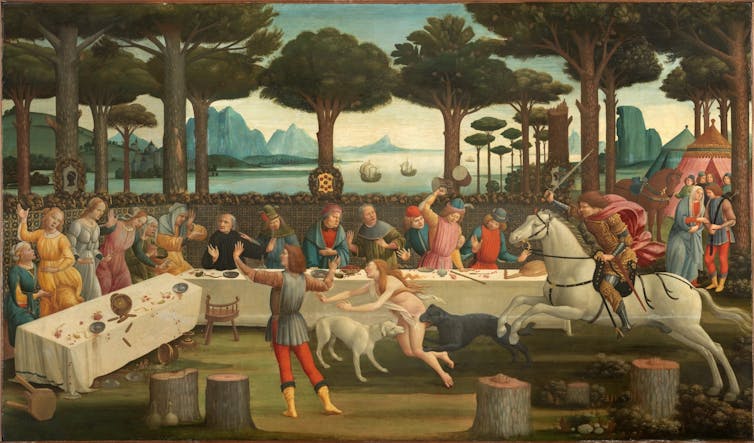
The Banquet in the Pine Forest, one of a number of pictures derived from tales in Boccaccio’s Decameron.
Sandro Botticelli

Chelsea Haith, University of Oxford

From Homer’s Iliad and Boccaccio’s Decameron to Stephen King’s The Stand and Ling Ma’s Severance, stories about pandemics have – over the history of Western literature such as it is – offered much in the way of catharsis, ways of processing strong emotion, and political commentary on how human beings respond to public health crises.

Literature has a vital role to play in framing our responses to the COVID-19 pandemic. It is worth turning to some of these texts to better understand our reactions and how we might mitigate racism, xenophobia and ableism (discrimination against anyone with disabilities) in the narratives that surround the spread of this coronavirus.

Ranging from the classics to contemporary novels, this reading list of pandemic literature offers something in the way of an uncertain comfort, and a guide for what happens next.

Homer’s Iliad, as the Cambridge classicist Mary Beard has reminded us, opens with a plague visited upon the Greek camp at Troy to punish the Greeks for Agamemnon’s enslavement of Chryseis. US academic Daniel R Blickman has argued that the drama of Agamemnon and Achilles’ quarrel “should not blind us to the role of the plague in setting the tone for what follows, nor, more importantly, in providing an ethical pattern which lies near the heart of the story”. In other words, The Iliad presents a narrative framing device of disaster that results from ill-judged behaviour on the part of all of the characters involved.

Western literature begins with a plague: the Iliad.
Wikimedia Commons

COVID-19 is certain to shake up economic systems and entrenched institutional processes, as we’re seeing with the shift towards remote learning in universities around the world, to give just one example. These texts give us an opportunity to think through how similar crises have been managed previously, as well as ideas about how we might structure our societies more equitably in their aftermath.

The Decameron (1353) by Giovanni Boccaccio, set during the Black Death, reveals the vital role of storytelling in a time of disaster. Ten people self-isolate in a villa outside Florence for two weeks during the Black Death. In the course of their isolation, the characters take turns to tell stories of morality, love, sexual politics, trade and power.

In this collection of novellas, storytelling functions as a method of discussing social structures and interaction during the earliest days of the Renaissance. The stories offer the listeners (and Boccaccio’s readers) ways through which to restructure their “normal” everyday lives, which have been suspended due to the epidemic.

Authority’s failure to respond

The normality of everyday life is also the focus of Mary Shelley’s apocalypse novel The Last Man (1826). Set in a futuristic Britain between the years 2070 and 2100, the novel – which was made into a movie in 2008 – details the life of Lionel Verney, who becomes the “last man” following a devastating global plague.

Shelley’s novel dwells on the value of friendship, and concludes with Verney accompanied on his wanderings by a sheep dog (a reminder that pets may be a source of comfort and stability in times of crisis). The novel is particularly scathing on the topic of institutional responses to the plague. It satirises revolutionary utopianism and the in-fighting that breaks out among surviving groups, before these also succumb.

Edgar Allen Poe’s short story The Masque of the Red Death (1842) also depicts the failures of authority figures to adequately and humanely respond to such a disaster. The Red Death causes fatal bleeding from the pores. In response, Prince Prospero gathers a thousand courtiers into a secluded but luxurious abbey, welds the gates closed and hosts a masked ball:

The external world could take care of itself. In the meantime it was folly to grieve or to think. The prince had provided all the appliances of pleasure.

Poe details the sumptuous festivities, concluding with the incorporeal arrival of the Red Death as a human-like guest at the ball. The plague personified takes the prince’s life and then those of his courtiers:

And one by one dropped the revellers in the blood-bedewed halls of their revel, and died each in the despairing posture of his fall.

Modern and contemporary literature

In the 20th century, Albert Camus’ The Plague (1942) and Stephen King’s The Stand (1978) brought readers’ attentions to the social implications of plague-like pandemics – particularly isolation and failures of the state to either contain the disease or moderate the ensuing panic. The self-isolation in Camus’ novel creates an anxious awareness of the value of human contact and relationships in the citizens of the plague-stricken Algerian city of Oran:

This drastic, clean-cut deprivation and our complete ignorance of what the future held in store had taken us unawares; we were unable to react against the mute appeal of presences, still so near and already so far, which haunted us daylong.

In King’s The Stand, a bioengineered superflu named “Project Blue” leaks out of an American military base. Pandemonium ensues. King recently stated on Twitter that COVID-19 is certainly not as serious as his fictional pandemic, urging the public to take reasonable precautions.

Similarly, in his 2016 novel Fever, South African author Deon Meyer details the apocalyptic fallout of a weaponised, bioengineered virus that results in enclaves of survivors besieging one another for resources.

In Severance (2018), Ling Ma provides a contemporary take on the zombie novel as the fictional “Shen Fever” renders people repetitive automatons until their deaths. In a thinly veiled metaphor for the capitalist cog-in-the-machine, the protagonist Candace drifts daily in to her place of work in a future New York that is slowly falling apart. She eventually joins a survival group, assimilating culturally and morally to their violent attitudes towards the zombies, “embodying the atomisation of late-capitalist humans in a society stripped to its bones”, as reviewer Jiayang Fang suggests.

For some the end has already come

Consider also that “indigenous futurisms” – a term coined by First Nations cultural and race studies theorist Grace L Dillon to refer to speculative fictions by indigenous peoples and writers of colour such as NK Jemisin’s Broken Earth series, Claire G. Coleman’s Terra Nullius, and Carmen Maria Machado’s short story Inventory – have long since treated colonialism and the diseases spread by the colonisers as the source of what is currently experienced as an ongoing apocalypse. For many people in formerly colonised places, the apocalypse has already come – pandemics (both literal and metaphorical) have already obliterated their populations.

The catharsis that some of the above-mentioned texts may offer is troubled by the realities of pandemic and apocalypse conditions depicted in much fiction by indigenous peoples. If we used our own likely forthcoming periods of self-isolation to theorise alternative social structures, to tell one another stories about how we live, what stories might we tell?The Conversation

Chelsea Haith, DPhil Candidate in Contemporary English Literature, University of Oxford

This article is republished from The Conversation under a Creative Commons license. Read the original article.
Unknown's avatar

The Mirror and the Light: Hilary Mantel gets as close to the real Thomas Cromwell as any historian


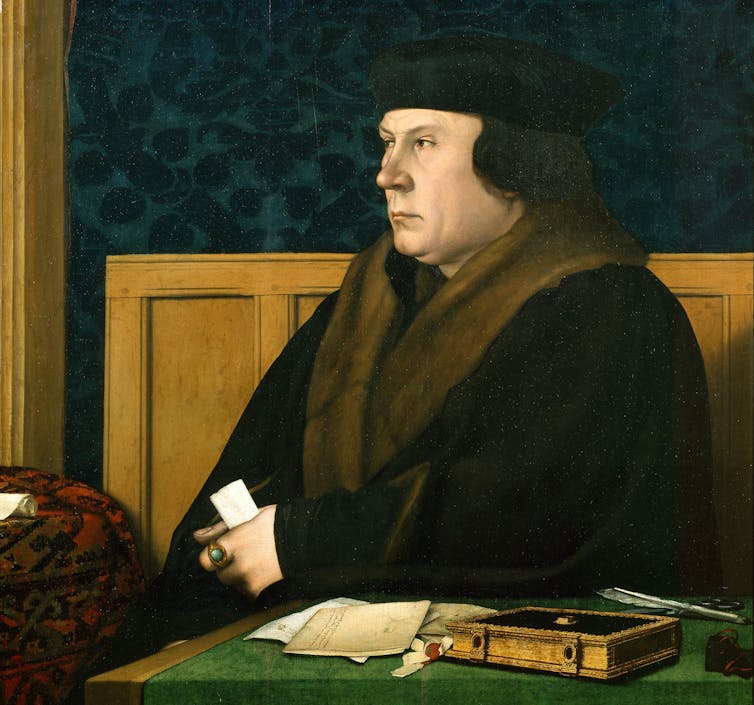
Thomas Cromwell by Hans Holbein.
The Frick Collection

Janet Dickinson, University of Oxford

Thomas Cromwell has had a remarkable and lasting impact on English history. The role that Henry VIII’s chief minister played in the country’s break with Rome and Catholicism and the focusing of power in the hands of the king’s government continues to have repercussions today as modern states debate their place in the world.

The question of Cromwell’s influence on the king and his role as backroom mastermind continues to fascinate modern audiences, holding up a mirror to more recent discussions over the role in today’s political sphere of special advisers such as Dominic Cummings or Alastair Campbell and their influence on modern-day leaders.

Cromwell’s life was lived largely in the shadows, so what can we make of his character and what is the truth of his existence? Historical evidence is limited and we catch only glimpses of Cromwell’s inner life in his own letters and the words that others said and wrote about him.

The basic skeleton of the historical record gives us a remarkable life, and yet it is a life that has – until relatively recently – been little discussed beyond the historical arena. Historians never anticipated that they would be able to capture a richer sense of Cromwell as a human being, so the publication of Hilary Mantel’s Booker prize-winning Wolf Hall in 2009 came as something of a shock to the world of Tudor history.

To suddenly encounter a fully realised individual, reliving the experiences of his childhood and violent father and grieving the shocking and sudden loss of his wife and daughters, formed a remarkable intervention in our understanding of a man who was described by Geoffrey Elton, the historian who admired him most, as being “unbiographical”.

The subsequent publication by Bring up the Bodies, which won Mantel a second Booker prize, and Diarmaid MacCulloch’s 2018 biography completed Cromwell’s rehabilitation as someone we can make sense of when placed within his time and the events in which he took such a central role. But it has taken until now – more than seven years after volume two – for Mantel to tell the final phase of the story that she has transformed.

Mantel has firmly stated that it was not her aim to write a history. Yet her Cromwell is so real, so compellingly lifelike, that it has become very difficult to think about him without her interpretation coming into mind. For historians it is an important reminder that the figures we study were real people who lived and died – often in painful, even horrific, circumstances.

Mantel’s small world

It is easy, of course, for historians to find problems with Mantel’s account. Mantel telescopes some events and adds to others for dramatic effect, providing Cromwell with motivations and a rich emotional inner life, all of which remains within the fictional realm.

What she really gives us is a version of what may have been possible. Just as historians disagree over the reading of a particular letter or incident, so we are free to engage with Mantel’s version of Cromwell. Her books are – and will continue to be – vital to the teaching of the subject and to the development of our understanding of Cromwell and his world.

Historians have been increasingly drawn to thinking of the past not only in terms of the textual, material and visual records that survive, but also in terms of the architectural and geographical worlds in which people operated. The Tudor court was a small world of confined spaces and intimate relationships – an intense environment in which remarkable events took place. We can now add an imaginative reconstruction of that world, grounded in careful detail accrued from the years of research carried out by Mantel.

It is about as realistic a depiction as we could hope for and it provides a valuable frame for understanding how a whispered exchange might carry vital information or how Henry VIII’s sudden anger might terrify his subjects into compliance. While we can never be certain of the precise nature of Cromwell’s relationship with the king, we can now offer a range of possible interpretations, from shared memories of early military campaigns to a monarch requiring effective service of his subject, finding him wanting and therefore disposable.

Decline and fall

The question of Cromwell’s fall is one that has troubled historians. How did a man so immersed in the Tudor court, who had witnessed the destructions of Thomas Wolsey and of Anne Boleyn, miscalculate badly enough to end up on the scaffold?

Mantel offers us some possible routes into making sense of Cromwell’s miscalculation. The courtly world that Mantel depicts is acutely dangerous. From the start of The Mirror and the Light we see Cromwell surrounded by rumours of his fate in the aftermath of the fall of Boleyn – someone to whom he had been so close. Later on he squabbles with her uncle the Duke of Norfolk and the Archbishop of Canterbury, Thomas Cranmer – ignoring the latter’s warning not to get too deeply involved in the matter of the king’s marriage after the death of Jane Seymour.

Cromwell’s trust in Henry, and his belief that the king will stand by his assertions of loyalty and the signs of warmth that Henry gives, prove to be his downfall. In the face of the warnings from those around him, Cromwell follows his role to its natural end. Elevated to become Earl of Essex, Cromwell holds “the shining bowl of possibility … all is mended” – a final cruel miscalculation.

When it comes, Cromwell’s enemies physically closing in on him to strip him of rank and title, this provides a fundamental truth about power and about the reality of being a king’s councillor or special advisor: in the end, everyone falls.The Conversation

Janet Dickinson, Senior Associate Tutor in History, University of Oxford

This article is republished from The Conversation under a Creative Commons license. Read the original article.

Unknown's avatar

What my students taught me about reading: old books hold new insights for the digital generation


Sophie Elvis/Unsplash

Kate Flaherty, Australian National University

Every year about 150 students enrol in the introductory English literature course at the Australian National University, which I teach. The course includes works by Shakespeare, Austen, Woolf and Dickens.

I know what these books did for me as a student 20 years ago, but times have changed. I am curious to discover what reading these old books does for young people today.

Last year, 2019, saw the first cohort of students who were born in or beyond 2000 – the so-called digital generation. These students have grown up in a world where you can read a book without holding the physical object.


Read more:
Love, laughter, adventure and fantasy: a summer reading list for teens


I decided to introduce the option of a bibliomemoir – an increasingly popular form of creative non-fiction – into their final year assignment. This would allow me to tease out the particular connections students were making between literature and their own lives.

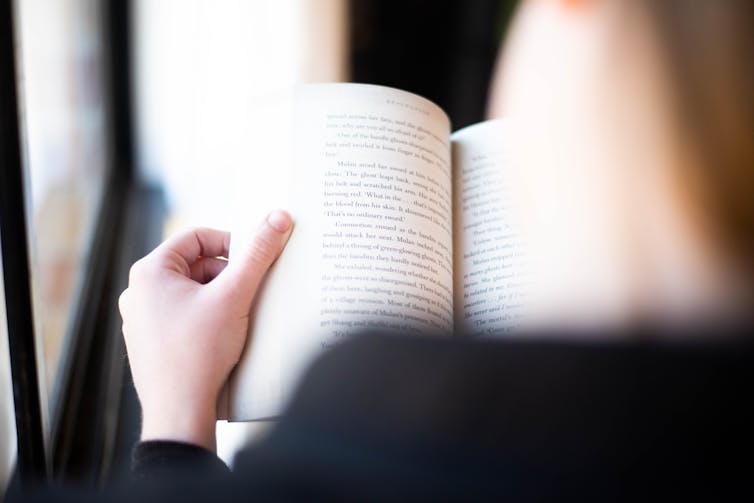
My first year students have grown up in a world where you can read a book without holding the physical object.
Dexter Fernandes

The idea for a bibliomemoir was sparked in a workshop run by our then writer-in-residence, celebrated Australian teen novelist and author of Puberty Blues, Dr Gabrielle Carey.

Carey described bibliomemoir as a piece of writing that shows literary criticism is “best written as a personal tale of the encounter between a reader and a writer”.

Written with flair and precision the students’ bibliomemoirs revealed the formative effects of reading on their lives. Many of their insights related directly to challenges of growing up in the digital age.

They wrote about responding to distraction and cultivating compassion, connection, concentration and resilience.

Why a bibliomemoir?

A bibliomemoir might be an account of how one book or author has shaped a person’s life. Or it might be the memoir of a life structured by reading books. In Outside of a Dog, for instance, Rick Gekoski tells his life story through 25 books that have influenced him, including authors from Dr Seuss to Sigmund Freud.

Gekoski pointed out in an interview that bibliomemoir reveals the formative effects of reading. I saw immediately that I could adapt bibliomemoir to help me understand how my students saw books as shaping their lives.


Read more:
5 Australian books that can help young people understand their place in the world


So, for the final essay of the introductory English course, Carey and I designed a new essay question. It invited students to write a brief bibliomemoir based on one of the novels in the course. Like a traditional essay this would allow me to evaluate their skills of written expression, argument and technical analysis of literary language.

Students who write the bibliomemoir can still be assessed on technical aspects of their writing style.
Unsplash/Christin Hume

Unlike a traditional essay, it would allow me to see inside their individual reading experience. I would be able to understand how these books were influencing my students’ view of the world and their understanding of themselves.

Here’s what the students wrote

One student shared how reading Virginia Woolf’s Mrs Dalloway prompted a conversation with his flatmate about experiences of digital distraction and strategies for concentration:

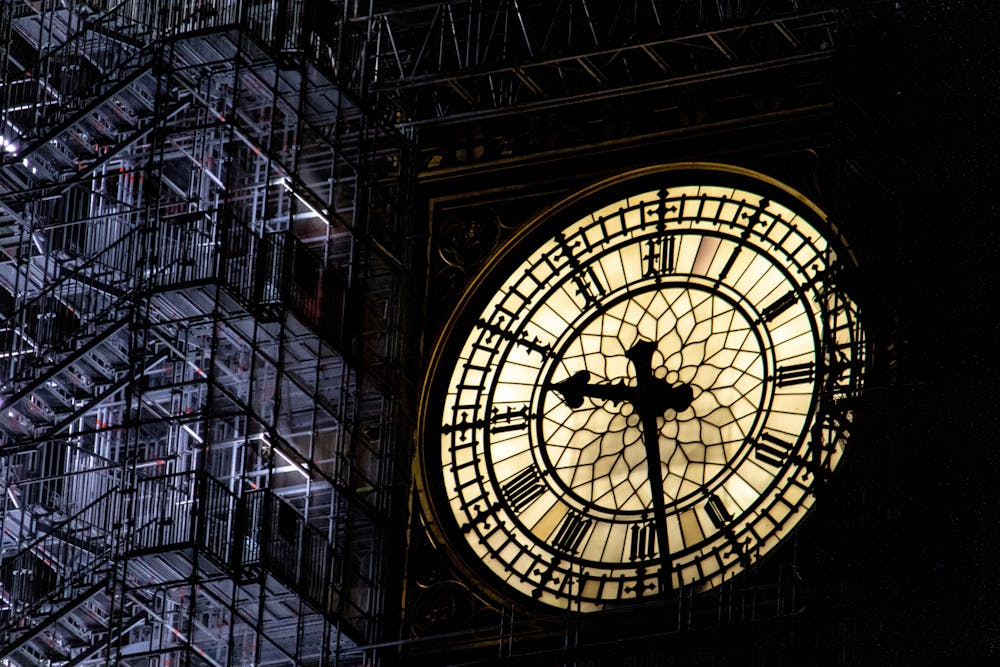
Soon we came to the subject of Big Ben, which Woolf uses as a motif through the book. [My friend] said that the way Big Ben interrupted the characters’ thoughts reminded her of how a notification from your phone can interrupt your stream of thought.

I had also noticed the motif of Big Ben, however I appreciated it as an element of structure and pacing in a book that had no chapters, in fact I had sometimes structured my reading sessions around the ringing of Big Ben in the book.

Another student, reading of the mental torment experienced by the returned soldier Septimus in Mrs Dalloway, gained a new perspective on people who don’t seem to fit in. Reflecting on her initially judgemental perception of a dishevelled man boarding her bus the student asked: “was he so different from Septimus? Wise and lost?”.

She then explained she gained a new and unexpected perspective on life:

[Woolf] gave me glasses I never knew I needed – lenses smeared with multiple fingerprints that enhanced rather than hindered the view.

She concluded that

to be a reader is to suspend rigid views, to consider and honour the perspectives of the characters one meets.

A third student reflected on the challenges of reading itself, and on the rewards of persisting when structure and characterisation are unfamiliar. The student said she set out wanting to be an “inspired reader” but confessed to feeling “frustrated” by Woolf’s “merciless indifference” to her characters in Mrs Dalloway.

In noting this frustration, the student had registered the novel’s lack of clear protagonist or plotline. The novel is difficult to read because, while we do see individual characters trying to interpret their lives as coherent stories, Woolf refuses to impose an artificial grand narrative.

After sticking with it, however, the student recognised the novel’s achievement:

There lies the beauty of it: the ordinary day captured in time and words as a novel.

This student’s bibliomemoir was a story of the dividends paid by sustained concentration and a flexible mindset.

One student wrote about how the ringing of Big Ben in Mrs Dalloway was similar to a phone alert.
Nick Fewings/Unsplash

A fourth student used the bibliomemoir to analyse how Jane Austen’s Northanger Abbey showed her the value of observing people closely, and has equipped her with resilience as a student facing the challenge of dyslexia:

I could not work out how to do the exact things my teachers wanted me to do. What I could do was learn to understand my teachers. By learning to watch them, like Austen watched people, and learning to understand them as people, I began to understand how to jump through their hoops.

While she couldn’t quantify the competencies reading books had given her, the student said she just knew books had formed who she was:

I cannot list the strategies that I employ when reading and writing […] I give all the credit to reading literature, to books like Northanger Abbey and writers like Jane Austen and so volunteer myself as an example of how reading literature is valuable in our era.

These examples revealed some of the many reasons new readers, even of the digital age, return to old books and old ways of reading them. The readers expressed an urgency for connection with narratives more complex than a news feed.


Read more:
If you can read this headline, you can read a novel. Here’s how to ignore your phone and just do it


They recognised that truthful self-reflection can be prompted by sustained engagement with fiction. They proved that connection with others, compassion and resilience are nurtured through a deepened understanding of story in the study of literature.

I can only conclude that for this group of readers, taking a book into their hands is a very deliberate act of identification with the bigger, shared story of reading.The Conversation

Kate Flaherty, Senior Lecturer (English and Drama) ANU, Australian National University

This article is republished from The Conversation under a Creative Commons license. Read the original article.

Unknown's avatar

The New York Times Bestsellers List


The link below is to an article that looks at why the New York Times Bestsellers List is ‘the’ list.

For more visit:
https://bookriot.com/2020/02/13/new-york-times-bestsellers-list/

Unknown's avatar

Falling Asleep While Reading


The link below is to an article that looks at falling asleep while reading – certainly an issue for me.

For more visit:
https://bookriot.com/2020/02/14/why-do-i-fall-asleep-when-i-read/

Unknown's avatar

Are People Reading Less Books/Ebooks?


The link below is to an article that asks ‘why people aren’t reading books anymore?’ It also briefly comments on other survey findings, which seem largely irrelevant to the main question of the article.

For more visit:
https://goodereader.com/blog/e-book-news/why-arent-people-reading-books-anymore