
The link below is to an article that looks at recycling ebook readers.
For more visit:
https://goodereader.com/blog/electronic-readers/learn-how-to-recycle-your-e-readers-responsibly

The link below is to an article that looks at recycling ebook readers.
For more visit:
https://goodereader.com/blog/electronic-readers/learn-how-to-recycle-your-e-readers-responsibly
The link below is to an article that looks at some of the many, many, many Trump books that are out there – and I’ve read a few.
For more visit:
https://www.nytimes.com/2020/08/01/us/politics/trump-books.html
The links below are to article reporting on the various shortlists for the 2020 Queensland Literary Awards.
For more visit:
– https://www.booksandpublishing.com.au/articles/2020/08/05/154726/queensland-literary-awards-2020-shortlists-announced/
– https://www.booksandpublishing.com.au/articles/2020/07/24/154184/queensland-literary-awards-2020-peoples-choice-shortlist-announced/
The link below is to an article reporting on the 2020 Educational Publishing Awards Australia (EPAA) shortlists.
For more visit:
https://www.booksandpublishing.com.au/articles/2020/07/24/154180/educational-publishing-awards-2020-shortlists-announced/
The links below are to articles reporting on the latest software update to Kobo ebook readers.
For more visit:
– https://the-digital-reader.com/2020/08/13/kobo-firmware-update-4-23-includes-major-changes-to-the-menus-interface/
– https://goodereader.com/blog/kobo-ereader-news/kobo-introduces-ebook-discovery
The link below is to an article that looks at Scribd’s play in the Spanish ebooks space.
For more visit:
https://goodereader.com/blog/e-book-news/scribd-is-making-a-big-play-for-spanish-ebooks
The links below are to articles reporting on the latest software update for the Nook.
For more visit:
– https://the-digital-reader.com/2020/08/12/barnes-noble-rolls-out-an-update-for-the-nook-ereader/
– https://goodereader.com/blog/barnes-and-noble-nook-ereader-news/barnes-and-noble-issues-new-update-for-the-nook
The link below is to an article reporting on the 2020 Singapore Book Awards winners.
For more visit:
https://publishingperspectives.com/2020/08/singapore-book-awards-2020-a-dessert-guide-wins-book-of-the-year-covid19/
Malachi McIntosh, Queen Mary University of London
In many ways, the current state of the world seems unprecedented. The last few years – but especially 2020 – have brought shocks that no one could have foreseen.
Although much headline news has been cause for anxiety, there have been a few notable moments of hope. For me, like so many, the worldwide protests in response to the murder of George Floyd have been among them. In the centre of the uprising’s hopeful surprises has been the way they’ve torn open space for conversations about race and racism in the UK.
Why don’t we teach all British schoolchildren about colonialism? Why does it take so much more convincing to have the statues of slaveowners removed than those of others responsible for past atrocities? Why were so many young people of colour so quickly mobilised to say “the UK is not innocent”, in solidarity with their peers on the streets in the United States?
With the boom in interest in the histories of colonialism, empire and the British civil rights movement in response to Black Lives Matter protests, has come an aligned boom in interest in Black British writing.
Candice Carty-Williams and Bernardine Evaristo won significant firsts for Black authors at the British Book awards – book of the year and author of the year, respectively. Reni Eddo-Lodge, author of Why I’m No Longer Talking to White People about Race, became the first Black Briton to top the paperback non-fiction chart, while Evaristo topped the fiction list.
Across social media and newspapers, reading lists proliferated, apparently responding to a hunger from readers of all backgrounds to gain knowledge of issues and the history of race and racism they’d never received in schools or universities.
For many in and on the fringes of the publishing industry, it’s felt hopeful that a moment of real recognition for Black British writing, in an echo of the attention being paid to Black British lives, has arrived.
But has it really? Although the accelerated pace of interest feels unique, the pattern – social unrest triggering readerly interest in the works of writers of colour – is, unfortunately, not.
Immediately after the second world war there was a similar boom. Britain was about to enter a long phase of decolonisation, and its demographic make-up, through waves of colonial then ex-colonial migration, was on course to permanently change. This opened up space and piqued curiosity for works from the most visible group at the centre of social transformation – at that time Caribbean emigrants.
As detailed in Kenneth Ramchand’s book The West Indian Novel and Its Background, from 1950 to 1964, over 80 novels by Caribbean authors, including classics like In the Castle of My Skin by by George Lamming and A House for Mr Biswas by VS Naipaul were published in London – far more than those published in the Caribbean itself.
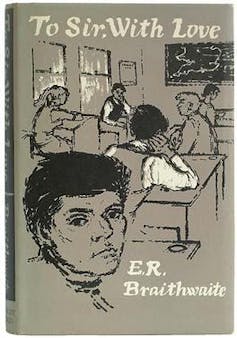
What’s most significant about that spike is that it didn’t last. As Caribbean migration waned after the passage of a series of restrictive immigration acts from 1962 to 1971, so did the opportunities for writers from Caribbean backgrounds.
This was evident in the fortunes of most of the those published in Britain post-war. The likes of Edgar Mittelholzer and John Hearne – then known and widely published – and even Samuel Selvon – now widely known and respected – found their works falling out of print.
Attention then shifted to Black writers from the African continent – primarily those from west Africa, like Chinua Achebe and Wole Soyinka – where the progress of decolonisation was taking dramatic turns. But this interest also waned.
There have been more recent booms, for example in the 1980s after the New Cross fire in 1981, which sparked protests in south London after 13 young black people were killed, and the Brixton uprising of the same year in response to excessive and, at times, violent policing in the area.
Then, around the turn of the millennium, rechristened “multicultural” writing rose, alongside visible demographic change, through the successes of Zadie Smith, Andrea Levy, Monica Ali and others. These were breakthroughs significant enough for Wasafiri, the magazine where I work and which has been championing Black British and British Asian writing since 1984, to declare in 2008 that Black Britons had “taken the cake” of British letters.
Yet in 2016, eight years later, only one debut novel from a Black British male author, Robyn Travis, was published in the UK.
In her memoirs, the British writer and editor Diana Athill calls the post-war boom in writing from then-colonies a result of short-lived “liberal guilt” combined with curiosity about the peoples and nations disconnecting from Britain. There are concerning signs along these lines in our present.
In their recent report – a result of over a hundred interviews with those in the field – Anamik Saha and Sandra van Lente reveal that British publishers feel both that they ought to publish more writers of colour and that those same writers belong to a particular niche with limited quality and limited appeal to their target readers.
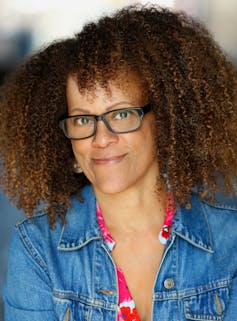
Anticipating this conversation in her 2019 essay What a Time to Be a (Black) (British) (Womxn) Writer, first published in the book Brave New Words on the eve of her Booker Prize win, Bernardine Evaristo both celebrated and questioned the growing body of Black British writing.
Something, she notes in the essay, is definitely shifting, but she wonders how far it will really shift – if Black Britons are being published in greater numbers but on singularly narrow terms. Like their forebears in the 1950s, 1960s, 1980s and early 2000s, are there only certain stories Black writers are allowed to tell? Only certain messages they’re expected to convey?
While it is far too early to make a judgement on how long the current boom will last, the way this moment repeats a pattern of social change followed by publishing frenzy is at least worthy of attention – and perhaps scepticism. So often the present seems unprecedented, but in order for it to be truly revolutionary, novel, status-quo shifting – liberating – the changes we see within it have to be sustained.
Malachi McIntosh, Emeritus lecturer in British Black and Asian Literature, Queen Mary University of London
This article is republished from The Conversation under a Creative Commons license. Read the original article.

Irene Gammel, Ryerson University
We rarely associate youth literature with existential crises, yet Canada’s youth literature offers powerful examples for coping with cultural upheaval.
As a scholar of modernism, I am familiar with the sense of uncertainty and crisis that permeates the art, literature and culture of the modernist era. The modernist movement was shaped by upheaval. We will be shaped by COVID-19, which is a critical turning point of our era.
Societal upheaval creates a literary space for “radical hope,” a term coined by philosopher Jonathan Lear to describe hope that goes beyond optimism and rational expectation. Radical hope is the hope that people resort to when they are stripped of the cultural frameworks that have governed their lives.
The idea of radical hope applies to our present day and the cultural shifts and uncertainty COVID-19 has created. No one can predict if there will ever be global travel as we knew it, or if university education will still to be characterized by packed lecture halls. Anxiety about these uncertain times is palpable in Zoom meetings and face-to-face (albeit masked) encounters in public.
So what can literature of the past tell us about the present condition?
Consider Canadian author L.M. Montgomery, a master of youth literature. In her books, Montgomery grapples with change. She provides examples of how youth’s visions and dreams shape a new hopeful future in the face of devastation. I have read and taught her novels many times. However unpacking her hope-and-youth-infused work is more poignant in a COVID-19 world.
Her pre-war novel Anne of Green Gables represents a distinctly optimistic work, with a spunky orphan girl in search of a home at the centre. Montgomery’s early work includes dark stories as subtexts, such as alluding to Anne’s painful past in orphanages only in passing. Montgomery’s later works place explorations of hope within explicitly darker contexts. This shift reflects her trauma during the war and interwar eras. In a lengthy journal entry, dated Dec. 1, 1918, she writes, “The war is over! … And in my own little world has been upheaval and sorrow — and the shadow of death.”
COVID-19 has parallels with the 1918 flu pandemic, which killed more than 50 million people and deepened existential despair. Montgomery survived the pandemic. In early 1919, her cousin and close friend Frederica (Frede) Campbell died of the flu. Montgomery coped by dreaming, “young dreams — just the dreams I dreamed at 17.” But her dreaming also included dark premonitions of the collapse of her world as she knew it. This duality found its way into her later books.
Rilla of Ingleside, Canada’s first home front novel — a literary genre exploring the war from the perspective of the civilians at home — expresses the same uncertainty we feel today. Rilla includes over 80 references to dreamers and dreaming, many through the youthful lens of Rilla Blythe, the protagonist, and her friend Gertrude Oliver, whose prophetic dreams foreshadow death. These visions prepare the friends for change. More than the conventional happy ending that is Montgomery’s trademark, her idea of radical hope through dreaming communicates a sense of future to the reader.
The same idea of hope fuels Montgomery’s 1923 novel Emily of New Moon. The protagonist, 10-year-old Emily Byrd Starr, has the power of the “flash,” which gives her quasi-psychic insight. Emily’s world collapses when her father dies and she moves into a relative’s rigid household. To cope, she writes letters to her dead father without expecting a response, a perfect metaphor for the radical hope that turns Emily into a writer with her own powerful dreams and premonitions.
Nine decades later, influenced by Montgomery’s published writings, Jean Little wrote an historical novel for youth, If I Die Before I Wake: The Flu Epidemic Diary of Fiona Macgregor. Set in Toronto, the book frames the 1918 pandemic as a moment of both trauma and hope. Twelve-year old Fiona Macgregor recounts the crisis in her diary, addressing her entries to “Jane,” her imaginary future daughter. When her twin sister, Fanny, becomes sick with the flu, Fiona wears a mask and stays by her bedside. She tells her diary: “I am giving her some of my strength. I can’t make them understand, Jane, but I must stay or she might leave me. I vow, here and now, that I will not let her go.”

A decade later, Métis writer Cherie Dimaline’s prescient young adult novel The Marrow Thieves depicts a climate-ravaged dystopia where people cannot dream, in what one of the characters calls “the plague of madness.” Only Indigenous people can salvage their ability to dream, so the protagonist, a 16-year-old Métis boy nicknamed Frenchie, is being hunted by “recruiters” who are trying to steal his bone marrow to create dreams. Dreams give their owner a powerful agency to shape the future. As Dimaline explains in a CBC interview with James Henley, “Dreams, to me, represent our hope. It’s how we survive and it’s how we carry on after every state of emergency, after each suicide.” Here, Dimaline’s radical hope confronts cultural genocide and the stories of Indigenous people.
Radical hope helps us confront the devastation wrought by pandemics both then and today, providing insight into how visions, dreams and writing can subversively transform this devastation into imaginary acts of resilience. Through radical hope we can begin to write the narrative of our own pandemic experiences focusing on our survival and recovery, even as we accept that our way of doing things will be transformed. In this process we should pay close attention to the voices and visions of the youth — they can help us tap into the power of radical hope.
Irene Gammel, Professor of Modern Literature and Culture, Ryerson University
This article is republished from The Conversation under a Creative Commons license. Read the original article.
 At the BookShelf

You must be logged in to post a comment.