
The link below is to an article taking a look at some short story collections from 2020.
For more visit:
https://lithub.com/here-are-a-few-more-notable-short-story-collections-from-2020/

The link below is to an article taking a look at some short story collections from 2020.
For more visit:
https://lithub.com/here-are-a-few-more-notable-short-story-collections-from-2020/
The links below are to articles taking a look at the original Kindle. All I can say is ‘wow, it has come a long way.
For more visit:
– https://blog.the-ebook-reader.com/2020/11/19/looking-back-at-1st-kindle-its-hard-to-believe-anyone-would-buy-one/
– https://www.geekwire.com/2017/rekindling-amazons-old-flame-10-years-later-can-get-original-kindle-e-reader-work/
The link below is to an article that takes a look at perfumes that smell like books.
For more visit:
https://goodereader.com/blog/technology/the-hot-new-trend-are-perfumes-that-smell-like-books
Ashley Morgan, Cardiff Metropolitan University
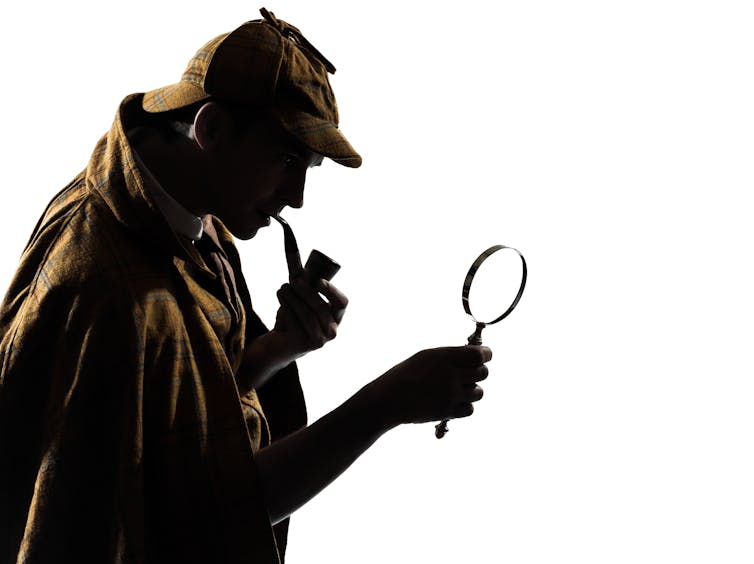
Sherlock Holmes is the most famous detective of all time. Since he was imagined into creation in 1892 by the young Scottish doctor Arthur Conan Doyle, there has been hardly a decade in which a play, television series, film or book about Sherlock Holmes has not been produced.
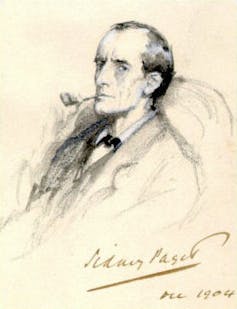
In 2010, a fresh take on Sherlock Holmes burst onto British screens. This contemporary Sherlock, starring Benedict Cumberbatch, inspired a whole new level of fandom and increased sales of the original books by 53%. People were especially taken with Cumberbatch’s flirty sex appeal. Hot on his heels came an American version, Elementary, in 2012.
In both adaptations, Sherlock’s brilliance and skills of deduction are unmatched. While I really enjoyed these shows, I was taken aback by Sherlock’s rudeness, exasperation, his disparagement of others, his desire to dominate and his latent violence. I saw Sherlock as a toxic man. Not knowing the books, I wondered where this came from, so I began reading them.
In one of the early stories, A Scandal in Bohemia, Doyle describes Holmes’s perspective of women:
All emotions […] were abhorrent to his cold, precise but admirably balanced mind. He was, I take it, the most perfect reasoning and observing machine that the world has seen […] He never spoke of the softer passions, save with a gibe and a sneer.
This is one of the very few descriptions of the character’s personality, which suggests that male brilliance relies on being totally unemotional. This conforms to the Victorian ideal of “muscular Christianity”, the idea that a healthy, muscular masculine body would lead to a healthy mind, and “manliness” enacted over social class and gender.
Although the concept of toxic masculinity sounds contemporary, it actually has roots very firmly in the past. Masculinity researchers have defined toxic masculinity as a performance of “traditional” male gender roles exhibited by a tendency to dominate others, a predisposition to violence, and to be emotionally cold and distant. It can also be expressed through highly competitive behaviour, or the desire to be the sole source of information – someone who thinks they are right about everything in every sphere. Men like Donald Trump, for example.
Holmes is obviously not akin to Trump. To start, with Holmes is a genius, and he hardly exhibits the same level of toxic behaviours that Trump does. But there are elements there. This is unsurprising, given that some of these features are seen in the original text: Conan Doyle wrote Sherlock Holmes at a time when traditional masculine values were openly venerated.
Nevertheless, when I was asked to write a book chapter on toxic masculinity in popular culture, I immediately thought of Sherlock and Elementary as useful examples. I felt that was an area that had not yet been explored in academic research, yet I felt it palpably on the screen.
Conan Doyle himself refers to Holmes as a machine, and some academics have suggested that his lack of emotion is both alien and mechanistic. But the recent TV adaptations are contemporary portrayals of Sherlock Holmes, so the original “mechanistic” man of the books has necessarily been updated.
Arguably, his poor social skills, sneering and derision of others are played for laughs: he needs to be likeable, after all. In the BBC version, he also refers to himself as a sociopath and Watson apologises for his “borderline Aspergers” – this, as I have previously argued, makes him seem more human.
Yet such comments and armchair diagnostics are contentious, not least because true sociopaths would never refer to themselves as such. All this left me thinking about the kind of man Sherlock might be, when divorced from his brilliance at detection. So I began to analyse elements of Sherlock’s behaviour that might be construed as toxic: in particular coldness, lack of emotion, shutting people down, jibes and sneers.
These are some of the classic signs of toxicity, and both contemporary TV adaptations of Sherlock Holmes are full of them, with greater incidences in Sherlock than Elementary. For example, the BBC Sherlock often tells people around him to “shut up” to allow him to concentrate, or because he finds them annoying.
He takes every opportunity to deride the police, often insisting on being the sole source of information. He is always exasperated at other people’s lack of brilliance: “Dear God what is it like in your tiny little brains? It must be so boring!” While superiority might be a common trait in brilliant people, what makes it toxic is that Sherlock projects himself as totally unique, creative and the answer to everyone’s problems, while putting everyone else down.
Elementary presents a quietly different, though no less toxic Sherlock. Here he is a pedantic Englishman, who corrects everyone’s grammar, overrides other detectives, and is disparaging to women and men. This is a more self-aware Sherlock than Cumberbatch’s. But he remains domineering, and imperious: “I am smarter than everyone I meet Watson, I know its bad form to say it, but in my case, it’s a fact.”
Toxic masculinity is a contentious issue and some consider it to encompass traits which contribute to the dominance and brilliance of some men. Arguably, Sherlock Holmes is widely understood as the most brilliant detective of all time.
In this context, I found it disappointing that the toxic elements of Sherlock’s character were not further challenged in the TV shows. While he is not actually violent, unlike many toxic men, and the characters around him do call him out on his behaviours, especially Watson, his intelligence is still understood through his toxic masculinity – especially in Sherlock, where it is presented as sexy. I find this problematic, especially in the context of contemporary society, where we frequently see toxicity demonstrated by men in power.
Ashley Morgan, Masculinities Scholar, Cardiff Metropolitan University
This article is republished from The Conversation under a Creative Commons license. Read the original article.

Chinonye Ekwueme-Ugwu, University of Nigeria
Everyone dies. Everything that has life must someday relinquish it. But that exit is never final. Plants and animals are generally converted into new states and reabsorbed into nature. Human beings remain alive in people’s memories for varying degrees of time. And if you leave a legacy behind, your life will truly begin after your physical death.
The passing of Nigeria’s foremost poet and playwright, Professor J.P. Clark on 13 October, 2020, has reinforced this belief.
Thousands of scholars and and readers who encountered him through his literature retain him in their memories. They also transfer his existence to future generations looking for excellence in the arts.
Throughout his exemplary life, Clark touched on various issues affecting the globe. He displayed a thorough knowledge of his world through his poems.
His writing explored politics, arts and the socio-cultural character of humans. His intimacy with nature, conveyed via his poems, has made him a favourite of eco-conscious readers.
Clark’s exploration of the intersection between our natural environment and literature is an inspiration to writers and critics. He often found ways to accommodate nature, even when he addressed the mundane issues within politics and academia. His viewpoints can be found in his poetry collections The Casualties and Incidental Songs for Several Persons. His poem, The Usurpation, is a great example.
Read more:
J.P. Clark: the ‘pepper’ of the Niger Delta activism stew
Clark’s constant ecological imagery shows great knowledge of, and strong attachment to, natural entities. In all their dealings, human beings operate within the natural realm, interacting with other non-human entities.
I read Clark’s poems in the 1980s. My favourites were Night Rain, Streamside Exchange and Abiku. The stories in those poems often excited feelings of empathy with the human characters.
I revisited those poems 35 years later and realised the crucial influence of the natural environment in his work. Many of his poems set in the riverine areas of Nigeria’s Niger Delta, “embody environmental metaphors, capable of projecting authentic African eco-lit” according to a study of “natural trajectories” in the poems.
Read more:
John Pepper Clark-Bekederemo: Nigeria’s bard, playwright and activist
His exploration of nature in his poems stimulates a romantic awareness of the African ecosystem, that goes beyond the current agitations of environmental justice in Nigeria. They project 21st century African literary traditions beyond the domains of activism.
Clark’s works are multifaceted. His attachment to his home region, coupled with his training in the arts and the humanities may have conditioned him towards exploring nature in his works. And he did so alongside other nagging socio-political and economic themes that he equally projected.
Chinonye Ekwueme-Ugwu, Lecturer, University of Nigeria
This article is republished from The Conversation under a Creative Commons license. Read the original article.
The link below is to an article reporting on the winner of the Barbara Jefferis Award, Lucy Treloar for ‘Wolfe Island.’
For more visit:
https://www.booksandpublishing.com.au/articles/2020/11/19/159817/trelor-wins-2020-barbara-jefferis-award/
The link below is to an article reporting on the shortlist for the 2020 Voss Literary Prize.
For more visit:
https://www.booksandpublishing.com.au/articles/2020/11/19/159827/voss-literary-prize-2020-shortlist-announced/
The link below is to an article reporting on the 2020 Reading Women Award Shortlist.
For more visit:
https://lithub.com/announcing-reading-womens-2020-nonfiction-award-shortlist/
The link below is to an article that takes a look at using Amazon’s Prime Reading.
For more visit:
https://www.howtogeek.com/699920/how-to-download-free-ebooks-with-amazon-prime/
The link below is to an article that takes a look at how to use Reedsy Book editor.
For more visit:
https://www.makeuseof.com/reedsy-book-editor-write-publish-book/
 At the BookShelf

You must be logged in to post a comment.