Unknown's avatar

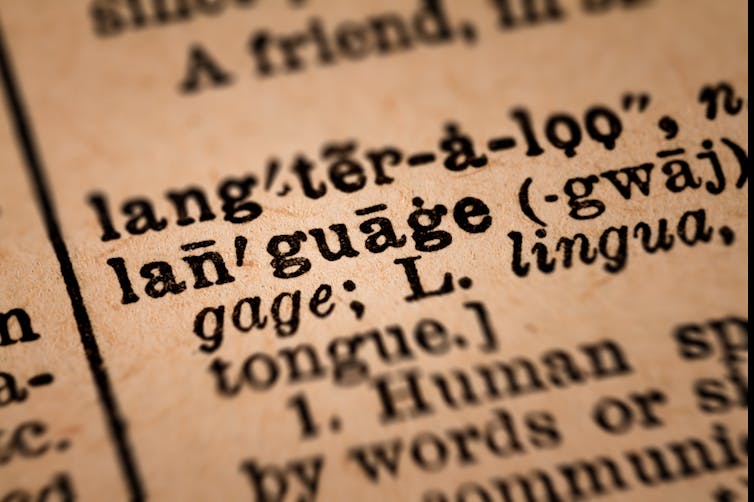
Five words that don’t mean what you think they do


Benoit Daoust/Shutterstock

Simon Horobin, University of Oxford

Articles of this kind usually assert that a word’s correct meaning lies in its earliest uses, while later developments are corruptions. Disinterested doesn’t mean “not interested” but “impartial” they complain. Decimate must refer to the destruction of precisely one-tenth of something they protest. Fulsome can only mean “insincere” rather than “very full” they cry.

While this may seem logical enough, in some cases it doesn’t quite work. Here we apply the principle of earliest meaning to five common words and we get some rather unexpected results.

1. Pretty

This word is from Old English prættig, “cunning”, from præt “trick” – unrelated to prat “idiot”, which originally referred to the buttocks (hence pratfall: a fall onto the backside).

By the 15th century, pretty described something cleverly made, artful or ingenious. This led to its use to describe someone attractive or good-looking – most commonly a woman or child, although the diarist Samuel Pepys refers to one Dr Clarke as a “very pretty man”.

Ironic uses of pretty to refer to something unpleasant are the origins of phrases like “pretty pass”, “pretty state of affairs” and “pretty kettle of fish”; the latter more often found in the phrase “different kettle of fish”. The kettle here isn’t the kind we use to make tea, but rather a large cooking vessel (from Latin catillus).

2. Tall

Tall is from an Old English word that meant “swift” or “active”. By the 15th century, it had come to mean “handsome” or “elegant”. Its use to mean “skilful” gave rise to the expressions “tall of hand”, meaning “handy” and “tall of tongue”, meaning “good at arguing”.

The 16th century saw the emergence of uses relating to height; subsequent metaphorical extensions include “large”, as in “tall order”, and “exaggerated”, from which the phrase “tall story” emerged. These changes in meaning may seem surprising, but several common adjectives that describe our physical appearances began life referring to dexterity and pliancy. Handsome, as the name suggests, originally meant “easy to handle”, “clever” meant “dexterous”, and “buxom” meant “obedient” (from “bow” meaning “to bend the neck”).

3. Silly

Someone silly in Old English was “happy” or “fortunate”, and later “pious” or “holy”. Because the innocent are easily taken advantage of, it came to signal a person deemed “weak” or “helpless”. Further negative associations are apparent from its use to mean “rustic” or “lacking sophistication”, from which our modern sense of “foolish” emerged.

This process, whereby a compliment becomes a term of abuse, is known to linguists as “pejoration” (from Latin peior “worse”). Its opposite, “amelioration” (from Latin melior “better”), can be seen in the history of “nice”, which originally meant “foolish” (from Latin nescius “ignorant”).

4. Naughty

In Old English, to be naughty was to be poor, literally “to have naught” or “nothing”. It was later used to describe someone immoral and, in a weakened sense, mischievous or disobedient. The particular association with badly behaved children led to the “naughty corner” – a place of isolation to which a child may be sent as a punishment.

Perhaps it was the naughty corner’s Victorian associations that led to the invention of the “naughty step”, a form of discipline advocated by the British reality TV show Supernanny, whose transatlantic success led to its adoption in the US.

Its use to mean “indecent” survives into modern usage in phrases like “naughty but nice”. This phrase was promoted by adverts for cream cakes in the 1980s and was the brainchild of the novelist Salman Rushdie, while he was working as a copywriter. “Naughty bits”, referring to the genitals, was first recorded in a Monty Python sketch in 1970. This euphemism was considered too explicit for American audiences and was bleeped out when the show was broadcast in the US.

5. Sad

This word is from Old English sæd, which meant “full”, as the German satt still does. In English, it has been replaced in this sense by “satisfied” or “sated”, from Latin satis “enough”.

By the 14th century, sad meant “settled”, “firm” or “resolute” and from this the senses “serious” and “grave” developed.

The modern use of sad to mean “sorrowful” can be traced back to Old English, where the word already carried a sense of being weary or tired of something, reflecting the way that satisfaction quickly shades into ennui. Surprisingly, “happy” was brought to us by the Vikings who plundered the north of England and is borrowed from the Old Norse happ, which filled the gap created by the changing use of “silly”. It originally meant “fortunate” – a sense preserved in the phrase “by happy chance”.

To suggest that we are using words incorrectly, therefore, is to ignore the various ways in which meanings of words change over time. In the case of fulsome, “very full” is the earlier of the two senses. Its use to mean “excessive” arose out of “fulsome apologies” that were felt to be insincere – as Priti Patel found to her cost in her resignation letter of 2017.

The looser use of decimate to mean “devastate” is recorded from the 17th century, so can it really be wrong today? And if we did insist on only sanctioning its earliest use – put to death one in every ten of an army of mutinous soldiers – how often would we use it? So feel free to be disinterested in this post, or to lavish it with fulsome praise. Attempting to constrain the uses of words is plain silly – in its modern rather than its medieval meaning.The Conversation

Simon Horobin, Professor of English Language and Literature, University of Oxford

This article is republished from The Conversation under a Creative Commons license. Read the original article.
Unknown's avatar

Virginia Woolf on the magic of going to the cinema


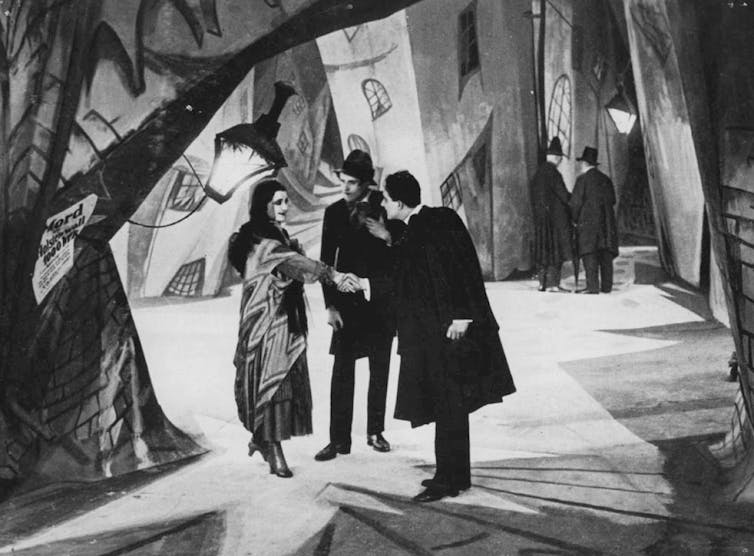
Still from the German silent horror film The Cabinet of Dr Calgari (1920).
Wikimedia

Lucy Bolton, Queen Mary University of London

These cinema-starved times have made me pine for the magic of the movies on the big screen. The convenience and comfort of watching DVDs and streamed films at home are, of course, wonderful. Lockdown is inconceivable without them. But the experience of being in the cinema is not possible to replicate from your sofa. The sensory overwhelm and immersion is what makes a trip to the cinema a truly particular experience, and I’ve been contemplating what it is that makes it so special.

The writer Virginia Woolf wondered the same thing after a trip to the cinema in 1926. How might watching a film be so different from reading a novel or attending a concert? For Woolf, the cinema was a new art form, technically advanced but, as yet, not able to show its potential in how it might depict our lives to us.

On the 80th anniversary of her death, her prescient thoughts in the essay, The Cinema, have gained new resonance as we all pine to see film the way it is supposed to be seen, up on the silver screen.

Movie magic

Philosophers who pronounce that we are “at the fag-end of civilisation” and who believe everything has already been said, have, Woolf declares, “presumably forgotten the movies”. By this, she means that film presents, at that time, a brand new way to “see life as it is when we have no part of it” – to watch, in other words, love, hate, fear and anger all play out on the screen in a form that transfixes us through images.

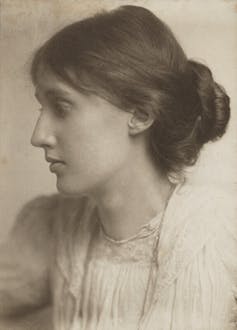
Photograph of Virginia Woolf.
Virginia Woolf.
National Portrait Gallery, London., CC BY-NC

Woolf sees the wonderment on the faces of the moviegoers, that takes people back to their primitive pleasures. The riches on offer in the cinema make it seem as if “we are peering over the edge of a cauldron in which fragments seem to simmer, and now and again some vast form heaves and seems about to haul itself up out of chaos.”

What is so interesting about Woolf’s perceptive assessment of the potential of the cinema is that she sees its possibilities for enlarging and surprising our consciousness and imagination. She is not simply referring to newsreel footage of the King, or the Grand National, although she considers that even with these images our eyes are being tricked into seeing such things as being more real or real with a different reality from that which we perceive in daily life.


Read more:
Virginia Woolf: writing death and illness into the national story of post-first world war Britain


When we are watching these occurrences without actually being there, she observes that:

We have time to open our minds wide to beauty and register on top of it the queer sensation — this beauty will continue, and this beauty will flourish whether we behold it or not.

An art of its own

But what mainly occupies Woolf is how filmmakers are going to make an art of their own. While she recognises that there are novels to be adapted, focusing on Anna Karenina, she is adamant that film can do something very different from just telling a story that has already been told.

She also identities the difficulties film might encounter when creating images of characters of whom who we already have our own mental images from reading. No, she says, it is when we give up trying to match pictures with a book, that we see the possibility for what cinema might create “if left to its own devices”.

Woolf writes about seeing the hugely influential German Expressionist horror The Cabinet of Dr Caligari, and how a shadow shaped like a tadpole appeared quivering in the corner of the screen: “It swelled to an immense size, quivered, bulged, and sank back again into nonentity”.

She describes how this image seemed like something monstrous from within the killer’s brain – but in fact, was a flaw in the film! However, it led Woolf to this fabulous insight: “The monstrous quivering tadpole seemed to be fear itself, and not the statement ‘I am afraid’”.

The realisation that an image on the cinema screen, even just a shadow, at a certain moment, can create an emotion, a mood, and an experience, without words, shows prescient insight into the power of cinema.

She wonders whether there is a secret language, of forms and symbols, that cinema can make visible. A language unlike anything before that can express emotion in hitherto unseen ways. To unlock this, Woolf insists that cinema must find its own images and symbols, and these will be quite unlike the objects in real life: “of such movements and abstractions the films may in time come to be composed”. She sees that film could then present us with clashing emotions – happiness and sadness at once, for instance – that a writer can only toil in vain to convey, more akin to dreams, in colour, sounds and movements.

For Woolf, cinema’s “immense dexterity and enormous technical proficiency” does not quite know what to do with itself yet. And that is its task: to find what it can do specifically more than the novel, the poem, or the piece of music. I find it inspirational and moving to read what Woolf had in mind for the cinema’s future when she wrote this in the mid-1920s. And what she identified – the unique and ineffable power of images on screen – is still what makes me desperate to get back to the cinema as soon as possible.The Conversation

Lucy Bolton, Reader in Film Studies, Queen Mary University of London

This article is republished from The Conversation under a Creative Commons license. Read the original article.

Unknown's avatar

Nawal El Saadawi’s intellectual life reflected eight decades of Arab society and culture


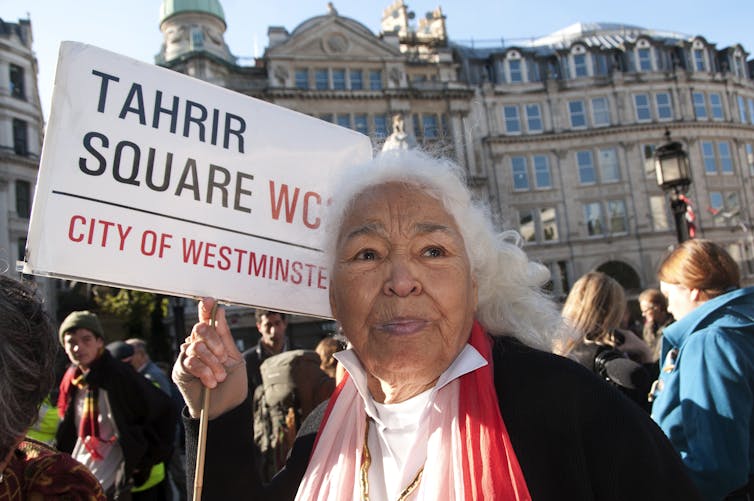
El Saadawi protesting on her 80th birthday.
In Pictures Ltd./Corbis via Getty Images

Amal Amireh, George Mason University

Egypt’s Nawal El Saadawi was the foremost Arab feminist thinker of the past 50 years. Her ideas inspired generations of Arab women, but also provoked controversy and criticism.

She was prolific, publishing over 50 books of fiction and non fiction in Arabic, many translated and receiving global attention.

Focusing on sex, politics, and religion, El Saadawi believed that patriarchy, capitalism and imperialism are intertwined systems that oppress Arab women and prevent them from reaching their full potential.

The trajectory of El Saadawi’s intellectual life follows major developments in Arab society and culture from the 1940s to the present. To understand her contribution, it’s important to see her in the context of the historical moment that made her work possible, necessary and provocative.

Born into change

Born in 1931 in the village of Kafr Tahla near Cairo, into a middle class family, El Saadawi was the second of nine children. She came of age at the cusp of key changes such as the drive for girls’ education pioneered by an earlier generation of activists. She, in fact, attended a school established by Nabawyya Mousa, an activist for women’s education.

Supported by a father who believed in the importance of education for social mobility, El Saadawi attended the British School. Her academic excellence allowed her to evade early marriage and receive a scholarship to study medicine at the University of Cairo. She graduated in 1955 with a specialisation in psychiatry.


Read more:
Nawal El Saadawi: Egypt’s grand novelist, physician and global activist


At university she was exposed to nationalist, anti-colonialist politics. She participated in student demonstrations against the British and married a fellow activist. They had a daughter but divorced. Her second marriage ended in divorce after her husband stipulated she stops writing. Her third marriage, to Sherif Hetata a novelist and former political prisoner, lasted over 40 years but also ended in divorce. They had a son.

After medical school, El Saadawi returned to her village. Working as a countryside physician exposed her to class and gender inequities that further shaped her thinking. She witnessed first hand the harmful consequences of entrenched patriarchal practices such as female genital cutting and defloration inflicted on the bodies of poor village women, detailing some of her experiences in Memoirs of a Woman Doctor (1958).

Travels around the world

In 1963, she was appointed director general for public health education and was able to travel to international forums and conferences. These travels, documented in My Travels Around the World (1991), gave her perspective on the struggles of other women. She always asserted that patriarchy is a universal system of oppression, not only restricted to Arab or Muslim societies.

Thus while she did not hesitate to call female genital cutting “barbaric” she also resisted its sensationalisation in the West as a mark of difference between first world and third world women. She insisted that all women are circumcised if not physically then “psychologically and educationally”. She rejected the idea that western women are needed to help liberate their Arab or African sisters.

But it was the 1967 Six-Day War that pushed El Saadawi to a more radical public position regarding gender. This crushing Arab military defeat by Israel created a crisis for Arab intellectuals generally, compelling them to take a surgical look at their societies.

Feminist manifestos

El Saadawi believed that patriarchy and gender inequalities are root causes for Arab defeatism. She rose to fame in the 1970s with a series of feminist manifestos that put her on the map. Women and Sex (1971) was the first. In it, she condemned the violence committed against women’s bodies including virginity tests, honour killings, wedding night defloration and genital cutting.

A woman looks directly to camera, her white hair done in dramatic fashion, her lips appear to be talking.
El Saadawi in 1986.
Anthony Lewis/Fairfax Media via Getty Images

She exposed her society’s ignorance and double standards regarding women’s bodies and sexuality. Her first chapter, for instance, was focused on the clitoris and its importance for women’s sexual pleasure. She argued that exploitative marriages are no different from prostitution.

Using her medical knowledge, she argued that differences between the sexes are not natural but socially constructed by patriarchal practices – and can therefore be changed through legislation and education. However, she insisted that gender justice will not be possible under a capitalist society. Soon after publication, she lost her job and the magazine she had founded was closed down.

But the positive reception of her work among the public encouraged her to write other polemics including The Female is the Origin (1974), Woman and Psychological Struggle (1976), Man and Sex (1976) and The Hidden Face of Eve (1977). Combining anecdotes of patients, her biography, medical and social research and polemic against gender injustice, she spoke with the authority of a physician, the knowledge of an intellectual and the passion of an injured woman.

The power of fiction

El Saadawi viewed herself first and foremost as a novelist, using fiction to express many of her ideas regarding sex and society. Her first novel to attract attention, for example, was Woman at Point Zero (1983). Her main character, working class Firdaus, experiences sexual exploitation and assault and eventually is executed by the state for killing her pimp.

While she made significant contributions to the Arab feminist novel, El Saadawi’s fiction was received less enthusiastically than her other work, criticised for being repetitive and her female characters dismissed as one-dimensional.

Religious backlash

But the creativity of fiction allowed a space to critique another taboo in Arab society – religion. Her later works were written in response to a religious backlash that had taken over public life in Egypt and beyond.

In The Fall of the Imam (1987), for instance, she condemns the patriarchal regime of President Anwar el-Sadat for using the authority of religion to shore up political legitimacy and marginalise dissidents. The novel was banned by Al Azhar, Egypt’s highest religious authority. In it and God Dies by the Nile (1985), the El Saadawian heroine kills the male authority figures who use religion to oppress them.

In The Innocence of the Devil (1994), El Saadawi goes further: she makes God and the Devil characters in a mental asylum and directly indicts both Islam and Christianity as oppressive of women. Her critique of religion made her an easy target for fundamentalists in Egypt. Her hostility to political Islam was rooted in the personal experience of censorship and death threats.

Her critiques also alienated two other kinds of readers: self-identified Muslims and liberal western academics. As religion was playing a more prominent role in public life in Egypt, many found her views too radical.

For her dissent, she paid a price. In 1981 she was thrown in jail by the Sadat regime along with a thousand other intellectuals. There she wrote Memoirs from the Women’s Prison (1986) using an eye pencil smuggled to her by a sex worker on toilet paper given to her by a murderer.

After her release, she formed The Arab Woman Solidarity Association. It was closed down by Hosni Mubarak’s government in 1991. Unwaivering, she ran against Mubarak in the 2004 presidential elections. During the 2011 uprising that deposed Mubarak, El Saadawi, in her 80s, held seminars in tents in Tahrir Square to radicalise a new generation.

This article is based on Amireh’s chapter in the book Fifty-One Key Feminist Thinkers (Routledge).The Conversation

Amal Amireh, Associate professor, George Mason University

This article is republished from The Conversation under a Creative Commons license. Read the original article.
Unknown's avatar

From erasure to recategorizing: What we should do with Dr. Seuss books


In our current context of rapidly improving technology, archives and museums must constantly make tough decisions about what to keep, what to refuse or even remove.
(Shutterstock)

Monica Eileen Patterson, Carleton University

Was the decision to stop publishing six obscure Dr. Seuss titles containing racist imagery and messaging an erasure of history?

Media coverage of the controversy has presented it as an example of censorship, an attack on free speech and yet another example of cancel culture. These reactions are rooted in both a lack of awareness of the challenges and realities of maintaining collections and a false understanding of history.

Dr. Seuss Enterprises is a children’s entertainment company that functions as both a business and a family estate dedicated to preserving and promoting Theodor Seuss Geisel’s legacy. After consulting with educators and other experts, they decided to halt publication of six books because, in their words, they “portray people in ways that are hurtful and wrong.” An examination of many of the images and text in question confirmed the use of racist tropes in depicting Asian and Black characters.

This decision reflects norms in publishing, archiving and collecting.

Making space for new materials

Publishing companies regularly review their titles and sales to determine and reassess print runs. This is a necessary part of making space for new publications, and maintaining desirable profit margins.

In this context, thinking about museums and archives is helpful.

For cultural institutions tasked with collecting, preserving, ordering and exhibiting, utility is derived from selectivity: not everything can be saved, or it would prove so overwhelming as to render everything inaccessible. That is why galleries, libraries, archives and museums don’t only collect new materials, but also regularly remove them.

The role of curating is key: as both a form of care taking and as a selection process that chooses specific works. Exhibits can serve a variety of roles: they can educate, inspire, call to action, memorialize, entertain. And as new works are being produced at unprecedented rates, space must be made for new material.

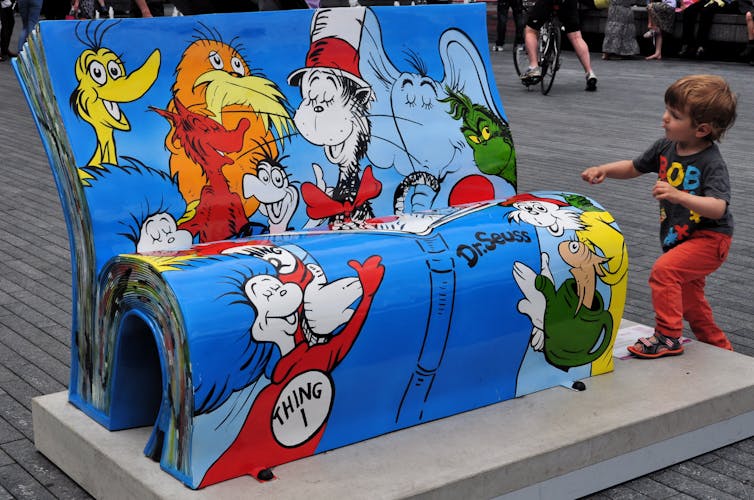
A child approaches a Dr. Seuss BookBench sculpture
A child approaches a Dr. Seuss BookBench sculpture in London, U.K.
(Shutterstock)

History is not neutral

Even in our current context of rapidly improving technology, archives and museums must constantly make tough decisions about what to keep, what to refuse or even remove — this often causes controversy.

Whether focused on removing confederate and colonial statues, or retiring a small handful of Dr. Seuss books, these moral panics and culture wars are often rooted in a false premise; that anything from the past comes from a pure and total point of origin, in other words, that representations of confederate soldiers tell a “true,” authentic and complete story that is neutral and objective.

“Don’t erase history!” people often cry, as if history itself wasn’t full of erasures from the beginning.

In historian and anthropologist Michel-Rolph Trouillot’s foundational book Silencing the Past, he examines the relationship between history, power and silence to explore the ways that certain experiences, historical actors and events are kept out of archival collections and the historical knowledge they help construct.

Trouillot illustrates this through highlighting the Haitian revolution: the possibility of Black slaves successfully revolting against their white colonizers was so inconceivable within the western ideology of white supremacy that it was effectively written out of history.

Recategorizing remnants of racism

The racist pages of Dr. Seuss books are not in danger of being lost forever, but recategorized as evidence of outdated attitudes grounded in racial denigration and stereotyping that no longer have a place in popular culture.

Scholars of racism, like myself, can draw on these images and use them to better understand the past.

Some of Geisel’s earlier work was even more explicitly racist than the titles in question, but hasn’t been erased or destroyed and can be found in museums around the world. His earlier work also appears in scholarship on histories of racism, the Second World War and children’s literature, which would be a great place for the images and text from these six books as well.

There are many ways that racism can and should be tackled that don’t result in the erasure of history. But it shouldn’t be shrugged off — especially by white people who are not in a position to make such determinations.

Nowadays, parents and students object to racist texts used in class, people contact the media, political leaders, HR departments and investigatory commissions to report incidents of racism. Companies are boycotted. Protests are organized, movements are mobilized. And organizations like Dr. Seuss Enterprises revisit their policies to ensure they are not perpetuating old-fashioned or harmful practices.

A teacher reads to a group of students
It is time to retire racist representations.
(Shutterstock)

Not without value

I regularly take racist materials out of general circulation — through yard sales, used book stores, discount stores like Dollarama and in tourist shops — so they might be used in research and teaching. I have made many donations to the Jim Crow Museum of Racist Memorabilia, including some family heirloom photographs of one of my ancestors performing in vaudeville in blackface. In my classes on African history, I carefully use racist objects and texts to help teach students about histories of anti-Black racism.

While abhorrent, these texts, memorabilia and objects can be useful.

No children should see racism as something that is normal or funny. There is a lot of research that has examined the impact of the overwhelmingly negative representations of racialized people in popular culture. The research shows that images hurt people. That they contribute to assumptions that translate into discrimination in hiring, renting, selling, lending, treating, teaching and policing in ways that are hugely consequential for all of us.


Read more:
Caillou cancelled by PBS: Kids’ TV is now more diverse, but must do better


These realities accumulate across people’s lifetimes in ways that devalue us all because they perpetuate unconscious and conscious racism and inequality.

Retiring racist texts from children’s literature is a crucial step in interrupting the racist legacies that continue to hurt and divide us. With careful contextualization, these historical materials can help document and teach people about the realities of racism that are so often belittled or denied. It also makes space, literally and figuratively, for new texts by diverse authors featuring diverse characters that provide a fuller picture of the world that better reflects the rich variety of people, experiences and perspectives it has to offer.

This is especially important considering how much work still needs to be done in galleries, museums, libraries and archives. These institutions are still overwhelmingly white and male.

It is past time we reach social consensus that racist caricatures should be obsolete. Not everything from the past should be kept alive through republication. Move this content to museums and books on racism where it belongs, but don’t keep it circulating among children.The Conversation

Monica Eileen Patterson, Assistant Director, Institute for Comparative Studies in Literature, Art, and Culture (Curatorial Studies) and Associate Professor, Institute of Interdisciplinary Studies, Carleton University

This article is republished from The Conversation under a Creative Commons license. Read the original article.

Unknown's avatar

From erasure to recategorizing: What we should do with Dr. Seuss books


In our current context of rapidly improving technology, archives and museums must constantly make tough decisions about what to keep, what to refuse or even remove.
(Shutterstock)

Monica Eileen Patterson, Carleton University

Was the decision to stop publishing six obscure Dr. Seuss titles containing racist imagery and messaging an erasure of history?

Media coverage of the controversy has presented it as an example of censorship, an attack on free speech and yet another example of cancel culture. These reactions are rooted in both a lack of awareness of the challenges and realities of maintaining collections and a false understanding of history.

Dr. Seuss Enterprises is a children’s entertainment company that functions as both a business and a family estate dedicated to preserving and promoting Theodor Seuss Geisel’s legacy. After consulting with educators and other experts, they decided to halt publication of six books because, in their words, they “portray people in ways that are hurtful and wrong.” An examination of many of the images and text in question confirmed the use of racist tropes in depicting Asian and Black characters.

This decision reflects norms in publishing, archiving and collecting.

Making space for new materials

Publishing companies regularly review their titles and sales to determine and reassess print runs. This is a necessary part of making space for new publications, and maintaining desirable profit margins.

In this context, thinking about museums and archives is helpful.

For cultural institutions tasked with collecting, preserving, ordering and exhibiting, utility is derived from selectivity: not everything can be saved, or it would prove so overwhelming as to render everything inaccessible. That is why galleries, libraries, archives and museums don’t only collect new materials, but also regularly remove them.

The role of curating is key: as both a form of care taking and as a selection process that chooses specific works. Exhibits can serve a variety of roles: they can educate, inspire, call to action, memorialize, entertain. And as new works are being produced at unprecedented rates, space must be made for new material.

A child approaches a Dr. Seuss BookBench sculpture
A child approaches a Dr. Seuss BookBench sculpture in London, U.K.
(Shutterstock)

History is not neutral

Even in our current context of rapidly improving technology, archives and museums must constantly make tough decisions about what to keep, what to refuse or even remove — this often causes controversy.

Whether focused on removing confederate and colonial statues, or retiring a small handful of Dr. Seuss books, these moral panics and culture wars are often rooted in a false premise; that anything from the past comes from a pure and total point of origin, in other words, that representations of confederate soldiers tell a “true,” authentic and complete story that is neutral and objective.

“Don’t erase history!” people often cry, as if history itself wasn’t full of erasures from the beginning.

In historian and anthropologist Michel-Rolph Trouillot’s foundational book Silencing the Past, he examines the relationship between history, power and silence to explore the ways that certain experiences, historical actors and events are kept out of archival collections and the historical knowledge they help construct.

Trouillot illustrates this through highlighting the Haitian revolution: the possibility of Black slaves successfully revolting against their white colonizers was so inconceivable within the western ideology of white supremacy that it was effectively written out of history.

Recategorizing remnants of racism

The racist pages of Dr. Seuss books are not in danger of being lost forever, but recategorized as evidence of outdated attitudes grounded in racial denigration and stereotyping that no longer have a place in popular culture.

Scholars of racism, like myself, can draw on these images and use them to better understand the past.

Some of Geisel’s earlier work was even more explicitly racist than the titles in question, but hasn’t been erased or destroyed and can be found in museums around the world. His earlier work also appears in scholarship on histories of racism, the Second World War and children’s literature, which would be a great place for the images and text from these six books as well.

There are many ways that racism can and should be tackled that don’t result in the erasure of history. But it shouldn’t be shrugged off — especially by white people who are not in a position to make such determinations.

Nowadays, parents and students object to racist texts used in class, people contact the media, political leaders, HR departments and investigatory commissions to report incidents of racism. Companies are boycotted. Protests are organized, movements are mobilized. And organizations like Dr. Seuss Enterprises revisit their policies to ensure they are not perpetuating old-fashioned or harmful practices.

A teacher reads to a group of students
It is time to retire racist representations.
(Shutterstock)

Not without value

I regularly take racist materials out of general circulation — through yard sales, used book stores, discount stores like Dollarama and in tourist shops — so they might be used in research and teaching. I have made many donations to the Jim Crow Museum of Racist Memorabilia, including some family heirloom photographs of one of my ancestors performing in vaudeville in blackface. In my classes on African history, I carefully use racist objects and texts to help teach students about histories of anti-Black racism.

While abhorrent, these texts, memorabilia and objects can be useful.

No children should see racism as something that is normal or funny. There is a lot of research that has examined the impact of the overwhelmingly negative representations of racialized people in popular culture. The research shows that images hurt people. That they contribute to assumptions that translate into discrimination in hiring, renting, selling, lending, treating, teaching and policing in ways that are hugely consequential for all of us.


Read more:
Caillou cancelled by PBS: Kids’ TV is now more diverse, but must do better


These realities accumulate across people’s lifetimes in ways that devalue us all because they perpetuate unconscious and conscious racism and inequality.

Retiring racist texts from children’s literature is a crucial step in interrupting the racist legacies that continue to hurt and divide us. With careful contextualization, these historical materials can help document and teach people about the realities of racism that are so often belittled or denied. It also makes space, literally and figuratively, for new texts by diverse authors featuring diverse characters that provide a fuller picture of the world that better reflects the rich variety of people, experiences and perspectives it has to offer.

This is especially important considering how much work still needs to be done in galleries, museums, libraries and archives. These institutions are still overwhelmingly white and male.

It is past time we reach social consensus that racist caricatures should be obsolete. Not everything from the past should be kept alive through republication. Move this content to museums and books on racism where it belongs, but don’t keep it circulating among children.The Conversation

Monica Eileen Patterson, Assistant Director, Institute for Comparative Studies in Literature, Art, and Culture (Curatorial Studies) and Associate Professor, Institute of Interdisciplinary Studies, Carleton University

This article is republished from The Conversation under a Creative Commons license. Read the original article.

Unknown's avatar

Nawal El Saadawi: Egypt’s grand novelist, physician and global activist


Nawal El Saadawi at home in 2015.
David Degner/Getty Images

Adele Newson-Horst, Morgan State University

Egyptian novelist, physician, sociologist and global activist Nawal El Saadawi died on 21 March 2021 at the age of 89. The author of more than 50 books, she told me in one of our many interviews, in 2007, that she self-identified as

an African from Egypt, not from the Middle East … I am not from the third world. There is one world, that is a racist, capitalist economic world. I became a feminist when I was a child – when I started to ask questions to become aware that women are oppressed and feel discrimination.

Although her autobiography A Daughter of Isis (1986) is among the best known of her publications world-wide, she identified her vocation as that of a novelist: “I am mainly a novelist. Most of my books are novels.”

The novelist

In fact, she was always writing a novel. Her 2004 work titled The Novel begins: “The novel caused tremendous outrage … Her life became her first novel.”

Arguably, the place to start in the evaluation of her works is what she deemed the function and perimeters of the novel. She wrote all her novels in Arabic. When asked about the translations of her works, she responded:

Can you translate music? So you can’t translate novels. At least 30% of of the spirit of the work goes. Language is body, spirit, mind … You dream in your (native) language.

Yet she conceded that she wrote essays in English.

El Saadawi was a global iconoclast in the best sense of the phrase. In a world that has become compartmentalised, tribal, overtly racist, anti-science and unashamedly sexist, her novels espoused truths that made her unpopular with many in government and in the so-called establishment. Asked if there was one politician she respected, she explained, “In a system based on oppression, an angel will be corrupted. I don’t have in mind anyone who kept his promise.”

Her penchant for looking at a situation and calling out its components – even though they were shrouded in deceptive marketing – was remarkable. She once confessed to me, “If I don’t tell the truth, I don’t deserve to be called a writer.” She admitted in her autobiography:

Memory is never complete. There are always parts of it that time has amputated. Writing is a way of retrieving them, of bringing the missing parts back to it, or making it more holistic. If memory involves the recall of the things that happened, then the way to render a thing is to draw on creative thoughts.

A scientist and an artist

El Saadawi believed that to be whole – to recover the missing parts – one must embrace the science as well as the artistic and creative. She said:

I am a medical doctor … immersed in blood. I’d rather be with healthy people. I wanted to be a dancer. My father said, ‘Dancing means prostitution.’

Learning from such contradictions early on, El Saadawi became subversive in life and distinctly political in her writings. People have identified her works as political fiction and biographical fiction. To do so is to ignore the art or creativity of her writing. A more prudent evaluation would rest with the marriage of the politics of her life and the creativity that inspired her soul.

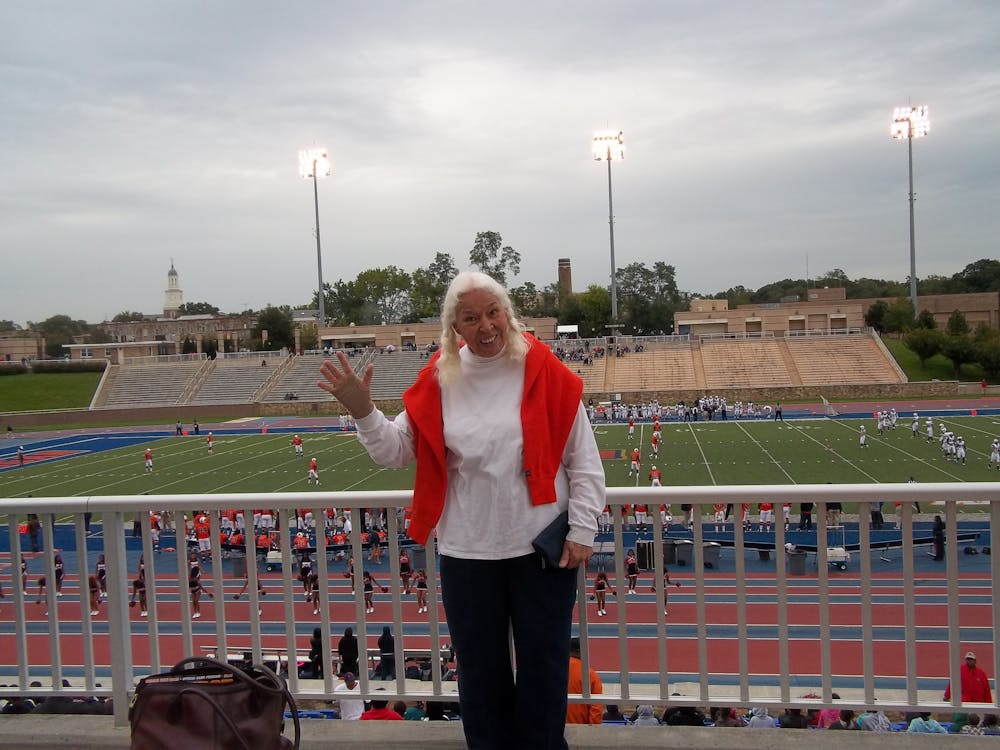
An elder woman in pigtails waves at the camera, standing in front of a sports field.
El Saadawi in her US years, at Morgan State University.
Courtesy Adele Newson-Horst

There is a clinical aspect to her writings. She relentlessly focuses on the issues without the trappings of romantic love and sentimentality. That is the key to evaluating and enjoying her works.

She admitted that she had been nominated for the Nobel Prize in Literature a couple of times, “but people don’t like my politics”. In a 2012 interview in Baltimore, El Saadawi told me:

I’m proud of myself. Not because I did fantastic things, but because I never changed. People usually compromise. I’m proud because I didn’t compromise.

This insistence on sharing her view of the truth on the condition of women, religion and politics is the key to the continued interest in her works. She never compromised because in many ways the condition of women globally has not much changed and because there is an ethos that persistently governs women, that, she believed, demanded unequivocal attention.

The life

El Saadawi was born in 1931 in a village outside of Cairo. She refused to accept the limitations imposed on her by the religious, gender and colonial oppression most women of rural origin experienced.

She attended the University of Cairo and graduated in 1955 with a degree in psychiatry and rose to become Egypt’s Director of Public Health. Since she began to write over 50 years ago, her books – including the play God Resigns at the Summit Meeting (2006) have concentrated on women, specifically on Arab women, their sexuality and legal status.

In 1972, her first work of non-fiction Women and Sex evoked the antagonism of highly placed political and theological authorities in Egypt and the Ministry of Health was pressured into dismissing her. Under similar pressures, she lost her post as chief editor of a health journal and as assistant general secretary in the Medical Association of Egypt.

Fame and jail

From 1973 to 1976 El Saadawi researched women and neurosis. In 1977, she published her most famous work The Hidden Face of Eve, which covered a host of topics relative to Arab women such as aggression against female children and genital mutilation, prostitution, sexual relationships, marriage and divorce and Islamic fundamentalism.

From 1979 to 1980 she was the United Nation’s advisor for the women’s program in North Africa and the Middle East. Later in 1980, as a culmination of the long war she had fought for Egyptian women’s social and intellectual freedom, she was imprisoned under the Anwar Sadat regime. She was released in 1982 and in 1983 she published Memoirs from the Women’s Prison in which she continued her bold attacks on the repressive Egyptian government. The year 1983 also marked the year that the English version of Woman at Point Zero was published after appearing in Arabic in 1975.

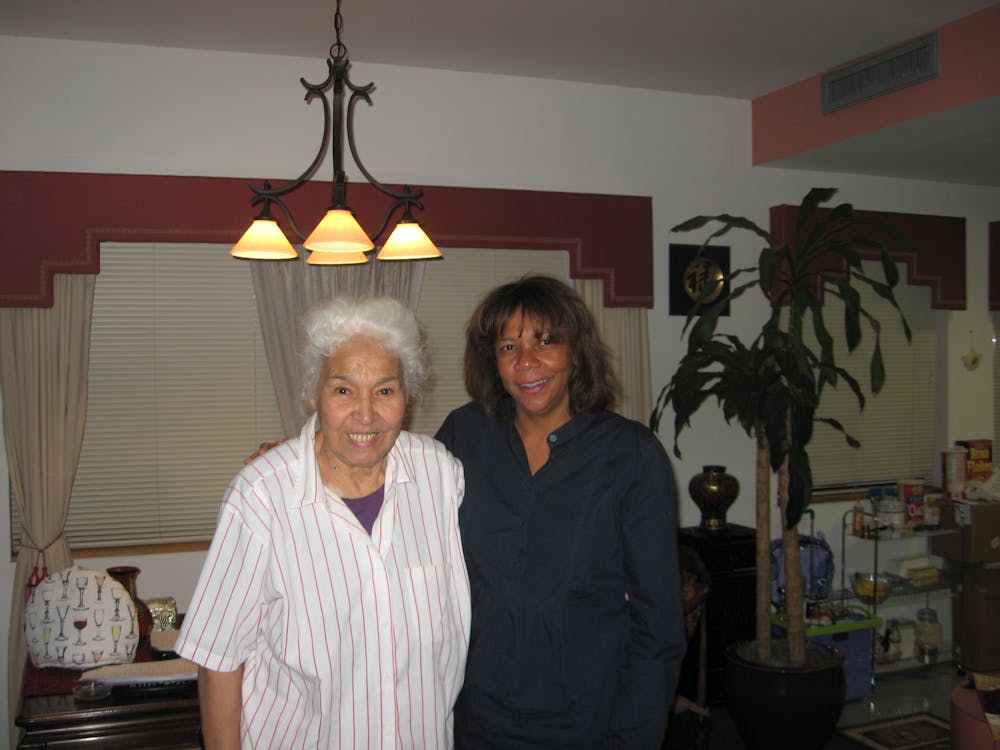
Two women, one younger and one older, stand facing the camera, smiling.
The author, right, with El Saadawi.
Courtesy Adele Newson-Horst

Even after her release from prison, El Saadawi’s life was threatened by those who opposed her work, mainly Islamic fundamentalists. Armed guards were stationed outside her home in Giza for several years until she left the country to be a visiting professor at European and North American universities.

She devoted her time to being a writer, journalist and worldwide speaker on women’s issues. In 2002, officials tried to forcefully divorce her from her husband, but international solidarity helped her to win her case. In 2004 she presented herself as a candidate for presidential election in Egypt. Then in 2007, the controversy of her play God Resigns at the Summit Meeting erupted. She said that those who condemned her hadn’t even read the play.

This was the power of Nawal El Saadawi, that her books – coldly scientific and endlessly creative – were seen as weapons in a war that is still to be won.

Newson-Horst has published two edited volumes on Nawal El Saadawi. They are The Dramatic Literature of Nawal El Saadawi (2009) and The Essential Nawal El Saadawi: A Reader (2010).The Conversation

Adele Newson-Horst, Professor, Morgan State University

This article is republished from The Conversation under a Creative Commons license. Read the original article.
Unknown's avatar

Fiction and memoirs were covering health way before the COVID-19 pandemic


Dostoyevsky’s story ‘The Double’ explores the uncanny theme of a replica of oneself, but today’s literary foes are often amorphous ones like environmental degradation.
(Shutterstock)

Cynthia Spada, University of Victoria

Beyond the viral contagion of COVID-19, the pandemic’s accompanying social and economic hardships have challenged many people’s physical and mental wellness. Over the past year of navigating living in a pandemic, it’s become clear that relationships matter to health: relationships between body and mind, between neighbours and between individuals and their societies.

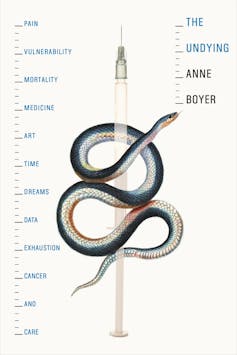
Literature was dissecting these connections long before the outbreak. Recent memoirs, non-fiction, fiction, poetry and graphic novels related to physical and mental health examine not just the fragility of individuals but how individuals relate to social and power structures like capitalism, racism or colonialism. Writers have also explored how people’s social roles and identities shape their relationships to narrative itself. As American poet and memoirist Anne Boyer writes in her Pulitzer Prize-winning memoir, The Undying, “I do not want to tell the story of cancer in the way that I have been taught to tell it.”

For several years, I have been researching, writing about and teaching literary texts related to maladies like depression, substance abuse and cancer. I’m interested in how narratives about health published today explore the interdependence of bodies and their environments in a way that may teach us important lessons during the pandemic, and beyond it.

The ‘literature of madness’

Since the 1960s, critiques of medical education, medical ethics and the role of narrative in healing have meant an emerging awareness of how the medical field can be allied with literature.

Some medical schools are requiring students to take literature courses to become more adept with reading patients’ stories; some students take my contemporary literature course at University of Victoria to satisfy a medical school course requirement. The convergence of these two fields is helping to disrupt the canonical “literature of madness.”

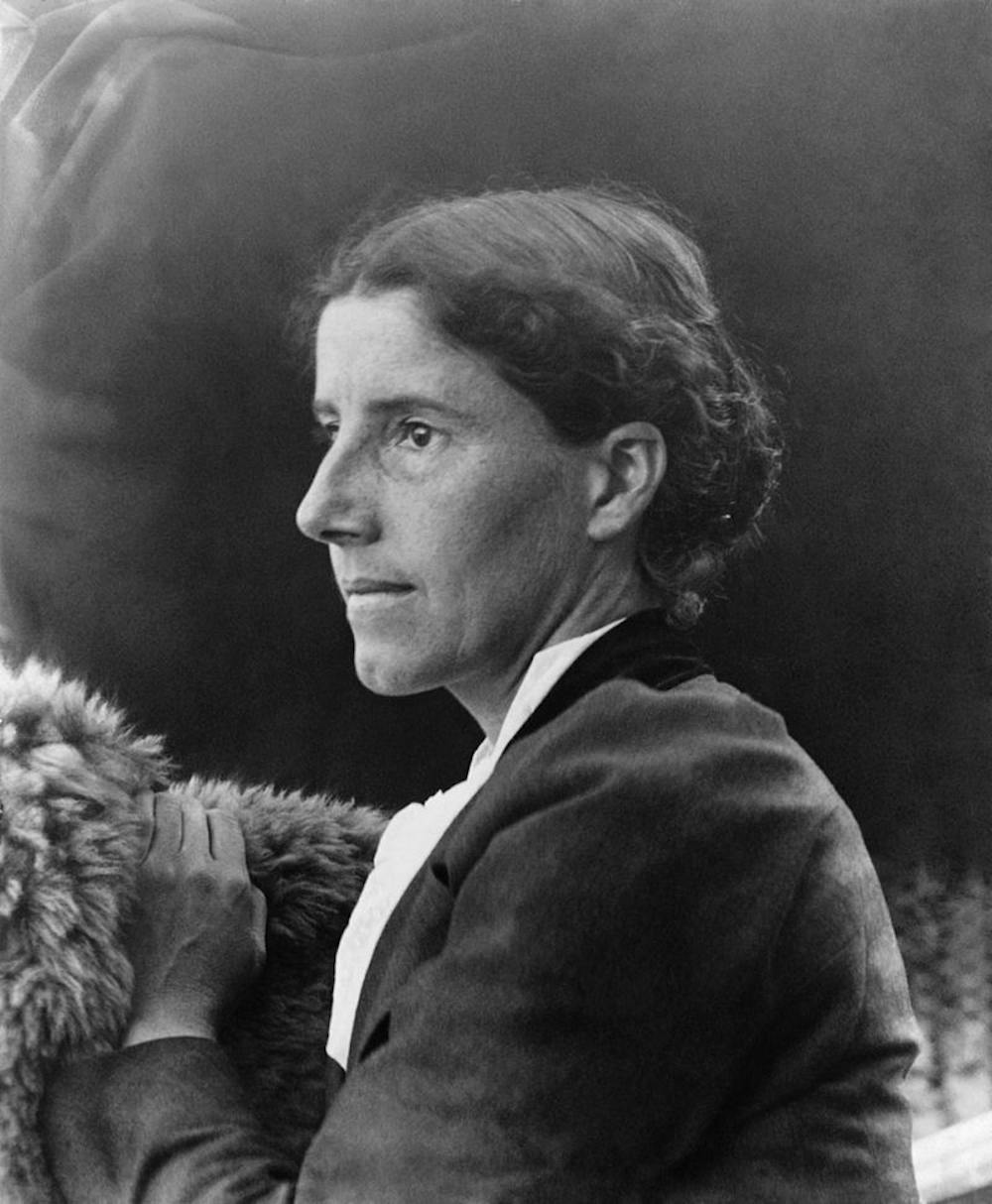
American author Charlotte Perkins Gilman, c. 1900.
(Library of Congress/Wikimedia)

Starting in the 1970s, mental illness became a hot topic in literature departments. Books like Shoshana Felman’s Writing and Madness and Lillian Feder’s Madness in Literature marked the new interest.

In “Literature of Madness” courses at various universities, students studied Dostoyevsky’s The Double, Charlotte Perkin Gilman’s “The Yellow Wallpaper,” Ken Kesey’s One Flew over the Cuckoo’s Nest and Sylvia Plath’s The Bell Jar.

These health stories pit mentally ill characters against individual antagonists like husbands, mothers, doctors and nurses, or, fighting oneself as seen through the ancient literary theme of the double or dopplegänger (as in Dostoyevsky’s tale). Yet some critics have also explored how these narratives examine individuals battling formidable but intangible foes, and thus comment on social ills: For example, patriarchy in The Bell Jar
and “The Yellow Wallpaper.”

Social ills

Many recent health narratives today are questioning how well-being is damaged by social determinants of health like income inequality and racism. They are also examining how health relates to phenomena like capitalism and climate change, which are elusive but all-pervasive.

Cover of 'The Undying.'
‘The Undying’ by Anne Boyer.
(Farrar, Strauss and Giroux)

For instance, Boyer damns the American health-care system, with its outrageous costs and lack of guaranteed sick leave, but also capitalism as a whole. For her, like Susan Sontag, cancer infuses culture as much as human bodies, but economic pressures also cast a huge shadow.

Blending personal experience and big-picture analysis can be found in other recent health memoirs. In The Recovering: Intoxication and Its Aftermath, American writer Leslie Jamison discusses her own experiences of alcoholism as a white woman alongside the racism of the American criminal justice system. As she observes: “White addicts get their suffering witnessed. Addicts of colour get punished.”

The best-selling essay collection A Mind Spread Out on the Ground, by Tuscarora writer Alicia Elliott, examines
how systematic oppression of Indigenous communities is linked to depression.
Her settler therapist can’t understand why she’s depressed, and none of her self-help books actually help.

She writes of one, “There is nothing in the book about the importance of culture, nothing about intergenerational trauma, racism, sexism, colonialism, homophobia, transphobia.”

This interest in the social determinants of health isn’t limited to non-fiction. Sabrina by American cartoonist Nick Drnaso is a 2018 graphic novel that was longlisted for the 2018 Man Booker Prize. Sabrina takes stock of what appears to be PTSD and depression in a political climate of misinformation and conspiracy theories.

As one character fills out a daily wellness report, the reader may realize anyone would feel depression and anxiety in such a world.

Health among the living

Meanwhile, Fady Joudah, a Palestinian American poet and practising doctor, weighs economic inequity and a lack of sustainability in “Corona Radiata,” a poem about COVID-19 published last March. “Corona Radiata” argues that we need to understand health as contingent on relationships between humans — and between humans and other living things. Joudah suggests that:

“Far and near the virus awakens

in us a responsibility

to others who will not die

our deaths, nor we theirs,

though we might …”

He’s right, if hopeful. Until the vaccine is widely distributed, public health will depend on our ability to understand ourselves as part of an inconceivably vast network.

American novelist Richard Powers’s The Overstory, which won the Pulitzer Prize for fiction in 2019, also unites health with responsibility. In the novel, characters challenged by physical disabilities and strokes find ways to communicate with and through nature. A scientist almost dies by suicide early in the novel before recommitting herself to loving as well as studying the trees. Environmental activism gives them purpose, even if it doesn’t heal them.

Future health stories

British writer Robert Macfarlane has proposed that the environmental crisis will continue to transform our literature and art. Many recent works support his idea. In particular, the latest health literature fuses various genres, including memoir, biography, reportage, literary and cultural criticism, science writing and prose poetry.

The new health literature also reminds us that our health and the planet’s are inextricably linked. In the near future, this genre is likely to increasingly address the impact of climate change on our physical and mental well-being, such as the rise in eco-anxiety. I think we’ll see a blending of literature, medicine and environmental studies more and more often.

Some researchers have noted a link between reading and longevity in individuals. Reading health literature may spur us to support longevity for the Earth too.The Conversation

Cynthia Spada, Sessional Lecturer in the Department of English, University of Victoria

This article is republished from The Conversation under a Creative Commons license. Read the original article.
Unknown's avatar

Five tourist trips in England inspired by classic novels


Heather Green, Nottingham Trent University

Some books can really bring to life the place in which they’re set. Their words knit together in such a way that whole landscapes or entire floorplans of buildings you’ve never visited before spring forth in your mind.

Often these settings are based upon real places. So with domestic travel restrictions set to be relaxed from April, that might be the opportune moment to discover some of the UK’s best literary heritage sites. From violently beautiful windswept moors to boisterous town squares, here are five such places and the books they inspired:

1. Greenway, Devon in Agatha Christie’s Dead Man’s Folly

Poirot commented on the geography of the property, ‘So many paths, and one is never sure where they lead’ … They passed the Folly and zig-zagged down the path to the river.

Agatha Christie’s house at Greenway on the River Dart is the setting for her 1956 novel Dead Man’s Folly. About a charity game of murder that becomes a bit too real, this Hercule Poirot mystery vividly came to life on my visit to Greenway.

Not only is the Georgian house itself perfectly depicted, but the zig-zagging path to the murder scene in the boathouse is so uncannily described that to visit it is chilling. The house and grounds are so evocative that Greenaway was used in ITV’s 2013 adaptation of the book.

2. Nottingham in Alan Sillitoe’s Saturday Night and Sunday Morning

Market Square lights danced all around him.

Sillitoe’s cult novel set among the working class in Nottingham follows Arthur Seaton (rebel, thinker, drinker and womaniser) after he puts away 11 pints and seven gins one Saturday night.

Town sqyare with fountain, bordered by shops.
Nottingham’s Market Square.
Destinos Espetaculares/Shutterstock

Nottingham might have changed somewhat since 1958, but Sillitoe’s detailed descriptions of the city’s streets are still wonderfully recognisable. Nothing says Nottingham like wondering amid the drunken revellers in Market Square or experiencing the cacophony of the annual Goose Fair, one of the largest funfairs in the UK. The many locations Seaton visited over his fateful weekend can be further explored on The Sillitoe Trail.

3. Wirksworth, Derbyshire in George Eliot’s Adam Bede

Look at the canals, an’ th’ acqueducs, an’ th’ coal-pit engines, and Arkwright’s mills there at Cromford.

George Eliot’s Adam Bede (1859) provides a snapshot of the rural Midlands at the beginning of the 18th-century. Eliot’s aunt was a Methodist preacher in Wirksworth, and the local landscape, coupled with her aunt’s reminiscences, became the germ of the novel

Waterways at Arkwright's Mill, Cromford, Derbyshire.
Arkwright’s Mill, Cromford, Derbyshire.
Daniel Matthams/Alamy

Thoough Eliot irritably rejected suggestions that any of her characters or settings were carbon copies of real life, Wirksworth can certainly be found in the industrial landscape that she conjures. Arkwright’s mills can be still be explored, the canal strolled along, and the remains of the mining industry discovered.

4. The West York Moors in Emily Brontë’s Wuthering Heights

But it was one of their chief amusements to run away to the moors in the morning and remain there all day, and the after-punishment grew a mere thing to laugh at.

Wuthering Heights (1847) is a tale of obsessive love. Divided in life, Cathy and Heathcliff are finally joined in death and their spirits roam the Yorkshire moors. For me, Emily Brontë’s classic is more about the landscape than love. When first reading the novel, my interest in Cathy and Heathcliff’s undying love was secondary to my imaginings of the moorland that is their playground and escape. The windswept barren landscape feels synonymous with freedom.

Aeiral shot of the ruins of the Top Withins farmhouse
The ruins of the Top Withins farmhouse.
Julian Hodgson/Shutterstock

You can walk in the Brontë sisters’ footsteps by following the Brontë Stones, which are situated between Thornton, where the girls were born, and Haworth, where they wrote their classic novels. The Emily Walk is marked by a poem carved into a rocky outcrop from Kate Bush, whose 1978 number one Wuthering Heights was inspired by the novel. The walk leads you away from civilisation and takes in the lovely ruins of Top Withins farmhouse, which is believed to be the inspiration for the Earnshaw home in Wuthering Heights.

5. Eastwood, Nottinghamshire in DH Lawrence’s Sons and Lovers

The Bottoms consisted of six blocks of miners’ dwellings, two rows of three, like the dots on a blank-six domino, and twelve houses in a block.

Lawrence’s most autobiographical novel, Sons and Lovers (1913), follows the fates of a mining family in Nottinghamshire.

The once coal-mining town of Eastwood and the surrounding landscape has been recreated in detail gleaned from Lawrence’s memories of his childhood, from The Breach where his family lived (“The Bottoms” in the novel) to descriptions of the Moon and Stars pub (actually the Three Tuns). Visiting The DH Lawrence Birthplace Museum, visitors can step inside a typical mining family home of the period.The Conversation

Heather Green, PhD Candidate, Literary Heritage, Nottingham Trent University

This article is republished from The Conversation under a Creative Commons license. Read the original article.

Unknown's avatar

Five picture books to help parents talk to children under seven about death


simplerdesign/Shutterstock

Maggie Jackson, Teesside University

However uncomfortable we may feel about the subject, death is in the news at the moment. Many of us have lost people during the pandemic and, even if we want to shield children from hearing or knowing about death it seems unlikely that we can.

As adults we may hope that our children won’t be aware of death and that we can protect them from it. However, it is important that we support them in their understanding by allowing them to ask questions and be curious.

One source of help with children between the ages of four and seven is the picture book. Since the 1980s, there has been an explosion in the production of good quality picture books often dealing with difficult subjects. The picture book is an incredible resource as the illustrations provide sources of information without the need to be able to read text. Reading picture books is often a shared event. Seated side by side with an adult, a child can listen to the words and explore the pictures and see and be curious about the images presented.

It has been suggested
that their value lies in the fact that the pictures can provide material not explicit in the text, allowing the child to construct the story in their own way and to ask their own questions. The pictures do not just simply offer a matching illustration of the text but, provide a story on their own, allowing for curiosity and for the child to guide the adult.

Here is a selection of picture books which can help parents begin to have conversations about death and how we might feel about it with young children:

Beginning to talk about death

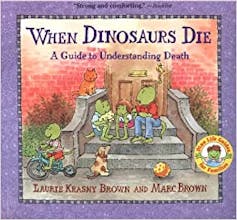
In When Dinosaurs Die: A guide to understanding death, we are given a series of small frames in which different aspects of death are considered, allowing a young child to look at the pictures and pose their own questions. The little dinosaurs ask about a wide range of things concerning death such as: what happens at funerals? Why do people die? And also how might we feel about death?

Cover of When Dinasaurs Die featuring cartoon dinosaurs sitting on a doortstep.

Turtleback Books

In similar way Frog and the Birdsong looks at general questions about death. This brightly coloured book shows us a group of animal friends who come across a dead bird while they are out for a walk. They ask many pertinent questions, as might a child, and are helped to find the answers by a more knowing hare. The friends then bury the bird and shed a tear before going on their way.

These two books offer a supportive and safe way of thinking about death – they do not look at the pain of loss or grief and perhaps can thus be a helpful way to begin to talk about death.

Broaching the idea of loss

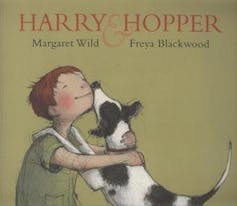
Cover of Harry and hopper featuring a boy hugging a dog.

Scholastic

Some books that may help to begin to address the subject of loss are about the death of a pet. This is no less painful and serious but, sometimes seen as easier to talk about. Lovely Old Roly and Harry and Hopper are two such examples. In each book we are told about the death of the pet and the sense of loss and emptiness felt by the children. Roly’s children feel so sad they are unable to play or do any routine tasks. Harry misses Hopper so much that he yearns for his return and imagines or dreams that he has returned. In each book we see that eventually the children begin to feel OK but are reminded they will never forget.

Understanding grief

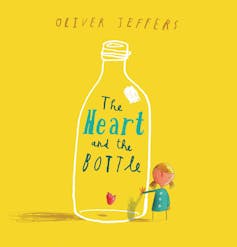
Cover of The Heart and the Bottle featuring a large bottle with a little girl next to it.

HarperCollins

The Heart and the Bottle is perhaps more difficult as it deals with a little girl who does not feel able to talk or let herself feel anything. In it we are shown very directly the shock of the little girl when she walks into a room expecting to find her grandfather but sees only his empty chair. The little girl is unable to talk about her unhappiness and so shuts her heart away. This book can allow a child to see that it is better to acknowledge the pain and to let others see how much it hurts.The Conversation

Maggie Jackson, Senior Lecturer in school of Social Sciences Humanities and Law, Teesside University

This article is republished from The Conversation under a Creative Commons license. Read the original article.

Unknown's avatar

Collaborative Fiction Sites


The link below is to an article that takes a look at 5 collaborative fiction sites.

For more visit:
https://www.makeuseof.com/collaborative-fiction-sites-improve-writing-skills/