
The link below is to an article that looks at the decline in tablet sales globally.
For more visit:
https://goodereader.com/blog/tablet-slates/tablet-sales-have-declined-for-the-past-four-years-in-a-row

The link below is to an article that looks at the decline in tablet sales globally.
For more visit:
https://goodereader.com/blog/tablet-slates/tablet-sales-have-declined-for-the-past-four-years-in-a-row
The link below is to an article that looks at a number of statistics involving reading for the USA.
For more visit:
https://goodereader.com/blog/bookselling/reading-books-is-on-the-decline
The link below is to an article that takes a look at the latest Kindle software update.
For more visit:
https://blog.the-ebook-reader.com/2018/07/30/new-kindle-software-update-5-9-7-now-rolling-out/
Sophie Alexandra Frazer, University of Sydney
In our series, Guide to the classics, experts explain key works of literature.
Nothing about the reception of Emily Brontë’s first and only published novel, Wuthering Heights, in 1847 suggested that it would grow to achieve its now-cult status. While contemporary critics often admitted its power, even unwillingly responding to the clarity of its psychological realism, the overwhelming response was one of disgust at its brutish and brooding Byronic hero, Heathcliff, and his beloved Catherine, whose rebellion against the norms of Victorian femininity neutered her of any claim to womanly attraction.
The characters speak in tongues heavily inflected with expletives, hurling words like weapons of affliction, and indulging throughout in a gleeful schadenfreude as they attempt to exact revenge on each other. It is all rather like a relentless chess game in hell. One of its early reviewers wrote that the novel “strongly shows the brutalising influence of unchecked passion”.
Moral philosopher Martha Nussbaum claims, however, that “we must ourselves confront the shocking in Wuthering Heights, or we will have no chance of understanding what Emily Brontë is setting out to do”. The reader must give herself over to the horror of Brontë’s inverted world.
She must jump, as it were, without looking to see if there is water below. It is a Paradise Lost of a novel: its poetry Miltonic, its style hyperbolic, and its cruelty relentless. It has left readers and scholars alike stumbling to locate its seemingly Delphic meaning, as we try to make sense of the Hobbesian world it portrays.
The author remains as elusive as her enigmatic masterpiece. As new critical appraisals emerge in this, Emily Brontë’s bicentenary year, the scant traces she left of her personal life beyond her poetry and several extant diary papers, are re-fashioned accordingly.
Described as the “sphinx of the moors”, her obstinate mystery has lured countless pilgrims to the Haworth home in which she passed almost all of her life, and the surrounding moorlands that were the landscape of her daily walks and the inspiration for her writing. Brontë relinquished her jealous hold of the manuscript only after considerable pressure from her sister Charlotte, who insisted that it be published.
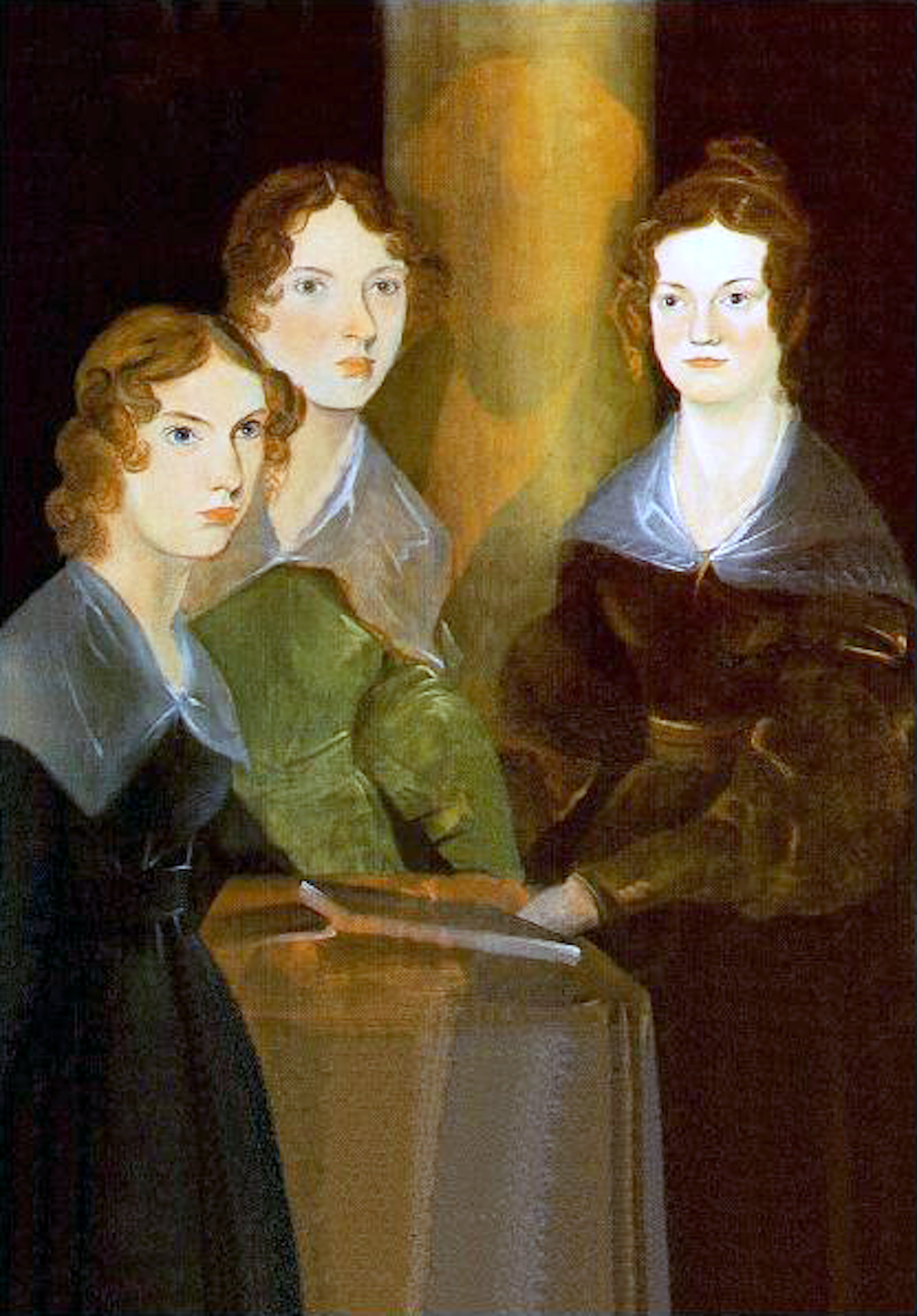
Wuthering Heights was released pseudonymously under the name Ellis Bell, published in an edition that included her sister Anne’s lesser known work, Agnes Grey. Emily was to die just 12 months later, in December 1848.
As Brontë biographer Juliet Barker writes, the writer stubbornly maintained the pretence of health even in the final stages of consumption, insisting on getting out of bed to take care of her much loved dog, Keeper. She resisted death with remarkable self-discipline but, “her unbending spirit finally broken”, she acquiesced to a doctor’s attendance. It was by then too late; she was just 30.
After her sister’s death, Charlotte Brontë wrote two biographical prefaces to accompany a new edition of Wuthering Heights, instantiating the mythology both of her sister – “stronger than a man, simpler than a child” – and her infamous novel: “It is rustic all through. It is moorish, and wild, and knotty as the root of heath.”
Read more:
Why Charlotte Brontë still speaks to us – 200 years after her birth
It is that property of wildness that has compelled artists from Sylvia Plath to Kate Bush, whose 1978 hit single, Wuthering Heights, was representative of the magnetic pull of Brontë’s fierce heroine, Catherine. The novel has maintained its relevance in popular culture, and its author has risen to a feminist icon.
The elusiveness of the woman and the book that now seems an extension of her subjectivity, gives both a malleability that has seen Wuthering Heights transformed into various mediums: several Hollywood films, theatre, a ballet and, perhaps most incongruously, a detective novel. Brontë’s name is used to sell everything from food to dry-cleaning products.
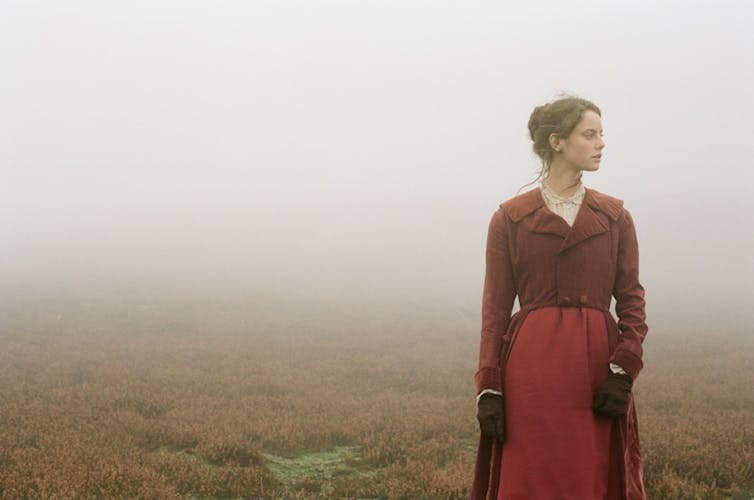
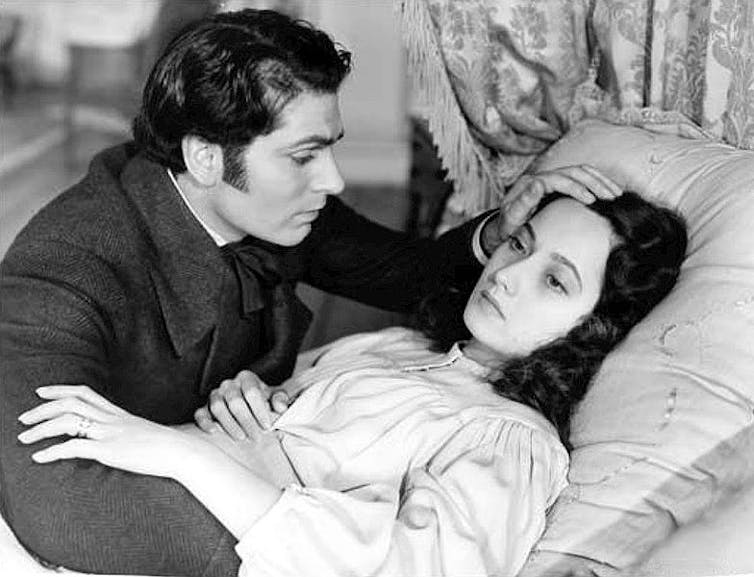
Film versions have tended to indulge in a surfeit of romanticism, offering up visions of the lovers swooning atop windswept hills, most famously in the 1939 movie, with Laurence Olivier as a dashing Heathcliff, a heavily sanitised re-telling of what the promotional material billed as “the greatest love story of our time – or any time!” Andrea Arnold’s gritty, pared-back 2011 film is the notable exception; bleak and darkly violent, the actors speak in an at times unintelligible dialect, scrambling across a blasted wilderness as though they are animals.
Contrary to Charlotte Brontë’s revisioning, however, Wuthering Heights was not purely the product of a terrible divine inspiration, emerging partially formed from the granite rock of the Yorkshire landscape, to be hewn from Emily’s simple materials.
Instead, it is the work of a writer looking back to past Romantic forms, specifically the German incarnation of that aesthetic, infused with folkloric taboos and primal longings. Her tale of domestic gothic is housed in an intricately complex narrative architecture that works by repetition and doubling, at the fulcrum of which stands Catherine, the supremely defiant object of Heathcliff’s obsession.
At the novel’s core is the corrosiveness of love, with the titanic power of Shakespearean tragedy and the dialogic form of a Greek morality play. Two families, locked in internecine war and bound together by patrilineal inheritance, stage their abject conflict across the small geographical space that separates their respective households: the luxury and insipidity of the Grange, versus the shabby gentility, decay, and violence of the Heights.
It is a distinctly claustrophobic novel: although we read with a vague sense of the vastness of the moors that is its setting, the action unfolds, with few exceptions, in domestic interiors. Despite countless readings, I can conjure no distinct image of the Grange. But the outline of the Heights, with each room unfolding into yet another set of rooms, labyrinthine and imprisoning, has settled into my mind. The deeper you enter into the space of the Heights – the space of the text – the more bewildering the effect.
The love between Heathcliff and Catherine exists now as a myth operative outside any substantial relationship to the novel from which the lovers spring. It is shorthand in popular culture for doomed passion. Much of this hyper-romance gathers around Catherine’s declaration of Platonic unity with her would-be lover: “I am Heathcliff – he’s always, always in my mind.” Yet their relationship is never less than brutal.
What is it about their unearthly union, with its overtones of necrophilia and incestuous desire, that so captivates us, and why does Emily Brontë privilege this form of explicitly masochistic, irrevocable and unattainable love?
Read more:
How incest became part of the Brontë family story
Brontë’s great theme was transcendence, and I would suggest that it is the metaphysical affinity that solders these two lovers that so beguiles us. The greediness of their feeling for each other resembles nothing in reality. It is hyperreal, as Catherine and Heathcliff do not aspire so much as to be together, as to be each other. Twinned in that shared commitment and to the natural world that was the hunting-ground of their childhood play, they try, with increasing desperation, to get at each other’s souls.

This is not a physically erotic coupling: the body is immaterial to their love. It is a very different notion of desire to that of Jane Eyre and Rochester, for instance, in Charlotte Brontë’s Jane Eyre, which is very fleshy indeed. Both Catherine and Heathcliff want to get under each other’s skin, quite literally, to join and become that singular body of their childhood fantasies. It is a dream, then, of total union, of an impossible return to origins. It is not heavenly in its transcendence, but decidedly earthly. “I cannot express it”, Catherine tells her nurse Nelly Dean, who is our homely, yet not so benign, narrator:
But surely you and everybody have a notion that there is, or should be, an existence of yours beyond you. What were the use of my creation if I were entirely contained here? My great miseries in this world have been Heathcliff’s miseries … my great thought in living is himself. I all else perished, and he remained, I should still continue to be.
This notion of the self eclipsing its selfish form seems impossible for us to conceive in an age where one’s individuality is sacred. It is, however, the essence of Catherine’s tragedy: her search for her self’s home among the men who circle her is futile. Nevertheless, Emily Brontë’s radical statement of a shared ontology grounds the eroticism between the pair so that we cannot look away; and neither it seems, can the other characters in the novel.
The book’s structure is famously complex, with multiple narrators and a fluid style that results in one focalising voice shading into another. The story proper begins with Lockwood, a stranger to the rugged moorlands, a gentleman accustomed to urban life and its polite civilisations.
The terrifying nightmare he endures on his first night under Heathcliff’s roof, and the gruesomely violent outcome of his fear sets in motion the central love story that pulls all else irresistibly to it. Heathcliff’s thrice-repeated invocation of Catherine’s name, which Lockwood finds written in the margins of a book and mistakenly believes to be “nothing but a name”, works as an incantation, summoning the ghost of the woman who haunts this book.
 Emily Brontë speaks of dreams, dreams that pass through the mind “like wine through water, and alter the colour” of thoughts. If the experience of reading Wuthering Heights feels like a suspension in a state of waking nightmare, what a richly-hued vision of the fantastical it is.
Sophie Alexandra Frazer, Doctoral candidate in English, University of Sydney
This article was originally published on The Conversation. Read the original article.
The link below is to an article reporting on the return of the Lyghfield Bible to Canterbury Cathedral for the first time in centuries.
For more visit:
https://www.theguardian.com/books/2018/jul/31/rare-medieval-bible-returned-to-shelf-at-canterbury-cathedral
The link below is to an article that takes a look at the ins and outs of Kindle Unlimited.
For more visit:
https://bookriot.com/2018/08/02/how-does-kindle-unlimited-work/
Leigh Boucher, Macquarie University
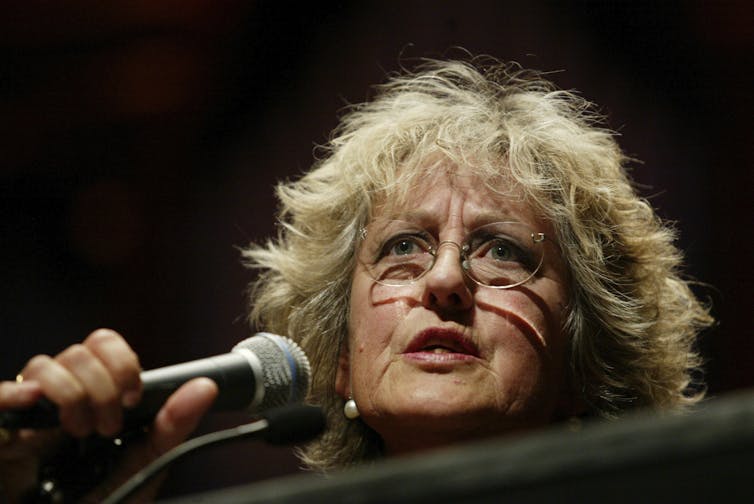
Once again, we are in the middle of a public spat about who should get to speak at a writers’ festival in Australia. It appears the Brisbane Writers Festival uninvited Bob Carr and Germaine Greer (the festival has said neither author had been signed to a contract for appearances). In a context where #metoo has demonstrated the potency of social media mobilisation, it would seem the festival has erred on the side of caution rather than inflame the Twitterverse with contentious speakers.
Richard Flanagan issued a forceful response, questioning the festival’s “courage”. Flanagan argued with palpable frustration that this was indicative of a tendency to silence ideas that rub “against the grain of conventional thinking” and it is in danger of becoming a festival “Approved by Twitter Bots”. For Flanagan, this and other moments like it endanger the operation of the “republic of letters” that nourishes our democratic life.
Carr’s and Greer’s publisher has queried the “disinvitation”, suggesting it seems “counter to the ethos of freedom of speech”.
This debate is, in part, a contest over the ethics of public life and what rules should govern speaking privileges within it. The writers’ festival is hardly a politically neutral space in which the most virtuous ideas win the day through their intellectual force and merit; these are curated programs that adhere to visible and invisible rules of admission.
Read more:
I’m right, you’re wrong, and here’s a link to prove it: how social media shapes public debate
Perhaps Flanagan would do well to remember that his ideal republic of letters was an intellectual community that took shape in specific ways during the Enlightenment. This intellectual community of philosophers forged many of the ideas we take as common sense, like the importance of freedom of speech to democratic culture. But it too had rules of admission.
The conventions of this imaginary republic were profoundly gendered and racialised. It was a space that assumed a white male perspective as the norm and tended to uphold rather than critique gender and racial inequalities. Some historians even suggest that women’s participation in public life in Europe declined over the 18th century as the imaginary republic exerted more influence.
While 200 years of political transformation has meant our public life can admit the ideas of people who don’t look like Voltaire or Rousseau, there are certainly cultural legacies of these formulations. Bucketloads of research demonstrates how, for example, university students grant male professors much more authority than their female colleagues. So too, all kinds of male misbehaviour is excused as the cost of genius. Perhaps the writers’ festival author that Flanagan expects to arrive drunk and tardy would be an example of this.
Gendered ideas are clearly part of the DNA of this contest, often in quite subtle ways. It is no coincidence that the forces Flanagan and others suggest endanger our democratic culture include young feminists emboldened by networks of support on various social media platforms. Social media have provided a space in which a new generation of feminist voices is holding older forms of authority to account.
Indeed, Flanagan’s examples of this dangerous policing of public life are revealing. Junot Diaz, Germaine Greer and Lionel Shriver have all had their sexual, racial and gender politics brought into question at recent writers’ events.
Read more:
Lionel Shriver and the responsibilities of fiction writers
Diaz’s gut-wrenching account of his sexual abuse as a child was soon followed by multiple female voices who raised questions about the impact of his adult behaviour on others. His authority was called into question and he withdrew from a set of public engagements. This represents for Flanagan some kind of calamity.
Flanagan argues that the stories about Diaz remain unproved accusations and, as a consequence, we do him an injustice if we let these accusations alone exclude him from public life. However, as the #metoo moment has demonstrated, the rules of admission for public life tend to conceal rather than reveal sexual misconduct.
We need to ask tough questions about whose voices are more readily heard and what these limitations make invisible. Sometimes that might mean different voices are granted authority and others step back. The social media world that Flanagan fears is limiting our democratic life has, in some cases, provided a space for the articulation of young feminist voices to call into question male authority and the gendered privilege of artistic genius.
The idea that social media is somehow destroying our public culture is hardly a new one; the mob mentality that sometimes unfolds to sustain the pleasures of virtuous condemnation are worth thinking critically about. So, too, it clearly encourages the polarisation of political views.
When Michael Cathcart ran into uncomfortable territory around race in his interview with Paul Beatty last year, the baying continued on Twitter for the next week. This was partly a moment in which Cathcart’s older ideas about how to read and understand texts crashed into more recent political norms about who can and cannot speak about what topics, and who can use what language.
To be sure, these voices certainly have a tendency towards virtuous outrage about harm. As Jacqueline Rose recently argued, rigid calculations of harm sometimes do not allow for the messiness of everyday life. A politics conducted in single images and outraged tweets will always struggle with political nuance.
However, #metoo can also be read as a politics that has flourished on social media because the present rules of public life will not fully admit these young female voices. The moment we are living through right now is, in part, a contest over how we should decide who gets to speak.
 I’m not sure Flanagan’s idealising of the profoundly gendered republic of letters offers a useful solution to this historically specific rupture. I suspect both sides of this debate might benefit from thinking carefully about the rules they implicitly and explicitly hope to enforce on our public culture, but I’m pretty sure dismissing young feminists as a social media “mob” is hardly productive.
Leigh Boucher, Senior Lecturer – Modern History, Macquarie University
This article was originally published on The Conversation. Read the original article.
The link below is to an article reporting on problems people are having accessing Google Play with Android Ebook Readers.
For more visit:
https://goodereader.com/blog/electronic-readers/android-e-readers-can-no-longer-access-google-play
The link below is to an article reporting on the rise of Audiobook piracy.
For more visit:
https://goodereader.com/blog/audiobooks/people-are-starting-to-pirate-audible-audiobooks

publicdomainpictures
Stephanie Palmer, Nottingham Trent University
The season of the good old summer “fayre” is here and many UK readers will be heading off to eat tea and scones and take part in the tombola at their local village fete. There, it’s a good bet, they will hear of local people’s concerns that new housing developments foisted on them by the government will ruin the character of their idyllic rural community.
But the myth of tranquil village life was well and truly exploded in the Victorian age when many writers concluded that life in England’s small rural communities was not a simple idyll of tea, vicars and charitable works.
For many people, especially those who may not have visited the UK, the most accessible pictures of village life are those painted in novels: who can forget the timeless portrait of life in a sleepy Dorset community in PG Wodehouse’s Blandings series, or EF Benson’s Mapp and Lucia books, set in a fictional Sussex village? But fiction has also been highlighting the negatives of village living for more than a century.
The “greetings card” scenario of village life was established early. In her memoir Our Village (published in five volumes between 1824 and 1832), Mary Mitford – who lived at Three Mile Cross near Reading in Berkshire – gives us a classic rendition of peaceful village life. There are quaint depictions of servants, chaste suitors, elderly brides and grooms, blacksmiths and gypsy fortune tellers.
Our Village contains all the myths of village life. Everyone is familiar: a village is a little world “where we know everyone, are known to everyone, interested in everyone, and authorised to hope that everyone feels an interest in us”. There are no newcomers, nobody is systematically excluded and nobody is living a secret or misunderstood life. Poverty is relegated to the margins – there’s only the occasional mention of the workhouse and, Mitford assures her readers, the village is a collection of cottages, not “fine mansions finely peopled”.
But even in the 1820s, such a village felt under threat from the railways, improved roads and the increasing size of the towns of the industrialised North. And no sooner did Mitford complete Our Village than other authors began to parody or correct her vision.
Elizabeth Gaskell’s Cranford (1853) is a gentle text still very positive about life in a confined locality. Although Cranford is a town outside “Drumble” – her stand-in for Manchester – it resembles Mitford’s village in that everyone knows each other and the narrative is focused on a limited set of characters. In the case of this novel – and so many others in the tradition – the main characters are women, and it is women’s unpaid labour that makes the community run smoothly. Yet Gaskell gently mocks her characters, Matty Jenkyns, Miss Pole, and Mrs Jamieson, for their conventionality, triviality and timidity.
The women follow strict social rules – an entire chapter revolves around whether these august personages should stoop to visit a former ladies’ maid who has set up a milliner’s shop and hence was “in trade”. In another chapter, the women grow fearful of outsiders when they hear of a cluster of burglaries in the neighbourhood, which proves to be founded on rumour.
Thomas Hardy’s villages such as Weatherbury in Far from the Madding Crowd (1874) or Marlott in Tess of the D’Urbervilles (1891) are idyllic in some ways, but not in others. Shepherds are close enough to nature to saunter out of their huts at night to tell the time by stars, and the slow pace of life allows for ample opportunity for community and flirtation. Yet sexual transgressions are treated to the full judgement of an unforgiving community, and questions of money and class interrupt any readers’ expectations of rural bliss.
These books sold well in the US, even though villages there were subject to dramatic population shifts westward and industrial development. Writers in the US sought to reinforce or contest Mitford’s vision.
After reading Mitford and migrating to a new village in Michigan, Caroline Kirkland wrote A New Home, Who’ll Follow? (1839), which mercilessly satirised her vulgar frontier neighbours and the wealthier eastern newcomers. When her neighbours read the novel, they ostracised her – and she never wrote anything as trenchant again.
Although the American regionalism that flourished in the latter quarter of the 19th century is known for romantic visions of village life, upon closer examination, key writers such as Sarah Orne Jewett and Mary E Wilkins Freeman reveal many of village life’s negatives.
If Gaskell acknowledges in Cranford that her ladies’ kindness to the poor is “somewhat dictatorial”, Freeman’s A Mistaken Charity (1883) takes this point to its logical conclusion. Two elderly sisters living happily in their dilapidated cottage are visited by Mrs Simonds, a woman who is “a smart, energetic person, bent on doing good”. Mrs Simonds arranges to take Charlotte and Harriet to the poorhouse, where they are forced to wear lace caps and sit indoors. Charlotte and Harriet run away.
By the 1910s, there was a literary “revolt from the village”, and writers including Sherwood Anderson focused on the sexual repression of small town life. Although Sherwood Anderson’s Winesburg, Ohio, published in 1919, is set in a town, it is a town of 1,800 people, far smaller than many British villages today. Meanwhile, Stella Gibbons parodied rural melodramas in Cold Comfort Farm (1932), in which, instead of graciously fitting in like the urban narrators of Jewett’s fiction, Flora Poste, a visitor from London, forces the members of a dysfunctional family to follow their individual desires rather than their family destiny.
 According to these writers, villages can be conformist, unimaginative, repressive, nepotistic. These fictions imply that villages will be harder to maintain now that women have other outlets for their energies. The negatives come from the same source as the positives in village life, and people who wish to defend villages, and the tradition of rural living, should remember this literary ambivalence and the fact that it has gone on for more than 100 years.
Stephanie Palmer, Senior Lecturer, School of Arts & Humanities, Nottingham Trent University
This article was originally published on The Conversation. Read the original article.
 At the BookShelf


You must be logged in to post a comment.