Unknown's avatar

What was the first Bible like?


File 20180828 86123 1cv3kot.jpg?ixlib=rb 1.1
Awaiting revelation.
Africa Studio

Tomas Bokedal, University of Aberdeen

In the years after Jesus was crucified at Calvary, the story of his life, death and resurrection was not immediately written down. The experiences of disciples like Matthew and John would have been told and retold at many dinner tables and firesides, perhaps for decades, before anyone recorded them for posterity. St Paul, whose writings are equally central to the New Testament, was not even present among the early believers until a few years after Jesus’ execution.

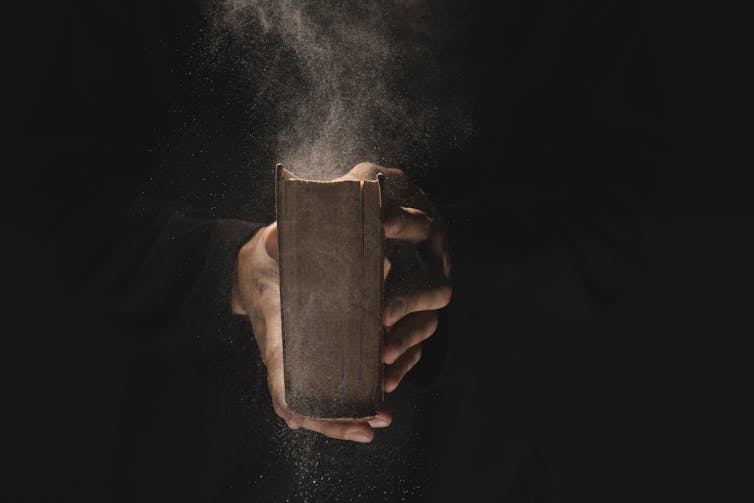
But if many people will have an idea of this gap between the events of the New Testament and the book that emerged, few probably appreciate how little we know about the first Christian Bible. The oldest complete New Testament that survives today is from the fourth century, but it had predecessors which have long since turned to dust.

So what did the original Christian Bible look like? How and where did it emerge? And why are we scholars still arguing about this some 1,800 years after the event?

From oral to written

Historical accuracy is central to the New Testament. The issues at stake were pondered in the book itself by Luke the Evangelist as he discusses the reasons for writing what became his eponymous Gospel. He writes: “I too decided to write an orderly account … so that you may know the certainty of the things you have been taught.”

In the second century, church father Irenaeus of Lyons argued for the validity of the Gospels by claiming that what the authors first preached, after receiving “perfect knowledge” from God, they later put down in writing. Today, scholars differ on these issues – from the American writer Bart Ehrman stressing how much accounts would be changed by the oral tradition; to his Australian counterpart Michael Bird’s argument that historical ambiguities must be tempered by the fact that the books are the word of God; or the British scholar Richard Bauckham’s emphasis on eye-witnesses as guarantors behind the oral and written gospel.
St Paul: numero uno.
Wikimedia

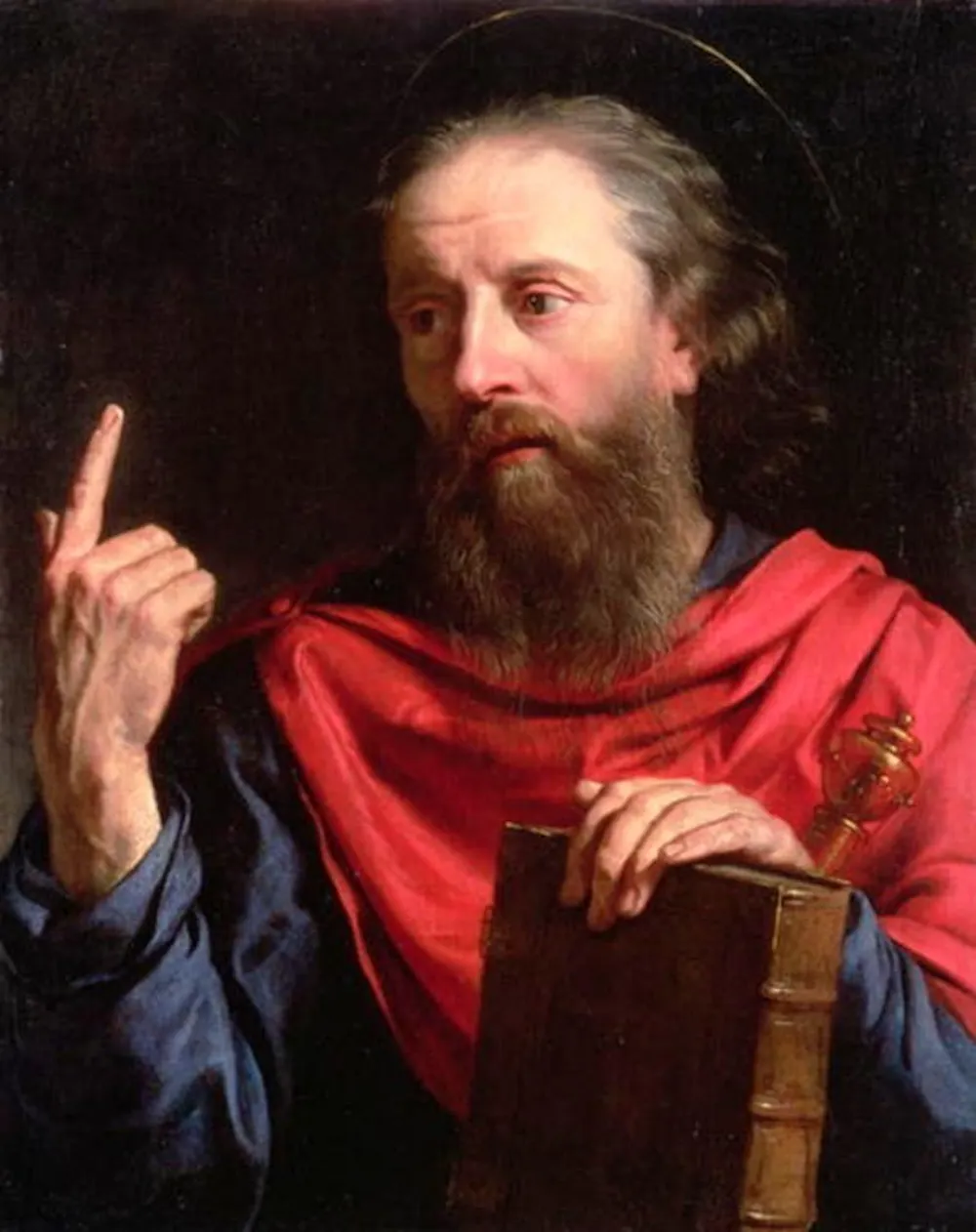
The first New Testament books to be written down are reckoned to be the 13 that comprise Paul’s letters (circa 48-64 CE), probably beginning with 1 Thessalonians or Galatians. Then comes the Gospel of Mark (circa 60-75 CE). The remaining books – the other three Gospels, letters of Peter, John and others as well as Revelation – were all added before or around the end of the first century. By the mid-to-late hundreds CE, major church libraries would have had copies of these, sometimes alongside other manuscripts later deemed apocrypha.

The point at which the books come to be seen as actual scripture and canon is a matter of debate. Some point to when they came to be used in weekly worship services, circa 100 CE and in some cases earlier. Here they were treated on a par with the old Jewish Scriptures that would become the Old Testament, which for centuries had been taking pride of place in synagogues all over latter-day Israel and the wider Middle East.

Others emphasise the moment before or around 200 CE when the titles “Old” and “New Testament” were introduced by the church. This dramatic shift clearly acknowledges two major collections with scriptural status making up the Christian Bible – relating to one another as old and new covenant, prophecy and fulfilment. This reveals that the first Christian two-testament bible was by now in place.

This is not official or precise enough for another group of scholars, however. They prefer to focus on the late fourth century, when the so-called canon lists entered the scene – such as the one laid down by Athanasius, Bishop of Alexandria, in 367 CE, which acknowledges 22 Old Testament books and 27 New Testament books.

Bible #1

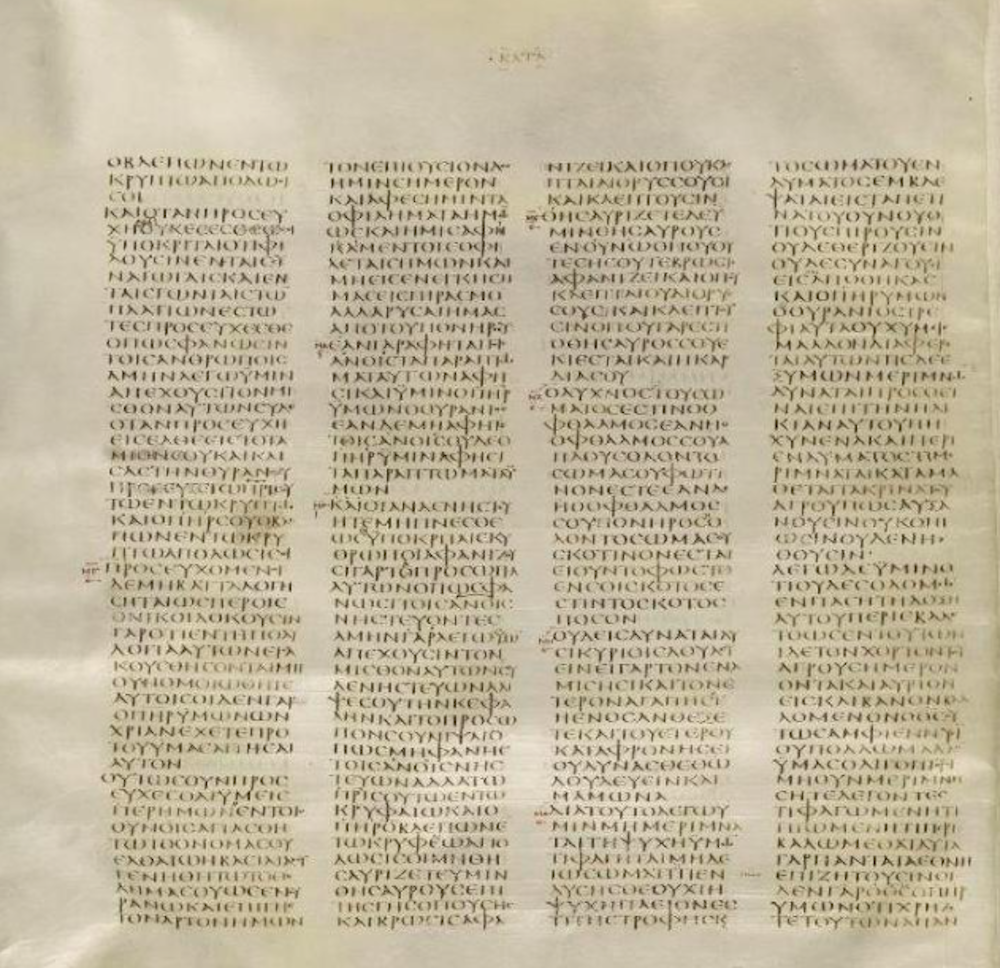
The oldest surviving full text of the New Testament is the beautifully written Codex Sinaiticus, which was “discovered” at the St Catherine monastery at the base of Mt Sinai in Egypt in the 1840s and 1850s. Dating from circa 325-360 CE, it is not known where it was scribed – perhaps Rome or Egypt. It is made from parchment of animal hides, with text on both sides of the page, written in continuous Greek script. It combines the entire New and Old Testaments, though only about half of the old survives (the New Testament has some fairly minor defects).
Codex Sinaiticus, Book of Matthew.
Wikimedia

Sinaiticus may not be the oldest extant bible, however. Another compendium of Old and New Testaments is the Codex Vaticanus, which is from around 300-350 CE, though substantial amounts of both testaments are missing. These bibles differ from one another in some respects, and also from modern bibles – after the 27 New Testament books, for example, Sinaiticus includes as an appendix the two popular Christian edifying writings Epistle of Barnabas and Shepherd of Hermas. Both bibles also have a different running order – placing Paul’s letters after the Gospels (Sinaiticus), or after Acts and the Catholic Epistles (Vaticanus).

They both contain interesting features such as special devotional or creedal demarcations of sacred names, known as nomina sacra. These shorten words like “Jesus”, “Christ”, “God”, “Lord”, “Spirit”, “cross” and “crucify”, to their first and last letters, highlighted with a horizontal overbar. For example, the Greek name for Jesus, Ἰησοῦς, is written as ⲓ̅ⲥ̅; while God, θεός, is ⲑ̅ⲥ̅. Later bibles sometimes presented these in gold letters or render them bigger or more ornamental, and the practice endured until bible printing began around the time of the Reformation.

Though Sinaiticus and Vaticanus are both thought to have been copied from long-lost predecessors, in one format or the other, previous and later standardised New Testaments consisted of a four-volume collection of individual codices – the fourfold Gospel; Acts and seven Catholic Epistles; Paul’s 14 letters (including Hebrews); and the Book of Revelation. They were effectively collections of collections.
Papyrus 46 extract.

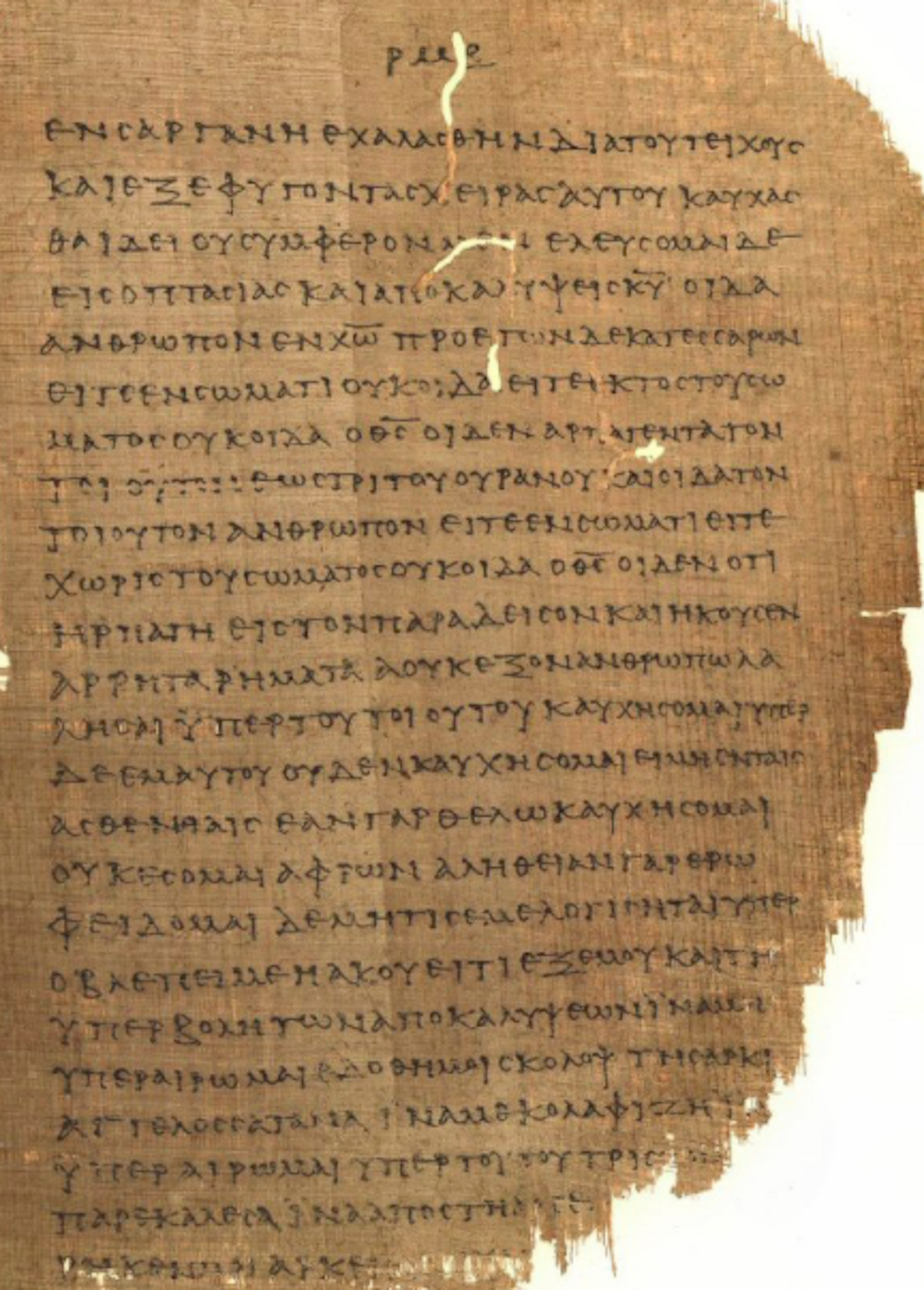
But in the absence of a single book prior to the fourth century, we have to content ourselves with the many surviving older fragments sensationally found during the 20th century. We now have some 50 fragmentary New Testament manuscripts written on papyrus that date from the second and third centuries – including the valuable Papyrus 45 (fourfold Gospel and Acts), and Papyrus 46 (a collection of Pauline letters). In all, these comprise almost complete or partial versions of 20 of the 27 books in the New Testament.

The quest will likely continue for additional sources of the original books of the New Testament. Since it is somewhat unlikely anyone will ever find an older Bible comparable with Sinaiticus or Vaticanus, we will have to keep piecing together what we have, which is already quite a lot. It’s a fascinating story which will no doubt continue to provoke arguments between scholars and enthusiasts for many years into the future.The Conversation

Tomas Bokedal, Associate Professor in New Testament, NLA University College, Bergen; and Lecturer in New Testament, University of Aberdeen

This article is republished from The Conversation under a Creative Commons license. Read the original article.
Unknown's avatar

Reading the landscape: university publishing houses and the national creative estate


File 20180917 177935 18ukvug.jpg?ixlib=rb 1.1
Alexis Wright, pictured here in 2007 after winning the Miles Franklin award for her book Carpentaria, is one of many writers first published by University of Queensland Press.
Dean Lewins/AAP

Tony Hughes-D’Aeth, University of Western Australia

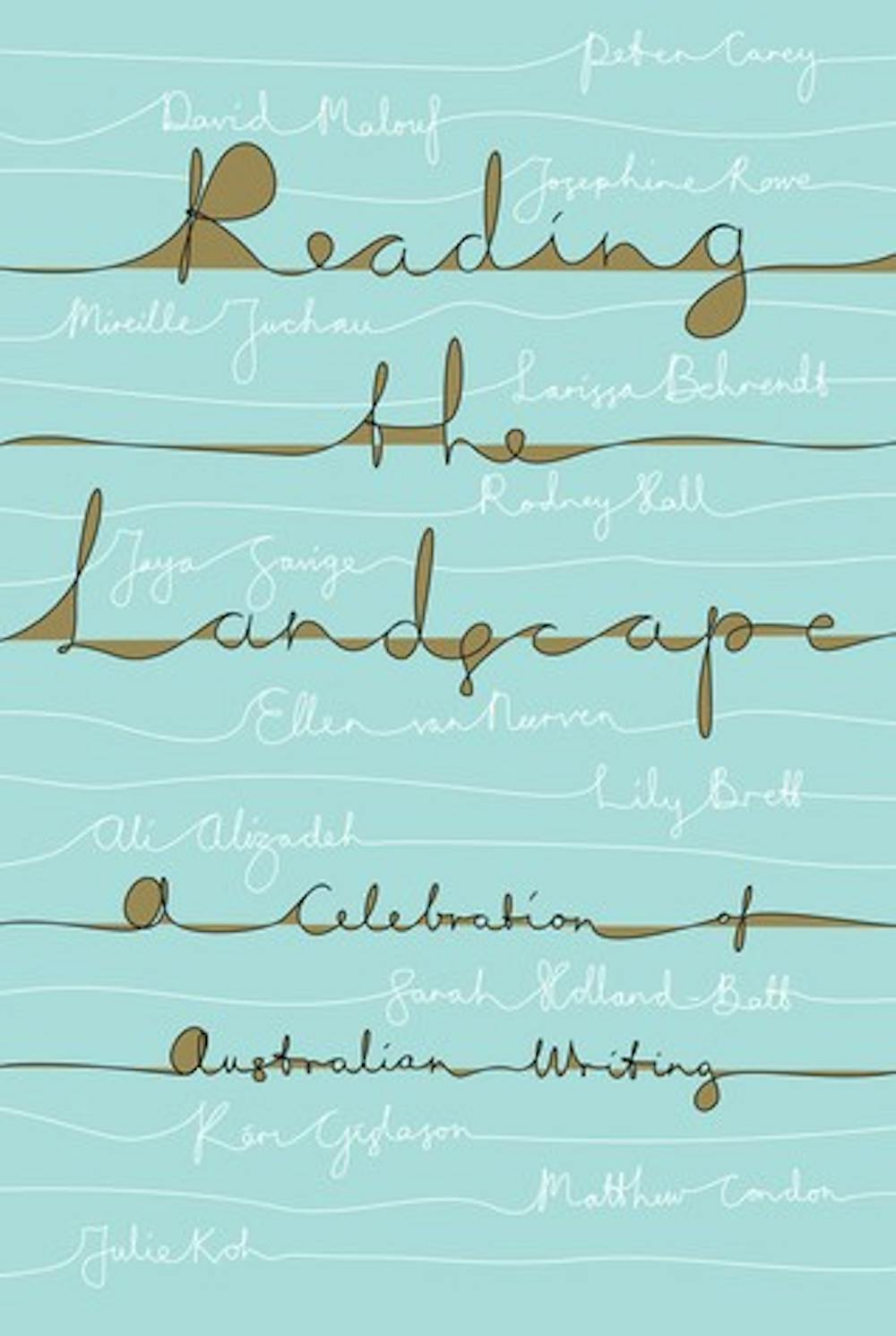
Review: Reading the Landscape, a Celebration of Australian Writing (UQP).

It is actually quite difficult to imagine what Australian literature would look like without the University of Queensland Press (UQP). Since it was established in 1948, it has done as much as any Australian publisher to shape Australian creative writing. The title of this excellent anthology Reading the Landscape refers to this literary landscape rather than any thematic interest in Australia’s land.

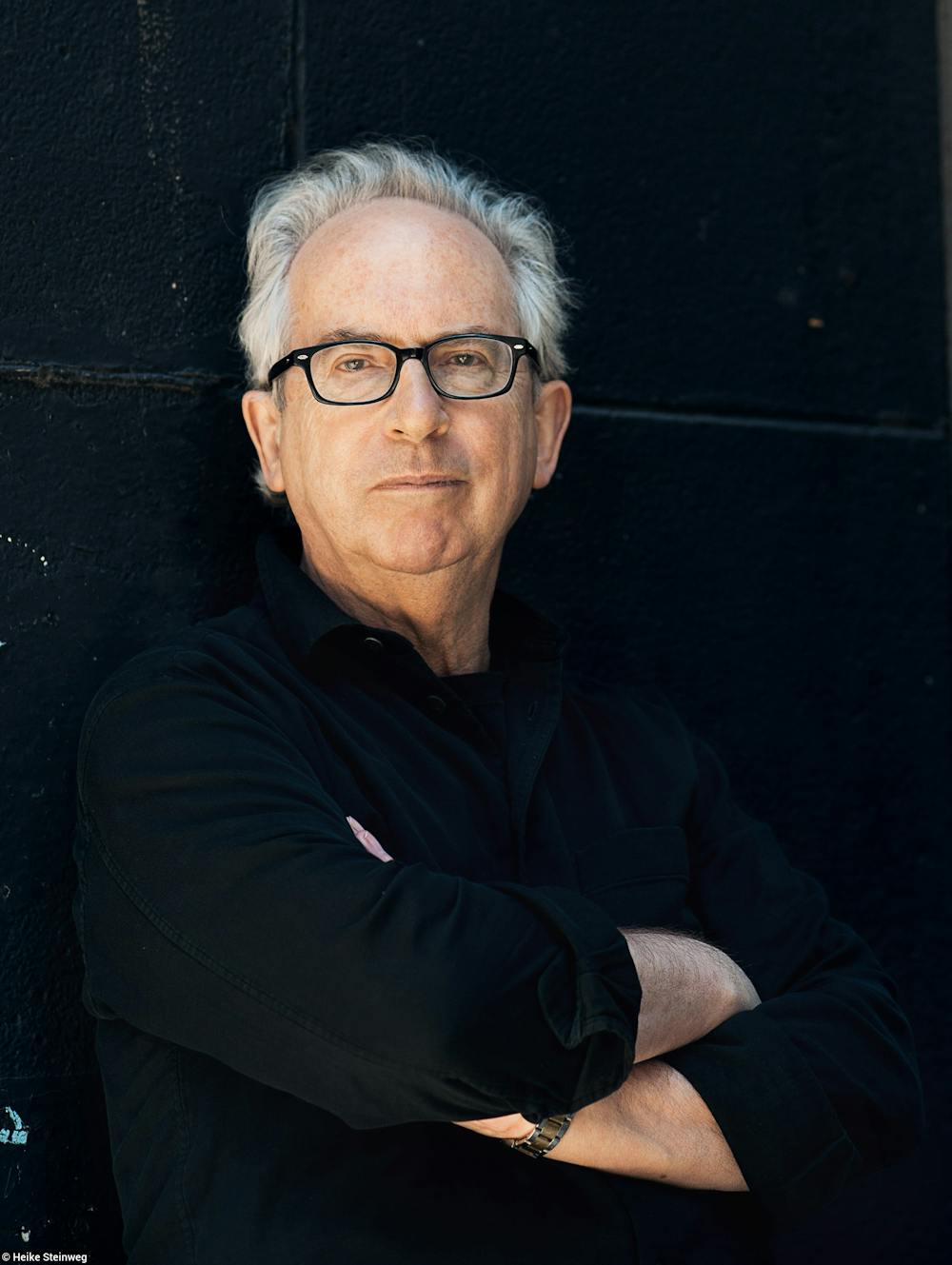
Peter Carey.
Heike Steinweg

Whether writers like David Malouf, Rodney Hall, Peter Carey, Doris Pilkington-Garimara and Alexis Wright would have become the writers they became without UQP is a moot point. One assumes, with the benefit of hindsight and the stratosphere they now inhabit, that they certainly would have. How could we not have Oscar and Lucinda, Remembering Babylon, Follow the Rabbit-Proof Fence and Carpentaria? How could they not exist? But the fact is that each of these writers, and dozens of others, were first published by UQP.

Against considerable economic pressures, UQP is one of a handful of Australian university presses that continue to produce quality scholarly publications for academic and general markets. While academic scholarship is considered the natural province of a university press, UQP is distinctive in having developed significant fiction and poetry lists from the late 1960s.

Recently, the University of Western Australia’s UWAP has followed UQP in developing fiction (and creative nonfiction) and poetry lists, and last year UWAP author Josephine Wilson won the Miles Franklin for her novel Extinctions. But UQP’s record of discovering, nurturing and supporting Australian writers, is really without peer in the other Australian university presses, and unique in world terms.

Reading the Landscape is a cross-section of living writers who currently publish with UQP or have in the past. At least three generations feature — those who debuted in the 1970s and 80s, those who appeared for the first time in the 90s and 2000s, and the current range of new writers.


Read more:
Grief, loss, and a glimmer of hope: Josephine Wilson wins the 2017 Miles Franklin prize for Extinctions


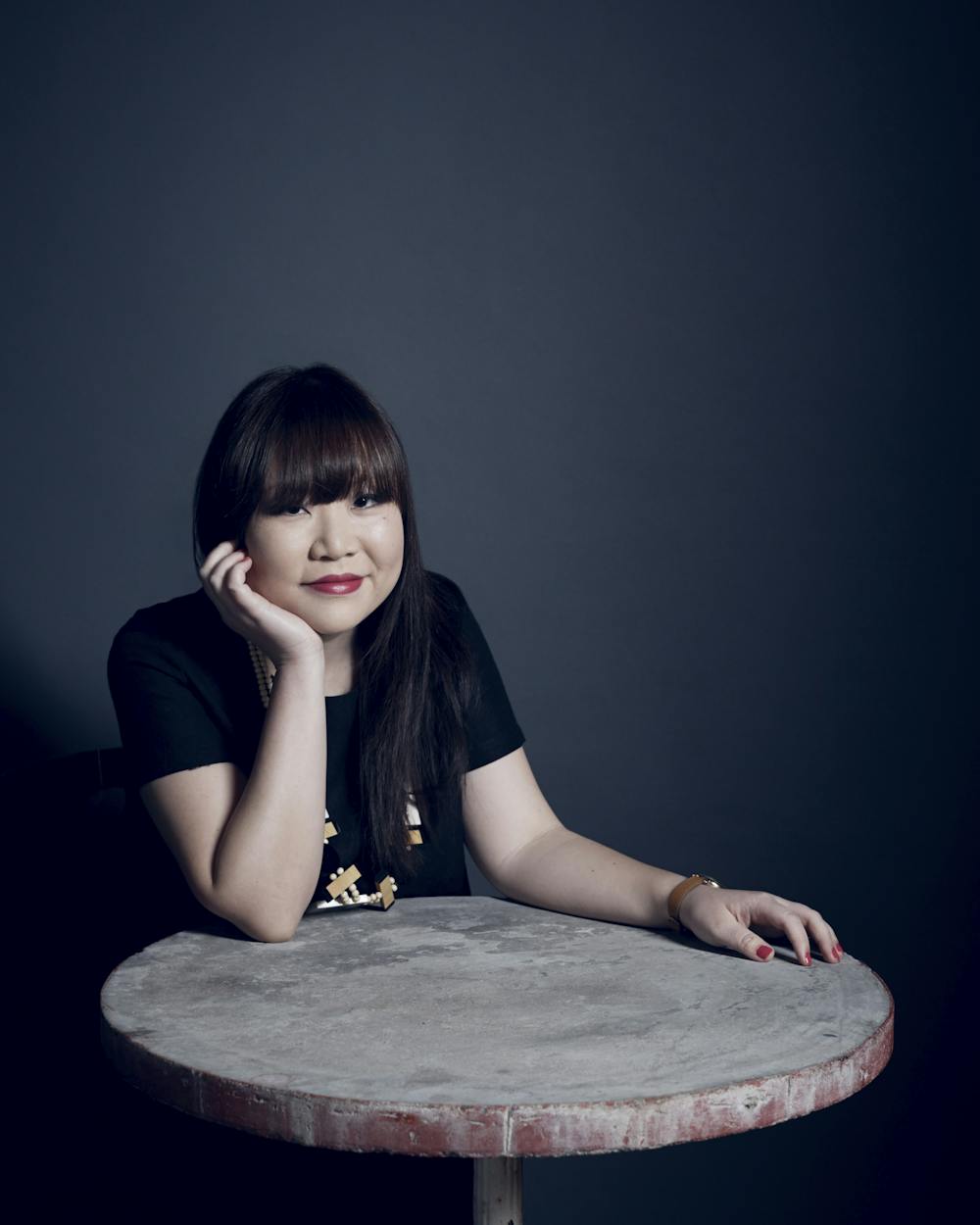
Julie Koh.
Hugh Stewart

In the first generation, we see not only Malouf, Carey and Hall, but important writers like Nicholas Jose, Peter Skrzynecki and Gabrielle Carey. In the next generation, there are writers like Lily Brett, Melissa Lucashenko, Larissa Behrendt, David Brooks, Venero Armanno and Samuel Wagan Watson. And finally, we have writers only recently to emerge such as Jaya Savige, Julie Koh and Ellen van Neerven.

Those familiar with some of those writers will be reminded, in this anthology, of just why they have been celebrated. Rodney Hall’s Glimpses of Lost Europe, for instance, is a charming reminder of his effortless brilliance. It begins in 1954 like this:

Dr Bródy – philosopher, philologist and metaphysician ­– was grateful to find work in Brisbane as an umbrella salesman.

And spins outwards from there. Various trends and movements suggest themselves from these contributions. One is the turn towards factual stories in the genre now known as creative non-fiction. Another is the rise of the young-adult genre as a powerful and lucrative publishing phenomenon.

One of the creative non-fiction highlights of this anthology is Patti Miller’s riveting account of her uncle’s hang-gliding accident. Icarus is the spellbinding story of a quiet and meticulous man who becomes, in his 60s, a devoted hang-gliding enthusiast, only to have his spine shattered by an accident while landing.

Spiky and lyrical, smouldering and rueful

I was also taken by the quality of the poetry by younger writers like Savige, van Neerven and Ali Alizadeh. Their respective poems were by turns spiky and lyrical, smouldering and rueful. The way that they mix politics and memory, urgency and metaphysics, affirms the continuing possibilities of poetic expression in what often seems like an increasingly prosaic age.

Perhaps most significant, though, is the rise of Indigenous writing visible in the contributions from acclaimed authors like Lucashenko, Behrendt, Wagan Watson and van Neerven (the last three each won the David Unaipon award).

Ellen van Neerven.
Bridget Wood

The appearance of modern Indigenous writing is often dated to the publication by Jacaranda Press, another largely independent Brisbane press, of Kath Walker’s (Oodgeroo Noonuccal’s) We are Going in 1965. UQP published Kevin Gilbert’s People are Legends: Aboriginal Poems in 1978, and as Bernadette Brennan reminds us in her fine introduction to Reading the Landscape, the press contributed very significantly to the emerging study of Indigenous writing with seminal monographs on the subject by J.J. Healy and Adam Shoemaker.

Many of the key Indigenous writers to follow in the wake of Oodgeroo, Kevin Gilbert, and Jack Davis have come through UQP, although the WA presses Fremantle Press and Magabala Books have also been crucial. In van Neerven, in particular, one sees a worthy successor to Oodgeroo, as invidious as that comparison might seem. Oodgeroo’s trademark mixture of acerbic humour and gut-punching honesty shines through van Neerven’s verse, and her poem 18C is a fitting conclusion to the anthology.

Written in answer to the recent controversies that have surrounded the anti-vilification provision of Australia’s Racial Discrimination Act, the poem’s 18 stanzas thread in and out of the complexities of black life. The final stanza, and the book’s last words are these:

Courage is telling them what you think of that play, that script they try and write us in will no longer contain us, bring me a new coat of oppression, this one’s wearing thin.The Conversation

Tony Hughes-D’Aeth, Associate Professor, English and Cultural Studies, University of Western Australia

This article is republished from The Conversation under a Creative Commons license. Read the original article.
Unknown's avatar

Decorating a Bookshelf


The link below is to an article that takes a look at ways to decorate a bookshelf.

For more visit:
https://bookriot.com/2018/09/11/how-to-decorate-a-bookshelf/

Unknown's avatar

2018 Man Booker Shortlist


The links below are to articles that look at the 2018 Man Booker Prize shortlist.

For more visit:
https://www.booktopia.com.au/blog/2018/09/20/2018-man-booker-shortlist-announced/
https://publishingperspectives.com/2018/09/man-booker-prize-fiction-names-2018-shortlist/
https://www.theguardian.com/books/2018/sep/20/man-booker-2018-shortlist-daisy-johnson-anna-burns-rachel-kushner-richard-powers-esi-edugyan-robin-robertson
https://bookriot.com/2018/09/20/the-man-booker-prize-shortlist-is-here/

Unknown's avatar

Vanity Fair: Thackeray’s classic novel may be too modern for audiences today


File 20180913 177956 1gzm7hy.jpg?ixlib=rb 1.1
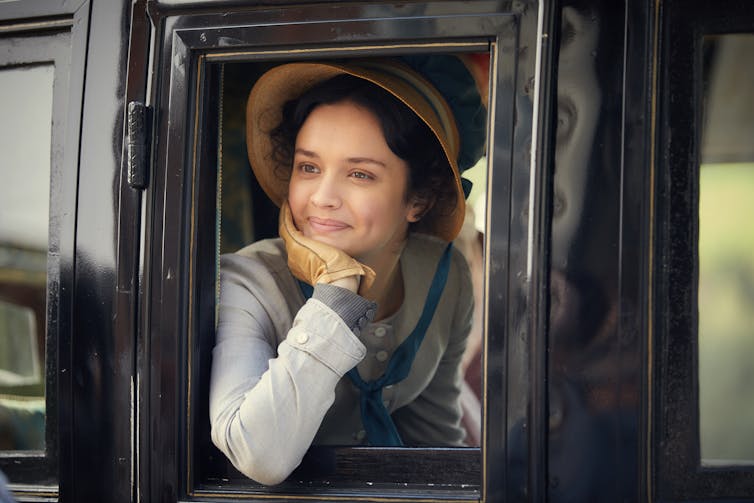
Olivia Cooke as Becky Sharpe in ITV’s Vanity Fair.
Mammoth Screen for ITV

Jonathan Potter, Coventry University

The latest TV adaptation of Thackeray’s 1848 novel Vanity Fair has polarised audiences expecting a traditional period drama. The first two episodes of Vanity Fair, co-produced by ITV and Amazon, received a mixed response on Twitter where viewers commented using the hashtag #VanityFair.

Comments seemed to broadly fall into two camps: those who admired the adaptation for its “fresh, modern take” on a period drama, and those who didn’t like what they saw as the needless modernisation of a period drama.

Interestingly, some of the features most identified as modernisations were actually from the original 1848 text: elements such as Becky Sharp throwing from her coach a dictionary she’d been given by her hated headmistress as she rode away from the school. Others took offence at Becky Sharp’s description of herself as a “secretary” – women were not secretaries at that time, one tweet protested. Meanwhile the frequent breaking of the fourth wall (Olivia Cooke, playing Becky Sharp, looks knowingly at the camera for dramatic effect) also caused a fair bit of angst.

These were not features that viewers associated with the genre of “period drama” and unfavourable comparisons were made with the popular BBC period drama Poldark (based on Winston Graham’s novels from the mid-20th century). That some viewers should so easily confuse historical accuracy with genre conventions is a striking example of the power of those genre conventions.

It is ironic, too, given that Thackeray subverted and satirised the conventions and tropes of his own time. This was true across his writing. In Pendennis, for example, a novel about the titular young gentleman making his way in London, Thackeray writes in his preface:

Perhaps the lovers of “excitement” may care to know, that this book began with a very precise plan, which was entirely put aside. Ladies and gentlemen, you were to have been treated, and the writer’s and the publisher’s pocket benefited, by the recital of the most active horrors.

In Vanity Fair, such subversions are frequent. In the first episode of the new adaptation, Becky Sharp – attempting to charm the wealthy and credulous Jos Sedley into proposing marriage – attends the Vauxhall pleasure gardens. This takes place in chapter six of the book, which Thackeray introduces satirically:

We might have treated this subject in the genteel, or in the romantic, or in the facetious manner … Or if, on the contrary, we had taken a fancy for the terrible … we should easily have constructed a tale of thrilling interest, through the fiery chapters of which the reader should hurry, panting. But my readers must hope for no such romance, only a homely story, and must be content with a chapter about Vauxhall, which is so short that it scarce deserves to be called a chapter at all.

Within the full version of that quoted passage, Thackeray offers suggestions of how the story might have been written in these different “manners”. He plays with these kinds of conventions to set up readers’ expectations, only to subvert and parody them. One of the century’s other great novelists, Anthony Trollope, wrote that Vanity Fair raised the fundamental question of “what a novel should be.” Trollope takes issue with some of the same things as modern viewers:

There are absurdities in it which would not be admitted to anyone who had not a peculiar gift of making even his absurdities delightful. No schoolgirl who ever lived would have thrown back her gift-book, as Rebecca did the ‘dixonary’, out of the carriage window as she was taken away from school. But who does not love that scene with which the novel commences? How could such a girl as Amelia Osborne have got herself into such society as that in which we see her at Vauxhall? But we forgive it all because of the telling.

Same story, different flavours

Like Thackeray, Lewis Carroll, the Victorian author of Alice in Wonderland, was also highly attuned to the way stories become categorised via genre, satirising this in an 1855 short story entitled Photography Extraordinary. Carroll’s story, presented like a newspaper article, reports an invention which literally transcribes narrative fiction directly from the human brain. Not only can Carroll’s machine “develop” a story onto paper directly from the brain, but the story can then be redeveloped into different genres. Story writing, Carroll seems to suggest, was a question of mechanically adjusting language to fit the conventions of distinct genres and meet readers’ expectations.

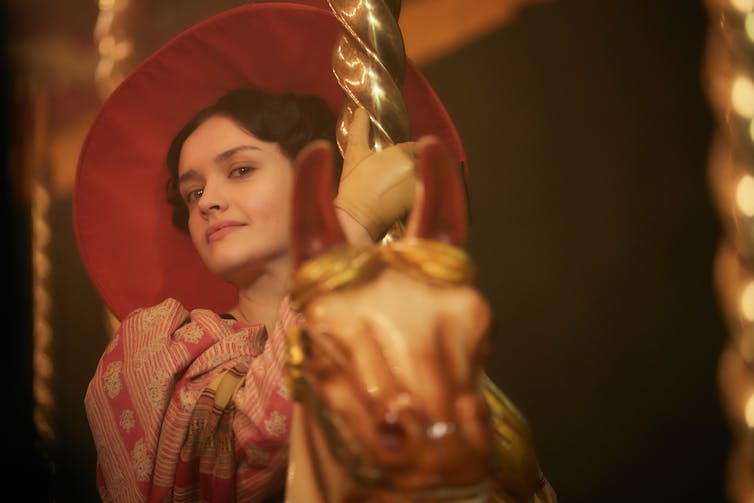
Becky Sharpe at Vauxhall Pleasure Gardens.
Mammoth Screen for ITV

As 21st-century readers and viewers, we still consume media in this way. Our genres have changed – we are not likely to talk about “silver fork” novels, for instance – but our use of genres has not. If anything, we have only become more reliant on them as we create more and more sophisticated algorithms for organising our digital media.

We also risk letting our expectations shape our understanding of the past. One of the big divergences between Thackeray’s book and the ongoing adaptation is that the series’ producers have elected to depict the Battle of Waterloo. When his military characters depart for the battlefield, Thackeray lets them drift out of view, writing: “We do not claim to rank among the military novelists. Our place is with the non-combatants.”

Thackeray, in other words, is willing to disappoint and frustrate readers’ expectations – he does not feel the need to conform to expectations. It is – as the book’s subtitle warns us – a “novel without a hero” (and in its serial form, not even a novel, simply “pen and pencil sketches of English society). But, of course, to adapt for television is to adjust the story to meet a different set of expectations. In that sense, adapting Vanity Fair is a bit like churning it through Carroll’s fiction machine one more time.The Conversation

Jonathan Potter, Lecturer/Tutor, Coventry University

This article is republished from The Conversation under a Creative Commons license. Read the original article.
Unknown's avatar

Curious Kids: Why does English have so many different spelling rules?


File 20180624 152140 112kqg9.jpg?ixlib=rb 1.1
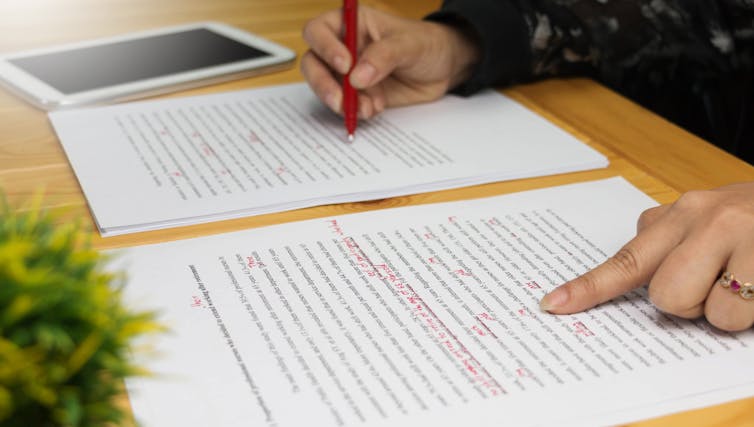
More spelling problems came in when French scribes introduced new spelling conventions — their own of course, and not always helpful.
Shutterstock, CC BY

Kate Burridge, Monash University

This is an article from Curious Kids, a series for children. The Conversation is asking kids to send in questions they’d like an expert to answer. All questions are welcome – serious, weird or wacky! You might also like the podcast Imagine This, a co-production between ABC KIDS listen and The Conversation, based on Curious Kids.


Why does English have so many different spelling rules? – Melania P, age 12, Strathfield.


English spelling has been evolving for over a thousand years and the muddle we’re in today is the fall-out of many different events that have taken place over this time.


Read more:
Curious Kids: Why do Aussies have a different accent to Canadians, Americans, British people and New Zealanders?


A bad start

It was a rocky beginning for English spelling. Quite simply, the 23-letter Roman alphabet has never been adequate — even Old English (spoken 450-1150) had 35 or so sounds, and our sound system is now even bigger.

More spelling problems came in when French scribes introduced new spelling conventions — their own of course, and not always helpful. Using “c” instead of “s” for words like city was messy because “c” also represented the “k” sound in words like cat.

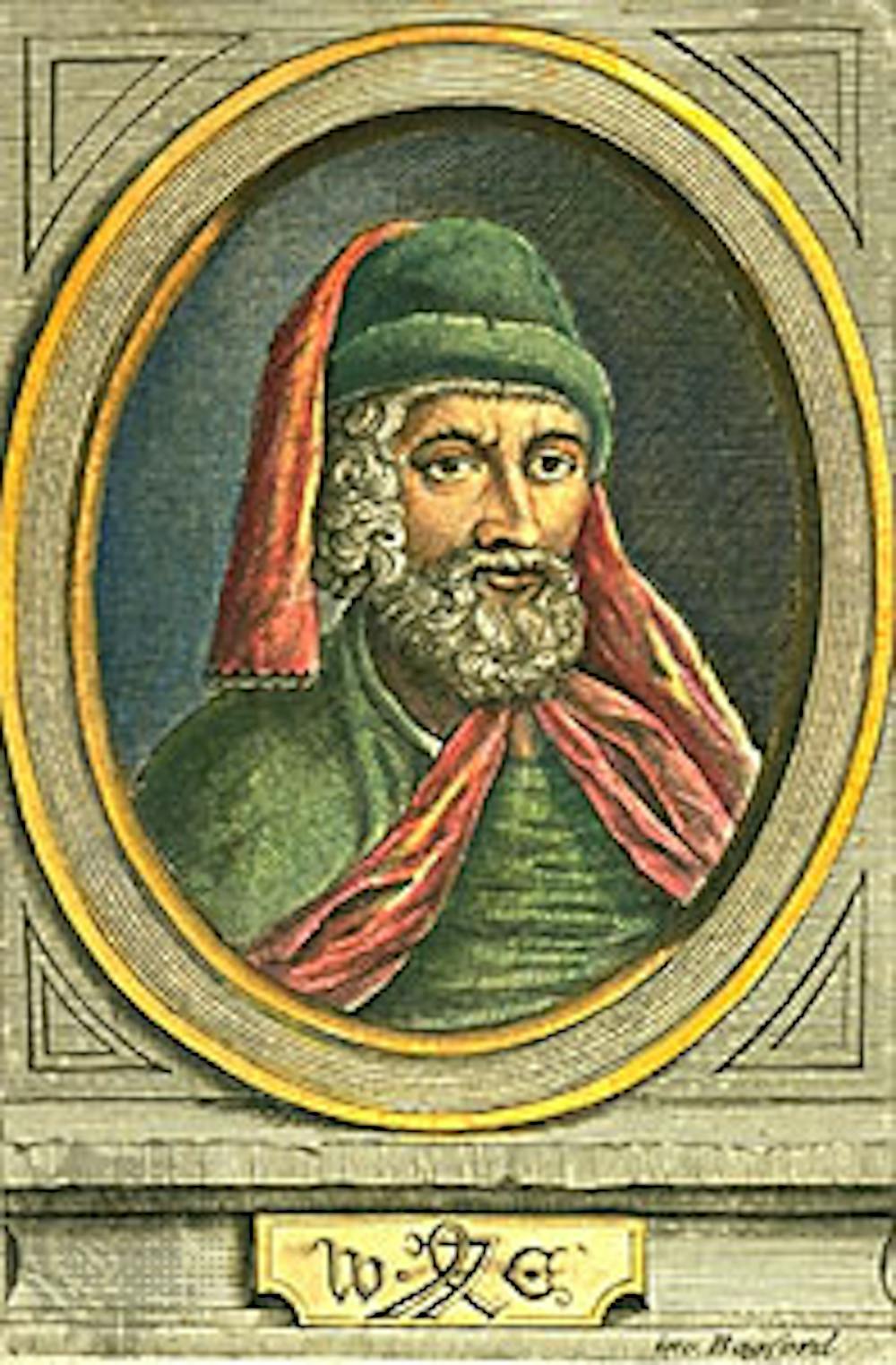
William Caxton set up the first printing presses.
Wikimedia Commons, CC BY

And then printing arrived in the 15th century — and with it more mess. William Caxton (who set up the presses in the first place) liked Dutch spellings and so established the “gh” in ghost and ghastly. Some printers were European and they introduced favourite spellings too from their own languages. Not terribly helpful either!

Those pesky silent letters

One of the biggest problems for English spelling has always been changes in pronunciation. Printing helped to stablise the spelling of words, but then some sounds changed their shape, and others even disappeared altogether. Think of those silent letters in words such as walk, through, write, right, sword, know, gnat — these were once pronounced.

If only the printer Caxton had been born a couple of centuries later, or if these sound changes had occurred a couple of centuries earlier, our spelling would be much truer to pronunciation.

And now comes another little wrinkle in this story – there’s a bunch of silent letters that were never actually pronounced. They appeared because of linguistic busybodies who wanted to make the language look more respectable. This caused some serious mess.

Take how we spell the word rhyme. When we swiped the word from French, it had a much more sensible look — rime. But this was changed to rhyme to give it a more classy classical look (like rhythm) – an interesting idea, but hardly helpful for someone trying to spell the word!

The 16th and 17th centuries saw many extra letters introduced in this way. Think of the “b” added to debt to make a link to Latin debitum. Now, the “b” might be justified in the word debit that we stole directly from Latin, but it was the French who gave us dette.

The “b” consonant was a mistake, and now we accuse poor old debt of having lost it through sloppy pronunciation!

Let’s make spelling more sensible

And so it is from this haphazard evolution that we end up with the spelling system we have.

But you know, there are in fact over 80% of words spelled according to regular patterns. So wholesale change is not what we want. However simple improvements could certainly be made without any major upheaval.

We could iron out inconsistencies such as humOUr versus humOrous. To introduce uniform -or spellings would be a painless reform (well, perhaps not painless, since many people are quite attached to the -our in words like humour)

We could also restore earlier spellings like rime and dette, and while we’re at it give psychology and philosophy a sensible look by spelling them sykology and filosofy.

So now, you can see the problem. No matter how silly spellings are, people get attached to them, and new spellings – even sensible ones – never seem to get a foot in the door.


Read more:
Curious Kids: Who made the alphabet song?


Hello, curious kids! Have you got a question you’d like an expert to answer? Ask an adult to send your question to us. You can:

* Email your question to curiouskids@theconversation.edu.au

* Tell us on Twitter by tagging @ConversationEDU with the hashtag #curiouskids, or

* Tell us on Facebook


CC BY-ND

Please tell us your name, age and which city you live in. You can send an audio recording of your question too, if you want. Send as many questions as you like! We won’t be able to answer every question but we will do our best.The Conversation

Kate Burridge, Professor of Linguistics, Monash University

This article is republished from The Conversation under a Creative Commons license. Read the original article.

Unknown's avatar

For centuries, anonymous insider accounts have chipped away at ruling regimes – and sometimes toppled them


File 20180912 133898 1ffx51y.jpg?ixlib=rb 1.1
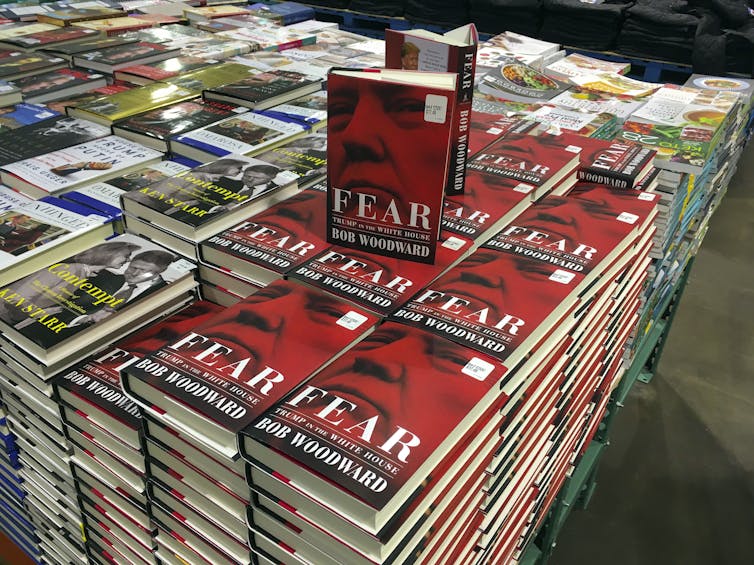
Copies of Bob Woodward’s ‘Fear: Trump in the White House’ are displayed for sale at a Costco in Virginia.
AP Photo/Pablo Martinez Monsivais

Rachel Carnell, Cleveland State University

Bob Woodward’s new book, “Fear: Trump in the White House,” seems to contain scant new information.

Like Michael Wolff’s “Fire and Fury: Inside the Trump White House,” it portrays President Donald Trump as an “emotionally overwrought, mercurial and unpredictable leader,” whose senior staff struggle to contain his most dangerous impulses.

This same view of Trump was reiterated in a Sept. 5 anonymous New York Times op-ed, which, as Nebraska Sen. Ben Sasse observed, is “just so similar to what so many of us hear from senior people around the White House, you know, three times a week.”

But whether “Fear” tells us something new matters less than the fact that the book is yet another broadside against Trump’s image. It adds more fuel to the suspicions many have about the president’s behind-the-scenes behavior.

In fact, Woodward’s “Fear” – together with Wolff’s “Fire and Fury,” Omarosa Manigault’s “Unhinged” and the anonymous op-ed – is part of a long tradition of political “secret histories,” a genre that recounts salacious and scandalous details about the dealings, relationships and temperaments of those in power. It’s a practice that goes back centuries, and it’s one that my co-editor and I explore in our book “The Secret History in Literature, 1660-1820.”

Secret histories tend to take two forms. There is the plain-spoken, just-the-facts approach, similar to Woodward’s “Fear.” Then there are novelistic accounts with major figures depicted using pseudonyms, as in “Primary Colors,” a lightly fictionalized dramatization of the Clinton White House.

But the secrets unveiled in these works usually don’t come out of nowhere. Instead, they contain anecdotes that have long been whispered or suspected. The goal of secret histories is to emphasize embarrassing stories about a ruler or government – to propel the drumbeat of negative coverage in order to strengthen the opposition and, in some instances, to even topple governments.

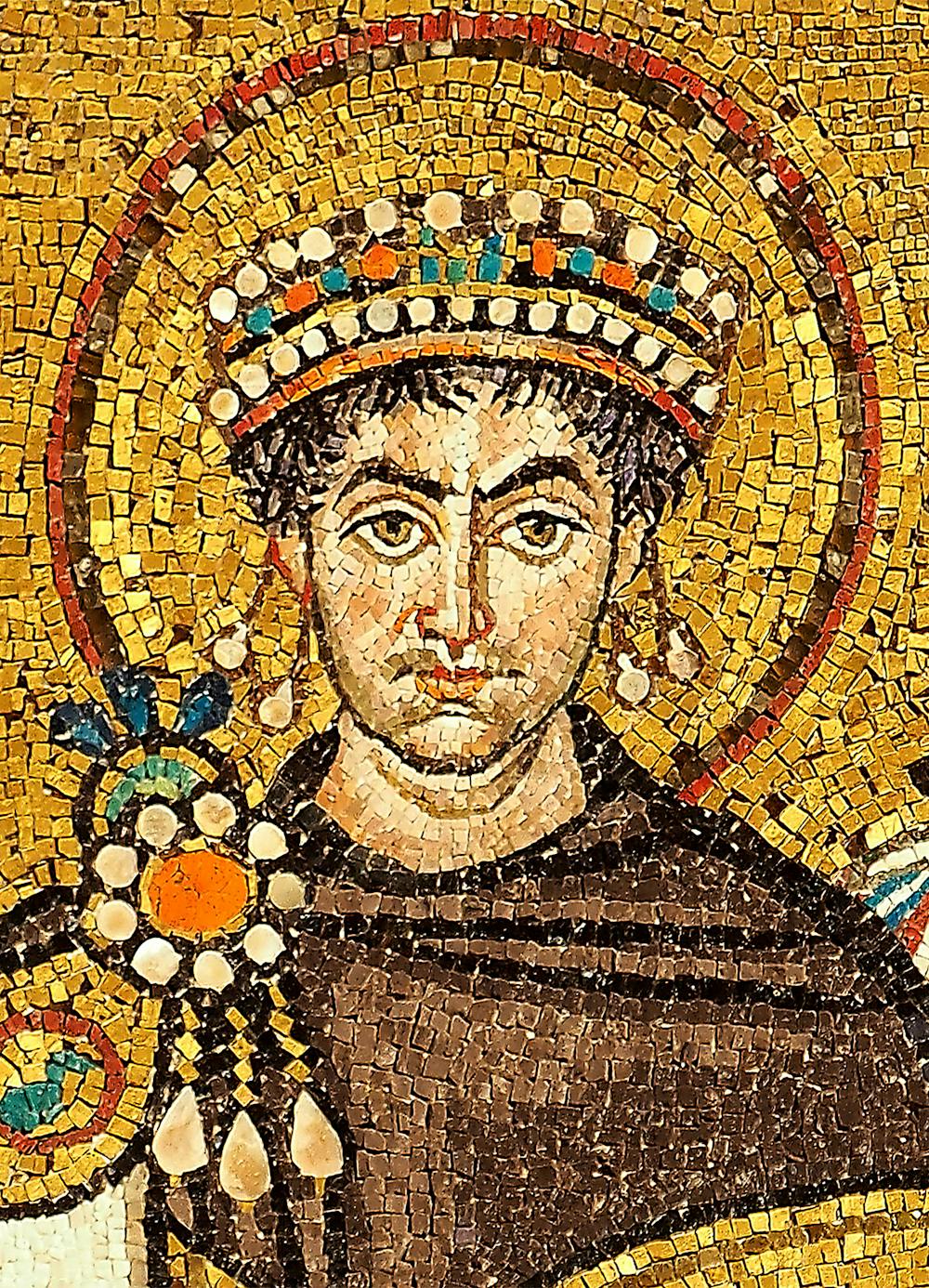
Justinian was the subject of a secret history circulated by the military historian Procopius.
Petar Milošević

Secret histories date back at least to the sixth century, when the military historian Procopius wrote down sordid anecdotes about Byzantine Emperor Justinian and his wife, Theodora, in a work that became known as “Anekdota,” which translates to “unpublishable things.” Ten centuries later, it appeared in Latin as “Historia Arcana,” or “Secret History.”

As a military historian, Procopius had helped create the myth of Justinian’s greatness in his eight-book treatise “The Wars of Justinian.” But in his “Anekdota,” Procopius finally told the ugly backstory of Justinian’s reign: his lust, his seizure of others’ property, his petty vengefulness and his persecution of non-Christians. The work was almost certainly circulated in manuscript scroll among Justinian’s enemies. While it probably damaged his standing, Justinian was nonetheless able to retain his grip on power.

After French and English translations of Procopius’ “Anekdota” appeared in 1669 and 1674, secret histories in the same style began to appear about King Charles II of England.

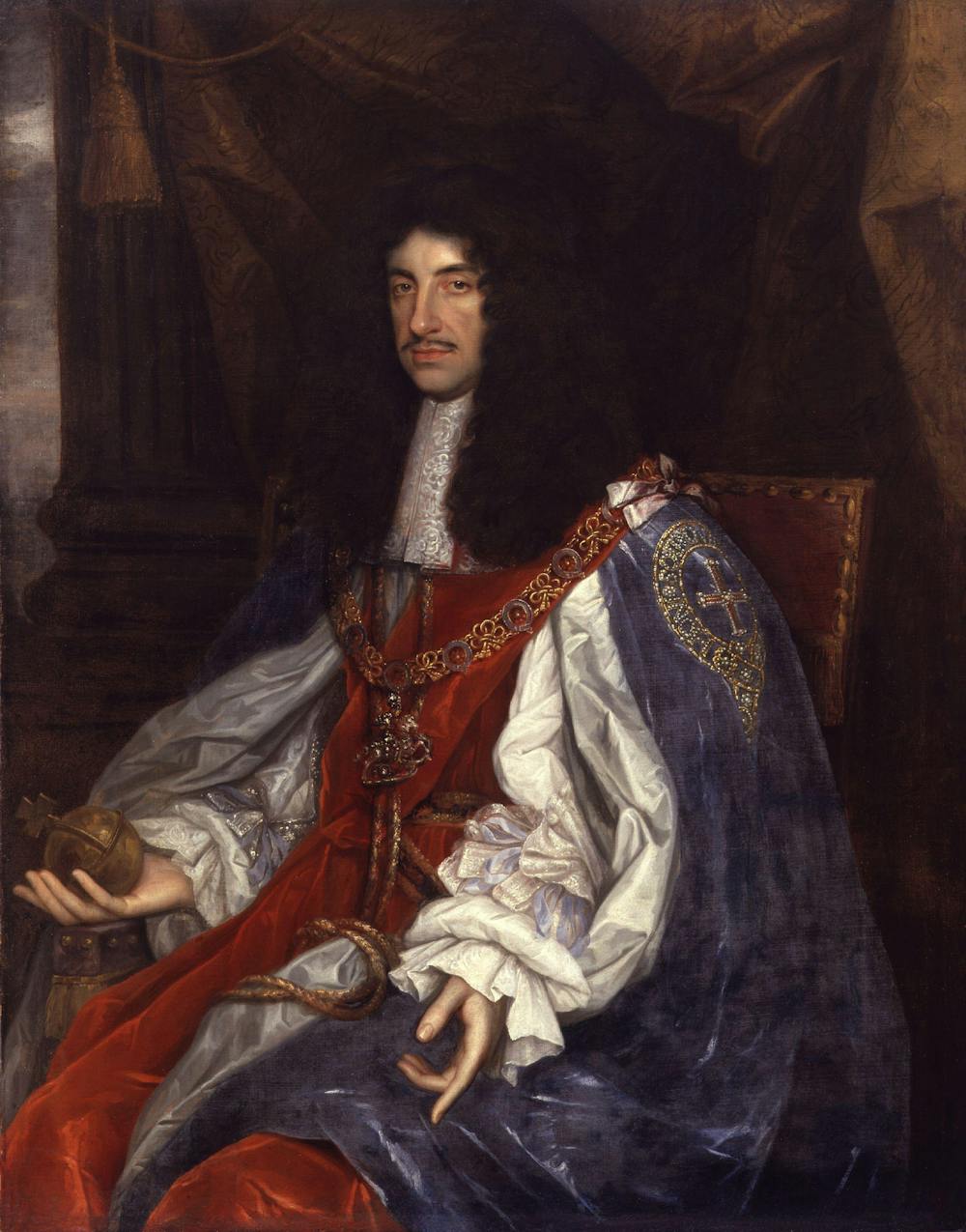
These tended to focus on his mistresses – particularly the infamous Duchess of Cleveland, who manipulated Charles for over a decade, persuading him to grant her land and money and bestow titles of nobility on their illegitimate children.

Speculation over King Charles II’s relationship with the Duchess of Cleveland was rampant during his reign.
National Portrait Gallery

These reports, which read like tabloid-style gossip, were never just about sex.

Readers of one account, titled “The Amours of the King of Tamaran,” likely realized that if the king could be duped and controlled by his powerful mistress, he was also susceptible to being influenced by England’s adversaries.

Indeed, he was: Another secret history, Andrew Marvell’s “Account of the Growth of Popery and Arbitrary Government in England,” described the backstory of the Secret Treaty of Dover, in which Charles II accepted large sums of money from the French king in exchange for promising to return England to Catholicism.

These publications didn’t bring down the politically skilled Charles II, who was glad to take Louis XIV’s money but savvy enough to decide against changing his country’s religion.

They did, however, sow suspicion towards Charles II and his family. After Charles II’s death, his openly Catholic younger brother, James, ascended the throne in 1685, instilling fear that England would return to Catholicism. Seven Englishmen wrote to Prince William of Orange – who was a Protestant – pleading that he invade England. In the Glorious Revolution that ensued, James II fled to France, and Parliament declared William and his wife, Mary, joint monarchs of England.

The Glorious Revolution of 1688 helped inspire American colonists to rebel against another British monarch, with the not-so-secret history of George’s III’s “repeated injuries and usurpations” enshrined in the Declaration of Independence.

Some might disparage Woodward’s book as “anonymously-sourced gossip.”

But gossip has always been important to humankind. As Israeli historian Yuval Noah Harari notes in “Sapiens,” his best-selling account of early human history:

“It is not enough for individual men and women to know the whereabouts of lions and bison. It’s much more important for them to know who in their band hates whom, who is sleeping with whom, who is honest, and who is a cheat.”

Those who dismiss Woodward’s book underestimate the power that gossip and behind-the-scenes revelations wield over politics – and the way it has shaped the course of human history.The Conversation

Rachel Carnell, Professor of English, Cleveland State University

This article is republished from The Conversation under a Creative Commons license. Read the original article.

Unknown's avatar

Listening Vs Reading


The link below is to an article that takes yet another look at the audiobook vs reading debate.

For more visit:
http://time.com/5388681/audiobooks-reading-books/

Unknown's avatar

The 2018 BBC National Short Story Award Shortlist


The link below is to an article that takes a look at the 2018 BBC National Short Story Award shortlist.

For more visit:
https://www.theguardian.com/books/2018/sep/14/bbc-short-story-prize-selects-all-female-shortlist-for-fifth-time

Unknown's avatar

2018 National Book Award Longlist for Poetry


The link below is to an article that takes a look at the longlist for the 2018 National Book Award for Poetry.

For more visit:
https://bookriot.com/2018/09/13/2018-national-book-award-longlist-for-poetry/