
The link below is to an article that reports on the use of catfishing in book piracy.
For more visit:
https://goodereader.com/blog/e-book-news/book-piracy-hackers-now-use-catfishing-to-target-unsuspecting-readers

The link below is to an article that reports on the use of catfishing in book piracy.
For more visit:
https://goodereader.com/blog/e-book-news/book-piracy-hackers-now-use-catfishing-to-target-unsuspecting-readers
The link below is to a webpage that introduces the font ‘lexend.’ This is a font that is engineered to improve reading and learning.
For more visit:
https://www.lexend.com/
The link below is to an article that takes a look at Chinese advances in Artificial Intelligence, with the use of Author Avatars in audiobooks.
For more visit:
https://lithub.com/today-in-ai-will-replace-us-all-author-avatars-can-now-read-their-books-to-you/
The link below is to an article that takes a look at a French traveling bookstore.
For more visit:
https://www.architecturaldigest.com/story/tiny-traveling-french-bookstore

Jody Mason, Carleton University
As a book buyer or reader, you may have recently encountered the new literary imprint Strange Light — a project spun off from the hugely successful digital literary magazine Hazlitt.
Although the fact of its ownership is muted, Hazlitt magazine and the new “indie” Strange Light are both owned by Penguin Random House. Penguin and Random merged in 2013 to become Canada’s largest book publisher and the world’s largest trade book publisher. Seventy-five per cent of the shares of Penguin Random House are owned by Bertelsmann, a German multinational media corporation.
Instead of its corporate identity, the magazine’s mission emphasizes its open, experimental, creator- and reader-driven environment.
“Hazlitt is a home for writers and artists to tell the best stories about the things that matter most to them … Hazlitt is … humane, diverse and committed to stories and writers not heard anywhere else.”
Random House Canada launched Hazlitt as part of its digital strategy in 2012. According to Brad Martin, then president of the company, the goal was to use websites for more than just the traditional purposes of sales and marketing.
In 2012, digital self-publishing ventures such as Amazon Kindle Direct loomed large. As Canadian journalist John Barber noted in an article on Hazlitt in 2012, Random House Canada’s forays into digital publishing constituted an effort to stay relevant — and profitable — at the edge of a “frontier pioneered by innovative outsiders.”
The publishing sector has only grown in size since then, as the previously unthinkable success of startups such as Canada’s Wattpad attests.
This year, Penguin Random House Canada launched the Hazlitt imprint Strange Light, a project dedicated to the work of “unpredictable, innovative authors telling personal and provocative and experimental stories, even — and especially –– those that defy easy categorization.”
Strange Light’s debut title, Sara Peters’s I Become a Delight to My Enemies, mixes poetry and prose. In a literary field utterly dominated by prose fiction — the novel — this is indeed “innovative” and “experimental.”
The embrace of generic diversification at Penguin Random House can only be a good thing. Regarding this embrace, however, we might hold our collective breath.
Strange Light plans to release two memoirs, a work of literary non-fiction, and a novel in 2020. Where is the poetry? The prose poem? The graphic novel?
Book buyers in Canada choose novels over poetry. According to Book Net Canada’s statistics, fiction represented just under 30 per cent of all unit sales of books in Canada in 2016. By contrast, poetry represented less than one percent.
Yet even if it could make Canadians read more poetry and mixed genre work, would Strange Light work to serve the diversification of Canada’s literary field, as its mission statement suggests?
When thinking about how to introduce experimental stories and diverse points of view to readers in Canada, the primary issue is not one of genre or form. It is also not exclusively a question of publishing writers from a diversity of cultural backgrounds. Both of these factors matter, but they relate to a larger one.
The main issue is a question of ownership. According to the Book Net Canada statistics for 2016, 95 per cent of fiction, non-fiction (including poetry), young adult and juvenile books sold in Canada were published by foreign-owned publishers.
Penguin Random House Canada is the biggest of these, followed by HarperCollins Canada. Together, these two companies dominate literary publishing in Canada. According to investigative journalist Elaine Dewar, Penguin Random House Canada had cornered 32 per cent of the Canadian trade book market in 2016.
We do not have a diverse literary ecosystem in Canada; its diversity has shrunk rapidly in the past two decades. Two recent accounts amply demonstrate a narrowing of Canada’s publishing activity: Rowland Lorimer’s Ultra Libris analyzes the role of cultural policy in this process, while Elaine Dewar’s The Handover, reveals how “The Canadian Publisher” McClelland & Stewart was sold to Random House despite foreign investment rules that should have prevented it.
Since at least the early 1970s and the introduction of the Canada Council’s block grants to Canadian-owned publishers who are actively producing and marketing Canadian books, a modest small-press ecology has managed to survive in this country.
Publishers such as Kentville, Nova Scotia’s Gaspereau Press; Windsor, Ontario’s Biblioasis; and Penticton, British Columbia’s Theytus Books bring Canadians books that would not otherwise see the light of day.
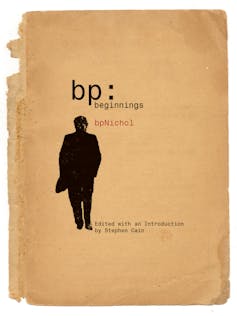
Although now fairly well known as Michael Onddatje’s first publisher, Toronto’s Coach House Books might also be remembered for its early forms of experimentation. The house made its mark in 1967 with b.p.nichol’s Journeying & the Returns, a slim volume in a blue and purple cardboard case that also contained assorted objects to be experienced alongside the poems, including a thumb-flip poem the size of a stack of sticky notes.
More recently, Québec’s Mémoire d’encrier offers us the unique poetry of Joséphine Bacon: French and Innu-aimun sit on each twinned page, giving the reader access to a language few in Canada have any opportunity to encounter.
Perhaps there is room for many different kinds of initiatives committed to boundary-pushing books in Canada’s literary field.
I hope that is the case. But do not be fooled: despite its rhetoric of innovation and experimentation, the indie-style imprint Strange Light is brought to us by a company that is already dominating the country’s literary space and that is clearly not indie.
This is one more sign of the desertification of our media ecology, not its diversification.
[ You’re smart and curious about the world. So are The Conversation’s authors and editors. You can read us daily by subscribing to our newsletter. ]
Jody Mason, Associate Professor, Department of English, Carleton University
This article is republished from The Conversation under a Creative Commons license. Read the original article.
Randy Malamud, Georgia State University
Email has become so prevalent in our lives that I felt compelled to write about it for a Bloomsbury series called “Object Lessons” that examines “the hidden lives of ordinary things.”
Perhaps I chose this topic because I wanted to be surprised by what I would learn. Email had always evoked the image of my energy, attention and intelligence being sucked away, byte by byte, in a deadening tsunami of ill-composed blather, bland formalities and corporate groupthink. But I hoped my literary training could help me unearth some diamonds in the rough, some redeeming rhetorical force.
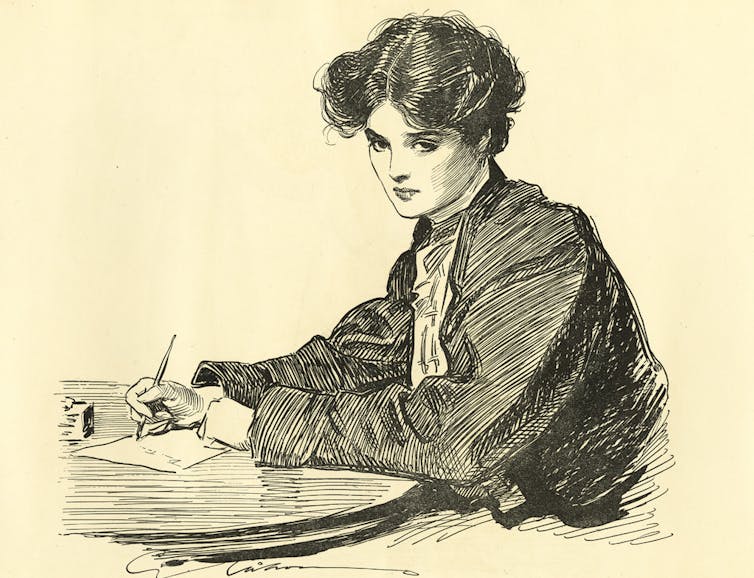
It turns out my chief discovery was how much richer old-fashioned letters are. An email is like a letter shorn of almost everything people liked about letters: the feel and smell of stationery, the confident authority of letterhead, the art of penmanship, the closing signature in the writer’s hand.
On paper, lives were lived, trysts arranged, manifestos mailed and wars waged; the shift from “communication” to “.com” has stripped away all of this historical and social value.
Literacy rates jumped globally in tandem with the invention and expansion of mail service. People composed their letters with effort and pride, perhaps understanding that well-written correspondence wouldn’t be thrown in the trash.
The song “Letters,” from Dave Malloy’s 2012 musical “Natasha, Pierre & The Great Comet of 1812,” extols the joy and satisfaction of letter-writing: “We put down in writing what is happening in our minds.” Once it’s on the paper “we feel better – it’s like some kind of clarity when the letter’s done and signed.”
Email is certainly convenient. But will there ever be an electronic equivalent of Martin Luther King Jr.’s “Letter from Birmingham Jail,” the literary correspondence of Elizabeth Bishop and Robert Lowell or the epistolary passion between Eleanor Roosevelt and Lorena Hickok?
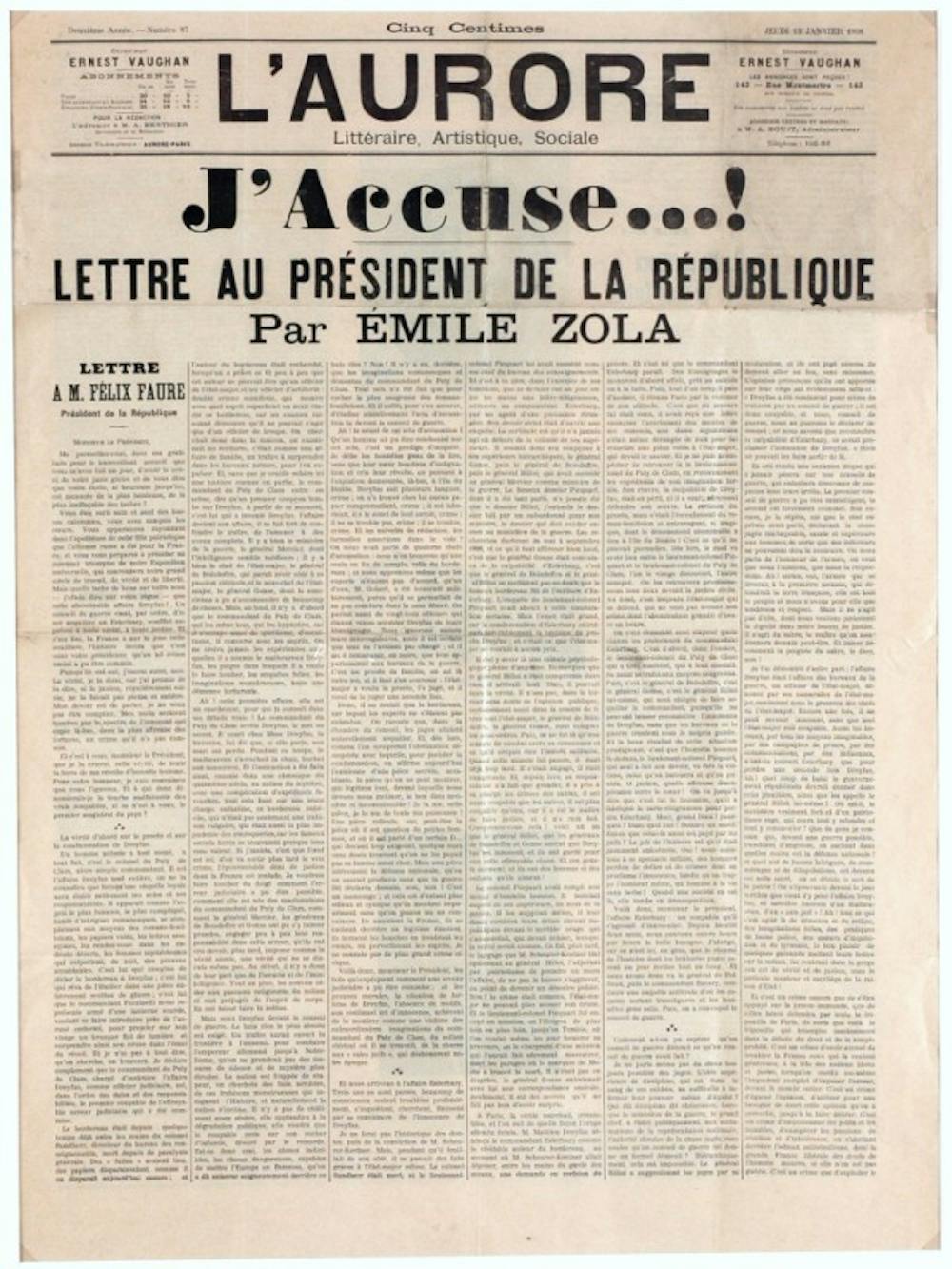
Émile Zola’s “J’Accuse!” was a letter – an open letter – to the French president, castigating the army for unlawfully jailing a Jewish officer. The letter traveled the world, inspiring others who sought to challenge those in power.
Is there such a genre as an “open email”? The only thing that comes to mind is accidentally hitting reply-all.
Letters changed storytelling: In Samuel Richardson’s 1740 epistolary adventure, “Pamela; or, Virture Rewarded,” a 16-year-old servant named Pamela Andrews details her boss’s sexual harassment in letters to her parents. Today it’s considered the first novel.
Letters spread the Gospel, with St. Paul’s Epistles disseminating early Christian teachings to the Corinthians, Romans and Thessalonians; in letters to Penthouse, they channeled erotic desire.
The value letters possess is perhaps reflected in their price.
“This boat is giant in size and fitted up like a palatial hotel,” a man named Alexander Holverson wrote from the Titanic the day before it sank. “If all goes well we will arrive in New York Wednesday AM.” His letter sold for six figures in 2017.
And after President Abraham Lincoln received a petition from children asking him to free the slaves, he responded with a letter: “Please tell these little people I am very glad their young hearts are so full of just and generous sympathy.” It brought in US$3.4 million at a 2008 auction.
“There is no standard nowadays of elegant letter writing, as there used to be in our time,” grumbled a woman at the turn of the 20th century. “It is a sort of go-as-you-please development, and the result is atrocious.”
This complaint was prompted not by email but by the growing fad of sending postcards, which were popularized at Chicago’s 1893 Columbian Exposition.
Short, informal and comprised of dubiously grammatical prose, postcards, some feared, imperiled epistolary eloquence.
Sound familiar?
Still, email seems particularly reductive. Nearly 300 billion are sent each day, but I wonder if there will ever be a truly valuable email, a famous email or a celebrated email.
Even when a presidential election turned on a collection of home-brew email – tens of thousands from Hillary Clinton’s ignominious private server and another leaked batch from her campaign chair John Podesta – what information did they contain?
In one, senior Clinton Foundation official Peter Huffman writes:
“Question: why do I use a ¼ or ½ cup of stock at a time? Why can’t you just add 1 or 2 cups of stock at a time b/c the arborio rice will eventually absorb it anyway, right?”
Podesta responds (with no time to edit, possibly because he is so busy losing an election):
“Yes it with absorb the liquid, but no that’s not what you want to do. The slower add process and stirring causes the rice to give up it’s starch which gives the risotto it’s creamy consistency.”
Email is ultimately a paltry and often disappointing piece of text – grammatically challenged, disheveled and ephemeral. Often ignored or deleted, it ricochets through cyberspace in search of validation. Dealing with a cluttered inbox is a chore; emails that require a response loom.
It’s surprising how banal email is, given how intricately interwoven it is with our existence. Or maybe it’s not surprising at all. Maybe it’s just the mirror held up to life, and we are precisely as trite as our email suggests.
Randy Malamud, Regents’ Professor of English, Georgia State University
This article is republished from The Conversation under a Creative Commons license. Read the original article.

Roger J. Kreuz, University of Memphis
When Toni Morrison died on Aug. 5, the world lost one of its most influential literary voices.
But Morrison wasn’t a literary wunderkind. “The Bluest Eye,” Morrison’s first novel, wasn’t published until she was 39. And her last, “God Help the Child,” appeared when she was 84. Morrison published four novels, four children’s books, many essays and other works of nonfiction after the age of 70.
Morrison isn’t unique in this regard. Numerous writers produce significant work well into their 70s, 80s and even their 90s. Herman Wouk, for example, was 97 when he published his final novel, “The Lawgiver.”
Such literary feats underscore an important point: Age doesn’t seem to diminish our capacity to speak, write and learn new vocabulary. Our eyesight may dim and our recall may falter, but, by comparison, our ability to produce and to comprehend language is well preserved into older adulthood.
In our forthcoming book, “Changing Minds: How Aging Affects Language and How Language Affects Aging,” my co-author, Richard M. Roberts, and I highlight some of the latest research that has emerged on language and aging. For those who might fear the loss of their language abilities as they grow older, there’s plenty of good news to report.
Some aspects of our language abilities, such as our knowledge of word meanings, actually improve during middle and late adulthood.
One study, for example, found that older adults living in a retirement community near Chicago had an average vocabulary size of over 21,000 words. The researchers also studied a sample of college students and found that their average vocabularies included only about 16,000 words.
In another study, older adult speakers of Hebrew – with an average age of 75 – performed better than younger and middle-aged participants on discerning the meaning of words.
On the other hand, our language abilities sometimes function as a canary in the cognitive coal mine: They can be a sign of future mental impairment decades before such issues manifest themselves.
In 1996, epidemiologist David Snowdon and a team of researchers studied the writing samples of women who had become nuns. They found that the grammatical complexity of essays written by the nuns when they joined their religious order could predict which sisters would develop dementia several decades later. (Hundreds of nuns have donated their brains to science, and this allows for a conclusive diagnosis of dementia.)
While Toni Morrison’s writing remained searingly clear and focused as she aged, other authors have not been as fortunate. The prose in Iris Murdoch’s final novel, “Jackson’s Dilemma,” suggests some degree of cognitive impairment. Indeed, she died from dementia-related causes four years after its publication.

Our ability to read and write can be preserved well into older adulthood. Making use of these abilities is important, because reading and writing seem to prevent cognitive decline.
Keeping a journal, for example, has been shown to substantially reduce the risk of developing various forms of dementia, including Alzheimer’s disease.
Reading fiction, meanwhile, has been associated with a longer lifespan. A large-scale study conducted by the Yale University School of Public Health found that people who read books for at least 30 minutes a day lived, on average, nearly two years longer than nonreaders. This effect persisted even after controlling for factors like gender, education and health. The researchers suggest that the imaginative work of constructing a fictional universe in our heads helps grease our cognitive wheels.
Language is a constant companion during our life journey, so perhaps it’s no surprise that it’s interwoven into our health and our longevity. And researchers continue to make discoveries about the connections between language and aging. For example, a study published in July 2019 found that studying a foreign language in older adulthood improves overall cognitive functioning.
A thread seems to run through most of the findings: In order to age well, it helps to keep writing, reading and talking.
While few of us possess the gifts of a Toni Morrison, all of us stand to gain by continuing to flex our literary muscles.
Richard M. Roberts, a U.S. diplomat currently serving as the Public Affairs Officer at the U.S. Consulate General in Okinawa, Japan, is a contributing author of this article.

Changing Minds: How Aging Affects Language and How Language Affects Aging 
Roger J. Kreuz, Associate Dean, College of Arts & Sciences, University of Memphis
This article is republished from The Conversation under a Creative Commons license. Read the original article.
The link below is to an article that takes a look at when it is OK to write in books.
For more visit:
https://bookriot.com/2019/08/18/writing-on-books-is-okay/
The link below is to an article reporting on the winners of the Children’s Book Council of Australia (CBCA) Book of the Year for 2019.
For more visit:
https://www.booktopia.com.au/blog/2019/08/16/the-2019-cbca-book-of-the-year-winners-are-here/
The link below is to an article that takes a look at 41 reading tools (apps, web apps, etc).
For more visit:
https://www.getfreeebooks.com/41-important-reading-tools-that-work-like-a-charm/
 At the BookShelf

You must be logged in to post a comment.