What young people read is another important form of sexual education. Young adult (YA) fiction has a unique role to play in representing sexual relationships, but a number of popular YA fantasy novels send confusing and potentially harmful messages about sex and consent. Often, these are not addressed, such as when Shalia in the Reign the Earth series (2018-2020) is forced to consummate her marriage.
‘I didn’t feel love, or lust, or heat. I felt frightened … panicked beneath him.’
Rather than echo the “bodice ripper” content of some adult fantasy novels (where sex usually begins with domination), books for young readers can be an opportunity to unpack what consent is and isn’t.
Some books in the young adult fantasy genre echo the ‘bodice rippers’ of yesteryear. Unsplash/Hanna Postova, CC BY
Research shows young people use YA fiction as a source of sex education. Teens turn to novels to learn through the actions of characters they relate to. They identify with what is happening on the page and learn without having to seek advice or information from adults or peers.
Studies have also shown representations of sexual intimacy provide a behavioural script for young readers. These scripts are then put to use during their own sexual encounters. In one study, researchers heard from girls who used episodes of Buffy the Vampire Slayer to learn new “date moves”.
Because sex is a natural area of interest for readers, realist YA fiction engages with questions of sexual consent in clear ways. YA fantasy — the genre that includes the Twilight series and The Hunger Games — can omit some important aspects of this.
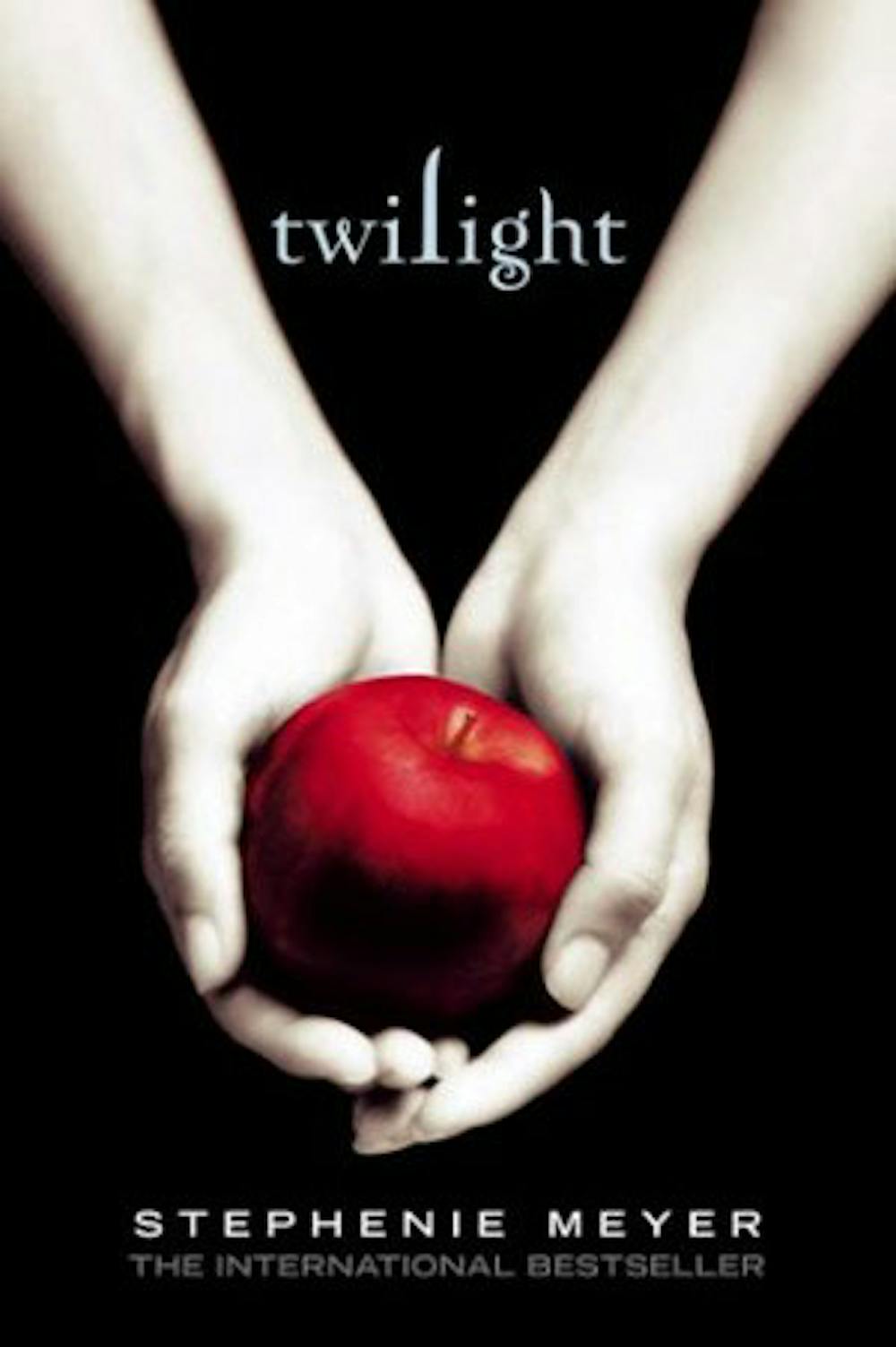
Psychologists have characterised schoolgirl Bella’s relationship with vampire Edward in Twilight as a template for violence and abuse, concerned fans may model real-life relationships on the narrative. Jealous Edward isolates Bella from her friends, family and potential love rivals, even sabotaging her car to prevent her escape from him.
Fantasy fiction is often set in a different time or place, but it still reflects contemporary concerns.
In many of these novels, the female character’s ability to say “yes” is denied to her. In Shelby Mahurin’s Serpent and Dove (2019), the female protagonist is forced into marriage. Brigid Kemmerer’s A Curse So Dark and Lonely (2019) gains inspiration from Beauty and the Beast, with the female protagonist captured and unable to consent to her relationship. Neither novel discusses how consent is compromised.
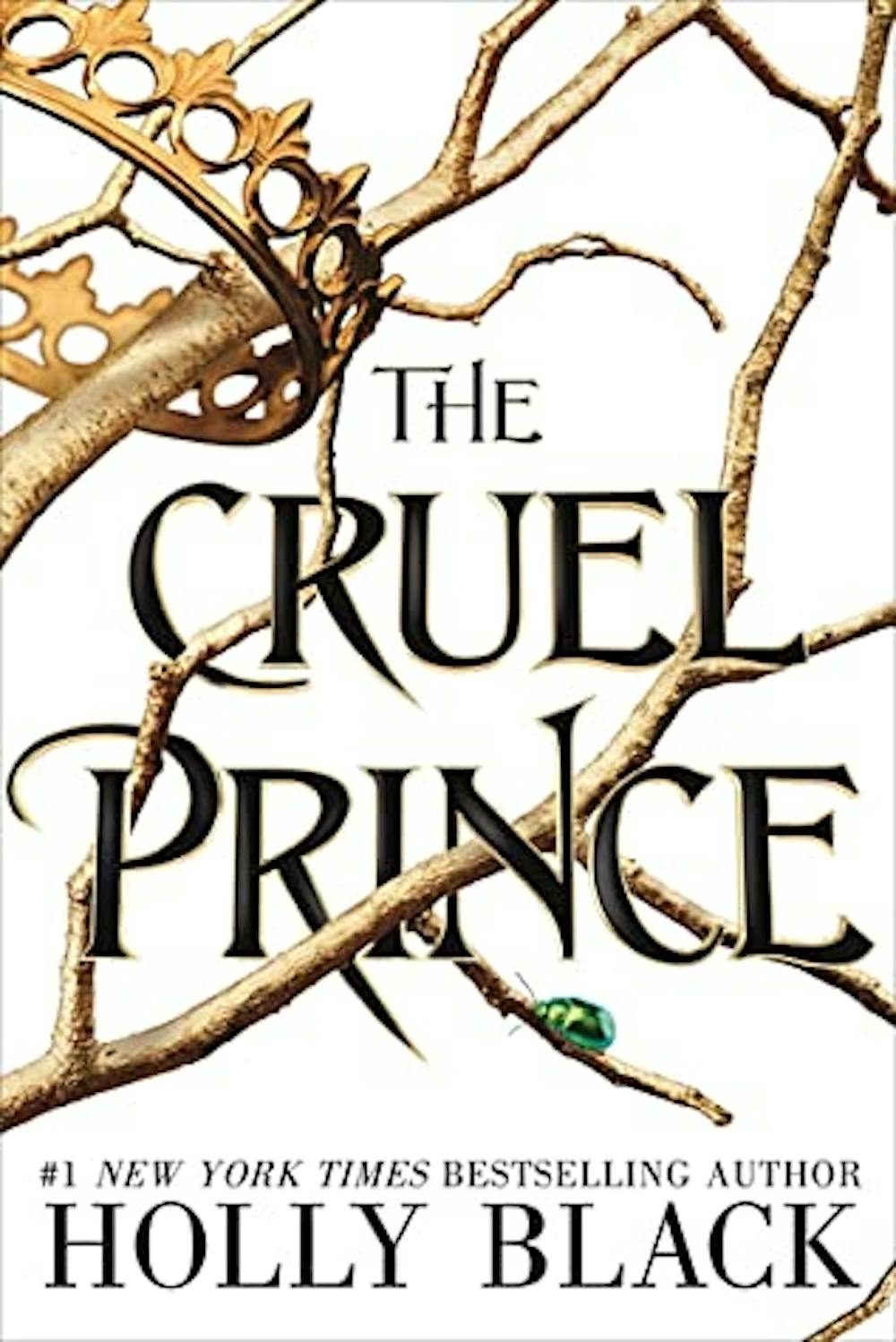
In Holly Black’s The Cruel Prince series (2018-2019), Prince Cardan physically and emotionally abuses orphan girl Jude during their relationship. Her consent to intimacy is mired in domestic violence.
When they do have sex, she does not verbally consent. Jude is “too shy to say the words” and just “kisses him instead”. This example of sexual consent contradicts models of positive consent as an “enthusiastic yes” or the viral video many young people are shown depicting consent as similar to offering someone a cup of tea.
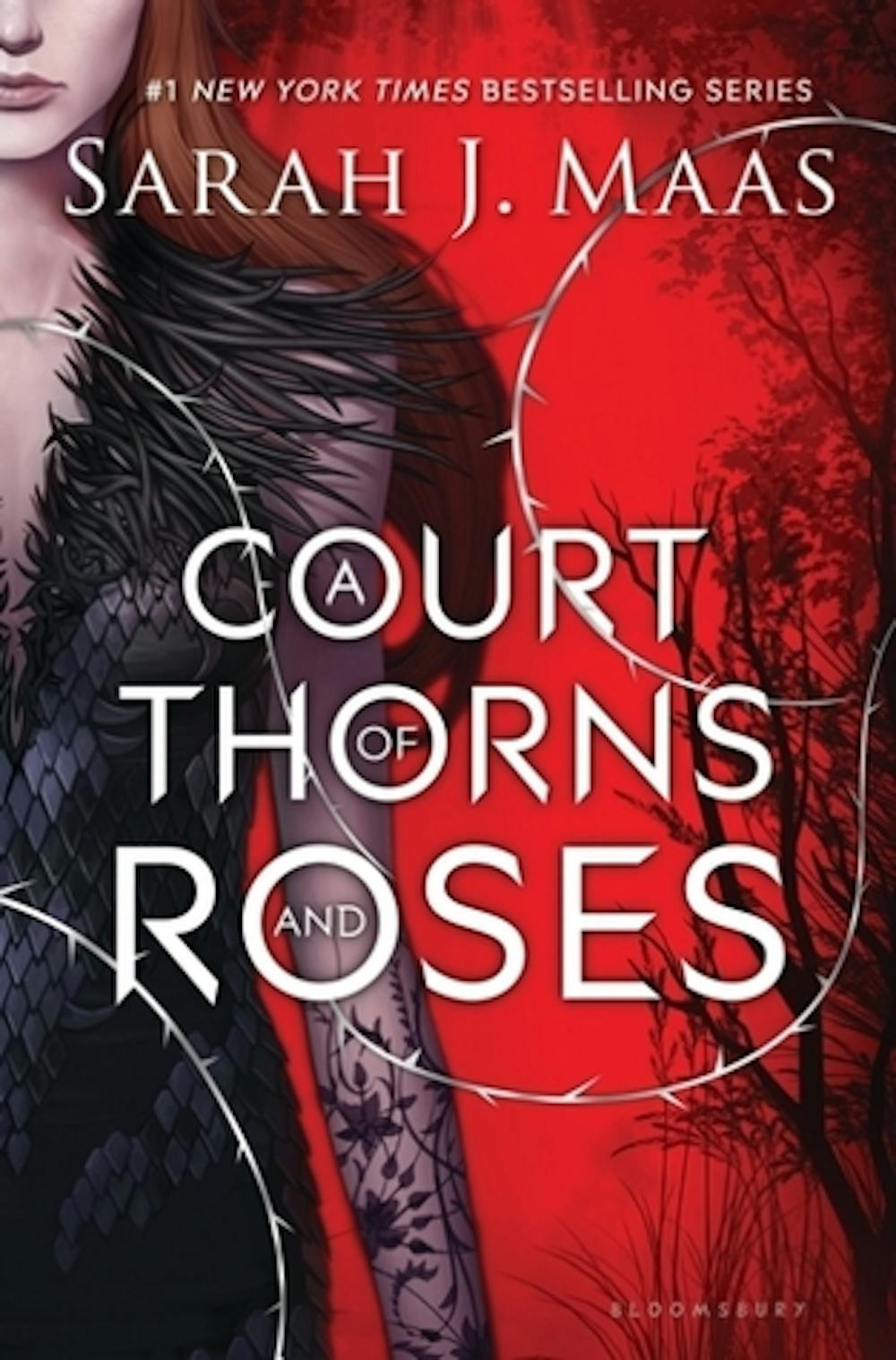
Sarah J. Maas’ popular series, A Court Of Thorns and Roses (2015-2021) begins with a romantic relationship between Feyre and Tamlin in a magical kingdom. The series has sold over six million copies.
Yet, in the first book, a serious violation of consent occurs. When Tamlin attempts to kiss Feyre, she tells him to “let go”, but instead he embeds his claws in a wall behind her head. When she pushes him away, he “grabs [her] hands and bites [her] neck”.
Feyre’s reaction to Tamlin is confusing as well. While she tells him to stop, she also describes her feelings of sexual arousal. She “couldn’t escape” from Tamlin but “wasn’t entirely sure [she] wanted to”. To Feyre’s fury, the next morning Tamlin says he “can’t be held accountable” for her bruises. But by the next paragraph all is forgiven.
The descriptions of physical pleasure also suggest verbal consent in not the only thing in play. Is she saying no, when she really means yes?
Of course, some YA fantasy texts address consent explicitly. Tracy Deonn’s Legendborn (2020) features clear conversations of consent. When Nick asks if he can kiss Bree, she responds “Oh”. He then clarifies “Oh, ‘no’, or oh, ‘yes’?”.
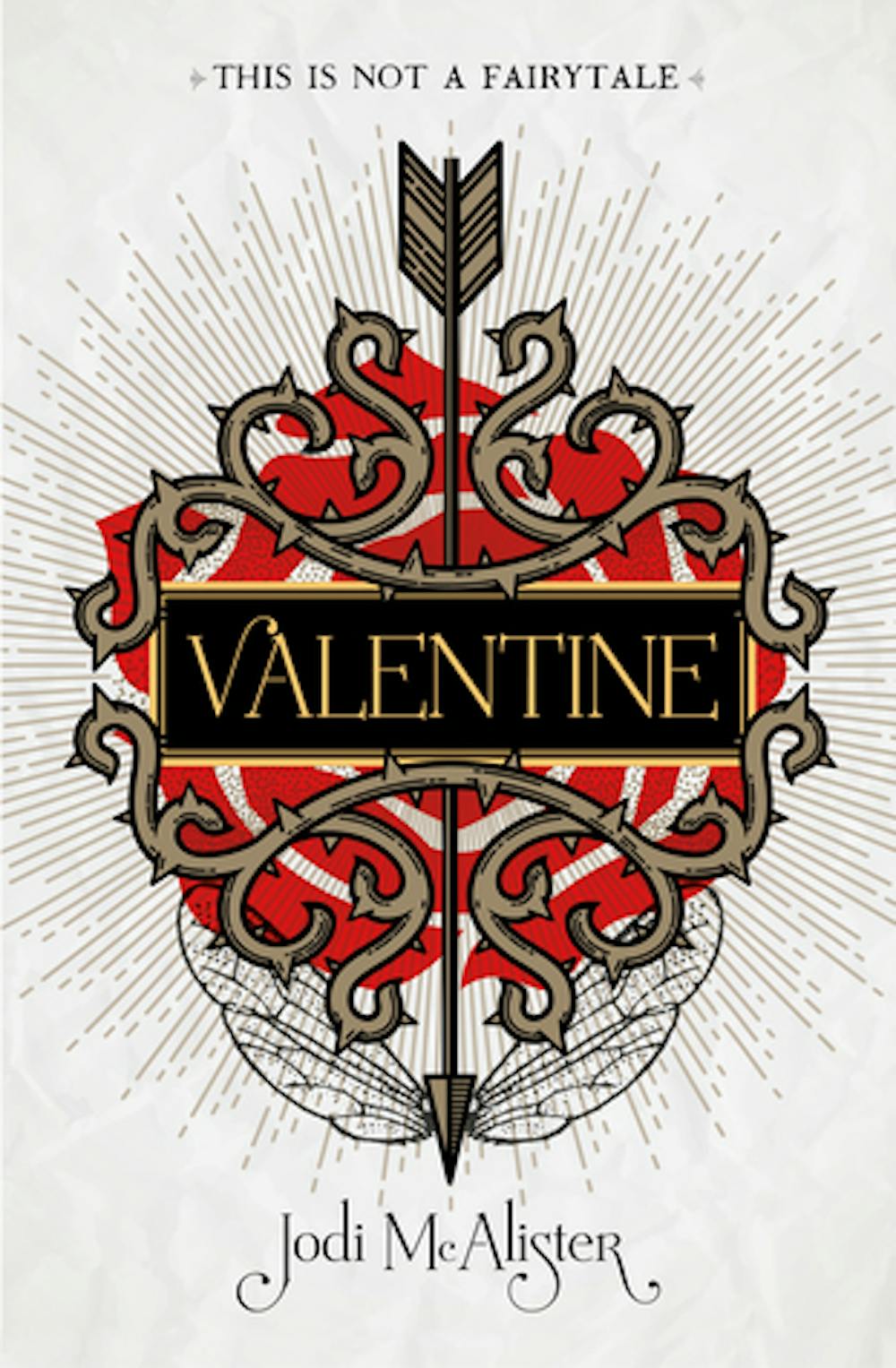
Some books have questionable consent but call it out on the page. In Jodi McAlister’s Valentine series, male faerie Finn uses his powers to enter Pearl’s dreams and lead her into sexual fantasies. When she realises what he’s done, she orders him “out of [her] head”, and they discuss his inappropriate behaviour.
Ambiguous scenes in YA fantasy can provide an opportunity for parents, teachers and young people to discuss consent and sexual intimacy. How are the characters consenting to intimacy? Is there an aspect of consent missing? What would be a better way for these characters to gain consent from each other? Care should be taken not to glorify taking advantage of these ambiguities in an intimate setting.
In our current context of rapidly improving technology, archives and museums must constantly make tough decisions about what to keep, what to refuse or even remove. (Shutterstock)
Was the decision to stop publishing six obscure Dr. Seuss titles containing racist imagery and messaging an erasure of history?
Media coverage of the controversy has presented it as an example of censorship, an attack on free speech and yet another example of cancel culture. These reactions are rooted in both a lack of awareness of the challenges and realities of maintaining collections and a false understanding of history.
Dr. Seuss Enterprises is a children’s entertainment company that functions as both a business and a family estate dedicated to preserving and promoting Theodor Seuss Geisel’s legacy. After consulting with educators and other experts, they decided to halt publication of six books because, in their words, they “portray people in ways that are hurtful and wrong.” An examination of many of the images and text in question confirmed the use of racist tropes in depicting Asian and Black characters.
This decision reflects norms in publishing, archiving and collecting.
Making space for new materials
Publishing companies regularly review their titles and sales to determine and reassess print runs. This is a necessary part of making space for new publications, and maintaining desirable profit margins.
In this context, thinking about museums and archives is helpful.
For cultural institutions tasked with collecting, preserving, ordering and exhibiting, utility is derived from selectivity: not everything can be saved, or it would prove so overwhelming as to render everything inaccessible. That is why galleries, libraries, archives and museums don’t only collect new materials, but also regularly remove them.
The role of curating is key: as both a form of care taking and as a selection process that chooses specific works. Exhibits can serve a variety of roles: they can educate, inspire, call to action, memorialize, entertain. And as new works are being produced at unprecedented rates, space must be made for new material.
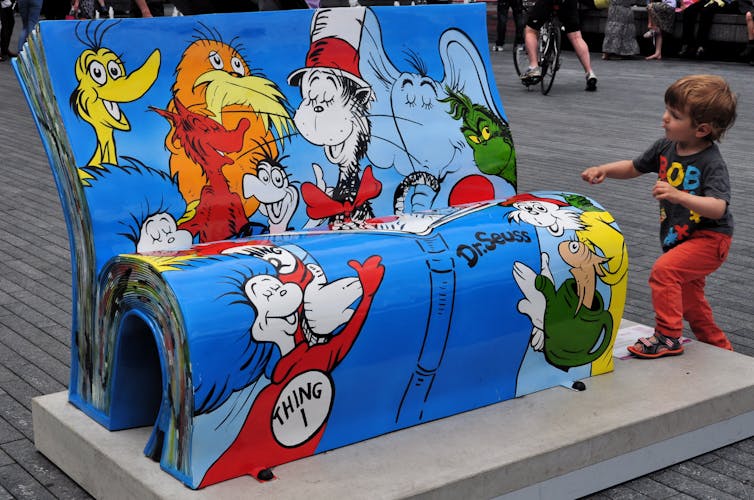
A child approaches a Dr. Seuss BookBench sculpture in London, U.K. (Shutterstock)
History is not neutral
Even in our current context of rapidly improving technology, archives and museums must constantly make tough decisions about what to keep, what to refuse or even remove — this often causes controversy.
Whether focused on removing confederate and colonial statues, or retiring a small handful of Dr. Seuss books, these moral panics and culture wars are often rooted in a false premise; that anything from the past comes from a pure and total point of origin, in other words, that representations of confederate soldiers tell a “true,” authentic and complete story that is neutral and objective.
“Don’t erase history!” people often cry, as if history itself wasn’t full of erasures from the beginning.
In historian and anthropologist Michel-Rolph Trouillot’s foundational book Silencing the Past, he examines the relationship between history, power and silence to explore the ways that certain experiences, historical actors and events are kept out of archival collections and the historical knowledge they help construct.
Trouillot illustrates this through highlighting the Haitian revolution: the possibility of Black slaves successfully revolting against their white colonizers was so inconceivable within the western ideology of white supremacy that it was effectively written out of history.
Recategorizing remnants of racism
The racist pages of Dr. Seuss books are not in danger of being lost forever, but recategorized as evidence of outdated attitudes grounded in racial denigration and stereotyping that no longer have a place in popular culture.
Scholars of racism, like myself, can draw on these images and use them to better understand the past.
Some of Geisel’s earlier work was even more explicitly racist than the titles in question, but hasn’t been erased or destroyed and can be found in museums around the world. His earlier work also appears in scholarship on histories of racism, the Second World War and children’s literature, which would be a great place for the images and text from these six books as well.
There are many ways that racism can and should be tackled that don’t result in the erasure of history. But it shouldn’t be shrugged off — especially by white people who are not in a position to make such determinations.
It is time to retire racist representations. (Shutterstock)
Not without value
I regularly take racist materials out of general circulation — through yard sales, used book stores, discount stores like Dollarama and in tourist shops — so they might be used in research and teaching. I have made many donations to the Jim Crow Museum of Racist Memorabilia, including some family heirloom photographs of one of my ancestors performing in vaudeville in blackface. In my classes on African history, I carefully use racist objects and texts to help teach students about histories of anti-Black racism.
While abhorrent, these texts, memorabilia and objects can be useful.
No children should see racism as something that is normal or funny. There is a lot of research that has examined the impact of the overwhelmingly negative representations of racialized people in popular culture. The research shows that images hurt people. That they contribute to assumptions that translate into discrimination in hiring, renting, selling, lending, treating, teaching and policing in ways that are hugely consequential for all of us.
These realities accumulate across people’s lifetimes in ways that devalue us all because they perpetuate unconscious and conscious racism and inequality.
Retiring racist texts from children’s literature is a crucial step in interrupting the racist legacies that continue to hurt and divide us. With careful contextualization, these historical materials can help document and teach people about the realities of racism that are so often belittled or denied. It also makes space, literally and figuratively, for new texts by diverse authors featuring diverse characters that provide a fuller picture of the world that better reflects the rich variety of people, experiences and perspectives it has to offer.
This is especially important considering how much work still needs to be done in galleries, museums, libraries and archives. These institutions are still overwhelmingly white and male.
It is past time we reach social consensus that racist caricatures should be obsolete. Not everything from the past should be kept alive through republication. Move this content to museums and books on racism where it belongs, but don’t keep it circulating among children.
Monica Eileen Patterson, Assistant Director, Institute for Comparative Studies in Literature, Art, and Culture (Curatorial Studies) and Associate Professor, Institute of Interdisciplinary Studies, Carleton University
Reading fiction has always been, for many, a source of pleasure and a means to be transported to other worlds. But that’s not all. Businesses can use novels to consider possible future scenarios, study sensitive workplace issues, develop future plans and avoid unplanned problematic events — all without requiring a substantial budget.
Unfortunately, scenario planning requires time and resources. And depending on its use, such as for an investigation, budgeting or legal matters, it can also require collecting sensitive data. That can include employees’ personal experiences of sexual, discriminatory or psychological harassment, suicide, mental health, drug abuse, etc.
The more sensitive the needed data is, the more difficult it is to collect while ensuring employee privacy. This is where literary texts come in.
Novels can offer creative insight and wisdom to business managers. (Helena Lopes/Unsplash)
Our research
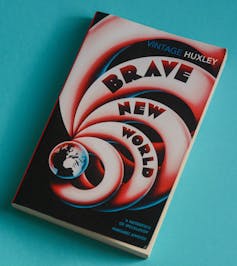
uses Aldous Huxley’s 1932 novel Brave New World to explore possible scenarios related to situations that are usually kept confidential, such as employees’ mental health issues and drug use or abuse. We examined how employers encounter uncertainty around the impact that legalizing cannabis could have on the work environment, and ways to consider such potential effects.
By reading the novel, business managers can compare the world we live in today and the path our countries and corporations are on to the fictional events in the novel. This can help them pay attention to and address less comfortable, and sometimes often neglected, sensitive workplace issues that need to be considered when planning for the future.
For example, in Brave New World, the consumption of the drug “soma” becomes the norm upon which life is founded. When soma is taken away, individuals can no longer face their reality and they end up welcoming death.
Brave New World offers workplace leaders a look at what could happen if employees’ wellness, mental health or drug use are disregarded, and lead to isolation, absence, resignation or, in dire circumstances, suicide.
8-step action plan
To study sensitive workplace issues that could help generate new knowledge, lead to envisioning ways to act appropriately and develop future strategies, business managers can follow these steps:
Form a team of managers and an HR representative who is aware of company policies and ethics protocols, and is in direct contact with employees.
The team then decides which workplace issue(s) the organization needs to study.
The team chooses a literary text, such as a novel, that discusses those issues.
Each member of the team reads the literary text on their own before discussing it together in at least one session.
The team researches the chosen workplace topics inside the organization and outside (for example, laws and regulations related to each issue).
The team identifies insightful sections.
The team analyzes the chosen extracts.
The team writes a report with recommendations on workplace conditions and how best to improve them.
Reading has surged during lockdown. But literary works can provide us with more than a leisurely pastime. For businesses, novels represent a legitimate way to study the workplace, and this is accomplished by comparing the path our countries and corporations are on today to fictional events.











 At the BookShelf


You must be logged in to post a comment.