The link below is to an article that reports on a report that found digital readers are more likely to be writers than print only readers. The article contains a link to the report concerned.
If COVID-19 has taught us anything, it’s that humans are connected, and that an individual’s actions can have profound consequences for the local community, the nation, and beyond. A good detective story, whether it takes place within an English country house or travels across international borders, reminds readers of this fundamental truth.
But in both country-house and hard-boiled traditions their function is similar. They link disparate individuals and communities as they reconstruct events, and raise the possibility that, whoever pulled the trigger or administered the poison, we all share some responsibility for allowing such things to happen.
The selection below, I hope, reflects the genre’s diversity. What connects these books, for all their stylistic variety, is a preoccupation with links between people and communities and a desire to explore the implications of every action, deliberate or accidental.
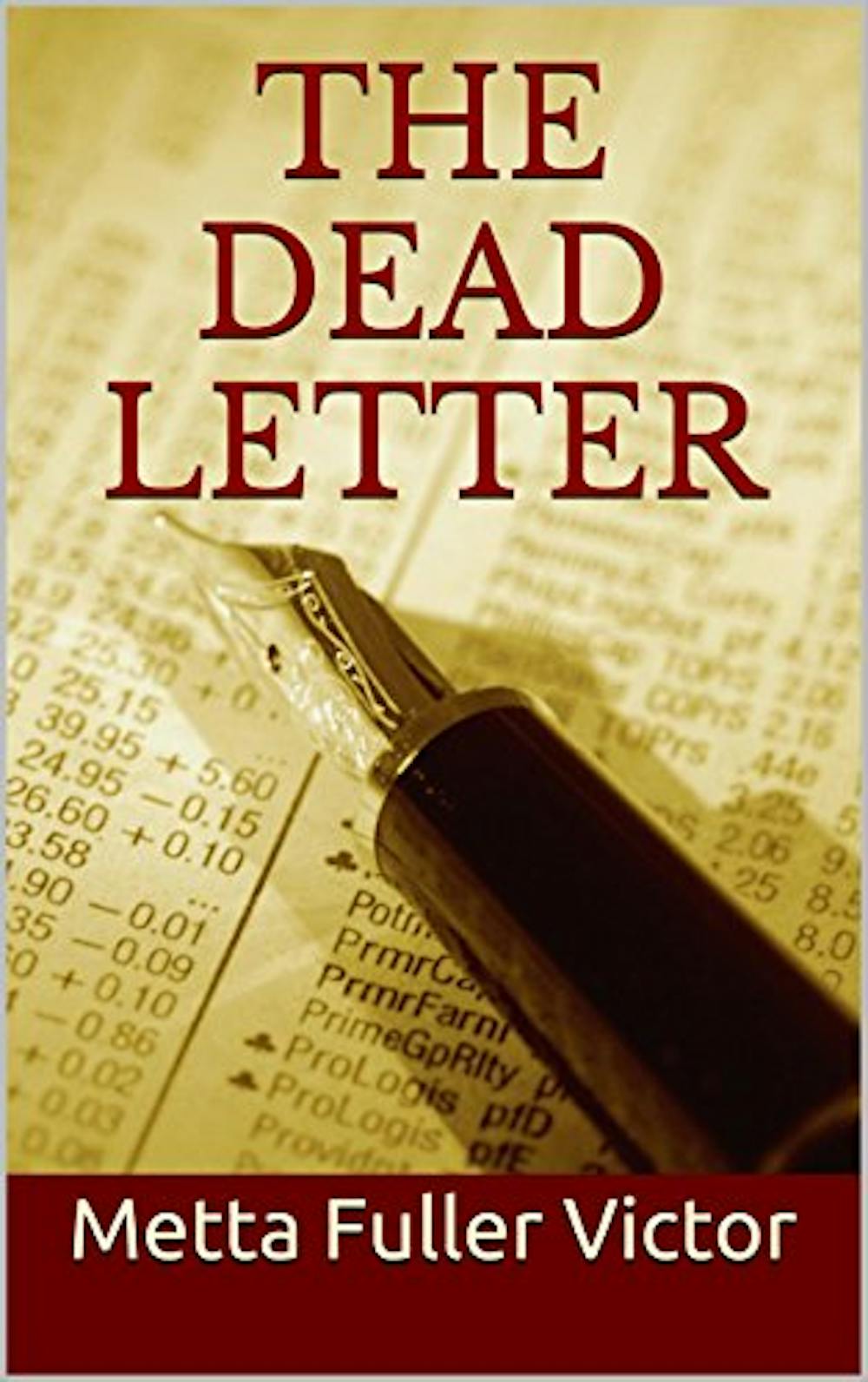
Metta Fuller Victor: The Dead Letter (1866)
The first full-length detective novel in American literature, The Dead Letter, published under the pen-name Seeley Register, is a curious hybrid. Featuring a country house that might be haunted, a clairvoyant child who – conveniently – is the detective’s daughter, and scenes of deathly pale women wandering moonlit gardens, mourning lost lovers, it shows how 19th-century detectives emerged from Gothic literature.
First American detective novel. Amazon
It is also a sentimental love story and a meditation on the corrupting power of money.
Like the Edgar Allan Poe stories which influenced it, and the Sherlock Holmes tales that followed, its narrator is not the detective, but the detective’s friend who – like the reader – is inclined to romanticise the sleuth’s heightened abilities.
The Dead Letter can be florid and outlandish, but it combines its eclectic elements to highly entertaining effect.
Raymond Chandler: The Long Goodbye (1953)
Philip Marlowe, the hero of seven novels and numerous short stories by Raymond Chandler, is tall, handsome, witty and admirably cynical about the effects of wealth. I’d love to recommend all the Marlowe stories and, given that its author intended it to be the last, The Long Goodbye might seem an idiosyncratic choice.
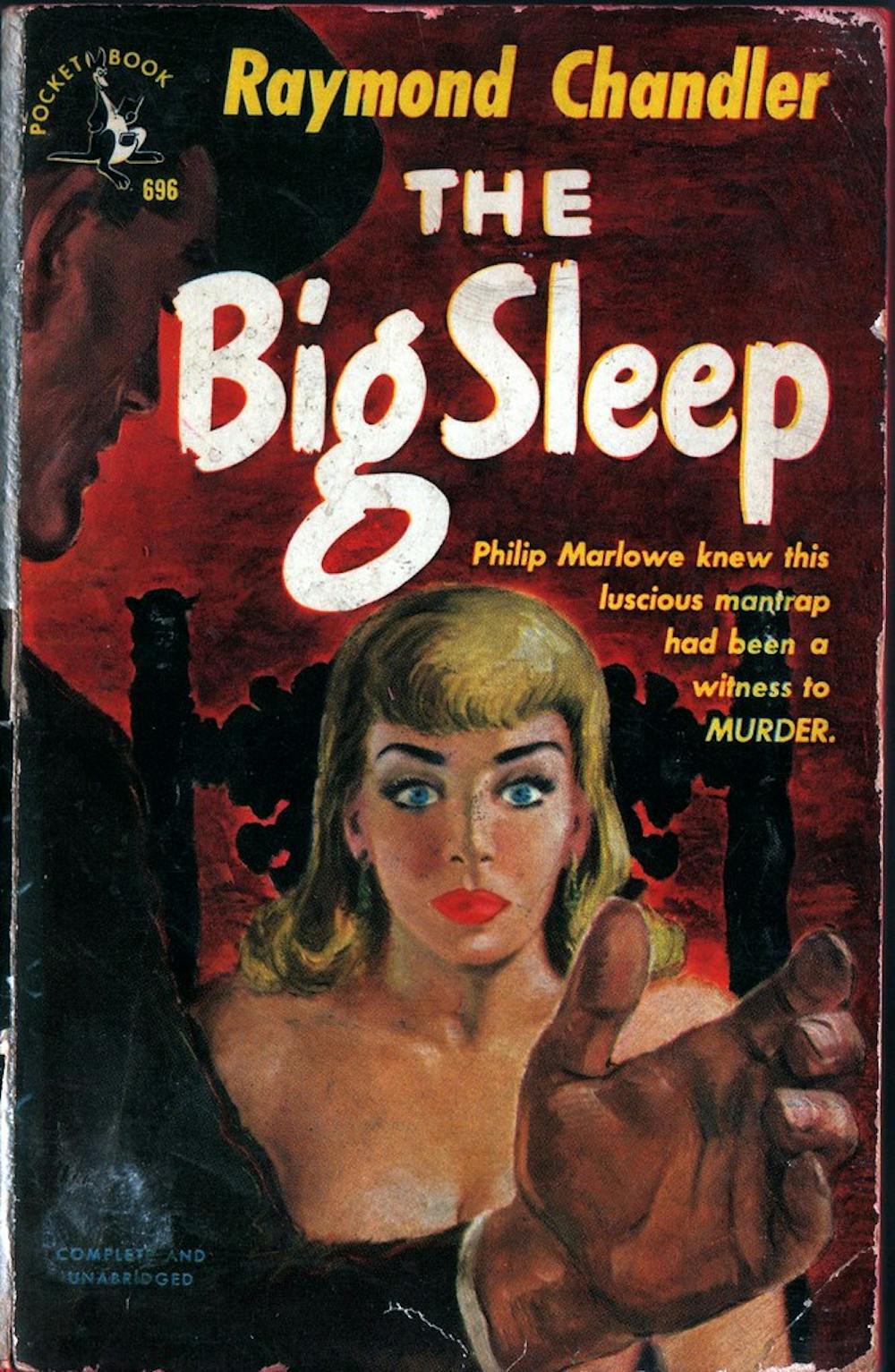
Pulp fiction (cover art by Harvey Kidder). admiral.ironbombs via Flickr, CC BY-SA
Stranger still, its pleasures are less to do with the detective thriller’s traditional virtues – intricate plotting, dynamic action – and more with the air of nostalgic melancholia Chandler conjures. There are murders, of course, and there is the vivid evocation of Los Angeles in its grubby splendour. There is also Marlowe’s trademark gift for metaphor: at the beginning, watching two people arguing outside a club, he remarks:
The girl gave him a look which ought to have stuck at least four inches out of his back.
But the novel’s heart is the unlikely friendship between Marlowe and Terry Lennox, a rich, dipsomaniac veteran locked in a loveless marriage, emotionally scarred by his combat experiences. As its title suggests, this epic and heartbreaking novel is about goodbyes: to innocence, to friendship, to the conventions of the detective story, and to an America untainted by consumerism.
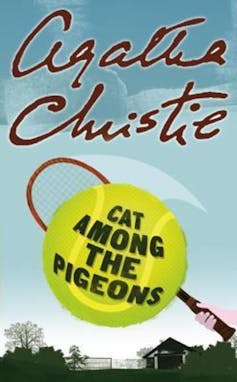
Agatha Christie: Cat Among the Pigeons (1959)
Christie remains the pre-eminent writer of the “whodunit”. Her sheer prolificacy masks the fact that she is a consistently innovative plotter, unafraid to experiment with point-of-view in sometimes radical ways. She also produces stories that are dark, disturbing, and morally ambiguous – characteristics highlighted in recent adaptations such as the BBC’s version of The Pale Horse.
Mallory Towers with added murder. AgathaChristie.com
Though not among her most celebrated novels, Cat Among the Pigeons delightfully combines international espionage and country house mystery, with the “country house” being a prestigious girls’ prep school in England where members of staff start dying in suspicious circumstances.
Ingenious and laced with cruelty, it might be read as a story about Great Britain’s declining empire, or the fragile isolation of the upper classes, or it might simply be read as Mallory Towers with added murder.
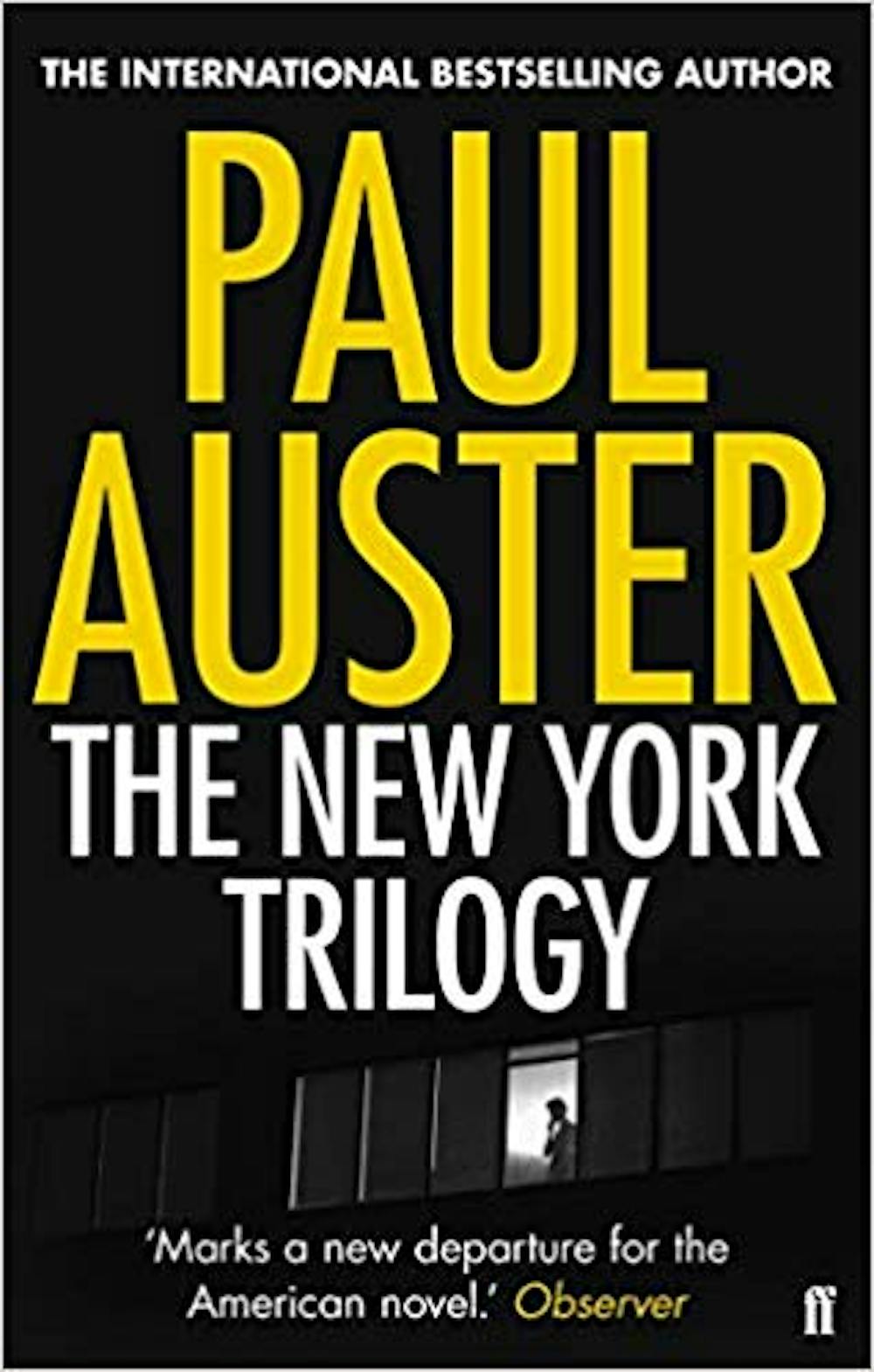
Paul Auster: The New York Trilogy (1987)
This comprises three distinctive tales: City of Glass, Ghosts and The Locked Room, that conspire to connect in surprising ways. Often regarded as a model of “antidetection”, Auster’s trilogy frequently confounds expectations, promising stock elements of the hard-boiled story – the enigmatic loner gumshoe, the femme fatale, the dirty city – before jettisoning the cliches and exploring new territory.
Elaborate puzzles. Amazon
Auster’s New York is a labyrinth ruled by chance, where one’s doppelganger can appear for no reason, where a man can devote his life to collecting and renaming bits of rubbish, and where “Paul Auster” can appear as a character. These are elaborate puzzles yet highly readable thrillers.
They are perfect stories for lockdown because they are about the consolations of reading and the paradoxical truth that the deeper into solitude we go, the more we understand our vital connection to others.
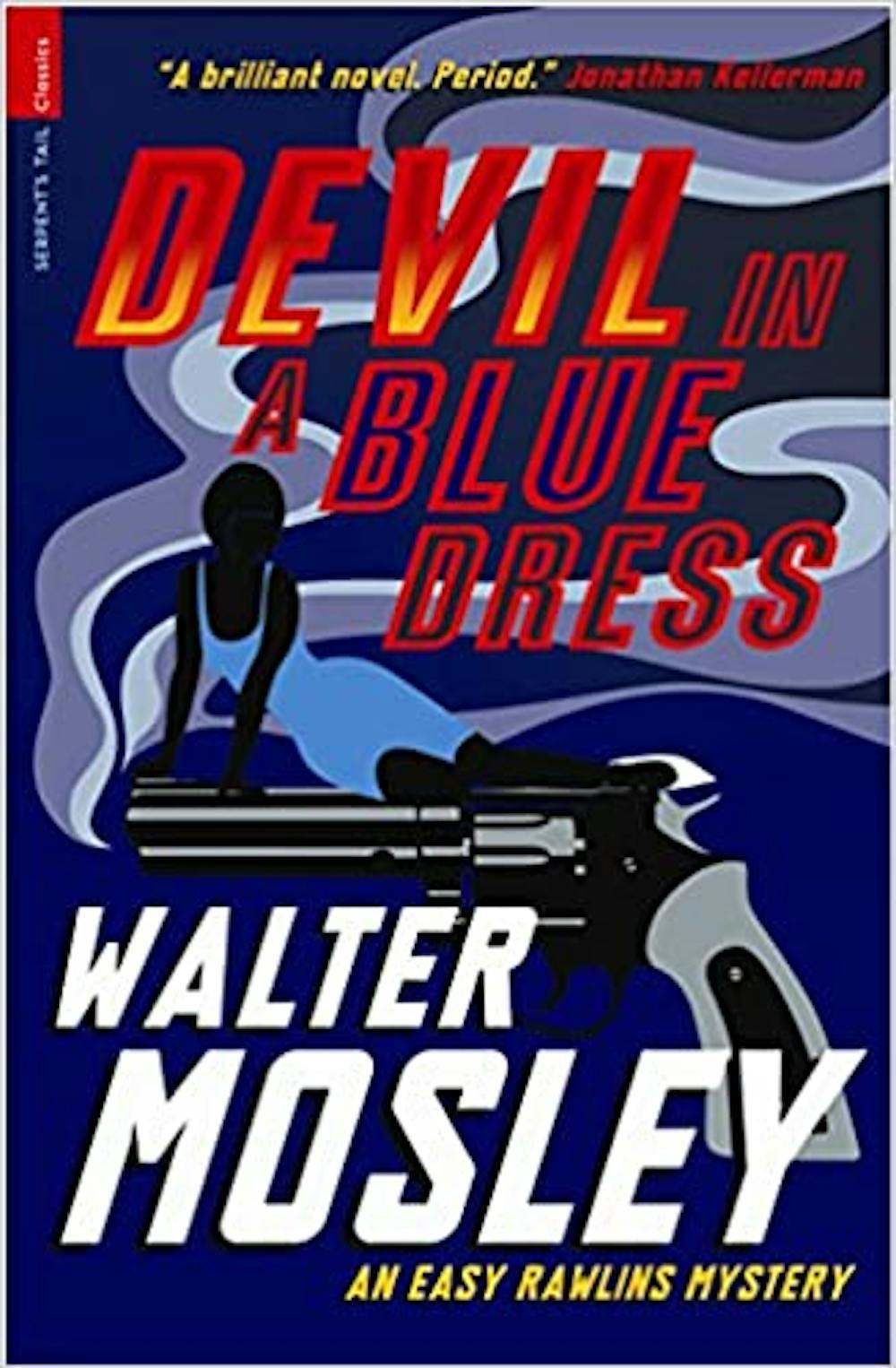
Walter Mosley: Devil in a Blue Dress (1990)
This is the first thriller starring Ezekiel “Easy” Rawlins, an African-American factory worker in the Watts area of Los Angeles, who falls into detection when a stranger enters his local bar and offers him a missing persons job. Mosley’s work exemplifies the ways in which detective stories, tightly bound to specific places and times, function not only as entertainment but also as historical documents.
Realistic and wry account of race relations. Amazon
Devil in a Blue Dress, through energetic vernacular dialogue, realistic situations and wry observations on race relations, brilliantly evokes the lives of African-American families who moved from the southern states to California during the Second Great Migration.
More than the talented amateurs of the country house mystery, who possess a timeless quality and whose successful investigations tend to reinstate cosy normality – and Marlowe, a 20th-century knight errant with a nostalgic impulse – Easy Rawlins demonstrates that detectives are shaped by historical circumstances. He also happens to have one of the most captivatingly unstable sidekicks in all detective writing.
Detectives are people who move, tracing links between people, places and times. They are also expert readers: of clues, people, situations. During lockdown, these stories can transport us elsewhere and remind us that reading is an empathetic act, a way of reaching out and trying to connect with others.
The evolution of the novel and short story in the 19th century brought us one of the greatest human sources of comfort, besides food and a nice hot bath. When someone tells me they are planning to “curl up with a good book”, I am filled with a sense of peace on their behalf – of quiet enjoyment, perhaps accompanied by a little soft music and the crackle of a fire.
Regular solitary time is becoming the norm for many. Many of us are already tired of the enjoyable inanity of Netflix and Amazon Prime and are ready for something to lose ourselves in completely.
In the 19th century, the novel boomed as literacy and leisure time increased. Novels were frequently published in weekly parts, one to three chapters at a time. They had to be long enough to fill the required number of issues, and interesting enough to ensure readers kept buying the magazine or periodical (or run the risk of being cancelled mid-series). It is this combination that makes them a great resource for times like today.
Human beings are designed to love stories. Our brains seek narratives to help us make sense of the world. We communicate using stories to exchange knowledge and gain understanding. As Robert Louis Stevenson wrote: “fiction is to the grown man what play is to the child” – through fiction we learn by imaginative experience.
Stories help us gain insight into things we cannot or should not experience. They also keep us safe – we tell each other cautionary tales all the time. So let’s do as our NHS doctors and nurses ask and learn from their stories of the virus – while also tucking ourselves away with some great old novels:
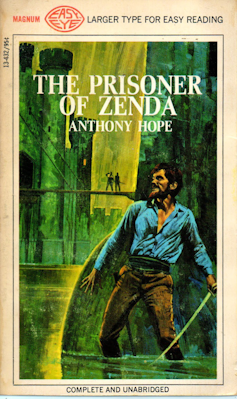
Anthony Hope: The Prisoner of Zenda (1894)
An exciting and funny adventure story about a man who goes on holiday and ends up as temporary king of Ruritania.
Rollicking Victorian adventure story. Magnum
London-born adventurer Rudolf Rassendyll is persuaded to pretend to be the king after the real king is kidnapped by his evil half-brother on the eve of his coronation. A distant relation of the royal family, Rudolf is the king’s spitting image.
Beautifully written and filled with energy, the story romps across the beautiful scenery of Ruritania to the mysterious castle of Zenda. Rudolf is one of the most vibrant and positive characters I have come across and will fill you with hope. But what will he do when he falls in love with the king’s beautiful fianceé?
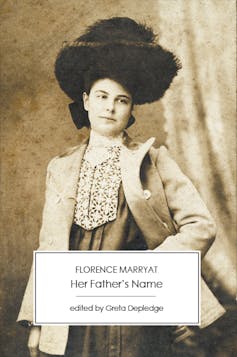
Cross-dressing, swashbuckling adventuress Leona Lacoste journeys from Rio de Janeiro to London to clear her father’s name.
Cross-dressing derring-do. Amazon
Unknown to her until his death, he has been in hiding in their Brazilian home, having escaped some scandal or crime in England. To get to the bottom of the mystery, Leona must stop at nothing.
Disguised as a man to make the journey possible in the 1870s, she proves herself onboard a ship in a dramatic duel and seduces the daughter of a rich industrialist. But what will she uncover about her unknown family history?
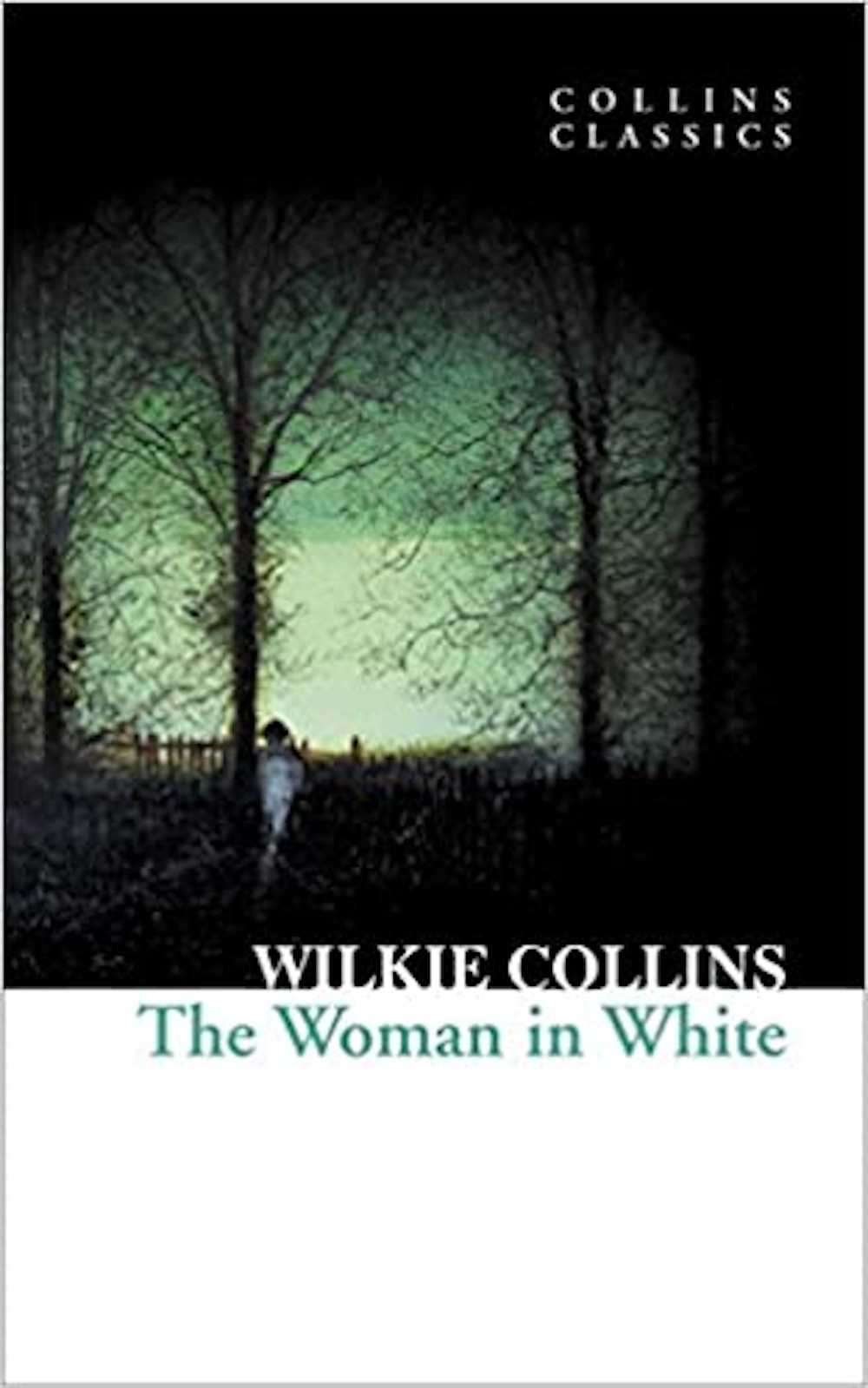
The celebrated mystery which launched a new type of story known as the sensation or enigma novel.
One of the first classic thrillers. Amazon
Walter Hartright is startled by the sudden appearance of a mysterious woman dressed in white walking on the road to London late at night. She asks him for directions and he decides to see her safely to a cab.
On the way, he discovers that she is from the very town to which he is about the journey to start work as an art teacher. Little does he know how this mysterious woman and the family in Limeridge will change his life forever.
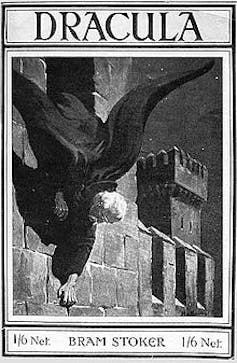
This may seem an unlikely choice but don’t let the TV and film adaptations fool you. This is a seriously good book. The adventurers who track and foil Count Dracula, led by Mina Harker and Abraham Van Helsing, are the epitome of organised and resourceful Victorian society.
Sink your teeth into this classic read. Wikipedia
This book is all about creating order from chaos: a reassuring ideal at the moment. Mina Harker’s way of life is doubly threatened by Dracula as he endangers both her fiancé, Jonathan Harker, whom he imprisons in his castle; and her best friend, Lucy Westenra, who is tormented by sleepwalking and mysterious illnesses.
Mina acts as the lynchpin for the five men who join together to defeat the count. The story that we are treated to is her collection of their accounts, creating a magnificent and lucid whole from diaries, cuttings, reports and letters. How will these rational beings thwart the supernatural power of the count?
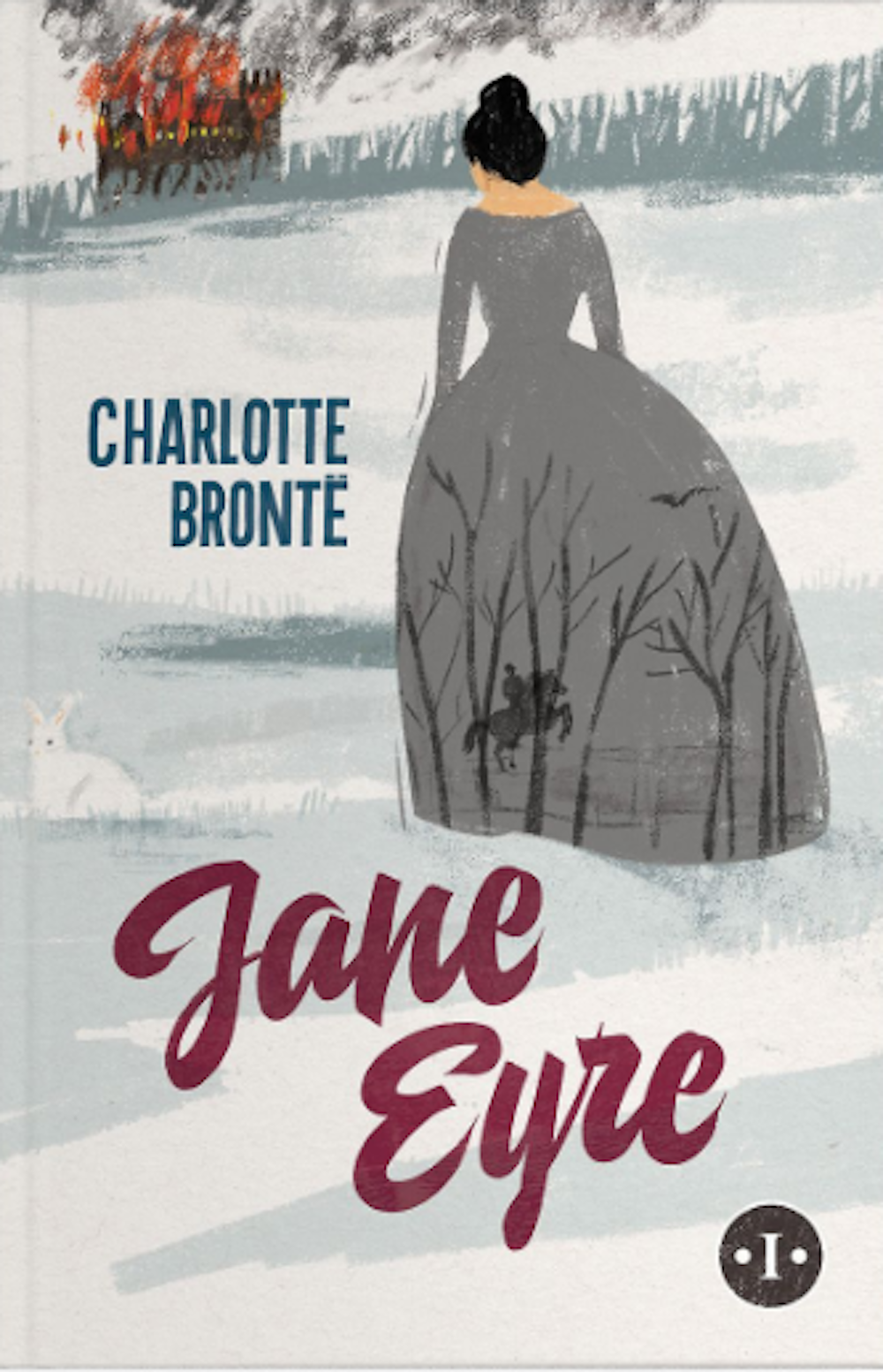
Jane Eyre fights for what she believes to be right. She stands up to those more powerful than herself, whether it be for her own rights or the good of others.
Romantic melodrama at its best. Amazon
Orphaned and rejected by her guardian aunt, Jane trains to become a teacher at a charity school and then becomes governess to Adele, the ward of the wealthy and seemingly misanthropic Mr Rochester.
Slowly and unwillingly she falls in love with her master but he has a certain secret in his attic. What will this determined woman do to save herself from the temptations of his love?
You’ll have noticed that I have stuck to books with happy endings, or at least tidy ones. There is no Thomas Hardy (you must take broadcaster Andy Hamilton’s advice and read Hardy’s novels backwards to get a happy ending), and no George Eliot, whose wonderfully complex characters are very real and intriguing but not often comforting.
Some are old, familiar favourites, others lesser known but equally enjoyable. The list is by no means complete. It is intended to be the beginning of a journey back to familiar friends and an exploration of new ones. They are shared with love and care in the hope they will make you feel a little better for their company.
The link below is to an article that asks ‘why people aren’t reading books anymore?’ It also briefly comments on other survey findings, which seem largely irrelevant to the main question of the article.
Books are always transforming. The book we hold today has arrived through a number of materials (clay, papyrus, parchment, paper, pixels) and forms (tablet, scroll, codex, kindle).
The book can be a tool for communication, reading, entertainment, or learning; an object and a status symbol.
The survival of bookshops and flourishing of libraries (in real life) defies predictions that the “end of the book” is near. But even the most militant bibliophile will acknowledge how digital technology has called the “idea” of the book into question, once again.
To explore the potential for human-machine collaboration in reading and writing, we built a machine that makes poetry from the pages of any printed book. Ultimately, this project attempts to imagine the future of the book itself.
A machine to read books
Our custom-coded reading-machine reads and interprets real book pages, to create a new “illuminated” book of poetry.
The reading-machine uses Computer Vision and Optical Character Recognition to identify the text on any open book placed under its dual cameras. It then uses Machine Learning and Natural Language Processing technology to “read” the text for meaning, in order to select a short poetic combination of words on the page which it saves by digitally erasing all other words on the page.
Armed with this generated verse, the reading-machine searches the internet for an image – often a doodle or meme, which someone has shared and which has been stored in Google Images – to illustrate the poem.
Once every page in the book has been read, interpreted, and illustrated, the system publishes the results using an online printing service. The resulting volume is then added to a growing archive we call The Library of Nonhuman Books.
From the moment our machine completes its reading until the delivery of the book, our automated-art-system proceeds algorithmically – from interpreting and illuminating the poems, to pagination, cover design and finally adding the endmatter. This is all done without human intervention. The algorithm can generate a seemingly infinite number of readings of any book.
The poetry
The following poems were produced by the reading-machine from popular texts:
So what does all this have to do with the mass-digitisation of books?
Faced with growing resistance from authors and publishers concerned with Google’s management of copyright, the infoglomerate pivoted away from its primary goal of providing a free corpus of books (a kind of modern day Library of Alexandria) and towards a more modest index system used for searching inside the books Google had scanned. Google would now serve only short “snippets” of words highlighted on the original page.
Behind the scenes, Google had identified a different use for the texts. Millions of scanned books could be used in a field called Natural Language Processing. NLP allows computers to communicate with people using everyday language rather than code. The books originally scanned for humans were made available to machines for learning, and later imitating, human language.
Imagine infinite readings of the books we already have. Unsplash, CC BY
Algorithmic processes like NLP and Machine Learning hold the promise (or threat) of deferring much of our everyday reading to machines. History has shown that once machines know how to do something, we generally leave them to it. The extent to which we do this will depend on how much we value reading.
If we continue to defer our reading (and writing) to machines, we might make literature with our artificially intelligent counterparts. What will poetry become, with an algorithm as our muse?
We already have clues to this: from the almost obligatory use of emojis or Japanese Kaomoji (顔文字) as visual shorthand for the emotional intent of our digital communication, to the layered meanings of internet memes, to the auto-generation of “fake news” stories. These are the image-word hybrids we find in post-literate social media.
To hide a leaf
Take the book, my friend, and read your eyes out, you will never find there what I find.
Emerson’s challenge highlights the subjectivity we bring to reading. When we started working on the reading-machine we focused on discovering patterns of words within larger bodies of texts that have always been there, but have remained “hidden in plain sight”. Every attempt by the reading-machine generated new poems, all of them made from words that remained in their original positions on the pages of books.
The notion of a single book consisting of infinite readings is not new. We originally conceived our reading-machine as a way of making a mythical Book of Sand, described by Jorge Luis Borges in his 1975 parable.
Borges’ story is about the narrator’s encounter with an endless book which continuously recombines its words and images. Many have compared this impossible book to the internet of today. Our reading-machine, with the turn of each page of any physical book, calculates combinations of words on that page which, until that moment, have been seen, but not consciously perceived by the reader.
The title of our early version of the work was To Hide a Leaf. It was generated by chance when a prototype of the reading-machine was presented with a page from a book of Borges’ stories. The complete sentence from which the words were taken is:
Somewhere I recalled reading that the best place to hide a leaf is in a forest.
The latent verse our machine attempts to reveal in books also hides in plain sight, like a leaf in a forest; and the idea is also a play on a page being generally referred to as a “leaf of a book”.
Like the Book of Sand, perhaps all books can be seen as combinatorial machines. We believed we could write an algorithm that could unlock new meanings in existing books, using only the text within that book as the key.
Philosopher Boris Groys described the result of the mass-digitisation of the book as Words Without Grammar, suggesting clouds of disconnected words.
Our reading-machine, and the Library of Nonhuman Books it is generating, is an attempt to imagine the book to come after these clouds of “words without grammar”. We have found the results are sometimes comical, often nonsensical, occasionally infuriating and, every now and then, even poetic.
Now that machines can read, will we defer the task to them?
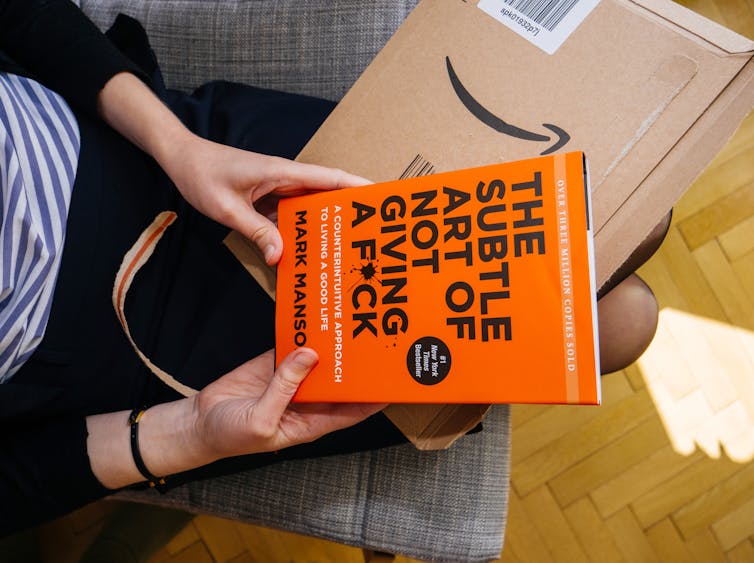
Book covers compete with a barrage of information and images, so it’s no wonder many writers resort to shock tactics. It works. The Subtle Art of Not Giving a Fuck is testament to this, selling 2 million copies and translated into 25 languages. Without the “Fuck” this would very likely have been a different story.
In the English language, at least, fuck and other words on the more extreme end of profanity are the last frontier of using language to shock. In 2020, we find ourselves in a place of extremes so they come in quite handy.
But with so many fucks on book covers, where do writers go from here to express our fear, horror, rage and disgust?
Heard it all before
Eventually we become desensitised to the overuse of words. Shit, a taboo for older generations, is now so lacking as an obscenity it is written on the covers of notebooks and pencil cases available in stationery chain stores popular with schoolchildren, such as Typo.
According to a 2019 ABC study of 1,538 subjects, Australians are seeing and hearing more coarse language than they did five years ago, both in the media and in public.
“In line with this normalisation of coarse language, concerns relating to the use of coarse language in the media have diminished over time,” the study found. Of people studied, 38% were offended by coarse language on TV, radio or the internet in 2019, compared with 47% in 2011.
Go the Fuck to Sleep grabbed the attention of parents worldwide.
Tennis, one of the last bastions of politeness, does constant battle with players like Nick Kyrgios who rack up massive fines for dropping the F-bomb on the court.
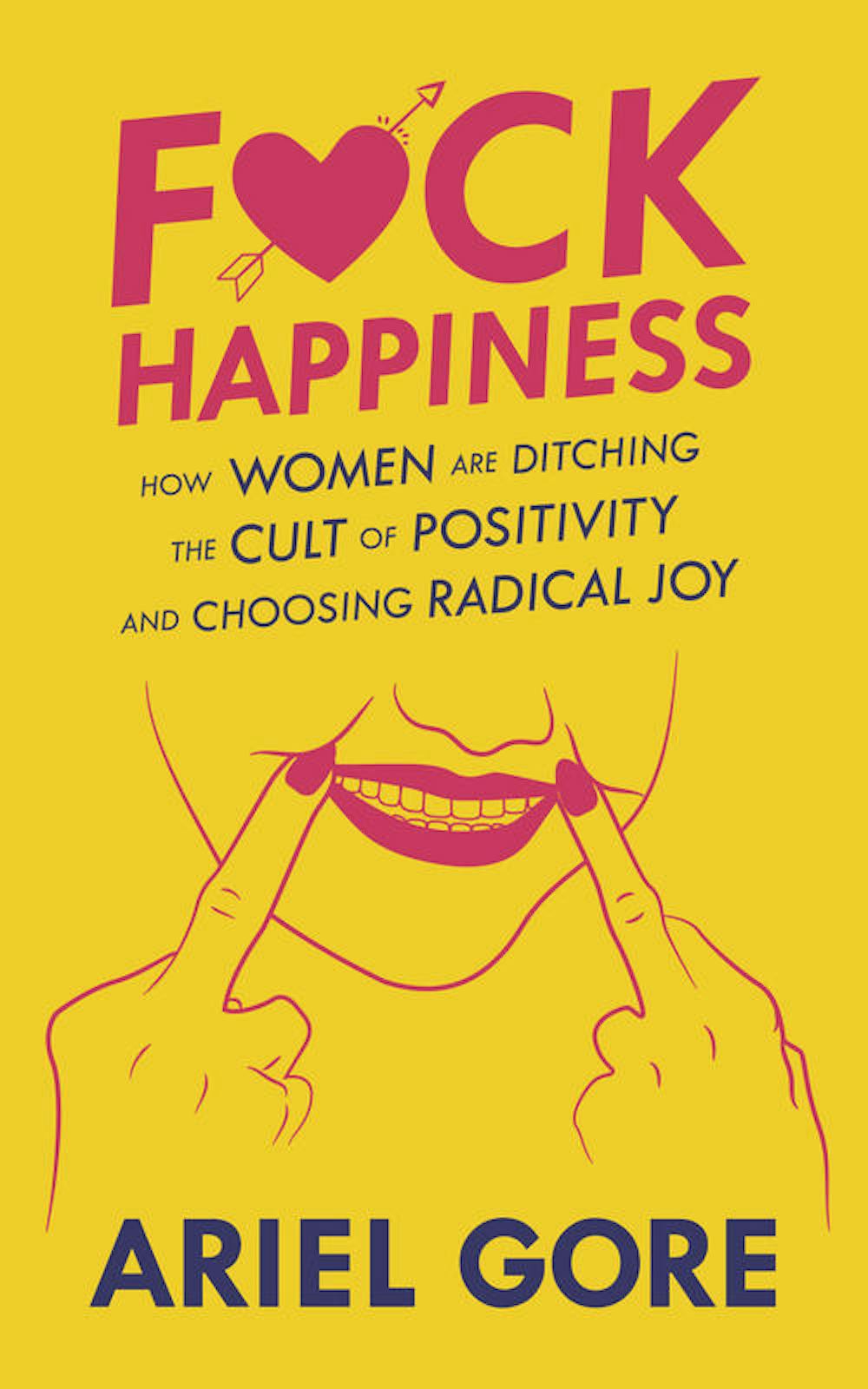
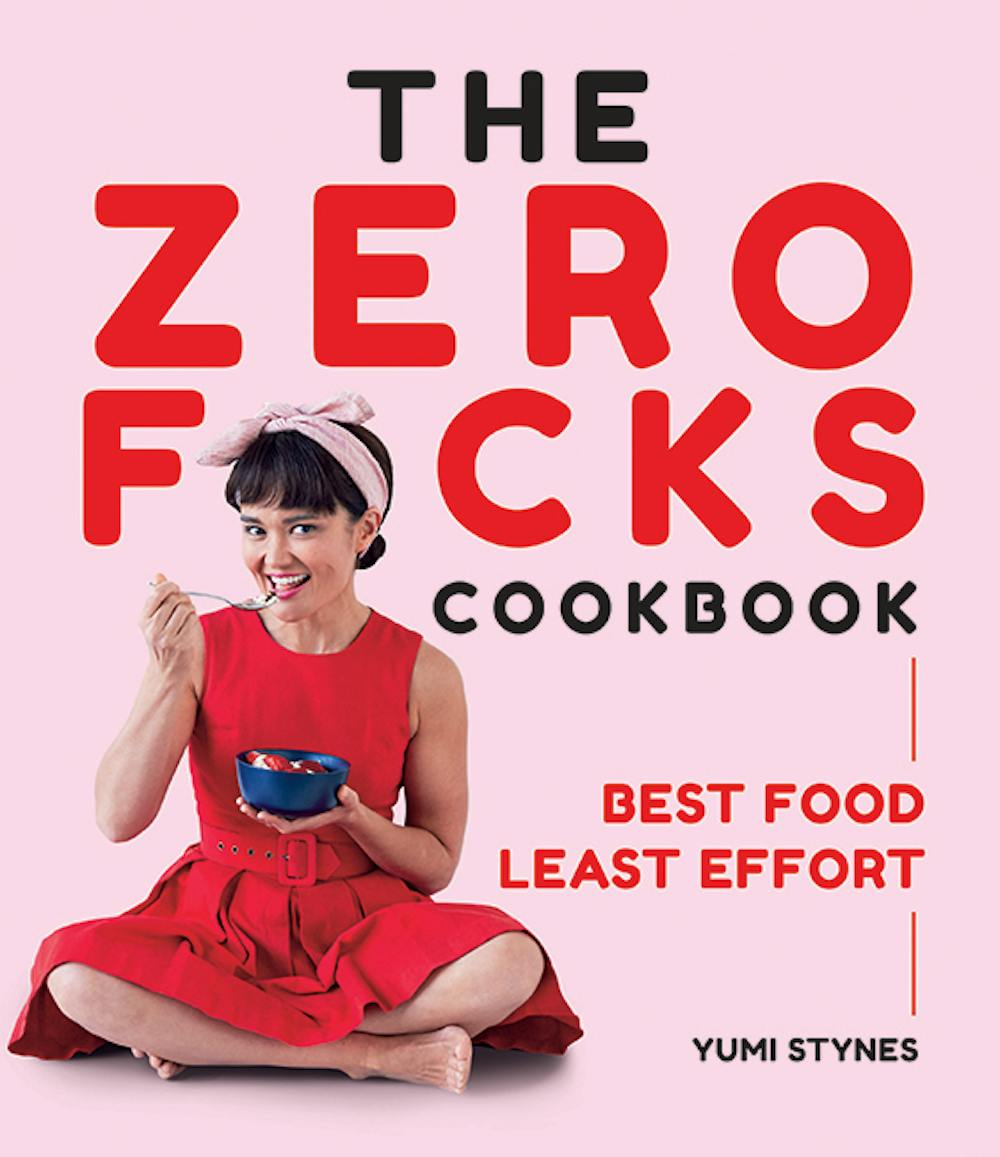
Fines, like detention, seem to be on the train that has left the station when you consider reputable online booksellers currently carry almost a hundred books with fuck in the title. Most of these are self-help books, because we are, obviously, quite fucked and need help, and cookbooks, such as Yumi Stynes’ The Zero Fucks Cookbook. Kitchens seem to be a hotbed of fucks, a trend set some time ago by Gordon Ramsay.
Meaning and language are in a constant evolution and can act as a moral barometer. Expressing the fears and horrors of her times 200 years ago, author Mary Shelley created a “fiend”, formed through “unspeakable” horrors. Some initially derided the work as “disgusting”, but the extremes of her Frankenstein left an impact on literature and society of mythic proportions, without resorting to profanity or cheap tricks. She left the unspeakable to our imaginations, yet it broke boundaries and challenged our understanding of life and human nature.
Taboos and standards are forever in flux and younger generations always seek a boundary to break through. In our times of consumption and greed, we are eating our way through those boundaries at a great rate, along with as many of the Earth’s resources as we possibly can.
What now?
Several hundred book covers later, fuck is completely worn out.
Sure, there is still coarser language that will work for a few years until it also becomes a meme; until we wear it out as a book title or, perhaps, if we think too hard about what it means and how we might use it.
Language can only evolve creatively with a dynamic culture, deep education and critical practitioners of the literary arts, within and outside of the academy. Words are weapons; they are our way of making sense of life and without them we are unspeakable.
Language and how we use it really matters. It creates knowledge, culture and community. If we are to navigate our way through the future and avoid reaching a place of anarchy, we need a language for it.
Resorting to coarse language on book covers could be a symptom of society’s collective misery, but it could also be attributable to the starvation of the arts by government and a desperate need to grab readers’ attention. If literature loses the power to shock then it loses an important mode of engagement, according to postcritical theorist Rita Felski. It’s enough to make you want to swear and curse and scream. Unfortunately, as a word to save for extremes, we have really fucked up fuck.
Donna Mazza’s new novel has an f-word in the title but it’s Fauna.








 At the BookShelf
You must be logged in to post a comment.