Unknown's avatar

What are ‘decodable readers’ and do they work?


File 20181031 76387 89ulzh.jpg?ixlib=rb 1.1
Children with access to books reach higher levels of education.
from http://www.shutterstock.com

Misty Adoniou, University of Canberra; Brian Cambourne, University of Wollongong, and Robyn Ewing, University of Sydney

The Victorian Coalition has promised $2.8 million for “decodable readers” for schools if they win the upcoming election.

Money for books must surely be a good thing. But what exactly is a “decodable reader”? After all, surely all books are decodable. If they weren’t decodable they would be unreadable.


Read more:
Lost for words: why the best literacy approaches are not reaching the classroom


What is decoding?

The Australian curriculum provides a clear definition of decoding:

A process of working out the meaning of words in a text. In decoding, readers draw on contextual, vocabulary, grammatical and phonic knowledge.

However the Victorian Coalition is defining decoding as “sounding out letters”. As their policy platform states:

Decodable books are designed to align with explicit, systematic phonics instruction. They are simple stories constructed using almost exclusively words that are phonetically decodable, using letters and letter-groups that children have learned in phonics lessons.

The “decodable readers” they are funding are books that are contrived to help children practise a particular letter-sound pattern taught as part of a synthetic phonics program.

For example, the following sentences are from a decodable reader designed to focus on the consonants “N” and “P” and short vowel /a/

Nan and a pan.

Pap and a pan.

Nan and Pap can nap.

Decodable readers don’t have a narrative.
Reading a-z.com

Books like this have no storyline; they are equally nonsensical whether you start on the first page, or begin on the last page and read backwards.

While they may teach the phonics skills “N” and “P”, they don’t teach children the other important decoding skills of grammar and vocabulary.

And as many a parent will testify, they don’t teach the joy of reading.


Read more:
The way we teach most children to read sets them up to fail


What about the children’s vocabulary development?

Meaning and vocabulary development are not the focus of decodable readers. Yet, research shows the importance of vocabulary for successful reading.

Students need to add 3,000 words a year to their vocabulary to be able to read and write successfully at their year level.

Limited vocabulary in books translates to lack of vocabulary growth.

What is the alternative to ‘decodable readers’?

Supporters of decodable readers are hopeful these books will support students with reading difficulties, by focusing closely on the sounds in words. However, focusing on sounds alone is not sufficient to support a struggling reader.

The reality is all children learning to read need to listen to, and read books that are written with rich vocabulary, varied sentence structures and interesting content knowledge that encourages them to use their imagination.

Compare the text about Pan and Nap with the opening lines of Pamela Allen’s very popular story Who Sank the Boat?:

Beside the sea, on Mr Peffer’s place, there lived
a cow, a donkey, a sheep, a pig, and a tiny little mouse.
They were good friends and one sunny morning, for no particular reason,
they decided to go for a row on the bay.
Do you know who sank the boat?

This book immediately engages children and asks them to question, imagine and help solve a problem. Children always ask for this book to be read again and again and they enjoy joining in. They learn new vocabulary and incidentally learn about complex sentence structures, which they emulate in their oral language and story writing.
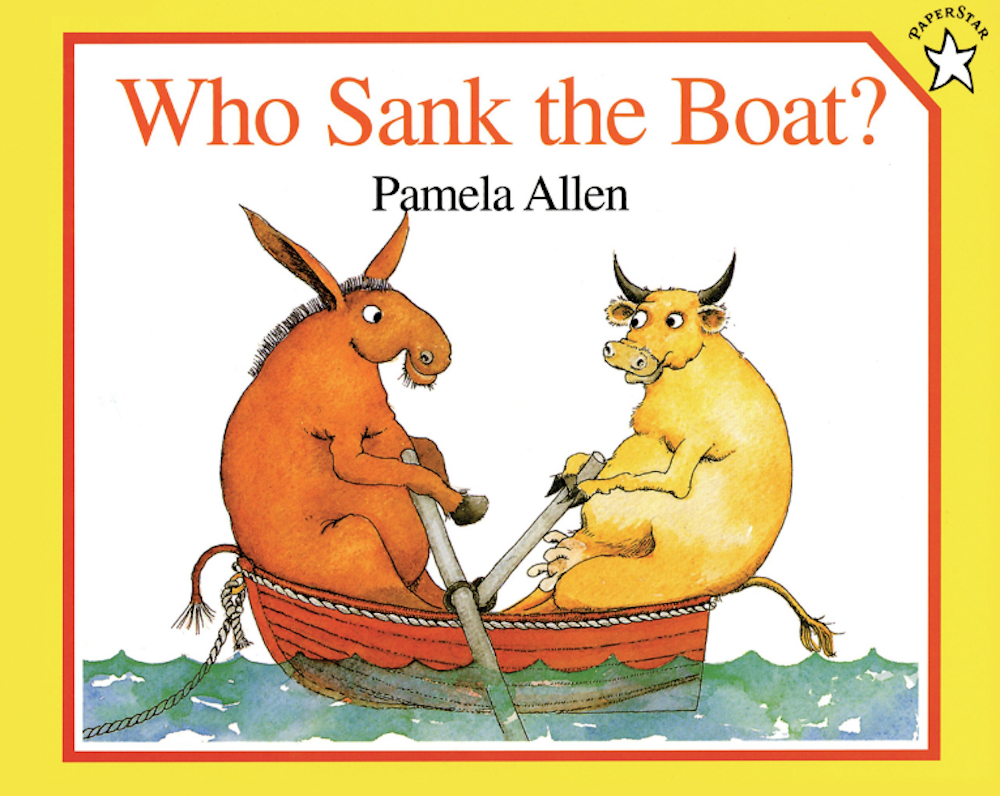
Kids want to unveil the mystery of who sank the boat – and they learn in the process.
Amazon.com


Read more:
A balanced approach is best for teaching kids how to read


Using books to teach all the decoding skills

Using rich authentic texts supports all the decoding skills described in the Australian curriculum – phonics, vocabulary and grammar.

In Pamela Allen’s story above, we can look at the word “bay” and notice the parts /b/ – /ay/, which help us to say and spell the word. What happens if we change the beginning – how many other words could we write and read? For example, day, say, play, and so on.

We can look at the “frequent” words. These are the words that we can’t always “sound out” but which make up the 100 most frequent words in English. For example, do, you, they, were, the.

These words are very important to teach children, as these 100 words make up 50% of all written language.

We can develop their vocabularies with words and phrases such as “for no particular reason”, “decided” and “beside” .

We can introduce them to beautifully literate sentence structures, for example,
“Beside the sea, on Mr Peffer’s place, there lived a cow, a donkey, a sheep, a pig, and a tiny little mouse”.

Decodable readers can only do the phonics part of the reading puzzle. They are a very inefficient way to teach reading.

So what do we want for all children learning to read?

When teaching children to read, we hope they will learn reading is pleasurable and can help them to make sense of their lives and those around them.

The strategies children are taught to use when first learning to read greatly influence what strategies they use in later years.
When children are taught to focus solely on letter-sound matching to read the words of decodable readers, they often continue in later years to over-rely on this strategy, even with other kinds of texts. This causes inaccurate, slow, laborious reading, which leads to frustration and a lack of motivation for reading.

A book must be worth reading and give children the opportunity to learn the full range of strategies needed to read any text.

Children who grow up with real books, with rich vocabularies, beautiful prose and genuine storylines reach a higher level of education than those who do not have such access, regardless of nationality, parents’ level of education or socioeconomic status.

And yet it’s children from disadvantaged backgrounds who are less likely to have access to these books in their homes. It’s crucial schools fill the gap.

A$2.8 million spent on beautifully written books to fill Victorian classroom libraries would be a far more effective use of the education budget.The Conversation

Misty Adoniou, Associate Professor in Language, Literacy and TESL, University of Canberra; Brian Cambourne, Principal Fellow, Faculty of Education, University of Wollongong, and Robyn Ewing, Professor of Teacher Education and the Arts, University of Sydney

This article is republished from The Conversation under a Creative Commons license. Read the original article.
Unknown's avatar

2018 Rebekah Johnson Bobbitt National Prize for Poetry


The link below is to an article that looks at the winner of the 2018 Rebekah Johnson Bobbitt National Prize for Poetry, Jorie Graham.

For more visit:
https://www.nytimes.com/2018/11/01/arts/jorie-graham-bobbitt-poetry-prize.html

Unknown's avatar

2018 JCB Prize For Literature (India)


The link below is to an article that takes a look at India’s 2018 JCB Prize for Literature.

For more visit:
https://publishingperspectives.com/2018/10/jcb-prize-literature-2018-inaugural-india-benyamin-jasmine-days/

For more on the JCB Prize for Literature visit:
https://thejcbprize.org/

Unknown's avatar

Fantasmagoriana: the German book of ghost stories that inspired Frankenstein


File 20181029 76413 65m8ga.png?ixlib=rb 1.1
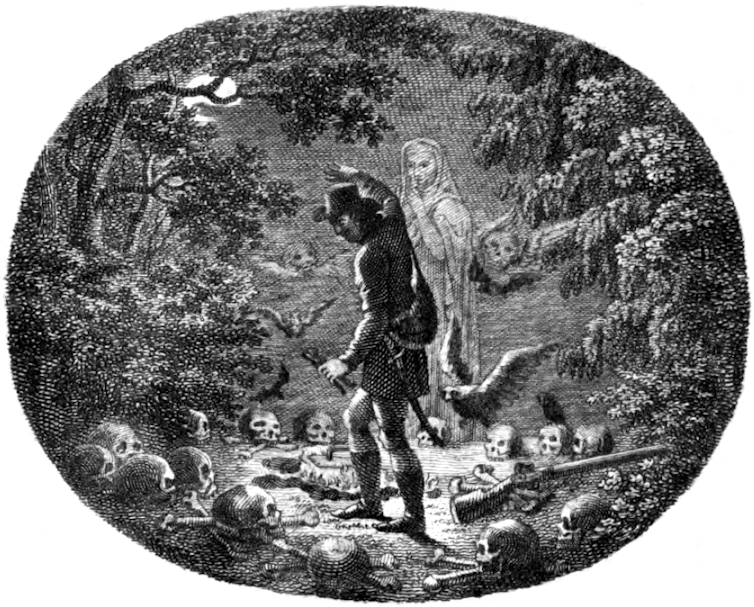
Frontispiece from the original German version of Fantasmagoriana.
Schnorr von Carolsfeld

Fabio Camilletti, University of Warwick

The story of how Frankenstein was born is well known, and largely relies on the account given by Mary Shelley in her preface to the 1831 edition to her novel. She and her (soon-to-be) husband, the poet Percy Bysshe Shelley, were summering on the shores of Lake Geneva and close by Lord Byron and his personal physician John Polidori. It was 1816 – the so-called “year without a summer” and the inclement weather kept the party indoors, reading ghost stories as a pastime.

In one of the most famous propositions in literary history, Lord Byron suggested that each of them should try their hand at writing a supernatural tale. Ironically, it was the two novice writers, Mary Shelley and Polidori, whose works have endured. Almost out of nothing, the pair invented modern horror. Polidori’s story, The Vampyre, would inspire Bram Stoker 80 years later to write Dracula, while the 18-year-old Shelley wrote Frankenstein – which also has a good claim to be the first science fiction novel.


Read more:
Older than Dracula: in search of the English vampire


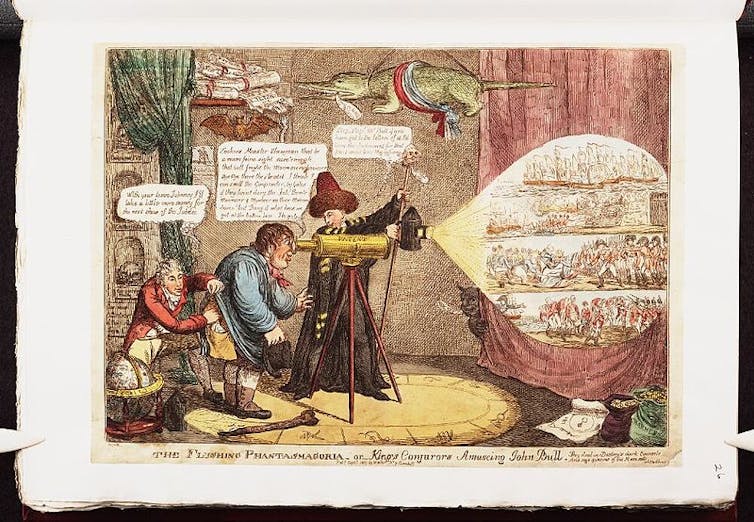
The book the Shelleys, Byron, and Polidori were reading during their trip was called Fantasmagoriana. It was an anthology of eight stories of the supernatural published in Paris in 1812 but translated from the German. No indication of authors or of original sources was given and readers were invited to think of stories as of embellished versions of real supernatural cases. The title joyfully played with this ambiguity, evoking the kind of shows, popular at the time, which were known as phantasmagorias.

A Victorian depiction of a phantasmagoria, or magic lantern show.
William Heath (1794–1840)

Based on the magic lantern (an ancestor of cinema), these shows enabled audiences to see ghosts floating in the air, devils appearing and disappearing, young girls transforming into skeletons. In the end, the impresario came upon the stage, explaining it was all a trick. But in Paris, around 1798-99, such shows had been briefly shut down by the police, when rumours had spread that the phantasmagoria could bring the king, Louis XVI, back from the dead. The book read by our holidaying writers proposed a similar gallery of horrors. As Mary Shelley recalled:

There was the History of the Inconstant Lover, who […] found himself in the arms of the pale ghost of her whom he had deserted. There was the tale of the sinful founder of his race, whose miserable doom it was to bestow the kiss of death on all the younger sons of his fated house […] he advanced to the couch of the blooming youths, cradled in healthy sleep.

It’s worth looking into the influence of such stories on Frankenstein. At some point in Shelley’s novel, Victor Frankenstein dreams to hold in his arms the “pale ghost” of his bride to be, which may remind us of the story Shelley referred to as History of the Inconstant Lover (in truth, La Morte Fiancée or The Corpse Bride, by Friedrich August Schulze).

Frankenstein’s “Creature” is a gigantic being who causes the extermination of an entire family – a plot device that may have been inspired by what she calls “tale of the sinful founder of his race” who “bestows the kiss of death” on his descendants (actually a story called Le Portraits de Famille – or The Family Portraits, by Johann August Apel).

But if we read Frankenstein with Fantasmagoriana in mind, we see that the influence of those stories is definitely more profound than a simple inspiration.

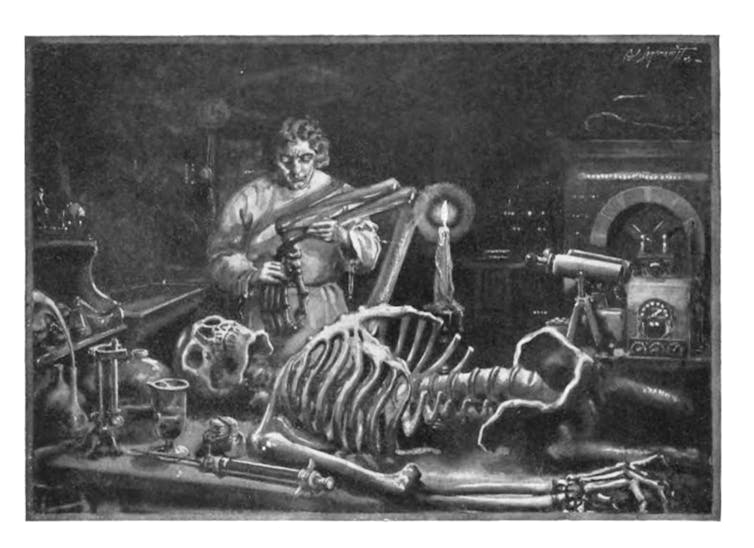
Illustration from the 1922 edition of Frankenstein, or the Modern Prometheus.
Cornhill Publishing Company

While trying to describe in the preface to the book: “How I, then a young girl, came to think of, and to dilate upon, so very hideous an idea,” Shelley describes her mental processes as a phantasmagorical show. Imagination, in her words, is a screen onto which stories project impressions. At night, in her bed, Shelley sees “with shut eyes, but acute mental vision” the central scene of her novel to be – the idea of the novel comes first as an image, not as a plot.

It is an image she knows perfectly not to be true – but which is nonetheless frightening: like the ghosts of phantasmagoria shows or of Fantasmagoriana, which were explained to be tricks of the mind, but still left the imperceptible feeling of the uncanny. In Les Portrais de Famille, Shelley read of a ghost “advanc(ing) to the couch of the blooming youths, cradled in healthy sleep” – half asleep she imagines a man in bed, beholding “the horrid thing” he created “stand(ing) at his bedside, opening his curtains”. The story read, in other words, mirrors and anticipates the story to be written.

At her bedside, Shelley too is visited by a ghost – in this case, the ghost of the novel:

On the morrow I announced that I had thought of a story.The Conversation

Fabio Camilletti, Head of Italian Studies, University of Warwick

This article is republished from The Conversation under a Creative Commons license. Read the original article.
Unknown's avatar

How the apartheid regime burnt books — in their tens of thousands


File 20181018 67179 1l3q6ep.png?ixlib=rb 1.1
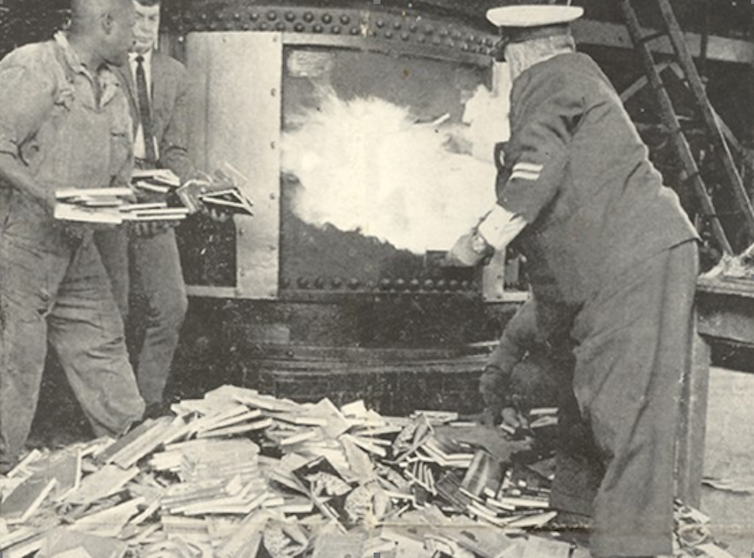
The Railway Depot furnace at Kaserne, Johannesburg in 1971. Banned and confiscated books and magazines were burnt weekly.
Wits Student

Archie Dick, University of Pretoria

On the advice of the State Librarian one fine day in the 1970s, a truck transported thousands of books and magazines from Pretoria’s Central Police Station to a dark hall at the Iscor state steel company, just outside the South African capital. A large mechanical shovel scooped up and dropped them into a 20 metre high oven, causing it to spew flames and smoke. This was another truckload of material that had been banned for political reasons and was routinely burned in furnaces across South Africa from the 1950s to the 1970s.

Historical examples show that books are banned and destroyed because they offend the politics, morals, or religion of the day. Information science academic Rebecca Knuth, wrote in Burning Books and Leveling Libraries that if a regime is racist, it destroys the books of groups deemed inferior; if nationalistic, the books of competing nations and cultures; and if religiously extremist, all texts contradicting sacred doctrines.

Sometimes these forces combine. Recent examples include the destruction of Muslim books and libraries in Bosnia in the 1990s by
Serbian nationalist forces. In 2013 there was the burning by Islamist insurgents of the Timbuktu library and the next year the same happened in Lebanon to Tripoli’s historic Al Sa’eh Library.

The apartheid era – from the middle of the 20th century – had its own variation on the theme. Thousands of books were banned, ranging from Russian novelist Fyodor Dostoyevsky’s The Insulted and Humiliated to popular Westerns writer Louis L’Amour’s Hopalong Cassidy series.

The fact that books were burnt underscored the state’s desire to make sure the printed word was utterly destroyed. The practice also revealed a darker side of the library profession which connived in the book burning. Between 1955 and 1971 most librarians didn’t protest when thousands of books and other reading material were taken from libraries, and burned at municipal incinerators and furnaces. Some even joined in.

The rise of authoritarianism

State sanctioned book burnings were common as authoritarianism accompanied a growing Afrikanerisation of South African society as the dominant, ruling Afrikaner elite started to impose its culture on all spheres of society. Members of the elite did this first by unifying Afrikaner cultural and church organisations. This took the form of a declaration on behalf of “Volksorganisasies” (Afrikaner people’s organisations) that was signed in 1941 and pledged support for conservative Christian national ideology.

This sometimes involved the burning of books as a symbol of purification. One of the more worrying aspects was the solid support from ordinary South African librarians for these treacherous acts.

Even when books were burned by public libraries, the profession meekly accepted the situation. This signified support and agreement with what was happening, and reflected the dominant authoritarian mood and spirit in South Africa and the library community at that time.

In October 1955, the city librarian of Johannesburg, exclaimed:

All copies are brought in to me and I destroy them personally.

In the same month, a Cape Town newspaper reported that a couple of hundred books had been burned. Two years later, the deputy city librarian of Cape Town announced the fate of banned books returned from branch libraries to his Central Library:

We will have a big bonfire and burn them.

All-out attack on free speech

What started as the burning largely of imported pornographic books, became an all-out attack on free speech after the findings of a commission of inquiry into “undesirable publications” were made public in October 1957. The inquiry gave the Nationalist government the excuse to destroy books and pamphlets critical of its policies, and of dramatic developments in the country.

Each new issue of the Government Gazette included the latest additions to the list of banned books. Books on communism and those that criticised apartheid dogma were targeted. In 1954 banned titles included the Pravda and Daily Worker newspapers, and Vladimir Lenin’s Two Tactics of Social-Democracy in the Democratic Revolution. Books on innocuous topics about communist countries, like China’s “Railways and Labour Insurance Regulations of the People’s Republic of China”, were also deemed subversive and added to the list.

Even Ray Bradbury’s dystopian novel Fahrenheit 451 (which, ironically, is the temperature at which book paper starts burning) was burned. From the town of Brakpan in the North to Durban in the East and Cape Town in the South, several thousands of books were removed from library shelves and burned. In July 1964 Cape Town City library services announced that more than 800 books had been burned.

By this time the list of banned publications had swelled to a total of 12 000 titles. In June 1968, a newspaper reported that 5 375 books of the Natal Provincial libraries had been withdrawn from circulation and burned. By April 1971 books were still steadily being burned in Cape Town – at the rate of two per day.

It was only in the late 1980s that successful appeals from a few brave librarians to the state censors saw restricted books unbanned, and saved from apartheid’s furnaces.

In the early-1990s as South Africa moved towards becoming a democracy hundreds of archival documents and public records were shredded and burned by the apartheid state’s security establishment – once again in the furnaces of Iscor.

Could book burning happen again in contemporary South Africa? Given a similar set of circumstances, there is every reason to believe that it can. South Africans should remain diligent and alert to threats to freedom of expression.
The ashes of burnt books tell of the barbarism to which a society can descend.The Conversation

Archie Dick, Head of Department and Professor of Information Science, University of Pretoria

This article is republished from The Conversation under a Creative Commons license. Read the original article.

Unknown's avatar

Frankenstein: the real experiments that inspired the fictional science


File 20181025 71032 1uut1t2.jpg?ixlib=rb 1.1
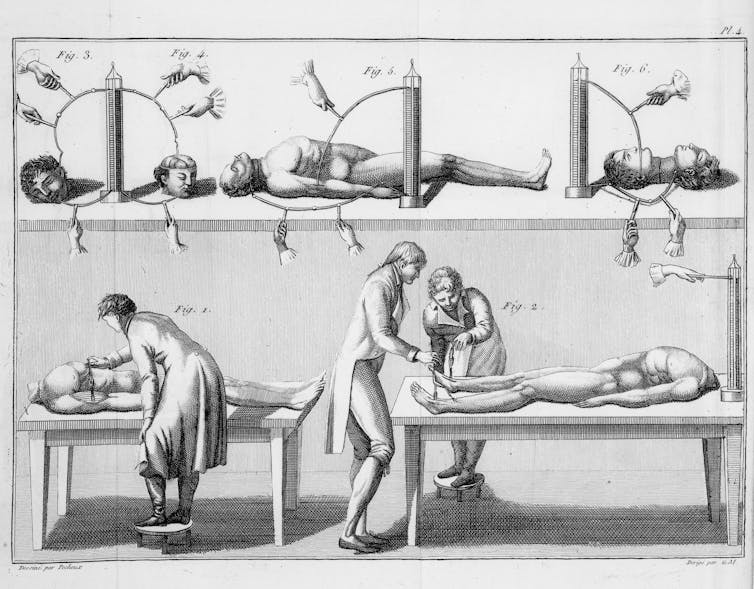
Giovanni Aldini’s experiments with a human corpse.
Wellcome Collection, CC BY-SA

Iwan Morus, Aberystwyth University

On January 17 1803, a young man named George Forster was hanged for murder at Newgate prison in London. After his execution, as often happened, his body was carried ceremoniously across the city to the Royal College of Surgeons, where it would be publicly dissected. What actually happened was rather more shocking than simple dissection though. Forster was going to be electrified.

The experiments were to be carried out by the Italian natural philosopher Giovanni Aldini, the nephew of Luigi Galvani, who discovered “animal electricity” in 1780, and for whom the field of galvanism is named. With Forster on the slab before him, Aldini and his assistants started to experiment. The Times newspaper reported:

On the first application of the process to the face, the jaw of the deceased criminal began to quiver, the adjoining muscles were horribly contorted, and one eye was actually opened. In the subsequent part of the process, the right hand was raised and clenched, and the legs and thighs were set in motion.

It looked to some spectators “as if the wretched man was on the eve of being restored to life.”

By the time Aldini was experimenting on Forster the idea that there was some peculiarly intimate relationship between electricity and the processes of life was at least a century old. Isaac Newton speculated along such lines in the early 1700s. In 1730, the English astronomer and dyer Stephen Gray demonstrated the principle of electrical conductivity. Gray suspended an orphan boy on silk cords in mid air, and placed a positively charged tube near the boy’s feet, creating a negative charge in them. Due to his electrical isolation, this created a positive charge in the child’s other extremities, causing a nearby dish of gold leaf to be attracted to his fingers.

In France in 1746 Jean Antoine Nollet entertained the court at Versailles by causing a company of 180 royal guardsmen to jump simultaneously when the charge from a Leyden jar (an electrical storage device) passed through their bodies.

It was to defend his uncle’s theories against the attacks of opponents such as Alessandro Volta that Aldini carried out his experiments on Forster. Volta claimed that “animal” electricity was produced by the contact of metals rather than being a property of living tissue, but there were several other natural philosophers who took up Galvani’s ideas with enthusiasm. Alexander von Humboldt experimented with batteries made entirely from animal tissue. Johannes Ritter even carried out electrical experiments on himself to explore how electricity affected the sensations.

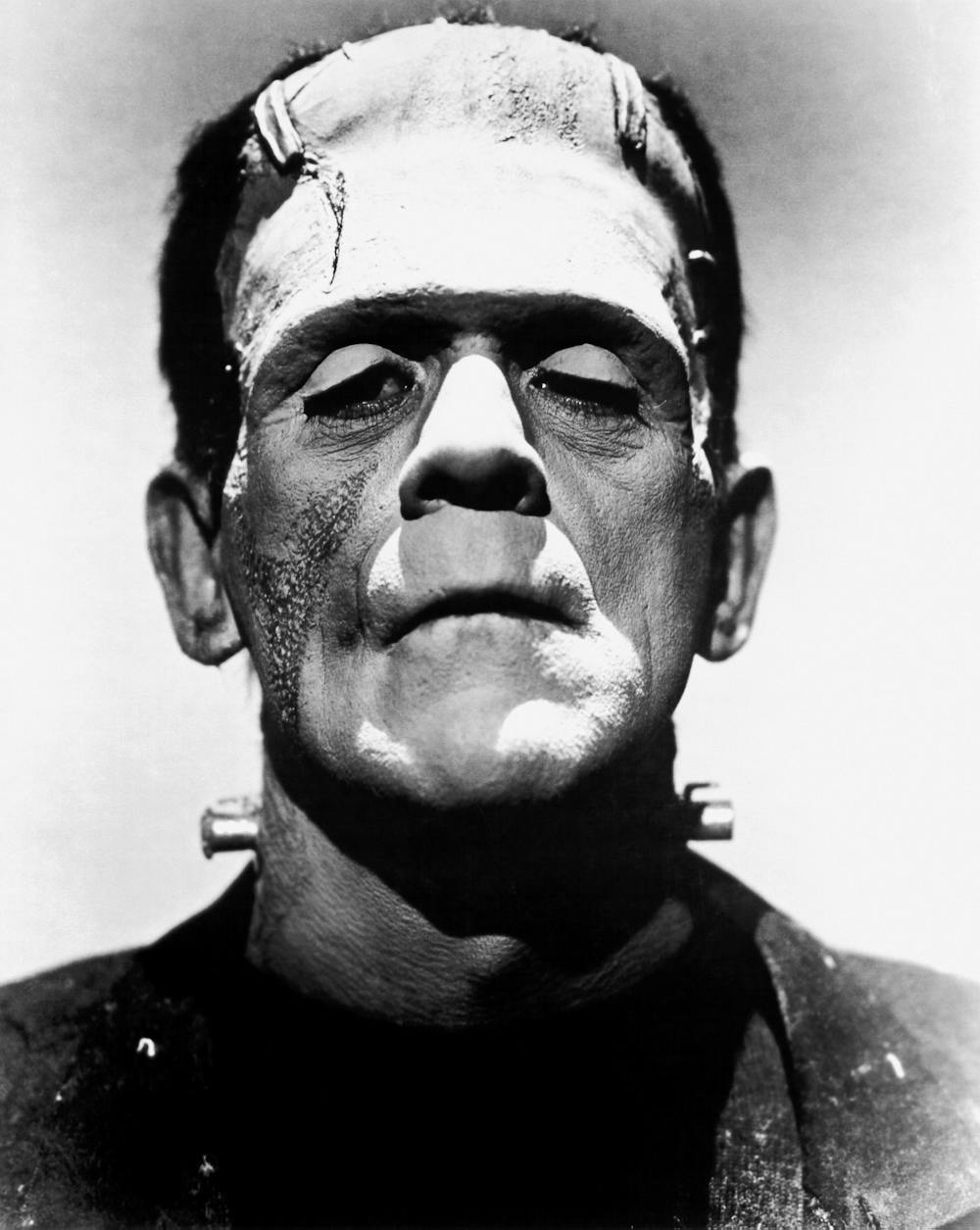
Actor Boris Karloff as Frankenstein’s monster, 1935.
Wikimedia

The idea that electricity really was the stuff of life and that it might be used to bring back the dead was certainly a familiar one in the kinds of circles in which the young Mary Wollstonecraft Shelley – the author of Frankenstein – moved. The English poet, and family friend, Samuel Taylor Coleridge was fascinated by the connections between electricity and life. Writing to his friend the chemist Humphry Davy after hearing that he was giving lectures at the Royal Institution in London, he told him how his “motive muscles tingled and contracted at the news, as if you had bared them and were zincifying the life-mocking fibres”. Percy Bysshe Shelley himself – who would become Wollstonecraft’s husband in 1816 – was another enthusiast for galvanic experimentation.

Vital knowledge

Aldini’s experiments with the dead attracted considerable attention. Some commentators poked fun at the idea that electricity could restore life, laughing at the thought that Aldini could “make dead people cut droll capers”. Others took the idea very seriously. Lecturer Charles Wilkinson, who assisted Aldini in his experiments, argued that galvanism was “an energising principle, which forms the line of distinction between matter and spirit, constituting in the great chain of the creation, the intervening link between corporeal substance and the essence of vitality”.

In 1814 the English surgeon John Abernethy made much the same sort of claim in the annual Hunterian lecture at the Royal College of Surgeons. His lecture sparked a violent debate with fellow surgeon William Lawrence. Abernethy claimed that electricity was (or was like) the vital force while Lawrence denied that there was any need to invoke a vital force at all to explain the processes of life. Both Mary and Percy Shelley certainly knew about this debate – Lawrence was their doctor.

By the time Frankenstein was published in 1818, its readers would have been familiar with the notion that life could be created or restored with electricity. Just a few months after the book appeared, the Scottish chemist Andrew Ure carried out his own electrical experiments on the body of Matthew Clydesdale, who had been executed for murder. When the dead man was electrified, Ure wrote, “every muscle in his countenance was simultaneously thrown into fearful action; rage, horror, despair, anguish, and ghastly smiles, united their hideous expression in the murderer’s face”.

Ure reported that the experiments were so gruesome that “several of the spectators were forced to leave the apartment, and one gentleman fainted”. It is tempting to speculate about the degree to which Ure had Mary Shelley’s recent novel in mind as he carried out his experiments. His own account of them was certainly quite deliberately written to highlight their more lurid elements.

Frankenstein might look like fantasy to modern eyes, but to its author and original readers there was nothing fantastic about it. Just as everyone knows about artificial intelligence now, so Shelley’s readers knew about the possibilities of electrical life. And just as artificial intelligence (AI) invokes a range of responses and arguments now, so did the prospect of electrical life – and Shelley’s novel – then.

The science behind Frankenstein reminds us that current debates have a long history – and that in many ways the terms of our debates now are determined by it. It was during the 19th century that people started thinking about the future as a different country, made out of science and technology. Novels such as Frankenstein, in which authors made their future out of the ingredients of their present, were an important element in that new way of thinking about tomorrow.

Thinking about the science that made Frankenstein seem so real in 1818 might help us consider more carefully the ways we think now about the possibilities – and the dangers – of our present futures.The Conversation

Iwan Morus, Professor of History, Aberystwyth University

This article is republished from The Conversation under a Creative Commons license. Read the original article.
Unknown's avatar

Man Booker Prize 2018: when writers speak we glimpse the human behind the story


File 20181016 165900 1ed0ga4.jpg?ixlib=rb 1.1
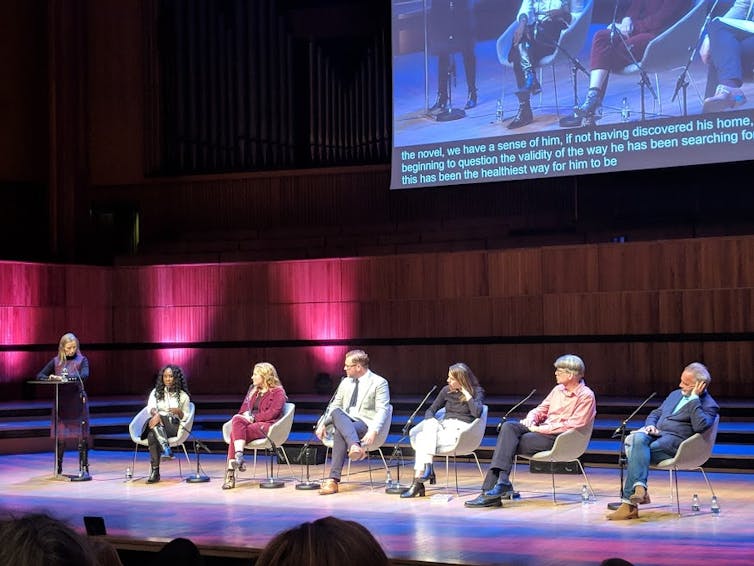
booker authors.

Martin Goodman, University of Hull

Novelists are used to staring out of windows, not out at audiences. We write in solitude, and expect our readers to read in solitude. And then, for a few, the phone rings. A publicist has struck lucky with your book. It’s been shortlisted for a literary award. You can no longer be private. You have to perform live.

This year a leading independent publisher told me how he takes on a maximum of two new fiction writers a year. He knows that literary festivals and ever slimmer book review pages won’t want to hear about them. His sole hope for these books is that they win a literary prize. The big one, of course, is the Man Booker Prize.

Just one independent publisher made it to this year’s shortlist: Faber & Faber with Anna Burns’ Milkman. Faber has a kitty it can raid for the £5,000 charged to shortlisted publishers for promotional costs. And there has been plenty of promotion. As Burns admitted recently: “I can’t say anything more about my book … I’m talked out. My brain has pulled over the curtains.”

The Man Booker is something of a winner-takes-all contest. Check the current Top 20 bestsellers for original fiction and not a single shortlisted title reaches the chart. But the winner pretty much always leaps to the top. So how are the current shortlisted writers coping with this brief spell in the limelight?

First impressions

Two days before the winner was due to be announced the writers encountered each other for the first time for a Sunday night appearance at London’s Royal Festival Hall. The audience paid up to £35 a ticket to hear these writers read and talk. Take this Man Booker reading as its own performance contest, and which writer would win?

I settled in my seat with mixed expectations. In Britain, you can coax the occasional creative writing student into a soft-voiced reading, but most hate the prospect. On the other hand, writing classes in the US have spoken delivery and response at their core. In 2014, the Man Booker opened entry to US writers, so I expected the two shortlisted American writers, Rachel Kushner and Richard Powers, to leap out of the blocks.

Kushner obliged. “I recently started to wear these glasses”, she tells us, “because they’ve started to shrink all the texts in all the books.” For her excerpt from The Mars Room she pops in and out of dialogue for a tale of hotwiring a cement mixer, and laughter trills around the auditorium. Yes, she did do her own audio book, she tells the host. “I read out loud while I’m writing so I felt I’d been practising to do that.” Her big interest is in voices, their “formal syncopation – the first person is traditionally a confessional tone, a challenging voice”.

Robin Robertson’s voice is more than challenging. The Long Take is a noir novel in verse, in which a World War II veteran finds himself among the denizens of Skid Row in 1940s Los Angeles. Robertson grips hold of the perspex lectern and delivers his reading with measured threat in every line. In conversation, he tells the London audience how the book reflects the “sense of urban paranoia and panic” that gripped him on first reaching London, and the “deep sense of existential dread” felt by German filmmakers in their post-war Hollywood exile.

For Burns, her characters are nameless and appear as voices in her head. She reads in the shock of a character’s short sentences. We find ourselves shocked. We find ourselves laughing. Anna reads on. It’s tough stuff.

Esi Edugyan smiles, thanks us, tells us she’s pleased to be with us. We warm to her and recognise her nerves – but something gets stuck. The voice of the protagonist in Washington Black is of a young 19th-century boy, a slave – and his first-person past tense narrative is literary. It belongs not so much in the author’s voice, but on paper.

Richard Powers read from his novel, The Overstory, as though in awe of it, his voice close to breaking. At 502 pages, The Overstory is the longest book on the shortlist, and the five-minute reading somehow gave a sense of its length. As fellow shortlister, Daisy Johnson, noted: “There’s something treelike in the way it’s written” – and it’s true: his reading accrued detail like growth rings.

Performing arts

And so to the two “Writer in Performance” awards I took it upon myself to present for the evening. Every writer gets a special award for taking the stage yet staying true to themselves – but, for the most constant laughter and spontaneous applause, the Audience Award goes to Rachel Kushner.

I had other award categories, which Daisy Johnson nailed in reading from her Everything Under – including eye contact with audience and an urgent clarity in her reading. But ironically what clinched the Judge’s Performance Award for Daisy Johnson is the writing. She spoke as an “I” talking to a “you”. She stripped away the literary and delivered the directness of raw speech.

We all applauded, the writers walked off to sign books – and soon one Man Booker winner will be hurtled into months of celebrity. The others, surely, will step from the public gaze and return to the journey Kushner spoke of, going “deeper in myself and trying to form a rich dialogue with my own consciousness”.The Conversation

Martin Goodman, Professor of Creative Writing, University of Hull

This article is republished from The Conversation under a Creative Commons license. Read the original article.

Unknown's avatar

How the stigma of contagion keeps alive Romantic notions of how the Brontës died


File 20181018 41129 18uaz2v.png?ixlib=rb 1.1
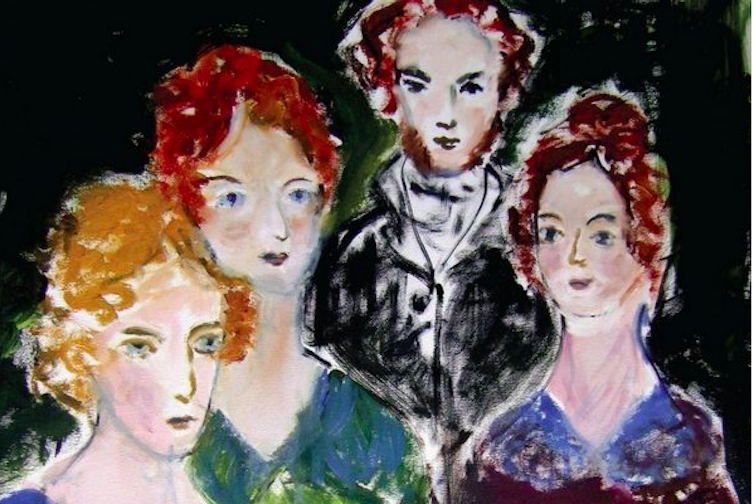
The three Brontë sisters with their brother Branwell.
Woodend, Scarborough

Jo Waugh, York St John University

Bizarrely, the idea that Branwell Brontë had sex with his sister Emily appears to have been more palatable than the idea that he might have given her tuberculosis – or that the infection might have passed to Anne from either sibling. Those documenting the lives of the Brontës since the late 19th century have been curiously reluctant to acknowledge this fact.

Branwell, Emily, and Anne all died from various forms of tuberculosis between September 1848 and May 1849. All three had lived together at Haworth Parsonage in Yorkshire with their sister Charlotte (who managed to last until 1855 when she too succumbed to tuberculosis). Branwell and Emily died there, and Anne died on a final trip to Scarborough, where she is buried.

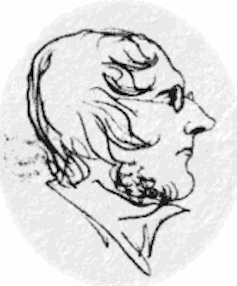
Branwell Brontë.
Wikipedia, CC BY

We know today that tuberculosis is contagious, and particularly so between family members living in close quarters. Yet the idea that one Brontë sibling might have infected or been infected by another still seems to be taboo in Brontë biography and adaptation.

Only Claire Harman’s biography of Charlotte Brontë (2015) and Beth Torgerson’s Reading The Brontë Body (2005) have suggested the possibility of infection, even briefly. So how and why has contagion largely been written out of the story of Branwell’s, Emily’s and Anne’s deaths?

The contagion taboo

The way we think about tuberculosis has changed dramatically since Robert Koch discovered the tubercle bacillus in 1882. As Katherine Byrne has explained in Tuberculosis and the Victorian Literary Imagination, before Koch’s discovery “consumption” had often been thought of as a “mysterious, ethereal wasting disease”. It became “an identifiable bacterial infection” by the end of the 19th century, and this was also when the term “tuberculosis” started to replace “consumption”.

By the mid-20th century, the tuberculosis sufferer was no longer thought of as delicate or exceptional. Now that the infection could be clearly seen in X-rays, and treated with often brutal surgery, the tubercular body seemed much less Romantic. TB was a public health problem, and those who contracted it often faced isolation and social stigma.

Yet in this same period, biographies about the Brontës described their deaths from rather personal, individual illness, as though the discoveries made about the disease in the intervening century had never happened. The “consumption” from which the siblings died in these accounts often seems to have little in common with the disease which was by then commonly known as tuberculosis.

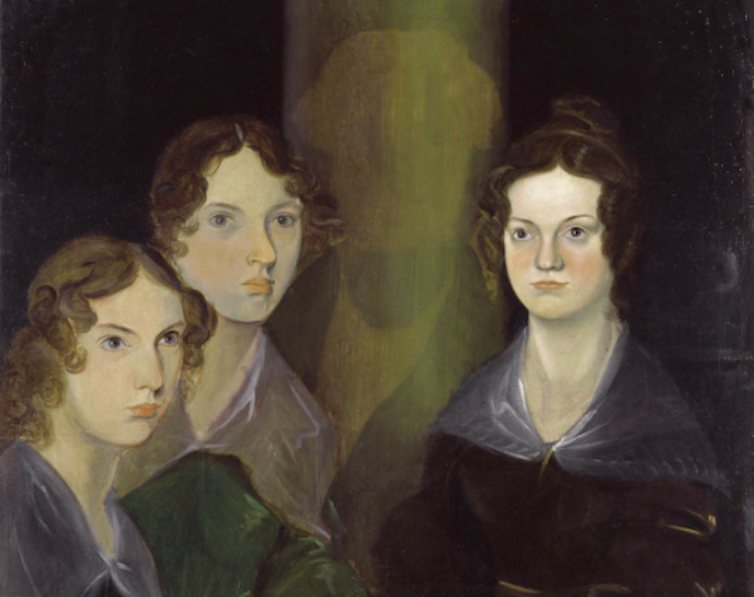
Anne, Emily and Charlotte Brontë, who all died of tuberculosis.
National Portrait Gallery

In 1947 alone, Ernest Raymond, Laura L Hinkley and Phyllis Bentley all told a story which stressed Branwell’s alcoholism, Emily’s grief, and Anne meekly following her two siblings to the grave. These biographers, and many more in the late 1940s and the 1950s, stressed both weather and emotion as causes of death. They created an aura of predestined tragedy around the Brontës which proved difficult to displace in the years which followed.

Films and TV dramas showed the same causes for the Brontës’ deaths. Granada TV’s The Brontës of Haworth (1973) has Branwell’s burial immediately followed by Emily clasping the table as a whistling wind comes in through the parsonage door. She coughs, sickens and dies, and Anne quietly follows.

Andre Téchiné’s Les Sœurs Brontë (1979) portrays an unusually close relationship between Branwell and Emily throughout. So when Branwell dies, Emily is emotionally, not bacterially, infected. She puts on his coat and sobs until her sobs become coughs. She is soon on her deathbed refusing the doctor, while Anne stands timidly in the hallway, meekly taking her own medicine from a spoon.

In 2016, BBC Two’s documentary Being the Brontës described the sisters’ “frail bodies” giving up on them “so young,” again suggesting a kind of fatalism about their deaths. Carl Barnes’s brilliantly funny musical Wasted, however, seems to deliberately reference the sheer absurdity of so much death in one family. Branwell is handed copies of his sisters’ published works and then immediately dies. Emily sings that she is a “Goth before my time” and then dies. Anne laments a miserable life in which she has never been touched by a desiring hand – and then dies.

Whether with surreal humour or with pathos, the Brontës’ deaths have often been presented as though they were all characters in a novel. It seems as though we want Emily, in particular, to have died because she was ready to do so, or because a tragic fate willed that it was her time.

A little more reality

Perhaps the more mundane suggestion that one sibling caught the disease from another, or from anyone else, undermines the idea that the Brontës were as unique or Romantic as we have often liked to think.

Wasted contains swearing, anachronism, and sexual references. Sally Wainwright’s To Walk Invisible (2016) also invited us to contemplate the Brontës with Yorkshire accents, and a swearing, drug-addled Branwell. There seems to be space now for a less reverential, Romanticised approach to the siblings. Perhaps it is time to accept that the Brontës didn’t die from melancholy, weather, or death wishes, but because they were infected with bacteria.

A drama or biography which allowed this possibility would open up some fascinating new ways to think about the Brontës and their work. I’ve written elsewhere about the importance of contagion theories and the rabies virus in Charlotte Brontë’s Shirley, but there is still more to be said about contagion, disease, and the Brontës.

All three sisters wrote about “consumptive” characters, from Jane Eyre’s Helen Burns to Wuthering Heights’s Frances Hindley to Agnes Grey’s labourer Mark Wood. Widening our understanding of tuberculosis in the lives of these extraordinary women would help us to read their novels afresh.The Conversation

Jo Waugh, Senior Lecturer in English Literature, York St John University

This article is republished from The Conversation under a Creative Commons license. Read the original article.
Unknown's avatar

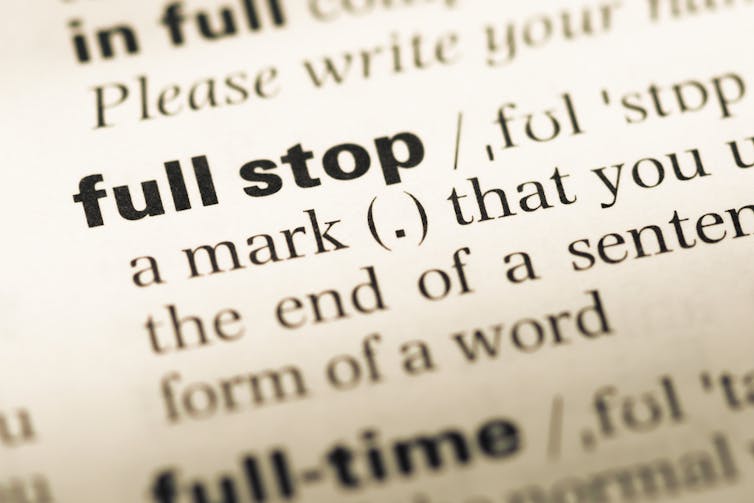
Why we should learn to love the full stop.


File 20181003 52674 16yomgp.jpg?ixlib=rb 1.1

TungCheung/Shutterstock.com

Joe Moran, Liverpool John Moores University

If you want to write a good sentence, you must learn to love the full stop. Love it above all other punctuation marks, and see it as the goal towards which the words in your sentence adamantly move.

A sentence, once begun, demands its own completion. As pilots say: take-off is optional, landing is compulsory. A sentence throws a thought into the air and leaves the reader vaguely dissatisfied until that thought has come in to land.

We read a sentence with the same part of our brains that processes music. Like music, a sentence arranges its elements into an order that should seem fresh and alive and yet shaped and controlled. A good sentence will often frustrate readers just a little, and put them faintly on edge, without ever suggesting that it has lost control of what is being said. As it runs its course, it will assuage some of the frustration and may create more. But by the end, things should have resolved themselves in a way that allows something to be said.

Only when the full stop arrives can the meaning of a sentence be fulfilled. The full stop offers the reader relief, allowing her to close the circle of meaning and take a mental breath.

Full stops also give writing its rhythm. They come in different places, cutting off short and long groups of words, varying the cadences – those drops in pitch at the sentence’s end which signal that the sentence, and the sentiment, are done.

A sentence wields more power with a strong stress at the end, where it sticks in the mind and sends a backwash over the words that went before. Weak sentences have weak predicates that come to the full stop with an unresounding phhtt. If you say that something is “an interesting factor to consider” or “should be borne in mind”, then the end of your sentence is just mumbly noise, because those things could be said about anything. A sentence with a strong end-stress says that its maker cared how its words fell on the reader’s ear. It feels fated to end thus, not just strung out to fill the word count.

Press enter

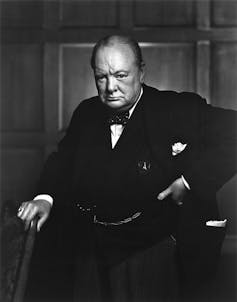
A good trick, when drafting a piece, is to press enter after every sentence, as if you were writing a poem and each full stop marked a line break. This renders the varied (or unvaried) lengths of your sentences instantly visible. And it foregrounds the full stop, reminding you of its power as the destination and final rest of each sentence. Winston Churchill wrote his speeches like this, in single-sentence lines, to more easily adjust his Augustan rhythms. If you keep pressing enter after every full stop, the music of your writing is easier to hear because now it can also be seen.

Winston Churchill: a fan of the carriage return.
BiblioArchives/Wikimedia Commons

We live in an age when the full stop is losing its power. The talky, casual prose of texting and online chat often manages without it. A single-line text needs no punctuation to show that it has ended. Instead of a full stop, we press send. Omitting the full stop gives off an extempore air, making replies seem insouciant and jokes unrehearsed.

But writing is not conversation, nor a speech-balloon text awaiting a response. A written sentence must give words a finished form that awaits no clarification. It must be its own small island of sense, from which the writer has been airlifted and on which no one else need live. We write alone, as an act of faith in words as a way of speaking to others who are elsewhere. So a sentence must be self-supporting. It must go out into the world without the author leaning over the reader to clarify its meaning. Hence the full stop.

A sentence is also a social animal; it feeds off its neighbours to form higher units of sense. It needs a full stop not just to be a sentence, but so the next one can begin. Studies have shown that young people tend to read a full stop in a text as curt or passive-aggressive. On social media, a full stop is often used between every word to sound angrily emphatic: End. Of. Story. But in writing, a full stop is not meant to be the final word in an argument like this. It is a satisfying little click that moves the dial along so the next sentence can pick up where it left off. Its end is also a beginning.


More language-related articles, written by academic experts:

For more evidence-based articles by academics, subscribe to our newsletter.The Conversation

Joe Moran, Professor of English and Cultural History, Liverpool John Moores University

This article is republished from The Conversation under a Creative Commons license. Read the original article.
Unknown's avatar

Australian literature’s legacies of cultural appropriation


File 20181016 165900 1z1205e.jpg?ixlib=rb 1.1
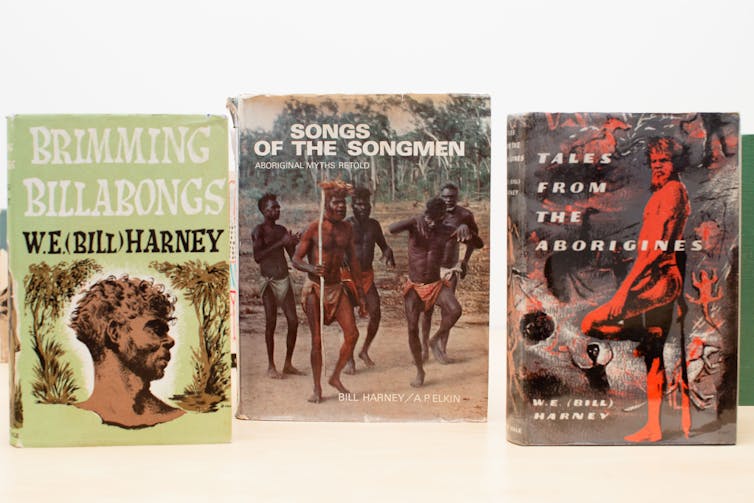
Australian literature has a long history of appropriating and misrepresenting Aboriginal culture.
Tom Williams

Michael R. Griffiths, University of Wollongong

Non-Indigenous Australian writers face a dilemma. On the one hand, they can risk writing about Aboriginal people and culture and getting it wrong. On the other, they can avoid writing about Aboriginal culture and characters, but by doing so, erase Aboriginality from the story they tell.

What such writers are navigating is the risk of cultural appropriation: the often offensive taking of another’s culture. It is particularly problematic when the appropriator is in a dominant or colonising relationship with a culture’s custodians. Australian literature has a long history of appropriating and misrepresenting Aboriginal culture.

Take anthropologist A.P. Elkin and his associate W.E. Harney. These white men collaborated in the 1940s on a book translating Aboriginal songlines into anglophone ballads.

In “Our Dreaming”, a dedicatory poem to the resulting collection Songs of the Songmen, the pair open with a self-aggrandising appropriation. This opening text emphasises their ownership of works that they are merely translating.

Together now we chant the ‘old time’ lays,
Calling to mind camp-fires of bygone days.
We hear the ritual shouts, the stamping feet,
The droning didgeridoos, the waddies’ beat.

An unpublished 1943 revision by Harney, altered by Elkin, even more noticeably emphasises the two authors’ claim on these songlines. The poem is titled “To You My Friend” and the first line reads, “To you my friend I dedicate these lays,” as though Harney is bestowing this culture on Elkin directly.

The pair claim to write:

not of their huts, the bones, the dirt,
Nor the strange far look in a native’s eyes,
As he looks to his country ‘ere he dies.

Rather than this vision of the apparently doomed “native”, Songs of the Songmen would purport to extol the romantic figure of the noble savage. The poem continues:

Tis not of these we muse today:
For the ‘Dreaming’ comes, and we drift away
Into myth and legend where we’ve caught
The simple grandeur of their thought.

The pair’s poetry claims in this way to be able to salvage and recapture the “Dreaming”, represented as no longer accessible to Aboriginal people themselves.

This example shows how appropriation, far from innocent, is bound up with attitudes such as the idea of a “doomed race”. It can also be connected to such projects as assimilation and child removal; Elkin advocated both.

The Jindyworobak group

The most famous literary movement in Australia to be engaged in appropriation formed in the 1930s. They were the Jindyworobak group, their founder Rex Ingamells drawing the word from his friend James Devaney’s book The Vanished Tribes, which included a Woiwurung word list.

Jindyworobak means “to annex” or “to join” in Woiwurung. The practices of its writers were, however, more annexation of Aboriginal culture than any inclusive joining together.

Ingamells’ knowledge of Aboriginal culture came from white translators and not from Aboriginal people themselves. He visited Harney on several occasions. The Jindyworobaks both believed in the myth that Aboriginal people were doomed to extinction and advocated the appropriation of Aboriginal culture.

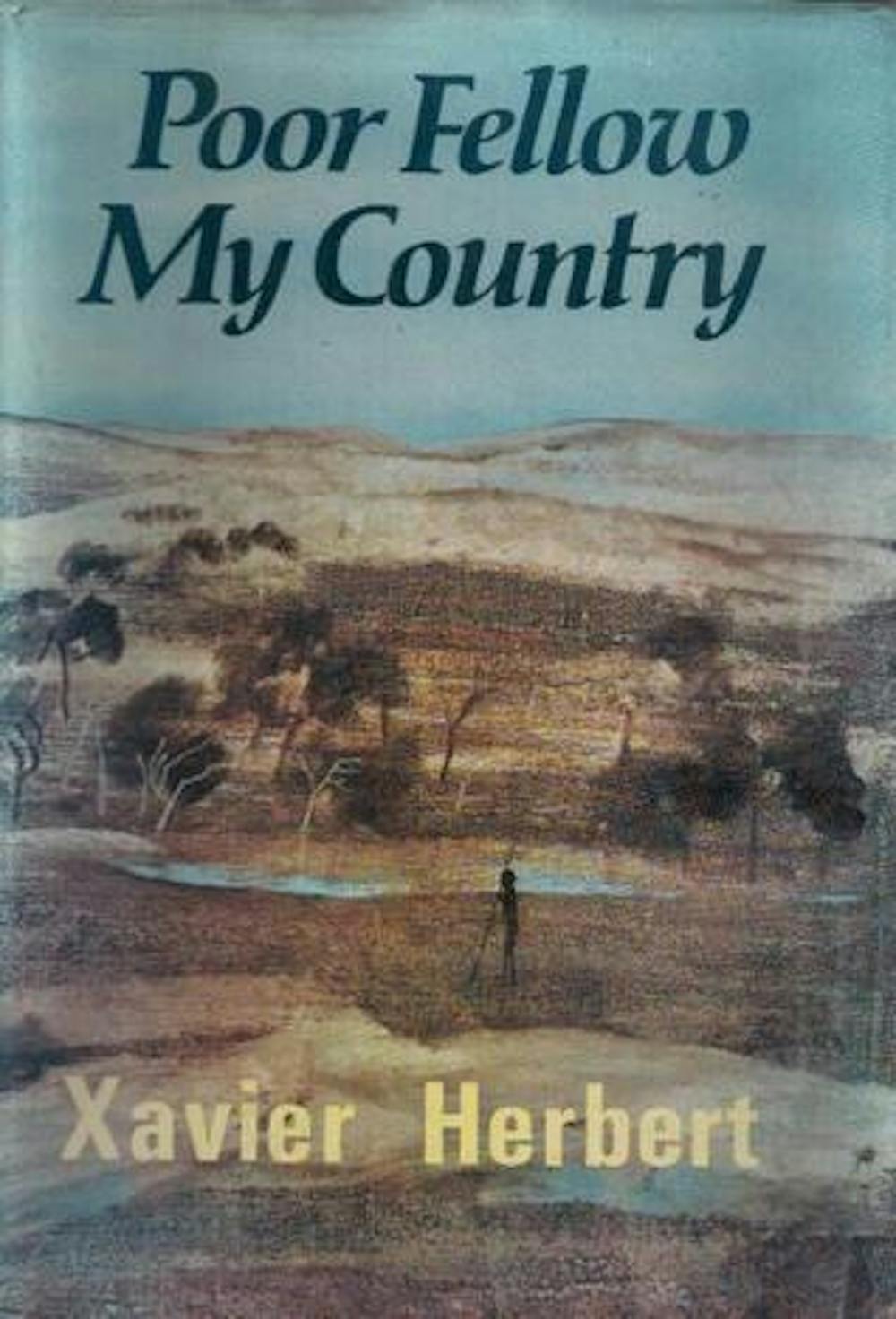
Another writer who found Harney to be a useful source was Xavier Herbert. Herbert drew on Harney’s notes on the Yanyuwa kinship system (Harney spelled the name Anula) and turned skin names into character names in his 1976 epic Poor Fellow My Country. He had Harney’s permission but not that of the Yanyuwa themselves. Herbert’s novel arguably offers a distorted view of Aboriginal kinship.

Contemporary currents

Some of Les Murray’s verse can be read as inheriting from Jindyworobak and its legacy of appropriation – notably his 1977 Buladelah-Taree Holiday Song Cycle, which presents a non-Indigenous family holiday as sacred to the equivalent of an Indigenous song cycle. Murray’s poetry is often innovative, but its progenitor is also famous for positing a near equivalence between non-Indigenous and Indigenous belonging

Murray has lent his name and ability to publications such as Quadrant, whose editors famously denied the existence of a Stolen Generation. Even where the poetry might be compelling for some, Murray’s reputation is nonetheless associated with Quadrant’s dismissal of Aboriginal perspectives on history and self-representation.

This history of appropriation is dispossession, using another’s culture for gain and without their permission. Yet some have been calling recently for Australian literature to return to and revive these legacies.


Read more:
Read, listen, understand: why non-Indigenous Australians should read First Nations writing


Critic and poet R.D. Wood has rhetorically asked, in the context of a discussion about the translation of song-cycles, “what might a Jindyworobak project for the 21st century look like?”. Such a project augurs poorly as a means of engagement for non-Indigenous writers.

South African-born, Western Australian poet John Mateer has used Noongar words in poems such as In the Presence of a Severed Head. The Western Australian poet John Kinsella has contextualised Mateer’s poetry thus:

In Kayang and Me, Kim Scott strongly objects to Mateer’s poetic use of Nyungar language at a reading from one of Mateer’s poems when they were both performing at an event in Canada. Scott speaks of the distress he felt at hearing a language that is only just being reconstituted and reclaimed by Nyungar people themselves, being spoken by, as he says, a white South African. There are important issues in this. First, Scott as a Nyungar is in a position to critique what he sees as an inappropriate usage of a language that has been placed under massive pressure by the machinery of colonisation.

On the other hand, his isolating Mateer’s South African origins does not take into consideration that Mateer is, both poetically and in terms of self-identity, as much a part of ‘Western Australia’ as of his birth land.

Mateer in his book Loanwords utilises borrowings and usages from a number of languages in order to reconstitute their original implications, while also building in the agency of new meaning in the language in which they are being deployed. This transnationality is the main drive of his work. Mateer meant no disrespect, I believe, but the issues are at the core of contemporary poetics. What is and is not available to the poet in creating a poetic language that carries its own intactness and its own implications for reading?

As Kinsella also argues, this is exactly where we need to be careful. While such transnational borrowings can enrich the English they emerge in, what is the effect on the speakers of the original language who are still recovering their culture in the face of colonisation?

Kim Scott has said in relation to Mateer’s work:

… there are very few forums for Noongar people to come to terms with the ideas of their ancestors … so it can feel doubly wrong when recent arrivals use those representations for their own purposes.

Others, more globally, have taken umbrage with critiques of appropriation. Kwame Anthony Appiah, for instance, has recently suggested that the idea of cultural ownership is vested in the commodity and not useful for thinking about cultural borrowing. Yet, he does not consider the numerous ways in which Indigenous culture is non-transferable – because it is a form of property grounded in kinship and Country.

Some poets who engage ethically with Aboriginal ways of writing and using language include Phillip Hall and Stuart Cooke. Hall engages with the same Gulf of Carpentaria Indigenous people, the Yanyuwa, from whom Herbert stole, but he does it through a reciprocal and ethical engagement. Hall has permission to write about these relationships. Cooke’s work includes translations of song cycles from the West Kimberley, for instance one written with the permission of George Dyunjgayan.

Non-Indigenous writers, if they wish to engage ethically with Indigenous culture, must learn to respect it as a form of property grounded in kinship and Country.


Michael Griffiths is the author of The Distribution of Settlement: Appropriation and Refusal in Australian Literature and Culture (UWAP).The Conversation

Michael R. Griffiths, Lecturer in English and Writing, University of Wollongong

This article is republished from The Conversation under a Creative Commons license. Read the original article.