Unknown's avatar

African literary prizes are contested — but writers’ groups are reshaping them


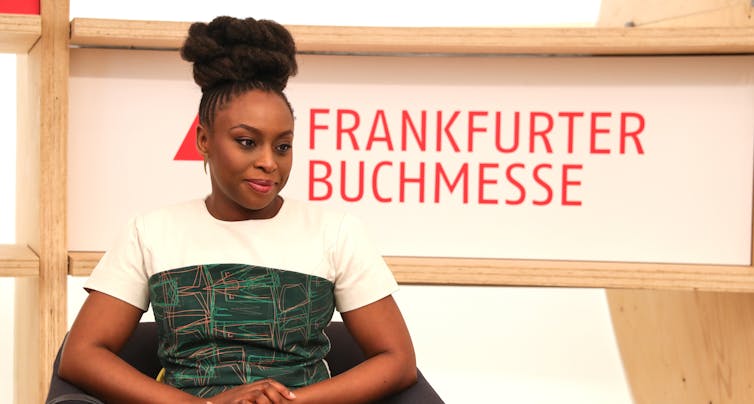
Best-selling Nigerian novelist and literary superstar Chimamanda Ngozi Adichie.
Armando Babani/EPA-EFE

Doseline Kiguru, Rhodes University

Literary prizes do more than offer recognition and cash to writers and help readers decide what book to choose. They shape the literary canon, a country’s body of highly regarded writing. They help shape what the future classics might be.

But what if Africa’s biggest prizes are awarded by foreign territories; former colonial masters? Or what if African-born writers in the diaspora are routinely chosen as winners over writers living and working in Africa?

Debates have been raging over these issues in recent years, especially relating to the lucrative Caine Prize for African Writing.

The words ‘award’ or ‘prize’ imply that there was a selection process and the best emerged as winner. The awarding of value to a text through the literary prize industry involves selection and exclusion in which some texts and authors are foregrounded, becoming the canon.

The scholar John Guillory argues, in addition, for the need to

reconstruct a historical picture of how literary works are produced, disseminated, reproduced, reread, and retaught over successive generations and eras.

The issues are complex and the landscape is changing. My research covers how prizes create taste and canon – but also the increasing role played by literary organisations to shape those prizes and hence the canon.

Writers’ organisations mainly provide a social space for writers. There are dozens across the continent. Sometimes they include a publishing avenue, workshops, fellowships and competitions. In general, they have aimed to fill gaps left by mainstream literary bodies such as publishers, universities and schools, and book marketers.

To understand the process of creative writing on the African continent it’s useful to focus on the interrelationship between prize bodies and writers’ organisations in contemporary literary production.

The Caine, the Commonwealth and writers’ organisations

The Caine Prize for African Writing and the Commonwealth Short Story Prize are two major awards for contemporary Africa that have been cited as significant in promoting up-and-coming writers to become global writers. Both trade in the short story.

The Commonwealth, an initiative of the Commonwealth’s agency for civil society, awards unpublished fiction. The Caine, a charity set up in the name of the late literary organiser Sir Michael Caine, only accepts already published work. The cash reward that comes with winning these prizes is a major factor in their popularity on the continent.

But they are also significant in the growth of the short story genre. This is why I am interested in the partnerships that have emerged between prize bodies and writers’ organisations. Together they are influencing literary production structures from creative writing training to publishing and marketing texts.

Both the Caine and the Commonwealth prizes have partnered with African based writing organisations – like Uganda’s FEMRITE and Kenya’s Kwani? – to organise joint creative writing workshops.

The Caine holds annual workshops for its longlisted writers. These mostly take place in Africa, working with local writers’ organisations. Sometimes the resulting writing is entered into competitions and in this way, the prize body both produces and awards literary value.

Many of these writers’ organisations are headed by people who were canonised through the international prize, and sometimes the writing trainers and competition judges are also previous winners.

With such links it then becomes important to analyse the literary texts produced within these networks with the awareness of the importance of a text’s social, cultural and political context. The literary product becomes a reflection of the different systems of power at play.

Power at play

A good illustration of this power play can be found in best-selling Nigerian novelist Chimamanda Ngozi Adichie’s short story Jumping Monkey Hill. It tells of a fictional creative writing programme for African writers run by the British Council. The story, set in South Africa, narrates the experiences of the writers, who are all expected to write about African realities in order to have their stories published internationally. The writers come to the workshop ready to learn how to improve their skills but encounter setbacks mainly because the trainer has a preconceived idea of what ‘plausible’ African stories should be. These writers have to understand the power play in place and then make a choice.

Jumping Monkey Hill acknowledges the role played by the creative writing institution in the production of literature as a commodity that must fit market demands. For this reason, the increasing investment of African based writers’ organisations in the literary production scene can also be understood as a political move. It is also an effort to influence the literature coming out of the continent and shape the canon.

An advert for a workshop run by writers’ organisation Short Story Day Africa.
SSDA

Why writers’ organisations matter

Contemporary African writers’ organisations are deliberately involved in canon formation by taking an active role in the production and distribution of literature. They understand that the uneven distribution of economic and cultural capital results in misrepresentations, or lack of representation, within the canon.

Writers’ organisations such as FEMRITE, Kwani?, Farafina, Writivism, Storymoja and Short Story Day Africa, among others, are active in the literary industry through publishing, creative writing programmes and providing access to major award organisations and international publishers.

They are, in the process, contributing to canon formation.

Short Story Day Africa, for instance, pegs its yearly competitions on the promise that the winning stories will be automatically submitted for the Caine Prize. In fact, the 2014 Caine winning story and one other shortlisted story were initially published in its anthology Feast, Famine and Potluck (2013).

In the African academy, creative writing is usually offered as a single course within a larger programme or is available only at selected universities. This has resulted in a market gap that has been quickly filled by writers’ organisations. They fill this gap by offering short term courses on various aspects of creative writing. This is in part because the local literary organisation possesses the cultural capital necessary to link writers to prize organisations and publishers, and therefore to global visibility.The Conversation

Doseline Kiguru, Postdoctoral research fellow, Rhodes University

This article is republished from The Conversation under a Creative Commons license. Read the original article.
Unknown's avatar

Like ‘Little Women,’ books by Zitkála-Šá and Taha Hussein are classics


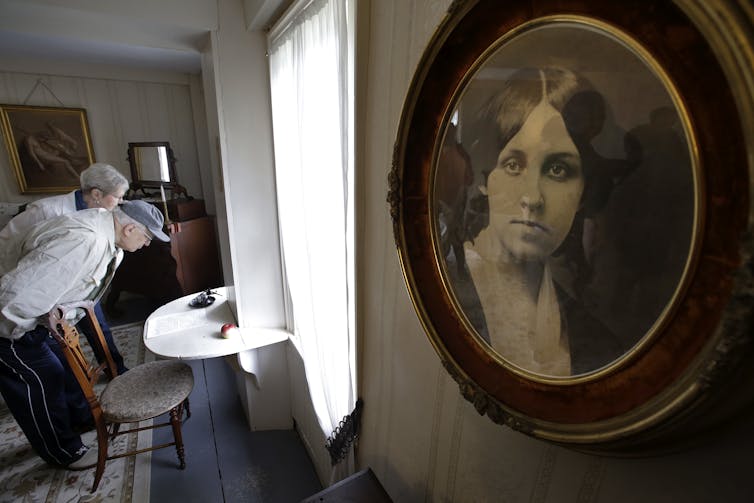
Louisa May Alcott has delighted readers for generations.
AP Photo/Steven Senne

Sheila Cordner, Boston University

I’m a scholar of literature who spends a lot of time thinking about why certain stories continue to be revisited, and what works can be considered classics today.

So I’m looking forward to seeing Greta Gerwig’s film version of “Little Women,” even though I’ve seen similar movies before. Gerwig’s film is the eighth film adaptation of the Louisa May Alcott novel that lets readers escape into the 19th-century New England world of witty Jo March and her three sisters. It will arrive in theaters on Christmas Day.

But I believe in a broader notion of what counts as a classic than books which are most widely recognized. That is why I’ve written a children’s book that introduces kids to an array of famous authors including ones you may not have heard of.

Greta Gerwig’s ‘Little Women’ is the eighth movie based on the classic novel.
AP Photo/Steven Senne

From one generation to the next

Gerwig, an actress and filmmaker, has talked about how the issues facing the women in Alcott’s novel feel modern and urgent to her. Her passion for the story told in “Little Women” gets at the heart of what makes something a classic: a tale generations of readers can relate to.

Other examples include Lewis Carroll’s story about an imaginative young girl who learns to find her own way in “Alice in Wonderland” or Charles Dickens’ tale of financial hardship, family and personal redemption in “A Christmas Carol.”

These books are beautifully written, of course. But the reason they are told and retold in countless adaptations is because they express themes that people relate to.

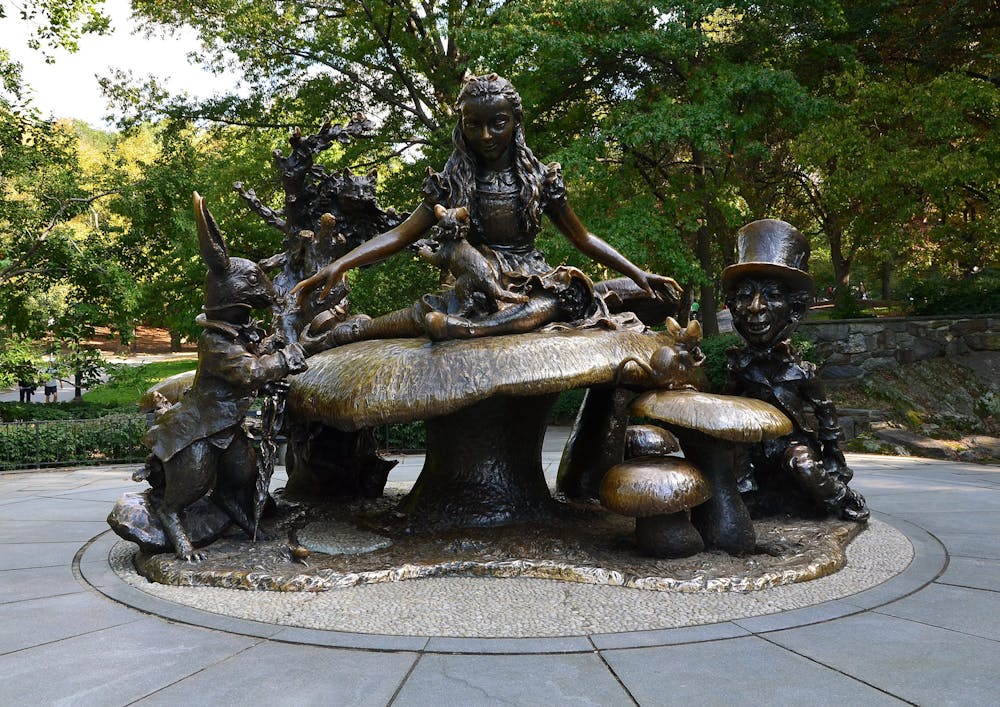
This Alice in Wonderland statue is in New York City’s Central Park.
Gzzz, CC BY-SA

An expanding range

In my view, what counts as a classic today must come from an ever-expanding range of authors.

This is especially important for children. Parents, teachers and librarians are demanding more representation in the books that children read because reading more diverse books can benefit readers from all backgrounds.

Diverse books can help all readers develop empathy for other people’s experiences. And opening the gateway to a broader spectrum of books can lead to reading experiences that are rich, stimulating – and just plain fun.

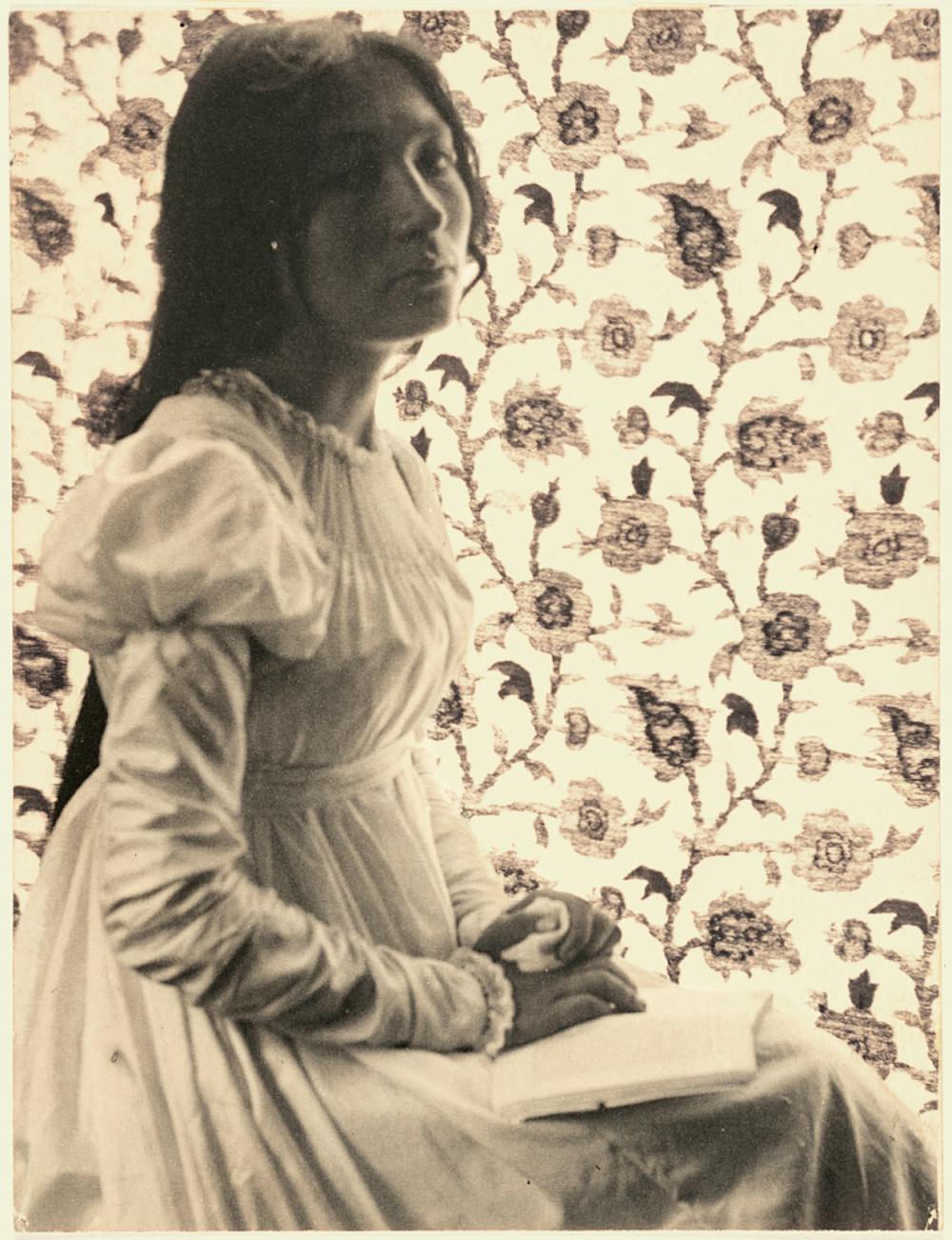
The author, musician, composer and reformer Zitkála-Šá.
Gertrude Kasebier/Smithsonian

By all means, go ahead and read – or re-read – Alcott’s “Little Women” and similar classics.

In addition, kids and readers of all ages should also become familiar with works by authors like Sui Sin Far, who wrote about the lives of Chinese immigrants in the United States, and María Amparo Ruiz de Burton, one of the first Mexican-American novelists.

They should also, pick up a volume of poems by African-American poet Langston Hughes and sway to the blues in his haunting lines. Read the accomplished Native American musician and writer Zitkála-Šá’s raw account of a young girl who leaves her Indian reservation to start a new school and is nervous about making friends. Learn about the dreams of the young Egyptian writer Taha Hussein, who was nominated 14 times for the Nobel Prize in Literature.

[Deep knowledge, daily. Sign up for The Conversation’s newsletter.]The Conversation

Sheila Cordner, Senior Lecturer of Humanities, Boston University

This article is republished from The Conversation under a Creative Commons license. Read the original article.
Unknown's avatar

Books for Christmas – from ancient Rome to Iceland’s jólabókaflóð


A long history of gifting of printed books at Christmas remains strong despite increases in e-book sales.
B Bernard/Shutterstock

Leah Henrickson, Loughborough University

Christmas is coming, and gifting is at the forefront of many minds. The latest tech changes from year to year, as do the latest fashions. But the gift that never seems to go out of style? A book.

The publishing world is at its busiest in the months leading up to Christmas. In Iceland, there is even a name for this: jólabókaflóð (pronounced yo-la-bok-a-flot) or “Christmas book flood”. The term has also come to refer to the Icelandic custom of exchanging books on Christmas Eve. As a result, a substantial portion of annual hardcover sales are during this period and nearly 850 new titles were released in 2019’s Icelandic book flood alone.

The UK’s annual Christmas book flood begins on Super Thursday: when publishers release a barrage of new titles just in time for the Christmas shopping rush. Some of the heavy hitters among the 426 hardcovers released on October 3 included Philip Pullman’s The Secret Commonwealth, Jojo Moye’s The Giver of Stars, and MP Jess Phillips’ Truth to Power.

A long history of books as Christmas gifts

People were giving books as gifts even before words were ever put to paper. In one of his books of epigrams, the ancient Roman poet Martial recommended the works of famous Roman writers like “Ovid’s Metamorphoses on parchment” (animal skin) and “Livy (the Roman historian) in a single volume” (appearing in a scroll, on papyrus, or on parchment) as presents for the December festival of Saturnalia. Martial’s recommendations also included book-related items like “a book-case” and “a wooden book-covering”.

As Christmas grew more commercialised, the holiday became increasingly important for the book trade. In his Battle for Christmas, American history professor, Stephen Nissenbaum, argued that books were “on the cutting edge of a commercial Christmas, making up more than half of the earliest items advertised as Christmas gifts”, citing examples from the 18th century. By the Victorian era, periodicals were regularly featuring Christmas book reviews to promote book sales during the holidays.

One such article from a 1914 issue of the New York Times begins with the declaration that “the war is not the greatest thing in the world. It cannot destroy Christmas … The publishers are ready to help”. This article touts various “gift books” suitable for Christmas exchanges: “Sumptuous books, books in the making of which illustrator and printer and binder have exercise their art at its best.”

These 20th-century gift books follow from a tradition of sumptuous books given as holiday gifts. Medieval manuscripts, for example, were gifted for a range of religious, romantic, diplomatic, and festive reasons. A 2015 exhibition about medieval gift gifting at the Getty Museum in Los Angeles, now archived online, further supports the understanding of manuscripts as gifts with personal and social value.

Books in today’s world

Writing about medieval manuscripts, Geert Claassens noted that a book – whether a medieval manuscript or a modern mass market paperback – always functions as both an object and a text. This observation is especially relevant in a world with e-books, which largely remove the “object” aspect of the book. However, a recent series of focus groups conducted by Laura Dietz at Anglia Ruskin University as part of a wider study about social perceptions of e-books has indicated that readers still prefer gifting and receiving print books over e-books. Maybe this is because it’s remarkably difficult to wrap an e-book and place it underneath the Christmas tree.

In a recent article for the international READ-IT project (Reading Europe Advanced Data Investigation Tool), media professor, Brigitte Ouvry-Vial, describes reading as “a social imaginary” that contributes to both personal and collective development. That is, reading has perceived benefits for both individuals and communities. However, she wrote:

The very motivation for non-prescribed reading has clearly shifted across time from an essentially knowledge-driven cognitive activity, to a broad information-driven cultural experience as well as a leisure activity.

This shift has also led to an association being made between being well-read or reading a lot with well-being, as books are more regularly valued according to the level of psychological uplift and self-healing they provide.

Books represent more than just knowledge; they’ve also taken on the role of highly personalised home decor. This is because books can say things about their owners. Likewise, the book you choose to give someone for Christmas can speak volumes about your relationship with that person. It’s not enough to just give someone a book and call it a day – it has to be the perfect choice.

Keeping the tradition alive

Books have a long history of being given as Christmas gifts, and there seems little chance of the trend going away. So why not take Martial’s recommendations and bestow upon your loved one “Ovid’s Metamorphoses on parchment”? Alternatively, and more realistically, consider a nice hardcover edition found through consulting members of the Antiquarian Booksellers’ Association or the Provincial Booksellers Fairs Association.

For more modern options, YouTube is teeming with video reviews of the latest releases, as well as of “bookish” gifts to give in lieu of or alongside a book. There are also a variety of monthly book subscription boxes. By giving a book or book-related item in 2019, you’ll be contributing to a long and lovely tradition.The Conversation

Leah Henrickson, Doctoral Graduate, Loughborough University

This article is republished from The Conversation under a Creative Commons license. Read the original article.
Unknown's avatar

State Library Victoria proves libraries aren’t just about books: they’re about community


Not the hushed or book-filled library experience you might expect.
Patrick Rodriguez/SLV

Sarah Backhouse, University of Melbourne and Clare Newton, University of Melbourne

Public libraries embody the values of democracy by offering free access to knowledge. But the role of contemporary public libraries extends far beyond access to books.

Libraries are places for learning and discovery, forums for debate, galleries for exhibitions and events, and spaces for work and pleasure. As cultural centres and community hubs, libraries bring people together.

With the rise of digital information early this century, the death of the library was predicted. Yet far from causing the demise of libraries, the digital revolution has led to libraries being reinvented and reinvigorated.

Library staff are experts in knowledge systems and adept at seizing the possibilities presented by these changes. This ability to innovate ensures public libraries remain relevant and vital.


Read more:
How public libraries can help prepare us for the future


Such innovation is evident throughout Melbourne’s State Library Victoria which reopened this week to reveal the final phase of its Vision 2020 transformation. The transformation of Australia’s oldest – and now newest – library is cultural, social, economic and architectural.

State Library Victoria already holds a prominent place in Melbourne’s cultural and urban fabric. It is now ready for the future.

Less is more

Good civic architecture embodies the needs of the community it serves, amplifying and adapting to the activities and lived experiences in it.

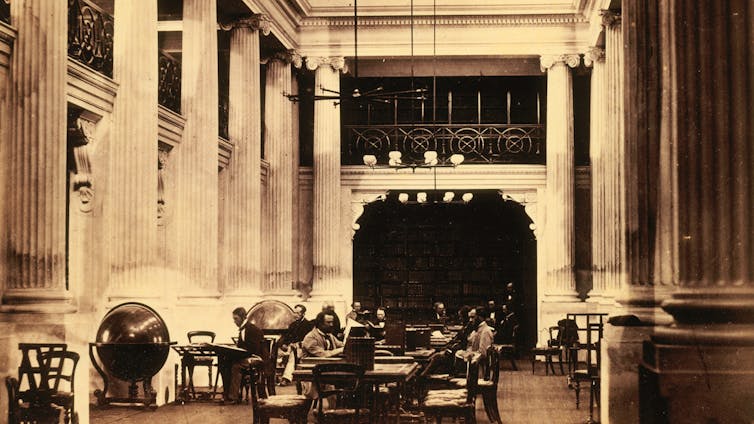
Australia’s first free public library when it opened in 1856, State Library Victoria offered everyone access to knowledge for self-advancement.

The State Library Victoria, Australia’s first free public library, photographed in 1859.
SLV

Today, the revitalised heritage reading rooms remain majestic symbols with their large lofty ceiling and voluminous spaces with natural light
. People may wish to linger in these hushed traditional spaces and return.

This major redevelopment was entrusted to Australian design studio Architectus in partnership with Danish firm Schmidt Hammer Lassen Architects. Their work demonstrates great restraint and respect for the original building, coupled with the creation of new spaces, connections and opportunities relevant to libraries of now and the future with a thoughtful approach of less is more.

Fine design details skilfully juxtapose the old and the new. New stone covers the historic and slippery marble stairs that head up from the Swanston Street foyer, the original treads visible at each edge. Long admired murals above the stairs are conserved.

The old, slippery staircase is re-covered – but the original edges peek through.
Patrick Rodriguez/SLV

Entering from Swanston Street, The Quad is the contemporary centerpiece, beyond the foyer of the library. It provides a welcome zone that invites people of all ages, interests and backgrounds to enjoy the wonder of learning. This invitation can be simple: a place to charge your phone, to talk with friends, to escape the weather. Simple activities that make you stop and pause, and want to venture further and find out more.

Ideas Quarter offers shared work space for budding entrepreneurs. Conversation Quarter is a tech-rich destination for sharing, connecting and broadcasting ideas. Create Quarter includes recording, mixing and editing facilities. Children’s Quarter is a playful multi-level realm for family exploration with age-specific areas and programs.

Entering through The Quad, visitors enter a space of conversation and collaboration.
Patrick Rodriguez/SLV

In this sequence of spaces, knowledge is everywhere, yet books are few.

The Quad is not the hushed or book-filled library experience you might expect. But those calmer spaces are still there, undisturbed by all this new activity thanks to careful acoustic design: a balance between the traditional and the new.

In the beautiful Ian Potter Queen’s Hall, the visitor catches glimpses of decorative paintwork in the Classical Greek style, discovered under layers of paint during the restoration.

Curiosity thrives in libraries, and the curious will uncover more.

The curious will find many secrets uncovered by the restoration.
Trevor Mein/SLV

Libraries are for people

In an increasingly digital age, what can public libraries offer that our smartphones and computers cannot?

They offer community.

Many Victorian voices informed the Vision 2020 project: community groups, library users, local residents, business, school students, parents. These voices inspired the enriched diversity of services and experiences. The Library Board, state government, benefactors, and community fundraising made the vision possible.

The process was democracy in action.


Read more:
Friday essay: the library – humanist ideal, social glue and now, tourism hotspot


Public, school and university libraries have all evolved to embrace a broader understanding of lifelong learning including and beyond what can be learnt from books. Libraries bring people together.

Libraries today are about learning and connection, both with and without books.
Trevor Mein/SLV

These institutions contribute to social capital by fostering new relationships, sustaining and advancing informed communities and offering equity to close the digital divide.

New library spaces can elevate the human experience, and State Library Victoria proves public libraries have an exciting future.The Conversation

Sarah Backhouse, Research Fellow, Learning Environments Applied Research Network (LEaRN), University of Melbourne and Clare Newton, Associate Professor in Learning Environments, University of Melbourne

This article is republished from The Conversation under a Creative Commons license. Read the original article.

Unknown's avatar

All hail apostrophes – the heavy lifters who ‘point a sentence in the right direction’


Doing away with the apostrophe is not just the beginning of the end … it’s the end.
www.shutterstock.com

Roslyn Petelin, The University of Queensland

Reports this week about the demise of the Apostrophe Protection Society may have been greatly exaggerated.

The Apostrophe Protection Society was set up in 2001 in the UK by retired journalist John Richards with the aim of “preserving the correct use of this currently much abused punctuation mark in all forms of text written in the English Language”.

When I read that Richards had capitulated to the “ignorance and laziness” of those who wrongly used apostrophes, I toyed with the idea of resurrecting the society in Australia.

There may be no need. A six-fold increase in traffic to the website after the story broke caused the society’s webmaster to close the site down. He has promised to return the archive in the new year. Its survival is important. The apostrophe isn’t all that tricky to get your head around – and doing away with it won’t make language simpler.

Though many get it wrong, others’ contractions are so right.
Patrick Tomasso/Unsplash, CC BY

Its – not it’s – big impact

British newspaper writer Harry Mount once wrote: “missing apostrophes is just ignorant and lazy”. He praised “the device that does so much with so little ink to point a sentence in the right direction”.

Richards’s desire to expel the intrusive greengrocer’s apostrophe (all those mango’s and tomato’s on special discount) mirrors that of Keith Waterhouse, the English columnist renowned as the author of classic comedy novel Billy Liar (1959) and Jeffrey Bernard is Unwell – a 1989 play about the musings of a London journalist and alcoholic who is locked overnight in The Coach & Horses Soho pub.

Waterhouse was the self-appointed life president of the (fictional) Association for the Annihilation (also Abolition) of the Aberrant Apostrophe and claimed to have an apostrophe incinerator in his back garden for superfluous apostrophes. His attendant goal was to redistribute ill-placed apostrophes to their rightful location.

Closer to home, the ABC’s Tiger Webb has previously dismissed the apostrophe. And
I have responded with an argument for its preservation (with many fine examples).

We need apostrophes in the right places in examples such as this: “She’d wed him in a shed if we’d agree to it” when letters are left out. And for possession: the “ant’s pants” or the “ants’ pants” and likewise the “bee’s knees” or the “bees’ knees”.

Writers’ rules for writers

Driving along William Street in the Brisbane CBD in 1990, I was horrified to notice painters putting the finishing touches to the signage for the about-to-be-opened Queensland Writers’ Centre. It was without an apostrophe. A phone call to the committee soon corrected that oversight and the apostrophe was used for a while, though the battle was lost in later years.

It’s now known as the Queensland Writers Centre and it hosts the Brisbane Writers Festival each year.

The writers’ festivals held in Byron Bay, Canberra, Melbourne, Hobart, and Wollongong are also sans apostrophe. Their respective management committees must have reached an agreement that the word “writers” is used in a descriptive or affiliative sense rather than as a possessive adjective. Thank goodness the committees of the writers’ festivals held in Sydney, Adelaide, the Northern Territory, and the Outback held out.

Possession in place names has caused controversy in the UK and here.

The UK’s National Land and Property Gazetteer, which registers street names, doesn’t require apostrophes in new names, but the rule doesn’t apply to existing signs. Devon and Birmingham unilaterally disposed of the possessive in in all street and road signs in 2009, though the Devon council backtracked shortly after.

In the UK, many places have done away with apostrophes on signs.
Shutterstock

South Australia has removed all apostrophes in place names. The policy of the NSW Geographic Names Board is to have no apostrophe in place names with a final “s”.

The Australian government’s Style Manual for Authors, Editors and Printers lists guidelines for other states and the Northern Territory. It’s worth noting the last printed edition of this manual was produced in 2002. A new digital guide to government-endorsed grammar has been promised. At the time it was announced, the digital manual’s product manager imagined a time when:

Clear written communication would be valued and personal preference wouldn’t be an option because there’d be one credible ‘source of truth’ that stated the rules and provided the evidence for why.

Statements like this bode well for its future, though “rules” about language aren’t always black or white. The guide is now in its Beta version and set for release in 2020.

Don’t get it twisted

Within the ranks of those who do subscribe to the possessive apostrophe, I can count on Richard Nordquist for his authoritative guidance and The Chicago Manual of Style for support.

Perhaps the most contentious apostrophe point is how to make singular words ending in “s” possessive. Is it “Dickens’ novels” or “Dickens’s novels”?

The Chicago Manual of Style advocates the extra “s” alternative in all cases, as do I. Even in cases such as “Descartes’s dicta” and “Euripides’s tragedies”.

Only use the contraction ‘it’s’ if it can be replaced by ‘it is’ or ‘it has’.

It is heartening to read related news that, whether or not John Richards’s apostrophe work continues, he might consider a campaign to save the comma from a similar fate.

“The use of the comma is appalling,” he told the BBC. “When I read some newspaper websites they just don’t understand what it is used for.”

This man, a punctuation champion in his 90s, is indomitable.The Conversation

Roslyn Petelin, Course coordinator, The University of Queensland

This article is republished from The Conversation under a Creative Commons license. Read the original article.

Unknown's avatar

5 reasons I always get children picture books for Christmas


Children who love being read to are more likely to find learning to read easier.
from shutterstock.com

Kym Simoncini, University of Canberra

Christmas is just around the corner. If you’re wondering what to get your child, your friends’ children, your nieces, nephews or basically any very young person in your life –  I highly recommend picture books.

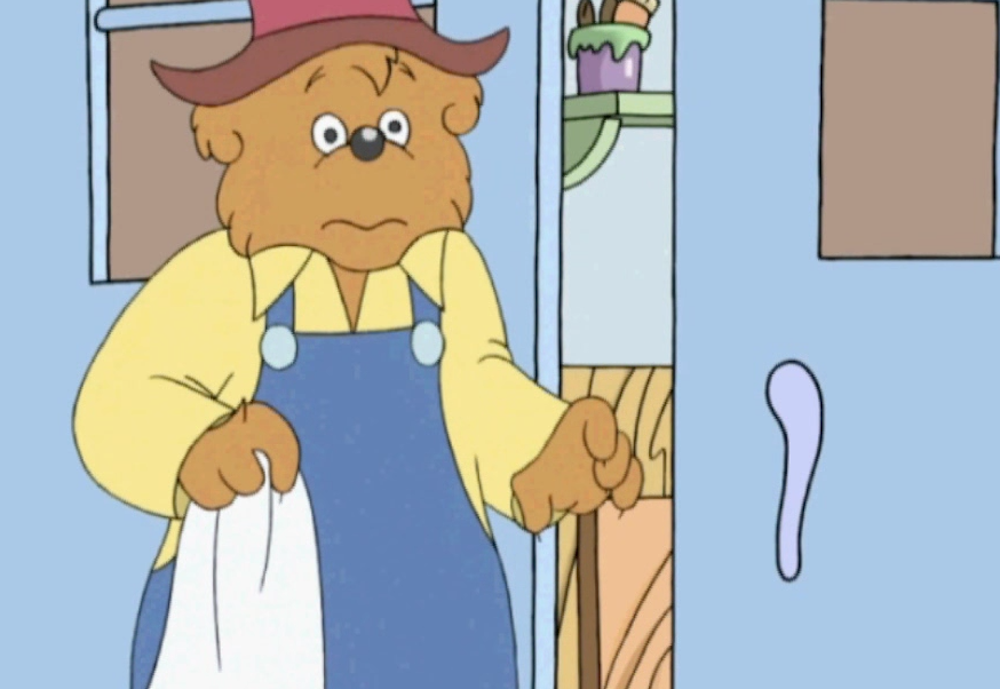
Many people can remember a favourite book when they were a kid. Some of my favourites were the Berenstain Bears with Papa Bear trying, unsuccessfully, to teach his children how to ride a bike or gather honey.

Sadly, a 2011 report from the UK showed the number of young people who say they own a book is decreasing. The report also showed a clear relationship between receiving books as presents and reading ability.

Children who said they had never been given a book as a present were more likely to be reading below the expected level for their age.

Most people can remember a favourite book when they were kids.
The Berenstain Bears/Screenshot

There are lots of benefits of reading aloud to young children, including developing children’s language and print awareness. These include knowing that the squiggles on the page represent words, and that the words tell a story.

Such knowledge gives children a head start when they go on to reading at school.

1. Reading to kids increases their vocabulary

Research shows books have a greater variety of words than conversations. But it also suggests the conversations had during reading matter most.

Adults should discuss ideas in books with children, as they occur, as opposed to just reading a book from start to finish. Talking about the pictures, or what has happened, can lead to rich conversations and enhance language development.

The more words you know, the simpler it is to recognise them and comprehend the meaning of the text. Children who read more become better readers and more successful students.

It’s important to have conversations with your kids about what you’re reading.
from shutterstock.com

2. Books can increase children’s maths and science skills

Picture books show children maths and science concepts through a story, which helps kids grasp them easier.

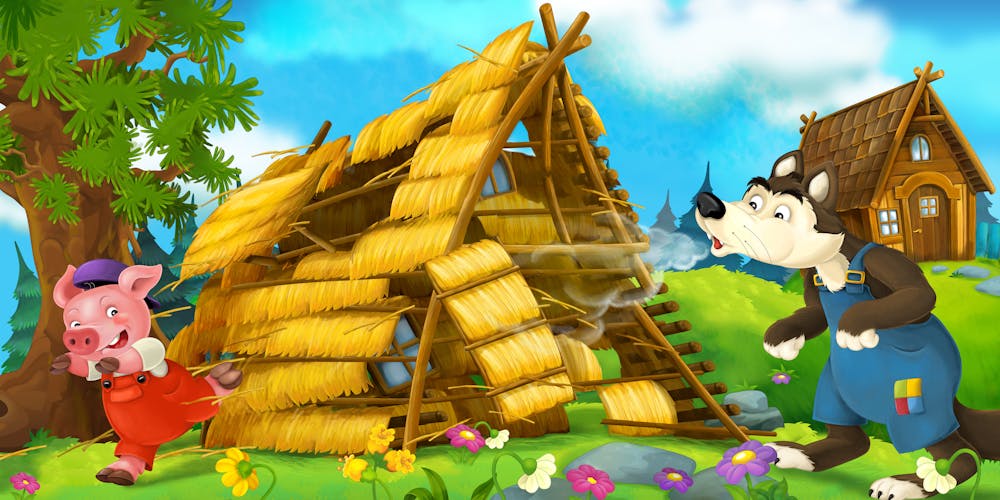
Some books (like How Many Legs and How Big is a Million) explicitly explore concepts such as numbers. Other stories, like the Three Little Pigs, have concepts embedded in them. Children can learn about the properties of materials when adults talk about the strength of hay, sticks and bricks.

A study in the Netherlands found kindergarten children who were read picture books, and were engaged in discussions of the maths concepts in the books, increased their maths performance, compared to a control group of children who weren’t read these books.

Three Little Pigs can teach children about the properties of hay, bricks and sticks.
from shutterstock.com

Early Learning STEM Australia has created a booklist which gives parents and teachers ideas for books that contain STEM (science, technology, engineering and maths) ideas. These include:

  • They All Saw a Cat, which shows the perspectives of different animals

  • Lucy in the City, where a cat loses her way home and an owl helps her

  • Dreaming Up, which contrasts children’s constructions with notable works of architecture.

3. Books are mirrors and windows

Nearly 30 years ago, children’s literature professor, Rudine Sims Bishop, wrote how books can be windows, through which we see other worlds. These windows can become sliding doors when we use our imaginations and become part of them.

Books can also be mirrors, when we see our own lives and experiences in them. In this way, they reaffirm our place in the world.

Books can help kids see into other worlds.
from shutterstock.com

Children need both types of books to understand people come from different cultures and have different ways of thinking and doing things. Books can show that children of all cultures are valued in society.

Children who never see themselves represented in books may feel marginalised. Unfortunately, the majority of books feature white children or animals, so many children only experience books as windows.

Examples of books that show the lives of Indigenous children include Big Rain Coming and Kick with My Left Foot (which is also a great book about left and right).

4. Books can counter stereotypes

Children learn gender stereotypes from a very young age. Research shows by the age of six, girls are already less likely than boys to think girls are “really, really smart” and they begin to avoid activities thought to be for “really, really smart” children.

Picture books can challenge these and other stereotypes. Reading books that portray atypical behaviours such as girls playing with trucks or with girls in traditional male roles such as being doctors, scientists or engineers, can change children’s beliefs and activities.

Iggy Peck, Architect; Rosie Revere, Engineer; and Ada Twist, Scientist are very popular. And Sofia Valdez, Future Prez has just been released.

Children who have more books at home end up more educated.
from shutterstock.com

The City of Monash in Melbourne has created a list of children’s picture books that promote gender equality and challenge gender stereotypes. This includes one of my favourite books, The Paperbag Princess, who saves herself from a dragon and decides not to marry the prince after he complains she is a mess.

5. Just having more books makes you more educated

A study that looked at data from 27 countries, including Australia, found children growing up in homes with many books got three years more education than children from bookless homes. This was independent of their parents’ education, occupation and class.

Adults need to model good reading habits and their enjoyment of reading. Giving children a love of reading can be the best present we ever give.The Conversation

Kym Simoncini, Associate professor Early Childhood and Primary Education, University of Canberra

This article is republished from The Conversation under a Creative Commons license. Read the original article.

Unknown's avatar

Cancel culture, cleanskin, hedonometer … I’m not sure I like any of Macquarie Dictionary’s words of the year


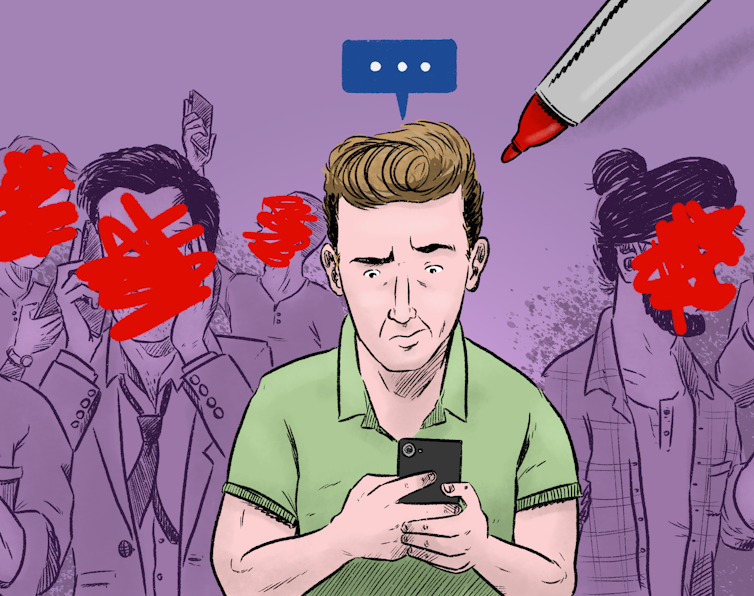
‘Cancel culture’ has been nominated Word of the Year by The Macquarie Dictionary, for reflecting the zeitgeist.
Wes Mountain/The Conversation, CC BY-ND

Roslyn Petelin, The University of Queensland

How many of these words, shortlisted by The Macquarie Dictionary in its search for the 2019 Word of the Year, have you used? Anecdata, big minutes, cancel culture, cheese slaw, cleanskin, drought lot, eco-anxiety, flight shaming, healthwashing, hedonometer, mukbang, ngangkari, robodebt, silkpunk, thicc, and whataboutism?

I confess the only one on this list (whittled down from 75 words), that has passed my lips has been “cleanskin”, but I wasn’t referring to someone with no tattoos – the new definition.

I may not have used these shortlisted words, but I have certainly experienced the effect of some of them and can appreciate the value of others. (“Whataboutism”, for instance, a technique used “in responding to an accusation, criticism or difficult question in which an opposing accusation or criticism is raised”, will come in very handy when describing many politicians. )

I doubt, though, whether I’ll be able to remember and use many of these words, colourful and tinged with negativity as many are.


Read more:
When we needed a new word, Twitter gave us ‘milkshake duck’


The Macquarie Dictionary committee has chosen “cancel culture” as its Word of the Year. The term is used to describe community attitudes that

…call for or bring about the withdrawal of support from [for] a public figure, such as cancellation of an acting role, a ban on playing an artist’s music, removal from social media, etc., usually in response to an accusation of a socially unacceptable action or comment by the figure.

Unfortunately, there have been any number of recent examples in Australia of ostracism through “cancel culture”, whose cases have progressed to the courts. I hesitate to mention Geoffrey Rush here.


Read more:
Tarantino has a questionable record in the #MeToo context, so should we boycott his new film?


‘The zeitgeist’

The committee chose “cancel culture” because it believes the term “captures an important aspect of the past year’s zeitgeist”.

In looking over the list, I’m not sure that I like any of these words. I think a couple of them are ridiculous, in particular “hedonometer”, an algorithm using language data from Twitter to analyse levels of happiness.

To qualify as Macquarie’s word of the year, a word must be newly added to the dictionary in that year or, as is the case with “cleanskin”, an old word with an additional new meaning.

Macquarie points out that it differs from other dictionaries, as some simply choose the most common word being searched, or most topical word, regardless of its status as “new”. The people at Cambridge Dictionary, which chose “upcycling” for 2019, relied on their Instagram account to make the call.

If the Macquarie committee had done this, its 2019 Word of the Year would have been “cheese slaw” (a salad of grated carrot, grated cheese, and mayonnaise), which it admits would have been a “niche and controversial” choice.

Macquarie has posted a photo on its website of a cheese slaw (stuffed into a sandwich), as well as an equally unappetising photo of a companion food word “mukbang”. A mukbang, by the way, describes a live online broadcast in which someone eats, often a large amount, while simultaneously speaking to their audience.

Criteria apart from “new” for Macquarie appear to be that a word is ubiquitous, timely, influential, and makes a valuable contribution to Australian English. So, does “cancel culture” qualify? Kind of.

Macquarie sorts the year’s new words into 15 categories, and one could spend an enjoyable time and several hours cruising through them: agriculture, arts, business, communications, eating and drinking, environment, fashion, health, politics, sport, and technology.

ngangkari and thicc

Two of the most interesting new additions – both runners-up as word of the year (along with eco-anxiety) – are “ngangkari”, adopted unaltered from Pitjantjatjara, for an Indigenous practitioner of bush medicine, and “thicc” from African American English, which “celebrates body positivity that does not conform to conventional white standards of beauty”.

The environment figures strongly in this year’s shortlist, in “eco-anxiety”, “flight shaming”, and “drought lot”. Still, the folk at Collins Dictionary named their Word of the Year for 2019 as “climate strike”. The Oxford Dictionary chose “climate emergency” as its Word of the Year.


Read more:
Why declaring a national climate emergency would neither be realistic or effective


Flight shaming is an anti-flying movement that originated in Sweden last year, which encourages people to stop taking flights to lower carbon emissions.
shutterstock

The Macquarie Committee has now opened the voting for People’s Choice Word of the Year 2019. Only once in the past five years has the committee’s and the people’s choice aligned. In 2015, “captain’s call” won both categories.

You may wonder why the competition is even called “word of the year” when it comprises two words, or even three. In 2016 the people’s choice was “halal snack pack”. As the website points out, it’s the lexical unit of meaning that the committee considers, what’s called the “headword” in a dictionary.

In the meantime, if you are interested in chasing up the Macquarie shortlist and maybe voting, you have until midnight on Sunday December 8 to do so.The Conversation

Roslyn Petelin, Course coordinator, The University of Queensland

This article is republished from The Conversation under a Creative Commons license. Read the original article.

Unknown's avatar

Humour, justice, belonging, danger, and wonder: 5 story senses and the art of writing for children


Want to capture the heart and mind of a young reader? The five story senses will set you on the right path.
iam Se7en/Unsplash, CC BY

Sean Williams, Flinders University

At the heart of every adult writer lies a novel they adored as a child. No wonder then so many try to write for kids themselves. So why do they often fail?

Perhaps it’s because, on the whole, adults are taught to write for adults, utilising the full power of the five regular senses – sight, sound, touch, taste, and smell – to evoke meaning in even the most trivial of everyday events.

This approach is less successful with younger readers, for one very simple reason: there are five other senses that speak more potently to them.

Consciously or unconsciously, successful writers use these other senses to hook young readers (and open their parents’ wallets) in ways that seem almost magical.

It’s not magical at all, though.

Here are the five story senses guaranteed to stir a child’s literary heart.

1. Humour

Everyone with kids in their lives knows the horror of a joke compendium: the same old gags we learned in childhood, repeated over and over, quickly lose appeal.

The only thing worse would be forcing kids to stop telling them.

Humour is the key to anyone’s heart.
Ben White/Unsplash, CC BY

It is easy to forget jokes are hilarious the first time around, and funny doesn’t mean trivial. Humourist Terry Pratchett understood a reader can learn just as much from a book that provokes a laugh as from one that doesn’t – and he was the bestselling UK author until J K Rowling came along.

Make a kid laugh and they’ll be a fan forever.

2. Justice

People develop a sense of fairness at a very early age, some studies suggesting it kicks in as early as 12 months. Who doesn’t love seeing justice done? For this reason, crime fiction is one of the biggest genres in the world – and kids are no different to adult readers.


Read more:
Young morals: can infants tell right from wrong?


Few people would seriously suggest a sense of justice should be drummed out of children, but it can definitely be quashed when parental authority is under assault. Kids therefore are constantly on the pointy end of injustice, or feel they are.

This is why Rowling takes Harry back to the despicable Dursleys at the end of every book. Exploiting the sense of justice ensures her readers never lose interest.

3. Belonging

The one genre bigger than crime is romance.

While not all kids will be into romantic love (The Princess Bride notwithstanding), they will have a keen sense of belonging. They have friends, family and pets in their lives, and stories engaging this sense helps them navigate these relationships, particularly when loss or denial is involved.

Mark Twain’s The Adventures of Tom Sawyer remains a classic because, beneath everything else, it is a story about a young boy finding his place in the world, and in people’s hearts.

4. Danger

The Adventures of Tom Sawyer also contains scenes of terrible peril, as does Doctor Who. Children love to be scared by fictional stories because in life, alas, many find themselves in very real peril. Fiction gives kids a safe way to activate their sense of danger, and maybe learn a life-saving strategy or two, as well.

Fiction is a safe way for children to explore danger.
Anuja Mary Tilj/Unsplash, CC BY

The sense of danger is so fundamental to our psyche that it might actually be hardwired into us: the Moro, or “startle”, reflex is innate in healthy newborns.

There are limits, of course, but no one ever ever lost a young audience by trying to push them. (Parents are a different matter.)

5. Wonder

Everyone will have some of these senses, but some people won’t have all of them. This sense, my personal favourite, is very hard to explain to someone who doesn’t possess it. It is the engine that drives fantasy and science fiction. When something makes a reader go “wow”, their sense of wonder has been engaged.

Kids understand this sense very well, because everything to them is big and new: just note how many synonyms they have for “awesome”. While it too may be drummed out of young people as they age, it can be revived under particular circumstances. Reading JRR Tolkien’s The Lord of the Rings has been one for many avid readers.

It is easy to forget The Hobbit predated this work, and, although no less awe-some, it was originally created for children.

These senses are just the start

Hefty doses of humour, justice, belonging, danger, and wonder will go some way towards compensating for deficiencies in other aspects of the writing craft. Children, and many adults, will often choose a good story badly written over a well-made dud.

This formula will also work for other media. Take Star Wars and Avengers movies, for example: both rich in the five story senses, and both part of the Disney stable, home to many other examples.

Any author wanting to pen a bestseller could do worse than start here. As always, though, there is no substitute for hard work – and luck.The Conversation

Sean Williams, Lecturer, Flinders University

This article is republished from The Conversation under a Creative Commons license. Read the original article.
Unknown's avatar

Friday essay: George Eliot 200 years on – a scandalous life, a brilliant mind and a huge literary legacy


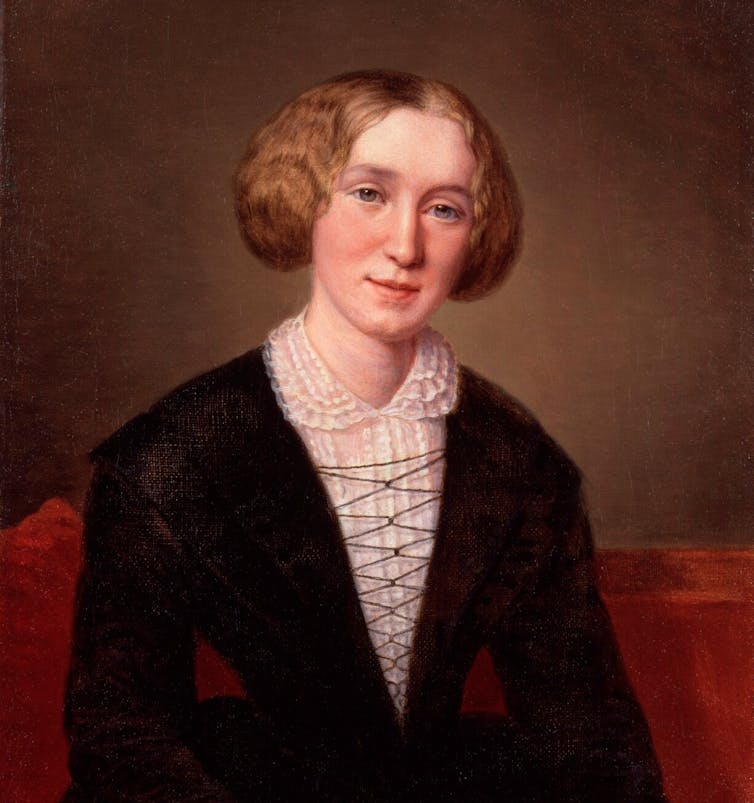
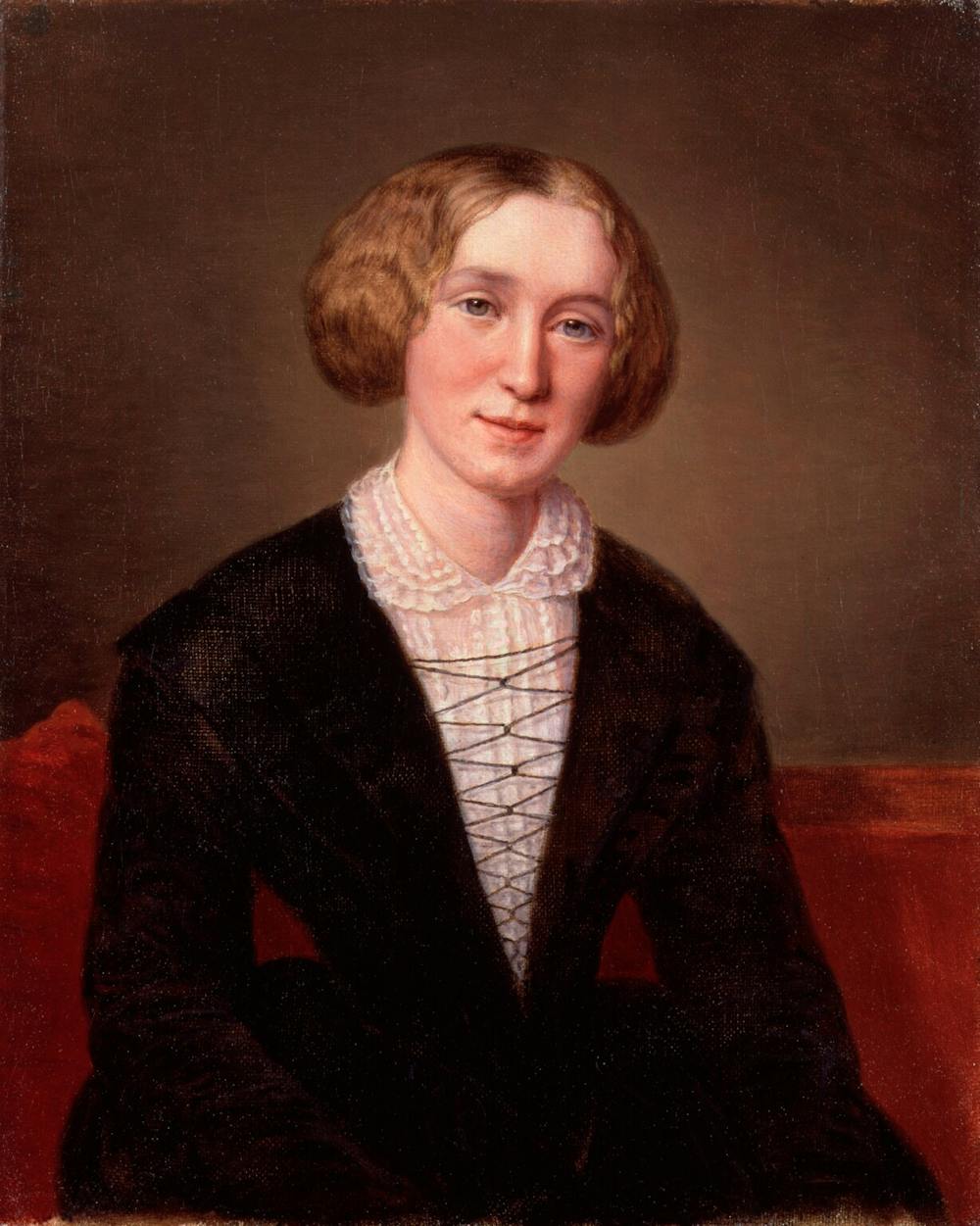
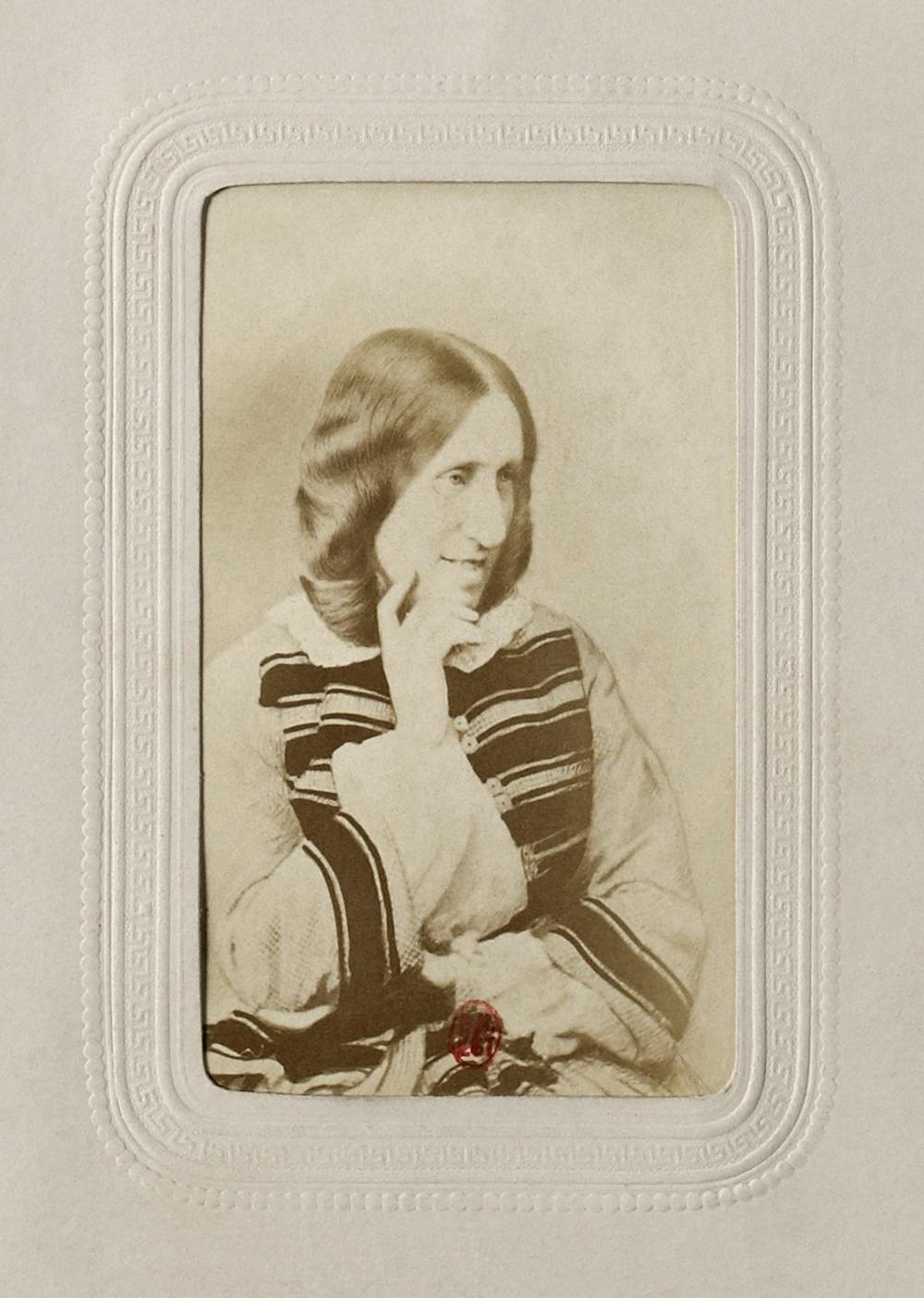
A portrait of George Eliot at 30 by Alexandre-Louis-François d’Albert-Durade. Her masterpiece Middlemarch is often claimed to be the greatest novel in the English language.
Wikimedia Commons

Camilla Nelson, University of Notre Dame Australia

Mary Ann Evans took the pseudonym “George Eliot” because she wanted to be taken seriously as a writer.

Other female authors had penned work under their own names, but Evans feared that if her identity was discovered her books would be dismissed as “light” and “sentimental”.

Astonishingly, in an age of patriarchy, this was not the case.

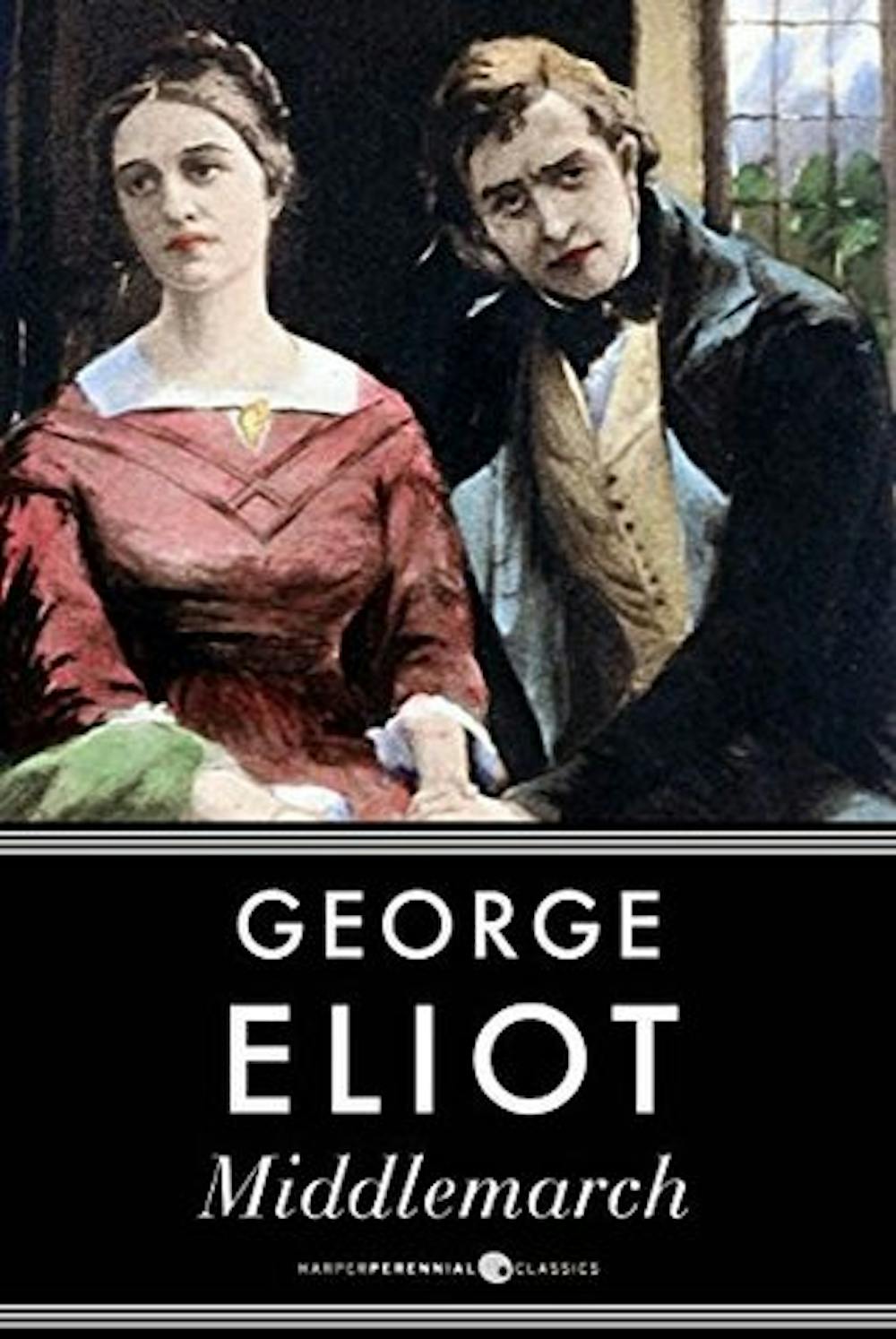
Eliot’s reputation has grown steadily in the 200 years since her birth. And her Middlemarch (1871-2) is often claimed to be the greatest novel in the English language.

Eliot’s “incognito” was shattered shortly after her first bestselling novel, Adam Bede, was published in 1859. Critics were left marvelling not only that the author they collectively imagined to be a kindly country clergyman was a woman, but also that she was an atheist living openly with another woman’s husband.

In an age in which few women were educated or owned property, and few middle class women engaged in paid employment, Eliot overcame every obstacle.

She lived a scandalous life by Victorian standards. But she was one of Queen Victoria’s favourite writers.

And in the thousands of words that were to spill across the pages of the literary quarterlies about Eliot’s books, there was far less interest in salacious gossip than in the question of whether she had drawn a picture of the world as it “really” was.

No matter how much these 19th century – mostly male – critics attacked Eliot’s novels for their political and cultural heresies, it was obvious – indeed, astonishing – that they took them seriously as fundamentally important works.

A ‘great, horse-faced bluestocking’

Born in Nuneaton, Warwickshire, England, on November 22, 1819, the third daughter of Robert and Christiana Evans, Eliot was afforded the sort of education not usually granted to women in this period. She was not considered physically attractive, and her father believed this would severely limit her prospects of marriage.

Eliot’s father believed her looks would limit her marriage prospects.
Wikimedia Commons

In 1850, Eliot – then calling herself Marian Evans – moved from Coventry to London, determined to become a writer.

Just a few years before, she had published her English translation of David Strauss’s The Life of Jesus, Critically Examined. Notoriously, Strauss argued that the “miracles” of the New Testament were myths and fabrications. The Earl of Shaftesbury promptly castigated Eliot’s translation as “the most pestilential book ever vomited out of the jaws of hell”.

Eliot took up residence in the house of the radical publisher John Chapman, who appointed her assistant editor of the Westminster Review. She was deeply influenced by John Stuart Mill, particularly his groundbreaking essay on gender equality, Subjection of Women.

She sympathised with the 1848 revolutions on the continent. She held great hopes for women’s education. She supported female suffrage.

At this time, Eliot formed a series of attachments to married men, including Chapman and Herbert Spencer, before meeting the critic George Henry Lewes, with whom she shared a committed, life-long relationship.

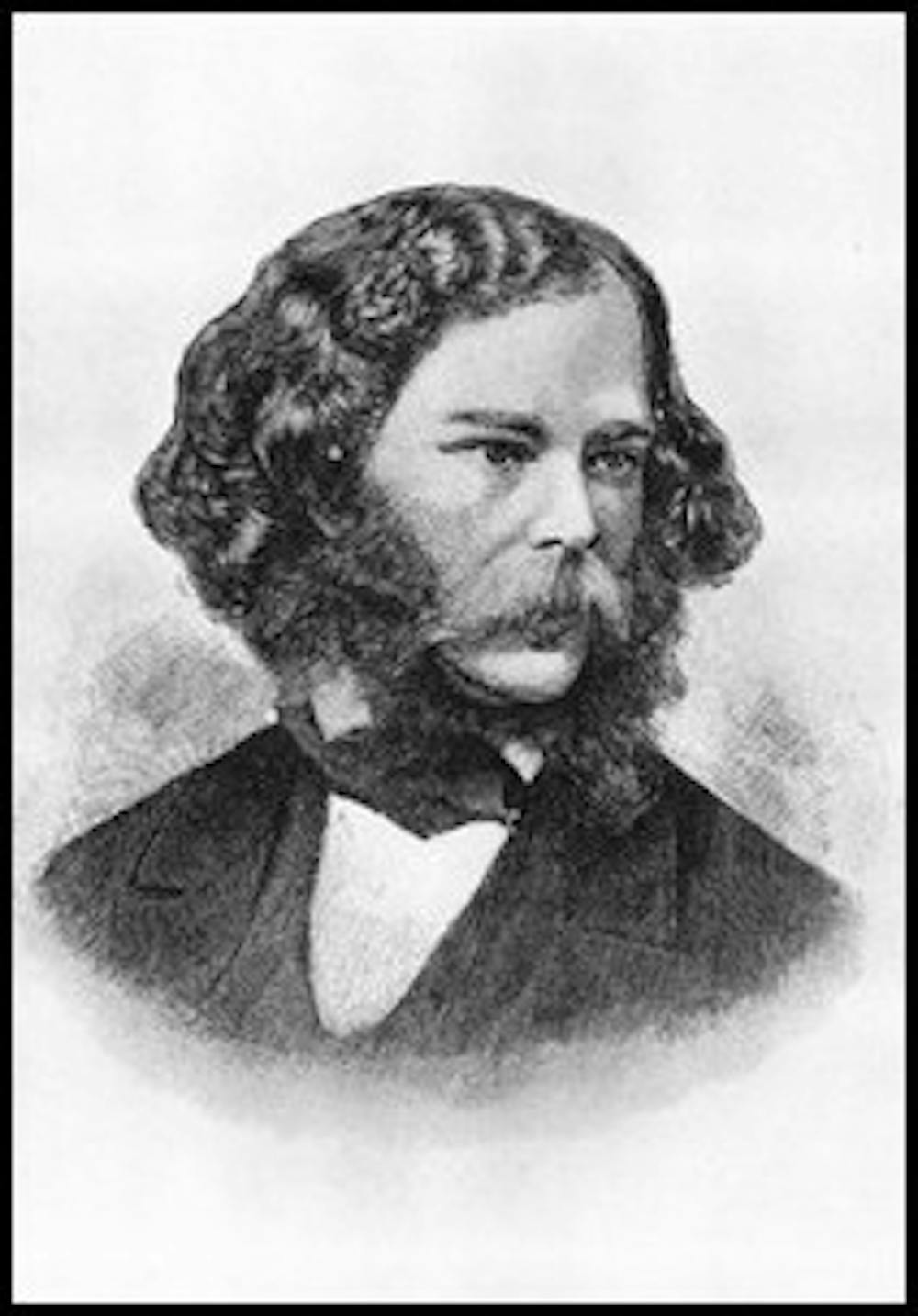
George Henry Lewes (1817-1878)
Wikimedia Commons

Lewes was married to Agnes Jervis, with whom he had three children. Unlike other unconventional literary liaisons of the period, Lewes and Eliot did not keep their relationship a secret.

Like so many other men, Lewes was drawn to the luminosity of Eliot’s intelligence. She had an awesome curiosity, an endless appetite for ideas.

Henry James famously characterised her as “magnificently ugly, deliciously hideous”.

And yet in his snarky, entitled way he also marvelled at his reaction to the force of Eliot’s personality. “Behold me, literally in love with this great horse-faced bluestocking!”

Her practical humanism

In 1854, Eliot translated Ludwig Feurerbach’s The Essence of Christianity, in which he declared God to be a figment of the human imagination. Instead, he wanted to think about what he called “species being” – that is, to consider what it means to think from the standpoint of being human, of being part of the wider social fabric.

Feurerbach’s ideas were fundamental in shaping the practical humanism that forms the beating heart of Eliot’s novels.

Eliot’s social consciousness, her vivid critiques of capitalism, are keenly displayed in her 1861 novel about a linen weaver, Silas Marner, and her 1876 masterpiece Daniel Deronda – a sprawling tale about a fatally self-absorbed heroine, Gwendolen Harleth, and the easy, ingrained prejudice of British society against the Jews.

Trailer for the television adaptation of Daniel Deronda.

But it is their capaciousness – perhaps – that is the real theme of Eliot’s books. Her novels are held together by elaborate patterns of imagery, threads of gossip, networks of feeling and connection, linking character to character.

Background scenes of the social world are interwoven with the deeper dimensions of private life and even the fabric of human consciousness, so the novelistic structure reflects the fragile, web-like ties that hold society together.

Her characters’ motivations may be ego-satisfying, self-deceiving, or concealed, even from themselves, or all of these at once. And the tangled paradoxes they encounter as they journey through their novelistic worlds force readers to reassess themselves and their perspectives.

Nobody, in short, does honesty or frailty quite like Eliot. If you read her work, and really pay attention, you will likely find out things about yourself you didn’t know, and maybe would rather not.

As Virginia Woolf famously declared of Middlemarch, it is “one of the few English novels written for grown up people”.

A photographic portrait (albumen print) of George Eliot circa 1865.
Wikimedia Commons

Middlemarch – the greatest novel in the English language

Middlemarch was published serially in eight parts at two monthly intervals from December 1871. It went on sale in December 1872 as four volumes for two guineas, selling 8,500 copies. But it was only when the cheap edition went on sale in 1874 that the novel found its real audience, selling another 31,000 copies by 1878.

The story – like those found in all Eliot’s novels – is multifaceted. It revolves mostly around Dorothea Brooke, an heiress who makes a terrible marriage to Edward Casaubon, a dusty clergyman, and the character of Tertius Lydgate, a London-trained doctor who wants to bring modern medicine to the Midlands, but chooses an unsuitable wife.

Trailer for the BBC adaptation of Middlemarch.

But the deeper theme of Middlemarch is the moral drama around the interaction between character and social environment that is fundamental to contemporary appreciations of 19th century realism – but was often merely puzzling to Victorian critics.

They loved the scale of the novel’s social panorama, “like a portrait gallery” that has been “photographed from the life”; they even came to see that it had, as the Times put it, a “philosophical power”. But they did not immediately grasp that it was Eliot’s most important book. They bemoaned it was not as “delightful” as Adam Bede, her earlier bucolic tale about – among other things – seduction, infanticide, class and education.

In Middlemarch, Dorothea has money; unlike in Austen, there is no threat of penury hanging over her head. Indeed, there is no need for her to marry at all. And yet she does.

She has freedom, up to a point. But her largeness of soul is circumscribed by narrowness of opportunity. Nor is provincial society entirely to blame. Dorothea yearns to do something; to achieve something; but she knows not what. This is her – and our own – tragedy.

When Dorothea, in all her married misery, is confronted by an extraordinary vision of a suffering human society, we encounter one of the most heartbreakingly beautiful passages in Eliot’s ouevre. She writes,

If we had a keen vision and feeling of all ordinary human life, it would be like hearing the grass grow and the squirrel’s heart beat, and we should die of that roar which lies on the other side of silence. As it is, the quickest of us walk about well wadded with stupidity.

This is the anguish that lurks in dark corners of Eliot’s novels – it is the measure of her greatness, and of our struggle to read her.

Dorothea’s quest for a substantial and meaningful life has resonated with the sensibilities of successive generations of feminists. How is she to achieve something? Where should she put her energies? How can she affect the lives of others?

We are all of us “Dorotheas”; all tragically yearning for something. As Virginia Woolf put it, Dorothea and the rest of Eliot’s heroines feel “a demand for something — they scarcely know what — for something that is perhaps incompatible with the facts of human existence.”The Conversation

Camilla Nelson, Associate Professor in Media, University of Notre Dame Australia

This article is republished from The Conversation under a Creative Commons license. Read the original article.

Unknown's avatar

Why do teachers make us read old stories?


Teachers often assign older books.
vovidzha/Shutterstock.com

Elisabeth Gruner, University of Richmond

Curious Kids is a series for children of all ages. If you have a question you’d like an expert to answer, send it to CuriousKidsUS@theconversation.com.


Why do teachers make us read old stories? Nathan, 12, Chicago, Illinois


There are probably as many reasons to read old stories as there are teachers.

Old stories are sometimes strange. They display beliefs, values and ways of life that the reader may not recognize.

As an English professor, I believe that there is value in reading stories from decades or even centuries ago.

Teachers have their students read old stories to connect with the past and to learn about the present. They also have their students read old stories because they build students’ brains, help them develop empathy and are true, strange, delightful or fun.

Connecting with the past and present

William Shakespeare wrote plays in the 1600s that are still read today.
Martin Droeshout/Yale University, CC BY

In Shakespeare’s “Romeo and Juliet,” for example, teenagers speak a language that’s almost completely unfamiliar to modern readers. They fight duels. They get married. So that might seem to be really different from today.

And yet, Romeo and Juliet fall in love and make their parents mad, very much like many teens today. Ultimately, they commit suicide, something that far too many teens do today. So Shakespeare’s play may be more relevant than it first seems.

Additionally, many modern stories are based on older stories. To name only one, Charlotte Brontë’s “Jane Eyre” has turned up in so many novels since its original publication in 1848 that there are entire articles and book chapters about its influence and importance.

For example, I found references to “Jane Eyre” lurking in “The Princess Diaries,” the “Twilight” series and a variety of other novels. So reading the old story can enrich the experience of the new.

Building brain and empathy

Reading specialist Maryanne Wolf writes about the “special vocabulary in books that doesn’t appear in spoken language” in “Proust and the Squid.” This vocabulary – often more complex in older books – is a big part of what helps build brains.

The sentence structure of older books can also make them difficult. Consider the opening of almost any fairy tale: “Once upon a time, in a very far-off country, there lived …”

None of us would actually speak like that, but older stories put the words in a different order, which makes the brain work harder. That kind of exercise builds brain capacity.

Stories also make us feel. Indeed, they teach us empathy. Readers get scared when they realize Harry Potter is in danger, excited when he learns to fly and happy, relieved or delighted when Harry and his friends defeat Voldemort.

Older stories, then, can provide a rich depth of feeling, by exposing readers to a broad range of experiences. Stories featuring characters from a diverse range of backgrounds or set in unfamiliar places can have a similar effect.

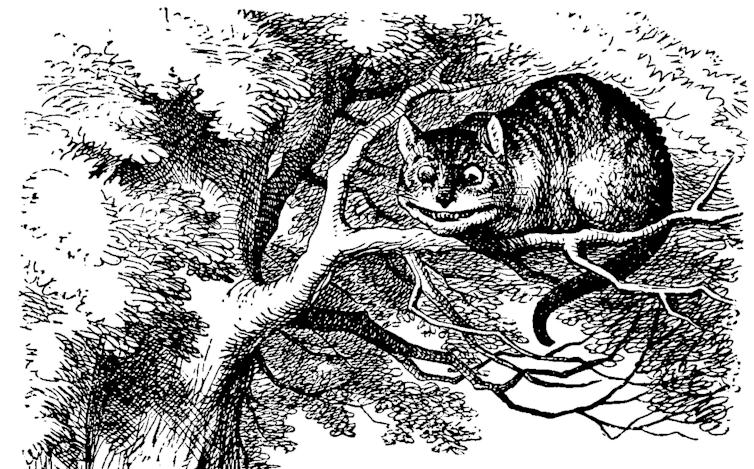
Lewis Carroll’s ‘Alice’s Adventures in Wonderland’ has been retold many times.
John Tenniel/Wikimedia Commons

Reading can be fun

Old stories are sometimes just so weird that you can’t help but enjoy them. Or I can’t, anyway.

In Charles Dickens’ “Great Expectations,” there’s a character whose last name is “Pumblechook.” Can you say it without smiling?

In Lewis Carroll’s “Alice’s Adventures in Wonderland,” a cat disappears bit by bit, eventually leaving only its smile hanging in the air. Again, new stories are also lots of fun, but the fun in the older stories may turn up in those new stories.

For example, that cat returns in many newer tales that aren’t even related to Alice in Wonderland, so knowing the cat’s history can make reading that new story more pleasurable.
I won’t deny that some old stories contain offensive language or reflect attitudes that we may not want to embrace. But even those stories can teach readers to think critically.

Not every old story is good, but when your teacher asks you to read one, consider the possibility that you might build your brain, grow your feelings or have some fun. It’s worth a try, at least.


Hello, curious kids! Do you have a question you’d like an expert to answer? Ask an adult to send your question to CuriousKidsUS@theconversation.com. Please tell us your name, age and the city where you live.

And since curiosity has no age limit – adults, let us know what you’re wondering, too. We won’t be able to answer every question, but we will do our best.

[ You’re smart and curious about the world. So are The Conversation’s authors and editors. You can read us daily by subscribing to our newsletter. ]The Conversation

Elisabeth Gruner, Associate Professor of English, University of Richmond

This article is republished from The Conversation under a Creative Commons license. Read the original article.