Unknown's avatar

Why the work of Abdulrazak Gurnah, the champion of heartbreak, stands out for me


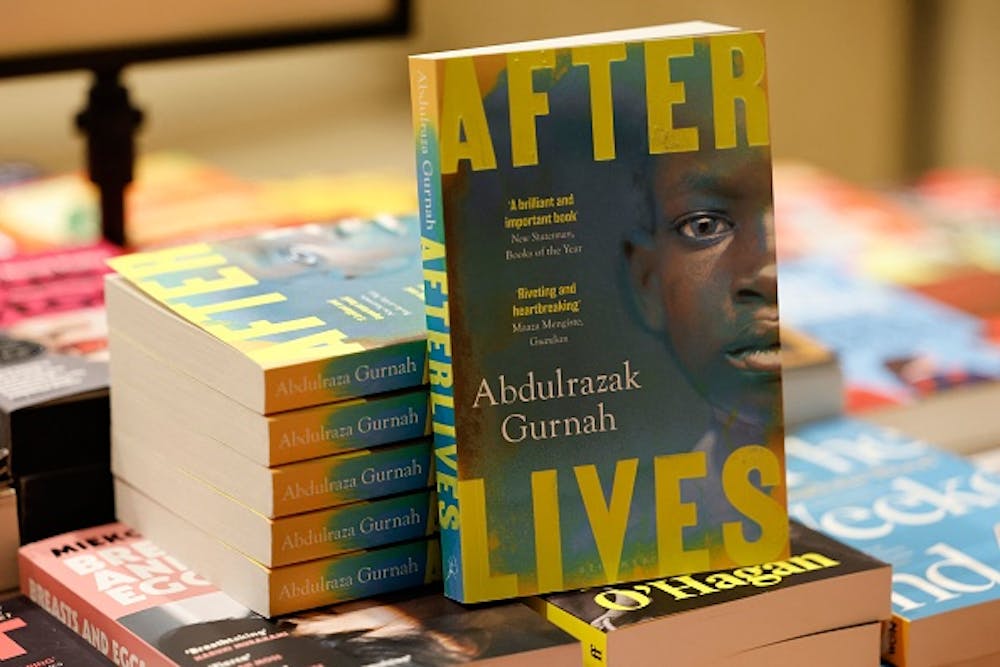
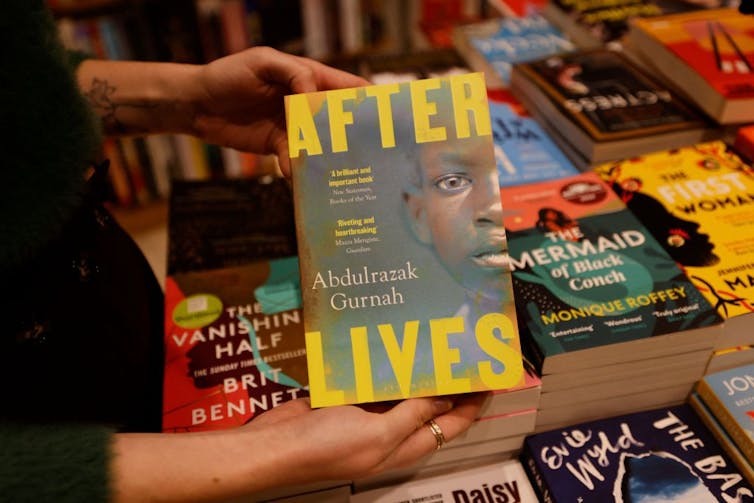
A copy of “Afterlives” (2021) by Tanzanian-born novelist Abdulrazak Gurnah.
Photo by Tolga Akmen/AFP via Getty Images

Fawzia Mustafa, Fordham UniversityAbdulrazak Gurnah, the Tanzanian winner of the 2021 Nobel Prize for Literature, has some well-deserved seniority within the ever growing ranks of East African writers. He published his first novel, Memories of Departure, in 1987, and nine more since then. Among those, Paradise (1994), was short-listed for both the Booker Prize and the Whitbread Award. Yet another, By the Sea (2001), was long-listed for the Booker Prize and short-listed for the LA Times Book award.

Born in Zanzibar in 1948, Gurnah is also an accomplished scholar of African literature. Until his retirement recently, he was a professor at the University of Canterbury, in the UK. One crucial aspect of his biography remains his forced migration from Zanzibar to the UK in 1968, amid the turmoil following the 1964 revolution on the island. The trauma of that experience has fed much of his literary imagination and provided a wellspring for his novels of displacement and loss.

The East African region is rich with writers going back to the first post-independence generation. A random sampling of the first Anglophone generation from the three East African nations includes Uganda’s Okot p’Bitek, who translated his own work into English. Grace Ogot and Ngugi wa Thiongo from Kenya and Peter Palangyo and Gabriel Ruhambika of Tanzania also make the list.

More recently, a new generation of writers has obviously emerged. Again, a random sampling include millennials such as the late Binyavanga Wainaina (Kenya), Moses Isegawa (Uganda), and the Ethiopian Dinaw Mengetsu in his Uganda-based novel, All Our Names (2014). Add to these Yvonne Adhiambo Owuor (Kenya) who, in The Dragonfly Sea (2019), has recently used the Indian Ocean region and the East African littoral setting revisted by Gurnah in many of his novels.

The generational and political transition necessarily reflects the different historical worlds within the region that are represented by East African writers. One writer who started out before Gurnah, for example, is Ngugi wa Thiongo, himself a perennial candidate for the Nobel.

In addition to Ngugi wa Thiongo, the Somali writer Nuruddin Farah has also been tipped frequently for the Nobel Prize. One may be justified to ask, why Gurnah over Ngugi or Farah? The Nobel Committee has often defied local knowledge, in the sense of choosing internationally recognised candidates rather than those more locally celebrated at home.

At the same time, writing “contests” don’t always measure literary talent helpfully. Recognition brings prestige, a larger readership, and more sales, but this impulsion remains part of the infrastructure of a non-local book industry that’s one of the pillars of old and new capitalisms, old and new colonialisms. Even in our digital age, who can afford books, or access, among the larger population? In many cases, only the elites.

Why Gurnah’s work is powerful

Nevertheless, I was very pleased to learn that Gurnah won this year. What stands out for me is Gurnah’s constant exploration of heartbreak. Certainly, he breaks mine. His novels delve deeply into family separation, endless betrayals of core familial relations, and the inexorable pull of the lost past. Each novel exposes another nuance, another hidden aspect, another self-inflicted betrayal.

The Last Gift (2011) harbours an extraordinary secret that is only disclosed at death. Desertion (2005) uses the trope of romance, over three generations, to show the inadequacy of love in the face of social change, be it political or cultural. Paradise (1994) possibly the best known of Gurnah’s novels, is also the first to evoke deep historical and cultural research. It brings home the multiple overlays of both Omani and European colonial power, control and oppression.

The other political landscapes of gender, sexuality, race and class are perhaps more finely tuned, and certainly more robust, in Gurnah’s work than, say, Ngugi and Farah. And this may also account for his good fortune, and within the world of world literature, this well-deserved prize.

For the last three-plus decades, along with M.G. Vassanji, Gurnah has been the Anglophone novelist mining the Tanzanian and Zanzibari – and by extension the Indian Ocean World literary landscape. This setting has underwritten Gurnah’s themes of (forced) migrations to the West, that which the Nobel Committee singled out in their announcement of Gurnah’s award.

At the same time, Gurnah is the one novelist who has always been able to also mine the local Kiswahili (including 19th-century coastal Arabic and Islamic) literary and historical traditions. These, along with colonial archives, both German and British, are incredibly rich but globally overlooked literary confluences.


Read more:
Nobel Prize winner Abdulrazak Gurnah: an introduction to the man and his writing


Interestingly, Gurnah’s more recent work – such as Afterlives (2021) – has sometimes embraced a more overtly historical dimension of the region. Set at the height of German conquest, until their defeat in the first world war, the novel follows three figures, each of whom resemble in one way or another the protagonist of Paradise. The panoramic historical sweep of the first half of the novel is an authoritative account of the complexities of German colonial power up against extraordinary local resistance. At the same time, it makes visible the alternative choices that German colonialism provided to those already disenfranchised within older colonial systems and local oppressive regimes such as those of gender.

So, while his earlier work obsessively revisits migration and loss, it is almost always buffered or intersected with pretence, outright falsehoods and strategic deceit among his cast of protagonists. These are among the survival strategies born of migration, displacement and alienation.

Gurnah’s use of a form of dramatic irony has been extraordinary. This applies both at the level of familial conflict and separation and at the level of large-scale, brutal colonial social transformations, foreign and home-grown. In other words, the same kinds of circumstances that characterise the Zanzibar of Gurnah’s youth.The Conversation

Fawzia Mustafa, Emerita Professor of English, Comparative Literature, African American and African Studies and Women’s, Gender and Sexuality Studies, Fordham University

This article is republished from The Conversation under a Creative Commons license. Read the original article.
Unknown's avatar

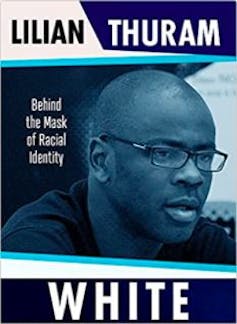
French football legend Lilian Thuram tackles the scourge of white thinking in new book


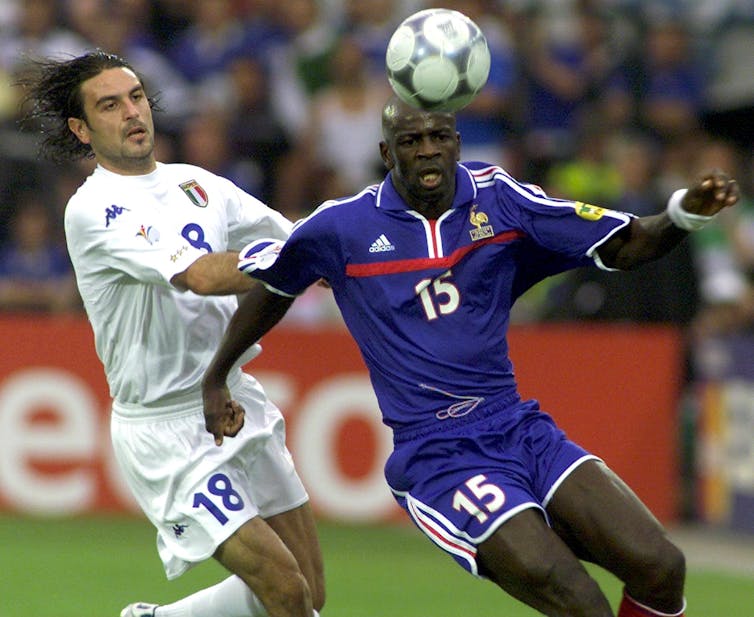
French Lilian Thuram slips away from Italian player Stefano Fiore during the France vs Italy Final of the Euro 2000 soccer championhips in Rotterdam.
EFE-EPA/Michele Limina

David Murphy, University of Strathclyde “People aren’t born white, they become white.” This realisation dawned on the former French footballer, World Cup winner and anti-racism activist Lilian Thuram while he was engaged in talks with the white French organisers of a proposed exhibition on racism. As he recounts in the introduction to his new book, White Thinking, Thuram told those around the table that, instead of focusing on the victims of racism, the exhibition

should instead focus on those who profit from this discrimination, often unconsciously and unintentionally.

He was referring, of course, to white people. However, the idea that an exhibition on racism should focus on the problematic nature of whiteness was almost incomprehensible to them.

It was this failed dialogue around the nature of racism that prompted Thuram to write White Thinking, of which I am one of the English translators, alongside Aedín Ní Loingsigh and Cristina Johnston.

Thuram’s first book, My Black Stars: From Lucy to Barack Obama, published in 2010, sought to challenge the white version of history and culture that he had learned in school in France by telling some of the black stories denied him in his childhood.

Now, in White Thinking, he has come to the realisation that this white story and the white thinking that underpins it need to be overturned.

The book was first published in France in late 2020. It provoked both acclaim and heavy criticism. Elements of the right-wing press in particular lambasted the book for its “frequently racialising discourse”. Many journalists and politicians on the right politically, as well as conservative Republicans, viewed the book as “anti-white racism”.

This was a charge that had been levelled at Thuram in late 2019 when he gave an interview in Italy about the racism present in football stadiums, which he argued was representative of a wider racism in Italian and European society more generally.

There was, however, significant praise from liberal and left-wing publications, such as Libération and Télérama, which recognised that the book delivered often unwelcome but necessary truths about ongoing racial inequality.

Thuram’s book is hugely ambitious, an attempt to trace and examine the origins of white supremacy, understood in its widest sense. This is not simply a study of vile racists but of an insidious, unthinking form of racial hierarchy, whose origins can be traced back to slavery and colonisation, and which still shapes our understanding of the world today.

Indeed, white thinking, Thuram argues, is not limited to white people. He cites two examples from his frequent visits to Africa. In Ouagadougou, a man he encounters in the street tells him that

White people come second only to God.

When he tells this story to the mayor of Ouagadougou, he’s told:

It’s not surprising. We have a saying here: “God is great but the White man is not small”.

This, Thuram argues, tells us all we need to know about the pervasiveness of white thinking.

Challenging French universalist ideology

Thuram was born on the French Caribbean island of Guadeloupe in 1972 and moved to the outskirts of Paris at the age of 9. An elegant full-back and centre-half, with Monaco, Parma, Juventus and Barcelona, he won a record number of caps for the French national team, won the World Cup in 1998 (scoring the winning goals in the semi-final) and the European Championship in 2000.

Thuram began his transformation from athlete to activist while he was still a competitive sportsman. In the mid-2000s, he spoke out against politicians such as Nicolas Sarkozy, the tough-talking minister for the interior, and later president. Sarkozy had demonised youngsters living in the poor, marginalised and multi-racial high-rise estates in the suburbs, many of whom were children of immigrants from north and sub-Saharan Africa. In 2005, he infamously stated that he would clear out the “louts” from the suburbs, which should be washed out with a power hose (Karcher).

Thuram had grown up in just such an estate. So had many of his fellow players in the French squad.

In 2008, when he retired from playing, he created a foundation to provide a platform for his fight against racism. The Lilian Thuram Foundation for Education against Racism is particularly concerned with anti-racism outreach work, often targeted at schoolchildren.

For many, Thuram will still be best known as a member of the multiracial French team that won the World Cup in 1998, and were famously celebrated as representing “la France black, blanc, beur” (black, white, Arab) in a play on the red, white and blue of the French tricolour flag.

Thuram believed the team did indeed constitute a celebration of the nation’s diversity. But he was perturbed by an emerging media and political discourse that sought to celebrate the team as embodying the success of French “integration” policies.

French universalist ideology typically imagines a nation made up of equal citizens and, within that framework, France has long given refuge to outsiders on condition that they are willing to be integrated into the dominant, secular Republican culture.

Or, to put it in the starker terms of a popular saying: immigrants and refugees can become French, as long as they leave the baggage of their foreign identity at the door.

Conclusion

The three translators of White Thinking were faced with the challenge of rendering in English slippery concepts such as “integration” for a British audience more accustomed to multicultural, hyphenated notions of identity. For example, how do you find a pithy way of explaining for the general public the French Republican antipathy towards communautarisme? It’s a term often used to describe as a threat to French universal Republican values any attempt to assert a particular, communal, minority identity or experience.

The translation experience brought to mind the work undertaken by Johnny Pitts in his pioneering study, Afropeans. Pitts seeks to explore both the particular nature of the black experience in various European countries and the commonalities that are all too plain to see when you take the time to look closely.

So, yes, we need to understand the specific nature of French Republican debates about race and citizenship. But, fundamentally, is there a major difference between the French discussion of integration or communitarianism and British debates about the “good” immigrant who respects “British values” and the “bad” immigrant who doesn’t?

Having worked with the Thuram Foundation on various projects over the past two years, I have been struck by how much Thuram’s words and ideas find echoes in the increasingly confident public proclamations on race (and other social matters) by young black British footballers such as Raheem Sterling, Marcus Rashford and Tyrone Mings.

However, there remains a reciprocal lack of awareness of the black experience across national boundaries within Europe. And it is still far more common to look instinctively to the African American context for models of how to resist and bring about change.

In that context, the publication of White Thinking is perhaps another small step towards building that Afropean sense of identity envisaged by Johnny Pitts.The Conversation

David Murphy, Professor of French and Postcolonial Studies, University of Strathclyde

This article is republished from The Conversation under a Creative Commons license. Read the original article.
Unknown's avatar

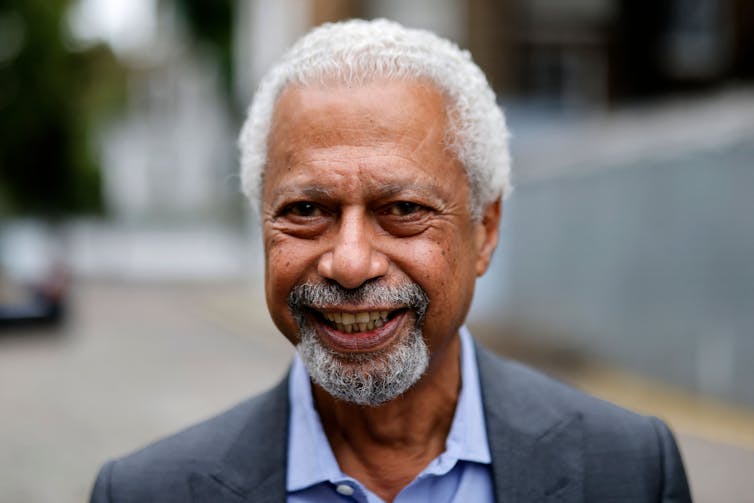
Nobel winner Abdulrazak Gurnah’s fiction traces small lives with wit and tenderness


Abdulrazak Gurnah captivatingly draws readers into the experiences and vivid lifeworlds of his characters
Getty Images

Tina Steiner, Stellenbosch UniversityFor those of us who have read and reread, taught, and written about the fiction of Abdulrazak Gurnah, the Nobel Prize in Literature committee has confirmed what we knew all along. His superb writing deserves much wider recognition and readership.

Gurnah was born in Zanzibar, the archipelago off the Tanzanian coast, in 1948. Then still a British Protectorate, Zanzibar gained independence in December 1963, only to be thrown into the turmoil and violence of the Zanzibar Revolution of January 1964. These are historical events to which he returns in his fiction repeatedly.

He left for the UK in 1967 and has lived there ever since, except for a short teaching stint at Bayero University Kano in Nigeria in the 1980s. He taught in the English department at the University of Kent in Canterbury until his recent retirement.

Even though he has lived most of life in England, all his novels – except for Dottie (1990), which is set entirely in the UK – are set either fully or partially on the Eastern African Swahili Coast or in Zanzibar. To date he has published ten immensely readable novels and many short stories. These are written in clean and uncluttered prose. It makes him a master storyteller, captivatingly drawing the reader into the experiences and vivid lifeworlds of the characters depicted.

Connecting people and geographies

The work of the imagination to follow the storyteller’s attention creates connections that in their intangibility might seem elusive. And yet any reader will know these to be powerful and potentially transformative. As Ben Okri, a Nigerian writer, reminds us, such threads, which interweave stories and life, are deeply significant. This is because stories “can infect a system, or illuminate a world”. The ambiguity in Okri’s description of the effect of stories captures the way in which stories potentially open up the world and contest narratives that circumscribe and preclude mutuality. It also talks to the danger of stories when they participate in and serve as justification for structures of domination, exclusion and violence.

Gurnah, the storyteller, probes the efficacy of stories to connect people and geographies. Yet at the same time he is acutely attentive to the divisive nature of stories of certainty: of colonial domination, of patriarchal scripts, of racism, of xenophobia towards strangers from elsewhere. His work points to the way in which such certainties furnish people with a belief in the rightness of the violence they wreak on others, in the destruction of other people’s lives which they deem to matter less than their own.

Instead, Gurnah’s work asks the reader to consider stories as provisional accounts that cannot claim closure or complete knowledge. Ambiguity, multiple viewpoints of the same events, complex focalisation, self-reflexive irony and narrative wit are some of the features of his writing. They make his writing so incredibly compelling. It elides narrative certainty. The narrative mode is often oblique. Perhaps we can imagine it like this, or perhaps it happened otherwise. This mode is particularly apt to illuminate the itinerant lives of people who find themselves on the move and who do not seem to belong anywhere.

Migration and other forms of displacement, as Gurnah’s stories suggest, are common occurrences in Africa and across the globe. Therefore, it is important to see others in relation to ourselves, to perceive their right of abode even if they cannot claim national belonging. However, it is precisely the humanity of the stranger that is at stake once the status of citizenship is in question. Hospitality is revealed as conditional in the current hostile immigration climate. The asylum seeker, the refugee and the migrant are hardly afforded the dignity which the recognition of a common humanity would demand.

It is this refusal to recognise the humanity of the other and its terrible consequences that Gurnah’s stories explore in detail. He crafts carefully delineated juxtapositions between hostile, implacable environments in which his characters find themselves with little room to manoeuvre, and pockets of hospitality that gesture towards alternative social imaginaries where kindness and joie de vivre become possible.

In contrast to an essentialist view of a citizen as someone who is described in terms of appearance or ancestry, Gurnah sets the complexity of centuries of intermingling along the East African shores of the Indian Ocean. In this way his stories question ideas of purity and difference. They emphasise the cultural and linguistic heterogeneity of East African coastal regions and their place within the continent, the Indian Ocean world, and the globe in order to stress a common humanity.

Empathetic storytelling

Across his oeuvre, which traverses settings in Zanzibar, Dar es Salaam, Bagamoyo, Mombasa, Lake Tanganyika, Nairobi, Muscat, Bahrain and several locales in England, Gurnah traces a long history of transnational and transoceanic movements. His work references the Eastern African slave trade and indenture, German and British colonial oppression and less legible but equally destructive forms of social exclusion to do with economic precarity and migration. While his characters are often caught in violent and unequal plots not of their own making and beyond their control – since Gurnah’s stories tend to focus on people whose lives are deemed insignificant and small – his empathetic storytelling subtly points to the importance of social connections, however unexpected, that offer reassurance and warmth.

In this way, his novels also cautiously celebrate the polyglot cosmopolitanisms and generous forms of accommodation that emerged on the Swahili coast within broader structures of ambivalent encounter in the monsoon trade and imperial conquest. In a passage in By the Sea, Gurnah’s sixth novel, published in 2001, seven-year-old Saleh Omar, one of the protagonists and narrators, describes his first encounter with a map of an Africa embedded in the wider world of the Indian Ocean:

As [the teacher’s] story developed, he began to draw a map on the blackboard with a piece of white chalk: the coast of North Africa which then bulged out and tucked in and then slid down to the Cape of Good Hope. As he drew, he spoke, naming places, sometimes in full sometimes in passing. Sinuously north to the jut of the Ruvuma delta, the cusp of our stretch of coast, the Horn of Africa, then the Red Sea coast to Suez, the Arabian peninsula, the Persian Gulf, India, the Malay peninsula and then all the way to China. He stopped there and smiled.

This moment of the unbroken chalk line is pivotal, not just in relation to this particular novel, but perhaps to Gurnah’s oeuvre as a whole. It makes visible the ocean on which so many of his stories float. And I suspect that this teacher’s smile is also the soryteller’s. It is the subtle humour which suffuses his writing that give his stories a lightness of touch, despite the harrowing aspects of the narratives. It contributes enormously to the pleasure of reading.

There is the acerbic sarcasm which exposes racial aggression and renders it absurd. And there is the self-deprecating humour of the migrant in the face of an immovable and indifferent environment, which staves off self-pity and sets in motion processes of disalienation. The dry wit of the narratives allows Gurnah to forge a bond with readers, who come to appreciate it as a mode of interaction that can liquefy ossified social categories by opening up spaces of irony and ambiguity and remind us of the fragility of the human condition we all share.The Conversation

Tina Steiner, Associate Professor in the English Department, Stellenbosch University

This article is republished from The Conversation under a Creative Commons license. Read the original article.
Unknown's avatar

Nobel Prize winner Abdulrazak Gurnah: an introduction to the man and his writing


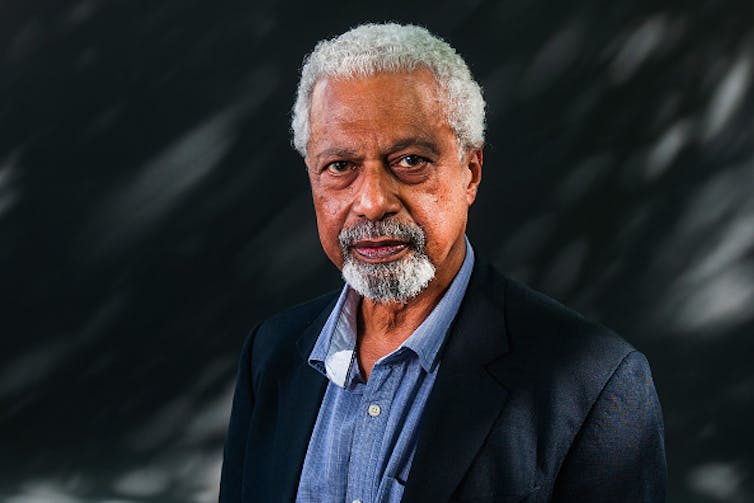
Abdulrazak Gurnah during the Edinburgh International Book Festival 2017.
Simone Padovani/Awakening/Getty Images

Lizzy Attree, Richmond American International UniversityThe Nobel Prize in Literature, considered the pinnacle of achievement for creative writers, has been awarded 114 times to 118 Nobel Prize laureates between 1901 and 2021. This year it went to novelist Abdulrazak Gurnah, who was born in Zanzibar, the first Tanzanian writer to win. The last black African writer to win the prize was Wole Soyinka in 1986. Gurnah is the first black writer to win since Toni Morrison in 1993. Charl Blignaut asked Lizzy Attree to describe the winner and share her views on his literary career.

Who is Gurnah and what is his place in East African literature?

Abdulrazak Gurnah is a Tanzanian writer who writes in English and lives and works in the UK. He was born in Zanzibar, the semi-autonomous island off the east African coast, and studied at Christchurch College Canterbury in 1968.

Zanzibar underwent a revolution in 1964 in which citizens of Arab origin were persecuted. Gurnah was forced to flee the country when he was 18. He began to write in English as a 21-year-old refugee in England, although Kiswahili is his first language. His first novel, Memory of Departure, was published in 1987.

He has written numerous works that pose questions around ideas of belonging, colonialism, displacement, memory and migration. His novel Paradise, set in colonial east Africa during the first world war, was shortlisted for the Booker Prize in 1994.

Comparable to Moyez G. Vassanji, a Canadian author raised in Tanzania, whose attention focuses on the east African Indian community and their interaction with the “others”, Gurnah’s novel Paradise deploys multi-ethnicity and multiculturalism on the shores of the Indian Ocean from the perspective of the Swahili elite.

A distinguished academic and critic, he recently sat on the board of the Mabati Cornell Kiswahili Prize for African literature and has served as a contributing editor for the literary magazine Wasafiri for many years.

He is currently Professor Emeritus of English and Postcolonial Literatures at the University of Kent, having retired in 2017.

Why is Gurnah’s work being celebrated – what is powerful about it?

He was awarded the Nobel

for his uncompromising and compassionate penetration of the effects of colonialism and the fates of the refugee in the gulf between cultures and continents.

He is one of the most important contemporary postcolonial novelists writing in Britain today and is the first black African writer to win the prize since Wole Soyinka in 1986. Gurnah is also the first Tanzanian writer to win.

Copies of Afterlives by Tanzanian-born novelist Abdulrazak Gurnah.
Photo by TOLGA AKMEN/AFP via Getty Images

His most recent novel, Afterlives, is about Ilyas, who was taken from his parents by German colonial troops as a boy and returns to his village after years of fighting against his own people. The power in Gurnah’s writing lies in this ability to complicate the Manichean divisions of enemies and friends, and excavate hidden histories, revealing the shifting nature of identity and experience.

What Gurnah work stands out for you and why?

The novel Paradise stands out for me because in it Gurnah re-maps Polish-British writer Joseph Conrad’s 19th century journey to the “heart of darkness” from an east African position going westwards. As South African scholar Johan Jacobs has said, he

reconfigures the darkness at its heart … In his fictional transaction with Heart of Darkness, Gurnah shows in Paradise that the corruption of trade into subjection and enslavement pre-dates European colonisation, and that in East Africa servitude and slavery have always been woven into the social fabric.

The tale is narrated so gently by 12-year-old Yusuf, lovingly describing gardens and assorted notions of paradise and their corruption as he is pawned between masters and travels to different parts of the interior from the coast. Yusuf concludes that the brutality of German colonialism is still preferable to the ruthless exploitation by the Arabs.

Like Achebe in Things Fall Apart (1958), Gurnah illustrates east African society on the verge of huge change, showing that colonialism accelerated this process but did not initiate it.

Is the Nobel literature prize still relevant?

It’s still relevant because it is still the biggest single prize purse for literature around. But the method of selecting a winner is fairly secretive and depends on nominations from within the academy, meaning doctors and professors of literature and former laureates. This means that although the potential nominees are often discussed in advance by pundits, no-one actually knows who is in the running until the prize winner is announced. Ngugi wa Thiong’o, for example, is a Kenyan writer whom many believe should have won by now, along with a number of others like Ivan Vladislavic from South Africa.

Winning puts a global spotlight on a writer who has often not been given full recognition by other prizes, or whose work has been neglected in translation, thus breathing new life into works that many have not read before and deserve to be read more widely.The Conversation

Lizzy Attree, Adjunct Professor, Richmond American International University

This article is republished from The Conversation under a Creative Commons license. Read the original article.

Unknown's avatar

Climate change novels allow us to imagine possible futures – read these crucial seven


Hitoshi Suzuki/Unsplash, FAL

Adeline Johns-Putra, University of SurreyEvery day brings fresh and ever more alarming news about the state of the global environment. To speak of mere “climate change” is inadequate now, for we are in a “climate emergency”. It seems as though we are tripping over more tipping points than we knew existed.

But our awareness is at last catching up with the planet’s climate catastrophes. Climate anxiety, climate trauma, and climate strikes are now all part of many people’s mental landscape and daily lives. This is almost four decades after scientists first began to warn of accelerated global warming from carbon dioxide increases in the atmosphere.

And so, unsurprisingly, climate fiction, climate change fiction, “cli-fi” – whatever you want to call it – has emerged as a literary trend that’s gained astonishing traction over the past ten years.

Just a decade ago, when I first began reading and researching literary representations of climate change, there was a curious dearth of fiction on the subject. In 2005, the environmental writer Robert Macfarlane had asked plaintively: “Where is the literature of climate change?”. When I went to work in 2009 on one of the first research projects to attempt to answer this question, I found that some climate change novels were only beginning to emerge. Ten years later, the ubiquity of cli-fi means that the question of how many cli-fi novels there are seems irrelevant. Equally irrelevant is any doubt about the urgency of the climate emergency.

But the question of how to deal with such a complex challenge is paramount. The climate emergency demands us to think about our responsibilities on a global scale rather than as individuals, to think about our effects not just on fellow humans but on all the species that call this planet home, and to think about changing the resource-focused, profit-seeking behaviours that have been part of human activity for centuries.

Novels allow us to imagine possible futures from the comfort of the present.
Maria Cassagne/Unsplash, FAL

This is where literature comes in. It affords us the headspace in which to think through these difficult and pressing questions.

Cli-fi has a central role in allowing us to do the psychological work necessary to deal with climate change. I am often asked to identify the climate novel that is the most powerful and effective and, just as often, I reply that no one novel can do this. The phenomenon of cli-fi as a whole offers us different ways and a multitude of spaces in which to consider climate change and how we address it.

Here, then, is my list of a range of novels that offer just such a diverse set of perspectives. These books provide readers with a range of thought (and feeling) experiments, from dystopian despair to glimmers of hope, from an awareness of climate change impacts on generations to come to vivid reminders of how we are destroying the many other species that share our planet.

1. The Sea and Summer, 1987

Australian novelist George Turner’s book is one of the earliest examples of cli-fi and is prescient in more ways than one. Set in Melbourne in the 2030s, skyscrapers are drowning due to sea-level rise: a setting for a stark division between the rich and the poor. Like many cli-fi novels, this novel’s dystopian future provides a sophisticated thought experiment on the effects of climate change on our already divided society. Turner’s book deserves to be reread — and reissued — as classic and still relevant cli-fi.


HarperVoyager

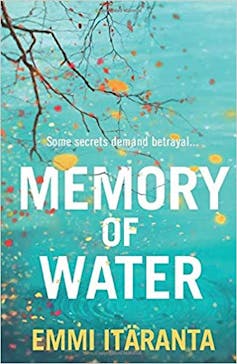
2. Memory of Water, 2012

Water has become a precious commodity in this cli-fi dystopia by Finnish author Emmi Itäranta. In Nordic Europe in the distant future, a young girl must decide whether to share her family’s precious water supply with her friends and fellow villagers and risk being accused of “water crime”, punishable by death. This tender coming-of-age narrative is thus also a meditation on the value of resources taken entirely for granted by the contemporary, westernised reader.

3. The Wall, 2019

At first glance, John Lanchester’s novel could be a comment on the rise of anti-refugee sentiment in Britain. In a not-so-distant future, every inch of British shoreline is guarded by an immense wall, a bulwark against illegal migrants as well as rising sea levels. But through the experiences of a young border guard, the novel shows us how this national obsession with borders not only distracts from the climate emergency at hand; it diminishes our responsibility to fellow humans around the world, whose lives are threatened by climate change and for whom migration is a desperate solution.


Titan Books (UK)

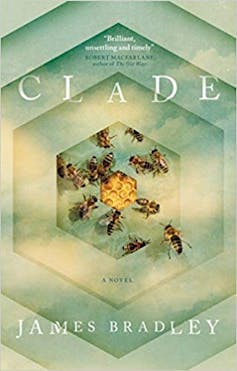
4. Clade, 2015

Australian author James Bradley’s novel chronicles several generations of one family in an increasingly devastated world. The day-to-day detail of their lives, as relationships hold together or break apart, unfolds against the backdrop of environmental and thus societal breakdown. The novel contrasts the mundane miscommunications that characterise human relations with the big issue of global warming that could rob future generations of the opportunity to lead meaningful lives.

5. The Stone Gods, 2007

Jeanette Winterson’s stab at cli-fi offers, like Bradley’s novel, a long view. The novel ranges over three vastly different timeframes: a dystopian, future civilisation that is fast ruining its planet and must seek another; 18th-century Easter Island on the verge of destroying its last tree; and a near-future Earth facing global environmental devastation. As readers time travel between these stories, we find, again and again, the damage wrought by human hubris. Yet, the novel reminds us, too, of the power of love. In the novel, love signifies an openness to other humans and other species, to new ideas, and to better ways of living on this planet.


Constable

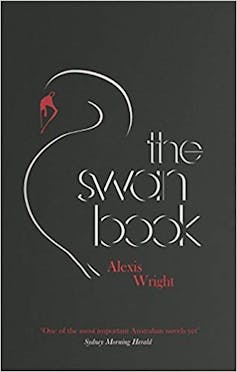
6. The Swan Book, 2013

This novel by indigenous Australian author Alexis Wright is unconventional, fable-like cli-fi. Its protagonist is a young indigenous girl whose life is devastated by climate change but most of all by the Australian government’s mistreatment of its indigenous populations. Weaving indigenous belief with biting satire, Wright’s novel is a celebration of her people’s knowledge of how to live with nature, rather than in exploitation of it.

7. Flight Behaviour, 2012

Unlike the other novels on this list, this one, by Barbara Kingsolver, is a realist novel set entirely in the present day. A young woman from Tennessee stumbles upon thousands of monarch butterflies roosting on her in-laws’ land, the insects having been thrown off course by extreme weather events brought about by climate change.

From the scientists who come to study the problem, she learns of the delicate balance that is needed to keep the butterflies on course. Kingsolver’s rich descriptions of an impoverished Appalachian community are combined with her biologist’s training, so that reader empathy is eventually shifted from the likeable heroine to the natural wonder that is the butterflies. We are reminded of how climate change risks not simply human comfort but the planet’s ecological complexity.The Conversation

Adeline Johns-Putra, Reader in English Literature, University of Surrey

This article is republished from The Conversation under a Creative Commons license. Read the original article.

Unknown's avatar

‘Goodreads’ readers #ReadWomen, and so should university English departments


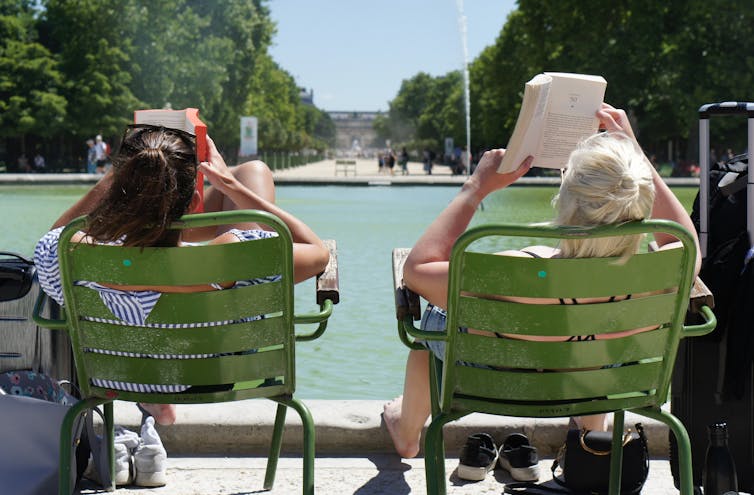
The social network website Goodreads provides insight into what some women are reading.
(Flip Mishevski/Unsplash)

Karen Bourrier, University of CalgaryEven in the 21st century, women writers are often consigned to what American novelist Meg Wolitzer has called “the second shelf.” Women’s novels are designed and marketed with a female audience in mind and publishers still presume that novels about women won’t appeal to male readers. Unfortunately, even in 2021 there may be some truth to this presumption.

This sexism can be seen in the continued speculation that female-identifying novelist Elena Ferrante is actually a man.
Vanity Fair contributing editor and book columnist Elissa Schappell summarized the assumptions behind the speculation: the novelist’s prolific output of “serious” books that interweave history, politics, violence, sex and domestic life, while “unflinchingly showing women in an unflattering light.”

Books by female-identifying authors are also less likely to be reviewed in prestigious literary magazines. In 2019, more than 60 per cent of reviews in magazines including London Review of Books, The Atlantic, and Harper’s, were of books written by men. This is actually an improvement since 2010, when between 69 per cent and 80 per cent of reviews in these magazines were of male-authored books.

The popular #readwomen hashtag on Twitter has been one response to the marginalization of women authors or sexism about their work. The social network website Goodreads can also provide insight into what women are reading.

Reading women

My collaborative research with data science professor Mike Thelwall has explored the reading habits of a cohort of mostly female readers (76 per cent) on the popular social network site Goodreads. As a group, Goodreads users also skew younger, whiter and more educated than the general population.

We examined what books readers read on Goodreads compared to what university professors assign in the classroom, using data from the Open Syllabus Project.

In past decades, researchers relied on handwritten diaries, letters and surveys of readers to find out how everyday readers responded to the books they read. Goodreads, which collects book reviews and ratings from 90 million members, offers one portal into reading habits.

On average, women Goodreads users read twice as much as male Goodreads users, and are more willing to read books by both male and female authors.

We scraped data from Goodreads and found that most Goodreads book club members were likely to have read books in common by women authors.

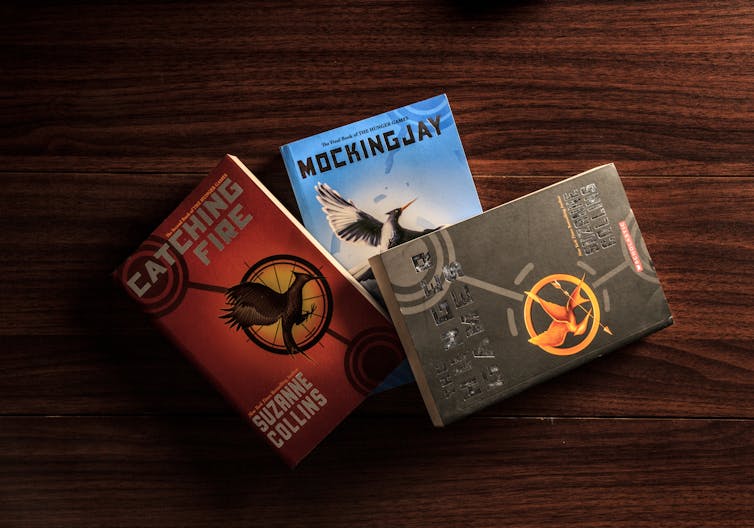
These women authors fell into two categories: young adult authors (J.K. Rowling, Suzanne Collins, Stephanie Meyer and Veronica Roth) and 19th- or early 20th-century authors (Jane Austen and Harper Lee). The popularity of young adult series by women, including the Harry Potter and Hunger Games series, means that 13 of the 19 most popular titles are by women.

Cover of three books from the Hunger Games series
A study found that that most Goodreads book club members were likely to have read books in common by women authors.
(Shutterstock)

Compared to what professors teach

In a second study, we compared what books Goodreads users read to what university professors assign in the classroom, using data from the Open Syllabus Project. The Open Syllabus Project originated at Columbia University. It amasses syllabi, or college reading lists, from openly accessible university websites. Open Syllabus currently has a corpus of over nine million syllabi from 140 countries.

Our study focused on Victorian literature, literature published during Queen Victoria’s reign (1837-1901), which is both commonly taught at the university level and still read by general readers.

For the most part, we found that Goodreads users read books — including classic works by Charles Dickens, Arthur Conan Doyle and Oscar Wilde — about as often as university professors taught them.

However, we also found that the books that Goodreads users read more often than they were assigned in university tended to be by women writers, to feature strong female protagonists and to be aimed at a young adult audience — or all three.

Taking women writers seriously

This research is important because it suggests that professors who want to connect to students should take women writers more seriously.

Women writers show up less often than male writers on university syllabi. A survey conducted at McGill University in 2018 showed that 73 per cent of writers assigned on the university’s English literature syllabi are men.

Unfortunately, this is no surprise: English Prof. John Guillory’s work on canon formation captures the state of college English classes 30 years ago (and sometimes even more recently) when it was not uncommon for English professors to teach only white men.

Works by women writers are formative for many readers. For example, Wuthering Heights and Jane Eyre are often among the first “adult” novels that young English-language readers read. Their combination of romance and strong female protagonists continues to appeal to 21st-century readers outside the classroom.

Our study also showed that Frances Hodgson Burnett’s The Secret Garden and A Little Princess, and Lewis Carroll’s Alice’s Adventures in Wonderland — three works of young adult fiction featuring girls — were also read more on Goodreads than we would predict given how often they were assigned on syllabi.


Read more:
Jane Eyre translated: 57 languages show how different cultures interpret Charlotte Brontë’s classic novel


It is more than time that publishers, book reviewers and university professors give women writers the respect they deserve. In an era of declining English majors when most English majors are women, English departments can at least start by assigning more women writers.The Conversation

Karen Bourrier, Associate Professor of English, University of Calgary

This article is republished from The Conversation under a Creative Commons license. Read the original article.
Unknown's avatar

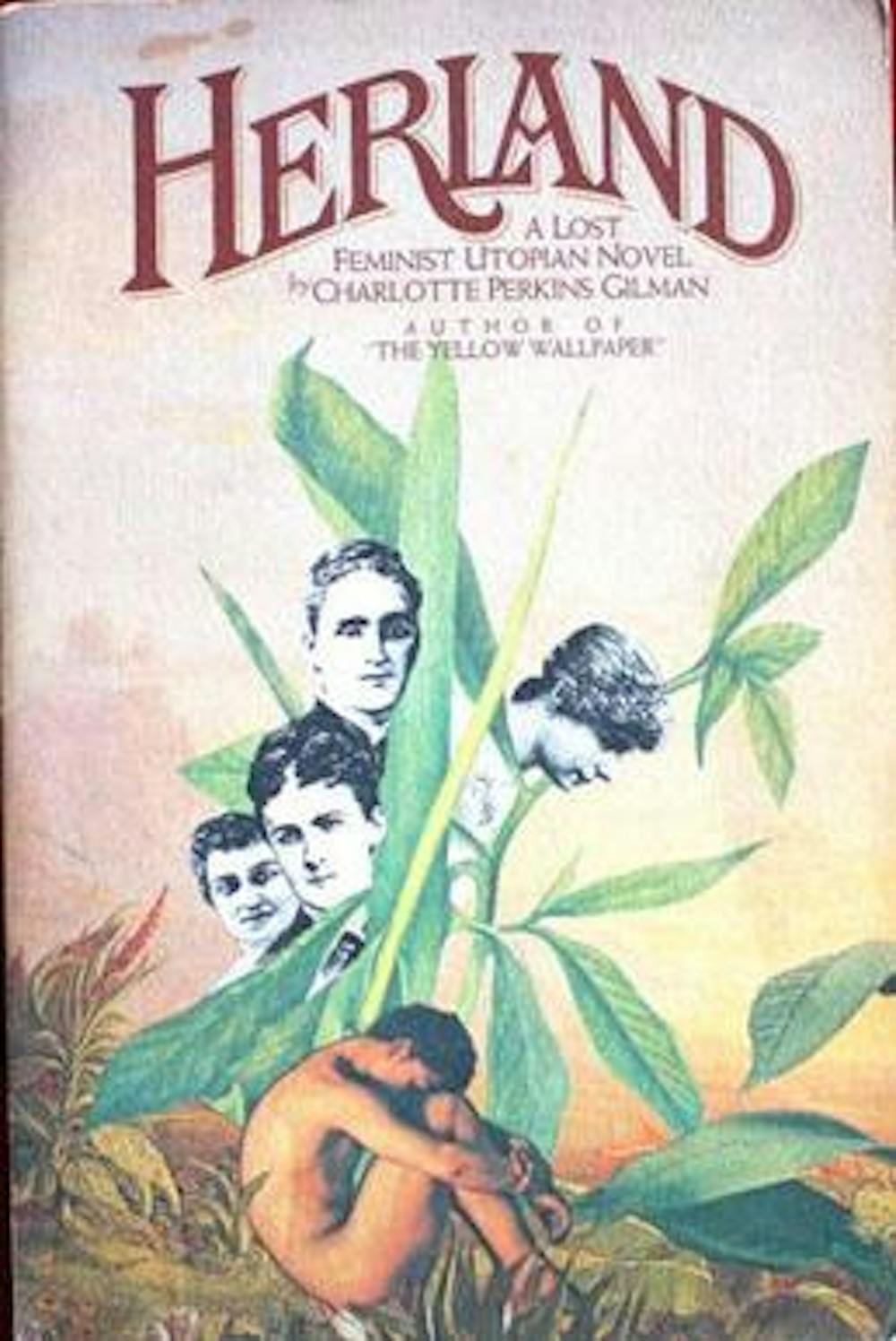
Guide to the classics: written in 1915, Charlotte Perkins Gilman’s Herland imagines society without men


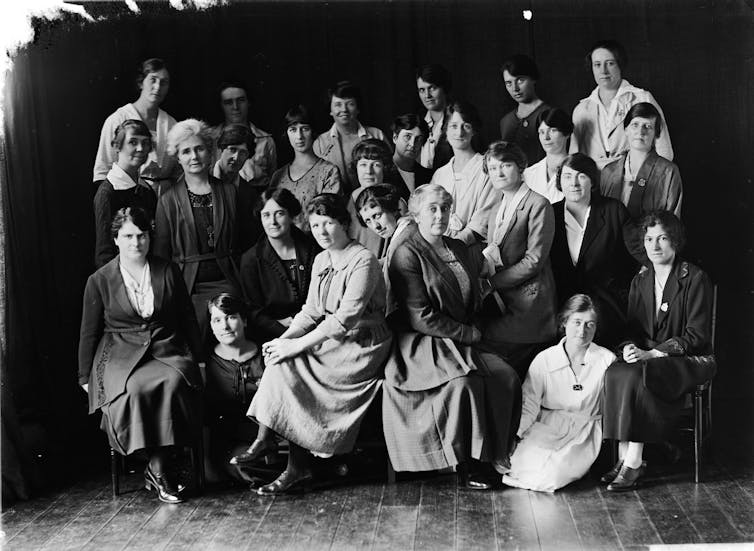
Ruth Hollick collection. State Library of Victoria

Donna Mazza, Edith Cowan UniversityRecent television series Creamerie, a dark comedy from New Zealand where a pandemic quickly kills (almost) all men and male animals, revives the concept of an all-female society with a contemporary take on ideas raised by Charlotte Perkins Gilman (1860-1935) over 100 years ago.

Perkins Gilman’s Herland (1915) is the kind of novel mentioned by critics who dive into speculative fiction dealing with gender or utopia, but it rarely gets serious consideration as a literary work in its own right.

Authors of feminist dystopia in the mould of Creamerie and The Handmaid’s Tale do owe a debt to Herland, but the work itself was out of print for 60 years and is a scarce gem in libraries and bookstores alike.

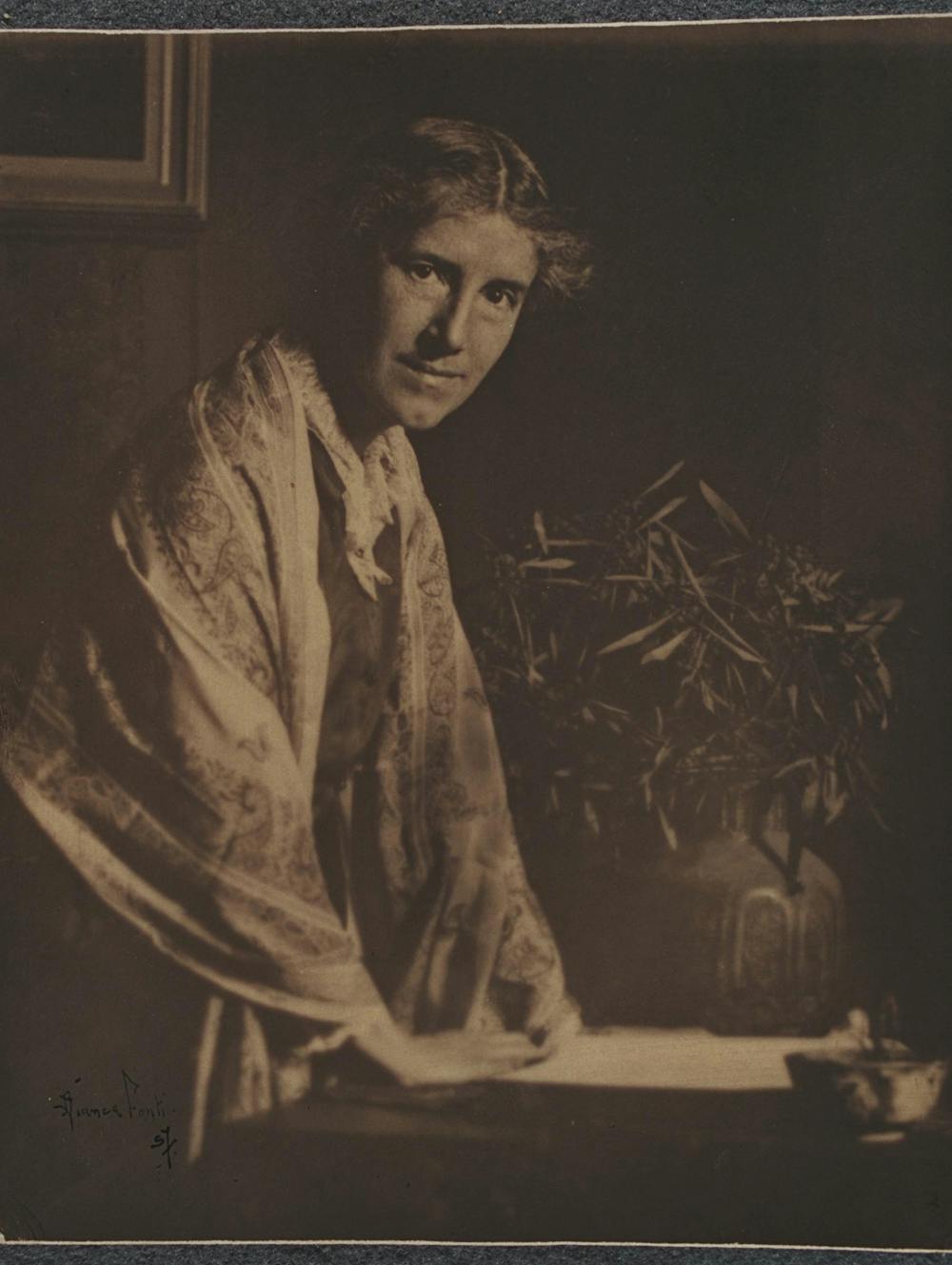
Sepia photograph
Charlotte Perkins Gilman photographed around 1915, when she wrote and published Herland.
Schlesinger Library on the History of Women in America, Radcliffe Institute

Perkins Gilman was an influential suffragette in America, and Herland was originally published as a serial in 1915 in The Forerunner, a monthly journal edited and written entirely by her for seven years. This is an extraordinary output for a single writer in any circumstances or era.

The book was published as a full-length work for the first time in 1979 by London based The Women’s Press Ltd. If not for the foresight of the feminist publisher, it might well have languished for more decades.

The novel is narrated by Vandyck Jennings, a sociologist out to learn all he can, and one of three men – alongside wealthy American Terry O. Nicholson who bankrolls the trip and Jeff Margrave, a smarmy doctor – who are on an adventure holiday into the wilderness of a continent resembling South America.

When their guides tell them about Herland, an isolated country devoid of men, they are keen to go and try their luck with the women; Terry aims to be “king of Ladyland”.

A land without men

Soon after their first journey, the men return so they are not beaten to “the good lookers” in “the bunch” by some other fellows. They take a small aircraft to map the forest, landing on a wide rock “quite out of sight of the interior”.

“They won’t find this in a hurry,” says Terry, even though the women had run out of their houses and watched them fly over: this is one of many subtle digs by the author foreshadowing the way the men underestimate the intelligence of the women.

The original 1979 cover.

The men scamper through the landscape, armed and dangerous, fuelled by the promise of lusty adventures and thoughts of fending off the men they know must be hidden somewhere, as they have seen babies and children on their flyover.

But there are no men. The explanation for 2,000 years of ongoing procreation comes a third of the way through the novel, where a chapter is dedicated to the history.

After escaping slavery in a harem and having “no-one left on this beautiful high garden land but a bunch of hysterical girls and some older slave women” there followed a decade of working together,

growing stronger and wiser and more and more mutually attached, and then a miracle happened — one of these young women bore a child. Of course they all thought there must be a man somewhere, but none was found. Then they decided it must be a direct gift from the gods, and placed the proud mother in the Temple of Maaia — their Goddess of Motherhood — under strict watch. And there, as years passed, this wonder-woman bore child after child, five of them — all girls.

The three men are captured and held in a “fortress” for six months under the watchful eye of older women they disparagingly dub “Colonels” — and kept well away from their trousers and any young women.

Clothed in the same tunic as all Herland residents, they learn the language and are quizzed about the lives of women in their own country. Here, they divulge “the poorest of all the women were driven into the labour market by necessity” and two-thirds are “loved, honoured, kept in the home to care for the children” but it is a “law of nature” the poorest have the most children.


Read more:
What is suffragette white? The colour has a 110-year history as a protest tool


The men “escape” under subtle observation and soon form bonds with the three young women they met up a tree on their arrival: Alima, Celis and Ellador.

By the end of the novel, Jeff is “thoroughly Herlandized” and all set to live with Celis in this utopia. The narrator, Van, marries Ellador and his social observations lead to some shifts in thinking (their story is the subject of the 1916 sequel, With Her in Ourland).

Wealthy misogynist Terry is intractable in his patriarchal attitudes. He is abusive to Alima, put on trial and expelled from Herland.

The Amazons

The 12 chapters of Herland are structured around topics (“A unique history”, “The girls of Herland”, “Their religions and our marriages”) that might easily be the titles of an anthropological work from the period.

The tone of the writing mimics an authoritative patriarchal voice. This is obviously intended to be ironic. The novel is darkly comic and filled with subtle digs at the male characters and the inequality faced by women in 1915, especially in response to work and economic disadvantage.

The concept of a female-led society has its roots in Ancient Greece, in the work of Homer who captured stories of Amazon warrior-women in Iliad. Amazon women like the fearsome Penthesilea, who battled Trojan warriors, feature in a range of Greek tales, where they are usually depicted as succumbing to the swords or charms of male protagonists like Achilles and Theseus.

The Amazons have been re-imagined by authors in many contexts since, featuring in art, literature — and Wonder Woman.


Read more:
The truth about the Amazons – the real Wonder Women


Herland pays homage to them, too. The legendary Amazons of Greek myth inhabited a remote homeland at the edge of the “world”; Herland seems to be located in an area resembling the Amazon.

Considering the geography of Herland is a well-forested triangle, the witty Perkins Gilman might also have been intending a symbolic connection with female anatomy.

The Yellow Wallpaper

In her time, Perkins Gilman’s ideas about the public role of women, prevalent male attitudes to women and the structure of the family were radically feminist.

This wasn’t the first work of hers which took up such ideas.

She is best known as author of The Yellow Wallpaper (1892), a short story narrated by a woman locked in an upstairs nursery by her husband — who is also her doctor — to treat a nervous condition with the “rest cure”. The rest cure was commonly prescribed to treat what we now call postpartum depression, which Perkins Gilman suffered for three years. It involved restriction of all activity, including reading and writing, while being confined to bed.


Read more:
The Yellow Wallpaper: a 19th-century short story of nervous exhaustion and the perils of women’s ‘rest cures’


Deeply disturbing and gripping, The Yellow Wallpaper is an expose on the treatment of women by medical professionals and narrates the woman’s descent into madness in disturbing detail. Perkins Gilman’s own physician, Silas Weir Mitchell, read the story and, as she claimed, discarded the rest cure in response.

The Yellow Wallpaper predates Herland by a couple of decades, but in comparison, the writing in it is more loose and dynamic. Perhaps the first-person male protagonist in Herland was a less comfortable narrative position for the author, with her well entrenched feminist ideals. The writing in Herland is not as rich in motif and layers of meaning. Characterisation of the women in the novel lacks depth, but this may also be ironic.

Overwhelmingly, the purpose of this feminist classic is to critique the social and economic system that restricted American (and other) women through limiting education, financial independence and life choices. As a novel, it reads as ideology-driven and a vehicle for women’s rights — but it is also very funny.Its ironies are still potent, and sadly valid.The Conversation

Donna Mazza, Senior Lecturer in Creative Arts, Edith Cowan University

This article is republished from The Conversation under a Creative Commons license. Read the original article.
Unknown's avatar

Bigme S3 Color Ebook Reader Review


The link below is to an article that reviews the Bigme S3 Color Ebook Reader.

For more visit:
https://goodereader.com/blog/reviews/bigme-s3-color-e-reader-and-e-note-review

Unknown's avatar

2021 National Biography Award Winner


The link below is to an article reporting on the winner of the 2021 National Biography Award, Cassandra Pybus for ‘Truganini – Journey Through the Apocalypse.’

For more visit:
https://www.booksandpublishing.com.au/articles/2021/08/27/192214/pybus-wins-2021-national-biography-award-for-truganini/

Unknown's avatar

2021 ‘NIBs’ Longlist


The link below is to an article reporting on the longlist for the 2021 Nib Literary Awards.

For more visit:
https://www.booksandpublishing.com.au/articles/2021/08/30/192249/nib-literary-award-2021-longlist-announced/