The link below is to an article with some tips on retaining what you read. I’m not sure to the merit of each of the tips, though some are useful – the last is not (in my opinion).
Demonstrators protest the awarding of the 2019 Nobel literature prize to Peter Handke in Stockholm, in December 2019. Stina Stjernkvist/TT News Agency via AP
Austrian writer Peter Handke received the 2019 Nobel Prize in literature. The award is for “a writer’s life work,” and Handke has written novels, travelogues, theatre plays, screenplays and poetry.
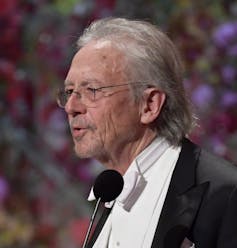
Literature laureate 2019 Peter Handke gives his speech during the Nobel banquet at Stockholm City Hall, on Dec. 10, 2019. Anders Wiklund/TT News Agency via AP
The announcement of the award generated public uproar.
The controversy has spurred long-standing debates about where stories come from, who is responsible for them and what it means as a writer to bear witness to truth — and also, which persons or institutions have the authority to do so.
The publisher of the English-language 1997 translation describes the book on its jacket as both a “sensitive and nuanced meditative travelogue through Serbia,” and a “scathing criticism of western war reporting.”
Handke’s Nobel nomination particularly inflamed journalists and survivors of the Srebrenica genocide, where more than 8,000 Bosnian Muslim men and boys were killed in July 1995, during the 1992-95 war in Bosnia. Various intellectuals, as well as the broader public voiced their dissent about Handke receiving the award on Twitter following the award announcement.
The bigger context is that some perpetrators denied findings of the International Criminal Tribunal for the former Yugoslavia (sometimes referred to as the Hague Tribunal, based in The Hague, Netherlands) — and the tribunal documented atrocious strategies to conceal crimes, such as moving mass graves. Denials of the Srebrenica genocide continue today.
Many statements in defence of the award echo earlier French and British 20th century literary criticism.
Evaluating the text’s language alone?
The French philosopher Roland Barthes’s influential 1967 essay “The Death of the Author” served to elevate literary work and its language. Barthes wrote: “It is language which speaks, not the author.”
For French philosopher Michel Foucault, the author is a kind of scribe who commits language to paper. The implication is that the author is writing down the realities of the world outside. In his view, “the function of the author is to characterize the existence, circulation and operation of certain discourses within a society” — meaning, ideas and messaging, as he elaborated in his 1969 essay “What is an Author?”
Before them, T.S. Eliot proclaimed in 1919 that writing “is not the expression of personality, but an escape from personality.”
As feminist literary scholar Cheryl Walker has noted, independence-of-the-text critiques have to a certain extent helped “liberate the text for multiple uses,” like re-reading canonical texts from critical feminist perspectives.
But such critiques have also been at odds with literary traditions on the margins.
Historically, the significance of lived personal and collective experiences have been central features of texts by women, Black, Indigenous and people of colour, queer or transgender writers.
These literatures, their readers and their institutions of criticism have long resisted calls to separate author, text and political or social impact.
They have have asserted either that the personal is political or that perspective is situational — and rejected the notion that literary work can considered unpolitical.
Award fuelled ethnonationalist politics
Critics of Handke’s receipt of the Nobel award challenge the notion that Handke’s literary work can be evaluated apart from its political implications.
How or if the Swedish Academy will respond to these developments as the public demands it approach the award more cautiously remains to be seen. It seems unlikely that it will rescind Handke’s award.
But the academy is implicated in this affair no matter what.
New novels about climate change – climate fiction, or cli-fi – are being published all the time. The nature of the climate crisis is a difficult thing to get across, and so imagining the future – a drowned New York City, say; or a world in which water is a precious commodity – can help us understand what’s at stake.
This is unsurprising in these times of crisis: fiction allows us to imagine possible futures, good and bad. When faced with such an urgent problem, it might seem like a waste of time to read earlier texts. But don’t be so sure. The climate emergency may be unprecedented, but there are a few key ways in which past literature offers a valuable perspective on the present crisis.
1. Climate histories
Historical texts reflect the changing climatic conditions that produced them. When Byron and the Shelleys stayed on the shores of Lake Geneva in 1816, the literature that they wrote responded to the wild weather of the “year without a summer”.
This was caused largely by the massive eruption of the Indonesian volcano Mount Tambora the previous year, which lowered global temperatures and led to harvest failures and famine. Literary works such as as Byron’s “Darkness”, Percy Shelley’s “Mont Blanc”, and Mary Shelley’s Frankenstein reveal anxieties about human vulnerability to environmental change even as they address our power to manipulate our environments.
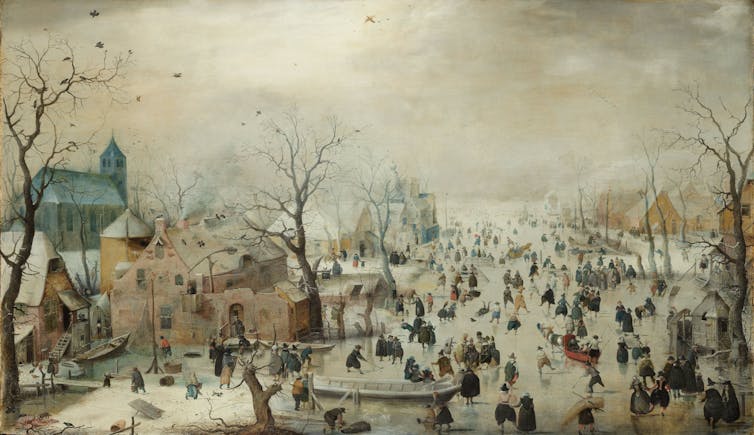
Many older texts also bear indirect traces of historical climate change. In Paradise Lost (1667), Milton complains that a “cold climate” may “damp my intended wing” and prevent him from completing his masterpiece. This may well reflect the fact that he lived through the coldest period of the “Little Ice Age”.
Hendrick Avercamp, Winter Landscape with Skaters, c. 1608. Rijks Museum
Even literature’s oldest epic poem, The Epic of Gilgamesh (c. 1800 BC), contains traces of climate change. It tells of a huge flood which, like the later story of Noah in the Old Testament, is probably a cultural memory of sea level rise following the melting of glaciers at the end of the last Ice Age.
These historical climatic shifts were not man made, but they still provide important analogues for our own age. Indeed, many cultures have seen human activity and climate as intertwined, often through a religious framework. One of the ironies of modernity is that the development of the global climate as an object of study, apparently separate from human life, coincides with the development of the carbon capitalism that has linked them more closely than ever.
2. How we view nature
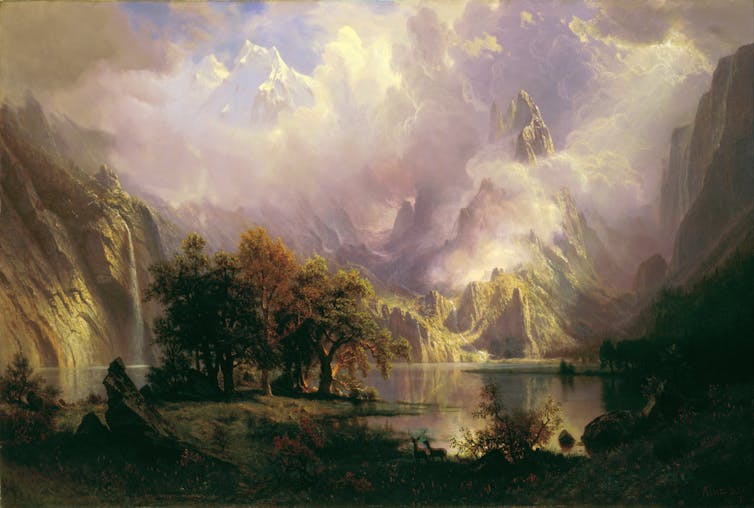
Reading historical literature also allows us to trace the development of modern constructions of the natural world. For example, the Romantic ideal of “sublime” nature, which celebrated vast, dramatic landscapes like mountains and chasms, has influenced the kinds of places that we value and protect today in the form of national parks.
When we understand that such landscapes are not purely natural, but are produced by cultural discourses and practices over time – we protect these landscapes above others for a reason – we can start to debate whether they can be better managed for the benefit of humans and non-humans alike.
Or consider how in the 18th and early 19th centuries, the work of nature writers such as Thomas Bewick, Charlotte Smith and Gilbert White played a powerful role in promoting natural theology: the theory that evidence for God’s existence can be found in the complex structures of the natural world. Past literature has also been crucial in disseminating new scientific ideas such as evolutionary theory, which understood natural phenomena as entirely secular. Literature does not just reflect changing views of the natural world; it shapes them.
Studying historical texts helps us to understand how modern cultural attitudes towards the environment developed, which in turn allows us to perceive that these attitudes are not as “natural” or inevitable as they may seem. This insight allows for the possibility that today, in a time in which our attitude towards the environment could certainly improve, they can change for the better.
3. Ways of thinking
Some of the attitudes towards the natural world that we discover in historical literature are contentious, even horrifying: for example, the normalisation of animal cruelty portrayed in books such as Black Beauty.
But we can find more promising models too. Voltaire’s poem on the 1755 Lisbon earthquake, for example, has been used to think about the ethics of blame and optimism in responses to modern disasters, like the 1995 Kobe earthquake and the 2009 L’Aquila earthquake.
Reading past literature can also help us to appreciate the natural world for its own sake. Samuel Johnson commented of the natural descriptions in James Thomson’s poems The Seasons (1730) that the reader “wonders that he never saw before what Thomson shows him and that he never yet has felt what Thomson impresses”. Amid the frenzied distractions of modern life, the work of authors like Thomson, Dorothy Wordsworth and John Clare can help us to slow down, notice and love nature.
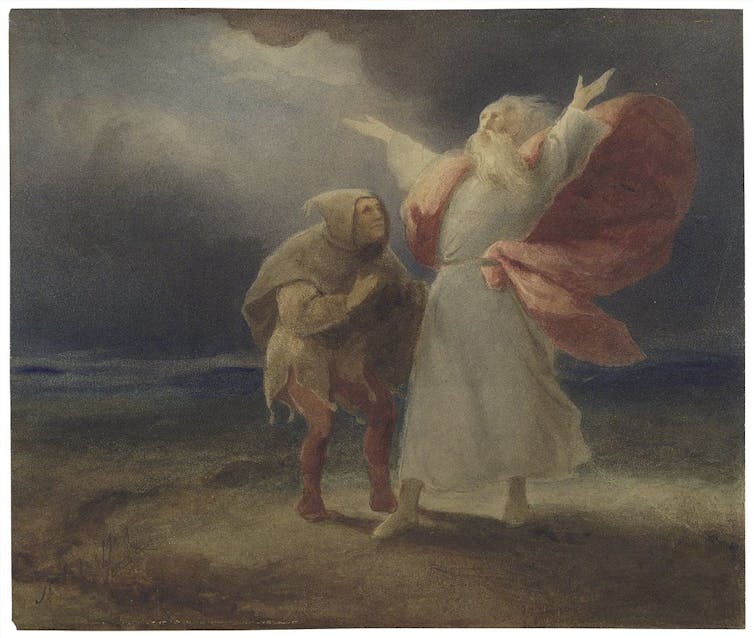
Historical literature can remind us of our own vulnerability to elemental forces. The famous depiction of a storm in King Lear, for example, mocks Lear’s attempt:
In his little world of man to out-scorn
The two-and-fro-conflicting wind and rain.
Shakespeare might appear to aestheticise dangerous weather, but the play reminds us that the storm is far bigger and messier than any human attempt to represent and interpret it.
At the same time, literature can remind us of the need to take responsibility for our own impacts upon the environment. We may not want to follow pre-modern and early modern literature in viewing climate change as divine punishment for bad behaviour. But when Milton suggests that it was the fall of man that brought in “pinching cold and scorching heat” to replace the eternal spring of Eden, his narrative has clear figurative resonance with our present crisis.
Historical literature can show us how writers responded to climate change, trace how they influenced modern ideas about nature, and reveal valuable ways of relating to and thinking about nature. The climate crisis cannot be addressed only through technological solutions. It also requires profound cultural shifts. To make those shifts requires an understanding of past ideas and representations: both those that led to our current predicament and those that might help us address it.
Mystery is the bestselling genre in literature. Crime/mystery fiction, to give the genre its full title, beats inspirational, science fiction, horror and apparently even romance to take the top spot.
What there doesn’t seem to be much of in mystery fiction, however, is female detectives who begin detecting in middle age (two cases in point: Sara Paretsky’s V.I. Warshawski was 32 when we began to follow her adventures, while Patricia Cornwell’s Kay Scarpetta was 36). Women in the 40-to-60 range don’t get much of a showing as main characters in literature generally, so maybe it’s no surprise that they don’t show up as headliners in the mystery genre.
But it’s a surprise if you’re a woman in your 40s who is beginning to write mystery novels – which not so long ago I was. And while it’s a cliche that people write what they know, when I decided to write a mystery I entered into that cliche wholeheartedly. I started writing mysteries in my 40s – and I made my detectives two women in their 40s.
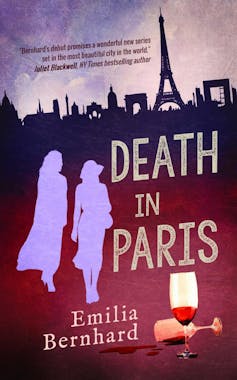
Two middle-aged American women and a dead man in a bowl of Vichyssoise. Amazon
But while I designed my detectives in part to mirror myself, I also chose their age for entirely different reasons. For all its advances and improvements, contemporary culture remains uncomfortable, not just with middle-aged women, but to an even greater degree with contentedly single middle-aged women – and to an even greater degree than that with childless women who are childless by choice. I wanted to confront this odd aversion head on, so I made sure that between them my detectives fill all these categories.
This decision is a small one, but for me it engaged with a question I’ve long struggled with, the question of what, intellectually, literature is supposed to do. Should it report on the world as it is, or should it model the world as it might – could, should, would – be?
Angry women
Recent fiction may not have been filled with middle-aged women, but it has been filled with angry ones. It’s jam packed with dystopian models of female repression and with women and men implacably set against one other: look at Naomi Alderman’s The Power, Leni Zumas’s Red Clocks, Margaret Atwood’s The Testaments. As I began to create my fictional world, I was troubled by the question of whether these outpourings of rage, all justified, all earned, are enough.
In one way this literature is unquestionably good: female rage is something else culture has assiduously avoided considering for centuries, and during those centuries women have been subjugated, silenced, used and abused in ways that deserve outpourings of anger.
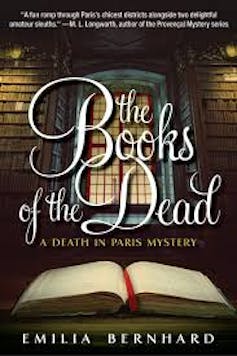
The sleuths return. Amazon
Nor is this landscape of female repression changing quickly, and there is value in forcing it before readers’ eyes. In a recent article for The Guardian about the Staunch Prize, the new award for the best crime/mystery novel that does not feature violence against women, the novelist Kaite Welsh wrote that she wouldn’t “sanitise my writing in service of some fictional, feminist utopia … my work lies in marrying my imagination with the ugly truth”. This is an important argument.
Modeling the future
But while I don’t care about the absence of feminist utopias, I do care about the absence of writing that models the future we want. What will it be like, the world we’re striving for where the playing field is level and men and women are just people being people together? I believe that we can only imagine based on what we’ve seen, and that it’s part of literature’s job to help us see what doesn’t yet exist but could.
For this reason, although I grounded my novels firmly in the present (well, Death in Paris is set in 2014 and The Books of the Dead in 2016), I made some specific choices about that present. In my books, every person in a powerful position is a woman. Department heads and doctors, sources of knowledge and implacable foes: all are female.
More importantly, as far as I was concerned, no one draws attention to that. It’s so normal as to be unworthy of note. Nor does anyone comment on the fact that both my detectives are childless, and one remains happily unmarried in her mid-40s. Both of these detectives are heterosexual, but I made that decision so I could give each a husband or boyfriend who sees them as an intellectual and emotional equal, and for whom that equality is also the norm. The women in my books have and enjoy good sex, and they have and enjoy good conversations – almost none of them about men.
My books are full of oversights and omissions, and I’m far from satisfied with them. But what I aimed to do, and am still trying to do, is to augment the justifiable depictions of anger, the honest depictions of ongoing brutality and violence against women, with a small model that allows for a morsel of hope.
‘Small Game Hunting at the Local Coward Gun Club,’ is an extraordinary debut novel set on Valentine’s Day in St. John’s during a blizzard. (House of Anansi Press)
If there are different kinds of love, then there are different kinds of novels too — and Megan Gail Coles’s Small Game Hunting at the Local Coward Gun Club, shortlisted for CBC’s annual battle of books, Canada Reads 2020, is the kind that’s best read as a tough-love pre-Valentine warning.
It’s just not a feel-good, heart-warming, Eat, Pray, Love kind of book, the type some reach for when in need of romantic inspiration.
Structured around three courses served, appropriately, on Valentine’s Day at a restaurant in St. John’s, NL, this book is divided into three acts, during which time it introduces — then makes plain the logic of connection between — several characters. The book then shows how their lives slowly and painfully unravel throughout the day.
If you bear in mind that Valentine’s Day originated in the Roman festival Lupercalia, when women were paired off with men by way of a lottery, you will be closer to the mark in terms of what Coles’s novel is about and what it attempts to achieve.
She assumes an “uncomfortable” approach to her subject, to call to attention what it means to be a disempowered subject — as a woman often is.
In my research, I’ve examined how public institutions and regulatory bodies approached the archival materials of different women writers in Canada: E. Pauline Johnson, Emily Carr, Sheila Watson, Jane Rule and M. NourbeSe Philip, as examples. Their interactions show how early 20th-century women’s voices were often suppressed because of sexist, racist or heteronormative tendencies, and their narratives susceptible to disappearing.
And because, to be frank, it is often uncomfortable to hear what women’s lives have to say.
Megan Gail Coles arrives on the red carpet before the Giller Awards gala ceremony in Toronto in November 2019. THE CANADIAN PRESS/Chris Young
Coles’s extraordinary debut novel, however, moves well past discomfort, tentative attempts at self-scrutiny and accountability, and calls for forgiveness. Forget discomfort: depending on how you identify and on your experiences, this novel could elicit either deep mortification or an invigorating anger that blazes, at moments, into real rage.
Before I explain the logic for my own emotional response, allow me also to add that this novel, a 2019 Scotiabank Giller finalist, is not for the faint of heart. Anyone who thinks their heart (or moral courage) is feeble should probably move along. Go on, find an Elizabeth Gilbert book to curl up with instead.
Or train your heart to be prepared for the emotional wreckage.
Charged blizzard
The novel’s narrative shifts from one point of view to another, revealing intersections between characters and carefully mapping the place, its social networks and divides, manifested in class, urban-rural and racialized identities that converge and then clash in the restaurant’s highly charged atmosphere.
In its evocations of Newfoundland, Coles has located herself among a vibrant tradition of writers, including Michael Crummey, Lisa Moore, Michael Winter and Donna Morrissey. Each of these writers takes on the people and sense of place in unique ways, and Coles adds a dazzling new voice.
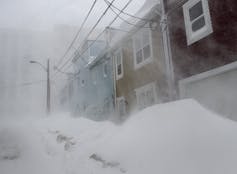
In the novel, a blizzard is also a form of pathetic fallacy. St. John’s is seen here in January 2020. THE CANADIAN PRESS/Andrew Vaughan
The conflict is set against a blizzard — a nod to the St. John’s climate, but also a form of pathetic fallacy, mirroring the internal strife of several characters. Their growing bitterness and trauma mean they make decisions, usually bad ones, that give rise to the novel’s mounting tensions.
The novel opens with the warning that “this might hurt a little” (thank you, Megan), but this is polite understatement. The first few pages belie the warning and read as deliciously irreverent, as if someone pushed the Maritimes’ Anne of Green Gables into a mud puddle.
Increasingly, however, the tone shifts, ultimately transforming into a thorny, visceral, unrelenting narrative, somewhat reminiscent of Moore’s writing — one that does not shirk from disclosing the brutal realities of what it means to be a vulnerable woman in contemporary western society.
‘ACES’
Being a “vulnerable woman” in this book is a redundancy, since it really is a question of degree; however, there are women who are more vulnerable and suffer more than others.
Take Iris, the central female character. She works at the restaurant to overcome obstacles, particularly financial ones, that prevent her from pursuing her studies as an artist — but those obstacles also include familial traumas. Mulling over scientific data about “Adverse Childhood Experiences,” or “ACES,” she dryly notes that she “has a pocket full” of them and later that the existing moment is “the worst hand she has ever been dealt.”
That “pocket full” does not portend a good outcome; rather, she is “snarled” by John Fisher, the chef and her boss, a predator who, “like an angry rival fisher,” “reels” her in “hand over fist over hand over fist.” His apparent emotional offerings are a pretence, just out of reach of Iris’s grasping hands.“
Coles’ compassion and scathing judgement often vie for centre stage, never quite cancelling the other out. You may wish, for example, to judge George, whose class, racialized white privilege and protective father shield her (yes, her) from those who prey on the vulnerabilities of women like Iris, and whose selfish, self-absorbed tendencies are less than charming.
But the moment you may feel tempted to judge her too far — and she does warrant some — Coles reminds you that George too wrestles with being identified as a “pathetic childless woman” who does “the backbreaking emotional labour of two humans:” her own and her husband’s, incidentally a member of the metaphorical “local coward gun club” to which the title alludes.
These characters may be flawed, but the writing is not. The polyphony of voices is animated and remarkable. The prose is fresh, street-smart and savvy — taking clichés and even mashing these back into proper service as poetry.
Critical conversations
The narrative is timely, in view of the recent debacles and critical conversations that have surfaced in relation to the #MeToo movement, what it means to #BelieveWomen or those that inform the field of CanLit.
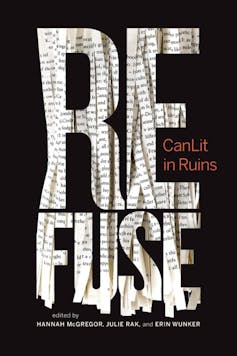
‘Refuse: Canlit in Ruins,’ edited by Hannah McGregor, Julie Rak and Erin Wunker. (Book*hug Press)
As an example, Refuse: CanLit in Ruins addresses the controversies that have animated the literary scene, and tackles gritty issues like rape culture and forms of domination and exploitation. Increasingly, we are all being invited to consider the responsibilities and connections we need to assume in the face of disclosures women make about their life stories.
One character, Olive, a young Indigenous woman, is directly asked at the novel’s outset: “So who are your relations?” Even as she comes to embody the resilience of women — their agency in times of chaos — the novel suggests readers consider that question, over and over again.
The Local Coward Gun Club fearlessly counters assumptions about sex, gender, class and racialized privilege about intersectional narratives, and demands that we look full in the face at the ways and number of times women and others have been injured; the number of times they have been disavowed when they have asked for help; the number of times they have been ignored, victimized or blamed instead of being supported.
The novel will demand that you, the reader, be accountable.
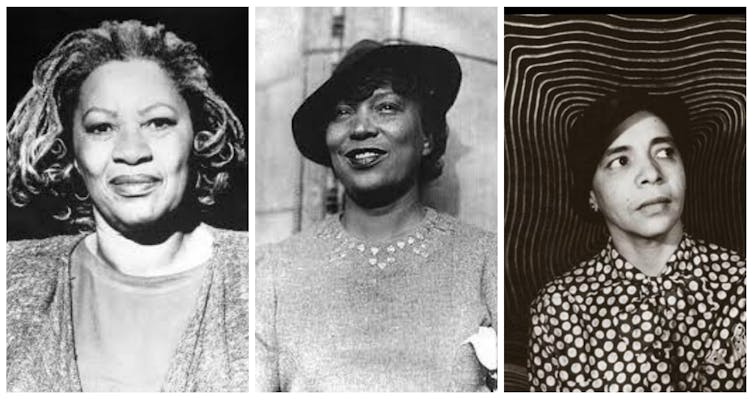
Toni Morrison, Zora Neale Hurston and Nella Larsen are on this short list of enduring must-read writers. Left to right: Nobel Prize, U.S. Library of Congress, Yale archive
In Mules and Men (1935), anthropologist, creative writer and Harlem Renaissance upstart Zora Neale Hurston relays the evocative folktale “Why the Sister in Black Works Hardest.” Fatigued after the work of Creation, God casts a massive bundle onto the earth. Intrigued by the mysterious object, a white Southern woman during the antebellum era asks her husband to retrieve it. Reluctant to tote the load himself, the master instructs a slave to fetch it.
Soon wearied of the task, the slave then commands his wife to shoulder the burden. She does so, excited at the prospect of exploring the contents. When she opens the package, however, what leaps out at her and Black women for all posterity is none other than hard work.
African American women writers have tackled the hard work of representing a diverse spectrum of lived and imagined experiences, including and especially their own. This labour occurs against the backdrop of centuries-long struggles with racist oppression and gender-based violence, including — but not limited to — slavery’s culture of endemic rape, forced or interrupted motherhood, infanticide, concubinage, fractured families and egregious physical and mental abuse.
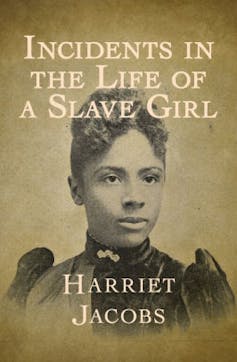
These ordeals also emerge in slave narratives by women. Harriet Jacobs’ Incidents in the Life of a Slave Girl (1861) emphasizes such travails. A target of relentless sexual harassment by her much-older master, Jacobs laments, “When they told me my new-born babe was a girl, my heart was heavier than it had ever been before. Slavery is terrible for men; but it is far more terrible for women.”
Once emancipated, African American women still faced staggering impediments when pursuing educational, entrepreneurial and employment opportunities. Political participation meant restrictions on voting rights both as women and as people of colour. Racist caricatures impugned everything from a woman’s intelligence and moral capacity to her skin color, texture of hair and body shape. Stereotypes like the docile Mammy, the Tragic Mulatta, the clownish Topsy, the oversexed Jezebel, the greedy Welfare Queen, the amoral Hoodrat and the Mad Black Woman (still prevalent today) remain testaments to a history of disrespect and erasure.
Hurston’s tale symbolizes the enduring social struggles Black women have faced living in what feminist critic bell hooks has termed white supremacist capitalist patriarchy.
In addition to influential autobiographers like Maya Angelou, dramatists like Lorraine Hansberry and poets like Gwendolyn Brooks, fiction writers have consistently demonstrated how imaginative art can simultaneously inform, persuade, entertain, catalyze social change and address individual as well as collective concerns.
Here is a short list of pivotal texts by African American women from the past century. These writers are but a small sample of the artists and intellectuals whose output resisted the force of what contemporary feminist critic Moya Bailey has termed misogynoir, or the corrosive fusion of anti-Blackness and misogyny prevalent in popular culture today. These women have completed the groundwork — and hard work — of envisioning a more just, inclusive society going forward.
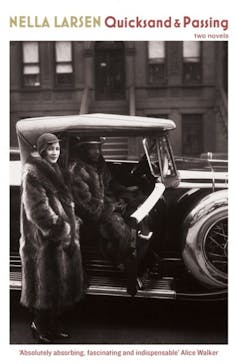
Quicksand (1928) and Passing (1929) by Nella Larsen
These novellas follow mixed-race women whose uneasy status on the colour line (including the lure of passing as white) complicates their lives in dangerous, even fatal ways. Passing is revolutionary for its depiction of homoerotic tension between two upper-middle-class Black women. Quicksand offers insight into the exoticization of African American women abroad and the contest between art and domesticity as viable avenues for a fulfilling life.
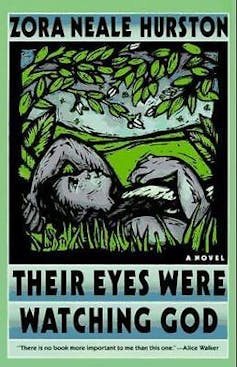
Their Eyes Were Watching God (1937) by Zora Neale Hurston
This story is the lyrical account of thrice-married Janie Crawford who finds a mature vision of love and fulfillment amid incessant gossip and a difficult family history. The all-Black township of Eatonville, Fla., and the rich “muck” of the Everglades contribute to a portrait of community health, daily striving and resolute self-awareness.
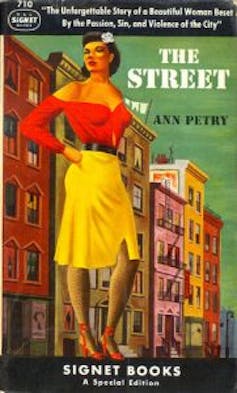
The Street (1946) by Ann Petry
This social realist novel follows single mother Lutie Johnson as she attempts to make a life for her young son in a predatory urban space. Weathering sexism, racism, classism, poverty and intense personal frustration, Lutie attempts to resist the brutality of the environment that gives the novel its loaded name.
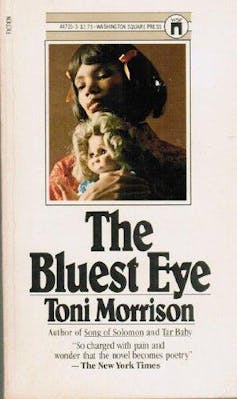
The Bluest Eye (1970) by Toni Morrison
This book is a searing portrait of a young girl’s coming-of-age and eventual undoing in the years following the Great Depression. Tumultuous family dynamics, psychological trauma and incest, the quest for compassion and self-love, and the toxic myth of Black ugliness coalesce in this first novel by the Nobel Laureate and author of neo-slave narrative Beloved (1987).
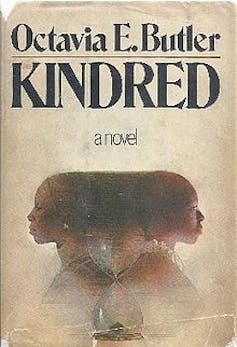
Kindred (1979) by Octavia Butler
Oscillating between the 1970s and the early 19th century, this science fiction odyssey (re)connects a contemporary Black woman writer and her white husband with her ancestors on a Maryland plantation. The novel is buoyed up by the dramatic tension of time travel and the juxtaposition of the pre-civil War Antebellum-era with Civil Rights-era racial attitudes, including those about interracial love and allyship.
The Women of Brewster Place (1982) by Gloria Naylor
Structured like a narrative quilt, these interconnected experiences of seven women span different generations, professions, class backgrounds and understandings of their place in the world. The eroded apartment complex that links them is the backdrop for unbearable pain as well as the promise of transformation and reconciliation.
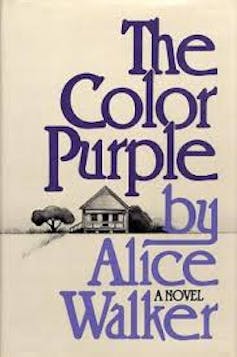
The Color Purple (1982) by Alice Walker
A tale of two sisters, Celie and Nettie, this novel constellates their love and longing via letters and imagined conversations across the Atlantic. Unsparing in its critique of domestic violence and toxic masculinity, yet tender in its treatment of various human weaknesses, the novel underscores Black women’s need for self-regard and mutual care. Not only are these acts revolutionary, but they also offer a glimpse of the divine.
Nancy Kang, Assistant Professor of Women’s and Gender Studies and Canada Research Chair in Transnational Feminisms and Gender-Based Violence, University of Manitoba
With over 100 issues, ‘Young Love’ was one of the longest running romance comics series. Gary Lee Watson Comic Book Collection, Irvin Department of Rare Books and Special Collections, University of South Carolina Libraries, Author provided
As the reference and instruction librarian, I’m tasked with getting to know the collection so I can exhibit parts of it and use the materials for teaching. One of the great pleasures of assessing and cataloging Watson’s collection has been learning about how comic books have changed over time. Sifting through Watson’s vast collection of 140,000-plus comics, I’m able to see the genre’s entire trajectory.
Before World War II, superheroes were all the rage. Reflecting anxieties over the Great Depression, the rise of fascism and the march to war, readers yearned for mythical figures who would defend the disenfranchised and uphold liberal democratic ideals.
Once the war ended, the content of comic books started to change. Superheroes gradually fell out of fashion and a proliferation of genres emerged. Some, such as Westerns, offered readers a nostalgic fantasy of a pre-industrial America. Others, like true crime and horror, hooked readers with their lurid tales, while science fiction comics appealed to the wonders of technological advancement and trepidation about where it might lead us.
But there was also a brief period when the medium was dominated by the romance genre.
Grounded in artistic and narrative realism, romance comics were remarkably different from their superhero and sci-fi peers. While the post-war popularity of romance comics only lasted a few years, these love stories ended up actually having a strong influence on other genres.
Romance comics’ origin story
Though today they are most famous for creating “Captain America,” the creative duo of Joe Simon and Jack Kirby launched the romance comic book genre in 1947 with the publication of a series called “Young Romance.”
Teen comedy series like “Archie” had been around for a few years and occasionally had romantic story lines and subplots. Romance pulps and true confession magazines had been around for decades.
But a comic dedicated to telling romantic stories hadn’t been done before. With the phrase “Designed for the More Adult Readers of Comics” printed on the cover, Simon and Kirby signaled a deliberate shift in expectations of what a comic could be.
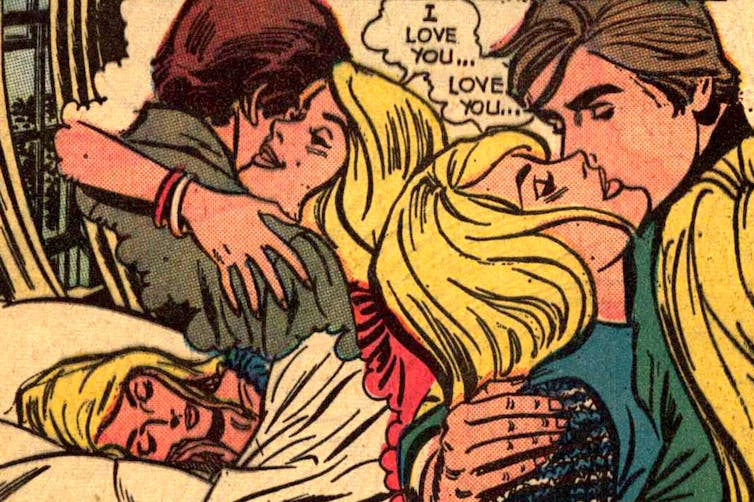
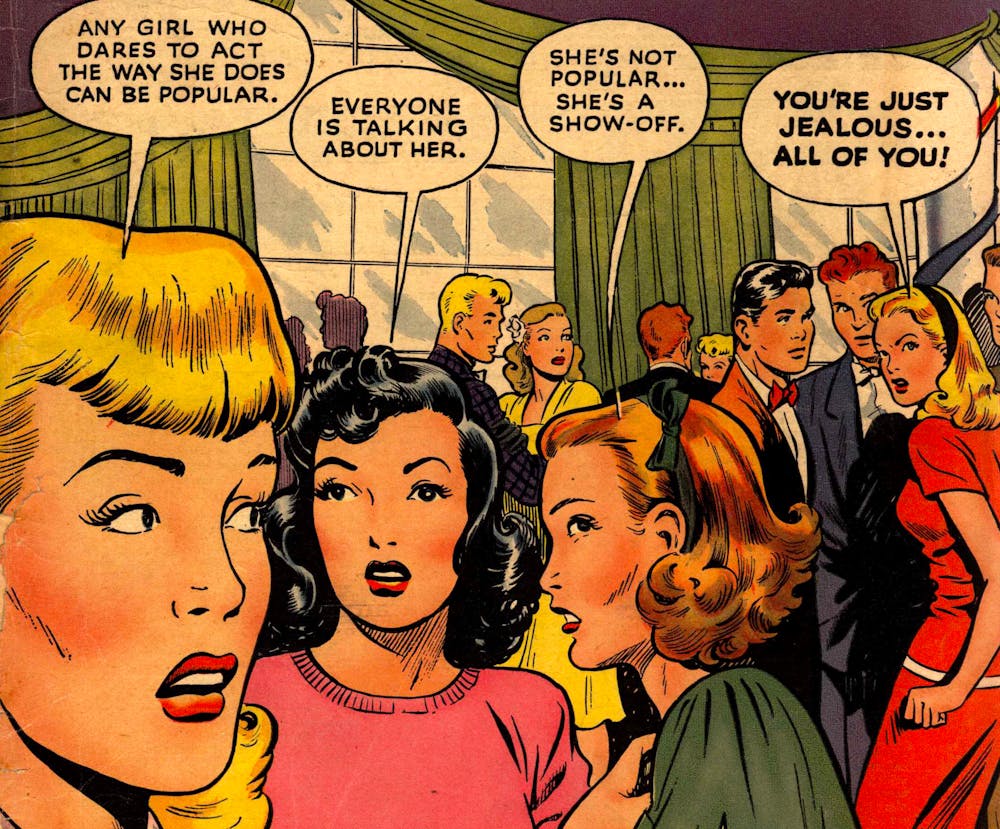
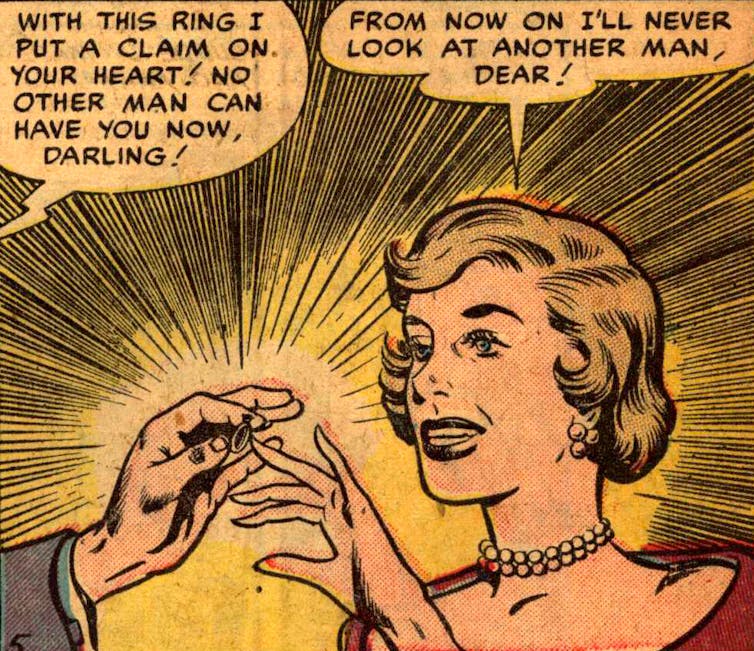
While most scholars have argued that romance comics tend to reinforce conservative values – making marriage the ultimate goal for women and placing family and middle-class stability on a pedestal – the real pleasure of reading these books came from the mildly scandalous behavior of their characters and the untoward plots that the narratives were ostensibly warning against. With titles like “I Was a Pick-Up!,” “The Farmer’s Wife” and “The Plight of the Suspicious Bridegroom,” “Young Romance” and its sister titles quickly sold out of their original print runs and began outselling other comics genres.
Issue #1 of ‘Teen-Age Romances’ (St. John, 1949). Gary Lee Watson Comic Book Collection, Irvin Department of Rare Books and Special Collections, University of South Carolina Libraries, Author provided
Other publishers noticed the popularity of the genre and followed suit with their own romance titles, most of which closely followed Simon and Kirby’s style and structure. By 1950, about 1 in 5 of all comic books were romance comics, with almost 150 romance titles being sold by over 20 publishers.
The rage for all things romance was so sudden that publishers eager to take advantage of the new market altered titles and even content in order to save on second-class postage permits. Second-class or periodical postage is a reduced rate that publishers can use to save on the cost of mailing to recipients. Rather than apply for new permits every time they tested a new title, comics publishers would simply alter a failing title while retaining the issue numbering in order to keep using the preexisting permit. To comics historians, this is a telltale sign that the industry is undergoing a sudden change.
One striking example of this is when comics publisher Fawcett ended its failing superhero comic “Captain Midnight” in 1948 with issue #67 and launched its new title, “Sweethearts,” in issue #68. In this case, the death of a superhero comic became the birth of a romance comic.
Issue #3 of ‘Bride’s Romances’ (Quality Comics, 1953). Gary Lee Watson Comic Book Collection, Irvin Department of Rare Books and Special Collections, University of South Carolina Libraries, Author provided
With so many new titles flooding newsstands and department stores, the bubble was bound to burst. In what comic book historian Michelle Nolan has dubbed “the love glut,” 1950 and 1951 witnessed a rapid boom and bust of the romance genre. Many romance titles were canceled by the mid-1950s, even as stalwarts of the genre, such as “Young Romance,” remained in print into the mid-1970s.
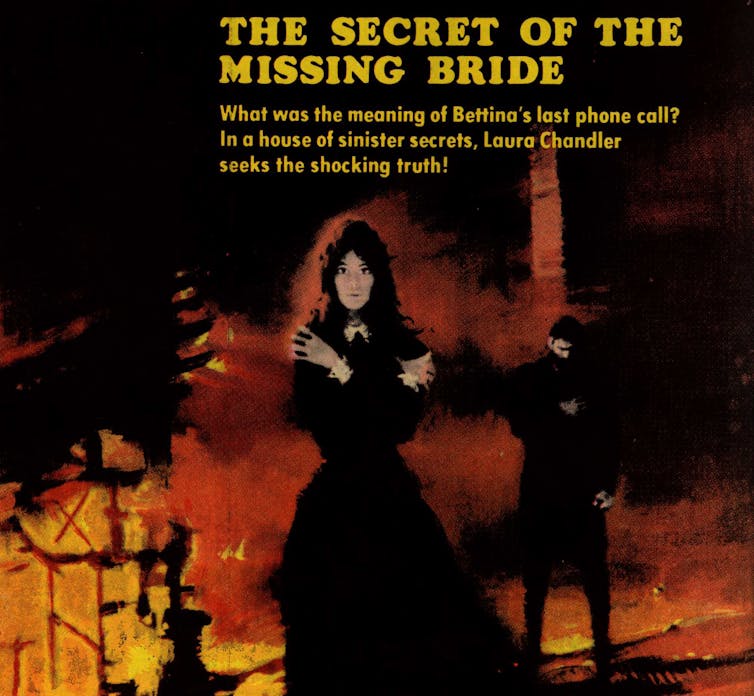
There was the brief popularity of the sub-genre of gothic romance comics in the 1970s – series with names like “The Sinister House of Secret Love” and “The Dark Mansion of Forbidden Love.” But romance comics would never approach their brief, postwar peak.
Gothic romances – like this issue of ‘The Dark Mansion of Forbidden Love’ – had a brief run in the 1970s. Gary Lee Watson Comic Book Collection, Irvin Department of Rare Books and Special Collections, University of South Carolina Libraries, Author provided
A brief boom, an enduring influence
Among collectors, issues of romance comics are less sought after than those of other genres. For this reason, they tend to go under the radar.
Romance comics, however, featured work by pioneering artists like Lily Renée and Matt Baker, both of whom worked on first issue of “Teen-Age Romances” in 1949.
Baker is the first-known black artist to work in the comic book industry and Renée was one of comics’ first female artists. Prior to working on “Teen-Age Romances,” they both drew “good girl art” – a set of artistic tropes borrowed from pinups and pulp magazines – for several titles. Their work in both genres exemplifies how earlier pulp magazine themes of desire and seduction could readily be applied to newer genres.
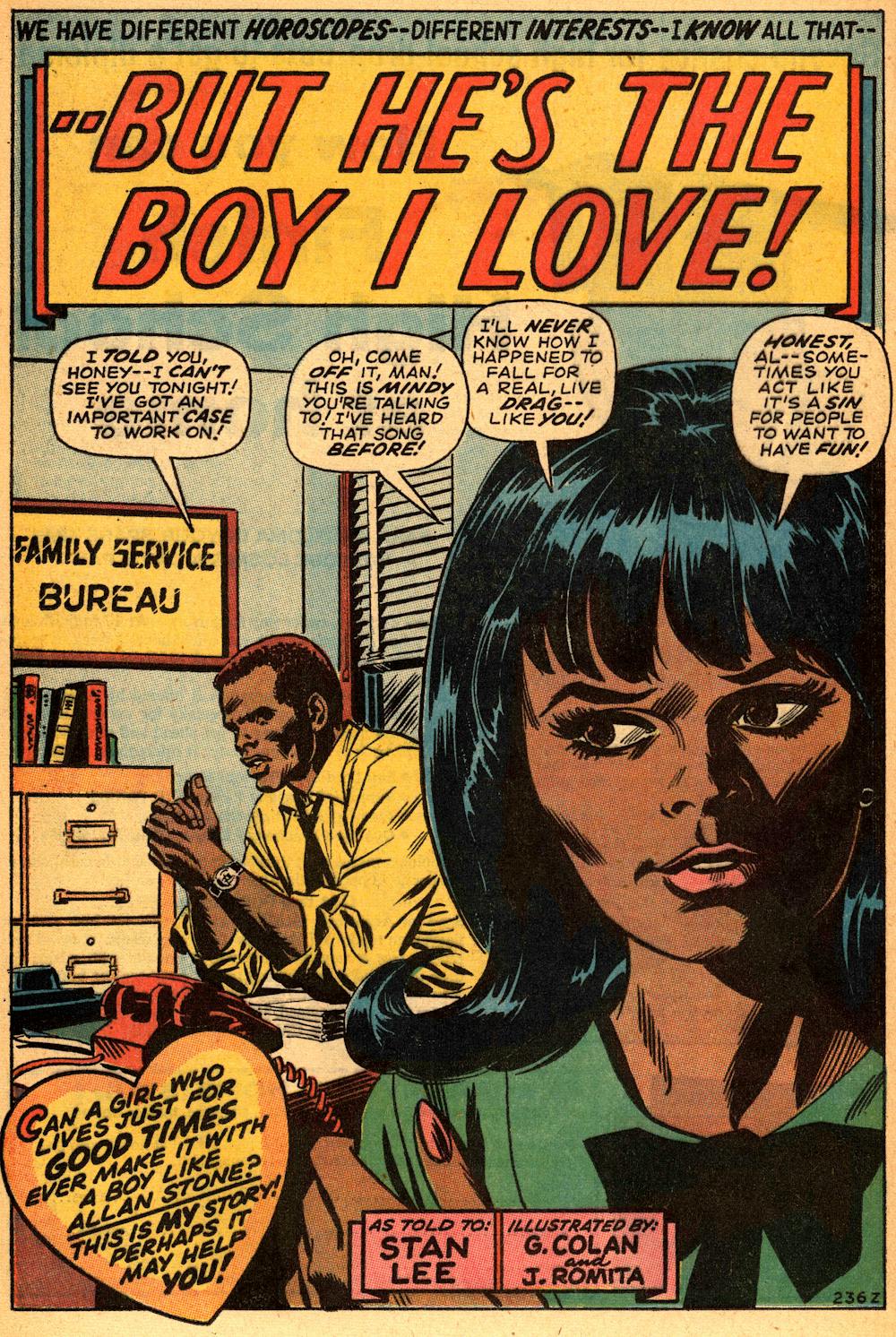
‘But He’s the Boy I Love’ was one of the few romance comic to feature black characters. Gary Lee Watson Comic Book Collection, Irvin Department of Rare Books and Special Collections, University of South Carolina Libraries, Author provided
After the “love glut,” sub-genre mashups nonetheless emerged. For example, cowboy romances were briefly popular. Later, in response to the civil rights movement, Marvel published the 1970 story “But He’s the Boy I Love,” which was the first story in a romance comic to feature African-American characters since Fawcett’s three-issue run of “Negro Romance” in 1950.
Even after romance comics largely fell out of fashion, the genre’s visual tropes and narrative themes became more prevalent during what’s known as the “Silver Age,” a superhero revival that lasted from 1956 to 1970. Titles such as “Superman’s Girl Friend Lois Lane” often borrowed heavily from romance for their plots to generate intrigue and tension in the hopes of driving up sales.
Issue 89, in which Lois marries Bruce Wayne, is a prime example of such marketing techniques. Issues such as these were often situated as “what if” narratives that offered readers speculative story lines, such as “What if Lois Lane married Bruce Wayne?” Though they’re generally thought of as separate from the superhero canon, these love stories show that comic book writers had internalized the main narrative techniques of romance comics even if the genre itself was in decline.
But other comics didn’t merely use romantic themes for the occasional gimmick issue. Instead, they made the love lives of their characters a central plot point and a fundamental aspect of their characters’ identities. Comics such as the “Fantastic Four” and the “X-Men” rely heavily on the heated emotions and jealousies found in group dynamics and love triangles.
Take Wolverine. Presumably tough and stoic, he’s so enamored of Jean Grey – and so envious of her love interest, Scott Summers – that you could argue that unrequited love is one of his primary motivations throughout the series.
Thanks to romance comics, even stoic superheroes got bitten by the love bug.












 At the BookShelf


You must be logged in to post a comment.