
 Mother Ship: An Alien Invasion Book by Scott Bartlett
My rating: 2 of 5 stars

Katherine Shwetz, University of Toronto
Masked people standing six feet apart. Empty shelves in the supermarket. No children in sight outside the school during recess.
The social upheaval caused by COVID-19 evokes many popular dystopian or post-apocalyptic books and movies. Unsurprisingly, the COVID-19 crisis has sent many people rushing to fiction about contagious diseases. Books and movies about pandemics have spiked in popularity over the past few weeks: stuck at home self-isolating, many people are picking up novels such as Stephen King’s The Stand or streaming movies such as Steven Soderbergh’s Contagion.
Yet no one seems to fully agree on why reading books or watching movies about apocalyptic pandemics feels appealing during a real crisis with an actual contagious disease. Some readers claim that contagion fiction provides comfort, but others argue the opposite. Still more aren’t totally sure why they these narratives feel so compelling. Regardless, stories about pandemics call to them all the same.
So what, exactly, does pandemic fiction offer readers? My doctoral research on contagious disease in literature, a project that has required me to draw from both literary studies and health humanities, has taught me that a contagious disease is always both a medical and a narrative event.
Pandemics scare us partly because they transform other, less concrete, fears about globalization, cultural change, and community identity into tangible threats. Representations of contagious diseases allow authors and readers the opportunity to explore the non-medical dimensions of the fears associated with contagious disease.
Pandemic fiction does not offer readers a prophetic look into the future, regardless of what some may think. Instead, narratives about contagious disease hold up a mirror to our deepest, most inchoate fears about our present moment and explore different possible responses to those fears.

One novel that has grown in popularity over the past few weeks is been Emily St. John Mandel’s Station Eleven. Mandel’s novel follows a troupe of Shakespearean actors touring a post-apocalyptic landscape in a North America decimated by contagious disease.
Mandel’s novel serves as a test case for understanding the cultural response to COVID-19. The current pandemic sharpens fears about the relative instability of our communities (along with posing an immediate threat to our health, of course).
Coverage of Station Eleven claims that the text is uniquely relevant to the COVID-19 situation. This response treats Mandel’s novel as through it predicts what will happen as a result of the COVID-19 crisis. Some news outlets even call the novel a “model for how we could respond” to an apocalyptic pandemic.
This is not the case. Station Eleven draws from apocalyptic literature, a narrative form that tells us more about the present than the future. Mandel herself has called Station Eleven more “a love letter to the world we find ourselves in” than a handbook for a post-apocalyptic future Indeed, Mandel herself publicly suggested that her novel is not ideal reading material for the present moment.
In fact, Station Eleven spends almost no time focused on the actual epidemic. The vast majority of the novel takes place before and after the outbreak. The medical details of the disease are less important than the rhetorical impact of the destructive virus.
Those fears in Station Eleven coalesce in scenes where communities must shift how they understand their relationship to one another. Characters stranded in an airport hangar, for example, must work together to build a new society that accommodates their shared traumatic experience. The pandemic in Mandel’s novel dramatically emphasizes to the characters not how to respond to a virus but, instead, how powerfully interconnected they truly are — the same thing COVID-19 is doing to us right now. Part of what pandemic fiction illuminates is how fears of invasion and the perceived threat of outsiders can diminish our humanity.
A virus crosses the boundary of your body, invading your very cells and changing your body on an incredibly intimate level.
It is unsurprising, then, that scholars see a strong relationship between contagious diseases and community identity. As anthropologist Priscilla Wald puts it, contagious disease “articulates community.” Pandemics emphasize how our individual bodies are connected to our collective body.
Left unchecked, the rhetorical implications of these narratives can lead to discriminatory behaviour or racism.
In Station Eleven, the villain — a cult leader prophet — continually denies his fundamental connection to those around him. He claims that he and his followers survived the epidemic because of their divine goodness and not because of luck. As a result, he engages in violent, abusive behaviours intended to quash the fear associated with interdependence — a common response to this fear.
The prophet in Station Eleven does not survive the novel; the surviving characters are the ones who accept that they cannot extricate themselves from connection to other people.
Contagious diseases — both in fiction and in real life — remind us that the social and cultural boundaries we use to structure society are fragile and porous, not stable and impermeable.
Although these works of literature cannot prophecize an imminent post-apocalyptic future, they can speak to our present.
So if reading a book about a pandemic appeals to you, go for it — but don’t use it as an instructional manual for an outbreak. Instead, that work of fiction can help you better understand and manage how the virus amplifies complex, diverse and multi-faceted fears about change in our communities and our world.
Katherine Shwetz, PhD Candidate and Course Instructor, University of Toronto
This article is republished from The Conversation under a Creative Commons license. Read the original article.
Kriston R. Rennie, The University of Queensland
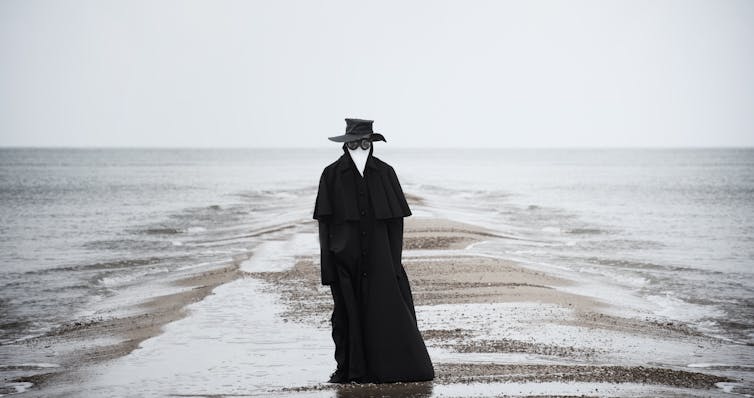
A plague of serious proportions is ravaging the world. But not for the first time.
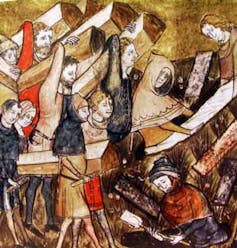
From 1347-51, the Black Death killed anywhere from one-tenth to one-half (or more) of Europe’s population.
One English chronicler, Thomas Walsingham, noted how this “great mortality” transformed the known world: “Towns once packed with people were emptied of their inhabitants, and the plague spread so thickly that the living were hardly able to bury the dead.” As death tolls rose at exponential rates, rents dwindled, and swaths of land fell to waste “for want of the tenants who used to cultivate it….”
As a medieval historian, I’ve been teaching the subject of plague for many years. If nothing else, the feelings of panic between the Black Death and the COVID-19 pandemic are reminiscent.
Like today’s crisis, medieval writers struggled to make sense of the disease; theories on its origins and transmission abounded, some more convincing than others. Whatever the result, “… so much misery ensued,” wrote another English author, it was feared that the world would “hardly be able to regain its previous condition.”
Medieval writers produced a variety of answers for the plague’s origins. Gabriele de Mussis’ Historia de Morbo attributed the cause to “the mire of manifold wickedness,” the “numberless vices,” and the “limitless capacity for evil” exhibited by an entire human race no longer fearing the judgement of God.
Describing its eastern origins, he further noted how the Genoese and Venetians had imported the disease to western Europe from Caffa (modern-day Ukraine); “carrying the darts of death,” disembarking sailors at these Italian port-cities unwittingly spread the “poison” to their relations, kinsmen and neighbours.
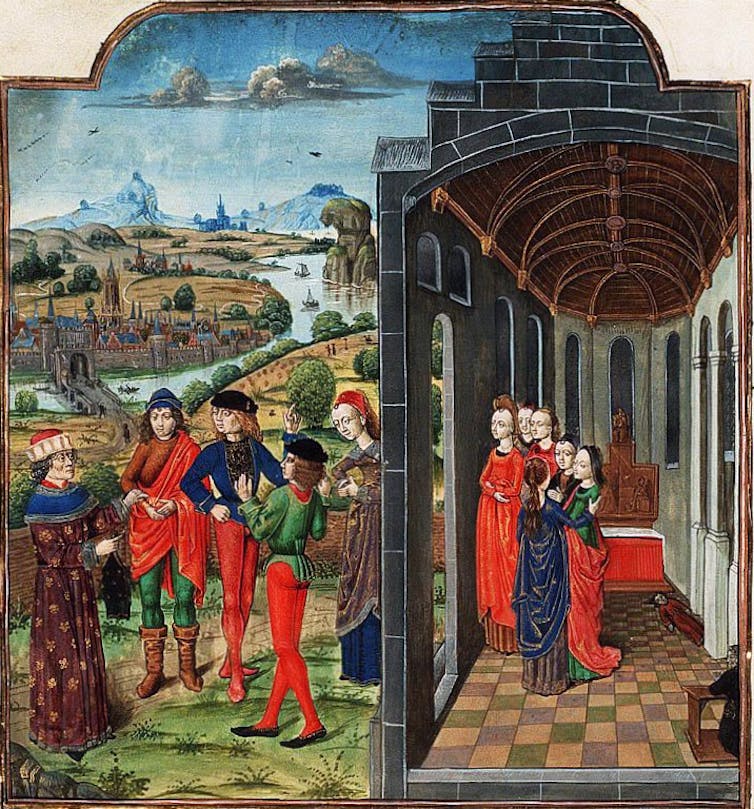
Containing the disease seemed nearly impossible. As Giovanni Boccaccio wrote about Florence, the outcome was all the more severe as those suffering from the disease “mixed with people who were still unaffected …” Like a “fire racing through dry or oily substances,” healthy persons became ill.
Possessing the power to “kill large numbers by air alone,” through breath or conversation, it was thought, the plague “could not be avoided.”
Scholars worked tirelessly to find a cure. The Paris Medical Faculty devoted its energies to discovering the causes of these amazing events, which even “the most gifted intellects” were struggling to comprehend. They turned to experts on astrology and medicine about the causes of the epidemic.
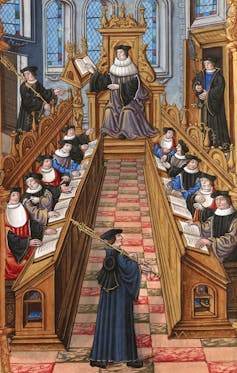
On the pope’s orders, anatomical examinations were carried out in many Italian cities “to discover the origins of the disease.” When the corpses were opened up, all victims were found to have “infected lungs.”
Not content with lingering uncertainty, Parisian masters turned towards ancient wisdom and compiled a book of existing philosophical and medical knowledge. Yet they also acknowledged the limitations in finding a “sure explanation and perfect understanding,” quoting Pliny to the effect that “some accidental causes of storms are still uncertain, or cannot be explained.”
Prevention was critical. Quarantine and self-isolation were necessary measures.
In 1348, to prevent the illness from spreading through the Tuscan region of Pistoia, strict fines were enforced against the movement of peoples. Guards were placed at the city’s gates to prevent travellers entering or leaving.
These civic ordinances stipulated against importing linen or woollen cloths that might carry the disease. Demonstrating similar sanitation concerns, bodies of the dead were to remain in place until properly enclosed in a wooden box “to avoid the foul stench which comes from dead bodies”; moreover, graves were dug “two and a half arms-lengths deep.”
Butchers and retailers nevertheless remained open. And yet a number of regulations were imposed so that “the living are not made ill by rotten and corrupt food,” with further bans to minimize the “stink and corruption” considered harmful to Pistoia’s citizens.
Authorities responded in different ways to the outbreak. Recognizing the plague’s arrival by ship, the people of Messina “expelled the Genoese from the city and harbour with all speed.” In central Europe, foreigners and merchants were banished from the inns and “compelled to leave the area immediately.”
These were severe measures, but seemingly necessary given the varied social reaction to plague. As Boccaccio famously recounted in his Decameron, the whole spectrum of human behaviour ensued: from extreme religious devotion, sober living, self-isolation and a restricted diet to warding off evil through heavy drinking, singing and merrymaking.
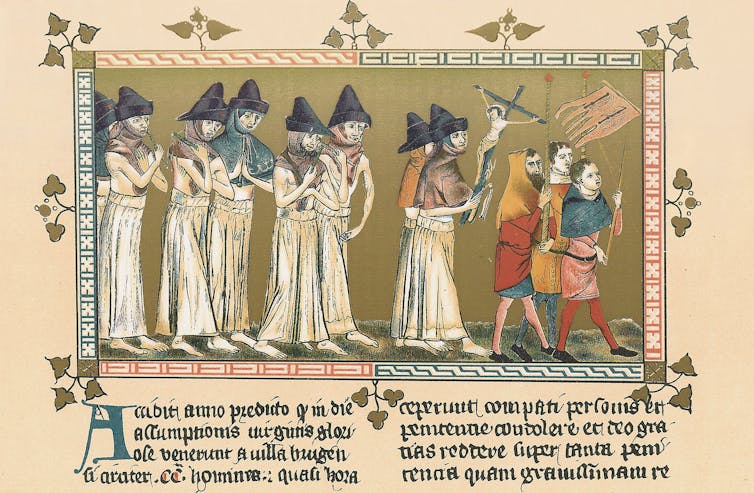
The fear of contagion eroded social customs. The number of dead grew so high in many regions that proper burials and religious services became impossible to perform: new religious customs emerged pertaining to preparing for and presiding over death.
Families were changed. An account from Padua mentions how “wife fled the embrace of a dear husband, the father that of a son and the brother that of a brother.”
Ultimately, there is a human element to plague too often lost in the historical record. Its influence should not be underestimated or forgotten. The modern response to pandemic evokes a similar community response. Different in scope and scale, and indeed in medical practice, administrative and public health actions remain critical.
But in 2020, we are not, as Boccaccio lamented, seeing the law and social order break down. Essential duties and responsibilities are still being carried out. Against our own 21st-century plague, wisdom and ingenuity are prevailing; citizens hang on “the advice of physicians and all the power of medicine,” which unlike the 14th century, is anything but “profitless and unavailing.”
Kriston R. Rennie, Visiting Fellow at the Pontifical Institute of Mediaeval Studies, Toronto, and Associate Professor in Medieval History, The University of Queensland
This article is republished from The Conversation under a Creative Commons license. Read the original article.
James Peacock, Keele University
If COVID-19 has taught us anything, it’s that humans are connected, and that an individual’s actions can have profound consequences for the local community, the nation, and beyond. A good detective story, whether it takes place within an English country house or travels across international borders, reminds readers of this fundamental truth.
Detectives might be charming, eccentric amateurs like Agatha Christie’s Miss Marple, Dorothy L. Sayers’ Lord Peter Wimsey, for example – or tough, world-weary professionals such as Raymond Chandler’s Philip Marlowe or Ian Rankin’s John Rebus.
But in both country-house and hard-boiled traditions their function is similar. They link disparate individuals and communities as they reconstruct events, and raise the possibility that, whoever pulled the trigger or administered the poison, we all share some responsibility for allowing such things to happen.
The selection below, I hope, reflects the genre’s diversity. What connects these books, for all their stylistic variety, is a preoccupation with links between people and communities and a desire to explore the implications of every action, deliberate or accidental.
The first full-length detective novel in American literature, The Dead Letter, published under the pen-name Seeley Register, is a curious hybrid. Featuring a country house that might be haunted, a clairvoyant child who – conveniently – is the detective’s daughter, and scenes of deathly pale women wandering moonlit gardens, mourning lost lovers, it shows how 19th-century detectives emerged from Gothic literature.
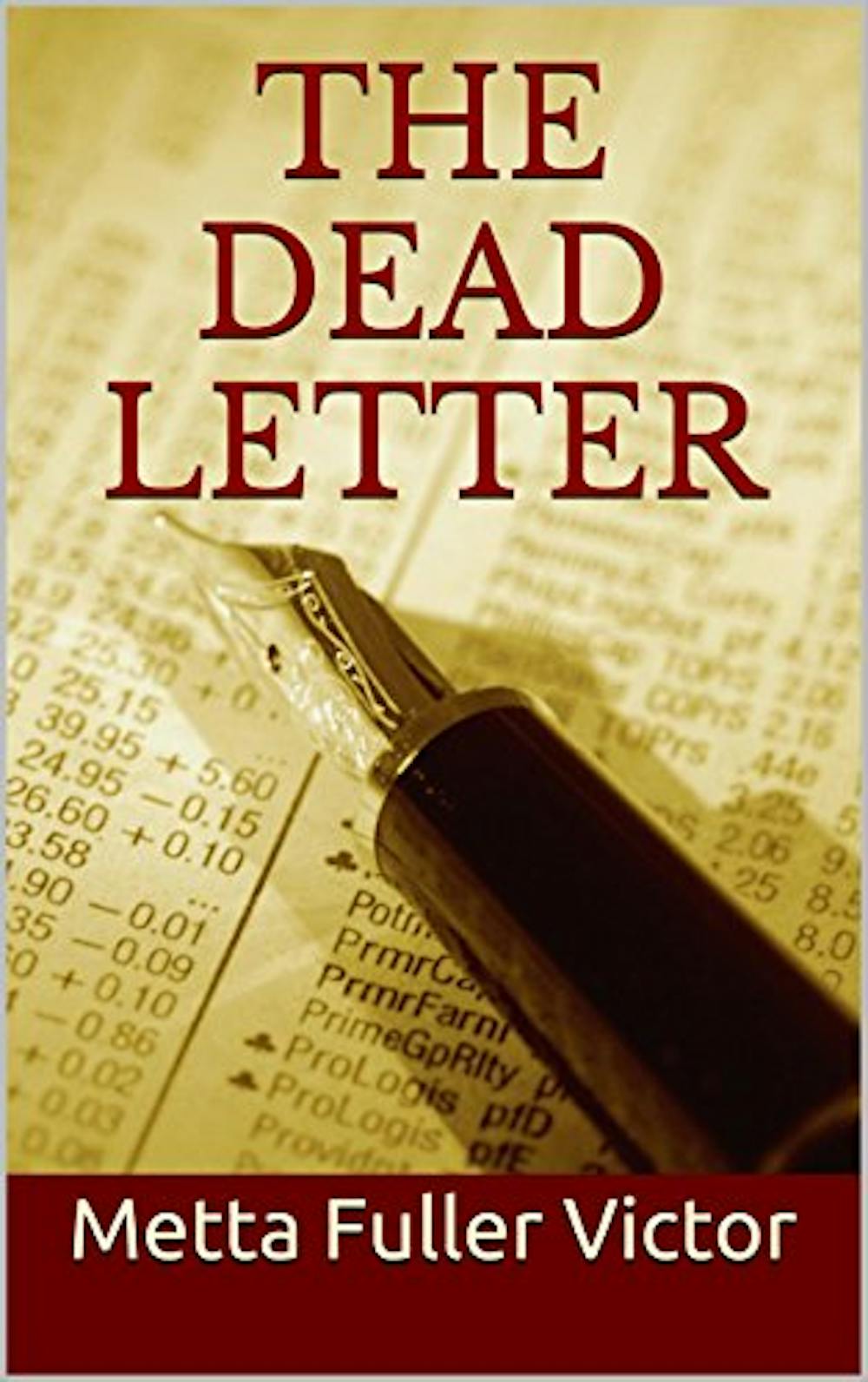
It is also a sentimental love story and a meditation on the corrupting power of money.
Like the Edgar Allan Poe stories which influenced it, and the Sherlock Holmes tales that followed, its narrator is not the detective, but the detective’s friend who – like the reader – is inclined to romanticise the sleuth’s heightened abilities.
The Dead Letter can be florid and outlandish, but it combines its eclectic elements to highly entertaining effect.
Philip Marlowe, the hero of seven novels and numerous short stories by Raymond Chandler, is tall, handsome, witty and admirably cynical about the effects of wealth. I’d love to recommend all the Marlowe stories and, given that its author intended it to be the last, The Long Goodbye might seem an idiosyncratic choice.
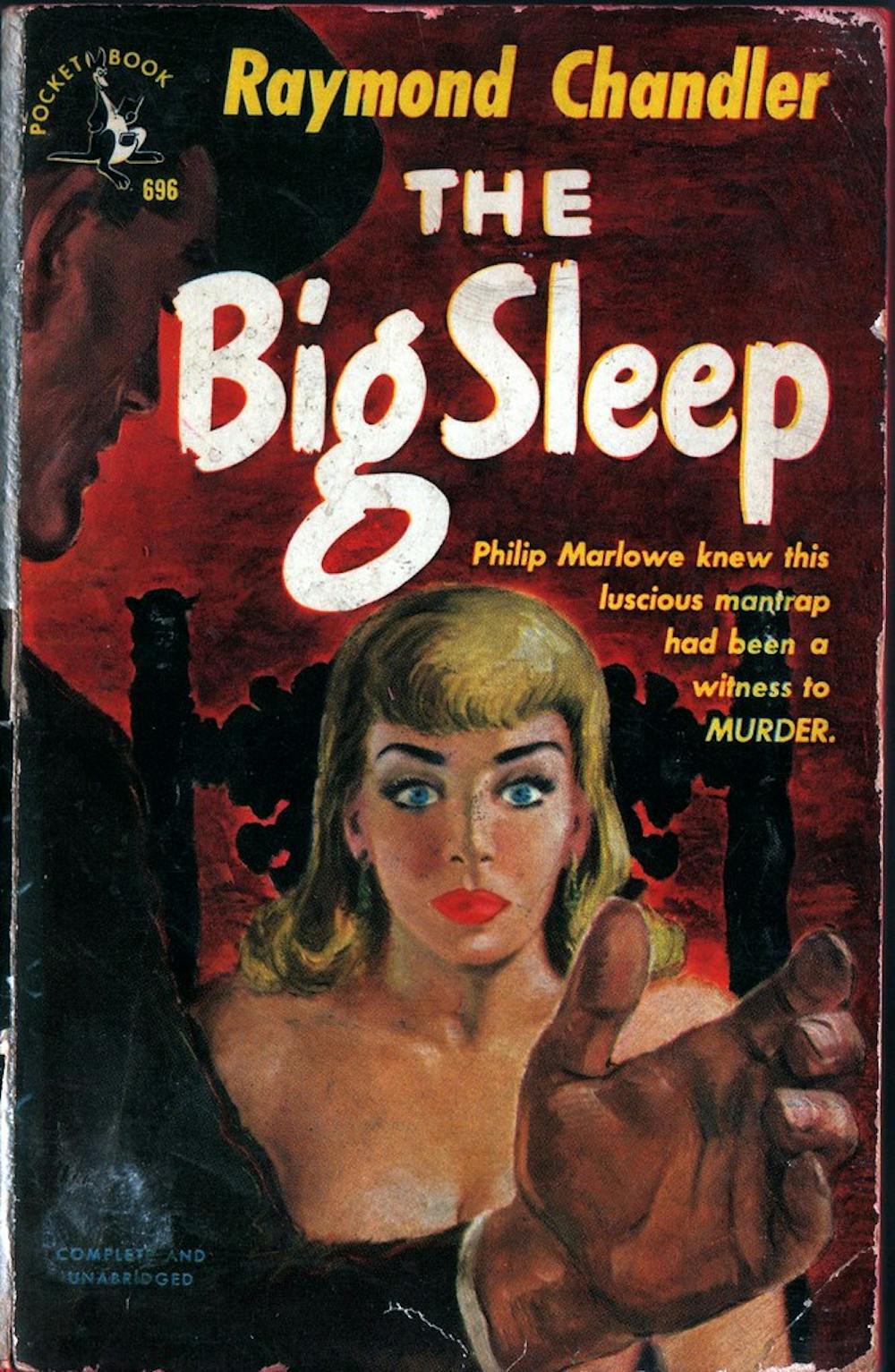
Stranger still, its pleasures are less to do with the detective thriller’s traditional virtues – intricate plotting, dynamic action – and more with the air of nostalgic melancholia Chandler conjures. There are murders, of course, and there is the vivid evocation of Los Angeles in its grubby splendour. There is also Marlowe’s trademark gift for metaphor: at the beginning, watching two people arguing outside a club, he remarks:
The girl gave him a look which ought to have stuck at least four inches out of his back.
But the novel’s heart is the unlikely friendship between Marlowe and Terry Lennox, a rich, dipsomaniac veteran locked in a loveless marriage, emotionally scarred by his combat experiences. As its title suggests, this epic and heartbreaking novel is about goodbyes: to innocence, to friendship, to the conventions of the detective story, and to an America untainted by consumerism.
Christie remains the pre-eminent writer of the “whodunit”. Her sheer prolificacy masks the fact that she is a consistently innovative plotter, unafraid to experiment with point-of-view in sometimes radical ways. She also produces stories that are dark, disturbing, and morally ambiguous – characteristics highlighted in recent adaptations such as the BBC’s version of The Pale Horse.
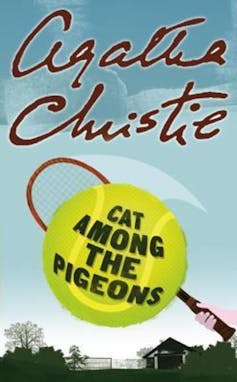
Though not among her most celebrated novels, Cat Among the Pigeons delightfully combines international espionage and country house mystery, with the “country house” being a prestigious girls’ prep school in England where members of staff start dying in suspicious circumstances.
Ingenious and laced with cruelty, it might be read as a story about Great Britain’s declining empire, or the fragile isolation of the upper classes, or it might simply be read as Mallory Towers with added murder.
This comprises three distinctive tales: City of Glass, Ghosts and The Locked Room, that conspire to connect in surprising ways. Often regarded as a model of “antidetection”, Auster’s trilogy frequently confounds expectations, promising stock elements of the hard-boiled story – the enigmatic loner gumshoe, the femme fatale, the dirty city – before jettisoning the cliches and exploring new territory.
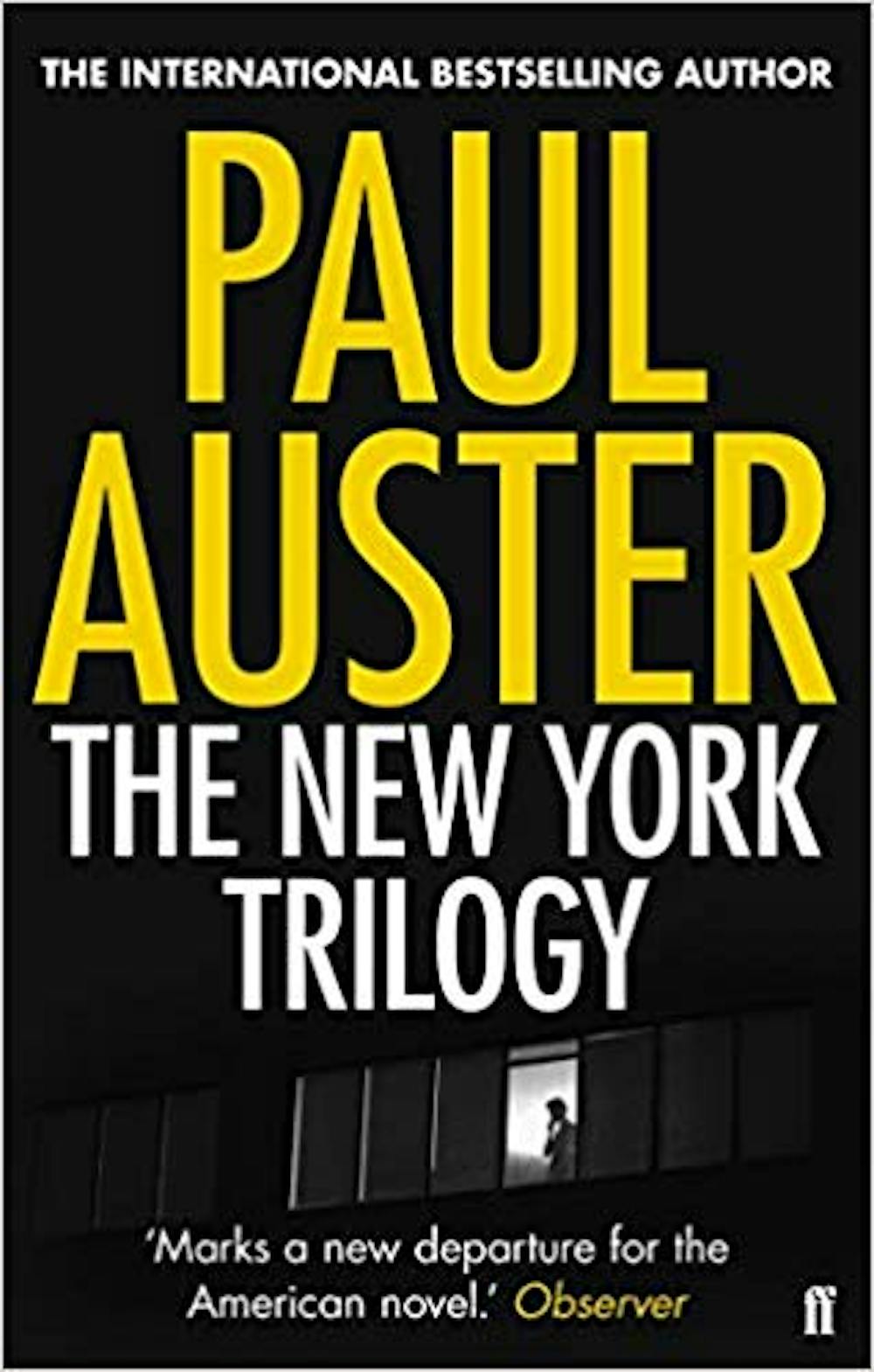
Auster’s New York is a labyrinth ruled by chance, where one’s doppelganger can appear for no reason, where a man can devote his life to collecting and renaming bits of rubbish, and where “Paul Auster” can appear as a character. These are elaborate puzzles yet highly readable thrillers.
They are perfect stories for lockdown because they are about the consolations of reading and the paradoxical truth that the deeper into solitude we go, the more we understand our vital connection to others.
This is the first thriller starring Ezekiel “Easy” Rawlins, an African-American factory worker in the Watts area of Los Angeles, who falls into detection when a stranger enters his local bar and offers him a missing persons job. Mosley’s work exemplifies the ways in which detective stories, tightly bound to specific places and times, function not only as entertainment but also as historical documents.
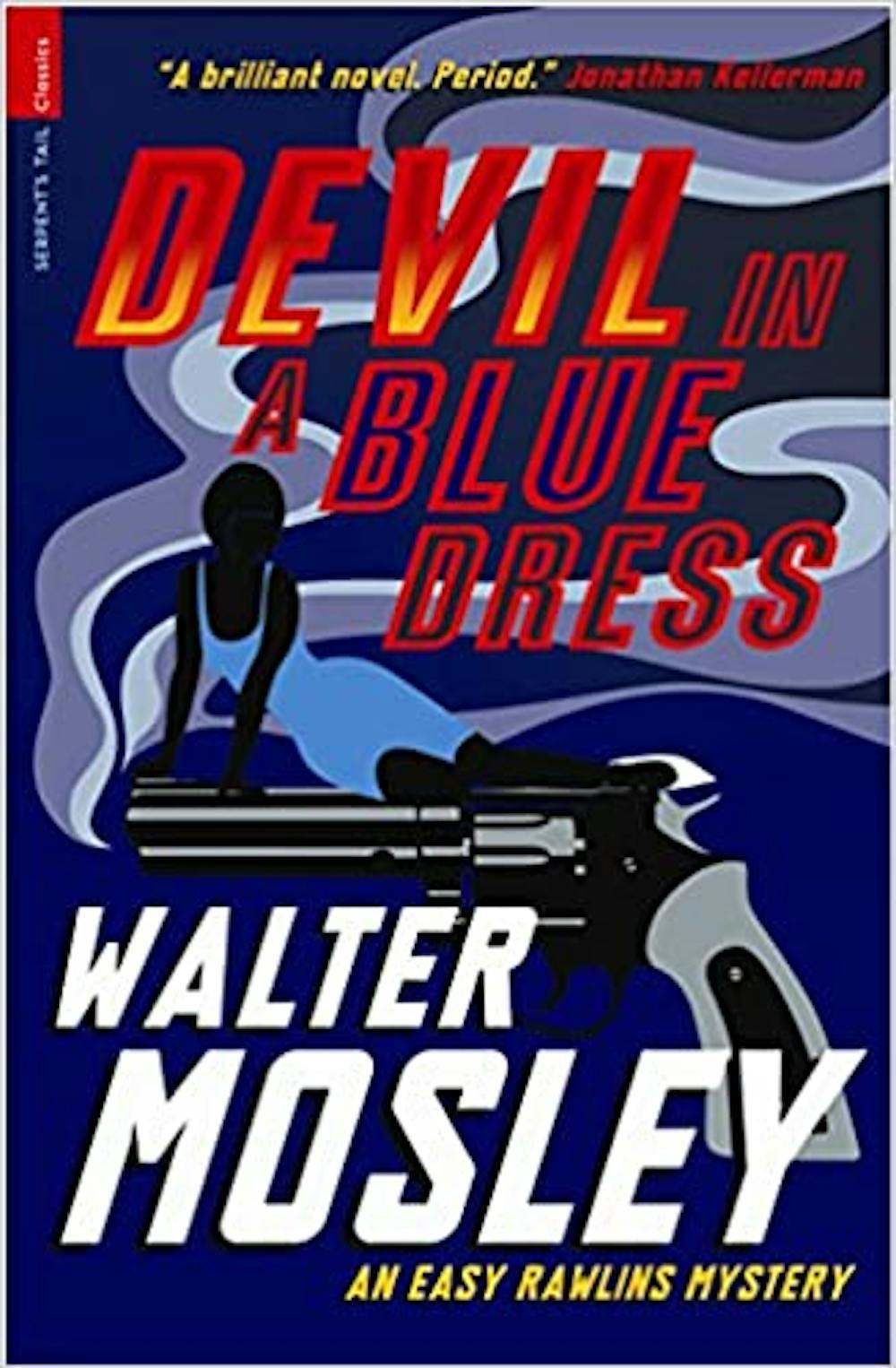
Devil in a Blue Dress, through energetic vernacular dialogue, realistic situations and wry observations on race relations, brilliantly evokes the lives of African-American families who moved from the southern states to California during the Second Great Migration.
More than the talented amateurs of the country house mystery, who possess a timeless quality and whose successful investigations tend to reinstate cosy normality – and Marlowe, a 20th-century knight errant with a nostalgic impulse – Easy Rawlins demonstrates that detectives are shaped by historical circumstances. He also happens to have one of the most captivatingly unstable sidekicks in all detective writing.
Detectives are people who move, tracing links between people, places and times. They are also expert readers: of clues, people, situations. During lockdown, these stories can transport us elsewhere and remind us that reading is an empathetic act, a way of reaching out and trying to connect with others.
James Peacock, Senior Lecturer in English and American Literatures, Keele University
This article is republished from The Conversation under a Creative Commons license. Read the original article.

Tennessee Witney via Shutterstock
Pam Lock, University of Bristol
The evolution of the novel and short story in the 19th century brought us one of the greatest human sources of comfort, besides food and a nice hot bath. When someone tells me they are planning to “curl up with a good book”, I am filled with a sense of peace on their behalf – of quiet enjoyment, perhaps accompanied by a little soft music and the crackle of a fire.
Regular solitary time is becoming the norm for many. Many of us are already tired of the enjoyable inanity of Netflix and Amazon Prime and are ready for something to lose ourselves in completely.
In the 19th century, the novel boomed as literacy and leisure time increased. Novels were frequently published in weekly parts, one to three chapters at a time. They had to be long enough to fill the required number of issues, and interesting enough to ensure readers kept buying the magazine or periodical (or run the risk of being cancelled mid-series). It is this combination that makes them a great resource for times like today.
Human beings are designed to love stories. Our brains seek narratives to help us make sense of the world. We communicate using stories to exchange knowledge and gain understanding. As Robert Louis Stevenson wrote: “fiction is to the grown man what play is to the child” – through fiction we learn by imaginative experience.
Stories help us gain insight into things we cannot or should not experience. They also keep us safe – we tell each other cautionary tales all the time. So let’s do as our NHS doctors and nurses ask and learn from their stories of the virus – while also tucking ourselves away with some great old novels:
An exciting and funny adventure story about a man who goes on holiday and ends up as temporary king of Ruritania.
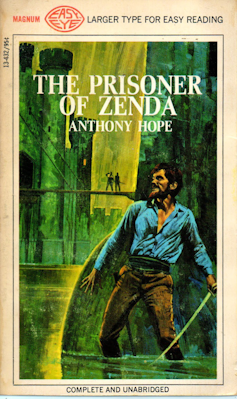
London-born adventurer Rudolf Rassendyll is persuaded to pretend to be the king after the real king is kidnapped by his evil half-brother on the eve of his coronation. A distant relation of the royal family, Rudolf is the king’s spitting image.
Beautifully written and filled with energy, the story romps across the beautiful scenery of Ruritania to the mysterious castle of Zenda. Rudolf is one of the most vibrant and positive characters I have come across and will fill you with hope. But what will he do when he falls in love with the king’s beautiful fianceé?
Read it for free on Project Gutenberg.
Cross-dressing, swashbuckling adventuress Leona Lacoste journeys from Rio de Janeiro to London to clear her father’s name.
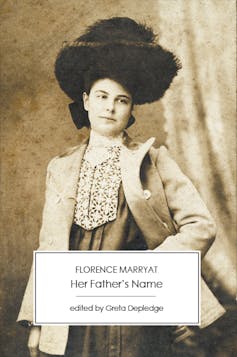
Unknown to her until his death, he has been in hiding in their Brazilian home, having escaped some scandal or crime in England. To get to the bottom of the mystery, Leona must stop at nothing.
Disguised as a man to make the journey possible in the 1870s, she proves herself onboard a ship in a dramatic duel and seduces the daughter of a rich industrialist. But what will she uncover about her unknown family history?
Read it for free on Internet Archive, or buy from Victorian Secrets.
The celebrated mystery which launched a new type of story known as the sensation or enigma novel.
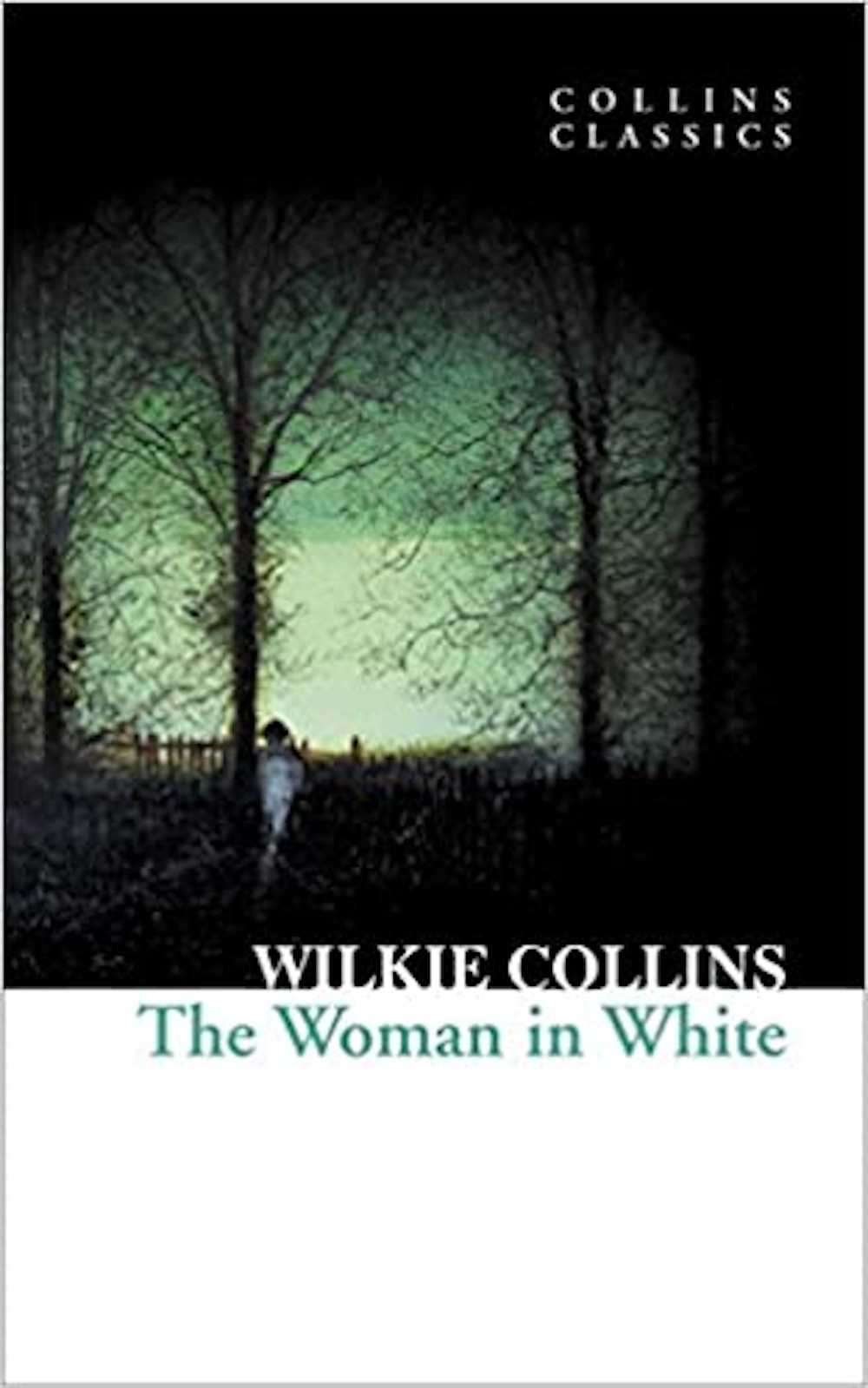
Walter Hartright is startled by the sudden appearance of a mysterious woman dressed in white walking on the road to London late at night. She asks him for directions and he decides to see her safely to a cab.
On the way, he discovers that she is from the very town to which he is about the journey to start work as an art teacher. Little does he know how this mysterious woman and the family in Limeridge will change his life forever.
Read it free on Project Gutenberg.
This may seem an unlikely choice but don’t let the TV and film adaptations fool you. This is a seriously good book. The adventurers who track and foil Count Dracula, led by Mina Harker and Abraham Van Helsing, are the epitome of organised and resourceful Victorian society.
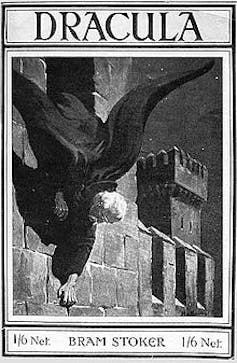
This book is all about creating order from chaos: a reassuring ideal at the moment. Mina Harker’s way of life is doubly threatened by Dracula as he endangers both her fiancé, Jonathan Harker, whom he imprisons in his castle; and her best friend, Lucy Westenra, who is tormented by sleepwalking and mysterious illnesses.
Mina acts as the lynchpin for the five men who join together to defeat the count. The story that we are treated to is her collection of their accounts, creating a magnificent and lucid whole from diaries, cuttings, reports and letters. How will these rational beings thwart the supernatural power of the count?
Read it free on Project Gutenberg.
Jane Eyre fights for what she believes to be right. She stands up to those more powerful than herself, whether it be for her own rights or the good of others.
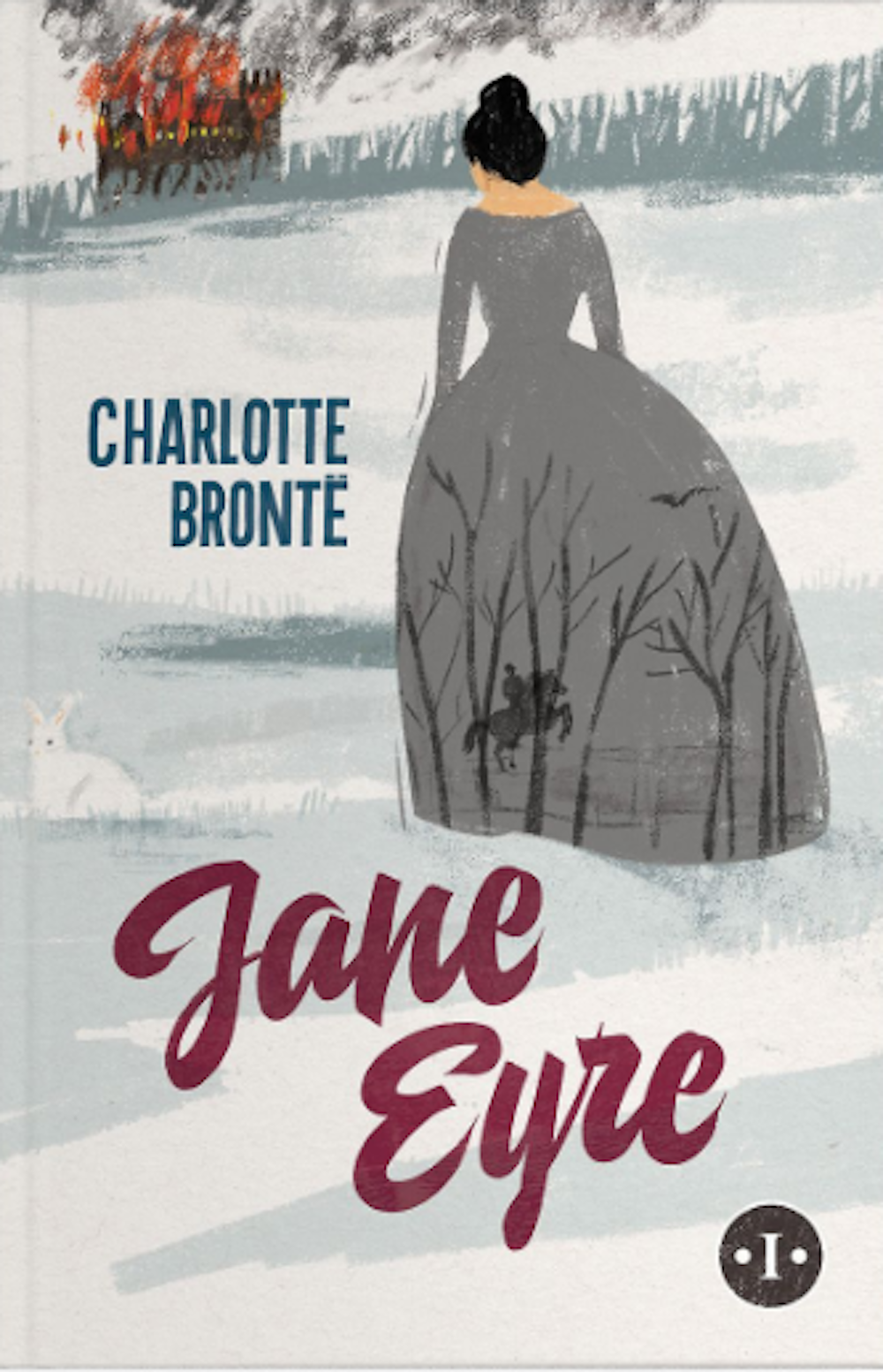
Orphaned and rejected by her guardian aunt, Jane trains to become a teacher at a charity school and then becomes governess to Adele, the ward of the wealthy and seemingly misanthropic Mr Rochester.
Slowly and unwillingly she falls in love with her master but he has a certain secret in his attic. What will this determined woman do to save herself from the temptations of his love?
Read it free on Project Gutenberg:.
You’ll have noticed that I have stuck to books with happy endings, or at least tidy ones. There is no Thomas Hardy (you must take broadcaster Andy Hamilton’s advice and read Hardy’s novels backwards to get a happy ending), and no George Eliot, whose wonderfully complex characters are very real and intriguing but not often comforting.
Some are old, familiar favourites, others lesser known but equally enjoyable. The list is by no means complete. It is intended to be the beginning of a journey back to familiar friends and an exploration of new ones. They are shared with love and care in the hope they will make you feel a little better for their company.
Pam Lock, Lecturer, English Literature (Specialist in Victorian Literature and Alcohol), University of Bristol
This article is republished from The Conversation under a Creative Commons license. Read the original article.
Kevin John Brophy, University of Melbourne
“Katrina, I had in mind a prayer, but only this came,” Bruce Dawe wrote to his infant daughter, new-born, in intensive care, her life in the balance, declaring as poets must that their poems are the best and only real gift they can give.
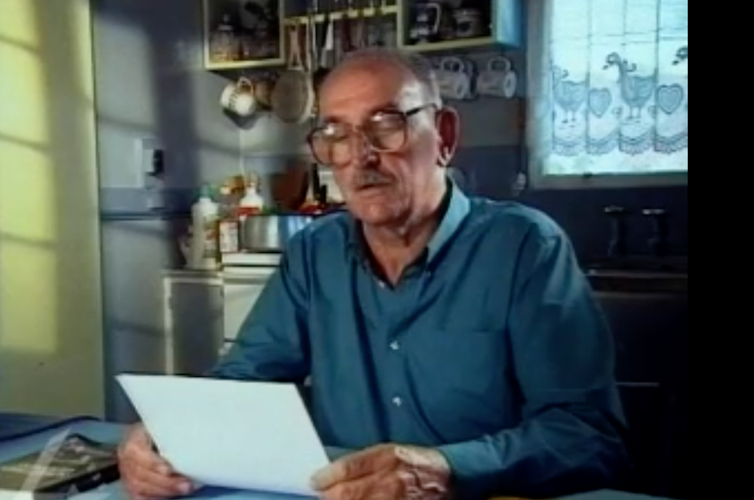
I did not know Dawe, who died aged 90 on Wednesday, but I knew his poetry from my first years of reading poems. For decades, the first contemporary poems many Australians read were his.
Born in 1930 in Fitzroy, a failed student after attending seven schools, he worked as a labourer like his father, a farmhand, a postman, and spent a year on the University of Melbourne campus where he became a poet and a Catholic. He joined the RAAF in 1959.
As well as publishing a growing list of books, he studied part time until he achieved a PhD. His teaching life at the Darling Downs Institute of Advanced Education and the University of Southern Queensland lasted from 1969 until 1993. By then he was easily Australia’s most well-read and well-loved poet. His death this week is a significant moment for poets and readers of poetry.
We know that poetry is somehow central to our nation’s soul, but mostly we like to keep its presence at the margins. In living memory, Les Murray and Dorothy Porter managed to bring poetry to wide audiences, but neither of them so broadly, neither of them prompting the passion of Dawe’s many readers.
When it comes to poetry, readers know pretty quickly what is authentic. Dawe’s poems are real enough to talk to you with one arm over your shoulder, or sit beside you, inviting you to look with them at what this whole damned creation is doing now.
But he couldn’t have survived as a poet by simply being genial. His poetry always held a deep steadiness of purpose in its gaze. This was his special skill. He was able to bring us in to seeing for instance how “the spider grief swings in his bitter geometry” (from Homecoming) when dead soldiers are freighted home.
He was uncannily capable of making poetry that talked plainly but still mysteriously about the most extreme of our experiences: funerals and suicides, drowned children, a mother-in-law’s glorious death falling out of her chair at a barbecue, the last nail being driven into the body of Christ (“the iron shocking the dumb wood”), the 1995 massacre at Srebrenica, or the hanging of Ronald Ryan.
You cannot read his poems without finding some personal connection to them too; my grandmother who once held a telegram announcing her son’s wartime death, and whose home was opposite Ronald Ryan’s bloody shootout on Sydney Road, had seemed to me to have had her life marked by images in Dawe’s poems.
In Australia, we know there’s another job requirement for any poet worth their salt, and that is a dry and thoroughly demotic wit. Dawe’s hilarious At Shagger’s Funeral is just one gem that Lawson would have been proud to have chiselled out.
New themes of gender, ethnicity, identity politics, the explosion of poetry since the avant-garde experiments of Fluxus might seem to leave Dawe’s poetry suspended in a historical moment, but this is to say no more than what happens to every strong and distinctive poet.
No one wrote poetry quite like Dawe. Lots of poets took inspiration from him too, many without realising it – the vibrant “street poetry” movement in Melbourne through the 1970s and 80s, morphing into performance poetry and spoken word – each take their impulse from Dawe’s confidence in poetry’s place as a voice for, about, and from life as it’s lived by the most desperate and the most ordinary of us.
The bravery of his poetry, its wit and sensitivity to the world are there in one of the most stark and touching love poems you could imagine reading:
Hearing the sound of your breathing as you sleep,
with the dog at your feet, his head resting
on a shoe, and the clock’s ticking
Like water dripping in a sink
– I know that, even if reincarnation were a fact,
given the inherent cruelty of the world
where beautiful things and people
are blasted apart all the day long,
I would never want to come back, knowing
I could never be this lucky twice …
(from You and Sarajevo: for Gloria)
He has been praised for the technical achievement of blending the colloquial with the lyrical, something he often got “right”. But beyond this deftness, his poems always reach towards our most humane responses to the world.
We know from our present troubles as a nation, as a planet, and as a species, that we need poets as right and true as Bruce Dawe to continue this sometimes visionary and sometimes laughably inadequate work. 
Kevin John Brophy, Emeritus Professor of Creative writing, University of Melbourne
This article is republished from The Conversation under a Creative Commons license. Read the original article.
James Hammond/Unsplash
Ben Stubbs, University of South Australia
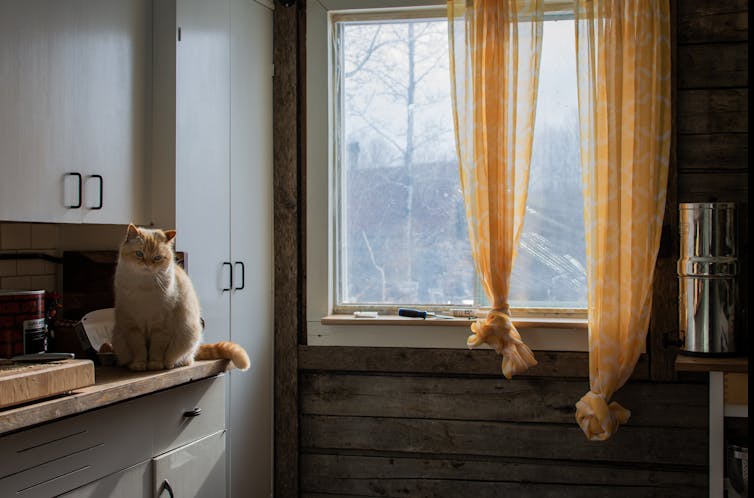
Being in isolation might be a great time to try something new. In this series, we get the basics on hobbies and activities to start while you’re spending more time at home.
While many are cancelling treks to Nepal, putting dreams of Venice on hold and wondering what we can substitute for a tropical beach escape, it is worth remembering we’re not the first who have had to rethink the notion of travel.
There is a precedent for thinking about journeys in a more imaginative sense: travel and the near-at-hand.
Vertical travel and travel writing – where we immerse in the spaces around us in greater detail, peeling back layers of history, botany and culture – goes back to the late 18th Century in Turin and a man named Xavier de Maistre.
De Maistre wrote A Journey Around My Room while imprisoned in his bedroom for six weeks after he was caught fighting a duel in the north Italian city in 1790.
Rather than sulk through his imprisonment, he decided to challenge the popularity of imperialist travel writing and he wrote a travel book about the contents of his bedroom. De Maistre observed his surroundings, detaching and looking with new eyes to give the reader an alternative perspective on what travel could mean:
What a comfort this new mode will be to the sick; they need not fear bleak winds or change of weather. And what a thing, too, it will be for cowards; they will be safe from pitfalls and quagmires. Thousands who hitherto did not dare, others who were not able, and others to whom it never occurred to think of such a thing as going on a journey, will make up their minds to follow my example.
De Maistre’s room became a place with latitude and topography.
He immersed in the scenes of the paintings on his walls and saw his bed as a vehicle for imaginative transportation alongside his dog, Rose, his trusted travel companion. De Maistre was so taken by the journey that he subsequently wrote A Nocturnal Expedition Around My Room to “revisit the country which I had formerly so delightfully travelled through”.
There were many inspired by this new style. Heinrich Seidel refocused his apartment into a microcosm where each item had a history and an interconnected story. Similarly, Alphonse Karr produced two volumes and 700 pages focused solely on his garden where he lived in Montmartre with his pet monkey Emmanuel.
In Henry David Thoreau’s Walden (1854), the author lived alone and in seclusion in a log cabin at Walden Pond; George Orwell meticulously captured the intricate details of weather, vegetable production and an egg count in his domestic diary from the early 1940s.
Read more:
Why philosophy is an ideal travel companion for adventurous minds
This notion of rethinking space and valuing the mundane as an ethical and creative choice acts as a counter to the assumed importance of distance with many travel(ling) writers of the era.
This has not diminished in the modern era.
In Isolarion: A Different Oxford Journey (2007), James Attlee extends the notion of close travel or “home-touring” as he walks along a solitary Oxford street.
A Week at the Airport: A Heathrow Diary (2009) sees Alain de Botton at a desk in the departure hall of London Heathrow’s Terminal 5, confined for the duration of his stay, to understand the airport both as a destination in itself and as a location with a distinct culture.
Meg Watson’s essay Another life in Paris for The Saturday Paper focuses on her experience inhabiting another person’s space as an Airbnb guest in Paris:
On my first night in Canelle’s bed, I watch Midnight in Paris and drink rosé from one of her stained teacups. In a classic display of unabashed French nonchalance, the bedroom door is nothing but a clear panel of glass.
Within the intimacy of the apartment, Watson shows the reader a closer and more nuanced perspective of Paris. Simultaneously, the voyeurism of this approach also allows the reader to appreciate the sameness of many travel experiences.
Look intimately
Take a closer look at the items around your house.
Especially if you have things from previous travels, take the time to reflect on the item’s journey, write its story, or look through the photos of that period– it might even involve some research of your own, discovering what the pattern on your Moroccan mirror means, or the significance of the Easter Island statues on your bookshelf.
Smell deeply
Stroll through your garden. Take a closer look at all the plants, the soil and the trees. Look closer again.
By sifting through my own soil I discovered shards of 100-year-old-bricks which prompted my journey towards a better understanding of the history of my state.
Remember the outside world
Look out your window. Just as many have in Wuhan, Barcelona and Rome, conversations with new encounters, impromptu music performances and shared meals and experiences (even over a fence or across a road) are much of what we search for in conventional travel.
This new dimension can bring surprising togetherness.
Ben Stubbs, Senior Lecturer, School of Creative Industries, University of South Australia
This article is republished from The Conversation under a Creative Commons license. Read the original article.
Robert M. Thorson, University of Connecticut
Seeking to bend the coronavirus curve, governors and mayors have told millions of Americans to stay home. If you’re pondering what to read, it’s easy to find lists featuring books about disease outbreaks, solitude and living a simpler life. But it’s much harder to find a book that combines these themes.
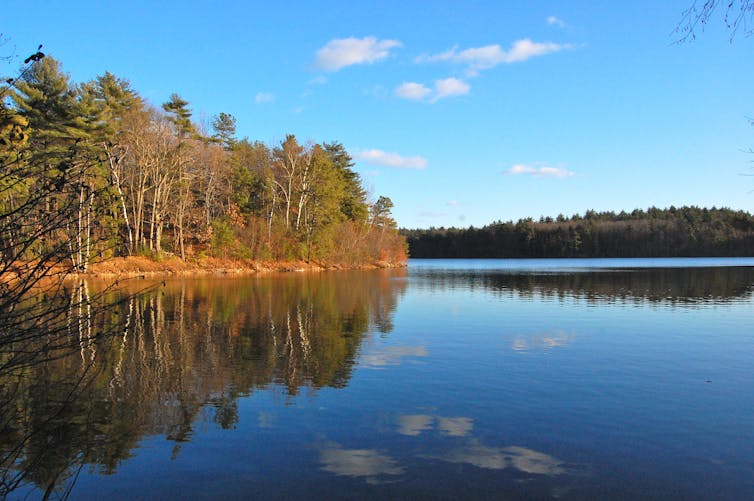
As the author of three books about essayist, poet and philosopher Henry David Thoreau, I highly recommend “Walden,” Thoreau’s 1854 account of his time living “alone” in the woods outside Concord, Massachusetts. I qualify “alone” because Thoreau had more company at Walden than in town, and hoed a bean field daily as social theater in full view of passersby on the road.
Published in over 1,000 editions and translated into scores of languages, “Walden” is the scriptural fountainhead of the modern environmental movement, a philosophical treatise on self-reliance and a salient volume of the American literary canon. In his introduction to the Princeton edition, John Updike claims that Thoreau’s masterpiece “contributed most to America’s present sense of itself” during the cultural renaissance of the mid-19th century, yet “risks being as revered and unread as the Bible.”
Another reason to read or reread “Walden” during trying times is that it gushes with sorely needed optimism and is laced with wit. And Thoreau befriends you by writing in the first person.
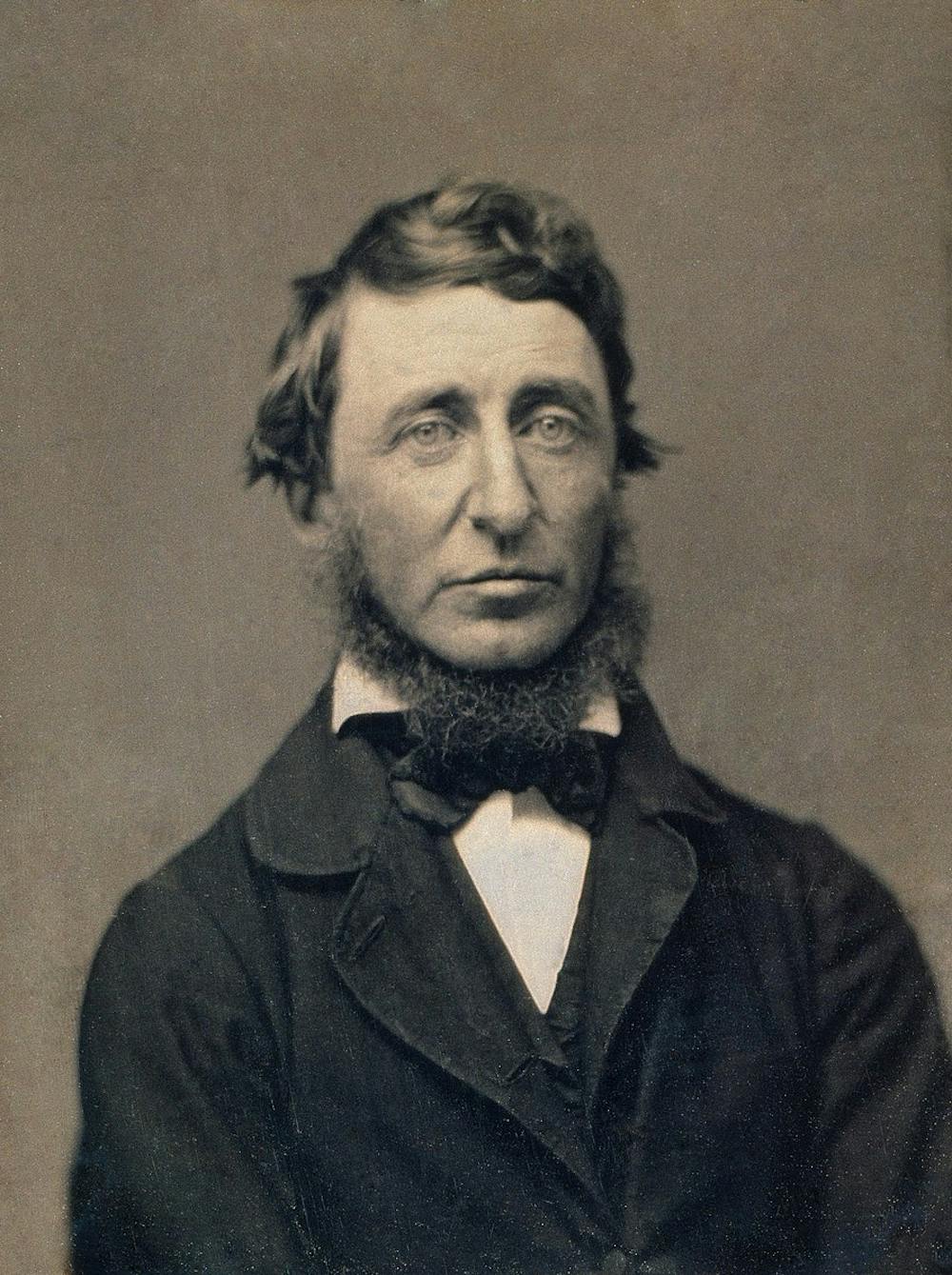
As governments mandate social distancing to protect public health, many readers may be coming to grips with solitude. Thoreau devotes a chapter to it, extolling the virtue of getting to know yourself really well.
“Why should I feel lonely?” he asks, “is not our planet in the Milky Way?” Elsewhere he clarifies the difference between what we need and what we think we need, writing, “My greatest skill has been to want but little.”
“Walden” doesn’t have to be read straight through like a novel. For readers who have previously given up on it, I suggest rebooting in the middle with “The Ponds,” which opens thus: “Sometimes, having had a surfeit of human society and gossip, and worn out all my village friends, I rambled still farther westward than I habitually dwell…” Thoreau then retreats away from the mindless distractions of community life toward an immersion into Nature, with water at its spiritual center.
Next, flip back to the earlier chapter “Where I Lived and What I Lived For.” Here Thoreau invites readers on a downward journey, from the fleeting shallows of their social lives to the solid depths of their individual lives:
“Let us settle ourselves, and work and wedge our feet downward through the mud and slush of opinion, and prejudice, and tradition, and delusion, and appearance, that alluvion which covers the globe, through Paris and London, through New York and Boston and Concord, through Church and State, through poetry and philosophy and religion, till we come to a hard bottom and rocks in place, which we can call reality…”
Our brains build that reality – yours, mine, everyone’s – by integrating external sensory signals with internal memories. Thoreau’s point – which is supported by 21st-century cognitive and neuroscience research – is that the real you precedes the social you. Your world is built from the inside of your skull outward, not vice versa.
Thoreau’s retreat to Walden Pond is often mistaken for a hermit’s flight deep into the woods. Actually, Thoreau put some distance between himself and his home and village so that he could understand himself and society better. When not in town, he swapped human companionship for the “beneficent society” of Nature for long enough to make “the fancied advantages of human neighborhood insignificant.”
Today mandatory social distancing is wrecking the global economy, based on traditional metrics like gross domestic product and stock prices. Viewed through “Walden,” this wreckage may look like a long-overdue correction for an unsustainable system.
Thoreau feared that the economy he saw was headed in the wrong direction. His opening chapter, “Economy,” is an extended rant against what he viewed as a capitalistic, urbanizing, consumption-driven, fashion-conscious 19th-century New England.
Of his neighbors, Thoreau wrote, “By a seeming fate, commonly called necessity, they are employed, as it says in an old book” – meaning the Christian Bible – “laying up treasures which moth and rust will corrupt and thieves break through and steal. It is a fool’s life, as they will find when they get to the end of it, if not before.”
In contrast, his recipe for a good economy is one of “Walden”‘s most famous quotes: “Simplicity, simplicity, simplicity! I say, let your affairs be as two or three, and not a hundred or a thousand.”

That was easier said than done, even for Thoreau. When he conceived “Walden,” he was an unemployed, landless idealist. By the time it was published, he lived in a big house that was heated with Appalachian coal, earning income by manufacturing pulverized graphite and surveying for land developers.
Since then, the world’s population has more than quintupled and developed nations have built a global economy approaching US$100 trillion per year. Human impacts on the planet have become so powerful that scientists have coined the term Anthropocene to describe our current epoch.
Some Americans have tried at least halfheartedly to follow “Walden”’s idealistic advice by living deliberately, being more self-reliant and shrinking their planetary footprints. Personally, although I’ve downsized my house, walk to work, fly only for funerals and cook virtually every meal from scratch, in my heart I know I’ve also contributed to the world’s swelling population, burn fracked natural gas and am hopelessly embedded in a consumer economy.
Nevertheless, after several weeks of social distancing, I’m rediscovering the value of two of Thoreau’s key points: Solitude is helping me recalibrate what matters most, and the current economic slowdown offers short-term gains and a long-term message for the planet.
These benefits don’t compensate for the incalculable personal losses and grief that COVID-19 is inflicting worldwide. But they are consolation prizes until things stabilize in the new normal. On my daily solitary walk in the woods, I am mindful of Thoreau’s words: “Next to us is not the workman whom we have hired, with whom we love so well to talk, but the workman whose work we are.”
[You need to understand the coronavirus pandemic, and we can help. Read our newsletter.]
Robert M. Thorson, Professor of Geology, University of Connecticut
This article is republished from The Conversation under a Creative Commons license. Read the original article.
 At the BookShelf


You must be logged in to post a comment.