Unknown's avatar

‘Iso’, ‘boomer remover’ and ‘quarantini’: how coronavirus is changing our language


Wes Mountain/The Conversation, CC BY-ND

Kate Burridge, Monash University and Howard Manns, Monash University

People love creating words — in times of crisis it’s a “sick” (in the good sense) way of pulling through.

From childhood, our “linguistic life has been one willingly given over to language play” (in the words of David Crystal). In fact, scientists have recently found learning new words can stimulate exactly those same pleasure circuits in our brain as sex, gambling, drugs and eating (the pleasure-associated region called the ventral striatum).


Read more:
The shelf-life of slang – what will happen to those ‘democracy sausages’?


We’re leximaniacs at heart and, while the behaviour can occasionally seem dark, we can learn a thing or two by reflecting on those playful coinages that get us through “dicky” times.

Tom, Dick and Miley: in the ‘grippe’ of language play

In the past, hard times birthed playful rhymes. The 1930s Depression gave us playful reduplications based on Australian landmarks and towns – “ain’t no work in Bourke”; “everything’s wrong at Wollongong”; “things are crook at Tallarook”.

Wherever we’re facing the possibility of being “dicky” or “Tom (and) Dick” (rhyming slang for “sick”), we take comfort in language play. It’s one thing to feel “crook”, but it’s another thing again to feel as “crook as Rookwood” (a cemetery in Sydney) or to have a “wog” (synonymous with “bug”, likely from “pollywog”, and unrelated to the ethnic slur “wog”).

Remedies may be found in language’s abilities to translate sores into plasters, to paraphrase William Gouge’s 1631 sermon on the plague. New slang enables us to face our fears head-on — just as when the Parisians began calling a late-18th century influenza “la grippe” to reflect the “seizing” effect it had on people. The word was subsequently taken up in British and American English.

In these times of COVID-19, there are the usual suspects: shortenings like “sanny” (hand sanitizer) and “iso” (isolation), abbreviations like BCV (before corona virus) and WFH (working from home), also compounds “corona moaner” (the whingers) and “zoombombing” (the intrusion into a video conference).

Plenty of nouns have been “verbed” too — the toilet paper/pasta/tinned tomatoes have been “magpied”. Even rhyming slang has made a bit of a comeback with Miley Cyrus lending her name to the virus (already end-clipped to “the Miley”). Some combine more than one process — “the isodesk” (or is that “the isobar”) is where many of us are currently spending our days.

Slanguage in the coronaverse: what’s new?

What is interesting about COVID-lingo is the large number of creations that are blended expressions formed by combining two existing words. The new portmanteau then incorporates meaningful characteristics from both. Newly spawned “coronials” (corona + millennials) has the predicted baby boom in late 2020 already covered.

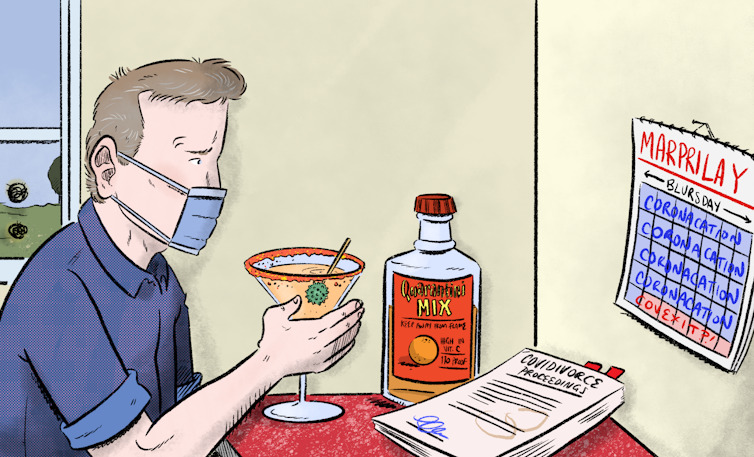
“Blursday” has been around since at least 2007 but originally described the day spent hung over — it’s now been pressed into service because no one knows what day of the week it is anymore. The official disease name itself, “COVID”, is somewhere between a blend and an acronym because it takes in vowels to make the abbreviation pronounceable (CO from corona, VI from virus and D from disease).

True, we’ve been doing this sort of thing for centuries — “flush” (flash + gush) dates from the 1500s. But it’s never been a terribly significant method of coinage. John Algeo’s study of neologisms over a 50-year period (1941–91) showed blends counting for only 5% of the new words. Tony Thorne’s impressive collection of over 100 COVID-related terms has around 34% blends, and the figure increases to more than 40% if we consider only slang.

Not only have blends become much more common, the nature of the mixing process has changed too. Rather than combining splinters of words, as in “coronials”, most of these corona-inspired mixes combine full words merged with parts of others. The “quarantini” keeps the word “quarantine” intact and follows it with just a hint of “martini” (and for that extra boost to the immune system you can rim the glass with vitamin C powder). Many of these have bubbled up over the past few weeks — “lexit” or “covexit” (the strategies around exiting lockdown and economic hardship), “coronacation” (working from home) and so on.

Humour: from the gallows to quarantimes

Humour emerges as a prevailing feature of these blends, even more so when the overlap is total. In “covidiot” (the one who ignores public health advice and probably hoards toilet paper), both “covid” and “idiot” remain intact. There’s been a flourishing of these types of blend — “covideo party”, “coronapocalypse”, “covidivorce” to name just a few.

Clearly, there is a fair bit of dark comedy in the jokes and memes that abound on the internet, and in many of these coinages too — compounds like “coronacoma” (for the period of shutdown, or that deliciously long quarantine sleep) and “boomer remover” (used by younger generations for the devastation of the baby boomer demographic).


Read more:
Oi! We’re not lazy yarners, so let’s kill the cringe and love our Aussie accent(s)


Callous, heartless, yes. But humour is often used as a means of coming to terms with the less happy aspects of our existence. People use the levity as a way of disarming anxiety and discomfort by downgrading what it is they cannot cope with.

Certainly, gallows humour has always featured large in hospital slang (diagnoses like GOK “God only knows” and PFO “pissed and fell over”). For those who have to deal with dying and death every day, it is perhaps the only way to stay sane. COVID challenges us all to confront the biological limits of our own bodies – and these days humour provides the much-needed societal safety valve.

So what will come of these creations? The vast majority will fall victim to “verbicide”, as slang expressions always do.The Conversation

Kate Burridge, Professor of Linguistics, Monash University and Howard Manns, Lecturer in Linguistics, Monash University

This article is republished from The Conversation under a Creative Commons license. Read the original article.
Unknown's avatar

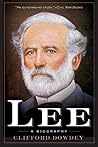
Finished Reading: Lee – A Biography by Clifford Dowdey


Lee: A BiographyLee: A Biography by Clifford Dowdey
My rating: 4 of 5 stars

View all my reviews

Unknown's avatar

Literary magazines are often the first place new authors are published. We can’t lose them


Blair Fraser/Unsplash

Alexandra Dane, University of Melbourne

Australia’s literary journals are produced in a fragile ecosystem propped up by a patchwork of volunteer labour, generous patrons and, with any luck, a small slice of government funding.

The Sydney Review of Books, the Australian Book Review and Overland were among a group of publications who sought four-year funding from the Australia Council in 2020 but were unsuccessful.

These publications join the ranks of many others – among them Meanjin and Island – defunded by state or federal arts funding bodies in recent years.


Read more:
The Meanjin funding cuts: a graceless coup?


These magazines are vital for today’s publishing industry. For many authors literary magazines provide the first opportunity for publication. For editors and arts administrators, they provide a training ground for life-long careers in Australia’s creative sector.

The past decade has seen a steady decline in arts funding going to individuals and organisations. According to Chairman of the Copyright Agency and former media executive, Kim Williams, writing in the Sydney Morning Herald:

[…] if funding for literature had been maintained as in the mid-70s, considering inflation and population growth, it should be at $12 million, at least. Today, it stands at just $5 million (compared with $4.2 million 30 years ago).

The list of defunded writing-focused organisations in the most recent multi-year funding round is stark. Those losing their multi-year status include Artlink, Eyeline, Art Monthly, the Australian Script Centre, Playwriting Australia, Sydney Writer’s Festival and Brisbane Writers Festival.

Without securing medium-term support, these organisations face an uncertain future.

Vital discourse

In response to the 2020 funding announcement, editor of Australian Book Review, Peter Rose, stated the decision demonstrates

little understanding of [the magazine sector’s] contribution to the literary ecology, and no appreciation of the dire consequences for readers, authors, contributors and publishers.

The cultural discussions within the pages of literary journals set the agenda for the more higher-profile but slower-moving institutions such as publishers, prizes and festivals.

Literary magazines are often the first place authors are published. Against the backdrop of an industry largely staffed by white, middle-class people, small magazines are at the forefront of bringing more Australian writing to the surface from writers of colour, First Nations writers, disabled writers, trans writers and working-class writers, challenging those who hold power at the top of the sector.


Read more:
Express Media is unique and young people need it


Writing in 2015 about the position magazines such as Island or Overland occupy, Emmett Stinson noted these publications:

[…] are essential to contemporary literary culture: they showcase new and emerging writers; […] offer more extended literary debates and discussions than the broadsheets; comprise a venue for journalism that contains views outside of the liberal mainstream; serve as rallying points for different communities of readers and coteries of authors […]

Ben Etherington’s essay about the parallel lives and deaths of Mudrooroo and Les Murray, Cher Tan’s exposition and critique of taste production on the internet, and Blak Brow – which was written, edited, illustrated, curated and performed by First Nations creators – are among countless examples of the ways literary magazines carve out space for critique, expression, consideration and reflection.

In shifting funding away from small magazines, we lose the place for these discussions.

Not a competition

Uncertainty, instability and fragility are perhaps the defining characteristics of small magazines.

The decisions to not fund literary magazines not only have a significant impact on the individual publications, but also to Australian cultural discourse.

What gets published within the pages of these magazines can entertain us, it can inspire us to critically examine the world around us, and can help us understand culture that moves us.

Vibrant discussion about culture, society and the arts does not happen by accident. It must be carefully nurtured and requires financial support.

The Australia Council make extremely difficult decisions about what gets funded and what doesn’t.

Not every organisation and publication and festival can receive funding. Those who don’t secure funding are no more or less worthy than those who do. Reduced financial support for Australia’s creative endeavours encourages artists to turn against one another in judgement of what should and should not receive funding.

Australian artists entertain us, challenge us and allow us to see things from different perspectives. Fulfilling a capitalist desire for competition, however, only distracts from the importance of Australian artists and the contribution the creative sector makes to our lives.


Correction: a reference to the Wheeler Centre has been removed as they did not apply for funding in 2020.The Conversation

Alexandra Dane, Lecturer, University of Melbourne

This article is republished from The Conversation under a Creative Commons license. Read the original article.

Unknown's avatar

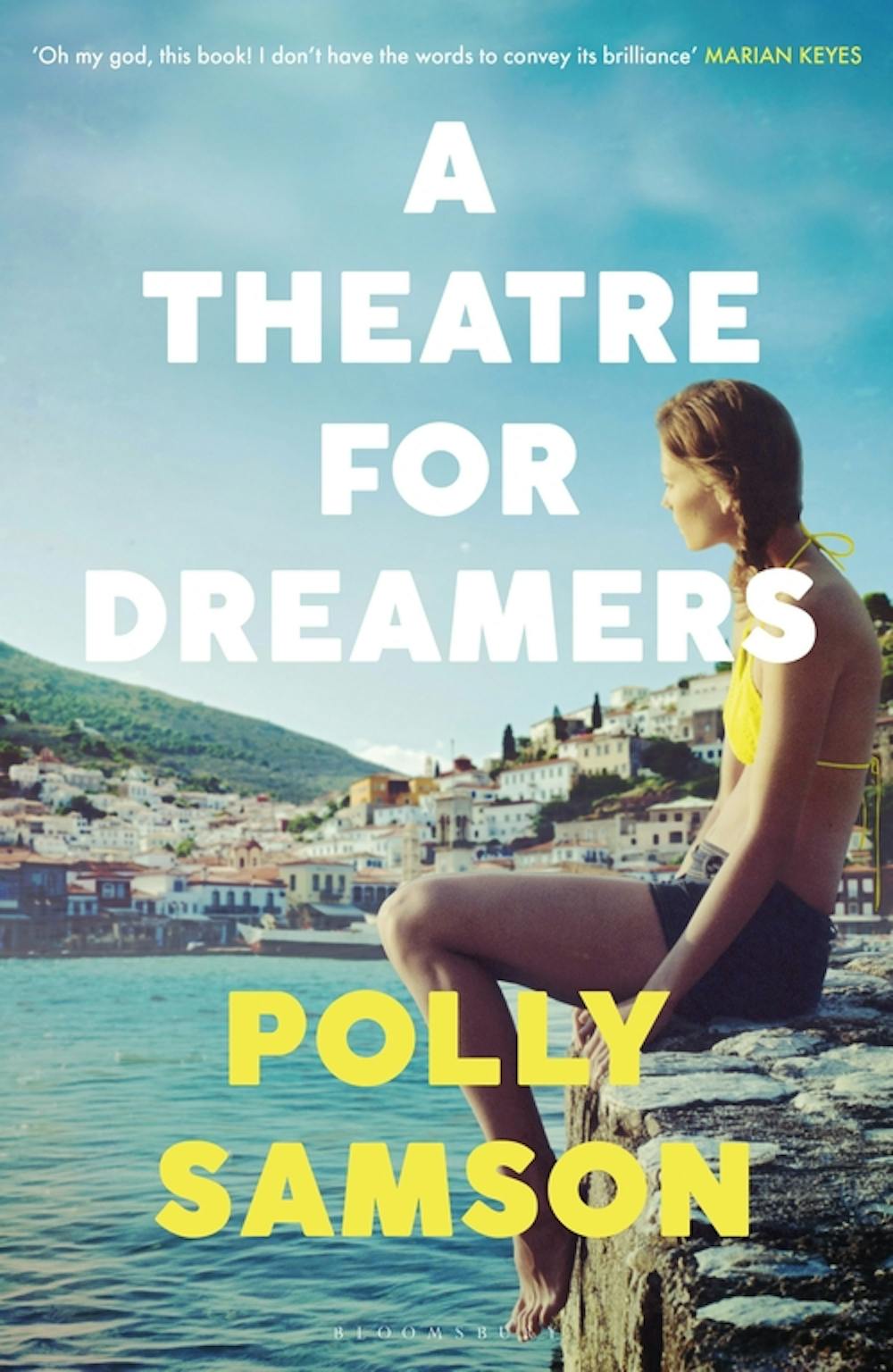
Book review: Theatre for Dreamers by Polly Samson mixes real stories with romance


Shutterstock

Susan Carson, Queensland University of Technology

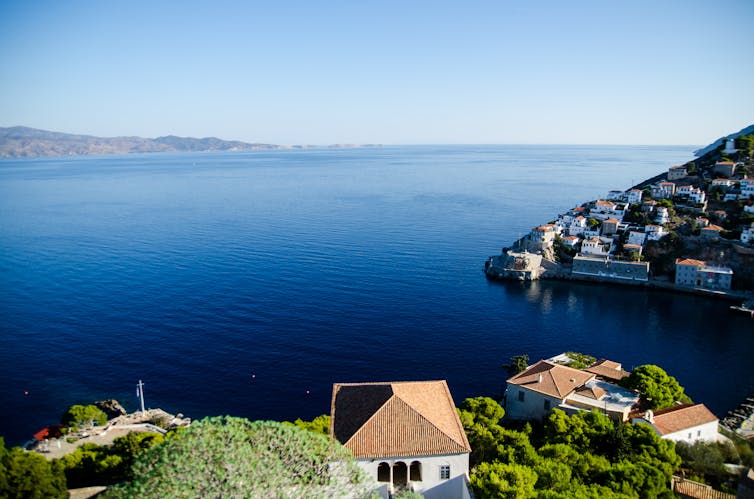
Ah, Hydra! This is an island possessed of “wild and naked perfection”, wrote American author Henry Miller after sailing into Hydra on the eve of the second world war.


Bloomsbury

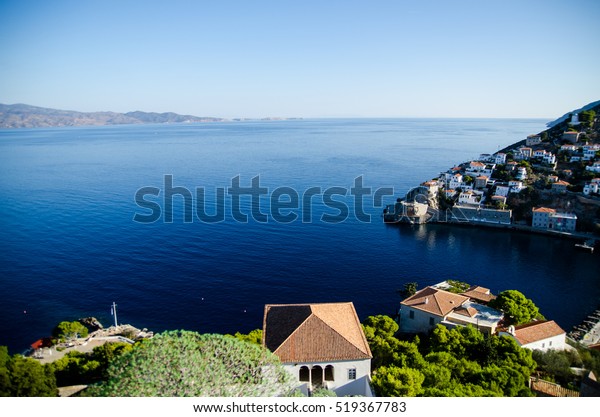
With a population of around 2,500, Hydra is a small island in the Saronic Gulf only two hours from Athens. The Hydra Town harbour, a natural amphitheatre with grey and white stone houses set into the hills overlooking the waterfront, has featured in many books and films – think Sophia Loren in Boy on a Dolphin (1957).

Polly Samson’s A Theatre for Dreamers, a fictionalised account of the summer of 1960, is the latest addition to the corpus of Hydra-inspired novels. In it we meet Australian writers Charmian Clift and George Johnston and poet and songwriter Leonard Cohen and his lover Marianne Ihlen as they all work and play in a seeming paradise.

While the married couple Clift and Johnston are in financial and emotional disarray, Cohen and Ihlen are young, beautiful and at the start of their now famous relationship.


Read more:
‘A woman ahead of her time’: remembering the Australian writer Charmian Clift, 50 years on


The expat dream

The expatriate clique of Samson’s novel exemplifies groups attracted in the 1960s to the picturesque island where artists could live and work cheaply. The novel includes fulsome accounts of the raging arguments and creative and sexual jealousies that beset the Clift-Johnston inner circle, Cohen and Ihlen and visiting friends.

A Theatre for Dreamers conjures up an appealing picture of a Hydra which, at least in physical terms, has changed little since then. There are still no cars on the island and donkeys continue to do all the haulage up and down the steep streets from the port.

Samson has faithfully rendered the landscape of winding stone-flagged streets and white-washed houses. It is a pity therefore that the novel plays into the narrative of sexual transgression and self-indulgence that continues to dominate works about this community. The novel is narrated by a young English traveller, Erica, whose relationship with her boyfriend Jimmy predictably goes awry in this heady climate.

Heightened levels of drug-taking, drinking and sexual adventure were indeed a part of many expat lives at the time but the continuing focus on this discourse, which of course makes for good copy, has the unfortunate effect of undermining the impact of major work produced by foreign and Greek artists and writers in this era.


Goodreads

Samson has researched the topic for some time and knows the life of this island well. Sometimes the research is a distraction as when the author’s prose mingles strangely with the original writing of one of the expatriates.

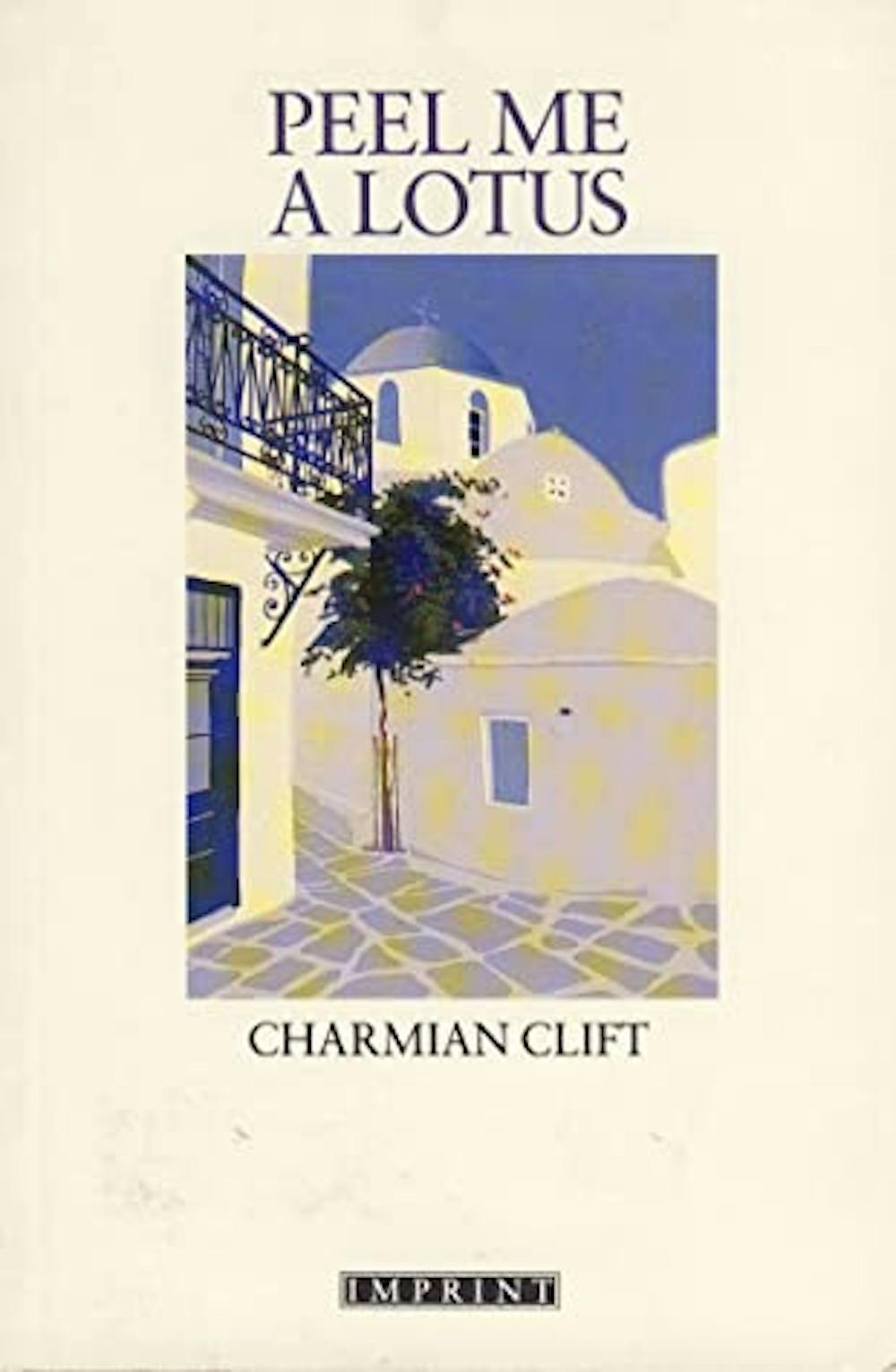
Readers who know Clift’s writing will recognise her voice in the dialogue. Samson acknowledges that she was given permission by Clift’s estate to quote from Peel Me A Lotus (1959), Clift’s travel memoir about her life on Hydra from one February to October. The effect is rather an odd seesaw between two genres as Clift’s lines pop up in a scene in Samson’s novel.

But readers who have never been to Hydra and know little about life there in the 1960s will enjoy the breezy romance and imagining the tumultuous relationship of Marianne with her then husband, writer Axel Jensen, and the adventures of the Johnston family.

Hydra’s legacy

Samson is an enthusiastic supporter of Clift’s writing. Channeling her in this novel, Samson makes a great contribution to Clift’s legacy as most of her work is now out of print. One hopes readers will be inspired to search out copies of Clift’s work.

There is of course no need to further promote Leonard Cohen’s work, which has assumed an afterlife of its own, including a renewed interest in Cohen’s life on Hydra.

Today many people on Hydra would not know the Clift-Johnston history but Cohen is even more firmly part of the island’s fabric. In 2015 a tribute concert to Cohen on the Hydra waterfront appeared to attract most of the town’s residents, young and old, and visiting his house in Hydra Town is part of an annual pilgrimage. By 2017 there were guided walking tours to Cohen’s island haunts.

Clift and Johnston are known to a smaller audience although they were once big fish in the Australian literary and journalistic cliques. Those who want to explore their story further can find an account of many of the characters in Samson’s novel in Nadia Wheatley’s meticulous biography, The Life and Myth of Charmian Clift (2001). In addition, The Broken Book (2004) by Australian novelist Susan Johnson is a rewarding and imaginative recreation of Clift’s life that goes beyond the wild Hydra cliché.


Read more:
Friday essay: a fresh perspective on Leonard Cohen and the island that inspired him


The Conversation


Susan Carson, Senior Lecturer, Creative Industries Faculty, QUT, Queensland University of Technology

This article is republished from The Conversation under a Creative Commons license. Read the original article.
Unknown's avatar

Author Interview: Emily St. John Mandel


The link below is to an author interview with Emily St. John Mandel.

For more visit:
https://lareviewofbooks.org/article/knowing-not-knowing-interview-emily-st-john-mandel/

Unknown's avatar

Kindle Font Menu System Update


The links below are to articles reporting on the relatively new Kindle Font Menu System.

For more visit:
https://goodereader.com/blog/kindle/the-amazon-kindle-font-menu-system-is-now-live
https://blog.the-ebook-reader.com/2020/04/09/this-is-what-the-kindles-new-aa-menu-looks-like/

Unknown's avatar

Another Article on the National Emergency Library


The link below is to another article reporting on the Internet Archive’s ‘National Emergency Library.’

For more visit:
https://publishingperspectives.com/2020/04/us-senate-subcommittee-chair-questions-internet-archives-national-emergency-library-covid19/

Unknown's avatar

Problems with the Kindle Book Store


The links below are to articles that looks at problems with the Kindle Book Store.

For more visit:
https://the-digital-reader.com/2020/04/11/the-biggest-problem-in-the-kindle-store-are-the-folks-not-running-the-store/
https://www.theatlantic.com/technology/archive/2020/04/white-supremacys-gateway-to-the-american-mind/609595/

Unknown's avatar

Literary Dishes


The link below is to an article that looks at how to make famous literary dishes.

For more visit:
https://ebookfriendly.com/how-to-make-famous-literary-dishes/

Unknown's avatar

243 Free Popular Non-Fiction Ebooks


The link below is to a list of 243 free popular non-fiction ebooks.

For more visit:
https://www.getfreeebooks.com/243-of-the-most-popular-non-fiction-books-of-all-time-with-free-legal-download-links/