It’s exactly 80 years since the end of the Spanish Civil War, when General Francisco Franco’s populist forces finally overcame the leftist resistance and plunged the country into full-blown dictatorship. Decades after his death, Franco continues to cast a long shadow over Spain, from the rise of the far-right Vox party to the hundreds of mass graves of people who died in the war that are still waiting to be exhumed.
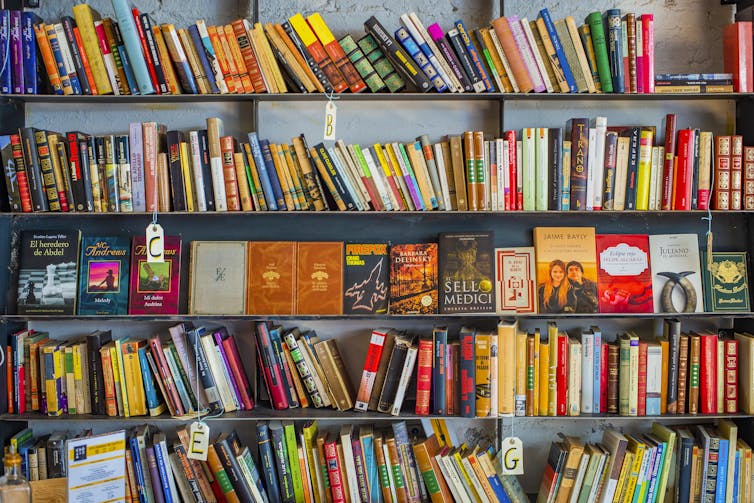
One other hugely important legacy that few people are aware of is the continuing effect on books, both in Spain and throughout the Spanish-speaking world. To this day, translations of many world classics and works of Spanish literature are being reprinted using expurgated texts approved by the dictator’s censors – often without publishers even realising it, let alone readers. It has had a chilling effect on freedom of speech over the years, and must be addressed as a matter of urgency.
Between 1936 and 1966, every single book published in Spain had to be submitted to a national board of censors for examination. The censors would decide whether the text should be banned altogether or was fit for publication, in which case they would stipulate any necessary changes. After 1966, when a new law that partly liberalised freedom of speech was introduced in the country, publishers could voluntarily decide whether to submit a text for censorship. However, the authorities still retained the ability to withdraw any book from circulation that they deemed unacceptable.
Franco’s censorship laws sought to reinforce Catholicism and promote ideological and cultural uniformity. The censors enforced conservative values, inhibited dissent and manipulated history, especially the memory of the civil war. Sexually explicit material was banned, as were alternative political views, improper language and criticisms of the Catholic church.
Spain abandoned these policies after Franco’s death in 1975, yet most of the same texts are still widely available today. Ira Levin’s Rosemary’s Baby is available in more than 20 different Spanish-language editions, for instance, including an electronic one, all of which lack two extended passages that according to the censors glorified Satan. James Baldwin’s Go and Tell it on the Mountain is only available in a version with cuts that include references to birth control and details about the sex lives of the main characters. The publication of this expurgated text is sponsored by none other than UNESCO.
Many literary works by some of Spain’s most important 20th-century writers have suffered similar fates, including those by Ana María Matute, Camilo José Cela, Juan Marsé and Ignacio Aldecoa. In some cases, such as George Orwell’s Burmese Days and Ian Fleming’s Thunderball, censored parts have even survived in retranslated and restored versions.
With no one under the age of 40 even alive during the dictatorship years, few people are even aware of the problem. Public libraries are encouraging people to read thousands of volumes without realising they are censored. Many of these texts have been imported to Latin America, sometimes even being republished in different countries with their censored parts intact. It means that a fairly large proportion of the world’s population is being routinely denied access to literature as it was intended to appear.
Why censorship never ended
It is a well known fact that Spaniards have found it difficult to confront their traumatic recent history. The so-called “pact of forgetting”, a tacit decision among the Spanish political elites not to question or examine the past, was seen by many as vital to make the transition to democracy possible in the late 1970s and 1980s. For years, this included a general amnesia about Franco’s cultural policies: even when books were retranslated to restore censored parts, few people said anything about it.
Spain’s 2007 Law for the Recovery of the Historical Memory was a major step away from these years of forgetting. It condemned the dictatorship and established compensations for people who endured political violence during the regime. It also initiated the removal of statues and other public symbols which glorified Franco’s reign. Yet other cultural artefacts, such as books, were overlooked.
The upshot is that Spain’s literary censorship problem is alive and well today. Indeed, it is arguably getting worse: it is easy to release digital versions of these classics, so Franco’s hand even reaches into Kindles and tablets. We are talking about one of the most long-lasting yet invisible legacies of his regime. The effect on culture in Spain and in other hispanic countries is almost incalculable. Censorship has certainly distorted many people’s perception of the civil war and its consequences. Many readers will also be ignorant of writers’ real points of view regarding important social issues such as gender roles, birth control and homosexuality.
The question is how to deal with this complex problem – particularly now that the Vox party, which is expected to do well in the upcoming election, has promised to repeal the Law of Historical Memory on the grounds that it manipulates the past.
The most important task is to raise awareness among the reading public. This needs clear support from the Spanish government, plus serious engagement from the whole literary sector, including libraries, publishing houses, translators, archives, cultural publications and writers themselves. The technologies that are giving new life to the problem could be used to help: a public database of restored texts, for instance, could become an important tool.
The point is that while Spain has increasingly been addressing the impact of Franco’s regime in the country’s social and historical memory since the early 2000s, the process of coming to terms with the past is far from complete. The pact of forgetting has not only marred Spain’s democratic progress, it has severely damaged the country’s cultural heritage. Spain and the rest of the Spanish-speaking world will not be free from Franco’s censorial shadow until this issue is publicly and decisively addressed. With people on the ascendant who would prefer to turn back the clock, there is no time to lose.
It was 1974 when the French writer Annie Ernaux published her first book, Les Armoires Vides (Cleaned Out). It is a fictionalised account of her illegal abortion ten years earlier, as a student gradually moving away from a working-class upbringing in Normandy. The book came out 25 years after Simone de Beauvoir’s landmark feminist text The Second Sex, yet French society remained judgemental – and often hypocritical – about women’s reproductive rights. Cleaned Out acknowledged the many working-class women who had to resort to clandestine, often life-threatening procedures before the laws were changed in 1975.
From the beginning, Ernaux’s stark prose helped establish her as an uncompromisingly honest writer. In the 1980s and 1990s, she would rise to greater prominence through autobiographical works such as La Place (A Man’s Place), an account of her father’s life, which won her the Renaudot Prize in 1984. She is now seen as one of France’s major writers and her texts are widely taught in schools and universities.
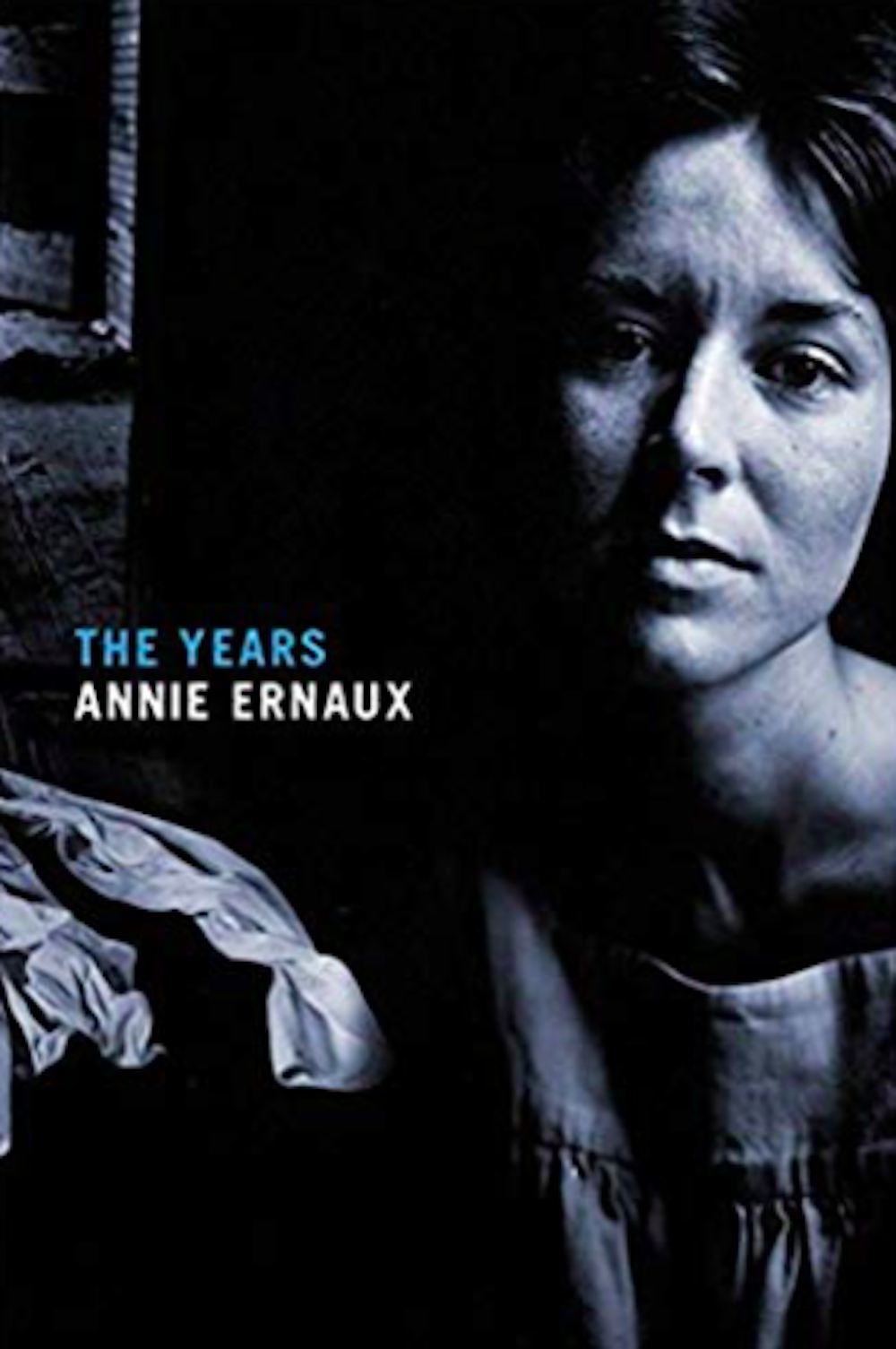
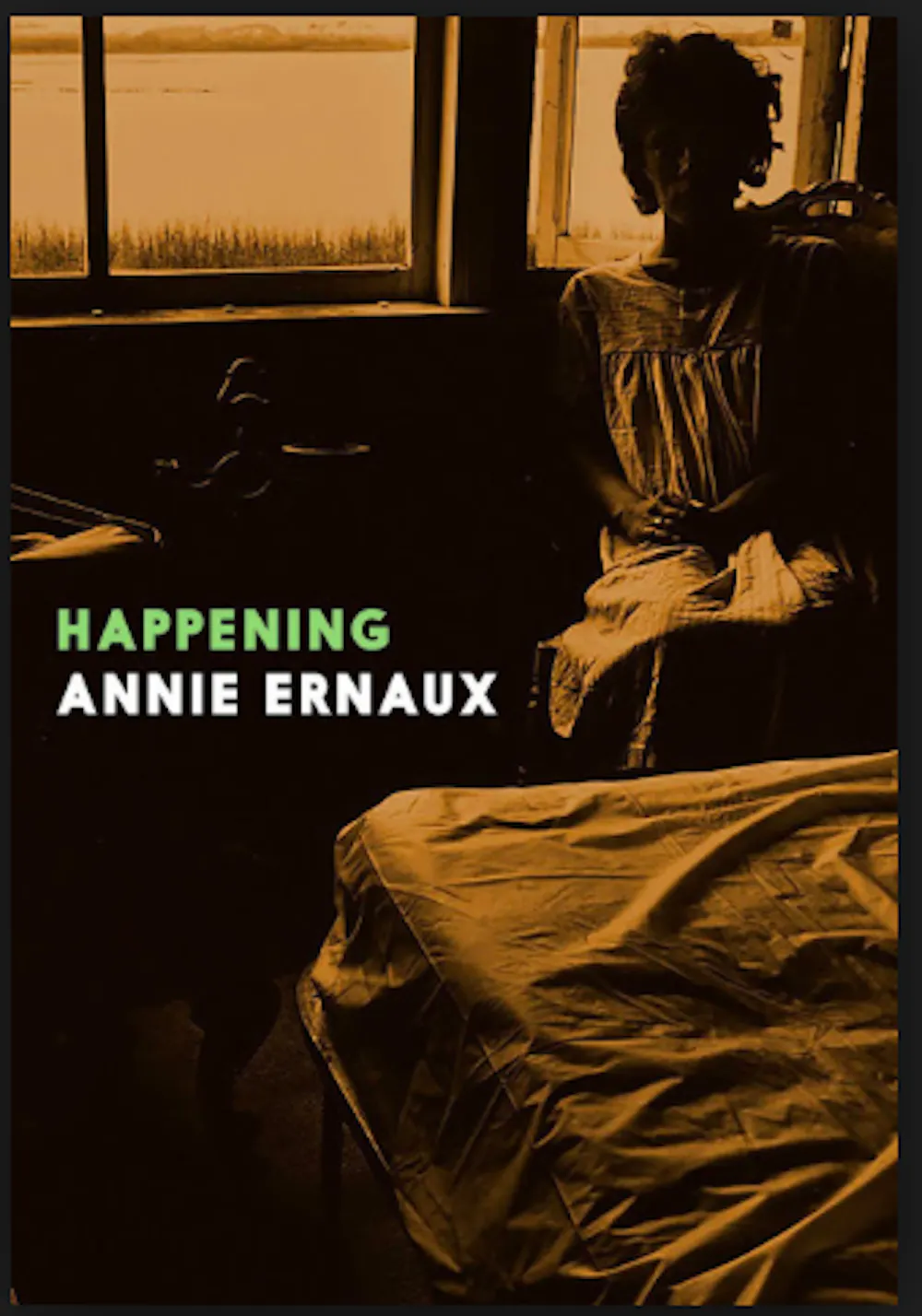
But, until very recently, she was unknown to most of the English-speaking world. That is changing thanks to two recent translations. Les Années (The Years, 2008) is a “collective autobiography” spanning six decades of personal and collective history, and has been shortlisted for the Man Booker International Prize. In L’Événement (Happening, 2000), Ernaux returns to the subject of illegal abortion, but this time tells her own non-fictionalised story.
Two memoirs
The Years gained almost unanimous recognition when it was published. It sits at the junction between autobiography, sociology and collective memoir, highlighting the profound socio-cultural changes that Ernaux witnessed from her childhood in the 1940s to the end of the century. The book was praised for its original narrative form, using “she” or “we” instead of “I” to tell Ernaux’s story.
The Years, 2008.
To trace the inescapable passing of time, The Years draws in everything from popular phrases to songs to advertisements, from iconic objects to historical events to personal anecdotes. Along the way, the book tells the evolution of women’s place in French society and their fights for sexual freedom and independence.
When Happening was published in 2000, the French media reacted much more cautiously. It is likely that some critics were not comfortable with the subject matter and the raw style of writing. Here’s an extract, for example, about the woman carrying out the abortion:
Only now can I visualise the room. It defies analysis. All I can do is sink into it. I feel that the woman who is busying herself between my legs, inserting the speculum, is giving birth to me. At that point I killed my own mother inside me.
Ernaux has said that part of her intention with the book was to lift the lid on what the French abortion laws had meant in practice:
Although abortion was mentioned in many novels, no details were given about what actually took place. There was a sort of void between the moment the girl learns she is pregnant and the moment it’s all over.
Happening, 2000. Wikimedia
With precision, but without pathos, Happening details the prevailing atmosphere of moral judgement of 1960s France – and Ernaux’s isolation and despair at a time when the word abortion “had no place in language”. She describes the gruesome conditions in which she nearly died: after finally finding a back-street abortionist, Ernaux had a probe inserted and was told it would cause her to miscarry in a few days. This then happened at her student residence and she was taken to hospital with a haemorrhage.
Happening is not only an account of this intrinsically physical, traumatic and personal experience. It is also about society’s attitudes to women at the time – particularly working-class women – explored through the reactions of various men to her predicament. The father of the unborn child, a middle-class student at the Sciences Po university in Bordeaux, leaves her to her own devices. Doctors show her little sympathy for fear of the laws of the time.
Male students that she talks to are fascinated by her “condition”, and one even tries to take advantage in the knowledge that there’s no danger of getting her pregnant. Having been admitted to hospital, Ernaux is humiliated by a junior doctor, who on seeing her bleeding shouts that he’s “no plumber”. When he discovers that she is a university student, he becomes much more sympathetic.
Nearly 20 years after it was originally published, Happening has come to be seen as a landmark piece of writing about abortion. The text is now often mentioned during debates on the subject. Last year, for instance, on the day of the Irish abortion referendum, the radio station France Culture devoted a feature to Ernaux.
Distasteful truths
Ernaux acknowledges in Happening that “this account may exasperate or repel some readers; it may also be branded as distasteful”. The same could be said of much of her other work. Ernaux has written from the same direct perspective about numerous issues not deemed “literary”, including sex, stains, illness, the ageing body, dementia and drunkenness.
Writing is for Ernaux a matter of making lived experience visible, especially that of women – and not taking their rights for granted. As she writes in Happening:
If I failed to go through with this undertaking, I would be guilty of silencing the lives of women and condoning a world governed by the patriarchy.
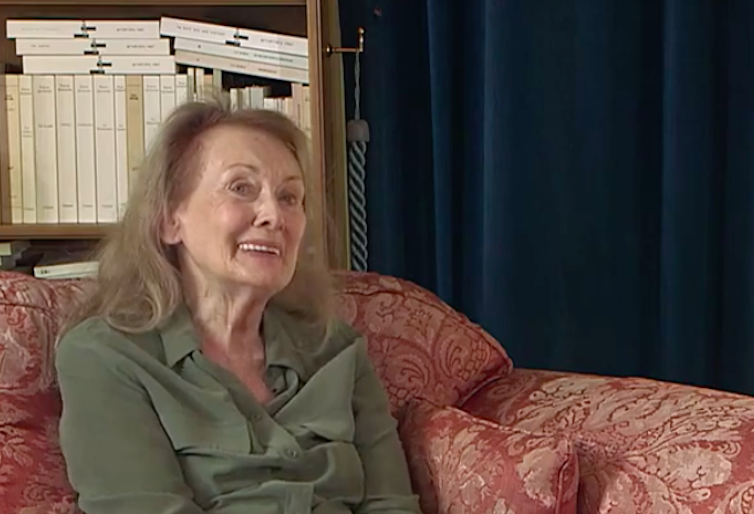
Giving a voice to those being silenced lies at the heart of Ernaux’s writings. She spoke of her support for the #MeToo movement in a recent interview, but has also expressed affinity with the gilets jaunes, which she sees as a manifestation of deep social injustice and the elite’s contempt towards the working class and unemployed. This makes her “arrival” in the English-speaking world particularly timely at the age of 78.
When French politician Simone Veil died in 2017, many “merci Simone” tags were left on walls, not least for the crucial role she played in shaping the country’s modern abortion laws. Many readers have written to Ernaux to say “merci Annie” in acknowledgement of her feminist writings. She deserves to be recognised in the international canon of great French writers, and hopefully we are now finally seeing this starting to take place.





 At the BookShelf

You must be logged in to post a comment.