
The link below is to an article that takes a look at the history of Kobo.
For more visit:
https://goodereader.com/blog/electronic-readers/the-history-of-kobo-and-how-they-changed-the-e-reader-market

The link below is to an article that takes a look at the history of Kobo.
For more visit:
https://goodereader.com/blog/electronic-readers/the-history-of-kobo-and-how-they-changed-the-e-reader-market

M. Jean Anderson, Victoria University of Wellington; Barbara Pezzotti, Monash University, and Carolina Miranda, Victoria University of Wellington
In English, we might claim we could “murder a good steak”. Italian and Spanish speakers might “kill for a coffee”, and Germans refer to acute hunger as Mordshunger or murderhunger – but do people really kill for food?
Cannibalism is by no means the only way in which crime and food are linked.
Disputes over food may lead to murder. In the Bible, when Abel’s sacrifice of meat is preferred to Cain’s second-rate offering of produce, jealousy results in a deadly attack.
Food may also be a deadly weapon, killing through poison, or as in Roald Dahl’s fiendish short story Lamb to the Slaughter, serving as a blunt instrument.
Indeed, research has shown that the brain does not differentiate between real-life and fictional sensory triggers. Food memories can really bring a story alive.
We are the editors of Blood on the Table: Essays on Food in International Crime Fiction, in which scholars from around the world offer readings of 20th and 21st-century crime writing from several countries. Authors considered include Stieg Larsson, Sara Paretsky, Donna Leon, Andrea Camilleri, Fred Vargas, Ruth Rendell, Anthony Bourdain, Georges Simenon, Arthur Upfield, Leonardo Padura, and Jean-François Parot.
Television productions analysed include the Inspector Montalbano series, the Danish-Swedish Bron/Broen (The Bridge) and its remakes, the English-French The Tunnel and the American The Bridge.
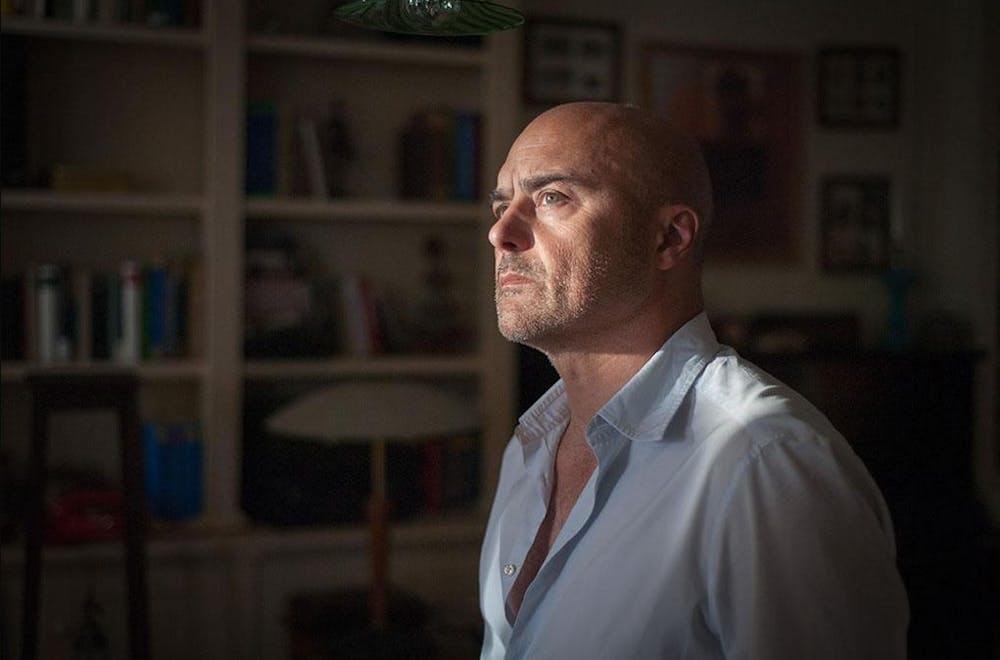
Rather than serving to highlight a limited range of functions (as a weapon, as an element of characterisation or setting), food has immense potential in crime fiction. Our book addresses a broad range of questions, including what role recipes play in these narratives, whether crimes can be committed against food and how eating rituals relate to cultural belonging, sex, gender or class.
Read more:
Friday essay: from convicts to contemporary convictions – 200 years of Australian crime fiction
In chef and author Anthony Bourdain’s fictional and factual writings, eating and the preparation and experience of food are always situated on the edge. The professional kitchen is not primarily a place where delicious food is produced but is instead a site of violence.
This kitchen-as-crime-scene contradicts its expected role as the cultural and emotional centre of the domestic and social sphere.

Food is a pervasive element of Andrea Camilleri’s Inspector Montalbano franchise. Eating rituals may increase dramatic suspense, but they also mark place and cultural identity and contribute to the psychological characterisation of the detective hero.
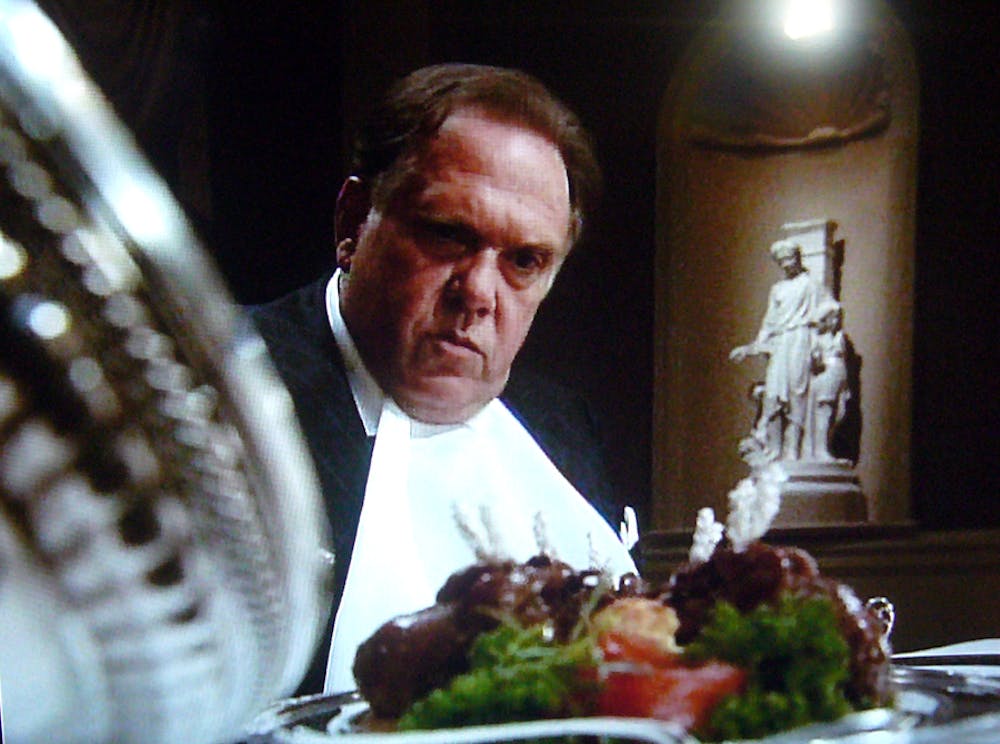
Food plays a crucial role in outlining Montalbano’s distinctive personality, just as it does for other famous detectives such as Georges Simenon’s Maigret, for whom eating is an essential part of any investigation. Rex Stout’s Nero Wolfe is a connoisseur of fine cuisine. Vázquez Montalbán’s Pepe Carvalho is both an experienced cook and a famous glutton.
In recent years, culinary mysteries have become very popular in Germany, marketed to both fans of detective fiction and food aficionados. Ella Danz’s Georg Angermüller mystery series features a police inspector who likes to cook and eat. In her novel Geschmacksverwirrung (Taste Confusion), a food critic dies after being force-fed goose liver pâté in the same way geese and ducks are force-fed to produce foie gras.
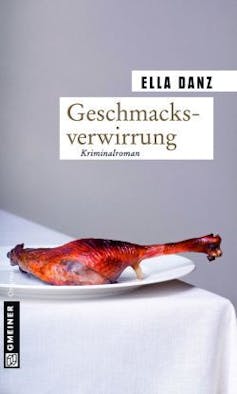
While investigating the crime, the detective confronts issues like factory farming and ethical food production. Solving crimes requires skills that can equally be used to discover hidden truths about food. Truffled goose liver pâté may contain large amounts of pork fat and only a tiny amount of truffle. Factory animals never get to see the green grass and blue sky on the packaging.
Danz provides an appendix with recipes, a practice that has proven popular with readers. Adding recipes to culinary mysteries also allows bookstores to display the books in both the cook book and and mystery sections, thus doubling exposure.
Feminist crime fiction sheds a different light on food. Sue Grafton, Sara Paretsky and Dominique Sylvain all portray eating as an expression of female independence and agency in opposition to gender norms, challenging the cultural ideal of thinness.
The eating habits of Grafton’s Kinsey Millhone not only signal that women are allowed to enjoy heavy food (McDonald’s), but they are just as much a commentary on the obsession with health and healthy food in American culture. In the French context, both Sylvain’s and Fred Vargas’s female detectives show strong appreciation for good food, prepared well.

Another, somewhat opposing idea in the novels is an indifferent or oblivious attitude to eating. The female detective who stares into her empty fridge is a recurrent scene in all the series, representing another blow to the traditional association of femininity and domesticity. Replacing marriage and family with friends is a typical feature of feminist crime fiction that rejects traditional gender roles, highlighting the female detective’s independence.
Bars and restaurants play a crucial role in this. The importance attached to the local eating place that functions as a headquarters inhabited by friends, as opposed to family, reflects the detective’s liberation from the domestic sphere and traditional femininity.
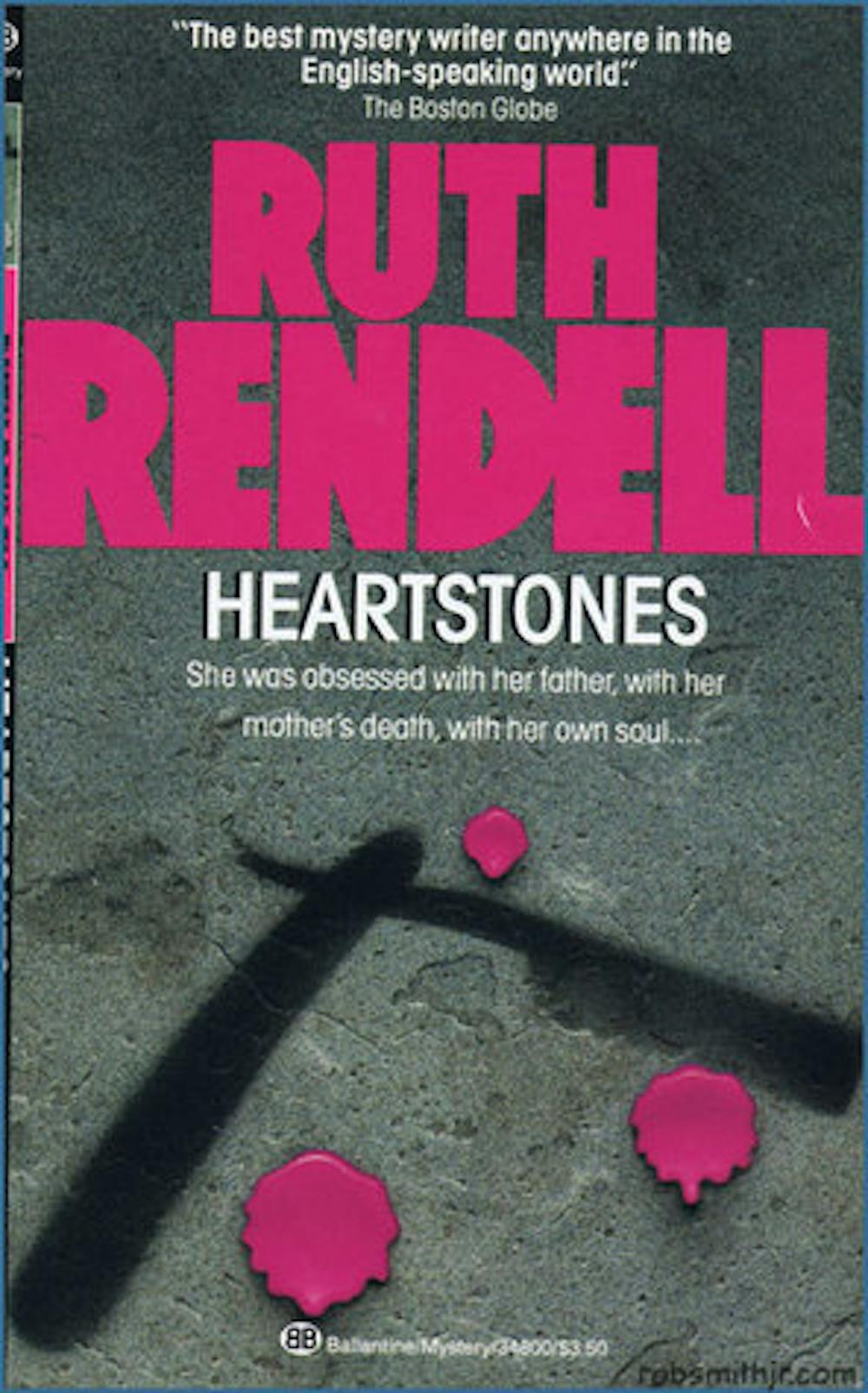
The female protagonist and first-person narrator of Ruth Rendell’s novella Heartstones is 16-year-old Elvira, whose mother has died from cancer. Through her retrospective narrative, the novella follows Elvira’s descent into anorexia, her obsession with her emotionally distant father Luke and her relationship with her younger sister Spinney, who overeats.
The clues Elvira later discovers suggest Spinney murdered Luke and his new fiancée, and may murder her, too. The narrative focuses on the denial of food and the compulsion either to eat or to avoid eating. Food is the enemy, a form of poison, and eating is the crime. Rendell uses the domestic noir genre, which highlights intimate experiences from the personal and domestic sphere to create a feminist critique of eating disorders and the patriarchal family as a “crime scene”.
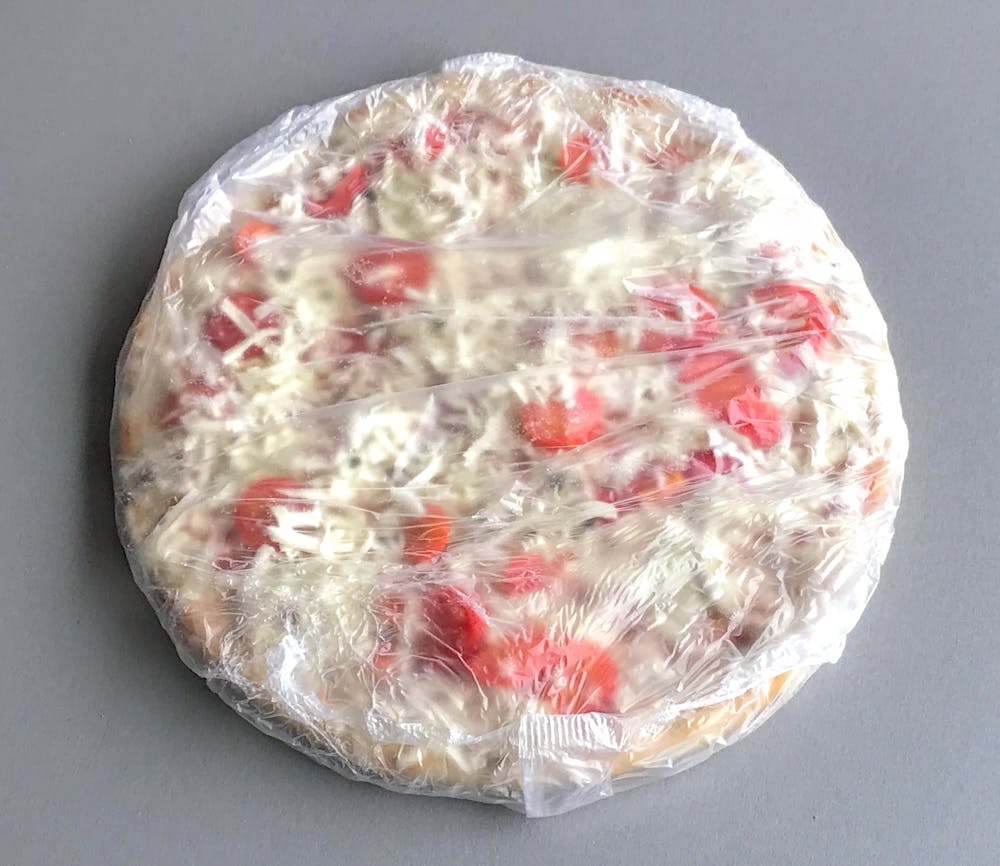
Like Saga Noren (Bron/Broen) and Sarah Lund (The Killing), Lisbeth Salander in Stieg Larsson’s Millennium trilogy is lacking in emotional intelligence, which prevents her from establishing a personal relationship to the social code of food. The emphasis on the very narrow range of food she consumes stands in clear contrast to the other characters in the stories. She lives on frozen instant meals, mostly pizza, heated in the microwave or the oven, bread, apples, and of course coffee, which she usually consumes alone.
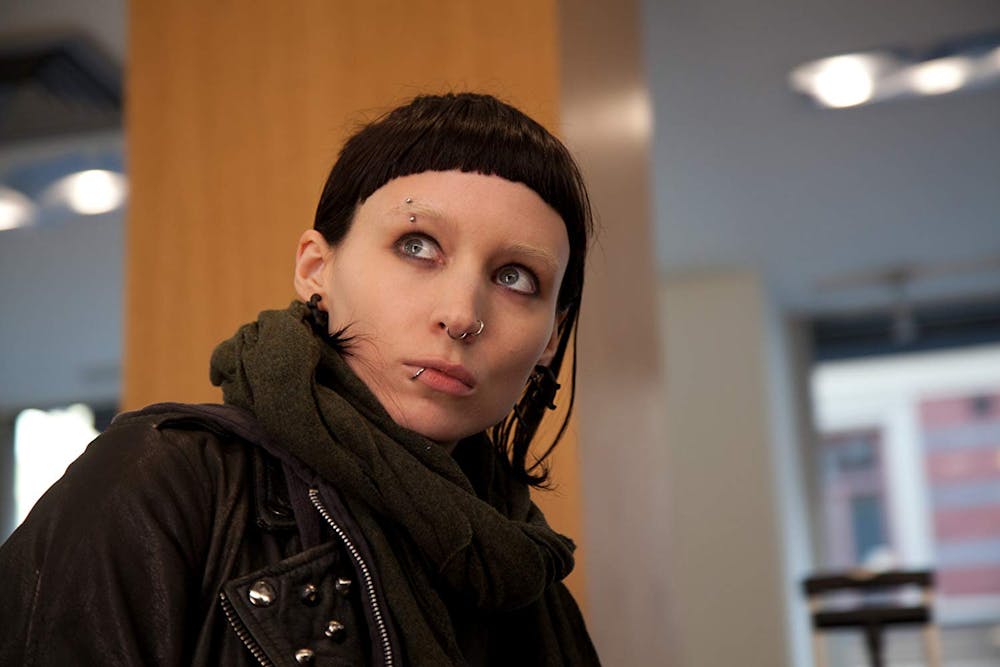
Eating frozen pizza not only blurs the boundaries between child and grown-up, but also introduces a male characteristic — refusing to take on the female role in the kitchen — that fits perfectly in the masculine area of the nerd and the hacker.
The relationship between food and identity, and the use of food as a symbol of the diversity of identities, place Cuban writer Leonardo Padura’s work in line with recent trends of international crime fiction. He uses traditional food and drink to expand and challenge the definition of Cubanness. Cooking is a way to preserve the richness and variety of local and traditional culture.
Many traditional Cuban dishes, such as the stew ajiaco, are under threat because of the scarcity of ingredients. Padura suggests here that the richness of Cuban culture is a victim of the revolutionary government’s attempt to create a coherent national narrative and a standardised identity model.
National dishes represent identity in other contexts, too. Cultural differences appear in Georges Simenon’s work through references to food. Where, when, what and with whom people eat are all potentially useful clues for Maigret. They can serve first, when among people of the same nationality, to underline difference and make clear the boundaries between people. Second, when foreigners are involved, they can confirm similarity, suggesting unity and togetherness.

In the case of the English-born Australian writer Arthur Upfield, food offers insights into complex race relations and colonial influences on the traditional owners of the land. One example is seen in Upfield’s most famous protagonist, Napoleon Bonaparte (Bony), and the detective’s ability to identify, through observation alone, an Aboriginal Australian who has been living on a white man’s menu rather than a traditional indigenous diet.
Ranging from “meals” to “grub”, food is critical to establishing, maintaining and handing on cultural practices and social identity. The suspects in Bony’s investigations — male, female, single, married, working class, upper class — are separated by what, and how much, they eat and drink as easily as they are by gender, living situation and occupation.
<!– Below is The Conversation's page counter tag. Please DO NOT REMOVE. –>

The representation of food in international crime fiction, running the gamut from giggles to gore, is clearly a rich field for exploration.
M. Jean Anderson, Associate Professor / Reader in French, Victoria University of Wellington; Barbara Pezzotti, Lecturer in Italian Studies, Monash University, and Carolina Miranda, Senior Lecturer, Director of European Languages and Cultures, Victoria University of Wellington
This article was originally published on The Conversation. Read the original article.
Hila Shachar, De Montfort University
With their fierce, independent heroines, brooding anti-heroes and all sorts of dastardly plots, it’s no surprise the Brontë sisters and their novels occupy a special place in screen adaptations of literature.
Emily Brontë’s Wuthering Heights (1847) tends to attract different kinds of film and TV adaptations to the usual polite drawing-room dramas. This is partly because Wuthering Heights is a brutal novel, despite all the romance associated with it. But it’s also down to how Brontë is remembered as an author. In this, her bicentenary year, her enduring appeal as a romanticised figure is much discussed.
This can be traced back to her older sister Charlotte’s own myth-making around Emily following her death in 1848. The myth of Emily relies on her image as a noble savage: a child-like innocent who had little contact with the world beyond her Yorkshire village and beloved moors. Charlotte’s defence relied on the idea that Emily didn’t really know what she was doing when she wrote this extraordinary novel.
It’s easy to understand why Charlotte felt compelled to defend her sister. In the 19th century, writing was still considered a masculine creative act, and taking up the pen as a woman brought accusations of being “unfeminine”. The Brontës existed in the real world and had to navigate their social reputations within it, especially if one of the aims of their writing was economic independence. But Charlotte’s defence of her sister set the scene for how adapters would later approach Emily and her work.
A good example is the 1992 film adaptation of Wuthering Heights starring Ralph Fiennes as Heathcliff and Juliette Binoche as Cathy. This version neatly does away with the novel’s complicated story-within-a-story structure and its two main narrators – housekeeper Nelly Dean and the pompous visitor Lockwood – and instead casts Emily herself as the storyteller.
Played by the waif-like Irish singer Sinéad O’Connor, Emily stumbles upon the ruins of a real house while wandering the moors and, under a mysterious hooded cloak, tells the viewer:
First I found the place … something whispered to my mind, and I began to write.
Emily as a mystical medium is the ultimate visual symbol of how authors are commonly conjured up – as divine geniuses, inspired from above. Of course this is far more attractive than showing the blood, sweat and tears that come with the real craft of writing. But there is something more going on here – something which is representative of wider cultural politics and what often happens with authors like Emily Brontë: they are turned into easily consumable, harmless, generic figures.
Western culture tends to invest in ideas of transcendence around well-known writers. People like to think of them as unique beings who move above and beyond their own cultural and social moments. But when it comes to Emily Brontë, perhaps there is also an unspoken desire to neutralise her complex and subversive engagement with her own world.
An explosive tale, Wuthering Heights is unflinching in its depiction of domestic abuse, racism, women as property and the abuse of social power. The direct, unromantic way in which this is explored in the novel is itself threatening to the social order it portrays, and seems like a subversive act for a female author. Adapting the story as romance sells better, and plays down the book’s uncomfortable brutality, as does the idea of Emily Brontë as an “unworldly” young woman who existed outside of conventional society.
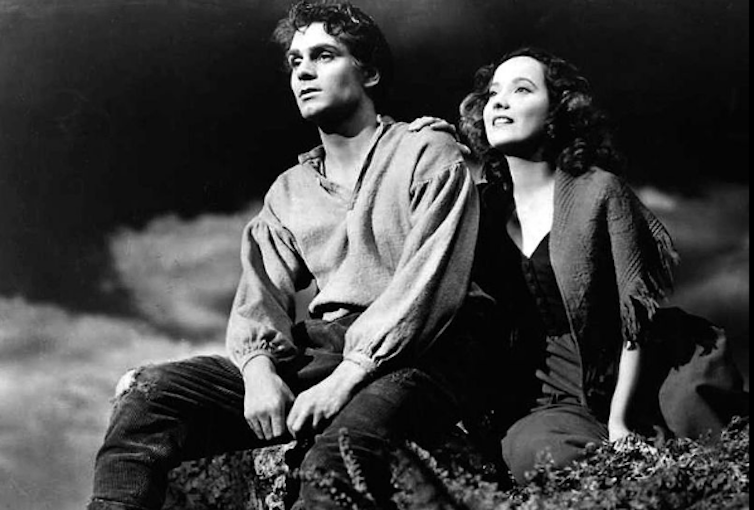
This results in constant adaptations of her novel that rely on almost identical images of natural transcendence, beginning with an image from William Wyler’s hugely popular 1939 Hollywood version starring Laurence Olivier and Merle Oberon. It shows Cathy and Heathcliff together on the moors, which seems to encapsulate for many people what the novel is about. Most adaptations repeat this imagery, but you’d have to search hard to find it in the novel, as Cathy and Heathcliff aren’t really depicted as adult lovers frolicking on the moors.
This iconic imagery is not just due to Hollywood creating a visual “template” for the novel through romance; it’s also the product of how adapters have woven the myth of Emily as a transcendent noble savage into her own characters.
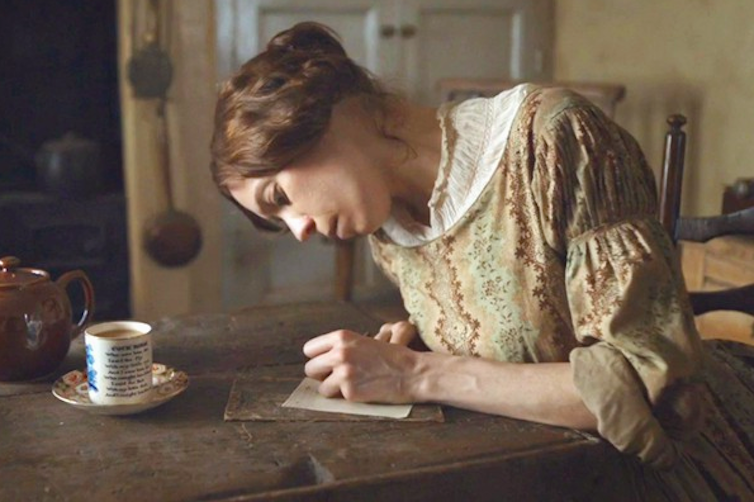
A notable and recent exception is To Walk Invisible, the 2016 BBC biopic of the Brontës, in which the sisters are shown discussing the economic necessity of becoming writers. When debating whether to take up male pseudonyms, Emily, played by a straight-talking Chloe Pirrie, says:
When a man writes something it’s what he’s written that’s judged. When a woman writes something it’s her that’s judged.
This blunt assertion seems to summarise how authors of the past – particularly female authors – are dealt with: who they are as human beings and their specific cultural environment are often ignored. They are rendered harmless and powerless to speak to us in a politicised way about the past we’ve inherited, and about our own world. With Emily, the emphasis is instead on romanticising the female author as a child-mystic, rather than focusing on her fiction as informed adult social critique.
Mythologising an author like Emily Brontë may provide a consistent and comfortable way to “consume” famous writers in contemporary culture, but it does a disservice to the potential for a more complex dialogue between past and present – after all, the realities of power, race, gender and class that Brontë wrote about in the 19th century are still issues being tackled today.
<!– Below is The Conversation's page counter tag. Please DO NOT REMOVE. –>

The question is, in 2018, should adaptations continue to collude in the screen legacy of a “safe” Emily Brontë, viewed from a transcending distance, or could they consider a more dangerous, unpredictable Emily who compels the reader to examine forms of power and powerlessness in contemporary times? It’s time to shed the romance for the reality.
Hila Shachar, Senior Lecturer in English Literature, De Montfort University
This article was originally published on The Conversation. Read the original article.
The link below is to an article that takes a look at blockchain and ebooks, including copyright issues.
For more visit:
https://copyrightandtechnology.com/2018/08/17/blockchain-comes-to-e-books-drm-included/
The link below is to an article that looks at how to gift Audible audio books to others.
For more visit:
https://bookriot.com/2018/08/24/how-to-gift-an-audible-book/
The link below is to an article that looks at some of the best books for adults featuring talking animals.
For more visit:
https://lithub.com/11-books-for-adults-featuring-talking-animals/
The link below is to an article that looks at how to delete Kindle ebooks from your Kindle.
For more visit:
https://bookriot.com/2018/08/21/how-to-delete-books-from-kindle/

Jen Webb, University of Canberra
The Miles Franklin award is famously for “a novel which is of the highest literary merit and presents Australian life in any of its phases”. That’s a very broad palette, yet for most of the award’s existence — 1957 to the present — it has recognised a rather narrow field of “Australian life”.
The 60 novels honoured to date include 42 written by 28 men, and 18 written by 14 women. Almost to a person, these winning authors are Anglo-Australian. While their narratives cover an impressive range of issues, topics, periods, structure and narrative voice, it is notable that in a country described by our prime minister as “the world’s most successful multicultural society”, the Miles Franklin seems to have remained a bastion of monoculture.
Until recently, that is. Women authors are appearing more frequently – on the shortlists and as prize winners – and the cultural and linguistic heritage of authors is similarly expanding. This year the mix of shortlist authors, and the content of their novels, is impressively diverse.

Gerald Murnane’s Border Districts is explicitly a literary novel, one with no overt plot and really only one voice. The narrator is fastidious to the point of primness, narrow and self-absorbed: a fussy old man who drifts into Grandpa Simpson moments, telling stories that wander from point to point with no apparent destination. Yet this work is also a remarkable account of memory, its fractures, and its fragments. This gives the lie to the narrator’s insistence that he is writing a report, not a novel, and casts a gentle melancholy over the work.
The unnamed narrator seems to have lived a life at arms length, remaining encased in abstractions, neglecting to experience anything at first hand. What I found the most desolate image in the novel is his childhood collection of glass marbles. The material expression of his life’s effort to “recollect” and “preserve” his memories and moods, they are no more than tiny flashes of colour, frozen in their glass bubbles, seeing and saying nothing.
In his sense of colour, and his hankering for the clarity of memory, is the suggestion that he contains within himself another man, one who yearns to feel.
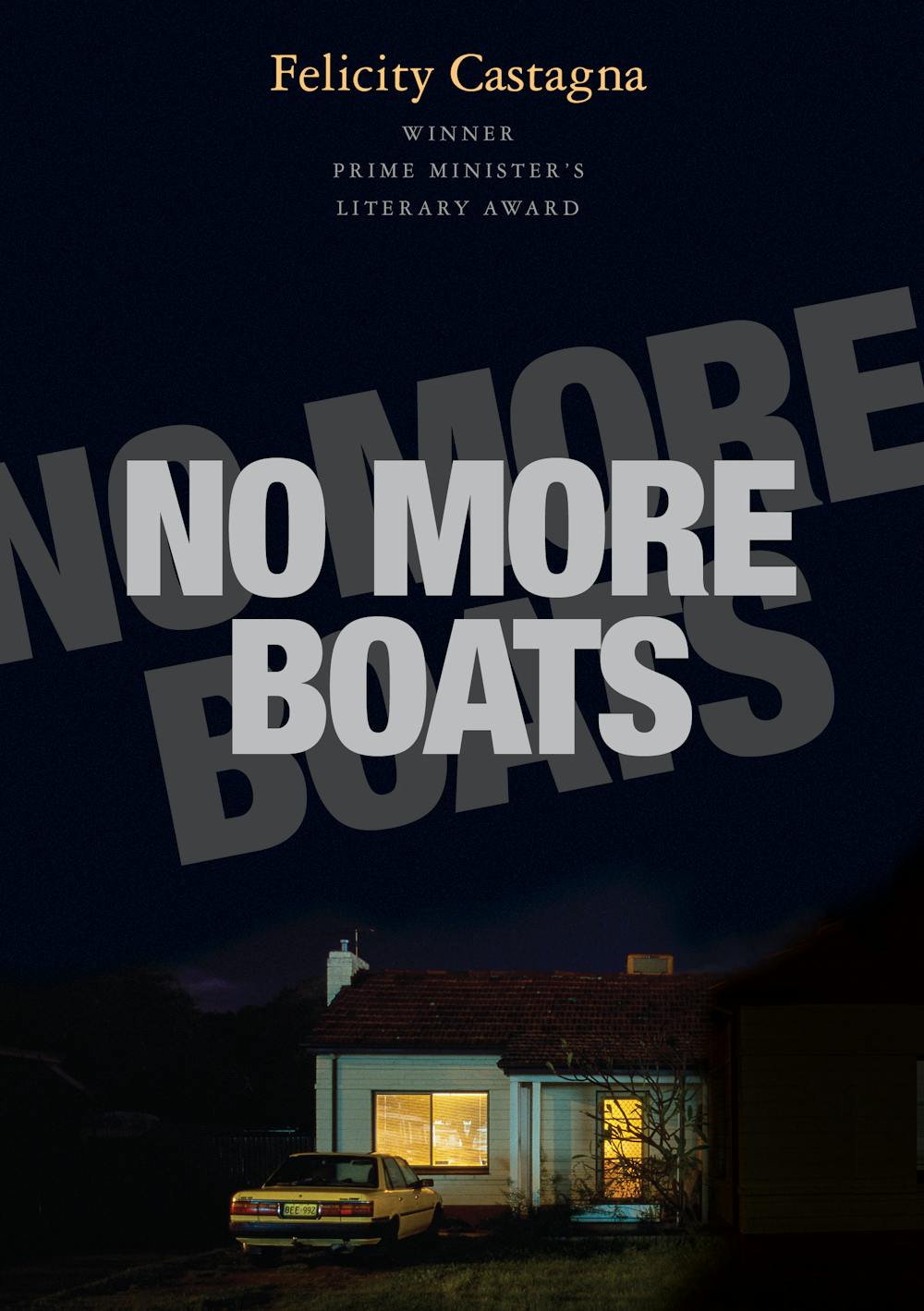
Felicity Castagna’s No More Boats opens in 1967, the year Harold Holt disappeared and, through the magic of narration, incorporates in the opening pages what is yet to come: 2001, the Tampa crisis, the September 11 attacks. In these pages, Antonio, the protagonist, is both young Italian migrant, and the ageing man who has become the face of: “We will decide who comes to this country …”
He and Rose live in Parramatta, where young men like their son Francis are testing out models of masculinity; where young women like their daughter Clare are crafting lives beyond their parents’ oversight; a rich human zoo that provides the stage for a brilliantly observed and sensitively recounted novel illuminating the politics of identity, family, community and nation.
His family are forced to confront the public scandal of Antonio’s xenophobia, to understand why a migrant in a migrant community could be so thoroughly seduced by the violent logic of the hard right. There are no real answers, of course; but beyond the family’s distress and the community’s upheaval is the shadow of two centuries of Australia struggling against “too many boats”.
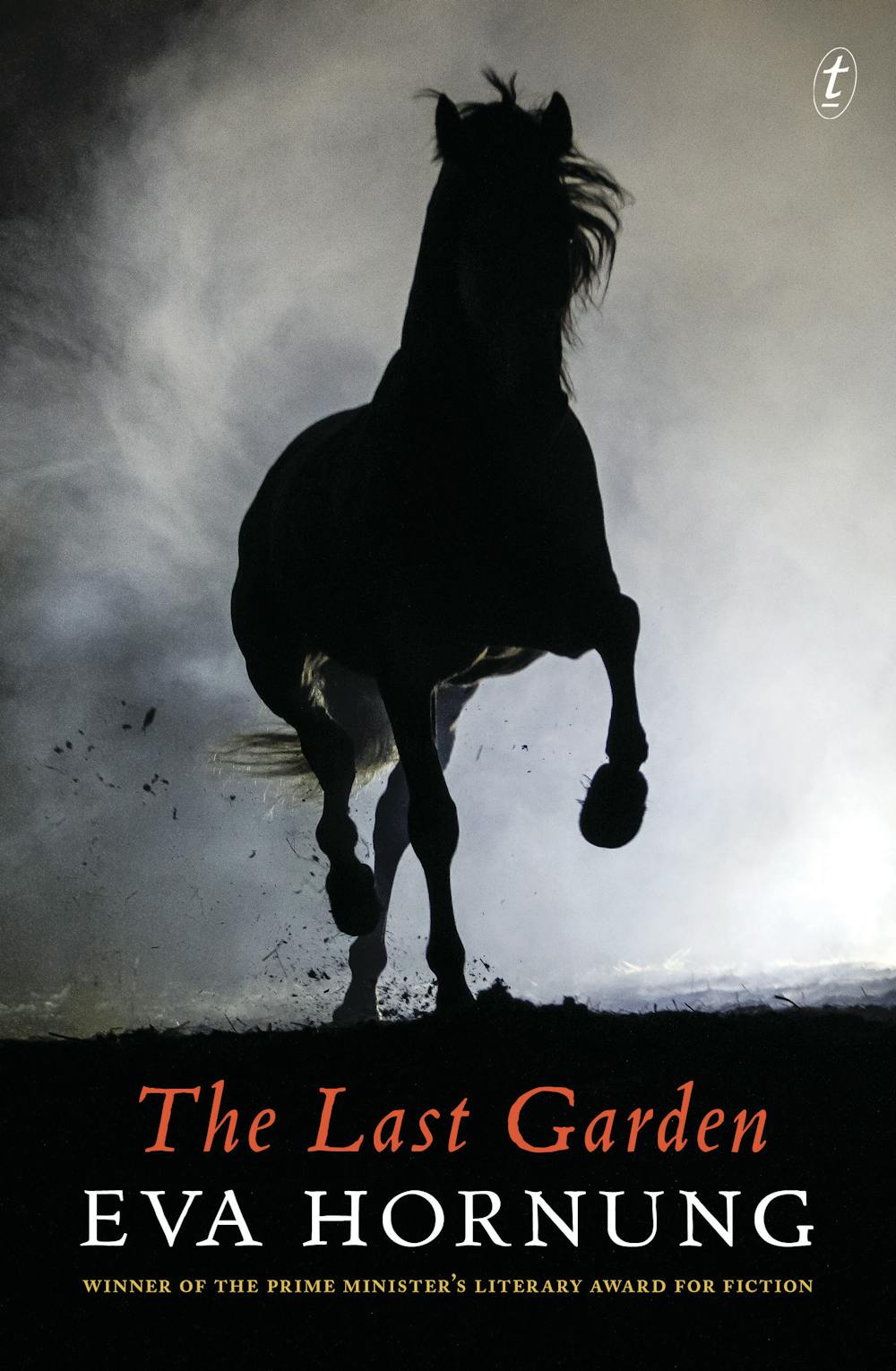
Eva Hornung’s The Last Garden is based in a South Australian religious community named – perhaps ironically – Wahrheit. There is little truth here though, and easily as many secrets and violences as are found beyond Wahrheit’s boundaries. These are flushed out by the tragedy that opens the novel, where Matthias Orion, not-fully-committed member of the church, destroys everything he can reach on his property, and slaughters first his wife and then himself.
Their 15-year-old son Benedict arrives home from boarding school to discover this horror; and even as it breaks him, so too it marks the end of the community’s Nebelung, their mythical home. The novel is told through a careful interlacing of Benedict’s and the pastor’s perspectives. The latter fails miserably to care sufficiently for the deeply traumatised Benedict, who after all has become “part of the wound” the community finds itself suffering.
Left largely to himself, and to the horses that escaped his father’s murderous rampage, and to the fox that stands in for that angel of death, Benedict lives with, and like, the animals. In that living he finds a way to recover some sense of self, and to re-enter his community: though whether as messiah or as restored son is uncertain.
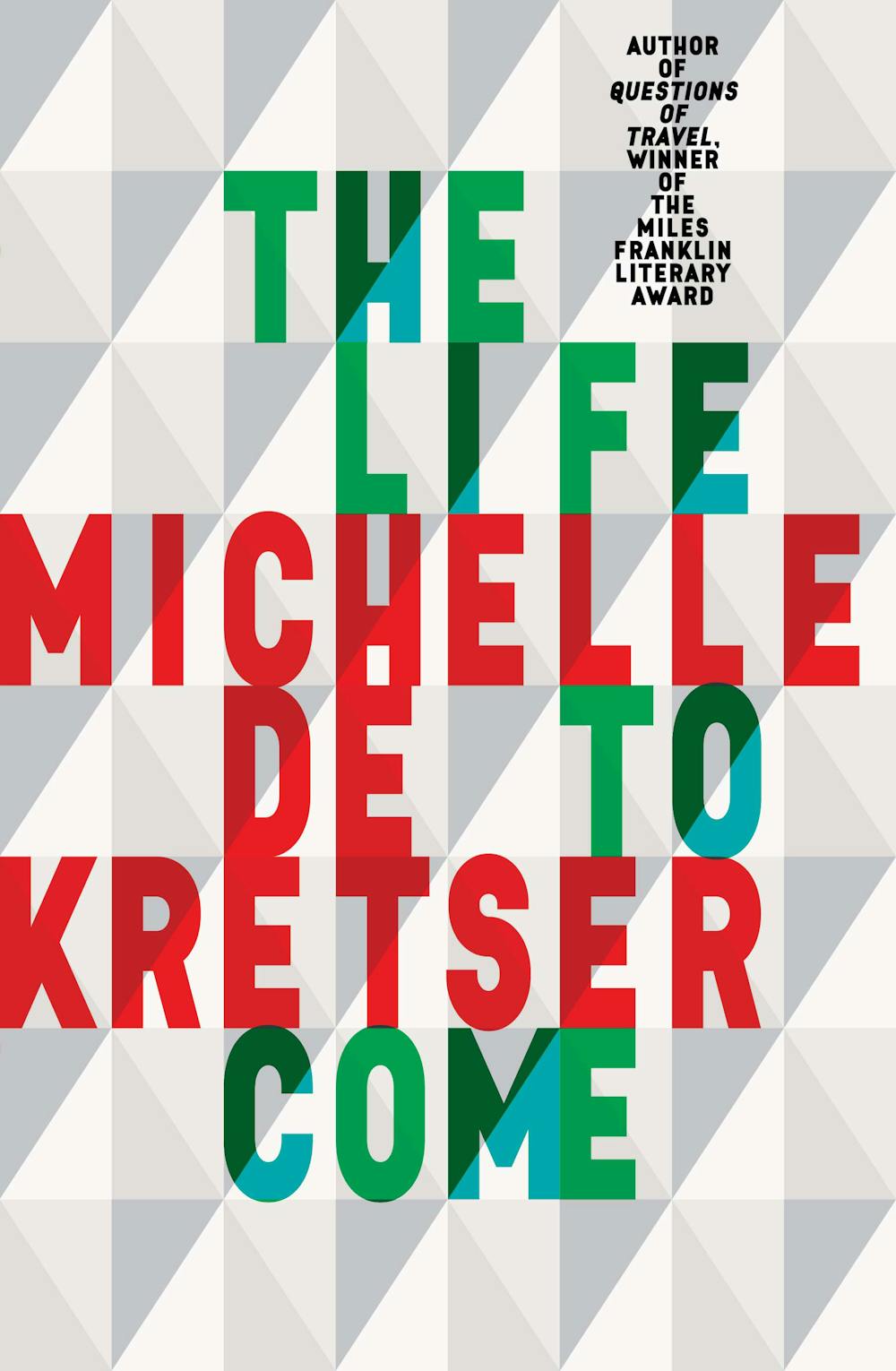
The Life to Come, Michelle de Kretser’s new novel – actually a discontinuous narrative in five sections – offers an insider-outsider view of contemporary Australian society through the shifting focalisations, points of view and voices that comprise the sections. The threads that weave it together are Pippa, a self-satisfied, hyper-performative, not-quite-good-enough novelist, and “real” novelist George Meshaw, who disdains her shallow conceits and her populist writing style.
Pippa is the more visible of the two. She spends much of the novel charming and then disappointing friends, and struggling under the burden of her mother-in-law’s condescension, while always firmly focused on herself. George appears principally through his novels – the last of which, along with Pippa’s last, are tossed in the bin by Pippa’s disenchanted neighbour, who had hoped to find warmth and meaning in these works, but found only words.
While the stories are set in Sydney and in Paris, with references also to Sri Lanka, the twin foci of this novel (for me, at least) are, first, an excoriating critique of Australian colonialist attitudes and politics, and next the burning realisation that – as one character observes – “The only life in which you play a leading role is your own”; we are all merely bit players in the lives of others.
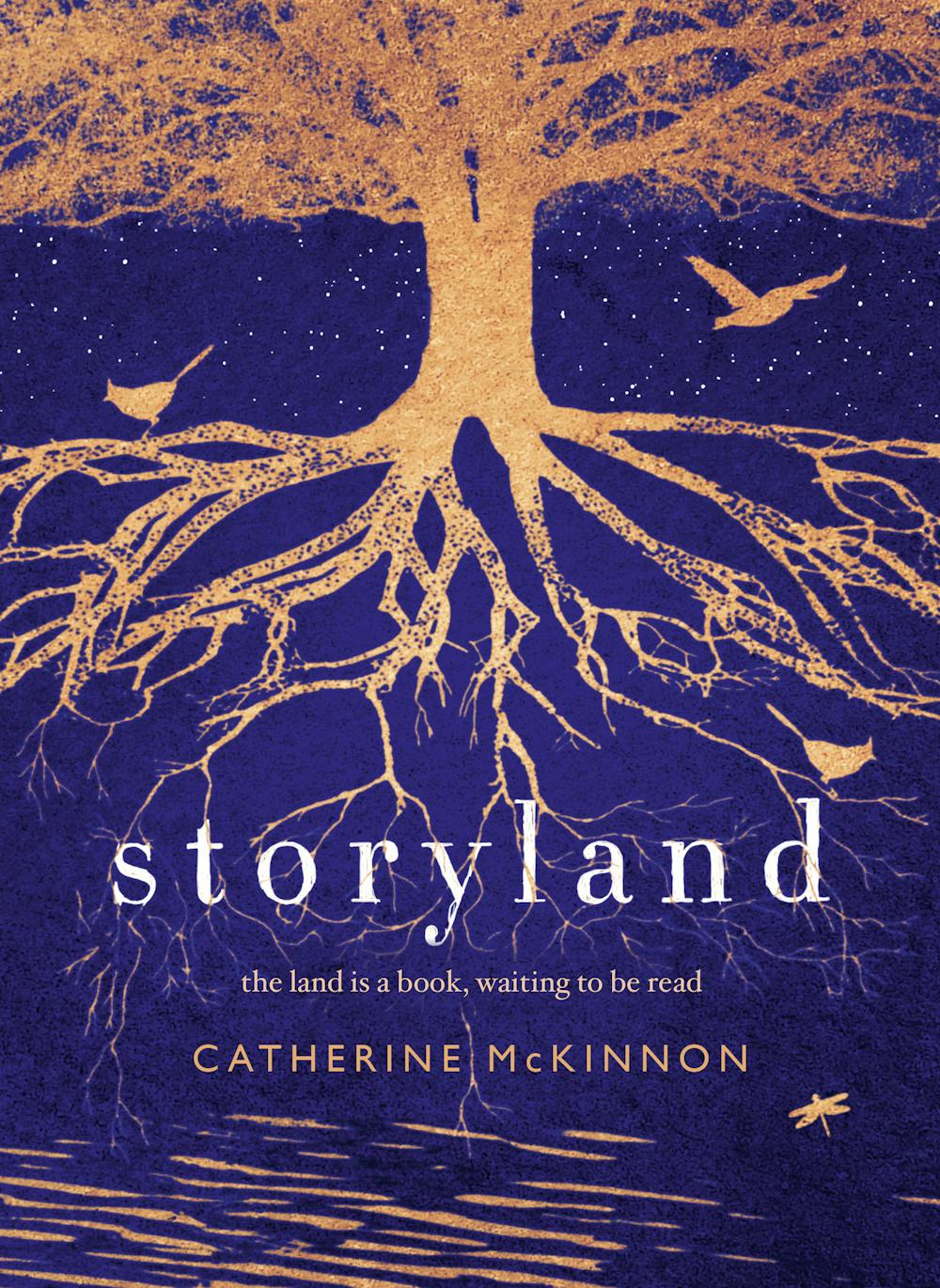
Catherine McKinnon’s Storyland is also structured in five discrete sections, the transitions here being characterised by the pulsing of time, rather than the geographical shifts of de Kretser’s work. Storyland starts and ends in the Illawarra region, during the early days of colonisation, where the possibility of trust or friendship between the local Wadi Wadi people and the invading British is constantly thwarted.
The sections between swoop up through the 19th and 20th centuries to a post-apocalypse future, and then cascade down again. Key elements – a river, a cave, a clever man’s axe – appear in each time period, connective tissue that binds them together. Characters too reappear, individuals or their descendants struggling with colonial society and its mores, with missed opportunities for connection, with the collapse of the environment and human society.
I read this novel as a migrant, and as a person of European descent, so I am not well positioned to evaluate the merits of McKinnon’s use of Aboriginal language and representation of the Aboriginal characters, but for me they were both convincing and moving. Story is not politics, but in it we can find ways to review ourselves and our histories, and perhaps begin to find points of conciliation.
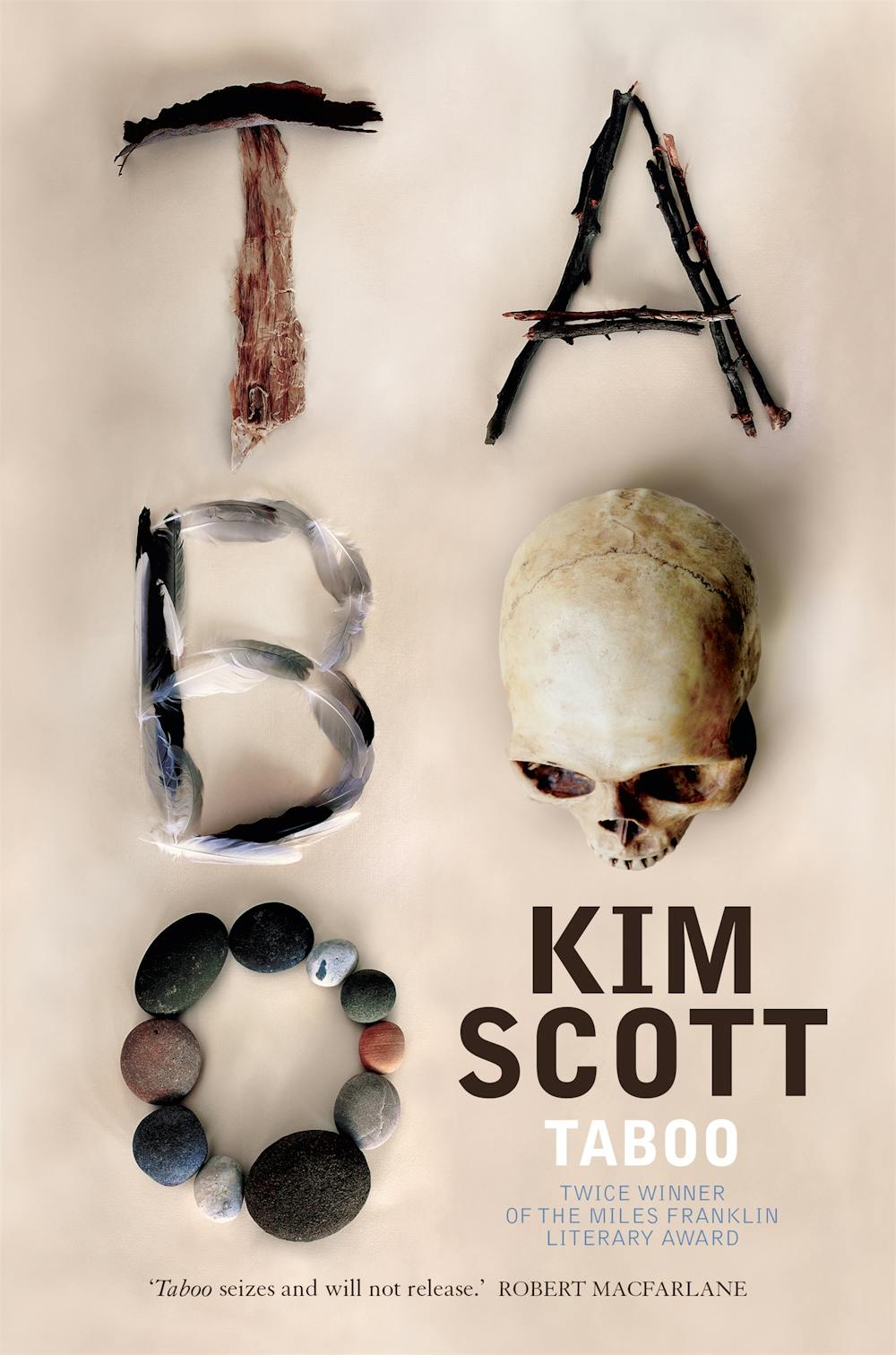
Taboo, by Kim Scott, is located squarely in the post-Apology present, when the Australian government can express regret for the Stolen Generations while maintaining the Northern Territory Intervention; and when Aboriginal communities across the country are building new ways to enter the future without deserting the past.
Focalised primarily through the young woman Tilly, daughter of an Aboriginal man who, toward the end of his life, realised the power of language to heal his community’s wounds, it follows the people of Kepalup and their establishment of a Peace Park to settle the ghosts of local Aboriginal people slaughtered by the ancestors of local pastoralists.
Though the novel is necessarily tragic – killings, stolen children, wrecked lives – it also has something generous and pragmatic at its heart. Says Uncle Wilfred of the white community: “Sorry for the history, they say. Know it’s our country, our ancestral country. They’re not gunna give the land back, but know we’re the right people.”
Despite the record of massacre, despite the clumsy interventions by white people – well-meaning but condescending, unaware of how little they know of Noongar culture – the community turns to recovering their language, retelling stories, reclaiming culture, and finding “magic in an empirical age”.
These six novels convincingly meet the criteria of the Miles Franklin, providing accounts of Australian life in all its phrases, in stories of “the highest literary merit” that craft a kaleidoscopic portrait of this society.
<!– Below is The Conversation's page counter tag. Please DO NOT REMOVE. –>

The winner of the Miles Franklin will be announced at the Melbourne Writers Festival on Sunday 26th August from 4pm at Deakin Edge, Fed Square.
Jen Webb, Director of the Centre for Creative and Cultural Research, University of Canberra
This article was originally published on The Conversation. Read the original article.
The link below is to an article that looks at the shortlist for the 2018 Banjo Prize.
For more visit:
https://blog.booktopia.com.au/2018/08/13/banjo-prize-2/
Jean Twenge, San Diego State University
Most of us spend much more time with digital media than we did a decade ago. But today’s teens have come of age with smartphones in their pockets. Compared to teens a couple of decades ago, the way they interact with traditional media like books and movies is fundamentally different.
My co-authors and I analyzed nationally representative surveys of over one million U.S. teens collected since 1976 and discovered an almost seismic shift in how teens are spending their free time.
Increasingly, books seem to be gathering dust.
By 2016, the average 12th grader said they spent a staggering six hours a day texting, on social media, and online during their free time. And that’s just three activities; if other digital media activities were included, that estimate would surely rise.
Teens didn’t always spend that much time with digital media. Online time has doubled since 2006, and social media use moved from a periodic activity to a daily one. By 2016, nearly nine out of 10 12th-grade girls said they visited social media sites every day.
Meanwhile, time spent playing video games rose from under an hour a day to an hour and a half on average. One out of 10 8th graders in 2016 spent 40 hours a week or more gaming – the time commitment of a full-time job.
With only so much time in the day, doesn’t something have to give?
Maybe not. Many scholars have insisted that time online does not displace time spent engaging with traditional media. Some people are just more interested in media and entertainment, they point out, so more of one type of media doesn’t necessarily mean less of the other.
However, that doesn’t tell us much about what happens across a whole cohort of people when time spent on digital media grows and grows. This is what large surveys conducted over the course of many years can tell us.
While 70 percent of 8th and 10th graders once went to the movies once a month or more, now only about half do. Going to the movies was equally popular from the late 1970s to the mid-2000s, suggesting that Blockbuster video and VCRs didn’t kill going to the movies.
But after 2007 – when Netflix introduced its video streaming service – moviegoing began to lose its appeal. More and more, watching a movie became a solitary experience. This fits a larger pattern: In another analysis, we found that today’s teens go out with their friends considerably less than previous generations did.
But the trends in moviegoing pale in comparison to the largest change we found: An enormous decline in reading. In 1980, 60 percent of 12th graders said they read a book, newspaper or magazine every day that wasn’t assigned for school.
By 2016, only 16 percent did – a huge drop, even though the book, newspaper or magazine could be one read on a digital device (the survey question doesn’t specify format).
The number of 12th graders who said they had not read any books for pleasure in the last year nearly tripled, landing at one out of three by 2016. For iGen – the generation born since 1995 who has spent their entire adolescence with smartphones – books, newspapers and magazines have less and less of a presence in their daily lives.
Of course, teens are still reading. But they’re reading short texts and Instagram captions, not longform articles that explore deep themes and require critical thinking and reflection. Perhaps as a result, SAT reading scores in 2016 were the lowest they have ever been since record keeping began in 1972.
It doesn’t bode well for their transition to college, either. Imagine going from reading two-sentence captions to trying to read even five pages of an 800-page college textbook at one sitting. Reading and comprehending longer books and chapters takes practice, and teens aren’t getting that practice.
There was a study from the Pew Research Center a few years ago finding that young people actually read more books than older people. But that included books for school and didn’t control for age. When we look at pleasure reading across time, iGen is reading markedly less than previous generations.
So should we wrest smartphones from iGen’s hands and replace them with paper books?
Probably not: smartphones are teens’ main form of social communication.
However, that doesn’t mean they need to be on them constantly. Data connecting excessive digital media time to mental health issues suggests a limit of two hours a day of free time spent with screens, a restriction that will also allow time for other activities – like going to the movies with friends or reading.
Of the trends we found, the pronounced decline in reading is likely to have the biggest negative impact. Reading books and longer articles is one of the best ways to learn how to think critically, understand complex issues and separate fact from fiction. It’s crucial for being an informed voter, an involved citizen, a successful college student and a productive employee.
<!– Below is The Conversation's page counter tag. Please DO NOT REMOVE. –>

If print starts to die, a lot will go with it.
Jean Twenge, Professor of Psychology, San Diego State University
This article was originally published on The Conversation. Read the original article.
 At the BookShelf
You must be logged in to post a comment.