
The link below is to an article that takes a look at boys and the way they read.
For more visit:
https://www.theguardian.com/education/2016/oct/22/the-truth-about-boys-and-books-they-read-less-and-skip-pages

The link below is to an article that takes a look at boys and the way they read.
For more visit:
https://www.theguardian.com/education/2016/oct/22/the-truth-about-boys-and-books-they-read-less-and-skip-pages
Ani Kokobobo, University of Kansas
As a professor of Russian literature, I’ve come to realize that it’s never a good sign when real life resembles a Fyodor Dostoevsky novel.
Donald Trump’s presidential campaign, with its riotous rhetoric and steady stream of scandals, calls to mind Dostoevsky’s most political novel, “Demons,” written in 1872. In it, the writer wanted to warn readers about the destructive force of demagoguery and unchecked rhetoric, and his cautionary messages – largely influenced by 19th-century Russian political chaos – resonate in our present political climate.
To show his readers just how bad things could get if they didn’t pay attention, Dostoevsky linked his political nightmare to unhinged impulses and the breakdown of civility.
Dostoevsky was as addicted to newspapers as some of us are to social media, and he often plucked crises and violence right from the headlines, refashioning them for his fiction.
Russia during the 1860s and 1870s – the heyday of the author’s career – was experiencing massive socioeconomic instability. Tsar Alexander II’s Emancipation of the Serfs freed Russian peasants from a form of class bondage, while the subsequent Great Reforms aimed to restructure the executive and judidical branches, as well as the military, tax code and education system. The reforms were supposed to modernize the country by dragging it out of the caste-like system of estates and legal privilege. But it didn’t do much to improve the economic lot of the peasant.
It was a reversal of America’s present political landscape. While today there’s simmering discontent from the right, in 19th-century Russia it was leftists who were enraged. They were angered by the reforms for not going far enough and had lost hope in the government’s ability to produce meaningful change.

One of the only unifying ideas among the more radical left-wing political factions of the period was the belief that the tsarist regime must be eliminated. Important public figures, like Russian anarchist Mikhail Bakunin, advocated for destruction of the status quo as an end greater than all ideologies. As Bakunin famously exhorted: “The passion for destruction is a creative passion, too.”
Bakunin’s conviction that a new world could rise only from the ashes of tsarism was actually put into practice by his one-time disciple, Sergei Nechaev, who was the inspiration for Dostoevsky’s protagonist in “Demons,” Pyotr Verkhovensky.
In 1869, Nechaev orchestrated the murder of a young student, an event that so shocked and angered Dostoevsky that it became the basis for “Demons.”
The novel begins in a boring provincial backwater inhabited by middle-aged people and ineffectual young liberals, all engrossed in their romantic lives. Pyotr Verkhovensky arrives and persuades many of these same characters to join his underground revolutionary society. Passions are stirred and the local order destabilized as the town enters a downward spiral that concludes with arson and several murders.
What’s most relevant to our time in “Demons” is not its ideologues but the anti-intellectual and impulse-driven nature of Pyotr’s rebellion. In Pyotr, Dostoevsky created a demagogue and pure nihilist, a political figure who appeals to people’s baser desires. Under his influence, the townspeople lose all impulse control and grow reckless, rebelling against all conventions of decency for a good laugh. At one point they desecrate a sacred icon; at another, they gleefully gather around the body of someone who has committed suicide and eat the food he’s left behind.
If their pranks, insults and disorder seem harmless, the decline in the level of public discourse act as a precursor to the violent and destructive acts at the novel’s conclusion. A skilled psychological writer, Dostoevsky never saw violence as divorced from normal human behavior. What’s most haunting about his works is just how close otherwise ordinary people are from doing extraordinarily awful things.
In “Demons,” narrative tensions escalate in a deliberately gradual way. What begins as minor impoliteness becomes scandal, arson, murder and suicide. Dostoevsky is essentially saying that criminal acts are rooted in social transgression; uncivil behavior facilitates scapegoating, dehumanization and, eventually, violence.
Donald Trump’s unconventional campaign for president powerfully evokes Dostoevsky’s novel. Aside from his pro-gun and anti-immigration positions, Trump doesn’t offer many concrete political plans. As we evaluate what motivated 14 million Americans to vote for him in the primaries, we might consider new research showing that his candidacy has a primarily emotion-based – rather than ideological or economical – appeal. There are notable anti-establishment sentiments among his supporters; many are disaffected, middle-aged white people who believe that American institutions aren’t working on their behalf.
And while his notorious campaign motto “Make America Great Again” is framed in a positive way, it actually advances a version of Bakunin’s creative destruction. It stands for purging the establishment, for recreating a nostalgia-tinged version of some lost, past America. We’ve already seen this destructive drive in its more Nechaevist, low-brow form at Trump rallies, where several people have been attacked.

There’s another aspect of Trump’s popularity that ties him to Dostoevsky’s “Demons.” Trump, in the way he carries himself, embodies the complete disavowal of impulse control we see in the novel. Unlike most political candidates, he speaks off the cuff, simultaneously reflecting and stoking the anger and pessimism of his supporters.
For instance, he said he wanted to “hit” some of the speakers who criticized him at the Democratic National Convention; in his words, there’s anger, a need to provoke and deep-seated irreverence. His supporters feel empowered by this. Without weighing his policies, they’re viscerally drawn to the spectacle of his candidacy, like the townspeople following Pyotr Verkhovensky in “Demons” who delight in the gossip and scandals he creates.
To complete the parallel, we might turn to the novel’s ending, which could have a sobering effect. Basic incivility gives way to an anarchic vision of creative destruction; many die or lose their minds due to Pyotr’s machinations. At one point, seemingly without thinking, crowds crush a female character to death because they falsely believe she’s responsible for the violence in town.
When audiences at Trump rallies verbalize violence by screaming “Lock her up” and “Kill her,” or when Donald Trump – either wittingly or unwittingly – advocates Second Amendment violence, I wonder whether they aren’t coming dangerously close to the primal violence of “Demons.”

Ani Kokobobo, Assistant Professor of Russian Literature, University of Kansas
This article was originally published on The Conversation. Read the original article.
Beth Younger, Drake University
Banned Books Week, held this year from Sept. 25 to Oct. 1, is an annual event designed to draw national attention to the harms of censorship. Created in 1982 by the American Library Association in response to a growing number of “challenged” books in schools and libraries, the week is really about celebrating the freedom to read.
Much of the practice of book banning takes the form of challenging a book deemed subversive and objectionable, with profanity or sexual content often the book challengers’ source of ire.
These days, such campaigns can elicit an eye roll: everyone knows that teens are regularly exposed to profanity and sex online and on TV. (Rather than try to ban books, a better approach is to instead teach media literacy so young people are better able to contextualize what they’re exposed to.)
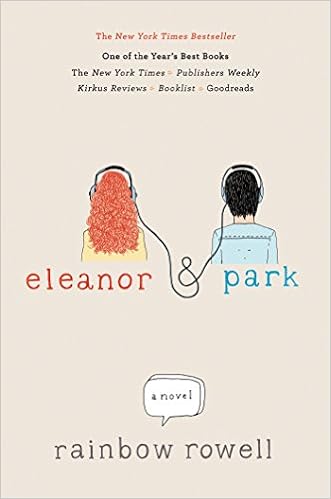
The problem is that when you go after books for swears or sex, you might also be threatening books that are truly subversive: the ones that confront our unconscious biases, whether it’s weight or race, and question the way we tend to think about ourselves and others. One frequently challenged book – Rainbow Rowell’s 2013 young adult novel “Eleanor & Park” – does just that.
“Eleanor & Park” is a romance novel about two misfits who become friends, fall in love and endure the cruelties of the world: abusive parents, poverty and bullying.
The same year it was published, a parent group in the Anoka-Hennipin school district in Minnesota tried (and failed) to get the book removed from the curriculum and school libraries. But they did manage to get the author’s visit to Anoka High School canceled.
Citing 227 instances of profanity, the parents alleged that “Eleanor & Park” was “littered with extreme profanity and age inappropriate subject matter that should never be put into the hands and minds of minor children, much less promoted by the educational institutions and staff we entrust to teach and protect our children.”
Banning books in the United States is nothing new, and there’s a long history of trying to prevent people (mostly kids and teens) from reading things some think they shouldn’t read.
It seems that the only thing worse than sex or the “f word” in young adult literature is being a lesbian. Depicting a gay couple got copies of Nancy Garden’s 1982 lesbian romance novel “Annie on My Mind” burned on the steps of the Kansas City School District headquarters in 1993.

Judy Blume’s books are famous for pushing the “decency” envelope. Her 1972 novel “Forever…” is also frequently banned for sexual content and for profanity. (Pretty much yearly since its publication, “Forever…” has been challenged by Focus on the Family or The Christian Coalition.)
But there’s another aspect to “Forever…” that’s rarely discussed: It has a fat character who has lots of sex. Sybil is often seen as a foil to the main character Katherine, a rail-thin control freak who loses her virginity deliberately and with purpose.
Sybil is the other side of the body image spectrum: She’s fat and “has been laid” by six guys. At least she gets to have sex, which is pretty uncommon for a fat girl in 1972 young adult fiction. (And there’s a penis named Ralph in the book, yet another reason to read this classic.)
But “Forever…” is an extreme outlier. The way the media depicts fat characters – and fat people – has been a problem for generations. In 2011 NPR aired a piece on fat stereotypes in pop culture. The report dissected the typical fat character in TV shows and films: someone “self-loathing” and “desperate to be loved.”
Of course, the lives of fat people aren’t much different from those of thin people. But you wouldn’t know that from the way fat bodies are portrayed on TV and in film. Research on “weight bias in the media” suggests that most representations of fat people in media are stigmatizing. More research suggests that shows like “The Biggest Loser” and “More to Love” reinforce anti-fat bias rather than fat acceptance.
This is why “Eleanor & Park” is so refreshingly different.
Like many protagonists in young adult novels, Eleanor is a teenager who’s desperate to be an adult so she can escape her awful circumstances. But while the parents trying to ban the book pounced on the profanity, they ignored one of the novel’s biggest triumphs: Eleanor is fat. Yes, Eleanor is a fat female protagonist in a young adult romance novel and she’s in love – she even has a cute boyfriend named Park.

As author John Green wrote in a review of the novel, “…the obstacle in ‘Eleanor & Park’ is simply the world. The world cannot stomach a relationship between a good-looking Korean kid and Big Red.” (Big Red is Eleanor’s nickname.)
Last year, Buzzfeed writer Kaye Toal penned a beautiful personal essay about discovering Eleanor in an airport bookstore. Part of what struck Toal as significant about Eleanor is that she is fat yet is not required to become thin or change in order to be loved. Despite the recent increase in fat characters appearing on television and in movies, many of them are required to change in order to be accepted. Not surprisingly, another study published in 2013 connects the prevalence of the “thin ideal” in popular literature to low self-esteem in female readers.
Letting Eleanor be fat and be loved is much needed in today’s climate of “the obesity epidemic” and misplaced concerns with fatness. Park loves Eleanor; she loves him back. A simple story, but with a difference. Eleanor’s fat is not really a crucial aspect of her being. She doesn’t need to be fixed.
That’s what makes this lovely and painful novel subversive – and what makes efforts to ban it all the more misguided.

Beth Younger, Associate Professor of English & Women’s and Gender Studies, Drake University
This article was originally published on The Conversation. Read the original article.
Siobhan Lyons, Macquarie University
In 1967, French theorist Roland Barthes famously declared the metaphorical “death of the author” in his essay of the same name. Barthes rejected the Romantic idea of the author as a unique figure of genius. Still, despite his best efforts, this romantic notion of the heroic, solitary wordsmith lives on today.
In Medieval times, authors were seen as nothing more than craftsmen. But the Romantic poets – Byron, Coleridge, Blake, Shelley – singled out the writer as a figure of “spontaneous creativity”. As academic Clara Tuite has noted,
the Romantic period saw the birth of the literary celebrity, a figure distinguishable from the merely famous author by his or her status as a cultural commodity.
This Romantic writer was seen as either a solitary hero, a tragic artist, a melancholy genius – or all three. In the centuries since, famous authors have been both celebrated and panned, adored and ridiculed.

Since Romantic times, we have often expected writers to be detached from the trappings of celebrity culture, aligning their integrity with an anti-commercial attitude. There is, argues author Joe Moran, a “nostalgia for some kind of transcendent, anti-economic, creative element in a secular, debased, commercialised culture” that we commonly attach to writers.
Indeed theorist Lorraine York has asked if we can even use words like “fame” and “celebrity” to describe writers, “those notorious privacy-seeking, solitary scribblers”.
One of the first to question the idea of literary celebrity was the 18th century philosopher Jean-Jacques Rousseau, who found his own fame something of a burden.
More recently, authors such as Jonathan Franzen, David Foster Wallace, and Dave Eggers have struggled with the desire for popularity and credibility. In today’s internet culture, reaction to a famous writer’s actions or utterances is quick and merciless. Next week, a new author will be thrust into the media spotlight, with the announcement of the Booker Prize winner.
Yet interestingly, discussions about the difficulties of being a famous writer rarely include women. The notion of the solitary genius is usually attached to men. A notable exception is the Italian novelist Elena Ferrante – who is famous, ironically, precisely because of her reluctance to engage with literary celebrity. Ferrante writes under a pseudonym, in her words, to “liberate myself from the anxiety of notoriety”.
Ferrante’s recent unmasking by a literary journalist has unleashed a torrent of condemnation.
//platform.twitter.com/widgets.js
The extent to which her true identity has been picked over shows how our society craves constant closure, often at the expense of creativity and imagination. As Michel Foucault once noted, literary anonymity is “of interest only as a puzzle to be solved”.
Such is the nature of contemporary celebrity culture that many cannot tolerate the idea of writers who prefer anonymity over fame. So those such as Thomas Pynchon, J.D. Salinger and Ferrante, who have evaded the limelight, have been scrutinised as much for their personal lives as their actual works.

Olga Popova / Shutterstock.com
The 19th century writers Charles Dickens (hero of the working class) and Mark Twain (America’s most beloved humourist), were plagued with aspects of their fame. While Dickens was often criticised for appealing to the lower classes, Twain likened celebrities to clowns. Celebrity, he said, “is what a boy or a youth longs for more than for any other thing. He would be a clown in a circus […] he would sell himself to Satan, in order to attract attention and be talked about and envied”.
Yet Dickens and Twain also enjoyed their fame. Dickens was renowned for engaging his audiences at public lectures; Twain also went on speaking tours.
If we fast forward half a century or so, we come to Ernest Hemingway – another author who felt imprisoned by his fame. As theorist Leo Braudy puts it, Hemingway was caught between “his genius and its publicity”. In an undated writing fragment, Hemingway wrote:
We have reached the point where we are ruled by photographers and agents of publishers and writing is no longer of any importance.
He also called fellow writer F. Scott Fitzgerald a “hack” for writing Hollywood screenplays.
Yet Hemingway nevertheless helped promote the “Hemingway myth”, built around ideals of masculinity and genius. He was frequently photographed outdoors, fishing and hunting, or attending bullfights.
Then there was Norman Mailer, the pugnacious, Jewish author of The Naked and the Dead and Advertisements for Myself. In 1960, Mailer stabbed and seriously wounded his then-wife, Adele Morales with a pen-knife at a drunken party. (After pleading guilty to a charge of third-degree assault, he received a suspended sentence.)

Mailer cultivated a public persona that certainly boosted his fame, but did little for his literary reputation. Many critics accused him of wasting his talents by shamelessly promoting himself; he did frequent TV interviews, including a particularly notorious appearance on The Dick Cavett Show, where he and Gore Vidal famously butted heads over Mailer’s public profile and ego.
Indeed, Mailer once called himself
a node in a new electronic landscape of celebrity, personality and status.
Theorist John Cawelti suggests that unlike Hemingway, who lived out to the end an ambiguous conflict between celebrity and art, Mailer “tried to make his public performances themselves into a kind of artistic exploration”. Mailer frequently wrote about himself in the third-person, in an effort to “perform” himself as a character.
Interestingly, at the same time as all this was happening, J.D. Salinger, author of The Catcher in the Rye, famously was living as a recluse.
In 2001, Oprah Winfrey put Jonathan Franzen’s sprawling family saga The Corrections on her book club list, encouraging her audience to read it. Franzen was invited onto Oprah’s show. He declined, saying he didn’t want his novel placed alongside “schmaltzy, one-dimensional [books]”.

Franzen was widely panned for being a snob. Andre Dubus III, for instance, criticised Franzen’s assumption that “high art is not for the masses, that they won’t understand it and don’t deserve it”.
Media scholar Ian Collinson sees Franzen’s reaction as a symbolic attempt to separate the television celebrity from the novel, an act of “cultural decontamination”. Franzen, he writes, feared his position within the high-art tradition “would be compromised if his novel were subject to such blatant commercialism”.
Yet nine years later, Franzen apologised to Oprah. He was again invited onto her show, this time to promote his 2010 book Freedom. He did not refuse a second time. Ironically, many criticised Franzen for succumbing to the allure of popularity. The old assumptions regarding the incompatibility of literature and celebrity resurfaced, with one critic, Macy Halford, suggesting that “Oprah and Franzen are not terribly compatible personalities”.
This whole saga attests to what Tessa Roynon has called the “damned if you don’t, damned if you do” mentality of literary celebrity. Authors are often seen as having to choose between respectability amongst fewer critics, or widespread popularity at the expense of their reputations. (One article about a speech Franzen gave to students in 2011 was memorably titled, “Touching the hem of Mr Franzen’s garment.”)
Like Mailer, Franzen’s career has been marred by the troubled union between mass media presence and desire for literary acceptance.
One of Franzen’s peers, the late David Foster Wallace, was an author in the Romantic mould; he is associated with the “New Sincerity” literary movement, and his 1996 novel Infinite Jest has been judged by many as a work of genius.

In 2008, Wallace took his own life. Before his death, Wallace was known to have suffered from depression, and he projected an image of the melancholy genius. His opinion of celebrity was less than favourable. His widow Karen Green once noted in an interview that all of the media attention given to Wallace “turns him into a celebrity writer dude, which I think would have made him wince”.
In a 1996 New York Times piece, Wallace claimed that the “hoopla” of celebrity made him want to become a recluse. The cult of celebrity was something he consistently mocked in his work, calling celebrities “symbols of themselves” rather than real people. As with Rousseau and Salinger, the logic went that Wallace “deserved his celebrity”, journalist Megan Garber writes, specifically because he had not sought it.
Dave Eggers is also part of the “New Sincerity” movement. A writer of serious, sentimental fiction, his books include his debut memoir A Heartbreaking Work of Staggering Genius, and What is the What?, the fictionalised story of the life of Sudanese refugee Valentino Achak Deng. Eggers also opened the writing centre Valencia 826 in San Francisco, which helps children develop their writing skills (and inspired the Sydney Story Factory and Melbourne’s 100 Story Building.)

Early in his career, Eggers often spoke of wanting to retreat into anonymity. Instead, he seized the reins of literary celebrity. Some then accused him of hypocrisy – in criticising fame while also inviting it. He has also been criticised for “excessive sincerity”, while journalist David Kirkpatrick called Eggers “agonizingly ambivalent”.
Journalist James Sullivan notes that Eggers
treats his celebrity like a gold lamé suit: It’s amusing, absurd and, in his mind, not quite appropriate.
Meanwhile, in her reading of Eggers’ 2003 book You Shall Know Our Velocity, Caroline Hamilton suggests that the central characters “resemble the credibility-obsessed younger Eggers torn between longing for celebrity and legitimacy”.
In a 2000 email interview, Eggers referred to himself as a sellout for having sold many books and appeared in various magazines. As Hamilton writes, the term sellout has less to do with wealth, and more to do with “the popularity that comes with it”.
Celebrity, then, remains a problem for those authors wishing to appear genuine and serious.
It is striking that female authors are, for the most part, excluded from all these agonised discussions about inner turmoil and perceived loss of prestige. This suggests that women are not often thought of as having substantial reputations in the first place.
Nobel Laureate Toni Morrison, for instance, has frequently appeared on Oprah’s program to discuss her complex, poetically written, novels. In contrast to Franzen, however, Morrison’s credibility was never seen to be compromised in doing so.

Despite the number of talented women writing today for large audiences – Margaret Atwood, Zadie Smith, Joan Didion, and Toni Morrison just to name a few – critics do not often think of female authors as having the kinds of monumental reputations that their male peers possess. The Byronic hero, the Hemingway legend, and the Foster Wallace genius are larger-than-life men.

Women are seldom discussed in such a way – with the possible exception of Gertrude Stein and Virginia Woolf. Yet this may actually be a blessing for them. Avoiding the expectations that go along with literary celebrity can be an advantage. Female authors may be better able to breach certain boundaries – of genre, style, content – in ways that certain male authors cannot.
Ferrante, for instance, said she explicitly needed anonymity to write honestly. While some may see it as a bizarre sort of compliment to her that she is so intriguing that an Italian journalist spent weeks combing financial and property records to unmask her, she surely deserved the right to her privacy to focus on her own work.
Some of the most interesting genre-defying authors writing today are women such as Morrison, Atwood, and Emily St. John Mandel. Perhaps, then, female authors can more seamlessly defy stringent boundaries that continue to define the literary world when they are not hailed as heroic geniuses.

Siobhan Lyons, Tutor in Media and Cultural Studies, Macquarie University
This article was originally published on The Conversation. Read the original article.
Cain Polidano, University of Melbourne and Chris Ryan, University of Melbourne
Teenagers with low reading levels, who went on to further education, don’t find it any harder to get a job at the age of 25, research shows.
At age 25, young Australians whose reading proficiency at age 15 was ranked low in the international literacy and numeracy test were employed at the same rates as those with higher levels of achievement.
For both the low (below level 3) and medium (level 3 and 4) reading proficiency groups, 58% were employed full-time, with a further 13-14% employed part-time.
Low proficiency levels in the Program for International Student Assessment (PISA) tests are deemed to be those at a level insufficient for students to perform the moderate reading tasks that are needed to meet real-life challenges and are below minimum Australian standards.
Around one-third of Australian 15 year olds had low reading proficiency levels, with just over one half were in the medium proficiency group.
The study also found that low school achievers work in jobs that have similar expected lifetime earnings as the medium reading proficiency group.
The results are particularly surprising because it is well known from other research that poor reading skills in adulthood are associated with poorer employment prospects and work in low-paid jobs.
It seems that not every teenager with low reading proficiency necessarily becomes an adult with poor reading skills.
These results can be explained by high rates of participation in, and good outcomes from, Vocational Education and Training (VET) by those with low reading proficiency.
Around 58% undertook VET study, 15% higher education study and 14% both.
In contrast, those from the medium group focused more on higher education — 42% higher education, 36% VET and 15% both.
Those from the low proficiency group compensate for studying below bachelor-level VET qualifications by choosing courses that have good labour market prospects.
Compared to the medium group which did not complete a university degree, the low group chose initial VET courses that had 6% higher graduate earnings.
It is thought that those with low reading proficiency at age 15 explore VET options from an early age.
Given the large number of VET courses available – and the fact that most are designed to prepare students for specific occupations – early career exploration may mean the low proficiency group is better prepared to make course choices.
Australia is one of only a handful of countries with the capacity to track outcomes of PISA participants through its Longitudinal Survey of Australian Youth (LSAY).
In comparing outcomes, we also controlled for a range of differences between the student groups that may confound the analysis, such as family socioeconomic and demographic background and grade level at age 15.
The results rely on the survey respondents at age 25 being representative of those first surveyed at age 15, which can be problematic if attrition rates are high, as they are here at around 75%.
In the paper, we report a number of supplementary analyses that indicate that the results are unlikely to be affected by non-random attrition. The results also do not appear to reflect particularly high levels of motivation or ambition among the low skill group members who remain in the survey.
Further education and training plays a role in up-grading the skills of individuals.
A study of a Canadian PISA cohort reported that when respondents were re-tested at age 24, the reading levels among those who had undertaken post-school studies had increased from their age 15 levels.
The findings in our research underlines the role that VET plays in providing opportunities for low-achieving school students to engage further in study and participate fully in a modern economy.
It also demonstrates the importance of course choice in shaping outcomes.
For schools and education departments, the message is to not only ensure access to VET, but also to support young people in making good course choices. Early career counselling is a step in this direction.
We stress that these results do not mean that academic achievement is unimportant. On the contrary, we find more marked differences in labour market outcomes at 25 between those with high reading proficiency (levels 5 and above), suggesting substantial returns to achievement among the most skilled.

Cain Polidano, Research Fellow, University of Melbourne and Chris Ryan, Director, Economics of Education and Child Development, University of Melbourne
This article was originally published on The Conversation. Read the original article.
Camilla Nelson, University of Notre Dame Australia
Writers, over the last decade, have been waxing lyrical about the rise of the present tense in English fiction. But this morning I read something entirely new – for me, at least. I read a manuscript written almost uniformly in the continuous tense and I found myself getting – the pun is irresistible – tense. Rather than the much-vaunted vivifying effects attributed to present tense narration, this piece of formal trickery hinted at a qualitatively different thing – the potential flattening effect of mono-tense fiction.
Historically, English language fiction, for the most part, has been written in an unobtrusive past simple tense, sometimes called the narrative tense. Odes to the past simple do not exist in writer’s style or “how to” manuals, because, when it comes to fiction, at least, past simple is relatively invisible and it’s every other tense that stands out.
Of course, the danger is that the past simple fits the reader like a comfortable old shoe. In your average past tense narrative, everything already exists, so the argument goes, in a tidy and predetermined sequence. It provides a stable point of reference from which the reader looks safely back on the story.
For this reason, present tense narration is billed as the roar of late modernity. It is the tense of real time technologies, soundbites and satellite relays. It signals an inability to find a stable place from which to speak in a complicated world in which everything has an undetermined future.

Jay McInerney’s 1980s extravaganza Bright Light, Big City is often said to have entrenched the present tense craze among the fashionable affectations of the instant gratification generation – but this is perhaps because it calls attention to its present tense by shouting it out in the second person (“You are not the kind of guy who would be at a place like this at this time of the morning”).
Raymond Carver produced work in the present tense back in the psychedelic seventies (“I am sitting over coffee and cigarettes at my friend Rita’s and I am telling her about it.”), as did Malcolm Bradbury. Margaret Atwood produced Surfacing, followed by Cat’s Eye and The Handmaid’s Tale.
More recently, present tense is a feature in DBC Pierre’s Vernon God Little and Ian McEwan’s Saturday. It is mobilised to brilliant effect in JM Coetzee’s Disgrace, creating an edgy sort of atmosphere in which anything is possible (“He goes straight through to the bedroom, which is pleasant smelling and softly lit, and undresses”). In Wolf Hall, Hillary Mantel uses it to pull the distant past over the threshold of the present, creating the present tense as the new tense du jour for the historical novel (“He turns his head sideways, his hair rests on his own vomit, the dog barks”).
In fact, it’s perfectly possible to find a surprising amount of present tense in the nineteenth century novel, including works by Charlotte Bronte and Charles Dickens (where it is used to create a sense that, as Inspector Bucket puts it in Bleak House, “You don’t know what I’m going to say and do, five minutes from this present time … ”).
It’s tempting to spot a steady diffusion of the present tense marking the era from the industrial revolution to the information age, and to equate this with a sense of the world speeding up. (Or alternatively, to equate the death of the author’s distant God-like omniscience with the rise of democracy.)
But there’s another way to see it, too. Any individual past-tense novel may well contain every one of the English language’s twelve tenses. In comparison, a present tense novel tends to contain only two or three.
Take Virginia Woolf, for example:
Mrs Dalloway said she would buy the flowers herself. For Lucy had her work cut out for her. The doors would be taken off their hinges. Rumpelmayer’s men were coming. And then, thought Clarissa Dalloway, what a morning – fresh as if issed to children on a beach. What a lark! What a plunge! For so it had always seemed to her when, with a little squeak of the hinges, which she could hear now, she had burst open the French windows and plunged at Bourton into the open air.

Here Woolf uses past simple to frame the sentence, followed by future tense for the reported speech. The next sentence is in the past perfect (“For Lucy had her work cut out for her.”) followed by the future tense (“The doors would be taken off their hinges.”) An internal dialogue bursts into life with two short exclamatory sentences (“What a lark! What a plunge!”) before returning once again to past perfect. Indeed, as Mrs Dalloway runs on, the tenses constantly shift, conjuring up a flux of emotions.
By way of contrast, the ubiquity of the continuous past tense (typified by the use of the word “was”) in the manuscript I read this morning makes the reader feel as if you are a long way off from the action, as you are no longer talking about specific actions or events, but generalised or ongoing actions, such as actions that occur everyday. It lacks specificity. The continuous tense is always begging to be interrupted.
For garden-variety writing, the rule probably holds true: “Jesus wept” is stronger than “Jesus was weeping”, while the passive form, “the weeping was done by Jesus”, is a little ridiculous. The other problem is that sentences (like my three preceding clauses) also get longer and less economical as you need to add in additional words, very often verbs and gerunds that aren’t really doing much.
Gertrude Stein had a particular fascination with the continuous present tense, and the continuous past is a feature in quite a few of William Faulkner’s long recursive sentences, which can yank together half a dozen different temporal zones. But this kind of recursion, like subordination, creates complexity, and requires formidable skill. At risk of sounding like a pipe-smoking, tweed-wearing literary Luddite, mono and duo-tense novels can begin to feel a little thin.

Camilla Nelson, Senior Lecturer in Writing, University of Notre Dame Australia
This article was originally published on The Conversation. Read the original article.
Kate Burridge, Monash University
There’s a new arrival on the dictionary scene – the much-anticipated second edition of the Australian National Dictionary, known fondly as AND.
As I recently wrote, these beautiful two volumes should certainly put to rest any fears people might have about the continued place of “tree-dictionaries” in an age of e-books and digital libraries.
These more than 16,000 Australianisms have generated lots of excitement – and not surprisingly. Words are the most observable part of any language and English-speakers seem fascinated by the ins and outs of expressions.
Look at the media attention when dictionaries announce the winner of their Word of the Year competition. There’s nowhere near the same excitement with other aspects of the language.
There were no breaking news stories when linguists announced developments affecting the conjunction “because” (for example, “I’ve been missing out on sleep because binge-watching Game of Thrones” or “I missed the ending because fell asleep”).
Dictionary editors are among the new celebrities, answering questions like: what is the longest word in the language? Is there a word to describe those who drink their own bathwater? How many words do speakers know? And, perhaps the thorniest question of all – when should new expressions enter the dictionary?
Vocabulary changes more than other aspects of language and lexicographers are constantly redrawing the exclusion boundary for marginal vocabulary items. “Yeah-no” has been around since the 1990s, but is only now appearing in dictionaries.
And while many original misspellings now have entries, such as “miniscule” (with its erroneous “i”) and even “nucular”, an entry for “accomodation” (with one “m”) seems a long way off.
It’s not easy for dictionary-makers. They are seen as the guardians of the language and when they take on board expressions like “yeah-no” and “nucular”, we hear howls about declining standards. Yet people will usually discard dictionaries if they don’t keep up-to-date.
Dictionary-making was more straightforward for early lexicographers, who sourced words almost exclusively from books. So, it was formal written language that typically made it into dictionaries.
Words were written on cards each time they were used and, when there was a substantial collection of cards, it could be established that a word was in general usage. So, they were largely respectable expressions, and anything that snuck under the radar would be well and truly branded (originally with symbols like asterisks or daggers, and later with more precise usage labels like “low”, “barbarous”, “vulgar”, as appeared in Samuel Johnson’s 1755 dictionary).
These days it’s all very different. Lexicographers consider an array of different language forms, including newspapers, magazines, pamphlets, menus, memos, TV and radio broadcasts and, of course, emails, chat-room discussions and blogs.
So it’s not surprising to find that the informal aspect has been significantly boosted in the new-look AND. Of course, this reflects the strong attachment to the vernacular in Australia, but it’s also in keeping with the marked shift towards informal ways of speaking and writing generally – even public language is becoming progressively more casual and everyday.
So dictionaries are now much faster to take up “slanguage”. In the Collins Official Scrabble Words, even “innit” (“isn’t it”), “grrl” (“feisty female”) and “thang” (“thing”) have the stamp of approval. Once it could take years and years for such colloquialisms to appear in print, perhaps then to be picked up by lexicographers and placed in some dictionary — or perhaps never.
So like many other dictionaries these days, AND shows an assortment of distinguished entries and boisterous slang. Additions from the world of economics and politics, for example, include sedate terms-of-art (“aspirational voter”, “economic rationalism”, “negative gearing”, “scrutineer”) as well as colloquialisms (“keep the bastards honest”, “Hawkespeak”, “hip-pocket nerve”, “wombat trail”).
And the current editorial team has continued the AND tradition and not tagged these entries with labels like “colloquial” or “slang” (though “-ist” language is occasionally labelled derogatory).
So don’t believe the concerned hype that accompanied the 2014 edition of Tony Thorne’s Dictionary of Contemporary Slang. It added only three new Australianisms (“tockley” for “penis”, “ort” for “buttocks” and “unit” for “bogan”), prompting a frenzy of headlines like:
The rise and fall of Australian slang.
I’m not sure how Thorne missed “selfie”, Australia’s contribution to the international lexicon – after all, it was the Oxford Dictionaries’ Word of the Year in 2013.
Articles expressed the fear that the glory days of Australian slang were over. AND should help to quell such fears – “hornbag”, “budgie smugglers”, “grey nomad”, “chateau cardboard” are among the many treasures you will find there.
Some of these entries appear so scruffy that you might wonder at the wisdom of the editors including them at all (“snot block”, “ranga”, “reg grundies”, “ambo”, “rurosexual”, “seppo”, “trackie daks”, “spunk rat”, “goon of fortune” come to mind). Of course, slang is in the eye of the beholder – even Samuel Johnson included a few (unbranded) personal favourites, like “belly timber” for “food”.
But in this case, you can take comfort in the fact that these expressions will have been tracked and meticulously analysed. They aren’t newly minted coinages and wouldn’t be there unless they “had legs”.
It seems to me almost impossible for printed dictionaries to keep up with the changing nature of vocabulary these days. People just love creating words.
In fact, scientists have recently discovered that learning the meaning of new words can stimulate exactly those same pleasure circuits in our brain as sex, gambling, drugs and eating, the pleasure-associated region called the ventral striatum.
The surge of excitement when we encounter a new word is the recently coined “neologasm”. And that really says it all.

Kate Burridge, Professor of Linguistics, Monash University
This article was originally published on The Conversation. Read the original article.
 At the BookShelf

.jpg)
You must be logged in to post a comment.