Unknown's avatar

Orwell’s ideas remain relevant 75 years after ‘Animal Farm’ was published


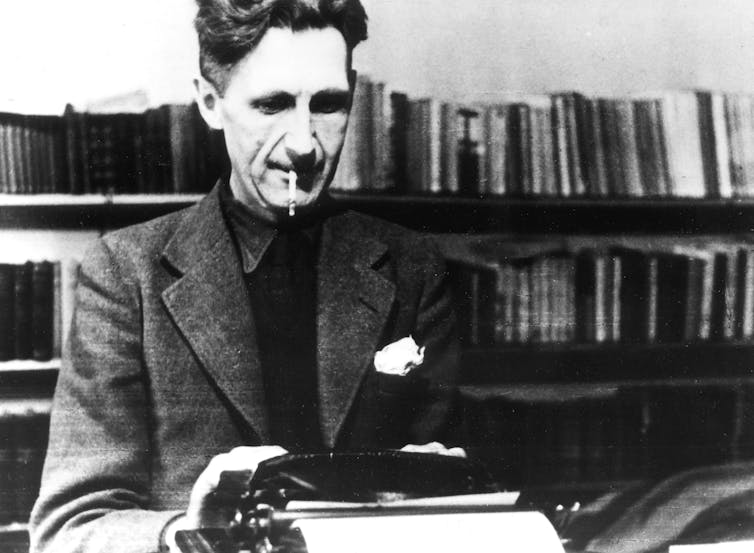
George Orwell’s writings have left a lasting imprint on American thought and culture.
ullstein bild/ullstein bild via Getty Images

Mark Satta, Wayne State University

Seventy-five years ago, in August 1946, George Orwell’s “Animal Farm” was published in the United States. It was a huge success, with over a half-million copies sold in its first year. “Animal Farm” was followed three years later by an even bigger success: Orwell’s dystopian novel “Nineteen Eighty-Four.”

In the years since, Orwell’s writing has left an indelible mark on American thought and culture. Sales of “Animal Farm” and “Nineteen Eighty-Four” jumped in 2013 after the whistleblower Edward Snowden leaked confidential National Security Agency documents. And “Nineteen Eighty-Four” rose to the top of Amazon’s best-sellers list after Donald Trump’s Presidential Inauguration in 2017.

As a philosophy professor, I’m interested in the continuing relevance of Orwell’s ideas, including those on totalitarianism and socialism.

Early career

George Orwell was the pen name of Eric Blair. Born in 1903 in colonial India, Blair later moved to England, where he attended elite schools on scholarships. After finishing school, he joined the British civil service, working in Burma, now Myanmar. At age 24, Orwell returned to England to become a writer.

During the 1930s, Orwell had modest success as an essayist, journalist and novelist. He also served as a volunteer soldier with a left-wing militia group that fought on behalf of the Spanish Republic during the Spanish Civil War. During the conflict, Orwell experienced how propaganda could shape political narratives through observing inaccurate reporting of events he experienced firsthand.

Orwell later summarized the purpose of his writing from roughly the Spanish Civil War onward: “Every line of serious work I have written since 1936 has been, directly or indirectly, against totalitarianism and for democratic Socialism.”

Orwell did not specify in that passage what he meant by either totalitarianism or democratic socialism, but some of his other works clarify how he understood those terms.

What is totalitarianism?

For Orwell, totalitarianism was a political order focused on power and control. The totalitarian attitude is exemplified by the antagonist, O’Brien, in “Nineteen Eighty-Four.” The fictional O’Brien is a powerful government official who uses torture and manipulation to gain power over the thoughts and actions of the protagonist, Winston Smith. Significantly, O’Brien treats his desire for power as an end in itself. O’Brien represents power for power’s sake.
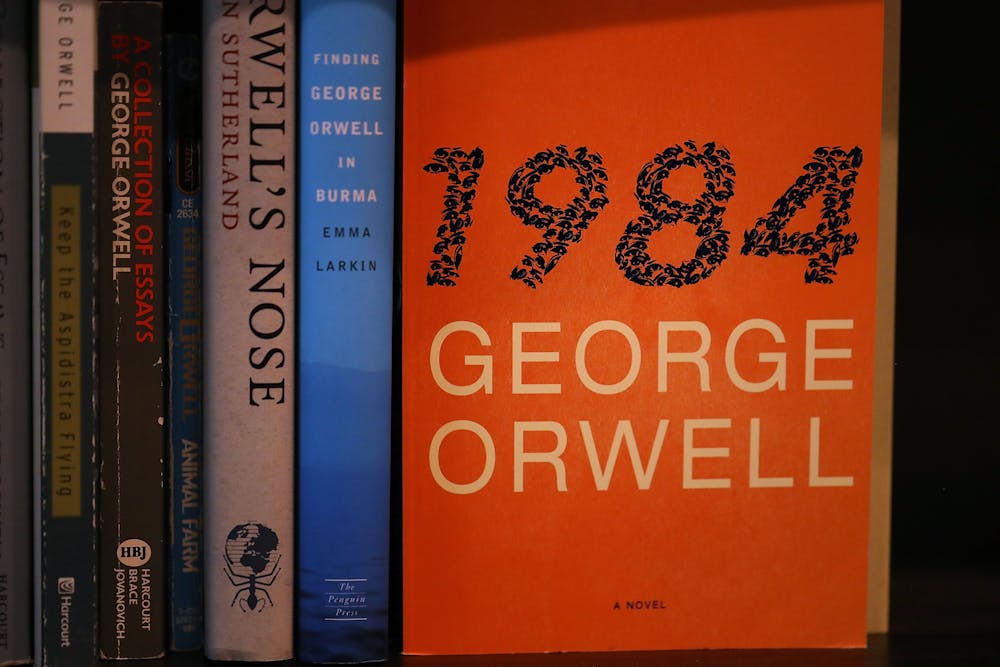
A copy of George Orwell's novel '1984' is displayed at The Last Bookstore on January 25, 2017, in Los Angeles.
George Orwell’s dystopian novel ‘Nineteen Eighty-Four’ (‘1984’) surged to the top of Amazon.com’s best-sellers list after Donald Trump’s Presidential Inauguration in 2017.
Justin Sullivan/Getty Images

Much of Orwell’s keenest insights concern what totalitarianism is incompatible with. In his 1941 essay “The Lion and the Unicorn,” Orwell writes of “The totalitarian idea that there is no such thing as law, there is only power … .” In other words, laws can limit a ruler’s power. Totalitarianism seeks to obliterate the limits of law through the uninhibited exercise of power.

Similarly, in his 1942 essay “Looking Back on the Spanish War,” Orwell argues that totalitarianism must deny that there are neutral facts and objective truth. Orwell identifies liberty and truth as “safeguards” against totalitarianism. The exercise of liberty and the recognition of truth are actions incompatible with the total centralized control that totalitarianism requires.

Orwell understood that totalitarianism could be found on the political right and left. For Orwell, both Nazism and Communism were totalitarian.

Orwell’s work, in my view, challenges us to resist permitting leaders to engage in totalitarian behavior, regardless of political affiliation. It also reminds us that some of our best tools for resisting totalitarianism are to tell truths and to preserve liberty.

What is democratic socialism?

In his 1937 book “The Road to Wigan Pier,” Orwell writes that socialism means “justice and liberty.” The justice he refers to goes beyond mere economic justice. It also includes social and political justice.

Orwell elaborates on what he means by socialism in “The Lion and the Unicorn.” According to him, socialism requires “approximate equality of incomes (it need be no more than approximate), political democracy, and abolition of all hereditary privileges, especially in education.”

In fleshing out what he means by “approximate equality of incomes,” Orwell later says in the same essay that income equality shouldn’t be greater than a ratio of about 10 to 1. In its modern-day interpretation, this suggests Orwell could find it ethical for a CEO to make 10 times more than their employees, but not to make 300 times more, as the average CEO in the United States does today.

But in describing socialism, Orwell discusses more than economic inequality. Orwell’s writings indicate that his preferred conception of socialism also requires “political democracy.” As scholar David Dwan has noted, Orwell distinguished “two concepts of democracy.” The first concept refers to political power resting with the common people. The second is about having classical liberal freedoms, like freedom of thought. Both notions of democracy seem relevant to what Orwell means by democratic socialism. For Orwell, democratic socialism is a political order that provides social and economic equality while also preserving robust personal freedom.

I believe Orwell’s description of democratic socialism and his recognition that there are various forms socialism can take remain important today given that American political dialogue about socialism often overlooks much of the nuance Orwell brings to the subject. For example, Americans often confuse socialism with communism. Orwell helps clarify the difference between these terms.

With high levels of economic inequality, political assaults on truth and renewed concerns about totalitarianism, Orwell’s ideas remain as relevant now as they were 75 years ago.

[Explore the intersection of faith, politics, arts and culture. Sign up for This Week in Religion.]The Conversation

Mark Satta, Assistant Professor of Philosophy, Wayne State University

This article is republished from The Conversation under a Creative Commons license. Read the original article.


Unknown's avatar

Technology hasn’t killed public libraries – it’s inspired them to transform and stay relevant


File 20180817 165949 1oadgi7.jpg?ixlib=rb 1.1
The State Library in Victoria illustrates that libraries are so much more than just places that contain books.
from shutterstock.com

Danielle Wyatt, University of Melbourne and Dale Leorke, University of Tampere

In 2017, archaeologists discovered the ruins of the oldest public library in Cologne, Germany. The building may have housed up to 20,000 scrolls, and dates back to the Roman era in the second century. When literacy was restricted to a tiny elite, this library was open to the public. Located in the centre of the city in the marketplace, it sat at the heart of public life.

We may romanticise the library filled with ancient books; an institution dedicated to the interior life of the mind. But the Cologne discovery tells us something else. It suggests libraries may have meant something more to cities and their inhabitants than being just repositories of the printed word.


Read more:
State libraries need our support and participation to survive


Contemporary public libraries tell us this too. Membership has generally declined or flat-lined, but people are now using libraries for more than borrowing books. Children come to play video games or complete homework assignments together. People go to hear lectures and musical performances, or attend craft workshops and book clubs.

Libraries have become vital for the marginalised, such as the homeless, to access essential government services such as Centrelink, and to stay connected. They have become defacto providers of basic digital literacy training – such as how to use an iPad or access an eGov account. Others cater to tech-enthusiasts offering advanced courses on coding or robotics in purpose-built spaces and laboratories.

We do romanticise libraries as being repositories of ancient knowledge.
Clarisse Meyer/Unsplash

Yet the future of Australia’s public libraries is unfolding according to a contradictory, double narrative. One-off funding for “feature” libraries built by star architects exists in parallel with cuts and closures of libraries on the margins. In Victoria’s city of Geelong, for example, three regional libraries on the city’s periphery faced closure scarcely a year after the opening of the A$45m Geelong Library and Heritage Centre.

Part of the reason for this is that the expanded contribution of libraries to our communities and cities isn’t recognised at higher levels of government.


Read more:
Has the library outlived its usefulness in the age of Internet? You’d be surprised


How libraries are changing

In the early 2000s, as archives shifted online, futurists predicted an imminent death to public libraries. But the threat of obsolescence made libraries take proactive steps to remain relevant in a digital world. They thought creatively about how to translate services they have always offered – universal access to information – into new formats.

Libraries digitised their collections and networked their catalogues, exponentially extending the range of materials users could access. They introduced e-books and e-readers to read them with. They mounted screens to watch movies or to play video games.

They also installed computers crucial to that 14% of the population who don’t have access to the internet at home. And they wired up their spaces with free WiFi, retrofitting extra power-points so users could plug in their own devices.

Libraries have a lot of programs around technology and the use of computers.
from shutterstock.com

Besides offering new technologies and services, libraries offer people a welcoming, safe space to gather without the pressure to spend money. Investing in attractive, versatile furnishings, they have actively encouraged people to dwell in their spaces, whether this is to read a newspaper, complete a job application online, or to study.

In an age where communication technologies create both efficiency as well as forms of isolation, such spaces assume a renewed social importance.


Read more:
Friday essay: why libraries can and must change


How libraries shape the city

As vital as libraries are to individuals, their value is also connected to broader civic agendas. Libraries have deliberately sought to change perceptions of themselves from spaces of collection to spaces of creation. Some, such as the State Library of Victoria, see themselves facilitating creativity not only in an artistic sense, but also as entrepreneurial hubs for start-ups and budding innovators.

Public libraries have promoted their relevance to cities by strategically aligning themselves with government visions of economic growth. For instance, the Geelong Library and Heritage Centre was a signature investment in Geelong’s Digital Strategy, promoted as a “platform” to build “digital capacity” and a visible symbol of the city’s transition to a digital future.

Others, such as Dandenong library in Victoria, attract high levels of funding as part of urban renewal projects aimed at revitalising declining urban precincts.

These high-profile libraries, usually in urban centres, overshadow the uncertain fate of smaller libraries on the periphery, fighting to stay viable due to insufficient funding.

The Geelong Library and Heritage Centre cost millions of dollars to build, while three local libraries lost funding.
from shutterstock.com

This contradiction is occurring because provisioning for libraries is not embedded at high levels of urban planning and policy making. There is no nationally consistent model for allocating funds between the states and local government. Nor is there a consistent framework across Australia for evaluating library performance.

<!– Below is The Conversation's page counter tag. Please DO NOT REMOVE. –>
The Conversation

Critically and most revealingly, libraries are evaluated based on traditional metrics, such as loan and membership numbers, capturing only a fraction of the full value they contribute to our individual and collective life. Failure to recognise this by governments and policymakers puts at risk the diverse and nuanced ways libraries might shape Australia’s future.

Danielle Wyatt, Research Fellow, University of Melbourne and Dale Leorke, Postdoctoral researcher, University of Tampere

This article was originally published on The Conversation. Read the original article.

Unknown's avatar

In retirement, most ex-presidents can’t resist the urge to stay relevant


File 20180618 85822 16j4z91.jpg?ixlib=rb 1.1
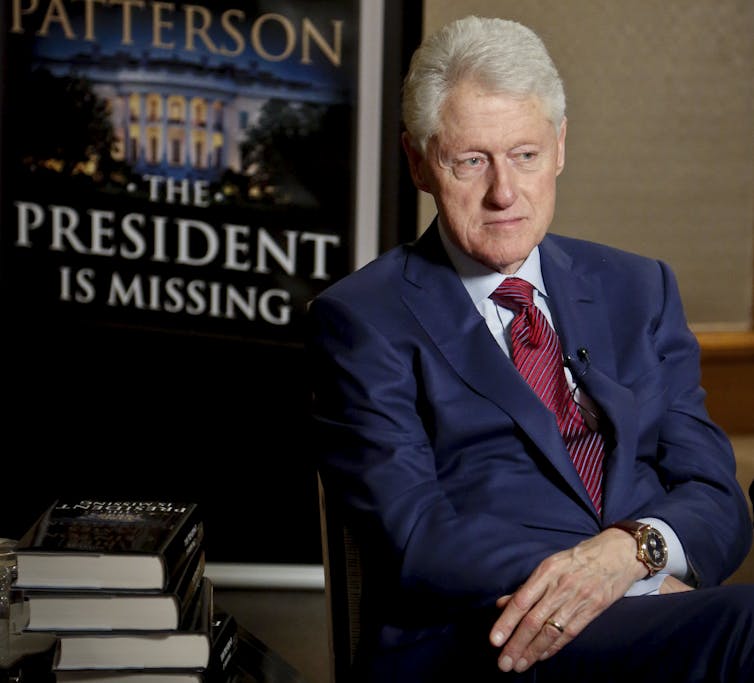
Former President Bill Clinton promotes ‘The President is Missing,’ the new novel he wrote with James Patterson, in New York.
AP Photo/Bebeto Matthews

Stacy A. Cordery, Iowa State University

“The President is Missing,” Bill Clinton’s new suspense novel that he co-wrote with James Patterson, was swiftly panned. It spills no secrets, the prose is leaden, the story predictable.

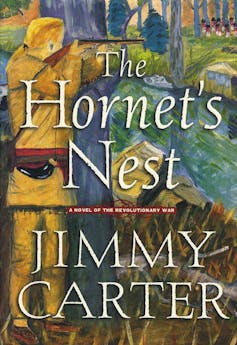
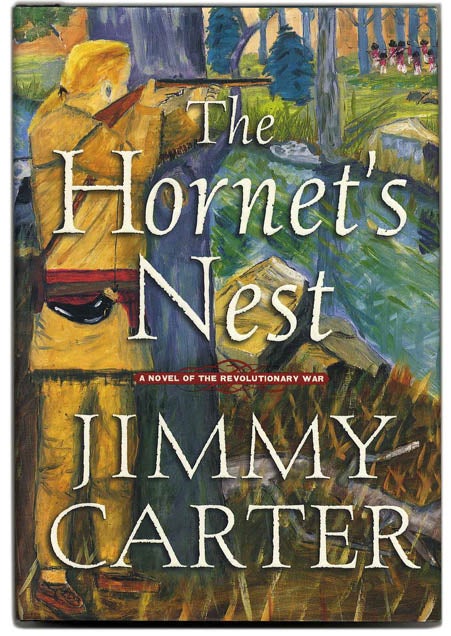
Jimmy Carter spent more years writing ‘The Hornet’s Nest’ than he spent as president.
Simon & Schuster

Clinton isn’t the first former president to try his hand at fiction. Jimmy Carter took seven years to write “The Hornet’s Nest: A Novel of the Revolutionary War,” which suffered a similarly unenthusiastic response.

When it came to their literary ambitions, both Clinton and Carter proved John Quincy Adams prescient.

“There is nothing more pathetic in life than a former president,” the sixth president once opined.

What happens to motivated, determined, duty-driven men when they are forced to abandon the White House? When the global spotlight dims? When, as Barack Obama put it, life begins to move in slow motion?

As a scholar of presidential families, my research suggests that while presidents have many more options open to them in their “retirement” than the rest of us, they find the transition difficult and their choices have run the gamut from the decent to the disastrous, from altruistic to avaricious.

Getting in the last word

After the daily grind and chaos of being president, it’s no surprise that many presidents, upon leaving office, immerse themselves in quiet activities like writing, painting and farming.

Writing is probably the most common pastime of ex-presidents, who can seldom resist the urge to rehash major events of their tenure, justify their decisions and seek to influence their place in history.

Knowing he was about to die, Ulysses Grant penned his memoir to provide a financial cushion for his family. Bedridden, tormented by pain, and writing on his back in pencil in a desperate race to finish before throat cancer killed him, he completed his manuscript and died days later. It earned nearly half a million dollars for his widow, thanks to the extremely generous royalties granted to him by his friend and publisher, Samuel Clemens.

Theodore Roosevelt’s hunting books, Herbert Hoover’s “Fishing for Fun: And to Wash Your Soul” and Gerald Ford’s “Humor and the Presidency” stand in contrast to the many books written by former presidents analyzing foreign and domestic policy, chronicling past eras, providing civic and spiritual advice and showcasing public and private correspondence.

John Adams grimly rebutted the by then deceased Alexander Hamilton in protracted letters to the Boston Patriot. Even “Silent Cal” found he had a lot to say post presidency, churning out 300 syndicated newspaper columns under the title “Calvin Coolidge Says.”

Painting, meanwhile, acted as a solitary, post-presidential pursuit for at least three former presidents.

Dwight Eisenhower’s landscapes and portraits occupied his last two decades and were exhibited widely. An oil painting of Carter’s netted US$750,000 for charitable works last year, and George W. Bush professes to be both “challenged” and made “happy” by his artwork.

Farming also places high on the agenda of ex-presidents. Like Cincinnatus, the powerful fifth-century B.C. Roman leader, George Washington resisted the temptation to remain in power and instead returned to his plow. James Madison, James Monroe, Andrew Jackson, Martin Van Buren, John Tyler, Andrew Johnson, Franklin Pierce, Lyndon B. Johnson and Ronald Reagan, among others, all found solace in going home to their fields and ranches. Eisenhower earned a place in the Angus Heritage Foundation for the prize-winning cattle he raised on his farm near Gettysburg.

Dwight Eisenhower shows French President Charles de Gaulle around his cattle farm in Gettysburg, Pa.
AP Photo

The allure of the limelight

But as John Quincy Adams well knew, the glamours and thrills of the old life always beckon.

Theodore Roosevelt may have once written with his customary certainty that “when [the president] goes out of office he takes up his regular round of duties like any other citizen, or if he is of advanced age retires from active life to rest.”

Yet once his term was up, Roosevelt undertook an African safari, started a third party, charted an unexplored river in Brazil, and tried but failed to recreate the Rough Riders for the World War I trenches. George H. W. Bush, who celebrated his 90th birthday by skydiving, recalls this level of derring-do.

Some former presidents turn into elder statesmen, dispensing advice to all who will listen, especially presidential hopefuls. They are called upon to attend state funerals, put in appearances, unveil their portraits and accept awards.

Not everyone complies. Millard Fillmore resisted an honorary degree from Oxford University because he felt he did not deserve it. Harry Truman knew he didn’t merit the proffered Congressional Medal of Honor.

Then there are the politicians who simply cannot stop being politicians.

In 1799, Washington set a precedent for inserting himself into future elections, when, with the elections of 1800 looming, he persuaded fellow Federalists to run for office and made sure he was solidly apprised of political machinations.

Fillmore, Grant, Grover Cleveland and Theodore Roosevelt all ran for president after leaving the White House. John Quincy Adams was elected nine times to the House of Representatives, doing such good work that he – like Carter – was considered a better former president than president. Seven years after he was impeached, Tennessee sent Andrew Johnson back to the U.S Congress.

“Thank God for the vindication,” he gloated – although his Senate colleagues largely snubbed him.

Many presidents have devoted hours to charitable works, including voluntary military service. Others have tarnished their reputations with exorbitant speaking fees or by vilifying their successors.

But only one was truly a traitor. John Tyler became a secessionist and an elected member of the Confederate Congress.

In the end, the desire to reward and punish, to analyze the past, to promote an agenda, to be part of the nation’s business, and to remain in the spotlight proves overwhelming.

Some former presidents may eventually come across as pathetic, but none is ever missing from public view for too long. Ambitious men accustomed to prominence and power find it difficult to “retire from active life to rest.”

The ConversationPresidents who preceded him have provided Donald Trump several options for his eventual retirement. It is, however, nearly impossible to imagine his Twitter account truly going dark.

Stacy A. Cordery, Professor of History, Iowa State University

This article was originally published on The Conversation. Read the original article.

Unknown's avatar

Article: An Argument for Traditional Books


The link below is to an article about the need for traditional books, especially in the area of theology and I guess other areas of research also would be relevant. The interest in this article may well be the comments made following it.

For more, visit:
http://greenbaggins.wordpress.com/2012/05/08/a-disturbing-trend-in-publishing/

Unknown's avatar

Changed My Mind: Still Going to Post to This Blog


I have changed my mind concerning this Blog and will continue to post to it. Why? Because the particularbaptist.com site (and Blog) will not cover everything that I read. Therefore this Blog is still relevant and will allow me to post reviews concerning books that cover history, wilderness, etc.